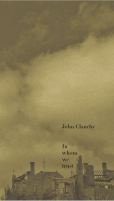
John Clanchy, In whom we trust (#BookReview)

Book coverMy first question when I read a book of historical fiction is why? And so it was for John Clanchy’s latest novel In whom we trust, which is set in Victoria around World War 1, albeit is not about the war. It is, in fact, about a Catholic home for orphaned children, St Barnabas, and three people associated with it, visiting chaplain Father Pearse, and two young people, inmate Thomas Stuart and scullery maid Molly Preston. Of course, when I say “about” St Barnabas, I don’t really mean that. St Barnabas frames the novel, provides its context, but the novel itself is about something far more complex, which gets me back to my opening question, why?

Now there are, to my mind, two main responses to historical fiction. One is to see it as something in the past, something that we might learn from but that overall we can leave firmly in the past. The other is to see its relevance to the present, to look at past actions or events, with the perspective of time, in order to reflect on now. This response also brings in those universals we like to talk about, those things about us that history (or time) doesn’t change. John Clanchy’s In whom we trust demands this second response: it asks us to look at the institutional abuse of children and its long history, and to see the human factors that enabled it then right on through to now. As Hilary Mantel has said, “all historical fiction is really contemporary fiction; you write out of your own time.”

In his Author’s Note and Acknowledgement, Clanchy thanks publisher Finlay Lloyd for “taking on a difficult book such as this”. What “difficult” does he mean? The difficult content or the difficulty of its execution? Probably both. The content is, of course, difficult. We have St Barnabas run by the tortured and torturing Brother Stanislaus. He is the epitome of the old-school hell-fire-and-damnation Brother. Ravaged by the Church’s constraints (particularly abstinence), he twists the scriptures, the theology, to justify his abuse of those in his care, who include, of course, Thomas and Molly.

However, this book is also “difficult” in its construction, which is not the same as saying that it’s difficult to read, because the story flows beautifully, despite frequent changes in voice or perspective. The story is told from three main – and easily differentiated – points of view: the third person subjective perspectives of Father Pearse and Thomas, and the first person voice of Molly via her diary.

The narrative is framed by a meeting between Thomas and Pearse, at the latter’s parish in Sale, some three years after the abuse had occurred. Gradually, through their conversations and private reflections, and through the insertion of Molly’s diary entries, the back story comes out and Thomas’s request of Pearse is revealed. At this point the diary entries finish and the narrative moves into a simpler chronology as Pearse works to fulfil his promise to Thomas, who has by now enlisted and wants this thing done before he leaves. What he wants done cannot right the wrongs of the past but will hopefully help prevent them continuing in the future. And that’s about all I’ll say about the plot.

“the strange, savage world”

That Clanchy can make such subject matter both engrossing and deeply moving is down to his writing and his understanding of humanity. The novel opens in Father Pearse’s head:

‘There was a boy came while you were out, Father Pearse,’ Mrs Reilly said. And stood.
The woman wanted strangling.

I loved this. So simple, but already we’ve learnt a lot, the main thing being, as the rest of the chapter confirms, that Father Pearse is not your warm-hearted priest. He’s an impatient, easily irritated one, so, when the boy, Thomas, appears, we are predisposed to like him more than we like Pearse. As the novel progresses, Thomas firmly but gently brings Pearse around to being – to use modern parlance – the best version of himself! In other words, Pearse, who is not a bad man, just a weak, cowardly one who “means no real harm”, is brought to see the right and humane thing to do.

This doesn’t come easily though. He is suspicious of and resistant to this trouble-making Thomas. He doesn’t trust him! And here is cornerstone of the novel, trust (as you might have guessed from the novel’s title.) There are many layers of trust in the novel. Clanchy shows how trust develops between people, such as between Molly and Thomas, between Thomas and his indigenous friend from St Barnabas Benton, and, eventually, between Pearse and Thomas. There is trust in authority and institutions, such as that St Barnabas will care for the children entrusted to it. There is trust in forms and rituals, like the confessional. And there is trust that people will do what they promise or undertake to do. All of these – their successes and failures, and the nuances surrounding them – are explored in this novel. The reality of the challenge becomes clear to Pearse late in the novel:

Trust. That was the crux of it. How was anyone meant to find a path through this forest of competing trusts?

Muddying this path are competing – or, shall we just call a spade a spade and say twisted – values and priorities. These include the age-old issue of abstinence and the inviolability of the confessional, and the need, as Pearse’s Bishop makes perfectly clear, to protect “our Mother Church”.

Through all this, Clanchy weaves a compelling, painfully true story about human beings – weak ones, arrogant ones, damaged ones, wise ones, loyal ones. Of all these people, it’s the young Thomas who has the clearest vision. He has, recognises Pearse, the

trick of putting his finger on truths so obvious that most other people, in search for something which redounded more to their own credit, looked right past.

And now, before I conclude, something about the writing, because it is this, alongside Clanchy’s understanding of human motivations and relationships, that make this “difficult” book also a pleasure to read. Clanchy’s ability to nail his points with a few words can take your breath away:

… then Thomas Stuart was equally checked by the massive theological boulder which the priest now rolled into his path.

AND

The crimson cloth of the Bishop’s patience was rapidly becoming threadbare.

The vernacular he creates for Molly’s diary – including words like “tumple” and “fumply” – gives her colour and character. There’s also some clever word play and light ironic touches, not to mention the little biblical in-joke about doubting Thomas, because in this book it’s the priest who doubts Thomas more than vice versa. Indeed, it’s the careful, sure way Clanchy develops the see-sawing doubting-trusting relationship between Pearse and Thomas that provides the novel’s backbone and interest.

There are of course no simple answers to the dilemma facing Father Pearse, and the ending we get is the only one it could be. It’s to Clanchy’s credit that he doesn’t opt for the easy feel-good fix. There are wins along the way but Clanchy knows, and we know, that it would be morally suspect and historically inaccurate to provide the ending we’d like. In whom we trust is a powerful and wonderful read.

John Clanchy
In whom we trust
Braidwood: Finlay Lloyd, 2019
251pp
ISBN: 9780994516558

(Review copy courtesy Finlay Lloyd)

Monday musings on Australian literature: Christina Stead’s 1930s, Salzburg and Sydney

My first Monday musings on Christina Stead (my posts on Stead) was barely introductory, so I’m planning two more to coincide with Bill’s (The Australian Legend) AWW Gen 3 Week. These two posts – this week’s and next – focus contemporary Australian responses to the four books she published in the 1930s. I’m keeping this focus tight because Stead is such a complex figure in Australian literary history, and so much has been written about her already, including Hazel Rowley’s well-regarded biography. (See Lisa’s review at ANZLitLovers). However, I enjoyed reading, in Trove of course, what some contemporary Aussies had to say about her, and wanted to share them.

To start though, a very brief bio relevant to this period. Stead, born in Sydney in 1902, went overseas, to England initially, in 1928. She then lived, and worked in a bank, in Paris from 1930 to 1935, before spending time in the USA, Spain and England with her husband-to-be William Blake (Wilhelm Blech). In 1937, they moved to the USA. She didn’t return to Australia to live until 1968. Her first four books were published in the 1930s: The Salzburg tales (1934), Seven poor men of Sydney (1934), The beauties and the furies (1936), and House of all nations (1938).

Although over the years Stead experienced a mixed reaction from Australia, some critics denouncing her as “expatriate”, it’s clear that in the 1930s, at least, she was well-admired by Australian newspaper reviewers. It’s also clear that she was seen as both a modernist and a realist, with no nods to our bush and pioneer traditions.

Book coverThe Salzburg tales was her first published book and it immediately received positive attention from Australian newspaper reviewers. I was tickled by the writer in Melbourne’s Argus who wrote that “Many times it has been said that there is no particular demand for writers’ collections of short stories but there are authors and publishers who continue to issue books of the kind and apparently the stories find readers.” Plus ça change, it seems.

Reviews of this book noted its inventiveness and original style. For example, S.E.N., wrote in the Daily Mail on 4 April 1934, that

her book is remarkable not only for its inventiveness, but for its original style. It commingles modernism and mysticism, realism and romanticism, the dramatic and the uneventful, love, law, life, laughter, and letters in an olla podrida which is both attractive and unusual. Some of the stories are, like that of the Wanton, a little too highly spiced here and there for the less sophisticated reader; but on the whole Miss Stead has given us a collection of tales which are admirably told and admirably contrasted.

There we have it – “modernism” and “realism” – two styles/approaches that were significant the 1930s literature, and of which Stead was a major exponent. The unnamed reviewer in the Sydney Morning Herald (3 May 1934) remarked that “Miss Stead … really seems to belong in a class by herself”. This reviewer praises the variety, and concludes that “there seems no end to Miss Stead’s inventiveness and no limit to her powers of expression”. Jean Williamson, writing in the Australian Women’s Weekly (7 July 1934), is no less admiring, calling it “extraordinary in its concept, its vocabulary, its technique and its imagery.”

The reviewer in the Townsville Daily Bulletin (7 August 1934) states:

This author is, I understand, an Australian, who now lives in Paris. How long she has been there I do not know but she has accumulated experience, impressions, fed her imagination in a way that would not be possible for an author writing from this side of the world. It is not only that Miss Stead has set her scenes in such a town as Salzburg, and peopled her many pages with remarkable people. Most authors could have done that, but her story is saturated with her personality, lit up humor, knowledge, penetration, and is decidedly original.

This is an interesting comment in the context of Drusilla Modjeska’s book Exiles at home (posted on by Bill). Modjeska’s book is about “the ones who stayed” in Australia … tackling … how to live and work in this country as women and as writers and how to build a culture that has its roots in Australian histories and conditions, rather than in a foreign past” (from Introduction to Reprinted Editions.) Of course, the thing about Stead is that she too forged a contemporary literature, some of it set in or drawn from her Australian experience … which brings me to …

Christina Stead, Seven Poor Men of SydneyStead’s second book, Seven poor men of Sydney, which garnered similarly positive reviews. However, the reviewer in The Newcastle Sun (22 November 1934) makes no bones about its grittiness. It has no “Australian local color of the wattle blossom and stockwhip kind”. S/he describes it as high art, and says “it gives evidence of intuition, of skill in handling of character and of words and of high achievement in the depicting of realities.” For this writer, though, there is such a thing as being too modern, too real:
And while no one can reasonably suggest that a writer should ignore the gutter, it is not necessary to bring in the language of the gutter. It is, indeed, a great pity that a writer who shows abundantly that she is capable of far better things, should think it necessary to be “modern” in this particular way.

I know some readers who still feel this today … Anyhow, interestingly, Bookman writing in the Courier Mail (30 November 1934) has an opposing criticism, saying that “perhaps” the novel’s “weakest point” is that “the characters all talk too learnedly”! However, he too recognises the novel’s “stark realism”. He calls it “a remarkable book; the kind of book to which the word ‘powerful’ is sometimes applied”, but he also clearly fears its politics:

She has revealed the mentality out of which revolutions are made. That lesson is especially important in these days when thousands of lads, with more education than judgment, are being thrown into desperation and into the arms of extreme propagandists because all they can see ahead is blind-alley employment or no employment at all. In such conditions communism flourishes, and Miss Stead doubtless saw it thriving in Central Europe.

The aforementioned Jean Williamson, writing again in the Australian Women’s Weekly (9 March 1935) reports Stead’s own comments on the book.

The Seven Poor Men of Sydney is not so much a novel, I suppose, as a cast of characters battling through daily life, as much passion being expended or the small accidents of daily life as on any one of the great tragic themes; in fact the great tragic themes are all melted down and infused there. That was my feeling in writing the Seven Poor Men.”

Stead, a deeply committed socialist, also says that the novel shows she hasn’t forgotten Australia, nor “the importance of the Labor Movement in everyone’s daily life”.

So, two very different books, both written in a modernist style, both hailed for their inventiveness and her “phrasemaking” – and, put together, neatly reflecting her seemingly dichotomous existence.

Note: You can find bloggers’ reviews of various Stead works at Lisa’s ANZLitLovers Christina Stead page.

Joan Didion, Quiet days in Malibu (#Review)

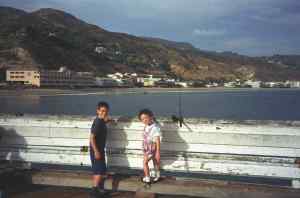
Malibu from Malibu Pier, August 1993

As for many people I expect, Joan Didion’s now classic The year of magical thinking made a lasting impression on me, so I was keen to read her essay “Quiet days in Malibu” when it popped up as a Library of America (LOA) Story of the Week back in November. I was also interested in the subject matter. Having lived in Southern California in the 1990s, I wanted to see what Didion had to say about Malibu, a place that has always conveyed the romance of Californian beaches to me, largely through Gidget! There, I’ve admitted my teen-girl secret.

What Didion had to say was not what I expected. She starts with:

In a way it seems the most idiosyncratic of beach communities, twenty-seven miles of coastline with no hotel, no passable restaurant, nothing to attract the traveler’s dollar. It is not a resort. No one “vacations” or “holidays,” as those words are conventionally understood, at Malibu. Its principal residential street, the Pacific Coast Highway, is quite literally a highway, California 1, which runs from the Mexican border to the Oregon line and brings Greyhound buses and refrigerated produce trucks and sixteen-wheel gasoline tankers hurtling past the front windows of houses frequently bought and sold for over a million dollars. The water off Malibu is neither as clear nor as tropically colored as the water off La Jolla. The beaches at Malibu are neither as white nor as wide as the beach at Carmel. The hills are scrubby and barren, infested with bikers and rattlesnakes, scarred with cuts and old burns and new R.V. parks. For these and other reasons Malibu tends to astonish and disappoint those who have never before seen it, and yet its very name remains, in the imagination of people all over the world, a kind of shorthand for the easy life [my emph]. I had not before 1971 and will probably not again live in a place with a Chevrolet named after it. 

Things have, naturally, changed since Didion lived there for seven years through the 1970s, but only a little I think. Pacific Highway 1 still runs through it, alongside the beach, though the more inland 101 Freeway is the main north-south route. It is still home to many celebrities and other well-to-do living in expensive mansions. This opening paragraph, however, also introduces us Didion’s style – including her use of repetition (“The water off … The beaches at … The hills are …”) and quietly pointed commentary (as in “I had not before 1971 and will probably not again live in a place with a Chevrolet named after it.”)

This essay, published in a 1979 collection titled The white album, was in fact a reworking of two pieces published in Esquire in 1976. LOA’s notes say that those pieces “showcase the beach community” not through its celebrities but through “the lifeguards on the beach and the manager of a local orchid farm.” To these pieces, which form the bulk of the essay, Didion added the above-quoted introductory paragraph and a concluding section, about which more later.

The white album, LOA’s notes also tell us, opens with her famous line, “we tell ourselves stories in order to live”. The stories she tells in this essay are about “ordinary” people, as much as anyone, really, is ordinary. First up is lifeguard Dick Haddock. She introduces him thus – with that same use of repetition:

Dick Haddock, a family man, a man twenty-six years in the same line of work, a man who has on the telephone and in his office the crisp and easy manner of technological middle management, is in many respects the prototypical Southern California solid citizen.

She describes visiting his “office”, the lookout on Malibu’s Zuma Beach, on Thanksgiving morning in 1975, when

A Santa Ana wind was just dying after blowing in off the Mojave for three weeks and setting 69,000 acres of Los Angeles County on fire. Squadrons of planes had been dropping chemicals on the fires to no effect. Querulous interviews with burned-out householders had become a fixed element of the six o’clock news. Smoke from the fires had that week stretched a hundred miles out over the Pacific and darkened the days and lit the nights and by Thanksgiving morning there was the sense all over Southern California of living in some grave solar dislocation. It was one of those weeks when Los Angeles seemed most perilously and breathtakingly itself, a cartoon of natural disaster …

Oh no! As I post this story, we are suffering similarly from bushfires. We certainly feel that we are living in “some grave … dislocation”. Note too another of those pointed comments – on LA seeming “most perilously and breathtakingly itself, a cartoon of natural disaster”. Anyhow, Didion’s description of Haddock, his colleagues and their work, is respectful and evocative, recognising both the drama and the tedium of what they do.

The second piece is about another prototypical Southern Californian, “a Mexican from Mexico”, or “resident alien” (just as I, a wife, was a “derivative alien” to my husband’s “primary alien”!) Amado Vazquez is anything but ordinary, though, as he’s an expert orchid breeder for Arthur Freed Orchids. Didion shares with us her love of greenhouses:

all my life I had been trying to spend time in one greenhouse or another, and all my life the person in charge of one greenhouse or an- other had been trying to hustle me out.

And here, finally, was her opportunity to spend time in one! Again, in her chatty style, she explains the work of an orchid breeder – of stud plants, of orchid fertility, of the naming of plants, of the business of orchid breeding. She references that racist name-changing behaviour that white people often do, whereby the orchid named for Vazquez’s wife “mysteriously” becomes “Vasquez”.

But, I want to close on the short concluding section in which, after significantly mentioning the drowning death, “a casualty of Quaaludes”, of one of her 12-year-old daughter’s friends, she describes another horrendous fire:

Within two hours a Santa Ana wind had pushed this fire across 25,000 acres and thirteen miles to the coast, where it jumped the Pacific Coast Highway as a half-mile fire storm generating winds of 100 miles per hour and temperatures up to 2500 degrees Fahrenheit. Refugees huddled on Zuma Beach. Horses caught fire and were shot on the beach, birds exploded in the air. Houses did not explode but imploded, as in a nuclear strike. By the time this fire storm had passed 197 houses had vanished into ash …

This fire also destroyed three years of the orchid breeder’s work … Malibu, you see, with its peculiar geography, has is rife for natural disasters.

It was at this point that I realised the irony of the title. Through restrained, respectful reportage about the ordinary people of Malibu, Didion conveys that, in fact, Malibu is rarely quiet, and that few of its inhabitants enjoy an “easy life”.

Joan Didion
“Quiet days in Malibu”
First published: The white album, 1979 (sections published in Esquire in April and June 1976)
Available: Online at the Library of America

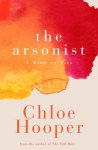
Chloe Hooper, The arsonist: A mind on fire (#BookReview)

Chloe Hooper, The ArsonistIt may not have been the most sensible decision to read Chloe Hooper’s book, The arsonist, during Australia’s worst-ever bushfire week, but in fact I picked it up a few days before the crisis became evident, and once I started I couldn’t put it down. The arsonist tells the story of the man arrested and tried for one of the major fires in the Black Saturday series of bushfires that ravaged much of Victoria in February 2009. I have often wondered how you identify how and where a fire started. Hooper answers much of this.

However, what made this book unputdownable was that Hooper adopted, as she did in The tall man, the narrative (or creative) nonfiction style to tell her story, and proved herself, again, to be a skilled exponent of this genre. For those not sure about this genre, Lee Gutkind’s definition, quoted in Wikipedia, is a good start: “Ultimately, the primary goal of the creative nonfiction writer is to communicate information, just like a reporter, but to shape it in a way that reads like fiction.” In other words, the information must be true or factual, but presented like a story.

Car in fire burnt bush

Bush, eastern Victoria, 9 mths after Black Saturday, 2009

Hooper structures her story like a classic three-act drama: I The detectives, II The lawyers, III The courtroom, followed by the Coda. She provides the facts – the whos, whens, wheres and whys – as much as they are known, but forms them into a narrative. So, after an opening paragraph which evocatively describes a fire-destroyed bush landscape, the second paragraph reads:

At the intersection of two nondescript roads, Detective Sergeant Adam Henry sits in his car taking in a puzzle. On one side of Glendonald Road, the timber plantation is untouched: pristine Pinus radiata, all sown at the same time, growing in immaculate green lines. On the other side, near where the road forms a T with a track named Jellef’s Outlet, stand rows of Eucalyptus globulus, the common blue gum cultivated the world over to make printer paper. All torched, as far as the eye can see. On Saturday 7 February 2009, around 1.30pm, a fire started somewhere near here and now, late on Sunday afternoon, it is still burning several kilometres away.

You can see, in this, that we are being invited in to see what her “character” Detective Henry is seeing, but we are also given very specific facts. The next paragraph, provides some personal background to this first “character” in her story:

Detective Henry has a new baby, his first, a week out of hospital. The night before, he had been called back from paternity leave for a 6 am meeting …

As Part I progresses, we meet other police officers and forensic experts; we travel with them as they investigate the fire itself and then follow leads to the most likely suspect; and we are with them as they interview this suspect and arrest him for the crime. We also meet many victims who lost family members and/or property. Their stories are heartrending – excruciating, in fact, as I wrote in the margins – and were particularly hard to read, with similar losses occurring in Australia right now.

Using a similar narrative technique in Part II – providing facts, and describing the “characters” and their feelings – Hooper then introduces us to the Legal Aid lawyers, or one lawyer in particular, brought in to defend the accused. As she does this, our allegiance and sympathies shift a bit from the hardworking police to the hardworking lawyer – and, perhaps even, to her client who, only now, at this point in his life, is finally diagnosed as autistic, which provides a previously missing context for his strange responses and behaviours. And then, finally, in the third “act” or part, these two – the police and the legal team – come head to head in court, with our allegiances swaying between the two as they tussle it out, until the jury delivers its verdict.

The Coda, “set” some years later, contains Hooper’s reflections on the aftermath and some commentary on the process. For example, it’s clear that she had researched the case, had visited the fire region many times, including soon after the arrest, and had interviewed many of the participants, but, like Helen Garner in her three major narrative nonfiction works, had not managed to speak to the person at the centre, in this case, Brendan Sokaluk, the arsonist. Her request is refused, for understandable reasons. She was, she writes, both “disappointed” and “relieved”. Would speaking to him, she wonders, answer the book’s central question of “why”, and, even if he were able to explain why,

would understanding why Brendan lit a fire make the next deliberate inferno any more explicable? Or preventable? I now know there isn’t a standardised Arsonist. There isn’t a distinct part of the brain marked by a flame. There is only a person who feels spiteful, or lonely, or anxious, or enraged, or bored, or humiliated: all the things that can set a mind – any mind – on fire.

And there, I suppose, is the multiple tragedy of this story: the tragedy of a man ridiculed and bullied all his life for being different; the tragedy of a community that isn’t very good at managing people who are different; the tragedy of the conflagration (in this case a fire, but it could be anything) that can result when the two collide; and the overriding tragedy that there are no simple answers to arson.

Now, I fear you might think that I have given the “story” away and that you therefore need not read it. But, you don’t read The arsonist for the “story”. After all, this is nonfiction and the basic “story” is known. You read it for the insights that a fine mind (not a mind on fire!) like Hooper’s can bring to the situation. What she brings is both clarity about the facts and a nuanced understanding of what they mean. The arsonist is, as everyone’s been saying, an excellent read.

Lisa’s (ANZLitLovers) review of this book includes information from a festival conversation session featuring Hooper.

Challenge logoChloe Hooper
The arsonist: A mind of fire
Hamish Hamilton, 2018
254pp.
ISBN: 9780670078189

Sharlene Teo, Ponti (Guest post by Rosalind Moran) (#BookReview)

Last year as in the two previous years of the ACT Litbloggers/New Territory program, I offered the participants the opportunity to write a guest post for my blog. As a result Emma Gibson wrote a post on Randolph Stow’s Tourmaline, while Amy Walters suggested we do a 2018 Year in Review posts on each other’s blogs. This year, Rosalind Moran (check out her website) offered a book review on Singaporean author, Sharlene Teo, which of course I accepted as I’m happy to increase the diversity of authors covered on my blog.

Here is Rosalind’s post …

Book coverI haven’t read many books by Singaporean authors. Nevertheless, I am always keen to read more writing from beyond the traditional confines of the Anglosphere. So when I stumbled across Ponti in a bookstore after payday, I thought: why not?
Ponti was already vaguely on my radar. The debut novel had its London-based Singaporean author win the 2016 Deborah Rogers Writers’ Award before even being published (the award serves to support authors as they finish their first book). Since being released, it has been shortlisted for multiple prizes. Even Ian McEwan called the book “remarkable”. Naturally, my interest was piqued.

Ponti explores the lives of three interconnected women. There’s the cold and beautiful Amisa, who evokes the archetype of an enchantress; her pinched and unhappy daughter, Szu, who struggles to connect with others, least of all her mother; and Szu’s schoolmate, the privileged and acerbic Circe. As Amisa wallows in bitterness and begins to waste away, Szu and Circe develop a claustrophobic friendship – one that leaves Circe reckoning with her memories of it long after it has ended.

The novels switches between the perspectives of the three characters as well as between different points in time in their shared and separate histories. One quickly realises this book is focused not so much on detailing elaborate plotlines, but rather on deepening its characters. That said, it remains an engaging read throughout, simply owing to the compelling nature of the three women telling the story. What’s really behind each of their unique states of unhappiness, and how do their futures unfurl?

As the story unfolds, Amisa’s history emerges as the strongest plotline, perhaps because her experiences sow the environment in which Szu and Circe’s own troubles flourish. Indeed, she is the novel’s pivotal character, with her flaws, frustrations and traumas colouring all those with whom she comes into contact – and she is intriguing from the start. An unearthly beauty, she is introduced to the reader as a reclusive former actress, one of waning fame, whose defining moment was that of playing the lead in a trilogy of cult horror movies: Ponti 1, 2 and 3. Her role as the Pontianak, a predatory monster disguised as a beautiful woman, also comes to mirror her ongoing experience of moving through the world. Amisa is simultaneously desired and despised, even by her own family, and is ultimately a restless figure. She also effectively comes to haunt Szu and Circe.

I enjoyed many aspects of Ponti. Teo’s writing is strong and evocative, with characters frequently seeing their surrounds through a tinge of disgust and criticism; while these emotions do not in themselves make the writing strong, they do render it visceral and memorable. It was a pleasure to read a book where the characters’ homes, from the Malaysian village where Amisa grows up to the cosmopolitan Singapore, were drawn so distinctly. Through these strong descriptions, the book also manages to voice a subtle critique of how quickly and irreversibly the south-east Asian metropolis has changed over a few short decades, bringing both pressures and opportunities. In this sense, Pontiis a treat.

Characterisation is also a highlight of the novel – indeed, one could argue the novel is essentially one large exercise in characterisation. Teo’s focus on her characters’ interiorities makes them lifelike and compelling. Their interpersonal relationships, which often blur the boundaries between love, hate, and co-dependency, are also striking, with Szu and Circe’s friendship in particular standing out. Teo is masterful in her depiction of teen angst and complex female friendships, to the degree that her writing brings to mind a grungier Elena Ferrante. I also greatly enjoyed the book’s exploration of Indonesian and Malay mythology through the figure of the Pontianak, and the way this is used as a springboard into an exploration of broader ideas around perceptions of women and how they relate to men.

In the end, the novel’s only real shortcoming was – regrettably – the plot. For most of the book, this didn’t matter: the writing and characters are deeply engaging and I enjoyed simply following the story as it unfolded. Towards the end, however, it became clear the book was not going to resolve several of the questions that had helped build tension and momentum throughout its pages, or at least not do so adequately. In this sense, Ponti feels somewhat like a missed opportunity – because while ambiguity and character-driven plot can be done well, in this case, the story ended up feeling rushed in its final pages and retrospectively underdeveloped as a whole. It’s a shame, considering the book’s characters, setting, and writing are all so strong.

Nevertheless, Ponti remains an intriguing and thought-provoking read, and one that will rightly earn Sharlene Teo many avid fans; while her debut novel may not be perfect, it’s still well worth reading and suggests a great deal of promise. I’ll certainly be keeping an eye out for whatever she writes next.

Sharlene Teo
Ponti
London: Simon & Schuster, 2019
304pp.
ISBN-13: 978-1501173127

Thanks to Rosalind for an engaging and interesting review. Novel endings are a challenge, we know. Just ask EM Forster who wrote about it in Aspects of the novel. How many authors have changed the endings – even Jane Austen did for Persuasion – and how many readers question endings? Rosalind and I would love your thoughts on her review and/or on endings in general.

Melanie Myers, Meet me at Lennon’s (#BookReview)

Book coverI was keen to read Melanie Myers’ debut novel, Meet me at Lennon’s, because it is set during the Brisbane of my mother’s early teens, that is, wartime Brisbane when her school, Somerville House, was commandeered in 1942 by the Australian Military Forces and served as a US Army Headquarters for the rest of the war. I grew up knowing this story, so was keen to see what Myers made of it, particularly since not many literary fiction novels, as far as I know, have tackled Brisbane during those times. Ariella van Luyn spends some time there in Treading air (my review) and David Malouf’s semi-autobiographical novel Johnno, which I read a long time ago, covers those years. However, being five years younger than my mum, Malouf was only 11 when the war ended, so his perspective is necessarily different.
Myers’ focus is the lives of women during those strange, heady days when women experienced new freedoms through filling the jobs left by men. Added to this was the excitement and glamour of the American GIs in town resulting in increased socialising at bars, like the titular Lennon’s Hotel, and dance venues, like the Trocadero.

It’s something isn’t it? It’s hard not to get caught up in the fever of having a common purpose. Uniforms everywhere and everyone feeling what they’re doing is important and useful. And the Americans, let’s not forget them. For all their braggadocio, they’ve certainly brought a touch of glamour to our little colonial outpost. (April 1943. p. 233/4)

But it was a dark time too. It was a time of austerity and rationing. There was tension between the Australian men and the Americans whose cashed-up glamour, with their gifts of “nylons” and fur coats, attracted the women. There was racism towards black American soldiers. And there was sexual violence against women. This is the complex world that Myers explores in her historical novel, Meet me at Lennon’s.

However, this novel is not straight historical fiction because Myers has taken the increasingly-common dual narrative approach, alternating between the 1940s and the present, when protagonist Olivia Wells is struggling, not only with her PhD on the life of a now-forgotten feminist author Gloria Graham, but also with her abusive (as it turns out) boyfriend, Sam, and the reappearance of her estranged father. Just like her 1940s counterparts, Olivia meets an American man. The stage is set in chapter 1 …

You might be getting a glimmer now of why Myers chose the dual narrative approach? It serves to compare the lives of women in the 1940s with those of women now, asking us to consider what, if anything, has changed? Myers undertook extensive research into wartime Brisbane, looking particularly at police and newspaper reports of crimes against women, as well as the infamous Battle of Brisbane. She uses this research to create stories of several young women in the 1940s, stories she winds around a plot based on an unsolved crime – the River Girl murder. Through these women we learn, for example, that crimes by Americans were mostly passed to their Military Police and quietly handled, with justice rarely being obtained for the victim. Such was the River Girl’s fate. Can Olivia and her friends solve it now? There is, then, also a mystery at the heart of this novel.

Myers does a lovely job of recreating the times. Her characters not only engaged me, but they felt authentic. There’s sturdy sensible Alice, who, having worked pre-war as a house-maid for rich people, sees the opportunity, now that she’s in a well-paid job, to buy a fur coat, just like her former employer had owned. To her horror, however, she soon realises that fur coats were “the gift of choice for women whom American servicemen ‘favoured'”. There’s Gwendolyn, engaged to the uninspiring Robert, but now having fun, as the much more exciting Dolly, with the “energetic” Corporal Charles Feely. There are several more, including those in the present time. One of the book’s challenges is keeping track of the characters and clocking the clues that might connect them.

Myers plays about a bit with her dual chronologies. Chapter 4, for example, is divided into three sections, September 1942, July 1942, then August 1942. The aim, I assume, is to reduce the focus on plot tensions, by preparing us for characters’ actions and feelings. In September 1942, Alice burns the above-mentioned fur coat she buys in July 1942. She also remembers a violent act by her brother when they are children, which prepares us for meeting him in August. And Chapter 12 is set in 1993, when we meet again, as an older woman, Alice’s friend Val from 1942. It works fine – and indeed meeting the lively Val again in 1993 provides some light relief, while also moving the more serious issues on.

The writing is generally sure and expressive. Myers writes some evocative descriptions, such as “a confident early sun fixed on warming the rest of the day ahead” and “the vaulted plaster ceiling of Reckitt’s blue was badly deteriorated and hadn’t felt the caress of a paintbrush in decades”. However, for me at least, she does overdo the similes. While, individually, most are fresh, they often felt irrelevant and distracting, such as “like a starlet’s eyelids, the brownout covers …”, “unfolding like a crumpled flamingo, Clio …”, and “the details landed like clumps of pelted sand.” Too much, I’m afraid.

Meet me at Lennon’s, which won the Queensland Literary Awards’ Glendower Award for an Emerging Writer in 2018, is a good and meaningful read about a significant and little covered period in Australia’s and Brisbane’s history. Early in the novel, Olivia’s American acquaintance Tobias refers to the racist segregation of black American soldiers during the war years, and sees a wider relevance:

“A place has got to come to terms with its ugly history, is what I think. Otherwise it metastasises like a cancer cell. And from what I understand, ugly history goes back a lot further here than just the war.” (p. 10)

In the end though, it’s the lives of women which are the central concern of this novel. The final chapter commences with a letter written by Rhia (Gloria Graham) in 1975. She admits that she had hoped to “undo” what had been done to Olive, the River Girl. However, she comes to realise that “there are some evils that no art form can make better, fix or even soothe”. Perhaps she’s right, but novels like this can keep the important issues front and centre – and there’s value in that.

Theresa Smith also appreciated this novel.

AWW Challenge 2019 BadgeMelanie Myers
Meet me at Lennon’s
St Lucia: UQP, 2019
265pp.
ISBN: 9780702262616

(Review copy courtesy UQP)

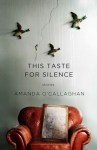
Amanda O’Callaghan, This taste for silence (#BookReview)

Book coverShort story collections are rarely recognised in literary fiction awards, but Amanda O’Callaghan’s debut collection, This taste for silence, was shortlisted for this year’s Readings Prize for New Australian Fiction. The judges described it as “inventive in its themes and by an author unafraid to enfold her readers into unsettling reading experiences”. I would agree. This taste for silence is full of unusual turns that force us to see an issue or event from a different – and often unsettling – angle.
In an interview conducted by Readings, O’Callaghan says:

I certainly did not write these stories with any theme in mind, although once I saw the whole manuscript it was clear that themes were emerging all on their own. It soon became apparent that I liked writing about people with secrets. Your description of “unspoken histories” is perhaps closer to the mark; I do like thinking and writing about characters who, for a variety of reasons, cannot articulate how they feel, or what’s happened to them. Or what they’ve done.

As a result, this collection has been given an over-riding title – which I rather like – rather than being  titled for one of the stories contained within. Like O’Callaghan’s interviewer above, I too would have said that the book is more about unsaid things than about secrets, though of course, the former often implies or results in the latter. Some of these unsaid things may be deliberately so – or deliberately withheld for a time – while others are things, as O’Callaghan says above, that people can’t easily articulate.

So, to describe the book. It contains twenty-one stories, ranging  from flash or micro fiction pieces to the last and longest story, “The painting”, which runs for 40 pages. Fifteen of the stories have been published before, many through flash fiction competitions. Two of the longer stories were published in the (sadly) now-defunct Review of Australian Fiction. One of these is the opening story, “A widow’s snow”. It provides a perfect introduction to the collection because not only does it introduce the reader to the main ideas O’Callaghan explores in the collection, but it also exemplifies her skilled command over narrative. By this I mean the way she can string the reader along with little hints about what is really happening without ever letting our focus drift away from character to plot. Plot is not the important thing for O’Callaghan. Rather, it’s how, as Eddie ponders in “The painting”, characters cope with the “endings of things”.

Endings, then, are a thread in this collection, and, let’s not be coy about it, by “endings” I mean death, because most of the stories deal with death in some way. Murder, suicide, euthanasia, drowning, miscarriage, war deaths – along with the more usual deaths from illness – occur. Most of these deaths, though, don’t occur in the actual story. Two deaths, for example, are referred to in “A widow’s snow”, but both have happened before the story commences. The story starts lightly enough:

Roger, Maureen decided, is the kind of man who would appreciate an old-fashioned pudding. She flicked through the best of her recipe books, toyed with ideas like apple tart with a rich pastry crust – Gerald’s favourite, so not really an option – and all manner of sponges, even soufflés. She braved the mole-eyed newsagent (twice divorced, blinking at the door for a new, early-rising wife) and bought a couple of cookery magazines.

What an assured start to a story – and to a collection. There’s the humour, the hints about Roger’s character and Maureen’s hopes, and the straight but evocative language. The domestic details in the unfolding of this surprisingly shocking story are on point, skewering character and nailing the tone perfectly. In this story, it’s Roger who has the secret and Maureen who must decide how she’s going to cope with it. After this story, we know to be prepared for anything, and yet, I was still surprised, more than once, as I read on.

“A widow’s story”, told third person, is one of the longer pieces. It’s followed by a flash fiction piece, “Un uncommon occurrence”, which won the Allingham Flash Fiction Competition in 2015. (You can read it on their site.) This story is told second person and is, ironically, about what women are so often told is a “common” happening. You can probably guess what this is. The third story, “The turn”, is also told second person. It won the Carmel Bird Award for New Crime Writing, also in 2015. This is quite a macabre story, one that unsettles the reader by encouraging us to engage with the narrator until we get to the point where have to accept that we’ve been taken in … and yet, even then, we are forced to think around all the corners.

And so the stories continue, introducing us to a wide cast of people, young and old, male and female, some of them confronted with the ordinary, and others with the extraordinary. One of the impressive things about this collection, in fact, is the variety of characters and situations O’Callaghan presents to explore these gaps and silences. One of the stories I loved – which I won’t name so it won’t be spoiled if you read it – is told in the voice of a hoarder. As in most of the stories, its narrator’s true situation is only slowly revealed, in this case because she knows her behaviour is not socially acceptable. Once again, we are encouraged to see her from multiple angles rather than from the more usual, and simplistic, judgemental one.

The interesting question hanging over most of the collection’s characters is when or whether to speak the unspoken. Roger, in the first story, seems to decide that if there’s going to be a future in his burgeoning relationship with the titular widow, he needs to come clean. Other narrators, most of them first person, can’t help but let their story out, sometimes in a confessional tone, sometimes to relieve or share their pain. The practical, can-do Justin in “Legacy”, for example, is permanently scarred by his good deed, pondering “who would have thought practicality could be such a deadly characteristic?” The underlying point to the collection, then, is that unsaid things are tricky – left unsaid they can burn you up or lock you out from others, but, sometimes, saying them can have the same result.

So This taste for silence is a compelling but provocative book that forces us to confront the silences in our lives, to consider them from multiple perspectives and ask whether they work for ill or good. Our hoarder, for example, thinks the latter. Her story ends with her returning to her silent ways: “The house feels glad again, released. It hums with the joy of things ending”. Is it reasonable for us to disagree, much as we might like to? I suggest you read the book to see what you think.

AWW Challenge 2019 BadgeAmanda O’Callaghan
This taste for silence
St Lucia: UQP, 2019
197pp.
ISBN: 9780702260377

(Review copy courtesy UQP)

Kim Scott, Katherine’s tropical housing precinct 1946-1956 (#BookReview)

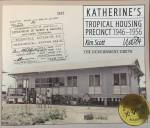
Book CoverDo you have a favourite house that you lived in? I do. It’s the lovely old Queenslander my family lived in for most of my primary school years. It was in Sandgate, Brisbane, and I still have vivid memories of those days, and that house and garden. Kim Scott, the author of Katherine’s tropical housing precinct 1946-1956, also has such a house, the one her family moved into in Katherine when she was three years old. It was a 1956-built Type D1 N.T.A. (Northern Territory Administration) house and she loved it so much that many years later, she bought herself a similar house, a Type L “New Series” house.

The thing about these houses – like my Queenslander – is that they were built for the tropical climate. For a start, they were elevated, and had louvres, both of which facilitate the management of airflow so essential to cooling. The effect of this is that they are comfortable to live in – and are energy efficient – but what Scott most loves is “the feeling of the outside coming in” that comes with this design. It’s none too soon, I’d say, to produce a book about building environmentally-suited houses, particularly when, even in Katherine apparently, the ubiquitous brick house has been taking over. Scott is very aware of this as she writes in her introduction:

My hope is that the historical significance of these first, high quality, permanent houses, which are a key part of Katherine’s housing career will be recognised. Additionally, I hope they might spark some interest in the construction of houses that are more suitable for living in the tropics and for the remote living conditions of outlying communities. Houses that use easily available, sustainable materials and are designed with a smaller footprint, specifically to make the most of the environment, as an alternative to the brick and concrete housing built today.

Now, a book like this risks being very dry but, while a lot of information is imparted in this just-over-100-page book, Scott’s personal engagement with the subject enables her to inject the book with some local flavour, with a sense of who lived in (including her own family) and built these houses. The book is logically structured, and liberally illustrated as you really want in a book like this. There are copies of original plans, old and contemporary photographs, and artist’s illustrations by Scott herself. The book starts with a brief history of tropical architecture in Australia, including the work of Beni Burnett in Darwin in the 1930s. (We loved seeing his houses there, in Myilly Point.) She then writes about land ownership in Katherine and the Commonwealth government’s housing program for Katherine, before getting onto more practical matters:

  • the house designs and plans;
  • the building contractors;
  • the building materials; and
  • the provision of essential services (like water, electricity, sewerage and rubbish collection).

In her final chapter, “Living in Commonwealth houses”, she shares her family’s experience of living in these houses, using both her own memories and documentary and verbal evidence from her family.

Scott also refers, at times, to the “local Aboriginal people”, noting, for example, some ongoing hurts “from Aboriginal families who owned titled property in Katherine but could not produce the title after the war, so lost their land”. Early in the book she notes that there is no heritage protection for the government tropical houses still remaining in Katherine. Maybe this book will provide an argument for rectifying this oversight!

It’s clear that this book was a real labour of love, one that Scott worked on for a long time. One of the things I greatly enjoyed about reading it was her sharing of her research process, not only because it was interesting but because it also assures the reader that the work is as authoritative as she could make it. There were many reasons why the book took a long time to write, one of which was being told, falsely as it turned out, that the original houseplans for these government designed and built houses had been lost during Cyclone Tracy. She engaged family members in the on-the-ground information gathering process in Katherine; she scoured archives and libraries in Adelaide, Melbourne, Brisbane, Canberra and Perth, as well as Darwin; and she read books on the subject, such as David Bridgman’s on Beni Burnett (BCG Burnett, architect). I loved her comment, after describing yet another serendipitous discovery, that she “was beginning to feel the whole process was dependent on the serendipity phenomenon”. I suspect that research is often like this, particularly in the early stages of projects that don’t have obvious (or easily available) paths to follow.

In her Conclusion, Scott returns to the points I quoted from her Introduction, but this time with a more personal spin. She writes:

If we had continued to build tropical housing that was specifically designed for Katherine’s climate, we would today have a town with a unique architectural style. One that perhaps may have drawn more people to our town and projected a more open, inclusive image of Katherine. I have seen the town develop from elevated, open homes with little privacy and security, with windows and doors flung open, to solid brick houses with their thick walls and windows tightly shut and barred. I know what image I would rather see.

Katherine’s tropical housing precinct 1946-1956 is a self-published book, but Scott has done the sensible thing and used a graphic designer and an editor. The result is a book that is nicely produced and that makes an excellent contribution to both the history of Northern Territory architecture and the local history of Katherine. Scott’s labour of love has, I’d say, borne worthwhile fruit of which she can be proud.

AWW Challenge 2019 BadgeKim Scott
Katherine’s tropical housing precinct 1946-1956
Katherine: Kim Scott, 2019
103pp.
ISBN: 9781642045420

Monday musings on Australian literature: Random thoughts from the mid-1930s

I’ve written a few posts in recent months about Australian literary culture in the 1930s – on moving beyond “gumleaf and goanna”, on setting vs character, and two (here and here) on where Australian literature was heading. This week, I’m returning to the topic to share a random selection of comments made about Australian fiction in the newspapers around the middle of the decade, a time when life was still pretty tough due to the Great Depression.

Writing from real life

Book coverC.H. Wales (whoever s/he is) was inspired by the death of John McCarthy, who inspired ‘Irish Mac’ in Mrs. Aeneas Gunn’s 1907 novel, We of the Never-Never, to write about the frequent use made by Australian authors of people from real life in their novels. Writing in Adelaide’s Chronicle in June 1934, Wales comments that “the ways of life in the outback are accepted as a commonplace by people in the Commonwealth, but are learned of with amazement by people overseas” and suggests that it is therefore “no wonder, then, that our authors weave the romance of this life into their novels”. A life, he says, that includes cattle stations as big as Surrey and more, that involves using a flying medical service, and in which children who are five years old have “never seen a shower of rain”.
Wales names some contemporary writers continuing this tradition – William Hatfield’s Sheepmates (1931), which is dedicated to “the real life characters in the book”; Myrtle White’s evocatively titled No roads go by (1932); and, more famously, Ion Idriess’ Lasseter’s last ride (1931), which “adds another illuminating but tragic page to the annals of Australian exploration, which in years to come will supply a useful link with literature dealing with the history of the foundation and development of our Commonwealth and Empire”.

Interestingly, the two male writers here have Wikipedia articles, but not Myrtle White. However, like them, she does have an ADB entry (linked on her name), which includes this:

When her three children were older and she had some leisure, White began writing. At Wonnaminta, despite endless interruptions, she worked meticulously on her drafts which she typed with one finger. The result was No roads go by (Sydney, 1932), an account of life at Lake Elder, rather in the tradition of Mrs Gunn’s We of the NeverNever. With humour and resilience, White described the remote station surrounded by sand ‘insidiously creeping up the six-foot iron fence, which was our frail barrier against all that moving country’. Drought, flood and near death were presented in intense but restrained prose.

Stories about the past

Historical fiction, it seems, was as popular then as it is now. My random reading of “new fiction” columns revealed a goodly number of novels about Australia’s past, including:

  •  John K. Ewers’ Fire on the wind (1935) is, says the reviewer in Melbourne’s Leader, “a story of Gippsland nearly forty years ago, culminating in the disastrous bush fires of February, 1898”. Ewers, says the reviewer, was a school teacher in Perth who “has not lived in Gippsland, but he has derived his local color from relatives who spent part of their lives there, and lived through the terrible experiences of Black Thursday […] although the author is not a Gippslander he knows the bush and the settlers, and on that account the background of his story has the note of realism”.
  • Alice Meagher’s The moving finger (1934) was published to coincide with Victoria’s centenary. The South Coast Times and Wollongong Argus reviewer writes that “while not a history, the story gives an interesting outline the early days. There is a brief mention of the Eureka stockade, and a realistic description of the heart-breaking work in the mallee country. The graphic story of a bushfire helps to make one realise what the pioneers of this country had to go through.” The West Australian reviewer (below) says that it shows “the growth of the State in a comparatively brief period of time”.
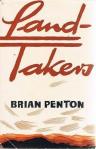
  • Book coverBrian Penton’s Landtakers (1934) is described as being among “other readable novels published in Australia”! Damned with faint praise? This West Australian reviewer describes it as “the usual type of tale that deals with Penal Settlement days, whereof Marcus Clarke’s For the term of his natural life is the great and abiding examplar”. Penton, who has a Wikipedia page like Ewers above, was an Australian journalist and novelist. Landtakers, his first novel, apparently sold well.
It’s interesting to see the specific mention of Ewers’ lack of personal experience about Gippsland and how he overcame that. I also liked the inference that fiction can tell us about who we are.

Other stories

Book coverTrove revealed many other books of different genres and styles, so I’ll share just a few, the first group coming from the West Australian (linked above):

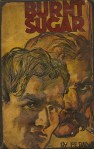
  • F.E. Baume’s Burnt sugar (1934), described as “a powerfully-written romance of North Queensland, and of Italian settlers, slightly at variance over their racial divergencies”. Baume was a journalist, author, and radio and television broadcaster, well-known to some boomers!
  • Winifred Birkett’s Three goats on a bender (1934), described as “a highly farcical story, which has, however, its amusing moments”. I’ve mentioned Birkett here before, as she won the ALS Gold Medal in 1935 for another novel, Earth’s quality.
  • J. J. Mulligan’s A gentleman never tells (1934), described as “the surprising adventures of the versatile Lord Gerrard Fitzgerald in London, Paris, on the Riviera, in Egypt and elsewhere”. The reviewer calls it “a modern picturesque story” and “remarkably entertaining”. S/he also says that it’s “none the worse for getting away from the conventional and often tedious setting of the ordinary Australian novel”. But, Mulligan doesn’t appear in Wikipedia or the ADB.
  • Robert Waldron’s The flying doctor (1934), described as “the first romance — so far as we are aware — in which the leading motive is that admirable movement for supplying medical aid to persons in isolated districts of Australia by means of flying machines”. As with Mulligan, I can’t find him in Wikipedia or the ADB.

From the above-linked Leader article comes the comment that “there are few Australian novels ‘with a purpose’ in these distressful days” but that Ambrose Pratt “has attempted one in his new book, Lift up your eyes.” (1935). The reviewer wonders, however, whether the book

will add to his reputation as a writer or really further the causes of the ideal life and social and moral reconstruction which, it is to be presumed, are part of its justification. It is a Melbourne story, and some of its pleasantest passages describe hill-scenery and touch on life in and around the Victorian metropolis. But the strain upon the credulity of the reader is excessive and there appears to be an almost complete disregard of the “unities.”

S/he finds it hard to reconcile “the idealism and the religious intensity of feeling attributed to the leading male character” with his “Machiavellian conduct of a gigantic gamble in wheat”, but suggests the book “will excite curiosity and discussion”. Pratt was a prolific novelist who appears in both Wikipedia and the ADB. ADB says that in 1933 he founded “a League of Youth dedicated to the ‘protection and preservation of the flora and fauna of Australia’ and ‘the development of ideals of citizenship in the minds of young Australians'” and that the latter aspiration was reflected in Lift up your eyes.

Book CoverThose versed in the period will know that I’ve not included some of the better known writers. This is partly because some have been mentioned in previous posts, but more because they didn’t pop up in my random search of this mid-30s period. One did, however, appear – Christina Stead’s The Salzburg tales. However, I have decided to hold it over for a future post as she’s worth a special focus.
Notwithstanding the above, the most notable observation to make, of course, is how few of these books and authors we know now. That may not be a bad thing, given the reviewers’ comments, but I love that Trove enables us to obtain a picture of what was being written and read at the time, and what the commentators thought. It all contributes to our knowledge of Australia’s culture and literary history.

Elizabeth Kuiper, Little stones (#BookReview)

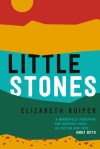
Book coverAnnouncing their 2019 longlist back in February (see my post), the Stella Prize judges said that they “wished for more representations of otherness and diversity from publishers: narratives from outside Australia, from and featuring women of colour, LGBTQIA stories, Indigenous stories, more subversion, more difference”. Elizabeth Kuiper’s debut novel, Little stones, may not exactly fulfil this wish for subversion and difference, but it is set in Zimbabwe, and that’s certainly a start.

The main story concerns 11-year-old Hannah’s life as the daughter of divorced parents – and what ensues when her mother decides to leave Zimbabwe, wanting to take her daughter with her. Her father’s up till then somewhat controlled anger against her mother intensifies, and he does all he can to prevent this happening, despite the fact that he has shown little commitment to the real business of loving and rearing a child.

It’s not a particularly new story, but this one has an added layer; it’s the early 2000s and Hannah and her parents are middle-class white Zimbabweans living under Robert Mugabe’s increasingly violent regime. Life is not easy for her family, which includes her tobacco-farmer grandparents, with African nationalism ramping up against what Hannah comes to recognise as “crushing colonisation”.

The story is told first person by Hannah, and this is both its strength and weakness. Strength because Hannah, though intelligent and observant for her age, is a naive narrator. She can only see through an 11-year-old’s eyes, while we, of course, know or can guess what is really happening, whether this is the political violence and corruption happening in the background (and sometimes even closer) or the more personal conflict happening between her parents. So, for example, early in the novel she hears her mother and grandparents talking, yet again, about the Warvets, whom she understands to be “a big family who wanted to steal farms from everyone in Zimbabwe”. Finally, she insists on being heard:

Mum,’ I insisted. ‘I don’t want us to give our farm away to another family.’
‘Another family?’ Mum sought clarification.
‘The Warvets.”
Mum looked around the room, first at Nana, then Grandpa, and let out a sigh. She explained to me that the War Vets were not an extended family. They are a large group of people called the ‘War Veterans’ who mobilised to take back what they saw as their land.

The naive narrator voice achieves a few things. It conveys how unsettling it is for children to be living under stresses that they don’t fully understand, but it can also keep the tension down a little because the full horrors are not made explicit to us (albeit we can guess them.) Hannah is a lovely character, whose special and sustaining relationships with her best friend Diana Chigumba and the family’s Shona housekeeper (not “maid” says her mother) Gogo, are delightfully conveyed. She can, being 11, be naughty, but she’s at heart a sensitive, loving, well-adjusted child.

However, this voice can be a weakness too. It’s difficult to sustain the voice of a child – and unfortunately, perhaps, I’ve just read Tim Winton’s The shepherd’s hut which does it extremely well. Here, I felt that at times Kuiper’s Hannah used language and concepts that an 11-year-old would not use. We are told she’s intelligent, and good with language, but still I wasn’t always convinced. Here, for example, she talks about the guardianship court case her mother is fighting:

In the past, I would have tried to offer whatever morsel of advice I could manage, but as the court case progressed I came to realise that most of the time she was talking about herself, and so I absorbed her rhetorical questions as a necessary and cathartic part of the process for her.

This, and examples like it, seem rather sophisticated to me in both expression and idea. The question is, are we supposed to believe that this is 11-year-old Hannah telling the story as it happened or older Hannah telling the story? I’m not sure it’s always completely clear, but I felt it was intended to be the former.

All this brings me to the question of whether Kuiper’s story would have been better told as a memoir, because I understand that the novel is, like most debut novels, autobiographical. Of course, I don’t know where the facts of her life end and the fiction begins, but it’s a question that I pondered as I read. And, also of course, memoir would bring its own challenges for Kuiper that she may not have wanted to confront. I don’t blame her for that.

Anyhow, this is a minor quibble if you are prepared to go with the flow, which I decided to do. Kuiper handles well the challenge of conveying the difficulty of the situation for Hannah’s family as white Zimbabweans in an increasingly tense and dangerous atmosphere. She shows that it’s not all about race, or simply about race. There’s the issue of different races – Shona versus Matabele – and there’s class. Hannah’s best friend Diana, for example, comes from a well-to-do black family. Kuiper also handles convincingly the parallel, and perhaps most significant for Hannah, issue of separated parents wrangling over their daughter. The descriptions of Hannah’s father’s increasing manipulation of the system to get his way are infuriating if not chilling – but oh so real. Hannah, in fact, has to grow up fast if she is to survive this dual personal and political unrest she finds herself in.

Little stones is, then, essentially, a coming-of-age story, which also works as a Young Adult-Adult crossover novel. It offers something special to readers in both these areas because its perspective is a rare one for us to read here; because it is told with a lovely vitality and attention to the details of a life lived under complex political and personal circumstances; and because it manages to tread that fine line that shows rather than judges. And that, I think, is impressive.

Lisa (ANZLitLovers) also enjoyed this book.

AWW Challenge 2019 BadgeElizabeth Kuiper
Little stones
St Lucia: UQP, 2019
264pp.
ISBN: 9780702262548

(Review copy courtesy UQP)