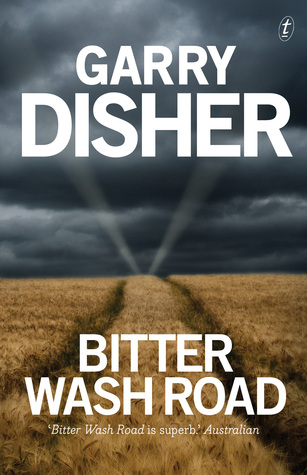
Garry Disher, Bitter Wash Road (#BookReview)

Garry Disher’s Bitter Wash Road has been sitting on my TBR pile for over seven years. It was sent to me on spec but, as crime is not my preferred reading, I didn’t feel obliged to read it – and yet, I hung onto it, just in case… So, when Kim (Reading Matters) decided to run an Aussie-New Zealand crime month, I knew what I was going to read.

Actually, though, this is not the first Disher to appear on my blog. Text had previously sent me an earlier one of his, Wyatt, which I managed to talk Son Gums into guest reviewing for me. You can read his review here. However, Wyatt is a thriller with an anti-hero as its protagonist, so is very different to Bitter Wash Road, a police procedural featuring the more sympathetic constable, Paul Hirschhausen (Hirsch).

More sympathetic he may be, but straightforward he is not, because Hirsch is a recently demoted detective who has been sent three hours north from Adelaide to a “single-officer police station” in Tiverton, a fictional “blink-and-you’d-miss-it-town” in struggling “wheat and wool” country. Having previously worked with a team of corrupt detectives, Hirsch, though not found guilty (which, he realises, is different to being found “not guilty”), has “a stink clinging to him”. For whatever reason, Internal Investigations is not convinced he’s clean. Consequently, Hirsch finds himself investigating crime in a fearful community where the police are hated, while also having to watch his own back. Who can he trust?

“an air of waiting”

To my surprise, I greatly enjoyed this novel. It’s well-plotted, so that while the ending isn’t a complete surprise – surely it’s not a good crime novel if it is? – there are enough possibilities thrown in your path along the way to keep you pondering which way it will go. However, it’s not the plot that grabbed me. It’s the characterisation, the writing, and the subtle way contemporary issues are referenced or implicated in the story.

Hirsch is introduced in the first paragraph as the “new cop in Tiverton” and then we immediately meet him through a phone conversation with his sergeant, Kropp, in nearby Redruth. Some shots have been heard out near Tin Hut and he is to investigate. We are then launched into the action as Hirsch drives off, but we are also introduced to his character. He’s observant and careful, but also, probably sensibly, a bit paranoid. When he comes across a gum tree blocking the road, he sees it as a potential ambush, but on closer inspection it’s simply a fallen branch:

All that sinewy health on the outside and quiet decay within.

A bit like the police, really.

With such language the tone is set. Hirsch is isolated, physically and psychologically, like many in the region, for different reasons. This is a tough place where Sergeant Kropp’s two brutal constables, Nicholson and Andrewartha, terrorise the locals, paying particular attention – if you know what I mean – to young girls and Indigenous youths. Hirsch needs all his resources to navigate this lot and the rest of the community’s officials. Fortunately, he’s a true policeman, sizing up every place and person he sees or comes across, alert to every nuance in behaviour. This is, after all, the key both to survival and getting at the truth.

Now, I’m not an expert on writing about crime, but even I realise that I haven’t actually mentioned the crime. It wasn’t the gunshots out near Tin Hut, in fact, but the body of a dead girl out that way, along Bitter Wash Road. Hit and run? Or something else? A little later, a woman is found dead, this time looking like suicide. What is going on in the area? Were these deaths murders? Are they connected?

Set in a dry, struggling outback community, Bitter Wash Road is an example of a sub-genre that is now loosely known as outback or drought or bush noir. It is typified by remote communities living in harsh, unforgiving landscapes, and, as Disher makes clear, by the sort of sexism and racism that is peculiar to such settings (which is not to say they aren’t found in other settings too.)

In this sub-genre you would, I expect, find descriptions like this:

A five-hour round trip. Lengthening shadows striped the crops, the highways, the hillsides. More birds on more wires. An air of waiting, of things drying, turning to dust.

So, with suggestive writing like this, a compelling and complex character like Hirsch, and a plot with as many dips and turns as its titular road, Bitter Wash Road makes splendid reading. I’m not surprised that Disher decided a few years later to return to Hirsch with Peace (2019) and Consolation (2020).

Read for Reading Matters Southern Cross Crime Month. Kim has also reviewed this novel.

Garry Disher
Bitter Wash Road
Melbourne: Text Publishing, 2013
325pp.
ISBN: 9781922079244

Review copy courtesy Text Publishing

Jayant Kaikini, No presents please: Mumbai stories (#BookReview)

Book cover

Jayant Kaikini is an Indian (Kannada) poet, short story writer, playwright, a public intellectual and a lyricist in Kannada Cinema. Kannada is new to me, but it’s the language widely spoken in the Indian state of Karnataka, where Kaikini was born (in 1955). He is regarded, according to Wikipedia, as one of the most significant contemporary writers in Kannada and is “credited with revolutionising the image of Kannada film songs”. I make this point because references to film and film songs abound in No presents please.

No presents please is a collection of short stories that are both ordinary and extraordinary at the same time, but before I talk about them I’d like to share some insights from the translator, Tejaswini Niranjana, who was also involved in selecting the stories. She shares the issues she faced in translating Kaikini’s work, particularly “the flavour of the speech, the hybrid Hindu-Urdu-Dakhani speech, that is the cultural vernacular of Bombay” and is prominent in the stories. It’s clear that there were vigorous discussions about translating this speech. Kaikini apparently complained about her “frugality”, but she was worried about how the book would challenge readers not proficient in Hindustani. She solved it “by doing parallel translations–leaving in the Hindustani but giving the meaning in English either close by or elsewhere in the sentence so that the attentive reader eventually understands the meaning”. I read this discussion after reading the book. I must say that there were times when I was a little challenged, but my reading philosophy is to go with the flow and, overall, Niranjana’s approach combined with my strategy worked!

The other point I want to share is Niranjana’s insight into the content of these stories which, as the subtitle clearly states, are about Mumbai. But, here’s the thing: Kaikini has, Niranjana writes, “mastered the ruse of the ordinary”. By this she means that every story “begins with an extremely ordinary person or situation–sometimes both” but that “the ordinary often reveals itself as surreal”. Her challenge was

to maintain the ordinariness of the narrative until it could be maintained no longer, and to let the translation lead the reader along without drawing attention to itself. At the same time, when the surreal began to seep into the story, and the ruse of the ordinary opened out onto a different terrain of engagement for the characters, the translation had to find the right words to signal this “turn”.

She’s right about the stories moving, almost imperceptibly at times, from the ordinary to the surreal. I suspect that Kaikini’s (sometimes subtle, sometimes less so) references to cinema help us readers have the right mindset for shifting between reality and illusion, which is more how I would describe most of the funny little moments, than actual surrealism.

So, the collection. Titled by last story in the book, it contains sixteen stories, dated between 1986 and 2006. All are written third person, and explore Mumbai as it is experienced by its “ordinary” inhabitants. The first story, “Interval”, is about a young couple who meet at a cinema where he works and she’s an audience member:

That these two were planning to run away together early tomorrow was a fact nestling snugly in the dark, like the secret of a bud that had not yet blossomed.

You can tell here that Kaikini was first a poet. What happens is not at all what you would expect – which is one of the delights of this collection. The stories are not predictable, but neither do they have dramatic twists. Things just work out differently, quite often. In a neat rounding off, the last, titular, story, is about a young engaged couple with no family, and what happens as they draft their wedding invitation.

“the friendships among strangers” (City without mirrors)

In between are stories about, for example, a father looking for a husband for his daughter (“City without mirrors”), the despairing father of a very naughty but irrepressible 6-year-old-boy (“A spare pair of legs”), a bus-driver wanting to return to his village for an annual festival (“Crescent moon”), a stunt man (“Toofan Mail”), roommates who suddenly become estranged (“Partners”), a loyal maid who becomes ill (“A truck full of Chrysanthemums”), and a child quiz contestant (“Tick tick friend”). These stories pull no punches about the lives of people living on the margins or struggling in some way. Kaikini is not afraid to expose some of Mumbai’s (and India’s) underbelly. In “City without mirrors”, a bachelor is “aghast at the cruelty of a situation in which an old man had to speak to a complete stranger about the proof of virginity of his nearly forty-year-old daughter”.

Many of the stories, like “City of mirrors”, involve chance meetings between strangers, strangers who tend to offer something positive, rather than danger. “Tick tick friend” is about a young quiz contestant coming to the big city to compete in a television studio that happens to be in the basement of a hospital. Schoolgirl Madhu and her father meet a young man in the hospital canteen. His cheeky, positive attitude to life buoys them. Mogri (“Mogri’s world”) grows up in a chawl with her mother and frequently absent father. Early on, she realises that sex can be women’s downfall, but learns through meeting an older waiter at work that there are different ways of being between men and women.

In “Water”, two men, one ill with cancer, meet on a plane and spend a night with the third, their taxi-driver, when a huge storm creates havoc in the city. It’s a moving story, full of philosophical observations about life. Taxi-driver Kunjbhai, answering whether life seems “like hell or like heaven”, says:

Well, everything depends on how we think about it. If I think I’m happy, it’s happy I am. If I think I’m sad, then I’m sad.

That may sound a bit pat, I suppose, but in the context, it’s beautiful. I liked this story for the warmth generated between three strangers.

And that’s the thing about this book. For all the challenges most of its characters face, there is also warmth and humour in the telling, the end result being stories that don’t drag you down but that also don’t lull you into thinking all is well. There’s acceptance and resilience, but also little glimmers of hope in the stories.

No presents please won the DSC Prize for South Asian Literature in 2018. It’s the first translated work to win the award, and the jury particularly noted “the outstanding contribution” of the translator. That tells you, I think, how special this book is.

Jayant Kaikini
No presents please: Mumbai stories
Translated from the Kannada by Tejaswini Niranjana
Melbourne: Scribe, 2020 (Orig. pub. in India, 2017)
267pp.
ISBN: 9781922310187

(Review copy courtesy Scribe)

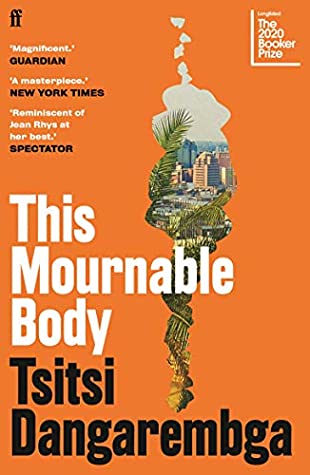
Tsitsi Dangarembga, This mournable body (#BookReview)

Zimbabwean author Tsitsi Dangarembga’s This mournable body was my reading group’s February book. Shortlisted for the Booker Prize, it is Dangarembga’s third novel, and is a sequel to Nervous conditions (1988) and The book of not (2006), neither of which I’ve read. These novels are written in English, the language of Dangarembga’s schooling, though she also speaks Shona.

It is a remarkable book, for its subject matter, vivid writing and the complexity of its protagonist, Tambu (Tambudzai). Wikipedia’s article on Nervous conditions describes Tambu’s character, saying “her desire for an education and to improve herself seem strong enough to overcome just about anything. She is very hard on herself, and always strives to do her best and make the correct decisions”. This perfectly describes the character I met in This mournable body, except that by now Tambu is around 40 years old and disappointed that life has not worked out as she had hoped. Indeed, she is out of work and living in a boarding house, eking out her savings from her previous copy-writing job in order to survive. A sense of failure and an air of desperation surrounds her.

Interestingly, Dangarembga chose a second person voice to tell Tambu’s story. There are various reasons for choosing this voice. Madeleine Dickie chose it for her novel Red can origami (my review) to involve if not implicate the reader in the world she was describing. I don’t know why Dangarembga chose it, but my guess is to convey Tambu’s apparent dissociation from her self. Second person avoids both the objective insight that an omniscient third person voice can provide and the confessional immersion in a life that first person offers. Tambu is struggling; she is caught between her Western-education with its Western-style aspirations and her Zimbabwean family and culture. We see her pain, but second person keeps her and us a little remote from it, as if she and we are watching it, not fully comprehending what is happening.

The novel is set in troubled late 1990s Harare, on the cusp of the millennium. It has a three-part structure – Ebbing, Suspended, and Arriving – which chronicles the trajectory of this period in Tambu’s life. In Ebbing, we see Tambu’s hopes for a successful, secure life, ebb:

Fear, your recurrent dread that you have not made enough progress toward security and a decent living, prickles like pins and needles at the mention of “village.” You have dodged this fear for too long—all your conscious life.

We also learn some of the reasons for the state she’s in, despite having been plucked from her village by her uncle and given a good “white” education. These reasons include the fact that although having gained Independence, Zimbabwe remains a racist place where black Zimbabweans still suffer under the colonialism they “thought” they’d thrown off. Tambu had had a good job as a copywriter in an advertising agency:

you have no one but yourself to blame for leaving your copywriting position. You should have endured the white men who put their names to your taglines and rhyming couplets. You spend much time regretting digging your own grave over a matter of mere principle.

Late in Ebbing, Tambu manages to obtain a decent job as a teacher, but it doesn’t last long, largely because her insecurity – her jealousies and fears – result in her self-destructing.

Suspended starts with her having been suspended from this job and admitted to a psychiatric hospital where her life is effectively “suspended” as she struggles to regain her mental health and equanimity. This she does, with the help of her family, including cousin Nyasha who takes her in. Incomprehensibly to Western-focused Tambu, Nyasha had returned, with her German husband and two children, from an apparently successful life in Europe, to work for the community, and specifically to improve things for Zimbabwean youth.

In the final part, Arriving, Tambu finds herself working for Tracey, her white Zimbabwean nemesis who had been a schoolmate at the prestigious Young Ladies’ College of the Sacred Heart and then her boss at the copywriting agency. Tracey is setting up an eco-tourism business, Green Jacaranda, and sees potential in Tambu – and indeed, Tambu seems to start to find herself, both personally and professionally, but I will leave the plot here …

This mournable body, however, is more than just a story about Tambu. Dangarembga weaves Zimbabwean social and political history into her narrative. While Tambu hadn’t been involved in pre- and post-Independence violence, many in her family had. The impact of war – particularly on women – provides one of the running commentaries throughout the novel. One refrain concerns her sister Netsai’s loss of a leg, which works as a visible reminder of personal and national losses:

Sometimes I ask if people forgot that many people went to war. Because if they have not forgotten, these people in this country, what is going on with them? Why are they so foolish? Do they think we went for this? … This is not what we went for and stayed for without food and blankets, even clothes, without our parents or relatives. Some of us without legs. Yet now we are helpless and there is nothing we can do to remove the things we see that we didn’t go to fight for.

Independence, in other words, is not working out the way they expected. The interplay of race, gender and colonialism continues to impede the country’s growth. Through her characters, Dangarembga powerfully conveys that old mantra “the personal is the political” – even though Tambu, ironically, tries to avoid talking politics with Tracey. “I don’t believe in politics”, she naively tells Tracey.

This mournable body is a serious and often heartbreaking novel, but there is also humour, much of it in the form of irony and satire. Here’s Tracey on her new business, echoing, for different reasons, Tambu’s dislike of “village”:

Everything’s Green Jacaranda eco! And you can’t say village. … That kind of promise doesn’t work these days either. It’s got to sound like fun, not under-development, soil erosion and microfinance.”

Tracey is either oblivious to – or chooses to ignore – the truths of Zimbabwean culture, preferring to exoticise a generalised notion of “Africa” for her business. In one excruciating scene she asks Tambu to organise village women to dance bare-breasted for their tourists.

At the other end of the spectrum is Tambu’s landlady’s now late husband, a black Zimbabwean who had profited from Independence. He had experienced an horrific accident, but

His biggest blow was what happened to his BMW and his temporary relegation to a lowly Datsun Sunny. People admired the stoicism with which Manyanga put up with this.

Dangarembga’s Zimbabwe is a complex society that has been riven by internal and external conflicts over decades, conflicts that are, in part, personified in Tambu’s difficulty in separating out her own goals from the “white” ones she had been educated into. While Dangarembga provides no easy answers, she suggests there are paths of hope, paths that rest with individual people who have a firm grip on what they want for themselves and for their country. This mournable body is an excruciating read at times, but the insights and perspectives it offers, particularly to Westerners whose assumptions it questions, are worth the pain and challenge.

Lisa (ANZLitLovers) was also impressed by this book.

Tsitsi Dangarembga
This mournable body
London: Faber & Faber, 2020 (orig. ed. 2018)
288pp.
ISBN: 9780571355532 (Kindle ed.)

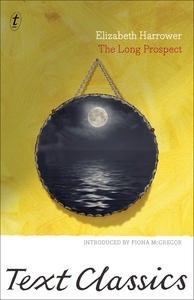
Elizabeth Harrower, The long prospect (#BookReview)

Oppression and tyranny, power and manipulation in human relationships are the stuff of Elizabeth Harrower’s writing, at least in my experience of it, and so I found it again in her second novel The long prospect. Unlike The watch tower (my review), however, which explores the more traditional domination of women by a man, The long prospect’s tyrant is narcissistic grandma Lilian who makes pre-pubescent granddaughter Emily’s life a misery. Why is a novel about a cruel, manipulative person wielding power over someone whom they should love so enjoyable? Let me try to explain …

The long prospect, which was first published in 1958, is set in postwar Ballowra, a fictionalised industrial town based on Newcastle, just a couple of hours’ drive north of Sydney. The major part of it takes place in the home of forty-seven-year-old Lilian who wields sadistic power over all who come within her purview, including but not limited to the aforesaid granddaughter Emily. The novel starts, in fact, with Lilian visiting her ex-tenant and apparent friend, thirty-something Thea, in her new apartment in another part of Ballowra. Lilian walks into the apartment, without being invited, “her eyes on swivels”, and very quickly we realise that this friendship is one in which Lilian has assumed power but is now feeling put out. Words like “disapproval”, “frowning” and “affronted” leave us in no doubt that Lilian’s visit is not the sort of generous one you’d expect from someone visiting their friend in their new home.

This controlling, self-centred, unaffectionate behaviour of Lilian’s, as I’ve said, is not limited to Thea and Emily but extends to all her relationships, including to her daughter Paula, and to the various men who populate the novel, such as the hapless “boy-friend” Rosen and the tender, thoughtful but powerless boarder Max.

At the heart of The long prospect is Emily’s desperate search for affection and attention, which she finally finds in this thirty-something Max, who had been introduced earlier, by name only, as a past lover of Thea. Max warms to the intelligent – but clearly neglected – young girl, and starts spending time with her, mentoring her intellectual and emotional development. Unfortunately, this doesn’t go unnoticed by Lilian’s self-centred and jealous entourage, and eventually insinuations are made that bring about the novel’s denouement. Before that, though, Emily’s blossoming enthusiasm for life and learning is a delight to see.

Harrower constructs her novel and builds up the tone and tension beautifully. She introduces Lilian’s character via her opening visit to Thea. She sets up Emily’s need for affection and her subsequent bond with Max through her previous attachment to Thea and her desperate crushes on teachers. Harrower’s word use is precise, from the recurring appearance of “grey”, describing people and place, to the plain spare language that pares relationships and actions down to their essence. Here’s the desperate Rosen, trailing after Lilian into the kitchen, still hoping she will keep him:

There, catching her, he chances a reproachful expression, seeing that, anyway, her grey eyes were no longer hard, but mild and blank. She had quite abandoned her fiery mood. He was reassured, and smiled at her sheepishly. Her new look must mean apology. In fact, Lilian thought about salmon sandwiches. She filled the kettle.

Catastrophic emptiness

But, now, here’s the thing folks. I finished this book, and half-wrote this post, just before my Dad died three weeks ago. I am having trouble remembering all the thoughts I had while reading it, thoughts that particularly related to Bill’s AWW Gen 3 Realism vs Modernism discussion we were having – but I’ll try. Harrower falls primarily into the Modernist tradition. She reflects the ills of the time through individual psyches, rather than exploring causes and social impacts as we find in Realist books like Mena Calthorpe’s The dyehouse (1961) (my review).

Both Emily and Max feel the psychological impacts of their environments. Early on Emily, desperate to belong, finds herself an outsider yet again:

There was a chill lack of desirability about the room she had left, and about those she might enter – a bleak and rigid lack of warmth that penetrated the future as well as the present and the past.

Max recognises that he had responded to “the catastrophic emptiness of the past few years” by settling for:

Comfortable resignation. He looked at the idea of it. It had not always been that, but the change had been slow and subtle, worked in him secretly. Now the metamorphosis was complete, surprising, disagreeable. (p. 150)

Disagreeable, particularly now that a crisis involving Emily, whom he had wanted to nurture and protect, had come:

Max fought down a sense of alienation … (p. 150)

And yet, in The long prospect there is also a subtle backdrop of the industrialisation that is one of the drivers behind Modernism’s theme of alienation and the individual. Emily’s father Harry Lawrence, on his way for a rare visit with her, considers his old home town:

After years in the country, this subjection to industry, the smoky sky, the matured deterioration immanent at the birth of such towns as Ballowra left him oppressed and indignant. He was unwilling that it should be so bad.

The overriding sense in the book – from all the characters – those we like, and those we don’t, is one of disappointed lives. Max is one of those we like, for his warmth and his capacity for mature reflection:

No external excuse, not lack of this or that fine feeling could be counted as justification. Nothing could undo the harm these casual people had done. Yet, Max argued, they were themselves and lived as they could, and had not been wisely treated either, very likely.

I like the “very likely” qualification! I also like this fundamentally non-judgemental attitude, that doesn’t then follow through to excusing poor behaviour. Max goes on: “it was too easy to exempt from responsibility those who felt no responsibility for their actions. Too easy, reductive, wrong.” In other words, understand but don’t excuse!

The long prospect is thoroughly engaging, despite its overall depressing subject matter. The perfection of Harrower’s insight into human psychology combined with the delicious precision of her writing make it, yes, a joy to read, even though Emily’s plight is heartrending. It’s no wonder, really, that Patrick White was disappointed when Harrower stopped writing. He knew a good writer when he saw one.

Read for Bill’s (The Australian Legend) AWW Gen 3 Week; also reviewed by Kim (Reading Matters).

Challenge logo

Elizabeth Harrower
The long prospect
Melbourne: Text Classics, 2012 (Orig. ed. 1958)
277pp.
ISBN: 9781922079480

Gene Stratton-Porter, The last Passsenger Pigeon (#Review)

I have passed up reading and/or posting on so many Library of America (LOA) Story of the Week offerings over the last months – sadly, because there have been some excellent selections chosen for their political relevance. However, when I saw a sentimental favourite, Gene Stratton-Porter (1863-1924), pop up, I knew I had to break the drought.

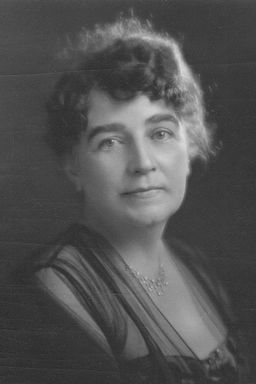
Gene Stratton-Porter (Uploaded to Wikipedia, by gspmemorial; used under CC-BY-SA-4.0)

Some of you may not be familiar with this American Midwest author who wrote, says LOA, “sugary (and extremely popular) fiction to underwrite her work in natural history”. It was one of these works, The girl of the Limberlost, that I loved, and later introduced to Daughter Gums who also loved it. Yes, it was sentimental, though it has its tough side, but it did also leave an everlasting impression on me of its setting, Indiana’s Limberlost Swamp. According to LOA again, it was the immense success of this book, and Freckles which I also read, that resulted in her publisher agreeing to also publish her less saleable nature books. She was, writes LOA, “a fighter for the world she saw disappearing around her, as Standard Oil of Indiana drilled new wells and farmers drained more land”.

Interestingly, LOA’s as usual excellent introductory notes focus not on Stratton-Porter but on her subject, the Passenger Pigeon. LOA discusses others who have written about this bird – novelist James Fenimore Cooper, a chief of the Potawatomi Indians Simon Pokogon, and naturalists John James Audubon and John Muir – before eventually getting to Stratton-Porter herself. LOA’s point is to document the extinction of these birds from the early 1800s, when they were still seen in immense flocks, to a century later in 1914 when the last one died in captivity. Stratton-Porter wrote her piece just 10 years after that.

So Stratton-Porter’s piece. She commences by describing the beauty of her childhood farm, including its woods and forests where birds, such as the Passenger Pigeon, loved “to home”. She writes, introducing her environmental theme, that:

It is a fact that in the days of my childhood Nature was still so rampant that men waged destruction in every direction without thought. Nature seemed endlessly lavish …

When people started to clear land they “chopped down every tree on it” without, she says, having any “vision to see that the forests would eventually come to an end”. She writes – and remember, this was 1924:

… as the forests fell, the creeks and springs dried up, devastating winds swept from western prairies, and os the work of changing the climatic conditions of the world was well under way.

She talks of animals and game birds “being driven farther and farther from the haunts of civilisation”, but she also talks of people who did not believe in living so rapaciously, preferring instead to live in log cabins in small clearings. She describes her family’s own hunting practices, including of quail. As their numbers decreased, her minister father forbade the family’s trapping and egg-gathering. He’d noticed that when bird numbers were low, grain-damaging insect pests were high.

He had never allowed, however, the hunting of Passenger Pigeons, despite their being significantly more numerous in those days than quail. Stratton-Porter thinks this stemmed from his having “a sort of religious reverence” for pigeons and doves. Others, though, had no such qualms, and she describes some brutal hunting practices involving wild pigeons, which apparently made good eating. Gradually, it became noticeable, writes Stratton-Porter, that their numbers were decreasing. Not only did her family miss the sound and beauty of these birds, but

The work that they had done in gathering up untold quantities of weed seeds and chinquapins was missed and the seeds were left to germinate and become a pest, instead of pigeon food.

Once again, she notes the wider ecological or environmental implications of species reduction or loss. She then writes of the death of the final two birds in captivity before sharing her own searching for any remaining wild birds. It was while she was watching and photographing, over a period of time, a brooding goldfinch, that she heard the unmistakable “wing music of a bird that should reasonably have been a dove, but was not”. She describes this beautiful bird, but says “it had not the surety of a bird at home; it seemed restless and alarmed”. This was, she argues, “one of the very last of our wild pigeons”, a male bird “flying alone, searching for a mate and its species”.

Stratton-Porter closes her essay with a cry from the pigeon, whose song she says sounds like “See? See?”:

Where are your great stretches of forest? Where are the fish-thronged rivers your fathers en- joyed? Where are the bubbling springs and the sparkling brooks? Why is this land parching with thirst even in the springtime? Why have you not saved the woods and the water and the wildflowers and the rustle of bird wings and the notes of their song? See what you have done to me! Where a few years ago I homed over your land in uncounted thousands, to-day I am alone. See me searching for a mate! See me hunting for a flock of my kind! See what you have done to me! See! See! See!”

And that was written in 1924! Nearly 100 years ago, and yet we still destroy habitat including, here in Australia, that of one of our most popular native animals and national symbols, the koala. Will we never learn?

Gene Stratton-Porter
“The last Passenger Pigeon”
First published: Good Housekeeping, 1924 (Collected in Tales you won’t believe, 1925)
Available: Online at the Library of America

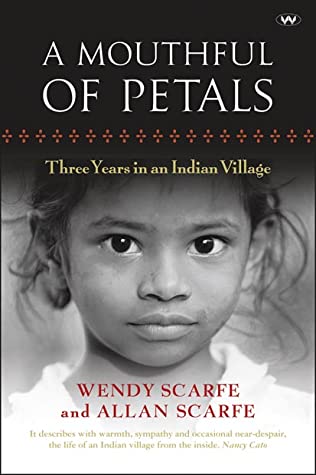
Wendy Scarfe and Allan Scarfe, A mouthful of petals: Three years in an Indian Village (#BookReview)

Husband and wife writers, Wendy and Allan Sharfe, first published A mouthful of petals, the story of their three years in the remote Indian village of Sokhodeora, in 1967. It is not, however, their only book. Wendy Scarfe has written poetry and several novels, two of which I’ve reviewed here, Hunger town and The day they shot Edward, while her late husband, Allan, also wrote some novels and short stories. Collaboratively, they wrote several books besides A mouthful of petals, including a biography of Indian independence activist Jayaprakash Narayan.

It was Jayaprakash, or JP as he was known, who invited the Scarfes to return to Sokhodeora in 1960, after their 6-month volunteering stint, because he believed serving India was in their hearts. Their service would, he wrote, be “of great value to us and would add to that international good-will and understanding that are so badly needed”. In their opening chapter, the Scarfes write poetically of the place that was to be their home for three years:

Sokhodeora is a dot that is part of the plain: beautiful, serene, full of a sense of continuity with the very beginnings of human civilisation.

But to enter the narrow, zigzag alleys between the congested houses is to lose much of the impression of beauty and to realise the antiquity of man’s anxiety, poverty and misery.

Their role was to be education-related, though on their arrival JP admitted that “frankly” he didn’t know “what specific, clear-cut work” to give them! Ah, the days before KPIs! (Or, more likely, as the Scarfes say, the difference between Western and Eastern world views.) The big picture, the ideal, was that education was needed, and that the villagers needed to see that education was about more than gaining Government employment, which, of course, most villagers would never do.

And so, the Scarfes set about developing their own goals and schedule of work, regularly calibrating with the supportive JP. Uppermost was starting a school for children and night classes for adults. However, they also responded to the practical reality of village life which was characterised by extreme poverty, which in turn meant problems like hunger and poor health. How can children learn, for example, if they are not reasonably nourished? When Jayaprakash comments on the villagers’ apathy, Wendy replies that she believed it was “nutritional”:

People can’t have physical and mental vitality on two meals of rice and pulse a day. A huge proportion of village women suffer from anaemia and they must be just dragging themselves around.

Here is where we realise that aid work like this requires not just the necessary professional skills – in this case, teaching – but resourcefulness and entrepreneurship. The Scarfes, for example, discovered the existence of a supply of powdered milk, and developed a program for its distribution. They wrote many appeals for foodstuffs, eventually landing a winner with the American Meals for Millions Foundation, which provided an awful-sounding but highly nutritional product called “Mysore Multi-Purpose Food”. Again, they were heavily involved in distribution and teaching how to use it. They looked at other issues too, including the provision of toilets, family planning, the building of a classroom, and so on. All this is macro-level. They also worked at the micro-level, supporting individual villagers in all sorts of ways, especially in obtaining the medical help and pharmaceuticals they needed. It’s no wonder that, as this edition’s Publisher’s Note says, this book served, for years, “as a primer for intending field workers”.

None of this was easy of course, and the challenge was exacerbated not only by the usual infrastructure problems – such as transport – but also by cultural and personal issues, particularly the challenge of engaging the villagers in an environment characterised by caste prejudice, gender inequality and inter-family quarrelling.

A mouthful of petals, then, has plenty of interesting content, but I would also like to comment on the writing. It’s a collaborative book, but what voice do you choose to write a book involving both authors’ lives? Ruth Park and D’Arcy Niland, in their memoir The drums go bang (my review), used first person plural when writing about joint experiences, and third person when writing about the experience of one of them. The Scarfes took a different approach, narrating the book in first person from Allan’s point of view, with Wendy spoken of in third person. It works, but I rather like Park and Niland’s approach.

Overall, the writing is straightforward, as it has to be to impart all the information it does, but there are lovely flourishes all the same, like the description of Sokhodeora I cited early in this post. The book is also enhanced by the people populating it. Not only are we given some insight into JP, but the Scarfes tell stories about several villagers, including the initially apprehensive but willing Mahadev who works for them from the start and the ultimately tragic Kesurwa whom they choose to train as their kindergarten teacher. These people give life to the bigger picture being told.

Now, when I read a book like this, by which I mean a book that is about a different place and time – after all, we are talking India of 60 years ago – I think about its relevance (beyond any intrinsic interest in the subject matter) to my place and time. This book provided a few such points, one being the importance of education. There’s literacy, of course, but the Sharfes specifically discuss the value of understanding cause-and-effect, of the ability to draw logical or useful conclusions from observation and experience – regarding pain and illness for example – and how this lack impeded village and villagers’ development. This made me think, rightly or wrongly, of what has been happening in the USA recently where there seems to be just that lack of ability in some of the populace. A failure of education?

Then there’s the big point: the idea of having global responsibility for each other. The Scarfes write:

We are all responsible for the human condition and those who are educated are responsible to those who are not.

I like the use here of “responsible to” not “for“. It shifts this idea of responsibility from a patriarchal notion to something more cooperative or service-oriented.

A mouthful of petals is a passionate book that still offers much to think about. It is well worth reading.

Lisa (ANZLitLovers) also enjoyed and reviewed this book.

Challenge logo

Wendy Scarfe and Allan Scarfe
A mouthful of petals: Three years in an Indian village
Mile End: Wakefield Press, 2020 (rev. ed. with Epilogue; orig. ed. 1967)
275pp.
ISBN: 9781743056844

Review copy courtesy author and Wakefield Press.

Bill curates: M.L. Skinner’s The hand

Bill curates is an occasional series where I delve into Sue’s vast archive, stretching back to May 2009, and choose a post for us to revisit. During the latter part of January we will look at some of Sue’s older posts which have relevance to my Australian Women Writers Gen 3 Week, Part II,17-23 Jan, 2021

Mollie Skinner is a little known Western Australian who served as a VAD (nurse) during WWI. Her importance to Australian Literature is that she co-wrote a novel with DH Lawrence, The Boy in the Bush (1924). She also wrote an account of her time as a VAD, and some other novels as well, at least two with some assistance from Lawrence.

_______________________________

My original post titled: “M.L. (Mollie) Skinner, The hand (#Review)”

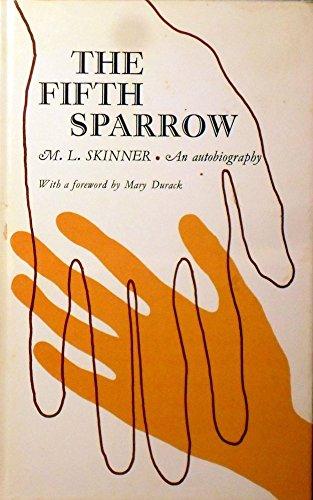
ML Skinner, The fifth sparrow

Pam of Travellin’ Penguin blog read ML Skinner’s short story “The hand” for a challenge she was doing, and, when I expressed interest in it, very kindly sent me a copy. “The hand” is a mysterious little story – and by little, I mean, little in that it takes up less than 7 pages of the anthology, Australian short stories, that she found it in.

Now, the story is a bit tricky, and I think is best understood within the context of Skinner’s biography. She was born in Perth in 1876, but the family moved to England and Ireland in 1878. Mollie was a keen student and reader but had to abandon formal education in 1887 because of an ulcerated cornea, which resulted in her spending much of the next five years in a darkened room with bandaged eyes. After cauterisation partially restored her sight, she started to write poems and stories. Presumably this was around 1892 (ie 5 years after 1887?) when she was about 16 years old. Later she trained as a nurse, which gave her her main living. And then, the ADB biography (linked to above) says something interesting in terms of our reading of this story:  “she recognized within herself an intuitive power, or sixth sense.” A little later in the biography, we are also told that “Mollie believed that God’s hand on her shoulder guided her life. She dabbled in the occult”. She returned to Australia in 1900, though returned to England later to study. She also travelled to India, and served there and Burma during World War 1.

So to the story, which was first published in 1924. It is set in a “mining hospital back there in the west.” As there was “little doing” and the light too dim to read by, the Matron is encouraged to tell a story which she is “good at” doing. They – presumably the off-duty staff – ask her about her life in “those posts way back in the interior”. Was she ever frightened, they ask?

‘Of what?’
‘Well–the loneliness. And bad white men, and bad blacks. Of patients in delirium. Or some awful maternity case you couldn’t handle.’
‘I didn’t think about it. I did what I could. I was frightened once, though: and that, really, by a nurse screaming. A nurse shouldn’t scream.’

Interesting, the “bad white men, and bad blacks”, but I’ll just take that as another of those ways in which contemporary stories provide us insight into the times, and move on with the story. She then tells the story of the scream. She describes the small outback post, the sense of community they had, and the little L-shaped hospital which was open to the bush on one side, and the road and railroad on the other. There were two other nurses besides herself, one being Nurse Hammer “a regular town girl, very attractive, but unstable, untried.” On the night of the scream, our Matron story-teller was doing accounts while the two nurses were chatting with the patients. Our Matron’s mind kept wandering she says. She’s

very practical, really, and then liable to feel things in the air, things that other people don’t seem aware of. My father called it “unwarranted interference”; and told me to taboo it. But it gets hold of me sometimes: and this evening I was uneasy, aware of “something”. There seemed to be a sound.

But, she can’t identify anything, so continues to try to work. She hears Nurse Hammer go to bed, and then – the scream. The rest of the story concerns locating the scream – it was Nurse Hammer – and working out the cause of it – a hand has grabbed Hammer’s leg.

In the end, there’s a practical explanation for “the hand” but along the way there’s a sense of an awakening or at least, a growing up, for Nurse Hammer. Initially, the Matron is

conscious, not only of Hammer’s terrible fear, but of a deeper source, dark and secret within herself. I remembered how lovely she was. How men in the wards watched with furtive eyes as she walked past. I remembered the way she walked–how she avoided those eyes. I knew then that the girl had herself been tempted, that she was powerless, now, in this dark room, because in her own life she was passing through crisis.

The Matron finds herself praying that “whatever we found in this room would not be evil.”

Skinner builds up the suspense well, the darkness, the lantern going out, until eventually the cause of the scream is determined. Before it is fully explained though, Nurse Hammer has a little more to endure, but, says Matron,

I glanced at Hammer. The Nightingale light was flooding her face …

And the Matron goes on to use words that imply a biblical aspect to Hammer’s enlightenment – but if I say more, I’ll give away the story which I’m not sure I want to do (though unfortunately the story does not seem to be available online).

Interestingly, Skinner attracted the attention of DH Lawrence … but I think I might make this the subject of tomorrow’s Monday Musings! Meanwhile, I think the story is to be understood in the sense of a divine intervention intended to test and try Nurse Hammer, from which she emerges, in a sense, reborn and now a real nurse, like Florence Nightingale. (But, I could be wrong.)

ML (Mollie) Skinner
“The hand” (1924)
in Australian short stories (1951)
ed. by Walter Murdoch and Henrietta-Drake Brockman
(pp. 148-154)

_____________________________________

Bill has also posted on Mollie Skinner – on her collaboration with DH Lawrence – so please check out his post, ‘Writing The Boy in the Bush’ too.

As always, we would love to hear your thoughts, particularly whether you have read Mollie Skinner or any of DH Lawrence’s Australian writing?

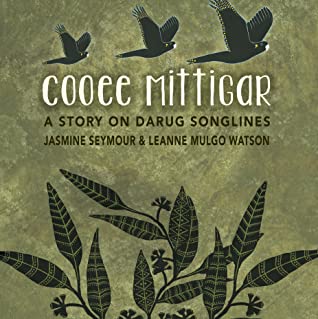
Jasmine Seymour and Leanne Mulgo Watson, Cooee mittigar: A story on Darug songlines (#BookReview)

Recently, on a bit of a whim, I bought two books from the Indigenous Australian publishing company, Magabala Books. They were the younger readers-young adult novel, Black Cockatoo (my review), which had been shortlisted for a few awards, and this picture book, Cooee mittigar, which had just won the 2020 Prime Minister’s Literary Award for Children’s Fiction. It is described on the Awards website as “introducing children and adults-alike to Darug ‘Nura’ (Country) and language”. So, a book for children and adults. I’m in …

The book tells the story of the seasons*, as understood or experienced by Sydney’s Darug people, through the eyes of the black swan, Mulgo. It is a perfect example of the generosity of Indigenous Australians. Despite being dispossessed of their country, despite being repeatedly discounted as having anything important to contribute, despite being overlooked or specifically excepted by policy-makers, they come back again and again, willing to share their knowledge – and, particularly, their language – when there’s a real risk that it too might be taken from them. They seem to understand, when so many don’t, that it’s only by sharing and communicating with each other our values and belief systems that we can mature as a nation.

And so, we have this beautiful hardback, written and illustrated by two Darug women, Jasmine Seymour and Leanne Mulgo Watson. Like many recent books I’ve read by Indigenous Australian writers, it incorporates Indigenous – Darug here, of course – language into the story. The technique they use is, in two-page spreads, to tell the story using English and Darug words, immmediately followed (on the same spread) by a glossary for the Darug words used. So, for example, we have:

In the time of yuruka and burara
Elders tell us not to hunt the buru.

yuruku – hot
burara – dry
buru – kangaroo

The glossary words are presented in slightly smaller but still clear text. The illustrations for the page, as you’d expect in a picture book, help convey the meaning. This spread, for example, is dominated by hot-dry looking yellows and tans, with two kangaroos lazing in the grass.

But now, let’s go back to the beginning. The book starts with a welcome: “Warami mittigar. Welcome friend. … Cooee mittigar. Come here friend.” We are then introduced to our guide, the afore-mentioned black swan, Mulgo, who tells us that she will teach us “about Darug life” – and off we go, starting, logically, with an introduction to Biami (dreaming ancestor spirit) and the idea of Darug dreaming and the songlines which tell the story of “Nura” or country. From here, we move through the seasons, starting when the “the darrabura [day] grows long and the weather warms up”. Each step of the way, we are told what to look for, what might be happening, what we can do, with respect to country and the natural environment, such as:

During dagara, gulgadya will bloom –
ready to be turned into spears.

dagara – frost
gulgadya – grasstree

The story ends with the gentle request to “tread softly on our lands”.

The language flows simply – though, as a non-indigenous reader, I’m sure it would take me a few readings to feel comfortable enough with the words to make it sound good aloud. Leanne Mulgo Watson’s illustrations draw mostly from greens, blues and yellows, but with touches of other hues. They are gorgeously evocative of the text, making them a delight for all readers, but they also provide good opportunities for actively engaging younger readers (and listeners).

At the end of the book is a complete glossary of the Darug words used throughout, with a simple pronunciation guide, which is a feature I’ve missed in other books. So, for example, there’s “warami – wara me – hello”. There is also a one-page description of Darug Country, and another page providing brief bios of Seymour and Watson.

Cooee mittigar concludes with a statement of its creators’ intentions, which are “to share Darug language and culture and show that the Darug people are still strong on Country”. They also “hope that Cooee mittigar will contribute to the continuation of stories and culture”. I’d be surprised if they haven’t achieved this, but I hope that in publishing this post I will have made my contribution to supporting their goals.

Challenge logo

Jasmine Seymour and Leanne Mulgo Watson (illus.)
Cooee mittigar: A story on Darug songlines
Broome: Magabala Books, 2019
48pp.
ISBN: 9781925936865

* As many Australians know, Indigenous Australians do not see the year through “our” four-season calendar, but through different seasons depending on the country.

Monday musings on Australian literature: Selected early high country history

As some of you know, I am currently having a little summer break in Australia’s high country, based in Thredbo in Kosciuszko National Park. This is an annual trek for Mr Gums and me, and I have written about it occasionally before. I thought I’d do so again for this week’s Monday Musings, from an historical angle. It’s just a soupçon, because I’m too busy holidaying to do more!

Bundian Way

The Bundian Way is, says its website, “an ancient pathway for Aboriginal people from Yuin, Ngarigo, Jaitmathang, Bidawal Country that provided safe passage between the coast and the high country”. 

The project to document and develop it as a community resource is an ambitious one that, say the organisers, is not about native title, but about acknowledging “Aboriginal cultural heritage values in the historic landscape” and that “these are symbolised by the old pathways”. Surveying the Way commenced in 2010, and was conducted, says Wikipedia, by the Eden Aboriginal Land Council and naturalist John Blay (who has subsequently written On track: Searching out the Bundian Way, 2015). They identified the 265-kilometre route (though the length varies a bit according to the source) using, for example, historical records like 19th century survey reports and journals. The website notes early interactions with Europeans, and the role played by journals:

The old Aboriginal people showed the European ‘explorers’ the pathways (e.g. Ryrie 1840 journals and maps; Robinson 1844-5) and permitted use of the country in the earliest days by highland Scots shepherds, and the horsemen and cattlemen who followed (Watson 1984).

I came across the Bundian Way in an article in the December 2020 issue of the free The Snowpost magazine. It describes the Way as “a shared history pathway” “that was the easiest path from the Monaro to the coastal plains”. It includes places associated with Aboriginal whaling and springtime ceremonies in Twofold Bay on the south coast, and Aboriginal bogong moth hunting and ceremonies in the high country in summer. The article notes that there is still evidence along the route of “old land management … in its Aboriginal landscapes”, which presumably was also used in the survey.

The Snowpost (possibly using Wikipedia) also notes the role played by the controversial Chief Protector of Aborigines GA Robinson in all this. Wikipedia cites John Blay as saying that Robinson recorded the story of Al.mil.gong who walked from Omeo to present his new corroboree to his kin at Bilgalera on Twofold Bay on 14 August 1844. The important thing is not who provides the information, but that we have the information, eh? The Snowpost also records that geologist WB Clarke, who explored around here in 1852, recorded Indigenous people’s description of the Bundian Pass. Unfortunately, his writings and Robinson’s don’t appear to be available on Project Gutenberg Australia.

Finally, the Snowy-Monaro Regional Council makes the point that:

This walking track is older than the silk roads and was used the Aboriginal people for trading, ceremonies, family gatherings and caring for country for thousands of years.

Georg von Neumayer

Also active in Australia around the middle of the nineteenth century, like Robinson and Clarke, was the German polar explorer and scientist Georg Neumayer or Georg Balthasar von Neumayer. Tim Flannery writes in his book, The explorers, that “the exploration of the Australian Alps seems inextricably linked with Germans and Poles: Lhotsky, Strzelecki, Neumayer and von Guérard”. Neumayer, who was interested in “terrestrial magnetism, hydrography and meteorology”, conducted a magnetic survey of “the colony of Victoria”. In doing so, he visited the summit of Mt Kosciuszko in November-December, 1862, with his assistant Edward Brinkmann and the artist Eugène von Guérard. Flannery writes that Neumayer’s account of this trip “provides a terrifying example of Australia’s fickle alpine weather”. Flannery also says that the Von Guérard painted “one of his most memorable works [of Mt Kosciuszko] from the view he obtained on that dramatic November day”. You can see a version on the Art Gallery of New South Wales website.

Flannery quotes Neumayer as saying that

The vegetation near the camping place [which overlooked the Manroo Plains and Thredbo River] reminds one very much of that of the Alps except that the strange look of the dwarf gum trees introduces rather a new feature.

I suspect it’s true that alpine regions can look very similar – except for vegetation! Neumayer also notes that

M. de Guérard, meanwhile, had seated himself on the summit, which affords a beautiful view of the mountainous country of New South Wales and Victoria, as well as the plains of the Murray River, and was taking a sketch of the scenery when, just as I was completing my observations, he called out that it appeared to him a heavy storm was approaching from the New South Wales side.

What follows is a rather terrifying description of coping with this storm, during which Edward Brinkmann (who was looking after some of Neumayer’s instruments) got lost. This was around 18 November 1962, I think. Despite looking hard for him, they could not find him.

Neumayer writes on 3 December 1862

The day very hot, and a haze, caused by bushfires, over the whole sky, so that nothing of the fine mountain scenery was visible.

Such is the alpine environment – blizzard one day, bushfire the next. Anyhow, Neumayer and von Guérard

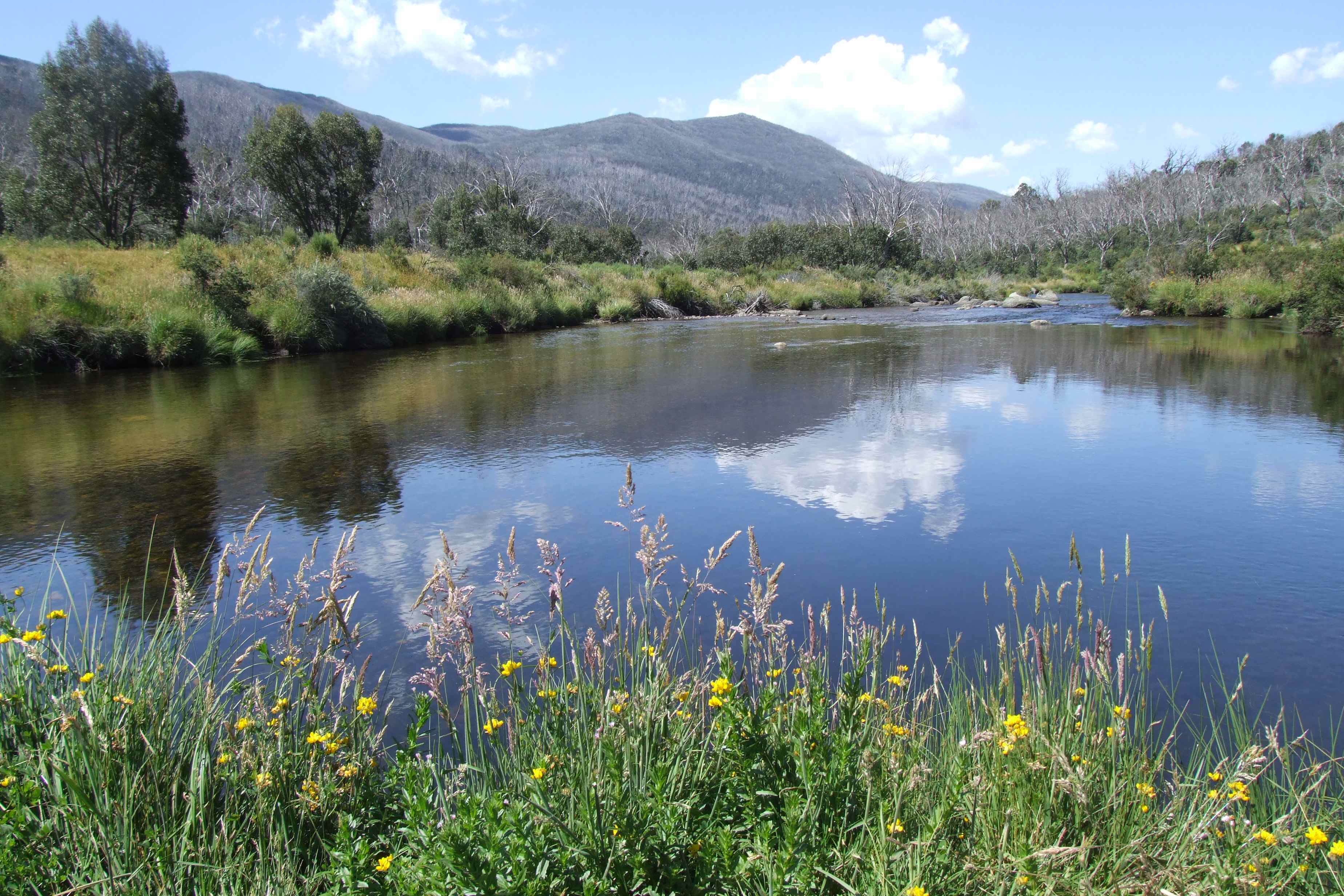
Thredbo River, Kosciuszko National Park
Thredbo River (on a nice day), Kosciuszko National Park)

Went to the police court, but could hear nothing of him, so that the last hope of his safety was now quite destroyed. Sat down to dinner, and had hardly done so when the lost man made his appearance in a most deplorable condition, having been without food and clothes for some time. My conjectures as to the route he had taken proved to be correct. Soon after leaving us on Mt Kosciusko, he endeavoured to return but missed the track to the camp and descended into the valley of the Thredbo River. For two days he wandered on, with scarcely anything to eat, until he fell in with some diggers in a lonely valley, who behaved most kindly to him and assisted him in making his way to Kiandra. … I cannot quit this most annoying affair without expressing my appreciation of Edward’s courageous behaviour, after separating from our party, and of the skill and care he bestowed upon the instruments entrusted to his charge; for the fine mountain barometer Fortin II did not receive the least injury during the whole of this rough and perilous journey.

I love that Neumayer seems to have cared both about Brinkmann AND his instruments!

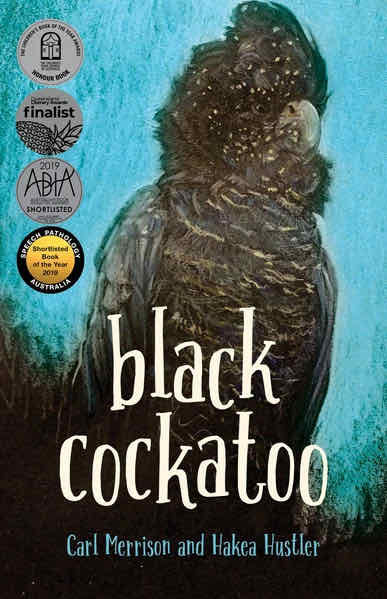
Carl Merrison and Hakea Hustler, Black cockatoo (#BookReview)

Black cockatoo is a young adult novel written by Indigenous Australian author, Carl Merrison, and his non-Indigenous collaborator, Hakea Hustler, and illustrated by Indigenous Australian illustrator, Dub Leffler. It is a beautiful, little (in size, not value) book that made quite a splash when it was published. It was shortlisted for several children’s literature awards in 2019, including those by the Children’s Book Council of Australia, Readings, the Australian Book Industry Association, and the Queensland Literary Awards. However, it is not the sort of book that I would normally post on here, so I plan to keep this review short.

I say this for a few reasons. For a start, children’s and young adult literature are not my main interest, though I do occasionally make exceptions, as I am making here. My main reason, however, is that not only am I not the typical age demographic for this book, but I am also the wrong cultural demographic, which makes me two steps removed from its target audience. But, I ordered this book from Magabala because I was intrigued about what was being written for young Indigenous readers, and it is on that basis that I’m posting on the book.

The story is set in a remote community in Australia’s Kimberley region, and focuses on 13-year-old Mia. She is disturbed to see her 15-year-old brother, Jy, becoming increasingly alienated from his community and culture, but feels powerless to do anything about it. In the book’s first chapter she rescues a young black cockatoo (dirrarn) which had been injured by Jy who had been target practising with his shanghai. The dirrarn is her totem animal.

What makes this book interesting for someone like me to read is the way it conveys the issues that I, an outsider, am aware of through my reading. One of these is the issue of family breakdown in Indigenous communities. Mia and her brother are being raised by their mother and grandparents, and haven’t seen their father or his family for many years. It’s clear that this is a tough gig for the grandparents. Mia overhears her grandfather (her jawiji) tell her grandmother that he’s “just tired”, and that:

I’m not sure I have it in me to teach him the right ways anymore. He’s just so headstrong.

In one way, of course, Jy is a typical teenager – stubborn and defiant – but concern about this behaviour is magnified in Indigenous communities where disconnection from culture can leave young people, young men in particular, highly vulnerable. In this story, the grandparents, like many in Indigenous communities, do their best to inculcate knowledge of and respect for culture, while also supporting their grandchildren’s need to make their way in a world they don’t know themselves.

This brings me to the main subject of this story, Mia. Her angst stems not only from her concern about her brother, but from having to make a decision about whether to take up her place at “a fancy school down south”. She’s confronting that conundrum faced by young Indigenous people that I’ve also gleaned through my reading, the challenge of straddling two cultures. There is a lovely sense here of Mia being supported and encouraged by her family, but also of her having some agency in what she does:

“You live in both worlds,” her grandmother added. “You will be strong in both ways.”

Black cockatoo is a short story but Merrison and Hustler pack a lot in here about the warmth and humour within extended Indigenous families, which lightens the more serious concerns they confront. The tone is not heavy, which is appropriate given the aim of this book being presumably to support young Indigenous people in making good choices rather than to demoralise them with the challenges they face!

The book is illustrated by Dub Leffler, with stylish, sometimes realistic sometimes more subtle, black-and-white images opening each chapter. Words from Jaru language are lightly scattered through the text:

It had been a proper long barranga dry weather, so to hunt we didn’t have to travel far to find big fat bin.girrjaru bush turkey.

There are two small glossaries at the end, one of Jaru words, and the other of Aboriginal English/Kriol words, that are used in the text.

While not all issues are resolved by the end, as you would expect, the novel’s conclusion, as you would also expect, is positive, with Mia coming to realise both her own inner strength and that she has the ongoing support of family and culture. It’s a good message in an accessible book, it seems to me, but the real proof is whether it works for its target readers, and that, of course, I don’t know.

Challenge logo

Carl Merrison and Hakea Hustler
Dub Leffler (illus.)
Black cockatoo
Broome: Magabala Books, 2018
62pp.
ISBN: 9781925360707