Ernest Hemingway, Cat in the rain (#Review)

As I often do with Library of America (LOA), I bookmarked their recent Story of the Week featuring Ernest Hemingway’s short story “Cat in the rain” to read later. “Later” came today. I have no Hemingway on my blog, so this seemed a perfect opportunity, and I do like short stories anyhow.

First ed. cover, from Wikipedia article. Public domain.

With many of my LOA posts, I need to start by introducing the writer, but this is not one of those occasions. However, if, perchance, you don’t know who Hemingway is, you can check his Wikipedia article.

Meanwhile, some background to the story. It was originally published in Hemingway’s first short story collection, In our time, in 1925. It is a very short, short story, but it has, according to LOA’s notes, garnered much critical interest. There is also a Wikipedia article on it. I’m not sure how much more I can add to what’s been said, given I am not a Hemingway scholar. However, I enjoyed reading it, partly because it felt more sensitive than macho, so I will say something!

“Cat in the rain”

The storyline is simple. An American couple is on holiday in Italy, and the story is set in and around their hotel. It’s raining, so they are stuck in their hotel room, she staring out the window and he lying on the bed reading. She sees a cat outside, hiding under a table, and she wants to rescue it. On her way outside, she sees the hotel-keeper (“padrone”), whom she likes. When she gets outside, however, the cat has gone, so she returns to her room and her husband. Wikipedia tells you exactly what happens, but generally I try not to spoil stories here, unless I know they are well-known (like, say, Pride and prejudice.)

The thing I like about Hemingway’s writing – though I’ve only read a little, and that was decades ago – is its spareness, and this is on display here. There are short, plain sentences, and simple repetition. These make it not only strangely beautiful to read but convey so much while seeming to say little. They convey a tone of lassitude, and also a sense of tension or lack in the marriage, though not a cross word is spoken.

Here is the wife, passing the hotelkeeper on her way out to find the cat:

He stood behind his desk in the far end of the dim room. The wife liked him. She liked the deadly serious way he received any complaints. She liked his dignity. She liked the way he wanted to serve her. She liked the way he felt about being a hotel-keeper. She liked his old, heavy face and big hands.

There is lovely rhythm to this – but there is also information about her character and about what she likes in people. Later, back in the room, her husband George asks her what happened. She tells him the cat had gone, then:

“I wanted it so much,” she said. “I don’t know why I wanted it so much. I wanted that poor kitty. It isn’t any fun to be a poor kitty out in the rain.”

George was reading again.

George, in other words, is not listening to her wants or, indeed, needs, because both are wrapped up in this statement. I love this: the repetition (again), the staccato-like rhythm, and the direct, plain statement about George conveys, almost paradoxically, such intensity.

David Lodge, according to LOA, has written a “thorough and now-classic examination of the story” noting conflicting interpretations. They quote him as saying:

“although it is a well-formed narrative, with a clearly defined beginning, middle and end, the primary action is not the primary vehicle of meaning.” That is, the story presents “a plot of revelation (the relationship between husband and wife) disguised as a plot of resolution (the quest for the cat).”

That makes sense to me from my reading of the story; I read it as being about the wife, her needs and her relationship with her husband.

The story also – and Lodge’s comment doesn’t contradict this – exemplifies Hemingway’s theory of omission (or “iceberg theory”), which is the idea that, as with icebergs, there is more below the surface than above. In this case, there is the idea, for example, that there is more to the cat than just being a cat, even though Hemingway doesn’t tell us what. That’s for us to consider – and the critics sure have.

There are other reasons this story interests critics and Hemingway aficionados, a major one concerning whether it is autobiographical. According to LOA, Hemingway, himself, wrote to F. Scott Fitzgerald saying that it wasn’t about his wife, Hadley, even though they thought it was. However, continues LOA, there’s evidence that she was at least the inspiration, and that biographers agree. Hemingway biographer, Michael Reynolds “admits … that Hadley must have recognized her own marriage in the portrait of the couple”, and Hadley biographer, Gioia Diliberto agrees that “it’s not hard to see Hadley’s vulnerability and loneliness in ‘Cat in the Rain.’”

I can see why this story has garnered such interest. Despite its seeming simplicity – the story itself isn’t hard to understand – there are multiple ways it can be thought about and interpreted, from the opening sentence to the intriguing last.

If you haven’t read it, do consider giving it a go at the link below – it really is short, and quick to read. If you have read it, what do you think?

Ernest Hemingway
“Cat in the rain”
First published: in In Our Time, 1925
Available: Online at the Library of America
Monday musings on Australian literature: Local colour, 1920-style

Back in June I wrote a post on the Australian Literature Society’s Women’s Night that they held in 1922. This Society, which was formed in Melbourne in 1899, has played an important role in supporting and promoting Australian literature for well over a century – first as itself, and then as part of the Association for the Study of Australian Literature (ASAL) with which it merged in 1982. As I’ve written before, ASAL continues to award the ALS Gold Medal which was established by the Society in 1928.

Now, I had in fact planned a different post for today, but I have had a busy weekend, and am still away from home, so have not had the time to work on that post. I therefore thought I would share another one of the delightful snippets I found some months ago about about the work of the society. The wonderful thing is, you see, that this Society’s meetings were often written up in the newspapers of the day, which provides us with an interesting insight into what the literati of the time were thinking and caring about.

And, one of those things was what made “Australian” literature. In 1920, Melbourne’s The Herald (July 10), reported on the meeting that marked the Society’s attaining “its majority”. That is, it turned 21! The meeting’s topic was “Local Color in Women’s Work”, with a paper was presented by Mrs Hilda Vroland. She argued that Australia’s women writers “did not portray very vividly those features of our life which were distinctive”. The report went on to explain what she saw as local color:

What was meant by local color was certain incidents, scenes and language which were characteristic of a particular country, and not only that, but a portrayal of an outlook on life which was typical of the class of people dealt with. Our local color was derived from incidents which immediately suggested Australian life — scenes that were truly Australian, and traits of character which had been developed by the freedom of this new land and the broader outlook.

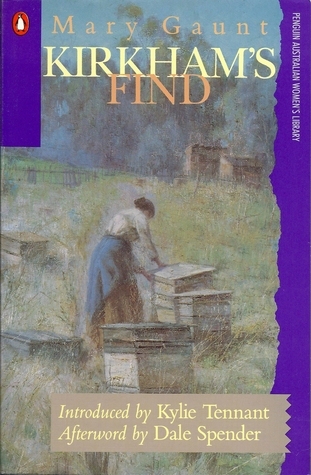
Mrs Vroland named some writers whom she thought did produce good local colour – Doris Egerton Jones, Marie Pitt and Mary Gaunt (the last of whom Brona of Brona’s Books wrote about for the new AWW). Brona notes that some of Gaunt’s attitudes are problematical now, but nonetheless,

her short stories show a writer concerned with the role of women in society. Mary’s privileged colonial upbringing may be apparent in her writing at times, but her focus was clearly on how double standards, lack of agency and patriarchal practices negatively impacted on the lives of women.

Sounds like excellent local color to me …

Anyhow, the poet and journalist Bernard O’Dowd, who presided over the meeting, clearly agreed with the importance of Hilda Vroland’s subject, arguing that

Australians had as much right to see the universe in our honeysuckle and wattle blossom or even in the opossum’s burrow as the Englishman had to see his world in the oak-tree.

Furthermore, he was concerned, said The Herald, that Australian literature was not valued unless it “received the hallmark of the English papers”. (The old cultural cringe.) Local journals, he apparently said, “dealt almost exclusively with American literature, and ignored Australian writers”. Another speaker at the meeting, a Charles Carter, is reported as having “said that he “was gratified to know that the women writers quoted did not wholly rely upon the use of slang, horse-racing or bush-ranging for local color”. According to Brona, Mary Gaunt’s stories did include bush-ranging, among other topics. But was Carter being sexist about what “women” writers should write about, or simply complimenting them because these were not truly local color?

I will close here … and simply say that I enjoyed reading about the passion of these Australians for our own literature, even if (not surprisingly) the idea of First Nations people contributing to that literature doesn’t seem to have crossed their minds. I hope you all have enjoyed this little insight too.

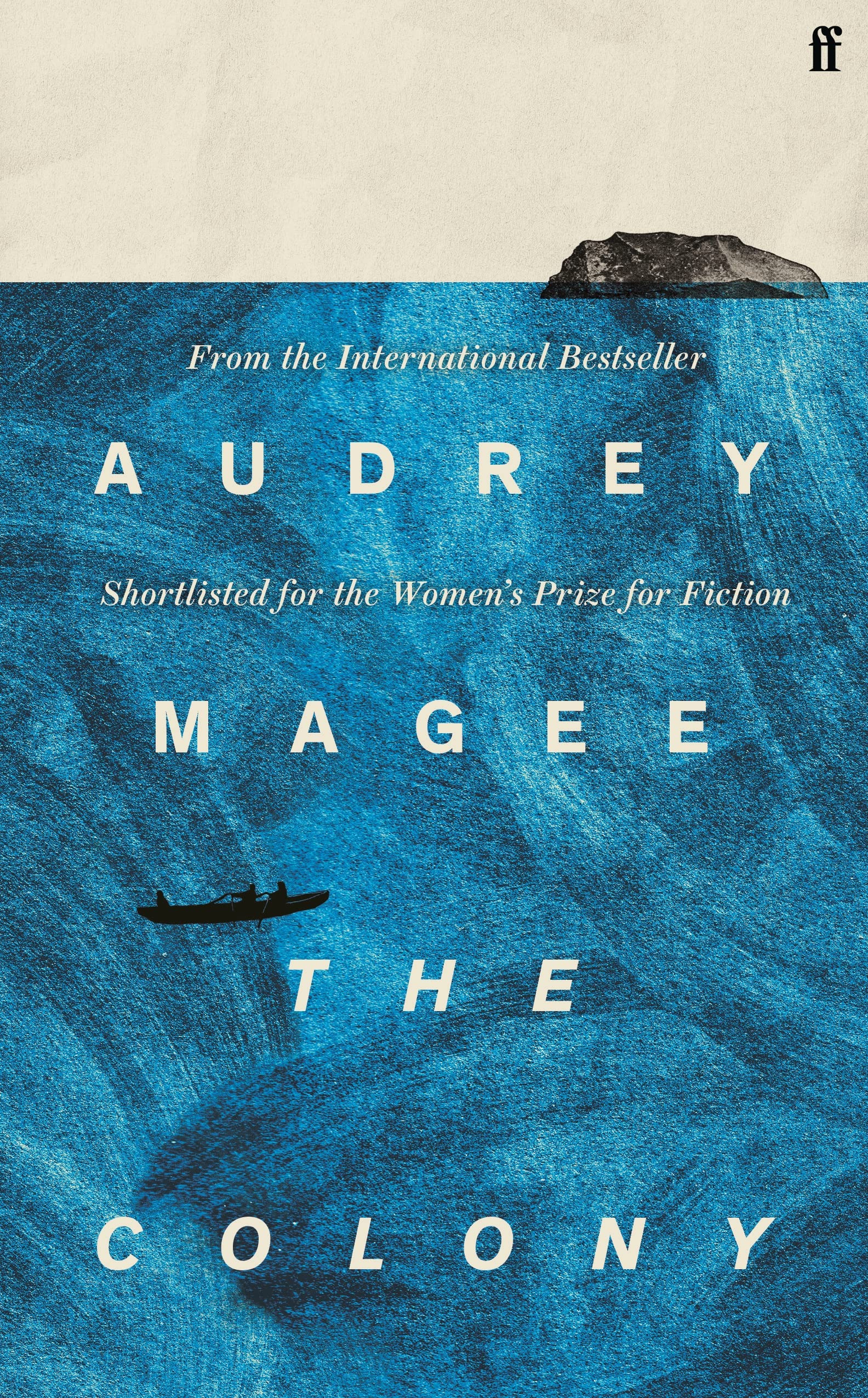
Audrey Magee, The colony (#BookReview)

Irish novelist Audrey Magee’s second novel, The colony, was my reading group’s August book, and it proved an excellent choice. Literary and highly readable, with vivid characters and a sophisticated exploration of its subject matter, The colony engaged us on all levels. It was longlisted for the 2022 Booker Prize (and may yet be shortlisted. We will know next week.)

The novel’s overall subject is, as the title implies, colonisation – and Magee teases out its personal, cultural and political ramifications through a small island colony off the west coast of the Republic of Ireland. The word colony, like much in this book, is multi-layered. The novel is set over the summer of 1979, easily dated for readers by reporting of the assassination of Louis Mountbatten in August 1979.

“the battle of the colonisers”

The colony is carefully structured, with chapters about what’s happening on the island alternated with reports of sectarian killings from the Troubles in the north. These reports are brief, stark, and devastating, and serve as a constant reminder of what colonisation can do. But these reports are just one of the layers in the novel, which starts with the arrival of the ambitious British artist Lloyd (whose name is not random. He has plenty of money!)

Lloyd is coming to the island to make his name. He is a modern colonialist in the way he assumes he can buy what he needs, and manipulate others, to achieve his goal. He promises, for example, to respect the islanders’ wishes that he not paint them, but this doesn’t last. The way Magee unfolds his role is clever and subtle, because the islanders, whose numbers have dwindled to twelve families, want and need his money to survive. His perspective is told through terse, poetic language.

Arriving soon after Lloyd is the French linguist, JP Masson. He has been visiting this Gaelic-speaking island for years, undertaking a longitudinal study of the island’s linguistic patterns for his PhD. JP is fierce about the need for the islanders’ language to preserved as is. He resents the infiltration of any English into the island, so Lloyd’s appearance is the last straw. It will, he believes, force a “sudden and violent ” shift to English, instead of the slow “linguistic evolution” to bilingualism that was under way:

The Irish here was almost pure, Lloyd, tainted only by the schoolchildren learning English, by the intermittent visits of emigrants returning from Boston and London with their sophisticated otherness, and by mercenaries in linguistic mediation, men like [islander] Micheál who want only to communicate, indifferent to the medium or its need for protection  …

JP’s perspective is told through the carefully thought prose of a writer, though when he is writing his paper on colonisation and language, I found it a bit heavy-handed, a bit too much of the telling not showing.

However, this issue of maintaining language – and its relationship to the colonial project – is intelligently explored. JP argues uncompromisingly for preserving the language, because it “carries their history, their thinking, their being”, and resists the fact that languages change. He rides roughshod over the islanders, insisting that they must use their language. Lloyd, on the other hand, wipes his hands of the issue, “not my concern” he says. Meanwhile, the islanders go about their business, continuing to speak their language with each other, while being willing to use English where it benefits them. They are no fools, for all JP’s exhortations:

What do you think, Micheál? said Masson. Are you less Irish when you speak English?
I don’t talk politics, Masson. You know that.
We’re talking about language, Micheál.
Same thing

Just this topic alone, and how Magee uses it to expose colonialism’s short, medium and long tail, could take up a whole review.

Throughout the novel, the islanders are caught in the middle, but maintain a healthy perspective:

Imagine that, said Mairéad. A Frenchman and an Englishman squabbling over our turf. 
They’ve been squabbling over our turf for centuries, said Francis. 

There is a wonderful, dry humour in this novel. And much of it comes from the islanders, who have their own way of dealing with things. But they, too, are not united. The matriarch, 89-year-old Bean Uí Fhloinn supports the old ways, and is a perfect subject for JP’s research, while her granddaughter Mairéad tends to be the voice of humane or sometimes just resigned reason. Her son James sees Lloyd as his way out. He doesn’t want to be a fisherman, as all the men before him have been (including his drowned father, grandfather and uncle). He shows real talent as an artist, and believes Lloyd’s promise to take him back to England at the end of summer.

And so, as summer progresses, tensions increase, between Lloyd and JP (who both come from colonising nations, for all JPs attempts to ignore his own complicated origins), but also between the islanders as they respond to what’s happening on the island and up north. They comment on the violence in the news reports. In one telling moment, Mairéad and her brother-in-law Francis discuss the Mountbatten assassination in which two teenage boys were also killed. For Mairéad this is wrong, whilst for Francis it’s “collateral damage”:

Where does this end, Francis?
In a united Ireland, Mairéad. One free of British rule.
And you’ll blow up innocent children to get it. Mairéad swallowed the last of her whiskey. You’re pathetic, Francis Gillan.

Violence is a constant presence in the book, from the relentless news reports to young James’ brutal killing of rabbits for food. Francis hangs over the novel ominously. What does he do on the mainland? What will he do to “get” Mairéad, for whom, she knows, he is “Waiting. In the long grass. Waiting for me to fall flat on my face so that he can pick me up and make me his.”

I am interested in this issue of violence and how it permeates society. It’s what I think Tsiolkas was on about in The slap (my review). When people are confronted with violence on a regular basis, how do they respond? How should they respond?

Another issue Magee explores is art. While Lloyd hides away, painting his magnum opus – which draws inspiration from Gauguin (another artist who worked in a colonial, exploitative environment) – the islanders discuss whether they should be worried. Is it “just” art, or something else?

James clearly understands that art has meaning, and recognises the message in Lloyd’s final painting:

It’s me as you want me to be seen, Mr Lloyd. As you want me to be interpreted.

It’s certainly not James as he wants to be seen. It’s a cruel scene, particularly given Lloyd’s earlier lofty dreams of showing “that art is greater than politics. Art as peacemaker, as bridge builder.”

Truly, The colony is, to use a favourite word of the islanders, a “grand” book. The writing is expressive, with various motifs running through it – like rabbits, apples, smells – and refrains, like “young widow island woman”. There are gorgeous descriptions of landscape and nature, and of daily life. There’s rhythmic variation, finely evoking different characters and tones. And there’s the shifting of perspectives, sometimes within paragraphs, which brought to mind Damon Galgut’s The promise (my review).

The colony recognises some of the fundamental ironies in the situation the islanders find themselves in. Both JP and Lloyd, who look like they might (or, at least could) do good, are ultimately there for their own aggrandisement. The little island colony, to which they come, functions then as a perfect microcosm of the colonised. With dwindling numbers, those remaining need to do what they can to survive, but the odds are stacked against them. It’s an all too common story, and Magee tells it skilfully, giving her novel an ending which makes its point without going for the high drama I half expected. It’s all the more powerful for that.

Coincidentally, Lisa and Jacqui (JacquiWine’sJournal) both reviewed this book last month, and both are worth reading.

Audrey Magee
The colony
London: Faber & Faber, 2022
376pp.
ISBN: 9780571367627 (Kindle ed.)

Monday musings on Australian literature: The Australian girl’s annual

Some time ago I posted on an old School friend annual that I found during my decluttering. Today, I bring you a much older annual for girls, The Australian girl’s annual. It came not from my childhood, but from my aunt’s house when I was working on her estate, and it is undated. As far as I’ve been able to ascertain the series was published annually from 1910, when editions were apparently dated, until around 1935, when they weren’t. 1935 is the last time I found it mentioned in Trove’s newspaper index.

Trove’s cataloging records for it are incomplete. As far as I can tell, it was first called The Australian girl’s annual. It was then published as The Australasian girl’s annual (and perhaps The Australiasian girl’s annual), before returning to its original name. It was originally published by Cassell in London and Melbourne, but one Trove record notes that volumes from [1929]* on have the imprint “[Sydney] : Gordon & Gotch (A’sia) Ltd. for the Amalgamated Press Ltd.” My edition says “Published in Australasia by Gordon & Gotch (Australasia) Ltd.” but it also credits “The Amalgamated Press Limited Fleetway House, London, E.C.4”

So, I have two challenges. First, what is the date of mine? From Trove’s records, and from the contemporary-story illustrations, I’m guessing it comes from the 1929 to 1935 period. Second, who did it belong to? My aunt was born in 1930, when my grandmother was 37, making the book not really age-suitable for either – given it was geared, says The Australasian (21 December 1912), to “those who have passed childhood”. However, my aunt had a big sister who was born in 1918. Perhaps the book was hers?

I was intrigued when I picked it up, because here’s this book called The Australian girl’s annual, but it was clearly generated from England. In my search of the Internet, I found reference to some research published in 2014. It was done by Kristine Moruzi, and her paper is titled “The British Empire and Australian Girls’ Annuals”. The abstract says:

This article explores two series of girls’ annuals: the Empire Annual for Australian Girls (1909–30), published by the Religious Tract Society, and the Australian Girl’s Annual (1910–3?), published by Cassell. Although both series were seemingly targeted at Australian girls, they were published in Britain before being given a new title and sent to the colonies. This article examines the implications of these British models of girlhood for their explicitly colonial girl readers. The British publishers of these annuals addressed an apparently homogenous readership comprised of girls from white settler colonies and Britain without attempting to customize the contents of their books for different audiences. In both fiction and illustrations, the annuals simultaneously employed and produced a British model of girlhood that was attractive to Australian girl readers.

“Before being given a new title and sent to the colonies”? This suggests that the very same content was published for English girls under a different title. Certainly, the volume I have contains 26 stories with not one written by an Australian, though one author, Violet M Methley (b. 1882 in Kent), might have had some Australian connection. She is listed in AustLit, because, as a blogger writes, “she may have spent time in Australia, as many of her books are set on that continent”. Then again, as this blogger’s blog is “Tellers of Weird Tales”, Methley may just have had a vivid imagination! She has two stories in this volume, one being “Mademoiselle Miss: a story of the French Revolution”. (As little aside, this story is illustrated by H.M. Brock whose brother was C.E. Brock, famous for his Jane Austen illustrations.) Her other story is “Celia: A thrilling story”, which is set in the Hebrides.

Anyhow, the 26 stories are written pretty much 50:50 by male and female writers. None are known to me, but many were prolific writers in their day. Pleasingly, the illustrators are identified along with the authors in the table of contents. Most of the stories are fiction, and they include traditional “girls’ stories” like school stories, but there are also historical and adventure stories, and non-fiction, such as editor H. Darkin Williams’ travel piece, “On top of the world: Sun and ice at mid-summer on the heights of Switzerland” and naturalist Mortimer Batten’s “The adventure land of wild nature: And how YOU can become a Member of a Famous Camp Circle”. Batten’s heart is in the right place but how relevant were his “stories about hedgehogs, and stoats, and hares, and wildcats, and eagles, and deer …” to his Australian readers?

Of course, my next step was to see if the annual was written about in Australian newspapers, and it was, most often in end-of-year lists as a gift suggestion. Here are some of the mentions:

For softer tastes quieter themes are chosen; but the stories by Mrs. G. Vaizey, Katherine Newlin, Bessie Marchant, Doris Pocock, and others, are well written, and have nothing of the vapidity which was once thought a proper characteristic of fiction intended for girls [my emph]. – The Australasian (21 December 1912.

a very attractive and beautifully printed volume, with illustrations in colour and in black and white. It contains many short stories by writers popular with girls, and one complete book-length story, ‘The Girl from Nowhere,’ by Nancy M. Hayes. An excellent present for a girl. – Sunday Times, 13 December 1925.

… It has four color-plates, a profusion of other pictures, and as for the stories and reading matter, generally—well, a very high standard is reached. – The World’s News, 19 December 1925.

The “Australian Girl’s Annual” is another publication that puts the girls quite level with the boys in diversity of reading matter and illustration. It has all those features which girls like, and a lot of others that boys will turn to—on the quiet, of course [my emph]. It is really a very fine compilation of first-class serial and short stories. – The World’s News, 18 December 1926.

fills that very much-needed requirement of the girl-child who has passed the ‘toys’ standard, and is yet too young to be interested in the sentimentality of the average best seller in the fiction field, or carried beyond her age by the classics. – Sunday Times, 15 December 1929.

But what did the girls themselves think? Well, thanks to the letters section in some newspapers’ Children’s Pages, we do know something:

Dear Uncle Jeff … I have been reading a very interesting book, ‘The Australian Girl’s Annual.’ It is just the thing. – The Albury Banner and Wodonga Express, 10 October 1913.

Dear Aunt Mary … I had a book called “The Australian Girl’s Annual” given to me for my birthday. There are some nice stories in it. – Western Mail, 22 September 1916.

Dear Aunt Georgina … We got book prizes, and the name of my book is ‘”The Australian Girls’ Annual.” It has nice stories in it. – Toowoomba Chronicle and Darling Downs Gazette 25 January 1930.

You can see how these Children’s Pages worked. Some of the correspondents even signed off “your niece”! These writers aren’t exactly effusive about the annual, but these were spontaneous comments in letters to a newspaper, so may not mean much.

Meanwhile, I would love to read what Moruzi found.

* Square brackets donate the lack of date on the volume.

Emma Viskic, Resurrection Bay (#BookReview)

Back in February, I said I planned to “read” more audiobooks this year, and slowly I’m achieving that goal with Emma Viskic’s Resurrection Bay being my third for the year. In fact, it makes a particularly special contribution, because it is the first book I wanted to hear when we bought our new car with Apple CarPlay functionality back in 2019. That might sound strange for someone who claims to not read crime, but here’s the thing …

While I don’t, as a rule, read crime, I do like to keep up with new Australian works. Emma Viskic’s 2015-published debut crime novel featuring a deaf investigator captured my interest at a time when we were looking for more fiction featuring differently abled protagonists. I wanted to read it, but I thought my best bet would be in audiobook form, because crime is the sort of writing that can work well in the car. The problem was that every time I checked my library audiobook catalogue there was no Emma Viskic, until a couple of months ago. Consequently, Resurrection Bay was the novel of choice for our last road trip. And it was a good choice, except …

There are certain things you need in a car audiobook, we’ve found. One is that straightforward narratives work best. After all, one of the listeners is a driver who should be focusing mostly on the road. Drivers do not need to be trying to follow multiple strands or unpicking abstract language, for example. Viskic’s novel worked well in this regard. However, another is that the sound needs to be good, and easy to hear above road and car noise. Here is where we struck problems. The reader for this audiobook, Lewis Fitz-Gerald, was a great reader – and I am fussy about audiobook readers – but he used a wide dynamic range to convey emotion and meaning through his voice. This made hearing in the car very difficult at times. It would not be a problem, I expect, if you were listening to it through ear-pods while walking.

And now, I really should get to the book – but one more proviso. Because I experienced it in audio form, my comments will be general and briefer than usual.

Resurrection Bay is the first in Viskic’s Caleb Zelic series. He is a private investigator who has been profoundly deaf since early childhood – from meningitis (which was also behind author Jessica White’s deafness). Unlike Jessica, though, Caleb did learn to sign. GoodReads describes the plot as follows:

When a childhood friend is murdered, a sense of guilt and a determination to prove his own innocence sends Caleb on a hunt for the killer. But he can’t do it alone. Caleb and his troubled friend Frankie, an ex-cop, start with one clue: Scott, the last word the murder victim texted to Caleb. But Scott is always one step ahead.

“silence safer than words”

Fictional detectives, I have come to learn, are not usually easy people. They tend to be loners, or to have some personal problem/s which add to the challenge and interest of the narratives featuring them. Caleb, of course, has his deafness. He’s an outsider, not because deafness necessarily makes him so, but because he, as his Koori ex-wife Cat tells him, lets it make him so. He refuses to admit his hearing impairment to others when communication difficulties occur, and this desire to “appear normal” not only impacts his ability to do his job, but it impacts his relationship with her. He also, frustratingly, refuses to “hear” what she is saying, jumping to the wrong conclusion because he is not listening. His deafness, in other words, is more than physical. It is also mental and emotional. Communication is, then, an underlying theme or motif in the work.

However, I’ve gone off on a tangent, because of course the main story is the crime investigation, which Caleb undertakes with his business partner, the aforementioned Frankie. She has her own difficult past which includes having been an alcoholic. This Caleb knows. Their investigations take them from Melbourne to Caleb’s childhood home, the fictional Resurrection Bay, and in the process Caleb discovers things he didn’t know about his friend, the murder victim; jumps to conclusions about his brother Anton; and learns more about Frankie.

Resurrection Bay is a page-turner, as you would expect. It’s well-written, with good crime-characterisation, and vivid evocation of place. It’s emotionally moving because Viskic makes you invest in her characters, but it also has some very violent and bloody moments. I guessed what the twist might be, but I was never completely sure until the end – and how it all actually fell out contained surprises.

Now, though, I want to address the elephant in the room – the deaf protagonist, the Koori wife, and the whole whose-story-is-it-to-tell issue? Here’s the gen, from The Age. Viskic

says being half-Slav gave her an outsider status that honed her power of observation.
Her husband was raised in a Koori family and they have two grown daughters. One of her primary school classmates was deaf and the disability – and particularly the refusal to accept it as a disability by the deaf community – has always intrigued her. She learned Auslan for the novels.

Later in the article, she is quoted as saying that

writing from outside your own experience is dangerous … not just because people can shoot you down, but because you can do the wrong thing by people. But I wanted my nieces and nephews to have characters like them in a book. And also, it would have felt cowardly not to have done it.

I am not a hard-and-faster on this whose-story issue. I do think that where longterm disempowerment is involved, own-stories are the better and fairer way to go, but it’s grey. If writers have reasons for writing a particular story that is not their own, then they wear the consequences, as Viskic is clearly aware. Ultimately, it’s not for me to say, but I felt Resurrection Bay was written with sensitivity and respect. The rest is up to those who own these stories.

In 2016, Resurrection Bay won the Ned Kelly Award for Best First Fiction; and the Davitt Award for Best Adult Novel. An impressive debut.

Kimbofo enjoyed this novel too, and Bill has posted on Viskic’s fourth Caleb Zelic novel, Those who perish.

Emma Viskic
Resurrection Bay
(Read by Lewis Fitz Gerald)
Wavesound from WF Howes, 2017 (Orig. pub. 2015)
Duration: 7hrs 9mins
ISBN: 9781510064140

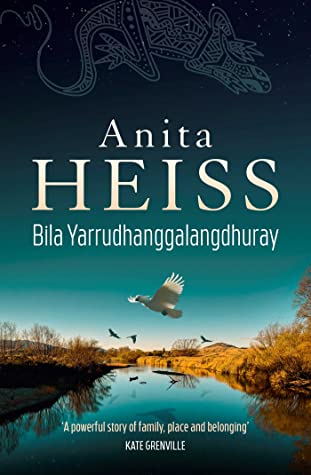
Anita Heiss, Bila Yarrudhanggalangdhuray (#BookReview)

Bila Yarrudhanggalangdhuray/River of dreams is Anita Heiss’ second work of historical fiction, her first being Barbed wire and cherry blossoms about the 1944 Cowra breakout in which she imagines a relationship between a Japanese escapee and a young First Nations Australian woman. I have not read that novel, but I have read, over the last year or so, other First Nations Australia historical novels, including Julie Janson’s Benevolence (my review) and the collaborative novel by non-Indigenous Australian Craig Cormick and First Nations writer Harold Ludwick, On a barbarous coast (my review). Long before these, though, was Kim Scott’s unforgettable The deadman dance (my review).

The value of these, and like books, to offering a First Nations perspective on the one-sided history that most of us grew up with cannot be under-estimated. Heiss, in fact, wrote in her Author’s Note and Acknowledgements, that through re-engaging with her Wiradyuri homelands in her early 50s,

I realised very quickly I had to honour those Ancestors who for millennia have lived, loved, and nurtured the land and each other. And I wanted to pay tribute to those who carry on culture, knowledge and language still today. I felt I had a responsibility as an author to write our Wiradyuri heroes – our men and women – into the Australian narrative where they had been ignored or forgotten too long.

Bila Yarrudhanggalangdhuray is her response to that realisation. It is of particular interest to me because it is set around Gundagai and Wagga Wagga, which are within three hours’ drive from where I live. Although I have been visiting the Gundagai region since the mid-1970s, it was only in recent years that I became aware of the story which is central to Heiss’ novel. This story concerns Gundagai‘s flood of 1852. As Wikipedia describes, the Murrumbidya flooded, killing at least 78 of the town’s population of 250 people. Using bark canoes, four local Aboriginal men, including Yarri, Jacky Jacky, and Long Jimmy, saved somewhere between 40 and 68 people. They were minimally recognised at the time, but, finally, in 2017 (2017!), a bronze sculpture of Yarri and Jacky Jacky, with canoe, was unveiled in Gundagai. Heiss’ novel concerns the life of a young Wiradjuri woman, Wagadhaany, the imagined daughter of Yarri.

The novel is told, like many historical novels, chronologically, and starts with a Prologue set in 1838, some 14 years before the main narrative starts. This prologue is important. It introduces Wagadhaany who, as a 4-year-old, is with her babiin, Yarri, as he tells a “White man” that the place they are standing on is “not a good place to live, Boss, too flat”, that it’s a “flood area”. Of course, the White man ignores this local knowledge and so the stage is set for 1852 when the devastating flood comes. By this time, Wagadhaany, now 18, is working as a servant for that very White man, Henry Bradley.

The flood and its immediate aftermath occupy the first five chapters of this 29-chapter novel. Only two sons of the Bradley family of six survive, along with Wagadhaany. The rest of the novel follows their lives over the next couple of decades, showing how little the White settlers learnt from the experience – practically, in terms of how to live on the land, and morally, in terms of their behaviour to the true owners of the country. Wagadhaany, who is bound, she is told, by the Master and Servants Act of 1840, has no agency in such a world.

“a witness without a voice”

Into this situation comes the young Quaker widow, Louisa, who, like the Bradley men, lost her family in the floods. I was surprised by the appearance of a Quaker, but Heiss also explains in her Note that there were Quakers in early colonial Australia, and they were interested in “the treatment of the convicts and the Aborigines”.

Louisa is an interesting character because she tries to treat Wagadhaany well. She calls her by her actual name, rather than Wilma, as James Bradley does; she works alongside her in the kitchen and garden; she gives her a bedroom in the house; and she converses with Wagadhaany as a friend. But, she has her blind-spots. She is oblivious to Wagadhaany’s lack of agency over her life, to the fact that, when the Bradleys (now including Louisa) move to Wagga Wagga, she thoughtlessly over-rides Wagadhaany’s wish to stay in the Gundagai area where her family is.

As the novel progresses, Wagadhaany’s homesickness for her family, and her country, increases. We are privy to Wagadhanny’s thoughts, to her awareness that there are limits – albeit unconscious ones – to Louisa’s concept of equality. Louisa is, after all, a product of her time and her culture – and Wagadhaany notices that, for all their “equality”, it is Wagadhaany who does the hardest, dirtiest, heaviest jobs, and that she is not paid a wage.

What the presence of Louisa does, though, is to add richness and nuance to the depiction of colonial society. She is a foil to the brutal, racist attitudes of James Bradley. She does not mitigate them but shows that his were not the only views around. Wagadhaany, on the other hand, tells it as it is from the First Nations’ perspective. In the early days after the flood, Heiss writes that Wagadhaany

feels like a witness without a voice. She was there, she lived through the horror of the flood, the fear, the physical exhaustion, the loss of those she knew. But no-one asks how she is, what she thinks or knows, or how she feels.

For all Louisa’s kindness, there is much Wagadhaany feels she can’t say, and so throughout the story she continues as a silent witness. Here she is reflecting on Louisa and work:

She wondered why Louisa had to be protected from hard work but the Wiradyuri women didn’t. And she wondered if that thought ever crossed Louisa’s mind, because that made them different, unequal …

Gradually, though, she starts to stand up for herself:

“I know I will have to work for you, I know about the masters and servants law, but you cannot keep me living here in the homestead against my will if you honestly believe I am your equal and that I should be as free as you”.

And Louisa, to her credit, “lets” her live with the river family.

Bila Yarrudhanggalangdhuray has strong characters, but it is also a genre novel with a strong plot, including of course, romance. I don’t want to spoil what is a good page-turning story, so I will leave the story here.

Heiss has several novels under her belt now. She knows how to tell a good story, and she is also very clear about her message. She uses her fiction to show what she wants the rest of us to know. In this novel, it’s the way First Nations people lived, the way they tried to work with the settlers, and the way they were gradually pushed off their land. She also, through Louisa, forces us to confront what really is being “a good White person”. So, not only does the novel tell some truths about Australia’s settler history but it is also immediately relevant to today.

In this novel, Heiss also, as First Nations writers are increasingly doing, incorporates language into the writing. There is a glossary at the back, but you rarely need it because most words are self-explanatory in context. Seeing “our” nation’s words in Australian literature is a truly exciting development.

Bila Yarrudhanggalangdhuray isn’t a perfect novel – and I struggled particularly with Louisa’s falling in love with the man she does. But this is a genre novel, and a bit of belief-stretching is allowed. The end result is a book that engages the reader with its strong protagonist in Wagadhaany, that wraps its vital messages in a compelling story, and, significantly, that ends authentically.

Lisa (ANZ LitLovers) has also recommends this book.

Anita Heiss is a Wiradyuri woman from NSW.

Anita Heiss
Bila Yarrudhanggalangdhuray
London: Simon & Schuster, 2021
393pp.
ISBN: 9781760850449

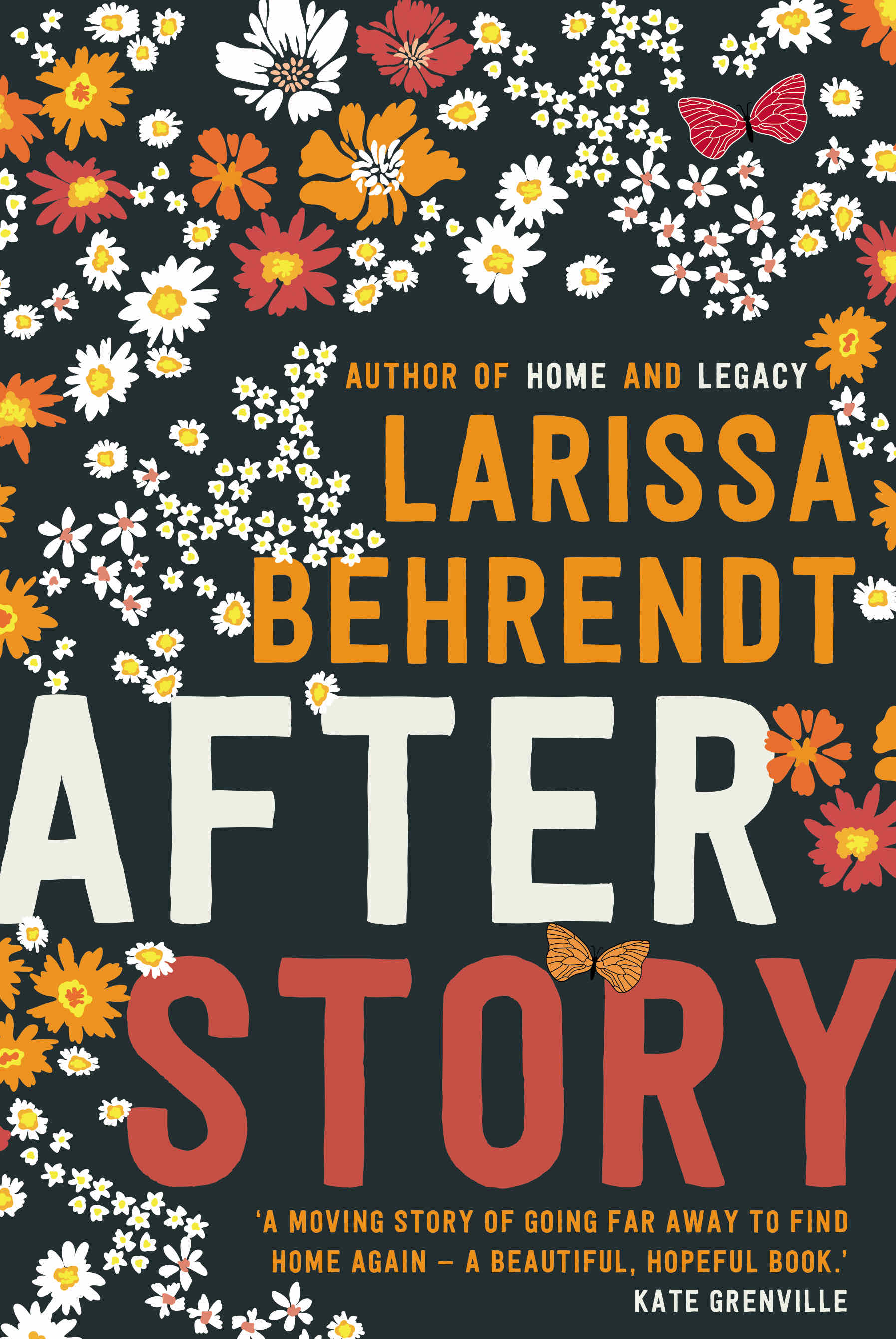
Larissa Behrendt, After story (#BookReview)

Larissa Behrendt’s latest novel After story has been on my wishlist since it came out last year, so I was thrilled when my reading group chose it as our 2022 NAIDOC-Week read. What self-respecting reader, after all, doesn’t like a literary tour?

After story, for those who haven’t caught up with it yet, is framed around a ten-day literary tour of England that is undertaken by a First Nations Australian mother and daughter, Della and Jasmine, whose relationship is fraught. Through this plot device, Behrendt marries her two storytelling loves – English literature and Indigenous Australian storytelling. In doing so, she draws comparisons between them, and explores ways in which both can reflect on and enhance our lives. She also shows how travel can be an engine of change for people.

Although it contains some very dark matter concerning grief and abuse, After story is a gentle and generous read – for two reasons. First, there’s the characters. Della and Jasmine, are strong, thoughtful and, importantly, real. Both have made mistakes in managing the challenges in their lives, but both genuinely want to have better relationships with those they love. Della, the less educated and more naive of the two, is particularly engaging for her honesty and lack of pretension, for her open-mindedness, and for the rawness of her pain. The other reason is the novel’s tone. It is clear and passionate about the wrongs done to Australia’s First Nations peoples but it is not angry. This is not to say that anger doesn’t have its place – it certainly does – but it’s not the only approach to telling the story of dispossession and dislocation.

What is particularly striking about this book is its structure and voice. After a prologue in Della’s voice telling of the disappearance twenty-five years ago of her 7-year-old daughter Brittany, the novel is structured by the tour, with each day being told, in first person, by Della and then Jasmine, until Day 8, when Della’s built-up grief overcomes her. After that, the order changes and Jasmine goes first. This change marks a turning point in their relationship – albeit not an immediate, epiphanic one. It also jolts the narrative out of a pattern that had risked becoming a little too rigorous. Like a coda, it makes the reader sit up and wonder what will happen next?

What does happen, however, as I’ve already implied, is not particularly dramatic. Rather, this book emulates something Virginia Woolf said, as Jasmine shares:

The great revelation perhaps never did come. Instead, there were little daily miracles, illuminations, matches struck unexpectedly in the dark.

Like life.

But, back to the structure. After story is one of those books in which the structure mirrors or supports its intention – and Jasmine, again, explains it well. Talking about Jane Eyre and Jean Rhys’ response to it in Wide Sargasso Sea, she says, “it’s compelling, the uncovering of the other side of the story”. “Uncovering the other side of the story” is the nub of this novel – personally, in terms of Della, Jasmine, and their relationship with each other and the rest of their family, and politically, in terms of the conflicting views and experiences of the colonisers and colonised. What Behrendt aims for in this novel, I believe, is to bring people together through improved mutual understanding.

Lest this sound too earnest, though, let me reiterate my earlier comment that this novel has a light touch. To balance the heavy material, which includes a number of losses including those related to abandoned and lost children, Behrendt creates a cast of typical tour participants. There’s the white male know-it-all professor and his seemingly mouse-like wife; the feminist young lesbian couple willing to take him on at every turn; the recently retired, educated middle-class couple; the bossy woman and her down-trodden sister; Della and Jasmine; and of course Lionel, the long-suffering tour guide, and bus-driver Brett. Behrendt handles these almost-stereotypical characters well, so that, by the end, even the arrogant Professor Finn is softened for us.

There is much humour in the telling, such as this, for example, from Della as she enters the British Museum, which, she has just discovered, still holds Aboriginal remains:

As we walked into the imposing white building there was a big glass bowl with money in it and a sign asking for donations.
“We already gave,” I said to the guard who was standing next to it.

Comments and asides like this are used throughout the novel to draw our attention to the truths we may not otherwise see. Truth, in fact, is a recurring idea in the novel – the withholding and the sharing. Della, reflecting on Thomas Hardy’s first wife being written out of history, remembers stories of erasure told by her community’s elder Aunty Elaine, and thinks “Sometimes the truth matters and you shouldn’t try to hide the facts”. A little later, Jasmine is also reminded of Aunty Elaine’s wisdom:

Aunty Elaine would remind me that there is more than one way to tell a story; there can sometimes be more than one truth. ‘The silences are as important as the words,’ she’d often say. There is what’s not in the archive, not in the history books – those things that have been excluded hidden overlooked.

Throughout the novel, Aunty Elaine’s stories and wisdom, shared through the memories of Della and Jasmine, provide the First Nations’ foil to the literary tour, sometimes enhancing, sometimes counteracting the messages and lessons of English literature.

I did, however, have one issue with the novel, one shared by a few in my reading group. This concerned its occasional didactic tone. Frequently, for example, the characters tell us what they’d learnt at various sites, such as about Jane Austen’s life or Virginia Woolf’s death. While we could see the point, the way the information was imparted did feel teachy at times. Fortunately, this tone did not extend to the novel’s underpinning ideas which are conveyed through the narrative rather than “told”.

In a Sydney Writers’ Festival panel, Behrendt said something that appeals to me, which is that the goal of being a great writer is to say something important. In After story, she has written an engaging, accessible novel, that also says important things – some subtle, some more overt, but all stemming, ultimately, from the traumas First Nations people have suffered, and continue to suffer, at the hands of the settlers.

Jasmine comes to a significant realisation near the end:

Suddenly I found the museum stuffy. When Aunty Elaine would talk about it, our culture felt alive – the sewing of possum cloaks … the gift of telling stories. They were living and breathing, not relics of the past, frozen in time. Looking at the artefacts surrounding me, I couldn’t help but feel I missed an opportunity with Aunty Elaine to capture her knowledge.

She had, she continues, “rightly valued education” but she had also “taken Aunty Elaine and her knowledge for granted”.

This is the call Behrendt makes in her novel. She wants both cultures given equal respect for what they can offer us. She knows the value of stories in bringing people together. Wouldn’t it be great if her story here achieved just that?

Larissa Behrendt is a Eualeyai/Kamillaroi woman

This book has been reviewed by several bloggers including Lisa, Brona and Kimbofo.

Larissa Behrendt
After story
St Lucia: UQP, 2021
307pp.
ISBN: 9780702263316

Monday musings on Australian literature: on 1922: 6, Great Australian novel (again)

The things you find in Trove! As l was trawling Trove for my 1922-project earlier this year, I came across a reference to the Great Australian novel. Just one. So, I put it aside, thinking it would be a neat, quick little post for a busy week like this one. Little did I know …

Before writing this post, I thought I should do one more quick little search. Nothing much came up, except that buried in one of the few articles my search retrieved was a reference to a book titled The luck of 1825 by Horace B. Pithouse. Launceston’s Daily Telegraph (18 November), wrote that “the rough draft of the MS was originally sent for sake of a criticism to the de Garis Great Australian novel competition”. The de Garis Great Novel Competition? Ever heard of it? I certainly hadn’t.

So, I decided to do an Internet search, and up popped the Australian Dictionary of Biography (ADB) with an article on one Clement John De Garis (1884-1936). Heard of him? I certainly hadn’t.

However, he was quite a character, and you can read about him at the link on his name above. In a nutshell, ADB lists his occupations as aviator, financier/investor, novelist, produce merchant, and short story writer, and describes him as “a man of effervescent charm and superhuman energy—a ‘prince of ballyhoo'”. Born in Mildura, he got involved in the dried fruit industry and was entrepreneurial in developing and promoting the product. But, it didn’t stop there. ADB writes that his “ambitions took on a manic quality and he began to see himself as all things to all men. A self-constituted patron of the arts, he launched a Great Australian Novel Competition”. This competition was advertised in 1919 with a closing date in early 1920. Hobart’s World (3 January 1920) promoted the competition, which had three prizes (£300 for first, £150 second, and £100 third). The goal was a “really great Australian novel”; the writer had to be Australian born; and “the story must be typically Australian”, which did not mean that ‘”local color” must be that of a shearing shed, or of the thirsty tracks in the Never Never.’

A humorist named “Dip-Tin” in Western Australia’s The Moora Herald and Midland Districts Advocate (5 May 1920) promoted it in verse, and included this on the potential subject matter:

There’ll be yarns about Ned Kelly. 
And Judge Bevan, and Oenpelli— 
Bet your life! 
And be sure each central figure 
Will become a dinkum digger, 
Plus a wife. 

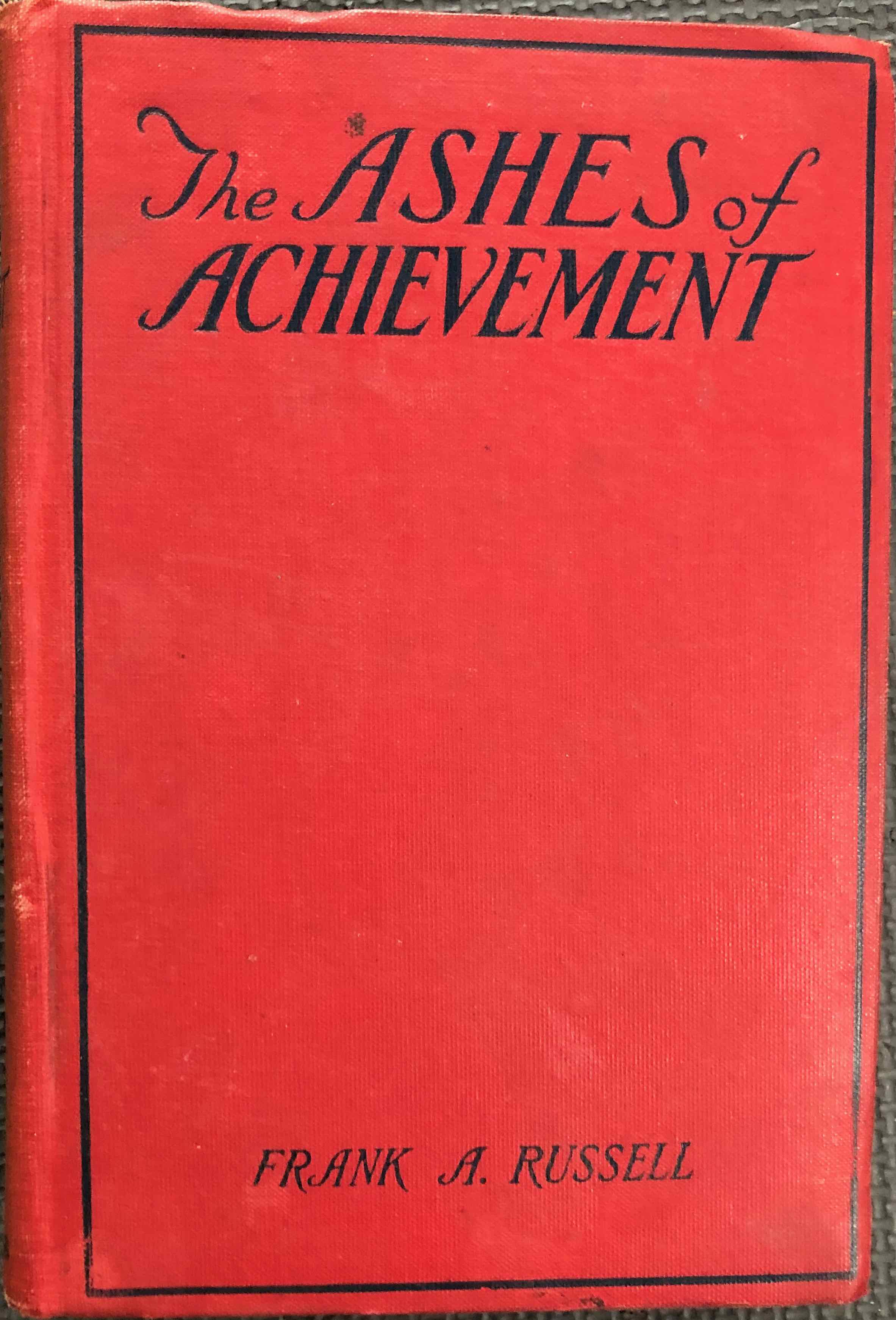
Late in 1920, the winner was announced – Frank A Russell’s The ashes of achievement. Heard of it? No, nor have I! And that’s not surprising because the reviews, overall, were poor. Take this one (with an unreadable by-line) in Perth’s The Call (31 December 1920), titled ‘When DeGaris slept! The prize Australian novel candidly reviewed. A literary “Dud” – which isn’t brilliant – and isn’t even Australian’. You get the gist. The writer critiques the book’s failure at length, exposing its weaknesses in subject-matter, characterisation and language. If you’d like to know how to thoroughly pan a book, here is a good example, and if what he (I think it’s a Hector) says about it is right, his assessment is fair enough. Hector (?) concludes that:

With the publicity that has been given it The ashes of achievement will probably be widely read. But it will not be remembered.

The Queenslander (1 January 1920) agrees with The Call, albeit with brevity:

The C.J. DeGaris Publishing Company is worthy of commendation for its courage and confidence, because the work of publishing in these days is a very expensive business, but if the remaining novels are not better than The ashes of achievement the effort to enhance the literature of Australia will not be very considerable. There is more real Australian atmosphere in a few chapters of a score of other Australian novels than in the whole of Mr. Russell’s very long and mediocre production. The test of a novel lies in its atmosphere and character studies, but while in the 30 chapters of “The Ashes of Achievement” one is continually meeting new characters, and as suddenly dropping them, there is none of any outstanding merit …

I did find one positive report – in Perth’s The Southern Argus and Wagin-Arthur Express (8 January 1920) – but it was cursory:

Under such circumstances [that is, winning this prize] one would naturally expect a good novel, and one is not disappointed. The ashes of achievement is an Australian novel, by an Australian author, and not flavored with gum leaves to make it so. It maintains the reader’s interest from beginning to the end, and will rank amongst the best of international novels.

Fair point about the “gum leaves”, but …

I’ll leave De Garis here, and will get to the article from Smith’s Weekly (16 December 1922) that inspired this post. It starts by saying that ‘about once a week in our “esteemed contemporaries,” Australian authors are adjured to write the Great Australian Novel’ and goes on, tongue-in-cheek, to explain why it’s so difficult. It’s because, for example, Australian heroes and heroines can’t match the English versions with their titles and valets, and rose-leaf skin. Further,

No British hero or heroine has to work. Readers dislike working heroes and heroines. They know all about work without reading about it. 

Smith’s writer concludes:

Instead of picturesque characters, ivy-clad ruins and dear old London, we have galvanised-iron, bank managers, kerosene-tins, gum-trees, the golden wattle-bloom, shearers’ strikes, drought, the W.C.T.U., the blue, blue sky (over-worked), the last-lady-help-but-one, Old Pardon the son of Reprieve, Clancy of the Overflow, and dear old Woop Woop.

That is all the material we have. Personally, I don’t see how we can make the Great Australian Novel out of it. 

Love it … the less said about the Great Australian novel the better, I reckon.

This was the sixth post in my 1922 series.

Previous 1922 posts: 1. Bookstall Co; 2. Reviewers on Australianness; 3. ALS Women’s night; 4. Adventure novels; 5. Art books

Jeanne Griggs, Postcard poems (#BookReview)

If you love travel, you would enjoy Jeanne Griggs’ poetry collection, Postcard poems, which comprises postcard-sized poems ostensibly sent from locations around the USA, and further afield. Like all good travel writing, though, these poems offer more than just simple travel.

However, before I discuss them, I should introduce the poet. Some of you will already know her, because Jeanne Griggs is the blogger behind the wonderfully titled Necromancy Never Pays … and other truths we learn from literature. How could a reader not love this? You can read about her and her blog’s name on the blog, so I’ll just add that at the back of the collection we are told that besides writing her blog she directs the Writing Centre at Kenyon College, and plays violin in the Knox County Symphony.

So, the collection. It’s divided into three parts, and each poem occupies a page – on the left of the page is the poem and on the right is the addressee (like “To Allen/Crystal Lake, IL”) plus that little rectangular box you get on postcards for the stamp. It’s a clear, simple layout, which maintains our focus on the poems’ context. The titles of the individual poems ground us further, with each referencing its subject, such as “Note on a postcard of Cypress Gardens” or “A postcard of Antelope Canyon” or “A postcard with ornamental pear tree”. There is also an epigraph, and I’ll share it because it’s perfect. It’s from Tennyson’s Ulysses: “I am a part of all that I have met; / Yet all experience is an arch wherethro’ / Gleams that untravell’d world whose margin fades / For ever and forever when I move.”

Regarding the trigger for this collection, besides the obvious travel that is, Griggs wrote on GoodReads that “I was writing poems and fitting them onto the back of actual postcards and then sometimes I would send them to my friends and family. Very soon it became clear that this was a collection, that together the poems told a kind of story”.

Now, all this might sound a little cute, but the idea has not resulted in something formulaic or overly structured. Indeed, the poems roam through place and time, and encompass a variety of holidays and trips, some overseas to, say, the Alhambra in Spain (“Note on a postcard of the Alhambra”), and others closer to home, like visiting a child at college (“Note on a postcard of Wellington, Ohio”).

What captures the attention, however, is that alongside the expected description of a place, most poems contain more. There are reflections, some delightfully wry and some pointedly ironic, on the experience of travel – the joys and challenges, the misses and triumphs, the surprises and the ordinary – and their impact on the traveller. I enjoyed, for example, poems about attending festivals, like:

We’ve come to hear about books,
drink bourbon, and eat crawfish,
casting aside our inhibitions
like layers of clothing, extraneous
in the bloodworm Louisianna night.

(from “Note on a postcard of the St Francisville Inn”)

There are also the personal stories that made these trips worth writing about, such as memories of family holidays followed later by cards to children now grown up. There’s the mother remembering her own mother, only to recognise the pattern is repeating:

and thinking about my mother
how she would take me
to fancyhotels and
sit, saying she was content
with the view, watching me
disappearing over the horizon,
like my daughter, now.

(from “Note on a postcard from the El Tovar hotel”)

Letting go isn’t as easy when it’s you doing the letting go!

… so it was the first trip
we took without you. I missed you,
loosing my regret out of earshot,
drowned out by water roaring,
wishing I could watch you
see this …

(from “Notes on a postcard of Niagara Falls”)

The Contents list, in which a poem on Santa Monica Pier, for example, is followed by one containing a piece of the Berlin Wall followed by one from Waikiki, might suggest, on the surface, something quite random. However, reading the poems reveals subtle segues in nearby poems, from simple things like mentions of cereals (Froot Loops and Cheerios anyone?) to concepts like growing older. Books feature too. Few are named, but keen readers will spy the likes of Tolkien and Shakespeare within these pages.

There’s also some politics. One, “Note on a postcard of the Mount Vernon public square”, documents weeks of protesting, of wanting neighbours to realise that their congressman “is voting against / their health benefits, our water supply”, while another, “Note on a postcard of the Marie Laveau Voodoo Museum”, shares how a human skeleton brings to mind “desperate people feeling / no control over their lives, / the deck stacked against them”.

A couple of the poems particularly resonated with me – in addition to those dealing with family, ageing and children growing up. “Notes on a postcard of Mesa Verde”, for example, captured my own wonder about that amazing place and the people who lived there, while the opening poem, “A postcard of a mirrored room”, makes that poignant (there’s no other word for it) point about

… all the places
we’ve been, until
we get to the last one
and who will know
where that is until after
we reach a final destination.

The last poem, “A postcard from the Getty Museum”, offers a different sort of finality – the arrival of the pandemic. It’s not named, but when Griggs writes of not thinking about the crowds until “After, when the press of all / those people became unimaginable” followed by “all future plans suspended”, we know what she means.

Postcard poems is an engaging and accessible collection that uses something as relatable as writing postcards to explore things that matter. It’s nicely crafted, but also accessible. Well worth reading.

Jeanne Griggs
Postcard poems
Frankfort, KY: Broadstone, 2021
56pp.
ISBN: 9781937968885

(Review copy courtesy the author)

Miles Franklin Award 2022 winner announced

While once again I haven’t read (yet, anyhow) any of the Miles Franklin shortlist, I do try each year to announce the winner of this significant Australian literary award.

You may remember that this year’s shortlist was:

  • Michael Mohammed Ahmed’s The other half of you
  • Michelle de Kretser’s Scary monsters (Lisa’s review)
  • Jennifer Down’s Bodies of light 
  • Alice Pung’s One hundred days (kimbofo’s review)
  • Michael Winkler’s Grimmish

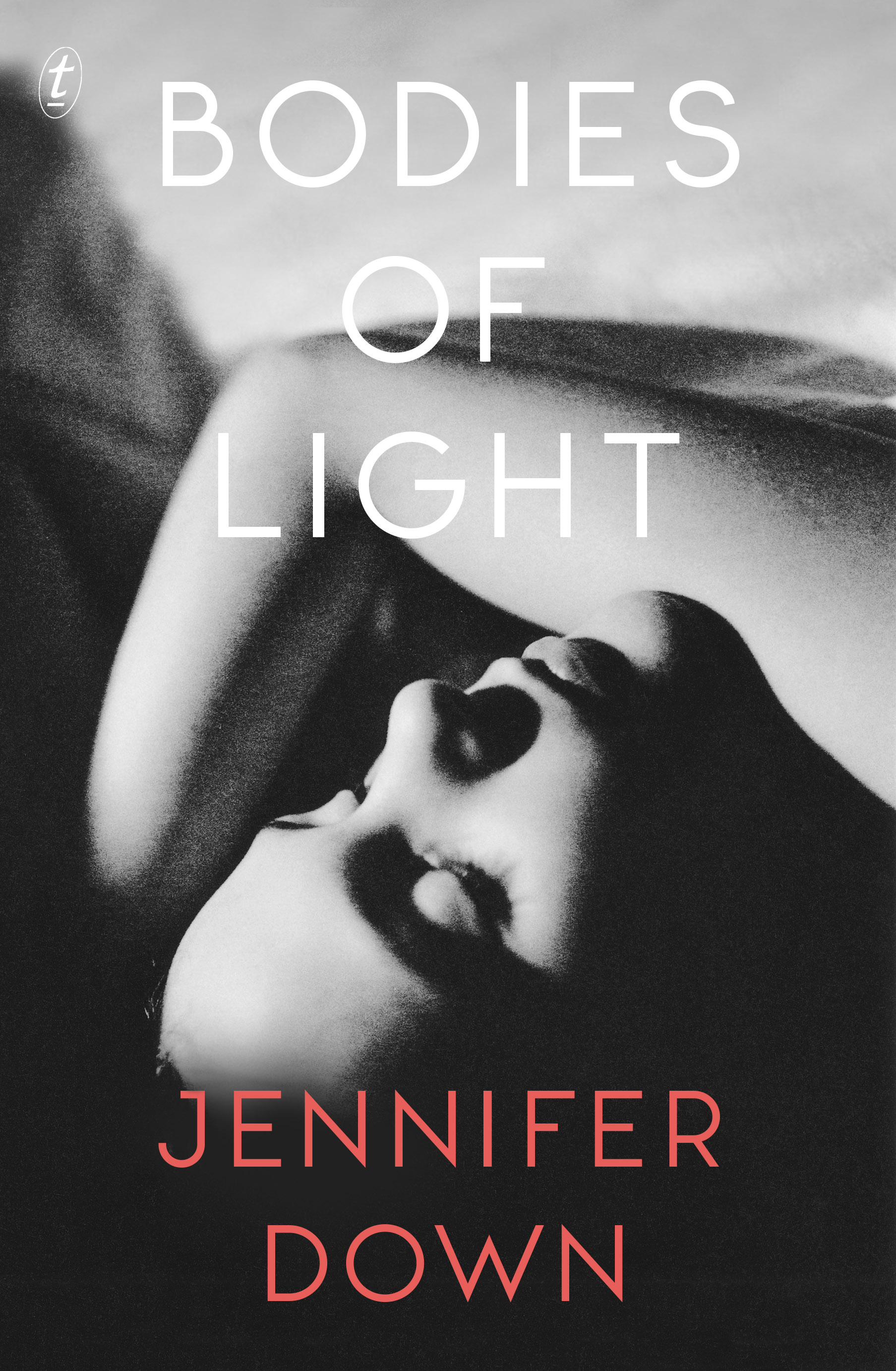
And the winner is: Jennifer Down’s Bodies of light

Each of the shortlisted writers received $5000 from the Copyright Agency’s Cultural Fund, with the winner receiving $60,000 prize. This year’s judges comprise, as always, continuing judges and new ones: Richard Neville (State Library of NSW), critics Bernadette Brennan and James Ley (both also on last year’s panel), and new members, scholar Mridula Nath Chakraborty, and writer and editor Elfie Shiosaki. 

So, more on the winner …

The book was published by Text Publishing, and in their email announcing the winner they shared the thoughts of Michael Heyward, Text’s publisher:

Bodies of Light  is a transformative novel that gives epic scope to the life of a single soul. To read it is to be immersed in it. All of us at Text are thrilled at the news of Jennifer Down’s Miles Franklin win, and offer her our heartfelt congratulations.’

And of senior editor Alaina Gougoulis:

‘What an incredible recognition of Jennifer Down and all she has achieved with Bodies of Light. The abundant talent on display in her debut novel, Our Magic Hour, has been fully realised in this book, an intimate story of one life told on an epic scale: heartbreaking, and yet brimming with hope and beauty. That she is still so early in her career should fill us with optimism about the future of Australian writing. I am beyond thrilled for her, as her editor and as her friend. Warmest congratulations to Jenn, from all at Text.’

The announcement has already been reported by the usual sources, like the ABC, The Guardian, The Conversation, and so on. Canberra’s Jen Webb wrote The Conversation’s article. As she says, Down already has some runs on the board: she won the Sydney Morning Herald Young Novelist of the Year award for her debut novel, Our magic hour in 2017, and again in 2018 for her short story collection Pulse points.

Webb shares that the judges commended the book as “a novel of affirmation, resilience and survival, told through an astonishing voice that reinvents itself from six to 60”, and she describes it herself as follows:

Under interrogation-level lighting, it confronts the institutional “care” offered to the most vulnerable of people: little children, labile adolescents, and traumatised youth. Any society that routinely fails to provide children with the care they need to grow into secure adulthood is a society that needs a critical light shone on it. In the most lyrical, gentle language, this is precisely what Bodies of light does.

It’s a book that interests me. Indeed, Down has interested me since Pulse points appeared (and for which there is a guest post on my blog).

(BTW: In last year’s winner post, I provided a link to an article by Pallavi Singhal in The Sydney Morning Herald published an article on How to win the Miles Franklin: Analysing 64 years of data. You might like to revisit that in the light of today’s win!)

Do you have any thoughts on this year’s winner?