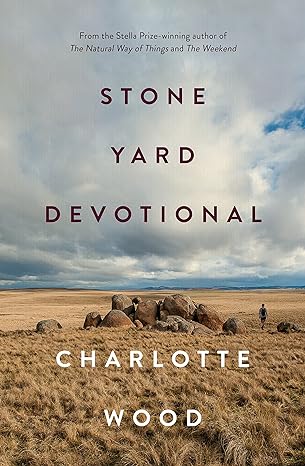
Stella Prize 2024 Shortlist announced

For what it’s worth, given I’ve not read any of them, here is the Stella Prize shortlist. The announcement I received via email this morning describes it as comprising:

a diverse mix, featuring novels, memoir and an essay collection. Three of these works are by debut authors, showcasing fresh voices in Australian literature. 

To summarise from my longlist announcement, this year’s judges are writer, literary critic, Artistic Director of the Canberra Writers Festival and this year’s chair, BeeJay Silcox; Filipino-Australian poet, performer, arts producer, and advocate, Eleanor Jackson; First Nations award-winning poet and arts board member, Cheryl Leavy; noveslist, occasional critic and full-time dad, Bram Presser; and writer and historian, Dr Yves Rees.

The shortlist

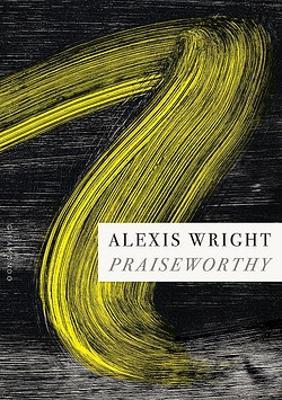
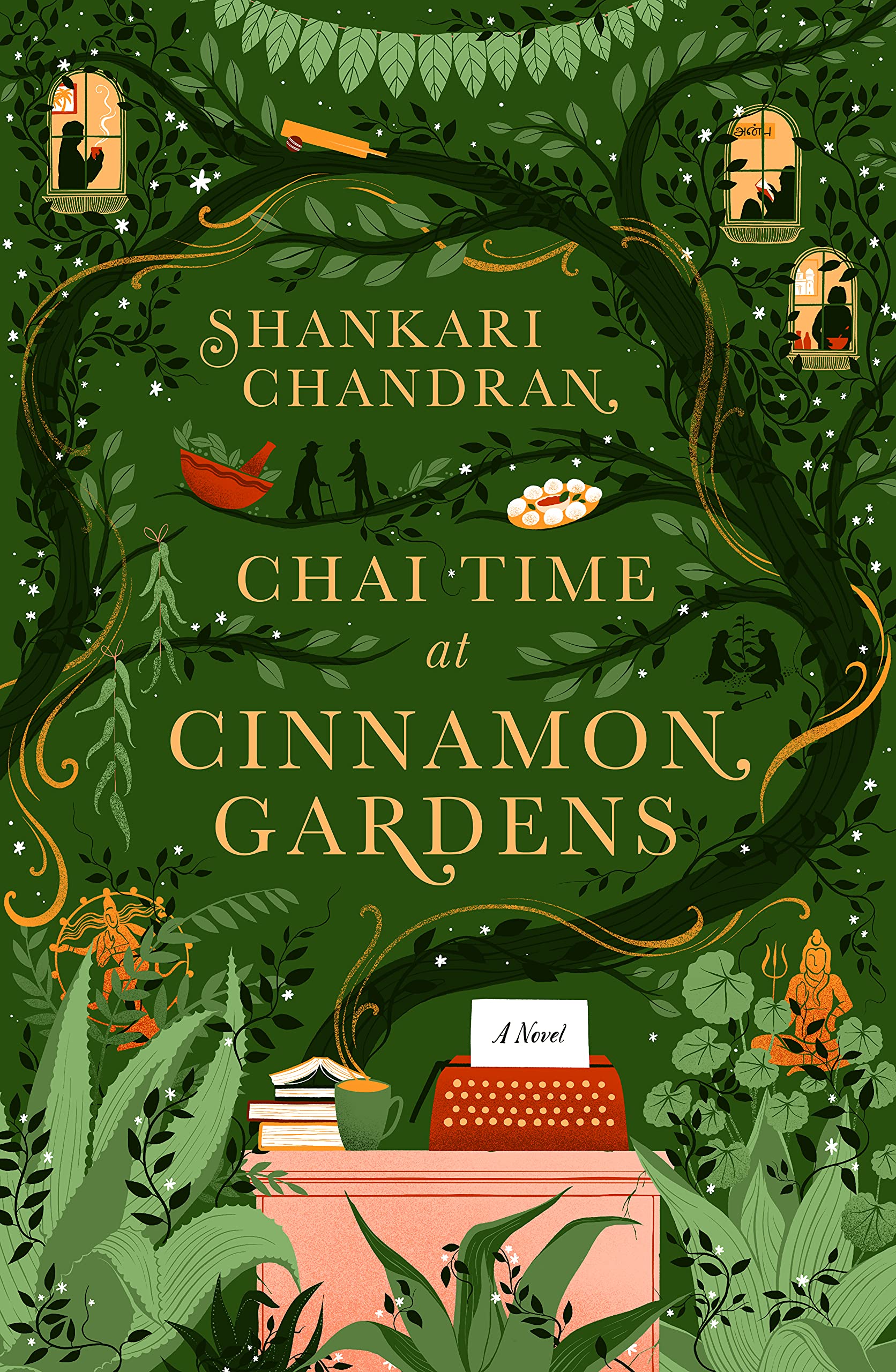
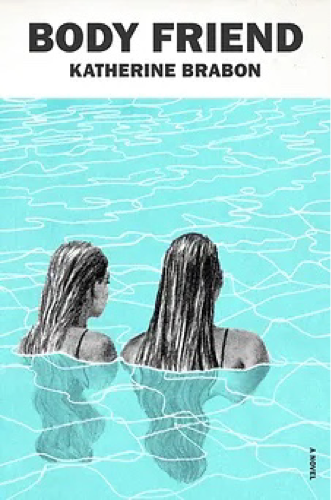
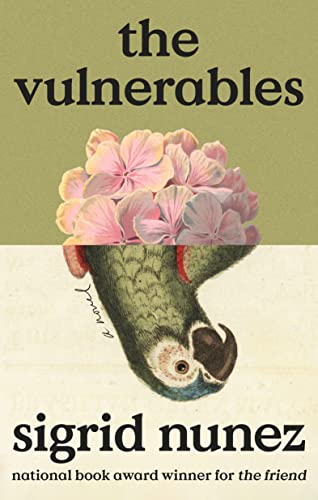
Here is the list, in alphabetical order by author, with brief comments from the judges (found on the Stella website’s page for each book, linked on the title):

So four novels, and two works of nonfiction. No poetry on this year’s shortlist. I have added a couple of reviews from my blogger friends, including Bill’s for Praiseworthy (which was also included in my Longlist post). Kate, as you will have seen, has managed to read two of them since the announcement. I am certainly interested in some of these.

The winner will be announced on 2 May. You can seen more details on the Stella 2024 page.

Any comments?

PS: Darn it, I copied my longlist post and then edited the title incorrectly so it was published as “Stella Prize 2023 Longlist” not “Stella Prize 2024 Shortlist!! Shows how distracted I am.

Sigrid Nunez, The vulnerables (#BookReview)

Sigrid Nunez has been on my radar for a long time. So, why now? I blame Jonathan (Me Fail? I Fly!), since it was his post on Nunez’s latest novel, The vulnerables, that captured my attention and encouraged me to make now her time. What an intriguing book! I have no idea whether it is like her other books, but it certainly captivated me.

What exactly is it, was my first question? A novel, says its subtitle. Its probably best described as autofiction, but it did feel at times like a book of essays. In fact, late in the novel, our narrator who, like Nunez herself, is a writer, refers to Virginia Woolf and her aspiration

to invent a new form. The essay-novel. Chapters of fiction alternating with nonfiction chapters, “a terrific affair” that would include, well, everything: “satire, comedy, poetry, narrative . . . And there are to be millions of ideas but no preaching—history, politics, feminism, art, literature—in short a summing up of all I know, feel, laugh at, despise, like, admire hate & so on.”

On the next page, Nunez writes of Annie Ernaux who told her diary that “Tonight, I know I have to write ‘the story of a woman’ over time and History.” And so she did, some twenty years later. Ernaux’s book, says Nunez, is “a personal narrative spanning the period between 1941 … and what was then the present day, 2006: the autobiography of a woman that was also a kind of collective autobiography of her generation”.

Both of these encapsulate, to some degree, what Nunez is doing in The vulnerables. I like essays, so I enjoyed the “essay-novel” feel of this book, including its cheeky toying with where the boundaries are in what she is doing. And, I like personal narratives, not to mention the idea of a book being “a kind of collective autobiography” of a generation.

Nunez and I are of the same broad generation, although with some significant differences given she was born in New York in 1951 to a German mother and a Chinese-Panamanian father. But, we are both women of a certain age and so were designated “vulnerable” at the start of the pandemic, which is where the novel opens – in the northern spring of 2020. It is here, early on in the pandemic, when she is “breaking the rules” by going out and about too much, that a young friend admonishes her, telling her, “You’re a vulnerable … And you need to act like one.”

There is so much to write about in this book – her exploration of our generation, and how we are seeing things in these last decades of our lives. The discussions our narrator has with her friends about gender, for example, mirror mine, as does her awareness of the changes that come with ageing. Her concern about what happened in American politics in 2016, and its ongoing implications, mirror that of many of us. As do her references to racial and social injustice, the climate crisis … and so on. All heightened, here, by the pandemic, whose uncertainties shape the book’s tone. But, I want to focus on one particular aspect, her exploration of writing.

Our narrator is, as I’ve said, of a certain age. She’s seen a lot of life, and a lot of writing, and here she ponders, though her lively stream-of-consciousness style, the role, meaning, and form of writing. She begins with the opening sentence – “It was an uncertain spring” – from Virginia Woolf’s The years. But, just a few paragraphs on we are told that one of the first rules of writing is to “never open a book with the weather”, albeit our narrator has “never understood why not”. Between the opening sentence and this statement, she admits that she remembers almost nothing about Woolf’s book, and then writes that:

Only when I was young did I believe that it was important to remember what happened in every novel I read. Now I know the truth: what matters is what you experience while reading, the states of feeling that the story evokes, the questions that rise to your mind, rather than the fictional events described.

I felt right then and there that this was going to be a book for me. I rarely remember plots, but frequently remember how books made me feel, how I reacted to them.

Why are you making things up?

The vulnerables is deceptively simple. Our narrator takes us into her confidence about what is happening to her, and what she is thinking, as she moves through those early days of spring and into lockdown stage, when she accepts the task of pet-sitting a miniature macaw named Eureka in a classy New York apartment, only to find herself sharing this role with a disaffected, but opinionated Gen Z son of friends of the apartment owner. She calls him Vetch, a prickly metaphoric contrast to the old-lady flowers, like hydrangeas, that she had previously regaled us with.

Woven through this loose plot, are our narrator’s thoughts on a range of subjects. It has a relaxed stream-of-consciousness feel, but is, nonetheless, formally stylish, using subtle repetition, metaphor, sly humour and literary allusions, to develop her ideas. It’s also erudite with frequent digressions that explore anything from the relevance (or not) of Dickens and what, say, J.M. Coetzee thinks about writing, to a discussion of My octopus teacher and of how the events of 2016 stopped speculative fiction author William Gibson in his tracks. This might feel random at the start, but the links are there, and the ideas – the questions – slowly build. It’s the sort of book that invites you to go with the flow, and if you do, you will eventually not only see the pattern, but will also have been both entertained and inspired to think.

What most inspired me was Nunez’s exploration of what sort of writing is most relevant now. She shares the thoughts and experiences of many of the great writers of the last century or so – Virginia Woolf, Annie Ernaux, Joan Didion, J.M. Coetzee, to name a few. Early in the novel she quotes Coetzee who said that what comes in late life to many writers is “an ideal of a simple, subdued, unornamented language and a concentration on questions of real import, even questions of life and death.”

Then, late in the novel, in a wry comment about the pandemic and its distinction between “essential” and other workers, she notes that of writers, the only ones deemed essential were the journalists. She seems to agree, writing that “silence all the journalists and we’d have the end of human rights”. And, more pointedly, she responds to the question of whether there is still a place for fiction, with:

Growing consensus: The traditional novel has lost its place as the major genre of our time. It may not be dead yet, but it will not long abide. No matter how well done, it seems to lack urgency. No matter how imaginative, it seems to lack originality. While still a powerful means of portraying human character and human experience, somehow, more and more, fictional storytelling is coming across as beside the point. More and more writers are having difficulty quieting a voice that says, Why are you making things up? 

There is fear about “the growing use of story as a means to distort and obscure reality”. But, in her subversive way, Nunez explores both sides. She writes of her time with Vetch, saying

… even now I sometimes find myself talking to him. But when I do he is never ‘Vetch.’ Always his real name. His sweet name.
But how could any of this have really happened? I must be making it up.

Does it matter whether she’s making it up or not?

It is a little before this, that our narrator discusses Woolf’s thoughts about creating her new form, “the essay-novel”, and then teases out what we might want now (including a funny dig at reader’s guides for book clubs). It’s not simple or straightforward – indeed, it’s paradoxical, it’s “elegy and comedy” combined – but, in the end, what she has written is a novel. A strange, or different, almost essay-novel it may be, but there, I’d say, is your answer.

Sigrid Nunez
The vulnerables: A novel
London: Virago, 2023
250pp.
ISBN: 9780349018096

Carmel Bird and Jace Rogers, Arabella (#BookReview)

If you have read Carmel Bird, and particularly if you have read her bibliomemoir Telltale (my review), you will know that she has a whimsical turn of mind. You will also know that she can turn her hand to most forms of writing, including children’s picture books. Her latest outing, Arabella, proves the point.

Arabella tells the story of two cats, and it starts like this:

Once in a cupboard
full of coats and old hats
lived the prettiest, sweetest
and littlest of cats.

The accompanying illustration shows the inside of a cupboard, with hats on a high shelf, coats hanging below them, and, spying from behind the boots at the bottom, a little cat. The illustrations are minimalist pen and black ink drawings with restrained, delightful touches of watercolour – just like you see on the cover.

On the next page we learn that this cat, who sleeps behind an umbrella, is named Miss Arabella. She is small, quiet and shy. Unfortunately, not only is she shy, she’s also a bit of a scaredy-cat – well, a frightened cat anyhow. She seems to be managing her life well until into it comes another cat named George. He’s confident, and he knows there’s another cat there – somewhere. How will Arabella cope? Will she cope? Well, I’m not going to tell you, but let’s just say that this is a perfect book to read to children who love animals, particularly those who love cats, and to children who are frightened or lonely, and who need a little encouragement to come out of their shell to explore the big wide world – especially with a friend.

Arabella is one of my favourite sorts of picture books, by which I mean, it’s a rhyming one. It flows along beautifully, with words that soothe and please, and with little shifts in rhyme and rhythm that alter the pace just when they ought, so that the reader is jolted out of that sing-song tone that is so easy to fall into with rhyming books. The story is charming, and the gentle, whimsical illustrations encourage engagement. The book has an old-world air but with a timelessness that speaks to now as much as to any time. It has, I believe, been successfully tested on Carmel Bird’s own grandchildren, to whom the book is dedicated.

But don’t take my word for it, see what you think. I’m sure you’ll be delighted, particularly if you have grandchildren.

About the creators:

If you read my blog regularly you will know Carmel Bird (my posts). Born in lutruwita/Tasmania, she has been a fixture on the Australian literary scene since the 1980s when her first novel, Cherry Ripe, was published. She has written over ten novels, multiple short story collections, and much more besides. In 2016, she was awarded the Patrick White Award.

You may not, however, have heard of Jace Rogers. He is an artist who lives in Castlemaine, Victoria, where Bird now resides. His Facebook Page told me more, and gave me a sense of why he would have worked well with Carmel Bird. His intro is “My work salutes the anti hero. Fragments of brain clutter drawn out, cut up and cemented in binder medium” and his email address is given as jaceartyfarty@gmail.com. Love it.

Carmel Bird (text) and Jace Rogers (illustrations)
Arabella
Castlemaine: Treasure Street Press, 2023
33pp.
ISBN: 9780646883601

(Review copy courtesy the author. This book is published by Carmel Bird’s own – new – publishing company, which might make it self-published, but then again, might not. The book is available in bookstores, like Readings, but also direct from the author: carmel@carmelbird.com, $25 plus $6 postage)

Karen Viggers, Sidelines (#BookReview)

I don’t usually start a book review by relating its content to my own experience, but local author Karen Viggers’ latest novel Sidelines invites exactly this. Sidelines is about children’s sport and what happens when the competitiveness gets out of hand. It was largely inspired by Viggers’ own experience as the mother of sporty children, and by an ugly parental brawl at a children’s football match that happened during those years.

My children’s sport experience was blissfully different. Our son played cricket, and his coach’s last name was McPhun – I kid you not. He was the perfect children’s sport coach. His focus was on “phun” and teamwork. He encouraged those kids, was fair about opportunity, did not favour his own son, and we parents had the best time. I loved seeing the enthusiasm with which the kids played, and their resilience when they were out for a duck, despite having gone in to bat with dreams of sixes and high scores. You won’t be surprised, perhaps, to hear that our kids were not in the elite division, but this should not make any difference. Unfortunately, however, it probably does.

So, Sidelines. As Viggers explained at the meet-the-author event I attended – and as is obvious if you read it – her novel has a structure rather like Christos Tsiolkas’ The slap*. This means that the novel’s story or plot is progressed through a sequence of different, third person, points of view encompassing the parents and children involved in the sport. Sidelines is a little different though because in Tsiolkas’ book, the slap occurs in the first chapter and we then watch the fall-out from that action. Viggers’ novel commences with a prologue describing an ambulance arriving at a sports ground where a badly injured child is lying far from the goal-posts. “What the hell happened here?” We then flash back to nine months earlier and, through those sequential voices, we work our way towards what had happened and why.

“It’s not meant to be fun” (a football father)

The novel focuses on two families – the well-to-do Jonica, Ben, and their 13-year-old twins, Alex and Audrey; and the Greek-Australian working class family of Carmen, Ilya, and their daughter Katerina. Into this mix comes Griffin and his single-parent Dad, Lang. Griffin is a natural, and his appearance upsets the team’s sporting and interpersonal dynamics. The characters telling the story are Jonica, Carmen, Audrey, Katerina, Ben, and finally, Griffin. For each voice, there is a thematic word or phrase that provides insight into, and commentary on, that character.

The first voice, Jonica’s, initially made me feel I was reading one of those stories about a dysfunctional family. You know, the well-to-do family with the successful, professional, and controlling husband, the privileged children, and the wife and mother caught somewhere in the middle. And there is some of this aspect in the novel, because, as becomes clear, part of the story Viggers is telling is one of class. So, in Jonica’s story we see the tropes of her class. Everything is laid on in a material sense, but the two females, in particular, aren’t happy. Jonica, like her husband, is a lawyer, but she is frustrated about not working. Ben, you see, “likes having her at home”, and insists she is needed to look after the children. He will “support her” (and the family) while she supports the children. There’s an irony in this word, “support”, which is Jonica’s theme, because, as Viggers said during the author talk, there’s a fine line between “support” and “pressure”. Audrey certainly feels more pressure than support.

The next voice is that of the other mother, Carmen, whose daughter, Katerina, like Audrey, is trying out for a place in the boy’s team where, as Ben had told Jonica, girls will learn “speed and aggression”. While Jonica tries, unsuccessfully, to resist her husband’s pressure to push the children, Carmen is more like Ben. She wants her daughter to achieve where she had failed, and she will manipulate and kowtow as much as is necessary to ensure this happens. Her theme or motif is “goal poacher”, the one who “attempts to shoot goals from loose balls … and uses other non-traditional ways of scoring”. Perfect for the resourceful Carmen.

And so the novel progresses through to Audrey’s and Katerina’s voices, where we see the pressures that their parents don’t. These girls do want to play well, but they also want other things in their lives. They are teens, for heaven’s sake! And Viggers’ rendition of them convinced me.

The penultimate voice is Ben’s, and here, in particular, is where Viggers’ choice of a multi-voice structure shines, because, while he’s still unlikable, we also see his point of view. Ben is the alpha male, no doubt about it, but he loves his family and he’s not so tuned out that he doesn’t sense something is wrong with Audrey in time to take critical action. This is the value of reading, being able to see a situation from another point of view. We don’t have to agree with Ben – I’m sure few of us do – but we can see where he’s coming from and that he’s human. This awareness can be achieved with third person voices, of course, but Viggers has effectively used first person voice here to directly confront readers with her protagonists’ thoughts.

By the end of the novel I was impressed by the careful and sophisticated way in which Viggers had developed and explored her main idea, which is to encourage us to think about our attitudes to and behaviour around competitive children’s sport. She offers no easy solutions. This is not a didactic book. There are many points left open for readers to think about. Can you play for fun, for example, and what does that look like?

In the above-linked interview with Viggers, she said she has realised that she is an issues-based writer. This is exactly what I thought as I started reading Sidelines. On the surface, it departs from her previous, environment-themed novels but, in fact, like those novels, it takes an issue Viggers cares about and explores it through characters who are real on the page. I enjoyed the read, but more than that, I hope it gets read and talked about in places where it matters.

* Interestingly, another Tsiolkas book, Barracuda (my post), starts with elite children’s sport, but while class is also an element, it takes a long view of what happens when things don’t go to plan.

Karen Viggers
Sidelines
Crows Nest: Allen & Unwin, 2024
343pp.
ISBN: 9781761470714

Stella Prize 2024 Longlist announced

As has happened in the past, this week’s Monday Musings has been gazumped by the announcement this evening of the Stella Prize longlist. I attended the online streamed announcement from the Adelaide Festival Writers Week

As I say every year, I don’t do well at having read the Stella Prize longlist at the time of its announcement. In recent years the most I’ve read has been two (in 2019). This year, like the last two years I’ve read none, but a couple are on my TBR! Is the a start?

I was, however, doing better at reading the winners, having read Carrie Tiffany’s Mateship with birds (2013), Clare Wright’s The forgotten rebels of Eureka (2014), Emily Bitto’s The strays (2015), Charlotte Wood’s The natural way of things (2016), Heather Rose’s The museum of modern love (2017), Vicki Laveau-Harvie’s The erratics (2019), Jess Hill’s See what you made me do (2020), Evelyn Araluen’s Dropbear (2022). I have the 2021 and 2023 winners on my TBR, Evie Wyld’s The bass rock and Sarah Holland-Batt’s The jaguar, respectively.

This year’s judges include one from last year, and some newbies, keeping the panel fresh as in Stella’s commitment: writer, literary critic, Artistic Director of the Canberra Writers Festival and this year’s chair, BeeJay Silcox; Filipino-Australian poet, performer, arts producer, and advocate, Eleanor Jackson; First Nations award-winning poet and arts board member, Cheryl Leavy; noveslist, occasional critic and full-time dad, Bram Presser; and writer and historian, Dr Yves Rees.

The longlist

Here is the list, in alphabetical order by author, not the order in which they were presented, and with a few scrabbled notes I made as I listened to the list being read out.

  • Katia Ariel, The swift dark tide (memoir)
  • Stephanie Bishop, The anniversary (novel): “genre fiction at is very best … as clever as it is delicious” (kimbofo’s review)
  • Katherine Brabon, Body friend (novel)
  • Ali Cobby Eckermann, She is the earth (verse novel)
  • Melissa Lucashenko, Edenglassie (novel): “triumph of characterisation … gives truth to state sanctioned violence” (Brona’s review)
  • Maggie MacKellar, Graft (memoir/nature writing) (Kate’s brief review)
  • Kate Mildenhall, The hummingbird effect (novel): “speculative fiction at its finest” tackling the issues of our age (Brona’s review)
  • Emily O’Grady, Feast (novel): “country house novel … be wary of deep subjectivity of moral value”
  • Sanya Rushdi, translated by Arunava Sinha, Hospital (novel): “unflinching and insightful work of autofiction”
  • Hayley Singer, Abandon every hope (essays): “no moral shrillness here”
  • Laura Elizabeth Woollett, West girls (novel): “a novel of sad girls that is the antithesis of sad girl novels”
  • Alexis Wright, Praiseworthy (novel) (Bill’s second post): genre-buster, “fierce and gloriously funny – part manifesto, part indictment”

The panel discussion that followed the announcement was wonderfully engaging, with the judges (sans Bram Presser who was home looking after his kids), exploring the individual works, and looking at the “conversations between the books”, that is the ways the books intersected with each other in subject matter and form. They talked about how many of the books critique systems of power wielded over others, how many embodied the idea of the body, how climate change is addressed in different ways, and more. It was too much to capture and listen to at the same time. They talked about form, and how some books were true to form and were great because of that, while in others form was wildly broken (like Alexis Wright’s Praiseworthy). The books, they said, are powerful but without sentiment, asking instead for “the dignity of witness”. They are not hectoring, and many are deeply funny.

I am not going to say anything about the selection, because the Stella is such a wonderfully diverse prize that aims to encompass a wide range of forms and styles. There will always be choices we question. But, I will just say, because I can, that I’d love to have seen Carmel Bird’s Love letter to Lola (my review) recognised, because as they spoke about the books they read, I felt that Bird’s collection has the energy, the wit, the heart, and the awareness of “the issues of our age” that their selected books apparently also have. Did they even read it, I wonder?

Opening the session, Beejay Silcox said that the “heartbeat of Australian writing is here” and it’s damning that our writers cannot make a living from their craft. Amen to that.

You can write a different future and dream the culture forward. (end of the Panel discussion)

The shortlist will be announced on 4 April, and the winner on 2 May. You can seen more details on the Stella 2024 page.

Any comments?

Richard Flanagan, Question 7 (#BookReview)

Question 7 is the fifth book by Richard Flanagan that my reading group has done, making him our most read author. That surprised me a little, but he has produced an impressive body of work that is hard to ignore – and, clearly, we haven’t.

We always start our meetings with sharing our first impressions. For this book they ranged from those who were somewhat bemused because of its disjointed nature to those who loved it, one calling it “extraordinary”. My first impression was that it’s a book full of paradoxes, and that these started with my experience of reading it. By this I meant that it was both easy and hard to read, easy because it was so engrossing and moving I was compelled on, but hard because the paradoxical nature of the ideas being explored kept pulling me up to ponder what he meant. What I didn’t add, because I feared overstaying my “first impressions” time, was that Question 7 felt like a humane book, a book about who we are and how we are, about what we do to each other and why. 

“The words of a book are never the book, the soul of it is everything”

I can see how Question 7 can feel a bit disjointed – an effect of its stream of consciousness style – but there is a clear structure underpinning it, one provided by three interwoven threads. The first comprises the Hiroshima story, the role of Wells’ novel The world set free, in which he imagined “a new weapon of hitherto unimaginable power”, and the scientist Szilard. Flanagan uses novelistic techniques to link Wells, his lovers, Rebecca West and Little e (aka Elizabeth von Arnim), and Szilard, whose reading of Wells’ novel set him thinking about an atom bomb, and conceiving the idea of a “nuclear chain reaction”. The idea of a chain reaction becomes one of the novel’s connecting motifs or metaphors. One things leads to another, and, as Szilard was to find out to his horror, once started chain reactions are very hard to stop.

The second concerns the colonisation of Tasmania and, bringing in Wells again, his statement that his novel, The war of the worlds, was inspired by the cataclysmic effect of European colonisation on Aboriginal Tasmanians. Wells’ invading Martians become the novel’s second metaphor, Flanagan equating them with the colonising British. In a neat additional link, we learn that Szilard and some of his Hungarian Jewish scientist peers called themselves the Martians.

The third thread encompasses the story of Flanagan’s Tasmanian-based family, particularly his father’s life and his own. The way these threads, and their linking metaphors, coalesce to explore and expose life’s unanswerable questions makes for involving reading, as Brona and Lisa also found.

And yet, there’s more… There is another less visible connecting thread which provides the novel’s backbone and guide to meaning. It comes from Flanagan’s understanding of an essay by a young Yolnju woman, Siena Stubs, in which she discusses “a fourth tense” in Yolnju thinking. As I understand it, this encompasses the idea – in my words – that all time can coexist. For the Yolnju, for example, this means the ancestors were here, are here, will be here. Flanagan uses this concept as a refrain throughout his book, but in different contexts so that we can see its relevance. Thinking about his near-death experience on the Franklin, for example, he writes that “though it happened then it’s still happening now and won’t ever stop happening”. Or, to universalise it, “life is always happening and has happened and will happen” (p. 99). 

A little later on, reflecting on the Hiroshima atrocity, he says:

what if vengeance and atonement both are simply the lie that time can be reversed, and thereby some equality, some equilibrium, some justice had? Is it simply truer to say Hiroshima happened, Hiroshima is still happening, and Hiroshima will always happen? (p. 140)

Further on again, he delves into the horrors of Tasmania’s colonial past and uses the refrain, “we were, we are, we will” to encompass not only the continuation of First Nations culture but the fallout from “the System” that the Martians had created. He concludes this section with another of his paradoxes:

And thereafter it was we who bore the inescapable, ineradicable shame that was not ours and which would always be ours. (p. 230)

Question 7, then, explores some of the toughest imponderables of our existence. It reminds us that once something happens, it doesn’t go away, but is part of the past, present and future, is part of the fabric of our being.

And so, we get to a related idea of memory, which also recurs throughout the novel. Writing about his childhood in Rosebery, Flanagan eschews checking some facts, saying,

This is an account of memory, not fact, and facts are not how we know ourselves, while memory – its tricks, its invasions, its silences, its inventions, its inevitable questions – is who we become as we shuffle around in a circle …. (p. 151)

There’s that circle – or non-linear time – again, because, in Flanagan’s mind “only fools have answers”. It is far better to keep questioning. This might be the appropriate place to share Flanagan’s two perfect epigraphs, as they provide a guide to how to read this book:

The author has not given his effort here the benefit of knowing whether it is history, autobiography, gazetteer, tragedy, romance, almanac, melodrama, or fantasy. It maybe myriad, it may not. The question is put, but where is the answer? 
Hobart Town Mercury reviewing Moby Dick 1851

and

No, this is not piano. This is dreaming.
– Duke Ellington.

It might also be the time to share book’s framing question, which comes from a short story by Chekhov, “Question posed by a mad mathematician”, in which he parodies a school test problem:

Wednesday, June 17, 1881, a train had to leave station A at 3am in order to reach station B at 11pm; just as the train was about to depart, however, an order came that the train had to reach station B by 7pm. Who loves longer, a man or a woman?

Ha! This unanswerable non-sequitur of a question, “who loves longer, a man or a woman”, is another of the novel’s framing motifs, alongside the (almost) throwaway line he uses at the end of particularly tragic or egregious situations, “that’s life”.

So, where does this all leave us, the reader? With a challenge, I think, to reckon with our personal histories and the wider histories we are part of – and to do so with a sceptical attitude to logic and rationality, because “the world  from which we presume to derive meaning and purpose is not the true world. It is a surface world … beneath which an entirely different world surges.”

Near the end of the book, Flanagan shares some of the rather bizarre responses he received to his first novel, Death of a river guide, and writes,

After that I knew that the truth wasn’t the truth even when it was.

Here, then, another paradox, one that quietly snuck up on me but that embodies the book. Truths, of one sort or another, come thick and fast as you read, but always there are questions. We cannot, in other words, measure Hiroshima or the impact of colonialism. We cannot pretend

… there is some moral calculus to death. There is no equation of horrors … Who do we remember and who do we forget?

Ultimately, as Flanagan wrote part way through his book, the words are not the book, its soul is everything. In Question 7, we see into Flanagan’s soul and, inevitably, have a light shone on our own. Where to from here?

Richard Flanagan
Question 7
Knopf, 2023
280pp
ISBN: 9781761343452

Lucy Mushita, Chinongwa (#BookReview)

Where to start with this complex, unusual and gorgeously written novel that manages to convey the horrors of child marriage, of colonialism, and of patriarchal cultures, without eulogising or demonising the characters involved? It’s quite a feat, and it made this book a deeply involving read.

The place to start, I suppose, is the beginning, which is that Chinongwa is the debut novel of Zimbabwean author Lucy Mushita. Published most recently by Australia’s Spinifex Press in 2023, it was originally published in 2008 in South Africa, under the author name of Lucy Michot (which I discovered when searching for the book cover in GoodReads.) Its eponymous protagonist, Chinongwa, is 9 years old when the novel opens:

Chinongwa Murehwa was nine, but her age was not vital. Just her virginity. Though she was not yet washing, her fruits were already protruding. That was a relief for her family. Anyway, she was the only one they could use.

And there you have it. For a reason that soon becomes obvious, Chinongwa is to be “used”, that is, married off to save the rest of her family from starvation. The root cause of this starvation is colonialism – the arrival of the “kneeless” or vasinamabvi and the fact that Chinongwa’s family ended up with the poorest quality land in the village because her paternal grandfather had stood up to the vasinamabvi and arrived late at the place their community settled.

So, in Book 1 of the novel, 9-year-old Chinongwa is “hawked” around neighbouring villages by her father and aunt, with little success. Can you imagine it? She is starved and thin, not one of those “juicy” nubile young women men desire and are happy to pay for with cows and grain. At last, however, a childless woman, Amai Chitsva, for reasons of her own, offers to take Chinongwa as a second wife to her own husband. Not only is this husband, Baba Chitsva, thirty nine years her elder, but he does not want a second wife. Regardless, Book 1 ends with Chinongwa about to start her new life with her new family.

Now, before I get to Book 2, I should explain that this book is a novel, but one based on the life of a real person. I say this because a Chronology is provided at the beginning of the book. It tells us that Baba Chitsva was born in 1871, and Chinongwa in 1910, that Baba Chitsva died in 1935, and, finally, that “Chinongwa is telling all” in 1940. There are other dates, but these are the most relevant in terms of grounding the book.

So, Book 2. Unlike Book 1, which is told from the third person voice (albeit mostly through Chinongwa’s eyes), Book 2 is told in the first person voices of Amaiguru (Amai Chitsva) and Chinongwa, with one chapter in Baba Chitsva’s voice. This shift works because in Book 1 Chinongwa is a child, so not fully aware of the ways of the adult world, whereas in Book 2 she grows up – very rapidly. It’s a heart-breaking story of a young woman who is essentially groomed to seduce a man who doesn’t want her, a young woman who subsequently has her first baby at the age of 11.

For the first few years she and Amaiguru make it work well enough, as we hear through their individual voices. Chinongwa has no other real option, while Amaiguru tries to make work what she had started. But things turn sour when, upon her mother’s death, Chinongwa finally realises she is on her own, and that it’s time to be more independent:

I now had to take my destiny into my own hands: I would have to return to my jail and fight for my freedom from within.

And so she does with disastrous results.

What makes the novel such good reading is that Mushita is able to convey the culture, how and why it tolerates the practice of child marriage and polygamy, including the economics of it all – how cows are passed back and forth between families, for example – while simultaneously recognising the humanity of those involved. These men and women – the mothers and fathers, the child-brides, the first wives and second wives, the husbands, the aunts, the villagers – are human beings with the full range of social and emotional behaviours. Some are kind and some cruel, some are envious, some are sensible, some are weak, some are manipulative, some are scared, some are wise, and so on. Chinongwa eventually recognises this truth:

At first I refused to accept what life had dealt me. I said that my load was too heavy. But, with time, and as I look around me, I decided that one will never know the weight of one’s neighbour’s load. Maybe if I were to carry it, I might ask for mine back. Only that one who carries it knows its weight.

In other words, people will be people. They are rarely to blame for the system in which they find themselves. Some will survive and some won’t, but that’s not the point. The point is the system, and its complex historical and cultural interconnections. The point, too, is that child marriage still happens, and that patriarchies still govern much of women’s lives. In Chinongwa, Mushita conveys the economic, social and cultural imperatives that underpin these practices while also showing the personal costs. It makes compelling reading.

A little contribution to Bill’s Africa Project. Lisa also enjoyed this novel.

Lucy Mushita
Chinongwa
Little River, Vic/Mission Beach, Qld: Spinifex Press, 2023 (orig. pub. 2008)
235pp.
ISBN: 9781925950816

(Review copy courtesy Spinifex Press)

Barbara Kingsolver, Demon Copperhead (#BookReview)

Barbara Kingsolver’s latest – and multi-award winning – novel, Demon Copperhead, was inspired, as I’m sure most of you know, by Charles Dickens’ autobiographical novel, David Copperfield. Indeed, Demon Copperhead opens with an epigraph from that novel:

“It’s in vain to recall the past, unless it works some influence upon the present.”

This could be an argument for writing historical fiction, and is certainly relevant to Kingsolver’s political intent, but for the novel’s protagonist it’s far more personal. Several times through the novel Demon refers to the point at which things changed – usually for the worse – but it’s two-thirds through where he makes it clear

Where does the road to ruin start? That’s the point of getting all this down, I’m told. To get the handle on some choice you made. Or was made for you. […]

In my time I’ve learned surprising things about the powers stacked against us before we’re born. But the way of my people is to go on using the words they’ve always given us: Ignorant bastard. Shit happens.

But, I’m jumping ahead here … so let’s back up a bit. I started by referencing the fact that the novel was inspired by David Copperfield, and it was inspired by it for one very good reason, which Kingsolver explains in her Acknowledgements:

I’m grateful to Charles Dickens for writing David Copperfield, his impassioned critique of institutional poverty and its damaging effects on children in his society. Those problems are still with us. In adapting his novel to my own place and time, working for years with his outrage, inventiveness, and empathy at my elbow, I’ve come to think of him as my genius friend.

So there you have it. Kingsolver has transferred Charles Dickens’ London of the early to mid-nineteenth century to Lee County Virginia from around 1990 to 2004 or so. While Demon struggles to make something of his life against all odds, not recognising or accepting until later that those odds were stacked against him from the start, Kingsolver, like Dickens, is a reformer doing her best to ensure that we will see from that start just how stacked those odds are at every level. I was expecting the book to be primarily about the OxyContin/opioid addiction crisis but it is much broader than that. It’s about poverty and the intergenerational trauma that this engenders – and how this helps lay the foundation for something like OxyContin to take hold.

“What matters in a story is the heart of its hero” (Demon)

I admit that I was not initially keen to read this novel. Not only is it very long, but I’ve read (and, yes, enjoyed) Barbara Kingsolver before, and I have higher priority books on my TBR. However, it was my reading group’s first read of the year, so of course I read it. It’s not a perfect novel, but Demon’s voice was so engaging and the translation of Dickens to Appalachian America is so pertinent to contemporary politics, that I’m glad I read it.

I can see, though, why it’s one of those divisive novels that engenders strong feelings one way or another. For a start, translating Dickens to contemporary times is risky. Dickens’ novel, being published in serial form, is long and episodic, with a large cast of characters, a touch of melodrama, and a lot of detail. A big, baggy, monster in other words. This style does not necessarily suit contemporary readers, but this is what you get with Demon Copperhead.

Like Dickens’ novel, Demon Copperhead wears its heart on its sleeves, meaning it’s not subtle. It can be didactic at times, as in Mr Armstrong’s lessons on capitalism and coal mining companies and Tommy’s discussion of historical truths. Its large cast of characters aren’t quite stereotypes but many are clearly typified by their behaviour – the bad characters who manipulate and use others (like stepfather Stoner, foster-father Crickson, and anti-hero Fast Forward), the weak characters who are well intentioned but can do more harm than good (like Coach), the kind hearts who pick Demon up when he’s down but can’t properly guide him (like the Peggotts), and the shining lights who try to set him on the right path but know he has to decide for himself (namely June and Angus).

In other words, Demon Copperhead is an in-your-face novel, which could be alienating. However, what kept me engaged was the character of Demon himself. Born to a junkie mother and orphaned at 11 when she ODs on oxy, he has a vivacity, an openness, and a heart that you want to see survive, despite setback after setback after setback. He’s “resilient”, a survivor, which is something those around him see early on. This is not to say, though, that he will survive, because even survivors need a hand, and this is what Demon sometimes gets, sometimes doesn’t, and, distressingly, sometimes eschews because he is determined not to be helped, to make his own decisions, to be his own man.

Regardless, once Demon had me, I was in. I have lived in Virginia (albeit very middle-class northern Virginia) and I have driven through various parts of Appalachia. I am interested in the culture, and, having recently read JD Vance’s Hillbilly elegy (my review), I am interested in how it is playing out in contemporary America. Kingsolver explores the role played by big pharma in targeting poor Appalachian regions with their painkillers, at a time when the region was suffering from the callous withdrawal of coal companies*. She shows how socioeconomic factors like these, combined with systemic failures in child welfare, not to mention poor educational opportunity, and the ongoing ostracism of “hillbillies”, contribute to the rise of MAGA politics in the USA.

She also shows the opposite, because while Demon is aware of the factors that work against him, he also sees what can sustain – good people offering the right support, the best parts of rural traditions, and nature, whose benefits are both spiritual and practical. The question is, are these enough? Or, what is needed to make them enough?

You have probably noticed by now, that I am not doing my usual sort of review here. This is partly because, being a multi-award winning Barbara Kingsolver novel, Demon Copperhead has already been written about ad infinitum, and partly because I wanted to tease out my own feelings about such a polarising novel. Yes, I can see – even agree with – some of the criticisms. It’s long and detailed, is didactic in places, and is not what you’d call subtle – rather like Dickens, in fact. However, the power of the story and its accompanying messages, combined with Demon’s utterly captivating voice, got me over the line. Kingsolver, I’d say, does her epigraph proud, whichever way you read it.

* One of my reading group members share an article about this very issue in a January 28 article in The Guardian.

* For a more traditional review of the novel, do check out Brona’s.

Barbara Kingsolver
Demon Copperhead
London: Faber & Faber, 2022
644pp.
ISBN: 9780571376490 (eBook)

Al Campbell, The keepers (#BookReview)

Al Campbell’s debut novel, The keepers, is a complex and ambitious novel about parenting, specifically about parenting children who are deemed too difficult by society, leaving their mothers, or carers, to survive, or not, as best they can. It’s confronting but, unfortunately, all too real.

That this is its theme is obvious from the novel’s opening page, which is titled “Scrapbook #12”, and comprises a news report from abc.net.au, 23 April 2018 (original here). The lead sentence reads, “special needs group pays tribute to 11yo boy with autism killed by train after escaping from respite care”. I remember this case.

We are then launched into the main storyline, which concerns Jay, a mother and full-time carer for her twin autistic sons, Frank and Teddy, and features a cast of other characters, some real, like her unsupportive husband Jerrik, and some imaginary, mainly her childhood “friend”, Keep (short for Keeper). Alternated with this storyline, which is told chronologically through time-stamped sections (like “Monday 2:06am” and, later, “4 days till extubation”), is the story of Jay’s childhood, in which she had experienced abuse and neglect at the hands of a grandfather and her dysfunctional mother. These sections are also time-stamped (such as “10 years old, autumn). Interspersed with these are scrapbook entries, like the one opening the novel. They are compiled by Jay, who clips and shares stories about the neglect and, even, murder of children with disabilities. As I said, complex and ambitious.

There is so much to like about this novel, starting with Campbell’s characterisation of Jay and her sons. It’s vivid and empathetic, which is not surprising given her own life experience. Write what you know, authors are told. These people are not her and her sons, but she knows them intimately, and the scenes featuring them shine off the page, even non-verbal Teddy who communicates via iPad, and especially patient, stuttering Frank. I’d love to share some of the interactions between Jay and her sons, because the warmth, the humour, the patience, the imagination make for some great reading and convey some of the joys in their relationship, but I’m not sure they’d work out of context, so you’ll just have to take my word for it.

Meanwhile, another strength of the novel is Campbell’s energetic, evocative writing. It starts with a bang and rarely lets up. The language is often breathtaking in its ability to capture a moment, a feeling. On the first page after the scrapbook entry, Jay refers to it as “the horror on the page a thing of thorns in my hands” and on the next page, the unsettled night outside is conveyed through a “lone plucky lamppost mooned by wanton whacks of lightning”. She’s talking in these opening pages to the mysterious and shape-shifting Keep, whose “latest incarnation” is “bald as bone and mouthless. No breath of course. Without ears … Some ancient mica, colourless and brittle? … His appearance is rarely the same”. The reader is immediately introduced to one of the meanings of the title, Jay’s “keeper”. Described later as her “poultice and protector, destroyer of others”, Keep has been with her since her difficult childhood. Another meaning is that her two sons, despite what the system might think or suggest, are “keepers” – at least until she is no longer around. What then? This question underpins all that Jay does and feels, and lies just beneath some of the uglier scrapbook items.

But, Campbell, does ask a lot of her readers. The structure is complex, which, on its own, would not be a problem, multiple storylines, after all, not being new. But, there is a lot going on. The exciting but idiosyncratic style, the switches in voice, the sudden appearances of Keep and later “the Other Things”, the shifts in storylines from mother-Jay to youthful-Jay, demand a level of attention that can sometimes get in the way of the story. I’m not convinced, in fact, that Jay’s childhood story – readable and interesting though it is – adds enough. Is it intended as another example of how the system lets children down? If so, I don’t think it’s needed, as Jay’s story with her sons, is powerful enough. Is it intended to contrast her own style of mothering with that of her mother, or to introduce the idea of child abuse? If so, these seem like different stories, and ones that potentially weaken what seems to be her intention to highlight the desperate situation families with special needs children find themselves in.

In other words, Campbell’s main story, as I see it, is a mother’s “warrior” style love for her “different” children, and the system that lets them – the children and the parent/carer – down, again and again. She tells of doctors who refuse to listen or heed, of the social welfare bureaucracy (through the NDIS) with its irrational rules, of schools which can be inflexible, of people in parks and shops who would rather not see her children – and so on. If it’s infuriating for the reader, imagine what it’s like for the parents.

Overall, The keepers is a powerful story that wants us all to understand the life of the carer, the very difficult questions confronting them as they and their children age, and the way the system all too often treats them as lesser or as too hard or as “types” to be slotted into rules and regulations. For Campbell, the personal is the political, and vice versa in fact. She would like to believe there is real truth and commitment to the idea that it takes a village to raise a child, but “some village we turned out to be”, she says to Keep at one point. And right there it occurred to me that this book, despite its flaws, is the sort of thing that should be selected for the Prime Minister’s Summer reading list.

Al Campbell
The keepers
St Lucia: UQP, 2022
336pp.
ISBN: 9780702265488

Rebecca Campbell, Arboreality (#BookReview)

Arboreality, by Canadian writer Rebecca Campbell, won the 2023 Ursula K. Le Guin Prize. However, not being much of a speculative fiction reader, I didn’t discover this book through this award. Fortunately, some bloggers I follow, like Bill (The Australian Legend), do follow this genre, and his review convinced me that this climate change dystopian work fits into the sort of speculative fiction that does interest me.

Before I talk about the book, however, a little about the prize. It was established in 2022, in honor of Ursula K. Le Guin, and is currently worth $25,000. It has some specific criteria: it’s an English-language award for a single work of “imaginative fiction”, and intends to honour authors who “can imagine real grounds for hope and see alternatives to how we live now”. This last bit is interesting – “real grounds for hope”. It reminds me of the Barbara Jefferis Award, which now seems to be in abeyance, but which was controversial because it stipulated that the winning work had to depict “women and girls in a positive way [my emph] or otherwise empowers the status of women and girls in society”. I don’t believe literature must offer hope or be positive, but I have no problem with awards sponsors making such stipulations.

So now, that out of the way, the book. It is set on Vancouver Island, a beautiful part of the world that I have visited. It’s novella in size, but, structurally, is best described as a collection of six inter-connected short stories:

  • “Special collections”
  • “Controlled burn”
  • “An important failure”
  • “Scion and root stocks”
  • “Pub food”
  • “Cathedral arboreal”

These stories are presented more or less chronologically, starting with the first two stories being set in the very near future (up to around 2050) with the last encompassing 2100. They are linked in various ways – by location; by characters (encompassing family and friends, ancestors and descendants, over time); and, as you’d expect, given the title, by trees, particularly but not exclusively, the arbutus and its mutant version, the golden arbutus. Each story focuses on a specific issue or idea and plays it out through personal stories, such as an academic saving books from a “crumbling” library (“Special collections”); a suburbanite trying to revive a devastated garden with local plants, as one-by-one his neighbours leave (“Controlled burn”); a luthier hunting for seasoned tonewood, via the black market if necessary, to make a Cremona-worthy violin (“An important failure”). These highly personalised stories are placed in context, through the addition of another voice – an omniscient narrator, in italicised sections – which conveys the wider ecological, economic and political picture. We see the land change through fire and rising sealevels; we hear of space colonisation; we learn of pandemics. It’s cleverly done, and although it requires concentration, I was more than willing to go with it because the vision Campbell presents is compelling in its awful believability. That, I think, is what telling a near-future story can achieve. It’s hard to pretend it won’t happen.

“What are we going to do?”

What makes this book so beautiful, however, is the way Campbell manages convey both absolute horror alongside a sense of hope born of human ingenuity, resilience, and sheer doggedness. Jude and Berenice, fighting a losing battle in their mission to save books, must constantly downgrade their expectations, which means becoming more and more selective about what is saved (and therefore also what is lost to human knowledge), but they don’t give up, and these books are seen in 2100. Similarly, Bernard, in his now empty suburb where gardens have died due to a watering ban, doggedly works to find plants that will live in his and neighbouring gardens, which we see, a few generations later in “Cathedral Arboreal”, has become a forest. And Mason’s “secret history” violin also appears in this last story in another generation. These people will not let go even though they are very aware of what has been lost, of what they have lost.

We’ve lived here for ten thousand years. Someone survived everything history threw at them, the fires and tsunamis, the earthquakes, the smallpox, the settlers. Empire. Capitalism. Someone’s going to survive this. (Benno, c. 2071, in “Scions and Root Stocks”)

The ecological story Campbell tells, alongside the human one, is fascinating, albeit probably more challenging to those of us who don’t know the plants of the region and their significance – the garry oak, the arbutus, the camas (lily), fireweed, Douglas fir, and so on. I know some of the plants she names, but I don’t know their particular role in the culture, their horticultural essence and value, or their symbolic meaning (if any any). Some I looked up, and some I didn’t, but certainly Campbell’s story is rich with interconnections here too, between past, present and future, and between Indigenous and non-Indigenous practices.

One of the meanings of “arboreality” is “of, relating to, or resembling a tree” which makes it a good literal title for a book in which trees stand for so much that is important to life – ecologically, culturally, and psychologically. But Campbell is also, perhaps, playing with the “sheltering” notion implied in “arbor” and “reality”.

The Ursula K. LeGuin Prize’s selection panel wrote:

Arboreality is a eulogy for the world as we know it. Rebecca Campbell’s extraordinary, deeply felt book explores the difficulties of the long hard project of survival. There are no heroes or villains here—only people making brave, difficult choices, out of hope and love for their community, for art, knowledge, and beauty. Arboreality imagines things that we haven’t yet considered about what can and will go wrong with our gardens, libraries, and archives if we don’t act now (maybe even if we do). In her masterful and profoundly ethical stories, Campbell asks us what might be saved, what must be saved, and what it will take to do so. 

‘What are we going to do?” asks Jude in the opening story, “Special collections”. Well might he ask. Arboreality is an astonishing book because of the way it imagines the dire, with all its attendant griefs, side-by-side with survival (and its attendant, hope). This makes it a bit discombobulating because we are constantly surprised by what happens next. The world is not beautiful, and life is tough, but people are surviving and working their way through what life has thrown at them. I don’t imagine Campbell intends us to think, “it’s alright then, let’s continue along our merry, destructive ways” but more that when (because we are, it seems, past “if”) we are confronted with the worst, humans can, and hopefully will, find ways through. The question is: is this the future we want?

Rebecca Campbell
Arboreality
Hamilton, Ca: Stelliform Press, 2022
128pp.
ISBN: 9781777682330 (eBook)