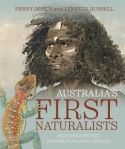
Lecture and Book Launch: Australia’s first naturalists

I don’t usually write up book launches, mostly because the speeches are brief, and I hope to eventually read and review the book itself. However, as the title of this post tells, the launch for Penny Olsen and Lynette Russell’s book, Australia’s first naturalists, was also billed as a lecture, hence this exception.

Australia’s first naturalists was published by NLA Publishing, and is subtitled Indigenous peoples’ contribution to early zoology. The event was MC’d by NLA curator Nat Williams, with the first speaker being Rebecca Bateman, who is the NLA’s first indigenous curator. She talked about the NLA’s collections relating to indigenous people, and how, in some cases, they contain information, including language, that can help people regain lost culture. Then it was over to the authors…

The authors

Penny Olsen, Honorary Professor in the the Australian National University’s Division of Ecology, Evolution and Genetics, has worked as a field biologist and ecological consultant, but now mostly writes books about Australian natural history. She started by saying that it feels like there’s been a sea change in awareness and appreciation of indigenous people’s part in Australia’s story (and I think she’s right.)

However, she said, while their roles as guides and trackers, as workers in the cattle industry, in mining, on stations, and in whaling, is well-known, less known is the significant role they played in the advancement of science – particularly in zoological science. She said that researching the contributions made by indigenous people was challenging, because sometimes their help would simply be referenced in a throwaway line. Other times, though, there would be more detailed accounts. Her reading of these relationships between indigenous people and scientists, was that indigenous people were willing, but also that the relationships ranged from exploitative to warm friendships.
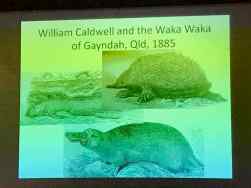
Olsen then talked about some of the collecting partnerships she found – chronologically, starting with James Cook in 1770 – illustrating them with powerpoint slides. These partnerships involved activities such as indigenous people locating specimens, and sharing their knowledge about animal behaviour.  Sometimes the indigenous people were named, sometimes not. Sometimes scientists worked with individuals, sometimes with families or whole groups. It was fascinating, and whetted my appetite for the book!

She finished with a quote from geologist Cecil Thomas Madigan’s 1946 book, Crossing the dead heart, which included:

… but I knew the value of natives on trips such as these, real bush natives who know the habits of all bush creatures and catch them. They are of the greatest help to the biologist and botanist in collecting …

(She also made a disclaimer about the terminology – like “natives” – that is used in historical sources.)

Then it was co-author Lynette Russell’s turn.

Lynette Russell, Professor at Monash University’s Indigenous Studies Centre, among other roles, calls herself an anthropological historian who focuses on developing an anthropological approach to the story of the past. She welcomed us briefly in the language of her great-grandmother – and then commenced, not surprisingly, by saying that “stories are important to understanding the past”. She won’t get any disagreement from us on that, will she?

Anyhow, she then shared various stories, also using images to support her points. She explained, for example, how long-lived traditions in indigenous culture contain information about climate change, such as the rise of sea levels, and how rock art provides evidence of indigenous peoples’ understanding of anatomy. She talked about how millennia of fire-stick farming has resulted in many Australian plants being fire resistant. And she commented on the arrival of feral animals, and their impact on indigenous peoples’ ability to sustain their environment.

The book is organised chronologically into 5 chapters, with the first chapter titled “Pre-European: Australia’s first naturalists”, and the last, “Epilogue: Contemporary Aboriginal and Torres Strait Islander Land and Sea Managers”. This last chapter, she said, discusses Indigenous Protected Areas, and indigenous ranger programs, which enable those who so desire to remain living on country and thus to maintain their traditional ecological knowledge and ensure its continuity. Traditional ecological knowledge is, she said, an “attribute of societies having continuous connection to their country”. Aboriginal peoples’ faunal knowledge is still extant; creating these new collaborations, replicates in some senses, those of the 19th century. Now, like then, indigenous people are generous with their time and knowledge.

She referred to Bruce Pascoe’s Dark emu (my review), saying it has managed to make promulgate more widely information about indigenous land management practices that archaeologists have known for a long time.

Finally, she noted that this book is an act of reconciliation.

Q & A

There was an interesting Q&A, with topics being:

  • why indigenous people wear clothing in some pictures and not others: they were interested in clothing, and were often “paid” in clothing.
  • why this information about expeditions has escaped us for so long: Australian history has focussed on squatters, and tragedies (like the Burke & Wills Expedition), but their research has uncovered a different story about real relationships and friendships.
  • whether the names of any indigenous people were used in scientific names for creatures they helped scientists “discover” (good question!): they couldn’t find any!
  • what was the quality of the expeditions in terms of their end-product: most were good for their time but tend to lack information we’d like today, such as animal behaviour, distribution, ecology. Their focus was – surely understandably? – more on identifying, categorising and naming.
  • what motivations did indigenous people have to help, besides being given items like sweets and clothes: friendship, it seems, and a genuine interest in these strange white men.

It’s encouraging to see yet another book furthering scholarship and understanding of indigenous peoples’ lives and culture, and of their very real role in forming modern Australia. A most enjoyable launch.

Lisa (ANZLitLovers) has already reviewed this book!

Lecture and Book Launch: Australia’s first naturalists
National Library of Australia
11 June 2019
Stan Grant in conversation with Mark Kenny

Who could resist a conversation involving Australian journalist, author and academic, Stan Grant? Not many, it seems, which is why this ANU/The Canberra Times conversation event was held in a bigger venue than usual, Llewellyn Hall, and just as well, because the audience was indeed bigger than usual. Such is the drawcard of Stan Grant – whose Talking to my country I reviewed in 2017.

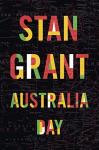
Book coverThis conversation, with Australian journalist and academic Mark Kenny, coincided with the publication of Grant’s new book Australia Day and his essay On identity.

After MC Colin Steele did the usual introductions, Kenny took over, introducing himself and Grant, whom he called an “all-round truth-seeker”. Grant is an articulate, confident, erudite speaker who peppers his arguments with the ideas of many writers and philosophers. There’s no way – my not being a short-hand trained journalist – that I could record all that he said, so I’m going to focus on a few salient points, and let you read the books or research Grant for more!

On Identity

Grant’s analysis of the current “identity” situation made complete sense to Mr Gums and me. He said, essentially, that identity (of whatever sort) is problematic when it becomes exclusive, when it reduces us to those things that define a particular identity and intrudes on our common humanity. At its worst it can trap us into a toxicity which pits us against each other. This sort of identity can make the world “flammable”.

On Justice

This is a tricky one, and I could very well be layering my own values and preferences onto it, but I think Grant aligns himself with people like Desmond Tutu for whom forgiveness, leading to a “higher” peace, was the real goal rather than justice, per se. (It’s all about definitions though isn’t it?) It’s one thing, Grant suggested, to feel righteous indignation, but quite another to desire vengeance. Grant talked about inhaling oxygen into the blood, not the poison of resentment.

On Liberal democracy

The strongest message of the conversation, as I heard it anyhow, concerned Grant’s belief in the fundamental value of liberal democracy as the best system we have for organising ourselves, albeit he recognises that it’s currently under threat (and not just in Australia). In supporting liberal democracy, which came out of the Enlightenment, Grant does not minimise the hurts and losses of indigenous Australians under this system. However, he argues there are solutions within its tenets. I hope I don’t sound simplistic when I say that I found this both reassuring (because I sometimes wonder about our democracy) and encouraging (because it was good to hear some articulate so clearly why he believes liberal democracy has got what we need).

His aim in this latest book of his, Australia Day, was, he said, not to look at indigenous issues in isolation but within a broader context. The conversation spent quite a bit of time teasing out what this actually meant.

Grant made a few clear points:

  • we have a problem when a liberal democratic state refuses to recognise its own history. In Australia we are still living with the legacy of our history, and are facing the challenge of marrying this with Australia’s founding principle, the liberating idea of freedom.
  • the Uluru Statement from the Heart was, fundamentally, indigenous Australians stating that they want to be part of this nation; it conveyed an active choice to be part of a nation that had done them wrong; it represents, and this is my interpretation of what he said, a faith and trust in the nation and its liberal democratic processes. For Grant, the Statement represents the foundational idea of a liberal democracy. Grant then spent some time articulating the flawed arguments used to reject the Voice to Parliament. He argued that the rejection was more than a failure of imagination, courage, and politics. It represented a lack of understanding of the system we are founded upon.
  • the problem in Australia is that there are some extreme minorities who refuse to engage in our liberal democracy.
  • nations are not static – just ask the Balkans, he said! – they come and go. What defines them are not borders but story, a shared story. What is Australia’s story? Part of it is that we are a liberal democracy, but this democracy is being threatened, here and elsewhere, by the increase in the politics of identity which tears at the fabric of nation.
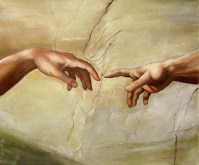
Detail of Michelangelo's Creation of Adam

Detail, Michelangelo, The creation of Adam (Public domain)

A key question he said is whether a liberal democracy can deliver on its promises. Among the many philosophers he referenced was Hegel whose idea of “becoming” Grant likes. He talked about Michelangelo’s painting of The creation of Adam on the Sistine Chapel, and the fact that the fingers don’t meet. We all live in this space, he said. It’s a powerful image. He believes that “unfettered liberalism can erode community”, and that liberalism is currently failing to deal with fruits of its own success. It works well in an homogenous state, but most states are not homogenous. Resolving this is modern liberalism’s challenge.

On Australia Day (January 26)

I have heard Grant on this before, but I enjoyed hearing it teased out more in this forum. On January 26, 1788, the idea of the Australian nation was planted, and this idea encompassed the ideas of the Enlightenment (albeit, he admitted when question by Kenny, the colony didn’t look much like it in those early days). This day, he says, holds all that we are and all that we are not. It also means something for all of us, indigenous and non-indigenous. For him, the day is about considering, recognising, exploring who we are.

He argues that changing this date would hand January 26 over to white nationalists, but he applauds that the change-the-date campaign has ensured that no-one can now come to the day without knowing the issue, without knowing the angst it encompasses. Indigenous people have changed how we see this day, and we all share deeply that first injustice.

He then asserted that our right to protest that day is a rare thing – and it’s because we are a liberal democracy. Grant argued that antagonism is the life blood of the nation, that being free “to antagonise” is the fundamental principle of liberal democracy. The challenge is to hold these antagonisms in balance.

Considering how the current impasse could be resolved, he talked about ways that the day could be imbued with new significance: wouldn’t it be good if a treaty were signed on this date, or that Australia became a republic?

Returning to the idea of identity, he believes the problem is that we think first about identity rather than policy, but, he argued, powerful communities will always look after identity. What we need is good policy to fix our socio-economic burdens. And that, on this Australian election day, seems a good place to end!

ANU/The Canberra Times Meet the Author
MC: Colin Steele
Australian National University
13 May 2019

Sydney Writers Festival 2019, Live and Local (Session 3)

And now my final event from the Sydney Writers Festival live-streamed (#SWFLiveAndLocal).program at th National Library of Australia.

“I do not want to see this in print”, Sunday 5 May, 4.30pm

Panel: Annabel Crabb (convenor), with Samantha Maiden, Sharri Markson, Niki Savva

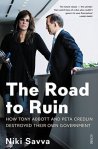
Niki Savva, The road to ruinAustralian journalist Annabel Crabb, as cheeky as ever, introduced the session as being one of the last events in this Festival of lying! (You may remember that the festival theme is “Lie to me”) However, she then went on to say that the focus of the session would be modern political reporting. Her panelists were all established Australian journalists (click on their names to see their Wikipedia entries.)

Crabb got the conversation going by asking whether political lying is different now to what it was in the past? That set them off. It was a lively, respectful discussion involving four women who are clearly passionate about political journalism.

One of the issues about “modern” lying concerned politicians saying things at one time that they revoke later. An example was Julia Gillard’s saying there’d be no carbon tax, and then introducing one. The journalists felt the best policy is always honesty: Gillard should simply have said that yes, she had made that statement, but that circumstances had changed and now there would be a tax. A common circumstance where this sort of lying happens are leadership challenges. The problem is that the politician may be planning to challenge, but is not ready at the time the journalist asks, so they feel forced to lie.

But, Savva asked, isn’t it better to just tell the truth, rather than undermine the political process by lying. Crabb noted that we all now know the language of leadership challenges and so no-one believes their denials.

More egregious lies, according to Crabb, are those where a journalist is given information “in confidence” or “off the record” that the politician denies when asked publicly. For example, Peter Costello had told a journalist he would challenge for leadership one day, but when asked publicly he said he would never challenge. The challenge for journalists in all this is protecting their sources, because trust goes both ways. Samantha stated that “you have to hold your nerve” which I felt was code, in part, for “bide your time”! It’s all a game in the end – and not a game I would ever want to play. However, we need journalists to suss out the truth for us.

Of course, journalists aren’t squeaky clean. There are co-dependent and lazy journalists, they said, but there is also the problem of not enough time, the sped-up news cycle, and that there are fewer journalists.

Crabb moved on to the public’s disaffection with politicians and political journalists, as exemplified by the recent social media attack on journalist Patricia Karvelas over a text from politician Barnaby Joyce. A panelist added the propensity of viewers of the ABC’s The Insiders being quick to criticise. Why does the public not recognise that journalists have contact/relationships with politicians in order to obtain information, Crabb wondered? Maiden put a positive spin on these attacks saying that “in the age of social media you have the joy and pain of knowing what people think about you”! You just need to ignore people being mean to you on Twitter. (Easier said than done sometimes, I suspect.)

Markson discussed her story on Barnabay Joyce and his affair. She explained how long her investigation took –  it started long before the pregancy. Journalists must be sure the story can stand up, or they lose their job. Verifying all the information wasn’t easy, she said. She also explained that she needed to clear working on the story with her editor, for both approval and support. After the story came out, and was clearly the “truth”, Joyce apparently considered a defamation case! Later in the conversation, she reiterated the battle involved in getting any story into the paper. So many hoops! (And then, when you finally get there, “you get smashed in Twitter”.)

This sort of detail about the process was illuminating for outsiders, but Savva asked the important question: was the story politically relevant? I presumed she didn’t think it was, and nor, they said, did journalist Peter Hartcher, but Markson argued that it was because it demonstrated hypocrisy, given Joyce’s position on family values, his arguments against the cervical cancer vaccine for fear it encourages promiscuity among women, etc.

The panellists shared many other recent examples of how journalists obtain stories, of their relationships with their sources, and of how they manage confidentiality (which can include obfuscating the “real” source by using generic terms like “senior MP” etc). Their passion for their work was palpable, but so was their sensitivity to the humans involved, to the implications of different behaviours, and their awareness that it’s not sometimes only about “the truth” but how something looks. (Tony Abbott and Peter Credlin’s relationship being a recent example.) Relationships can be misconstrued. There was a lot of detail of interest to Aussies who know these cases, but the bottom line was the balancing act involved. It was a Niki Savva contact who gave the title for the session: “but I don’t know if I want to see this in print”!

We ended with a Q&A, which mostly revealed more of the same. One however asked where were the reports on policies, particularly policy comparisons. Crabb said “on the ABC website”! Maiden said that she liked writing about policy, and did indeed write such articles, but that, realistically, this writing doesn’t get as many clicks!

Another asked about the Fourth Estate’s role in holding the government to account. Why do journalists, then, call Manus Island an “offshore processing centre” when detainee, and award-winning author, Behrouz Boochani, says that he’s never been processed, that it’s a prison. The journalists replied that we could be Orwellian about language, but they do need to use the names used by the government. They gave examples though where journalists – such as Laurie Oakes – have pushed the government, forcing it to account.

Finally, a questioner asked about the role of the public service. Savva explained that public servants provide the facts, and suggest the questions that might be asked, but that the political staff dress up the information “in a more palatable fashion.” Hmm…

The session was, then, packed full of case studies familiar to the audience. The women were articulate, passionate and bold! Indeed, the clear message that came out of the session was that journalists must be bold, tough, and, as Maiden said early on, must be able to hold their nerve. It’s not a pretty job, but, done properly, it’s an important one. The more we readers understand the challenges and the pressures, the more we might support journalists – and be willing to pay for their journalism.

Sydney Writers Festival 2019, Live and Local (Session 2)

I returned to the National Library of Australia today for two more live-streamed events from the Sydney Writers Festival (#SWFLiveAndLocal). As I did last year, I’ll write each event up in separate posts, so here is the first of my Sunday events.

Andrew Sean Greer: Less (Conversation), Sunday 5 May, 3.00pm

Conversation: Andrew Sean Greer with David Marr (Convenor)

Andrew Sean Greer, Less, book coverWhat an absolute joy this session was. Australians will know David Marr as a politically engaged author and commentator, not to mention Patrick White’s biographer, and most readers will know Andrew Sean Greer as the author of the Pulitzer prize-winning novel Less (which also won, last week, the International Book of the Year category in the ABIA Awards.) These two men, one in his early seventies and the other nearing fifty, entertained us with a conversation that was light-hearted and yet managed to convey substance too. What made it particularly enjoyable was that Marr and Greer seemed well attuned to each other resulting in quite a bit of repartee, and no awkward spots.

So, the session felt very much like a conversation between friends rather than an interview, but we still got some nitty gritty, including:

  • the challenges of writing comedy, and how Less starts off quite flatly, which Marr felt was daring. Greer explained that he wanted to strip everything away form the protagonist Arthur Less at the start so he could then “reward him”. The narrator ridicules Arthur, but with warmth. Marr talked about some of his favourite bits, including that Arthur turns out to be a “miraculous kisser”. Are there any literary antecedents for this, he asked, to which Greer responded immediately, vampire novels! Haha!
  • the theme of the book being about joy and discovering joy, but also ageing. Greer said that he wanted it to be about age, but not be autumnal. He wanted it to be more about the idea that “given you are not getting any younger, you should enjoy it”. When Marr asked Greer about his own ageing, he commented on the things he can’t do any more – like drinking – but followed up by saying that John Irving was right, it’s important to have a “clear head in the morning”! Later in the conversation, Greer returned to the idea of age, saying it’s about the narrowing of pleasures, but that since writing is a pleasure, he was going ok.
  • the rules of comedy, being that you find the scariest thing you can, and it is this that releases the comedy. Readers need to be able to identify with the pain, but comedy only works, said Greer, if you know everything is going to be alright.
  • the writing process, including how he went about writing the foreign languages he uses in the book, and how he chose his names. Marr loved the names in the book, but advised that in future a good source for names is war memorials. However, it seemed that Greer had already discovered the value of cemeteries for this purpose!
  • winning the Pulitzer Prize, meant that he’d “won the time to write”, so he left his job. But he also needed some time to bask, he joked! Marr responded that Patrick White would ask “why aren’t you at your desk?” to which Greer replied that Peter Carey had already told him that! (Marr muttered that Carey has had his times of basking!)
  • Joe Keenan, Blue heaven, book coverbeing a gay writer, and finding gay stories. The first gay writer Greer remembers admiring is Edmund White, albeit some of his writing was too sophisticated for him at the time. He also named Blue heaven by Joe Keenan who went on to write the Frasier TV series. He had even turned Blue heaven into a musical, and had invited Keenan to it, but Keenan didn’t like it! Greer also named Armistead Maupin as an influence on his writing.
  • whether only minorities can write about minorities, to which Greer had an open mind, saying that he remembered a time when there were no gay characters in the books he read. Silence or invisibility is death, he said. He is therefore happy for non-gay people to write gay characters, but they must think about them as humans, not present stereotypes. He wouldn’t want “straight” books not to have gay characters. I like this response – that invisibility is a worse problem, and that the important thing is for writers to think about their characters as “humans” not types – but recognise different minorities, different writers may feel differently.

There was a Q&A, which included:

  • Did he feel a pressure to represent gay people? Greer said that there is always a tension for writers between representing “your people” (whoever they are) and telling the truth, the tension between the “legend” and the “reality”.
  • He’d spoken elsewhere about reading books relating to his writing, so what books had he read while writing Less? Nabokov’s Pnin, Updike’s Bech stories, Muriel Spark, and Proust (who finds that desired balance between sentimentality and cynical detail.)
  • Had he been to all the places he writes about in the book? Yes. He had two rules writing this book: everything had to come from his notebooks where he’d written his experiences, as he didn’t want to write fantasy about another country; and the joke always had to be on Arthur because he’s the outsider in the various countries.

All this sound may sound dry, but the repartee really was something. It was a joy seeing Marr in this different, lighter, but as astute as ever, mode. All in all, thoroughly entertaining, and informative.

Sydney Writers Festival 2019, Live and Local (Session 1)

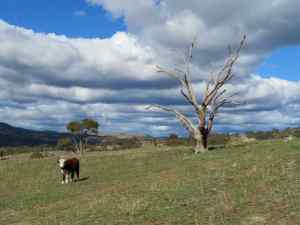
Pic of farm at Williamsdale

A day in the country at Williamsdale

As in 2018, selected Sydney Writers Festival events were live-streamed this year to 35 sites, including Canberra’s National Library of Australia (#SWFLiveAndLocal). I had planned to attend most of Saturday’s events, but then our annual day-trip to our friends’ place in the country came up, and that’s unmissable, so I only attended the last event of the day.

This year’s theme is Lie to Me, which means participants “will discuss the white lies and deceptions that are necessary for survival, as well as malicious lies that are spun with darker intent. They’ll explore the ways that writing can be used to deceive others in an increasingly post-truth world, and look at the lies that we tell ourselves, each other, and those we collectively tell as a country.” A perfect theme, don’t you think?

Boys to Men: The masculinity crisis, Saturday 4 May, 4.30pm

Panel: Clementine Ford, Adam Liaw, Janice Petersen (Convenor)

Book cover of Clementine Ford's Boys will be boysClementine Ford is the feminist author of Fight like a girl, and, more recently, Boys will be boys. An obvious choice, then, for the panel.

Adam Liaw is a lawyer who came to fame as a winner of Australia’s Masterchef. The festival program describes him this way: “As the author of six cookbooks and host of the award-winning SBS television series Destination Flavour, his approachable and family-friendly recipes are influenced by his global travels, but remain focussed on the casual simplicity of contemporary Australian home cooking. In 2016 the Japanese government appointed Adam as an official Goodwill Ambassador for Japanese Cuisine.” Not such an obvious choice, eh? However, he has been appearing recently on some ABC-TV current affairs programs and has impressed us with his sensible, thoughtful, comments. He didn’t disappoint in this panel.

Janice Petersen, the convenor, is an SBS journalist and news presenter.

Firstly, although the panelists didn’t say this specifically, the topic was a natural for the Lie-to-me theme, since so much of gender is constructed on lies – on assumptions, beliefs and attitudes about what makes a man or a woman. This session focused on these, and how they impact, particularly, contemporary ideas about masculinity. Convenor Petersen did an excellent job, asking such questions as:

  • Why is masculinity in crisis?
  • Why does the mentioning word “masculinity” seem “to set off a bomb”, engendering negative responses?
  • What does it mean to have a son (as both panelists do) and do the panellists fear the influence of peers?
  • Are men and women different?

Clementine Ford spoke, naturally, from a feminist perspective. She argued that masculinity is in crisis, defining toxic masculinity as men being unable to have platonic relationships with each other, being unable to express their feelings. She argued that boys bond over negative attitudes to women because they can’t relate to each over other things. Men, she said, are hostile to discussions about feminism because they don’t see that it works for all, that its aims are to free all people to be themselves. The problem is that although many men hate much about their lives, they don’t want to “see what patriarchy inflicts on them” (at work, say) because they fear losing the benefits of being “men” (such as being the boss at home!)

However, Ford also said that she doesn’t see “masculinity” as negative. She is invested in “healthy masculinity” and has faith in men, but sees the issue being masculinity and power propping each other up.

Adam Liaw spoke, he said, from a non-scholarly perspective, but I must say that I really liked the way he thought. He talked about how every society defines its own understanding of masculinity, and that in our society today, we don’t have a clear idea of what that is. He sees this lack of clarity as a structural problem, one that creates a high level of insecurity in many men. He talked about various male “role models”, like James Bond and Batman. James Bond doesn’t have close friends which is something men can relate to, while Batman is rife with problems, which men can also relate to. Modern men, on the other hand, can’t relate to Superman as they once did. In other words, men are now defined more by their insecurities than by positive ideas or values.

Liaw returned repeatedly to this insecurity issue, and it made sense. When Petersen asked whether men and women are different, Ford was initially a little flummoxed and referred to Liaw, who without hesitation said yes we are different. We are, for a start, physically different, but, he said, we should not weaponise gender. Our biological differences don’t, for example, translate into meaning that men are better CEOs than women. Liaw’s most important point was, for me, that the issue is not things like men spending more time with children – which men have always liked to do – it’s about overcoming their insecurity, meaning, for example, being comfortable with their partners earning more money than they.

I found the conversation about raising children interesting. Ford expressed a more ideological approach, one I related to because of my own child-rearing days. Indeed, it was hard not to feel a bit of “been there, done that”, since we second-wave feminists had tried exactly what she was talking about. In fact, when I look around at our sons, I think we did a pretty good job! They aren’t the men evincing the toxic masculinity that was being discussed, which begs the question in my mind about whether a few enlightened parents raising their children to be free (free to be … you and me, and all that) will effect the change we need.

Both Ford and Liaw, albeit they expressed it slightly differently, eschewed imposing gender expectations on their children – on what they wear, play with, etc. Liaw spoke of wanting his son to be a “good person”, a “good man”. He is not in favour of forcing “reverse” gender activities on children, but on encouraging all children to be able to do all things. (This was in response to a clip Petersen showed from an SBS Dateline film of an Icelandic school.)

Ford spoke of structural oppression (much as Liaw had earlier referred to structural problems). This results in such things as her being trolled if she speaks of boys doing anything “feminine”, like pushing a doll in a pram. It’s seen as her forcing a boy to be a girl, rather than as letting him explore life. We need to “dismantle gender” but Australians, she feels, can’t get their heads away from narrow definitions of what “men” and “women” are. Worse, they don’t actively condemn men for treating women badly. Much trolling comes from packs of teenage boys. (This reminded me of a recent interview I heard with a female Uber driver who said that one drunk young man was manageable, but in a pack they can become abusive to women, showing off in front of their mates.) Toxic masculinity!

If Liaw’s most important point, for me, was about overcoming male insecurity, Ford’s concerned the malleability of humans. If we have learnt, she said, not to smoke, and not to drink and drive, we can also learn not to be racist or sexist, but these latter mean giving up power – and we resist that.

The session ended with a brief Q&A, from which I’ll just share the last question. It concerned overcoming the sense of entitlement (which I understood as encompassing more than male entitlement.) Liaw said it starts with understanding our own weaknesses and biases, while Ford said it’s about listening to others, and checking our responses to what they say. Which is to say, I suppose, that we need to look past the lies we so easily tell ourselves in order to forge more truthful relationships with each other!

PostscriptJonathan Shaw (Me fail? I fly!) has reported on some Friday sessions, which you may like to check out.

Monday musings on Australian literature: Reading marathons

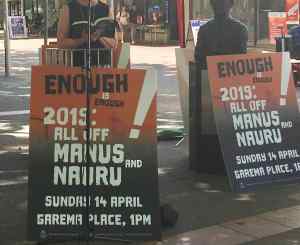
Public reading No Friend but the Mountains

Today’s post was inspired by two comments on yesterday’s post which featured a public reading event I’d taken part in. Lisa (ANZLitLovers) commented that she is taking part in a reading of James Joyce’s Ulysses in a Queenscliff bookshop next Bloomsday, while Karen (Booker Talk) said she wasn’t sure she’d heard of such a grand scale reading event. I had heard of them before, but decided that it was time I got the real gen!

So, I checked Wikipedia (where I found an article on Marathon Reading); I googled; and of course I researched Trove. I discovered a whole world of reading events, which I’ll share here, focussing on Australia, but including some other places too, for context. Wikipedia’s article (accessed 25/3/19) is minimal, basically referencing a few examples of what it calls “marathon reading” but what is more commonly called a “reading marathon”. The first marathon reading Wikipedia describes is a yearly event run by UCLA “where a group of students, faculty, community members, alumni, and often even celebrities read a novel (or two) out loud non-stop for a 24-hour period.”

That description essentially defines what I’m discussing in this post, with a couple of provisos. The time frame for a reading marathon can vary, from several hours to several days; and the readers of course can vary too, from professionals to lay people of all sorts, depending on the event.

Google was useful – to a degree. What I discovered was that Bible reading marathons are BIG. They are big in Australia, and big in the USA, too. Some churches and religious organisations hold them regularly. A bit more on this anon. However, Google also brought up all sorts of reading marathons for various books:

  • the Bible
  • Herman Melville’s Moby Dick
  • James Joyce’s Ulysses
  • George Orwell’s 1984
  • Charlotte Bronte’s Jane Eyre and Jean Rhys’ The wide Sargasso Sea
  • Walt Whitman’s Leaves of grass
  • Harry Potter
  • Jack Kerouac’s On the road
  • Madelaine L’Engle’s A wrinkle in time

The first three popped up frequently, with some organisations running them as regular events. 1984 also popped up more than once.

Most reading marathons seem to have a goal, mostly spiritual (the Bible), or political (eg 1984) or cultural (eg Ulysses). Literacy also pops up frequently as a reason.

The Australian scene

The first references I found to reading marathons in Trove came from the 1920s and 1930s and were all about Bible reading marathons in the USA. It appears that the practice became competitive, with churches vying to do it faster than other churches! An article in World News (30 January 1926) said that “the idea originated in a small western centre some time ago, and had as its object the establishment of a counter-attraction to the then prevalent non-stop dancing Marathons”. The first Bible marathons took 72 hours, but, the article said, a Boston church had done it in 52 hours 18 minutes and 27 seconds. Clergymen were apparently denouncing the contests because “they detract from the reverence in which the Bible should be held, and that the readers gain no instruction or inspiration from their efforts”. There were several articles on the topic, with titles like “Excesses of American churches”.

The first report I found of an Australian reading was of – yes – Ulysses! It was held at the National Library of Australia on June 16, 1993. (I was living in the USA at the time!!) The article starts:

Literary fans walked into the fourth-floor reading room at the National Library yesterday, leaving the cold of a Canberra winter to emerge in Dublin, June 16, 1904, and celebrate Bloomsday slightly late at a marathon eight hour-plus reading of the James Joyce epic, Ulysses.

James Joyce Ulysses

Did they read all of Ulysses in 8 hours? I’d be surprised. Anyhow the report says that the readers, of whom there were over 30, included local politicians, writers and other community figures, and that

there were about half a dozen real Irish accents and an equal number of reasonable facsimiles. Others struggled to overcome Irish names and colloquialisms of varying degrees of technical difficulty and with differing levels of success.

Love it. The article also said that Canberra’s Irish community had held Bloomsday readings before but this was the first at the National Library.

My googling for Australian examples turned up mostly Bible marathons and some Ulysses marathons, both of which continue today (despite those early Bible marathon criticisms!)

George Orwell, 1984

However, there were others. In Melbourne in September 2015, the Wheeler Centre and the Melbourne Festival, organised a “marathon relay reading” of 1984, “Orwell’s prescient novel of power and politics …in a very apt setting—the Legislative Assembly Chamber in Victoria’s Parliament House.” The event was to take over 9 hours, and would involve up to 30 people reading from the Speaker’s chair! Wow! That must have taken some negotiation. The readers included politician Adam Bandt, human rights lawyer Julian Burnside, feminist writer Clementine Ford, ex-Human Rights Commissioner Gillian Triggs, political speech writer Don Watson, and Rosie author Graeme Simsion.

And, just last year, again in Melbourne, the bookshop Readings supported a marathon reading of Emily Watson’s translation of the Odyssey. This was a professional reading organised by The Stork Theatre. A free event, it was to use over 30 performers, and take 12 hours. The promotion said “Come along for your favourite chapter, bring a picnic, stay for the whole 12-hour marathon or come and go as as you please.”

Variations on a theme

My research revealed other events or activities that were tagged reading marathons, but were different from the more common use of the term. These activities comprised two main types:

  • Reading as many books as you can in a given period (a bit like the well-known Ms Readathon): There were a lot of these, one example being the William Stimson Public School, in Wetherill Park NSW, which described its 2017 Book Week as being the “culmination of their reading marathon where the school community read more than 9000 books”. I found these sorts all around the world, from Kenya to the United Arab Emirates, from Latvia to Argentina, as well as in Australia!
  • Nick Bland, The very cranky bearSimultaneous storytime: This is an event where the same story is read at the same time in multiple places. An example occurred in Australia in 2012 when Nick Bland’s The Very Cranky Bear was read aloud “in about 2200 libraries, kindies, schools and homes across Australia” to over 300,000 children in the 12th National Simultaneous Storytime. This event’s aim is partly, at least, to promote literacy.

So, have you attended (or taken part in) a reading marathon? If you have, how did you find it?

My literary week (15), readings and readers

As regular readers here know, my “literary week” posts are irregular affairs, usually inspired by something I really want to share (or document for my own benefit!) And so it is this week …

Reading Boochani in public … and related thoughts

Public reading No Friend but the Mountains

I was especially pleased, given the events in Christchurch last Friday week, that I’d been asked to take part in an all-day public reading of the book No friend but the mountains, written by Kurdish-Iranian poet and Manus Island detainee, Behrouz Boochani. The reading was organised by local writer (and ex-work colleague) Sarah St Vincent Welch, with the support of the Canberra Refugee Action Committee. It took place in Canberra’s Garema Place on Thursday March 21, which happened to be World Poetry Day and World Harmony Day. The reading started at 8.15am and went through into the early hours of the evening, with my 10-minute slot taking place in the early afternoon. It was a privilege to be one of the 60 readers, most of whom were local poets, taking part in the event.

As we all know, it’s strange how events and ideas can coalesce. We have, here in Australia, a current affairs television program called The Drum. It’s a panel discussion show and, earlier this week, in the wake of Christchurch, they had an all-Muslim women panel. It was confronting, but it reinforced the ideas that are also embedded in Growing up Aboriginal in Australia (my review), and that also reflect the experience of the detainees. Each situation is different in specifics and history, but Muslims, indigenous people, and asylum-seekers know what it is like to be reviled. Each member of these groups wakes up each and every day, wondering what act of prejudice or hatred they might confront*. It’s truly appalling.

If only naysayers and decisionmakers would stop, listen and/or read, and imagine walking, for just a moment even, in another’s shoes, they might think again about their actions. This is not about class or religion or wealth or education (though they are implicated in the bigger picture), but about human feeling. I know I speak from a position of fortune – I can’t change that – but I can try to do my bit to lessen the load.

Readings

Two of my recent posts resulted in short story recommendations that I thought worth sharing, though I haven’t yet had time to follow them up myself:

  • Ian Darling, commenting on my post on Rudyard Kipling’s story “The Janeites”, recommended an earlier Kipling story, “Mary Postgate” (available online), originally published in 1915. Ian describes it as “a fearful mixture of hate and compassion.” Sounds eerily relevant doesn’t it?
  • Lisa (ANZLitLovers), commenting on my Monday Musings post on the NSW Premier’s Translation Prize, recommended an Indonesian short story translated by one of this year’s shortlistees, Harry Aveling. The story is “The biography of a newborn baby” and is by Raudal Tanjung Banua (available online).

I will try to read them in the next week or so, once I’ve read this week’s reading group book!

Readers

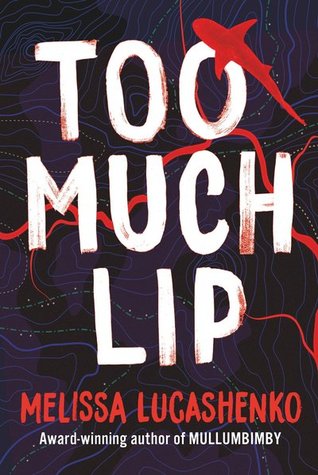
Readers are interesting beasts really (and I use the term affectionately!) We differ greatly in what we like to read, what we think is good, what we think is worth reading. I was interested to read, after writing my post on Melissa Lucashenko’s Too much lip, Karen Wyld’s very thorough review in the Sydney Review of Books. Late in the review she comments on the challenge for readers:

Melissa Lucashenko, Too Much Lip

Too Much Lip is, of course, not the first novel to include family violence or to expose its colonial roots. There are, however, risks with telling stories like these. Non-Indigenous readers could fail to recognise the strength of culture to mitigate intergenerational trauma, and not understand its roots in colonial violence and systemic racism. Some readers might see the Salters through an over-used deficit model, or believe they have the solutions to ‘fix’ Indigenous families. Instead, the Salters’ story shows how ineffective governments have been in trying to patch up the wounds of colonisation through paternalistic and draconian approaches. Some readers might find it hard to grapple with the violence in this novel. And some might find it hard to forgive the Salter siblings’ creative disregard for the law. It’s important to remember that this book is a piece of fiction but it is grounded in reality.

If there is a risk of non-Indigenous readers misconstruing parts of this novel, how can First Nations writers mitigate such risks? In most cases they can’t, and they shouldn’t have to. The responsibility of interpretation and the heavy lifting of expanding one’s worldviews and letting go of ingrained prejudices lies with the reader [my emphasis].

Too much lip is an exciting read, but it is also a confronting one that can easily lend itself to judgement if not moralising. I love that Wyld discusses this potential head on.

Quote of the week

I included a Quote of the Week in my last literary week post, and can’t resist including one again. It comes from Rudyard Kipling’s “The Janeites” (linked above):

“… there’s no one to touch Jane when you’re in a tight place. …”

I’m sure I don’t need to tell you what this means, even if you haven’t read the post!

* Well, asylum-seeker detainees probably have a good idea, as every day brings the same, but I think you take my point.

Festival Muse 2019: Alice Pung in conversation with Sam Vincent

Muse Festival

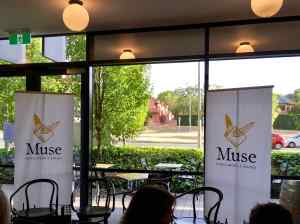
Festival Muse, a literary festival run by one of our favourite places in town, Muse, now seems to be a fixture on the Canberra Day long weekend calendar. For the last two years Mr Gums and I have attended the Opening event, which this year was titled Moments of Wonder. As Opening Night was also International Women’s Day, the event was dedicated to women: it featured Sarah Avery, Aunty Matilda House, Kate Legge, Alice Pung and Annika Smethurst talking about their moments of wonder. Unfortunately, due to illness in my family, we had to cancel our attendance this year, but social media tells me it was excellent as usual.

However, I did fit in a one-hour Saturday afternoon session – and was accompanied by Daughter Gums, who was in town.

Alice Pung in conversation with Sam Vincent

Alice Pung will be known to most Australians. Based in Melbourne, she has written several books, including  two memoirs, Unpolished gem (read before blogging) and Her Father’s Daughter (my review), a young adult novel Laurinda, and Close to home, a collection of essays which inspired this conversation. She has also edited an anthology titled Growing up Asian in Australia, and she writes for Monthly magazine. Pung was in conversation with Canberra-based writer, Sam Vincent, whose 2015 book Blood and guts: Despatches from the whale wars was short and longlisted for various awards.

Sam Vincent and Alice Pung

The back cover blurb for Close to home describes it as covering “topics such as migration, family, art, belonging and identity.”  However, given migration is the major theme running through Pung’s work, the conversation focused on this and the migrant experience in Australia. What was both interesting and chastening was that her family’s experiences were (are?) so very like those of indigenous Australians that are shared in Growing up Aboriginal in Australiaexcept that indigenous Australians get called different names and aren’t told to “go back to where you came from”! It’s particularly chastening because of the generosity with which so many migrants and indigenous Australians respond to the racism they live with on a daily basis. Pung talked about the racist comments yelled at them in the 1980s – the “go back to where you came from” variety – but commented that at the time Australia was going through a recession so the anger was understandable.

Pung talked quite a bit about her family, but much of that is covered in her two memoirs, so I won’t repeat them here. Vincent asked her about the difference between the subjects of her writing and her readers. Pung agreed that yes, her mother’s generation, the subjects of her stories, is not very literate. Consequently, the people she writes about rarely read what she says, and the people who read her tend to be middle-class white-haired white Australians. Guilty as charged! She doesn’t mind, though – as long as people are reading her books!

Alice Pung

Pung talked a little about the traditional narrative arc of the migrant success story – and her desire not to write that. She talked about how when you sit people down to interview them their voice changes into this narrative of success, but she wants their own voices.

What I found particularly interesting was her discussion of racism and class. There’s the obvious racism – the name-calling, the “go back where you came from” shouts, and so on – but there’s also the softer, more patronising racism from people who believe themselves not racist. Questions from university-educated people, she said, such as “your mother has been here for 20 years, why doesn’t she speak English?”, indicate a lack of understanding of migration.

Continuing this theme, she understands, for example, people who follow Pauline Hanson while saying to her, “Youse are the good ones”. People she said are kind individually despite the confronting stickers on their cars. She understands “working class racists” because own parents are working class.

She talked about how “class” underpins racism. As a young qualified lawyer, she was getting nowhere in her interviews for law jobs because she was not dressed the way a middle-class white Australian professional would dress. She appreciated honesty from her friends she said, such as the one who explained her dress issue to her. As soon as she changed her dress she started getting interview call-backs, even though the content of her interview responses hadn’t changed. She realised then how class works.

She referred, during the conversation, to a number of migrant and/or refugee writers including Christos Tsiolkas, Benjamin Law and Anh Do. She quoted Tsiolkas who has said that the middle class can write what they like – be as liberal as they like – but refugees will always be placed in working class communities!

Pung has a broad, historical understanding of racism. Since white settlement of Australia, she said, some group has always been ostracised – the Irish, then Greeks and Italians, then Asians, and so on. (Such racism, she argued, is not confined to Australia.) She also teased out the oft-criticised racism found in migrant communities themselves. Her parents, for example, suffered significantly under the Pol Pot regime before they came to Australia. What settled, established migrants fear, she suggested, is not so much “other” but civic unrest. She also noted that migrants from unstable countries trust democracy and, in doing so, trust and believe Australian newspapers. A newspaper like the Herald-Sun, which the educated middle-class might reject, is perfect for many migrants because it uses simple sentences. Racism, she said, is nuanced – and has less to do with colour than with class.

Vincent also asked her about her voice, her use of vernacular, in her books. She talked about wanting to use the language used by people like her parents, a less formal language. You can talk like Kevin Rudd, she said cheekily, and have only 30% of what you say be understood, or you can talk simply to be fully understood. She appreciated her first editor who left usages in like “youse”. She also talked about her parents’ humour, and their wonderful use of metaphors despite their basic English. She admitted that she was fortunate to have been perpetually embarrassed by her parents! She said she had to write her first books carefully because she “didn’t want to tell a success story, but an Aussie battler story”.

Regarding her intentions for her writing, she strongly rejected having a didactic aim – no one wants a message, she said. However, she hoped her books did inform and educate. She reiterated this during the Q&A when she was asked what she would say to Pauline Hanson if she ever met her face-to-face. She said that she doesn’t believe you can change someone by saying something to them in a one-off situation like that, but that books might change people.

She agreed with Vincent’s suggestion that there’s a dearth of working class voices in Australian literature.

Q & A

There was a Q & A, but I’ve incorporated the main points into the discussion above. However, Daughter Gums’ final question went down a different path. The question was inspired by the work Pung does with school students, and concerned whether school students ask different questions to those asked by adults. Yes, said Pung, they don’t have the filter that adults have, so can ask bald questions like “how much money do you earn?” Pung gave us her answer, explaining the numerical and thus economic difference between an Australian best-seller (10,000 books sold) and an American one (10,000 sold per week!)

She shared some entertaining and enlightening anecdotes throughout the conversation and Q&A, but I reckon we should all read her book(s) to enjoy those!

I must say that I found thirty-something Pung articulate, warm, and grounded. She makes serious points, and tells difficult stories at times, but with a grace that’s inspiring. A big thanks to Muse for including her in this year’s event.

Alice Pung Close to home
Festival Muse
Saturday 9 March, 2.30-3.30pm

Michelle Arrow in conversation with Frank Bongiorno

A few days ago, Mr Gums and I attended another ANU/The Canberra Times Meet the Author event, this one featuring Australian historian Michelle Arrow in conversation with Australian historian Frank Bongiorno. It was an especially interesting pairing because Arrow’s book, which she is currently touring, is titled The seventies: The personal, the political and the making of modern Australia, while Frank Bongiorno wrote, just 4 years ago, The eighties: The decade that transformed Australia. So, it was a case of the Seventies facing off against the Eighties! Fortunately no blood was shed…

The conversation was introduced, as usual, by MC Colin Steele, who does a marvellous job of organising and mc-ing these events. In his intro, he told us that one of the main threads in Arrow’s book is the now well-known idea that the personal is political. This theme also ran through the conversation.

The Seventies was a big decade for me. It’s the decade in which I graduated, established my professional career, and married. It’s also the decade in which I read Germaine Greer’s The female eunuch, and when the great reformer, Gough Whitlam, came to power – and showed what a government with vision and heart could do. I must say that it is rather disconcerting to think that an era in which we were fully adult is now the subject of serious history! Such is life!

Now, the conversation …

The conversation

Michelle Arrow, The SeventiesBongiorno commenced by asking Arrow how she defined her decade. Before I share her answer, I should explain that Arrow later told us that, while Bongiorno had taken a comprehensive look at the Eighties, she had narrowed her decade’s focus to gender and sexuality. This affected how she defined the decade. So, her answer was that she took the formation of the Homosexual Law Reform Society in the ACT in 1969 as her start, and the Women Against Rape in War protests (which also originated in Canberra) of the early 1980s as her end. She noted that soon after these protests, the ANZAC narrative began to dominate our national mythology.

Bongiorno asked Arrow to describe the discourse characterising the Seventies. Arrow talked about its being a time of rapid social and economic change and, consequently, of some disarray. Feminism and Gay Rights were big issues.

The conversation then turned to the theme mentioned by Colin Steele that the personal is the political. The main example of this, Arrow explained, is feminism. Women began to realise that their personal experiences and concerns (economic and social, for example) were structurally and politically based. Formal and informal consciousness-raising groups began exploring the underlying issues. This theme also played out in the gay and lesbian rights movement: being gay was also seen as having a political component. She mentioned here the work of the early-1970s-formed group, CAMP (Campaign Against Moral Persecution).

After this rather long introduction, we got to the core of Arrow’s book, the Royal Commission on Human Relationships. This Commission grew out of the Whitlam government’s failed attempt to reform abortion law. It was reading the fascinating personal submissions to this Commission that inspired Arrow’s book. While the Dismissal and Fraser’s election resulted in funding cuts to the Commission, bringing the Report forward and affecting the end result, the submissions themselves remain valuable.

Bongiorno noted that this Commission initiated a new role and purpose for these sorts of enquiries. Arrow agreed, explaining that it legitimated people’s stories and played a therapeutic role, both of which we still see today. (The recent Royal Commission into Institutional Responses to Child Sexual Abuse is a good example)

Another issue discussed was that of violence – and its appearance in the submissions. Violence also reflects “the personal is the political” theme. Corporal punishment for children, violence against women and girls, and gay bashing were all issues that played out politically. Bongiorno referred to Pierre Trudeau’s famous statement that “there’s no place for the state in the bedrooms of the nation”. Arrow explored the paradoxical nature of this argument: homosexual people sought freedom and privacy for the expression of their sexuality, while women were seeking protection for theirs!

There was of course a discussion about the Pill and its role. I was interested, given contemporary politics, in Arrow’s comment that the liberation of the 1960s, afforded by developments like the Pill, transformed in the 1970s to concerns with identity.

Bongiorno, though, pushed on to ask about the relationship between women’s liberation and the sexual revolution. Arrow talked about researching 1970s popular culture. She read magazines like Cleo and Forum, and suggested that Cleo had a more feminist aspect underpinning its exploration of sexuality and bodily knowledge, than did Forum. She commented that “letters to the editor” were particularly informative. She shared her shock on reading a response to a letter about father-daughter incest that said it was caused by wives not satisfying their husbands. How far we have (hopefully) come!

She also looked at movies – such as Alvin Purple and Petersen – for their evocation of sex, class and gender.

The conversation concluded by discussing Whitlam, the Seventies, and whether it matters. Arrow argued that there was a particular convergence in Australia of the height of the women’s liberation movement and the election of the Whitlam government. This resulted in things like Elizabeth Reid becoming the first women’s adviser to a leader anywhere in the world, to a big government commitment to International Women’s year, to attempts to reform abortion law (still an issue today), and the Royal Commission on Human Relationships. Fraser, coming into power at the end of 1975, had to face this new infrastructure. She traces in her book what happened to women’s issues as time passed – for example, to Women’s Refuge funding made by Whitlam in 1975.

Q & A

The Q&A, though brief, demonstrated the audience’s knowledge of the Seventies! Topics included:

  •  No-fault divorce laws (the Family Law Act of 1975): Arrow agreed this was crucial social change, and it is covered in the book
  • Multiculturalism: This is mentioned in the book, but given her focus, it’s mostly in relation to migrant and indigenous women in the women’s movement, and how the movement accommodated difference.
  • Indigenous issues (Tent Embassy, Land rights, etc): Again, because of her focus, her coverage mostly relates to women. She noted that because of Indigenous people’s specific concerns, Indigenous women did not particularly feel part of the women’s movement.
  • Education: Arrow agreed that Whitlam’s opening up access to tertiary education was transformative, and that it was particularly so for middle-class women (rather than for its main intention, working class people.) This led to the rise of women’s studies in universities, and to women (as teachers) then taking their learning out to schools – proving, again, that “the personal is political”.
  • Backlash against feminism: Arrow noted PM Malcolm Fraser’s (1975-1983) “more fractious” relationship with the women’s movement, and the rise of anti-feminist groups. However, the women’s movement, she said, “opened up spaces for protest”.

Another questioner cheekily asked which decade – the 70s or 80s – was most influential, to which the replies were mutually respectful!

The final question I’ll share concerned whether “the personal is political” theme played out in other parts of the world. Arrow responded “yes, mostly in women’s movements”, but that in Australia the convergence of Whitlam with women’s movement gave it a particular flavour. She noted the significance of the Royal Commission on Human Relationships being not just about work but private life as well, and that this influenced the flavour of action in Australia.

Vote of thanks

Frank Bongiorno, The eightiesSociologist/social commentator Hugh Mackay gave an inspired vote of thanks. With a cheeky glint, he compared the subtitle of Arrow’s 70s book – “the making of modern Australia” – with that of Bongiorno’s 80s book – “the decade that transformed Australia”.

He discussed the major “revolutions” Arrow explores – women’s and gay rights. He noted that histories like Arrow’s show how rocky these were, and how far we have come. It is because of these revolutions, he suggested, that we now better understand Gender and Equality. He then talked a bit about gender and its place today – and why young women seem to feel that it, as a concept, is less relevant to the inclusive, gender-blind, world we want. However, he said, those wanting to eschew the “feminist” tag might want to read Arrow’s book to see just how rocky and difficult it’s been to get where we are today.

It was a lively and engaged encounter, and one which I’ve got even more out of by writing up!

ANU/The Canberra Times Meet the Author
MC: Colin Steele
Australian National University
7 March 2019

Jane Caro in conversation with Alex Sloan

It was to the ANU’s brand new Kambri Cultural Centre that we went for this week’s ANU/The Canberra Times Meet the Author event with Jane Caro, who is doing a book tour with her new book Accidental feminists. Kambri is not as cosy as the old venue but is bigger, more flexible, and offers a cash bar! What’s not to like? Oh, and to add to the enjoyment, there is, on the lecture theatre’s side wall, an impressive 20-metre-long Sidney Nolan mural, The Eureka Stockade, which was donated to the University by the Reserve Bank of Australia, for whom it was originally created in 1966.

Anyhow, as always MC Colin Steele started the evening off with some housekeeping and then introduced Jane Caro (who needed no introduction) and her interlocutor Alex Sloan (who needed no introduction – in Canberra, anyhow). And then we were  off …

With no beating about the bush, Sloan got stuck right in by sharing the Walkley Award judges’ comment that Caro was “an invaluable warrior for women’s rights”, and then referring to Caro’s comment on the morning’s TV show Sunrise regarding the renewed asylum-seeker/people smuggler debate. Caro said that “Australia needs to find its moral compass again” and that the scare campaigns being waged against “people who are in tragic circumstances” means we “have reached a new low in this country.” Sloan asked Caro to comment on this, particularly regarding the reactions to it.

Say what you think

It was the perfect question for Caro to explain her modus operandi. She’s not “going to play the stupid game” and hide from unpleasantness, she said. This is about morality, and she believes that “If you say what you think, and mean it genuinely, nothing bad happens.” I like this faith!

The problem, she says, is that we worry too much about what we say, and how we look. She learnt – with, she wasn’t afraid to admit, the help of therapy – that she can’t control how people respond to her, so she now just says what she wants. She’s not here, she said, to be liked or approved of. Confidence, she believes, comes from recognising this, and from realising that there is no magic formula, that risk is a reality.

Jane Caro, Accidental feministsThe conversation then moved to the main reason we were there, her book Accidental feminists. It was inspired by her discovery that women aged over 50 comprise the fastest growing group of homeless people. She was shocked because this was her age-group, a group she’d believed revolutionary because they were the first cohort to earn their own money for most of their lives. Why were they ending up in this situation?

At this point the conversation turned historical, to how things were in the 1950s to 70s:

  • many girls were discouraged from continuing their education because they’d only be working for a while and then getting married.
  • many women were suspicious of/didn’t support Women’s Libbers (Feminists today), feeling that their lives were being criticised rather than that they were being “offered new horizons.”
  • women were brought up with a sense of inferiority, of feeling lesser, something which continues today. (For example, women are still less likely to speak up in public gatherings.)

Caro quoted Hugh Mackay’s definition of feminism from his book What makes us tick?:

Feminism is the fight by one half of the human race to be taken seriously by the other half.

Sloan asked Caro, how, then, had these “accidental feminists” come about. Caro identified a few causes, which were obvious to those of us who lived through this time:

  • the Pill which “unshackled women from their reproductive system” providing them with choices never available before
  • the Whitlam government’s provision of free tertiary education, which saw more young (and in fact middle-aged middle-class) women go to university.

What about the men?

Next Sloan moved onto the role of men, quoting ACT feminist Virginia Haussegger’s suggestion that men should be seen as crucial part of the solution, not the problem. Caro agreed, suggesting that feminism, in fact, offers men, too, the opportunity to live broader, freer lives. She also said that men are starting to defend women. Hmmm, my immediate reaction was why should women need to be defended by men, but Caro second-guessed that when she went on to explain that male champions are important because they put people on notice that it’s all about being human.

A brief reference was made to the #metoo movement whose main benefit Caro suggested is that it is shattering the silence, because silence puts the vulnerable at risk.

From here the conversation covered a variety of topics. One concerned “dutiful daughters” and the fact that women tend to take on the major caring roles – for children, for parents – which interrupts their working lives. She reported Betty Friedan’s criticism of the anti-feminist group, “Women Who Want to be Woman”. Friedan pointed out that such women “are one bread-winner away from the poverty line”. Caro discussed this in some detail in the Australian context – particularly regarding women’s inability to get jobs when they are older, the gap between when they are no longer employed and are able to access the pension. She somewhat jokingly suggested that the most important financial advice for women is to “work on your marriage!” Hmmm, perhaps that’s what the “women who want to be women” think they are doing, but my, they are taking a risk.

I have just given the bare bones here. The actual conversation included several anecdotes, not to mention facts and figures, to support Caro’s arguments, but you’ll just have to take these as read I’m afraid. That sort of detail is hard to capture while trying to enjoy yourself as well!

Q & A

There was a Q&A but the session was recorded so if you are interested, do Google the event in a couple of days. Meanwhile I’ll just share a couple of the points that were made:

  • Caro hates the term “work-life” balance because she doesn’t see them as separate things. Work is part of life. Now this could lead to a whole new conversation and what “work” is and how we “value” it, and it was clear than Caro has a raft of arguments to support her view.
  • Reference was made to Julia Baird’s recent article about politicians, merit and quotas. Worth reading if you haven’t seen it.
  • Caro argue that there’s nothing wrong with preaching to the converted. If you don’t keep them on-side someone else may convert them! Further, “the converted” have a sphere of influence which they can impact if they are kept informed and on-side.
  • Caro critiqued women taking their husband’s names. Women, she said, argue they’re assertive at work but then take on a “placatory” attitude at home. Yes! I truly cannot understand why contemporary young women are regressing in this regard. It’s a small thing in one sense, but in another it feels indicative.

Finally, when asked what advice she’d give young girls, Caro said:

Look to your Super. You are not here to make someone else’s life brilliant. You do not have to perform a role. Your job is to become as fully yourself as you can.

An interesting, inspiring and, yes, entertaining conversation, that was nicely managed by Sloan who, with the professionalism she’s known for, went with the flow while also ensuring the main issues were covered.

ANU/The Canberra Times Meet the Author
MC: Colin Steele
Australian National University
18 February 2019