Back in 2020 I commenced a Monday Musings subseries I called “supporting genres”. Some of the posts have, admittedly, been more form- than genre-based. Today’s however is a genre, and one I have been putting off because it’s not one I am at all familiar with. However, with Valentine’s Day looming this week, I felt it was now or never. The problem is that not only am I not familiar with this genre, but it is a huge field, so this will be basic, and more suited to the generalist like me, not specialist readers of Romance.
This is not the only problem. Defining Romance – given the multiple uses of the word through time – is a challenge, so in the interest of keeping this tight, I’m going to keep tightly to the “genre” which Wikipedia describes as follows:
A romance novel or romantic novel is a genre fiction novel that primarily focuses on the relationship and romantic love between two people, typically with an emotionally satisfying and optimistic ending. Authors who have contributed to the development of this genre include Maria Edgeworth, Samuel Richardson, Jane Austen, and Charlotte Brontë.
As with many genres, Romance fiction encompasses many subgenres – including crossovers with other genres. Sub-genres include fantasy, contemporary, historical romance, paranormal fiction, and science fiction. According to the Wikipedia link above, “women have traditionally been the primary readers of romance novels, but according to the Romance Writers of America, 16% of men read romance novels”. I certainly know some here in Oz.
Modern romance fiction has moved on from what it was in the mid-twentieth century – in variety and diversity of its characters, and in storylines. It is also not averse to grappling with significant issues in relationships, like rape. RWA (see below) is focusing on increasing inclusivity and diversity in its mission, and says its “working definition of diverse encompasses all ages, cultures, ethnicities, social backgrounds, neurodiverse and physical abilities and attributes, all genders, and all sexual identities”.
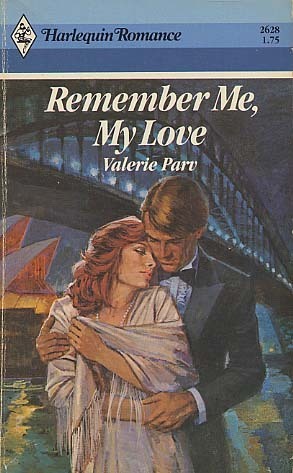
Perhaps – but don’t quote me as I’m no expert – the grand dame of romance fiction in Australia was Valerie Parv (1951-2021). You can check her out at Wikipedia, but Secrets from the Green Room podcast also did an excellent interview with her. For more writers, the Romance Writers Australia blog is a good source, with their Author Spotlight and New Release posts. The blog seems to go back to 2015, but doesn’t have the usual navigation tools (at least as far as I can see).
Organisations
There seems to be two main organisations supporting romance fiction in Australia.
Romance Writers Australia (RWA)
Describing itself as the “Home and Heart of Romance Writing in Australia”, RWA was established in Sydney around 1991, with its membership now including writers from Australia, New Zealand, Singapore, the United States and the United Kingdom. It has “become internationally recognised and respected by both category and mainstream publishers of romance”. Its aim is:
to promote excellence in romantic fiction, to help aspiring writers become published and published authors to maintain and establish their careers, to foster a safe, equitable, inclusive and diverse community, and to provide continuing support for romance writers – whatever their genre – within the romance publishing industry.
Their big event of the year is the Romance Writers of Australia Annual Conference. The 2025 conference, themed “Writer Wonderland”, will be held in Hobart from 22 to 24 August. As you can see from the program, this is clearly a conference geared more to writers than readers.
RWA also, apparently, organise “write-ins, library panels, workshops, retreats, and social gatherings in capital and regional cities”, plus other “special events and book launches”, but there were none listed on the website at the time of writing this post.
Australian Romance Readers Association Inc (ARRA)
Formed in 2007/2008, ARRA is an association “created by romance readers, for romance readers”. Starting with sixteen members, it now has well over three hundred. They outline their goals and activities on their About page.
They too run events. They held five Australian Romance Readers Conventions, with the last one being 2017. In 2019, they reinvented their convention to what they call A Romantic Rendezvous, which comprised multi-author, multi-city events, held in March 2019 in Brisbane, Sydney, Melbourne and Perth. They repeated this in 2020, and then the pandemic hit. Not to be thwarted, they held a Locked Down version. They returned to annual live events in 2023, with the 2025 event now locked in (as against locked down!) You can read all about these on their site. They also have what looks like an active blog.
Awards
Romance writing seems less well-served with major awards than, say, Crime Fiction and Science Fiction, which is interesting. However, some awards are offered by and/or coordinated by the above organisations:
- Romantic Book of the Year (Ruby) Awards: According to Books+Publishing, which lists the 2024 winners, these are RWA’s awards, but I can’t find them on their site, except through a site search which retrieves random historical hits.
- RWA Contests: RWA seems to offer a variety of contests which they say offer not only a “wonderful way” for writers to “showcase” their talent but also a “chance to receive valuable feedback from experienced judges and industry experts”. The contests cater for different experience levels as well as a broad range of romance genres. Current contests can be found on this page.
- ARR (Australian Romance Readers) Awards: ARRA offers awards for the best romance books in several categories, and are voted for by ARRA members. The 2024 awards will be announced at a dinner in Melbourne on 28 March 2025. You can see a list of Previous Winners on their site. How do you like this for an award category, “Best Banter in a Romance”? What fun.
Publishers
As with awards, I found fewer specialist romance publishers in Australia, than for science fiction, but the best known romance publisher of all, Mills and Boon, does have an Australian arm. Last year ABC News wrote that while the company launched in 1908, “it wasn’t until 1974 that it set hearts aflutter among Australian readers in its first venture outside of Britain and North America”. This makes it now 50 years old in Australia. According to the ABC, “there’s a growing appetite for romance novels”, which they support by sharing Books+Publishing’s report in late 2023 that sales of romance fiction were up 37 per cent in Austra last year in Australia.
- Hot Tree Publishing: Established in 2015 HTPubs seems to specialise in diverse romance. Their Submissions page states that they “are currently seeking M/F+, M/M+, and F/F+ series novels in the following CONTEMPORARY and PARANORMAL subgenres”. This is “not a restrictive list and exceptional stand-alones may be considered” but they are not “open to historical romances” (accessed: 10 February 2025).
- Mills and Boon Australia: Established in Australia in 1974. Currently, according to their website, there are over 75 Australian and New Zealand authors amongst their 1,300+ authors.
Of course, most of the general publishing houses also publish romance. It is a well-served field.
Romance and me
While I understand the attraction of romance fiction, I don’t seek the genre. However, I do read many books containing romance. After all, love and relationships underpin most of our lives. What did the Beatles say – yes, “all you need is love … love … love is all you need”.
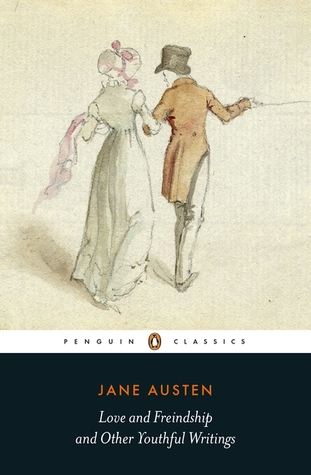
My first romance novels were, of course, Jane Austen’s (see all my Austen posts). When I first read them in my teens, my biggest interest was, as I recollect, the romance component. But since then, it’s not the romance that sets my heart aflutter, but Austen’s wit and her timeless insights into humanity, into how we think and why we behave the way we do.
However, since blogging, I have read some romance fiction – mostly what the industry calls chick-lit – Anita Heiss’s choc-lit novel, Paris dreaming (my post), Tony Jordan’s Addition (my review) and Fall girl (my review), and Graeme Simsion’s The Rosie project (my review). These books attracted me because they reflected that trend I mentioned above, including more diverse characters – First Nations, neurodiverse, and so on.
Do you like romance fiction and, if so, care to share why?
Previous supporting genre posts: 1. Historical fiction; 2. Short stories; 3. Biography; 4. Literary nonfiction; 5. Crime; 6. Novellas; 7. Poetry; 8. Science Fiction








 Whispering Gums