Monday musings on Australian literature: Supporting genres, 8: Science fiction

Unlike my last two posts in this “supporting genres”series, today’s is a true-blue genre. The problem is, as many of you will realise, that it takes me way, way out of my comfort zone. However, with this week being National Science Week in Australia, I decided that it was a good time to tackle this oh so popular genre. I will just add that, this not being my area of expertise, today’s post will be even more introductory than usual for this series.

I hope to hear from aficionados, who will hopefully fill in gaps and correct any misconceptions. Meanwhile, I’ll start with Wikipedia’s statement that

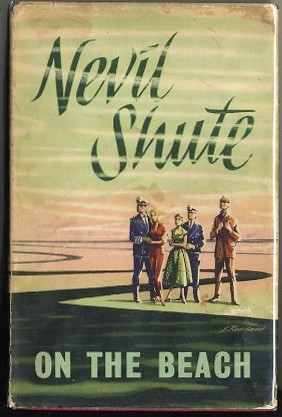
Nevil Shute, On the beach

Australia, unlike Europe, does not have a long history in the genre of science fiction. Nevil Shute’s On the Beach, published in 1957, and filmed in 1959, was perhaps the first notable international success.

Does international success define a genre’s history? This seems to be the implication of the opening paragraph, but I see it more as “a” measure of success rather than necessarily indicative of activity. Anyhow, the opening paragraph also suggests that the situation may have been worse in Australia had not importing American pulp magazines been restricted during World War II, “forcing local writers into the field”. “Forcing”?

Wikipedia then shares that pre-Second Word War Australian science fiction tended to be racist and xenophobic by today’s standards. This was due, it continues, to contemporary worries about invasion and foreigners. By the 1950s, as in other countries, the genre became influenced by technological progress and globalisation. I guess what all this is saying is that science fiction – perhaps more than most genres – is closely affected by contemporary issues and concerns. Even I know that current science fiction is drawn to issues like climate change and environmental degradation!

Definition

Must I? Science fiction, I suspect, though you can prove me wrong, is one of the most difficult genres to define. When we Australian Women Writers Challenge volunteers were establishing our genres, this area took some thinking. In the end, we called it Speculative Fiction, and incorporated “genres” like fantasy, horror, paranormal, into it.

Wikipedia calls Science Fiction a “genre of speculative fiction which typically deals with imaginative and futuristic concepts …”. It continues that SF “can trace its roots back to ancient mythology, and is related to fantasy, horror, and superhero fiction, and contains many subgenres” and then says that “its exact definition has long been disputed among authors, critics, scholars, and readers”. So, I’m not going to argue with that. The Awards below tend to encompass a broad church under the banner.

Conventions

Interestingly, Science Fiction followers seem to have conventions rather than festivals. Here are a few:

  • Australian National Science Fiction Convention (ANSFC) has been an annual event since 1952! That’s impressive, surely. Even more impressive is that, as Wikipedia explains, “each convention is run by a different committee unaffiliated with any national fannish body”. This speaks to the passion of its followers, I’d say. It even ran through the pandemic, as the Wikipedia article shows.
  • Conflux is an annual science fiction convention held in Canberra, since 2004, building on the CSFcons (Canberra Science Fiction Conventions), held in the early noughties. Its website says it encompasses “sci fi, fantasy, alternative history and horror”. It was not held during the pandemic, but, if I read its website correctly, it will host NatCon (ie the ANSFC) in 2022.
  • SwanCon is an annual science fiction convention held in Perth, since 1976. It has often hosted the Australian National Science Fiction Convention.

Awards

Australia has two main science fiction awards:

  • Aurealis Award for Excellence in Speculative Fiction was established in 1995 by the publishers of Aurealis Magazine. It’s an annual award for Australian science fiction, fantasy and horror fiction, and its categories are different to the Ditmar, below, being based on subgenre (like fantasy, horror) and age (young adult, children’s, for example). It now also has categories for form – anthologies, short stories, novellas, etc. If you want a sense of this award, check out its website.
  • Ditmar Award has gone through a few permutations since its establishment in 1969 (which makes it our longest standing science fiction awards). It is announced at the ANSFC, and, says Wikipedia, aims to recognise “achievement in Australian science fiction (including fantasy and horror) and science fiction fandom”. The fandom aspect is interesting. It encompasses a number of awards which are defined by form rather than content, like novel, novella, short story, fan artist, fan writer.

The notable thing about some genre awards, and we see it here, is that they often recognise various forms, like short stories and novellas.

Publishers

There seems to be a plethora of science fiction publishers in Australia. Many of them pride themselves on supporting inventive works and forms. Here are just a few, which I think are currently active:

  • Brain Jar Press: “Brisbane’s scrappiest, weirdest, and most genre-friendly small press, publishing outstanding and unexpected works of fantasy, science fiction, horror, and crime”. Their authors include Angela Slatter and Kaaron Warren.
  • Clan Destine Press: publishes “genre fiction in its myriad and wondrous forms: crime, mystery, historical fiction, thrillers, adventure, speculative fiction, fantasy, science fiction, horror, urban fantasy, paranormal, steampunk, and ah-ha! “
  • Sunburnt Fox Press: only publishes Australian science fiction and fantasy, mainly, it seems, through Etherea Magazine.
  • Twelfth Planet Press: aims “to elevate minority and underrepresented voices with books that interrogate, commentate, inspire. Challenging the status quo through provocative science fiction, fantasy, horror, and cosy crime”.

Of course, the general publishing houses also publish science fiction.

Science fiction and me

Bill recently responded to a comment of mine on his blog that “I think that if I ever got you started on reading women’s SF you would never stop”, because, he said, “the great majority are of the inner lives of women in unusual situations. The story is only rarely about the SF premise”. He’s right – to a degree. From my youth, I have read a smattering of science fiction – John Wyndham (and Nevil Shute) in my teens, and in my twenties and early thirties I read Huxley’s A brave new world, Orwell’s 1984 and Vonnegut’s Cat’s cradle. (All by men!)

Claire G Coleman, Terra nullius

I read no Australian science fiction through those years. However, in recent years I have read several Australian dystopian and cli-fi novels. Not all of these, though, are, technically, science fiction because not all are “futuristic”. However, some are, such as Jane Rawson’s A wrong turn at the Office of Unmade Lists (my review) and Claire G Coleman’s Terra nullius (my review). I loved both of these, and remain open to the genre – but I’m unlikely to ever become an aficionado.

Do you like science fiction and, if so, care to share why?

Previous supporting genre posts: 1. Historical fiction; 2. Short stories; 3. Biography; 4. Literary nonfiction; 5. Crime; 6. Novellas; 7. Poetry

Monday musings on Australian literature: Supporting genres, 7: Poetry

As with the last post in this series, which was on novellas, poetry isn’t so much a genre as a form. However, to repeat what I said then, when I started this sub-series, I couldn’t find one all-inclusive word to cover all the types of literary works I thought I’d cover, so settled on “genres”. With August being National Poetry Month, it seemed a good time to do the poetry post.

I’ll start by saying that over the years of this blog, I have written several posts that could be seen to cover ways in which poetry is supported in Australia … so I’m going to begin with some of those posts, all Monday Musings:

  • Australian Poetry Library: In 2011, I wrote on a wonderful initiative, the online Australian Poetry Library which was launched that May. Unfortunately, as those of you who have read last week’s Monday Musings comment trail will know, the site is off-line at the moment. It’s a fabulous site, and we believe the hiatus is technical rather than permanent. We urge that “fixing” it be given priority.
  • National Poetry Month: This has to be a major initiative for supporting Australian poets and poetry and I have written two Monday Musings posts on it, one in 2021 and one in 2022.
  • Poetry Awards: In 2014, I wrote a Monday Musings on Poetry Awards, in which I listed many of Australia’s best-known poetry awards.

Publishers

In my 2021 National Poetry Month post (linked above), I mentioned two publishers which focus specifically, or heavily, on poetry – Giramondo and Pitt Street Poetry – so you can read more about those there. Other more general publishers also support poetry. There are too many for me to include here, but I will exemplify with a few:

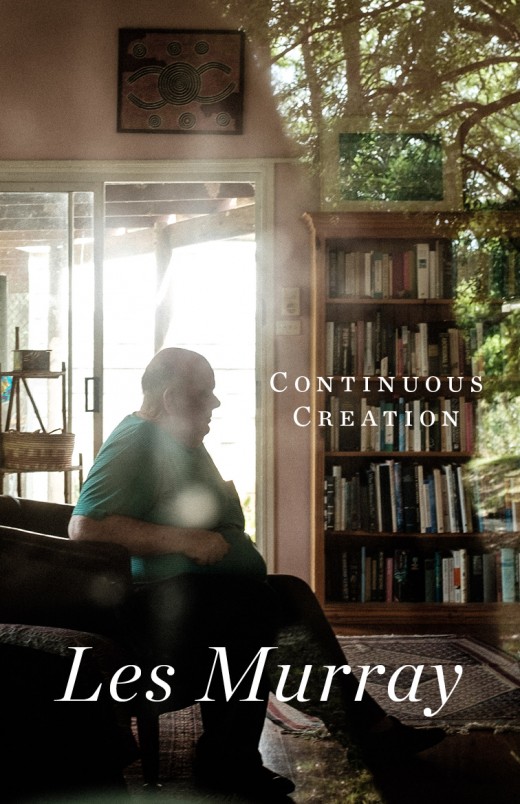
  • Black Inc: an independent Melbourne-based publisher which supports poetry, with a focus (I’d say) on established poets. They have published annual Best Australian poems anthologies (though not since 2017 it seems); they publish The best 100 poems of [poet, like Dorothy Porter] series, and they also publish poetry collections, including, most recently the posthumous Les Murray collection, Continuous creation.
  • Fremantle Press: an independent Western Australia-based publisher which publishes poetry regularly, both as single poet collections (including John Kinsella and Tracy Ryan) and anthologies.
  • UQP: a university-based publisher in Queensland, which is also a strong publisher of poetry. Not surprisingly, given their track record in publishing First Nations writing, they are a major publisher of First Nations poets, like Evelyn Araluen, Tony Birch, Jazz Money, and Ellen van Neerven, alongside many other new and established poets.

I have reviewed poetry from all of the above. For more publishers, check out this Poetry Sydney page which includes these, plus more, like Ginninderra Press, Magabala Books, and Wakefield Press.

Awards

I covered several of Australia’s significant poetry awards in my dedicated Monday Musings post linked above, and Wikipedia has a useful list too. I love that the majority of poetry awards are named for poets. Here I will share a few that I didn’t include in my 2014 post:

  • Anne Elder Award has gone through some changes since its establishment in 1976 by the Victorian Branch of the Fellowship of Australian Writers. It goes to the best first book of poetry published in Australia, and since 2018 has been managed by Australian Poetry.
  • Biennial Helen Anne Bell Poetry Bequest Award is a more recent poetry prize, with the inaugural award being made in 2013. The original prize was $7,000 but it’s now described as Australia’s richest poetry prize, with $40,000 going to the 2021 winner. It is “dedicated to celebrating women poets”, with, says AustLit, the award going to “an Australian woman poet for a collection of previously unpublished poems”. It is managed by the University of Sydney.
  • Mary Gilmore Award has gone through a number of permutations and slight name changes since it was established by the ACTU (Australian Council of Trade Unions) in 1956. Love this. It is currently an annual prize for a first book of poetry published in Australia, and is managed by the Association for the Study of Australian Literature. The 2022 winner was Jelena Dinic’s In the Room with the She Wolf published by Wakefield Press.

Festivals

Many writers festivals include a poetry panel or two, and those of you who attend folk festivals will know that these festivals often include poetry sessions (mostly, in my experience, of the bush verse variety).

However, there are some specialist poetry festivals, like the following:

  • Perth Poetry Festival, is an annual festival with this year’s being its 18th. Its webpage is brief but you can read more about it there. It is run by WA Poets Inc.
  • Poetry on the Move is a festival that was established in Canberra in 2015 by the University of Canberra. Its website describes its aims as being “to promote poetry as a vibrant art form through the engagement with international, national and local poetry communities”.
  • Queensland Poetry has operated as an incorporated association, the Queensland Poetry Festival Inc, since 2007. Their aim, according to their home page, is “Supporting poets on page and stage across Queensland”. Check out their website for the range of their activities, but as far as I can tell, this year’s festival, Emerge, ran from June 3rd to 6th.
  • Red Dirt Poetry Festival has already appeared on this blog, through Glen Hunting who often comments here. As its website says, it is a “4-day International poetry and spoken word celebration in Mparntwe/Alice Springs”. It’s a hybrid festival offering both in-person and digital sessions, and involves national and international poets. The sessions include “presentations, workshops, showcases and exclusive commissioned works”.
  • Tasmanian Poetry Festival is a longstanding festival which started in 1985 ran its 37th event in 2021.

It goes without saying that many festivals, including these, have been significantly affected by COVID and so what were annual, in-person events, have in some cases missed a year or two, recently, and/or become hybrid events. Some are run by poetry associations which offer many more programs than “just” the festival. You can find out more by navigating the links I’ve provided.

Do you like poetry and, if so, how do you engage with it?

Previous supporting genre posts: 1. Historical fiction; 2. Short stories; 3. Biography; 4. Literary nonfiction; 5. Crime; 6. Novellas.

Miles Franklin Award 2022 winner announced

While once again I haven’t read (yet, anyhow) any of the Miles Franklin shortlist, I do try each year to announce the winner of this significant Australian literary award.

You may remember that this year’s shortlist was:

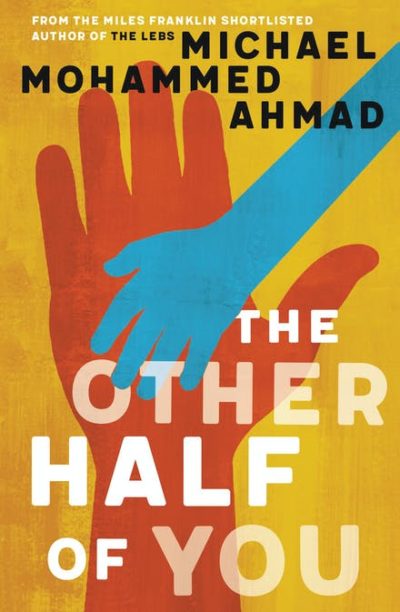
  • Michael Mohammed Ahmed’s The other half of you
  • Michelle de Kretser’s Scary monsters (Lisa’s review)
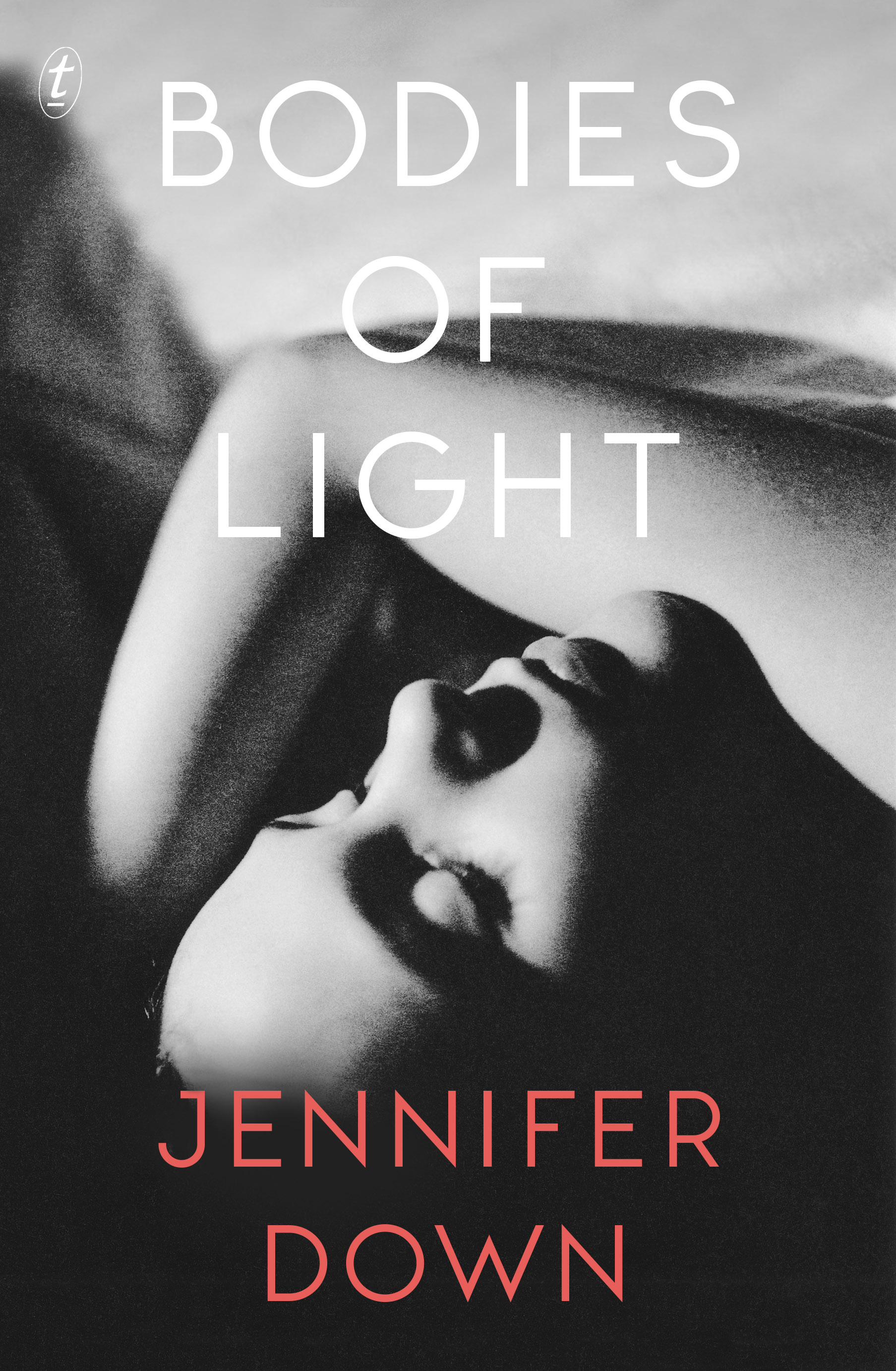
  • Jennifer Down’s Bodies of light 
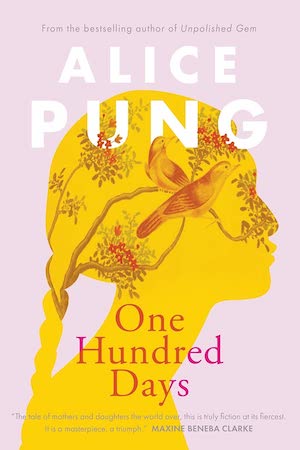
  • Alice Pung’s One hundred days (kimbofo’s review)
  • Michael Winkler’s Grimmish

And the winner is: Jennifer Down’s Bodies of light

Each of the shortlisted writers received $5000 from the Copyright Agency’s Cultural Fund, with the winner receiving $60,000 prize. This year’s judges comprise, as always, continuing judges and new ones: Richard Neville (State Library of NSW), critics Bernadette Brennan and James Ley (both also on last year’s panel), and new members, scholar Mridula Nath Chakraborty, and writer and editor Elfie Shiosaki. 

So, more on the winner …

The book was published by Text Publishing, and in their email announcing the winner they shared the thoughts of Michael Heyward, Text’s publisher:

Bodies of Light  is a transformative novel that gives epic scope to the life of a single soul. To read it is to be immersed in it. All of us at Text are thrilled at the news of Jennifer Down’s Miles Franklin win, and offer her our heartfelt congratulations.’

And of senior editor Alaina Gougoulis:

‘What an incredible recognition of Jennifer Down and all she has achieved with Bodies of Light. The abundant talent on display in her debut novel, Our Magic Hour, has been fully realised in this book, an intimate story of one life told on an epic scale: heartbreaking, and yet brimming with hope and beauty. That she is still so early in her career should fill us with optimism about the future of Australian writing. I am beyond thrilled for her, as her editor and as her friend. Warmest congratulations to Jenn, from all at Text.’

The announcement has already been reported by the usual sources, like the ABC, The Guardian, The Conversation, and so on. Canberra’s Jen Webb wrote The Conversation’s article. As she says, Down already has some runs on the board: she won the Sydney Morning Herald Young Novelist of the Year award for her debut novel, Our magic hour in 2017, and again in 2018 for her short story collection Pulse points.

Webb shares that the judges commended the book as “a novel of affirmation, resilience and survival, told through an astonishing voice that reinvents itself from six to 60”, and she describes it herself as follows:

Under interrogation-level lighting, it confronts the institutional “care” offered to the most vulnerable of people: little children, labile adolescents, and traumatised youth. Any society that routinely fails to provide children with the care they need to grow into secure adulthood is a society that needs a critical light shone on it. In the most lyrical, gentle language, this is precisely what Bodies of light does.

It’s a book that interests me. Indeed, Down has interested me since Pulse points appeared (and for which there is a guest post on my blog).

(BTW: In last year’s winner post, I provided a link to an article by Pallavi Singhal in The Sydney Morning Herald published an article on How to win the Miles Franklin: Analysing 64 years of data. You might like to revisit that in the light of today’s win!)

Do you have any thoughts on this year’s winner?

Miles Franklin Award 2022 shortlist

I didn’t post this year’s longlist when it came out last month, and if any of you have been following the award you will know that controversy has, once again, hit it, with one of the longlisted books, John Hughes’ The dogs, being withdrawn on the grounds of plagiarism. That’s a shame for me, as it was the only one on the longlist that I had read, although I will be reading another longlisted book next month.

The shortlist

  • Michael Mohammed Ahmed’s The other half of you, is, writes The Guardian*, “the third instalment of an auto-fictional series exploring the life of a young Muslim boy in western Sydney named Bani Adam”. It follows The Lebs which was also shortlisted for the Award.
  • Michelle de Kretser’s Scary monsters (Lisa’s review, not her favourite de Kretser, and kimbofo’s, also mixed), which, the judges described, as “a witty, meticulously witnessed and boldly imaginative work that rages against racism, ageism and misogyny”. De Kretser has won the award twice before.
  • Jennifer Down’s Bodies of light which deals with the state child care system and is told, say the judges, in an “astonishing voice that reinvents itself from age six to sixty”.
  • Alice Pung’s One hundred days (kimbofo’s review) is about a pregnant 16-year-old girl who is “locked into her housing commission flat by her Philippines-born Chinese mother for 100 days before the birth”. Among other things, the judges commented on the book’s “making visible the stories of those deemed powerless”.
  • Michael Winkler’s Grimmish is the first self-published novel to be shortlisted. It was also one of Jock Serong’s recommendations in the Warm Winter Read program I recently posted about. Publishers apparently found it “wearisome” and “repellant”, but it has been praised by some writers, whom I would call bold and fearless, like Helen Garner, Murray Bail and JM Coetzee. That tells us something (perhaps!) The judges called it “a uniquely witty and original contribution to Australian literature.”

Some random observations:

  • There are only five books this year, as against last year’s six. Did they only think five were worth it, or was The dogs going to be the sixth? I guess we’ll never know.
  • It is a nicely diverse list with more than half being by, to use modern terminology, people of colour. (I hate labelling but what to do?)
  • It looks like, for want of a better word, an “edgy” list, with little of the tried-and-true in terms of style, form and content. Excellent to see.

For posterity’s sake, here was the longlist

  • Michael Mohammed Ahmed’s The other half of you
  • Larissa Behrendt’s After story
  • Michelle de Kretser’s Scary monsters
  • Jennifer Down’s Bodies of light
  • Briohny Doyle’s Echolalia
  • Max Easton’s The magpie wing
  • Joh Hughes’ The dogs (withdrawn)
  • Jennifer Mills’ The airways
  • Alice Pung’s One hundred days
  • Claire Thomas’ The performance
  • Christos Tsiolkas’ 7 1/2
  • Michael Winkler’s Grimmish

A note on The dogs

I am not going to buy into the plagiarism debate, as I can’t know what Hughes did or didn’t know he was doing. However, I would like to comment on the publisher of this book, Upswell Publishing. This is an exciting new venture by Terri-ann White who did such a wonderful job at the University of Western Australia Press for many many years. The Guardian’s report (first link above) on the issue quoted White as saying that she “stands steadfast alongside the author, despite the appropriations now evident in this text”.

However, as more examples of parts of the text being identical or similar to various other works have been identified, White has realised the situation is not as she originally felt able to support. She has made a statement on her website, that:

I have published many writers who use collage and bricolage and other approaches to weaving in other voices and materials to their own work. All of them have acknowledged their sources within the book, usually in a listing of precisely where these borrowings come from. I should have pushed John Hughes harder on his lack of the standard mode of book acknowledgements where any credits to other writers (with permissions or otherwise), and the thanks to those nearest and dearest, are held. I regret that now, as you might expect. To have provided a note in this book with attribution would have been the only way to treat it.  I now recognise this as a breach of my trust.

The point I’d like to make is that we should not let this upsetting situation affect our support of Upswell. I subscribed to their list last year, and have again this year. The books are beautifully designed, the list is wonderfully varied in content, and White has a reputable track record. She and her stable deserve to be supported and encouraged.

Now, back to the Award

The chair of the judging panel, Richard Neville, praised the shortlist for its

range of dynamic and diverse voices that address the experience of pain, intergenerational trauma and intergenerational dialogue with compassion, exceptional craft and rigorous unsentimentality.

Each of the shortlisted writers will receive $5000 from the Copyright Agency’s Cultural Fund, with the winner receiving $60,000 prize.

This year’s judges comprise, as always, continuing judges and new ones, providing I think a good mix of experience and fresh ideas: Richard Neville (State Library of NSW), critics Bernadette Brennan and James Ley (both also on last year’s panel), and new members, scholar Mridula Nath Chakraborty, and writer and editor Elfie Shiosaki.

The winner will be announced on 20 July.

What do you think of the shortlist?

* All other quotes in the Shortlist section come from the same The Guardian article.

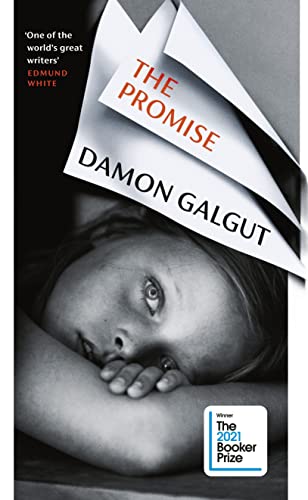
Damon Galgut, The promise (#BookReview)

Damon Galgut’s Booker Prize winning novel, The promise, is one of those novels that grabbed me intellectually and emotionally from its opening pages. The plot, itself, is straighforward. It concerns a White South African family’s promise to give a house on their property to their Black maid, whom their grandfather had acquired “along with the land”. The narrative tracks just how hard it is for the family to honour this promise. What makes the novel a Booker-Prize winner is the quality of the writing and how Galgut uses his story to create a potted history of South African life and politics in the post-Apartheid decades.

The novel is set between 1986 and 2018, and centres on the family, and their farm outside Pretoria. The family comprises Ma, Pa, and their three children, Astrid, Anton and Amor. In the opening pages, the youngest family member, Amor, overhears her dying Jewish mother extract the aforementioned promise from her Afrikaner father to give the house to Salome. Amor wants this promise honoured but achieving it turns out to be much harder than she expected.

The promise was my reading group’s May read and, somewhat unusually for us, it was universally enjoyed. Our ex-South African member used words like sharp, clever, funny, vicious, and said that Galgut nails the South Africa she knew and had experienced.

“something out of true at its centre”

There is so much to say about this book, that it’s hard to know where to start, but the writing is an excellent place, because it truly carries the novel. Particularly effective is the slippery voice (or point-of-view) which shifts perspective and person, sometimes mid-sentence. The effect, among other things, is to implicate us readers in the narrative. It prevents us distancing ourselves from the choices, decisions and behaviours we see. Here, for example, we shift from third to first in a paragraph:

For there is nothing unusual or remarkable about the Swart family  … We sound no different from the other voices, we sound the same and we tell the same stories, in an accent squashed underfoot, all the consonants decapitated and the vowels stove in. Something rusted and rain-stained and dented in the soul, and it comes through in the voice.

And here is a mid-sentence shift from third to second person:

But in truth he’s bored by this man, by his ordinary life and his ordinary wife, just as he’s bored by almost everything these days, all significance leaked away by now, and it doesn’t feel wrong to wait till he’s gone, then get up and wander out into the night, as if you’ve been drinking on your own. You probably have.

Alongside the voice is Galgut’s wordplay, his recognition of the power of words to clarify or obfuscate. Take the irony of the white family’s name, Swart, which means black. But it doesn’t stop there because it is also an archaic word for “baneful, malignant”. Take also the narrator’s frequent self-corrections that always nail home a point, like:

“So Salome has gone back to her own house instead, beg your pardon, to the Lombard place.” (Which reminds us that the promise has not been enacted.)

“He no longer calls himself dominee, he’s a pastoor these days, peddling a softer line in salvation to his customers, ahem, that is to say, his flock, so that everyone benefits.” (Which tells us something about this man of the church’s real motivations.)

Then there’s the idea of promise itself. What a loaded word that is. While this is the story of a family, The promise is ultimately a political novel, so Galgut deftly plays with the idea of “promise” in more ways than one. The novel opens and closes with false promises, related to the historical realities of 1986 and 2018, as well as to the family’s inaction. It also teases us with the idea that the end of Apartheid would bring the promise of a new South Africa, but it shows that ideal foundering. The failure of the country to live up to its promise is paralleled in the character of Anton who, at the beginning of the novel, is “full of promise”, as he describes himself in his unfinished autobiographical novel, but who, by the end, admits that he has not lived up to it:

He’s still stunned by the simple realisation that’s just struck. It’s true, I’ve wasted my life. Fifty years old, half a century, and he’s never going to do any of the things he was once certain he would do … Not ever going to do much of anything.

(Note the slip from third to first to third person, here!) There are many failed promises in the novel, including a minister’s failure to keep a confession.

Other motifs threading through the novel include the four funerals in four different religions/belief systems that shape the narrative’s four parts, and the fact that the Swart’s family business is a (failing) Reptile Park. How telling is that! Just think of all the allusions.

The characters are another compelling aspect of the novel. As an epigraph-lover, I can’t resist sharing Galgut’s from Frederico Fellini:

This morning I met a woman with a golden nose. She was riding in a Cadillac with a monkey in her arms. Her driver stopped and she asked me, ‘Are you Fellini?’ With this metallic voice she continued, ‘Why is it that in your movies, there is not even one normal person?’

What a hoot, and what a great epigraph choice. It immediately challenges us to consider what is “normal”, if such exists, and puts us on the alert about notions of normality. Galgut’s characters – even the minor ones like Lexington the driver (who “brings the Triumph to the front steps”), the homeless man (“as he keeps obsessively singing the first line to Blowin’ in the wind, let’s call him Bob”), and the various funeral workers – are carefully differentiated, and add depth to the picture being painted of a family and country in crisis. The irony is, I think, that each is disconcertingly normal – in their own way!

Early in the novel, the narrator describes the recently departed Ma’s spirit lingering around the house:

She looks real, which is to say, ordinary. How would you know she is a ghost? Many of the living are vague and adrift too, it’s not a failing unique to the departed.

“Vague and adrift” perfectly describes Astrid, Anton and Amor, none of whom have it together. The “quiet and attentive” Amor, however, is at least empathetic, and therefore the most sympathetic. She constantly shows heart, but, having little power in the family, her solution is to disappear at every opportunity, and live a spartan life, working as a nurse among the most needy. Could she have done more sooner?, is the question worth asking.

So, what is the takeaway from this novel? My reading group was unanimous in feeling that the novel is underpinned by the idea that when one group has an unhealthy position of power over another, both are diminished, if not destroyed. It is to Galgut’s credit, however, that he explores this without didacticism. We are never told what to think. Instead, he presents his characters’ thoughts, actions and decisions, and leaves us to consider what it all means.

We are also given this:

No truthful answers without cold questions. And no knowledge without truth.

The wonder of this book is that such a strong and serious story can be so exciting to read.

Lisa also loved it.

Damon Galgut
The promise
Vintage, 2021
295pp.
ISBN: 9781473584464 (Kindle ed.)

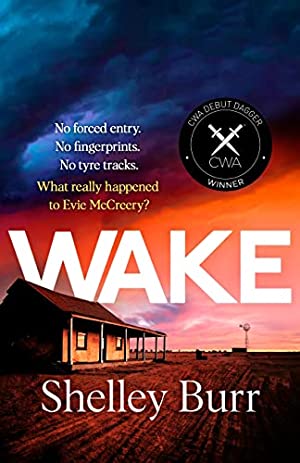
Shelley Burr, Wake (#BookReview)

Regular readers here will know a few things about me. One is that I don’t regularly read crime, and another is that for three years, before the pandemic struck, I was the litblogging mentor for an ACT Writers Centre program. One of the last two participants in that program was Shelley Burr, author of the just-published crime novel Wake.

In my post on that 2019 program, I introduced Shelley as follows:

Shelley Burr is working on a novel, and took part in the ACT Writers Centre’s well-regarded Hard Copy program last year … She is particularly interested in what she calls “drought noir”, which term sounds perfect for some of the crime coming out of Australia at present. Shelley has had her writing place well in the Stockholm Writers Festival First Pages program.

That novel she was writing was Wake. It won the CWA Debut Dagger in 2019. It was also shortlisted for the 2019 Kill Your Darlings Unpublished Manuscript Award, which gave her a Varuna fellowship, and the 2020 Bath Novel Awards, which is an international award for emerging writers. Judge for the Bath award, literary agent Jenny Savill, wrote of Wake:

With forensic attention to detail, the reader is effortlessly drawn into the small town, rural Australian setting and a community in mourning. Immersive and riveting.

Savill was right on all fronts. Burr’s attention to detail is forensic, and readers (even non-crime readers like me) are “effortlessly drawn in”. I was thoroughly engaged from the opening pages, and this is because, besides being a crime novel, it’s a novel about character, and what happens to people when terrible things happen to them. How do people respond, and why do different people respond differently? It confronts readers to think about our own responses. How would we respond if it happened to us? And, how would, or do, we respond when it happens to others?

Wake is about a cold-case that took place on a remote farm some twenty years before the novel opens. Nine-year-old Evelyn (Evie) McCreery disappeared from her bed one night, never to be seen again. This means the novel alludes to a longstanding Australian writing tradition, that concerning the lost child. However, this motif has layers of cultural complexity that are not central to this novel, so I’m just mentioning it and moving on.

Now, the plot … as the book’s promotion says, “no forced entry, no fingerprints, no footprints, no tyre tracks”. Evie’s twin sister, Mina, has grown up in the wake (pun intended!) of that disappearance. She has never fully recovered and is quietly trying to solve the mystery on her own. The novel opens with the clearly fragile Mina doing her shopping under the kindly eye of a local shopkeeper. A stranger, who turns out to be private investigator Lane Holland, approaches her, but she is not interested. The novel progresses from this point with the twists and turns typical of the genre until its inevitable – though not completely expected – resolution.

Wake is carefully plotted, with, for example, hints concerning Lane Holland and why he has chased this particular case being gradually shared. Wake is also well-paced, starting slowly, and gradually building intrigue until near the end when the pace hots up. Suddenly, the chapters become shorter, causing the alternating perspectives, which characterise the narrative, to become more urgent.

As I mentioned above, the characters are a major strength of the novel. Mina and Lane are sensitively developed. Both are driven by past trauma, and can be tough and prickly, but both also exhibit moments of vulnerability and tenderness which help us care about them. There are a few other characters, the main ones being Mina’s more together friend Alanna whose sister had also disappeared around the same time as Mina’s, and Lane’s much younger sister Lynnie. Though minor, they too have flesh.

The narrative is chronological, with occasional flashbacks filling in some gaps. Other gaps are cleverly filled in by entries on a social media forum, MyMurder, which open some of the chapters. They add a thoughtful layer to the story, by conveying how such mysterious cases catch the public attention and how obsession with them can play out. They show how crime aficionados, conspiracy theorists, and others, can spear wildly away from the truth and potentially, if not actually, cause mental harm to those most touched by the crime.

So, yes, I was impressed. The writing and plotting is so sure, and Burr’s exploration of the crime is considered, sympathetic, and grounded in reality. There is drama – of course – but it properly serves the story and the complexity of the emotions, reactions and consequences that Burr is exploring. This made for engrossing reading for a non-crime reader like me, but Wake is also, if the awards tell us anything, great crime reading. It’s a page turner, with depth.

Now, I’d better at least mention the setting, given I’ve referenced Burr’s interest in “drought noir”. Wake is set in rural central New South Wales. Burr, herself, grew up in regional New South Wales, and her grandparents had a farm in regional Victoria, so her writing of place and country life felt authentic. The setting adds tension because Mina and her father Liam’s property is remote, remote enough that they have installed alarms on the gates to announce the arrival of visitors. You can’t be too careful when you live so far away from help.

However, the property also neatly reflect the challenges being faced by Australian farmers in climate-change-affected times. It was a working farm, but the disappearance of Evie consumed the family’s energy so much that viable farming fell by the wayside. In a nice political touch that speaks to our times, Burr has Mina and her father moving into working it as a conservation project.

Wake earned Shelley a two-book deal with Hachette, and is about to be published in the USA. Having now read it, I’m not surprised. I recommend it.

Shelley Burr
Wake
Hachette Australia: Gadigal Country/Sydney, 2022
360pp.
ISBN: 9780733647826

(Uncorrected proof courtesy Hachette Australia)

Monday musings on Australian literature: Best Young Australian Novelists (4)

The current winners of this year’s Best Young Australian Novelists were announced recently. I haven’t seen much publicity, so given I’ve reported on this award for the last two years, I thought I’d do it again this year. It’s a worthwhile award, and one that has seen writers go on to develop good careers.

Just to recap, the award was established in 1997 by The Sydney Morning Herald‘s then literary editor, Susan Wyndham. It’s an emerging writers’ award, open to “writers aged 35 and younger” at the time their book (novel or short story collection) is published. They don’t have to be debut novels, though they often are – like this year’s three winners.

The winners, as announced by Robert Moran, a culture reporter for The Age and The Sydney Morning Herald, are:

  • Diana Reid’s Love and virtue (winner, $8,000) (see Brona’s review)
  • Ella Baxter’s New animal (runner-up, $1,000; also shortlisted for the 2022 UTS Glenda Adams Award for New Writing, and the 2021 Readings Prize ) (see Kim’s review)
  • Michael Burrows’ Where the line breaks (runner-up, $1,000; also shortlisted for the 2021 Fogarty Literary Award) (see Lisa’s review)

The judging panel comprised the Sydney Morning Herald’s Spectrum editor, Melanie Kembrey; critic and poet Thuy On; and a 2011 SMH Best Young Australian Novelist Gretchen Shirm (whom I’ve reviewed). The number of awards used to vary, but in recent years they seem to have settled on three. The prize money comes from the Copyright Agency Cultural Fund.

The Herald‘s Melanie Kembrey, writing in the emailed newsletter I receive, said of the candidate books:

There were clear recurring thematic interests, including consent, cultural identity and the environment; many were coming-of-age tales; and others experimented with different forms and styles. It was tough selecting the winners and many of the entrants have bright futures.

She also commented on the importance of prizes like this:

It’s tough being a novelist, let alone an emerging one. There are the occasional unicorn stories: novel selected for Oprah’s book club gets adapted into a Hollywood blockbuster and sets author up for life. But these stories are rare. The reality of life as a writer, even more so a new one, is writing around day jobs, trying to flog your manuscript, being at the mercy of publishers, and then releasing your novel and watching this thing that has consumed you disappear into the depths without leaving a ripple.

This is why, she says, this award was created all those years ago.

The winners, briefly

You can find interviews with the three authors in the Robert Moran article linked above.

Diana Reid (26)

According to Kembrey, Love and virtue is “a piercing examination of university campus culture” or, as Brona puts it, “a campus novel about sex, power and consent”. Very today themes, eh? This novel has been making quite a splash amongst bloggers and readers, including Daughter Gums to whom I gave it for Christmas.

Brona said that “It’s an easy, quick read, but layered with oodles of moral grey areas and nuanced, contemporary issues”. She appreciated the way the novel deals with the complexity of consent, and said that Reid “does not shy away from contradictory behaviours or the realities of modern life as seen through the eyes of young adults”, although she did feel it was more a novel for the age-group it’s about than for older readers. Reid wrote this when she was 24, just after she left university.

Ella Baxter (36)

Of New animal, Kembrey says its “caustic tone … will crack you up”. Kim would agree. She loved this book, describing it as “a blackly comic tale about what it is to be alive when everyone around you is dead — literally”. Literally, because the protagonist works in a funeral parlour. Kim suggests that the novel is part of the new genre of “Millennial angst” but, she says, it’s not “as navel-gazing as most of those” and is “highly original”. I am tempted.

Michael Burrows (33)

Kembrey describes metafictional Where the line breaks as “a playful take on academia and history”. Lisa found it an absorbing, unconventional novel that “interrogates the mythmaking that surrounds the Anzac Legend”.  It has, apparently, three narrative threads, which include one focusing on PhD student Matt, and another on his WW1 hero, Alan Lewis. The playful take on academia comes partly through the footnotes which, I’m told, readers should not ignore. It sounds like my sort of book.

These three books appeal to me, as being meaty but not overly earnest. I can’t help noticing, though, that it doesn’t look like a particularly diverse list.

Have you read any of these books?

Stella Prize 2022 Winner announced

The 2022 Stella Prize winner was announced tonight and it’s not a surprise, as several of us in the blogosphere rather thought that

Evelyn Araluen’s Dropbear

would be the winner. Indeed, I was so confident I took it with me to Melbourne this month, fully intending to read it. But, there was not much reading time, and it took most of my time there to finally finish 2020’s winner, Jess Hill’s See what you made me do (my review). I only read a couple of pages of Dropbear before I realised that I’d better read my reading group book for this week’s meeting. (It’s the next review you’ll see!) So, Dropbear is still languishing on the TBR, but you may remember from my shortlist announcement that Brona has reviewed it. Jonathan Shaw at Me fail? I fly has also reviewed it.

The book is a combination of prose and poetry, and the judges described it as:

a breathtaking collection of poetry and short prose which arrests key icons of mainstream Australian culture and turns them inside out, with malice aforethought. Araluen’s brilliance sizzles when she goes on the attack against the kitsch and the cuddly: against Australia’s fantasy of its own racial and environmental innocence.

The panel chair, Melissa Lucashenko, said that it will take you “on a wild ride” that is “simultaneously comical and dangerous”. All this confirms my desire to read it, because I enjoy writers who play with traditions, conventions and myths to encourage us to look again at who we are and what we do.

The quotes above, plus one by Stella’s Executive Director, Jaclyn Booton, can be found on the Stella website (linked below). There is also a quote from Evelyn Araluen’s acceptance. She commented that she’d been following the Stella for the length of her writing aspirations, and had hoped one day to write a novel that would win it. She never dreamed Dropbear would be that winner. She also said:

I’m deeply interested in the lives, histories, and dreams of women and gender diverse writers in Australian publishing, and it’s an honour to be recognised by a prize designed to champion those stories. There aren’t words to explain how thrilled I am to win.

Just to remind you, the judges were author Melissa Lucashenko, as chair, with her co-judges being writer, poet, essayist Declan Fry; author-across-all-forms Cate Kennedy; memoirist and activist Sisonke Msimang; and essayist and screenwriter Oliver Reeson

There’s more on the anouncement on the Stella website.

Any comments?

Jess Hill, See what you made me do (#BookReview)

Jess Hill See What You Made Me Do

I took me a long time to read Jess Hill’s 2020 Stella award-winning See what you make me do, partly because I bought the e-book version which I read in fits and starts and partly because of its content. As the Aussies among you will know, Hill’s book is an intense, thorough discussion of domestic abuse. It’s not an easy topic but it is a critical one because if statistics tell us anything it’s that the situation in Australia is not improving.

There’s no way I can share the wealth of information or fully convey the impressive depth of research Hill has done. However, I’ll do my best to give a sense of what this book does, and how Hill does it. She starts on definition, explaining that wherever possible, she replaced the term “domestic violence” with “domestic abuse” because “in some of the worse abusive relationships, physical violence is rare, minor or barely present”. “Domestic abuse” is the term now used by UK police because it undercuts the assumption that abuse is only serious if it’s physical.

Those of you versed in trauma will appreciate a fundamental challenge Hill faced, which, as she describes it, is that “power imbalance built into the journalist–source relationship: the journalist usually has ultimate power over what gets published”. For survivors of abuse, who have suffered at the hands of power, this could effectively mean abusing them all over again. So, Hill “wanted to flip that and give the power back to them. If this process was not a positive experience for them, there was no point in doing it”. So, she gave “them the chance, wherever possible, to review their story, suggest revisions or ask for things to be deleted – especially if there were safety concerns”.

In her Introduction she lays out the road map:

In the chapters that follow, we will travel through an extraordinary landscape, from the confounding psychology of perpetrators and victims to the Kafkaesque absurdity of the family law system.

And so, in eleven chapters, Hill traverses domestic abuse from multiple angles, grounding it in case studies – usually with names changed – which force us to put a face on the accompanying theories and statistics.

Hill starts by establishing coercive control as a fundamental aspect of domestic abuse. Our understanding of its techniques, she writes, come from the Cold War and US Air Force social scientist Albert Biderman’s recognition of how the tools of coercive control had been used on American POWs in North Korean camps. From here she analyses how the same techniques are used by intimate partners – almost always male, though there is a chapter on women who abuse – to create a threatening atmosphere that will convince the victim of the perpetrator’s omnipotence, the futility of resistance, and the necessity of compliance. The aim is total dominion (which is exactly what Wemyss’ wanted over Lucy in the prescient Vera). Hill describes the techniques in detail, and it’s chilling.

The best word for this book is forensic, because Hill burrows deep. She confronts us with our uncertainties – why did she stay, for example – and makes us see just how deep the degradation goes. She explains how a concussed women can look drunk and so be missed by the police as the victim. She shows how a traumatised woman can come across as irrational and erratic in court versus her cool, calm, well-presented abuser. She interrogates the role of patriarchy, and how it damages men, as well as women. Feminists, as many of us know, were the first to recognise this.

She looks at disabled women. She looks at children and the way they are used and treated by abusers in power plays. Indeed, her chapter on children and the courts is horrifying. She details the gradual weakening of the Gough-Whitlam-established family court system through successive, mostly conservative, governments. She shows how some of this weakening has been underpinned by a particularly egregious theory called Parent Alienation Syndrome. She reveals the perfect storm created for children caught up in a family court softened by law and bolstered by such spurious theory.

And, she devotes a chapter to First Nations women, who are at significantly greater risk of abuse than their non-Indigenous peers. The stories just keep on piling up as you read, stories that you can barely countenance, except that anyone with any semblance of awareness will know they are true.

It’s tough going but it’s valuable reading, because for all I thought I knew, there were details I didn’t know or appreciate. Hill asks some pertinent questions, like:

In the years I’ve spent writing this book, I’ve found that it’s the questions we don’t ask that are the most confounding: Why does he stay? Why do these men, who seem to have so much hatred for their partners, not only stay, but do everything they can to stop their partner from leaving? Why do they even do it in the first place? It’s not enough to say that perpetrators abuse because they want power and control. Why do they want that?

Or, as “Survivor Queensland” put it, ‘I want people to stop asking “Why does she stay?” and start asking “Why does he do that?”‘

Some of the answers lie in “traditional notions of masculinity – particularly male entitlement” which are at “the core of men’s violence against women”. But Hill identifies more questions, such as “what are the different reasons men have for needing to dominate their partners?” and what is going on in their minds that makes them “sabotage the lives of their partners and children – to the point where they destroy even their own lives?” These are “critical parts of the puzzle” that are “missing from our public conversations about domestic abuse”. 

Hill titles her final chapter “Fixing it”. She notes Australia’s excellent record in tackling public health problems. “From thwarting the tobacco industry to criminalising drink-driving, Australian governments have shown they are willing to burn political capital to save lives”, she says, and have achieved results. She then shares some of the actions currently being taken – but, of course, this was just before the pandemic so I suspect some of them have fallen by the roadside.

In 2017, she writes, a KPMG report concluded that although “significant progress” had been made against the “National Outcomes”, not only was there no evidence of reduction in “domestic violence”, in fact, the evidence suggested that “the incidence and severity of domestic and family violence” was increasing. However, lest we close the book feeling completely hopeless, Hill concludes with examples of two recent programs that have worked. We just need government will and support to back more such targeted programs. It can be done.

Janine (Resident Judge) also reviewed it.

Jess Hill
See what you made me do: Power, control and domestic abuse
Carlton, Vic.: Black Inc, 2019
416pp.
ISBN: 9781743820865 (eBook)

Stella Prize 2022 Shortlist announced

The 2022 Stella Prize shortlist was announced, yesterday. But, as I had just posted my review of Gabrielle Carey’s Only happiness here, I decided to hold my announcement post over for a day. Those of you keenly interested will have seen it, but at least I will have it for my records.

Just to remind you, the judges are author Melissa Lucashenko, in the chair, with her co-judges being writer, poet, essayist Declan Fry; author-across-all-forms Cate Kennedy; memoirist and activist Sisonke Msimang; and essayist and screenwriter Oliver Reeson

And remember, this year poetry was added as a form eligible for the prize – and, it seems to have been a popular decision because, well, look at the …

The shortlist

  • Eunice Andrada, Take care (poetry)
  • Evelyn Araluen, Dropbear (poetry) (TBR, Brona’s review)
  • Anwen Crawford, No document (memoir) (Lisa’s review)
  • Jennifer Down, Bodies of light (novel)
  • Lee Lai, Stone fruit (graphic novel)
  • Elfie Shiosaki, Homecoming (memoir) (Lisa’s review)

So, two books of poetry, two memoirs and two novels (one being a graphic novel.) Three of the four I thought might have made it to the longlist – Araluen, Crawford, and Down – have now made it through to the shortlist. The announcement email I received from Stella said the list spanned “fiction, nonfiction, social history, a book-length essay, a graphic novel, and – eligible for the first time in 2022 – poetry”.  It also noted that “half of the shortlisted books written by debut authors.”

I will try to read at least the one I have on my TBR before the winner is announced, but I’d actually like to read all of these.

Melissa Lucashenko says that the shortlist:

is big on emerging voices writing in unconventional ways –  from regions, positions, and literary forms that transcend the mainstream. These authors are writing back, insisting that ‘other’ lives – First Nations lives, poor women’s lives, queer lives, and Filipina lives – matter on the page just as they do in everyday affairs. Although the shortlisted authors vary widely in location, gender, and culture, they all share two things. First, all six shortlistees undertake the essential work of any artist: paying attention to what is happening around them, and interrogating that experience. Second, the authors have produced powerfully beautiful literature, sacrificing no art in their unflinching focus on justice, inclusion, and truth-telling. It has been a great pleasure as well as an honour, to shine a light on these six brilliant talents.”

There’s more on the shortlist on the Stella website.

The winner on 28 April.

Any comments?