Week 9 of our Shadow Man Asian Literary Prize 2011 project and the shortlist has now been announced, as I reported earlier this week. However, we are still reading and reviewing in preparation for announcing “our” Shadow winner in early March, just before the announcement of the winner. This week’s reviews are:
Amitav Ghosh’s River of smoke (India) by Matt of A Novel Approach. Like me, Matt has not read the first book (Sea of poppies) in the planned trilogy, but he says he is now sold on the trilogy. Can’t think of higher praise than that I reckon.
Yan Lianke’s Dream of Ding Village (China) by Lisa of ANZLitLovers. She describes it as a “powerful book” that shows “how quickly a society can degenerate under pressure”.
Anuradha Roy’s The folded earth (India) by Lisa of ANZLitLovers. Lisa calls this “a superb novel” and said she “enjoyed reading it the most”.
Shortlist news
Matt and Fay bravely posted their shortlist “picks” before the announcement, and Mark and Lisa discussed theirs in comments on Lisa’s blog. Stu and I did not have a go at shortlisting. Here is a summary of their selections:
Only one book was selected by all four – River of smoke – and it was selected by the judges.
Only one book was selected by only one, Matt, of the four – The lake – and it was selected by the judges, too!
Three books were selected by Fay, Mark and Lisa – Wandering falcon, The good Muslim and The sly company of people who care – and the first and third of these were also selected by the judges.
Please look after Mom was selected by Matt, Fay and Mark and by the judges.
Dream of Ding Village was selected by Matt, Fay and Lisa and by the judges.
The folded earth and The valley of masks were selected by Matt and Lisa but not by the judges.
Rebirth was selected by the judges but by none of our four, but then only one of them had read it due to limited availability for this title.
The colonel and IQ84 were not selected by our four or by the judges.
There’s a fair degree of unanimity regarding the shortlist, but this doesn’t mean that picking “our” Shadow winner will be straightforward. There are some strong feelings about some of the differences … Let’s just hope there won’t be blood on the floor! We’ll keep you posted!
… And my preferred two books – those by Ahmad and Yoshimoto – of the three I’ve read are in the final seven books. Woo hoo … but I have a lot to read to catch up to the rest of the team.
Week 8 of our Shadow Man Asian Literary Prize 2011 longlist reviewing project and we now have only a few days to the shortlist announcement on January 10. This week’s reviews are:
Tahmima Anam’s The good Muslim (Bangladesh) by Fay of Read, Ramble. She says “it is beautifully structured, the story well told, the characters alive” and believes it will be one of the short-listed novels. We’ll soon know!
Tahmina Anam’s The good Muslim (Bangladesh) by Mark of Eleutherophobia. He concurs with Fay and our other reviewers that it is a strong contender for the shortlist. He calls it “a brave and important book”.
Jahnavi Barua’s Rebirth (India) by Stu of winstonsdad. Stu makes a great point about its universality, which makes me keen to read it … but this book has been one of the two most difficult of the longlist to track down.
Rahul Bhattachariya’s The sly company of people who care (India) by Lisa of ANZLitLovers. She says that “this is a remarkably clever book; I’m not surprised that it won the Hindu Literary Prize.”
Mahmoud Dowlatabadi’s The colonel (Iran) by Fay of Read, Ramble. She found it an intense read, “a powerful book. Overpowering”. I feel this is one I should read.
Tarun Tejpal’s The valley of masks (India) by Matt of A Novel Approach. He loved it but called it “the black sheep of the list”. Now that’s got me intrigued!
Banana Yoshimoto’s The lake (Japan) by Mark of Eleutherophobia. He’s not greatly enamoured saying it “drowns in introspection and self-doubt” but he says he’d read another Yoshimoto (so it’s clearly not all bad!)
Other Shadow Man Asian news
The shortlist will be announced next week, on January 10th … watch our spaces!
I have made it easier for you to find all our reviews now by creating a page listing the books in alphabetical order by author, with links to our team members’ reviews. Click on the Man Asian Literary Prize page tab or our Shadow Man Asian Logo in my sidebar to access the list.
If you missed it, I posted my third review this week: Jamil Ahmad’s The wandering falcon. I do hope that one of two of those I’ve read make the shortlist!
Pakistan, with borders (Courtesy: Omer Wazir via Flickr using CC-BY-SA 2.0))
I’m not sure how to describe Jamil Ahmad’s Man Asian Literary Prize novel, The wandering falcon. Is it a disjointed novel, a picaresque, or a collection of connected short stories? It doesn’t matter greatly – it is what it is – but at least by raising the question I’ve given you a sense of how it feels to read this book.
There’s much to fascinate here, not least of which is that this is a debut novel by an author who was born in 1933. Another late bloomer (though he apparently wrote the stories back in the 1970s). Ahmad worked in the Pakistani Civil Service and spent many years in the region he writes about. The book is set in the decades before the rise of the Taliban and presents – explores – life in the multi-tribal region on the borders of Pakistan, Afghanistan and Iran. Fascinating stuff for a reader whose knowledge of this area is general.
There are nine chapters/stories, each having a unique title like “The sins of the mother”, “A point of honour”, “A kidnapping” and each telling a story from the life of a tribe/clan in the region. What unifies these is the character, Tor Baz, who is the wandering falcon of the title. He is born in the first chapter to a couple on the run for disobeying tribal laws of marriage. This chapter, “The sins of the mother”, sets a rather brutal tone for the novel, a tone that carries through into many of the succeeding stories (or events). This is a region where people live by tribal loyalties (and, of course, rules) and where the imposition of borders cuts across tribal life, particularly for those tribes that are nomadic. In the third story, “The death of camels”, the nomadic Pawindahs want, indeed need, to cross borders as they always have, but are told they need travel documents. Their leader says to the government official:
‘… We are Pawindahs and belong to all countries or to none. [ …] What will happen to our herds? … Our animals have to move if they are to live. To stop would mean death for them. Our way of life harms nobody. Why do you wish for us to change?’
Why indeed?
As you will have guessed from my opening sentence, this is not a strongly plot driven book. Ah, now this is where form becomes an issue. We don’t expect a collection of short stories (connected or otherwise) to have a strong plot and so this, probably, is what it is. But there is a linear chronology running through the book. It’s tracked through our falcon Tor Baz who pops up, for one reason or another, in different tribes, from his birth in the first chapter to the end when he’s a man. We see him in various roles, including informer and guide, but we never really get to know him – and for some reason this doesn’t seem to matter. It simply adds to the feel of the book, which is simultaneously fabular and grounded in reality.
The voice is third person, with the startling exception of one story that is told first person by an outsider, a part Afridi returning to his father’s birthplace. If I have a criticism of the book it’s that occasionally the voice becomes a little didactic, a little inclined to tell us some facts rather than show us, but this isn’t often and it’s not heavy-handed enough to spoil the read.
What makes this book stand out is the writing. It beautifully (if one can use such a word for the world it depicts) evokes the landscape we’ve become familiar with through television news and movies. Here is the novel’s second paragraph, describing a military post:
Lonely, as all such posts are, this one is particularly frightening. No habitation for miles around and no vegetation except for a few wasted and barren date trees leaning crazily against each other, and no water other than a trickle among some salt-encrusted boulders which also dries out occasionally, manifesting a degree of hostility. (“The sins of the mother”)
Hmm … “lonely”, “frightening”, “crazily” and “hostility. With words like this on the first page, you know you are not in for something light and cheery. The interesting thing though is that the book does not read as a diatribe or even as a plea. It’s more a description of people who accept their lives, despite the harshness and difficulty, lives where, for example,
If nature provides them food for only ten days in a year, they believe in their right to demand the rest of their sustenance from their fellow men who live oily, fat, comfortable lives in the plains. To both sides, survival is the ultimate virtue. In neither community is any stigma attached to a hired assassin, a thief, a kidnapper or an informer. (“A kidnapping”)
The book chronicles this life – its unforgiving landscape and sometimes brutal justice – and the changes that are starting to threaten centuries old traditions:
The pressures were inexorable. One set of values, one way of life had to die. In this clash, the state, as always, proved stronger than the individual. The new way of life triumphed over the old. (“The death of camels”)
This is a mesmeric book. We feel the author’s affection for the people, their traditions and the land, and we go with his acceptance of lives whose bases are so different to ours. It’s a book born of the earth but its spirit won’t be pinned down. An eye-opener, in more ways than one – and a worthy contender for the prize.
Week 7 of our Shadow Man Asian Literary Prize 2011 longlist reviewing project and we’re moving along with less than two weeks now to the shortlist announcement. This week’s reviews are:
Jahnavi Barua‘s Rebirth (India) by Fay of Read, Ramble who thinks it has some interesting things to say about women’s lives in contemporary India but feels that it’s not fully successful as a novel
Amitav Ghosh‘s River of smoke (India) by Mark of Eleutherophobia. Mark liked it, with some reservations. He feels it’s a little overambitious, trying to do too much, but nonetheless calls it an “epic, intense, richly rewarding novel”.
Haruki Murakami‘s IQ84 (Japan) by Lisa of ANZLitLovers. Lisa didn’t like it much, echoing many of the bloggers’ reviews I’ve read, including Matt who has also reviewed it for our project.
Kyung-Sook Shin’s Please look after mother(Korea) by Mark of Eleutherophobia who liked it, calling it “a quaintly crafted story”.
And, of course, if you missed it, I posted my second review for the project this week: Banana Yoshimoto‘s The lake. My next one will be Jamil Ahmad’s The wandering falcon.
When I saw that Banana Yoshimoto‘s novel The lake was shortlisted for the 2011 Man Asian Literary Prize I knew that it would be a high priority for me to read, because I like Japanese literature and I have read and enjoyed Yoshimoto (her novel Kitchen) before.
The first thing that struck me, however, as I started reading the book was a case of reading synchronicity. Roy’s The folded earth, the first book I reviewed for our Shadow Man Asian Literary Prize 2011 project, is about a young woman grieving the death of her husband. In The lake, the protagonist, Chihiro, also a young woman, has just lost her mother. And, in further synchronicity, both women meet men who impact their lives. This is not unusual, of course, but the thing is that in both books there is a sense of mystery surrounding these men. However, this is where the similarity ends: the mystery in The lake has nothing to do with the death of Chihiro’s mother. Rather, it relates to something the man has experienced, something that has clearly damaged him.
So, what is the plot? It is basically a romance. The first line of the novel is:
The first time Nakajima stayed over, I dreamed of my dead mom*.
Chihiro, our first person narrator, then flashes back to tell us about her background, her somewhat unusual life with her bar-owner mother and businessman father who never married due to his family’s objections. Chihiro is around 30, but this is, really, a coming-of-age novel because she doesn’t yet feel grown-up:
I’m still a child. I still need my parents, and yet, I suddenly feel I’m walking alone.
Into this solo life comes a young medical student, a “puzzling young man”, Nakajima, who lives in the apartment opposite hers. They first communicate non-verbally across the dividing space. Gradually Chihiro feels she is falling in love with Nakajima, but she is not sure, partly because he’s odd, uneasy, something he admits to but can’t (yet) explain. However, it is through learning to accept Nakajima, to not push him but simply to care for him, that Chihiro starts to grow up. At first she wants to have fun – “I didn’t want to deal with weighty matters” – but she comes to realise that she needs him, and senses that he is “the one”. All this develops before we know what happened to Nakajima. Plotting the story through Chihiro’s description of their developing relationship puts the focus less on what happened in the past – though we certainly want to know – and more on how two young “kind of weird” people might move together to a good future.
Now, here’s the rub. Do I let on what happened to Nakajima? The blurb inside the jacket hints at what it is, so perhaps it’s ok to. However, I think I won’t. All I’ll say is that the lake – to which Nakajima takes Chirihiro half way through the novel – and the brother and sister (Mino and Chii) living there are important to the resolution. Chii is bedridden and mute but she can foretell the future and she does this through Mino. This adds a supernatural element to the story, which works well enough for me though I’m not sure what it specifically adds to the novel (except perhaps a sense of “otherness” to the atmosphere?)
The more important question to ask is why has this novel been longlisted for the Man Asian Literary Prize? Is it more than a nicely written coming-of-age love story? Well, the mystery and its impact on Nakajima, Mino and Chii is a significant one, but that, from the way the story is told and how the plot is resolved, doesn’t seem to be the main point. It is clearly about grief, trauma and recovery, but I think this might be overlaid with the struggle in Japanese society, particularly for the current young generation, to not follow the norm blindly. Nakajima and Chihiro did not have “normal” upbringings. This means that, whether they like it or not, they symbolise nonconformity – and must, consequently, make active decisions about where to next. Freedom is not, I understand, a high value in Japanese society … but it is an issue that comes up regularly in the book. Chihiro’s parents aren’t, through family expectations, free to marry. The mystery surrounding Nakajima relates to a loss of freedom. In her work as a muralist, Chihiro’s only demand is the freedom to paint what she wants and, when that is threatened by a sponsor wanting her to incorporate an enormous logo into her mural, she intelligently but resolutely conducts a campaign to encourage him to change his mind.
Late in the novel, when talking about his experience, Nakajima says:
When you’re in a state of homogeneity, you’ve lost yourself.
Beyond loss and childhood trauma, then, it is the ongoing things like homogeneity, lack of freedom, the push to be normal that challenge Yoshimoto’s characters. But this is a quiet, lyrical book rather than a feisty one. It recognises that life involves “dull repetition of the same old thing” peppered by those “little leaps of your heart to put a splash of colour in the world”. Have I fully understood this novel? I’m not sure that I have … but I did enjoy reading it and thinking about the issues Yoshimoto seems to be exploring.
Here we are at the end of another year and I’ve decided that, rather than list my top Aussie reads for 2011, I’d list my AusLit highlights of the year. I apologise in advance that it’s going to be all about me – that is, the links will be to posts on this blog. After all, we are talking about my AusLit highlights. Here they are in no particular order:
This year Meanjin decided to emulate the Morning News’Tournament of Books with the express aim of raising consciousness about Australian women writers. I don’t know how well they achieved this aim but next week’s Monday Musings will be about other AusLit-related initiatives so perhaps it’s all part of momentum building. Meanwhile, if you missed the discussion here, click on my Tournament of Books tag and you will find the 6 posts I devoted to the topic.
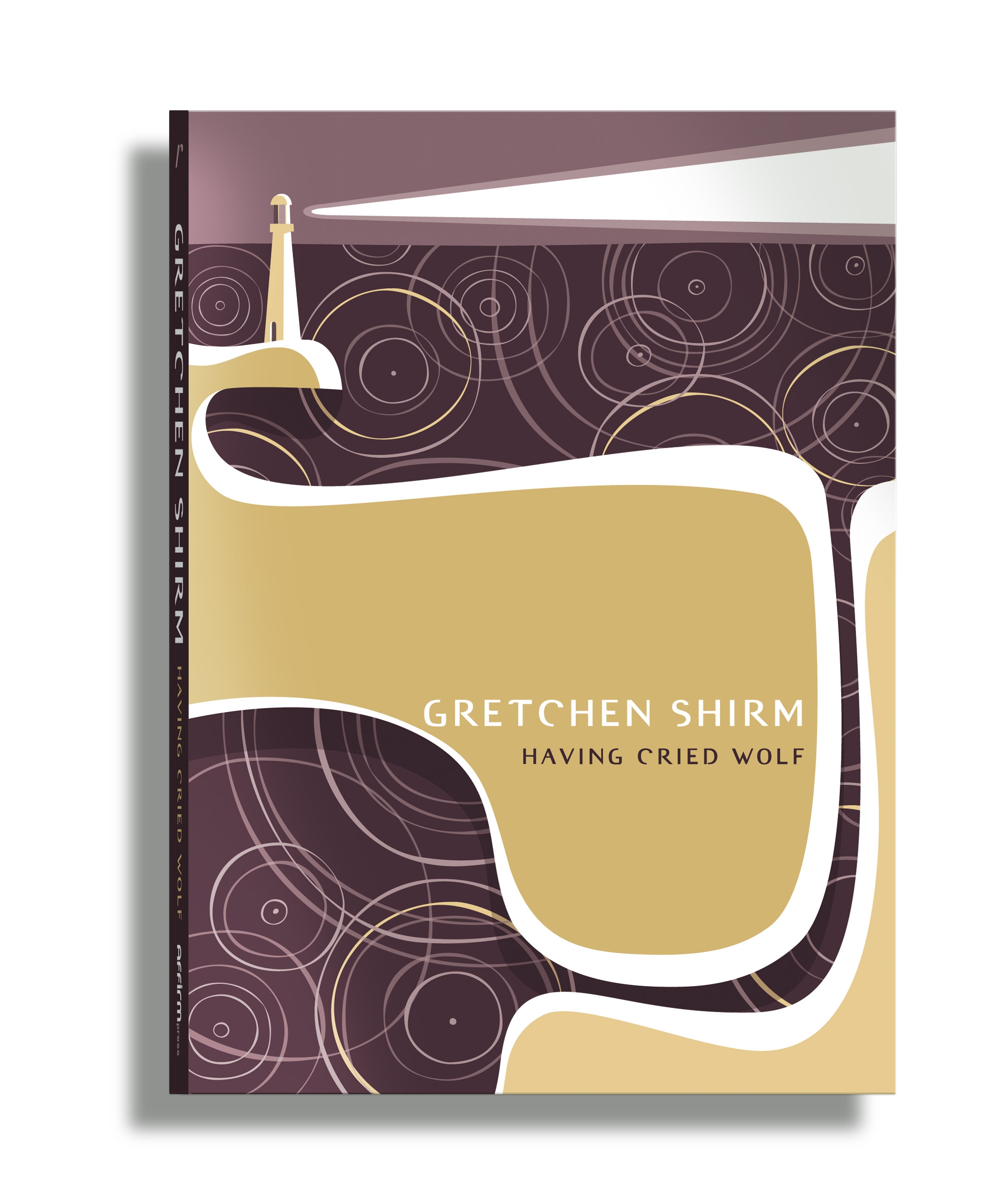
Having cried wolf, book cover (Courtesy: Affirm Press)
Affirm Press’s Long Story Shorts
Affirm Press is one of Australia’s wonderful small independent publishers. In 2010 they published the first of the six books in their Long Story Shorts project which involved commissioning emerging writers to produce short story collections. This year I reviewed the final three books and was impressed by the writing, the gorgeous production and the publisher’s commitment. May there be many more such collections and even more opportunities for emerging writers in 2012 and beyond. Hats off to Affirm Press!
The Prime Minister’s Literary Awards are relatively new on the Australian literary awards scene but they’ve made a splash, partly because the prizes are comparatively lucrative. There are plans next year to add a Poetry prize and roll the Prime Minister’s Australian History Prize under the banner. This year, I attended, on the day of the announcement, a panel discussion with some of the winners and shortlisted authors. It was a real treat to hear (and see) the authors firsthand … but I have yet to read this year’s fiction winner, Stephen Daisley’s Traitor. Last year’s winner, Eva Hornung’s Dog boy, though, well demonstrates the calibre of the awards.
This year’s winner was That deadman dance by Kim Scott. Not only is it a beautifully written and thoughtful book but it’s a rare win for an indigenous author – and that has to make it a 2011 highlight.
Poetry
Readers of this blog know that I like to review poetry occasionally, though I am by no means an expert. I reviewed two special books of poetry this year, special because of the women who produced them and for the quality of their poetry. Ginny Jackson’s book The still deceived was published posthumously after she’d worked hard to complete it while terminally ill with cancer. Her poem, “Getting off the bus”, contains some of the most poignant lines I’ve read about dying. Nora Krouk’s Warming the core of thingswas published the year she turned 90. I used two lines from one of her poems in our family Christmas card this year. I should read and review more poetry!
Sydney University Press’s Charles Dickens set
Sydney University Press has been doing great work in recent years re-publishing Australian literary classics, several of which I’ve reviewed on this blog. However, this year they published another “treasure”, Charles Dickens’ Australia: Selected essays from Household Words 1850-1859, edited by Margaret Mendelawitz. It’s a five-volume set of articles relating to Australia from Charles’ Dickens periodical, Household Words. The periodical is available on-line, another example of the pluses of electronic communication, but to have someone else do the work of sifting out those articles of relevance to Australia and then sort them into thematic volumes is a perfect example of value adding.
Monday Musings guest posts
When I commenced my Monday Musings series nearly two years ago I planned to include the occasional guest post but for various reasons I haven’t organised many to date. However, there were two this year and they were highlights for me – and not just because I didn’t have to write them! They were informative posts: Louise wrote on some Aussie Children’s Lit creators, and Guy Savage wrote on Max Barry. Both were passionate posts on topics dear to the heart of their writers – and both taught me some things I didn’t know. There’ll be more guest posts next year.
Meeting Alan Gould
Alan Gould is a local (to me) poet, short story writer and novelist, and he was shortlisted last year for the Prime Minister’s Literary Awards for his beautiful, mesmerising novel, The lakewoman. My reading group was lucky to have him attend our discussion of his book earlier this year. It was a treat to be able to ask questions about the genesis of what is an intriguing book and to discuss our reactions to it. Gould was gracious in sharing his ideas with us, and we hope he got something out of the discussion too. He should be better known.
Top Aussie post of the year – Red Dog
WordPress provides some excellent blog stats, including your top posts (by number of hits). You can ask for your top posts to be listed by specific time frames – 7 days, 30 days, year, and alltime. I decided to check for my top post over the past year and was surprised to find that it was my review of The Red Dog (Movie and Book). I posted it in August and it is so far ahead of the next top ranked post that it will be my top post for the calendar year. The movie was based on a book written by Louis de Bernières about a legendary dog of the Pilbara. It’s a slim book and is not great literature but the film has done astonishingly well at the box office. I say “astonishingly” because Australian films often do not attract good audience numbers, which worries our film industry. Red Dog, though, bucked that trend and showed filmmakers that Australian audiences will go to Australian films (sometimes, anyhow!). I would hate this movie to start a spate of similar movies in the hope of cashing in on audience interest, but it was good to see a film that appealed to Aussies. I hope we see more – and varied ones – in 2012.
And finally …
Thanks to everyone who has read, commented on and/or “liked” my blog over the last year. I may not know you all but I sure appreciate your visiting me here. I wish you all happy reading in 2012 … and, meanwhile, would love to hear of your blog or literary or reading highlights of the year.
Happy Holidays everyone who is celebrating this weekend … May you receive many books and the time to read them!
I have taken a quick break from my festivities to bring you Week 6 of our Shadow Man Asian Literary Prize 2011 longlist reviewing project. It has been quiet on the reviewing front this week, for obvious reasons. And yet, I have bumper crop of reviews for you because of the addition of a new member to our team, Mark of Eleutherophobia. Welcome Mark. We discovered that Mark had read and reviewed several of the books on the longlist so it seemed sensible – if not downright useful! – to ask him to join us. And so, here are this week’s reviews – all Mark’s:
Jamil Ahmad’s The wandering falcon (Pakistan). This book has been loved by all our reviewers so far, and Mark is no exception. A pre-Taliban story that sounds like a must for all of us.
Rahul Bhattachariya’s The sly company of people who care (India). A debut novel that follows an India cricket journalist to Guyana, and Mark calls it “bewitching”.
Mahmoud Dowlatabadi’s The colonel (Iran). Mark describes this as an important book that represents “a despairing and as yet unheard plea to the Iranian people”.
Yan Lianke’s Dream of Ding Village (China). Although it’s a gruelling tale, says Mark, with perhaps some contrivance, he also thinks it is “a remarkable and unforgettable book”. Hard to go past that eh?
Anuradha Roy’s The folded earth(India). Mark liked this more than the rest of us to date, though we did all enjoy much about it, particularly the writing. Mark calls it “a beautiful book that will not leave you until long after the final page”.
I had hoped to bring you my review of Banana Yoshimoto’s The lake, but that will have to wait until next week … Meanwhile, on with the festivities!
Week 5 of our Shadow Man Asian Literary Prize 2011 longlist reviewing project and we’re moving along with quite a bumper crop of reviews this week …
Haruki Murakami‘s IQ84 (Japan) by Matt of A Novel Approach. Matt, a student of Japanese literature, has mixed feelings. He calls it unwieldy, though he also admits that he’s not a Murakami fan.
Anuradha Roy’s The folded earth (India) by Fay of Read, Ramble. Fay, like Matt and me, admired the writing but had reservations about the whole.
Kyung-Sook Shin’s Please look after mother (or Mom, depending on your version) (Korea) by Lisa of ANZLitLovers. Lisa didn’t like it as much as Stu and Matt did from our team. I guess that’s one that she won’t have to worry about choosing from!
Banana Yoshimoto‘s The lake (Japan) by Lisa of ANZLitLovers. She’s not overly impressed by it, stating that this “tale of adolescent introspection dressed up as a surreal mystery looks very slight indeed”. I liked Kitchen, the first (and only) Yoshimoto book I’ve read, but that was a long time ago now. I look forward to seeing what I think about The lake which will be my next read for the project.
And, of course, if you missed it, I did finally manage my first review for the project this week: Anuradha Roy’s The folded earth.
At last I’m posting my first review for our Shadow Man Asian Literary Prize longlist reviewing project. The book is The folded earth by Indian writer Anuradha Roy. Like many others, my first reaction when I saw this book listed was to wonder whether Anuradha was another name for Arundhati Roy – but it isn’t. She is, however, used to readers confusing her – and now that we have cleared that up, I will get on with my review.
The folded earth is Roy’s second novel. It’s a contemporary story about a young Hindu woman, Maya, who marries a Christian man, Michael, thereby angering both her parents and his. Consequently, when Michael dies, mountaineering, after only 6 years of marriage, she has no family to turn to for support. Grief-striken her solution is to move to Ranikhet, the nearest town in the Himalayan foothills to where he died. The novel chronicles her life in that town – the work she does, the friends she makes. It’s a fairly simple plot, though there are some complications: there’s the mysterious Veer who comes and goes and with whom she develops an uneasy relationship, and there’s the backdrop of conflict as the impending elections bring into focus Christian-Hindu tensions. There are also some references to real people – to the romantically involved Nehru and Edwina Mountbatten, and to the legendary big-cat hunter Jim Corbett.
The main appeal of the book for me was the evocation of village life through its colourful characters. They include Ama, the stereotypical but nonetheless believable wise village woman; Charu, her lovelorn but resourceful granddaughter; Mr Chauhan, the officious Administrator; Diwan Sihab, the eccentric would-be biographer of Corbett and generous landlord to Maya; Puran, the simple cowherd; Miss Wilson, the austere principal of the Catholic school at which Maya works. And of course, Maya, herself, who is the first person narrator of the novel. These characters come alive and we care about them, even Mr Chauhan who, with his attempts to beautify Ranikhet (“In foreign countries I have heard people have to pick up even their dog’s … waste from roads”), provides light comic relief. He is not totally benign though, as he is also behind one of the book’s cruellest moments when his henchmen torture Puran.
I also enjoyed the writing. Roy’s descriptions of the foothills and seasonal changes bring the landscape alive:
… I stood looking at the mountains, which had risen out of the monsoon sky. Clouds were piled high at their base so that they floated in mid-air, detached from everything earthly. Something in the quality of the light made the peaks appear translucent, as if the molten silver sky were visible through them.
Her descriptions of people and their relationships are often spot-on, such as this of a new relationship:
We were too new and fragile, too skinless to be exposed to daylight just yet.
Roy explores some of the changes confronting the region, particularly in relation to religious difference, education, and the role of women. Should women be educated, and if so how much? (Ama, for example, would like to see Charu educated so that “she won’t let a man get away with treating her badly” but not so much that it will stop her getting a husband.) How do hardworking villagers comprehend the seasonal influx of wealthy travellers? Here is Ama again:
Travelling is all very well […] But it’s for people with money to burn and nothing better to do but eat, drink and idle. Why go walking up and down hills for pleasure? We do that everyday for work.
Social conflict and change are real issues in this neck of the woods!
And yet, despite these positives, the book doesn’t quite hang together, mainly, I think, because it doesn’t know what it is. Is it about coming to terms with grief, an ideas novel about political tensions in contemporary India, a mystery about Michael’s death, a hymn to the Himalayan region (in the face of encroaching urbanisation), or all of the above? I suspect Roy intended all of these but the book is a little too disjointed, a little too unfocused to quite pull it off. The politics seem important but are mostly a sideline to the personal stories. For the political ideas to have impact they needed to collide in some major way with the characters rather than form a backdrop as they do here. There is a mystery about Michael’s death but Roy doesn’t build or sustain the tension well, and when the true story comes out it’s neither surprising nor particularly powerful. There are references to the destruction of the natural world, to humans making “anthills out of the mountains”, to “the distant past of the forests when the shadow of a barasingha’s horns flitted through the denser woods”, but the ideas are not fully integrated into the story.
I’m not sorry to have read it, however. It’s not a ground-breaking book and it doesn’t fully cohere, but there is a lot to enjoy – the writing, the exotic (to me) setting, and the characters, for a start. I don’t imagine this will be my top-ranked book in the longlist but neither would I discourage people from reading it.


 Whispering Gums