Monday musings on Australian literature: ABR’s first laureate

While I was gallivanting in the northern hemisphere in April, ABR (the Australian Book Review) announced its first ever laureate. I missed it at the time, but heard of it soon after my return, and am now sharing it with you. For most Aussie readers, though, it’s probably a bit old hat!

ABR’s concept of a laureate is somewhat different to, say, Britain’s poet laureate who is called upon to produce poetry for special occasions. ABR’s idea, says editor Peter Rose, is “to highlight the work of our greatest writers”. However, the laureate will have one job, and that is to nominate (and possibly mentor) a “laureate’s fellow”, a younger writer who will receive $5000 to support “a work of poetry, fiction, memoir or criticism” that will be published in ABR.

So, who is ABR’s first laureate? Rose said that deciding the first laureate was easy – David Malouf. With David Malouf turning 80 this year, it seemed obvious, he said, to mark his many achievements. Makes good sense to me, particularly given the breadth and depth of those achievements. But, I’ve already written about Malouf turning 80, so won’t repeat what I said then.

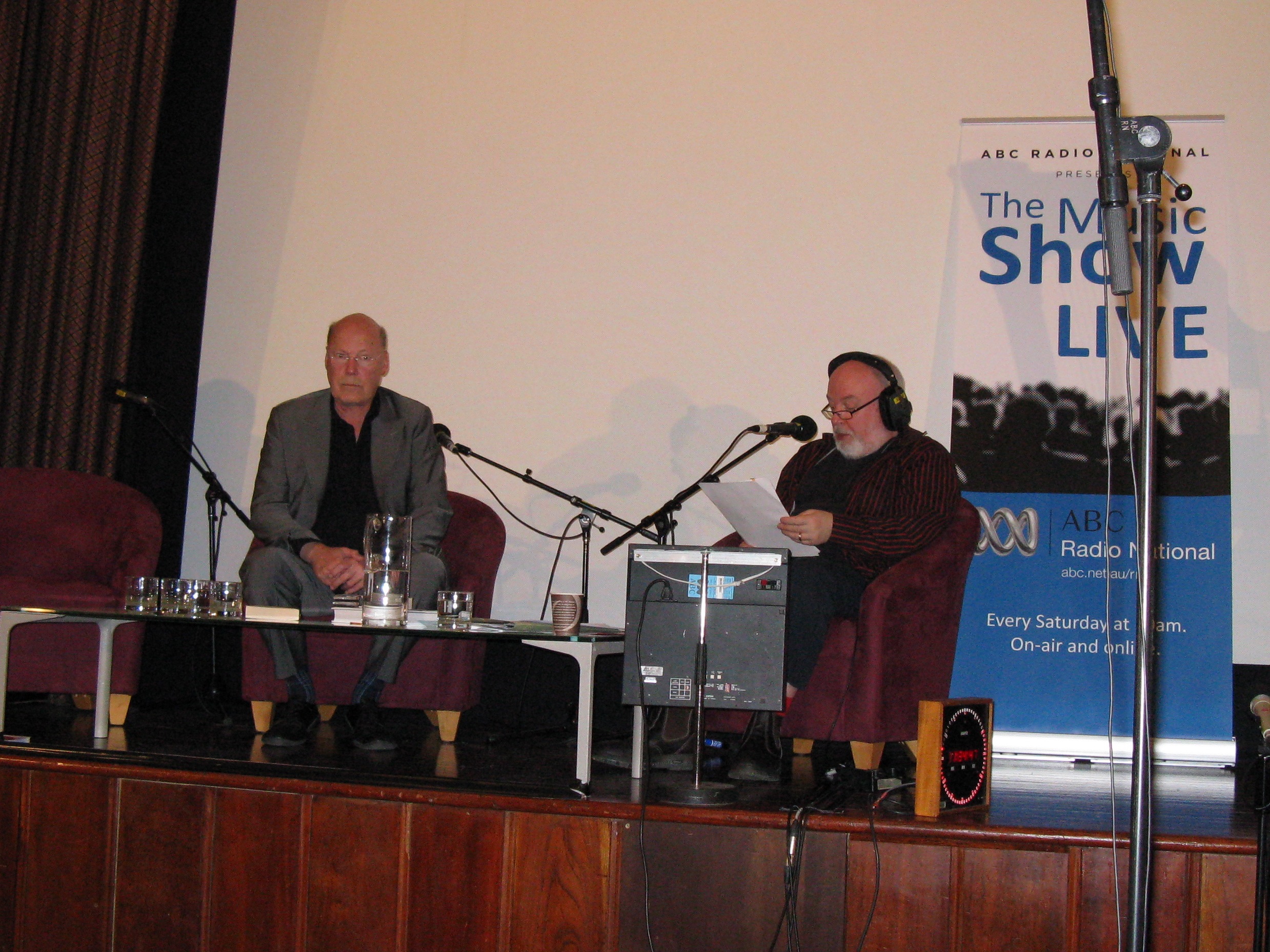
However, to commemorate Malouf’s laureateship (is that a word?), ABC Radio’s Mark Colvin conducted a brief interview with Malouf for PM  Colvin asked him a few well-targeted questions concerning the development of Australian literature. Malouf was his usual thoughtful, measured self – and made his usual sense. He talked of the change in Australian literature from the 1980s to now, suggesting that in the 1980s and 90s, defining our identity, our Australian-ness “was a big thing … I think writers themselves had a more self-conscious notion of their Australian-ness and what the particular subject matter of Australia might be. I think that moment has more or less passed”. In response to Colvin’s question regarding why that might be, he said:

I think the question of Australian identity has become much more open and flexible and more complex. I think younger writers don’t necessarily think of themselves as being Australian writers; they really want to be global writers or international writers. But you know, like all writers, the thing that they are aware of is that you’re a writer for yourself. It’s something very, very personal.

And I think we’ve reached the kind of sophistication when we think about Australian-ness to understand, which I think is absolutely true, that for anybody who is writing and has grown up in Australia with Australian language and Australian education and Australian interests, your Australian-ness is something you can pretty well take for granted. You don’t have to work on it.

I think he he’s right – and it is probably part of the natural maturation of a nation. It’s perhaps a bit like moving from adolescence to adulthood in that we are becoming comfortable in our own skins. This is not to say that we won’t continue to write about some of the issues that define us, issues like our indigenous/colonial/settler history, or our physical distance from much of the world (which might be mitigated somewhat by technology but not completely – the kilometres are still there). But it does suggest that we are less likely to fuss about who we are, to feel that we have to explain or justify ourselves. Books like Malouf’s own Ransom (my review) is a perfect example – an Australian writing about classical Greeks (as he did earlier about ancient Romans in An imaginary life).

If Malouf is right and we do, and can, take our Australian-ness for granted, what does this mean for our interpretation of the Miles Franklin Award’s stipulation that the winner must be about “Australian Life in any of its phases”? How do we interpret that in 21st century Australia? In other words, what does an “indigenous literature” (Franklin’s words) look like in a mature nation?

Anyhow, the other main question Colvin asked him concerned the difficulty of being a writer today and the future of the novel. Malouf said that, while there may be some questions regarding the impact of new formats like reading on a screen,

my belief would be that there will always be readers because I think reading is for some people something they can’t do without. It’s a bread and butter matter, it’s an addiction. And I think those people will go on reading. I think they’ve always been a fairly small number; I think they’ve always been pretty much the same number.

So I’m optimistic really about the survival of the novel and the survival of the reader.

His final point – and it’s a writer’s point – was that “the question really would be about what happens to publishing rather than what happens to writing.” Once a writer, always a writer, obviously!


Adam Johnson, The orphan master’s son (Review)

Adam Johnson 2006

Adam Johnson 2006 (Courtesy: Roms69, using CC-BY-SA 3.0, via Wikipedia)

Given my current reading preferences, I probably wouldn’t have read Adam Johnson’s Pulitzer prize-winning novel, The orphan master’s son, if it hadn’t been for my reading group, but I’m rather glad I did. It’s a confronting novel, not only because of its brutal content, but also because it is an outsider’s critique. I always feel more comfortable if criticism comes from within, free of external agendas. However, criticism from within is scarcely possible in a totalitarian regime, so I admire Johnson for taking it on.

Now that’s off my chest, let’s get to the book. Most of you probably already know what it is about. It is set in the Democratic People’s Republic of Korea during the reign of Kim Jong-il (who died in 2011) and explores the lives of citizens living under his repressive, authoritarian rule. The novel is divided into two parts: The Biography of Jun Do, and The Confessions of Commander Ga. The first part is told in third person voice, in a linear chronology. The second part, however, is more complex. As well as continuing the third person narrative, there is a first person strand by a new character, an unnamed interpreter, and an “official” strand told via loudspeakers. While each has a linear chronology, they are told at different rates resulting in the overall chronological sequence being somewhat jagged. This structure reinforces one of the main themes of the novel which has to do with stories, lies and truths, and shifting identities.

The structure is one of my reasons for liking the book. I like it when authors use technical aspects of their work, like the structure, to reinforce their intention. It adds challenge to the reading, making me think about what the author is doing and why. It also, in this case, helped distract my mind from much of the brutality of the content. In the interview with his editor David Ebershoff at the back of my edition, Johnson said that he had “to tone down much of the real darkness of North Korea”. Wow, is all I can say to that.

Anyhow, I’ve written three paragraphs without saying anything about the story or plot. The first thing to say is that Jun Do (a play on John Doe, neatly suggesting hidden or uncertain identities) and Commander Ga are the same person. In the first part, Jun Do, the titular orphan master’s son, takes part in many “adventures” on behalf of the state, including working as a tunnel soldier, kidnapping Japanese, gathering radio information on a fishing boat, and representing North Korea on a delegation to Texas after which, because they fail their assignment, he is sent to Prison 33, a prison mine. In this first part, Jun Do learns the art of survival and, importantly, the importance of stories to that survival. In the second part, Jun Do has survived the prison, killed the hated Commander Ga, and emerged, with the state’s sanction, to take his place, including moving in with Ga’s wife, the beautiful actress, Sun Moon.

It is in this part that Do/Ga’s life comes together and then starts to “unravel”, though not without his complicity and not without doing some damage of his own. The novel is beautifully plotted so that seemingly random or bizarre occurrences – such as Jun Do hearing radio signals from the “girl rower”, his chest being tattooed by a boat captain with an image of Sun Moon, and his being given a DVD of the film Casablanca – all find their place in the latter part of the novel.

“there is nothing between the citizen and the state” (interrogator)

But now I want to get back to stories. In the first part, the fishing boat crew concoct an improbable story involving Jun Do to explain the disappearance of the Second Mate, who has defected, and thereby protect themselves from retribution. In Texas, when Jun Do expresses uncertainty about repeating this story, the delegation leader, Dr Song, tells him:

Where we are from … stories are factual. If a farmer is declared a music virtuoso by the state, everyone had better start calling him maestro. And secretly he’s be wise to start practising the piano. For us the story is more important than the person. If a man and his story are in conflict, it is the man who must change.

This is what Jun Do does throughout the novel. He changes to suit the role he finds himself in. He has to, to survive. In the second part of the novel, we are presented two versions of his story – the third person narrated one which we take as the “truth”, and the propaganda one broadcast over loudspeakers to all the “citizens” of Pyongyang.

Alongside these two narratives is that of our first person narrator, the interrogator, who works in Division 42, the department which extracts information from enemies of the state. A self-styled biographer, he eschews the thuggish techniques of the “rival interrogation team”, the Pubyok, although his apparently benign story collecting methods conclude with a brutal pain (electric shock) machine which aims to create

a rift in the identity— the person who makes it to the far shore will have little resemblance to the professor who now begins the crossing. In a few weeks, he will be a contributing member of a rural farm collective […]. There’s no way around it: to get a new life, you’ve got to trade in your old one.

He is, in a strange way, a voice of conscience, as he starts to question what it’s all about. Indeed, at one point he asks his father “Is it just about survival? Is that all there is?”. This question recurs near the end when Do/Ga, our interrogator’s last case, imagines a life that “would no longer be about survival and endurance”.

In most of my reading, multiple viewpoints are used to convey the idea that there are different ways of seeing things. It’s usually pretty benign, even if some of the individual perspectives are not. But in this novel, there is something sinister going on, so sinister that if you are caught out in the wrong perspective you will very likely find yourself at a prison farm (or worse). You need to make sure, in other words, that your identity matches the one the regime has for you. And this brings me to the scariest thing about the society Johnson depicts – the precariousness, or uncertainty or, even, the randomness of existence. To survive, you must believe what you are told or, as Jun Do learnt early in his life, do what you are told.

“no beginning, an unrelenting middle, and ended over and over” (Do/Ga)

I’ve said nothing, though, about the experience of reading this book. It may sound silly, given what I’ve written above, but this novel takes you on a wild ride. Besides the inevitable brutality, it has tender moments, some very funny ones, and is more than a little absurd. It asks us to accept, and believe in, Jun Do as our guide. It’s a dystopian novel with a touch of romance, adventure and mystery/thriller.

The success of a book like this rests on its authenticity, on whether we believe the truths that lie beneath the fabrication. Unfortunately, I do.

Adam Johnson
The orphan master’s son
London: Black Swan, 2013
575pp.
ISBN: 9780552778251

Monday musings on Australian literature: Non-fiction literary awards

This will probably be my last post on specialised literary awards, but it is an important one to cover, not least because while I was away a non-fiction work, Clare Wright’s The forgotten rebels of Eureka, won the Stella Prize in its second year. This is notable because while most awards seem to be specially targeted to a particular form of literature – fiction, poetry, short stories – there are a small number of awards that do not specify form. The Stella Prize is one of these. I like Helen Garner’s way of putting it:

I hope that the Stella Prize, with its graceful flexibility about genre, will encourage women writers to work in the forms they feel truly at home in, instead of having to squeeze themselves into the old traditional corsets.

Similarly, the Nita B Kibble Literary Award and Dobbie Literary Award, which are both limited to women writers, do not specify form. They do, however, specify “subject matter”. Entrants must be recognisable as ‘life writing’, and can be novels, autobiographies, biographies, or other forms of literature that meet this definition.

The currently suspended The Age Book of the Year was somewhat similar: it was chosen from the winners of its sub-categories, which included non-fiction. The latest winner – in 2012 – was, in fact, a non-fiction work, James Boyce’s 1835: The Founding of Melbourne & The Conquest of Australia. 

However, there are several awards that are specifically for non-fiction, albeit some of them being subsets of larger awards. Here are a few:

  • Australian History Awards/Australian Historical Association Prizes. Awarded biennially. Comprises several awards, including the Allan Martin Award, the Jill Roe Prize, the Kay Daniels Award, and the WK Hancock Prize. Awarded to works by members of the Australian Historical Association, but each has its particular slant and eligibility conditions beyond that.
  • Calibre Prize. Established in 1997. Awarded to an “outstanding essay” in any non-fiction subject. Offers $5,000 to the winner.
  • Ernest Scott Prize. Established through a bequest to the University of Melbourne. Awarded for works by a resident of Australia or New Zealand about the history of Australia or New Zealand or on the history of colonisation. The work must be based on original research. Offers approximately $13,000 to the winner.
  • National Biography Award. Established in 1996. Awarded to “the best published work of biographical or autobiographical writing by an Australian”. Offers $25,000 to the winner.
  • New South Wales Premier’s History Awards. Established in 1997 to promoteexcellence in the interpretation of history, through both the written word and non-print media”. Comprises a suite of five or more awards, including the Australian History Prize, the General History Prize and the Young People’s History Prize. In 2014, a special Military History Prize is being offered in commemoration of World War 1. Offers $15,000 to the winner of each category.
  • Chief Minister’s Northern Territory History Book Award. Established in 2004. Aims to encourage documentation of the history of the Northern Territory. Offers $1,000 to the winner.
  • Prime Minister’s Literary Awards*. Established in 2007. Comprises several awards, including one for Non-fiction. In 2012 the separately established Prime Minister’s Prize for Australian History also established in 2007 was incorporated into this award. Awarded to works written by Australian citizens or permanent residents and published in the previous calendar year. Offers $80,000 for the winner (in each category) and $5,000 each for up to four short-listed works.
  • Queensland Literary Awards University of Queensland Non-fiction Book Award. One of the suite of awards established in 2012 to replace the cancelled Queensland Premiers Literary Awards.
  • Walkley Awards. Established in 1956. Awarded to works demonstrating excellence in journalism, with categories for books, articles, essays and other media. (See my previous Monday Musings on this)
  • Western Australian Premier’s Book Awards. Established in 1982. Includes awards for Non-fiction and Western Australian History, with winners of these being eligible for the overall Premier’s Prize. Awarded to works by Australian citizens or permanent residents or, and this is interesting, with Australia as the primary focus. Offers $15,000 for Non-fiction winner, $10,000 for Western Australian History winner, and $25,000 for the overall winner.

This is, again, not a comprehensive list, and is rather “messy” because these awards come in a variety of guises and structures. What it shows, though, is that there seems to be significant support for non-fiction writing, particularly for history. They get little publicity but the winners lists show that many of our significant historians, biographers and journalists in particular are winning them.

* These awards ran late last year, and the same is happening this year. There are fears for their survival, which tomorrow night’s budget (Tuesday May 13) will hopefully answer.

Australian Women Writers 2014 Challenge completed

awwchallenge2014Regular readers here know by now that I only do one challenge, and that’s the Australian Women Writer’s Challenge. As in previous years, I signed up for the top level: Franklin-fantastic. This required me to read 10 books and review at least 6. I have now exceeded this. I will continue to add to the challenge, as I’ve done in previous years. However, one of the requirements of completing the challenge is to write a completed challenge post. Here is that post.

I have, so far, contributed 14 reviews to the challenge.

Here’s my list in alphabetical order, with the links on the titles being to my reviews:

Only two of these – Baynton and Anderson – are for non-recent works. I would like in the second half of the year to read more backlist, more classics. Let’s see what happens when I write my end-of-year post for the challenge.


Monday musings on Australian literature: Emerging or debut writer awards

Almost as important for emerging writers as the unpublished manuscript awards, about which I wrote recently, are the awards devoted to new, mostly defined as debut, writers. That is, these awards are for writers lucky enough to have been published – and who knows, some may have won an unpublished manuscript award to get published – but are just starting their careers, and may not be quite as polished as the Tim Wintons and Kate Grenvilles of the world. New writer awards must surely help get them and their books noticed.

These awards too can vary in their intentions and therefore their eligibility rules. Here are the main ones I found:

  • Dobbie Award: Established in 1994. Awarded to a first published fiction or non-fiction work by a female writer that can be described as ‘life writing’. Offers $5,000. Recent winners include works which went on to be shortlisted for the other awards such as Favel Parret’s Past the shallows, and Deborah Forster’s The book of Emmett. Tara June Winch, who’d won the David Unaipon unpublished manuscript award went on to win this award with the published version, Swallow the air.
  • FAW Anne Elder Award for first book of poetry: Awarded to a first book of poetry of at least 20 pages, not previously published locally or overseas, and containing contributions from between 1 and 4 poets. Offers $1,000. (National and state Fellowship of Australian Writers groups support a large number of awards in a wide variety of forms and genres, and with all sorts of eligibility conditions. I’ve listed this one as an example.)
  • New South Wales Premier’s Literary Awards UTS Glenda Adams Award for New Writing: Established in 2005.  Awarded to a book of fiction by an author who has not previously published a booklength work of fiction. Offers $5,000. Tara June Winch also won this with Swallow the air, as did Andrew Coome’s Document Z (my review) and Michael Sala’s The last thread (my review).
  • Readings New Australian Writing Award: Established in 2014 by the Readings independent bookshop in Melbourne. Awarded to a the first or second published work of fiction by an Australian author. Offers $4,000.

There aren’t so many of these which is probably not surprising. I’d be interested to hear, though, of any others that you know are currently being offered/awarded.

Miles Franklin Award 2014 Longlist

Earlier today Miles Franklin Literary Award’s Trust Company announced the longlist for this year’s award. As usual, it includes the full gamut – expected titles, along some surprise inclusions and omissions. One of the interesting exclusions would have to be, I think, Christos Tsiolkas’ Barracuda (my review). It certainly deals with “Australian life in any of its phases” but, like most of Tsiolkas’ work, it has strong supporters and just as strong critics.

Expected inclusions would be Flanagan’s The narrow road to the true north, which I’m hearing is many people’s favourite for the award, Winton’s Eyrie and Wright’s The swan book. These three are all on my current TBR pile. Indeed, my reading group is doing Eyrie this month, but unfortunately I’m missing that meeting. I’m thrilled to see Wyld’s All the birds singing in the list, and Lucashenko’s Mullumbimby, which is also in my sights as I’ve not read it but have read a short story drawn from it (my review). I’ve been reading a bit about McGregor’s The night guest lately in my role as Lit Classic reporter for the Australian Women Writers’ Challenge so am happy to see it here. And I have heard good things about the novels by Farr, Hay and Taylor. I must admit, though, that I’ve not heard of Rothwell’s Belomar and Shearston’s Game, so must check those out.

Anyhow, here is the long list (in alphabetical order by author) – an unusual number of 11!

  • Tracy Farr, The life And loves of Lena Gaunt
  • Richard Flanagan, The narrow road to the deep north
  • Ashley Hay, The railwayman’s wife
  • Melissa Lucashenko, Mullumbimby
  • Fiona McFarlane, The night guest
  • Nicolas Rothwell, Belomor
  • Trevor Shearston, Game
  • Cory Taylor, My beautiful enemy
  • Tim Winton, Eyrie
  • Alexis Wright, The swan book
  • Evie Wyld, All the birds singing (my review)

The prize is currently worth $60,000. The shortlist will be announced at the State Library of NSW on May 15, with the winner being announced on June 26. Meanwhile, congratulations to the long listed authors – and good luck to them for the next round.

Monday musings on Australian literature: Unpublished manuscript awards

I’ve recently reviewed a couple of books which have won unpublished manuscript awards: Hannah Kent won the inaugural Writing Australia Unpublished Manuscript Award in 2011 for Burial rites (my review), and Margaret Merrilees won the Unpublished Manuscript Award at the Adelaide Writer’s Week in 2012 for The first week (my review).

Now, I’ve discussed awards a few times on this blog, and we’ve had some very interesting discussion in the comments about the value of awards. I’m not going to reiterate all that now because, being the original fence-sitter (!), I can see both sides of the argument. Awards in something so subjective as the arts are inherently problematic I think. I get that! However, I think a special argument can be made for unpublished manuscript awards. It’s hard, as we know, for writers to get published, particularly first-time writers. These awards – particularly those limited to (potential) debut authors – must make a big difference. In fact, in an interview last year, Hannah Kent said “these sorts of awards are so important. They help you get that foot in the door”.

Over the years, I’ve come across many of these awards – at least Australian ones – and they vary a great deal in terms of eligibility and what the award provides. I thought it would be interesting to list some of them here:

  • The Australian/Vogel Literary Award: Established in 1979 (first award 1980) in a collaboration between The Australian newspaper, the company which makes Vogel bread, and the publisher Allen & Unwin. Awarded to an unpublished manuscript by writers under the age of 35. Offers $20,000 and publication by Allen & Unwin.
  • CAL Scribe Fiction Prize: Established in 2009 by small publisher Scribe with the Copyright Agency Limited’s Cultural Fund. Awarded to an unpublished manuscript by an Australian writer aged 35 and over, regardless of publication history. It’s a Late Bloomer award! Offers $15,000 and a book contract. (My Internet search hasn’t found a winner for this award in 2013, so it may not still exist.)
  • Finch Memoir Prize: Established by Finch publishers, and sponsored by Copyright Agency Limited’s Cultural Fund. Awarded to an unpublished life story or memoir and open to previously published and unpublished writers as well as to agented writers. Offers $10,000 and publication.
  • Queensland Literary Awards David Unaipon Award of Unpublished Indigenous Writer: Initially established in 1989, and then brought under the Queensland Premier’s Literary Awards in 1999 and, since their cancellation, brought under the independently run Queensland Literary Awards. Open to all unpublished Aboriginal and/or Torres Strait Island writers. Offers $5,000 and guaranteed publication by the University of Queensland Press. The three runners-up are offered mentorships.
  • Queensland Literary Awards Emerging Queensland Author-Manuscript Award: Initially established under the Queensland Premier’s Literary Awards in 1999 and, since their cancellation, brought under the independently run Queensland Literary Awards. Open to all unpublished Queensland (resident at the time of the award for at least 3 years) authors. The prize is the same as that for the David Unaipon Award.
  • Victorian Premier’s Literary Award for an Unpublished Manuscript: Established by the State Library of Victoria in 2003. Open to any author from the state of Victoria who has not had a work of fiction published.
  • Writing Australia Unpublished Manuscript Award: Established in 2011. Award to adult fiction, and is not limited by genre, geographic location or age of author. Offers $10,000 cash and a mentorship worth $2,000 with a mentor of the winner’s choice. Kent chose novelist Geraldine Brooks, who, as I’m sure you know, has written several historical fiction novels.

Hannah Kent’s comment that these awards are important is borne out, rather, by the ongoing success of many winners. The Australian/Vogel Literary award claims, for example, to have launched the careers of Tim Winton, Kate Grenville, Brian Castro, Mandy Sayer and Andrew McGahan. Recent awards have gone to books that quickly became high-profile, namely Hannah Kent’s Burial rites and Graeme Simsion’s The Rosie project (which won the Victorian Premier’s Literary Award for Unpublished Manuscript) (my review). The inaugural winner of the Victorian award was Carrie Tiffany with her gorgeous book, Everyman’s rules for scientific living. (Coincidentally, she was the inaugural winner, last year, of the Stella Award, with her second novel, Mateship with birds.)

These sorts of awards vary, not only in terms of what they offer, but regarding who they aim to help. Many, though not all, are limited – to debut authors, indigenous authors, young authors, or authors from a particular state. Regardless of how they are framed though, I understand that, in many cases, they can and do result in publication not only for the winner but for some of the other well-judged entrants. And that, I think, is the best argument there is for the existence of these awards, don’t you?

POSTSCRIPT:
As I expected – and hoped – commenters on the post have named other awards. They include:
  • T. A. G. Hungerford Award: Established in 1998 by Fremantle Press. Awarded biennially to previously unpublished writers from Western Australia. Offers $12,000 cash and a publishing contract with Fremantle Press.


Monday musings on Australian literature: Pascall Prize

The Pascall Prize is one of those under-the-radar sorts of awards, that is, one that tends not to get much general press. However, that doesn’t mean it’s not significant. In fact, I’ve had it in my list of topics for a couple of years but, having mentioned in my David Malouf birthday post last week that he was a recipient, I decided that now’s the time.

The Pascall Prize has another name which better explains what it is – “The Australian Critic of the Year”. Its aim, defined on its website, is:

to reward a critic or reviewer whose work changes the perceptions of Australians, opens their eyes to a different perspective of their culture, develops a new interest in the subject and is both imaginative and creative.

The Pascall Prize celebrates incisive and well-crafted critical writing in areas including literature, art, architecture, food and wine, music, theatre, film, television, and radio [and now the Internet].

It specifically excludes sport from its definition of culture. Fair enough. I suspect there are significantly more well-paying opportunities for sports writers/analysts than there are for those in the arts, though maybe I’m biassed. I have, for the record, read some excellent pieces of sports journalism. But, enough of that, back to Pascall. The website tells us that it was named after Geraldine Pascall, “a flamboyant journalist” who died suddenly of a stroke/brain haemorrhage in 1983, when she was just 38. (Scary!) She apparently didn’t have a will, so her Estate passed to her father, Fred Pascall. He wanted to establish a memorial to his daughter, and so the Pascall Prize was born. It’s awarded annually, usually I believe at the Sydney Writers’ Festival, and currently provides $15,000. David Malouf is listed as the first recipient, having received the award in 1988.

I could be clichéd and say that the recipients represent a veritable who’s who of Australian critics, but I won’t, although it does – at least as far as I can tell from my admittedly uneven knowledge of the field! Last year’s winner was Kerryn Goldsworthy. The announcement describes her as “a writer, critic, reviewer, essayist, columnist, fiction writer and blogger”. She has reviewed for many of Australia’s most significant publications, for over 30 years. I have quoted her here more than once, the first time being in 2009 in a post on Thea Astley when I quoted Goldsworthy’s reasons for loving Thea Astley. That they happen to accord with my reasons was the icing on the cake. I’ve mentioned her several times since, including recently in relation to her being the chair of the Stella Prize Judging Panel.

Andrew Ford and Jim Sharman

Andrew Ford interviewing Jim Sharman, Voss Journey, 2009

Of the other winners, the best known to me (which says more about me than anything else), include Andrew Ford (1998, music critic, composer and radio presenter), Marion Halligan (1990, critic and author), Andrew Riemer (1990, critic, academic and author), Peter Craven (2004, literary critic and editor), and Geordie Williamson (2011, literary critic). You can see a full list of the winners and the judging panels on the Prize’s Wikipedia page.

I’m not going to ramble on for long about this award, important as I think it is, but I would like to share a couple of comments made by Goldsworthy in her acceptance speech, one about the essence of being a good critic, and the other about the future. Here’s the first one:

in order to be an effective critic, you need a left brain that knows what your right brain is doing. My ideal as a critic is to come up with a rational intellectual response while at the same time continuing not just to acknowledge but to honour those mysterious places of the oceanic deep, the places where you connect most vitally and instinctively and electrically with whatever is going on in a work of art.

It’s a real juggle, and one that many of us bloggers (of whom Goldsworthy has also been one) try also to achieve. It’s what she calls “a critical brain finding ways to articulate the heart’s response”.

Regarding the future of criticism, she says:

There’s a lot of talk as we move into the digital age about what the fate of criticism will be, but I’m an optimist who thinks the that cultural conversation will continue no matter what medium it moves through, or what form it takes. What I worry about more is whether critics will go on being able to balance hearts and minds as the humanities continue to be devalued in the universities, the arts continue to be devalued in government, and fewer and fewer people are formally taught how to expand their knowledge and hone their critical skills as we navigate our way through cultural life.

Being an optimist too, I can’t believe that there won’t always be people ready, willing and able to engage with the arts in a critical way. Life sure would be poorer if there weren’t.

Do you have favourite critics you like to read? And what do you think about Goldsworthy’s left brain right brain approach to analysis?

Adelaide Festival Awards for Literature, 2014

As you know, I don’t report on every literary award announced throughout the year in Australia. There are way too many. But I did want to announce the Adelaide Festival Awards for Literature, partly because they are only awarded biennially. They were established in 1986. The fact that they are awarded biennially means of course that they draw on a larger pool than most of our literary awards.

Ten awards/fellowships were made this year, some of them for works and/or authors I don’t know, but here they are:

  • Premier’s Award: Frank Moorhouse, Cold light (my review). Coincidentally the first book in Moorhouse’s Edith trilogy, of which Cold light is the final book, won the 1994 Adelaide Festival Award. Cold light also won the Queensland Literary Prize last year.
  • Nonfiction: Kate Richards, Madness: A memoir. Richards’ memoir about living with psychosis for 10 years was also shortlisted for the 2013 Queensland Literary Awards Nonfiction prize.
  • Children’s literature: Catherine Jinks, A very unusual pursuit. Jinks is an established, multiple award-winning author of adult and children’s fiction in multiple genres, including science fiction and crime.
  • Young adult fiction: Vikki Wakefield, Friday Brown. Wakefield apparently won this award in 2012, also.
  • John Bray Poetry Award: Lisa Jacobson, The sunlit zone. This book was shortlisted last year for the inaugural Stella Prize. I have this book – a speculative fiction verse novel – in my sights. According to Wikipedia, the late John Bray was a lawyer, academic and published poet, and also served as Chief Justice of the Supreme Court of South Australia.
  • Wakefield Press Unpublished Manuscript Award: Cassie Flanagan-Willanski, Here where we live. I recently reviewed the winner of this prize at the 2012 Festival, Margaret Merrilees’ The first week.
  • Jill Blewett Playwright’s Award: Phillip Kavanagh, Replay. The late Jill Blewett was a playwright. She was married to Labor politician, Neal Blewett, and tragically died when she was electrocuted. In 2012, Kavanagh won the Patrick White Playwright’s Award.
  • Barbara Hanrahan Fellowship: Jennifer Mills, Common Monsters. I haven’t read Mills yet, though I have her well-regarded Gone in my pile. She has won several awards for her short stories, and in 2012 was named one of Sydney Morning Herald’s Best Young Australian Novelists. I must get to that book! The late Barbara Hanrahan, author and artist, wrote the gorgeously evocative autobiographical novel, The scent of eucalyptus, which I’ve reviewed here.
  • Max Fatchen Fellowship: Catherine Norton (pseudonym for Helen Dinmoe), Falling. The late Max Fatchen was a journalist and children’s writer. The fellowship is, consequently, for writers for young people.
  • Tangkanungku Pintyanthi Fellowship for South Australian Aboriginal and Torres Strait Islander writers: Ali Cobby Eckermann, Hopes crossing. Cobby Eckermann is an established indigenous Australian novelist and poet. She was a member of the stolen generation. She met her birth mother when she was 34, and started to connect with her culture from this time. This is the first time this award has been offered, and I understand that Tangkanungku Pintyanthi, from the Kaurna language, means ‘writing from the heart’.

Most of these authors are clearly well-established, but that doesn’t mean of course that they are flush with money.  Congratulations to them all, established or not. May their awards make a difference to their writing lives.

Stella Prize 2014 longlist

I’m not going to write a long post on the Stella Prize longlist because Paula Grunseit has written a good rundown of the books on the Australian Women Writers’ challenge website. Do check it out if you are interested to know more about the books (which I’ll list below).

The Stella Prize, regular readers here will know, is a new Australian literary prize for women writers, this being only its second year. One prize is awarded for a book that can be fiction (literary or genre, novel or short stories, poetry or prose) or non-fiction.

This year’s longlist was announced yesterday. It includes three books I’ve read and reviewed. (An improvement for me on last year when I’d read none at the time of longlisting, though by the end of the year I had read a few!) As last year, it’s a diverse collection, which includes debut novels, novels by indigenous authors, a short story collection, memoirs, a biography, and social analysis non-fiction (I have no idea what else to call books like Night games and The misogyny factor).

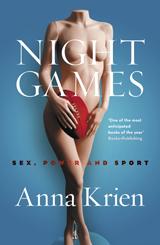
Anna Krien, Night Games

Courtesy: Black Inc

Anyhow, here is the list, in alphabetical order by author:

  • Letter to George Clooney, by Debra Adelaide (Picador): fiction, short story collection
  • Moving among strangers, by Gabrielle Carey (UQP): non-fiction, memoir
  • Burial rites, by Hannah Kent (Picador): fiction, debut novel
  • Night games, by Anna Krien (Black Inc): non-fiction, see my review
  • Mullumbimby, by Melissa Lucashenko (UQP): fiction, novel
  • The night guest, by Fiona McFarlane (Penguin): fiction, debut novel
  • Boy, lost, by Kristina Olsson (UQP): non-fiction, memoir
  • The misogyny factor, by Anne Summers (New South): non-fiction
  • Madeleine, by Helen Trinca (Text): non-fiction, biography, see my review
  • The swan book, by Alexis Wright (Giramondo): fiction, novel
  • The forgotten rebels of Eureka, by Clare Wright (Text): non-fiction, history
  • All the birds, singing, by Evie Wyld (Random House): fiction, novel, see my review

Three books published by UQP (University of Queensland Press)! Good for them.

For those of you who are interested, this year’s judges are:

  • Kerryn Goldsworthy, critic and writer (chair, and on last year’s panel)
  • Annabel Crabb (journalist and broadcaster)
  • Brenda Walker (author and academic)
  • Fiona Stager (bookseller, and on last year’s panel)
  • Tony Birch (writer and lecturer )

The winner will be announced on March 20.