Monday musings on Australian literature: Miles Franklin Award, the second decade (1968-1977)

Miles Franklin

Miles Franklin, c. 1940s (Presumed Public Domain, via Wikipedia)

Three weeks ago, I published a post on the first decade of the Miles Franklin Award. That seemed to interest some of my readers, so I’m back again with the next decade. I hope it’s equally interesting.

Again, I won’t be describing all the decade’s winners. You can check the Award’s official site to see a complete list of winners. Rather, I’ll be sharing some interesting snippets, inspired by my roving around Trove.

Money, money, money

Money, how authors support themselves, comes up in a few articles from this decade. Colin Simpson, Vice-President of the Australian Society of Authors, wrote a letter to the editor of the Canberra Times in December 1971, asking readers to buy Australian books as Christmas gifts. He probably wrote to other newspapers too. He comments that many people read Australian books, but via free libraries. Libraries are “great”, he says, but reading this way is “at the expense of authors, publishers and book sellers”. He continues:

The novelist’s position has become particularly sub-economic. As an example, the novel that won this year’s Miles Franklin Award has sold in Australia, in 12 months, less than 1,000 copies. This would earn its author, in royalties, under $400. Such books are read by tens of thousands of people who never go into a bookshop to buy books, but get them from the local library.

He looks to the future implementation of Public Lending Right (which happened in Australia in 1975) but in the meantime

If all those families of avid borrowers would make just one of their Christmas gifts a book, it would help keep booksellers in business. If the book they bought was an Australian one it would help to keep our authors writing books …

Some six months later in May 1972, The Canberra Times literary contributor, Maurice Dunlevy, wrote an article headed “No millions for our novelists”. His aim was to correct ideas that novelists are well-remunerated. Not everyone, he writes, is an Arthur Hailey or Harold Robbins. He calculates the likely royalty for the average Australian author, and says that, for a reasonably successful book, he (always a “he”) might earn $1,500. This means that such a novelist

would have to write at least five successful novels a year to make as much as a middle-ranking public servant — a prospect which might daunt even the most dedicated novelist.

Not surprisingly most authors, he says, write in their spare time. He then refers to the 1972 Miles Franklin Award Winner, David Ireland (for The unknown industrial prisoner). Ireland had a cultural grant from the New South Wales government (their first such grant) and the publisher, Angus and Robertson, received assistance from the Commonwealth Literary Fund (CLF) for publication. Ireland’s prize was $1,250. Dunlevy continues:

Now $1,250 doesn’t buy much time for anyone these days and even though it might seem a big sum to a novelist who has been earning his living tending a golf course, Ireland probably welcomed his 1972 CLF fellowship even more than the prize.

After discussing the huge differential in payments for authors in the US (appearances, articles) compared with Australia, he suggests that readers

think about the ordinary Australian writer who more than likely is knocking out his novel at night on the kitchen table, knowing that he will make no more than a few hundred dollars from it and that he will be lucky to get it published anyway, as fewer than three dozen are published in Australia in any one year.

Fewer than three dozen Australian books published a year? I think the rate of publishing, per capita, is higher now. But, I’m not sure that remuneration for the “ordinary Australian writer” (that is, not bestselling ones like the late Bryce Courtenay or Di Morrissey) has improved much?

A couple of characters

For this decade, I found a couple of articles in The Australian Women’s Weekly. They are very different in style to those in the major newspapers – chattier and focusing more on the personality and lives of the authors.

Dal Stivens

One of the Miles Franklin Award winning writers featured by the Weekly was Dal Stivens, who won the 1970 award with A horse for air (see Lisa of ANZLitLovers’ review).

The Weekly tells us little about Stivens’ literary life, focusing instead on his “obsessions” – his love of azaleas and natural history, for example, and his taking up painting at the age of 59, around the time he won his award, in fact. The Weekly’s Lorraine Hickman writes that

Mrs. Stivens will get a nice surprise when she arrives back home from London and discovers Dal’s abstracts throughout the house. Her home does not wear an art image. It is a cosy old timber place, minding its own business in a silent street of shrub-shrouded houses doing the same.

“Her” home, eh?

Hickman does tell us that he was the foundation President of the Australian Society of Authors, but not that he was one of the authors involved in the creation of the above-mentioned Public Lending Right.

StivensHorseStivens’ award-winning book sounds interesting. He says it is about who the hero, Harry Craddock, is and what he is “really after when he takes this expedition off to Central Australia in quest of the rare night parrot”. His next book is different again, he says. He’s interested in “the story that makes the reader do a good deal of the work.”

The article returns to one more of his interests, boomerang-throwing. He took it up to please himself:

It’s the same with writing – a compulsion. You should never write for the market or the publisher.

Thea Astley

Four-time Miles Franklin Award winning writer, Thea Astley, was also featured by the Weekly, though the article I read, “The top writer who won’t go popular” by Jacqueline Smith, was not about any of these wins. It was inspired by the publication of her collection of short stories, A boat load of home folk, and starts by reporting that Astley didn’t want the Weekly’s photographer to come, because she’d already provided a publicity shot. Responding to a request for a photograph of her at work, she says:

What do you mean at work? My typewriter isn’t here, and, anyway, I always write in a blue-ruled exercise book sitting up in bed. In a negligee!

It’s pure, quirky Astley – the Astley so beautifully conveyed by Karen Lamb in the biography I reviewed last year. If you are interested in Astley do read the article at the link I’ve provided, because it presents the same paradoxical, funny, self-deprecating but sometimes also self-pitying writer Lamb presents.

For example, she says that her books don’t sell:

I write mainly for myself . . . selfish to the end … Only when one writes consciously for a public — like Morris West — will the books sell … All my books are about misfits and generally unhappy people.

And here is the perfect place to segue to a 1973 article in The Canberra Times that is about her winning the award, her third, for The acolyte (which Lisa has reviewed!). The writer, Maurice Dunlevy again, doesn’t much like Astley, titling the article, “Award winner is a cynical novelist”. Oh dear, one of those who would have upset Astley, no doubt.

He gives a brief biography and then, for some reason, describes her first novel, A girl with a monkey. He praises it:

It contained the essential Astley: a fast-paced narrative, highly concentrated scenes, sharply observed details, a telescoped time span and a professional touch with flash-backs. She told her story by assembling a mosaic of recollections and telescoping them into a very short space and time – a technique she was to use more effectively in later books. Perhaps the most distinctive thing in the book was her sensitivity to landscape.

That’s one paragraph. He then spends several paragraphs describing her faults. There’s “overstraining for effect in the prose” and her “cynical detachment”, but the real kicker is that “all of her books lack a substantial theme, or unifying vision of the world.”

Perhaps Dunlevy should have read The Women’s Weekly, where she explains that misfits are her subject. Her overall theme is society’s treatment of outsiders – the poor, the indigenous, the women, the sick. Anyhow, Dunlevy continues, quoting Astley’s statement that:

I’ve always been staggered when critics charge my novels with cruelty … I swear it must come out wrong, for in books like The slow natives and A boatload of home folk I was trying to wring those trachyte-reviewing hearts with my sympathy for misfits.

Dunlevy is unrepentant, stating that his heart “was one of the many that remained unwrung”. He describes The acolyte as “a tough detached book”. He admits that

it is a very readable book, full of technical brilliance, but again you look in vain for the broad view, the wide perspective and the old question crops up: So what?

Hmmm … I think Dunlevy is not the reader for Astley! His prerogative, of course, but I wonder whether he let his reaction to her self-defensive “cynical self-disparagement” affect his assessment of her work.

No award

And my last point is that in March 1974, The Canberra Times reported in a brief article that no award was to be made for 1973 “because the judges said none of the six entries was good enough”. Novels published in 1973 included Patrick White’s The eye of the storm and Barbara Harrahan’s The scent of eucalyptus (My review). Not good enough?

Stella Prize 2016 Winner Announced

WoodNaturalJust a short post for those of you who read my Stella Prize longlist and shortlist posts and haven’t heard the news – which would primarily be you readers from lands other than mine! The winner was not a surprise, as you may know if you read my response to BookerTalk’s question on my shortlist post. It’s Charlotte Wood’s The natural way of things.

Wood’s book has been garnering such positive reviews, I knew I should have read it before the announcement, but instead I read three others (Tegan Bennett Daylight’s Six bedrooms, Elizabeth Harrower’s A few days in the country and other stories, and Fiona Wright’s Small acts of disappearance.) I will definitely be reading Wood soon, since it is up for other awards this year too.

Charlotte Wood’s acceptance speech is available online at the Stella Prize site. Here are a couple of excerpts:

I know that the measure of a book’s quality, and the measure of one’s worth as an artist, can never be decided by awards. Nor can it be defined by sales, nor even the response of our beloved readers. If there is a measure – and I’m not sure there is – it can only be time.

Partly true. I discovered recently that Elizabeth Harrower missed out on the Miles Franklin Award for her wonderful The watch tower (my review) in 1966 to Peter Mathers’ pretty much forgotten Trap. (Of course, someone could revive it too as Text Publishing has Harrower’s books making me eat my words).  “Worth” though is not only about longevity. That’s one measure, sure. But relevance to the time in which the work is written and relevance to the readers of that time is, I’d argue, surely a “worthy” (ha!) measure of “worth” too. And that’s probably what awards in particular measure. Whether Wood stands the test of time, only time knows, but that she has captured something critical about our times can’t be denied if the universal acclaim this book is receiving is to be trusted. The judges certainly see it that way: they described the book as “‘a novel of – and for – our times” and “‘a riveting and necessary act of critique.”

Wood goes on in her speech to list some reasons to write, which are worth reading, but I’ll conclude with her argument about the importance of art:

Art is a candle flame in the darkness: it urges us to imagine and inhabit lives other than our own, to be more thoughtful, to feel more deeply, to challenge what we think we already know. Art declares that we contain multitudes, that more than one thing can be true at once. And it gives us a breathing space – a space in which we can listen more than talk, where we can attentively question our own beliefs, a place to find stillness in a chaotic world. I hope that my novel has provided some of those things: provocation, yes, but also beauty and stillness.

Now, I’m off to do some of my own form of stillness – yoga. Catch you all later …

Miles Franklin Award 2016 Longlist

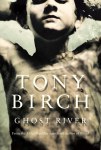
Tony Birch, Ghost riverI don’t always post the Miles Franklin Award Longlist, but having posted on the award in this week’s Monday Musings, I feel I’m on a roll! The longlist was announced the day after my post, so I thought I’d give it a couple of days before I bombarded you again!

Here is the list:

  • Tony Birch’s Ghost River (my review)
  • Stephen Daisley’s Coming rain
  • Peggy Frew’s Hope farm
  • Myfanwy Jones’ Leap
  • Mireille Juchau’s The world without us
  • Stephen Orr’s The hands: An Australian pastoral (my review)
  • AS Patrić’s Black rock white city
  • Lucy Treloar’s Salt Creek
  • Charlotte Wood’s The natural way of things

Some random observations:

  • Five of the nine longlisted books are by women writers. The Guardian, in its announcement of the award, wrote that “In 2009, the award came under fire for an all-male shortlist, but since then Miles Franklin longlists have comprised 41 women and 33 men.” This 2009 shortlist, together with a very poor showing for women over the history of the awards up to 2011, was a factor that led to the creation of the Stella Prize. Tara Moss wrote on her blog, back in 2011, that “Since the Miles Franklin Award began in 1957, a woman has won 13 times. Four times this woman was Thea Astley, but twice she shared the award. Since 2001 two women have won, from the pool of 10 awards.” Since then, as The Guardian says, women have fared significantly better, but that doesn’t mean vigilance isn’t still needed. No-one wants women to win on anything except merit. Recent pushes therefore are not about some sort of affirmative action, but about consciousness raising to ensure that biases – conscious or otherwise – don’t affect women’s writing being published in the first place or being taken seriously at awards’ time*.
  • Although on average I read more books by women than by men, I’ve only read two of the longlist and both are by men – proving that I’m not as one-sided as I might sometimes look!
  • Three of five books by women – those by Frew, Juchau and Wood – have also been shortlisted for the Stella Prize.
  • Lucy Treloar’s Salt Creek is a debut novel.

The shortlist will be announced in May, and the winner in June. As far as I can tell, no specific dates beyond that have been published, certainly not on any official sites.

* Oh, and I fully appreciate that women aren’t the only group of writers who could benefit by consciousness-raising. Indigenous writers, writers from other diverse backgrounds, experimental writers – all don’t feature well enough our major awards.

Monday musings on Australian literature: Miles Franklin Award, the first decade (1958-1967)

Miles Franklin

Miles Franklin, c. 1940s (Presumed Public Domain, via Wikipedia)

This month we expect to see the announcement of the Miles Franklin Award longlist. While it’s no longer Australia’s richest literary prize, it is still the best-known and, if you can measure such things, our most prestigious. It is managed by a Trustee using the estate left for that purpose by author Miles Franklin. It was first awarded in 1958 for a novel published in 1957. Until the late 1980s, the award was dated for the year of publication, not the year of granting the award as now.

Given that we are now in April and interest in the award will be hotting up again, I decided to potter around Trove and see what commentators and/or authors thought about it in its first decade. (See the Award’s official site if you’d like to see a complete list of winners.) My intention is not to give a potted history or a thorough analysis of the award’s early days but to share some interesting snippets which provide some insights into the life and times … Ready? Here goes …

Politics and the award

Where there’s kudos to be had, you’ll usually find a politician. It’s not surprising, therefore, that the first prize, worth £500, was given by the Prime Minister of the day, R.G. Menzies. That first winner was – fittingly, really – Patrick White’s Voss. I say fitting because White is also our first (and only to date) Nobel Prize Winner for Literature. Anyhow, The Canberra Times of 3 April reported on the ceremony:

Mr. Menzies said the novel in Australia was reaching maturity in a “turbulent activity of blossoming world literature.”

He said with the small encouragement being given by the Commonwealth literary board, “a career of art and literature” was an increasing possibility.

What do you think “turbulent activity of blossoming world literature” means? And, did careers in “art and literature” become more possible? I think the “Commonwealth literary board” refers to the Commonwealth Literary Fund, which underwent some changes in Menzies’ time.

In 1959, the award was won by Randolph Stow’s To the islands. Once again, there was a political response, albeit an indirect one. The Canberra Times of 24 April reported on Mr. Haylen (Labor MP for Parkes) speaking in the House of Representatives during the debate on the Universities Commission Bill:

He said it was a sorry state of affairs that of the 17 books that had been considered for the Miles Franklin award for 1958, only five had been printed in Australia.

The winning novel had been printed in England.

He said further assistance should go towards the establishment of a subsidised university printing press, similar to the Oxford and Cambridge University presses in England.

Fascinating. I have written before on the wonderful work done by our university presses. He also said the Commonwealth Government should support the establishment of a chair of Australian literature in every Australian university.

A posthumous award

The third book to receive the award was Vance Palmer’s The big fellow. Lisa (ANZLitLovers) has read it as part of her Miles Franklin reading project. She feels it’s not up to the standard of the first two winners, and wonders whether it was one of those lifetime achievement awards. Certainly, the Palmers were significant supporters of and contributors to Australia’s life of letters in the 1930s to 1950s.

The award was accepted by Palmer’s wife Nettie at the Adelaide Festival of the Arts, quite a contrast to the first award ceremony being “a literary gathering in the Rural Bank building” in Sydney.

Multiple wins

Patrick White Terrace

Patrick White Terrace, National Library of Australia

Several writers have won the award more than once, with two writers – Thea Astley and Tim Winton – winning four times. By the end of the award’s first decade, two writers had won it twice – Patrick White and yes, Thea Astley. In addition to his Voss win, White won the 1961 award with Riders in the chariot, and Astley won the 1962 and 1965 awards with The well dressed explorer and Slow natives.

The Canberra Times of 21 April quotes the judges on White’s Riders in the chariot:

 After reading, and re-reading this book, we have no hesitation in saying that it is a great novel, a novel that moves us to admiration for the creative impulse that has produced it. Its philosophy may not be original, but its people, their environment, and their actions are indisputably so.

They also describe what they believe to be its message, asking “is it not legitimate to expect a message from a work of this poetic and philosophical cast?” Yes, I think it is!

On Thea Astley’s second win, The slow natives, The Canberra Times of 22 April quoted the judges as saying that she was “A brilliant novelist with an inimitable style of her own”. But it was this in newspaper’s report that I found particularly interesting:

Most of the novels were well worth reading, and it was noted with interest that more writers than usual dealt with urban or country town themes, fewer with the outback and the aboriginal problem. There was more satire, more wit, and a considerable flavour of sophistication.

Noted by the judges I presume. Fewer dealt with “the outback and the aboriginal problem”. What to say to that except that it’s probably good to see writers moving onto more town and city themes than the outback, given where most people live, and, presuming that most of the writers were white, it’s also probably a positive thing that there were fewer books about “the aboriginal problem”! The thing about reading these older newspaper reports is the insight they provide into past attitudes.

The lesser-knowns

As always with awards, there are wins, like Vance Palmer’s, that haven’t remained in the public eye. I’ll share two others from the first decade. First is George Turner who shared the 1963 award with the better known Sumner Locke Elliot. Turner’s novel was The cupboard under the stairs. Once again Lisa comes to our aid with a review (and she liked this one better!). The Canberra Times wrote an article on 13 July a couple of months after the announcement. There is a reason for this belatedness. Apparently at the time of winning the award “it was impossible to obtain a copy in Australia”. Indeed, they say, “the first printing sold out so quickly that no copies ever reached Canberra”. This makes me think of MP Mr Haylen, and his desire for university presses, because Trove shows that Turner’s novel was first published in England. At least we don’t have that problem now!

The Canberra Times liked the book, which is about a farmer’s nervous breakdown. It has some faults they say, but overall “it is a compelling story, and as a study of madness it explores ground rarely covered in Australian literature.” Madness. That’s language we wouldn’t use now, isn’t it?

The other is Peter Mathers Trap, which, yes, Lisa has also reviewed. She found it hard going, but how wonderful that we have a review available online. Bloggers provide such an important service when they review older books! Thanks Lisa. Anyhow, according to The Canberra Times of 21 April, Mathers was living in London when his win was announced, and expressed surprise that he had won. Its story is pessimistic, Lisa says, pitting Melbourne’s slums and pubs against “glittering” society, and its main character, Jack Trap, is of mixed background, including indigenous Australian. Most reviewers, it seems, saw it as satire. However, Mathers, The Canberra Times says, “preferred not to call the novel a ‘satire’, but a ‘comic novel’ in the tradition of Irish writers from the 18th century down to Flan O’Brien, who died recently.” Hmm, an Australian Flan O’Brien. That has piqued my interest – in addition to the fact that I hadn’t heard of Mathers before (besides seeing him in Miles Franklin lists, that is).

… and finally

I did not specifically look for articles in The Canberra Times! It just so happens the most interesting articles that popped up in response to my search terms came from it. A comment on the quality of The Canberra Times or something to do with what papers have been digitised?

Monday musings on Australian literature: Some ad hoc awards

Okay, folks, so it’s Easter Monday here in Australia, and a public holiday. We have had family – from Melbourne and Hobart – up our way for the long weekend and so I’ve not had a lot of time to think about my Monday Musings post. However, a couple of recent literary awards have come to my attention, and are worth sharing – for different reasons.

An overseas award

We Aussies are always excited – yes, I know, cultural cringe – when one of ours wins a foreign award. It was big news when Patrick White won the Nobel Prize in 1973, and we’ve had a few Booker wins. Thomas Keneally won with Schindler’s Ark in 1982, and Peter Carey is one of the few authors to win it twice (Oscar and Lucinda in 1988, and True history of the Kelly Gang in 2001). DBC Pierre and Richard Flanagan have also won the Booker. It was big news too when Kate Grenville won the Orange (now Baileys) Prize with The idea of perfection in 2001.

And now, a couple of weeks ago, I read that Helen Garner had won an award I hadn’t heard of, the 2016 Windham Campbell Prize for Nonfiction. This prize is one of a suite of prizes established in the USA by writer and book collector Donald Windham, named for himself and his partner Sandy Campbell, who shared his passion for books. The Windham Campbell Prizes website describes the aims as being “to call attention to literary achievement and provide writers with the opportunity to focus on their work independent of financial concerns”. From what I can see on the website, the first prizes were awarded in 2013.

Helen Garner, This house of grief book cover

Courtesy: Text Publishing

As far as I can gather, each year three prizes are awarded in each of three categories: fiction, nonfiction and drama. Garner won one of the 2016 non-fiction prizes. The website describes her as one of Australia’s preeminent writers who “brings acute observations and narrative skill to bear on the conflicts and tragedies of contemporary Australian life”. The site continues that “ultimately, Garner finds truth in questions rather than in answers, in complexity rather than in simplicity, and in her own fervent belief that ‘there is something wild in humans’.” It also quotes Garner’s response to winning the award:

To be awarded a Windham-Campbell Prize for nonfiction validates in the most marvellously generous way the formal struggles that I’ve been engaged in over the past twenty years. It gives me the heart to keep going.

Not only the heart, but the money too I’m sure, as the prize is worth USD150,000. So often writers say that the money value of prizes enables them to continue writing. This should certainly do that for a year or so!

Supporting the independents

And then last week, Charlotte Wood won the overall 2016 Indie Book Awards with her latest novel The natural way of things. The debut fiction winner was Lucy Treloar’s Salt Creek, another book I need to read. These awards (there are other categories too) were created in 2008, and the winners are chosen, through voting, by independent booksellers.

My main aim in mentioning these awards, though, is to share some of Wood’s acceptance speech, which was published on publisher Allen & Unwin’s blog. It’s a thoughtful, generous speech, but its conclusion is inspired, comparing independent booksellers to global seed vaults*. She said:

In thinking about tonight, and Australia’s independent booksellers, it struck me that you are like that seed vault [the Svalbard Global Seed Vault]. You are storehouses for the kernels not only of our literary culture but our history, our music, our food culture, our health and legal and technological culture, our visual arts, our politics. You are the safety vault for the seeds of our country’s cultural and intellectual life, and your customers are the spreaders of those seeds out in the world.

A few years ago, the outlook for our independent bookselling scene looked gloomy. But like those seeds packed into the cold mountain in Norway, you have survived, you are thriving, and because of your noticing and care, your love of words and your determination to flourish, you have kept Australian literature and our culture alive and thriving too.

On behalf of us all, I thank you so very much.

What more can I say except support your independent booksellers. They are treasures.

* Reminding me, also, of Annabel Smith’s The ark (my review)

Please feel free to give a plug to your favourite independent bookseller in the comments below!

Stella Prize 2016 Shortlist

Around a month ago, I announced this year’s longlist for Stella Prize … and now I bring you the short list. It must have been such a difficult choice and I’m sure all the books longlisted deserved to be shortlisted – but there can only be 6, and here they are:

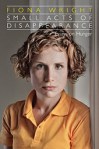
  • Fiona Wright, Small acts of disappearanceSix bedrooms by Tegan Bennett Daylight (Random House)
  • Hope Farm by Peggy Frew (Scribe)
  • A few days in the country: And other stories by Elizabeth Harrower (Text) (on my TBR – now definitely higher in my priority list)
  • The world without us by Mireille Juchau (Bloomsbury)
  • The natural way of things by Charlotte Wood (Allen & Unwin)
  • Small acts of disappearance: Essays on hunger by Fiona Wright (Giramondo) (my next read, after my current one)

These represent three novels (by Peggy Frew, Mireille Juchau and Charlotte Wood), two short story collections (by Tegan Bennett Daylight and Elizabeth Harrower), and a set of essays (by Fiona Wright). Varied as usual, but with, also as usual, an emphasis on fiction.

Brenda Walker, one of the judges, says:

A common thread I see – it doesn’t apply to every title – is some kind of vital expansion of Australian women’s literature,” she said. “You can say that Fiona Wright connects her book to Christina Stead – she writes quite a bit about Stead – and you immediately think about Barbara Baynton when looking at a few of the titles. Elizabeth Harrower is part of that literary history and there she is vivid and present. So I see this as a burgeoning of women’s literary tradition, which has often been a little bit oblique to the mainstream, canonical stuff.

Christina Stead, Barbara Baynton – both significant, and strong Australian women writers. I like the sound of this, this sense of a tradition, of writers building on those who came before – the building on, being the important thing of course.

The winner will be announced on April 19. The prize is $50,000. However, each of the shortlisted authors will now receive $2,000, and apparently a three-week writing retreat at a house in Point Addis, Victoria. Sounds like a wonderful “consolation” prize to me – and, as I reported David Malouf as saying just this week, being shortlisted is a significant achievement in terms of recognition.

The judges as I advised in my previous post are: writer Emily Maguire, memoirist/essayist Alice Pung, author/academic Brenda Walker, literary critic/author Geordie Williamson, and bookseller/founder of the Indigenous Literacy Foundation Suzy Wilson.

PS I won’t be doing long and short lists for every award that comes along, but because of my commitment to the Australian Women Writers’ Challenge, I do like to promote the Stella Prize.

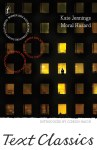
Kate Jennings, Moral hazard (Review)

Kate Jennings, Moral HazardHow often do you read a book that connects in some ways with something you’ve recently read or thought about? Kate Jennings’ award-winning Moral hazard, my latest read, links pretty directly to our discussion about autobiographical fiction in my Monday Musings post on Robert Dessaix two weeks ago. Dessaix, you may remember, criticised Garner’s The spare room (and other works) arguing she was just writing her life, but defended his own autobiographical fiction because he changed things around. Garner, though, argues that in her novels she shapes and orders, plays with time, examines motives etc. What is all this about? Why does it matter? The reverse – calling something non-fiction that is in fact fiction – does matter, I think. You all know the cases, I’m sure. But, if a writer draws from his or her life and calls it fiction, does it matter? Really, does it matter? Well, in this case it does matter, because, while Jennings is another of those writers who draws closely from her life, there are parts of the story that could be very tricky, legally, if they were, in fact, “fact”.

I’ve reviewed two of her works here before – Snake, her first work of autobiographical fiction, and Trouble: The evolution of a radical, which she describes as her “fragmented autobiography”. Jennings, like Helen Garner, is a fearless writer, and I love her for it, so when Text Classics published Moral hazard, her second novel, I was ready and waiting.

Moral hazard is about a woman whose husband is diagnosed with Alzheimer’s and who, to obtain the money needed for his care in health-care expensive USA, gets a job as speechwriter for a mid-level investment bank on Wall Street. The wife’s name is Cath (not Kate) and the husband’s name is Bailey (not Bob Cato, the name of Jennings’ husband). Kate Jennings, though, did work as a speechwriter on Wall Street. Fictional Bailey and real Bob are both artists/designers, and both men were diagnosed with Alzheimer’s, but Bailey’s end has a particular drama to suit Jennings’ purpose.

From its very start, in fact, it’s clear that Moral hazard has been carefully written and structured, despite its closeness to Jennings’ life. Take the title, for example, and its pointed word play. Economically, “moral hazard occurs when one person [or organisation] takes more risks because someone else bears the cost of those risks”. Jennings, in the Wall Street component of her novel, explores this very condition with great – should I say scary – clarity. It is particularly interesting to read her description and analysis of escalating greed, because it is set nearly a decade pre-GFC. It’s all there, though, and the cracks were showing even then. For Cath the moral dilemmas are real. Not only does she need to rationalise her personal moral values as a lefty feminist against her financial district job, but she has to be the carer (also decision maker) for her increasingly ill husband. This is complicated care that encompasses not only economic and physical demands, but also emotional, mental and philosophical. And this care also has, not surprisingly, a moral dimension.

The novel (a novella, really) is told in short chapters that alternate, though not rigidly so, between Cath’s life with Bailey and her work life. It is told first person, and Cath tells us, on the first page:

I will tell my story straight as I can, as straight as anyone’s crooked recollections allow. I will tell it in my own voice, although treating myself as another, observed, appeals.

In other words, it’s from life, but there is artifice. The novel opens with this brief introductory chapter, which is followed by a chapter describing her first meeting Mike. He also works at Niedecker Benecke investment bank, and also, like her, is a square peg in a round hole, though he’s been doing it for longer! He becomes somewhat of a teacher to her, as well as a sounding board, and a welcome like-mind.

From this set up, we flash back to Cath, her husband Bailey and his diagnosis, and we don’t return to the bank until Chapter 6. The story continues chronologically following Cath. We watch her work out how to work within the company, and we feel her pain as she tries to manage Bailey as he becomes less and less stable and predictable. Cath chronicles the hedge-fund crisis – the increasing greed, the living on (the belief in) “zero capital and infinite leverage” – in parallel with Bailey’s decline. A true coincidence, perhaps, but a writing choice too.

I loved Jennings’ writing. It’s clear and direct, but has a poetic sensibility. She describes the bank as:

a firm whose ethic was borrowed in equal parts from the Marines, the CIA and Las Vegas. A firm where women were about as welcome as fleas in a sleeping bag.

She describes the financial district, New York’s skyscrapers:

I looked at them and didn’t see architecture. I saw infestations of middle managers, tortuous chains of command, stupor-inducing meetings, ever-widening gyres of e-mail. I saw people scratching up dust like chickens and calling it work. I saw the devil whooping it up.

She sees the New York Fed, after bailing out hedge-funds, behaving “as if afflicted with Alzheimers” sticking with deregulation, letting the industry police itself, despite evidence to the contrary.

Meanwhile, Bailey’s decline is inexorable, he moves from home to an institution. He has a “living will” but it is ignored, so, she writes:

Scar on my soul be damned. He’d asked me to take care of it when the time came. Now I would. Mrs Death.

But far be it from me to spoil Cath’s story – except to say that as well as tackling Wall Street, Jennings also quietly buys into the euthanasia debate.

The good thing about Text Classics, besides their existence and excellent price, is that each classic is accompanied by a commissioned introduction. For Moral hazard it is by sport and business journalist Gideon Haigh. He concludes his introduction, which focuses on the financial aspect of the novel, with the statement that “Modern working life is replete with unpalatable compromises and perverse incentives”. Cath would probably say that this is true of life too. Moral hazard is a rare book in the way it looks not just at our contemporary globalised financial world, but more widely at work, our relationship to it, and the moral choices we make in work and in life. Drawn from life, yes, but a very worthy winner of the 2003 Christina Stead Award for Fiction!

awwchallenge2016Kate Jennings
Moral Hazard
Melbourne: Text Classics, 2015 (orig. pub. 2002)
155pp.
ISBN: 9781922182159

(Review copy courtesy Text Publishing)

Stella Prize 2016 Longlist

The announcement of the Stella Prize Longlist is a red-letter day for the Australian Women Writers Challenge … and also for me of course. So, today, I share the list with you. The shortlist will be announced on March 10.

The judges look good to me: writer Emily Maguire, memoirist/essayist Alice Pung, author/academic Brenda Walker, literary critic/author Geordie Williamson, and bookseller/founder of the Indigenous Literacy Foundation Suzy Wilson.

Alice Robinson, Anchor Point

Anyhow, here is the longlist:

  • The women’s pages by Debra Adelaide (Pan Macmillan) (I’ll be reading this soon)
  • The other side of the world by Stephanie Bishop (Hachette)
  • Panthers and the Museum of Fire by Jen Craig (Spineless Wonders)
  • Six bedrooms by Tegan Bennett Daylight (Random House)
  • Hope Farm by Peggy Frew (Scribe)
  • A few days in the country: And other stories by Elizabeth Harrower (Text) (on my TBR, and now higher in my priority list)
  • A guide to Berlin by Gail Jones (Random House)
  • The world without us by Mireille Juchau (Bloomsbury)
  • A short history of Richard Kline by Amanda Lohrey (Black Inc)
  • Anchor point by Alice Robinson (Affirm Press) (my review)
  • The natural way of things by Charlotte Wood (Allen & Unwin)
  • Small acts of disappearance: Essays on hunger by Fiona Wright (Giramondo)

As is usual for the Stella, the list include novels, short story collections (a few in fact) and non-fiction … And as is usual, I have most on my radar. I have read the first three Stella Prize winners: Carrie Tiffany’s Mateship with birds, Clare Wright’s The forgotten rebels of Eureka and Emily Bittos’s The strays. All have been excellent reads, which augurs well for my enjoyment of this year – although as we have been hearing lately past practice is no predictor of the future!

I’m sorry that this is a basic post … I am holidaying for a few days in a gorgeous Aussie country town, and am without my normal computing facilities. The iPad us not conducive to long post writing. Phew, do I hear you say?

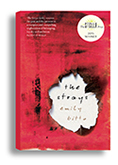
Emily Bitto, The strays (Review)

Emily BItto, The strays, book coverLet me start by saying I really enjoyed reading Emily Bitto’s The strays. It was scheduled for my reading group the day after my return from Tasmania, and I suddenly found myself in the last day of my Tasmanian holiday without having started the book. Wah! I read it in two days, helped by several hours in a couple of airports. I haven’t done that for a long time, and what a joy it was to have a real length of time to commit to a book. It helped, of course, that having both a strong plot and an intriguing set of characters, The strays is compelling to read. It reminded me, albeit loosely, of Evelyn Waugh’s Brideshead revisited and Ian McEwan’s Atonement.

This is a debut novel, which also won this year’s Stella Prize. Set primarily in the 1930s, with the last of four parts set in the 1960s, The strays is both historical fiction and a coming-of-age novel. It is also a classic outsider story. Lily, who tells the story first person, is befriended when she is 8 years old by schoolmate Eva, the middle daughter of the Trenthams who, early in the novel invite a number of artist “strays” to form a utopian-bohemian artistic community. The Trenthams are inspired by the Reeds and their Heide group, but The strays is not a Heide story*.  This may be the strength of the novel, but also perhaps its weakness – a strength because it frees Bitto to tell her own story, but a weakness because it removes potential ideas on which to hang her story.

Before I get to that, though, a little more about the story. The first three parts follow the Trenthams for 8 years, from when Lily is 8 to 16. During this time Lily becomes increasingly involved with the Trenthams, in preference to her boring, conservative, middle-class parents, eventually living with them full-time. Some members in my reading group found her parents’ relinquishing of their daughter unbelievable, but this was during the Depression, and Lily’s parents did have some problems of their own to manage. I could suspend my disbelief. From Lily’s point of view, she was in thrall to the excitement of the Bohemian life, telling her parents, “I love you both but I want to be different”.

Her parents, however, should have been concerned, because the Trenthams are rather casual, neglectful parents and the four girls more or less run their own lives, sometimes being fed properly, sometimes not, sometimes, in the case of one in particular, going to school, and sometimes not. The story is as much about them, as about the artists, though we do hear about the artists too. There’s exploration of experimental art and its acceptance or otherwise by society, obscenity charges, mentee supplanting mentor, and so on. There are parties, and other occasions, where artists and children come together. Bitto, through Lily, paints all this beautifully. Indeed, I loved her ability to evoke scenes, people and places with effective, yet tight imagery.

Bitto’s use of Lily as her narrator works nicely. Through most of the novel, we see the story through her child’s point-of-view, but occasionally, with a “later I realised” type of comment, we are reminded that this is an adult telling the story of her childhood:

When was it that I became a voyeur in their midst? I was the perfect witness, an unsuspected anthropologist disguised within the body of a young girl, surrounded by other young girls who were part of the family. Yet I was cuckoo in the nest, an imposter who listened and observed, hoarding and collecting information.

This narrative style keeps the story grounded. We see the dysfunctional dynamics and its effects before Lily, wooed by the excitement, does – though she does have moments of clarity. When the youngest daughter goes missing on one occasion, she writes:

I drew in my breath. These adults were no use in a crisis.

The subtext is that her parents would be.

But, here’s the thing. The book tackles a lot of ideas. There’s the exploration of society’s reaction to experimental art; the idea of coming to terms with the past (for Lily); the utopian artist community and whether it can really work; indulgent or neglectful parenting, creating a dysfunctional family life that comes back to bite; the exploration of girlhood friendships and the whole coming-of-age thread; not to mention those big issues like loyalty and betrayal, envy, sexuality and sensuality. It’s not that these were uninteresting, or even that they weren’t well developed. It’s more that I struggled to find Bitto’s main focus, and I guess I like some sort of central idea on which to hang my understanding of a book.

My reading technique is that when I finish a book I go back and reread the beginning. This usually puts the whole into context, pinpointing what the author was about. However, this technique didn’t work wonderfully with The strays. Bitto’s Prologue starts by discussing the mystery of instant attraction between people, and then moves on to the idea of past life connections and that people’s souls can be twinned from one life to the next. These ideas are used to explain Lily’s relationship with Eva, but I’m not sure that this is fundamental to the book’s meaning. The prologue then discusses the past. Three decades after the main events, Lily receives a letter:

and I become aware of an old compulsive pain I have pressed like a bruise again and again throughout the years.

AND

I feel a tenderness in my chest, and the past rushes in as a deluge I can no longer hold back …

AND

I let my mind turn back once more, to recreate again that distant, still wracked past.

Is it this, the idea of coming to terms with or resolving the past, that binds the book together? It is partly. By the end of the novel, Lily has come uneasily to terms with what happened those three decades ago, and its impact on her life. I say uneasily because – and here we come to the epigraph, by William Pater, which expresses a different idea again to those in the prologue: “To burn always with this hard, gem-like flame, to maintain this ecstasy, is success in life”. Lily’s uneasiness is that she has chosen “conventionality”, but recognises that part of her “is still drawn to the romance of the fully lived life”. Then we have the book’s concluding paragraphs, which are more concerned with mothering and family in Lily’s recognition that it was the Trentham children who paid the debt for their parents’ experiments. See my problem regarding central idea? Or, is it just that I’m being boringly 20th century?!

Whatever it is, they are just niggles. As a read, The strays is up there as one of my most enjoyable for the year – for its lucid writing, for the story and a setting that had such appeal, and, yes, even for that whole raft of ideas that she throws so determinedly at us. Even for that.

Lisa at ANZLitLovers enjoyed the book too.

* Interestingly, a couple of “real” people are mentioned, one being politician and later judge, Herbert Evatt – as a supporter of modern, experimental art.

awwchallenge2015Emily Bitto
The strays
South Melbourne: Affirm Press, 2014
290pp.
ISBN: 9781922213211

Mark Henshaw, The snow kimono (Review)

Mark Henshaw, The snow kimonoI wasn’t far into Mark Henshaw’s The snow kimono before I started to sense some similarities to Kazuo Ishiguro. I was consequently tickled when, about halfway through, up popped a secondary character named Mr Ishiguro. Coincidental? I can’t help thinking it’s not – but I haven’t investigated whether Henshaw has said anything about this. I’m not at all suggesting, however, that The snow kimono is derivative. It’s certainly not. It’s very much its own book, one that manages to somehow marry an Ishiguro-like “floating” and rather melancholic pace with a page-turning one. On the surface it’s a mystery story, but in reality is something far more complex. Interested? Read on …

Before I discuss the novel, though, I do want to say a little about the author who is not well known. The snow kimono is Henshaw’s second novel. His first, Out of the line of fire, was published in 1988, and was well-received critically, garnering a couple of awards. The snow kimono won this year’s New South Wales Premier’s Literary Award for fiction. Henshaw has worked as a translator, but retired in 2012 as a curator at the National Gallery of Australia in Canberra, which is where I attended the launch of this book late last year. (PS I lied a bit about this being Henshaw’s second novel. He has also written two collaborative crime fiction novels, under the name J M Calder, with another local writer, John Clanchy, whose Six I’ve reviewed here)

And now, back to The snow kimono. It is set in Paris and Japan, with a brief foray to Algeria, and spans the late 1950s to the late 1980s. It concerns the lives of a Frenchman, the retired Inspector Jovert, and two Japanese men, a former Professor of Law, Tadashi Omura, and his old schoolfriend, the writer Katsuo Ikeda. The novel has a complex structure, moving backwards and forwards in time, and between the two main storytellers, Jovert and Omura.

The story commences in Paris, 1989, with the recently retired Jovert receiving a letter from a woman claiming to be a daughter he didn’t know he had (from a relationship in Algeria some thirty years previously). Coincidentally – or is it? – he is confronted by Omura, who has his own tortuous daughter-who-is-not-really-my-daughter story. The novel comprises the stories told by these two men: Omura of his life in Osaka and friendship with the narcissistic Katsuo, and Jovert of his experience in Algeria as a French “interrogator” and of his wife and son. Early on we discover that Omura is the guardian of Katsuo’s daughter because Katsuo is in gaol for an undisclosed (until much later) crime. Complex “truths” about parents and children, and about about who is really whom, underpin the plot’s narrative. There are lies galore …

“the future changes everything”

This novel is a captivating read – for its language, story and ideas – but it demands concentration. There are many characters, and relationships can be obscure or seemingly convoluted. However, as the two men talk, we realise that, while on the surface a plot is slowly being unravelled, Henshaw’s real interests are deeper. How do you live with the lies you have kept, or told yourself? What is memory, and how does it relate to truth? How meaningful is truth at any one time when “the future changes everything”. What does this mean?

Two-thirds though the novel, Jovert reflects

that he had spent most of his life listening to people, sifting through what they said, weighing, assessing. Trying to fit things together. But life, unlike crime, was not something you could solve. What people told you was not always the truth; the truth was what you found out, eventually, by putting all the pieces together. And sometimes not even then.

This is a clue to the paradoxical nature of this novel, and to one of the reasons why it reminds me of Ishiguro. Ishiguro’s books, like Henshaw’s novel, tend to be about memory, its reliability and what it does or doesn’t tell us about who we are. Of course, memory is not an unusual theme for novelists, but it’s the tone, the use of foreshadowing, and the ground-shifting, the pulling of the rug from under us one way and then another, that connected these two authors for me.

So, in The snow kimono, it’s not only Omura and Katsuo who have been living on secrets and lies, but also Jovert. Confronted by the letter and by Omura’s challenge to him that he should meet his daughter, he starts the process of forcing “his memory to surrender what he has spent decades trying to forget”. He had seen memory as a “sanctuary” that can bind people together, but he now sees this is “an illusion”. Memories can in fact “change, be destroyed, be rewritten”, they can be “shuffled, reshuffled”. And so, the man who, during the Algerian War of Independence, had coldly and brutally encouraged others “to recall things they might have otherwise forgotten. Or said they had” now has to confront the “truth”.

The problem is that:

Memory is a savage editor. It cuts time’s throat. It concertinas life’s slow unfolding into time-less event, sifting the significant from the insignificant in a heartless, hurried way. It unlinks the chain. But how did you know what counted unless you let time pass?

Memory is not absolute. It’s mutable, shifting with time, with perspective, with maturity.

I found The snow kimono a deeply satisfying book for this very reason. It suggests that nothing is fixed and that, moreover, as Katsuo cynically says to Omura, there is no “completion”. What does all this say, though, about how we are to live, because surely, this is what the book is about.

The novel’s opening paragraph states that “there is no going back”. This idea is repeated in the narrative: Jovert states after a brutal time in Algeria that “truth can’t be undone”, and Katsuo says after other brutality that “you can’t undo what you’ve done”. However, Jovert does come to believe that “perhaps it was not too late to atone”. What do you think?

There is so much more to this book that I might be driven to write another post …

Mark Henshaw
The snow kimono
Melbourne: Text Publishing, 2014
396pp.
ISBN: 9781922182340