Prime Minister’s Literary Awards Shortlist 2025, announced

I haven’t announced the Prime Minister’s Literary Award shortlists for a few years, but for various reasons, including the fact that there is a Poetry section which works nicely with this month being National Poetry Month (see my Monday Musings), I’ve decided to share this year’s shortlists.

Creative Australia’s page for the announcement says they received “a remarkable 645 entries across six literary categories: fiction, non-fiction, young adult literature, children’s literature, poetry, and Australian history”.  The winner in each category will receive $80,000, with each shortlisted author receiving $5,000.

Fiction

  • Michelle de Kretser, Theory & practice (Text, my review)
  • Fiona McFarlane, Highway 13 (A&U, on my wishlist, kimbofo’s review)
  • Emily Maguire, Rapture (A&U, on my wishlist, kimbofo’s review)
  • Mykaela Saunders, Always will be: Stories of Goori sovereignty from the futures of the Tweed (UQP, on my TBR)
  • Tim Winton, Juice (Hamish Hamilton, on my TBR, kimbofo’s review)

Most of these books have been appearing on shortlists throughout this year, with de Kretser and McFarlane having won some of those already announced. De Kretser won the Stella, and McFarlane has won the ALS Gold Medal as well as the NSW and Victorian Premiers’ fiction awards. That’s serious recognition.

Interestingly, this year’s Miles Franklin winner, Siang Lu’s Ghost cities, is not on the list. However, I like that two short story collections have been included.

Fiction award judges: George Haddad, Chloe Hooper, Julieanne Lamond, and Stephen Romei. For the full judging panel across all categories, check the webpage linked above.

 Poetry 

  • Peter Boyle, Companions, ancestors, inscriptions (Vagabond)
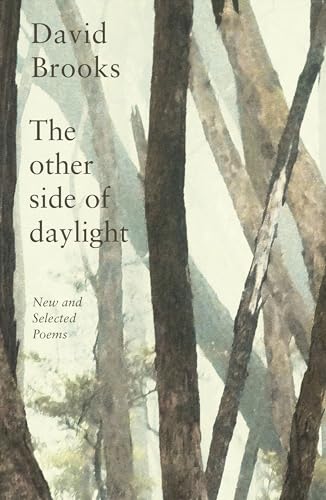
  • David Brooks, The other side of daylight: New and selected poems (UQP, a 2025 National Poetry Month Ambassador)
  • Hasib Hourani, rock flight (Giramondo)
  • Barrina South, Makarra (Recent Work Press)
  • Petra White, That galloping horse (Shearsman Books)

Nonfiction

  • James Bradley, Deep water (Hamish Hamilton, Brona’s review)
  • Adele Dumont, The pulling (Scribe)
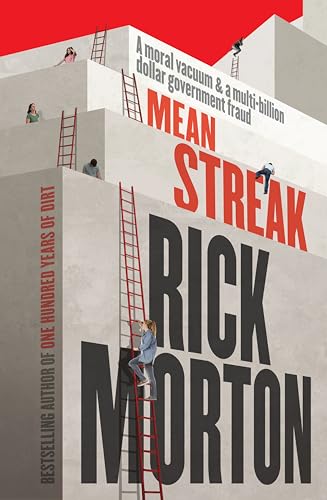
  • Rick Morton, Mean streak (Fourth Estate)
  • Khin Myint, Fragile creatures: A Memoir (Black Inc.)
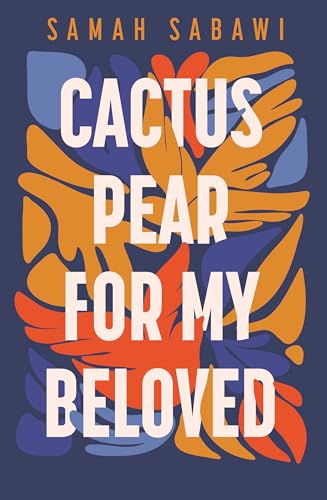
  • Samah Sabawi, Cactus pear for my beloved (Penguin)

Australian history

  • Geraldine Fela, Critical care: Nurses on the Frontline of Australia’s AIDS crisis (UNSW Press)
  • Peter Kirkpatrick, The wild reciter: Poetry and popular culture in Australia 1890 to the present (Melbourne University Publishing)
  • Amanda Laugesen, Australia in 100 words (NewSouth)
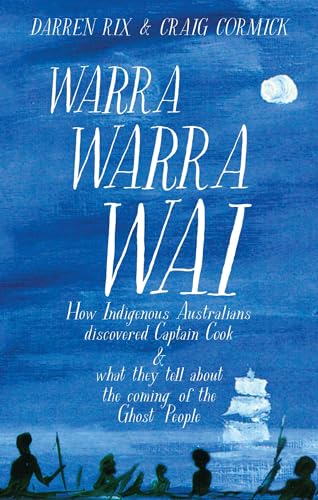
  • Darren Rix & Craig Cormick, Warra Warra Wai (Scribner, on my TBR)
  • Clare Wright, Näku Dhäruk The Bark Petitions (Text)

Children’s literature 

  • Kelly Canby, A leaf called Greaf (Fremantle)
  • Peter Carnavas, Leo and Ralph (UQP)
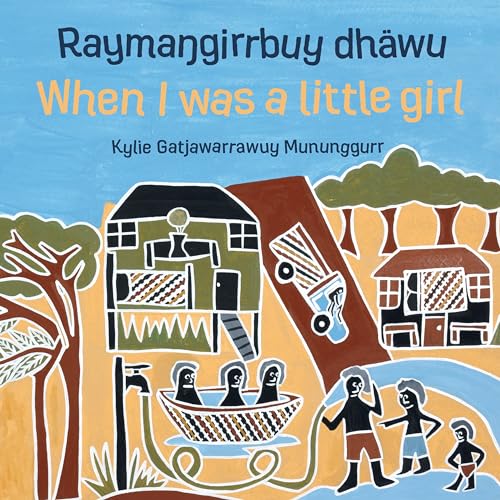
  • Kylie Gatjawarrawuy Mununggurr, Raymaŋgirrbuy dhäwu, When I was a little girl (Magabala)
  • Dave Petzold, We live in a bus (T&H)
  • Briony Stewart, Everything you ever wanted to know about the Tooth Fairy (and some things you didn’t) (Lothian)

 Young adult 

  • Sophie Beer, Thunderhead (A&U Children’s)
  • Kate Emery, My family and other suspects (A&U Children’s)
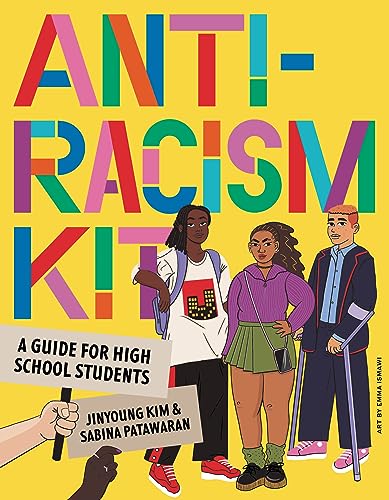
  • Jinyoung Kim & Sabina Patawaran, The anti-racism kit: A guide for high school students (HGCP)
  • Emma Lord, Anomaly (Affirm)
  • Krystal Sutherland, The Invocations (Penguin)

The winners will be announced at the National Library of Australia on 29 September, 2025.

Any thoughts?

Wayne Bergmann and Madelaine Dickie, Some people want to shoot me (#BookReview)

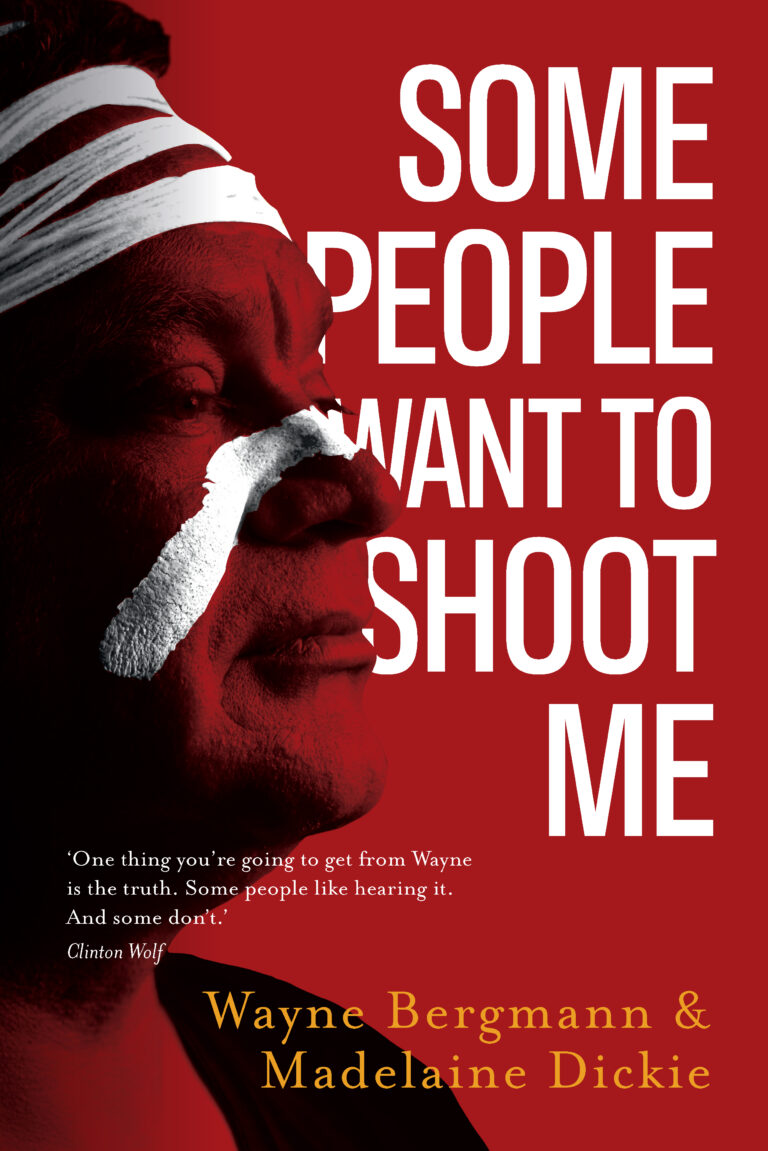
Having finally read Wayne Bergmann and Madelaine Dickie’s Some people want to shoot me, I am not surprised that it has been shortlisted in the Nonfiction category of this year’s Western Australian Premier’s Book Awards. It is moving; it is clearly written; and it is informative about big issues. Wayne Bergmann is a Nyikina* man and Madelaine Dickie a kartiya (white) woman, making this one of those collaborative novels I wrote about recently.

Before I continue, a little on its form. This is a work of nonfiction. It is essentially memoir, written in third person by Bergmann and his collaborator, Dickie. And, being a memoir, it has a specific focus. In this case, it is one underpinned by a powerful sociopolitical message concerning the right of First Nations people to survive and prosper on their own land.

“walking in two worlds”

So … Some people want to shoot me is about a man who realised he must walk in two ways – the kartiya way and the old people’s way, that is the white way and the way of his traditional culture. For his heart and soul he needed to walk the traditional ways, but in his head, seeing the suffering and the social and economic dysfunction caused by dispossession and powerlessness, he had to walk the kartiya way. The book exposes just what a tough balancing act this was – and is. It demanded (demands) strength, bravery, nous, clarity of purpose – and the support of family.

The book opens with a Prologue which sets the scene. It’s 2011 and Bergmann, who is at breaking point after years of negotiating on behalf of Kimberley Traditional Owners, walks out of a meeting with a mining company and heads, with his wife and children, back to country:

to the mighty Martuwarra, the Fitzroy River – lifeblood of Nyikina country, Wayne’s country, his children’s country – made by Woonyoomboo when the world was soft.

From here, the book starts in Chapter 1 the way memoirs usually do – at the beginning. For Bergmann, the beginning is Woonyoomboo who tasked the Nyikina people to look after country. This they did, until the arrival of white settlers in the late 19th century, when things “radically changed”. The first two chapters chronicle some of this change through the lives of Bergmann’s forbears. It depicts a world where the legacy of nuns, monks, ethnographers, pastoralists and miners “was still felt acutely”, where “frontier massacres had occurred within living memory”, and “where justice, under whitefella law, didn’t often grace Kimberly Aboriginal People”. Bergmann, who was born in 1969, saw this, felt this, and took on the pastoralists, mining companies and governments to “upend the status quo”.

Of course, such upending doesn’t come easily, and the people doing this upending aren’t always understood and appreciated, which is where we came in at the Prologue. The book details, chronologically, Bergmann’s work, from his early work with the KALACC (Kimberley Aboriginal Law and Culture Centre) and his realisation that for Aboriginal people to be empowered under Western law and able to make systemic changes, “they needed to understand the kartiyas’ law system inside out”. So, he did a law degree, and then, at the age of 33, became CEO of KLC (Kimberley Land Council) and here is where the really hard work started, and it was not pretty. It demanded every ounce of energy, intelligence and resilience, he could muster.

Bergmann had to be clear about the role, which was, as a native title representative body, “to facilitate a process and follow procedure in accordance with native law to allow Traditional Owners (TOs)” to make decisions “about their country”. This meant consulting with the TOs and ensuring they understood what they were being asked for and what was being offered. When stakes are high, emotions also run high. Some environmentalists, for example, would turn against TOs (and thus the KLC) when their views diverged, but sometimes TOs believed that some development was advantageous to their people. Then, of course, there were times TOs didn’t agreed with each other, or when there was disagreement between TOs and others in their communities. This is to be expected, of course. Do all kartiyas agree? But, it makes for very difficult times, and Bergmann was at the centre. As well as working with the relevant Kimberley TOs, Bergmann was also negotiating with the Western Australian government and, for example, the Woodside mining company, negotiating not only the actual agreements, but for money and resources to carry out consultations so that the TOs could come to the table well informed. All this is explained clearly in the book, making it well worth reading for anyone who has not followed native title cases closely. It’s both enlightening and chastening.

Bergmann made some significant deals, but it was a bruising time, so after a decade, wiser and with a clear view ahead, he moved on to establish KRED Enterprises. A charitable business, wth the tagline of “walking in two worlds”, its aim was (and is) to support cohesive Aboriginal economic development in the Kimberley, to encourage businesses run by and for Aboriginal people. The rest of the book covers Bergmann’s work – under the KRED umbrella and in other areas (including buying a newspaper, the National Indigenous Times) – all focused on the one goal, to pull his people out of poverty and disadvantage, to ensure they have the opportunities available to all Australians, and in so doing to improve their lives and outcomes. Nothing less will do.

We had to create some wealthy Aboriginal organisations, and wealthy Aboriginal people, so we could shape our own future, on our own country.

Woven through the accounts of Bergmann’s work are stories about his personal life, some good times but also the egregious attacks his wife and children faced at the height of his KLC work. We come to see the truth of Dickie’s description of him in her Introduction, as “demanding, smart, intensely political and visionary”. This is a man who puts himself on the line because he is driven to see First Nations Australians prosper.

Some people want to shoot me packs a lot into its 223 pages. That it covers so much, with great clarity and readability, is due to the writing. It’s well structured, and employs some narrative techniques, including evocative chapter titles and the occasional foreshadowing, which keep the story moving. At the end of the book is an extensive list of Works Cited and a Select Bibliography, which provide authority for what has gone before, if you need it.

Meanwhile, here are some words by another First Nations leader, Clinton Wolf:

One thing you’re going to get from Wayne is the truth. Some people like hearing it. And some don’t.

This book tells Wayne’s story, and I did like hearing it. It’s a great read about a great Australian, telling truths we all need to hear.

* First Nations cultures are orally-based, which results in inconsistent spellings when their languages are written. This post uses the spellings that Bergmann and Dickie use in their book.

Wayne Bergmann and Madelaine Dickie
Some people want to shoot me
North Fremantle: Fremantle Press, 2024
223pp.
ISBN: 9781760992378

Miles Franklin Award 2025 winner announced

The winner of the 2025 Miles Franklin Literary Award, worth AUD60,000, was announced this evening by Australian journalist Fran Kelly during her program, The Radio National Hour. And the winner is:

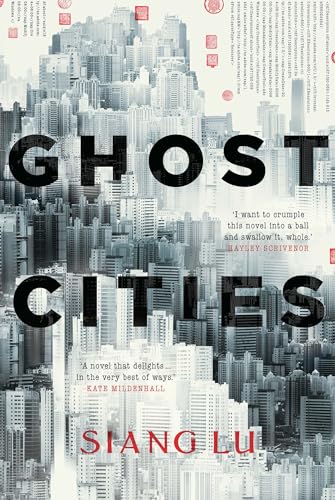
Siang Lu’s Ghost cities

Kelly described the novel as being about an “epic conquest of ancient empires and tyrannical leaders”, and also about “what is truth and power”. Also, she said, “it makes you laugh sometimes”. Ghost cities was inspired by the migrant experience, and living in a diaspora. Consequently, it “grapples with the tensions of being Chinese but not Chinese enough”. She and Lu talked a little about his experience of living in such a diaspora.

The judges described the book as “at once a grand farce and a haunting meditation of diaspora”. Lu was happy with the “grand farce” description.

Publisher UQP starts its page on the novel with this description:

Ghost Cities – inspired by the vacant, uninhabited megacities of China – follows multiple narratives, including one in which a young man named Xiang is fired from his job as a translator at Sydney’s Chinese Consulate after it is discovered he doesn’t speak a word of Chinese and has been relying entirely on Google Translate for his work.

Steinberg – see my link below – concludes his short discussion of the novel, with:

Ghost Cities both embraces and defies its emperor’s directive to abandon “the pursuit of beauty” for art that favours “furrowed brows and scholar-like interpretation”. In its zany intertextuality, it displays a level of intellectual ambition rarely found in recent fiction.

Kelly discussed the novel with Lu, teasing out many of the ideas raised in the above descriptions, and in a review of the novel by Tara June Winch (which had, apparently, made Lu cry!) I didn’t capture it all for my post, but Australians, at least, will be able to listen to this interview on the program’s podcast. However, I did like Lu’s final comment regarding current concerns about the impact of AI on writing (and on the arts in general). He said that “if authors imbue their life and soul into their work, that’s the lodestar, and is something AI can’t replicate”. I love his confidence – and surely he’s right (for a while at least)?

To recap, the shortlist

  • Brian Castro, Chinese postman (Giramondo) (on my reading group’s 2025 schedule) (Lisa’s review): Castro has been shortlisted for the MF before
  • Michelle de Kretser, Theory & practice (Text Publishing) (my review): de Kretser has wont MF twice before, and this book won this year’s Stella Prize
  • Winnie Dunn, Dirt poor islanders (Hachette Australia) (review coming next week): debut novel by a Tongan-Australian writer
  • Julie Janson, Compassion (Magabala Books): sequel to Benevolence, which I reviewed; Janson’s author’s first shortlisting for the MF
  • Siang Lu, Ghost cities (UQP): Lu’s first shortlisting for the MF – and now on my TBR!
  • Fiona McFarlane, Highway 13 (Allen and Unwin) (kimbofo’s review): McFarlane has been shortlisted before, but for a novel; this book straddles the short story/novel divide. I’m keen to read it.

For a succinct discussion of the shortlist, you could check out the one posted at The Conversation, by Western Australian postdoctoral fellow, Joseph Steinberg. But there are others.

To recap, winners since 2020

To put this in context, I thought it would be interesting to share the winners, since 2020:

All women writers, and encompassing diverse backgrounds. Now, for the first time since 2016 (AS Patrić’s, Black rock white citymy review), we have another book by a male writer. Interestingly, like that 2016 winner, it’s a book inspired by migration.

This year’s judging panel comprised Richard Neville (Mitchell Librarian, the State Library of NSW and Chair), Associate Professor Jumana Bayeh (literary scholar), Dr Mridula Nath Chakraborty (literary scholar and translator), Professor Tony Hughes-d’Aeth (literary scholar and author) and Professor Hsu-Ming Teo (author – of Love and vertigo, among other books – and literary scholar).

A big congratulations to Siang Lu. I have been toying with buying this book, particularly because I’d heard it has a humorous element. After all, it was listed for the Russell Prize for Humour Writing, and the VPLA John Clarke Humour Award (see my post on Humour Writing prizes). A big plus for me.

Thoughts anyone?

Monday musings on Australian literature: Prizes for Humour Writing

There are not, apparently, many prizes for humour writing around the world, but we have two here in Australia, the Russell Prize and the John Clarke Prize. Those from other countries include the Bollinger Everyman Wodehouse Prize (UK), the Thurber Prize for American Humour, and the Leacock Memorial Medal for Canadian Humour. Do you know them? I’d be interested to know of your experience with them, but meanwhile, I’ll move on to the two Australian ones I’m featuring today.

Russel Prize for Humour Writing

According to the Prize website, this prize was established through a bequest from farmer and businessman Peter Wentworth Russell. Its aim is to “to celebrate, recognise and encourage humorous writing, and to promote public interest in this genre”. Established in 2014, it was the first award to recognise the art of humour writing in Australia and, argues the website, makes “a long overdue acknowledgment of the genre” here. They believe it will “promote public interest in humour writing just as its prestigious international counterparts have done”.

The prize is awarded biennially by the State Library of New South Wales, and the winner receives $10,000.

Associated with this award is a second prize, a Humour Writing for Young People Award for “a work promoting humour and championing laughter”. It is aimed at primary school level readers (5-12 years) and “recognises the role of humour in encouraging children to read”. The winner of this award receives $5,000. I love the spirit behind this.

Past winners

A full list of the winners and shortlists can be found at Wikipedia, but here are the winners to date:

  • 2015: Bernard Cohen, The antibiography of Robert F. Menzies (Fourth Estate)
  • 2017: Steve Toltz, Quicksand (Simon and Schuster) (my review)
  • 2019: David Cohen, The hunter and other stories of men (Transit Lounge)
  • 2021: Nakkiah Lui, Black is the new white (Allen and Unwin)
  • 2023: Martin McKenzie-Murray, The speechwriter (Scribe)
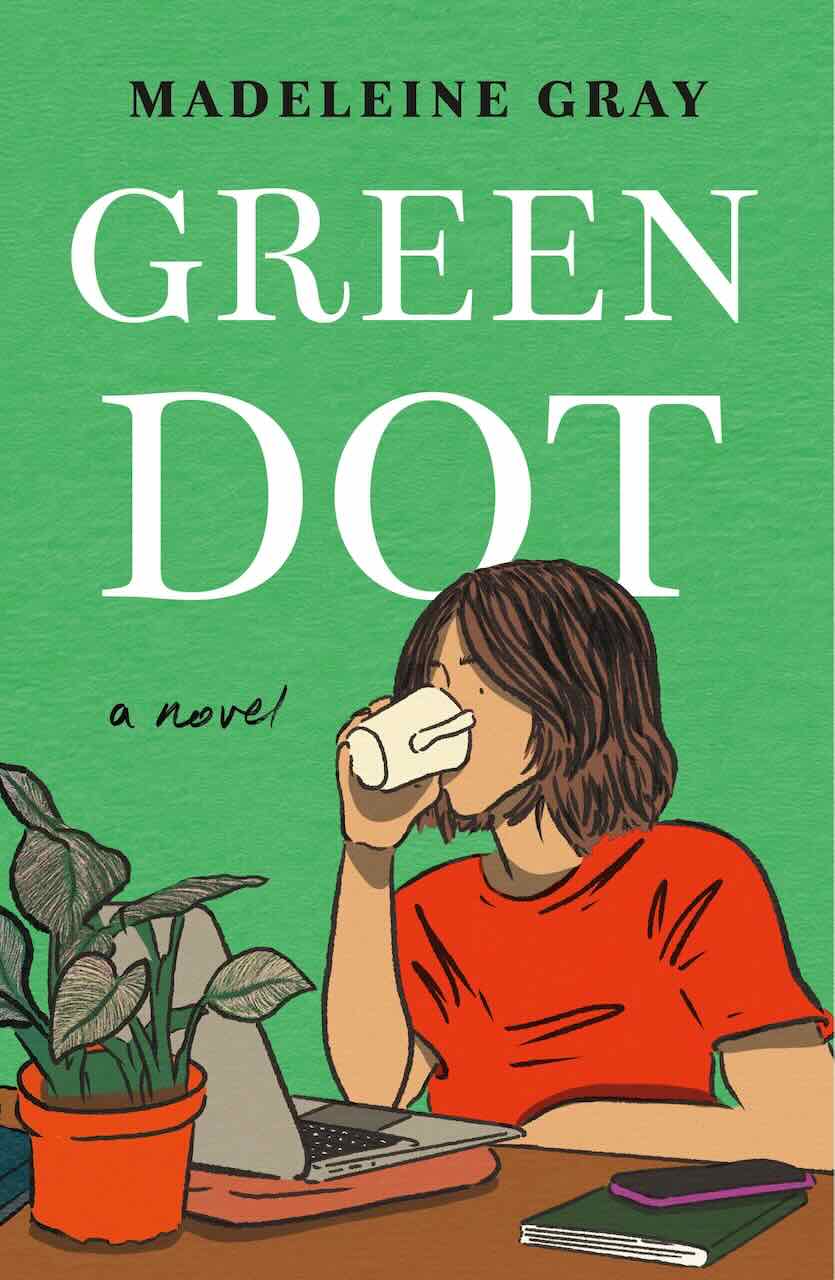
  • 2025: Madeleine Gray, The green dot (Henry Holt) (Theresa’s review) : “brings a new complexity to the genre sometimes called ‘rom-com’. It’s sweet but also sour. It’s terrifically funny as well as Anna Karenina sad … hilarious about the tedious realities of the modern workplace” (excerpted from the judges’ comments)

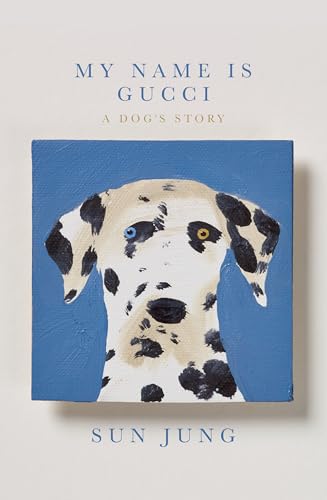
Writers shortlisted for this award over the years include some I have read and posted on, such as Trent Dalton for Boy swallows universe (my review), Chris Flynn’s Mammoth (my review) and Sun Jung, My name is Gucci (my review). They also include other writers I know or have reviewed or mentioned, just not their shortlisted books, like Annabel Crabb, Tracey Sorenson, Ryan O’Neill and Siang Lu. And, of course, there are new writers that I’m really pleased to hear about.

John Clarke Prize for Humour Writing

The second award is very new one. Titled the John Clarke Prize for Humour Writing, it is named for Australia’s much loved satirist and writer, John Clarke (1948–2017). It has been added to the suite of Victorian Premier’s Literary Awards, so will presumably be made annually. The award, which was established by the Victorian Government and the Clarke family, was open in its first year to books of comedic fiction, nonfiction and poetry published in 2023 and 2024. It offers a cash prize of $25,000.

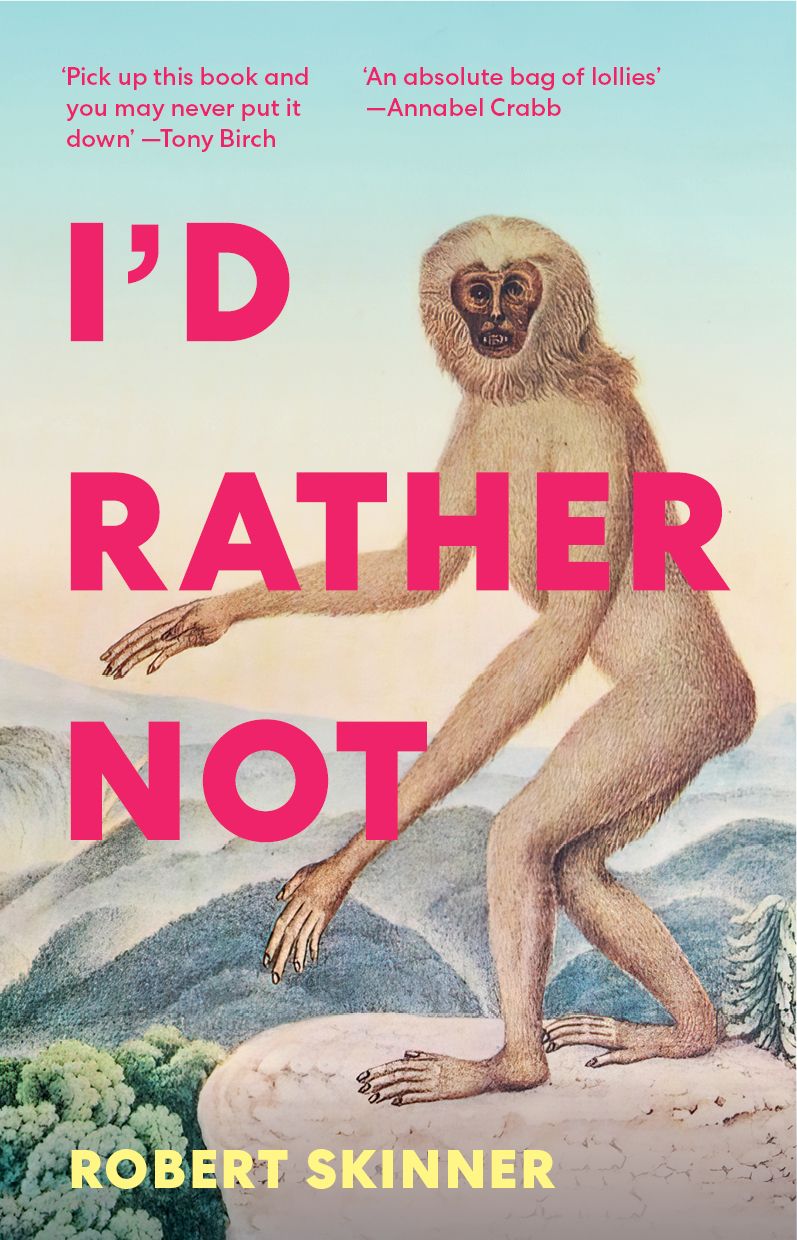
The first award was made this year, 2025, and it went to Robert Skinner’s I’d rather not say. I gave this to Son Gums for his birthday this year, but I’m not sure he’s read it. I certainly haven’t, though I’d like to. However, kimbofo has (her review). She comments that Skinner “knows how to craft a compelling narrative using jeopardy, self-deprecating humour and a deft turn of phrase”. This just makes me more keen. She also says that it was shortlisted for the Small Publishers’ Adult Book of the Year (in the 2024 ABIAs) and that The Guardian named it one of the Best Australian Books of 2023.

This award, as both the Clarke family and the Wheeler Centre’s CEO have been quoted as saying, is “a fitting tribute” to one of our greatest satirists. They hope it will help the careers of future humour writers. It will certainly help Skinner, whom the ABC reports as saying:

“When you’re writing in Australia, in the back of your mind, the question is always, How long can I keep affording to do this?” he says.

“And now the answer is: slightly longer.”

Echoing, in other words, what many authors say about awards with a decent cash prize. It buys them time.

I enjoy humorous writing, particularly at the satirical end of the spectrum, so I love that there are some awards aimed at supporting this sort of writing. I fear there’s almost a natural tendency in readers to equate better with serious, but that is not necessarily the case.

So now, my question to you is: Do you know of any other awards for Humour Writing, and, regardless, do you like Humour Writing? I’d love to hear anything you’d like to share about this.

Monday musings on Australian literature: Collaborative story-telling between First Nations Australian and white writers

National NAIDOC Logo (2025)

NAIDOC Week 2025 started yesterday, and as I have done for many years now, I am devoting my NAIDOC Week Monday Musings to celebrating First Nations writers in some way.

This year is a particularly special year because it marks NAIDOC Week’s 50th anniversary, 50 years it says, “of honoring and elevating Indigenous voices, culture, and resilience”. The 2025 theme is “The Next Generation: Strength, Vision & Legacy,” and is intended to celebrate not only past achievements achievements, “but the bright future ahead, empowered by the strength of our young leaders, the vision of our communities, and the legacy of our ancestors”. 

.Now, over the years, I have written posts on a wide range of First Nations writing and storytelling, was wondering what to write about this year, when a couple of weeks ago this idea of collaborative writing projects popped into my head because I’ve come across a few in the last few years. Then, at the ACT Literary Awards last Thursday night, another such collaboration was not only shortlisted but won the Nonfiction award. The book is Warra Warra Wai: How Indigenous Australians discovered Captain Cook & what they tell about the coming of the Ghost People, and is by Darren Rix and Craig Cormick. That sealed the deal!

In the introduction to this book, Darren and Craig, the names they use to sign off the Introduction, say that:

This book has been a blackfella-whitefella collaboration, because too much of our history has been written by one voice only, and we need to find more collaborative ways to tell our past, present and future.

I would love to discuss all the collaborations I’m going to share in this post – including researching how the collaborations worked, who did what, and how differences (if any) were resolved – but that would be a big project. I have, however, met some of the writers involved, and have followed some of the projects on social media, so I am aware of some of the processes the writers followed. For now, though, I will share what Darren and Craig say in their Introduction:

In this collaboration, we each worked to our strengths. Craig did most of the work in the archives, and Darren did most of the oral interviews – and the people we talked to got the final say on the text. The stories we gathered belong to the individuals and communities we visited. This is their book.

Selected list of collaborative books

This list is presented in alphabetical order by the name of the first author listed on the title. I did think about dividing it into two lists – one fiction, one nonfiction – but decided that all these books aim to share truths about our society and culture, whether told within a factual or imaginative framework, so one list it is. (Links on authors’ names are to my posts on that author.)

There has been a lot collaborative publishing in the children’s literature sphere, over a significant period of time, but I’ve been less aware, until relatively recently, of similar activity in the adult sphere.

Wayne Bergmann and Madelaine Dickie, Some people want to shoot me (memoir, Fremantle Press, 2024, on my TBR): shortlisted for Nonfiction Book of the Year in the Western Australian Premier’s Book Awards.

Craig Cormick and Harold Ludwick, On a barbarous coast (historical fiction, Allen & Unwin, 2020, my review): a re-imagining of what happened when Captain Cook’s Endeavour was wrecked off the coast of Far North Queensland.

Aaron Fa’Aoso with Michelle Scott Tucker, So far, so good: On connection, loss, laughter and the Torres Strait (memoir, Pantera Press, 2022, Bill’s review): apparently the first memoir by a Torres Strait Islander to be commercially published, which means it addresses “the under-representation of Torres Strait Islander perspectives in Australian life”. You can read more about it on Tucker’s website.

Aaron Fa’Aoso and Michelle Scott Tucker with Lyn White, Spirit of the crocodile (YA fiction, Allen & Unwin, 2025, on my TBR, Bill’s review): a coming-of-age novel set against the challenges to the Saibai island community of climate change.

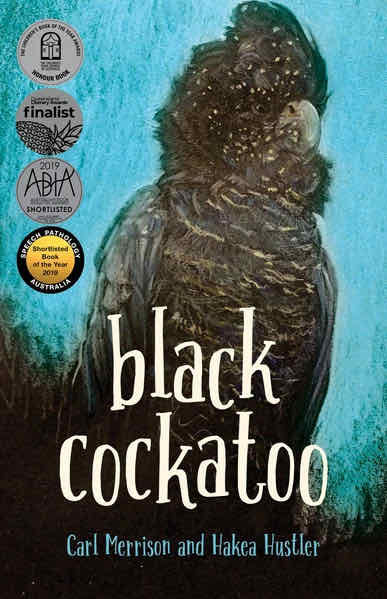
Carl Merrison and Hakea Hustler, with Dub Leffler (illus.), Black cockatoo (YA fiction, Magabala Books, 2018, my review): pleasingly, this book was in my Top 10 visited posts last year, and is in the Top 20 this year to date.

Boori Monty Pryor and Meme McDonald, Maybe tomorrow (memoir, 1998, my review): one of the first books I reviewed on this blog. Pryor has focused much of his life’s work on helping young people feel strong in their culture.

Boori Monty Pryor and Jan Ormerod, Shake a leg (Children’s picture book, Allen & Unwin, 2010): one of several children’s book collaborations involving Boori Monty Pryor.

Darren Rix and Craig Cormick, Warra Warra Wai: How Indigenous Australians discovered Captain Cook & what they tell about the coming of the Ghost People (history, Scribner, 2024, on my TBR): follows Cook’s journey up “Australia’s” east coast, visiting the places he renamed and gathering the local people’s stories.

Nicolas Rothwell and Alison Nampitjinpa Anderson, Yilkari: A desert suite (“unclassifiable” but fiction, Text Publishing, July 2025, on my TBR)

As the word “selected” conveys, this is not intended to be a comprehensive list, but an introduction to the range of collaborative writing that’s been happening. However, I (and readers of this blog I’m sure) would love to hear of other First Nations-settler collaborations, including from other parts of the world.

Click here for my previous NAIDOC Week-related Monday Musings.

Have you read any First Nations-white writer collaborations? And if so, care to recommend any?

ACT Literary Awards 2025

Last night, I attended the presentation of the ACT Literary Awards (which I have attended for the last couple of years). These awards are made by Marion (previously, the ACT Writers Centre), and this year’s event was MC’d again by Katy Mutton and Board Chair, Emma Batchelor. These awards were also framed as kicking off Marion’s 30th birthday celebrations, which is perhaps why the dress code was marked as “Smart Casual – With Flair”! For a bit of flair, I wore my gold-coloured sneakers!

This year the awards were held, not in the Canberra Contemporary Art Space where it had been held for the last couple of years, but in one of Canberra’s iconic buildings, the Shine Dome (which houses the Australian Academy of Sciences). (The Academy was one of the sponsors. Others included the Anderson Pender Foundation, Harry Hartog Bookseller, She Shapes History, Pulp Book Cafe, and the much appreciated Big River Distilling which provided gin for the evening!)

As last year, the event had a lovely relaxed informality, but the main aim of celebrating local authors and the writing community was still front and centre.

Also, as last year, the evening opened with a “rite of passage” offered by local Ngunawal elder, Wally Bell. At the end of the rite, which involves asking for permission to be on another’s country and to use that country whilst there, he told us that the spirit of the land would look after us, but that we have the reciprocal responsibility to respect and care for the land and for other people.

Following this, Michael Petterrsson, MLA, who is, among other things, Minister for Business, Arts and Creative Industries, addressed the gathering on behalf of the ACT Government.

But now, the awards…

Marion offers and/or administers a number of awards, including their own in the four major areas of Poetry, Nonfiction, Children’s and Fiction. Winners in these four categories receive $500 each. As I noted last year, they accept both self-published and traditionally published works.

The judges were:

  • Poetry: Paul Hetherington, Maya Hodge
  • Nonfiction: Katrina Marson, Shannyn Palmer
  • Children’s literature: Jacqueline de Rose-Ahern, Will Kostakis
  • Fiction: Adrian Caesar, Ayesha Inoon

More information on the awards can be found on Marion’s website (linked above).

As I didn’t share the shortlists for these awards, I am listing them, highlighting the winners in bold.

Poetry

  • Barrina South, Makarra (Recent Work Press) (WINNER)
  • Lucy Alexander, Equations of Breath (Recent WorkPress)
  • Jen Webb, The Daily News (Recent Work Press)
  • Elfie Shiosaki, Refugia (Magabala Books) (HIGHLY COMMENDED)

Nonfiction

  • Melissa Bray, Australian Carillonists: HIGHLY COMMENDED (Self-published)
  • Hilary Caldwell, Slutdom (UQP)
  • Vesna Cvjetićanin, An unexpected life: WINNER (Self-published)
  • Theodore Ell, Lebanon Days (Allen & Unwin)
  • Helen Ennis, Max Dupain: A portrait (HarperCollins Australia)
  • Darren Rix and Craig Cormick, Warra Warra Wai (Scribner Australia): WINNER (Traditionally published)
  • Ben Wadham and James Connor, Warrior soldier brigand (MUP)

Children’s literature

Children’s literature is big in Canberra, with many excellent writers working in this sphere, so again we had two shortlists, one for Younger and one for Older readers.

Shortlist, Younger readers:

  • Lisa Fuller and Samantha Campbell (ill.), Big, big love (Magabala Books): WINNER
  • Tania McCartney, Flora, (NLA Publishing): HIGHLY COMMENDED
  • Maura Pierlot and Jorge Garcia Redondo (ill.), Alphabetter (Affirm Kids)
  • Stephanie Owen Reeder and Cher Hart (ill.), Sensational Australian animals (CSIROPublishing): HIGHLY COMMENDED
  • Sarah Watts and Aleksandra Szmidt (ill.), Marvellous Miles (Little Steps Publishing)
  • Rhiân Williams, Heather Potter, and Mark Jackson (ill.) One little dung beetle, (WildDog Books)

Shortlist, Older readers:

  • Sandra Bennett, Tracks in the Mist: the Adamson Adventures 4
  • David Conley, That book about life before dinosaurs
  • Jackie French, Tigg and the Bandicoot Bushranger (HarperCollins Australia): WINNER (Middle Grade)
  • James Knight, Spirit of the warriors
  • Gary Lonesborough, I’m not really here (Allen & Unwin)
  • Gabrielle Tozer, The unexpected mess of it all (HarperCollins Australia): WINNER (YA fiction)

Fiction

  • Jackie French, The sea captain’s wife (HarperCollins Australia): HIGHLY COMMENDED
  • Emma Grey, Pictures of you (Penguin Books Australia)
  • Julie Janson, Compassion (Magabala Books): WINNER
  • Inga Simpson, The thinning (Hachette Australia)

Other awards

Other awards were made during the evening, most of them in the first half of the evening, before the above-listed book awards. These other awards are mostly administered by Marion but are made in partnership with other trusts or organisations.

Anne Edgeworth Emerging Writers Award

Provided annually by the Anne Edgeworth Trust, this award is for emerging writers. This year’s was shared between three writers – Elisa Cristallo, Matthew Crowe, Deborah Huff-Horwood. It provides some funding to help recipients progress their work, through, for example, a mentorship, a writer’s retreat, or the services of an editor.

June Shenfield National Poetry Award

This is the only national award made by Marion. It was established in memory of the poet June Shenfield, and “aims to encourage the writing, publishing, and reading of poetry, specifically among emerging Australian poets”.

  • Michael Cunliffe , “Chrome [Ampeybegan Part II]” (QLD)
  • Krystle Herdy, “a metabolism of self” by (VIC): WINNER
  • Hugh Leitwell, “Synemon selene (Victorian form)”: (VIC)
  • Hannah McCann, “Funambulist” (VIC)
  • Josephine Shevchenko, “Building” (ACT): 3rd PLACE
  • Josephine Shevchenko, “Advice” (ACT)
  • Elizabeth Walton, “This is a recipe” (NSW): 2nd PLACE

Finding Beauty Poetry Prize

This new prize for emerging poets was established in memory of Roger Green. An environmental advocate, writer and editor, lover of poetry, and thinker, he believed that beauty had the power to alleviate fear and hardship, and to provide hope and inspiration. The theme this year was “Finding Beauty in Nature”. The winner received $5000, and the runner-up $2000.

  • Alisha Brown, “As a matter of great importance”: WINNER
  • Cate Furey, “Rosalie”: HIGHLY COMMENDED
  • Annie O’Connell, “;
  • Sara Pronger, “Still Green”

Canberra Airport Recognition Award for Literacy Inclusion

This new award (worth $2000) is sponsored by the Canberra Airport and “celebrates individuals, organisations, or initiatives that have made a significant contribution to advancing literacy and inclusion in the ACT region”. It is open to educators, writers, community leaders, publishers, librarians, or grassroots programs whose work demonstrates a deep commitment to inclusive literacy and social impact.

The inaugural winner – a popular one – was Danny Corvini who is behind the new-ish (it is now up to its 8th edition) queer magazine, Stun. You can read more about the magazine, its makers and their work at Stun‘s website.

The Marion Halligan Award

The Marion Halligan Award honours the life and work of the late Marion Halligan, and aims to recognise “works that demonstrate uniqueness, literary excellence, and/or surpass genre boundaries”.

This year’s award was announced by Marion’s young grandson, Edgar, and it went to Tania McCartney for her book Flora: Australia’s most unusual plants. She was clearly surprised and deeply moved by receiving this award in the name of Canberra’s beloved Marion! Tania has a large body of gorgeous work for children behind her and well-deserves this award.

Lifetime Membership Awards

These awards were made to our local heroes who have made longterm contributions to and support for writing and literary culture in the ACT. Recipients were the authors, Nigel Featherstone (my posts) and Irma Gold (my posts), and booksellers/book industry people (plus retiring Marion board members), Katarina Pearson and Deb Stevens (who is also in my reading group. Go Deb).

Canberra (the ACT) is a small jurisdiction, but, as I wrote last year, it has an active, engaged and warm literary community, encompassing writers across all forms and genres, of course, but also publishers, booksellers, sponsors, arts administrators, academics, journalists, and more. All were well in evidence despite the chilly july evening. We were also treated during the evening to a reading of the winning Finding Beauty poem by the poet Alisha Brown, a short performance by local slam poet Andrew Cox, and a video greeting complete with entertaining poem from the travelling-Craig Cormick (my posts) who was one of the originators of Marion 30 years ago.

Another joyful evening spent amongst people who love our literary culture.

Elizabeth Strout, Olive Kitteridge (#BookReview)

Elizabeth Strout’s Pulitzer prize winning novel Olive Kitteridge has been around for 17 years, but it’s only now that I have managed to read it. And that’s because my reading group scheduled it as our June read. It’s not that I didn’t want to read it – I really did – but other books kept getting in the way. I realise now that I should not have let that happen because Olive Kitteridge is a wonderful read.

Now, how to describe it? The first thing is its form. It’s more like a collection of linked stories, or what its Wikipedia article calls a short story cycle. Although I’ve read many linked short story collections, I haven’t come across this term before. I’d like to explore it some time, but not now, because I’m keen to talk about the book. I will say, though, that some in my reading group found the episodic form somewhat disconcerting at first. However, despite this, almost all of us thoroughly enjoyed the book. Why? Well, as it turned out, the form is partly what makes it such a strong and moving read.

As most of you will know, the novel is set mostly in the late 20th and very early 21st centuries in the fictional small-town of Crosby, in coastal Maine. It comprises 13 chapters – or stories – that explore the life of retired schoolteacher Olive Kitteridge and her relationships with family and friends. In some of the chapters Olive is front and centre, but in others she makes a cameo appearance, sometimes just as a passing reference. The end result is as much a picture of a small town as it is of Olive, though Olive is our lynchpin. As one of my reading group members said, her question as she read each story was, “Where’s Olive?”

everyone thinks they know everything and no one knows a damn thing. (“River”)

So, while my reading group talked about the form and the gorgeous writing, we mostly focused on the picture painted of a small town – which, said one, provides an antidote to the “apple-pie” image we typically get of small-town America – and on the character of Olive. She is complex and not easy for readers to like, but we found her real, and most of us did like her. The opening story, “Pharmacy”, doesn’t pull any punches in its depiction of Olive. She comes across as curmudgeonly, uncompromising. She is cutting about her husband Henry’s new young pharmacy assistant and unwilling empathise with her. She is prickly and vengeful with her son’s new bride, Suzanne (“A Little Burst”), while Bob in “Winter Concert” wonders how Henry can “stand” her.

However, there are many occasions where Olive is kind and compassionate, where she sees need in others and helps or offers to help, where, as Henry describes it, “all her outer Olive-ness” is stripped away. For example, ex-student Julie remembers Olive telling a class

“Don’t be scared of your hunger. If you’re scared of your hunger, you’ll just be one more ninny like everyone else.” (“Ship in a bottle”)

And Rebecca recollects Olive saying to her at school, “if you ever want to talk to me about anything you can” (“Criminal”). Olive also quietly talks a young man, an ex-student, down from suicide (“Incoming tide”) and she and the truly “nice” Daisy try hard to help the young anorexic Nina (“Starving”).

Olive, too, can be insightful. In “Security”, for example, we read that sometimes she had “a sense of just how desperately hard everyone in the world was working to get what they needed”. And she suffers, especially from a “rupture” with her beloved son, and from grief over husband Henry’s massive stroke.

So, what we have is a character who can be tough and acerbic – even engage in a little schadenfreude – but also be sensitive and empathetic. This led me to see the book as being about more than a picture of a small town, much as that is a central and engaging part of it. The form – the interconnected short stories about life in the town – supports this view of the novel. However, this form also supports another way of looking at it, one encompassing something fundamental about our humanity.

In each story, we see characters confronting some crisis or challenge in their lives – some big ones, some quieter ones. We never see these stories fully through. They are vignettes, even those featuring Olive. This made me think about how little we know others, and perhaps even ourselves? We never fully know what others think of us, or what impact we have on others, but in this book – largely because of its form – we do see, for example, how Olive is, or has been, viewed or remembered, both positively and negatively. No one perspective is right, but each contributes to a picture of a person. This is how life goes. We see little parts of people’s lives, and sometimes we are little or big parts of people’s lives, but what do we truly know?

A bleak interpretation of this could be that it exposes our essential aloneness, but a more positive perspective is that it reminds us that we are all “real” people with good and bad, hard and soft selves. Books like Olive Kitteridge encourage us to look around corners, to not take one aspect of a person at face value, to be generous to others and ourselves. It also reminds us that we never stop learning about ourselves (or others). Certainly, at the end of this book, Olive, in her early 70s, is still discovering things about herself and her feelings. She isn’t giving up, no matter how tough things have become.

In my group’s opening discussion, I said that I thought the novel offered many truths, albeit often uncomfortable ones. For example, in “Tulips”, which is a story about things going terribly wrong, Olive reflects, “There was no understanding any of it”. But, my favourite occurs in “Security”, when some rapprochement is being made with her son, and Olive thinks

whatever rupture had occurred… It could be healed. It would be leaving its scars but one accumulated these scars.

One surely does!

There’s so much more to talk about in this book – the spot-on descriptions, the quiet humour, the many beautifully wrought characters and their trials, and the political references such as to 9/11 and George W Bush which provide context. But the main story is the human, the personal. The novel closes with Olive reflecting deeply on her life and her choices, on how much had been “unconsciously squandered”. She realises that, while

It baffled her, the world. She did not want to leave it yet.

I love getting inside the heads of characters like Olive, and so I loved Olive Kitteridge. I’ll be reading more Strout I’m sure.

Brona and Kate both read and enjoyed this long before I did!

Elizabeth Strout
Olive Kitteridge
London: Simon & Schuster, 2008
270pp.
ISBN: 9781849831550

Miles Franklin Award 2025 shortlist

For some reason, I haven’t posted on the Miles Franklin Award shortlist for a few years, probably partly due to timing because I often travel in the southern hemisphere winter. However, I have time to post on this year’s shortlist that has just been announced, and, what’s more, I have read or will read more of this list than I have for some time. I find the list exciting, mainly because all have caught my attention – though I’ve not read them – before they were listed. That hasn’t always been the case recently.

The shortlist

  • Brian Castro, Chinese postman (Giramondo) (on my reading group’s 2025 schedule) (Lisa’s review): Castro has been shortlisted before
  • Michelle de Kretser, Theory & practice (Text Publishing) (my review): de Kretser has won twice before, and this book recently won the Stella
  • Winnie Dunn, Dirt poor islanders (Hachette Australia) (on my reading group’s 2025 schedule): debut novel by a Tongan Australian writer
  • Julie Janson, Compassion (Magabala Books): sequel to Benevolence (my review); this author’s first listing
  • Siang Lu, Ghost cities (UQP): Lu’s first shortlisting for the MF
  • Fiona McFarlane, Highway 13 (Allen and Unwin) (kimbofo’s review): McFarlane has been shortlisted before; but this book straddles the short story/novel divide. I’m keen to read it.

Some random observations:

  • Five of the six shortlisted writers are writers of colour, reflecting the increasing diversity in Australian publishing.
  • Two of the shortlisted writers – Castro and Lu – are male, but a male writer has not won since 2016 (AS Patrić’s, Black rock white city – my review).
  • “Each of the six books investigates race, class and gender in contemporary Australia but in different ways. It’s very hard to compare books like Ghost Cities and Dirt Poor Islanders because they’re written in such distinct ways, but they both encourage us to think about narrative and who owns stories” (from Sarah L’Estrange of the ABC).
  • One of the books, Highway 13, is more like a short story collection, and others are “quite formless”, says Declan Fry (of the ABC) who approves the trend.
  • There’s a wide spread of publishers, including a few independent Australian ones, which is always good to see as these small publishers do the hard yards with our literary writers

For more discussion by the ABC RN’s book people – on the shortlist and on each of the books – check out this page.

For posterity’s sake, here was the longlist

  • Brian Castro, Chinese postman
  • Melanie Cheng, The Burrow (my review)
  • Michelle de Kretser, Theory & practice
  • Winnie Dunn, Dirt Poor Islanders
  • Julie Janson, Compassion
  • Yumna Kassa, Politica (on my TBR)
  • Siang Lu, Ghost Cities
  • Fiona McFarlane, Highway 13
  • Raeden Richardson, The degenerates (Lisa’s review)
  • Tim Winton, Juice (kimbofo’s review

Each of the shortlisted writers will receive $5000 from the Copyright Agency’s Cultural Fund, with the winner receiving $60,000 prize.

This year’s judging panel comprises Richard Neville (Mitchell Librarian of the State Library of NSW and Chair), Associate Professor Jumana Bayeh (literary scholar), Dr Mridula Nath Chakraborty (literary scholar and translator), Professor Tony Hughes-d’Aeth (literary scholar and author) and Professor Hsu-Ming Teo (author and literary scholar).

ArtsHub, from which I drew the names on the judging panel, quotes the judges as saying:

“The shortlist for the 2025 Miles Franklin Literary Award celebrates writing that refuses to compromise. Each of these works vitalises the form of the novel and invents new languages for the Australian experience.”  

“Vitalises the form of the novel” and “invents new languages for the Australian experience” sound positive to me. Finding language for our experience is the issue, many of you will recognise, that I’ve found constantly in my Trove searches about Australian literature. It’s something that should never stop. As our society changes (its makeup for a start), so does our culture, and so also should the language we use to explore and reflect that.

The winner will be announced on 24 July

What do you think of the shortlist?

Percival Everett, James (#BookReview)

Well, let’s see how I go with this post on Percival Everett’s Pulitzer Prize winning novel James. I read all but 30 pages of this novel before my reading group’s meeting on 27 May. I was not at the meeting as I was in Far North Queensland, but I wanted to send in some notes, which I did. The next day, our tour proper started and I did not read one page of any novel from then until the tour ended. So, it was some 15 days later before I was able to pick it up to finish it. I found it surprisingly easy to pick up and continue on but, whether it will be easy to remember all my thoughts to write about it, is another thing. However, I’ll give it a go.

I greatly enjoyed the read. The facts of slavery depicted here are not new, but Everett offers a clever, engaging and witty perspective through which to think about it, while also being serious and moving. In terms of form, it’s a genre-bender that combines historical and adventure fiction, but I would say these are overlaid with the road novel, a picaresque or journey narrative, those ones about freedom, escape and survival rather than adventure.

Now, I’m always nervous about reading books that rewrite or riff on other books, particularly if I’ve not read the book or not read it recently. I’m not even sure which is true for Huckleberry Finn, given I came across that book SO long ago. Did I read it all in my youth? I’m not sure I did, but I don’t think it mattered here, because the perspective is Jim’s, not Huck’s. More interesting to me is the fact that at times James reminded me of Toni Morrison’s Beloved, such as when James says “we are slaves. What really can be worse in this world” (pt 2, ch 1) and his comment on the death of an escaping slave, “she’s just now died again, but this time she died free” (pt 2 ch 6).

Before I say more, however, I should give a brief synopsis. It is set in 1861 around the Mississippi River. When the titular slave, James, hears he is about to be sold to a new owner some distance away and be separated from his wife and daughter, he goes into hiding to give himself time to work out what to do. At the same time, the young Huck Finn fakes his own death to escape his violent father, and finds himself in the same hiding place as James. They set off down the river on a raft, without a firm plan in mind. The journey changes as events confront them, and as they hear news of a war coming that might change things for slaves. Along the way they meet various people, ranging from the cruel and brutal through the kind and helpful to the downright brave. They face challenges, of course, and revelations are shared. The ending is satisfying without being simplistic.

“It always pays to give white folks what they want” (James)

All this makes for a good story, but what lifts it into something more is the character and first-person voice of James. Most of you will know by now that Everett portrays James as speaking in educated English amongst his own people but in “slave diction” to white people and strangers. On occasion, he slips up which can result in white people not understanding him (seriously!) or being confused, if not shocked, that a black man can not only speak educated English but can read and write. Given the role language plays as a signifier of class and culture, it’s an inspired trope that exemplifies the way slavery demeans, humiliates and brutalises human beings.

James – the book and the character – has much to say about human beings. There’s a wisdom here about human nature. Not all slaves, for example, see things the same way. Some are comfortable in their situation (or, at least, fear change), while some will betray others to ingratiate (or save) themselves. But others recognise that there is no life without freedom and will put themselves on the line to save another. We meet all of these in the novel. And, of course, we meet white people of various ilks too. Some of the most telling parts of the novel are James’ insights into the assumptions, values and attitudes of white people and into how slaves, and presumably coloured people still today, work around these. It would be funny if it weren’t so deadly serious:

“White folks expect us to sound a certain way and it can only help if we don’t disappoint them … The only ones who suffer when they are made to feel inferior is us. Perhaps I should say ‘when they don’t feel superior’ …” (pt 1 ch 2)

AND

It always made life easier when white folks could laugh at a poor slave now and again. (pt 1 ch 12)

Everett piles irony upon irony, daring us to go with him, such as when James is “hired” (or is he “bought”, he’s not quite sure) to perform with some black-and-white minstrels, and has to be “painted black in such a way as to appear like a white man trying to pass for black”:

Never had a situation felt so absurd, surreal and ridiculous. And I had spent my life as a slave. (pt 1 ch 30)

There are other “adventures” along the way of course – including one involving a religious revival meeting. James is not too fond of religion, differentiating him, perhaps, from many of his peers.

Is James typical of slaves of the time? I’m not sure he is, but I don’t think that’s the point. This is not a realist novel but a novel intending to convey the reality of slavery and what it did to people. James jolts us into seeing a slave’s story with different eyes. We are forced to see his humanity – and perhaps the joke is on “us” white people. Making him sound like “us” forces us to see him as “us”. We cannot pretend he is other or different. This is seriously, subversively witty, I think.

And this brings me to my concluding point which is that the novel interrogates the idea of what is a “good” white person. No matter how “good” or “decent” we are, we cannot escape the fact that we are white and privileged. No matter what we say or do, how empathetic we try to be, it doesn’t change the fundamental issue. James makes this point several times, such as “there were those slaves who claimed a distinction between good masters and cruel masters. Most of us considered such to be a distinction without difference” (pt 1 ch 15). I suppose this is “white guilt”, but I don’t really know how to resolve it. Talking about it feels like virtue signalling, but not talking about it feels like a denial of the truth. There were times when the book felt a little anachronistic, but that’s not a deal-breaker for me because historical fiction is, fundamentally, the past viewed through modern eyes. And how are we really to know how people felt back then?

I’d love to know what you think if you’ve read the novel (as for example Brona has!) 

Percival Everett
James
London: Mantle, 2024
303pp.
ISBN: 9781035031245

    Stella Prize 2025 Winner announced

    The 2025 Stella Prize winner was announced tonight at a special event at the Sydney Writers’ Festival, and the winner is …

    Michelle de Kretser’s Theory & practice

    How happy am I that a book I reviewed only last week won the award! It is a provocative and thoroughly engrossing book in all the ways. I don’t feel I did full justice to it, but I did love thinking about what she was doing. It’s playfully mind-bending, but is also very serious about the art of the novel, what it can be, and what it can say. I can’t of course say whether I would have chosen it, as I’ve only read two of the shortlisted books. However, it is a wonderful book, and, when it comes to acceptance speeches, de Kretser is up there with the best. (You can see it at the Stella site) She was compassionate and eloquent. She made a beautiful but pointed statement commemorating two groups of women: the Stella founders who rejected business as usual in the literary world, and the women and girls of Gaza who are suffering under the business-as-usual actions of Israel’s genocide in Gaza.

    She also said:

    “I’m still afraid. But I’ve just accepted a prize that is not about obedience. It’s not about feel-good narratives, it’s not about marketing, it’s not even about creativity – Stella is about changing the world.”

    Michelle de Kretser on a screen

    It was pure class.

    The announcement was made at a special event at the Sydney Writers’ Festival. It involved: an introduction by Fiona Sweet, Stella’s CEO; a discussion between three of the judges (Astrid Edwards, Leah-Jing McIntosh and Rick Morton) about the shortlisted books; the awarding of the prize; Michelle de Kretser’s recorded acceptance speech (see here); and a conversation between her (in Sussex) and Rick Morton.

    Just to remind you, the short list was:

    • Jumaana Abdu, Translations (fiction, kimbofo’s review)
    • Melanie Cheng, The burrow (fiction, my review)
    • Santilla Chingaipe, Black convicts: How slavery shaped Australia (non-fiction/history)
    • Michelle de Kretser, Theory & practice (fiction, my review)
    • Amy McQuire, Black witness: The power of Indigenous media (non-fiction/essays)
    • Samah Sabawi, Cactus pear for my beloved: A family story from Gaza (memoir/non-fiction)

    And the judges were Gudanji/Wakaja woman, educator and author Debra Dank; teacher, interviewer/podcaster, and critic Astrid Edwards; writer and photographer Leah-Jing McIntosh; Sudanese–Australian media presenter and writer, Yassmin Abdel-Magied; and journalist and author with a special focus on social policy, Rick Morton. Astrid Edwards was the chair of the panel.

    I have now read nine of the 13 winners: Carrie Tiffany’s Mateship with birds (2013, my review), Clare Wright’s The forgotten rebels of Eureka (2014, my review), Emily Bitto’s The strays (2015, my review), Charlotte Wood’s The natural way of things (2016, my review), Heather Rose’s The museum of modern love (2017, my review), Alexis Wright’s Tracker (2018), Vicki Laveau-Harvie’s The erratics (2019, my review), Jess Hill’s See what you made me do (2020, my review), Evie Wyld’s Bass Rock (2021), Evelyn Araluen’s Dropbear (2022, my review), Sarah Holland-Batt’s The jaguar (2023), Alexis Wright’s Praiseworthy (2024), and Michelle de Kretser’s Theory & practice (2025, my review).

    Thoughts anyone?