Viet Thanh Nguyen, The sympathizer (#BookReview)

Viet Thanh Nguyen, The sympathizerA cover blurb on my edition of Viet Thanh Nguyen’s Pulitzer Prize winning novel, The Sympathizer, captures the novel perfectly when it calls it “intelligent, relentlessly paced, and savagely funny” (Wall Street Journal). I loved reading it. It’s quite coincidental that I read this straight after Hoa Pham’s Lady of the realm (my review) but they make an interesting pairing because both deal with the Vietnam (or American) War and its aftermath, both are written in first person from a Vietnamese character’s point of view, and both question what happens when revolutions win. But, their approaches couldn’t be more different.

The sympathizer starts with an in-your-face statement by a never-named narrator: “I am a spy, a sleeper, a spook, a man of two faces.” It is April 1975 and the war has ended with the capture of Saigon by the North Vietnamese Army, but in the second paragraph we discover something else about our narrator. He is not talking to us but to a “Commandant”. So, where is he, and why is he talking to a Commandant? We don’t fully find out until near the end, although we soon discover that he is being held captive and is writing his “confession”. The story he tells, the story we read, is his confession. And what he confesses to is his life as a North Vietnamese mole in the close employ of a South Vietnamese General.

In this role, he leaves Saigon in the chaotic evacuation and ends up in Southern California, still working (now unpaid) for the General, while at the same time sending covert reports back to his “aunt” in Paris. In other words, in the USA, he maintains his life as a man of “two faces”, a man who is “able to see any issues from both sides”. He can do this, not only because of his role as a mole, but also because he is a bastard, the son of a Vietnamese woman and a French priest who had seduced her and had never acknowledged his son. With feet in both camps – the Orient and the Occident – he is well-placed to comment on their respective cultures and actions while, at the same time, symbolising their conflicts, confusions and misunderstandings. Near the end he says:

I was always ever divided, although it was only partially my fault. While I chose to live two lives and be a man of two minds, it was hard not to, given how people had always called me a bastard. Our country itself was cursed, bastardised, partitioned into north and south, and if it could be said of us that we chose division and death in our uncivil war, that was also only partially true. We had not chosen to be debased by the French, to be divided by them into an unholy trinity of north, centre and south, to be turned over to the great powers of capitalism and communism for further bisection …

What makes this book such a great read – besides its heart and themes – is its writing. Nguyen migrated to the USA with his parents when he was 4 years old. In the notes at the back of my edition, he describes growing up in a Vietnamese enclave in California, and how he’d decided that he couldn’t live life well with two languages, so decided to “master one and ignore the other. But in mastering that language and its culture, I learned too well how Americans viewed Vietnamese”. This seems to the main driver for this book – to tell a story about the Vietnam War from a Vietnamese perspective – but his aim is wider than that too. It is to comment on war, on its futility, and on the way American culture seems to thrive on it.

The first chapter introduces us to the central feature of Nguyen’s writing, satire, and my, it shows how well he mastered his adopted language. If the pace is relentless, as the Wall Street Journal says, so is the satire. Its targets are broad, and non-discriminatory, though, admittedly, American life and culture bear the major brunt. In Chapter 3, he discusses prostitution:

I am merely noting that the creation of native prostitutes to service foreign privates is an inevitable outcome of a war of occupation, one of those nasty little side effects of defending freedom that all the wives, sisters, girlfriends, mothers, pastors, and politicians in Smallville, USA, pretend to ignore behind waxed and buffed wall of teeth as they welcome their soldiers home, ready to treat any unmentionable afflictions with the penicillin of American goodness.

The language is sly and wry, as our narrator of the divided-soul teases us – provokes us – again and again with dualities and paradoxes. Literally, he is a communist sympathiser, but his true sympathies are broader. “Although it’s not correct, politically speaking”, he says, he feels “sympathy” for the South Vietnamese poor who were attacked by their own soldiers. “No one asks poor people if they want war”, he writes.

And so the book continues. There are comic set-pieces such as his role as a Vietnamese expert on the making of a film that reads very much like Apocalypse Now. The experience teaches him that not controlling the way you are represented results in “a kind of death”. There are also awful scenes of torture and violence, including those where he is ordered by the General, even in the USA, to eliminate apparent opponents. He says of the General’s plans:

The General’s men, by preparing themselves to invade our communist homeland, were in fact turning themselves into new Americans. After all, nothing was more American than wielding a gun and committing oneself to die for freedom and independence, unless it was wielding that gun to take away someone else’s freedom and independence.

This idea of “freedom and independence” is the complex conundrum that underpins the fundamental irony of the book, from its opening chapters when Ho Chi Minh is quoted as saying “Nothing is more important than independence and freedom”. What these mean, what people do in their name, and why so often they are taken away by the very people who called for them, are scrutinised by Nguyen via his narrator.

The sympathizer is, in many ways, a bitter novel, because it sees clearly into the human heart, and its messy, divided nature, its “moth-eaten moral covers” – but the bitterness is offset by a sense of resilience and a belief that it need not be like this. A big thanks to my Californian friend Carolyn for sending me this.

Lisa (ANZLitLovers) was also impressed by this novel.

Viet Thanh Nguyen,
The sympathizer
New York: Grove Press, 2015
382pp.
ISBN: 9780802124944
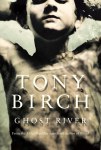
Tony Birch wins the 2017 Patrick White Award

The Patrick White Award is one of Australia’s very special literary awards, and one that I posted in detail about last year when Carmel Bird was the winner. It’s special for a number of reasons. It is named for Patrick White who is, to date, Australia’s only Nobel Laureate in Literature. But, as I wrote last year, it’s particularly significant because it was established by White himself, using the proceeds of his Nobel prize money. Known for being irascible, White was also a principled and generous person. Having won two Miles Franklin Awards, among others, he stopped entering his work for awards in 1967 to provide more opportunity for other less-supported writers. His award goes to writers who have made significant contributions to Australian literature but who haven’t received the recognition they deserve.

This year’s award, as I heard on ABC Radio National when I was heading out for my patchwork group’s fortnightly cuppa, was announced at Melbourne’s Wheeler Centre last night. It is special for another reason:  the award has been made to Tony Birch, making it the first time the award has been made to an indigenous Australian writer. In one sense I feel uncomfortable about labelling, because Birch has won the award on the merit of his output, but on the other hand such wins can raise awareness and provide encouragement for all those “others” who feel (and, you’d have to say, are) locked out of the mainstream.

Tony Birch, Ghost riverSo, Tony Birch. He’s a Melbourne-based writer, who has written two novels, many short stories, and poetry. His first novel, Blood, was shortlisted for the Miles Franklin award, and his second, Ghost River (my review) won the 2016 Victorian Premier’s award for Indigenous writing. I have also reviewed one of his short stories, “Spirit in the night” (my review), which was published in the excellent Australian Review of Fiction series.

Australian literary editor Jason Steger, writing about Birch’s win, quotes Birch on White:

“I admired the fact that as a writer in his older age he protested against the Vietnam War, that he was a great supporter of Whitlam after the Dismissal and that he had been involved with Jack Mundey’s protests and the Green Bans.”

Steger continues that this attracts Birch:

because he is “very involved” with the campaign against the Adani Carmichael coal mine in Queensland. And as a research fellow at Victoria University, his work “is essentially about the relationship between climate change and what we now call protection of country”.

The most interesting (and most memorable) parts of Ghost River werefor me, the environmental story about saving the river and Birch’s depiction of the lives of and treatment of homeless men. Michael Cathcart, in his interview with Birch on ABC’s Books and Arts Daily Program, commented that while Birch’s work features indigenous characters, his themes seem broader. Birch responded pretty much as Steger also quotes him:

I suppose my writing is broadly about class, but more essentially about valuing people who might otherwise be regarded as marginalised.

Patrick White would, I’m sure, have been proud.

Monday musings on Australian literature: Ad hoc literary awards (1)

Wah! It’s Sunday night (as I write this), and I’ve suddenly realised that I’ll be out of town all Monday and Tuesday, so what to do about this week’s Monday Musings? Something quick, that’s what! So, I looked at my little list of ideas for something I could do fairly quickly, and noted one I’d titled “other literary prizes”. By this I meant literary prizes that I rarely cover here because they are not in the “literary” mainstream. That doesn’t mean, however, that they are not worth telling you about (though they can be tricky to track down). I’m numbering this post with (1) because, you never know, I might do another one, one day.

So, for this post, I am going to list some lesser-known (to me, anyhow) non-Australian awards that have been won by Australians. In other words, these are not of the Booker or IMPAC Dublin Prize variety.

Shaun Tan, Eric coverAstrid Lindgren Memorial Prize

An international children’s literary award established by the Swedish government in 2002 in the name of Sweden’s children’s author Astrid Lindgren (1907–2002). The award is made annually to people or organisations, recognising their contribution to children’s literature. Two Australians have one, Sonya Hartnett (whose adult novel Golden boys I’ve reviewed) and Shaun Tan (whose Eric I’ve reviewed.)

Betty Trask Prize and Awards

Established in 1984 for first novels (general fiction or romance) written by authors under the age of 35 who reside in a current or former Commonwealth nation. One author receives the main “Prize”, with runners-up receiving “Awards”. Australians who’ve won include Nick Earls (Award, 1998), Elliot Perlman (Prize, 1999, for Three dollars), Julia Leigh (Award, 2000), Chloe Hooper (Award, 2002) Evie Wyld (whose Miles Franklin Award winning All the birds, singing I’ve reviewed here, Award, 2010).

German Crime Fiction Prize (Deutscher Krimi Preis)

Peter Temple, TruthApparently Germany’s “oldest and most prestigious” literary prize for crime fiction. It has been awarded since 1985, and every year awards 1st, 2nd and 3rd place in two categories, National and International. Australian writer Gary Disher (whose book Wyatt Son Gums reviewed here) won 1st Prize in 2000 (with Kickback), in 2002 (with Dragon Man) and in 2016 (with Bitter Wash Road, on my TBR), and Peter Temple won 1st prize in 2012 with Truth (my review).

Montreal International Poetry Prize

A new biennial international poetry competition established in 2011. Poems are submitted online, and can come from anywhere in the world, but must apparently be in English (which is interesting given Montreal is in Quebec. Interesting too is the fact that the prize is “adjudicated by a board of 10 international editors, which changes every competition, but the winner is selected by a single judge”.  Anyhow, to date there have only been three awards, 2011, 2013 and 2015, with the first being Australian poet, Mark Tredinnick.

PEN Translates Award (English)

Established in 2012 “to encourage UK publishers to acquire more books from other languages.” It helps UK publishers to meet the costs of translating new works into English and ensures translators are “acknowledged and paid properly for their work”. So, it’s for something published (or to be published) in the UK, and in 2016 a winner was Max by Sarah Cohen-Scali. It was translated from the French by Australian translator (and Text Publishing staffer) Penny Hueston.

We don’t know much in Australia about how well our local writers “travel”, and awards like these aren’t always well-reported at home, so I’ve enjoyed discovering just who has been feted overseas. As with learning of Helen Garner and Ali Cobby-Eckermann winning the Windham-Campbell Literature Prizes, it’s been eye-opening.

There! I’ve written a post, and I found it interesting to research. Hope it’s interesting enough for you too!

My literary week (9), some thoughts about fiction …

It’s been a busy week, what with getting ready for our road trip to Port Macquarie, and then doing said road trip, so reading has been slowed down somewhat. However, that doesn’t mean that things literary have been forgotten.

Why write fiction?

Anos Irani, The scribe

Like most of you who read this blog, I expect, I’m always looking out for discussions about what literature is all about, particularly from the writers who create this things we read. This week, I listened to a couple of interviews with authors, and loved what they had to say.

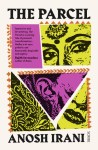
I’ll start with Anosh Irani whose latest novel The parcel I reviewed a few days ago. In an interview on Canada’s CBC, he said:

I had to tell the truth. For me that was the most important thing. Tell it in the form of a story but make it as truthful as possible.

Fiction is a beautiful way to get to the higher kind of truth.

There’s a difference between facts and truth. Factual information is what I learned when I did my research but truth can be an emotional truth; it can be a spiritual truth. These are things that you can arrive at through fiction, that’s why I love the novel. […]

The idea for me when I write a novel is to find what is human in the worst kinds of experience. […]

There are questions that the reader will also ask that have no answer and that is the whole point that sometimes there aren’t any answers. […]

I think literature should make us a little uneasy, a little uncomfortable, it should cause a shift in our unconsciousness because only when we are disturbed will we go in search of something [and he then refers to great novels like Rohinton Mistry’s A fine balance, Albert Camus’ The outsider and Vladimir Nabokov’s Lolita as examples. Yes!]

SNAP, I thought, because the previous day I’d heard Richard Fidler interview Richard Flanagan, and Flanagan too had talked about truths and about questions without answers:

Novels are something we go to because they remind us that implicit in each of us is a universe of possibilities, some better, some worse […]

It’s said now that reality has outstripped fiction, and that fiction can’t deal with this new reality, but […]

I genuinely believe in the novel as one of the great spiritual, intellectual and aesthetic traditions and at its best it speaks to fundamental truths about the human condition. It’s not that it has answers but … it asks the necessary questions we need to ask, of ourselves and of our times.

As you will probably guess, I love this idea of novels’ role being to ask us questions without necessarily providing the answers. Irani certainly does it. He presents some complex if not discomforting moral questions, and leaves the reader to think about how to react. His only request, I’d say, is for us to react with humanity, to not be quick to judge (particularly if we haven’t walked in those shoes.) Sometimes, as he says, there are no answers.

MUBA (Most Under-rated Book Award)

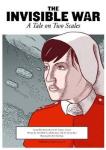
The Invisible War book cover

While on the road, I did check my Twitter feed every now and then, and one that caught my attention came from the Small Press Network (SPN). It announced this year’s MUBA award shortlist. I have written about these awards before, and have read the odd nominee, but this list comes completely out of left-field for me. The books are:

  • Briohny Doyle’s The island will sink (Brow Books, an imprint of Lifted Brow magazine): a debut novel that sounds like it’s in the dystopian cli-fi tradition
  • The invisible war: A tale on two scales (Scale Free Network): a surprising-sounding graphic novel for young adults set in the first World War and about bacteriophage that fights dysentery! This book has won educational publishing awards, but I guess is unknown/underrated in the general realm.
  • Susan McCreery’s Loopholes (Spineless Wonders, whom I’ve mentioned before in a post on Specialist Presses): a collection of micro-fiction about family life and relationship – no piece is more than 250 words
  • Christina Kennedy’s Horse Island (Zabriskie Books): set around Tuross Lake in NSW’s south coast, a beautiful part of the world only about three hours drive from me. This book chronicles Kennedy’s commitment to native Australian plants.

What a fascinating bunch. The winner will be announced next month.

How we read …

Another thing readers like me like to read about is how other readers read. I don’t mean what they read, or how many books they read, but how they actually read. This can include things like whether they write marginalia or not, or how many pages they read before they give up on a book, or whether in fact they ever give up a book once started. Consequently, I loved this from a Canadian blogger I love to visit, Buried in Print. It’s from her review of a book by Sarah Dunn called The arrangement, and she writes:

And when I say ‘entertaining’, I mean I chuckled aloud several times and paused more than once to let the book settle into my lap so I could enjoy the idea of the scene described.

I related to this. I often do the same. Not just for funny scenes, but for moving ones, or gorgeously written ones that I want to let soak in. It slows down the reading of course – but, when you are moved (to laugh, cry or wonder), you are moved, and you don’t want to rush that, do you?

Heather Rose, The museum of modern love (#BookReview)

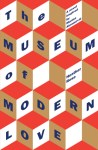
Heather Rose, The museum of modern loveAs I neared the end of Heather Rose’s Stella Prize-winning novel The museum of modern love, I slowed down. I wanted, of course, to know how it was going to resolve, but I wanted to savour it too. It doesn’t seem right to rush the end of thoughtful books like this.

But, I have to admit that I was initially hesitant about reading the book, as I am about any book inspired by a person or work I don’t know. I fear missing something important. However, I did want to read it and my reading group scheduled it. The die was cast. Then, as I was about to start reading, Brother Gums sent me a link to the documentary Marina Abramović: The artist is present about her and the performance piece which inspired this novel. I was set! As it turned out, I think Rose’s writing is evocative enough that it wasn’t necessary to have seen the film, but it did add a layer to the experience.

So, what is The museum of modern love about – besides love, that is? Its centre is performance artist Marina Abramović’s 75-day piece, The Artist is Present, which she performed at MoMA in the spring of 2010, to accompany a large retrospective exhibition of her work. The piece involved her sitting, still, quiet, at a table all day, 6 days a week (MoMA is closed Tuesdays), with gallery attendees invited to take turns to sit opposite her and share a gaze. It was an astonishing success, with, by the end, people camping out overnight to get the chance to sit. Many attended for days just to watch, creating, as Rose describes it, quite a community of spectators. In the end, over 850,000 people attended, with 1,545 people sitting (including Rose). (All are recorded at flickr.)

Anyhow, from this premise, Rose weaves an engaging, thoughtful story about art and love. It has two main narrative strands, telling the real Marina Abramović’s story and that of an attendee, the fictional musician Arky Levin, whose life is stalling, partly due to a restraining order made by his now-unresponsive terminally-ill wife that he not visit her. Interspersed with these, enriching the exploration of the themes, are smaller stories of other attendees, and family and/or friends of the protagonists. It’s narrated by a mysterious third person voice, who starts the novel with

He was not my first musician, Arky Levin. Nor my least successful. Mostly by his age potential is squandered or realised. But this is not a story of potential. It is a story of convergence.

This is a very particular omniscient narrator, some sort of artist’s muse who self-describes late in the novel as a “good spirit, whim … House elf to the artists of paint, music, body, voice, form, word”, one whose job is sometimes just “to wake things up”. This could be cutesy or forced, but it isn’t because Rose doesn’t overdo it. Mostly the story progresses without the intrusion of this narrator, so that when s/he appears we pay attention.

The moral conundrum at the novel’s heart is – is art enough or is love more important? It’s explored primarily through Levin, whose friends suggest he should appeal Lydia’s court order.

I know you’re going to say that she wanted you to do this; she wanted you to make music. But is that enough?

Music, it sounded feeble suddenly in the face of the yawning gap between life before Christmas and life these past four months. (p. 158)

So what does Levin do? Continue to live his increasingly lonely life making music, or follow his heart?

Levin’s story is off-set against other stories, notably that of Jane Miller, a friendly, recently widowed art teacher visiting New York from Georgia. She is lonely, like Levin, missing her husband “achingly, gapingly, excruciatingly. Her body hadn’t regulated itself to solitude.” She becomes one of the mesmerised watchers, but she also connects with others in the crowd, including Levin and Brittika, a PhD student from the Netherlands who is writing her thesis on Marina. Jane forms a natural link between the two themes of love and art.

What, then, is art?

The first time Jane attends the performance, she overhears people in the crowd questioning what the show is about, asking what is art, in fact. There are, of course, the naysayers, the ones who say that “art is irrelevant. If everything goes to crap, it won’t be art that saves us”. But Jane thinks differently, and turns to the man next to her who is, you guessed it, Levin, and says

I think art saves people all the time … I know art has saved me on several occasions.

As the novel progresses, various claims are made for art. Our muse, speaking particularly for artists, believes that “pain is the stone that art sharpens itself on time after time” and that “artists run their fingers over the fabric of eternity”. Marina’s art teacher says to her 16-year-old self that  “Art will wake you up. Art will break your heart”, which causes Marina to consider that “Art … could be something unimaginable”. At one point Marina is reported as saying “I am only interested in art that can change the ideology of society”.

Jane, the viewer, though, has her own epiphany:

And maybe this was art, she thought, having spent years trying to define it and pin it to the line like a shirt on a windy day. There you are, art! You capture moments at the heart of life.

But, I think it is art critic Healayas who makes the clearest, simplest point when she says during a discussion about Marina’s performance:

She simply invites us to participate … It may be therapeutic and spiritual, but it is also social and political. It is multi-layered. It is why we love art, why we study art, why we invest ourselves in art.

… and what has love got to do with it?

Everything, if art, as all this suggests, is about humanity.

Let’s look specifically at Levin. It would be easy to criticise him, as his friends and daughter gently do, for being passive. But, we do get the sense that Lydia encouraged his passivity in their life together, that she liked to be in control, not in a control-freak way but in that way that super-competent people can do. Moreover, Lydia made her order out of love for him, to let him continue creating his art, rather than look after her which she didn’t believe was in him. So, what’s Levin to do? How does he reconcile his love against hers?

The resolution when it comes is triggered by art, by Marina’s performance. And this, as Jane believes art can do, probably saves him. I say probably because Rose, clever writer that she is, leaves the ending uncertain. As she and Levin realise,

the best ideas come from a place with a sign on the door saying I don’t know.

This is an inspired and inspiring book that leaves you pondering. I’ve only touched the surface.

Lisa (ANZLitLovers) also liked the novel.

aww2017 badgeHeather Rose
The museum of modern love
Sydney: Allen & Unwin, 2016
284pp.
ISBN: 9781760291860

Monday musings on Australian literature: Mid-year awards round-up

As is my wont, I have not been posting this year on all the awards that have been announced  – on their longlists, shortlists or even their winners – though I have done some. It can become a bit overwhelming. Instead, I’ve decided that a mid-year recap might be a useful way to go – so, since we have now passed the year’s halfway mark, that time has come. I’ll mention the awards I’ve chosen to do, in chronological order of their announcement.

Stella Prize

Heather Rose, The museum of modern loveThe Stella Prize is now one of the first awards to be announced in the year, and I did post on the longlist.  From this longlist, a shortlist of six books were chosen:

  • Between a wolf and a dog, by Georgia Blain
  • The hate race, by Maxine Beneba Clarke (my review)
  • Poum and Alexandre, by Catherine de Saint Phalle
  • An isolated incident, by Emily Maguire (my review)
  • The museum of modern love, by Heather Rose
  • Dying: A memoir, by Cory Taylor

And the winner, announced in early March, was Heather Rose’s The museum of modern love, which I will be reading with my reading group later this year.

Indie Book Awards

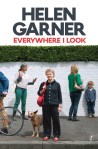
Helen Garner, Everywhere I lookThe winners of these awards, which are run by Australian independent booksellers, were announced in late March. Several awards are made, which you can check out on their site but those most relevant to my blog are:

  • FictionThe last painting of Sarah De Vos, by Dominic Smith
  • Non-fiction: Everywhere I look, by Helen Garner (my review)

The New South Wales Premier’s Literary Awards

These awards are multipronged and far too complex for me to report on in detail here. You can see the full list of winners, which were announced in late May, on Wikipedia. However, those of most relevance to me were:

  • Christina Stead Prize for FictionThe museum of modern love, by Heather Rose
  • UTS Glenda Adams Award for New Writing: Letter to Pessoa, by Michelle Cahill

ABIA, or the Australian Book Industry Awards

These awards, announced in late May, only a few days after the NSW Premier’s awards, are also multipronged. You can read the full list on the ABIA website, so again I’ll just share the most-reelvant-to-me award here, the  Literary fiction of the year award, which went to The last painting of Sarah De Vos, by Dominic Smith.

I should add that the hugely popular bestselling Australian author Di Morrissey was inducted into the ABIA Hall of Fame, and also that, for the first time this year, an award was made for Audiobook of the year, which nicely recognises the popularity and value of this form of “reading”.

Oh, and interestingly, the overall winner, Jane Harper’s The dry, was also the overall winner at the Indie Book Awards earlier in the year. So, the overall winner and the literary winner of both these awards were the same. The shortlists at both are judged by independent panels.

Miles Franklin Shortlist

While the Miles Franklin Award won’t be announced until later this year, it’s such a significant award in Australia that I’m going to share the shortlist here which was announced in June. The shortlist is:

  • Emily McGuire’s An isolated incident (Picador) (my review)
  • Mark O’Flynn’s The last Days of Ava Langdon (UQP)
  • Ryan O’Neill’s Their brilliant careers (Black Inc Books)
  • Philip Salom’s Waiting (Puncher and Wattman)
  • Josephine Wilson’s Extinctions (UWAP)

Nice to see a gender mix, and good representation from smaller publishers, including two university presses!

Stella Prize 2017 Longlist

“I feel like we’re at the Oscars for nerds” tweeted Tracey Spicer, ABC Journalist, at tonight’s announcement of the 2017 Stella Prize Longlist. Love it. Nerds of the world unite!

When the longlist (of 12) was announced last year, I had read and reviewed only one of the books. By the end of the year, I had read 6 which I’m satisfied with given how much I read last year overall. This year I haven’t read any (yet)! Really? Where have I been?

The judges are different again to last year’s, with just the chair continuing. They are writer Delia Falconer, bookseller Diana Johnston, writer/memoirist Benjamin Law, academic/Chair of First Nations Australia Writers’ Network Inc. Sandra Phillips, and writer/chair Brenda Walker.

Anyhow, here is the longlist, including, sadly, two posthumous nominations:

  • Victoria: the queen by Julia Baird (HarperCollins/Biography)
  • Between a wolf and a dog by Georgia Blain (Scribe/Novel) (Posthumous)
  • The hate race by Maxine Beneba Clarke (Hachette/Memoir)
  • Poum and Alexandre by Catherine de Sainte Phalle (Transit Lounge/Novel)
  • Offshore: Behind the wire at Manus and Nauru by Madeline Gleeson (NewSouth/Non-fiction)
  • Avalanche by Julia Leigh (WW Norton/Memoir)
  • An isolated incident by Emily Maguire (Picador/Novel) (Lisa named this as her book of the year last year, so I really should make this a priority)
  • The high places: Stories by Fiona McFarlane (Farrar, Straus and Giroux/Short stories)
  • Wasted: A story of alcohol, grief and a death in Brisbane by Elspeth Muir (Text/Biography-Memoir)
  • The museum of modern love by Heather Rose (Allen & Unwin/Novel)
  • Dying: A memoir by Cory Taylor (Text/Memoir) (Posthumous)
  • The media and the massacre: Port Arthur 1996-2016 by Sonya Voumard (Transit Lounge/Nonfiction)

As usual a mixed lot, but a different mix to last year’s. There’s significantly more non-fiction (more than half in fact), including a few memoirs – and fewer short stories. I suppose it’s purely coincidental, but I was surprised at the number of memoirs/autobiographies/biographies I read last year. Are memoirs making a come-back? I note that the list seems to be rather low on “diversity”, but two of the judges could be seen to represent diverse backgrounds, so presumably that issue was canvassed.

I have read and liked all the Stella Prize winners to date: Carrie Tiffany’s Mateship with birds, Clare Wright’s The forgotten rebels of Eureka, Emily Bitto’s The strays and Charlotte Wood’s The natural way of things. I look forward to seeing which of the above books wins this year …

The shortlist will be announced on March 8, and the winner on April 18.

Monday musings on Australian literature: The cost of literary awards

Queensland Literary Awards LogoI must get better at noting who posts links on social media that I later take up and use on my blog. Today’s post was inspired by an article posted on Twitter (I think) early last December last (and I now thank whoever it was who posted it!) The article is by The Sydney Morning Herald’s literary editor, Susan Wyndham, and was itself inspired by an announcement by the University of Western Australia’s publishing arm to not enter books for awards in 2017.

Terri-ann White, the director of UWA Publishing, said that the “expense (of entry fees, books, and postage) and the time involved in entering books for literary awards and prizes” exceeded their resources in 2016. Wyndham explains that there are at least 60 annual awards in Australia, and this is growing. Most require an entry fee of $50-100 plus the provision of up to six copies for each book entered. In addition, as one publisher noted, there’s the rather substantial cost of attending awards ceremonies. Do you or don’t you, she said.

But, don’t awards result in more sales?

Well, not necessarily, apparently. White said that short listings and wins do not, in their experience, automatically translate into increased sales. For example, when Geoffrey Lehmann’s Poems 1957-2013 won the Prime Minister’s Literary Award for poetry in 2015, Lehmann received $80,000 but UWA “saw no results whatsoever [in sales].” My immediate response was that this is probably not surprising with less “popular” literary forms. However, White’s argument regarding sales is confirmed by other publishers. Donna Ward of Inkerman and Blunt told Wyndham that “literary prizes are expensive and don’t add to the bottom line of a boutique press trying to build its business.” Giramondo’s Ivor Indyk essentially agrees too, saying that “you don’t do it for sales, you do it for your authors, and for the reputation of the publishing house”.

Allen & Unwin, by contrast, said that sales tripled for Charlotte Wood’s The natural way of things after its Stella Prize win. And another big publisher, HarperCollins, said that sales of Stephen Carroll’s novel The time we have taken went from 3000 to 26,000 after winning the 2008 Miles Franklin Award, and Stephen Conte’s debut novel The zookeeper’s war went from 3000 to 13,000 after winning the first Prime Minister’s Literary Award for fiction.

So, here’s the rub: although over 60 literary awards are offered now, publishers told Wyndham that only the Miles Franklin, the Stella and the Children’s Book Council of Australia awards significantly affect sales. I’m guessing other awards might, like the above mentioned Prime Minister’s Literary Award, but on a more case-by-case basis?

Wyndham interviewed several publishers and found that while most plan to continue to support their authors by entering their books, there is a move, particularly among the smaller presses, towards being more careful, more targeted. Ventura Press, for example, said they are “highly selective”.

What to do?

Wyndham asked publishers how things could be improved. They suggested

lowering the fees, or removing them for small presses; reducing the number of categories to focus attention and cut fees; accepting digital copies, possibly without the author’s or publisher’s name to reduce a perceived bias towards big publishers; announcing shortlists and winners earlier so books are still in shops, and promoting those lists better.

Some good ideas here. I’d be interested to hear what authors say, particularly regarding the “blind” submission of their works; what the awards managers say about the fee/cost issue; and what booksellers say, particularly about the timing issue.

The timing issue seems tricky because books can be eligible for awards up to a year, and sometimes two years with biennial awards, after publication. I can’t see how timing can suit all books eligible for a particular award. However, it is certainly the case that some awards close their entries long before the process of long and short listing, and then awarding of the prize, takes place. Take the 2016 Prime Minister of Australia Literary Awards as an example. To be eligible books had to be published in the 2015 calendar year. Entries closed in May 2016, but the shortlist wasn’t announced until October and the winners, finally, in early November, making it nearly 2 years after the earliest eligible books could have been published. You can see their point can’t you?

The promotion issue is an interesting one – because it’s something that we bloggers can help with. I must say that I have felt a bit silly just reiterating long and short lists as they’ve been announced, figuring those interested in books will have seen them anyhow. I tend just to do a select few. But perhaps I should rethink this? Of course, my blog is small bickies in the scheme of things, but maybe it all contributes to a useful critical mass.

It sounds like, whatever we do, we need to do something, because, as the above-named Donna Ward told Wyndham:

publishers are very selective and many small and micro publishers don’t even bother. And thus, Australia misses out on hearing about its most extraordinary, vibrant writers.

And that’s a sad thing.

I’d love, of course, to hear what you have to say on this issue (and I do recognise that some readers here would rather there be no awards at all.)

Pierre Lemaitre, The great swindle (Review)

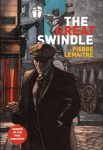
Pierre Lemaitre, The great swindleAs I was reading Pierre Lemaitre’s literary page-turner, The great swindle, I started to wonder about the endings of books, what I look for, what I most appreciate. What I don’t look for is neat, happy conclusions. There are exceptions to this of course. Jane Austen, for example, but she was writing at a different time when the novel was in an earlier stage of development. In contemporary novels, I look for something a little challenging, something that suggests that life isn’t neatly wrapped up. Fiction isn’t life, I know, but its role, for me anyhow, is to reflect on, and thus make me think about, life. So, Lemaitre’s The great swindle? How does it end? I’m not going to tell you – it’s not the done thing in reviews – but I will say that it’s satisfying, even though it does have one of those many-years-later wrap-ups that I’m not convinced is needed.

There, that’s an unusual opening for me, isn’t it, to start with the end? Where do I go now? Back to the beginning I think. The novel is divided into sections: 1918, November 1919, March 1920, and Epilogue. It starts in the trenches on 2 November 1918, just days before the First World War ends. One of our two main characters Albert Maillard is there, wanting a quiet, safe time until the war ends, but his commanding officer, Lieutenant Henri d’Aulnay-Pradelle, has other ideas, setting off a series of events that reverberates through all their years.

This is, in fact, quite a plot-driven novel, despite having many strings to its bow. And you all probably know how much I hate describing plots, so I’m going to keep it simple. After a devastating opening which leaves soldier Édouard Péricourt with a severely damaged face and Albert, for good reasons, taking responsibility for his care, the novel focuses on life in Paris in the immediate aftermath of war. While our two soldiers struggle to survive, Pradelle has been demobbed a Captain, as he’d orchestrated, married a wealthy young woman, Madeleine, who happens to be Édouard’s sister, and is engaged in the business of providing coffins and burying soldiers in cemeteries around France – focusing more on the money he can make than on whether, say, the right soldier ends up in the right coffin. You getting the picture of this Pradelle by now?

There are several other characters – this is a big story that owes much to the 19th century novel – but I’ll just mention a couple more: Monsieur Péricourt, Madeleine and Édouard’s father, a tough businessman who had never had time for his artisitic, effeminate son, and Merlin, the dogged, bottom-rung, about-to-retire civil servant who is given the job of reporting on the cemetery project.

Finally, just two more things you should know before I leave the plot. One is that Édouard did not want to return home after the war, so in the military hospital Albert manages to swap his identity – in a swindle, you might say – with a dead soldier, resulting in Édouard Péricourt becoming Eugene Lariviere. His father and sister, therefore, do not know he is alive. The other is the war memorial swindle concocted by Édouard (Eugene), which he finally manages to convince the “even when well-intentioned, lying was not in his nature” Albert to support.

The novel, then, has a complex plot with a rather large cast of characters, but Lemaitre, who is apparently known for his crime novels, handles it all very well so you never feel lost. One of the ways he does this is through vivid characterisation. Every character, from the main “cast” (it’s to be filmed I hear) to the supporting characters, is so strikingly portrayed that you feel you are there in postwar France – there in the streets where poor, injured returned soldiers struggle to make a living, there in the houses of the well-to-do where money is king, there in the cemeteries where Pradelle’s exploited Arab, Chinese and Senegalese workers do what they can to survive.

Another is through the clever set pieces which illuminate the characters, such as Edouard/Eugene’s increasingly bizarre masks – from horse-head to budgerigar – which he creates and wears to cover his horrendously disfigured face. Or the more gruesome scenes in which the taciturn, not very agreeable, but diligent public servant Merlin tramps around cemeteries investigating coffins. Using these set pieces, many of which border on farce, alongside controlled doses of satire and irony, Lemaitre creates a tragicomic tone – but to what end?

“will this war never be over?”

Early postwar, concerning Pradelle’s cemetery plans, the (mostly omniscient) narrator says:

To an entrepreneur, war represents significant business opportunities, even after it is over.

War, then, is the over-riding theme – but war is a big canvas. Lemaitre’s focus is war’s aftermath. What does it mean for those who went and those who stayed, and for the new world they must forge, preferably together. At one point Albert, worn down by his cares and responsibilities, and facing yet another hurdle, wonders, “will this war never be over”. But, as ordinary citizens get back to life, the needs of the returned are forgotten:

ex-soldiers were all the same, forever banging about their war, forever giving little homilies, people had had just about enough of heroes. The true heroes were dead!

A ripe environment, in other words, for cemetery and war memorial scandals, for profiteering – particularly when you add that it was a time of great social change in France, one where the nouveau riche (represented by M. Péricourt) were getting the upper hand over the often money-short aristocracy (represented by Pradelle).

Opposing this almost obsessive focus on money is a sense of resignation. It can be seen in Madeleine who marries the execrable Pradelle. “We each settle down as best we can”, comments our narrator. For many, there is a sense of “emptiness”, this word appearing several times in the novel. They were tough times – the time of “the lost generation” or what the French called “the génération au feu” – for which society was not equipped to cope. So, in the end, what Lemaitre has painted is a picture of a society under stress, a picture which is conveyed most directly through our “everyman”, our struggling returned solider Albert who just wants to make a life for himself but who is also loyal to those who need him:

War had been a lonely business, but it was nothing compared to the period since demobilisation that was beginning to seem a veritable descent into hell …

The novel, as you will have gathered, is replete with swindles, but the greatest of all, Lemaitre is saying, was the abominable treatment, upon their return, of the ordinary soldier.

This is one of those novels which uses a light touch to tell a heavy story. No wonder it won France’s main literary prize, the Prix Goncourt.

Lisa at ANZLitLovers also enjoyed this book.

Pierre Lemaitre
The great swindle
(trans. by Frank Wynne)
London: MacLehose Press, 2015
ISBN (eBook): 9781848665804

Susan Varga, Heddy and me (Review)

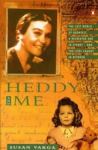
Susan Varga, Heddy and me Book cover

Penguin edition

Susan Varga’s biography-cum-memoir, Heddy and me, was first published back in 1994, so why am I reading it now? By a rather circuitous route, as it happens. Lesley Lebkowicz, whose The Petrov poems I’ve reviewed, read my post on Anna Rosner Blay’s Sister, sister, and suggested to Susan Varga that she might like to send me her book to review. Varga apparently liked the idea and consequently I received an email from her personal assistant offering it to me. I had heard of it, and am interested in the subject matter, so I said yes. That was, embarrassingly, over four months ago, for which I apologise, but eventually its time came and here, finally, is my review.

I’ll start with the judges’ comment when they chose the book to win the 1994 Christina Stead Award for Biography, Autobiography or Memoir*. They described it as “the front rank of autobiographical writing in this country”. That’s a big call but, having read it, I agree, because it is an engrossing book which intelligently negotiates two usually opposing forms, biography and autobiography/memoir. In it, Varga tells the story of her Hungarian Jewish mother Heddy – her life in Hungary, her experience of World War 2, and her subsequent emigration with her extended family to Australia. But, in telling this story, Varga, as the title conveys, also tells her own. She was born, mid-war, in 1943 and was just 5 when the family migrated. Hers was a complicated growing up in which she struggled to find self. She finally realised, late in her research, that she straddles two generations: the first (those who migrated) and the second (the children of those migrants).

Now, I can see why Lebkowicz thought I might be interested in this book, because both books involve a daughter not only telling the Holocaust-survival-and-migration story of a mother, but also working through her understanding of and relationship with that mother. Like Blay after her, Varga captured much of her mother’s story via tape recorder:

… the room itself is imposing, with its long oak table and chairs covered in embossed velvet. Imposing but not unfriendly, which is very much Mother’s style.

I switch on the tape-recorder. She talks, I listen. She [unlike Blay’s mother] doesn’t need much prompting; she’s telling me her life story, which she knows will be raw material for a book. In the past when people have said to her, ‘Heddy, you should tell your life story,’ she has said, ‘I’m waiting for Susan.’

I’ve told her it won’t be her life story, not properly. It will be filtered through my reactions and thoughts, my second generation eyes.

And Varga’s eyes are complicated, sometimes testy ones, as she strives to comprehend her strong-willed mother. So, like Blay’s book, Heddy and me is an amalgam of biography and autobiography, thereby neatly sidestepping David Marr’s injunction for biographers to get out of their story! Like Blay’s book, too, Heddy and me is a story of survival – of a peculiar combination of luck, resourcefulness and judgment – and it’s a story of the lasting impacts of the war. For both families, one of those impacts is an ongoing sense of fear:

… the fear of impermanence, the readiness to flee, takes the form, among others, of a deep conservatism running through the older generation, as if any change at all could result in their lives being uprooted again. They are over-protective, still prone to buy their children a diamond, something portable, just in case.

And we children feel a pervasive fear that we do not know how to express. Impermanence and insecurity lurk in the shadows behind this all-Australian red-brick security.

I found this analysis, this explanation of conservatism, enlightening – and helpful.

However, despite similarities with Blay’s book, Varga’s is different. For a start there are the obvious departures. Varga’s family is Hungarian to Blay’s Polish one, and Varga’s mother was married with a young child when the war started while Blay’s mother was still a teenager. Moreover, Varga’s mother managed to avoid, through various subterfuges, being sent to a concentration camp. She didn’t suffer the ghetto and concentration camp terrors and depredations of Blay’s mother, but Heddy and her colourful mother Kató, whose story is also told here, did suffer, including being raped multiple times by their Russian liberators. There are deeper differences too, speaking to the different psychologies of the two families, their individual wartime experiences, and how these subsequently played out in their post-war lives. And there’s the structure. Varga interweaves her own story and her reactions to her mother’s story within the one narrative flow, while Blay carefully differentiates her voice from her mother’s and aunt’s.

A particularly fascinating part of Varga’s book is the picture she paints of Hungarian society before, during and after the war. I learnt a lot, for example, about Budapest – its vibrant pre-war culture and life, albeit a life that, for its Jewish inhabitants, had its paradoxes. They lived, writes Varga, an outwardly normal life, “clinging to continuity while awaiting upheaval”. Varga chronicles the trajectory of anti-Semitism, from pre-war to the out-of-the-frying-pan-into-the-fire situation in which Hungary’s Jews found themselves post-war, when Nazism was replaced by Communism. Indeed, having survived the war, Heddy, Kató and family were prepared to stay in Budapest until it became clear to Heddy “that the noose was tightening again, like Hitler, except then it was against the Jews, now against everyone.” So, Heddy, ever attuned it seems to the political nuances around her, worked on her family until they agreed to move to “the New World”. Later, as part of research for her book, Varga returns to Hungary with her mother, and becomes aware of the increasing (or, really, continuing) anti-Semitism:

As I begin to grasp the subtleties of political life in the post-Communist world, I find it awful that the Jews should once again need friends and protectors, I think of 1943, when Hungary’s Jews still thought themselves safe because Kállay, or some other prominent politician, was their friend.

Once again, I am astonished, though I suppose by now I shouldn’t be, at how deeply anti-Semitism seems to run, particularly in Europe.

And here, I’m going to insert some personal connections with Varga’s story. I mentioned in my review of Sister, sister that I’d spent some time in my Sydney youth with Jewish people – eastern European Jews – who were business friends of my father’s. Blay’s and now Varga’s books consequently ring true for me, Varga’s particularly, because her parents did exactly what many of these people did – they set up business in the rag trade, and then handbags. I still have some handbags to prove it! But, my connections with Varga are more than this, because I went to the same high school she did, albeit a decade later. Unfortunately, Varga’s experience was not as positive as mine, partly due to her increasing sense of disconnection with her family and partly to the fact that by my time in the mid-to-late 1960s society was becoming less rigid (even in strict government girls’ schools). It was at that school that my understanding of civil rights – particularly, then, relating to racism and anti-Semitism – was honed. This is rather ironic given Varga found it “a school of endless strictures and platitudes”.

Anyhow, enough about me, and back to the book. Heddy and me was, I suspect, groundbreaking when it was first published, not so much for its portrayal of personal experience of the Holocaust, because such stories started appearing soon after the war, but for Varga’s intensely personal exploration of women’s experience and identity across three generations, before, during and after the war. Since then, similar stories have been written – Blay’s, for example, and another I’ve reviewed, Halina Rubin’s Journeys with my mother. However, these later books don’t minimise the power of Heddy and me, which not only illuminates the personal and familial costs of the Holocaust, but also provides an historical perspective on that mysterious thing we call human behaviour. This book deserves a continued life.

AWW Logo 2016Susan Varga
Heddy and me
Abbotsford: Bruce Sims Books, 2000 (2nd ed.; Orig. ed. Penguin, 1994)
304pp.
ISBN: 9780957780033

(Source: Susan Varga)

* Unfortunately FAW’s awards website only goes back to 1999. This comment is on the front cover of my edition, and is credited to “Christina Stead Award”.