Kibble and Dobbie Literary Awards 2018 Shortlists announced

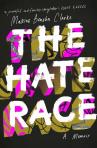
Maxine Beneba Clarke, The hate raceI don’t regularly report on every Australian literary award – there are just too many – but as a supporter of Australian women writers, I’ve long been interested in the Nita B Kibble Literary Awards for Women Writers (a mouthful, eh?) They comprise two awards: the Kibble ($30,000) for established writers, and the Dobbie ($5,000) for debut authors. These awards were established in 1994 by Nita Dobbie, in the name of her aunt Nita Kibble who was the first woman librarian at the State Library of New South Wales. Dobbie, who was brought up by her aunt, followed her into librarianship, and shared her love of Australian women’s writing. The awards are now awarded biennially.

Besides being restricted to female authors, the awards are specifically for “life writing”, which is very broadly defined and can include both fiction and non-fiction. So, the shortlists:

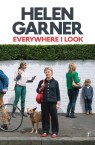
Helen Garner, Everywhere I lookThe Kibble Award:

  • Maxine Beneba Clarke’s The hate race (my review)
  • Michelle de Kretser’s The life to come (scheduled for my reading group in July, but Lisa has reviewed)
  • Helen Garner’s Everywhere I look (my review)
  • Fiona McFarlane’s The high places (I should read this, given it’s a short story collection and has been so well reviewed).

As much as I love The hate race, and believe that de Kretser’s book and McFarlane’s are excellent, I would love to see Garner win because Everywhere I look is a wonderful read, and because Garner has, arguably, set the benchmark for contemporary life-writing in Australia, across multiple forms.

Madelaine Dickie, TroppoThe Dobbie Award:

You can see both the longlist and shortlist online at the Trustee’s website. As always I could argue the toss about books that were or weren’t long- and short-listed, but …

Sarah Krasnostein, The trauma cleanerI can’t remember when I’ve last read a significant proportion of the books shortlisted for an award, so I’m particularly thrilled about these two lists! Moreover, as those of you who read my post on Troppo know, its listing is exciting for my reading group because Dickie is the daughter-in-law of one of our founding members (albeit, unhappily for us, she’s moved out of state now.) Given the number of debut books published over the last two years, it’s a wonderful achievement (for her, and the other two writers) to have been shortlisted.

This year’s judges are the literary critic Elizabeth Webby, State Library of New South Wales representative Rachel Franks, and the author Eleanor Limprecht (whose Long Bay and The passengers I’ve reviewed here.) The winners will be announced on July 25.

Miles Franklin Award 2018 Longlist

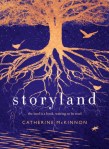
Catherine McKinnon, StorylandI didn’t post the Miles Franklin Award Longlist last year, but I’m intrigued by this year’s list so am sharing it with you – though I’m sure most Aussie readers will have seen it already.

Here is the list:

Some random observations:

  • There are 11 on the longlist, which is interesting in itself – the Miles Franklin judges have, in recent years at least, not constrained themselves to a set number for their longlist. In 2016 and 2017, there were 9 books, and in 2015 there were 10.
  • Six of the longlisted books are by women writers. Only one of these, Michelle de Kretser, was also longlisted for the Stella Prize.
  • The list, unlike the Stella, is rather short on diversity, though, in addition to representing women well, it does include twice-winning indigenous writer, Kim Scott and Sri Lankan-born Michelle de Kretser.
  • This is the first time that Gerald Murnane – frequently tipped as Australia’s next Nobel Laureate in Literature – has been listed for the award. About time.
  • Peter Carey has won three times. If he wins this year, he will equal Tim Winton and Thea Astley who have both won four.
  • I have several on my TBR, and others I would like to be there, but have only read one, Catherine McKinnon’s  Storyland which, I was starting to think, was not going to be listed for any awards, despite its fascinating structure and all-round good story.
  • I’m a little surprised not to see Claire G. Coleman’s Terra nullius nor Sofie Laguna’s The choke on the list.
  • The ABC notes in its announcement that it’s “a list that’s light on outliers, all writers have been shortlisted for, or won, at least one major literary award.”
  • Oh, and not surprisingly, Lisa has reviewed a lot of them!!

The judges for this year are: Richard Neville (State Library of NSW),  Murray Waldren (journalist and columnist for The Australian), Dr Melinda Harvey (book critic), Lindy Jones (bookseller), and Susan Sheridan (Emeritus Professor in Humanities, Flinders University).

The shortlist will be announced in Canberra on 17 June, and the winner in Melbourne on 26 August.

What do you think?

Monday musings on Australian literature: Literary awards’ judging panels

Alexis Wright, TrackerIn my Stella Awards post last week, I shared an excerpt from winner Alexis Wright’s acceptance speech in which she applauded the diversity in this year’s shortlist, noting that it included “Indonesia, Iran and Sri Lanka, as well as two Aboriginal writers.” In that post, I also quoted Stella’s Executive Director, Aviva Tuffield, as saying Stella still has work to do “in terms of diversity”. That’s true – for all of us – but Stella has made a good start.

Now, I’m not going to do thorough research here of the achievements regarding diversity in our recent awards. For a start, just defining diversity is tricky enough. There’s gender, sexual identity, ethnicity and indigeneity, disabilities (or different abilities) of all sorts, and much more to consider. Then, there’s the issue of measurement. An easy measure would be percentage of representation in the population versus percentage of being listed for or winning awards. With gender, we know that women are roughly half the population, so you would think that they should comprise, over a reasonable time period, roughly half the listed and winning authors for awards. But, is this the most appropriate measure, and can we easily measure it for all diversities?

Regardless, we would accept, I think, that diversity, however we measure it, still has a way to go. What methods, then, can we use to improve it. Special awards, like the Stella, is one approach – and there are many others – but in this post, I’d like to consider the composition of the judging panels. First though, I need to clarify that I recognise that while we want to increase diversity, the downside is that to do this we need to label – and not everyone wants to be labelled. So, I won’t get my discussion here completely right I think, and further, I apologise if I offend anyone. It’s not my intention to do so.

Now, to look at some panels …

The Stella Prize does a reasonable job. Because it is an award for women writers, its five-person judging panels tend to be dominated by women with, admittedly, anglo-women tending to predominate. But in 2018 there was a man, critic James Ley, and the women included an Australian-born woman of Chinese-Malaysian heritage, Julie Koh, and a gay indigenous writer, Ellen van Neerven. In 2017, the man was, author and broadcaster, Benjamin Law, who happens to also be gay and of Malaysian background, and the women included an indigenous woman, the academic and editor, Sandra Phillips. Similarly in 2016, the panel included a man, critic Georgie Williamson, a woman Alice Pung, whose parents were Cambodian refugees, and another woman, Suzy Wilson, not indigenous as far as I know, but the founder of the Indigenous Literacy Foundation.

By contrast, the 2017 Fiction and Poetry panel for the Prime Minister’s Literary Awards looks all anglo to me, albeit the five-person panel was strong on women members, with four women and one man. Their previous panels are similar, except the gender balance has favoured men. Similarly the 2018 Miles Franklin Literary Award’s five-person panel looks all anglo too, with two men and three women, albeit of diverse professions – academics, a journalist, a bookseller and the mandated Mitchell Library librarian!

On the other hand, there’s the panel for the 2018 New South Wales Premier’s Literary Awards. It’s a large one comprising 16 people. Presumably subsets of these judge different categories of the awards, so it’s difficult to identify who will judge the Christina Stead Award for Fiction which, for comparative purposes, is the one I’m interested in. However, let’s just look at the 16. It includes seven men and nine women. Of the men, at least one is indigenous, the journalist and broadcaster Daniel Browning, and the others include a man from an Indian background, and a Muslim. Of the women, at least one is indigenous, the author Melissa Lucashenko, and another is the Singaporean-born poet Eileen Chong. So, some attempt at diversity here.

The page for the 2018 Victorian Premier’s Literary Awards, which have already been announced, provides panel breakdowns for the main categories. The fiction panel comprised four people, all women, and included the indigenous author, Jeanine Leane, and reviewer Thuy On whose name suggests an Asian background, but I don’t know for a fact.

So, overall, looking at these very few recent examples, women are certainly well represented on the panels, but from the information I have (as bios aren’t readily available for all judges and where they are they don’t always provide the “labelling” information needed for my post), other “sorts” of diversity is more hit-and-miss.

This is, obviously, a very brief and patchy survey. There’s a major research project here, looking at panel composition, comparing them against their choices, and so on – but this is not something I can commit to. My aim is simply to raise the issue, than argue a definitive case. I don’t want to denigrate all the hard-working judges out there – a job I, for one, would hate. But, we do need to consider that no matter how qualified the judges are, no matter how fair they try to be, diversity of background and experience is needed to mitigate the problem (or appearance, even) of unconscious bias. I would, therefore, love to see more diversity on the panels.

Interestingly, I didn’t, in my brief research, find a lot of commentary about the composition of judging panels, from a diversity point of view. However, I did find one, regarding the ages of the judges, from the ABC’s Books and Arts Daily on last year’s Miles Franklin shortlist. Another diversity issue to consider:

The book is beautifully written. Its emotional terrain will register most effectively with older readers. A younger judging panel would look elsewhere for a winner. But this is a judging panel in which four of the five judges are over 50.

So grumpy Fred is in with a chance.

Just for the record, Grumpy Fred (Josephine Wilson’s Extinctions) did indeed win.

Do you have any experience or knowledge you can add to the discussion – and, anyhow, what do you think? Is this issue important?
Stella Prize 2018 Winner – and how the Stella is tracking (pun alert!)

I don’t always write announcement posts here – even when I write short and or longlist posts, because the news is usually so immediately known. What can I add? However, I’ve decided to post on last night’s Stella Prize announcement for a couple of reasons, one being the significance of the winner and the other being a statement released by Aviva Tuffield, the Prize’s Executive Director.

First, the winner. If you haven’t already heard, it’s Alexis Wright’s Tracker. This is the second time a non-fiction work has won since the award started in 2013. The first non-fiction winner was Clare Wright’s wonderful The forgotten rebels of Eureka (my review). For a full report of the announcement, check Stella’s page which contains Wright’s acceptance speech, the judge’s comments and an introduction to the book itself. I’ll just share a few highlights.

Alexis Wright, TrackerIn her speech, Wright commented on the diversity in this year’s shortlist:

The great celebration today is that we have many exciting, diverse voices in the world of Australian letters. We encompass the world right here in our literature. And even in this shortlist that has been judged as being some of the very best of women’s literature published in the past year, we demonstrate our remarkable diversity, internationalism, and maturity as people of many backgrounds, and here including Indonesia, Iran and Sri Lanka, as well as two Aboriginal writers. A literary dialogue that allows us to have greater knowledge and understanding of each other, and acceptance of difference, and respect for each other in our diversity, is what will make Australian literature truly marvelous, relevant, and far stronger than it has ever been.

Well said … I have so far read the book set in Indonesia (Riwoe’s The fish girl), and one of the two Aboriginal writers (Coleman’s Terra nullius). I plan to read more, because it’s an exciting list.

One of the things that interests me about this book, besides its being indigenous literature, is that Wright – not surprisingly once you know her work – plays with form, in this case what I’d call the biography-memoir (or vice versa) or what is formally being called “a collective memoir”. Wright said this in her speech, after explaining the significance of her subject, Tracker Tilmouth:

I thought very deeply about how to develop this book about him by using our own storytelling principle of consensus. I was not always sure that my approach would work as I continued on a long journey of six years from conception to finish, and gathering a mountain of material, but I was sure collaborative storytelling was the right way, and that it did work in the end is what matters. I am grateful for the storytelling skills of our culture and carried them into the book, which allowed, as Tracker himself wanted, everyone to speak for themselves, to tell their own part in the story.

I love this description, not only because it articulates what she was trying to do, but because she alludes specifically to “the storytelling skills of our culture” which is something I have mentioned in posts in the past, but a little hesitantly for fear of sounding like I was “exoticising” indigenous people. The thing is that when I read indigenous Australian stories, or hear indigenous Australians tell stories, I am frequently conscious of a very specific, and lively, storytelling culture.

In her statement announcing the winner (out of 170 submissions), judges’ chair, Fiona Stager said:

The winning book is unique in the history of Australian letters and it artfully fulfils all the Stella Prize’s criteria: it is excellent, engaging and original. We invite all readers to immerse themselves in a history, a landscape, a time and a story that is heartbreaking, poignant and humorous. […]

… the judges wish to acknowledge the craft of the author and pay tribute to the richness of the memories shared by the many people she interviewed. This book will enrich and change the understanding of readers. A man like Tracker Tilmouth could change our world. It takes a writer like Alexis Wright to change the world of Australian letters.

Stella Prize’s page on the book provides more information, including the judges report, an interview with Wright and a book extract.

In her speech, Stager also paid tribute to Aviva Tuffield. It was largely Tuffield’s statement about the Prize, released the day before the announcement, that committed me to this post. In it, Tuffield articulates what the Prize has achieved since its inception in 2012.  She reiterates why the Prize was established in the first place: “hard data had proved that women writers were underrepresented in three key areas:

  • as winners of the major literary prizes;
  • as authors of the books that received the most review and media coverage; and
  • as authors of the books on the school curriculum.”

She said those founding the prize appreciated that “much of this inequality arose from unconscious bias”, as evidenced by data showing that “‘blind’ orchestra auditions and CV assessments yield such different results to what happens when faces and names are attached.” However, whether conscious or unconscious, the impact is the same, and it’s serious because it “sends clear messages about whose voices, whose stories and whose experiences are most important.” Hence, the prize …

And, six years on, she says, the effects are clear (for the details, please check her statement at the link above):

  • women are now winning more prizes generally, and being increasingly shortlisted, across all major prizes.
  • more women writers are being added to school curricula. Victoria’s English curriculum now has gender parity in terms of authors listed, as opposed to being just over 30% of the list in 2014.
  • the ‘kinds’ of books that are now being considered of the ‘highest literary merit’ has shifted, with “novels focusing on contemporary family life or relationships – using those as microcosms for society at large – and often with female and even child protagonists” now being recognised.
  • general awareness of the breadth and quality of Australian women writers has increased. She says that “When Stella started many people told me that they didn’t realise there were so many good women writers in Australia – and especially writers of nonfiction (as Stella is for fiction and nonfiction books)”. She argues that Stella’s longlists and shortlists have raised awareness of the breadth of women’s writing, and that this awareness has spread beyond these lists to other writers who have said their work is being taken more seriously.
  • the ripple effect created when people see more women writers being recognised. “The landscape”, she writes, “changes: role models are provided, unconscious bias is dismantled, stereotype threats are banished.”

Now, some of this is more anecdotal than “proven” and not all of it is only due to the Stella, but the Stella Prize is, I’d say, making a significant contribution. And it will continue to do so because Stella’s job is not done. More is needed, she says, “in terms of diversity and extending Stella’s benefits to all women writers” and more also, as the #metoo movement has proved, “to shift the power structures of our patriarchal society” to ensure that women are heard. Finally, as we’ve seen before – and as is evidenced in other spheres like the gender pay gap – “things can slip back very quickly.”

So, I say thanks to Aviva Tuffield and the Stella Team. I am proud to count myself as a Stella Spark.

Mirandi Riwoe, The fish girl (#BookReview)

Mirandi Riwoe, The fish girlMirandi Riwoe was joint-winner of the 2017 Seizure Viva La Novella prize with her book, The fish girl – and it has now been shortlisted for this year’s Stella Prize. As you may already know, it was inspired by Somerset Maugham’s short story “The four Dutchmen”, which I reviewed a few days ago. Indeed, Maugham’s story provides the epigraphs to each of the novella’s three parts. Do you then need to have read Maugham’s story to appreciate Riwoe’s take? I’d say not – and would hate that assumption to put people off reading her book. Nonetheless, I’m glad I read Maugham’s work. How’s that for a foot in both camps?

To recap briefly, “The four Dutchmen” tells of four fat, jolly Dutchmen who work together on a boat plying the southeast Asian seas. Immensely loyal to each other, they plan to all retire when the first of them dies. The only blot on their togetherness is the captain’s penchant for Malay girls. However, the chief officer usually cleans up after him – paying off the girls, in other words, when the captain tires of them – until the day the captain decides to bring one of these girls along on a boat trip. Tragedy ensues.

Now, Maugham’s story is told first person by an observer-narrator, a traveller in the region, rather than one who’s involved in the events. The story has a matter-of-fact tone. Not so Riwoe’s story, which, although told first person, gets into the girl’s heart. Unlike Maugham, Riwoe gives her a name, Mina, and from the start, we realise that Mina’s fate is tied to men. Hers is a world controlled by men – regardless of whether that world is her village or the Dutch Resident’s house.

I should, perhaps, clarify some terminology at this point. Maugham uses the terms “Javanese” and “Malay girl” in his story. These days, we differentiate Javanese, who come from Java which is part of Indonesia, from Malaysians, who come from Malaysia, which neighbours Indonesia. However, in Maugham’s time, Malay was used for Austronesian people, which include today’s Malaysians and Indonesians, amongst others. Mina, Riwoe’s version of Maugham’s Malay girl, is from a Sunda village in this region.

Riwoe tells her story in three acts, each preceded by epigraphs from Maugham’s story. In the first part, Mina is offered by her father to a man who comes searching for “cheap labour for the Dutch Resident’s kitchen.” The barely pubescent Mina doesn’t want to go, has never left home before, but for her parents, her father in particular, there is hope that she will be able to send them things they “need, like more spice and tobacco.” Mina is scared, but we also get an intimation of resilience when we’re told of the “tremor of excitement finally mingling with the dread in her stomach.” Maybe it will work out alright we hope.

By the end of part 1, she has arrived at the Dutch Resident’s place where she works in the kitchen to the unsympathetic, unkind head cook Ibu Tana. She seems to be a favourite of the Dutch Resident who treats her kindly, and requests her to serve table in his house. Is he grooming her? Or is he decent? We fear the answer.

Part 2 introduces the four Dutchmen who dine with the Dutch Resident, and, in particular to the captain – the man described in the epigraph from Maugham as “losing his head over one brazen hussy or another”. That should warn us, though in this part he seems gentle. He wants her to teach him her language. In return he teaches her his, and gives her gifts. Hmm … our antennae are up. Meanwhile, Mina has fallen for Ajat, her village chief’s son who does some work for the Dutch Resident. Her sexuality is awakening, but Ajat treats her cruelly. Part 3 commences with her arrival on the boat with the captain, after which the story plays out pretty much as Maugham tells in his short story.

What Riwoe does in this story – her post-colonial response to Maugham’s – is to look at it from the angle of the colonised, and particularly colonised young women. What she shows is that young women are not only pawns in the hands of colonial powers but also in the hands of their own men (in this case her father who trades her for potential material gain, and the chief’s son who tricks her and uses her ill).

This may all sound same-same, as in “I’ve heard all this before”, and at a simple level that’s so. However, what makes The fish girl such a good read is the character Riwoe gives Mina. She’s young and naive, but she’s not a type. She has dreams and at least an attempt at having agency. Here she is, as she’s about to be taken to the boat by the Captain:

Kanjeng Ratu Kidal (Ocean Queen): By Gunawan Kartapranata (Own work) [CC BY-SA 3.0]


Mina leans against a tree, rolls her head gently against the prickly bark. She takes a deep breath. She will need to be very strong. She will need to be like one of the dhalang’s wayang puppets, as hard as lacquer, enduring.

Also, Riwoe adds a mythical element through Mina’s love of the sea, and her belief in the Ocean Queen. The sea is presented as a curative force – both physically (for her rash, presumably eczema) and spiritually.

She calls for the Ocean Queen. Only when she feels Nayai Loro’s strong, smooth pull, feels the soft arms suckle at her damaged thighs, does Mina scatter the flowers upon the sparkling water.

Finally, although this is short, Riwoe unfolds the story slowly, developing Mina’s character and allowing us to hope that Mina will endure. But that, of course, would be a fairy tale and, despite its heartening mystical conclusion for Mina, this is definitely not that. An engaging but powerful read.

AWW Badge 2018Mirandi Riwoe
The fish girl
Sydney: Xoum, 2017
97pp.
ISBN: 9781925589061

Stella Prize 2018 Shortlist announced

Claire G Coleman, Terra nulliusAs you probably know, the Stella Prize is the award I particularly like to follow, though I don’t always post on the Longlist and the Shortlist as I am this year. The Longlist was announced on 8 February (my post), and the shortlist was announced, yesterday, International Women’s Day, as has, appropriately, become tradition.

Here is the shortlist:

  • The enlightenment of the Greengage tree, by Shokoofeh Azar (Wild Dingo Press)
  • Terra nullius, by Claire G Coleman (Hachette)
  • The life to come, by Michelle de Kretser (A&U)
  • An uncertain grace, by Krissy Kneen (Text)
  • The fish girl, by Mirandi Riwoe (Seizure)
  • Tracker, by Alexis Wright (Giramondo)

Interestingly, as has happened in the past, the proportion of non-fiction to fiction in the longlist has not carried through to the shortlist. Five of the twelve-strong longlist were non-fiction works, while just one of the six books in the shortlist is. And unfortunately, it’s not the one I’ve read! Seriously, though, I am glad to see Alexis Wright’s Tracker, which is about the Aboriginal leader, political thinker and entrepreneur Tracker Tilmouth, on the list. However, this pattern suggests that it is difficult to judge fiction against non-fiction and that the Stella Prize’s goal of offering one award irrespective of form or genre is perhaps harder to achieve that it sounds? In a sense I can understand it. If the award is about excellence in Australian writing, and if excellence includes some sense of innovation, then it is likely that such definition of “excellence” is more likely in fiction. (By the way, innovation to me can include experimenting/innovating in style, form, genre, structure, content, so it’s not impossible in non-fiction, just more constrained – perhaps?)

Anyhow, what do I think about the list? Well, firstly, I’m pleased so see that the list accommodates diversity. I’m also pleased to see that my pick, Terra nullius (which I’ll be reading soon) is on the list, and that The fish girl which I bought because of its long-listing is also on the list. I even mailed a copy to my American friend for her birthday this week. And, I’m not surprised to see The life to come and An uncertain grace on the list, given the quality of these writers and the buzz about their books. I’m disappointed, though, that the book I’m reading now, Sofie Laguna’s The choke, is not on the list – not because I believe it should be as I haven’t read enough of the books to make that assessment, but because it’s one I would have read when the winner is announced! Oh well … c’est la vie. Fortunately, I’m enjoying The choke so my reading time is certainly not wasted!

The winner receives $50,000, and each shortlisted author receives $3000, as well as a three-week writing retreat on the Victorian coast. It’s a lovely generous prize. The winner will be announced on 12 April.

Now, I’ll get back to my reading … but if you have any comments on the list, I’d love to hear them.

Monday musings on Australian literature: Young Writers Awards

Yesterday’s post on young writer Ben Smith Noble’s prize-winning short story, “The sands of time” inspired today’s post. I’ve written about several prizes over the years – the big ones, and the more targeted ones – but not prizes for Young Writers. It’s a tricky topic to write about. There’s the definition of “young” and there’s the fact that there are many “small” prizes offered (that is offered within small spheres like a school or other contained group). My focus here is to pick out some of the bigger – more encompassing – prizes, and also to show some of the variety in the prizes being offered.

These prizes range from those offered for a piece of work submitted for competition to awards for published writing. The more adult young writers prizes (if that makes sense) define young writers as those under 35 or 30 years of age, while other prizes can be offered for age ranges. I’ll list a selection of awards, in alphabetical order.

Per Capita Young Writers’ Prize

I nearly didn’t include this prize because their website is so minimal. It says, for example, to “Click below to see winning entries from this year and previous years” but I could see nothing “below” to click on. However, it’s an intriguing award that’s been going for a few years, it seems, so I decided to include it. It is for Australians aged 25 years and under, and is “designed to encourage young people to think about the major public policy challenges facing Australia.” Weighty matter! The judging criteria includes, as well as the more usual ones of originality and writing quality, “the potential public benefit of the ideas put forward.” In 2014 the winner received $3,000 plus some sort of international travel. You can read a 2017 prize-winner on the writer Michael Dello-Iacovo’s website.

Scribe Nonfiction Prize for Young Writers (Nonfiction)

Established in 2013, this prize is seen as a development award aimed at fostering “talented writers aged 30 and under writing longform work.” Writer submit  entries of between 5,000 and 10,000 words “across all nonfiction genres, including memoir, journalism, essay, and creative nonfiction.” The winner receives cash ($3000 in 2017), mentorship and some Scribe books. Shortlisted writers receive some Scribe books, but also feedback on their entry and the opportunity to attend a masterclass. Pretty good eh? The prize makes their aim of fostering talent real.

SLQ Young Writers Award (Short Story)

An annual short story award, around 20 years old, for Queensland writers aged between 15 and 25. Prizes are offered in two age categories: aged 18 – 25 (short stories up to 2,500 words); aged 15 – 17 (short stories up to 1,500 words). In each of these, there is one winner and one runner-up, and four highly commended entries. Past winners include Benjamin Law, Tara June Winch and Romy Ash. You can read all the past winning, runner-up and highly commended stories online.

Sydney Morning Herald Best Young Australian Novelists (Fiction)

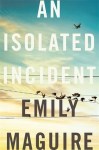
Emily Maguire, An isolated incidentEstablished in 1997 by former literary editor Susan Wyndham, this award which aims to recognise “emerging talent” is made to writers who were 35 years or under when their book was published. It’s become a well-regarded award and is quite a feather in a writer’s cap to be called a Sydney Morning Herald Best Young Australian Novelist. More than one writer is named each year. An example is Emily Maguire who won the award in 2010 (Smoke in the room) and 2013 (Fishing for tigers). She went on in 2017 to be shortlisted for the Stella Prize, the Miles Franklin Literary Award and the Ned Kelly Award for An isolated incident (my review). You can see a list of the winners over the first 20 years, 1997 to 2016, online.

John Marsden & Hachette Australia Prize for Young Writers (Fiction, Nonfiction and Poetry)

Named for and supported by one of Australia’s most successful writers for youth, John Marsden, this prize is “an annual developmental award open exclusively to Australian secondary school students.” This award is made in three categories: fiction, nonfiction and poetry. Winners receive cash ($500 in 2017), a selection of Hachette YA books, publication of their work on the Express Media website and their names printed in the youth literary journal Voiceworks. You can read the winning 2017 works online.

Young Tasmanian Writers’ Prize

Tasmania 40 South Issue 78Run jointly by Forty South Publishing and the Tasmanian Association for Teachers of English, this is a literary competition for Tasmanian high school students, in two age categories, Senior Section (Years 10 to 12) and Junior Section (Years 7 to 9). They do, it appears, provide a theme/themes, as this entry form for 2018 shows. The winners in the two sections receive $300 and their story published in Tasmania 40° South, and the runners-up receive a $30 bookshop voucher. This is the one, as you’ve probably realised, won by Ben Noble Smith.

Young Writers’ Award (Picture Book and Short Story)

As far as I can tell this is a brand new award which started in 2017 and for which the first winner will be announced this week. It’s been established by the Redgum Book Club and is geared to children aged between 9 and 13 years of age, to “develop their writing skills and find their unique voice through storytelling.” They want it to be an accessible activity that can be  incorporated into a school’s writing program, so they provide a Teacher’s Toolbox on their site. There are two categories: picture book (up to 250 words plus illustrations) and short story (800 to 1000 words). Winners will receive a $250 Redgum book voucher, and the shortlisted writers a $150 voucher.

And there are many more awards – including other state-based awards and at least one for indigenous youth. For information about these and others, please visit a wonderful post by teacher and writer Melinda Tognini on her blog Treefall Writing.

I had no idea there was this variety around. I’d love to know if you have had any experience of young writers’ awards or know of any not listed here? (If you are not Australian please share any you know of from your country.)

Ben Smith Noble, The sands of time (#Review)

Tasmania 40 South Issue 78Ben Smith Noble is the second young writer I have reviewed here, the first being Leah A with her 10 silly poems by a ten year old (my review) which came to my attention via Son Gums. Ben Smith Noble’s short story “The sands of time”, on the other hand, came to me from Mother Gums via Brother Gums who lives in Tasmania and knows the young writer. Indeed, I believe I’ve met him too, but that was nearly ten years ago, when he was probably around 6!

Many moons have passed since then and it appears that Ben Smith Noble is becoming quite the writer. “The sands of time”, which unfortunately is not available on-line, won the Junior Section (Years 7-9) of the 2015 Young Tasmanian Writers Prize – and what a delightful story it is. It’s a time-travel story about a man who dies suddenly and mysteriously finds himself in a coffin that had been used in England in 1122, during the time of the Crusades. What happens next, as I’m sure you’ve guessed, is that he finds himself in the Holy Land in 1098 “standing between two armies that had a very certain view on who was right”:

The hot sands swirled around Mr Smith as the two armies gave a roar and started moving towards each other at a speed that suggested the sides shared an intense hatred for each other, and further suggested to the out-of-place Tasmanian the idea of being impaled on a lance or scimitar.

He dearly wished he was somewhere else. Heaven for example.

In the next paragraph, things are getting dangerous: “An arrow drifted by in what seemed slow motion, and hit a nice young man who would probably have got along well with his killer had his killer not been holding a bow”.

Mr Smith is not impressed, and starts to run:

He wasn’t sure where he was going, but he was sure anywhere would be better than here.

However, he soon finds an English knight and a Saracen warrior approaching him on horseback from different directions, so he does the only sensible thing he can think of. He calls, “Stop!” The denouement, from this point, is beautifully and succinctly told, and conveys a message about war – something that “happens when people with small brains get big ideas” – that is pure and sensible. It’s an entertaining read.

What is impressive about the story is Noble’s grasp of language, of rhythm and pace, of voice, and of structuring a plot. We are told in the first paragraph that Mr Smith had “a guilty love of Doctor Who” which sets up the time-travel idea, but we are also told in the same paragraph that he likes “staying in the here and now”, and hadn’t, in fact, been anywhere further than Burnie. In other words, he’s a simple, ordinary man, and Noble sets this up effectively in the first paragraph. He also establishes his light tone in this paragraph, and sustains it through to the end. The story made me laugh – at the right times – and yet it has a serious message that’s relevant today. I don’t have a benchmark for what young writers are capable of these days, but this story would not embarrass its creator in adult company.

A search of the Tasmania 40° South revealed that Ben Smith Noble won the Senior Section (Years 10-12) prize last year, with a story titled “Napoleon, or, the musings of Mr Pink”. Clearly someone to watch. You heard it here first, folks!

Ben Smith Noble
“The sands of time”
in Tasmania 40° South, Issue 78?, pp. 85-86

Monday musings on Australian literature: Aurealis Awards for Speculative Fiction

Those of you who know my lack of interest in science fiction might be surprised to see a post dedicated to the genre here. However, I do like to be more representative in my Monday Musings series. If that means sometimes moving into areas that are out of my comfort zone, then so be it. And now seems to be an appropriate time to do so in this instance, because this year’s Aurealis shortlist has been released and it contains some books that interest me.

First, though, a little background. According to the website, the awards were established “in 1995 by Chimaera Publications, the publishers of Aurealis magazine, to recognise the achievements of Australian science fiction, fantasy and horror writers.” Their aim is to complement the Annual Australian National Science Fiction Convention’s Ditmar Awards and various other literary awards, but they delve deeper into the genre by distinguishing different types of speculative fiction – science fiction, fantasy and horror.

Their “rules” explain their criteria. They see themselves as “first and foremost a literary award”, so “literary merit, originality and contribution to the genre are of paramount importance in selecting the shortlisted works”. In other words, genre elements alone are not enough for shortlisting. Regarding genre definitions, they say that “a problematic definition of what makes a work of a particular genre” should not “bar an excellent book that contains appropriate elements of that genre”. They prefer “an inclusive view of what genre markers may include”. So, while they provide guidelines for their three named types of speculative fiction, these are not meant to be proscriptive. Rather, fluidity and inclusivity is their goal. This broad view is probably why there are a few books on this year’s list that interest me.

Over the years, award categories have come and gone, but the end result is that, today, the list is extensive. Their 2017 awards are for:

  • Best children’s fiction
  • Best graphic novel/illustrated work
  • Best young adult short story
  • Best horror short story
  • Best horror novella
  • Best fantasy short story
  • Best fantasy novella
  • Best science fiction short story
  • Best science novella
  • Best collection
  • Best anthology
  • Best young adult novel
  • Best horror novel
  • Best fantasy novel
  • Best science fiction novel

Phew! I love that they cover their three “types” in novel, novella and short story forms, and that they separately recognise children and young adult works, and collections and anthologies. It’s comprehensive, and it’s clearly successful because these awards have now survived more than two decades.

There is also the Convenor’s Award for Excellence. It’s something a little different, being awarded at the discretion of the convenors for “a particular achievement in speculative fiction or related areas” that doesn’t necessarily fit into award categories. ” It can be given to “a work of non-fiction, artwork, film, television, electronic or multimedia work, or one that brings credit or attention to the speculative fiction genres.” There’s no shortlist, and people can self-nominate. Again, if you’re interested to see the sorts of works being considered this year, do check the website.

Interestingly, I can’t find anything on their site about what the winners win, which makes me think it is more for the glory than for monetary gain.

Selected shortlist titles for the 2017 Awards

Given the large number of awards made, I’m not going to list the complete shortlist, but if you’re interested check out their  announcement. However, I’d like to identify a few that caught my eye.

Firstly, there are a few authors in the list who have appeared here, such as short story writer Deborah Sheldon (see my review of her 300 degree days and other stories). There are also popular children’s and young adult writer Garth Nix, local writer Kaaron Warren, and several writers I’ve learnt about through the Australian Women Writers Challenge, such as Kate Forsyth, Margo Lanagan and Tansy Rayner Roberts. I don’t feel quite so out of my comfort zone now that I recognise some names!

Claire G Coleman, Terra nulliusBut, this year’s shortlist also contains some specific titles that interest me:

  • Lois Murphy’s Soon, published by Transit Lounge (for Best Horror Novel). It won the Tasmanian Premier’s Prize for Unpublished Manuscript. Lisa reviewed it and found it compelling.
  • Claire G Coleman’s Terra Nullius, published by Hachette Australia (for Best Science Fiction Novel). This debut genre-bending novel by an indigenous writer (who identifies with the South Coast Noongar people of Western Australia) has also been longlisted for the Stella Prize. The judges wrote that “Coleman’s punchy prose is insistent throughout, its energy unflagging”. My reading group will be reading this in March so you can expect a review here in a month.
  • Krissy Kneen’s An Uncertain Grace, published by Text Publishing (for Best Science Fiction Novel). I’ve read one of her novels, Steeplechase (my review) and am intrigued to read more of her. An uncertain grace has also been longlisted for the Stella Prize (link above). The judges’ report begins with “Krissy Kneen does not simply perform the difficult feat of writing wittily about sex, she does so with aplomb. An Uncertain Grace is a formally ingenious and often amusing novel that combines eroticism and science fiction with a playful spirit of intellectual inquisitiveness.”
  • Jane Rawson’s From the Wreck, published by Transit Lounge (for Best Science Fiction Novel). I loved Rawson’s A wrong turn at the Office of Unmade Lists (my review) and am very keen to read this latest book of hers which, I believe, crosses historical and science fiction genres. I rather thought it might have been longlisted for the Stella, but that didn’t happen.

These awards are clearly sought after. This year 800 entries were submitted across the 15 categories. The winners will be announced at an awards ceremony over the Easter long weekend during the Swancon convention in Perth.

Does speculative fiction have a place in your reading preferences? If so, how?

Stella Prize 2018 Longlist

I don’t do well at having read the Stella Prize longlist at the time of its announcement, and in fact last year I’m ashamed to admit that I’d read none. Terrible really for someone who’s supposed to be interested in Australian women’s writing, but there you go. My excuse is that I’m always behind in reading current books. Unfortunately, by the end of last year, I’d still only read three of the 12-strong 2017 longlist – but those I read were good’uns! If only there were more hours in the day – or, perhaps, fewer other things to do!

Anyhow, I can say that I have read (and liked) all the Stella Prize winners to date: Carrie Tiffany’s Mateship with birds, Clare Wright’s The forgotten rebels of Eureka, Emily Bitto’s The strays, Charlotte Wood’s The natural way of things, and last year’s winner, Heather Rose’s The museum of modern love.

The judges are again different to last year’s, which is good to see. It must surely keep the prize fresh to introduce new eyes, new perspectives, each year. (The chair, Fiona Stager, has been a judge a couple of times before, but some experience doesn’t go astray does it?) The 2018 judges are writer Julie Koh, critic James Ley, bookshop-owner Fiona Stager (the chair), writer and publisher Louise Swinn, and writer Ellen van Neerven (whom I’ve reviewed a few times here).

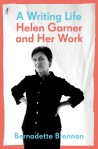
Bernadette Brennan, A writing life Helen Garner and her workAnyhow, here is the longlist,

  • The enlightenment of the Greengage Tree, by Shokoofeh Azar (novel/Wild Dingo Press)
  • A writing life: Helen Garner and her work, by Bernadette Brennan (literary portrait/Text Publishing) (my review)
  • Anaesthesia: The gift of oblivion and the mystery of consciousness, by Kate Cole-Adams (science-based non-fiction/Text Publishing)
  • Terra nullius, by Claire G Coleman (novel/Hachette Australia) (I’ll review in March)
  • The life to come, by Michelle de Kretser (novel/Allen & Unwin) (on my TBR pile)
  • This water: Five tales, by Beverley Farmer (short stories; novellas/Giramondo) (I love Beverley Farmer)
  • The green bell: A memoir of love, madness and poetry, by Paula Keogh (memoir/Affirm Press)
  • An uncertain grace, by Krissy Kneen (novel/Text Publishing)
  • The choke, by Sofie Laguna (novel/Allen & Unwin) (on my TBR, and am very keen to read having attended a lively conversation with her last year)
  • Martin Sharp: His life and times, by Joyce Morgan (biography/Allen & Unwin)
  • The fish girl, by Miranda Riwoe (novella/Seizure)
  • Tracker, by Alexis Wright (memoir/biography/Giramondo)

So, I’ve read and reviewed one, and will definitely read another, Terra nullius, by March. I have bought or been given a couple of others, and am keen to read a few more. On the other hand, there are a couple here that I hadn’t heard of at all – the books by Azar and Morgan.

The judges commented that the longlist

… challenges the reader to experience the pleasures of reading different forms of writing: speculative fiction, novella, memoir, biography, non-narrative nonfiction, history, short stories and work in translation.

I like this. Last year, I noted that there was significantly more non-fiction (more than half in fact), fewer short stories, and not much diversity. This year fiction represents just over half, and only a couple of the non-fiction are memoirs. Three of the non-fiction works are about writers and artists – Helen Garner, Michael Dransfield and Martin Sharp. This year’s list is significantly more diverse too, with indigenous writers Claire G Coleman and Alexis Wright, an Iranian born writer in Shokoofeh Azar, Riwoe’s book set in Indonesia, and our now well known Sri Lankan born writer Michelle de Kretser whose book is set in Sydney, Paris and Sri Lanka. Of course, as always, there are books I would like to have seen here but, overall, it’s an interesting list and I hope to have read more of it by the end of this year than I did last.

Meanwhile, I’d love to know if you have any thoughts on the list.

The shortlist will be announced on March 8 (International Women’s Day, as has become tradition), and the winner in April.