Monday musings on Australian literature: Supporting genres, 4: Literary nonfiction

Continuing my little Monday Musings sub-series on “supporting” genres, I’m turning next to a rather “rubbery” genre, literary nonfiction. It is tricky to define – and partly for that reason, it is not obviously well supported.
Literary nonfiction goes by a few other names including creative nonfiction and narrative nonfiction. This last one provides a bit of a clue to its definition, which is that it generally refers to non-fiction writing that uses some of the techniques of fiction, particularly, but not only, in terms of narrative style. Wikipedia defines it as “a genre of writing that uses literary styles and techniques to create factually accurate narratives.” It quotes Lee Gutkind, who founded Creative Nonfiction magazine:

“Ultimately, the primary goal of the creative nonfiction writer is to communicate information, just like a reporter, but to shape it in a way that reads like fiction.”

In other words, it aims for a prose style that is more entertaining (but not at the expense of fact.) In my review of Anna Funder’s Stasiland, I wrote that she “uses some of the literary techniques – relating to structure, voice and language – more commonly found in fiction to tell her story”.

Well-known Australian writers in this “genre” include Helen Garner, Chloe Hooper, Anna Krien, Anna Funder and Sarah Krasnostein, all of whom I’ve read. It is a grey area, though, and I suspect each of us would draw the line at different places. However, I would include essay collections by Fiona Wright and Maria Tumarkin, and many hybrid memoir/biographies, like Nadia Wheatley’s Her mother’s daughter (my review)? Historians who write for general audiences rather than academia might also be included. I’m thinking here of Clare Wright and Inga Clendinnen, as possibilities. What do you think?

Prizes

For some genres – literary fiction and crime for example – awards/prizes are a major source of support (in terms of money and recognition) but this is less so for literary nonfiction.

Anna Funder's Stasiland bookcover

Back in 2004, Anna Funder’s Stasiland (my review) won the Samuel Johnson Prize for Nonfiction. Now renamed the Baillie Gifford Prize for Non-Fiction, it is, says Wikipedia, “an annual British book prize for the best non-fiction writing in the English language”. Not surprisingly, winners include works from this literary nonfiction “genre”. Another winner I’ve reviewed here (though it’s not Australian) is Helen Macdonald’s H is for hawk (my review). Australians have not featured highly in this award.

In Australia, several of the state awards include a nonfiction category, and these have been won by literary nonfiction, though they compete with other forms of nonfiction like histories, biographies and other forms of life-writing, essays, and so on.

Major Australian Nonfiction Literary Prizes

None of the awards listed here are specifically for “literary nonfiction” but these are awards which may be won by such books.

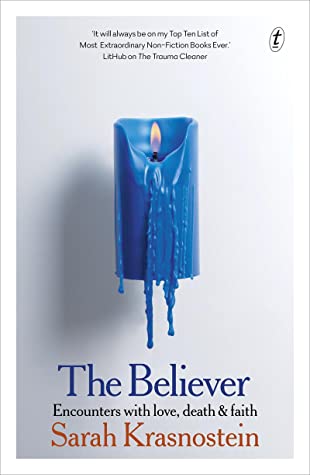
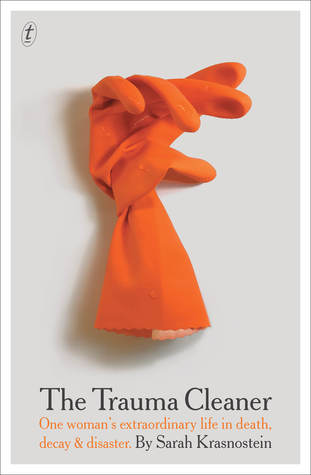
Sarah Krasnostein, The trauma cleaner

Also relevant are awards that are not “specifically” nonfiction:

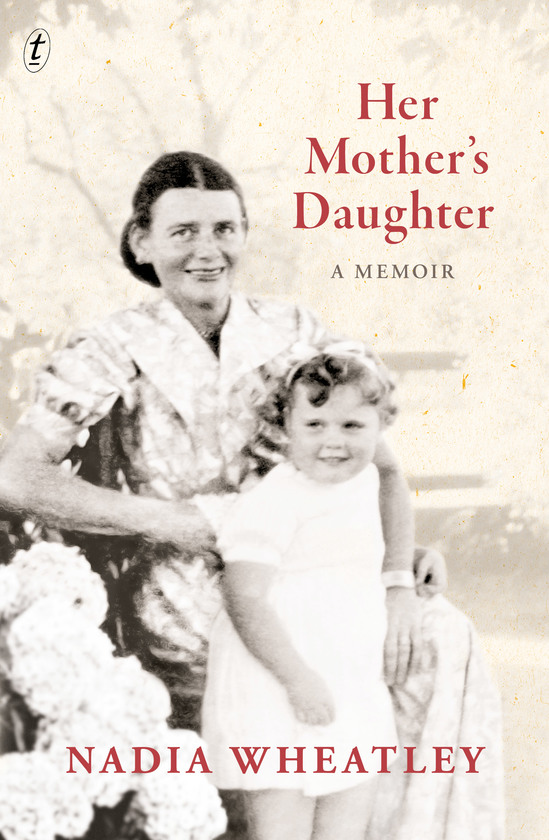
Nadia Wheatley, Her mother's daughter
  • Mark and Evette Moran Nib Literary Award: this award for “excellence in research” and “in writing” has been won by books in this genre, like Helen Garner’s Joe Cinque’s consolation (2005) and Nadia Wheatley’s Her mother’s daughter (2019).
  • Stella Prize: while this multi-genre/multi-form prize has more often been won by fiction, nonfiction – and particularly literary nonfiction – does feature in its long- and shortlists. Rebecca Giggs’ Fathoms, for example, was shortlisted in 2021.

But, is there more?

The issue, though, for writers is what support do they get when they come up with an idea? Are the sorts of fellowships, grants and writer’s residencies that fiction writers can access also around for nonfiction writers? Well, yes, there are, such as:

  • Neilma Sidney Literary Travel Fund is an unusual award that is open not just to writers but also to “literary sector workers”. It recognises the importance of travel to writing and literary careers. Awardees have included writers researching nonfiction topics – and, despite COVID, it is still being offered, with a round being made in June this year. To give some examples, in 2018, the aformentioned Rebecca Giggs received a grant for expenses related to a writing residency at the Rachel Carson Centre for Environment and Society in Munich, Germany. And, in November 2019, Tamara Lazaroff received some funds to research her experimental narrative non-fiction memoir Hermit girls on De Witt Island, Tasmania. 
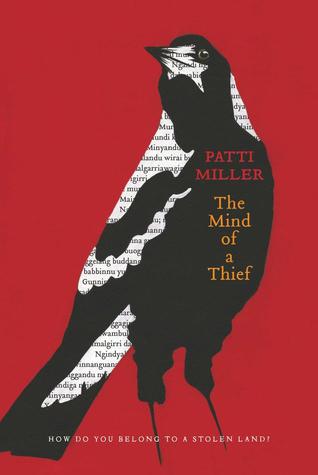
  • Varuna Writers House Residencies are open to “committed writers from all genres”. With around 160 residencies a year, the alumni is extensive, but they include Gail Bell whose The poison principle (on my TBR) won the 2002 NSW Premier’s Prize for Non-Fiction and Patti Miller whose complex memoir, The mind of a thief, was longlisted for the 2013 Stella Prize.

There are more, but these two provide a good start.

Do you read literary nonfiction? If so, would you care to share some favourites?

Previous supporting genre posts: 1. Historical fiction; 2. Short stories; 3. Biography

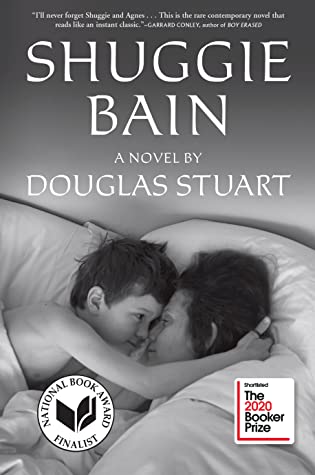
Douglas Stuart, Shuggie Bain (#BookReview)

How to write about a book that has made such a big splash that it has already been extensively reviewed. What more can one say? This is what I’m facing with Douglas Stuart’s debut and Booker Prize-winning novel, Shuggie Bain.

I haven’t, in fact, read much about it, because I prefer to come to books fresh, but I have heard an interview with Stuart, and I can imagine what has been written about his book. I have also discussed it with my reading group. All I can do is just launch in, and write what I would normally write, but I fear it won’t add anything fresh to the discussion. It will, however, record, for me, my thoughts and feelings.

The story

For those of you who haven’t yet read Shuggie Bain, it tells the story of its eponymous protagonist growing up in public housing in 1980s industrial Glasgow. This was the time of Thatcher, a time when mines, shipyards, railyards closed, resulting in significant unemployment and the usual fallout when men can’t work and women and children end up on welfare:

Whole housing estates of young men who were promised the working trades of their fathers had no future now. Men were losing their very masculinity.

This is important, but it is also just the backdrop for the personal story of Shuggie and his mother Agnes. There are other characters, but these two are the book’s core.

The story starts in 1992 with Shuggie, nearly 16, living on his own in a boarding house in Southside Glasgow. He is clearly pitied by the people around him, so the question for us is why is he there alone, how did he get there? We then go back to 1981, where we meet Shuggie’s family, thirty-nine-year-old Agnes, her second husband Shug, and Shuggie’s two older siblings, Catherine and Leek, who were born to Agnes’ first husband. It is not a happy situation. They are all living in a flat with Agnes’ parents, Wullie and Lizzie, and Agnes feels a failure.

When Shug does take his family away, it’s a cruel action, and Agnes and her three children soon find themselves alone, living on welfare payments in the desolate Pithead – a housing scheme which had “the plainest, unhappiest-looking homes Agnes had ever seen”. She knew Shug was “a selfish animal”, but she wasn’t expecting this. From here, their lives are a struggle, though Agnes – now drinking heavily – tries her darnedest to maintain appearances amongst women who reject her and her airs.

The characters

Agnes’ airs! Stuart has an impressive ability to create vivid, real characters. Even the villains of the piece – like Shug – are recognisable as people beyond the “type”, in his case a macho, violent, womaniser, they represent. This is no mean feat. However, it’s Agnes, Shuggie and, to a degree, Leek, who are our focus.

Agnes is a woman with aspirations. She’s resourceful, when sober, and wants more than the life she’s been dealt. But, she is unable to find a way out, largely because, for women of her time and place, it seems that a man is the answer. Her first husband Brendan tries to buy her happiness, but he’s boring. Then the flashy Shug comes along. For all his failings, and they abound, he too tries to buy her happiness, but tires of all her “wanting”.

Unfortunately, one of the things Agnes wants is “to take a good drink”. Her drinking, which was already evident when they lived at her “mammy’s”, becomes a serious problem at Pithead. Life, for her children, becomes insufferable. Catherine skedaddles into an early marriage as soon as she can, while the sensitive, artistic Leek withdraws into himself, leaving the young Shuggie to be the main watcher over his mother. And this is where this novel’s credentials as autofiction come into play, because the evocation of the child-addict parent relationship reads so authentically. We can’t help admiring Agnes’ gallus, while also despairing for her and her children.

So, it’s a heartbreaking story. Not only does Shuggie struggle with his addicted mother – loving her, caring for her in ways that a child should never have to – but he must cope with his own outsiderness that he doesn’t understand. From a very young age his way of talking, dressing and walking, not to mention his disinterest in typical boy things, are ridiculed. He’s called names, beaten up, ostracised, and he doesn’t know why. At 10 years old, aware he’s “no right”, he asks his mother, “What’s wrong with me, Mammy?” If she knows, she doesn’t tell him, but a few years later, he realises that Leek, who had tried to teach him to toughen up, had known all along.

Leek is the support act, figuratively and literally, to Shuggie and his mother. He quietly provides support in the background, even after he eventually leaves home. He’s resentful of the impact on his own ambitions to become an artist, but he sticks around, taking labouring work, because he is needed. In many ways, he’s the hero of the novel, and my heart went out to him as much as to Shuggie. This, I think, says it all:

he looked like a half-shut penknife, a thing that should be sharp and useful, that was instead closed and waiting and rusting.

The writing

It also gives you a flavour of the book’s expressive writing. One of the first things you might notice is that Stuart loves a simile. The book is full of them, but they are so good, like

“The auld man’s face crumpled like a dropped towel.”

and

“The unwelcome presence of a man was like a school bell.”

and so many of Agnes, such this when Shug leaves her

“Agnes, sparkling and fluffy, was lying like a party dress that had been dropped on the floor”.

The book is also well structured, opening in 1992, which immediately tells us that whatever happens Shuggie is going to survive, and ending back in 1992, this time on a note of hope, albeit a tentative one.

Stuart uses vernacular extensively, resulting in much unfamiliar-to-me vocabulary – boak, hauch, gallus, to name a few – but they are understandable from the context, and essential to setting the scene. The novel is not at all hard to read. Indeed it’s beautiful – and easier to understand than some spoken Scottish can be!

Moreover, for all its bleakness, the novel has a good smattering of humour. Here’s Shuggie defending his mother, drunk and over-dressed, marching into the hospital to see her dying father,

Shuggie heard the nurse say to a male attendant that she thought for sure Agnes was a working girl.

“She is not,” said Shuggie, quite proudly. “My mother has never worked a day in her life. She’s far too good-looking for that.” 

What it all means

The novel is, as I’ve said, autobiographical, but that doesn’t mean that Stuart simply sat down and wrote his life. Shuggie Bain reads as a considered piece of fiction that has some things to tell – about dashed dreams, the powerlessness of women in a male-dominated world, poverty, addiction and outsiderness. It’s both political and personal about what happens to lives when the ground beneath is taken away. And yet, for all that, it’s also about love – child-to-mother, brother-to-brother, friend-to-friend – that survives in places you barely expect it to. No-one in my reading group was sorry we scheduled it.

Douglas Stuart
Shuggie Bain
London: Picador, 2020 (2021 eBook)
355pp.
ISBN: 9781529019308

Monday musings on Australian literature: 2021 Mark and Evette Moran Nib Literary Award longlist

I only occasionally use my Monday Musings post to make awards announcements. Today is one of those occasions, because the Nib Literary Awards longlist was announced today and I did want to share it, as it’s one of Australia’s quieter but yet interesting awards.

I have written about it before and in that post you can read about about its origins and intentions but, in a nutshell, it celebrates “excellence in research and writing”. It is not limited by genre, though given the research focus, nonfiction always features heavily.

The Nib, which celebrates its 20th anniversary this year, is managed by Sydney’s Waverley Council. It is, according to the email announcement I received, the “only major literary award of its kind presented by a local council”. Whether you like awards or not, this represents an impressive and meaningful commitment to Australia’s literary culture, wouldn’t you say?

Anyhow, the judges for the 2021 award are Katerina Cosgrove (author), Jamie Grant (poet and editor), and Lee Kofman (author and editor). They worked their way through 150 nominations, with their judging criteria being “high literary merit, readability and value to the community”.

The longlist

Book cover
  • Bill Birtles‘ The truth about China: Propaganda, patriotism and the search for answers (nonfiction/political)
  • Tanya Bretherton’s The husband poisoner: Suburban women who killed in post-World War II Sydney (nonfiction/true crime) (Kim’s review)
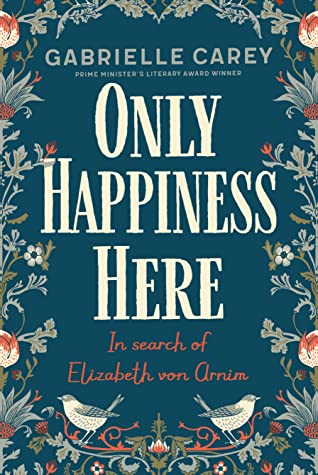
  • Gabrielle Carey‘s Only happiness here: In search of Elizabeth von Arnim (biography/memoir) (on my wishlist) (Brona’s review)
  • Alison Croggon’s Monsters: A reckoning (nonfiction/memoir) (on my TBR)
  • Sarah Dingle’s Brave new humans: The dirty reality of donor conception (nonfiction/science)
  • Richard Fidler’s The golden maze (nonfiction/history)
  • Tim Flannery’s The climate cure: Solving the climate emergency in the era of COVID-19 (nonfiction/environment) (on my TBR)
  • Anthony Ham’s The last lions of Africa: Stories from the frontline in the battle to save a species (nonfiction/environment)
  • Kate Holden’s The winter road: A story of legacy, land and a killing at Croppa Creek (nonfiction/environment)
  • Zoe Holman’s Where the water ends: Seeking refuge in Fortress Europe (nonfiction/refugees) (Lisa’s review)
  • Ramona Koval’s A letter to Layla: Travels to our deep past and near future (nonfiction)
  • Sarah Krasnostein’s The believer: Encounters with love, death & faith (nonfiction/religion) (on my TBR)
  • Bri Lee’s Who gets to be smart: Privilege, power and knowledge (nonfiction/sociopolitics)
  • Mark McKenna’s Return to Uluru (nonfiction/racial politics) (on my TBR) (Janine’s review)
  • Tim Olsen’s Son of the brush (nonfiction/memoir)
  • Dymphna Stella Rees’ A paper inheritance (nonfiction/biography)
  • Rebecca Starford’s The imitator (fiction)
  • Luke Stegemann’s Amnesia Road, landscape, violence and memory (nonfiction/history) (Janine’s review)

At 18 titles, this is a long longlist. Eleven of the 18 are by women, but beyond that it’s not a particularly diverse list in terms of authors. It would be great to see that change. However, thinking of “value to the community”, it does encompass several of our important contemporary political issues including the environment (climate change and species extinction), refugees, racial politics and difficult histories. Four books fall into the life-writing category. There is only one work of fiction, which is probably why very few of these books have been reviewed by the bloggers I follow. We are mostly a fiction-focused lot!

The shortlist will be announced in late September, with the overall Winner ($20,000) and the People’s Choice Prize being announced in November.

Do you have any thoughts on this list?

Monday musings on Australian literature: Supporting genres, 3: Biography

Time for another in my little Monday Musings sub-series on “supporting” genres. I’ve chosen Biography for this one, since the 2021 National Biography Award winner will be announced this month.

However, I have written quite a bit about Australian biography before:

David Marr, NLA Seymour Lecture, Sept 2016

Given all this, you might think that this post is superfluous, but I figured that it’s helpful to put all these together in one post as a resource for myself (and maybe for others too?) These posts provide significance evidence for the support of and interest in biography in Australia – and they mean that the rest of this post will be a bit different to the first two “supporting genre” posts.

Definition

You may have noticed that I described the Seymour Biography Lecture as “devoted to life-writing” – and here’s the rub, because there is quite a blurring of definitions when we talk about “biography” these days. Traditionally, biography has been seen as a detailed description of a person’s life written by a third person. Autobiography, on the other hand, is the story of a person’s life, written by that person. Then there’s memoir which focuses on a particular aspect or period of a person’s life, and is written, again, by that person. All of these come under the banner of “life-writing”. The problem is that, for example, the Seymour Biography Award is called “biography” but the lectures are, in fact, broader. Indeed, the first lecture we went to was given by Robert Drewe who has written, and who thus talked about, memoir.

This is fine but the nomenclature is strange, don’t you think? Even our National Biography Award is, actually, a national life writing award. It “celebrates excellence in biography, autobiography and memoir writing” says the Award website. Interestingly, though, while all these forms feature regularly in the shortlists, traditional biographies have tended to be the winners. A recent exception was Behrouz Boochani’s No friend but the mountains.

Life-writing now

Life-writing is big business. Search online and you will find many companies offering to help you write your life story, or to write your life story for you. You will also find courses on life-writing. Daughter Gums did one a few years ago at the ACT Writers Centre taught by memoirist Benjamin Law.

The Fellowship of Australian Writers NSW (FAWNSW) has an excellent page on the subject written by Dr Rae Luckie. They quote from La Trobe University’s description of its Unit for Studies in Biography and Autobiography.

Life writing is now one of the most dynamic and rapidly developing fields of international scholarship. It includes not just biography and autobiography, but also diaries, journals, letters, and the use of life narrative in various disciplines: history, anthropology, sociology, politics, business and leadership studies, sport, and others… In addition to its high academic profile, life writing generates great interest among the general public: works of biography and autobiography sell in vast numbers.

Nadia Wheatley, Her mother's daughter

Luckie talks about changes in the field, saying that “writers whose work is included under the umbrella of ‘life writing’ have broken traditional auto/biographical boundaries”. She mentions works I read before blogging, like Inga Clendinnen’s Tiger’s eye, Helen Garner’s Joe Cinque’s consolation, and, even, Robert Dessaix’s “autobiographical novel” Night letters! While I enjoy the traditional biography, and have reviewed several here, I am not averse to reading writers who play with the form, like the hybrid-biography-memoirs I’ve reviewed (such as Nadia Wheatley’s Her mother’s daughter and Gabrielle Carey’s Moving among strangers)

The biggest change, though, is probably that academic historians are now embracing the form in a way they hadn’t previously. If you are interested in a discussion of the topic, check out this in the first issue of the Australian Journal of Biography and History. The authors comment on the fact that “there are now prizes to encourage biographical writing, lectures that feature prominent biographers, biography research centres and courses in universities, public conferences and so on.” Another interesting point they make is the significant role biography played in feminist history.

Biography – and life-writing – are now serious, as well as, marketable business. You heard it here!

Zeitgeist, or Serendipity?

Book cover

And now for something completely different. It concerns those funny coincidences which happen in the literary firmament, like when David Lodge’s Author, author and Colm Tóibín’s The master, which are novels about Henry James, both came out in 2004. What was that about?

Well, I’ve noticed another strange coincidence: the recent publication of Jennifer Walker’s Elizabeth of the German Garden: A biography of Elizabeth Von Arnim (2017), Gabrielle Carey’s Only happiness here: In search of Elizabeth von Arnim (2020) and Joyce Morgan’s The Countess from Kirribilli: The mysterious and free-spirited literary sensation who beguiled the world (2021). Many of you, I know, have heard of Elizabeth von Arnim. Her best-known works are the satirically humorous Elizabeth and her German Garden and the popular Enchanted April which was made into a successful feature film starring many of our favourite grand dames of English theatre. For those of you who don’t know her, though, she’s a British novelist who was born in Sydney (Kirribilli) in 1866, but who moved to England with her family when she was three and never lived here again. Her connection with Australia is therefore tenuous, but she was a wonderful character who moved among the biggest literary movers and shakers of her time. I devoured many of her novels, and a memoir, back in the 80s and 90s when Virago published her. Why this flurry of interest now? (Not that I disagree.)

Do you read biography? If so, care to share some favourites?

Previous supporting genre posts: 1. Historical fiction; 2. Short stories

Queensland Literary Awards 2021 shortlist announced

I haven’t reported often on these awards, but they are an example of the literary world’s faith in the value of awards, as any of you who remember their history will know. They are an interesting set of awards because they combine specific state awards and awards for which all Australian writers are eligible. And they have some great categories, including one for short story collections, which appeals to me. The full shortlist is available on their site. I will just list a selection of the categories here, but there are also awards for Poetry, Children’s and YA Books for example, if you are interested.

Queensland Premier’s Award for a work of State Significance ($25,000)

  • Lech Blaine’s Car crash: A memoir
  • Laura Elvery’s Ordinary matter
  • Fiona Foley’s Biting the clouds
  • Patty Lees with Adam C Lees’ A question of colour (Lisa’s review)
  • Jaya Savige, Change machine

David Unaipon Award for an Unpublished Indigenous Writer ($15,000)

  • Ngankiburka-mekauwe (Senior Woman-of Water) Georgina Williams’ Mekauwe= Tears Volume #1 (Notes For Song) 1970-2020
  • Chella Goldwin’s Politiks

University of Southern Queensland Short Story Collection-Steele Rudd Award ($15,000)

Book cover
  • Laura Elvery’s Ordinary matter
  • Melissa Manning’s Smokehouse
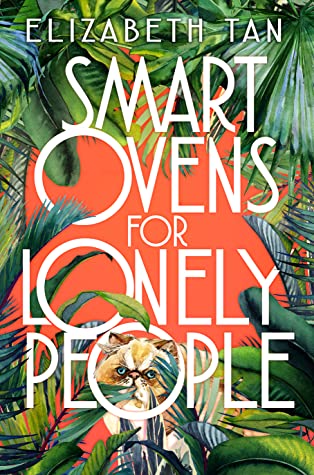
  • Elizabeth Tan’s Smart ovens for lonely people (Bill’s review)
  • Adam Thomspon’s Born into this (my review)
  • Barry Lee Thompson’s Broken rules and other stories 

University of Queensland Non-Fiction Book Award ($15,000)

  • Lech Blaine’s Car crash: A memoir
  • Eleanor Hogan’s Into the loneliness
  • Henry Reynolds’ Truth-telling (Janine’s review)
  • Luke Stegemann’s Amnesia Road (Janine’s review)
  • Marian Wilkinson’s The carbon club

University of Queensland Fiction Book Award ($15,000)

Book cover

Courier-Mail People’s Choice Queensland Book of the Year Award ($10,000)

  • Trent Dalton’s All the shimmering skies
  • Sandra Hogan’s With my little eye
  • Kathleen Jennings’ Flyaway
  • Susan Johnson’s From where I fell (Lisa’s review)
  • Grantlee Kieza’s Banks

There are books here that I’ve heard a lot about, and that are on my TBR here, and books I haven’t heard of at all. What about you? Any favourites here? Any surprises or tempters?

The winners will be annnounced on 9 September. Good luck to all.

Monday musings on Australian literature: Miles Franklin Award, the fourth decade (1988-1997)

Miles Franklin
Miles Franklin, c. 1940s (Presume Public Domain, via Wikipedia)

This is my fourth post in a little sub-series looking at the Miles Franklin Award by decade.

As with the first three, written back in 2016, I don’t plan to list all the decade’s winners, as you can find them on the Award’s official site. Instead, I’ll share some interesting snippets, inspired by my Trove meanders. This mostly involved The Canberra Times and The Australian Jewish News, because this period is still within copyright, meaning the NLA can only digitise newspapers which have given them permission to do so.

Men in the ascendant (again)

In my third decade post (linked below), I noted the increase in awards made to women. Just five awards were won by women in the first two decades combined, but in the third decade, four of the nine awards went to women. This reflected, I suggested, the flowering of writing by Australian women in the late 1970s and 1980s. However, it wasn’t to last. In the fourth decade, eight of the nine awards made went to men – and the woman who did win generated one of the Award’s biggest controversies (see below). Without spoiling my fifth decade post, this “bias” towards men continued for another ten years or more, which inspired, among other things, the establishment of the Stella Award in 2012 … but, I’m jumping ahead. Let’s stay in the nineties for the moment.

The skewing towards men, not surprisingly, carried through to the shortlists, with 31 men shortlisted over the decade to 18 women. However, when it comes to multiple listings, four writers, two men and two women, were shortlisted three times: Rodney Hall and David Malouf, Thea Astley and Janette Turner Hospital (who has never won it).

The men who won included previous winners Peter Carey, Tim Winton, and Rodney Hall. The others were Tom Flood, David Malouf, Alex Miller, Christopher Koch and David Foster. I admit that I didn’t know Tom Flood, but Dorothy Hewett was his mother. His winning book, Oceana Fine, was his only novel.

There wasn’t much discussion about the skewing back then, but I did love Celal Bayari, who wrote in the the University of New South Wales’ Tharunka paper about Elizabeth Jolley missing out in 1989:

Jolley good book (ha ha)

JOLLEY’S latest has just been omitted from the shortlist for the Miles Franklin Award. That is a real shame because The Sugarmother is a great book.

Controversy (1)

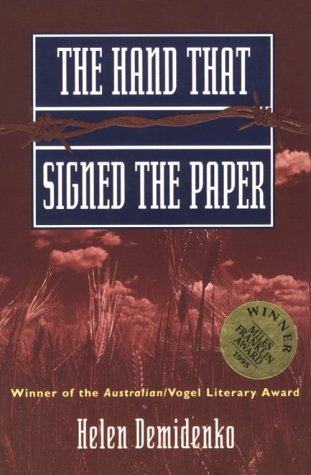
The controversy concerned Helen Demidenko’s novel, The hand that signed the paper, which won in 1995. Bill (The Australian Legend) summarised the controversy beautifully in his post on the book, so why reinvent the wheel? Bill wrote:

For the benefit of non-Australians, the controversy surrounded the awarding of the 1995 Miles Franklin Award to Helen Demidenko for The Hand that Signed the Paper, the story of a Ukrainian family collaborating with the Nazis during the Holocaust. The granting of the Award to an anti-semitic work was justified on the grounds that Demidenko was telling the story of her people, until Demidenko, who would attend speaking engagements dressed in the costume of a Ukrainian peasant girl, was finally unmasked as Helen Darville, a University of Queensland student of entirely English background.

This was a multi-pronged controversy – and Bill explores some of the prongs in his excellent post. There were criticisms of the work itself: it was uneven and poorly written, it was racist/anti-semitic, it distorted history. There were criticisms of the author’s deception regarding her background, with some saying that the only reason they accepted this unpleasant book’s win was because the author was speaking for “her” people. (This feeds into current discussions about who can write what.) There was discussion about literary criticism – about whether it’s all about the text, or whether other considerations, like the author’s background, are relevant to assessing a work. There were discussions about the line between fact and fiction, particularly since Demidenko/Darville herself called her work “faction”. There were criticisms of plagiarism, which were subsequently overturned. There were suggestions that the author, around 24 at the time, was a disturbed young woman to be pitied. And, there were criticisms of the judges – of their decision in the first place, their refusal to admit they were wrong, and their not engaging in discussion. The novel was apparently shortlisted for the Victorian Premier’s Literary Award, and then quietly un-shortlisted before the announcement. The controversy raged for months.

The book, by the way, had previously won the 1993 The Australian/Vogel LiteraryAward for unpublished manuscript, and in 1995 it also won the ALS Gold Medal.

The Canberra Times‘ literary editor at the time, Robert Hefner, suggested that the book “could well prove to be one of the most divisive books in Australian history”. Not surprisingly, it sold well. By August 1995, according to her publisher, it had sold 25,000 copies, and they were preparing to republish it under the author’s real name.

Controversy (2)

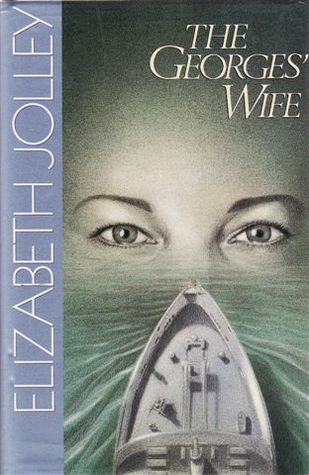
Lest you think, however, that this was the only Miles Franklin Award controversy of the decade, think again. The ongoing issue of the “Australian content” requirement raised its head during the decade too. In 1994, when Rodney Hall won for The grisly wife, The Canberra Times reports that, “The Georges’ Wife [Elizabeth Jolley], and Frank Moorhouse’s Grand Days, were disqualified because the judges decided they did not have enough Australian content”.

No award (again)

In both the second and third decades, there was a year in which no award was made. It happened again this decade but for a purely administrative reason, to do with changing the award’s timing from year of publication to year of announcement!

The value of awards

Given I’ve posted on the value of awards recently, I’ll conclude by sharing a couple of points that came out of this little piece of research.

David Malouf said, on winning in 1991 with The great world,

“An award like this is a bit like the Archibald to painting. Both are extremely well known and important … People who don’t necessarily buy a book when it first comes out are interested to see what books turn up on the short list and which book wins. That kind of interest is always very important.”

He also admits that winning awards offers reassurance:

“Writers are very diffident, basically. They’re always doubtful of themselves and it’s always good when you are offered approval for what you have done”

Similarly, Alex Miller, who won in 1993 for The ancestor game said:

“I decided it was terrific to be short-listed and that was that, and I just got on with my work, and then when I was told last Wednesday I really couldn’t believe it … It’s enormous validation and acknowledgment, for sure.

It’s a bit of a watershed, isn’t it, winning something like Miles Franklin.”

And Rodney Hall, winning in 1994 with The grisly wife, said “this has picked me up”.

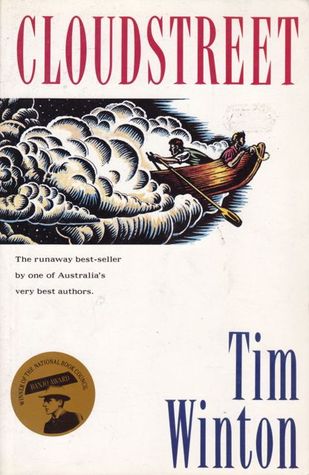
I mentioned above sales for Demidenko/Darville’s book, but that had the “benefit” of controversy. Tim Winton’s 1992-winning Cloudstreet experienced a boost in sales. The Canberra Times reported less than two months after Winton’s win:

… Tim Winton returned recently from a 30-day promotional tour of the United States, where Graywolf’s beautiful hardback edition of his Miles Franklin Award-winning novel Cloudstreet has already sold more than 12,000 copies. In Australia, where it was published by McPhee Gribble and Penguin, sales have topped 60,000.

Let’s leave the fourth decade there!

Past posts in the series

The Age Book of the Year 2021 shortlist announced

A few weeks ago, I wrote a Monday Musings on the revival of The Age Book of the Year award. Back then, there was no information about when the shortlist would be announced. Suddenly, however, with no fanfare, it was announced yesterday afternoon – at least that’s when the announcement I saw was posted.

The judging panel comprised Jason Steger (The Age’s literary editor); Susan Wyndham (author and former The Sydney Morning Herald literary editor), and Thuy On (poet and critic).

The shortlist was drawn from books published between 1 June last year and 31 May this year.

The shortlist

I’ve included a brief excerpt for each book of Steger’s (the judging panel’s?) comments:

  • Robbie Arnott’s The rain heron (Kim’s review): “Its separate but connected narratives are beguiling, beautiful and violent”.
  • Steven Conte’s The Tolstoy Estate (my review): “restrained, elegant prose that crackles with sexual, moral and political tension”.
  • Richard Flanagan’s The living sea of waking dreams (Lisa’s review): “provocative story [that] taps into our anxieties with an urgent plea and hopeful flashes of beauty”.
  • Kate Grenville’s A room made of leaves: “a witty voice that blends echoes of Jane Austen with a contemporary perspective”.
  • Amanda Lohrey’s The labyrinth (Lisa’s review): “explores the contradictions of human nature and community with wry wisdom”.
  • Nardi Simpson’s Song of the crocodile (my review): “its lyricism and attentiveness to language are testament to Simpson’s musicality”.
  • Adam Thompson’s Born into this (my review): “the past is never far from the present in these nuanced glimpses of complex lives”.

A lucky seven, eh? It’s not a particularly provocative or surprising list. It largely reflects the books currently doing the awards rounds, which is not to say it’s not a reasonable list. It contains four male to three female writers; two First Nations writers; a short story collection; two debut books; two works of historical fiction; four by previous winners of major literary awards. Something for everyone?

I’m thrilled that I’ve actually read – and greatly enjoyed – three of these.

The winner, who will receive $10,000, will be announced on September 3, at the opening of the Melbourne Writers Festival.

Now, my usual question. Thoughts anyone?

Monday musings on Australian Literature: Stilettos and Sponsors

Has that got your attention? If it has, I’m sorry if you think I’m going to talk about high society fund-raising parties. I’m afraid it’s a bit more mundane than that … but interesting I hope.

The Stilettos

I have in fact written about the Stilettos before, the Scarlet Stiletto Awards to be exact. To recap, they are Sisters in Crime Australia’s annual awards for best short crime and mystery stories by women writers. This year they are offering a record $11,910 in prizes this year. As Carmel Shute, secretary of Sisters in Crime, says

“Crime does pay – at least on the page. And writing is a lot safer than holding up your local service station, especially during a pandemic.”

Fifteen awards are offered:

  • Swinburne University Award, 1st Prize: $1500
  • Simon & Schuster Award, 2nd Prize: $1000
  • Sun Bookshop & Wild Dingo Award, 3rd Prize: $600

  • Affirm Press Award for Best Young Writer (under 19): $500
  • Monash University Award for Best Emerging Writer (19-25): $500
  • Melbourne Athenaeum Library ‘Body in the Library’ Award: $1250 (plus $750 for runner-up)
  • Booktopia Publisher Services Award for Best Environmental Mystery: $750
  • Clan Destine Press Award for Best Cross-genre Story: $750
  • Every Cloud Award for Best Mystery with History Story: $750
  • Kerry Greenwood Award for Best Malice Domestic Story: $750
  • Viliama Grakalic Art and Crime Award: $750
  • Writers Victoria Crime and Punishment Award for the Story with the Most Satisfying Retribution: $660 (Studio Residency, Old Melbourne Gaol)
  • HQ Fiction Award for Best Thriller: $500
  • ScriptWorks Award for a Great Film Idea: $500
  • Liz Navratil Award for Best Story with a Disabled Protagonist Award: $400 

There’s a lot of opportunity here, as you can see, for different sorts of stories – and past winners have included writers I’ve reviewed or mentioned here, like Angela Savage. The monetary amount isn’t huge, but it’s something, and, as Shute says:

Since the awards began 28 years ago, 3896 stories have been entered and 30 winners – including winners of the Shoe and category winners – have gone on to have books published.

The closing date for entering this year’s awards is 31 August, 2021. There is an entry fee of $25 (less for Sisters in Crime members), and stories must be 5000 words or less. More information and the entry form can be found at Sisters in Crime.

The awards will (hopefully) be presented in Melbourne in late November.

The sponsors

From the above list of awards, you’ve probably guessed the inspiration for the second part of this post – the sponsors. Most awards – literary or otherwise – are sponsored. Some, like the Prime Minister’s and various Premier’s literary awards, are funded by governments, but many are offered by individuals and organisations. The Miles Franklin Literary Award, the Barbara Jefferis Award and the Kibble Literary Awards, are all funded by bequests which identified the purpose of the award. Other awards or prizes are funded by a range of people and organisations, including philanthropic people and foundations, and like organisations (such as publishers and bookshops).

But, keeping awards funded is a challenge, and something I have planned to write more broadly on for some time. I will still do that. However, Sisters in Crime provided a good introduction to the subject in their promotion of this year’s award, because they say that only one sponsor pulled their funding “despite these financially fraught times” and “two new supporters” came on.  Excitingly for them, several sponsors not only continued their awards but increased the amount.

Watch for a future Monday Musings on this and related issues – but no promises when!

Meanwhile, any thoughts?

Miles Franklin Award 2021 winner announced

Nothwithstanding this week’s Monday Musings posts on literary awards, I still like the Miles Franklin – partly because of its significance in the Australian literary firmament – and so I am sharing today’s announcement of this year’s winner which I watched via You Tube.

You may remember that this years shortlist was:

  • Aravind Adiga’s Amnesty (Lisa’s review)
  • Robbie Arnott’s The rain heron
  • Daniel Davis Wood’s At the edge of the solid world
  • Amanda Lohrey’s The Labyrinth (Lisa’s review)
  • Andrew Pippos’ Lucky’s
  • Madeleine Watts’ The inland sea
Book cover

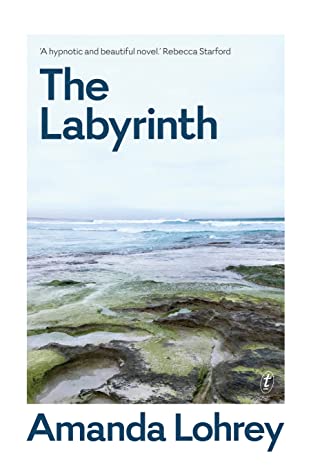
And the winner is: Amanda Lohrey’s Labyrinth

(Lisa will be pleased!)

Just to recap, from my shortlist post: Each of the shortlisted writers received $5000 from the Copyright Agency’s Cultural Fund, with the winner receiving $60,000 prize. This year’s judges comprised, as always, continuing judges and new ones, providing I think a good mix of experience and fresh ideas: Richard Neville (State Library of NSW), author and activist Sisonke Msimang, and critics Melinda Harvey, Bernadette Brennan and James Ley.

So, more on the winner …

This is Lohrey’s second listing for the Miles Franklin award, but her first win. The panel described the novel as a “profound mediation” on loss, with judging panel chair, Richard Neville commanding the “clarity” of her prose in exploring “loss at so many levels”. (Notably, Neville also mentioned the increasing cultural diversity appearing in the awards, by which I assume he meant, in the books submitted. Ninety-six titles were submitted.)

Amanda Lohrey spoke briefly, thanking various people – including family, publisher, editor, of course. She praised her publisher, the wonderful Text Publishing, for supporting “literary values” and she talked of the award’s benefactor, Miles Franklin, as “the great Australian nonconformist”. She also thanked the readers whom she described as an “indestructible tribe” in a world of Netflix (etc). She characterised the relationship between writer and readers as “an extraordinary exchange among strangers.” I like that.

Book cover

The presentation also included last year’s winner Tara June Winch congratulating Amanda Lohrey. She said that what she gained, in particular, from the award, was “a readership”. Isn’t that great to hear, because that – and the “gift of time” – is what we hope awards like this offer books and their writers.

And, finally, just for fun. Today The Sydney Morning Herald published an article on How to win the Miles Franklin: Analysing 64 years of data, by Pallavi Singhal. It looks at the usual issues like gender, origin (birth location, ethnicity), age, but also other points you may not have considered like length (“write about 400 pages”, it says), title style (“Begin your book title with ‘the’ and keep it short”) and publisher (Allen & Unwin is ahead at the moment)!

Do you have any thoughts on this year’s winner?

Monday musings on Australian literature: Talking literary awards

This Thursday will see the announcement of the winner of this year’s Miles Franklin Literary Award. It’s one of the more important days on the Australian literary calendar, but it has inspired another of those articles about the value of literary awards.

Now, we have discussed awards here before. Back in 2012, I wrote about them when the Queensland Premier’s Literary Awards were abolished by a new premier. In 2014 I wrote on Unpublished Manuscript Awards. And more recently, I wrote about the return of The Age Book of the Year Award. These posts, and others, have generated discussion about the value of awards, with both readers and writers commenting on whether they like them and why, so I won’t go there again.

Instead, I’ll share a couple of interesting ideas from the article I mentioned above. First, though, having planned this post a couple of days ago, I was surprised to find Stan Grant referring to awards in his book, On Thomas Keneally (my review). In 2016, he says, he was on a judging panel – with Thomas Keneally, in fact – for the NSW Premier’s Literary awards. They were judging the Indigenous writer category:

Ellen van Neerven, Heat and light, book cover

Keneally and a fellow judge strongly supported Pascoe, but I resisted, arguing instead for the merits of Ellen Van Neerven’s Heat and light, a dazzling work of fiction I considered of greater depth and literary worth than Dark emu. In the end we agreed that Pascoe and Van Neerven should share the prize.

I have reviewed both of these books (links on the titles), and for what it’s worth, I agree with Grant (despite the fact that, as he admits himself, “Dark emu has certainly had the greater cultural impact”).

Regardless, I’m sharing this because it beautifully introduces David Free’s article in last Friday’s The Sydney Morning Herald. Free is an Australian journalist and novelist who is not, I admit, well-known to me, but his provocatively titled article, “Judge a literary prize? No thanks, they’re all a giant waste of time”, makes some points worth sharing.

He starts anecdotally by sharing his experience of being asked to “serve on the judging panel of one of Australia’s most coveted literary prizes”, which he chooses not to identify. This doesn’t really matter in terms of what I want to share. He decides not to accept the invitation, largely because “the prospect of sitting down with a couple of strangers [the other judges] to haggle about our respective tastes in literature struck me as radically unappealing”. You can see why I started with Grant’s experience. Anyhow, he says

My literary taste is unorthodox, by current standards. I happen to think it’s sound and I do my darnedest to defend it in my criticism. But I’ve never been bold enough to imagine that my literary judgements amount to objective, provable truths.

Of course, this idea of suggesting that something is “best” dogs prizes in the arts, whether they be for books, paintings, films, whatever. We all know it, but prizes do have their benefits. Arguably, they can enhance sales, and the big money prizes do give their winners breathing space, an opportunity to devote some more time to their art.

If, however, we put these pros aside, and focus on the idea of prizes identifying works that we might like to check out, then I think Free has a couple of interesting ideas to consider.

The first one is to abolish judging panels and have “one judge only – a different person each year, chosen strictly on the strength of his or her literary expertise.” He knows the idea sounds “farcical”, that “people would denounce such awards as arbitrary”, as just an “expression of some random person’s taste”. He counter-argues, however, that the idea that panels make better decisions is a “furphy”:

It doesn’t matter how discerning each individual judge is. When human beings get together in groups, weird things happen. We feel pressured to conform – to say what we think we’re expected to say rather than what we believe. That’s why the verdicts of literary juries tend to be predictable, wholesome, obedient to the winds of trend.

I think he has a point. Do you?

It’s his other idea, though, that appeals more, because it aligns with my own use of awards. He suggests that we scrap the concept of the lone winner:

Let’s have a prize where there isn’t even a shortlist – a prize where the judges just announce their longlist of the year’s 15 best books, then split the winnings 15 ways.

This is more like it. He continues:

Admittedly this wouldn’t turbo-charge book sales the way our existing awards do, but in the long run it might promote a healthier relationship between fiction and the reading public. If diversity and inclusion are what we want, why not showcase these qualities on a longlist, instead of pretending they can somehow be embodied by a single writer? On longlists there’s room for different writers with different talents, doing all sorts of different things. There’s room for the quirky, the experimental – maybe even the humorous, once a decade or so. Sniff around a longlist for a while and you’re likely to find at least one book that floats your boat.

Isn’t this what all of us who look at longlists (and to some degree shortlists) like? It avoids the whittling down, he says, and all those arguments about which writer’s “turn” it might be, or which identity group has or hasn’t had a “fair shake already”.

Ultimately, he says, the best verdict is posterity. “Either a work lasts or it doesn’t … Crowd wisdom of that sort is very hard to argue with”. Actually, I think you can, because the “crowd” itself is often skewed, but I take his point, theoretically speaking.

Meanwhile, I will continue, as I have said elsewhere, to enjoy long- and shortlists, because that’s where many of the gems truly are.

What do you think?