Today, Wednesday 4 September, is Indigenous Literacy Day, which the Indigenous Literary Foundation (ILF) describes as “a national celebration of Indigenous culture, stories, language and literacy”. The day is intended to both promote awareness of disadvantage in indigenous communities, and to “encourage the rest of Australia to raise funds and advocate for more equal access to literacy resources for remote communities.”
I have been donating annually to ILF for the last few years, but there’s more I can do to support them and raise awareness. Writing this post is one of those ways.
It seems particularly relevant for me to do this this year, because the importance of supporting indigenous literacy, and, related to this, of spreading knowledge about indigenous languages was the impassioned parting message from Tara June Winch, Yvette Henry Holt and Jeanine Leane, at the Canberra Writers Festival Identity session.
Nha Nhunu Nhanjal? project
 A few weeks ago, I received an email from the ILF reminding me about Indigenous Literacy Day and telling me about a book they are publishing, commemorating both this day and this year’s International Year of Indigenous Languages. The book is Nha Nhunu Nhanjal?, and is the product of a special project. It was “written and illustrated by Yolŋgu Matha-speaking students from Nhulunbuy Primary School on the Gove Peninsula in North East Arnhem Land and was launched at this year’s Garma Festival”. An English edition of the book, titled I Saw We Saw, will be launched at the Sydney Opera House today, Indigenous Literacy Day. Students from Nhulunbuy, 4,000 kilometers away, will be present to read and perform from the Yolŋgu Matha version.
In the email, ILF quoted well-known Australian author Richard Flanagan, an ILF Ambassador, speaking at the Garma Festival:
“Every language is a universe, and each universe allows us to understand what it is to be human in a different, larger and richer way. Like a basket woven out of many pieces of grass, many languages make our societies stronger and better.”
ILF says, reiterating Winch and co’s message, that
It is vital for young children to have access to books in their language. And seeing their way of life reflected in books their own children and community have created, ensures that cultural identity and connections to country remain strong.
We all know this don’t we? Many of us love reading about other cultures, but our first home, our starting point has to be, and for most of us naturally was, books about our own culture.
How can you support indigenous literacy and culture?
There are many things you can do, of course, depending on your skills, abilties, interests and wallets. Here are some ways:
- donate to ILF (here)
- buy a book (or two) from the National Library of Australia’s Bookshop, online or in store, today, between 9am and 5pm, as they all be donating 5% of all sales made to the Indigenous Literacy Foundation. (Or from any other bookshop offering a similar donation to ILF today.)
- buy the English version of the book, to keep, give away and/or donate to your local school.
- hold your own fundraising activity, such as a Book Swap (doesn’t have to be today!)
- advocate for ILF on social media, tagging @IndigenousLiteracyFoundation on Facebook and Instagram, and @IndigenousLF on Twitter
Let’s do what we can to help indigenous Australians’ literacy. And let’s also do what we can to increase non-indigenous Australians’ understanding of an ongoing 60,000+ years culture that no other country in the world is lucky to have. I mean, really, how fortunate we are.
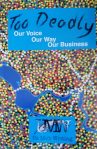 But wait, there’s more! Reed-Gilbert appeared again in my blog this year, twice in fact – for her contributions to two anthologies, Growing up Aboriginal in Australia, edited by Anita Heiss (
 Not only is it sad that we have lost such an active, successful and significant Indigenous Australian writer, but it is tragic that we have lost her so soon, as happens with too many indigenous Australians. So, vale Kerry Reed-Gilbert. We are grateful for all you have done to support and nurture Indigenous Australian writers, and for your own contributions to the body of Australian literature. May your legacy live on – and on – and on.
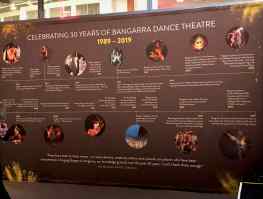 Last night we attended
  Some years, I’ve written an indigenous Australian focused Monday Musings post to start and conclude
 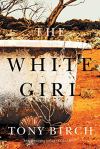 Birch speaks to Claire Nichols “about trauma, bravery and writing stories of the past” regarding his latest book The white girl (
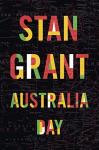 Conversations: Stan Grant
 Conversation with AWAYE!’s Daniel Bowning, including Lucashenko reading from Too much lip (
 A truer history of Australia,
 Alison Whittaker in conversation at Sydney Writers Festival,
 Documenting ‘the old language’ in Tara June Winch’s The Yield
 Alexis Wright in conversation with Elizabeth McCarthy,
 Stan Grant seems to be the indigenous-person-du-jour here in Australia. I don’t say this disrespectfully, which I fear is how it may come across given Grant’s views “on identity”, but it feels true – particularly if you watch or listen to the ABC. He pops up regularly on shows, sometimes as presenter, other times as interviewee. He therefore needs no introduction for Aussies. For everyone else, though, a brief introduction. Grant is described in the bio at the front of his book, On identity, as “a self-described Indigenous Australian who counts himself among the Wiradjuri, Kamilaroi, Dharrawal and Irish.” The bio goes on to say that “his identities embrace all and exclude none“. He is also a Walkley Award-winning journalist (see my
 This year’s NAIDOC Week theme is VOICE, TREATY, TRUTH. How better to celebrate this than through a post on early indigenous Australian literature which, like that of today, aimed to share truths about indigenous Australian experience. It’s a tricky topic because it’s only been relatively recently that indigenous Australian stories (novels, poetry, short stories, plays, memoirs) have been published. However, indigenous people have been writing since the early days of the colony.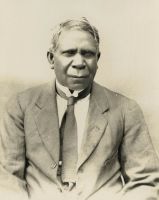
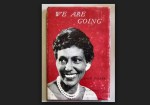 It would be over thirty years before another book by an indigenous writer was published, although during that time “letters, reports and petitions” continued to be written in support of “Aboriginal rights and constitutional transformation”. One of these activists was the poet and activist, Kath Walker (later Oodgeroo Noonuccal), and she was the author of that second book. Published in 1964, We are going was mistakenly described by

 Whispering Gums