In the comments on her post about Alan Paton’s Cry, the beloved country, Lisa (ANZLitLovers) commented that we need “politically aware authors to keep writing books that matter”. Hmm, I thought, most books I read matter, I think, but then a few posts later, when reviewing Jared Thomas’ Songs that sound like blood, she made clear that she meant by this “a yearning for books that tackle the issues of our time”. Ah, I thought, I can work with that idea – and so, here I am, working with it. Thanks Lisa for another Monday Musings inspiration.
The first question is, what are the issues of our time?
Off the top of my head, they would include indigenous rights, climate change and the associated issue of clean energy, asylum-seekers and refugees, women’s rights (including domestic violence), and sexual identity. There are many more, but let’s just work with these.
The second question, of course, is whether contemporary Australian literature – and here I’m meaning fiction, short and long form – is dealing with these?
Before I discuss this, a disclaimer, which is that, for me, books that matter don’t have to deal overtly with issues of the day. Jane Austen has often been criticised for not writing about the big issues of her day, which included the Napoleonic Wars and the impact of the industrial revolution. And yet, I’d argue that she did write about important personal and social issues – particularly concerning the condition of women. She just showed them – rather than explicitly told them.
So, let’s turn now to today’s issues – and I’ll confine myself to books written this century:
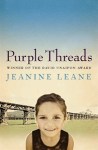 Indigenous rights: slowly, very slowly, we are seeing more books written by indigenous people which expose the impact on them of two hundred years of dispossession. There’s historical fiction like Kim Scott’s That deadman dance (my review) and Ali Cobby Eckermann’s Ruby Moonlight (my review), and more contemporary books like Jeanine Leane’s Purple threads (my review). These are just a few, but writers like Tony Birch, Melissa Lucashenko, Ellen van Neerven, Tara June Winch and Alexis Wright are getting their stories out. It’s up to us to seek them and read them so we can inform ourselves better. Lisa’s annual Indigenous Literature Week provides a good opportunity for us to do that.
- Climate and energy: some of the strongest books here are the cli-fi books like Jane Rawson’s A wrong turn at the Office of Unmade Lists (my review), Alice Robinson’s Anchor point (my review) and Annabel Smith’s The ark (my review), but other books like Stephen Orr’s The hands (my review) show the longterm impact on farms of climate change. It’s a topic which lends itself to speculative fiction, but it’s good to see more realistic fiction also exploring the subject.
- Asylum seekers and refugees: the plight of asylum seekers and refugees has been reasonably well covered in recent years, from all sorts of angles, by non-fiction writers, but what about fiction? Nam Le’s The boat included short stories about refugees – albeit Vietnamese boat people of the late 20th century – and A S Patric’s Miles Franklin award-winning Black rock white city deals with Bosnian refugees in Australian suburbs. Maxine Beneba Clarke’s short story collection Foreign soil explores the lives of migrants, and includes a story set in a detention centre. Irma Gold’s Two step forward (my review) also includes a (memorable to me) detention centre story – from an employee’s point of view. There are also children’s and YA books in this area but I’m not sure the specific issues we are facing right now are being actively covered by our fiction writers. If we believe that fiction can have a positive impact, then …
 Women’s rights: the most obvious recent book exposing women’s lack of “real” equality, is Charlotte Wood’s dystopian novel, The natural way of things (my review). Interestingly, the Copyright Council, in its Reading Australia program, listed last March (that is, 2016), “8 books to read on International Women’s Day”. It’s a good list, but none of the fictional works were written after 2000. Hmmm … I might have added a book like Danielle Wood’s Mothers Grimm (my review) which exposes at a more domestic, personal level the challenges confronted by contemporary mothers, and the way societal values and attitudes contribute, or even sometimes, create these challenges.
- Sexual identity: my sense is that this area is being increasingly covered by YA authors, exemplified by the book Lisa praised when she made the statement I’m exploring here. Australia has a growing number of LGBTQI writers. The Australian Women Writers’ (AWW) Challenge maintains a list of Lesbian and Queer Woman Writers, which is useful for anyone wishing to read more diversely. This is not to say, though, that all of their works are political or issues-based – and why should they be? Many write books in which diverse (aka non-heteronormative) sexual identities are a given. That in itself can be read as a political act because we all know the value of seeing ourselves reflected in the arts – in movies, television, books, and so on. Ellen van Neerven’s Heat and light (my review), for example, includes queer characters but their “queerness” is not the issue being explored. This is the point we are aiming for in the real world, but we are not completely there yet. As Yvette Walker wrote in a post for the AWW Challenge, “We appear. We disappear. We are in. We are out.” It’s a slow process.
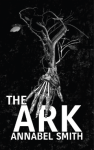
So, where have we got to in this weird, idiosyncratic (read, minimally researched) ramble I’ve produced? I’d say “the issues” of our day are being covered by our fiction writers, but not always explicitly or politically. The thing is, political novels – or novels of ideas – are problematic. Sometimes the story and the characters become subservient to the politics, which can result in very dull reading. The challenge for fiction writers who do want to explore “issues that matter” is to find “palatable” ways of doing so. Some of those can be (appropriately) in-your-face, like Charlotte Wood’s The natural way of things or Annabel Smith’s The ark or, even, Jeanine Leane’s more realistic Purple threads, while others are more subtle, preferring to let the reader identify the “issues” on the fly. My other conclusion is that short story writers, only a few of whom I included here, are worth checking out when looking for writing about “issues”.
I’d love to know whether you yearn for books that tackle the issues of our time and, if so, whether you’ve found much that meets your needs?
(And of course I’d love Lisa to add her perspective, because I’ve made assumptions from her comments that may very well have departed from her intention or meaning – and I’d like this to be a conversation.)





 Whispering Gums