The thing about these annual memes is that the questions became somewhat the same, which is fair enough as new bloggers appear on the scene as do new ideas. However, my challenge is whether I have anything to add to what I have written about novellas before? The answer is not a lot, but I did listen to the beginning of the 20/40 winners’ interviews on the Finlay Lloyd website. I didn’t listen for long, because it’s a combined interview and I haven’t finished reading the second book. My preference, where possible, is to gather and write my own thoughts before I hear other ideas (including those of the authors).
However, the interview started on the topic of novellas, and the two winners did have some interesting things to say about them which add to what I’ve said before. I’ll recap those ideas first by (re)sharing the Griffith Review’s Julianne Schultz on novellas. She said they are
stories that are longer and more complex than a short story, shorter than a novel, with fewer plot twists, but strong characters. Condensed tales that are intense, detailed, often grounded in the times, and perfectly designed for busy people to read in one sitting.
Most of the novella definitions out there say things like this – in more or less words, and with different emphases here and there. In the 20/40 Prize interviews, authors Kim Kelly and Rebecca Burton put their own interesting spins on it.
Kelly said novellas are books you can read in a couple of hours, without racing but also taking your time. Yes! Good call, I thought, because I do like to take my time with what I am reading, and this works well with novellas. I can take my time but not take forever! Kelly also commented on the value of novellas from the writer’s perspective. As a busy person, she says, she has little time for writing, but once a story “presents itself as a novella” she can see the finishing line and get there faster! I love insights like that into the practicalities of a busy writer’s life.
The interviewer and, more relevantly, the publisher, Julian Davies, made a point about structure, suggesting that a novella is long enough for the writer to develop something but not so long that such development can get away from them. Burton picked this up, saying that, with a novella, writers have time to develop but can still retain “a fleetingness”, a sense of “capturing a moment in time, a breath, a mood”.
I agree with all these definitions, but I’d like to add that novellas can also offer writers the possibility of experimentation. Writers can try things out without getting lost in excessive verbiage, or they can simply be experimental without being constrained by any expectations of form. I’m thinking, for example, of Ida Vitale’s Byobu (my review) or of Kate Jennings’ Snake (my review).
For this week 2 of the meme, we are also encouraged to suggest works that best capture the ‘spirit’ of a novella. I have done that before (Little Treasures and Classic Australian novellas), but let’s just say that in recent years I could add some new memorable books like Sayaka Murata’s Convenience store woman (my review) and Jessica Au’s Cold enough for snow (my review) which are condensed, intense, detailed tales focusing on a limited set of characters. But I could also add experimental books like Byobu, that aren’t that at all.
My participation in Nonfiction November has been sporadic, until last year when I managed to complete the whole series. Maybe I will again this year, maybe I won’t. We’ll see.
Nonfiction November, as most of you know, is hosted by several bloggers. This year, Week 1 – Your Year in Nonfiction is hosted by Heather at Based On A True Story, with variations on the usual first week questions.
But, here’s the thing. As we come to the end of 2023, I’m having to come clean on what a strange reading year I’ve had. You will hear more in my end-of-year roundups, but by then you’ll have had inklings from posts like this! Last year, I wrote for this post that I’d read about 25% more nonfiction than I’d read in each of the preceding few years. Last year’s (that is for 2022) non-fiction reading had comprised 45% life-writing, 45% essays, with the rest being “other” non-fiction. This year, since the end of last November, I have read only TWO nonfiction works and both have been memoirs.
What were your favorites?
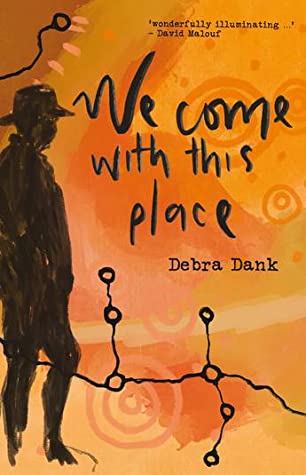
The two books are Debra Dank’s We come with this place (my review), and JD Vance’s Hillbilly elegy (my review). We are asked to name our favourites, which is always tricky for me, as I don’t tend to think in terms of “favourites”. Both these books provided truly fascinating insights, albeit in diametrically opposed directions. Dank is a First Nations Australian writer who conveys with impressive clarity just how the interconnectedness between her people, the ancestors and Country works, and how that translates into knowing Country, while Vance was a poor white hillbilly from Kentucky who is now a Republican politician and, last I heard, a Trumpian. You won’t be surprised I think to hear me say that while I found Vance enlightening in terms of contemporary US politics, Dank’s book is by far my favourite. She bowled me over with her generosity.
Have you had a favourite topic, and Is there a topic you want to read about more?
I’m bundling there two questions together because clearly I didn’t review enough nonfiction this year to have a favourite topic, but what I’d like to read more are books on my favourite interests areas – literary biographies, nature writing, and works about social justice/social history.
I have several literary biographies, in particular, on my TBR, so maybe next year I’ll have a fuller report to make. In terms of the third area – social justice/social history – I must say that reading more nonfiction from First Nations writers, like Debra Danks’ book, is what interests me right now.
What are you hoping to get out of participating in Nonfiction November?
As I wrote last year, I am not looking for more recommendations – not because I am not interested but because I have too much on my TBR already without adding to the pile (physical and virtual). However, I always like book talk, and the book talk I most like is that which focuses on areas that interest me (see above), and which talks about wider issues like why do we read nonfiction, what do we look for, and what makes a good nonfiction read?
I love novellas and have written on and reviewed novellas almost since this blog started, because I love the form, but I have only tinkered around the edges of Novellas in November (run by Cathy of 746 Books and Rebecca of Bookish Beck). Last year, I wrote a Monday Musings on Classic Australian novellas and the year before I did one on Supporting Novellas (here in Australia). Otherwise, I have written a few novella reviews for the month. But I have not focused on the weekly themes suggested by Cathy and Beck. I may not again, because I might become a bit repetitive, but I’m going to start at least.
However, this has been a very strange reading year for me, so I won’t have a lot to say, which is probably good, as it means my posts will be short for you to read! For Week 1, which just runs from 1 to 5 November, the theme is “My year in novellas”. It asks us to write about novellas we’ve read since last November.
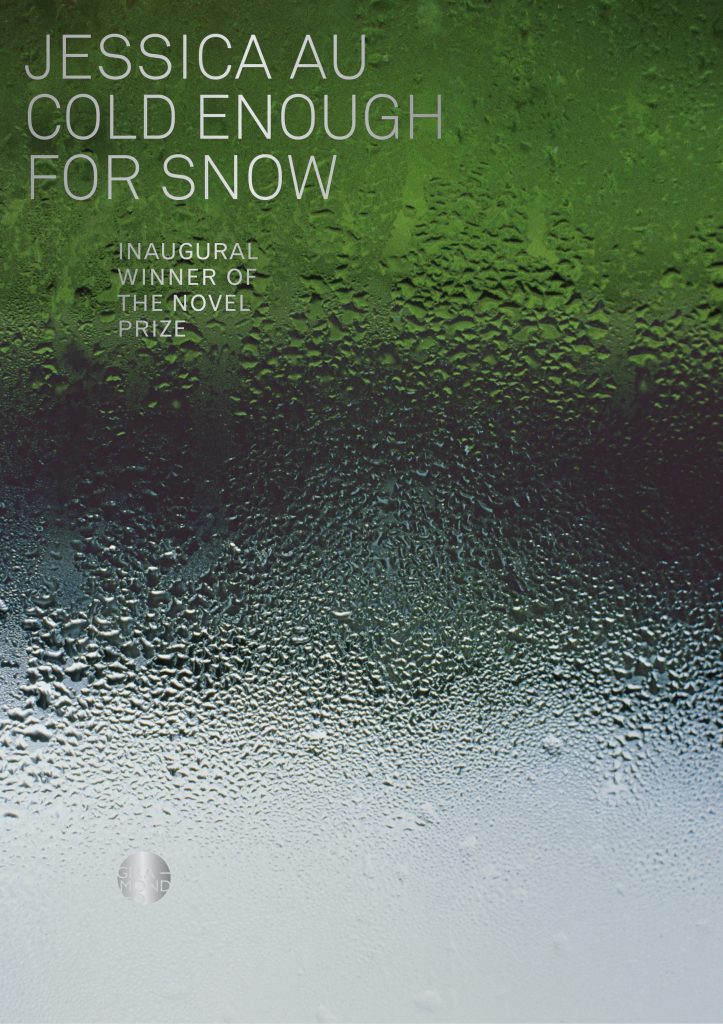
Well, I’ve only read one, and that was Jessica Au’s quiet, meditative, award-winning Cold enough for snow (my review). It was the inaugural Novel Prize winner, and also won the Victorian Premier’s Literary Awards prize for fiction (as well as being the overall winner). It’s been shortlisted for more prizes, including, most recently the Prime Minister’s Literary Awards fiction prize. It’s one of those books that’s perfect for the novella form, because it’s an intense, concentrated book rather than a plot-driven page-turner. It says a lot that it has held its own so well in the “novel” world – in terms of awards and overall critical reception – despite its short length. (See publisher Giramondo’s site for its awards to date.)
Cold enough for snow tells the story of a mother-daughter trip to Japan, but its focus is not the trip. Told from the daughter’s point-of-view, it tells about a relationship that is characterised by closeness and distance, by tender caring and frustration, by needs that aren’t always satisfied perhaps because they can’t always be, by a desire to connect. For me it was about the paradoxical nature and mutability of life. But everyone who reads this book – as in my reading group – seems to see something different because it speaks so closely to our individual experiences of life and close relationships. The Prime Minister’s Literary Award judges capture this well in their comment (see the Giramondo site above) that it is “intricately structured and with a flow and reach that, like all remarkable writing, is without boundaries”. “Without boundaries” is a good description …
Au’s book might have been my only novella review in the last twelve months, but all has not been quiet on the novella front. Back in July I wrote a Monday Musings about support for “short novels” from various points of view over the first half of the 20th century – that I found in Trove. And, just a few days ago I wrote about the winners of the new 20/40 novella prize being run by Finlay Lloyd publishers. I plan to read these two winners for this year’s Novellas in November.
Introducing my first review for the 1962 Year Club – Shirley Hazzard’s “The picnic” – I said I had read two short stories and might post on the second one. I am doing so now but, stupidly, I left the book back in Canberra and here I am in Melbourne, so my post will be limited, and without the usual quotes to convey Porter’s writing style. But, it was this, or not at all, because by the time we return home, I will be onto other things. I am cross though, because Kerryn Goldsworthy did write a useful introduction, which, if I remember correctly, placed Porter as part of a change in short story writing from the more realist school that had held on strongly since Lawson.
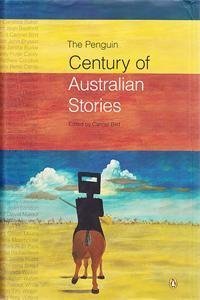
Like Hazzard’s story, “Francis Silver” appears in the Carmel Bird edited anthology, The Penguin century of Australian stories.
Who was Hal Porter?
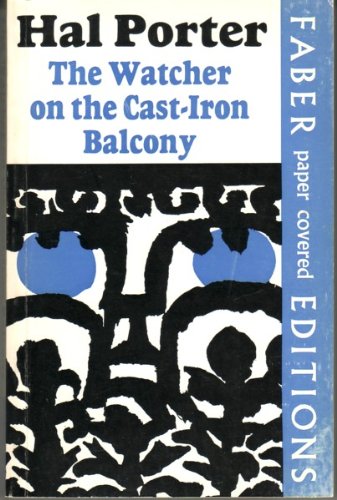
Porter (1911-1984) was an Australian novelist, playwright, poet and short story writer. His first autobiography, The watcher on the cast-iron balcony (1963), is regarded as a classic.
The Wikipedia article, linked on his name, is relatively brief, but there is a more thorough biographical entry for him in the Australian dictionary of biography (ADB). Written by literary critic and academic, Peter Pierce, it tells us that he had many occupations, including teaching (on-and-off at many schools), librarian, and shorter term jobs like window-dresser and sheep-station cook. But, cutting to the chase, it also reveals Porter as a problematic figure, because of his pederast behaviour. Peter Pierce writes, for example, that, around 1940, he had “an affair” with a male student at the school where he taught, “an indiscretion that went unpunished”. Those were the days, I suppose. This “affair” – should we grace it with that description? – is apparently fictionalised in his short story “The dream”.
Pierce also writes that, in her 1993 book, Hal Porter: Man of many parts, Porter’s biographer, Mary Lord was, “even-handed in judging an old friend and sensational in revealing Porter’s paedophilia, in particular his sexual relations with one of her sons.” Hard to understand. Moreover, Pierce says that Porter’s third autobiography, The extra (1975),
ventilated many of Porter’s prejudices — against Jews, ‘foreigners’ and Aborigines. The counterpart of Porter’s grace, charm and cultivation was an intense snobbery that, for instance, saw him elevate his father’s occupation from engine-driver to engineer. His facility at winning friends was matched by ceaseless demands on their patience.
So, a difficult man, and one I thought twice about sharing here. However, I read the story, liked it, and as it doesn’t smell of these difficult issues, I am covering it in the uncomfortable spirit of separating the work from its creator. Peter Pierce described him in his 2012 ADB entry as “one of the finest of all Australia’s authors of short stories and a pioneer of the first flowering of autobiographical writing in this country”. (This piece by the late academic Noel Rowe explores the Porter issue in depth.)
“Francis Silver”
“Francis Silver” is a first-person story in which an older man tells of fulfilling a deathbed request from his mother who had died at the age of 41 when he was 18. All through his childhood, he had heard about a man called Francis Silver, who, his mother had implied, had been not only a beau, but an alternative potential husband to the country-living man she did marry, the narrator’s seemingly long-suffering father.
Through our narrator’s childhood, his mother had shared with him an album of postcards sent to her by Francis Silver. Along with sharing this album, she had told stories about this man which suggested he was a worldly, debonair man, who loved the theatre. Her wish was for him to give the postcard album to Silver – but, on no account, was he to also give the lock of her hair that she had kept in an envelope with Francis Silver’s name on it. He was to burn that.
Francis Silver, his mother told him, had worked in a picture-framing shop, and that is where our narrator finds him – but what he finds doesn’t gel at all with the stories his mother had told. The story, then, is about memory, illusion and reality, and the boy’s recognition of the difference. In his own romantic fantasy, he had decided to ignore his mother’s second request and give Francis Silver (whose name works as a mantra in the story, hence my using it in full for each reference here) the lock of hair too. But, as he confronts reality, he changes his mind. The closing sentence vividly conveys his decision in an act that encompasses layers of meaning and feeling.
The father is a less developed figure, because the son was in his lively mother’s thrall, but the sense we get is of a man who loves his wife, and who tolerates her flights of fancy, feeling comfortable, it seems, that she chose – and remains with – him. He seems to recognise (or trust) that Francis Silver is one of those escape fantasies people have to help them cope with the tedium of life, the fantasy that, should it get too hard, there were, or perhaps even are, other options. The narrator, as a boy, doesn’t understand these nuances.
There was a strong autobiographical element, I understand, to Porter’s writing. From the little I read for this post, I am aware that there are such elements in this story. For example, Porter’s beloved mother died when he was 18 years old, as does the narrator’s mother in this story. How much else might be autobiographical though, I don’t know.
Anyhow, just to finish … in the end, the narrator resolves the differences he confronts and is generous to his father for whom Francis Silver had seemed an imagined (if not, as it turns out, real) rival. Our narrator has also learned something about the imagined, illusory past, and its relationship to present realities. A tight, neat, engrossing story.
Hal Porter “Francis Silver” (orig. pub. in Hal Porter, A bachelor’s children, 1962) in Carmel Bird (ed.), The Penguin century of Australian stories Camberwell: Penguin Books, 2006 (first ed. 2000) pp. 186-197
As I have done for most “year” reading weeks*, I decided for 1962 to read a short story by an Australian author. I read two, in fact, and may post on the second one later.
Today’s story, though, is Shirley Hazzard’s “The picnic” which I found in an anthology edited by Carmel Bird, The Penguin century of Australian stories. It was my mother’s book, which Daughter (or Granddaughter to her) Gums gave her for Christmas 2006. I’m glad she kept it when she downsized. Shirley Hazzard is a writer I’ve loved. I have read three of her books, including the novels, Transit of Venus and The great fire, but all of this was long before blogging. I have mentioned her on the blog many times for different reasons, but an early one was in my Monday Musings on expat novelists back in 2010.
Who was Shirley Hazzard?
Hazzard (1931-2016) is difficult to pin down, and can hardly be called Australian given she left Australia in 1947 when she 16, returned here briefly, but left here for good when she was 20. Wikipedia calls her an Australian-born American novelist. As I wrote in my expat post, Hazzard didn’t like to be thought of in terms of nationality. However, she did set some of her writing in Australia, and did win the Miles Franklin Award in 2004 with her novel The great fire, against some stiff competition.
According to Wikipedia, she wrote her first short story, “Woollahra Road”, in 1960, while she was living in Italy, and it was published by The New Yorker magazine the following year. This means, of course, that “The picnic”, first published in 1962, comes from early in her writing career. Her first book, Cliffs of fall, was published in 1963. It was a collection of previously published stories, including this one. Her first novel, The evening of the holiday, was published in 1966, and her second, The bay of noon, was published in 1970, but it was her third novel, The transit of Venus, published in 1980, that established her.
She is known for the quality, particularly the clarity, of her prose, which, it has been suggested, was partly due to her love of poetry
“The picnic”
It didn’t take long for me to discover that “The picnic” is the second story of a linked pair, which were both published in The New Yorker in 1962. Together they tell of an affair between the married Clem and a younger woman, Nettie, his wife May’s cousin. The first story, “A place in the country”, concerns the end of the affair, while in “The picnic” the ex-lovers meet again, eight years later. They are left alone by May, probably deliberately thinks Clem, while she plays with their youngest son down the hillside.
This is a character-driven slice-of-life story in which not a lot happens in terms of action but which offers much insight into human nature – and into that grandest passion of all, love.
In 2020, The Guardian ran a review of Shirley Hazzard’s Collected stories, edited by Hazzard biographer Brigitta Olubas. Reviewer Stephanie Merritt writes that “Hazzard’s recurring themes here – enlarged upon in her novels – are love, self-knowledge and disappointment”. From my memory of Transit of Venus in particular, this rings true. And, it is certainly played out in “The picnic”.
So, love, albeit a failed love, is presumably played out in the first story, but in this story it is still present in its complicated messiness. The two ex-lovers look at each other uncomfortably. Self-knowledge is part of it, but it’s not easily achieved for Clem for whom self-deception has also powerful sway. There’s resignation about love – “an indignity, a reducing thing” which he sees can be a “form of insanity” – and about marriage, which involves “a sort of perseverance, and persistent understanding”. There’s also a male arrogance. He didn’t, he realises, “know much about her [Nettie’s] life these past few years – which alone showed there couldn’t be much to learn”. By the end of his reverie, he comes to some self-understanding, despite earlier denials, about his true feelings and about the decision he’d made. Whether the reader agrees or not, he feels he has “grown”.
Nettie’s reveries tread a roughly similar path. There’s not a lot of regret to start with. She sees he is nearly fifty, and with “a fretful, touchy air”. She sees his self-deceptions, and his caution, and yet her feelings, like his, are conflicted. For her, too, love is a complicated thing:
… one couldn’t cope with love. (In her experience, at any rate, it always got out of hand).
What I haven’t conveyed here, because you have to read it all to see and enjoy it, is the delicious way Hazzard conveys their internal to-ing and fro-ing, through irony and other contradictions. They say nothing to each other, but in their thoughts and observations, while they rationalise what happened and why it was right, they reveal their true feelings. Love and disappointment or disillusion live side by side, never quite resolved.
The story is told third person but from shifting perspectives. First Clem, followed by Nettie, reflect on their situation at some length. Then, in a surprise switch, the short last paragraph moves to May, whose feelings neither of them had seriously considered in all their internal ponderings. But Hazzard makes sure we see them. This technique reminded me of Kevin Brophy’s very different short story “Hillside” which does a similarly powerful switch of perspective in the last paragraph. In both cases, concluding with the perspective of someone who is both outsider but very much affected by the situation just nails it.
Not only did I enjoy this story, but I’m very glad to finally have Hazzard reviewed on my blog.
Shirley Hazzard “The picnic” (orig. pub. The New Yorker, 16 June 1962) in Carmel Bird (ed.), The Penguin century of Australian short stories Camberwell: Penguin Books, 2006 (first ed. 2000) pp. 178-185
The 1960s was an exciting decade for those of us who lived it. Change was in the air, and we truly thought we were making a fairer society. (Little did we know.) Wikipedia describes it thus:
Known as the “countercultural decade” in the United States and other Western countries, the Sixties is noted for its counterculture. There was a revolution in social norms, including clothing, music (such as the Altamont Free Concert), drugs, dress, sexuality, formalities, civil rights, precepts of military duty, and schooling.
I was in primary school in 1962, and my life was simple and stable. It wasn’t until the mid to late 60s that I became caught up in the excitement in the air. This is not only because I was a bit older, I think, but because the momentum was still building in the early part of the decade. However, there were hints of change in my 1962 research. But, let’s start with the books …
I found books published across all forms, but given my focus is fiction and I want to keep things a bit tight here, I’m just sharing a selection of 1962-published novels:
James Aldridge, A captive in the land
Thea Astley, The well dressed explorer (Lisa’s review)
Criena Rohan (pseud. for Deirdre Cash), The delinquent
Donald Stuart, Yaralie
Geoff Taylor, Dreamboat
Ron Tullipan, March into morning
George Turner, The cupboard under the stairs (Lisa’s review)
Arthur Upfield, The will of the tribe
Children’s literature was going strongly at the time, with books published by authors still remembered as writers of our children’s classics, such as Nan Chauncy, Ruth Park, Ivan Southall, P.L. Travers, and Patricia Wrightson.
There were very few literary awards at the time. The ALS Gold Medal went to Vincent Buckley’s Masters in Israel, and for the first time since I started taking part in the Year Club, the Miles Franklin Award was in existence. It was shared by the Thea Astley and George Turner novels listed above. There was also, though Wikipedia doesn’t list it, the ACTU Dame Mary Gilmore Award, but I plan a special post on it, so watch this space.
Writers born this year are mostly still around though I haven’t reviewed many: Matthew Condon, Alison Croggon (my post on her memoir), Luke Davies, and Craig Sherborne. Deaths included the novelist Jean Devanny and poet Mary Gilmore. The librarian Nita Kibble (for whom the Nita B Kibble Awards – now seemingly in abeyance – were named) died this year, as did the critic HM Green.
The state of the art
Of course, I checked Trove to see what newspapers were saying about Australian literature, and fiction in particular, and will just share two threads I found.
First Nations Australians
With the devastating loss of The Voice referendum here last weekend, I would like to start with some First Nations (or Aboriginal) Australians that came up in my Trove travels, which mainly involved references to writers including Aboriginal characters in their books. One was Helen Heney (1907-1990) whose father was the first Australian-born editor of the Sydney Morning Herald. Heney wrote several novels – plus social commentary, translation and a biography – but the one published in 1962 was The leaping blaze. It is set in a station in western New South Wales, which is now in the hands of the latest generation, the “spinster” Evangeline Wade. The Canberra Times’ reviewer (January 5, 1963) explains that Evangeline has been frustrated through her life, and now wants power over others. Part of her plan is to create an “aboriginal station on her property as. an experiment”, but this plan, says our reviewer, is “motivated more by a desire to gain further power than it is to further native welfare”. Unfortunately, our reviewer continues, the novel lacks a clear focus, which
is a pity because Miss Heney is essentially a writer of ideas. She is not just telling a story. / She is obviously out to give her views on a number of sociological problems but the canvas is too large for anything more than a casual sketching of them.
The other novel I want to share is Yaralie by Donald Stuart (1913- 1982) which tells “the story of the daughter of a white father and a half-caste mother, and the people among whom they live”. The Nepean Times’ reviewer (October 11) writes:
Told with a good deal of warmth, the story is set in a native settlement in north-west Australia during the depression and deals with the ever-present problem concerning the treatment of the aborigines in a white Australia.
Donald Stuart is new to me, but seems worth following up. His work is sure to be dated now we have First Nations people telling their own stories, but he’s part of a tradition. Wikipedia says
Stuart attempts to view the world from the Aboriginal point of view, making him one of the few Australian writers, along with anthropologists such as T.G.H. Strehlow, Charles Pearcy Mountford, Ronald Berndt and Catherine Berndt, to even attempt to come close to a personal knowledge of Aboriginal people.
Realist literature and The Australasian Book Society
The main thread I found through Trove, however, concerned communist writers and realist literature. This emphasis might be partly due to the fact that Trove’s content in this period is somewhat skewed as the Australian Communist Party’s newspaper, Tribune, has been digitised, because, like The Canberra Times, they have given permission despite still being under copyright.
However, before I searched Trove, I had already noticed the significant number of authors in the list who were Communists – often members of the Communist Party of Australia (CPA) – or Communist-sympathisers, so the slant may be real to some degree! Anyhow, what these writers tended to write were realist (or social realist) novels, the preferred genre for Communist writers.
It was clear from several articles that these social realist writers felt under-appreciated at home. The Tribune regularly reported on the success of Australian social realist writers overseas. On January 17, the Tribune wrote that CPA-member Dorothy Hewett’s realist 1959 novel, Bobbin Up, about women in a spinning factory, was “becoming a novel of world repute” with translations being published, or to be published, in the German Democratic Republic, Rumania, Hungary and, very likely, the Netherlands.
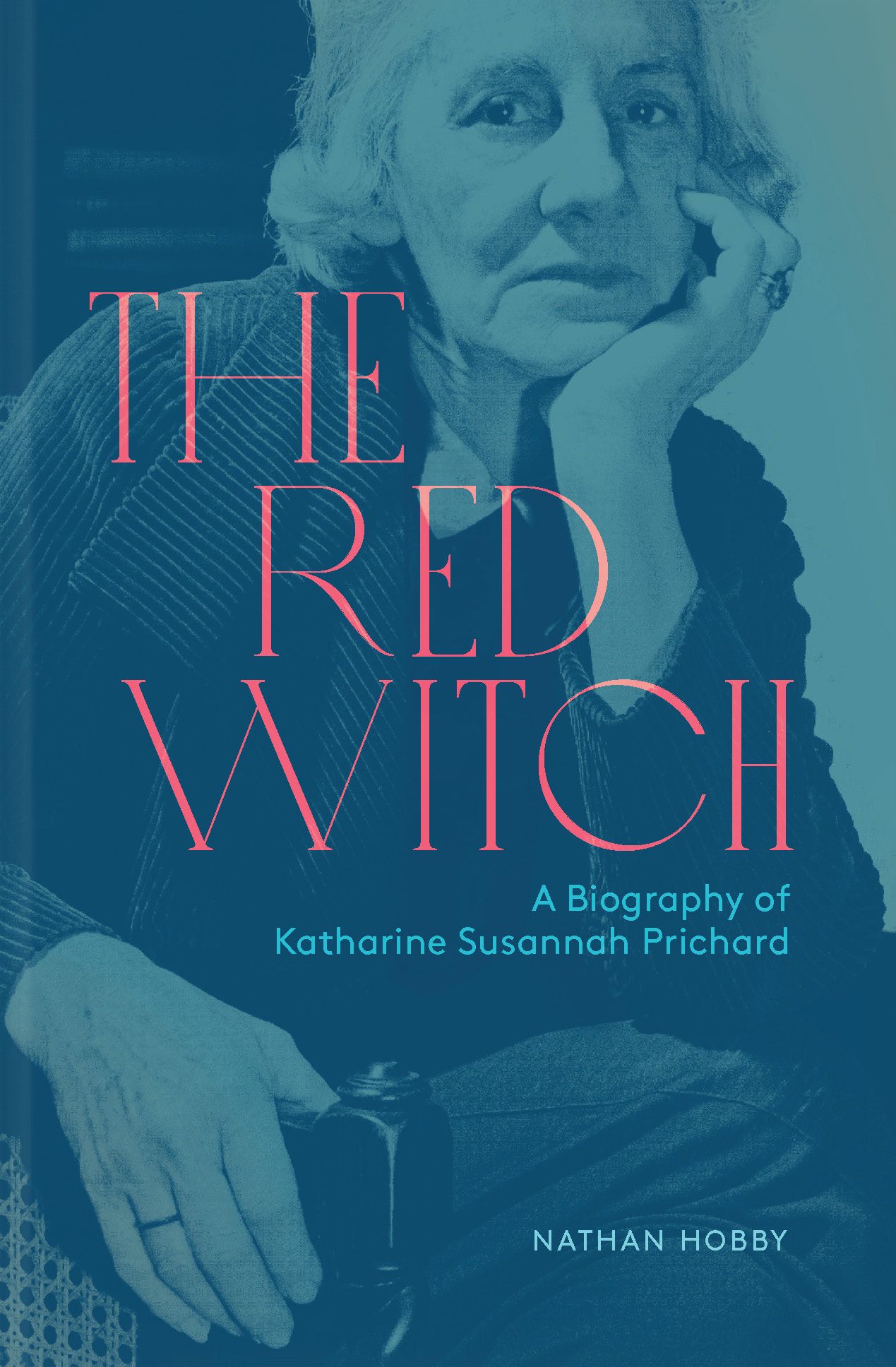
And on February 7, under the heading “Success despite critics”, the Tribune advised that another book by an Australian Communist author was garnering interest overseas ‘despite class-prejudiced criticisms by Australian daily press “experts”.’ Progressive authors like Katharine Prichard, Frank Hardy, Dorothy Hewett, and Mona Brand were being published overseas, it said, and now they’d heard Judah Waten’sShares in murder, “a murder story that is different because of its social exposure content” was to be serialised in New Berlin Illustrated, and published in book form in Germany, Czechoslovakia, and, they expected, the Soviet Union.
It is this very Judah Waten who, in another article, is scathing about Australia’s literary darlings of the time. On March 28, again in the Tribune, he wrote:
In Australia today the writers who are acclaimed in the daily press, win awards and prizes are those distinguished for the obscurity of their prose, their irrational characters, their dream symbolism, parallels to ancient myths, feudal attitudes and pornography.
Who are these writers? Patrick White? Hal Porter? Thea Astley too perhaps?
I also noticed that many of the books praised in the Tribune were published by the Australasian Book Society, so I went hunting, and found a seminar was held about it in 2021. The seminar promo described the Society as
a mid-twentieth-century, book-club style, cooperative publisher with a subscription model that promised four books a year to members and distribution through unions, industry associations, education organisations and the communities of the organised left in Australia, including the communist party. It sought to find readers who did not read literature and to develop writers who did not yet write it.
Fascinating. In 1962, this Society celebrated its 10th anniversary … but, like the Dame Mary Gilmore Prize, I think it deserves its own post.
Meanwhile, just to show that not all my research ended up at the Tribune, I’ll close with a review from The Canberra Times of Ron Tullipan’s novel March into morning, which was published by the Australasian Book Society in 1962, and won the Dame Mary Gilmore prize. It tells the story of a man “who started life as a ward of the State and was hired out to a slave-driving cocky, whose only interest in him was how to exploit him”. Writing on September 29, reviewer G.C.P. says it
may sound like one of those hopeless novels whose authors are only concerned to spit into Authority’s eye and point out wickedness in high places. / Fortunately, it is not, and reads more like an honest piece of reporting.
G.C.P. assesses its strengths and weaknesses, and concludes that “it is not great literature, [but] it is a very readable book”. Judah Waten would probably see this as damning it with faint praise!
Sources
1962 in Australian Literature (Wikipedia
Joy Hooton and Harry Heseltine, Annals of Australian literature, 2nd ed. OUP, 1992 (with Bill’s help)
Previous Monday Musings for the “years”: 1929, 1936, 1954 and 1940.
Do you plan to take part in the 1962 Club – and if so how?
Back in January I reviewed two stories from Ellen van Neerven and Rafeif Ismail’s anthology Unlimited futures: Speculative, visionary Blak+Black fiction for Bill’s (The Australian Legend) Australian Women Writers Gen 5 Week. The stories I reviewed were the second and third in the anthology because they were the first two by Australians in it. The anthology’s first story, however, is African in origin. Titled “The River”, it is by Tuesday Atzinger, who is described in the book’s Biographical Notes as “a poet and emerging writer … [who] … explores and celebrates Afro-blackness, queerness, disability and feminism. They peddle in discomfort and their primary goal is to fling words together to make you squirm”. Atzinger currently lives in Melbourne “on the unceded lands of the Wurundjeri People of the Kulin Nations”.
“The River” is worth discussing for several reasons, but specifically because it’s the first piece in the anthology, so was, presumably, chosen for a reason. Some of that reason is explained in the anthology’s introduction, which, by the by, takes the form of a conversation between the two editors. One of the topics they discuss is the cover, which was designed by Larrakia woman, Jenna Lee. Ismail describes it as looking at “the interaction of separate cultures in the most respectful and wonderful way”, and also sees it as suggesting “infinity”. It does, doesn’t it. Van Neerven adds that it also reflects “the movements of water” in the anthology. She says:
We were going to begin the anthology with water to allow those kinds of threads of connection and continuation to flow into each other. For me the cover really kind of feels like rivers connecting and the light that is created through water, but it’s also water that we protect and have a relationship and a responsibility to.
Water! Such a complex element in our lives. Most of my friends adore the sea, but for me it’s the rivers that draw me most. They can be young, direct, and fast, or slow, meandering, and somehow wise, or anything inbetween. They can be critical to creation stories, and this role is part of Atzinger’s opening story, making it particularly appropriate as the opening piece.
The first thing to say about “The River” is its form – it is a short story in verse. The River is not named, but we know it’s in Africa, partly because an African word, Ubuntu, is repeated throughout the story: “Ubuntu/Together”. According to the New World Encyclopedia ‘Ubuntu pronounced [ùbúntú], is a traditional African concept. The word ubuntu comes from the Zulu and Xhola languages, and can be roughly translated as “humanity towards others”.’ It has been adopted more widely around the world for its humanistic concepts – and is also, would you believe, “used by the Linux computer operating system” to convey the sense of bringing “the spirit of Ubuntu to the software world”. Valid appropriation? I didn’t find much concern about this use on the ‘net.
Anyhow, to the story itself. We are immediately introduced to the River, and a village that lies near it. The word “prosperous” is used, but we are warned that things aren’t so simple:
Shallow water so clear that the stones beneath it glistened brightly Depths dark and mysterious, hiding all that lay below The River, ever a source of sustenance And of danger
The story starts with creation: “Eons ago/The River had rippled in welcome as the people first arrived”. It provided refuge and sustenance; it saw “passion, grief, joy and courage”; it saw, in other words, the life of the community, of “the people who slept under the sun”. It had also seen “a lineage of Chiefs/Some wise, some brave, some imperious” until the present one “Mehluli – the Warrior Chief”. He is described in words like “proud”, “arrogant”, “dominating” and “greedy”. He desires a woman, Thandeka, but she already has a “perfect love” with Amandla, a hunter. Amandla fears the River, fears the aformentioned danger, and while she’s away hunting her fears are justified when the Warrior Chief makes his move on Thandeka.
The problem is that you “cannot refuse the chief”. Violence ensues. The River acts in an unusual way, and a dramatic story follows as Thandeka fights back, as does the River, to right the balance that has been disturbed. It is, ultimately, a story with a moral, a story to teach proper behaviour, right values.
The story is told in a beautiful, poetic style. The changing rhythms and strong use of repetition convey elemental and opposing tones – prosperity and togetherness versus power and greed. “The River” is a thoroughly enjoyable read. It is founded in the sorts of lesson-giving stories that are part of most belief systems, but its queer-love narrative brings the story and its traditional message into modern thinking and times. A worthy first story for the anthology, I think.
Tuesday Atzinger “The river” in Ellen van Neerven and Rafeif Ismail (ed.), Unlimited futures: Speculative, visionary Blak+Black fiction North Fremantle: Fremantle Press in association with Djed Press, 2022 pp. 23-41 ISBN: 9781760991463 (eBook)
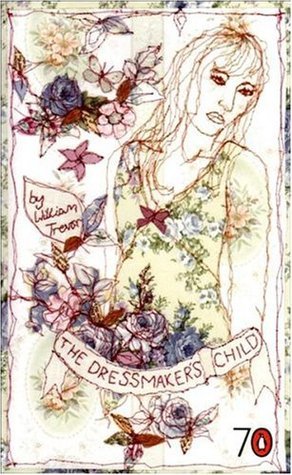
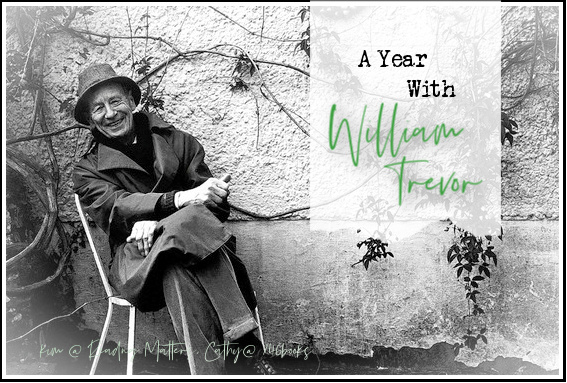
I knew, when Kim (Reading Matters) and Cathy (746 Books) announced their “A year with William Trevor” project, that I had a little book containing some William Trevor short stories but, could I find it? Nope. It was a little book after all. And then, voilà, just the other day while I was doing my book decluttering and packing, I came across it. It’s Pocket Penguin 22 from Penguin’s 70 Years celebration, and is called The dressmaker’s child, but it contains three short stories, so these will be my (very willing) contribution to the project. Two of the stories were chosen by the author from previous collections, but for the titular story this is its first appearance in book form.
Most of you will know of Trevor (1928-2016) but, in a nutshell, he’s an Irish writer of novels and novellas, short stories and plays. He won many literary awards in his life, and was particularly well regarded as a short story writer – making him right up my alley. In fact I have read one of his short stories before, early in this blog.
In her most recent Trevor review (of a novel titled The children of Dynmouth) kimbofo writes that it didn’t take her long to feel that she was in “familiar William Trevor turf in which he takes a seemingly ordinary character with eccentric traits and lets them loose in a confined setting”. This could apply to the short story, “The dressmaker’s child”, as it is about a young nineteen-year-old motor mechanic, Cahal, working for his father in a small town. He’s the only son in a family of girls – all of whom have left – and he is “scrawny” with a “long face usually unsmiling”. The story opens on him applying WD-40 “to the only bolt his spanner wouldn’t shift”, which sets a tone that perhaps other things are, or might be, locked up for our protagonist.
As he continues to work on the car, a young Spanish couple appears, wanting to be driven out to see the Sacred Virgin (Our Lady of Tears) who they believed – that is, they had been told so by a barman – would bless their marriage. Now Cahal knows the statue’s special spiritual status had been disproved and thus rejected by the church, but with a 50-euros job in the offing, he doesn’t actively dissuade them from their mission.
Trevor describes the trip, complete with hints of self-delusions, until on the way home Cahal’s car hits a child – the dressmaker’s child – who is known to run at cars and who, up till then at least, had never been hurt. With the Spanish couple kissing in the back of the car, and choosing avoidance over action, Cahal continues driving despite being aware of “something white lying” on the road behind him. Back in town, nothing is said about the dressmaker’s daughter for a few days, but Cahal remains uncertain. It affects his relationship with his young woman, and when the dressmaker herself starts to appear in town at his side, hinting that she knows what had happened, but is not reporting him, his fears and uncertainty increase.
This is not a thriller, but there is a plot and an ending (of course) so I will leave the story here. It’s nightmarish stuff, but very real too.
Trevor’s writing, his unfolding of story and character, is a pleasure to read. Take Cahal’s character, for example. From the stuck bolt (albeit does start to loosen, hinting at possibilities), he is depicted as rather gormless, bowling along, taking opportunities as they come without a lot of consideration – and somewhat different to his father who, during a conversation about the Swedish couple, shakes his head “as if he doubted his son, which he often did and usually with reason.”
This brings me to the point of the story which, as we are slowly brought to see, is the impact on Cahal of what he did or didn’t do – and the almost catatonic fear it engenders:
Continuing his familiar daily routine of repairs and servicing and answering the petrol bell, Cahal found himself unable to dismiss the connection between them that the dressmaker had made him aware of when she’d walked behind him in the night, and knew that the roots it came from spread and gathered strength and were nurtured, in himself, by fear. Cahal was afraid without knowing what he was afraid of, and when he tried to work this out he was bewildered.
It changes his life – not in the way we might expect but in a way that shows with absolute clarity how avoidance and inaction can be as potent as anything else. Trevor, like my favourite short story writers, is less about drama and more about the complex realities of human interaction in which accommodations rather than simple resolutions are more often the go. I look forward to the next story.
William Trevor “The dressmaker’s child” in William Trevor, The dressmaker’s child London: Penguin Books, 2005 pp. 1-20 ISBN: 9780141022536 (First published in The New Yorker magazine, October 4, 2004: available online)
As I have done for some previous “year” reading weeks*, I decided for 1940 to read a short story by an Australian author. After a bit of searching I settled on Myra Morris, and her story “Inspiration”, because … let me explain.
My last two Australian contributions for these reading weeks were works by men – Bernard Cronin and Frederic Manning – so this time I wanted to choose one of our women writers. I found a few in Trove, but the one that caught my eye was by Myra Morris, because she was already known to me: in my Monday Musings for the 1929 year, and back in 2012 in another Monday Musings where she was listed by Colin Roderick in his Twenty Australian novelists. She also has an entry in the ADB. Clearly she had some sort of career at least, even if she is not well remembered now.
Who was Myra Morris?
ADB‘s article, written by D.J. Jordan in 1986, gives her dates as 1893 to 1966. She was born in the Mallee town of Boort, in western Victoria, to an English father and Australian mother. Her literary abilities were encouraged by her mother and an English teacher at Rochester Brigidine Convent, and she had verse published in the Bulletin. From 1930 she was part of Melbourne’s literary, journalistic and artistic circles, and “was active in founding and organising the Melbourne branch of P.E.N. International”. Her circle of friends, it appears, included Katharine Susannah Prichard.
While she wrote book reviews, novels and essays, her favourite form was, apparently, short stories. She was published in newspapers, and her short stories have been anthologised, but there is only one published collection of her stories, The township (1947). Translations of her work were published in Germany, Austria and Switzerland.
Jordan writes that she:
has been acclaimed as one of Australia’s best short-story writers. Her clear pictures of life in country and town contain a wide range of characters and reveal her tolerance and understanding of humanity in its struggles. Like her novels, her stories combine earthy realism, poetic imagery and a broad humour. Sometimes her plots are marred by the demands of the popular market, but her often beaten-down and defeated people always contrast with her lyrical evocation of landscapes.
“The inspiration”
I picked “The inspiration” primarily because it was by Myra Morris, but I was also attracted to it because it’s set in Melbourne and its protagonist is a musician. Both of these interest me. The plot centres on violinist, Toni Pellagrini, who, as you can tell by his name, is of Italian background. Every afternoon, he plays in a 5-piece ensemble in the cafe at “Howie’s emporium”. It’s when he is happiest, we are told. When he is playing, he is “a different creature entirely from the little dark, harassed person who at other times sorted out vegetables in his father’s fruit shop”. You sense the immigrant life. Indeed, at one point Toni realises that without his music he could be seen as “a fat, oily little Dago”.
Toni is ambitious. He wants to play somewhere better than the cafe, in Kirchner’s Orchestra for example. At the cafe, however, the customers are “indifferent”, and offer only “inconsequential applause”. They are more interested in their chatter, in being seen, than in the music. You know the scene. Toni’s distress starts to affect his playing, so much that the other players notice, until one day a young girl appears. She provides him with the needed inspiration (hence the title). She listens with an “absorbed gaze” and breaks into “furious clapping” when the music ends. Toni has his mojo back. Then, they hear that the famous Kirchner is looking for players and is at the cafe. But, as they begin to play, the girl is not there, and Toni is unable play well anymore without her, his inspiration …
What happens next is largely predictable – except that Morris adds a delightful little twist that doesn’t spoil the expected ending but adds an unexpected layer.
Like Jordan, the Oxford companion to Australian literature particularly praises Morris’ short stories, saying that “her talent for domestic realism and naturalistic description, especially of rural environments, is best suited to the short story”. “The inspiration” is not one of these stories – it is urban set, and is not domestic – but its immigrant milieu (both in Toni’s family and the gypsy-inspired ensemble in which he plays) and its resolution suggest a writer interested in capturing the breadth of Australian life as she saw it.
As many of you know by now, Karen (Kaggsy’s Bookish Rambling) and Simon (Stuck in a Book) run “reading weeks” in which they nominate a year from which “everyone reads, enjoys, posts and shares wonderful books and discoveries from the year in question”. The current year is 1940, and it runs from today, 10-16 April. As has become my practice, I am devoting a Monday Musings to the week.
1940 is a bit of a landmark year in Australian literature because it was the year that our significant literary journal, Meanjin, was first published – in Brisbane, by Clem Christesen. Its name comes from the Turrbal word for the spike of land where the city of Brisbane is located.
My research located books published across all forms, but my focus is fiction, so here is a selection of 1940-published novels:
E.C. Allen, Old Eugowra
Martin Boyd, Nuns in jeopardy
Roy Connolly, Southern saga
Frank Dalby Davison, The woman at the mill (short stories)
Dulcie Deamer, Holiday
Arthur Gask, The house on the fens and The tragedy of the silver moon
Beatrice Grimshaw, South Sea Sarah; Murder in paradise: Two complete novels
Michael Innes, The secret vanguard; There came both mist and snow; and The comedy of errors
Bertha A. Johnstone, Stream of years
Josephine Knowles, Leaves in the wind
Will Lawson, Red Morgan rides
Eric Lowe, Framed in hardwood
Nevil Shute, Landfall: A channel story and An old captivity (both of which I read in my teens)
Helen Simpson, Maid no more (see my post on Helen Simpson)
Christina Stead, The man who loved children (Lisa’s review)
Children’s literature was going strongly at the time, with books published by four authors still remembered as writers of our children’s classics, Mary Grant Bruce, May Gibbs, P.L. Travers, and Dorothy Wall.
I wasn’t going to focus on poetry and drama, but Bill, who checked my list against the Annals for me (as my copy is in Canberra, thanks Bill) added that Katharine Susannah Prichard’s play Brumby Innes also appeared in 1940.
There were very few literary awards at the time. The ALS Gold Medal went to William Baylebridge’s poetry collection, This vital flesh, though it was announced in 1941. The award actually announced in 1940 was for the 1939 winner, Xavier Herbert’s Capricornia, so I think I can also mention it here.
Writers born this year include some favourites, whom I’ve reviewed here, Carmel Bird, Marion Halligan and Geoff Page. J.M. Coetzee who migrated to Australia partway through his literary career was also born in 1940.
The state of the art
Of course, I checked Trove to see what newspapers were saying about Australian literature, and fiction in particular. In the last “year” I did, 1929, I found great enthusiasm to support and promote Australian literature, and this was still evident to some degree in 1940. It was war-time, but interestingly that didn’t feature heavily in the book-related articles I found.
“Fictional magazines” banned
One news item that did reference the war was reported by many papers in April. It concerned the Federal government’s decision to ban the importation of “fiction magazines from non-sterling countries”. The stated aim was “to conserve our overseas’ credit” (Queanbeyan Age, 23/4/1940), with The Forbes Advocate (16/4/1940) reporting that “it is estimated that this will save £100,000 a year in dollar exchange”. Exceptions to this ban were, as Adelaide’s The Advertiser (2/4/1940) reported, “magazines dealing with current news topics or technical and instructional publications”. Many newspapers added brief commentary to their reporting. The Advertiser, for example, commented that these banned recreational magazines had “little or no literary value” and that some had already been banned “because of their false accentuation of sex, horror and crime”. But, the point made by many, and I’ll quote The Advertiser again, was the benefit to Australian writers and illustrators:
Besides its wartime value in conserving dollar exchange, the restriction of imported fiction will, it is hoped, create a wider home market for Australian writers and illustrators.
And thus Australian stories for Australians! The Forbes Advocate took the argument further, arguing that ‘”Made in Australia” on nearly everything required in the Commonwealth would bring abounding prosperity’ – and make this continent, “mighty”.
Australianness
Some reviewers commented on the “Australianness” of Australian novels they reviewed. Tasmanian Bertha A. Johnstone’s immigrant story, Stream of years, was described by her home state’s Mercury (6/4/1940) as “truly Australian and truly good” while Adelaide’s The Advertiser (28/5/1940) says of one of its denizen’s debuts, Josephine Knowles’ Leaves in the wind:
A FIRST novel by an Australian writer, apart from its intrinsic value, is of importance because of the proof that it furnishes that literary talent in this country is not stagnant.
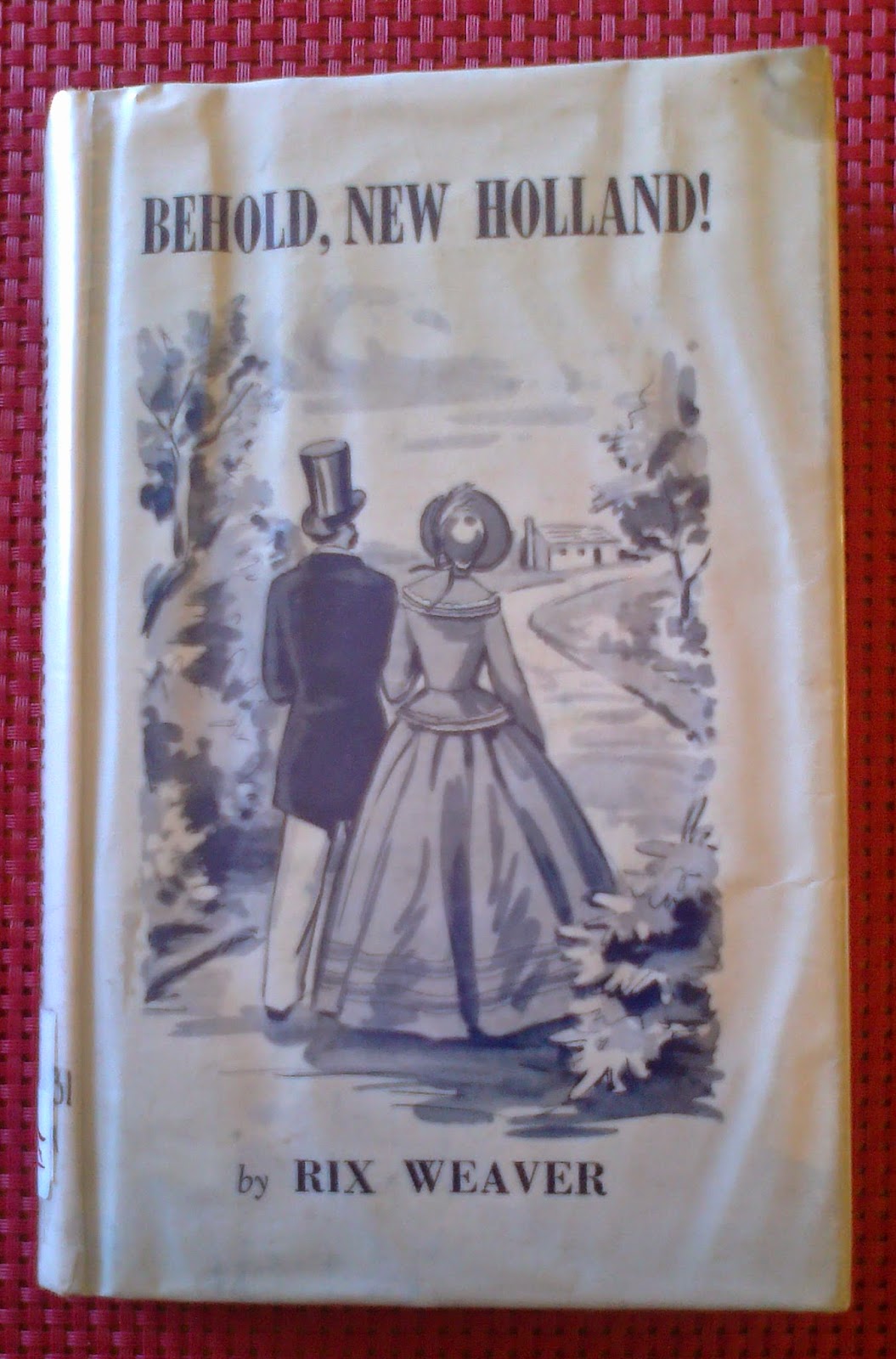
The Argus (28/10/1940), on the other hand, reviewing Rix Weaver’s pioneer fiction, Behold New Holland, concludes that “Miss Weaver has wisely avoided any aggressive Australianism. She makes it a romance of pioneering adventure, vividly told, that would appeal to an English or an American reader”.
Many of these 1940-published novels were set in the bush, or in exotic locations further afield. Indeed, Echuca’s The Riverine Herald (24/6/1940), writes that one of Australia’s “most prolific” writers, Will Lawson, had ‘”gone bush” at Tahmoor (N.S.W.)’ in order to “complete his newest novel without any city distractions”. The novel was Red Morgan rides, a bushranging story.
What about the city?
I did find, however, one reference to the city-versus-bush issue. The article, in Sydney’s The Daily Telegraph (7/4/1940), written by one Sam Walpole, was pointedly headed “Let’s buy a yearbook for our authors”, and commences:
IT is remarkable how little impression seems to have been made on Australian authors by a curious fact recorded in the Commonwealth Year Book —that nearly two-thirds of the population of Australia live in towns. A foreigner would hardly suspect this fact from some stories, a collection short stories by ten Australian writers, mostly of the elder school.
The collection was “Some stories, by ten Australian writers”, and includes some writers we’ve come across before like J. H. M. Abbott and G. B. Lancaster. Walpole continues:
There are some lively pieces in the book — and some, less lively — but only one story (by Ethel Turner, about a hot day in Sydney) makes any serious attempt to describe the urban life which millions of Australians lead. It is odd that so many of our writers either escape into fantasy, or cling in spirit to the days when a steer ripped up Macpherson at the Cooraminta Yard. These days it is more likely that a taxi ripped up Macpherson in Pitt Street. It is time we had an O. Henry to chronicle the pangs and pleasures of Marrickvllle or Balmain, a W. Burnett to write about the Sydney underworld, a Sinclair Lewis to show our more smugly prosperous citizens how ludicrous they really are.
So, we go from those supporting the banning of “fictional magazines” (which primarily came from America) to a yearning for more relevant writing like that being produced in America! A good place to end, I think, this little survey of 1940.







 Whispering Gums