Gavin Casey, Dust (#Review)

I have had to put aside the novel I was reading for Bill’s Gen 1-3 Aussie male writers week, as my reading group book called. I will get back to it, and post on it later, but in the meantime, I wanted to post something in the actual week.

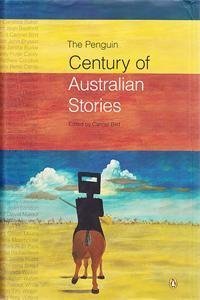
So, I turned, as I have for other Reading Weeks, to The Penguin century of Australian stories, an excellent anthology edited by Carmel Bird. Given Bill’s week encompasses writers working from 1788 to the 1950s, Bird’s anthology offered almost too many choices. Besides the obvious Henry Lawson, there were Steele Rudd, Tom Collins, Vance Palmer, and more, ending with Judah Waten’s 1950 story, “The mother”. I considered several, but Gavin Casey captured my attention because in her Introduction to the anthology, Kerryn Goldsworthy, looking at the 1930s and 40s, commented that Gavin Casey’s “Dust” and John Morrison’s “Nightshift” exemplified the more overtly political stories of this era. She added that:

they are stories in simple, unadorned language … that focus on workers and workplace disasters, on the physical dangers lying in wait for working men and women.

I have been interested in this period – and its socialist-influenced political thinking – for some time, so it had to be Casey or Morrison. Casey it was because I have listed him in a couple of Monday Musings posts but knew nothing about him.

Who was Gavin Casey?

Casey (1907-1964) was an author and journalist, born in Kalgoorlie, Western Australia, to an Australian-born father and Scottish mother. 

He doesn’t have a Wikipedia article but there is a useful biographical entry for him in the Australian dictionary of biography (ADB). Written by Anthony Ferguson, it says he had a sketchy education before obtaining a cadetship with the Kalgoorlie Electric Light Station. However, he left there to work in Perth as a motorcycle salesman, only to be “forced” back to Kalgoorlie in 1931 by the Depression. He then worked “as a surface-labourer and underground electrician at the mines, raced motorcycles and became a representative for the Perth Mirror“. He married in 1933, but “poverty plagued them, long after their return to Perth next year”.

By 1936, he was publishing short stories in the Australian Journal and the Bulletin, and in 1938 he was foundation secretary of the West Australian branch of the Fellowship of Australian Writers. His two short story collections – It’s harder for girls (1942), which won the 1942 S. H. Prior memorial prize and in which “Dust” appeared, and Birds of a feather (1943) – established his reputation. Ferguson writes:

Realistic in their treatment of place and incident, his stories showed—beneath the jollity and assurance of his characters—inner tensions, loneliness, unfulfilled hopes, and the lack of communication between men and women.

You may not be surprised to hear that his first marriage failed!
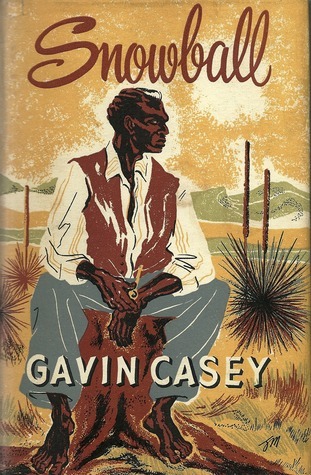
Overall, he wrote seven novels plus short stories and nonfiction works. His novels include Snowball (1958), which “examined the interaction between Aborigines and Whites in a country town”, and Amid the plenty (1962), which “traced a family’s struggle against adversity”. There is more about him in the ADB (linked above).

Ferguson doesn’t specifically address the political interests Goldsworthy references. Instead, he concludes that critics liken Casey’s earlier works to Lawson, seeing “a consistent emphasis on hardship that is tempered, for the male at least, by the conviviality of mates”. Ferguson also praises both for “their perceptiveness” and “their execution”.

The reality of Casey is a bit more nuanced, I understand. For a start, his men are not bush-men but suburban workingmen. Consequently, I plan to write more on him in a Monday Musings Forgotten Writers post, soon. Meanwhile, on with “Dust”.

“Dust”

“Dust” features male characters only, and there are some mates but, while they are important, they are not central. “Dust” also must draw on Casey’s experience of working in Kalgoorlie’s mining industry. It’s a short, short story, and is simply, but clearly constructed. It starts with a physical description of dust swooping through the township, over housetops and hospital buildings, and “leaving a red trail wherever in went”. It sounds – almost – neutral, but there are hints of something else. Why, of all the buildings in town, are “hospital buildings” singled out with the “housetops”, and does the “red trail” left behind signifiy anything?

Well, yes it does, as we learn in the next paragraph. Although this dust comes from “honest dirt” and can do damage like lifting roofs off, it is “avoidable” and is nothing like the “stale, still, malicious menace that polluted the atmosphere of far underground”. Ah, we think, so the “dust” we are talking about is something far more sinister than that flying around the open air.

And here is where the hospital buildings come in. Protagonist Parker and his miner friends are waiting for their six-monthly chest x-rays checking for the miners’ dust lung disease which killed his father. Things have changed since his father’s times, Parker knows. Not only are there the periodic medical examinations, but there are mechanisms to keep the dust down, and a system of “tickets” and pensions for affected miners. But, the risk is still there, and Parker’s anxiety increases as he watches his mates go in one by one, while he waits his turn.

This is a story about worker health and safety – but told from a personal not political perspective. It’s left to the reader to draw the political conclusions. However, it is also a highly relatable story about humans, health, and risky choices and behaviour, because it seems that Parker does have a choice. I won’t spoil it for you, but simply say that the ending made me smile – ruefully.
Gavin Casey
“Dust” (orig. 1936)
in Carmel Bird (ed.), The Penguin century of Australian stories
Camberwell: Penguin Books, 2006 (first ed. 2000)
pp. 86-90
Monday musings on Australian literature: Bill’s Australian White Men Gen 1-3

For several years now, Bill (The Australian Legend blog) has run a week dedicated to “generations” in Australian literature, focusing until this year on Australian Women Writers. This year, however, he has changed tack, and decided to look at Australia’s early male writers – who were, of course, in that colonial landscape, mostly white. He has also decided to do three generations at once, which means we are covering writers who were active from 1788 to the 1950s. This, says Bill, will be his last “Gen” – and fair enough, it’s been a big effort, one that many of us have enjoyed taking part in. Bill deserves a big thanks for bringing older Australian writers to the fore, and encouraging discussion about our literary history – the writers, the influences (including his “favourite”, The Bulletin) and the trends.

As before, Bill has created a page of Gen 1-3 writers to which he will add reviews posted for them or for writers he’s not yet listed. In this post I am going to list the writers I have read who suit this period, as my first contribution to Bill’s project.

Now, like Bill, my reading focus is women writers. Each year they represent 65-75% of my reading. I do like reading men too – and I would read more, if I could carve out more reading time – but my point here is to explain why my contribution is paltry.

Sometimes a bloke gits glimpses uv the truth
(CJ Dennis, “In Spadger’s Lane” in The moods of Ginger Mick)

The Gums’ Gen 1-3 List

In alphabetical order by author (compared with Bill’s chronological one by date of birth) … and with links on titles to my reviews of their books.

Knowledgable eyes will notice that my list does not include some of the big names of Australia’s male writers of the 19th century – Rolf Boldrewood, Marcus Clarke, Joseph Furphy, Henry Kingsley and Henry Lawson. Or Watkin Tench’s first hand accounts of the early colony. I have read a couple of these before blogging, but overall they have not been high priorities for me.

But, just to prove my interest, I have also read a couple of biographies of Australian male writers:

I have also read a couple of short journalistic pieces by Vance Palmer.

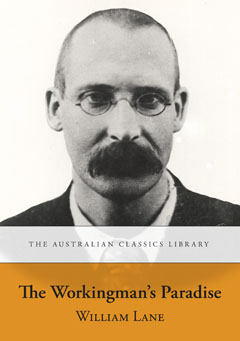
The books in my list span a century, from John Lang in the 1850s to Martin Boyd and D’Arcy Niland in the 1950s. John Lang’s A forger’s wife is a colonial novel with a 19th century melodrama feel, and is about, as I wrote in my post, issues like “the survival of the wiliest, and the challenge of identifying who you can trust”, things deemed critical to survival in the colonial mindset. By the ’90s, we were well into the time of social realism* and writers were looking outwards – to the sociopolitical conditions which oppressed so many. This is reflected in William Lane’s novel. It is also reflected in Price Warung’s stories, which, although “historical fiction” about the convict days, are written with a social realist’s eye on the inhumanity of the system. By the time we get to the mid-20th century, fiction was increasingly diversified. The world wars, increasing awareness of gender and continued concern about those issues the social realists cared about, not to mention modernism’s interest in the self, intellect, art, and their intersection with each other (to put it very loosely) can be found in the books I’ve read from that period.

When Bill started this project, he was inspired by the divisions suggested by Henry Green in his history of Australian literature. Green’s divisions were “conflict”, 1789-1850; “consolidation”, 1850-1890; “self-conscious nationalism” 1890-1923; and “world consciousness and disillusion”, 1923-1950. There is some sense to these divisions, and they provided a loose skeleton for the Gens! However, in her introduction to The Cambridge companion to Australian literature, Elizabeth Webby shares several studies or surveys of Australian literature, discussing their different approaches and goals, but she does say that several identify the 1890s as “being crucial to the development of a national literature”.

I could go on delving more deeply, but I won’t, as this post’s main goal was to tell Bill which books I can contribute to his male Gen 1 to 3 list, and I’ve done that.

Are you joining in or do you have any thoughts to add?

* There is some confusion regarding social versus socialist realism, but I am using social realism broadly to mean concern with sociopolitical issues – particularly regarding the working classes – with or without political “isms” behind it.

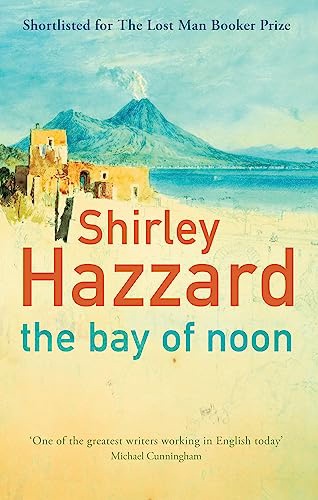
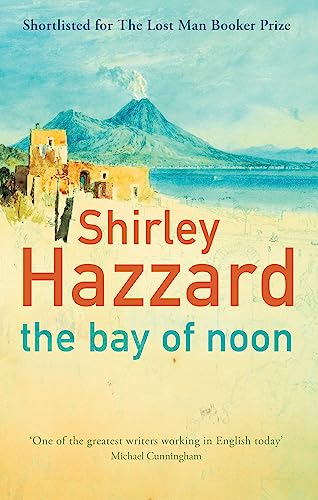
Shirley Hazzard, The bay of noon (#BookReview)

Shirley Hazzard’s novella, The bay of noon, has been in my sights for a long time, but finally, this Novellas-in-November year, I managed to get it out of my sights and into my hands. It’s the first of two novellas I read for the month, but the second to review. Such was my November (and we are now well into December!)

Published in 1970, The bay of noon was Hazzard’s second novel. It was one of six books nominated for the Lost Man Booker Prize in 2010. This was a special award created to, in effect, right a wrong which occurred when a change in the Booker Prize rules resulted in books published in 1970 missing out on a chance for Booker glory. The award was decided by public vote, with JG Farrell’s Troubles emerging the victor.

I’ve read three books by Hazzard before blogging, but since then I’ve just read one short story – “The picnic” – for the 1962 Club. In my post on that story, I referred to a review in The Guardian of Shirley Hazzard’s Collected stories. The reviewer Stephanie Merritt writes that “Hazzard’s recurring themes here – enlarged upon in her novels – are love, self-knowledge and disappointment”.

This is true of The bay of noon, which tells of a young Jenny, who, though born in England, had been sent to Cape Town with other young children to escape the Blitz. Post-war she was reunited with her older brother but, realising that her love for him was unhealthy, she leaves England to take up a job with NATO in Naples, bringing me to another of Hazzard’s recurring themes, that of young women leaving home to find their place. I understand from her biography that Hazzard herself worked for NATO in Naples in the timeframe this book is set, so she knows whereof she writes – which is not to say that she is writing her life. This is fiction, so while Hazzard draws on her own experiences, Jenny’s story is not hers.

Anyhow, we are in Naples, and it is some years after World War II, the mid 1950s in fact. Hazzard loved Italy, and her description of Naples at this time is imbued with a love born of knowing a place authentically, not as a sightseer. Naples is poor, and damaged both by war and a Mt Vesuvius eruption in 1944. Hazzard’s evocation of the city is a joy to read. A “through the looking-glass” city of both “apartness” and “continuity”, it also provides a moody, sometimes metaphoric, backdrop for our newcomer Jenny.

The storyline is straightforward. Knowing no-one outside of her work, Jenny follows up a letter of introduction to the charming and welcoming writer Gioconda, whose married lover, and Roman film director, Gianni, she also meets. Soon, however, through her work, Jenny also comes to know a Scotsman, Justin Tulloch, and a relationship of sorts develops between them. These relationships, and how they play out – with their mysteries and betrayals – form the nub of the story, but they are not what the novel is about. That is not so straightforward, but there are clues.

The title offers one clue, particularly, for me, the idea of “noon” as a time when the sun is at its highest, when the light is brightest, and so, perhaps representing a moment of clarity and, perhaps, also, of transition or change? Another clue is in the epigraph from Auden’s “Goodbye to the mezzogiorno” and in the opening paragraphs, both of which encompass ideas about memory and experience. The story is told first person through Jenny’s eyes, and there is a sense as the novel progresses of her working through an experience. Or, perhaps, not so much “working through” as allowing the passage of time to do its work. In the opening paragraphs, Jenny speaks of experiences building up “until you literally sink under them” but is also aware that, with the passage of time, memory, which was once “clouded with effects and what seemed to be their causes”, can become protective. As Auden concludes his poem:

… though one cannot always
Remember exactly why one has been happy,
There is no forgetting that one was.

But of course, not all memories are happy – and time can’t make them so. Gioconda, who had suffered loss, says

‘When people say of their tragedies, “I don’t often think of it now”, what they mean is it has entered permanently into their thoughts, and colours everything…’ (p. 67)

Just prior to this, she admits:

‘When I talk of it this way, now, to you, it all comes out as if there were some sequence, some logic, instead of moods, contradictions, alternatives. The design imposes itself afterwards. And is false, must be false.’ (p. 66)

It’s a curious but beguiling novel. The writing has a formal, intellectual – almost dispassionate, and sometimes elegiac – tone. It feels as though it belongs to a much earlier time, earlier in a way than the time in which it is set. This works somehow, partly because of Hazzard’s clear and measured prose, partly because the characters themselves seem to belong to an earlier time, and partly because Jenny is telling us the story from some time in the future.

As I read The bay of noon, I kept trying to place it within a wider literary tradition. It belongs, in part, to those stories about young people being taken under the wing by more experienced elders. Jenny observes the world she is drawn into, gradually becoming a more active and confident player in it. However, an Englishwoman, she remains an outsider, so retains her observer status which, over time enables her to see some realities she had missed in the first flush.

This is not a simple coming-of-age story, as it might look on the surface. Jenny is not an ingenue, but neither is she, at the start, experienced enough to understand the complex emotions and tragedies her older friends have experienced. Moreover, Hazzard has set the novel in a time that was itself complex, as Europe, and Naples specifically, was emerging from the war and – hmmm, was what? I wanted to say remaking itself, but that’s not the sense we get of Naples. It’s more one of being itself.

Towards the end, Jenny, reflecting on that past time in Naples, likens it to a

vineyard that had been left to flourish intact … among the deadly apartment buildings, not so much showing how it was as what has happened to it.

And that is the book’s ultimate meaning for me. It is not about who we are, what we hoped for, or where we have arrived, but about, in the closing words of the novel, “how we came”. Life, in other words, is a process, a journey that doesn’t always take us where we plan or expect.

Read for Novellas in November. Also read by Brona for the month. Read very late for the 1970 Year Club run by Karen (Kaggsy’s Bookish Ramblings) and Simon (Stuck in a Book)

Shirley Hazzard
The bay of noon
ISBN: 9781860494543
Virago Press, 2005 (originally published 1970)
182pp.

Novellas in November 2024, Part 2 (New to my TBR)

November is over and, as I expected, I didn’t get to post much for Novellas in November. However, I did read a couple of novellas and started another short form work (ie nonfiction), and, more to the point, I did read some participants’ posts which resulted in my noting some “New to my TBR” options.

Last year I listed 8 “New to my TBR” options and, unusually for me, I actually read two of them. They were:

New to my TBR:

  • Jon Fosse, Aliss at the fire (translated by Damion Searles) (orig. pub 2003): Brona of This Reading Life was mesmerised by this book in which an elderly woman reflects on the disappearance of her husband some twenty-five years before, after taking his rowboat out into the fjord.
  • Pascal Garnier, Boxes (translated by Melanie Florence) (orig. pub. 2012?): Kimbofo of Reading Matters didn’t like this as much as other books she’s read by Garnier, but I’m intrigued. Strangely, given my interest in Fosse’s book, it’s about, says kimbofo, “a middle-aged man reeling from his young wife Emma’s sudden disappearance”. It appears that journalist Emma fails to return home from a work trip and is presumed dead.
  • Paul Griffiths, Tomb guardians (2021): Lisa of ANZLitLovers makes this story – about the guardians of the tomb from which Christ’s Resurrection took place – sound both interesting and entertaining.
  • Jean-Patrick Manchette, No room at the morgue (translated by Alyson Waters) (orig. pub. 1973): host Cathy of 746 Books attracted me to this one by describing it as French noir which “blends a taut mystery with a trenchant sense of ennui and regret”.
  • Hiroko Oyamada, The factory (translated by David Boyd) (2010): Karen of Booker Talk posted on this and caught my attention, partly because it’s Japanese, but more because factory settings intrigue me and she describes it as unsettling and bordering on the absurd. 
  • Evelyn Waugh, Love among the ruins (1953): Judith Stove commenting on my Part 1 post, recommended this dystopian novella. She write that “Waugh covers a lot of themes – the ‘ruins’ of the title, criminal rehabilitation, and the transformative power of love – as well as the assisted-death industry. Plenty of themes with relevance to our time!” It’s a while since I’ve read Waugh, and this appeals and sounds manageable in my time-poor life!

There are probably others but given my track record for actually reading books I spy, I think this is enough. Maybe some of them caught your eye too? I see that two caught host Cathy’s eye. Check out her post to see which ones! I must say that she reminded me that I’d also been attracted to Kate’s post on Carys Davies’ Clear, but I am not going to (formally, anyhow) add it to my list. It’s long enough.

Regardless, has Novella November affected your TBR pile this year?

Written for Novellas in November 2024. Thanks as always to Cathy and Rebecca for hosting this special month.

Nonfiction November 2024, Weeks 1-3

My participation in Nonfiction November tends to be sporadic. Last year, I wrote some weekly and some combined posts, but I did address the weekly questions conscientiously. However, the prompt questions are, I think, much the same this year and my answers would be very similar, so I’m not going to be as thorough this post. I will just respond to Week 1 (My year in nonfiction) and Week 3 (Book pairings) because the responses to these will be different every year.

Week 1: Your year in Nonfiction

Heather (Based on a True Story) hosted this week, which is described as follows:

Celebrate your year of nonfiction. What books have you read? What were your favorites? Have you had a favorite topic? Is there a topic you want to read about more?  What are you hoping to get out of participating in Nonfiction November?

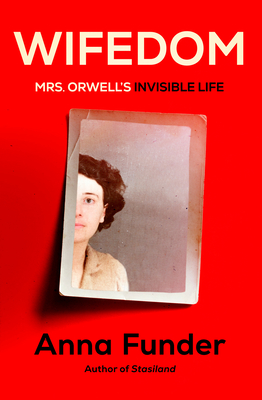
This Nonfiction November year runs, by my definition, from 1 November 2023 to 31 October 2024. My nonfiction reading has been varied, though much of it did involve some sort of life writing – biography, memoir, and hybrids of the two. Two biography-memoir hybrids that I enjoyed this year were specifically related to the literary biography field that is my favourite type of nonfiction. The books were Anna Funder’s Wifedom: Mrs Orwell’s invisible life (2023, my review) and Nell Stevens’ Mrs Gaskell and me: Two women, two love stories, two centuries apart (2022, my review). Both had personal – hmm, agendas is too strong a word so – drivers behind their author’s decision to write about the life of their subject.

Late last year, I posted on my brother Ian Terry’s book, Uninnocent landscapes (my post). It’s a truth-telling project for which Ian followed the journey taken by George Augustus Robinson on his 1831/32 Big River Mission (brief description), which was a poorly conceived attempt to conciliate between settler and Aboriginal Tasmanians. In his book Ian accompanies his photographs with excerpts from Robinson’s text.

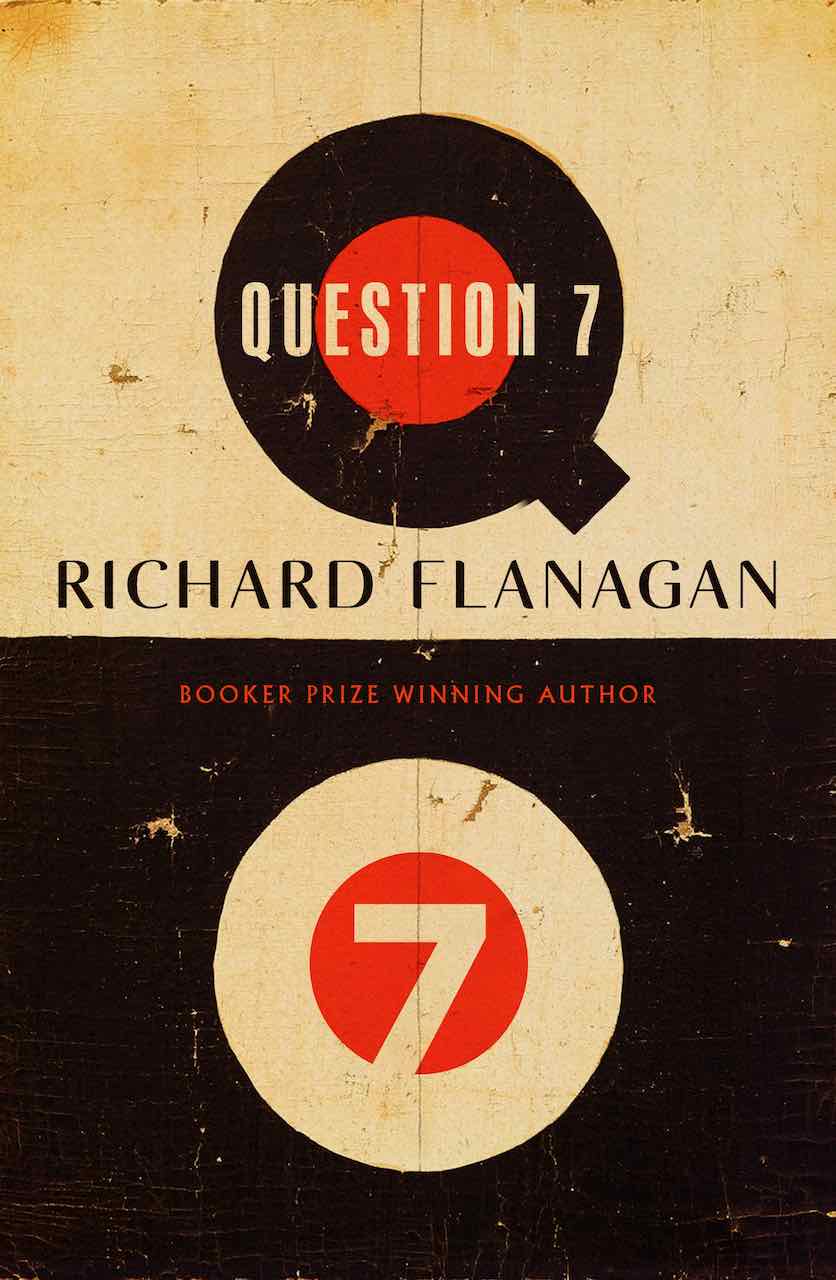
I did read other nonfiction, but I’ll end with two, one that I finished and one I’m currently reading. The finished one is Richard Flanagan’s Question 7 (my review). It was a great read; it stimulated an excellent reading group discussion; and it has just won the Baillie Gifford Prize for Non-Fiction, which is worth £50,000. (As some of you may have heard – see The Guardian – Flanagan said in his acceptance speech that he would not accept the prize money “until the fund manager shares a plan to reduce its investment in fossil fuel extraction and increase investments in renewables”. This is putting your money where your mouth is. I applaud him.)

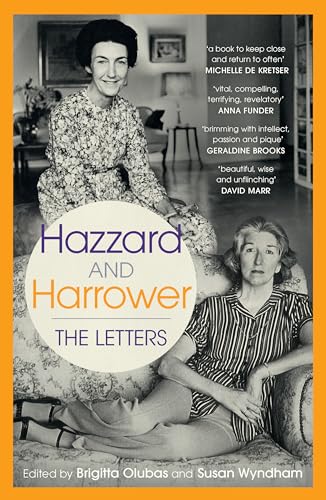
The one I’m currently reading – slowly, between other books – is Hazzard and Harrower: The letters by Brigitta Olubas and Susan Wyndham (see my author conversation post). It is an engrossing mix of personal life “stuff”, and observations on such things as politics at the time (such as Watergate in the USA and the election of Whitlam in Australia) and writers and writing. I’ve just enjoyed some discussion about criticism, which reminded me of that panel I attended at the Canberra Writers Festival. The panel discussed, for example, the idea that criticism can be a work in its own right. Shirley Hazzard, on the other hand, writes to Elizabeth Harrower that “I rarely read criticism, and have little interest in it as a genre [my emph.], only for the occasional statement or essay that rings true and wants books to be good, rather than showing relief & satisfaction when they’re not”.

Week 3: Book Pairings

Liz (Adventures is Reading, Running and Working from Home) hosts this week, and explains it thus:

Pair up a nonfiction book with a fiction title (or whatever you want to pair up). Maybe it’s a historical novel and the real history in a nonfiction version, or a memoir and a novel, or a fiction book you’ve read and you would like recommendations for background reading. Or two books on two different areas have chimed and have a link. You can be as creative as you like!

This is my favourite part of Nonfiction November, because, like the #SixDegrees meme, it’s fun to think about. I’m giving you three pairs.

Reconciliation and truth-telling

I’ve already mentioned Ian Terry’s Uninnocent landscapes. Essentially, it looks at colonialism’s impact on country, through photographs of the landscape today, excerpts from the historical record, and essays by First Nations Tasmanians and a farmer living on the land. I will pair this with Melissa Lucashenko’s first work of historical fiction, Edenglassie (my review) in which she asks, among other things, what if colonialism had been done differently.

Letter-writing

I can’t resist pairing Brigitta Olubas’ and Susan Wyndham’s Hazzard and Harrower: The letters with Jane Austen’s epistolary novel Lady Susan (my review). I know, I’m shameless – any opportunity to mention my Jane!

Genre-bending

The Guardian article mentioned above describes Richard Flanagan’s Question 7 as “part-memoir, part-novel, part-history”. If that’s not a genre-bending work of nonfiction I don’t know what is. So, I thought to pair it with a genre-bending work of fiction (or, at least, not nonfiction), but which one? I think Evelyn Araluen’s Dropbear (my review) is the perfect match. Winner of the 2022 Stella Prize, it is a collection that combines poetry and prose/memoir, and that, like Flanagan’s work, draws from Araluen’s own life to ask questions that are well worth asking.

What would you pair (and/or do you have anything to share regarding your year in nonfiction)?

Novellas in November 2024, Part 1

This November has been – well, about as busy as usual. I am secretary of an association for which, in November, we present our annual lecture and also hold our AGM. It all takes time and energy. I am therefore planning to combine my Novella in November (run by Cathy of 746 Books and Rebecca of Bookish Beck) comments into a couple of posts.

These reading months tend to suggest you start with “my year in [whatever the topic is]”. For last year’s (2023) post, I was horrified to discover that I’d only read one novella in the preceding twelve months, Jessica Au’s Cold enough for snow (my review). But, in fact, I realise now that I told a lie, as I had read another, Gwendolen Brooks’ Maud Martha (my review). Regardless, that was an easy benchmark to beat and beat it I did. Of course, I’ve still only read a fraction of what many bloggers have read, but here is my alphabetically-ordered list of books read for this “novella” year – that is, between 1 November 2023 and 31 October 2024:

  • Jane Austen, Lady Susan (my review)
  • Rebecca Burton, Ravenous girls (my review): joint winner of Finlay Lloyd’s inaugural 20/40 Prize
  • Rebecca Campbell, Arboreality (my review): novella or connected short stories, which won the 2023 Ursula K. Le Guin Prize
  • Michael Fitzgerald, Late (my review)
  • Elizabeth Gaskell, Cousin Phillis (my review): read for Bill’s Gen O week
  • Elizabeth Gaskell, Lizzie Leigh (my review): read for Bill’s Gen O week
  • Kim Kelly, The Ladies’ Rest and Writing Room (my review): joint winner of Finlay Lloyd’s inaugural 20/40 Prize
  • Thomas King and Natasha Donovan, Borders (my review): short story turned into an under 200pp short graphic novel which makes it a novella to my mind
  • Patrick Modiano, Sundays in August (my review)

In addition to these, I have read a novella this month (but have not yet posted my review) and have also nearly finished another, but both of these will all appear in next year’s novella count.

As I understand it, Cathy and Rebecca are not posing weekly prompt questions this year, which suits me as these can sometimes become repetitive. So, given that freedom, I am going to conclude this post with some comments made by Rebecca Campbell in an interview posted in the online journal The Artisanal Writer. The whole interview is worth reading, particularly if you liked Arboreality. She was asked

Another writer might have broken the personal narratives into linked short stories or added content to meet the length expected for a novel. You chose instead to give us a form we don’t get to read often enough. What drew you to the novella form for this particular piece of fiction? 

It’s an interesting question, as the book can be (and has been) described as linked short stories. However, Arboreality does have an overall narrative trajectory and it has some continuing characters albeit, by the end, the early ones are in memory rather than still living. Anyhow, Campbell answered:

This is where genre expectations are important. Novellas have always been an important part of science fiction, probably a holdover from its origins in pulp magazines. They’re still published regularly in periodicals, and markets for them are growing at both major and small presses.

Readers like novellas, and they are of an appealing length for writers. The novella maintains some of the focus of the short story, but allows a writer more space to explore the world they’ve created, something that’s particularly important in a genre obsessed with world-building. 

Arboreality is one of two novellas I’m publishing in 2022 (the other is The Talosite from Undertow Publications). After years of writing short fiction, I found my stories growing longer and more elaborate, so this form was the next natural step for me. I was also inspired by novellas that combined the focus of the short story with a sense of breadth, as though we are only seeing a fraction of a much larger world that is more compelling because it’s incomplete. On Chesil Beach by Ian McEwan and Great Work of Time by John Crowley in particular let me see how flexible and evocative the form can be, despite its brevity.

I have heard other writers talk about the novella form appealing to them.

I particularly liked Campbell’s point about how novellas can combine the focus of the short story with a sense of breadth resulting in our “only seeing a fraction of a much larger world that is more compelling because it’s incomplete”. While some sense of resolution is usually needed, I’m not one who must have closure, so this openness appeals to me. Certainly, I loved On Chesil Beach. What do you think about this idea of “incompleteness”?

Written for Novellas in November 2024 (linked in opening para).

Margaret Atwood, Widows (#Review)

Marcie’s (Buried in Print) MARM (Margaret Atwood Reading Month) event is now seven years old, but this is only my second contribution. I read a reasonable amount of Atwood before blogging, and since then have let her slide somewhat, though I have reviewed a couple of books here. You can’t read it all – but, I do like her voice …

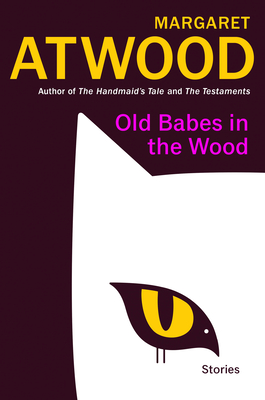
So, I decided to join in again this year, as I knew I had a collection of short stories in my TBR pile. The only problem is that my non-Australian TBRs are still in boxes somewhere. What to do? Maybe, I thought, there’s a short story online somewhere, and sure enough I found one in The Guardian. Titled “Widows” it features Nell and (the late) Tig. From Marcie’s blog I learnt that this couple first appeared in Atwood’s collection of linked stories titled Moral disorder, and appeared again in her recent collection Old babes in the wood, from which this story comes. However, I’ve not read either of these collections, and I didn’t recollect those characters or their names.

Then a strange thing happened. According to Wikipedia, Moral disorder contains eleven connected short stories, the second last one being “The Labrador fiasco”. This is the story I read for last year’s MARM, but it was in a 1996-published Bloomsbury Quid edition. I had no idea it was later included in the 2006-published Moral disorder. Oh these writers can be tricksy. Did she change it in any way – such as to name the then unnamed character – for version in the collection? Anyhow, moving on, Wikipedia tells me that the 2023-published Old babes in the wood comprises fifteen stories in three parts: “Tig & Nell” (three), “My Evil Mother” (eight), and “Nell & Tig” (four). “Widows” is the thirteenth story in the collection, so presumably the second one in that last group of four.

I won’t rehash “The Labrador fiasco”, except to say that it is a “story-within-a-story” story, and that the framing story concerns the unnamed narrator (who is apparently Nell) visiting her aging father and mother. The father, in particular, is declining, having experienced a stroke six years before the story’s opening. It is told first person by the daughter, who regularly visits her parents and is becoming aware of aging and our inevitable decline. Some years have clearly passed, and in “Widows” Nell has recently lost her husband “Tig”. It’s an epistolary story, I guess you could say, though it contains only two letters, both by Nell to a friend named Stevie.

The first, and main, letter is a delight – and pure Atwood. It’s partly in what she covers, as this short short story manages to encompass Atwood’s recurring themes – women (their position in society, and their relationships), language, aging, social conventions, and the state of the world. But it’s also in the sly way she makes her sharp little points. For example, talking about widows, she has a dig at the modern penchant for creating increasingly complicated gender-neutral descriptions:

I’m hanging out with a clutch of other widows. Some of them are widowers: we have not yet got around to a gender-neutral term for those who have lost their life partners. Maybe TWHLTLP will appear shortly, but it hasn’t yet. Some are women who have lost women or men who have lost men, but mostly they are women who have lost men.

Similarly, there is a sly reference to world politics and climate change, when she says to Stevie, who is much younger, that:

if you live another thirty years and are still enjoying it, or most of it – if anyone will be enjoying, or indeed living, considering the huge unknown wave that is already rolling toward us – I expect you will look at a picture of yourself as you are today, supposing your personal effects have survived flood, fire, famine, plague, insurrection, invasion, or whatever …

Of course, Nell talks about grief, about the forms, assumptions and cliches that surround it. She’s quietly scathing about “checking the boxes of the prescribed grief process” and eschews the well-intended offers of casseroles and suggestions that she go on a cruise.

When I read writing like this, I can’t help being reminded of Jane Austen, because both have the ability to see through our conventions and pretensions to the truths beneath, and to make us chuckle as they do so.

However, for all the cheeky barbs and social commentary, there is also something heartfelt in her discussion of grief. She speaks of how it skews one’s experience of time, how it affects one’s relationship with the person who has died, and what grieving people really talk about and deal with. Atwood knows whereof she speaks having lost her husband of 46 years in 2019.

If I thought this first letter was both clever and moving, the second letter just nailed it. In fact, if I were writing criticism and not a review, I would discuss what Atwood does here, but that would spoil the whole experience, and I don’t want to do that because you can read it yourself at the link below. Suffice it to say that, while “Widows” is a short story, it does a lot in its few words, and its ending signs off with aplomb.

Read for MARM 2024

Margaret Atwood
“Widows”
The Guardian, 25 February, 2023 (also pub. Old babes in the wood, 2023)
Available online at The Guardian, 2023

Michael Wilding, The man of slow feeling (#Review, #1970 Club)

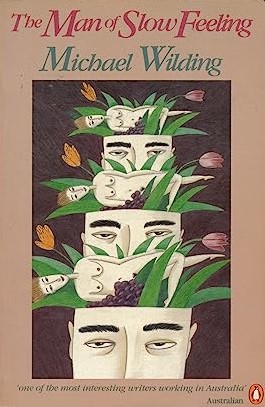
Michael Wilding’s short story, “The man of slow feeling”, is hopefully the first of two reviews I post for the 1970 Club, but we’ll see if I get the second one done. I have been making a practice of reading Australian short stories for the Year Clubs, so when the year is chosen I go to my little collection of anthologies looking for something appropriate. My favourite anthology for this purpose is The Penguin century of Australian stories, edited by Carmel Bird, because it is a large comprehensive collection and because the stories are ordered chronologically with the year of publication clearly identified. Love it!

Who is Michael Wilding?

With these later year clubs, like 1970, there’s a higher chance that the authors we read might still be alive. This, I believe, is the case with Michael Wilding. Born in England in 1942, he took up a position as lecturer at the University of Sydney from 1963 to 1967, before returning to England. However, two years later, in 1969, he returned to Australia and stayed. He was appointed Professor of English and Australian Literature at the University of Sydney in 1993, and remained in that position until he retired in 2000.

AustLit provides an excellent summary of his career. As an academic, he has, they say, had a distinguished career as a literary scholar, critic, and editor”, specialising in seventeenth and early eighteenth century English literature. Since the early 1970s, he has also “built a reputation as an important critic and scholar of Australian literature” focusing in particular on Marcus Clarke, William Lane and Christina Stead. And, he has been active as a publisher, having co-founded two presses, and at least one literary magazine.

However, he also, says AustLit, “came to prominence as creative writer in the late 1960s, when he was at the forefront of the ‘new writing’ movement which emerged in Australia in at that time”. He was part of a group of writers, editors and publishers “who were influential in promoting new and experimental writing, and in facilitating the revitalised Australian literary landscape of the late 1960s and 1970s”. AustLit doesn’t identify who was in that influential group, but I think Kerry Goldsworthy does in her introduction to Penguin’s anthology. She writes that “short fiction was the dominant literary form in Australia in the 1970s” and the most recognised practitioners were Frank Moorhouse, Peter Carey, Murray Bail and Michael Wilding. (All men, interestingly.) This writing, says Goldsworthy, was heavily influenced by European and American postmodern writing, but she doesn’t specifically reference Wilding’s story in her discussion.

Wilding has published over twenty novels and short story collections. AustLit adds that his short stories have also been published widely in anthologies, and that many have also been translated. Wikipedia provides an extensive list of his writing.

“The man with slow feeling”

“The man with slow feeling” is a third-person story about an unnamed man who, as the story opens, is in hospital after a serious accident from which he had not been expected to survive. However, he does survive. Gradually his sight and speech return, but not his sensation. That is, he can’t taste food or feel touch.

Soon though, he realises that sensation is returning, just some time after the actual experience. For example, he and his partner, Maria, make love, but he feels nothing – until some hours later. Not good! Not only is there the problem of feeling nothing, but when they are making love, he might experience some unpleasant sensation from three hours ago. Then, when he is out shopping three hours later, he experiences the orgasm. Or, regarding food, he will eat lunch but not taste it until 4pm. It is all, to say the least, disorienting. So, he sets up a system where he records his “sensate actions” so he can prepare (or “warn”) himself “after a three hours’ delay … of what he was about to feel”.

I’m sure you can see the practical problem with this. Soon, he becomes trapped in “a maze of playback and commentary and memory”, where he is trying to record the present for the future while at the same time experiencing the past. It becomes intolerable.

The tone is one of disassociation, alienation – which had me heading off down that more “modernist” path. But, the “recorder” aspect suggested that the theme involves partly, at least, exploring the conflicted role of recording versus experiencing – which is a more post-modern idea. Can you do both? Can a writer do both? Can, I remember discussing at length during my film librarian career, a documentary filmmaker record and not experience (or not affect the experience) during the act of recording? What are the bargains you make between the two?

I don’t know enough about this time in Australian literature – I haven’t read enough – to understand where Wilding’s ideas and thoughts fit into the zeitgeist. In her introduction to the anthology, Kerryn Goldsworthy says that the writing of this time incorporated “elements of fantasy, surrealism, fabulist, literary self-consciousness, and the process of storytelling itself”. She says the stories by Murray Bail and Peter Carey are concerned with “the riddles and paradoxes of representation itself”. Wilding’s story could also be read as part of this exploration.

This is a dark story in which, if I stick with my idea about the theme, Wilding suggests that the life of sensation is what it’s all about. Fair enough, but where does that leave the writer (or recorder)?

“The man with slow feeling” had me intrigued from its opening lines to its close. I’m not sure I have fully grasped all that Wilding intended by it, but this was a time of experimentation with the short fiction form and new writerly freedoms. I wish I could point you to an online version of the story.

* Read for the 1970 reading week run by Karen (Kaggsy’s Bookish Ramblings) and Simon (Stuck in a Book).

Michael Wilding
“The man with slow feeling” (orig. pub. Man: Australian Magazine for Men, July 1970)
in Carmel Bird (ed.), The Penguin century of Australian stories
Camberwell: Penguin Books, 2006 (first ed. 2000)
pp. 232-238

Monday musings on Australian literature: 1970 in fiction

Once again it’s Karen’s (Kaggsy’s Bookish Rambling) and Simon’s (Stuck in a Book) “Year Club” week. This week, it is 1970, and it runs from today, 14th to 20th October. As for the last 6 clubs, I am devoting my Monday Musings to the week.

Despite the excitement and idealism of the 1960s, 1970 Australia was strongly conservative, politically speaking, with some notorious conservative leaders (like Joh Bjelke-Petersen, Sir Henry Bolte, and Robert Askin) being premiers of their respective states. But, there were exceptions. The socially progressive Don Dunstan became premier of South Australia during the year, and, while our Prime Minister, John Gorton, was a conservative, he was recognised as a supporter of the arts.

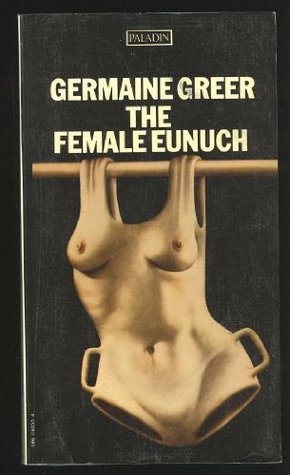
The war in Vietnam was still underway but was becoming increasingly unpopular. This was the year Australia decided to go metric for weights and measures, and, more relevant to this post, it was also the year that Germaine Greer’s The female eunuch (which I read the following year) was published.

A brief 1970 literary recap

Books were of course published across all forms, but my focus is Australian fiction, so here is a selection of novels published in 1970:

  • Jessica Anderson, The last man’s head
  • Richard Beilby, No medals for Aphrodite
  • Richard Butler, Sharkbait
  • Diane Cilento, Hybrid
  • Jon Cleary, Helga’s web
  • J.M. (John Mill) Couper, The thundering good today
  • Geoffrey Dutton, Tamara
  • Catherine Gaskin, Fiona
  • Shirley Hazzard, The Bay of Noon
  • Edward Lindall, A gathering of eagles
  • William Marshall, The age of death
  • Cynthia Nolan, A bride for St Thomas
  • Barry Oakley, A salute to the Great Macarthy AND Let’s hear it for Prendergast
  • Dal Stivens, A horse of air
  • Colin Thiele, Labourers in the vineyard
  • Ron Tullipan, Daylight robbery
  • Barbara Vernon, Bellbird (based on the ABC television series)
  • F.B. Vickers, No man is himself
  • Patrick White, The vivisector

A few of these writers are still respected and read today; a few are known but read less frequently; while some have fallen out of public consciousness (to my knowledge, anyhow!)

Of those I didn’t know, a couple caught my attention for their subject matter. F.B. Vickers is one. Trove describes No man is himself as “A novel set in the north west of Western Australia concerning an officer in charge of Native Welfare who is sympathetic to Aborigines but involved in personal difficulties with the white community and his wife.” The other is Edward Lindall whose A gathering of eagles is also set in Western Australia, and has a First Nations character. Google Books describes it as a “thriller set in the remote barren wasteland of north western Australia; an outcast Aboriginal woman, Ilkara, assists the survivors of a murderous plot to outwit their would-be killers.” The Encyclopedia of Science Fiction says Lindall was the pseudonym used by Edward Ernest Smith (1915-1978). He is also listed at a Classic Crime Fiction site.

Writers born this year include novelists Julia Leigh and Caroline Overington, and those who died include Herz Bergner (whose Between sea and sky I’ve reviewed), children’s fiction writer Nan Chauncy, Frank Dalby Davison (who was part of “the triumvirate” with Marjorie Barnard and Flora Eldershaw), and George Johnston.

There were not many literary awards, yet, though the state awards we know were getting close. And, several of the main awards made in 1970 weren’t to fiction. The ALS Gold Medal, for example, went to historian Manning Clark, and the Colin Roderick Award to Margaret Lawrie’s Myths and legends of Torres Strait.

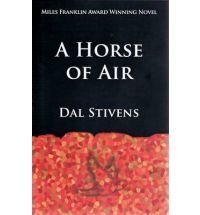
There were some fiction awards, however, including of course, the Miles Franklin Award, which went to Dal Stevens’ A horse of air. The trade union-supported Mary Gilmore Award (my post on this award) was made to Keith Antill for Moon in the ground. It’s an Australian science fiction story set around the secretive Pine Gap near Alice Springs. The “$1,000 Rothman’s award for the best Australian novel of 1969” was awarded in 1970 to George Johnston‘s “semi-autobiography Clean straw for nothing” (from Trove).

The state of the art

As for previous club years, I checked Trove to see what newspapers were saying about Australian fiction. This was a little trickier for 1970 because, due to copyright, many newspapers from this time have not yet been digitised. However, some papers, most notably The Canberra Times and Tribune, along with some regional ones, have made their content available to Trove. To them I am most grateful.

George Johnston

Book cover

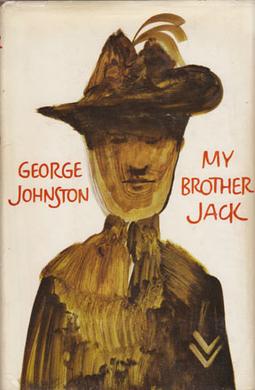
If one name loomed large in my my 1970 Trove research, it was George Johnston, and not just because he died in July. There were, of course, the obituaries, but, unrelated to his death, is his being used as a benchmark by commentators. For example, John Lleonart, reviewing Barry Oakley’s A salute to the Great McCarthy in The Canberra Times (8 August), has some “niggles” about the book but concludes that “Oakley has given us in McCarthy a classic figure of Australian mores to rank with George Johnston’s My brother Jack“.

Meanwhile, in discussions about the need for more Australian content on television, the television miniseries of My brother Jack was suggested as a benchmark for good Australian television content. Frances Kelly, writing in The Canberra Times (August 26), discusses the economic and artistic challenges to producing more “good” Australian content, and suggests one solution could be for Australia to

follow the BBC’s lead and begin work on adaptations. There are many fine Australian novels, which if we must still fly the flag, would bear dramatisation. My brother Jack was a shining example. 

The obituaries sum up Johnston’s career well – at least as it was seen at the time of his death. Maurice Dunlevy writes in The Canberra Times (23 July) that:

He had come back to his gumtree and kookaburra womb to find a new land, a people without a soul, and some uncomfortable ghosts from his past. “I would like to help Australians to find a new identity, a new soul, a new spirit”, he said on television. But to do so he had to sort out his own attitude to a country where he had left “the irrecapturable rapture of being young”. He was trying to do this in the third volume of the trilogy [A cartload of clay] during the past year.

Roger Milliss discusses Johnston at some depth in Tribune (12 August), concluding that

the important thing is the task that George Johnston recognised and set for himself — that of modernising Australian literature, of dragging it screaming into the 1970’s, of giving it a shape consistent with the world around it. That task must now be taken over by someone else — perhaps a writer who will emerge from the ranks of this new emerging generation.

These two obituaries make good reading if you are a Johnston fan.

Bookworm diggers

Meanwhile, over in South Vietnam, reported the Victor Harbour Times (May 29), Australian soldiers were well supplied with most amenities, but were running short of reading material. They had, says the report, “ample supplies of newspapers and regularly published magazines” but “novels, other books and paperbacks [were] in short supply”. Donations were being called for, and the Army would deliver them.

Australian classics

Publishers publishing classics is not new, but it’s always interesting to see “what” publishers see as those worth publishing at a particular time. In 1970, the Australian publisher Rigby published two Australian classics, Rolf Boldrewood’s Robbery under arms and Marcus Clarke’s For the term of his natural life, in $1.25 paperback editions. The Canberra Times (May 30), described them as “quite massive little tomes as paperbacks go” but said they gave readers “the opportunity of owning at a reasonable price two books that will be read and reread as long as Australian literature survives”. I love the qualification, “as long as Australian literature survives”. I wonder what the reporter thought might happen? Anyhow, these are still recognised “classics” but more have been added to the Australian classics pantheon since then.

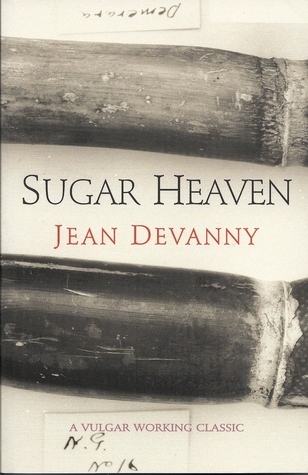
While not quite making classics status, two other authors from the past were mentioned in the year’s papers. One was Communist Party member, Jean Devanny, whose papers were donated by her daughter to the University of Townsville. (I included her in my post on women writers and politics in the 1930s.) The Tribune‘s report (January 28) says that Jean Devanny had had more than 20 books published by Australian and overseas publishers. One of her best known, Sugar heaven (1936), is a novel of class and politics on the Queensland cane fields, and was published in the Soviet Union in 1968.

The other author, Vance Palmer (1885-1959), came from the same era, and while not a Communist, was left-leaning politically. By 1970, he was seen as old-fashioned, but Professor Harry Heseltine thought he was due for a reassessment, and published his Vance Palmer in 1970. I will share more about this in another post.

Censorship and Book Bans

“Australia is still the country of interfering and sometimes ridiculous censorship, but there are signs of vitality on the cultural scene” (Paris newspaper Le Monde, The Canberra Times, December 21, 1970).

The last book banned in Australia was Philip Roth’s Portnoy’s complaint. It was banned in 1969, but after protestations by booksellers and publishers, and two trials in New South Wales which ended in hung juries, the ban was lifted in 1971. In 1970, however, it was all still happening. There’s way too much reporting for me to cover here, so I’m just to entertaining references to whet your appetite.

The University of New South Wales’ student newspaper, Tharunka (April 21), devoted a special literary supplement to the issue, asking writers to comment on censorship. One was Thomas Keneally, who commenced his piece by saying he felt “uneasy contributing to a forum on censorship because I have never achieved banmanship”. He is tongue-in-cheek about the reasons for the ban, which had to do with its being a “dirty” book. Keneally doesn’t see orgasm as “the key to the vision of man”, and argues that “there is very little of less value to the novelist than a person enjoying himself”. Fair point! Nonetheless, despite his “spinsterish views on eroticism in literature”, he thinks the ban is “an embarrassment”.

Maurice Dunlevy takes satire further in his article “The Portnoy tug-of-war” (The Canberra Times, September 5). Do read it … And, for a more recent history of the saga, check this article by Sian Cian in The Guardian (February 2, 2022). She quotes Des Cowley, of the State Library of Victoria:

“There’s been a lot written about the whole saga with Penguin and the legal case, but a little part of that story is that a small group of people got together and defended the right of literature to exist. It is such a beautiful case because, in a way, it ushers in the change Australia saw between the 1960s and 70s, with the progressive Whitlam government, and going from a literary backwater to a world stage.”

I’m not finished with 1970 … but this post is long enough. I’d love to hear any thoughts you have about the year, or about the stories I’ve shared here.

Sources

  • 1970 in Australian Literature (Wikipedia)
  • Joy Hooton and Harry Heseltine, Annals of Australian literature, 2nd ed. OUP, 1992

Previous Monday Musings for the “years”: 1929, 1936, 1937, 1954, 1940 and 1962.

Do you plan to take part in the 1970 Club – and if so how?

Monday musings on Australian literature: 1937 in fiction (2) – and Trove

Karen’s (Kaggsy’s Bookish Rambling) and Simon’s (Stuck in a Book) “Year Club” officially finished yesterday, but I focused so much in last week’s post on the issue of the state of Australian criticism, that I didn’t get to share some other ideas I found. So, I’ve decided to bookend the week with Monday Musings posts!

Trove

First, though, I’d like to explain a little about how I use Trove. For those who don’t know what Trove is, it is an online library database managed by the National Library of Australia. It is a fantastic resource for researchers because it contains an extensive – in depth and breadth – range of digital resources, including newspapers, journals and gazettes; official and personal archives and manuscripts; images; archived websites; and more. I mostly use the digitised newspaper collection, so I’m going to focus on it.

The process for putting non-born-digital newspapers online involves scanning the papers (from print or microfiche form) and then using OCR (optical character recognition) to produce readable text. On Trove, we see both the original and the OCR-ed texts. The quality or accuracy of the OCR text varies greatly, depending on the quality of the original from which the scanning was done. Trove’s solution to this has been to use crowdsourced (aka volunteer) text-correction.

Of course, as a librarian, I can’t use a service like this without doing my bit, so whenever I search Trove I end up doing corrections. This can be a tedious business when the original was poor, and can take a large amount of time. But, I don’t want to link in my blog an article that my readers will find hard to read, so, to do the time! The result is that I may not always research Trove as much as I would like in order to write my posts, but I hope that I research enough to make what I say valid or worthwhile!

I do sometimes cut corners. Where the item I am interested in is, say, part of a multi-subject column, I will, occasionally, only correct the section of interest to me. That’s a pragmatic decision I just need to make sometimes. (Just telling you in case you click on one of these links and wonder what I have been doing!!)

Back to 1937

On developing Australian literature

In my last post I focused on discussion about the importance of a good critical culture to the development of an Australian literature, but other thoughts about the state of Australian literature were also shared during the year. For example, in February, commenting on a gathering – attended by “many prominent men” – to commemorate Henry Lawson, the Williamstown Advertiser observed that Lawson’s “Australianism” is a heritage to be treasured, and that Australians need to

encourage home writers whose individuality cuts through the meshes of old-world hyperorthodoxy in literature, which conveys an assumption that the “blawsted colonials” are mere vulgarians.

Two months later on 10 April, Melbourne’s The Herald ran an article discussing the development of Australian literature, comparing it with the the challenges faced by American literature. It looked at the two nations, and commented on the problems faced by Australian writers. It suggested that America had now developed its own style. From the realism of Dreiser and Anderson, “the American literary spirit has taken lucid shape in the works of Ernest Hemingway and John Dos Passos”. It says that this new spirit represents “a revolt against nineteenth century English romanticism” and that the new style encompasses “typical Americanisms, the characteristic speech, the special vocabulary, the distinctive syntax and, above all, the natural mode of expression”.

Is Australia ready for “the emergence of a style in which an Australian outlook is implicit, and which would incorporate the characteristic speech, syntax and vocabulary of Australia?” Creating this, it argues, “is a labor of love; there is no material reward in it, at present”. Unfortunately, Australia, it says, has not recognised its similarity to America, and “is still awed by the heaped-up riches of the English literary tradition”. This does not, it concludes, prevent our making an “intelligent assessment of the lines upon which distinctively Australian writing should, develop”.

A week later, 17 April, there was a lengthy riposte in The Herald. You can read it at the link provided, because it covers several issues, but it starts by arguing that the most important issue is

that people read books not because they are written by Englishmen, or Americans, or Australians, but because they are entertaining.

So there, you writers! Write what the readers want! “Patriotism,” it says, “does not enter into the plain man’s choice of books”. It accepts that there’s a critical minority of readers who are interested in the technical experiments needed to improve literary standards, but

A critical minority … does not make a best-seller. For that the writer must look to the reading public as a whole, to the suburban libraries, to the man who has never heard of James Joyce or Aldous Huxley— except when one of his books is banned.

The article then argues that Australian artists have developed an Australian style, and suggests how Australian writers might proceed. It concludes that “it would be absurd to believe that the public is hostile or the Australian scene barren” (which I don’t believe the previous article argued.)

Education

Education is critical to encouraging interest in local literatures. At least, it is, I’d argue, for those whose culture has been – or risks being – swamped by larger cultures. The issue of education popped up a few times in 1937.

A pointed reference came from Brisbane’s The Catholic Advocate of 14 October. Written, I believe, by “Pasquin”, it opens with:

Is there a Chair of Australian Literature in any one of our six Universities?

It notes that “the University of Queensland tacks on to the course of English literature half-a-dozen lectures or so on Australian letters”, but then says

Surely it is a disgrace to Australia that in none of our seats of learning is our literature considered worth anything more than a digression or an aside.

It then goes on to ask how many Professors of English Literature are Australian? Go Pasquin, eh? “It is no wonder we have an inferiority complex”. Pasquin then pushes on:

How many are English ex-patriates like Professor Cowling of Melbourne, who in a recent article in the Sydney Morning Herald declared that he was at a loss to name a single Australian novel suitable for the classroom.

Hmm … Many journalists in 1937 could name “good” Australian writers, like, Henry Handel Richardson and Katharine Susannah Prichard! Pasquin concludes by saying that “Even J. T. Lang has been moved to describe the Senate of the Sydney University as “the most un-Australian body in Australia.”

Meanwhile, grass roots action was occurring. The Sydney Morning Herald reported (14 October) that the Workers’ Educational Association (WEA) had organised “a tutorial class in Australian Literature” for the summer. It was to be run by Fisher University librarian and critic H. M. Green, and Hartley Grattan, an American literary critic, with expertise in Australian literature.

On 9 November, Sydney’s The Workers Weekly reported that a Central Cultural Council had been established as the result of a conference convened by Sydney’s Writers’ Association. Indeed, it appears this conference had not only inspired the abovementioned WEA course but the Teachers’ Federation deciding to give more attention to the teaching of Australian literature in schools!

Keeping to the subject of schools, my last 1937 article comes from Queensland’s The Northern Miner on 18 December. It reported on a speaker at a Sydney luncheon. Dr. G. Mackaness, described by the ADB as “educationist, author and bibliophile”, made an “appeal for a better appreciation of Australian literature”. He saw the education system as one of the problems, and said “it was appalling that over a period of five years only one Australian writer was included in the books which had been chosen for Leaving or Intermediate Certificate examinations”. This report concluded that:

The fault of lack of appreciation of Australian literature was equally divided among those who had the selection of certain literature for studies, the non-progressiveness of Australian publishers to help the Australian writer, and the uneducated mind of the average Australian to the culture obtainable from Australian authorship.

We have come a long way since then, but there’s always more to do…

Previous Monday Musings for the “years”: 1929, 1936, 1954, 1940, 1962 and 1937.