Myra Morris, The inspiration (#Review, #1940 Club)

As I have done for some previous “year” reading weeks*, I decided for 1940 to read a short story by an Australian author. After a bit of searching I settled on Myra Morris, and her story “Inspiration”, because … let me explain.

My last two Australian contributions for these reading weeks were works by men – Bernard Cronin and Frederic Manning – so this time I wanted to choose one of our women writers. I found a few in Trove, but the one that caught my eye was by Myra Morris, because she was already known to me: in my Monday Musings for the 1929 year, and back in 2012 in another Monday Musings where she was listed by Colin Roderick in his Twenty Australian novelists. She also has an entry in the ADB. Clearly she had some sort of career at least, even if she is not well remembered now.

Who was Myra Morris?

ADB‘s article, written by D.J. Jordan in 1986, gives her dates as 1893 to 1966. She was born in the Mallee town of Boort, in western Victoria, to an English father and Australian mother. Her literary abilities were encouraged by her mother and an English teacher at Rochester Brigidine Convent, and she had verse published in the Bulletin. From 1930 she was part of Melbourne’s literary, journalistic and artistic circles, and “was active in founding and organising the Melbourne branch of P.E.N. International”. Her circle of friends, it appears, included Katharine Susannah Prichard.

While she wrote book reviews, novels and essays, her favourite form was, apparently, short stories. She was published in newspapers, and her short stories have been anthologised, but there is only one published collection of her stories, The township (1947). Translations of her work were published in Germany, Austria and Switzerland.

Jordan writes that she:

has been acclaimed as one of Australia’s best short-story writers. Her clear pictures of life in country and town contain a wide range of characters and reveal her tolerance and understanding of humanity in its struggles. Like her novels, her stories combine earthy realism, poetic imagery and a broad humour. Sometimes her plots are marred by the demands of the popular market, but her often beaten-down and defeated people always contrast with her lyrical evocation of landscapes. 

“The inspiration”

I picked “The inspiration” primarily because it was by Myra Morris, but I was also attracted to it because it’s set in Melbourne and its protagonist is a musician. Both of these interest me. The plot centres on violinist, Toni Pellagrini, who, as you can tell by his name, is of Italian background. Every afternoon, he plays in a 5-piece ensemble in the cafe at “Howie’s emporium”. It’s when he is happiest, we are told. When he is playing, he is “a different creature entirely from the little dark, harassed person who at other times sorted out vegetables in his father’s fruit shop”. You sense the immigrant life. Indeed, at one point Toni realises that without his music he could be seen as “a fat, oily little Dago”.

Toni is ambitious. He wants to play somewhere better than the cafe, in Kirchner’s Orchestra for example. At the cafe, however, the customers are “indifferent”, and offer only “inconsequential applause”. They are more interested in their chatter, in being seen, than in the music. You know the scene. Toni’s distress starts to affect his playing, so much that the other players notice, until one day a young girl appears. She provides him with the needed inspiration (hence the title). She listens with an “absorbed gaze” and breaks into “furious clapping” when the music ends. Toni has his mojo back. Then, they hear that the famous Kirchner is looking for players and is at the cafe. But, as they begin to play, the girl is not there, and Toni is unable play well anymore without her, his inspiration …

What happens next is largely predictable – except that Morris adds a delightful little twist that doesn’t spoil the expected ending but adds an unexpected layer.

Like Jordan, the Oxford companion to Australian literature particularly praises Morris’ short stories, saying that “her talent for domestic realism and naturalistic description, especially of rural environments, is best suited to the short story”. “The inspiration” is not one of these stories – it is urban set, and is not domestic – but its immigrant milieu (both in Toni’s family and the gypsy-inspired ensemble in which he plays) and its resolution suggest a writer interested in capturing the breadth of Australian life as she saw it.

* Read for the 1940 reading week run by Karen (Kaggsy’s Bookish Rambling) and Simon (Stuck in a Book). This week’s Monday Musings was devoted to the year.

Myra Morris
“Inspiration”
Published in Weekly Times (2 March 1940)
Available online via Trove

Monday musings on Australian literature: 1940 in fiction

As many of you know by now, Karen (Kaggsy’s Bookish Rambling) and Simon (Stuck in a Book) run “reading weeks” in which they nominate a year from which “everyone reads, enjoys, posts and shares wonderful books and discoveries from the year in question”. The current year is 1940, and it runs from today, 10-16 April. As has become my practice, I am devoting a Monday Musings to the week.

1940 is a bit of a landmark year in Australian literature because it was the year that our significant literary journal, Meanjin, was first published – in Brisbane, by Clem Christesen. Its name comes from the Turrbal word for the spike of land where the city of Brisbane is located.

My research located books published across all forms, but my focus is fiction, so here is a selection of 1940-published novels:

  • E.C. Allen, Old Eugowra
  • Martin Boyd, Nuns in jeopardy
  • Roy Connolly, Southern saga
  • Frank Dalby Davison, The woman at the mill (short stories)
  • Dulcie Deamer, Holiday
  • Arthur Gask, The house on the fens and The tragedy of the silver moon
  • Beatrice Grimshaw, South Sea Sarah; Murder in paradise: Two complete novels
  • Michael Innes, The secret vanguard; There came both mist and snow; and The comedy of errors
  • Bertha A. Johnstone, Stream of years
  • Josephine Knowles, Leaves in the wind
  • Will Lawson, Red Morgan rides
  • Eric Lowe, Framed in hardwood
  • Nevil Shute, Landfall: A channel story and An old captivity (both of which I read in my teens)
  • Helen Simpson, Maid no more (see my post on Helen Simpson)
  • Christina Stead, The man who loved children (Lisa’s review)
  • F.J. Thwaites, Whispers in Tahiti
  • Arthur W. Upfield, Bushranger of the skies
  • Franks Walford, The indiscretions of Iole
  • Rix Weaver, Behold, New Holland (A Darned Good Read’s review)

Children’s literature was going strongly at the time, with books published by four authors still remembered as writers of our children’s classics, Mary Grant Bruce, May Gibbs, P.L. Travers, and Dorothy Wall.

I wasn’t going to focus on poetry and drama, but Bill, who checked my list against the Annals for me (as my copy is in Canberra, thanks Bill) added that Katharine Susannah Prichard’s play Brumby Innes also appeared in 1940.

There were very few literary awards at the time. The ALS Gold Medal went to William Baylebridge’s poetry collection, This vital flesh, though it was announced in 1941. The award actually announced in 1940 was for the 1939 winner, Xavier Herbert’s Capricornia, so I think I can also mention it here.

Writers born this year include some favourites, whom I’ve reviewed here, Carmel Bird, Marion Halligan and Geoff Page. J.M. Coetzee who migrated to Australia partway through his literary career was also born in 1940.

The state of the art

Of course, I checked Trove to see what newspapers were saying about Australian literature, and fiction in particular. In the last “year” I did, 1929, I found great enthusiasm to support and promote Australian literature, and this was still evident to some degree in 1940. It was war-time, but interestingly that didn’t feature heavily in the book-related articles I found.

“Fictional magazines” banned

One news item that did reference the war was reported by many papers in April. It concerned the Federal government’s decision to ban the importation of “fiction magazines from non-sterling countries”. The stated aim was “to conserve our overseas’ credit” (Queanbeyan Age, 23/4/1940), with The Forbes Advocate (16/4/1940) reporting that “it is estimated that this will save £100,000 a year in dollar exchange”. Exceptions to this ban were, as Adelaide’s The Advertiser (2/4/1940) reported, “magazines dealing with current news topics or technical and instructional publications”. Many newspapers added brief commentary to their reporting. The Advertiser, for example, commented that these banned recreational magazines had “little or no literary value” and that some had already been banned “because of their false accentuation of sex, horror and crime”. But, the point made by many, and I’ll quote The Advertiser again, was the benefit to Australian writers and illustrators:

Besides its wartime value in conserving dollar exchange, the restriction of imported fiction will, it is hoped, create a wider home market for Australian writers and illustrators.

And thus Australian stories for Australians! The Forbes Advocate took the argument further, arguing that ‘”Made in Australia” on nearly everything required in the Commonwealth would bring abounding prosperity’ – and make this continent, “mighty”.

Australianness

Some reviewers commented on the “Australianness” of Australian novels they reviewed. Tasmanian Bertha A. Johnstone’s immigrant story, Stream of years, was described by her home state’s Mercury (6/4/1940) as “truly Australian and truly good” while Adelaide’s The Advertiser (28/5/1940) says of one of its denizen’s debuts, Josephine Knowles’ Leaves in the wind:

A FIRST novel by an Australian writer, apart from its intrinsic value, is of importance because of the proof that it furnishes that literary talent in this country is not stagnant.

The Argus (28/10/1940), on the other hand, reviewing Rix Weaver’s pioneer fiction, Behold New Holland, concludes that “Miss Weaver has wisely avoided any aggressive Australianism. She makes it a romance of pioneering adventure, vividly told, that would appeal to an English or an American reader”.

Many of these 1940-published novels were set in the bush, or in exotic locations further afield. Indeed, Echuca’s The Riverine Herald (24/6/1940), writes that one of Australia’s “most prolific” writers, Will Lawson, had ‘”gone bush” at Tahmoor (N.S.W.)’ in order to “complete his newest novel without any city distractions”. The novel was Red Morgan rides, a bushranging story.

What about the city?

I did find, however, one reference to the city-versus-bush issue. The article, in Sydney’s The Daily Telegraph (7/4/1940), written by one Sam Walpole, was pointedly headed “Let’s buy a yearbook for our authors”, and commences:

IT is remarkable how little impression seems to have been made on Australian authors by a curious fact recorded in the Commonwealth Year Book —that nearly two-thirds of the population of Australia live in towns. A foreigner would hardly suspect this fact from some stories, a collection short stories by ten Australian writers, mostly of the elder school.

The collection was “Some stories, by ten Australian writers”, and includes some writers we’ve come across before like J. H. M. Abbott and G. B. Lancaster. Walpole continues:

There are some lively pieces in the book — and some, less lively — but only one story (by Ethel Turner, about a hot day in Sydney) makes any serious attempt to describe the urban life which millions of Australians lead. It is odd that so many of our writers either escape into fantasy, or cling in spirit to the days when a steer ripped up Macpherson at the Cooraminta Yard. These days it is more likely that a taxi ripped up Macpherson in Pitt Street. It is time we had an O. Henry to chronicle the pangs and pleasures of Marrickvllle or Balmain, a W. Burnett to write about the Sydney underworld, a Sinclair Lewis to show our more smugly prosperous citizens how ludicrous they really are.

So, we go from those supporting the banning of “fictional magazines” (which primarily came from America) to a yearning for more relevant writing like that being produced in America! A good place to end, I think, this little survey of 1940.

Additional sources:

  • 1940 in Australian Literature (Wikipedia)
  • Joy Hooton and Harry Heseltine, Annals of Australian literature, 2nd ed. OUP, 1992 (with Bill’s help)

Previous Monday Musings for the “years”: 1929, 1936 and 1954.

Meanwhile, do you plan to take part in the 1940 Club – and if so how?
Six degrees of separation, FROM Born to run TO …

April already, and I am back in Melbourne to spend Easter with the family (and feed grandchildren too much chocolate probably!) But that’s a week away. Today is Six Degrees time. If you don’t know how the meme works, please check meme host Kate’s blog – booksaremyfavouriteandbest.

The first rule is that Kate sets our starting book. In April, yep, it’s a book I haven’t read – again – Bruce Springsteen’s autobiography, Kate calls it, Born to run. I make that point about “autobiography” because so often these days the books people write about their own lives tend to be “memoirs” but I presume Springsteen’s book covers more than a memoir typically does?

Book cover

For my first link I’ve gone with something pretty obvious, a memoir with “running” in the title, Haruki Murakami’s What I talk about when I talk about running (my review). This is definitely not autobiography because it really does focus on his running. I had hoped – despite the title – for a bit more about his writing!

Book cover

As I recollect, Murakami’s book takes a bit of a log-cum-diary form, so I’m going to another memoir that really is diary form, Helen Garner’s Yellow notebook: Diaries, Volume 1, 1978-1987 (my review). She is a mistress of the form and I hope to get to volume 3 next year – if life would just slow down a bit.

Book cover

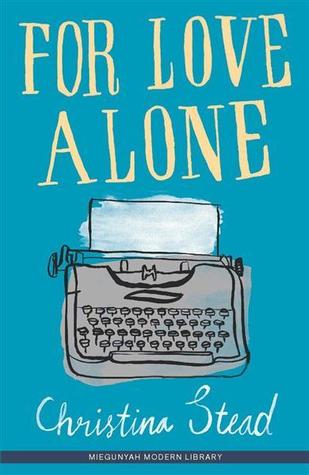
In her book, Garner mentions many authors whom she admires. One of these is Christina Stead, whom she calls “a visionary”. I’m linking to her novel For love alone (my review).

The women in black, Madeleine St John, book cover

Christina Stead left Australia in her 20s, and made her name as a writer after she left our shores. Another Australian writer who made her name as a writer after leaving Australia is Madeleine St John, but it’s to her Australian-set novel, The women in black (my review), that I’m linking.

Jane Austen, Emma, Penguin

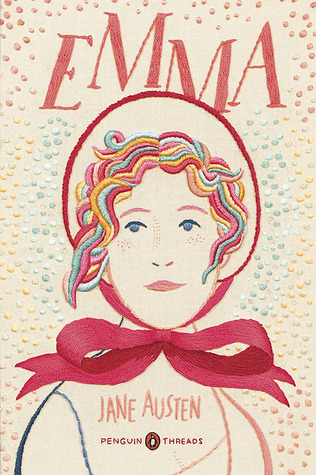
The women in black was adapted to film, but its title was slightly changed to The ladies in black. My next link is a bit cheeky, but not, I think, as cheeky as my last link will be. Jane Austen’s Emma (one of my posts) has been adapted several times to film and TV, but one of my favourites is the one Wikipedia describes as a ““reworking and updating”, Clueless. (Now, that’s a big change in title!)

Book cover

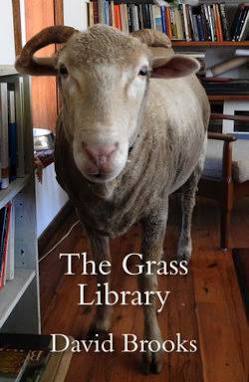
And now for, perhaps, my cheekiest link yet! Alicia Silverstone, who starred in Clueless as Cher (the updated Emma) left the movie world and became interested in animal activism and organic eating/veganism. Australian poet/novelist/essayist/academic David Brooks wrote a memoir-cum-reflection about his journey to vegetarianism and then veganism, The grass library (my review), in which he also talks at length about his relationship with some farm animals.

So, I could argue that I’ve achieved a bit of a circle this month, taking us from Springsteen’s autobiography to Brooks’ sort-of memoir? A circle is not required for the meme, so let’s not argue the point and just move on! We have covered a lot of ground from running, to diary-writing, to Aussie expats, before taking Jane Austen over to the US and ending up on a small farm in Australia’s Blue Mountains.

Now, the usual: Have you read Born to run? And, regardless, what would you link to?

    Six degrees of separation, FROM Passages TO …

    I may as well continue my practice of talking about the weather! Here down under, autumn has started, and we in the nation’s capital at least have had a beautiful start with the warm, mild days we love autumn for. May it continue for some weeks given our non-summer. Now, to this month’s Six Degrees. If you don’t know how the meme works, please check meme host Kate’s blog – booksaremyfavouriteandbest.

    The first rule is that Kate sets our starting book. In March it is YET another book I haven’t read, though I remember it well, Gail Sheehy’s best-selling self-help book, Passages. GoodReads describes it as “a brilliant road map of adult life” so, what to link?

    Alex Miller, Lovesong

    Well, reader, I was challenged. The closest to self-help I’ve read is Julia Baird’s Phosphorescence but I’ve linked to that before. Perhaps, then, a book that spans adult life? Well, yes, I s’pose. That would certainly be doable, but, I’ve decided to go with author birth-date. Gail Sheehy was born in 1936, and so was the Australian author, Alex Miller, so it’s to his Lovesong (my review) that I’m linking.

    Elizabeth Jolley, The orchard thieves

    Now, another Australian author has also written a book titled Lovesong, Elizabeth Jolley. However, I read that before blogging, so I’m going to link to one of her books I have read since and reviewed here, The orchard thieves (my review). It’s a glorious book about a grandmother thinking about her children and grandchildren, about “little rogues and thieves” who “would, during their lives, do something perfect and noble and wonderful and something absolutely appalling”.

    Karen Viggers, The orchardist's daughter

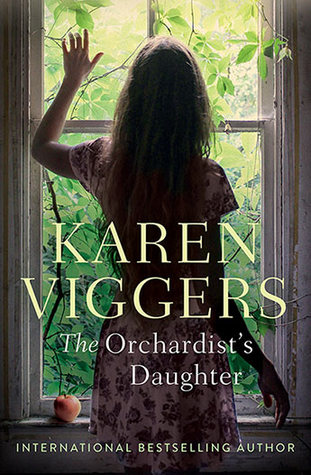
    Somehow, I’ve read a few books about orchards, and one of them is local author Karen Viggers’ The orchardist’s daughter (my review), which is set in northwest Tasmania and deals with two siblings who had grown up on an orchard, though they leave it at the beginning. It’s a strong story about life and tensions in a logging-based town.

    For anyone who is up-to-date on Australian writing, the next link is so obvious I’m almost too embarrassed to make it, Robbie Arnott’s Limberlost (my review). This novel is set in a northeast Tasmanian orchard, and while it is not specifically about siblings, siblings do play a significant role. It also encompasses the issue of logging, though not as centrally as Viggers’ book does.

    Book cover

    Now, we really need to leave Australia, because, much as I love to promote Aussie Lit, I mustn’t be too ethnocentric about all this. So, my next link is on third novels. Limberlost is Robbie Arnott’s third novel. Singaporean author Balli Kaur Jaswal’s Erotic stories for Punjabi widows (my review) is her third novel, so, short and sweet, that’s my next link.

    Hanif Kureishi, The buddha of suburbia

    My final link is on subject matter, as both Jaswal’s novel and Hanif Kureishi’s The buddha of suburbia (my review) deal in some way with subcontinent culture in London. Jaswal’s protagonist, Nikki, is born in England to Punjabi immigrant parents, while Kureishi’s Karim is the English-born son of a Pakistani father from Bombay and an English mother. Both characters, in different ways, have to make their way through the intersection of anglo and immigrant cultures.

    So, we haven’t travelled a lot this month as we started in America with Passages, spent some time in Australia and then went to England! My author gender-split though has been 50-50 which I rarely achieve.

    Now, the usual: Have you read Passages? And, regardless, what would you link to?

    Six degrees of separation, FROM Trust TO …

    A month already into the new year, and of course I can’t believe it! Nor can I believe that I didn’t edit out last month’s opening paragraph when I published this month’s this morning, so this paragraph is different to the one that first went live! Silly me! We have just arrived in Melbourne for three birthdays, so my mind was elsewhere. Anyhow, I’ll put my red-face aside and get on with it. If you don’t know how Six Degrees works, please check meme host Kate’s blog – booksaremyfavouriteandbest.

    The first rule is that Kate sets our starting book. In February it is another book I haven’t read, Hernan Diaz’s Trust. She chose it because it topped her 2022 “best of” book lists. It is about wealth and power in New York so my first thought was Tom Wolfe’s The bonfire of the vanities though I think this is a long bow in terms of the story. However, I haven’t reviewed that on my blog which is my rule-of-thumb for my links, so …

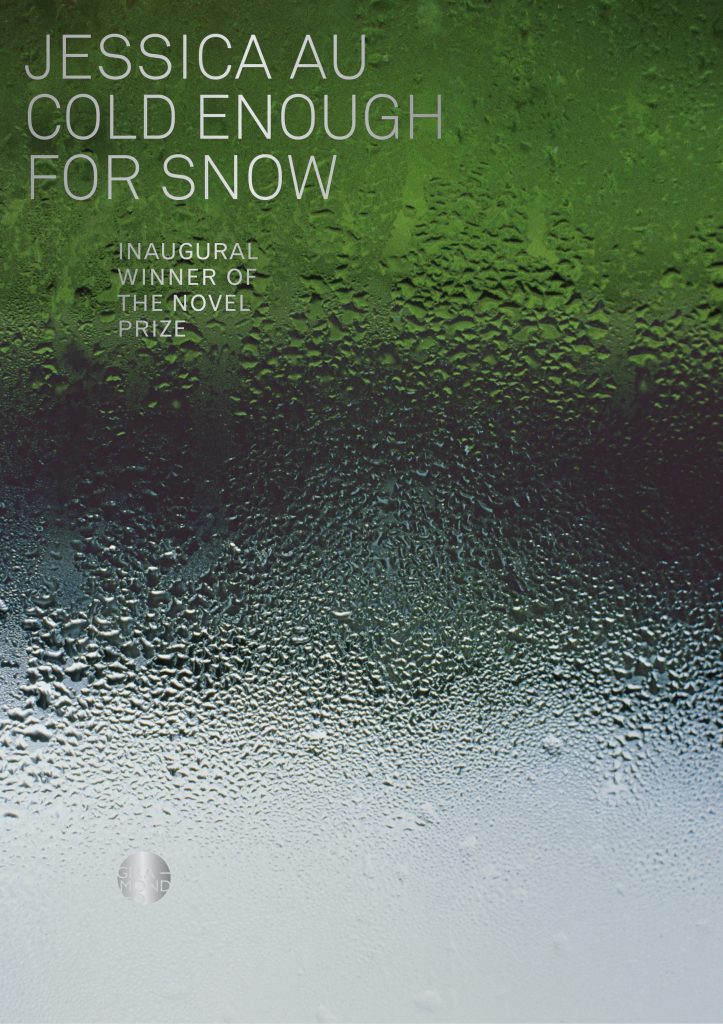
    I’m going the easy route and choosing one of the two books that topped my smaller 2022 list of favourite Aussie books. Of the two, I’ve read one (the other being on my February TBR) so that read one will be my link, Jessica Au’s Cold enough for snow (my review). I’m thrilled to hear that it has just been announced the winner of the 2023 Victorian Premier’s Literary Award Prize for Literature and the Fiction Prize.

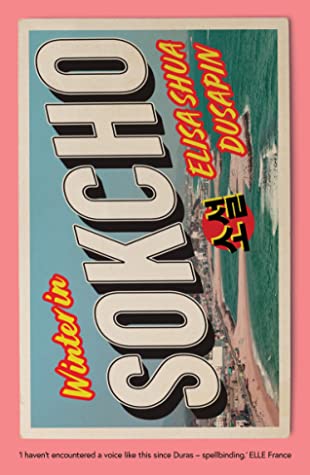
    Cold enough for snow concerns a mother and daughter trip to Japan, though what it is about is something a bit different. Another daughter-mother story set in Asia, this time Korea, and told from the daughter’s point-of view, is Elisa Shua Dusapin’s Winter in Sokcho (my review), so that’s my next link.

    Book cover

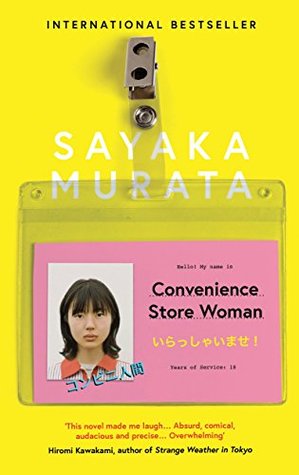
    Dusapin’s narrator comes across as a bit of a misfit, as one who seems unwilling to follow the expectations of her community. She reminded me, in this sense, of the protagonist of Sayaka Murata’s Convenience store woman (my review). In fact, I’m not the only one who felt this connection because the GoodReads intro to Winter in Sokcho describes it “as if Marguerite Duras wrote Convenience Store Woman“.

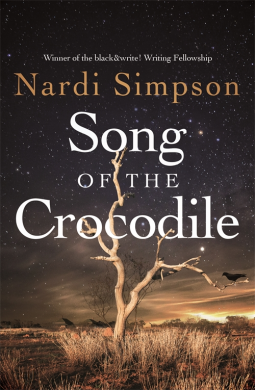
    My next link is a bit cheeky, but Murato’s protagonist, Keiko, works, obviously, in a convenience store. Nardi Simpson, in her Song of the crocodile (my review), writes of one of her protagonists that “with guts and confidence, Celie turns her mother’s laundry skills into a business called the Blue Shed, providing work for herself and the other women”. Now, while a laundry isn’t technically a convenience store, I reckon it is a very convenient service, so that’s good enough for me.

    Book cover

    In Song of the crocodile, the crocodile is a totemic being who becomes angry when things in the town go far too awry for it to be tolerated any more. Peter Godwin’s memoir, When a crocodile eats the sun (my review) also invokes a crocodile being. As I wrote in my post, ‘The title comes from an old Zulu and Venda belief that a solar eclipse occurs when a crocodile eats the sun. They see it as the worst of omens, “as a warning that he [the celestial crocodile] is much displeased with the behaviour of man below”‘. (Of course, I could have just said that I was linking on the word in the title but that would be too obvious.)

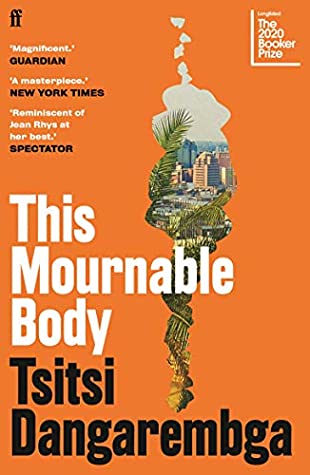
    Peter Godwin is a Zimbabwean author, and as is Tsitsi Dangarembga. Indeed, they were born two years apart in what was then Southern Rhodesia, but of course to very different families. Anyhow, it’s to her, and her powerful novel This mournable body (my review) that I’m linking for my last book.

    So, a bit of an unusual chain this month, because most of my links draw from the content of the stories, rather than from my usual variety of link options. But this is all I had time to do this month. Five of my six authors are women, which is not very diverse, but we did travel to Japan, Korea, and Zimbabwe, as well as Australia – never once setting foot in the usual places like England and the USA. I’m sort of proud of that!

    Now, the usual: Have you read Trust? And, regardless, what would you link to?

      Claire G. Coleman, Night bird (#Review)

      Wirlomin-Noongar woman Claire G. Coleman’s short story “Night bird” is the second First Nations Australia story in Ellen van Neerven and Rafeif Ismail’s anthology Unlimited futures: Speculative, visionary Blak+Black fiction, the book I chose for Bill’s (The Australian Legend) Australian Women Writers Gen 5 Week. The week finished officially a week ago, but I’m hoping Bill won’t mind my still referencing it. Coleman is not new to my blog. I reviewed her debut novel, Terra nullius, the year after it came out. She has written more fiction and some non-fiction since then, with a clear focus on the devastating impact of colonisation on First Nations culture and people.

      “Night bird” continues this focus. It follows Ambelin Kwaymullina’s story in the anthology, “Fifteen days on Mars” (my review), which works well, because both draw on the importance and role of Ancestors in First Nations culture. Coleman’s story is told first person by an artist who is “too afraid to sleep, too tired to be awake”, who drinks to drown her sorrows, who fears she may be “going mad again [my emph]”. She tells us

      I am haunted by the ghost of my Ancestors’ Country like a phantom limb …

      […]

      I have been cut off from my Country, my ancestors cut up, the land drilled and dug and eaten by machines … my wounded homeland won’t let me rest.

      This is not a subtle story. The narrator (whom I think is female, so I’ll go with that) grieves for a life she “could never have” because Country has been “severed”. She has “returned to Country” but, finding it “dead”, “could feel nothing and none” of her Ancestors. She feels haunted, but by what or whom?

      I can hear a voice but I can’t make it out. I can hear a song but I can’t catch the words. I can hear the wind and it’s stealing my breath. I can hear nothing and it is screaming.

      Country is part of her, but she wants to be free of the haunting, the “wordless voice”, the “phantom presence” that won’t go away. There is a wind, but it is “coming from the wrong direction – away from Country”. Then,

      The wind changes, it caresses my back, and suddenly it’s coming from Country.

      However, at the same time, a man appears and threatens her. There are now two voices – his and the Ancestors. This is a story about a battle between disempowerment (represented by the man) and empowerment (represented by the Ancestors). Is she, and are they, strong enough to prevail?

      I suspect this story was inspired by an experience Coleman describes in her article in Writing the Country (The Griffith Review 63). She describes the life-changing experience of going to Country in 2015, her family’s Country that had been taboo due to a massacre that had occurred there in the nineteenth century. She writes:

      I didn’t go there until 2015, that place changed my life forever, my world, my life, even the way I breathed. I took the taboo air into my lungs and I did not die or maybe I did. The bones of my feet landed on the sand and returned to life, I was born again on Country. The story of that place made me a storyteller; story is in my veins.

      She says an old man told her that “no matter where we go Country calls out to us” and she writes of the bird, the Wirlo (or curlew), that “to me and mine are family”. Its cry, its scream, “calls me home” – as does the night bird in this story. She describes how Country cares for people as they care for Country. She writes:

      I wept when I realised Country had not forgotten me even when I did not know Country. My old-people, my ancestors, would care for me.

      All of this is seems embedded in “Night bird”, so now, back to it. It is another example of “Indigenous futurism”. It is ground very much in the real world. The voices that our narrator hears are mysterious, sometimes coming from her phone, sometimes from the air around her, but they are not magical, not fantastical, they are the Ancestors – and the story envisions a healthy relationship with them and thus Country.

      On her website, Coleman includes a link to an interview she did with VerityLa after Terra Nullius came out. Among the questions was that one we readers love, which is whether any authors or novels influenced her. The first one she named was HG Wells’ War of the worlds, because it “is great in giving an understanding of how to show an overwhelming powerful enemy destroying a less well-armed defender”.  “In fact,” she says, “War of the Worlds is a powerful text for the examination of invasion and colonisation”. You can certainly see its influence in Terra Nullius, and it is evident here too.

      Claire G. Coleman
      “Night bird”
      in Ellen van Neerven and Rafeif Ismail (ed.), Unlimited futures: Speculative, visionary Blak+Black fiction
      North Fremantle: Fremantle Press in association with Djed Press, 2022
      pp. 66-73
      ISBN: 9781760991463 (eBook)

      Ambelin Kwaymullina, Fifteen days on Mars (#Review)

      In 2014, Ambelin Kwaymullina, whose people are the Palyku of the Pilbara region of Western Australia, described herself in a Kill Your Darlings essay as writing “speculative fiction for young adults”. Three years later, in the 2017 Twelfth Planet Press anthology, Mother of invention, she said that she was “a Palyku author of Indigenous Futurisms”, citing Grace Dillon (as did I in this week’s Monday Musings) as the term’s originator. I share this progression in her thinking because it’s indicative of the energy and intellectual engagement among First Nations people with literature and the politics of what they are doing. Kwaymullina is an example of a First Nations Australian writer who is actively engaged in First Nations culture and thinking, as well as in the craft of writing.

      I first came across Kwaymullina early in my volunteer work for the original Australian Women Writers Challenge, because many reviews for her young adult novels were posted to our database. But, I had not read her because YA literature is not my thing. However, I decided to read Ellen van Neerven and Rafeif Ismail’s anthology Unlimited futures: Speculative, visionary Blak+Black fiction for Bill’s (The Australian Legend) Australian Women Writers Gen 5 Week 15-22 January, and the first work in the anthology by an Australian woman was “Fifteen days on Mars” by Kwaymullina. Woo hoo… here was my chance to finally read her. I will post on more in this fascinating book, which I’ve not yet finished, later.

      “Fifteen days on Mars” is an accessible short story, told chronologically from Day One to Day Fifteen. The politics is made clear in the opening paragraph, by beautifully skewering colonial settler behaviour concerning the naming of places:

      It had been almost a year since we came to Mars. That was what I called this place although it had another name. It was Kensington Park or Windsor Estate or something like that but I couldn’t have said what because I could never remember it.

      Our first person narrator Billie and her mum have come to Settler suburbia, where they are “the only Aboriginal people”, for some reason that is not immediately clear though we sense there’s a specific purpose. Billie hadn’t wanted to come but, as her mother’s only offspring without children, she’d drawn the short straw. The story starts with her pulling weeds from their garden, the very plants that the rest of the neighbourhood love, plants (I mean “weeds”) like roses. In this metaphorical way the colonial setting is established. This is a world we know. Very soon a new couple moves in across the road. Billie, at her Mum’s insistence, does the neighbourly thing, and makes contact. She quickly realises that their new neighbour, Sarah, is being abused by her husband, whom Billie calls The Suit. What to do?

      To this point, notwithstanding the hint at the start that there’s something unusual about the situation, the story reads like a typical piece of contemporary fiction – that is, set in the known present world. But slowly, we become aware that something else is going on. Billie refers to “the rules”. Does she just mean the normal “rules” of social behaviour? Nope, our suspicion is right, there is something else. There’s reference to Sarah needing to “ask”, and to whether what or how she asks is “good enough for them upstairs”, aka “the Blue”, as Billie’s mum calls them. Billie says:

      the truth was we knew very little about them, except they were some kind of intergalactic healers. But we knew why they’d come. It was because of the Fracture.

      So now it’s clear we are in speculative fiction/Indigenous Futurism/Visionary Fiction/SFF territory. This is the sort of speculative fiction I can enjoy, something that doesn’t require me to learn a whole new world but that injects something new into the world I know, something that upends it a little.

      The Fracture is not fully explained, but “something had smashed into the relationships that were space-time and cracks had spread out from the point of impact” resulting in, says Billie, “bubbles of the past floating across my reality”. The Blue, we are told, are trying to repair this Fracture, leaving humans “to do something about the bubbles” – but to the Blue’s rules. Billie’s mum had signed up “for the job of changing the bubble-world, or at least, of changing some of the people enough so they could exist in our reality”. Hmm, this makes them sound a bit like missionaries. An ironic twist?

      Anyhow, the story continues, with a strong reference to the Stolen Generations, as Billie and her Mum, recognising these are “strange times”, try a different tack to save Sarah, and call on the ancestors. They hope the Blue won’t mind.

      I will leave it there. I enjoyed the story – because it tells a First Nations story truthfully but generously; because the characters of Mum and Billie, while being somewhat stereotypical (the wise Mum and the reluctant Billie), are warm and engaging; and because the ideas and the story itself are intriguing to watch being played out.

      In her 2017 piece cited above, Kwaymullina describes Indigenous Futurisms as “a form of storytelling whereby Indigenous peoples use the speculative fiction genre to challenge colonialism and imagine Indigenous futures”. This is exactly what she does in “Fifteen days on Mars”. The colonial legacy is unmistakeable, with most inhabitants of Settler suburbia remaining “unbelievably ignorant”, but she also offers glimmers of hope. I don’t eschew bleakness, but as an optimist I also appreciate it when writers can see paths to a better future. It’s energising.

      Ambelin Kwaymullina
      “Fifteen days on Mars”
      in Ellen van Neerven and Rafeif Ismail (ed.), Unlimited futures: Speculative, visionary Blak+Black fiction
      North Fremantle: Fremantle Press in association with Djed Press, 2022
      pp. 42-64
      ISBN: 9781760991463 (eBook)

      Monday musings on Australian literature: First Nations Australia speculative fiction

      This post is my first contribution to Bill’s (The Australian Legend) Australian Women Writers Gen 5 Week 15-22 January. Gen 5 encompasses women who have been writing from the 1990s to now. Bill argues that two major trends characterise this era: “the rise and rise of Indigenous Lit” and “writing which in earlier days would have clearly been SF – but which now is generally characterised as Climate Fic., Dystopian, or less frequently, Fantasy/Surreal/Postmodern.” With this in mind, Bill decided that AWW Gen 5’s focus would SFF – Science Fiction/Fantasy.

      Given Bill observed that First Nations Women are writing in this genre, I have decided, for this post, to combine the two trends. It won’t be comprehensive, but more in the spirit of providing an introduction or overview. Here goes …

      I have seen various terms applied to SF, or what I prefer, though Bill doesn’t, to call Speculative Fiction. Introducing their anthology, Unlimited futures, Ellen van Neerven and Rafeif Ismail speak of Visionary Fiction, which Wikipedia explains is not “science fiction” because it is driven by “new and uncanny experiences (mystical, spiritual and paranormal) in the neural web”. Wikipedia quotes Michael Gurian, who was one of the first to promote the genre on the web. He defines visionary fiction as “fiction in which the expansion of the human mind drives the plot. Where science fiction is characterized by storytelling based in expanded use of science to drive narrative, visionary fiction is characterized by storytelling based in expanded use of mental ability to drive narrative.” So, it may not be traditional SF, but I believe it can be encompassed under the speculative fiction umbrella, particularly as First Nations people see it.

      Claire G Coleman, Terra nullius

      The other main term I want to share, I found in BookRiot, in their 2020 article, “Explore Indigenous Futurisms with these SFF books by Indigenous authors”, by Danika Ellis. Ellis, who also uses the umbrella term, Speculative Fiction, writes that “Indigenous Futurisms” was coined by Dr. Grace Dillon, professor in the Indigenous Nations Studies Program at Portland State University. It was inspired by Afrofuturisms, which explores speculative fiction through an African diaspora lens. Ellis explains that “depictions of Indigenous people in mainstream media has often placed them in a historical context, not recognizing the Indigenous cultures and individuals of today, never mind the future. Indigenous Futurisms imagine Indigenous people into every context: space travel, fantasy worlds, alien invasions, and more.” BookRiot’s list includes Claire G. Coleman’s Terra Nullius (my review) and Ambelin Kwaymullina’s young adult novel The interrogation of Ashala Wolf. Ellis makes the point that:

      Indigenous Futurisms brings a much-needed perspective to a genre that is often uncritically colonial, whether it’s fantasy rooted in Medieval England, or space travel that celebrates conquering new worlds.

      Good one. Not being a reader in this genre, I hadn’t clocked this.

      Meanwhile, closer to home, last June The Conversation ran a review by Yasmine Musharbash of This all come back now: An anthology of First Nations speculative fiction, which was edited by Mykaela Saunders. This anthology, you will have noticed, uses the term Speculative Fiction, and Musharbash accepts this, offering her understanding of the genre:

      In my view, speculative fiction – the narrative exploration of “what-ifs”, the creative probing into latent possibilities, the imaginary voyaging into potential futures – is the genre of our times. We are on the brink of … something. Environmentally, for sure. But also socially, politically, economically. 

      What this something is, when it will happen, how it will shape the future: these are the questions at stake. 

      This all come back now, she says, is the “first Australian anthology of First Nations speculative fiction”. This might be so, but of course First Nations Australians have been writing speculative fiction for some time. Musharbash discusses what characterises this anthology as “First Nations”, and says the first thing is “Country with a capital C, in that very First Nations sense of something utterly fundamental and intimately related to the self, is centrally present across these pages. Many of these stories are fully immersed in Country.” This is not surprising, nor, really is the other recurring element she identifies, humour. I have mentioned before First Nations humour and its particular flavour. Musharbash describes the humour as being cheeky, and often “bitter-funny”.

      First Nations Australia SFF

      I wrote above that First Nations Australians have been writing speculative fiction (SFF) for some time, and I’ve reviewed a little here on my blog, including Coleman’s Terra nullius, and Ellen van Neerven’s “Water” (my post), which is included in This all come back now. Coleman, in fact, is making this space a bit of her own, with two more novels, The old lie (Bill’s review) and Enclave (Bill’s review), published

      Book cover

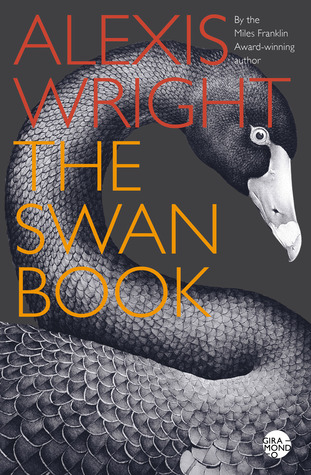
      Before them was Alexis Wright with Carpentaria (my review) and, more obviously, The Swan book (Lisa and Bill). Bill describes this latter as being set “some time in the future after the countries of Europe have been lost in the Climate Wars”. It is still on my TBR.

      However, there are several other writers whom I’ve not read or reviewed (yet) on my blog, like Karen Wyld and Alison Whittaker. Another is Ambelin Kwaymullina, who is best known for her YA speculative fiction series, The Tribe. Six years ago, she wrote a post, titled “Reflecting on Indigenous superheroes, Indigenous Futurisms and the future of diversity in literature on the loveozya blog. She starts with a strong argument about how Indigenous writing has been measured, against Western concepts, and addresses that colonisation aspect I mentioned above. She also addresses the point I have heard Alexis Wright make about “magic”, and takes it further:

      In Australia and elsewhere, Indigenous peoples have also long been able to interact with the world in ways that the West might label as ‘magic’, but this is because the West often defines the real (and hence the possible) differently to the Indigenous cultures of the earth. There are many aspects of Indigenous realities that might be called ‘speculative’ by the West (such as communicating with animals and time travel). There is also much in Western literature that Indigenous peoples regard as fantasy even though it is labeled as fact, including the numerous negative stereotypes and denigrations of Indigenous peoples and culture contained within settler literature. 

      Another good challenge to our worldview. She too references Dillon’s “Indigenous futurisms”, explaining that it describes “a form of storytelling whereby Indigenous peoples use the speculative fiction genre to challenge colonialism and envision Indigenous futures”.

      Kwaymullina argues that there’s a growing Indigenous presence in speculative fiction, including in YA and Children’s fiction, and names some writers – Teagan Chilcott, Tristan Michael Savage, graphic novelist Brenton McKenna, and the young Aboriginal people responsible for NEOMAD (my post).

      So, an exciting time for the genre and for literature in general, but I’ll close here …

      Have you have read any First Nations (anywhere) speculative fiction? If so, care to share?

      Six degrees of separation, FROM Beach read TO …

      A new year, and here we are again with our Six Degrees meme. Before I get stuck in, though, I would like to wish you all the best for the New Year, and hope that 2023 proves to be a healthy and peaceful one for us all. We could all do with it, particularly those in troubled and disaster-affected parts of the world. Meanwhile, on with this post’s business. If you don’t know how it works, please check meme host Kate’s blog – booksaremyfavouriteandbest.

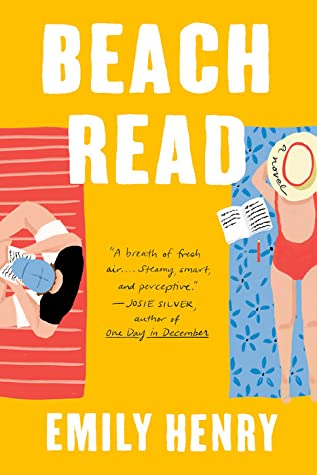
      The first rule is that Kate sets our starting book. In January it is another book I haven’t read, Emily Henry’s Beach read, but, what’s new! It sounds somewhat intriguing. According to GoodReads “A romance writer who no longer believes in love and a literary writer stuck in a rut engage in a summer-long challenge that may just upend everything they believe about happily ever afters.” It is of course a perfect title for a down under January book …

      Mary Grant Bruce, Early Tales

      So, it would be easy to go with what my choice of a beach read, but that’s not where I’m going. Instead, I’m looking at author’s name. Emily Henry’s last name can also be a man’s first name. This is also the case with Mary Grant Bruce, so it is to her juvenilia, The early tales (my review), that I’m linking to first.

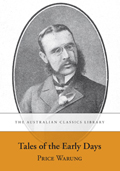
      From linking on author’s name, I’m next going to title, and another Australian oldie, Price Warung’s Tales of the early days (my review). This title is so similar to that given to Bruce’s juvenilia, but the work is very different. Bruce’s juvenilia are family stories, though not without socio-historical interest, while Warung’s are about convict days and lives, and have clear political intent.

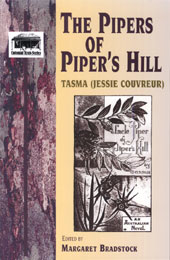
      Next, we are going back to author’s name for the link. Price Warung is a pseudonym used by William Astley (1854-1911). Another Australian writer, pretty much a peer in fact, is Jessie Catherine Couvreur (1848-1897). She wrote under the name Tasma, so it is to her satirical Uncle Piper of Piper’s Hill (my review) that I am linking to next.

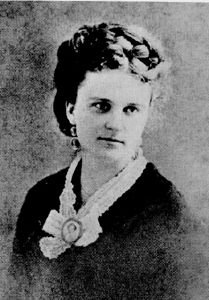
      Kate Chopin
      Kate Chopin (Public domain, via Wikipedia)

      And now, enough of names and titles! My next link will likely push your credulity a bit, but, you know, all’s fair in six degrees linking, so here goes. As I recorded above, Tasma died in 1897. That year Kate Chopin’s short story “A pair of silk stockings” (my review) was published. It’s a powerful short story, and I want to leave Australia, so that’s where we are going.

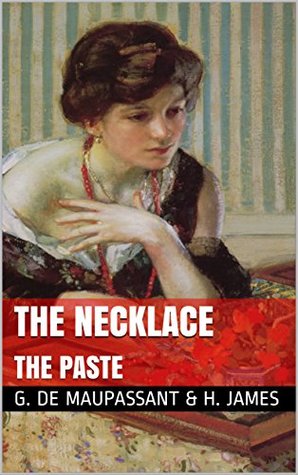
      Now, since I’ve pushed things a bit, I’m going to push it again. If you’ve read any of Chopin’s stories, you won’t be surprised to hear that she was inspired by Guy de Maupassant. In my review of the story above, I shared some of Chopin’s thoughts about de Maupassant, which included that, in him she saw, “Here was life, not fiction”. Another writer who admired de Maupassant, albeit with some reservations about the man I understand, was Henry James. However, he did say that his story “Paste” (my review) was inspired by Maupassant’s famous short story, “The necklace”.

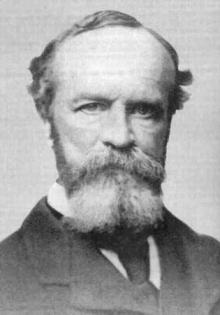
      William James
      William James (Public domain, via Wikipedia)

      For my last link, I am taking the easy path, and linking to Henry James’ brother, the philosopher William James and his essay “On some mental effect of the earthquake” (my review).

      So, a bit of an unusual chain this month. Despite the fact that several of my links are straightforwardly on authors and titles, all of the works I’ve linked to are nowhere near contemporary, and the last three are short works rather than books. Some of you, though, may have read Chopin’s or James’ stories, at least? I’ll be interested to hear. Meanwhile, it does seem that this month we’ve not roamed far … staying essentially with “New World” authors.

      Now, the usual: Have you read Beach Read? And, regardless, what would you link to?

      Blogging highlights for 2022

      As is my tradition, I have separated out my annual Reading highlights from my Blogging highlights, mainly because combining them would result in one very long post.

      Top posts for 2022

      In recent years my top posts gradually shifted to contain more posts on current Australian books. However, this year’s list has reverted to the “old look”, with one exception, which is that, unusually, two posts that were published during the year have made the Top Ten. This is rare because, mostly, they have not had the time to build up a following. It’s also a bit curious, because on those occasions that a this-year post has reached the Top Ten, the reason has been obvious – it’s been a runaway hit of a book, like Trent Dalton’s Boy swallows universe. That’s not the case here, as you can see.

      Merlinda Bobis Fish-hair woman

      Here is my 2022 Top Ten, in popularity order:

      Observations:

      • Four of these (London, Ordering food in a restaurant, Twain and Bobis) were Top Tens last year. These, along with Barbara Baynton, who just missed out last year, are now serial Top Tenners (with some occasionally dropping into the Top Twenty, only to reappear again in the Ten.) All are related, I think, to assignments.
      • Five of this year’s Top Tens are debuts, including, curiously, my post on epiphany in Elizabeth Harrower’s “The fun of the fair” from Belinda Castles’ book. Perhaps the word “epiphany” has been the drawcard here?
      • Last year, six of the Top Ten posts were for full-length books, but that was clearly an aberration, as this year we returned to my more usual motley mix of mainly short stories/essays.
      • Five, versus last year’s seven, of the Top Ten posts were published over 5 years ago, which tells us that blog posts have staying power!

      Just three Australian posts appear in the next ten: Barbara Baynton’s “Squeaker’s mate” (16), my post on the Canberra Writers Festival’s session with Germaine Greer (17), and Red Dog (19). Only Red Dog featured in this group last year, but a different Baynton did also. Red Dog was a Top Ten regular for years until 2020 when it moved to the Top Twenty, where it still remains.

      Regarding posts actually written in 2022, this year saw two appearing in the Top Ten, whereas last year the first one appeared at no. 32.

      Here are the Top Ten 2022-published posts (excluding Monday Musings and meme posts), with their ranking, month published, and relevant nationality:

      One of last year’s 2021-published Top Ten, Shirley Jackson’s “The lottery”, jumped to this year’s “actual” Top Ten. Will any of the above achieve that this year? What surprises me most here is Wallace’s essay on Tracy Austin. Que?

      My most popular Monday Musings posts were:

      Random blogging stats

      The searches

      Help Books Clker.com
      (Courtesy OCAL, via clker.com)

      I love sharing some of the search terms used to reach my blog, although search term visibility is no longer what it used to be, which spoils my fun. However, some still get through.

      • this year there were a couple of very long searches … “i mean there is this guy who aparently is using me as his muse to do some form of story telling and writing and pass it off as satire… hmmm… i wonder who the person in the satire could be?…” (this found my Satire tag I think)
      • and this one that seems to have been copied from an assignment question, “dialogue about you at the restaurent you place an order but everything goes wrong the service is poor the food when it comes isnt what you order its poorly prepared even plates and cutlery were not good write your responsetothewaiter andthewaitercomplain” (no prizes for which post this one found)
      • there are always some that mystify me, like “virtuallightexperiments” and ‘“ashfield tamil” wardrobe‘, though repeating the search does reveal what they found (though not whether it was what they were looking for!)
      • as always, several searches seemed to be for assignments, like “writing a war story irony” (which found Wharton, presumably) and “everything good will come. settings” (which found who knows what?)

      Other stats

      Overall, 2022 was a challenging year for me blog-wise and it shows in the stats. I only wrote 138 posts, which is well under my long term average of 155. However, I wrote significantly more words per post this year, and my overall hits for the year increased by 8% on last year. Clearly my posts weren’t too long!

      The top countries visiting my blog are the same as last year: Australia, the USA, Britain, India, the Philippines, Canada, Germany, France, Mexico and China, in that order.

      Challenges, memes and other things

      I only do one regular meme, Kate’s (booksaremyfavouriteandbest) #sixdegreesofseparation, and occasionally do others, which you can find on my “memes” category link. And, of course, as mentioned in a recent post I continue to be part of the Australian Women Writers blog.

      As last year, I also took part, to different degrees, in Lisa’s (ANZLitLovers) First Nations Reading Week, Bill’s (The Australian Legend) AWW Gen 4, Nonfiction November, Novellas in November (Cathy of 746 books and Rebecca of Bookish Beck), the #YEAR Club (by Kaggsy’s Bookish Rambling and Simon’s Stuck in a Book), and Brona’s Aus Reading Month.

      All of these align with my reading practice, with some providing a welcome opportunity to explore outside my blog’s main focus.

      And so, 2023 …

      As always, thank you to all of you who commented on my blog this year – the regulars who have hung in with me year in year out, and the newbies who have taken the time to visit and comment. I hope you have enjoyed the community here enough to stay. A sadness this year was the death in December of longterm friend Neil who had become a semi-regular commenter here and on other blogs. It is a testament to his lively personality and to the community feeling that blogging creates that his loss was commented on with genuine feeling (it seemed to me) by many. Thank you too to the lurkers. I may not know who you are but I know you are there and appreciate your interest and support too.

      I also want to thank all the wonderful bloggers out there. I have done a poor job of keeping up this year, but I do appreciate you and enjoy reading your posts when I can. I wish you all good reading and great book talk in 2023.

      Finally, huge thanks to the authors, publishers and booksellers who make it all possible – and who prove again and again that the book is far from dead. Roll on 2023 …