Six degrees of separation, FROM Butter TO …

Today is the first day of winter here in Australia, and we can feel the chill in the air here in Ngunnawal/Ngambri country (or Canberra). I don’t like winter, but my new home (apartment) has the best aspect and we get sun streaming in most of the day in winter (if there is sun, as there mostly is here). I am so so happy. My last home had a good aspect, but also a good verandah so most of the sun landed on the verandah. But, let’s get to the meme … and if you don’t know how the #SixDegrees meme works, please check host Kate’s blog – booksaremyfavouriteandbest.

The first rule is that Kate sets our starting book. This month she set “a crime novel with difference”, Asako Yuzuki’s Butter, which, of course, I haven’t read. GoodReads says it is about “a female gourmet cook and serial killer and the journalist intent on cracking her case, inspired by a true story” and that it is “a vivid, unsettling exploration of misogyny, obsession, romance and the transgressive pleasures of food in Japan”.

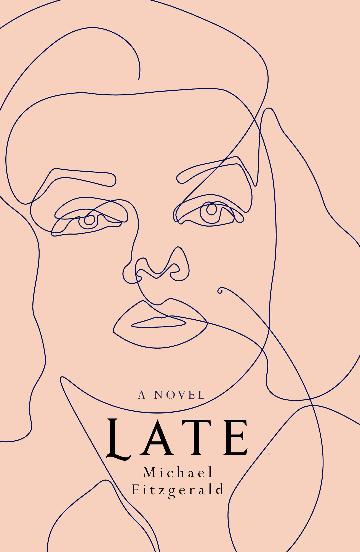
Now, before I go to my next link I’m going to introduce it by saying that after my review of Late, I had an enjoyable email correspondence with one of my wonderful commenters (whom I will leave to out herself if she’d like) about the title. At the end of our to-and-fro, we decided that single-word titles were a trend – and then what do you know but, for this month’s Six Degrees, we have been given a single-word title. So, this chain is going to comprise all single-word titles, but with another link too, if I can manage it. My first is Michael Fitzgerald’s Late (my review), and my link is that, although it is not a crime novel, its background is the gay-hate crime wave in Sydney in the 1980s. So, the link is from the hate of misogyny to gay-hate here.

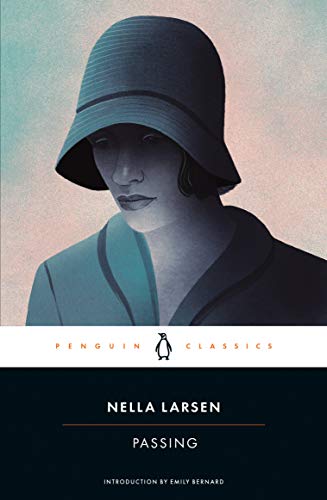
Nella Larsen’s Passing (my review) deals with another sort of hate, racism, and the practice of light-coloured people passing as white in order to avoid that hatred and its attendant discrimination. It also contains a death that could be a fall or suicide or murder, which provides another link to the gay deaths in Sydney, many of which were treated as accidents or suicides rather than murders.

My next link is a crime novel. It starts with a cold case and uncertainty about whether the missing girl – the sister of the protagonist – had run away or been abducted and/or murdered. What did happen to her? What happened is the question we are left with at the end of Passing, and is also a question returned to many years later about the deaths of some of Sydney’s young men. The book is Shelley Burr’s rural noir debut, Wake (my review).

Peter Temple, Truth

Staying with crime, I am moving to the only crime genre novel to have won the Miles Franklin Award, Peter Temple’s Truth (my reviews). (Have I made you happy M.R.?) It’s a crime novel, set mainly in the city, but as well as the crime novel link, I’m noting a loose climate-change link. The farm at the centre of Burr’s Wake is struggling, partly due to the father and daughter being distracted by their grief over the missing daughter/sister but also due to the impact of climate change. In Truth, we do get into the country sometimes, where the detective father’s property is being threatened by bushfire. As Australians know, bushfires are increasing in frequency and intensity here due to climate change.

Catherine McKinnon, Storyland

Next, stay in Australia, and Catherine McKinnon’s Storyland (my review) which links to Truth on the climate-change issue, as well as the single-word title. Storyland traces the trajectory of Australia’s land from an almost pristine state at the dawn of colonisation through increased farming to climate-change-caused destruction in 2033 followed much later by a mysterious post-apocalyptic world in 2717. It starts as an historical novel and concludes a dystopian one.

This leads nicely to my last link, Rebecca Campbell’s Arboreality (my review) which is dystopian climate change fiction set in near future Canada, where the land has been devastated but people are using their ingenuity to find new ways of living.

So, all single-word title novels, in which the titles vary in their intent, but are mostly multi-layered conveying aspects, like setting, plot, character and, in particular, something about their themes. I can’t see much of a link between Butter and Arboreality, except for – yes – their single-word titles, but we’ve been on a challenging journey this month through Asia, Australia and the Americas that confronts some of the world’s harder issues. Two of my six writers this month were male.

Now, the usual: have you read Butter and, regardless, what would you link to?

Fifteen Year Blogiversary Giveaway Winners

As promised, I drew the two winners of my fifteen year blogiversary giveaway today, May 10.

There were 4 entries in the non-Australian draw and 12 in the Australian draw. I used the random number generator at mathgoodies.com, and it generated 3 in the non-Australian draw, and 8 in the Australian draw.

The winners are:

Help Books Clker.com
(Courtesy OCAL, via clker.com)

Congratulations to Davida and Tony and commiseration to everyone else. I really wish you could all have won, though that would have dented my wallet rather much! Thanks everyone for playing along, and for all your good wishes for my fifteen years. And, you never know, I might run another giveaway for a future anniversary.

Now, to claim your surprise prizes Davida and Tony, you will need to send me your postal address for delivery of your book by midnight (AEST) on 18 May 2024. (My email address as at the bottom of my Who am I? page.)

If either or both of you don’t email me by the given date then I will re-draw a new winner for the prize/s. And, there is an extra condition – when you receive your surprise book would you please announce it as a comment on this post, as there are some enquiring minds who want to know what I choose.

Meanwhile, I will get on to selecting your special prizes! My thinking cap is working overtime …

Six degrees of separation, FROM The anniversary TO …

And so my life settles into its new routine, bouncing between the land of the Wurundjeri Wandoon people of the Greater Kulin Nation (my part of Melbourne) and, where I am this weekend, my home in Ngunnawal/Ngambri country (or Canberra). Autumn is rapidly coming to an end, and it has been mostly a lovely one, weather-wise. But enough small talk, let’s get onto the meme … If you don’t know how the #SixDegrees meme works, please check host Kate’s blog – booksaremyfavouriteandbest.

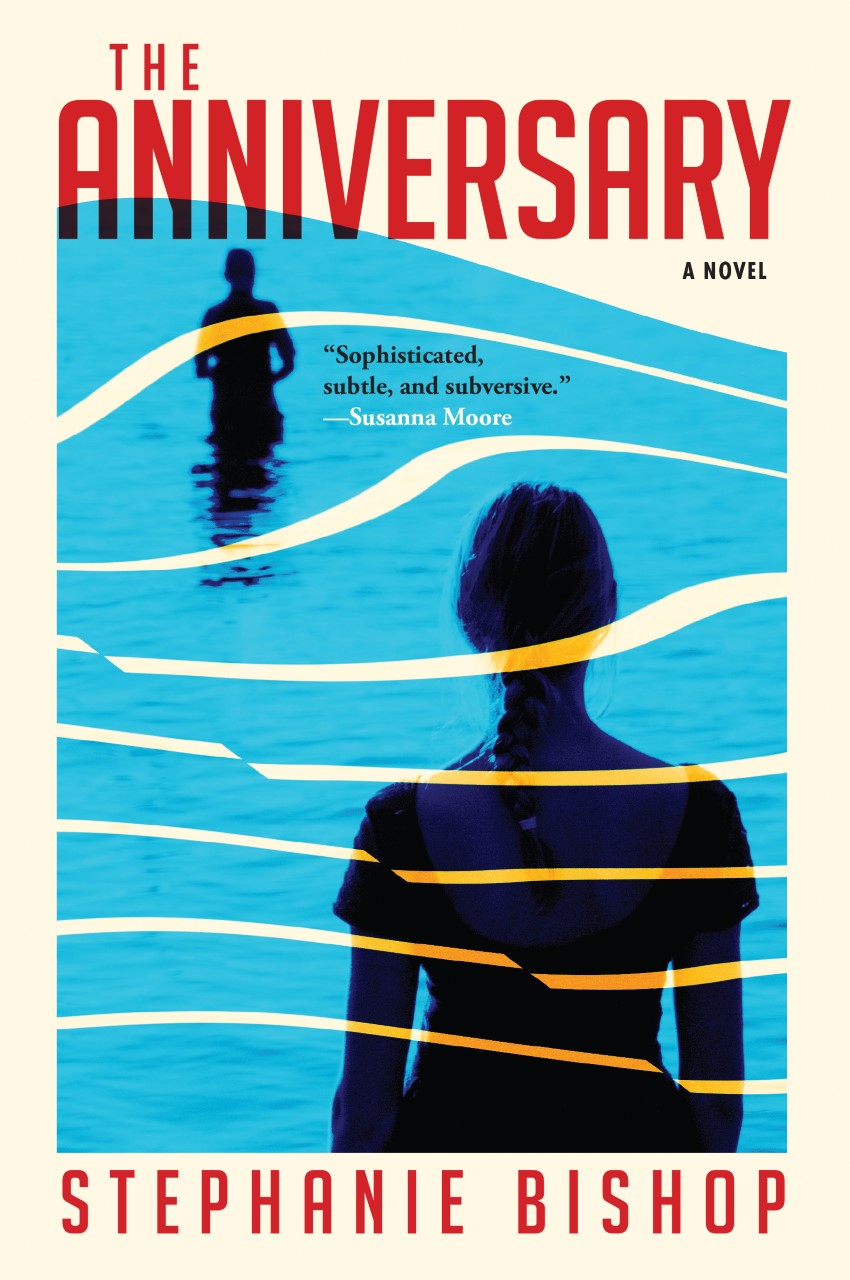
The first rule is that Kate sets our starting book. This month she set one of the books longlisted for the Stella Prize, Stephanie Bishop’s The anniversary. Kate opens her review of the novel by telling us the novel starts with an author taking her husband on a cruise to celebrate their anniversary, only to have something terrible happen …

There’s also a cruise in Rachel Matthews’ novel Never look desperate (my review), but it doesn’t open the novel and is not dramatic in the way like the one in Bishop’s novel. But it does offer an entertaining satire on cruise holidays and those who go on them. (Which is not to cast aspersions on cruises. I have never been on one, but those who know tell me that cruises can be great. You just have to find the style that matches your needs.)

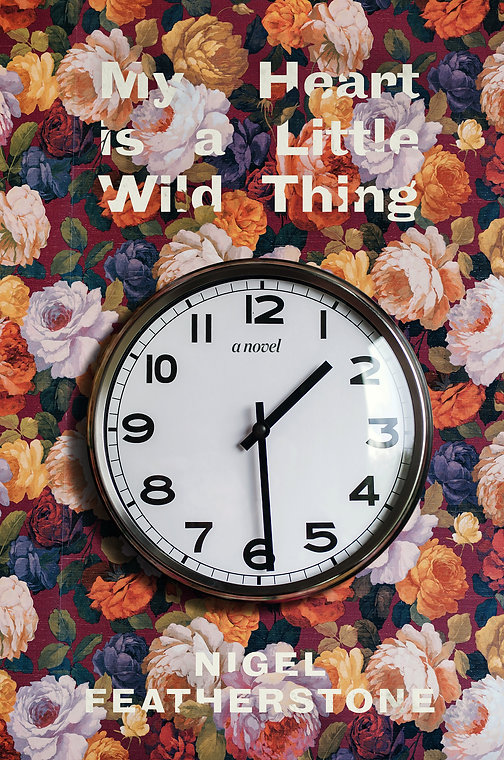
Matthews’ character who goes on the cruise, Goldie, has a prickly relationship with her son (though he is not on the cruise with her). Another novel in which a mother has a prickly relationship with her son, is local author Nigel Featherstone’s My heart is a little wild thing (my review). The novel opens dramatically with the son leaving his home in a distressed state the day after he’d “tried to kill his mother” – though it’s not as bad as it sounds!

Featherstone’s protagonist runs off to the Monaro where, through a quoll, he meets the first big love of his life. Another novel in which a quoll plays an important role is Robbie Arnott’s Limberlost (my review). Both books are linked not just through the quoll, however. Both also have sensitive male protagonists. Such men can be rare in contemporary literature, but I’ve come across a few.

And here is where my chain stalled a bit, not because I had no ideas but because I wanted to travel out of Australia. Then the link came to me. Robbie Arnott’s title Limberlost reminded me of a favourite childhood book, Girl of the Limberlost by Gene Stratton Porter. I haven’t reviewed that here, but I have reviewed an article/essay by her called “The last Passenger Pigeon” (my review). It’s another dual link because Stratton Porter as a young child, like young Ned in Limberlost, lived close to and loved nature, albeit Ned’s relationship to nature is more complex, as he both uses and loves it at the same time.

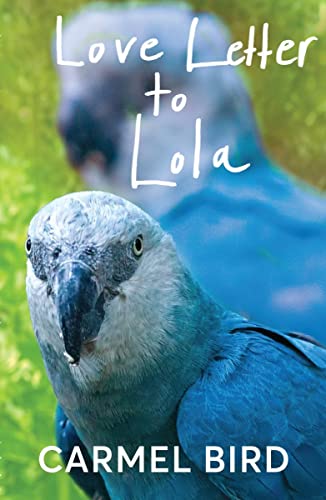
But, oh oh, although the Passenger Pigeon was an American bird, we are returning to Australia, and to Carmel Bird’s collection of short stories, Love letter to Lola (my review), because in this collection, which features several stories about extinct animals, we have, yes, a passenger pigeon. (Indeed Carmel Bird commented on my Stratton-Porter post because she was writing this story around the same time!)

With a title like this, I had many options for my final link, and I’ve gone with an obvious one, that is, a book with the word “love” in the title. However, it too is a dual link because it is also a collection (well, an anthology) of short stories, and it takes us around the world, as does Bird with her various extinct creatures. The book is Love on the road 2015, edited by Sam Tranum and Lois Kapila (my review). As I wrote in my post, this collection takes us from Iran to the Philippines, from Zimbabwe to Costa Rica, from New Zealand to the USA – and we see love in all sorts of guises.

So, we stayed mostly in Australia, ostensibly, but in fact two books let us and our imaginations take flight to all parts of the world.

Picture Credit: Gene Stratton-Porter (Uploaded to Wikipedia, by gspmemorial; used under CC-BY-SA-4.0)

Now, the usual: have you read The anniversary and, regardless, what would you link to?

Fifteen Year Blogiversary for Whispering Gums, with a Giveaway

At the auspicious time of 1.18pm on 2 May 2009, Whispering Gums was born. I knew nothing about scheduling then because if I had I might have thought to published it at a more precise time. Anyhow, the point is that today, my blog turns 15. I found it hard enough to believe when the Gums turned 10, but somehow, in the flash of a few more books and a few more posts, here we are at 15.

Snow Gum, Dead Horse Gap walk, Kosciuszko National Park

It hasn’t been an easy five years though, personally. All looked hunky-dory in May 2019, but then COVID hit and my mother died in 2020, followed by my father in 2021. Then there was last year’s exhausting downsizing exercise. But, there have been great personal moments during that time, too, including the birth of a second grandchild, and a new partner joining our family circle. Things are now feeling a bit more settled – on the personal front anyhow. And so, as the Sentimental Bloke said, life mooches on.

15 years of blogging

I have written 2,350 posts, or, just over 13 a month, which is not prolific but it keeps me busy. Of these, 691 have been Monday Musings’ posts, which I started in August 2010 as an experiment. Now, although they can be a lot of work, they are among my favourite posts to research and write.

So, that’s the writing aspect of the blog, but what about you lot! I’ve had over 1.2 million views, and nearly 47,000 comments. The comments are the real gold, because they are where we readers and bloggers come together. Our conversations mean a lot to me. You make me think harder; you make me feel useful; and sometimes, you make me laugh. In Marie-Kondo speak you give me joy – and I will keep you all a bit longer if I can!

(For those who joined me later in the piece, here is a link to my first post which explains my name.)

To mark this anniversary

As I did for my tenth anniversary, I would like to express my gratitude to all of you who have made this blogging journey such a fun and meaningful one through a book giveaway, in fact, two book giveaways – one to an Australian-based reader and another to a non-Australian-based one. The book I send to each winner will be a surprise, making this a readers’ lucky dip.

The rules. Express your interest in the comments below, noting whether your postal address is Australian or not, by midnight on May 9 (AEST) and on May 10, I’ll draw from each list using a random number generator. If you win, you will need to provide me with your mailing address (privately) as specified in the post announcing the winner. If you don’t, I’ll redraw. We can’t let a book gift go to waste, after all.

Meanwhile, once again, a big thanks to you all. You make this blog what it is – well, the good things about it, anyhow. The rest, as they say, is mine!


Monday musings on Australian literature: 1937 in fiction (2) – and Trove

Karen’s (Kaggsy’s Bookish Rambling) and Simon’s (Stuck in a Book) “Year Club” officially finished yesterday, but I focused so much in last week’s post on the issue of the state of Australian criticism, that I didn’t get to share some other ideas I found. So, I’ve decided to bookend the week with Monday Musings posts!

Trove

First, though, I’d like to explain a little about how I use Trove. For those who don’t know what Trove is, it is an online library database managed by the National Library of Australia. It is a fantastic resource for researchers because it contains an extensive – in depth and breadth – range of digital resources, including newspapers, journals and gazettes; official and personal archives and manuscripts; images; archived websites; and more. I mostly use the digitised newspaper collection, so I’m going to focus on it.

The process for putting non-born-digital newspapers online involves scanning the papers (from print or microfiche form) and then using OCR (optical character recognition) to produce readable text. On Trove, we see both the original and the OCR-ed texts. The quality or accuracy of the OCR text varies greatly, depending on the quality of the original from which the scanning was done. Trove’s solution to this has been to use crowdsourced (aka volunteer) text-correction.

Of course, as a librarian, I can’t use a service like this without doing my bit, so whenever I search Trove I end up doing corrections. This can be a tedious business when the original was poor, and can take a large amount of time. But, I don’t want to link in my blog an article that my readers will find hard to read, so, to do the time! The result is that I may not always research Trove as much as I would like in order to write my posts, but I hope that I research enough to make what I say valid or worthwhile!

I do sometimes cut corners. Where the item I am interested in is, say, part of a multi-subject column, I will, occasionally, only correct the section of interest to me. That’s a pragmatic decision I just need to make sometimes. (Just telling you in case you click on one of these links and wonder what I have been doing!!)

Back to 1937

On developing Australian literature

In my last post I focused on discussion about the importance of a good critical culture to the development of an Australian literature, but other thoughts about the state of Australian literature were also shared during the year. For example, in February, commenting on a gathering – attended by “many prominent men” – to commemorate Henry Lawson, the Williamstown Advertiser observed that Lawson’s “Australianism” is a heritage to be treasured, and that Australians need to

encourage home writers whose individuality cuts through the meshes of old-world hyperorthodoxy in literature, which conveys an assumption that the “blawsted colonials” are mere vulgarians.

Two months later on 10 April, Melbourne’s The Herald ran an article discussing the development of Australian literature, comparing it with the the challenges faced by American literature. It looked at the two nations, and commented on the problems faced by Australian writers. It suggested that America had now developed its own style. From the realism of Dreiser and Anderson, “the American literary spirit has taken lucid shape in the works of Ernest Hemingway and John Dos Passos”. It says that this new spirit represents “a revolt against nineteenth century English romanticism” and that the new style encompasses “typical Americanisms, the characteristic speech, the special vocabulary, the distinctive syntax and, above all, the natural mode of expression”.

Is Australia ready for “the emergence of a style in which an Australian outlook is implicit, and which would incorporate the characteristic speech, syntax and vocabulary of Australia?” Creating this, it argues, “is a labor of love; there is no material reward in it, at present”. Unfortunately, Australia, it says, has not recognised its similarity to America, and “is still awed by the heaped-up riches of the English literary tradition”. This does not, it concludes, prevent our making an “intelligent assessment of the lines upon which distinctively Australian writing should, develop”.

A week later, 17 April, there was a lengthy riposte in The Herald. You can read it at the link provided, because it covers several issues, but it starts by arguing that the most important issue is

that people read books not because they are written by Englishmen, or Americans, or Australians, but because they are entertaining.

So there, you writers! Write what the readers want! “Patriotism,” it says, “does not enter into the plain man’s choice of books”. It accepts that there’s a critical minority of readers who are interested in the technical experiments needed to improve literary standards, but

A critical minority … does not make a best-seller. For that the writer must look to the reading public as a whole, to the suburban libraries, to the man who has never heard of James Joyce or Aldous Huxley— except when one of his books is banned.

The article then argues that Australian artists have developed an Australian style, and suggests how Australian writers might proceed. It concludes that “it would be absurd to believe that the public is hostile or the Australian scene barren” (which I don’t believe the previous article argued.)

Education

Education is critical to encouraging interest in local literatures. At least, it is, I’d argue, for those whose culture has been – or risks being – swamped by larger cultures. The issue of education popped up a few times in 1937.

A pointed reference came from Brisbane’s The Catholic Advocate of 14 October. Written, I believe, by “Pasquin”, it opens with:

Is there a Chair of Australian Literature in any one of our six Universities?

It notes that “the University of Queensland tacks on to the course of English literature half-a-dozen lectures or so on Australian letters”, but then says

Surely it is a disgrace to Australia that in none of our seats of learning is our literature considered worth anything more than a digression or an aside.

It then goes on to ask how many Professors of English Literature are Australian? Go Pasquin, eh? “It is no wonder we have an inferiority complex”. Pasquin then pushes on:

How many are English ex-patriates like Professor Cowling of Melbourne, who in a recent article in the Sydney Morning Herald declared that he was at a loss to name a single Australian novel suitable for the classroom.

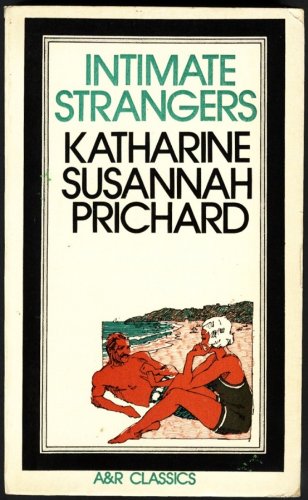
Hmm … Many journalists in 1937 could name “good” Australian writers, like, Henry Handel Richardson and Katharine Susannah Prichard! Pasquin concludes by saying that “Even J. T. Lang has been moved to describe the Senate of the Sydney University as “the most un-Australian body in Australia.”

Meanwhile, grass roots action was occurring. The Sydney Morning Herald reported (14 October) that the Workers’ Educational Association (WEA) had organised “a tutorial class in Australian Literature” for the summer. It was to be run by Fisher University librarian and critic H. M. Green, and Hartley Grattan, an American literary critic, with expertise in Australian literature.

On 9 November, Sydney’s The Workers Weekly reported that a Central Cultural Council had been established as the result of a conference convened by Sydney’s Writers’ Association. Indeed, it appears this conference had not only inspired the abovementioned WEA course but the Teachers’ Federation deciding to give more attention to the teaching of Australian literature in schools!

Keeping to the subject of schools, my last 1937 article comes from Queensland’s The Northern Miner on 18 December. It reported on a speaker at a Sydney luncheon. Dr. G. Mackaness, described by the ADB as “educationist, author and bibliophile”, made an “appeal for a better appreciation of Australian literature”. He saw the education system as one of the problems, and said “it was appalling that over a period of five years only one Australian writer was included in the books which had been chosen for Leaving or Intermediate Certificate examinations”. This report concluded that:

The fault of lack of appreciation of Australian literature was equally divided among those who had the selection of certain literature for studies, the non-progressiveness of Australian publishers to help the Australian writer, and the uneducated mind of the average Australian to the culture obtainable from Australian authorship.

We have come a long way since then, but there’s always more to do…

Previous Monday Musings for the “years”: 1929, 1936, 1954, 1940, 1962 and 1937.

Marjorie Barnard, The lottery (#Review, #1937 Club)

This will probably be my only review for the 1937 Year Club but I am thrilled to do it, because it is by Marjorie Barnard, an author whom I have mentioned many times, but have not yet managed to review here. My post is on a short story from her collection, The persimmon tree and other stories, which is one of the very few short story collections I’ve read more than once. It is so good. And don’t just take it from me. Carmel Bird mentions it in her bibliomemoir, Telltale, calling it “extraordinarily powerful”.

I wasn’t sure, in fact, what I was going to read for this week. I certainly hadn’t considered this collection because it was first published in 1943 but, rummaging around Trove, I discovered a story by Marjorie Barnard in The Bulletin of 6 January 1937. The page was titled “Of a lottery winner: First Prize” but I recognised it immediately, and let out an internal whoop. Here was my chance.

“The lottery”, as it is titled in the collection, has been anthologised, including in The Penguin best Australian short stories (1991), though the titular story, “The persimmon tree” is, I believe, the most commonly anthologised from the collection.

Who was Marjorie Barnard?

Marjorie Barnard (1897-1987) was an Australian novelist and short story writer, critic, historian and librarian. She wrote five collaborative novels with Flora Eldershaw, under the pseudonym, M. Barnard Eldershaw. Their first novel, A house is built, was published in 1929, having jointly won, with Katharine Susannah Prichard’s Coonardoo, The Bulletin prize in 1928. Their last, the futuristic Tomorrow and tomorrow and tomorrow was censored, and published in an expurgated edition as Tomorrow and tomorrow in 1947. Barnard also wrote works of literary criticism, and is credited with writing the first assessment of Patrick White (in Meanjin in 1956) and the first biography of Miles Franklin. (Jill Roe writes of the biography in the ADB, saying that “written with misgivings and before the release of Franklin’s voluminous papers, it exhibited characteristic virtues, with insight and style making up for ambivalence and inevitable error.”)

Barnard, along with Eldershaw, and other Sydney-based writers, like Frank Dalby Davison, was deeply concerned about the social and economic upheavals of the 1930s. These three, known as “the triumvirate”, held literary soirees which were attended by like-minded writers including Xavier Herbert and Miles Franklin. They were active in promoting writer’s rights (through the Fellowship of Australian Writers), and opposed censorship. She was a pacifist, and was apparently named in those political witch hunts of the 1950s, making her cautious about what she admitted to in terms of political affiliations. She was one of many writers who corresponded with, and often asked advice of, Nettie Palmer. She was a significant force.

In 1983, she was awarded the Patrick White Award, as was also her admirer Carmel Bird, years later. Hers was a long, and active life – far too long for me to cover here – and unfortunately, I don’t think anyone has done a biography of her. She is more than a worthy subject.

“The lottery”

What is so “extraordinarily powerful” about The persimmon tree and other stories is the quietly controlled but clear-eyed way Barnard interrogates human experience, in general, and women’s experience, in particular. Many of the stories have a strong feminist undercurrent, and “The lottery” is one of these. What makes it remarkable is that it is told third person through the perspective of the husband, which sets us up to align with him – perhaps.

The story is set in suburban Sydney. It starts with the husband, Ted Bilborough, having just boarded the ferry on his way home from work. His co-passengers tell him – show him in the paper, in fact – that his wife had won the lottery, “Mrs. Grace Bilborough, 52 Cuthbert-street.’… First prize, £5OOO, Last Hope Syndicate.” The thing is, Ted didn’t know. We then follow him on his way home as he goes through various emotions – and as he does so, we glean a picture of who he is and the sort of life his wife has led. A disconnect builds between how he – the perfect unreliable narrator – sees that life and the way we do.

At first, we are told that “everyone likes Ted”. He’s decent, it seems, in that typical-for-the-time suburban-husband way, and because of this “he’d always expected in a trusting sort of way to be rewarded, but not through Grace”. It’s little qualifications like this – “but not through Grace” – that give the game away.

Alongside Ted’s thoughts are descriptions of the evening. They too contain nuances that suggest deeper truths are at play. “The sun was sinking into a bank of grey cloud, soft and formless as mist” and two pine-trees have a “soft arrested grace”, a bit like his Grace, we readers might think. A little further on, “Ted could see that the smooth water was really a pale, tawny gold with patches, roughened by the turning tide, of pale frosty blue”.

He wonders how she’d paid for the ticket, “He hadn’t noticed any difference in the housekeeping, and he prided himself he noticed everything”. He starts to rethink Grace, who’d been “a good wife”, while he’d been “a good husband”. Indeed, “theirs was a model home” but, “well, somehow he found it easier to be cheerful in other people’s homes than in his own”. Whose fault is this? Well, Grace’s of course!

She wasn’t cheery and easy-going. Something moody about her now. Moody. He’d worn better than Grace; anyone could see that, and yet it was he who had had the hard time. All she had to do was to stay at home and look after the house and the children. Nothing much in that. She always seemed to be working, but he couldn’t see what there was to do that could take her so long. 

And so it continues, Ted ruminating on the situation, on their marriage, and on how things might proceed – even starting to feel a bit magnanimous with this money that’s not his own – until he arrives home, and discovers exactly what Grace intends. It’s all in the name of the Syndicate!

The writing is delicious. Spare, and accessible, it nails women’s lives and the constrictions so many live under. There is little agency for many of her women, and Barnard draws this with such simple but knowing realism it takes your breathe away. I love many of the stories in the book – and this is as good as any of them.

* Read for the 1962 reading week run by Karen (Kaggsy’s Bookish Rambling) and Simon (Stuck in a Book) who, I discovered, has reviewed the collection.

Marjorie Barnard
“The lottery” (orig. pub. in The Bulletin, 6 January 1937)
in Marjorie Barnard, The persimmon tree and other stories
London: Virago Press, 1985 (first published by Clarendon in 1943)
pp. 97-105

Full text of The persimmon tree and other stories is available online at the Internet Archive

Monday musings on Australian literature: 1937 in fiction

Once again it’s Karen’s (Kaggsy’s Bookish Rambling) and Simon’s (Stuck in a Book) “Year Club” week. This time the year is 1937, and it runs from today, 15th to 21st April. As I’ve been doing for a while now, I am devoting my Monday Musings to the week.

If the 1960s, from which our last “year” came, were exciting for many of us, the late 1930s were very different, particularly for those living in Europe. Of the 1930s, in general, Wikipedia writes that “the decade was defined by a global economic and political crisis that culminated in the Second World War”. For my purposes here, that just about says it all. It certainly provides a flavour for what concerned the major writers of the period. Realist fiction was still in force, and in Australia writers like Marjorie Barnard, Flora Eldershaw, Frank Dalby Davison, Eleanor Dark, and Katharine Susannah Prichard were expressing their ideas about social and economic injustice, for example. Many were pacifists, and many supported or worked for the trade union movement. It was, generally, an unsettled time, here and abroad. (By way of contrast, the best-selling book in the USA in 1937 was, apparently, Gone with the wind! But this was also the time of John Steinbeck, et al!)

I found books published across all forms, but as my focus here is Australian fiction, I’m just sharing a selection of novels published in 1937:

There were very few literary awards at the time, but the ALS Gold Medal went to Seaforth Mackenzie’s The young desire it. He is now among the least known of the authors listed above.

Writers born this year include novelist Colleen McCullough (died 2015) and political scientist and writer Don Aitkin (died 2022). I didn’t find many deaths, but novelist Catherine Martin (born, 1848) died this year.

Finally, also in 1937, the Commonwealth Literature Censorship Board replaced the Book Censorship Advisory Committee. It temporarily lifted the ban on James Joyce’s Ulysses – only to re-apply it again in 1941 after pressure from church groups.

The state of the art

As always, I checked Trove to see what newspapers were saying about Australian literature, fiction in particular. In addition to references to specific books and events, what I found overall was concern about the state of Australian literature, along with discussions about causes and remedies. This is similar to 1936, which I wrote about in my Monday Musings for the 1936 Club, so I’ll try to supplement – rather than repeat – what found then.

One issue discussed several times through the year concerned the importance of a good critical culture, so that’s my focus for this post. The Telegraph (14 April) took up this issue, arguing that the “leading articles” papers publish at the end of the week, versus the reviews published during the week, make a “considered contribution” to “strengthening … literary values among the numerous readers who look to the daily Press for guidance among a vast and ever-changing array of books”. The article comments on the importance not of comparing (“grading”) writers, but of offering

a consideration of their absolute quality as writers. The practice of relative appraisal too often leads to confusion where the authors considered are admittedly worthy of critical study, but derive their literary strength from different sources. The wise newspaper critic of fiction — it is with fiction that for the moment we are primarily concerned — is he who endeavours to establish the qualities which explain his attraction to, or repulsion from, a writer and then evaluates those qualities by the degree and consistency of his own sensibility.

That’s a nice, clear description of criticism – to establish one’s criteria and then evaluate them.

The Telegraph makes the point that Australia is capable of producing good literature. It believes that while achievement is uneven across the different forms, there is “no cause for pessimism about the future of Australian literature”. Indeed, the article says that:

A country that has produced, among living novelists*, Henry Handel Richardson, Vance Palmer, Katherine Susannah Prichard, Miles Franklin, Helen Simpson, the Barnard-Eldershaw combination, and Brian Penton is not deficient in generative power …

And adds that more writers could be added to this list.

Meanwhile, “Norbar” (Dr Norman Bartlett) in The West Australian (7 August) also discussed critical culture, observing that

One of the great disadvantages under which those in Australia who are genuinely interested in national literature suffer is the lack of guidance. Other national literatures have reliable historical and critical signposts. 

His point was that in Great Britain, for example, “reputable literary periodicals, with critical traditions”, help readers make choices. Critics, he admits, “are often wrong, and commercialism has tainted the trade of criticism, but there is a tradition of judgment”. No-one, he says, who is interested in Virginia Woolf would buy books by romance novelist Ethel M. Dell. He then discusses the work of two critics, the American expert on Australia, C. Hartley Grattan, and the Australian, H.M. Green. Speaking of Grattan, Norbar makes an important point about the role of critics:

To accept him as a guide is not to accept his judgments, but he serves the purpose that competent introductions to English literature serve, by erecting signposts in the wilderness of letters.

In other words, it’s not the “absolute” lists of names that are important but the guide they provide to the literary landscape – and, thus, presumably, encouragement for debate.

The final two articles I’ll refer to come from The Age. The first (18 September) is ascribed to R.G. (presumably, the academic and founding editor of Southerly, Robert Guy Howarth), and the second (2 October) is a response from poet and critic, Furnley Maurice (Frank Wilmot), who takes offence at R.G.’s analysis of the state of Australian literature.

R.G. commences by arguing that:

Contrary to the opinions of some critics, Australian literature is not a dependent off-shoot of English literature, but is a vital entity in process of achieving expression of its individuality.

He has very clear opinions about the development of a truly Australian literature, much of which we would agree with now. He talks about its needing to pursue its own course, to be released “from the curb of nineteenth century influences, which have so long entrammelled imagination and held it in subservience to traditional forms and ideas”. While he names some writing that he believes is truly Australian, such as that of Henry Lawson, he believes things have stagnated:

Lack of canonical criticism is responsible to an unfortunate degree for this stagnation, because contemporary Australian criticism stands equivocally in the midst of several schools of thought. A false standard of values has been created by the persistent determination of many commentators to include everything written since Wentworth’s “Australasia” in the category of literature.

Unfortunately, as well as taking criticism to task, he also finds failings in Australian writers! Some have attempted to capture Australian experience, he says, but have failed, and he gives his reasons. These Maurice does not like, so he fights back:

One fact to bear in mind is that the shortcomings of our criticism are as great as the shortcomings of the writing, if not greater. The chief fault of the criticism is one that “R.G.” appears to share — that of making sweeping general statements and giving no particulars. Surely our writers have not all “failed because they lacked technical equipment,” because they “chose banal themes,” or because they “did not possess the basic culture necessary!” Such statements would suggest that “R.G.” has the bad national habit of forming definite opinions before he assembles the facts.

Take that, R.G! He then goes on to identify what he sees as quality Australian literature, and includes* Price Warung, Vance Palmer, Brent of Bin Bin (Miles Franklin), Martin Mills (Martin Boyd), M Barnard Eldershaw, Eleanor Dark and Capel Boake. He challenges R.G. to provide evidence for his statements, and then discusses “the facts” as he sees them, identifying the “difficulties” and “practical conditions” under which Australian writers “must work”.  

He is pleased though that ‘”R.G.” supports a proper national principle in writing even if he has not much to say for the work done to date’. 

While I think Maurice over-reacted somewhat, as R.G. makes some good sense, both writers have something useful to add to the debate, and if you are interested, the articles make good reading. Meanwhile, I will close here – but may very well write a second post next Monday.

* Links are to my post/s on these writers.

Sources

  • 1937 in Australian Literature (Wikipedia)
  • Joy Hooton and Harry Heseltine, Annals of Australian literature, 2nd ed. OUP, 1992

Previous Monday Musings for the “years”: 1929, 1936, 1954, 1940 and 1962.

Do you plan to take part in the 1937 Club – and if so how?
Six degrees of separation, FROM Rough guide to Japan TO …

I am back in the land of the Wurundjeri Wandoon people of the Greater Kulin Nation, that is, in my part of Melbourne, because not only was it Easter last weekend, but we wanted to take my Californian friend on a road trip through some of New South Wales and Victoria. We saw some great sights, but right now it’s time to get onto the meme … If you don’t know how the #SixDegrees meme works, please check host Kate’s blog – booksaremyfavouriteandbest.

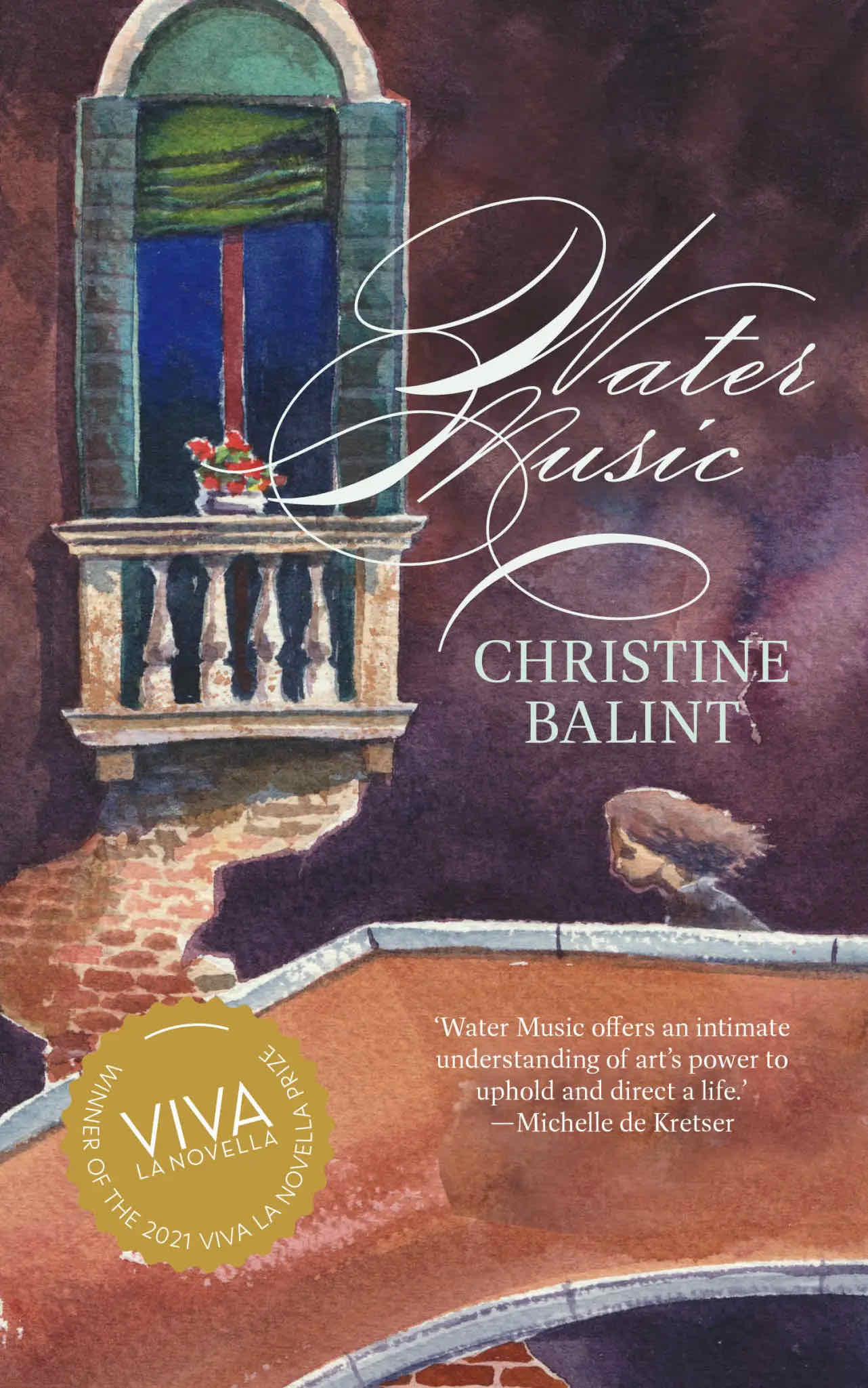
The first rule is that Kate sets our starting book. This month she set a fun challenge: we had to choose a travel guide from our bookshelves! What fun. I chose the Rough guide to Japan, and – woo hoo – I found an image on GoodReads of the cover of my 2011 edition. That wasn’t our first visit to Japan, as we’d been twice before, but that was when we bought the guide, because … well read on …

I decided not to go the obvious route – a book by a Japanese writer – because who wants to go the obvious route? Instead, I’m linking on Kindle books. The Rough guide to Japan was the second book I bought for my Kindle, thinking that an eTravelGuide would be so much easier to manage. Well, yes – and no – but that’s for another day. Meanwhile, the first eBook I bought was Jane Austen’s Sense and sensibility (one of my posts)! Yes, I already had a couple of copies of it, but you can never have too much Austen, and, anyhow, because I know it well, it was a good book on which to test using eReaders. Wouldn’t you say?
Horace Walpole, The castle of Otranto

Sticking with the Kindle theme – and a bit of personal history – the third book I bought for my Kindle was another classic, Horace Walpole’s The castle of Otranto (my review), because, also in 2011, my Jane Austen group decided to discuss a Gothic novel of our choice. (This image is not my Kindle edition.)

Louis Nowra, Into that forest

OK, I’ve probably bored you enough now with my Kindle history, so my next link is on Gothic novels. I’m choosing a Australian gothic novel, Louis Nowra’s Into that forest (my review), which is set in the late 19th century, and tells the story of two young girls who find themselves lost in the bush (forest), and are taken in by a Tasmanian Tiger.

Eva Hornung, Dogboy

They are, in other words, feral children. My next link is another Australian book about feral children, Eva Hornung’s Dog boy (my review), which is about a boy taken in by a dog – but in Moscow, would you believe!

Book Cover

And now I’m going to do one of those nice, clear, obvious links that MR will like because it’s on a word in the title, dog! My link is to Louis de Bernieres’ Red dog (my post on the book and movie) which was inspired by the story of a real dog which roamed the Pilbara region of Western Australia through the 1970s.

Murakami, Blind willow, sleeping woman

Finally, because we had to go there, and legend has it – at least in the film – that Red Dog did, we are going to end in Japan. I haven’t reviewed as much Japanese literature on my blog as I would like, despite its being a favourite of mine, but the first work of fiction I posted on here was Haruki Murakami’s short story collection, Blind willow, sleeping woman (my post) so that is my final link.

I do hope you enjoyed this month’s journey, because I had fun putting it together – and for once we did come full circle.

Now, (sort of) the usual: Do you have a favourite travel guide on your shelves? And, if so, what would you link to? If not, then I’d love you to comment on whatever takes your fancy!

Six degrees of separation, FROM Tom Lake TO …

Last #SixDegrees I was in the land of the Wurundjeri Wandoon people of the Greater Kulin Nation, that is in my part of Melbourne, but this month, I’m home in Ngunnawal/Ngambri country. Where will I be next month? Time will tell – and do you care? So let’s get to the meme. If you don’t know how this #SixDegrees meme works, please check host Kate’s blog – booksaremyfavouriteandbest.

The first rule is that Kate sets our starting book. And this month it is, of course, one I haven’t read. I’m told, however, that it’s well worth my considering, so that I’ll do. It’s Ann Patchett’s Tom Lake.

Now, I had several goes at this meme, but they didn’t lead to where I wanted to end, so, I decided to do one of my #SixDegrees poems. Here goes (with links on titles going to my posts on those books):

Tom Lake*
was discussing Question 7
with Elizabeth Finch,
when Chinongwa cried out,
What if Things fall apart?
Never fear, they replied, there’s a Crossing to safety
in the Valley of Grace.

With thanks to Ann Patchett, Richard Flanagan, Julian Barnes, Lucy Mushita, Chinua Achebe, Wallace Stegner and the inspirational and much-loved Marion Halligan. Her funeral was held yesterday, and I wanted to end this #Six Degrees on this beautiful book by her – after sharing some books that ask big questions.

* And yes, I know Tom Lake is not a person, but for my purposes “he” is. It’s called artistic licence!

I used more filling words than I like to do with these poems, but it’s the best I could do.

We’ve travelled far this month – to North America, Britain, Africa, and Australia – and I’m 50:50 on author gender. How good is that?

Now, the usual: Have you read Tom Lake? And, regardless, what would you link to?

Six degrees of separation, FROM Demon Copperhead TO …

I am back in the land of the Wurundjeri Wandoon people of the Greater Kulin Nation, which means I’m back in my part of Melbourne for our family’s annual February birthday season. (Three have their birthdays between the 3rd and 9th, inclusive.) It all starts today, that means, but I did have time to prepare my Six Degrees in advance. If you don’t know how this meme works, please check host Kate’s blog – booksaremyfavouriteandbest.

The first rule is that Kate sets our starting book. Every now and then she mixes it up and doesn’t set a specific book. This month is one of those, with our assignment being to make our starting book the one we ended our January links on or the last one we read in January. Barbara Kingsolver’s Demon Copperhead is the last book I completed in January – for my reading group on Tuesday 29th – though I didn’t post my review until the first of February.

When I started reading Demon Copperhead I was immediately reminded of JD Vance’s memoir Hillbilly elegy. That’s an obvious link given Vance also grew up as a “poor hillbilly”. However, I was also reminded of another novel about a boy growing up poor with an addicted mother, albeit an alcoholic in this case. That book is Douglas Stuart’s Shuggie Bain (my review) so that’s my first link. Shuggie is a very different boy, but he captured my heart just as Demon Copperhead did.

Both Demon Copperhead and Shuggie Bain are titled for their protagonists, who grow up during the course of the book. Another novel I read which is named for a young protagonist who grows up during the book is Gwendolyn Brooks’ Maud Martha (my review). All three of these young characters have much to contend with in their young lives. But now, we are moving on from characters to …

Laurie Steed, You belong here

Form. Maud Martha is a novella told through vignettes from the titular character’s life. Another book I’ve read which tells the story of a family through vignettes is Western Australian author Laurie Steed’s You belong here (my review). Maud Martha covers around two decades in 100 pages, while You belong here covers around four decades in two hundred and fifty pages.

Book cover

The back cover blurb of Steed’s novel describes it as having “all the dysfunction of an Anne Tyler novel, but with a distinctly Australian feel.” I’ve read and thoroughly enjoyed a few Anne Tyler novels over the years, but only one since I started blogging, so that’s my next link, Anne Tyler’s Redhead by the side of the road (my review).

Simsion, The Rosie Project

Tyler’s protagonist, Micah Mortimer, is a routine-driven character who has trouble forming deep relationships with people. Another routine-driven character who doesn’t find romance, in particular, easy is Don Tillman in Graeme Simsion’s popular Rosie series, so it’s to the first in this series, The Rosie project (my review), that I’m linking next.

For my final link, we are staying in Australia, and I’m using one of those more tricksy links, namely the birth year of the authors. Susan Johnson, whose Life in seven mistakes (my review) I’m making my last link, was born the same year as Simsion. Like many of the books this month its subject matter is problematical families. Such, though, is the common stuff of fiction, eh?

We haven’t travelled far this month, spending most of it in the USA or Australia – with one little foray to Scotland. We’ve also stayed within the last century. I’ll see if I can be more exciting next month.

Now, the usual: Have you read Demon Copperhead? And, regardless, what would you link to?