Reading highlights for 2017

I do hope I don’t disappoint my Monday Musings fans too much, but as this Monday also happens to be January 1, I’d like to use it to share my reading highlights for the year. Rest assured – if you care – that Monday Musings will be back. (Indeed, next week’s is already in the bag.)

So, to my 2017 reading highlights. As usual, I won’t be naming a top ten, or somesuch, because as I’ve said before I’m a wuss. It’s too hard. I could never be a literary awards judge. However, I had a great reading year – albeit a very unusual one – as you will see …

First, though, this year’s …

Literary highlights
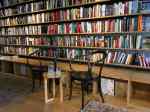
Muse bookshop

Muse bookshop (before an event)

Literary highlights mean for me literary events, and there were many wonderful events in Canberra this year. I missed a lot f them because I was away or had clashes, but those I did attend gave me much to think about:

  • Festival Muse: Muse is one of my favourite places in Canberra. Billing itself as “Food, Wine, Books”, Muse is a cafe, bookshop and event venue. They regularly hold author events, but early in the year they organised a literary festival. The sessions I attended were wunderbar. Given our Canberra location, their Festival, like the Canberra Writers’ Festival, includes quite a bit of political content. I wrote two posts (Women of the Press Gallery, Robyn Cadwallader author interview)
  • Canberra Writers Festival on which I wrote four posts (Day 1, Day 2 Pt 1, Day 2 Pt 2, Day 2 Pt 3): I loved the variety of sessions I attended, but had to miss the last day due to a cold which made attending the second day hard enough. Roll on 2018.)
  • Author interviews: I missed so many this year, but I did enjoy hearing Charlotte Wood, Sofie Laguna, and Jelena Dokic.
  • Two annual lectures at the NLA, which I try to make a fixture in my calendar: the Seymour Biography Lecture, given this year by Raimond Gaita; and the Ray Mathew Lecture given by Kim Scott. These lectures are the best – and we always follow them up with supper at Muse! What’s not to like!

Reading highlights

As in previous years, I’m going to discuss this year’s reading highlights – the books that made the biggest impression – under categories appropriate to this year’s experience (links to my reviews).

The reading … it was a year of …
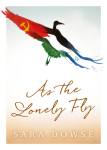
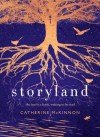
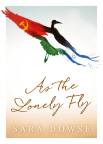
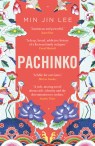
  • Sara Dowse, As the lonely blyLosing myself in grand sweeps: There was Sara Dowse’s As the lonely fly which spanned the lives of Russian Jewish émigrés to Israel and the USA over most of the twentieth century; Min Jin Lee’s Pachinko which looked at Koreans in Japan over the same period; and Catherine McKinnon’s Storyland which, in an inventive structure, told the story of a region of southeast Australia from the late 18th century to a 28th century dystopian future! Now that was a grand sweep! All three books were great reads which gave me plenty to think about.
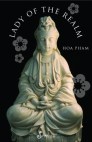
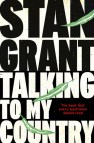
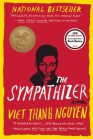
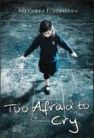
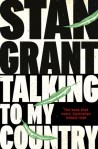
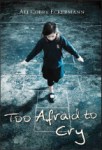
  • Exploring displacement: As I reviewed my reading for the year, the theme of displacement kept popping up, book after book. I wonder why that would be!? The first two grand sweep books fit this theme, but others included Ali Cobby Eckermann’s Too afraid to cry (about being an indigenous child adopted into a non-indigenous family), Stan Grant’s Talking to my country (about indigenous people’s displacement by colonial settlers), Yuri Herrera’s Signs preceding the end of the world (about Mexicans making the crossing to the USA), AS Patrić’s Black rock white city (about Serbian refugees in Australia), Hoa Pham’s Lady of the realm (about a Vietnamese Buddhist nun displaced in her own country) and Viet Thanh Nguyen’s The sympathizer (about Vietnamese refugees in the USA).
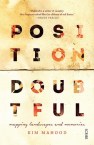
  • Ali Cobby Eckermann, Inside my motherDelving into indigenous Australia: While I only read four works by indigenous Australians, they were a varied, inspiring lot: Ali Cobby Eckerman’s memoir Too afraid to cry and her poetry collection Inside my mother, Stan Grant’s hybrid memoir Talking to my country, and the Writing black anthology edited by Ellen van Neerven. These, and two other books, The stolen children edited by Carmel Bird, and Kim Mahood’s Position doubtful, contributed significantly to my growing understanding of life as experienced by indigenous Australians and how I might accommodate this understanding in my own life.
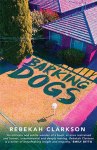
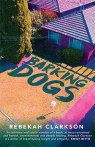
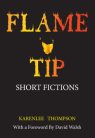
  • Indulging in short stories: Are you surprised! Okay, okay, I can’t name them all, so I’m picking the four that jumped into my head: Rebekah Clarkson’s Barking dogs and Karen Thompson’s Flame tip, which were connected by location and theme; the more traditional collection, Stephanie Buckle’s Habits of silence and Stephen Orr’s Datsunland.
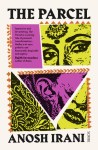
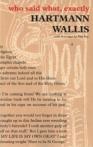
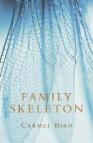
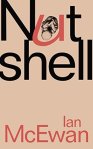
  • Anos Irani, The scribeMeeting unusual narrators: Unlike some readers who look askance at odd narrators, I’m open to them (in the hands of great writers, anyhow). Ian McEwan’s foetus in Nutshell and Carmel Bird’s skeleton in the cupboard in The family skeleton took me along with them into their – hmm – challenging families. The transgendered Madhu in Anosh Irani’s The parcel fits here too, though perhaps shouldn’t (be seen as unusual, I mean). The confessional tone maintained by the unnamed mole (of the spy not furry variety) narrating Viet Thanh Nguyen’s The sympathizer made him a somewhat unusual narrator too. And finally, how can I forget the slippery Hartmann Wallis in the eponymous (sort of) Who said what, exactly.
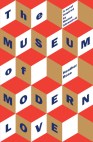
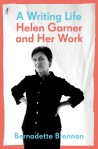
  • Discovering the lives of “real” others in fiction and non-fiction: Heather Rose’s novel The museum of modern love and Bernadette Brennan’s literary portrait A writing life; Helen Garner and her work were standouts here.

There were many more great books, including several classics (see, I haven’t even mentioned she who should be named) and some fascinating biographies, but I need to finish somewhere – don’t I, dear patient reader.

Some stats …

And here is where there are some surprises (for me, anyhow):

  • 53% of my reading was fiction, short stories and novels (versus 63% in 2016, and even more in 2015): While I was vaguely aware this was happening, I must say I’m not happy with it. Part of the reason is that my reading group did more non-fiction this year – four out of eleven in fact – where we usually only do one, and part of it is due to review copies sent my way. Very few of the non-fiction I read were actively chosen by me. I hope to recalibrate this somewhat next year.
  • 73% of the authors I read were women (versus 65% and 67% in 2016 and 2015 respectively): Again, while I like to read women writers and count reading them as one of my specific reading interests, I didn’t actively seek to increase the proportion this year. I can’t blame my reading group for this one, as our ratio there was 55%!
  • 35% of the works I read were NOT by Australian writers (versus 32% in 2016!): Roughly one-third non-Australian, two-thirds Australian feels like a fair ratio to me.
  • 31% of the works I read were published before 2000 (similar to last year’s 35%): Again, I’m happy with this. I like to keep delving into past works, but it’s a challenge doing so while trying to keep up with the contemporary literary scene.

So, some trends I’m comfortable with, and some less so. I don’t usually set goals for the year – besides a soft goal of trying, vainly, to reduce the TBR pile – but in 2018 I will do my best to lift the fiction ratio (albeit my first review for 2018 will be – wah – non-fiction!) This is not to say I don’t like non-fiction, because I do, but I have felt the lack of fiction at times. I need it in my life.

Overall, it was a good reading year, and I have loved sharing it with you. So, as I wrote last year, a big thankyou for reading my posts, engaging in discussion, recommending more books and, generally, being all-round great people to talk with.

I hope you all have a wonderful 2018. I also hope that you will continue to visit me here to share your thoughts. (And I will do the same for those of you who have your own blogs. What a lovely community we have.)

What were your reading or literary highlights for the year?
Monday musings on Australian literature: Australian Women Writers Challenge 2017

aww2017 badgeAs has become tradition, I’m devoting my last Monday Musings of the year to the Australian Women Writers Challenge*. But, this time, my last Monday Musings also coincides with Christmas Day, so I wish a happy, peaceful holiday season to all my readers here who celebrate this time of year, however or whatever you celebrate.

Now, on with the show … This year has been an active one at the Challenge with a significantly increased number of reviews, in my area at least. We’ve also, with the help of new Challenge volunteer Theresa Smith (of Theresa Smith writes), published a large number of interviews with authors in our Spotlight series and, through connections made by Challenge founder Elizabeth Lhuede, published several posts on classic Australian women writers. In other words, we are extending the content on the blog to make it a broader resource beyond our round-ups and the reviews database which is, of course, the backbone of the challenge. The database now contains reviews for over 4,400 books across all forms and genres of Australian women’s writing, from all periods. This represents an increase of over 20% on last year’s total. Another good achievement.

Once again the Challenge ran some special events during the year, achieved some milestones, and introduced some new initiatives. These include:

  • Spotlights: Throughout the year we posted a variety of Spotlights – Saturday and Sunday Spotlights comprised author interviews (of which I did two, with Sara Dowse and Dorothy Johnston), Small Press Spotlights in which we featured some of Australia’s small publishing houses), and spotlights on classic women authors, like Ada Cambridge.
  • Facebook Page: Our Facebook Page – Reading Australian Women Writers – which was created last year, continues to attract readers wanting to share their latest Aussie women writers’ reads.
  • Bingo: We ran our second Bingo challenge – two in fact, one general, one classic – but I let it slip. Next year I will try a reminder system, although I’m not keen to overfill my blog with non-review content.
  • New releases: We are playing with how to capture and promote upcoming releases. We haven’t settled on the perfect process yet. Watch the blog for more on this.
  • Diversity: Once again author and researcher Jessica White coordinated a series of guest posts by “diverse” writers. There were posts by writers living with mental illness, by lesbian/queer writers, and others. These sorts of posts help make the AWW blog stand out from the crowd.

My personal round-up for the year

Let’s start with the facts, followed by some commentary. By the end of the year I will have posted 30 reviews for the challenge, the same as last year. Here they are, with links to my reviews:

Catherine McKinnon, StorylandFICTION

Rebekah Clarkson, Barking dogsSHORT STORIES

POETRY and VERSE NOVELS

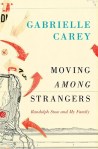
Gabrielle Carey, Moving among strangersNON-FICTION

I’ve noticed an interesting trend over the last three years in my Aussie women’s reading – a noticeable decrease in the proportion of novels:  48% in 2015, 40% in 2016, and just 34% this year. I’m not sure why this is, but I have been aware of reading more non-fiction this year – more by accident than on purpose. The types of novels I read changed from last year too, with very few debut novels this year as against nearly half last year, and two classics as against none last year!

Indigenous writers represented 10% of my total, with two books by Ali Cobby Eckermann and one by Ellen van Neerven. And memoir featured significantly – again – in my non-fiction reading, though they weren’t all your traditional memoir, one being an essay anthology, and two being what I would call “hybrids”. Overall, I’m reasonably satisfied with the diversity of my contribution – though I could always do better.

Anyhow, if you’d like to know more, check out the challenge here. The 2018 sign up form is ready, so do consider joining us. All readers are welcome. I’ll be there again (this being my sign-up post).  The challenge is also on Facebook, Twitter (@auswomenwriters), GoodReads and Google+.

Finally, a big thanks to Theresa, Elizabeth and the rest of the team – including my longtime online bookgroup friend Janine Rizzetti (Resident Judge of Port Phillip), who joined us this year. Once again it has been a positive experience, which is a credit to the willingness and flexibility of those involved. See you in 2018.

* This challenge was instigated by Elizabeth Lhuede in 2012 in response to concerns in Australian literary circles about the lack of recognition for women writers. I am one of the challenge’s volunteers – with responsibility for the Literary and Classics area.

Reading Bingo 2017

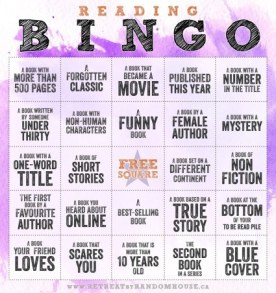
Reading Bingo 2017Are you getting sick of memes and lists? If so, just ignore this post and come back when the silly season is over because it seems that we book bloggers can’t help ourselves at this time of year. Today’s meme is a bingo asking us to name books we’ve read this year that meet categories on a bingo card – and it’s a big one with TWENTY-FIVE categories. I got the card from Lisa (ANZLitLovers).

Like most bloggers I have not read to the bingo card, but have tried, after the event, to squish my reading into the card. There are, therefore, a couple of fudges, which I hope you’ll accept. But if you don’t, what are you going to do? Unsubscribe? I hope not!

Sara Dowse, As the lonely blyA book with more than 500 pages: As it turns out I didn’t read one that was more than 500 pages though I read at least three that were between 450 and 500 pages, so I’m choosing the Australian one of those three, Sara Dowse’s As the lonely fly (my review), about Jewish migration, big dreams and the Jewish state in Israel.

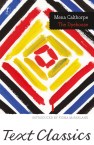
Mena Calthorpe, The dyehouseA forgotten classic: Mena Calthorpe’s The dyehouse (my review), which was (re)published by Text. They thought it was so special they made in their 100th book in their Classics series. If you haven’t read it, consider doing so, particularly if you like social realist novels about the lives of workers.

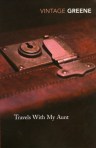
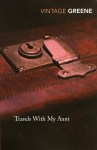
Graham Greene, Travels with my auntA book that became a movie: I have a few of those in my reading this year – and they are mostly classics. The one I’m choosing is Graham Greene’s Travels with my aunt (my review) which, unlike the ones I didn’t choose, I haven’t seen!! I did however read it!

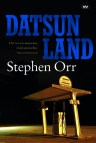
Stephen Orr, DatsunlandA book published this year: I’ve read several new releases this year, mostly review copies. I’m choosing Stephen Orr’s Datsunland (my review) because I do like a collection of short stories, and I’ve read a few good’uns this year. I’ll be reviewing my third Orr book, his newest release, within the next few months.

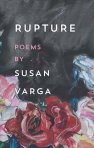
Susan Varga, RuptureA book with a number in the title: This proved strangely difficult this year, but luckily one book I read had numbers in its subtitle, Susan Varga’s moving poetry collection, Rupture: Poems 2012-2015 (my review). I do hope this isn’t a fudge – the numbers are on the title page even if not on the cover!

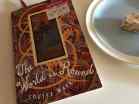
Louise Mack, The world is roundA book written by an author under thirty: Normally this would be hard, but history tells me that Louise Mack was 26 when her book The world is round (my review) was published in 1896. This book was nearly my “forgotten classic” until I needed something here!

Rebekah Clarkson, Barking dogsA book with non-human characters: I was initially challenged by this one, until I remembered Rebekah Clarkson’s interconnected short story collection Barking dogs (my review) in which Jasper the barking dog recurs a few times, eventually providing the catalyst for a devastating action.

Hartmann Wallis, Who said what exactlyA funny book: I don’t read a lot of funny-haha books, but many of the books I read make me laugh. Take Hartmann Wallis’ Who said what exactly (my review), for example. If my review doesn’t enable you to see the humour, try reading Robin Wallace-Crabbe’s comment.

Carmel Bird, Family skeletonA book by a female author: Now this is a hard one – not! I have an embarrassment of riches here, so I’m going to go with one of the doyennes of the Australian literary scene, Carmel Bird and her clever Family skeleton (my review).

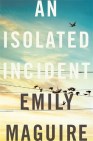
Emily Maguire, An isolated incidentA book with a mystery: Well, let’s choose an actual mystery book here, albeit a literary one in which the mystery is really not the main point. I’m talking about Emily Maguire’s An isolated incident (my review).

Ian McEwan, NutshellA book with a one-word title: I have a few options here, but I’ll go with the one I used in a recent Six Degrees post, Ian McEwan’s Nutshell (my review). Such an intriguing book with an unusual choice of narrator.

Stephanie Buckle, Habits of silenceA book of short stories: As a short story enthusiast I have a few options here too, so am choosing the last one I reviewed, Stephanie Buckle’s Habits of silence (my review). It’s a (lovely) debut collection, so I’d like to give it this extra shout-out.

Kim Mahood, Position doubtfulA free square: So many to choose from, but I’ll nominate the book that I waited months to read until my reading group did it, Kim Mahood’s thoughtful memoir, Position doubtful (my review), about being Australian and relating to this land that belonged to someone else first.

Hoa Pham, Lady of the realmA book set on a different continent: I read several books set in different parts of the world, but, quite coincidentally, two of them were set partly or completely in Vietnam. I’m choosing the one set completely there, Hoa Pham’s Lady of the realm (my review).

Stan Grant, Talking to my countryA book of non-fiction: Again, so many to choose from, but Stan Grant’s Talking to my country (my review) works as a sort-of companion to Position doubtful, in that it’s by a descendant of one of those original owners. He firmly but generously talks about what it has meant for his people to have been so summarily displaced by us!

Northerner Abbey illus br Brock

From Ch. 9, illus. by CE Brock)

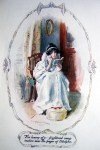
The first book by a favourite author: Most of you know who my favourite author is (though I have a few really) – Jane Austen. I’m fudging here, because her first book to be published was Sense and sensibility, but the first sold to a publisher (who then didn’t publish it) was Northanger Abbey (my posts). I just so happen to have re-read it this year (200 years after its eventual posthumous publication).

Karenlee Thompson, Flame tipA book you heard about online: Like most readers, I hear about many books online, but one I know I FIRST heard about online is Karenlee Thompson’s book of short fiction, Flame tip (my review), which was inspired by Tasmania’s bushfire of 1967.

Min Jin Lee, PachinkoA best-selling book: Hmmm, I don’t tend to read best-sellers, but I think Min Jin Lee’s Pachinko (my review) is such in the USA, where it was named one of the New York Times Book Review’s 10 Best Books of 2017.

Heather Rose, The museum of modern loveA book based on a true story: My choice here is one of my top reads of the year, Heather Rose’s The Museum of Modern Love (my review). Such a stimulating excursion into ideas about art, love and home.

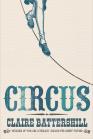
Claire Battershill, CircusA book at the bottom of my TBR pile: Now which TBR pile do they mean? And what does bottom mean? I have no idea but one of my TBR reads this year was a wonderful collection of short stories given to me by Daughter Gums in 2014, Circus (my review), by Canadian writer Claire Battershill.

Viet Thanh Nguyen, The sympathizerA book your friend loves: This is easy. My dear American friend gave me Viet Thanh Nguyen’s The sympathizer (my review) because she loved it. I did too.

Anos Irani, The scribeA book that scares you: When I think of this category, I don’t think mystery or horror genre, but books with ideas that scare me. I’ve several to choose from, but I’ll go with Anosh Irani’s The parcel (my review) for its devastating evocation of how cruelly people can treat others, and how intolerant people can be of difference.

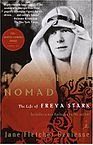
Jane Fletcher Geniesse, Passionate nomad, book coverA book that is more than ten years old: Again I have a few of these, but some have already appeared in this list, so I’ll go with Jane Fletcher Gienesse’s Passionate nomad: The life of Freya Stark (my review) which was first published in 1999.

The second book in a series: I almost never read series, and certainly haven’t read anything in a series this year so FAIL. I can’t complete the Bingo card!

Ali Cobby Eckermann, Too afraid to cryA book with a blue cover: Woo-hoo, this category enables me to include one of the two books I read this year by Ali Cobby Eckermann, her memoir Too afraid to cry (my review).

So there you have it … a long post. Did you make it to the end? I can’t expect you to complete the bingo card in the comments, but how about choosing one category to highlight a book you’ve read this year that you think deserves a shout-out?

A year in first lines, 2017

How is that I, a non-meme-doing blogger, suddenly find myself doing memes, like the Six Degrees one? I can’t explain it exactly, but I think it happens when the meme encourages me to think about my reading or blogging. So, when Lisa (ANZLitLovers) reminded me of this end-of-year meme, that she was reminded of by Jane at Beyond Eden Rock, I decided to give it a go. To play, you “Take the first line of each month’s post over the past year and see what it tells you about your blogging year.” (I think this means the FIRST line of the FIRST post in each month.) Apparently, the idea started with The Indextrious Reader.

Now, I have cheated a little on this meme because I found that of the twelve first posts of the month, six were the Six Degrees of Separation meme, and two were my Monday Musings on Australian Literature series. This happened because I post, on average, thirteen posts a month, so there’s good probability that Six Degrees, which occurs on the first Saturday of the month, or Monday Musings, which occur every Monday, will be the first post of the month. Sharing these posts wouldn’t give a good overview of my blog, so I’ve chosen the first post of the month that is not a Six Degrees or Monday Musings one.

So, my first lines …

January: Reading highlights for 2016: 

And so we finally say goodbye to a year many of us would like to forget, but before we do, I would like to share my 2016 reading highlights.

February: Delicious descriptions: Freya Stark on a studied absence of curiosity: 

Usually I post a Delicious Description after my main post on the book in question, but I’m reversing my practice this time, for no other reason than time.

Graham Greene, Travels with my auntMarch: Graham Greene, Travels with my aunt: 

Every year, my reading group aims to do at least one classic – usually something from the nineteenth century – but this year someone suggested Graham Greene.

April: Janette Turner Hospital’s Orpheus lost: 

Last year I did a mini-review of Elizabeth Jolley’s An innocent gentleman using some scrappy notes from when I read the book long before blogging.

May: William Temple Hornaday, The bird tragedy of Laysan Island: 

William Temple Hornaday (1854-1937), whose article “The bird tragedy of Laysan Island” was a recent Library of America (LOA) Story of the Week offering, is a tricky man to write about.

June 2017: Linda Neill, All is given: 

Linda Neil’s second book, All is given, is subtitled “a memoir in songs”.

Ali Cobby Eckermann, Inside my motherJuly: Ali Cobby Eckermann, Inside my mother: 

Ali Cobby Eckermann, a Yankunytjatjara/Kokatha woman, has featured a few times on this blog, including in my review of her verse novel, Ruby Moonlight, and my Monday Musings post on her winning the valuable Windham-Campbell Prize this year.

August: Hartman Wallis, Who said what, exactly: 

Never mind Hartmann Wallis’ question Who said what, exactly, I want to know who Hartmann Wallis is, exactly!

September: Phil Day, A chink in a daisy-chain: 

You’ve “met” Phil Day, author of A chink in a daisy-chain, here before.

October: Catherine McKinnon, Storyland: 

It is still somewhat controversial for non-indigenous Australian authors to include indigenous characters and concerns in their fiction, as Catherine McKinnon does in Storyland.

Stan Grant, Talking to my countryNovember: Stan Grant, Talking to my country: 

History is, in a way, the main subject of my reading group’s October book, Stan Grant’s Talking to my country.

December: Unbreakable: Conversation with Jelena Dokic: 

If you are a fan of professional tennis you will probably have heard of Jelena Dokic who hit the world stage during the 1999 Wimbledon Championships.

The question is, as Lisa asked herself, do these first lines give you a good sense of my blog and of my reading interests. Well, I’d say yes and no …

Yes, because:

  • my reading each year includes some classics, such as Graham Greene’s Travels with my aunt.
  • my focus is Australian literature and this is clearly evident in the list above.
  • I am aiming to increase my coverage of indigenous Australian literature, and this is evidenced here by Ali Cobby Eckermann in July and Stan Grant in November.
  • each year I read a selection of offerings from the Library of America, and there’s one here, William Temple Hornaday’s “The bird tragedy of Laysan Island”.
  • I enjoy reading left-of-field books, such as those published by Finlay Lloyd, exemplified here by Hartmann Wallis’ Who said what, exactly and Phil Day’s A chink in a daisy-chain.
  • I report on my reading group’s reads, including, here, Graham Greene’s Travels with my aunt and Stan Grant’s Talking to my country.
  • I try to attend literary events and author talks, such as December’s conversation with Jelena Dokic (which in itself is not wonderfully indicative of my literary events, but it’s the one that popped up!)
  • I mix my reading forms and genres, across non-fiction and fiction, so in this list are memoirs, a biography, novels, an essay, and a classic.
  • I try to mix up my opening sentences, and I think there’s some evidence of that here (but you can tell me how successful you think I’ve been!)
  • I run some series on my blog, the main one being Monday Musings of Australian Literature, but another being Delicious Descriptions (which you can see in February).

And no, because:

  • I generally read more women authors than men, but the mix here is pretty even.
  • I do read some translated and diverse writing, but there are none here, besides the indigenous writers.
  • One of the forms I love to read are short stories, and they are not represented at all in this set of posts.

Overall though, my first lines have captured my blog reasonably well … I’d say. 

Six degrees of separation, FROM It TO …

And so we come to December and the last Six Degrees of Separation for the year. For newbies to blogging – because the rest of you surely know by now – this is a meme currently hosted by Kate (booksaremyfavouriteandbest). For information about how the meme works, please click the link on her blog-name. It’s fascinating to see the wild and wonderful paths different bloggers go, all starting with the same book – which, this month is a book I haven’t read (as is more common than not), Stephen King’s It. As always though, I have read all the books I link to.

Stephen King, ItThe reason I haven’t read It is that I’m not a big fan of horror, either to read or see in movies, and It is, I understand, horror. I have enjoyed some movie adaptations of King’s novellas, like The Shawshank Redemption, Stand by me, and Apt pupil, but the horror stories? Not so much. So, how to link a book that I have not only not read but is a genre I don’t like? Well, I’ve chosen something superficial …

Ian McEwan, NutshellOne-word-titles! How original, eh?! There are many possibilities here, but I’m going to choose one I read this year, Ian McEwan’s Nutshell (my review). It’s one of those books that some people love and some hate, mostly because of its narrator. Some people just don’t like a foetus as a narrator! Can’t understand it myself. After all, fiction is supposed to be about the imagination. Seriously, though, I do understand the uncertainty about such a device, but I thought McEwan pulled it off …

Courtney Collins, The burialAs did too, I felt, Courtney Collins with her dead baby narrator in The burial (my review). If you think a foetus is a little bizarre, a dead baby speaking from the grave may be a step too far for you, but again, I thought Collins carried it off to present a fascinating historical fiction work about an Australian female bushranger. I haven’t heard anything more about Collins since, but I do hope she’s working on another book.

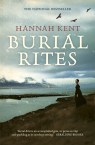
Hannah Kent, Burial Rites bookcover

Anyhow, my next link is the obvious one. It’s on the word “burial” in the title and is, of course, Hannah Kent’s Burial rites (my review) Not only does it have “burial” in the title, but it is also a work of historical fiction, albeit one set in remote 19th century Iceland, not early 20th century outback Australia. Kent’s book, however, was not the first book set in Iceland that I’ve read. That honour goes to my next linked book …

Halldor Laxness, Independent peopleHalldór Laxness’ spare, mesmerising Independent people. Unfortunately, I read this book a few years before I started blogging, so I don’t have a review to link to. One day I might fish out my reading notes and try to concoct a review, just to have it recorded on my blog. But, I probably won’t – because I fear the result would be too superficial. I really need to have a book fresh in my mind to write my reviews.

Patrick White, Happy ValleyNow, the thing about Laxness, besides being Icelandic, is that he won the Nobel Prize for Literature, in 1955. He is, apparently, Iceland’s only Nobel Laureate. Aussies may see where this is going – it’s to Patrick White, who is not quite our only Nobel Laureate, but he is our only Nobel Laureate in Literature. The Nobel Prize goes, as you know, to a body of work, so I’m doing the logical thing and have chosen the novel that got him going, his debut novel, Happy Valley (my review).

Louise Mack, The world is roundI’m going to stick with this idea of debut novel for my last link – and choose another older debut novel, Louise Mack’s The world is round (my review). While White’s book was first published in 1939, the year he turned 27, Mack’s book was published in 1896 when she was 26. Mack may not have gone on to have the stellar literary career that White did, but she’s part of our early literary tradition and I don’t want her forgotten!

So, this month we’ve travelled the globe a bit, from America to England to Australia to Iceland and back to Australia! We’ve visited remote cold places and remote hot places. And we’ve met some unusual narrators. I’ve had fun – and I hope you have too.

And now, to end, have you read It? And whether or not you have, what would you link to? 

Non-fiction November 2017, Weeks 4 and 5

Nonfiction November 2017 bannerIn my last My Literary Week post, I took part (sort of) in the Non-Fiction November meme, giving my responses for the first three weeks. Because the last two weeks ask some questions, I’d like to answer, I’ve decided to combine them is a second post. It’s probably cheating, but …

Week 4, Nov. 20 to 24: Nonfiction Favorites

For this week the question is to discuss our favourites and what makes them so. Is it to do with the topic? Or the style, or tone? Or what?

Helen Garner, This house of grief book cover

Courtesy: Text Publishing

I can name some non-fiction books that I remember years after I finished them, but can I find some common threads in them? Well, perhaps, and it’s not the topic. For example, a non-fiction work that stands out for me is one I read before blogging, so that’s more than 10 years ago. It’s Erik Larson’s Isaac’s storm about the lead up to and aftermath of the damaging 1900 hurricane in Galveston. It’s told through the eyes of meteorologist Isaac Cline, and is in that style loosely called creative non-fiction, which means it uses many of the techniques of fiction to tell its story. I discovered long ago that creative or narrative non-fiction is the non-fiction style that most appeals to me. If that makes me shallow, then so be it!

Other books using this style that I’ve read in the last decade include Chloe Hooper’s Tall man, Ann Krien’s Into the woods (my review), Richard Lloyd Parry’s People who eat darkness (my review), and Helen Garner’s First stone, Joe Cinque’s consolation and The house of grief (my review). The topics vary in these books – there’s a natural disaster, an environmental investigation, a sexual harassment case, and four very different true crime stories (including an Aboriginal death in custody, a serial killer and two focusing largely on court cases) – but they all use a narrative approach.

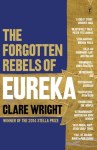
Book cover, The forgotten rebels of Eureka

However, there are two topics that are likely to attract me, regardless of style – Australian history and literary biographies/memoirs. Of the former, books like Inga Clendinnen’s Dancing with strangers and Clare Wright’s The forgotten rebels of Eureka (my review) appeal, partly because they explore history from different angles, from angles that question existing paradigms (if I dare use that word), and partly because both historians share the process of their research with the reader as they write. I like this direct engagement with me. Not only do I find it more readable, but importantly this more personal approach reminds me that this is one historian’s view of the past – a well-supported valid view (hopefully, and in these two cases, absolutely) but their view nonetheless.

My favourite recent literary biography has to be Karen Lamb’s Thea Astley: Inventing her own weather (my review) because I love Thea Astley and because Lamb’s book, though clearly positive about Astley, provides a “real” picture of an intelligent, passionate and sometimes prickly woman, of the woman, in other words, that I imagined Astley to be.

Week 5, Nov. 27 to Dec. 1: New to My TBR

Bernadette Brennan, A writing life Helen Garner and her workI think here we are supposed to mention books that we’ve read in other posts on this meme – and link back to the blog which inspired us. However, I’m afraid I’ve been a bit remiss in keeping up with all the posts, and with noting the books that have appealed when I have read the posts, so I’m going to start with a book that I’ve recently added to my TBR because it’s a must for me to read. It’s a literary biography, Bernadette Brennan’s A writing life: Helen Garner and her work. I will read this in the next two months!

And, just to show I did read some Non-fiction November posts, I was attracted to a book posted by Buried in PrintTanya Talaga’s Seven Fallen Feathers: Racism, Death and Hard Truths in a Northern CityBuried described it as “a gripping story, bound to appeal to readers who appreciate elements of true crime, history, memoir, social justice and narrative-driven journalism.” If you’ve read my Week 4 above, you’ll know exactly why this book appealed to me! It’s about the deaths of students who were attending an Indigenous-run high school in Thunder Bay, Ontario (a fairly remote place which daughter Gums visited three or four years ago). Buried explains that “to understand the importance of this educational opportunity (even with the challenges of students’ adjustments to city life and the embedded racism in the community), it’s useful to have some understanding of the residential school system, which was wielded like a weapon against Indigenous communities from the later nineteenth-century until 1996.” With our own problematical treatment of indigenous people, and my ongoing interest in racism, this book sounds particularly interesting to me.

POSTSCRIPT: Oops, I clicked the Publish button before writing my conclusion! I wanted to say that I’ve read a lot of great non-fiction in the last few years, so it’s been hard to name just a few in this post and the previous one. Different Non-fiction November questions could very well have resulted in my naming different books.

My literary week (10), Non-fiction November and Lady Chatterley

I had hoped to finish my current book by this weekend, but it’s been a busy week with a two-day trip away, an exhibition launch, and a Friends’ of the NFSA event, on top of usual commitments. However, I do have some “literary” bits and pieces to share. I’ll start with the one that isn’t hinted at in the post title!

Starstruck: Australian Movie Portraits Exhibition

Stupidly, I didn’t take any pics of the two events I attended – a special members preview and the gala opening – for this exciting new exhibition at the National Portrait Gallery (NPG). Created collaboratively by the NPG and the National Film and Sound Archive (which provides most of the images), this exhibition contains 275 images from Australia’s film industry. I’m including it here – besides wanting to promote it – because the curators, Jennifer Coombes and Penny Grist, have organised the collection to convey a narrative, from set-up to resolution. This results in images from different eras and genres being placed side by side, forcing us to think about them from different perspectives. I’ll be back to spend more time. (Meanwhile, you might like to check out the interactive exhibition of the Cinesound movie company’s gorgeous Casting Books.)

Cover Story (or, Vinyl Covers with David Kilby)

Still with the NFSA, on Friday I went to an event organised by our Friends’ group at which record collector David Kilby presented a selection of record covers. David often collects records for their covers, rather than their contents, and at this presentation we could see why. But, how to present them? There are various possibilities, but the one David chose was to display examples from the “categories” he collects – and my, does he have some fascinating categories. Some relate to audio content – such as Religious songs, Instructional records, or Co-star with me – and some to the cover art. There are, for example, covers which use “stars” who have nothing to do with the content. Jayne Mansfield was a popular choice here! Wonder why! Then there are those which depict actions, such as smoking, or types of people, such as plumbers. You really had to be there!

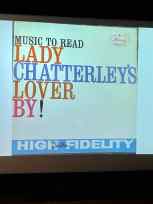
Music to read lady Chatterley's lover by, album coverBut, the group I’m sharing here is the “Music to [insert action] by”, and particularly, “Music to read by”. To represent this group, David displayed the cover for Music to read Lady Chatterley’s lover by. The music comes from Richard Shores and his Orchestra, and there are ten tracks: Love, Hate, Sorrow, Gay, Blues, Surprise, Frustration Nostalgia, Fear, Hysteria! The cover notes briefly refer to the novel’s controversial history – the censorship, and so on – and then continues:

Richard Shores [apostrophe?] initial venture into musical “no-man’s-land” may trip the same kind of alarm. Nature in the raw is seldom mild as can be seen when Shore utilizes his melodic pallet to characterize the spectrum of human emotions.

While music has always reflected the composer’s attempt to picture human emotions through the symmetry of naturals, sharps and flats, Shores flamboyantly exposes man’s innermost feelings relentlessly.

Gotta hear this one day!

Non-fiction November meme

Having seen some of my favourite bloggers – such as Lisa (ANZLitLovers) and Kate (booksaremyfavouriteandbest) – take part in the Non-fiction November meme sponsored by julzreads, among others, I considered joining in, but this week got the better of me. Consequently, I’m just going to respond briefly here:

Week 1, Oct 30-Nov 3: Your year in non-fiction

Two of the questions for this week were:

  • What was your favourite non-fiction read of the year? Without doing the count, I seem to have read more non-fiction this year than in recent years, so it’s tricky to answer this. In fact it’s so tricky that I’m going to give three: Kim Mahood’s Position doubtful (my review); Ali Cobby Eckermann’s Too afraid to cry (my review); and Stan Grant’s Talking to my country (my review). All three explore Australia, and what it means to be Australian, particularly in relation to indigenous people. (For more, see Week 3 below)
  • Bernadette Brennan, A writing life Helen Garner and her workWhat is one topic of nonfiction you haven’t read enough of yet? This would have to be literary biographies and memoirs. Two, in particular, have come out this year that I’ve not managed to read (yet), Bernadette Brennan’s biography of Helen Garner, A writing life: Helen Garner and her work, and Georgia Blain’s memoir, The museum of words. I did though retrieve (and read) from my TBR pile, Gabrielle Carey’s Moving among strangers (my review) so it hasn’t been completely hopeless.

Week 2, Nov 6-10: Book pairing

For Week 2 participants were asked to pair a non-fiction book with a fiction one, using your own criteria, but essentially meaning books that seem to go well together. Many bloggers have posted multiple pairings, but as I’m not devoting a whole post to this, I’m going with just one, the one that popped into my head the minute I realised the subject of my reading group’s August book, Min Jin Lee’s Pachinko (my review). It’s about Koreans in Japan, and their struggle to survive. My paired book is Richard Lloyd Parry’s People who eat darkness (my review). Parry’s analysis of the murder of a young English woman in Japan by a serial killer includes a discussion of the poor treatment of Koreans by the Japanese. It prepared me well for Min Jin Lee.


Week 3, Nov 13-17: Be the expert/Ask the export/Become the expert

From this group – which officially starts tomorrow, so I’m jumping the gun somewhat – I’m choosing the “be an expert option”. This asks me to share the title of three books on a single topic that I’ve read and recommend (thus making me an expert!). Well, I don’t claim to be an expert on this topic – it would be insensitive of me to do so in fact – but I would (and have) recommended these three memoirs on the experience of racism in Australia. Two of the books are by indigenous Australians, Ali Cobby Eckermann’s Too afraid to cry and Stan Grant’s Talking to my country, and one by an Australian-born writer of West Indian background, Maxine Beneba Clarke’s The hate race (my review). These books paint a picture of Australia that is depressing and distressing. When I first became aware of racism in my teens in the late 1960s, I’d have been horrified to think that half a century later so little progress would have been made in how we treat each other. What is wrong with us?


And here I will end. It would be cheeky answering Weeks 4 and 5 this far in advance.

However, I’d love to know your answers to these non-fiction questions.

Six degrees of separation, FROM Less than zero TO …

Last month I changed my Six Degrees titling practice to not including the end book. Most commenters preferred that approach, so I’m sticking with it for the moment, with apologies to those who demurred! And now, before I get stuck into this month’s choices, the formalities. Six Degrees of Separation is a meme currently run by Kate (booksaremyfavouriteandbest). For information about how the meme works, please click the link on her blog-name. It’s a fun meme.

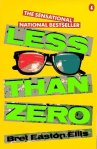
Bret Easton Ellis, Less than zeroThis month’s book, as often happens, is one I haven’t read, Bret Easton Ellis’s Less than zero. It’s set in 1980s Los Angeles, and the GoodReads summary calls it “a raw, powerful portrait of a lost generation who have experienced sex, drugs, and disaffection at too early an age, in a world shaped by casual nihilism, passivity, and too much money– a place devoid of feeling or hope.”  Plenty there for connections, but that’s not the way I’m going to go. However, before we set off, I’ll reiterate that, as always, I’ve read all the books in my chain, though some before I started this blog.

Jessica Anderson, One of the wattle birdsSo, the obvious link for this book would be to go with a title with a number in it – and that’s what I’ve decided to do, except I decided to challenge myself further and find six books I’ve read that have numbers in the title, starting with one, then two and on through to six. And I did it. First cab off the rank is Jessica Anderson’s ONE of the wattle birds (my review). Anderson was a well-regarded Australian author whose best-known book is the Miles Franklin Award winning Tirra Lirra by the river. One of the wattle birds was her last novel.

Irma Gold's Two steps forward BookcoverFor two, I have Irma Gold’s short story collection TWO steps forward (my review). I loved the title of this because it suggests that phrase “two steps forward, one step back” which is pretty much how life often goes, isn’t it? The thing about short story collections is that it’s often hard to remember the stories years down the track, but in this collection there’s one in particular that has always stuck in my mind, “Refuge” about an empathetic woman working in a refugee detention centre. She cares deeply for the detainees but she’s powerless to change anything. It’s a story that’s still (if not more) relevant today – but then all the stories are, because they are about ordinary people and the things that happen to them, such as divorce, terminal illness, miscarriage, homelessness.

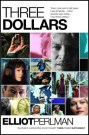
Elliott Perlman, Three dollarsThe next book is also still relevant today, though it’s nearly twenty years old. It’s one, though, that I haven’t forgotten. I’m talking THREE dollars by Elliott Perlman, which has also been adapted to film. It’s an excruciating book about when bad things happen to good people, about what happens when you stand up for what you think is right. You can end up with nothing but three dollars, that’s what. Elliott Perlman is not a prolific writer, but when he writes it’s usually powerful.

Ian Caldwell and Dustin Thomason, The rule of fourNow, number four is the odd one of the group because although I’ve read it – my reading database says so – my memories of it are vague. I read it when I was actively involved in a few online bookgroups. The book is The rule of FOUR by Ian Caldwell and Dustin Thomason. You know how GoodReads displays the ratings/reviews by your “friends” at the top of the list of reviews for a book? Well, for this book they were all from some of my internet bookgroup pals. Their ratings are 4, 2, 2, 1 and 1. This probably tells you why I don’t remember much about it.

Kazuo Ishiguro, NocturnesIt’s a different story for number five, however. The book is Nocturnes: FIVE stories about music and nightfall (my review) by this year’s Nobel Prize for Literature winner, Kazuo Ishiguro. I’m a big Ishiguro fan, having read all but two of his books, and I enjoyed this collection. It’s identifiably Ishiguro, not only because it deals with subjects he likes, such as music, but also for the style. The stories all have narrators who are either unreliable or in some other way not completely across what is going on, and they have an overall tone “of things not being quite right, of potential not being quite achieved, of people still looking for an elusive something but not necessarily knowing quite what that is.”

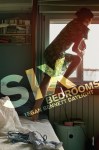
Tegan Bennett Daylight, Six bedroomsAnd so we come to the end, and it is, surprisingly, another short story collection, Tegan Bennett Daylight’s Stella Prize shortlisted SIX bedrooms (my review). However, unlike Nocturnes, the “six” doesn’t relate to the number of stories in the book, but to the title story about a six-bedroom share house.

And I’ll leave it there. This has been an odd one to write up. I’m not sure that I like the way I decided to go. It was fun searching for books to meet my sequential numbers challenge, but it’s more fun looking for ideas to link on. Back to normal next month!

Meanwhile, have you read Less than zero? And whether or not you have, what would you link to? 

Monday musings on Australian literature: Guest post from ACT Lit-blogger Emma Gibson

With the ACT Lit-bloggers of the Future program in its closing months, I thought it would be lovely for you to hear directly from Emma and Angharad via a guest post, and they both agreed. First up is Emma  – and she chose to write about …

The great Australian writer you’ve (possibly) never heard of: Randolph Stow and Tourmaline

The sun is close here. If you look at Tourmaline, shade your eyes. It is a town of corrugated iron, and in the heat the corrugations shimmer and twine, strangely immaterial. This is hard to watch, and the glare of the stony ground is cruel.  The road ends here. – The Law, Tourmaline

Randolph Stow, TourmalineI was returning to Australia after two years of self-imposed exile when I first stumbled upon Randolph Stow’s Tourmaline.

It was July and I was spending a month writing poetry at an artist residency in Cadiz, Spain, an ancient city the shape of a fist that juts out into the Atlantic. I had chosen the location because it was almost as close to the antipodes as I could get – the actual antipodean point to Canberra is in the ocean – and because I’d spent my last two summers in Scotland or Iceland and wanted a taste of warmth before returning to Australia in August. I had forgotten heat. I was to discover that I did not miss it.

I did miss Australia, as reading Tourmaline made me realise. I read it twice in that month, hiding away from the afternoon sun, because the images it conjured up were so strong, even though it was not a part of Australia I knew.

Far from civilisation, the town of Tourmaline was once a prosperous gold mining settlement in Western Australia, where its potential for riches saw it imagined as having streets pathed with the very gold taken from the earth. It was, as Gabrielle Carey describes in her introduction to the new edition of the novel, ‘a colonisers fantasy’ until the gold was exhausted, and so too the water.

The book is narrated by the Law, the ageing sheriff of the town who lives in the crumbling gaol tower and fears his irrelevance. Now, he is little more than a bystander, who has appointed himself as the memory keeper for the town. It is his testament we read, although it may not be reliable, as his recollections are tinted by nostalgia, memories of rains that the younger generation have never known.

I have seen rain in Tourmaline. Can you believe that? How can you? You have not seen that green, that green like burning, that covers all the stones on the red earth, and glows, gently, upward, till the grey-green leaves of the myall are drab no longer, but green as the grass, washed in reflected light.

Stow writes in his author’s note that the novel is to be imagined as taking place in the future.

Something has happened in the outside world, something that has changed civilisation forever. The town’s war memorial plays host to an annual event that bears resemblance to an ANZAC day service, where the Law delivers the same sermon each year. Outside, where “wild beasts are loose upon the world”, Tourmaline has been forgotten in its isolation, thought long-buried by the drifting red sands that claimed the nearby settlement of Lacey’s Find. No one comes to Tourmaline, and no one in recent memory has left; those who did leave never returned. The exception is the monthly supply truck, and its arrivals are a town event.

Among those assembled for the truck one month are town publican Kestrel, Deborah, his young Aboriginal de facto, Deborah’s adopted parents, Mary and Tom, who run the town’s only store and Byrne, the acne-scarred drunk troubadour and Kestrel’s cousin. As well as the supplies, they are delivered a near-dead man, found fifty miles down the road. Deborah, Mary and Byrne nurse the man back to health. When the stranger recovers, he introduces himself as Michael Random and claims to be a diviner. In his promise of water and gold for the town, he becomes a messiah for the people of Tourmaline – but is Random’s promise of salvation as much of a mirage as water in the desert?

Tourmaline was Randolph Stow’s fourth novel, published in 1963. Stow was a prodigious writer. By the time he was 30, he has published two poetry collections and five novels, as well as working at an Aboriginal community in the Kimberly, as an assistant anthropologist on the Trobriand Islands, and stints as an academic.

But it’s likely that Randolph Stow is the great Australian writer you’ve never heard of. I had never heard of Stow until I found Tourmaline, and as I raved about it to friends over the ensuing months, they hadn’t either, except for one who recalled reading The Merry-Go-Round in the Sea as a student in Geraldton, where the book is set. I became obsessed with learning more about the man and his life.

Stow won the Patrick White Award and the Miles Franklin Award, as well as a fellowship from the Australia Council for the Arts (which he later terminated in a letter to Gough Whitlam). He was a contemporary of Patrick White’s and mates with Sidney Nolan, who designed some of the covers for his books.

Yet he is described as ‘the least visible figure of that great twentieth-century triumvirate of Australian novelists whose other members are Patrick White and Christina Stead’.

I wonder why this is. While it’s likely more complex, there are two reason I can see. One is that his work could be considered difficult. While others were writing social realism, Stow was instead interested in the symbolic, drawing on Taoism spiritualism in Tourmaline, which has been described as an ecological allegory. Patrick White himself professed that Tourmaline had “Come to grief in a lush labyrinth of poetic prose.” (Quoted by Bruce Bennet in Westerly 55:2, p. 152).

The other is that Stow himself was elusive. Always a solitary figure who had struggled with mental health issues and alcohol, he spent long periods travelling in the 1960s and then settled in England. Perhaps, in this exile to the home of his ancestors, was a reflection of a theme apparent in his work, of the tension around colonial identity and the impact of European settlement on Indigenous Australians.

After leaving Australia, Stow published few books, and over time, disappeared from our literary consciousness. When Stow died in 2010, most of his books were out of print in Australia – a forgotten relic like Tourmaline, perhaps, already thought long buried. But unlike his narrator in the novel, Stow need not fear lapsing into irrelevance. In recent years, there has been a renewed interest in his novels and poetry.

In 2015, Text republished five of Stow’s novels as part of its Text Classics series. Gabrielle Carey’s Moving Among Strangers: Randolph Stow and My Family, was published in 2014 and Suzanne Falkiner’s comprehensive biography, Mick: A Life of Randolph Stow, followed in 2016.

I hope then, that Stow’s work will find new readers.

***

About Emma Gibson

Emma is a writer and performance-maker here in Canberra. She’s particularly interested in writing about place (which of course appeals to me), and is currently studying a Masters of Creative Writing (Place Writing) with Manchester Metropolitan University.

Emma has written plays, some performed locally, such as Johnny Castellano is mine (Canberra Youth Theatre/Street Theatre), The Pyjama Girl (HotHouse Theatre), and Widowbird (The Street Theatre), and others performed internationally, including War Stories (24:7 Festival, Re:Play, Greater Manchester Fringe, Buxton Fringe), and Bloodletting (Bread and Roses Theatre, London).

Emma also writes prose, and has had short pieces published in the Skagastrond ReviewSeizure, and Iceview. She has created a site-specific poetry installation in Spain, helped run an artist residency in Iceland, and made an audio walking tour around Garema Place for Canberra’s You Are Here Festival.

Her posts for the ACT Lit-bloggers program can be found here on the Capital Letters blog.

Thanks, Emma, for this first piece on Stow in my blog. I appreciate it! And now, Emma and I would love to hear what you know or love about Randolph Stow …

My literary week (9), some thoughts about fiction …

It’s been a busy week, what with getting ready for our road trip to Port Macquarie, and then doing said road trip, so reading has been slowed down somewhat. However, that doesn’t mean that things literary have been forgotten.

Why write fiction?

Anos Irani, The scribe

Like most of you who read this blog, I expect, I’m always looking out for discussions about what literature is all about, particularly from the writers who create this things we read. This week, I listened to a couple of interviews with authors, and loved what they had to say.

I’ll start with Anosh Irani whose latest novel The parcel I reviewed a few days ago. In an interview on Canada’s CBC, he said:

I had to tell the truth. For me that was the most important thing. Tell it in the form of a story but make it as truthful as possible.

Fiction is a beautiful way to get to the higher kind of truth.

There’s a difference between facts and truth. Factual information is what I learned when I did my research but truth can be an emotional truth; it can be a spiritual truth. These are things that you can arrive at through fiction, that’s why I love the novel. […]

The idea for me when I write a novel is to find what is human in the worst kinds of experience. […]

There are questions that the reader will also ask that have no answer and that is the whole point that sometimes there aren’t any answers. […]

I think literature should make us a little uneasy, a little uncomfortable, it should cause a shift in our unconsciousness because only when we are disturbed will we go in search of something [and he then refers to great novels like Rohinton Mistry’s A fine balance, Albert Camus’ The outsider and Vladimir Nabokov’s Lolita as examples. Yes!]

SNAP, I thought, because the previous day I’d heard Richard Fidler interview Richard Flanagan, and Flanagan too had talked about truths and about questions without answers:

Novels are something we go to because they remind us that implicit in each of us is a universe of possibilities, some better, some worse […]

It’s said now that reality has outstripped fiction, and that fiction can’t deal with this new reality, but […]

I genuinely believe in the novel as one of the great spiritual, intellectual and aesthetic traditions and at its best it speaks to fundamental truths about the human condition. It’s not that it has answers but … it asks the necessary questions we need to ask, of ourselves and of our times.

As you will probably guess, I love this idea of novels’ role being to ask us questions without necessarily providing the answers. Irani certainly does it. He presents some complex if not discomforting moral questions, and leaves the reader to think about how to react. His only request, I’d say, is for us to react with humanity, to not be quick to judge (particularly if we haven’t walked in those shoes.) Sometimes, as he says, there are no answers.

MUBA (Most Under-rated Book Award)

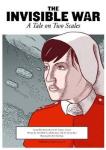
The Invisible War book cover

While on the road, I did check my Twitter feed every now and then, and one that caught my attention came from the Small Press Network (SPN). It announced this year’s MUBA award shortlist. I have written about these awards before, and have read the odd nominee, but this list comes completely out of left-field for me. The books are:

  • Briohny Doyle’s The island will sink (Brow Books, an imprint of Lifted Brow magazine): a debut novel that sounds like it’s in the dystopian cli-fi tradition
  • The invisible war: A tale on two scales (Scale Free Network): a surprising-sounding graphic novel for young adults set in the first World War and about bacteriophage that fights dysentery! This book has won educational publishing awards, but I guess is unknown/underrated in the general realm.
  • Susan McCreery’s Loopholes (Spineless Wonders, whom I’ve mentioned before in a post on Specialist Presses): a collection of micro-fiction about family life and relationship – no piece is more than 250 words
  • Christina Kennedy’s Horse Island (Zabriskie Books): set around Tuross Lake in NSW’s south coast, a beautiful part of the world only about three hours drive from me. This book chronicles Kennedy’s commitment to native Australian plants.

What a fascinating bunch. The winner will be announced next month.

How we read …

Another thing readers like me like to read about is how other readers read. I don’t mean what they read, or how many books they read, but how they actually read. This can include things like whether they write marginalia or not, or how many pages they read before they give up on a book, or whether in fact they ever give up a book once started. Consequently, I loved this from a Canadian blogger I love to visit, Buried in Print. It’s from her review of a book by Sarah Dunn called The arrangement, and she writes:

And when I say ‘entertaining’, I mean I chuckled aloud several times and paused more than once to let the book settle into my lap so I could enjoy the idea of the scene described.

I related to this. I often do the same. Not just for funny scenes, but for moving ones, or gorgeously written ones that I want to let soak in. It slows down the reading of course – but, when you are moved (to laugh, cry or wonder), you are moved, and you don’t want to rush that, do you?