My literary week (7), adaptations

With Ma and Pa Gums in the process of selling house and preparing for a downsize move, my time has been taken up with many things besides reading – but I did get out at night in the last week to see a couple of adaptations of novels I’ve enjoyed in the past.

There’s still time … brother
Nevil Shute, On the beachOne of my favourite novelists when I was a teen – when my friends were reading Georgette Heyer – was Nevil Shute. He wrote more than 20 novels, and I sought every one out over a period of years until I’d read them all. His best-known novels are probably No highway, A town like Alice and On the beach, all of which were made into films (as were others too, I know). This post is about the last I mentioned, On the beach, which was his dystopian (or post-apocalyptic) Cold War novel about the end-of-the-world due to nuclear war. Something I didn’t know on my first reading is that on the title page of the first edition are lines from TS Eliot’s poem “The hollow men”. Makes sense, and you can read about it in the Wikipedia article I’ve linked to above.

I hadn’t read Shute for a few decades until the early 2000s when one of my online reading groups decided to read On the beach. How disappointing I found it. The story was still powerful, but the writing seemed so wooden and the characters so stereotyped. I was therefore uncertain about seeing the original Stanley Kramer movie last week, when it was shown at the National Film and Sound Archive as part of its season of atomic age films.

I needn’t have worried. It was great – and must have been a work of passion given how quickly Kramer got onto the story. The novel was published in 1957, and the film released in 1959. The Wikipedia article on the film adaptation provides a useful introduction to the film and discusses where the adaptation departs from the novel. Apparently, Shute was not happy with the changes, but it’s too long since I read the novel for me to comment on that. One of the changes, Wikipedia says, is that the film doesn’t detail who was responsible for the conflagration. There could be various political reasons for this, but it could also be because Kramer had a very clear message he wanted his audience to take home – one that he didn’t want diluted by people thinking it had nothing to do with them. He wanted everyone to take the dangers of nuclear weapons seriously – and wow, did the film make that point …

Towards the end, as the radiation is reaching Melbourne, the film shows crowds of people in a Melbourne street attending a Salvation Army service. Above them is a banner reading “There is still time … brother”, reminding the attendees, of course, that there is still time to “find God”. The final scene of the film shows the same street – now empty of life – and closes on the banner “There is still time … brother”. It floored me. It so neatly, so confrontingly, shifted the meaning from the religious to the political. And, the message (either narrowly or broadly interpreted) is as relevant today as it was then. That’s the scary thing.

From the Cold War to Cold Light
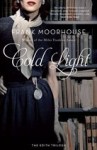
Frank Moorhouse, Cold LightIn the last novel of Frank Moorhouse’s Edith trilogy, Cold light (my review), Edith Campbell Berry, star of the League of Nations (well, in her mind), comes to Canberra, hoping to make her mark. It’s fitting, then, that an adaptation – in this case a play not a film – should be made in Canberra. However, it’s a big book – over 700 pages of it – with many themes. Two that grabbed my attention when I read it were the failure of idealism and the challenge of aging, so I wondered what playwright Alana Valentine would choose. The main promo line for the play’s advertising was “How far can a woman of vision go?”, which encompasses I’d say the idealism angle.

It was a daring adaptation, which used song, verse and, occasionally, dance to transition between scenes. The verse was particularly intriguing. It all came from Adam Lindsay Gordon’s The Rhyme of Joyous Garde and was recited by Edith herself. I grew up with some of Gordon’s more sentimental bush poetry, but I’d never come across this one. However, a Google search uncovered that the whole poem is a soliloquy by Lancelot after Guinevere and Arthur are dead. It’s about heady days, grand passions and big ideals, guilt and regret. I don’t believe it was referred to in the book, so Valentine’s using it reveals her desire to convey those grand but murky themes which closely mirror Edith’s colourful, passionate life.

I’m not going to review the play, as there are links to some excellent reviews on the Street Theatre’s site. I’m just going to comment on what I took away. The overriding theme was Edith’s indefatigable spirit, but another was its exploration of human rights – women’s rights, and freedom of expression, in particular. Edith refers regularly to the Universal Declaration of Human Rights which Australia helped draft back in 1948, but hadn’t (and still hasn’t) fully enshrined into national law. For Edith, it represents ideals she wants (us all) to live by.

Cold light is set from 1950 to 1974, but the significant thing is that its concerns are still relevant: freedom of expression is being attacked right now; women’s rights are not safe; the nuclear threat is not over; and so on.

At the end of the play – and some of these specific words are in the novel too – Edith says

I have witnessed great events and participated in great events. I have met and talked with fascinating people who have made history. But it is only, here, now that I am in it, however briefly, making history, participating in it. One must give everything to participate. To be in it. So many, so many will want you to observe, to commentate, to support those who are in it. But you must open your palate to the right stuff. You must stare down the world and see it in a clear, cold light … It’s not what the world hands you, but what you try to wrest from it. That is all that is valuable. To act, to speak, to make. To live, to live, to live it. Your allegiance must be to the republic of the mind, not to any country or state… (from Cold light, adapted by Alana Valentine, Currency Press, 2017)

See? Relevant, right now – which made a thoroughly engaging and creatively produced play a meaningful one too.

Cold Light 
Based on the novel by Frank Moorhouse
At the Street Theatre, Canberra, 4-10 March 2017
Script: Alana Valentine
Director: Caroline Stacey
Cast: Sonia Todd, Craig Alexander, Nick Byrne, Gerard Carroll, Tobias Cole and Kiki Skountzos

Do you enjoy adaptations? And if so, do you have any favourites?

My literary week (6), this and that

Life is a bit busy at present, but I am still reading – this and that, here and there, as you do!

First, there’s politics

I’m not a political blogger so I don’t want to focus too much on politics, but I did enjoy some of the signs carried by people attending the various women’s marches held around the world last weekend. Librarian-trained me, for example, loved “Librarians for Facts”. And “We shall overcomb” appealed to baby-boomer, not to mention wordplay-lover, me. But my favourite of all was “I know signs/I make the best signs/They’re terrific/Everyone agrees”. That one’s so clever it made me laugh … or would have if it weren’t so serious.

And, talking about clever commentary, here’s one I found in the latest issue of the Jane Austen Society of Australia’s members’ magazine, Chronicle. Scattered through the magazine are what they call “Austen citings”. I loved this one from a letter in the Sydney Morning Herald back on 29 June 2016:

To explain Brexit in literary terms: 48 per cent of Britons voted for Sense and sensibility while 52% voted for Pride and prejudice. (John Bailey, Canterbury)

And that’s all I’ll say about politics because I reckon you either have to say a lot or not much … so let’s leave it at the latter.

Except, there is one issue closer to home I should mention given today is Australia Day, now also known as Invasion Day or Survival Day. It’s becoming increasingly uncomfortable for many of us to celebrate a day that is the anniversary of the beginning of our dispossession of Australia’s original peoples. Calls are being made for it to be celebrated on a different day. Would that be so hard I wonder, particularly if it would help heal wounds? There are other meaningful days that could be chosen. Daughter Gums shared a link on Facebook promoting one idea – and here again you’ll see my enjoyment of wordplay – because the date is “May 8”, as in “maaaate”! Hmmm, only trouble is that this one could be seen to disenfranchise women, but it still made me laugh. For a useful broad history of “the day” you can read historian Kate Darian-Smith at The Conversation.

Online connections

Help Books Clker.com

(Courtesy OCAL, via clker.com)

The Australian Womens Writers (AWW) Challenge has a new Facebook Page titled Love Reading Books by Aussie Women, and I visited it a few times last week. All sorts of discussions were happening, from people announcing their latest AWW read to convenor Elizabeth posing questions like what we’d like to ask authors of a new book coming out. She is preparing to interview, for our website, a new bunch of authors. Quite coincidentally, American blogger Stefanie (So Many Books) made a comment about this on a recent post titled “Where do you get your ideas?” She believes that authors don’t like to be asked this question, but I’m not so sure. So, while we’re here, let me ask you what you’d like to ask authors.

Many moons ago, before we were married, Canberra-based Mr Gums and I went to the wedding in Adelaide of a good friend of his. Later, that friend (and his wife) moved even further away – to Perth on other side of the continent, in fact. We have stayed in contact through our Christmas letters, and now, with improved technology, Mr Gums and his friend occasionally Skype. Somewhere along the way, this friend also discovered my blog and has started commenting on it because, like all of us here, he’s a keen reader. Unfortunately, he has been coping for some years with a chronic health condition which will require him to go under the knife again tomorrow. So, this is a big shout-out to NeilAtKallaroo, who, commenting the other day from his hospital bed, wrote “thank heavens for wifi and tablets”. Hallelujah to that. As I say to my less technologically-keen peers, do try to keep up with communications technology. It is likely to be a godsend one of these days. Meanwhile, all the best, Neil, for tomorrow.

And of course there have been books

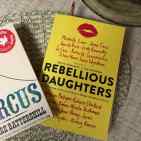
Rebellious daughtersIt’s very unlike me, because I don’t like having my attention split too many ways, but I’m currently reading three books – my next reading group book, which is a biography of Freya Stark, and two review books from publishers, one of which is the anthology Rebellious daughters and the other a cheeky offering from local independent publisher, Finlay Lloyd. One day, in the not too distant future, you’ll see reviews for these!

So, you see, while I haven’t completed a book/book review for several days, my life hasn’t been devoid of literary content. A life without literary content would not be a life worth living, nest-ce pas?

How has your week gone, literarily (ha!) speaking?

My literary week (5), or, those reading coincidences

Last time I wrote a My Literary Week post it was because I’d scarcely read that week, but had some literary moments to share. This time it’s because I’ve been reading things which have generated some thoughts that I want to document, but not in long dedicated posts. (I’m feeling lazy). Most have been inspired by those reading coincidences (or synchronicities) where you read something in one place and then it, or something related to it, pops up in another.  See what you think …

Critical critics (and Jane Austen)

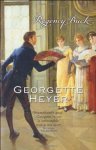
Georgette Heyer Regency BuckA week ago, I read a post about Georgette Heyer by blogger Michelle who, knowing my love of Jane Austen, wondered what I thought about Heyer, given she was an avowed Austen fan and wrote about the Regency. I’m afraid I disappointed Michelle because I confessed that I’ve never read Heyer. I tried one a couple of years ago, but I just. couldn’t. get. into. it. I commented on Michelle’s post that what some of those (not Michelle I might add) who try to compare Heyer and Austen miss is that Heyer was writing historical fiction, while Austen was writing contemporary fiction. Austen was writing about her own time, and this makes their works very different. Heyer doesn’t write Jane-Austen sorts of stories. Her stories are not about small villages and a small number of families, but are set on bigger stages and mostly amongst the wealthy. War and high drama are more her subject matter. Austen’s characters are mostly middle class, and even those who are wealthy live in the country and attend quiet social events. Her themes involve critiques of society and human behaviour.

And here comes the synchronicity, sort of. As I was preparing for my local Jane Austen group’s meeting this weekend on Austen’s grand houses, I read the essay “Domestic architecture” by Clare Lamont in Janet Todd’s (ed.) Jane Austen in context. In it, Lamont notes that critics have expressed disappointment at the lack of architectural information or descriptions of interiors in her novels. But, but, but, I say, Austen was writing contemporary fiction. She was writing for readers who knew the homes the wealthy, the middle-class, the parsons, farmers and others lived in. Austen did not have to describe these in detail. Historical novelists do though! So Austen, being the sort of writer she was, used her descriptions to convey character, not to tell us what the places were like.

When we read, it is so important to know the context and genre within which we are reading before we start casting aspersions!

What contemporary readers know

And this brings me to another comment on the topic of what contemporary readers – that is, readers reading books around the time they were written – know. I was mooching through Instagram this morning, and came across an image of mini-pineapples by Iger aforagersheart. She wrote that she’d read a history of pineapples which told her, among other things, that they were used as a symbol of wealth for “fancy Europeans”.

Aha, I thought, Jane Austen used this – and her contemporary readers would have recognised it for what it was, a pointer to the pretensions and focus on money of the character involved, General Tilney in Northanger Abbey. He has “a village of hot-houses” but, oh dear, “The pinery had yielded only one hundred [pineapples] in the last year” he complains to our heroine Catherine. General Tilney, we gradually discover, values people by their money, and is ungenerous to those without. This starkly contrasts with the admirable Mr Knightley in Emma who grows strawberries and apples, in fields and orchards, and shares them willingly with neighbourhood families. He even gives his last keeping apples, to his housekeeper’s dismay, to the poor Bateses:

 Mrs. Hodges … was quite displeased at their being all sent away. She could not bear that her master should not be able to have another apple-tart this spring.

We readers of later times see, of course, this generosity, but we may not know what the pineapples symbolise, and are therefore likely to miss that little early hint to where Austen was going with General Tilney.

Hungary and the war

Susan Varga, Heddy and me Book cover

Penguin edition

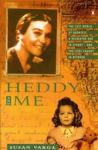
The third reading coincidence relates to my review last weekend of Susan Varga’s Heddy and me, in which she tells of her mother’s life in Hungary before, during and after the war, and her (and the 1943-born Susan’s) immigration to Australia. A great read. Then, I opened my digital edition of The Canberra Times this morning, and what did I see but an article about local food-blogger Liz Posmyk’s recently published book, The barber from Budapest, which tells the story of her parents through two world wars in Hungary, the challenge they faced in living postwar under Communism, and their subsequent migration to Australia.

There are still many stories to tell about people’s experiences of the two world wars, and about what happened postwar. Whether we’ll ever learn the lessons they provide is another thing.

Christina Stead Week

And finally, of course, I can’t let the post finish without mentioning Lisa’s (ANZLitLovers) Christina Stead Week, with which she has aimed to raise the profile of, and gather together a list of blog reviews for, this often overlooked writer. Stead was, Lisa shares on her post, described by the New Yorker as “the most extraordinary woman novelist … since Virginia Woolf” and by Saul Bellow as “really marvellous.”

I have contributed two posts – one on the story, “Ocean of story”, and another on the first three stories in the Ocean of story collection. I thoroughly enjoyed reading these, and thank Lisa for giving me the impetus to read them.

My literary week (4), or, not a page read

Would you believe that today is the first time in a week that I have opened my current novel? Terrible! But it’s just been one of those weeks of being driven by other things, so much so that reading time has taken a big hit. There have, however, been a few literary moments which I thought I’d share.

My lovely Gran

Gran

Gran, on her 65th wedding anniversary

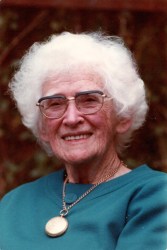
On Monday I wrote a post based on the introduction to the Golden treasury of Australian verse which I found in my aunt’s house. The book belonged originally to my grandmother, and was given to her in 1914. Gran was the daughter of a Presbyterian minister, and the important thing to her was to live a good (Christian) life. However, she didn’t proselytise God. Rather, she promoted treating people well. We grandchildren all remember her Bambi and Thumper ornaments. They were there to remind us all of Mrs Rabbit’s advice to Thumper who had criticised baby Bambi’s wobbly walk. Mrs Rabbit said, as I’m sure many of you know, “If you can’t say something nice… don’t say nothing at all”. None of us have ever forgotten this, though I suspect we don’t always live up to it!

Anyhow, my point is that written in the back pages of the book, and on sheets of paper tucked inside it, are some sayings or inspirational quotes collected by Gran. One comes from Rudyard Kipling:

If we impinge never so slightly upon the life of a fellow-mortal, the touch of our personality, like the ripple of a stone cast into a pond, widens and widens in unending circles across the aeons, till the far-off Gods themselves cannot say where action ceases.

Another she dated 1/8/24 and noted it as “author unknown”, though using the Internet I’ve tracked it down in a webpage called “Bad Poetry”. The poet is Edgar Guest. The concluding lines read:

I never can hide myself from me,
I see what others may never see,
I know what others may never know,
I never can fool myself — and so,
Whatever happens, I want to be
Self-respecting and conscience free.

It might be sentimental poetry, but I do love my Gran’s heart and aspiration.

There are others, including one from Francis Bacon, but the final one comes from the Koran: “If I had two loaves of bread I would sell one and buy hyacinths for they would feed my soul”.

I’ll be keeping this book, needless to say.

My reading group

My reading group had its July meeting this week, and our book was Charlotte Wood’s The natural way of things (my review). It was a very lively meeting in which the realists in our group faced off against the willing suspenders of disbelief, with a couple of fence-sitters in between. Ne’er the twain did meet, I’m afraid, but while positions were maintained throughout, the discussion was, as always, respectful.

Charlotte Wood, The natural way of thingsThe problem was that the realists couldn’t work out why the ten women hadn’t ganged up to overpower their two guards, why they didn’t work out they could dig their way out under the electric fence. The women were twits, one said. They should have fought back. She also felt the rabbit trapping was far more successful than you’d expect and that the book had the longest mushroom season ever! It just wasn’t plausible. The willing suspenders, on the other hand, talked more about the book in terms of metaphor, allegory and parable, though they didn’t all agree on which of these the book represents, if any! We defenders felt that Wood, in the opening scenes, showed the disempowering of the women, explaining why they didn’t fight back.

I won’t go on, but the conclusion was that any book which garnered such an engaged discussion must be a good book!

More on my Jane

You know of course to whom I refer, Jane Austen of course, and this week Mr Gums and I went to see the latest Austen movie, Love and friendship which, strangely, is an adaptation of her juvenilia novella Lady Susan (my review) and not of her juvenilia piece actually titled Love and freindship (sic) (my review). We enjoyed it. Kate Beckinsale, who played Emma in a 1995 movie adaptation of that novel, played that “most accomplished coquette in England” Lady Susan with a light touch. Austen’s juvenilia is known for its broad humour/satire, though Lady Susan, being a transition work between her juvenile and adult period is more restrained than the earlier works. I thought director Walt Stillman balanced the tone nicely, here. His use of humorous title cards to introduce the characters sets the satiric tone but this is off-set by a more straight playing of the script, except perhaps for the comic relief provided by Tom Bennett as the foppish, silly Sir James Martin.

But, there was another Jane Austen event this week, a talk which members of my group attended. The topic was Austen’s continued popularity, and the speaker started with – coincidentally – Kipling, who praised Austen in 1924, saying “Praise the Lord for making her, and her for all she made”.

The speaker was enthusiastic about Austen, but her focus tended to be more on Austen’s Regency legacy – fashion, food, beauty – whereas my group is more interested in her ideas about, insights into, human nature, insights that we can find even in her early work. I’ll end this post with one of those insights that I love from Lady Susan. It was included in the film. Lady Susan says that “where there is a disposition to dislike, a motive will never be wanting”. Oh dear, this is too true. My Gran would, I’m sure, have had a saying to encourage us not to have such dispositions in the first place … though, she didn’t know Lady Susan!

My literary week (3), mid-winter 2016

Today pretty much marks the middle of winter for us downunder, and what an unusually cold and wet winter it’s been, at least in my city. We’ve had more rain than usual, and we’ve had snow, which is rare for us though not unheard of. Our average July maximum is around 12-13°C but this last Wednesday it barely made it to 7°C. No wonder, as I write this, I am en route to slightly warmer climes, on the New South Wales central coast, where we expect to experience temperatures of 18-22°C in the coming week. Whew. But, none of this relates much to my literary week, so on with the show …

Kibble Award Winners

The winners for the Kibble Literary Awards for life-writing by women were announced this week. I’m thrilled that Fiona Wright’s honest, moving collection of essays, Small acts of disappearance (my review) about her experience of an eating disorder, won the Nita B Kibble Literary Award, which recognises the work of an established Australian woman writer.

Lucy Treloar’s historical fiction novel, Salt Creek, won the Dobbie Award for a first published work by an Australian woman. I’m yet to read it, but as it’s been shortlisted for this year’s Miles Franklin Award I would like to try to fit it in. You can check out Lisa’s review at ANZLitLovers.

Both these books were shortlisted earlier this year for the Stella Prize. As happy as I am about Fiona Wright’s win – it’s an excellent book – I did have a secret little wish that Elizabeth Harrower’s A few days in the country, and other stories (my review) would win. She hasn’t been recognised nearly enough.

Helen Garner on mothers and daughters

Helen Garner, Everywhere I lookI am currently reading Helen Garner’s beautiful collection of essays, Everywhere I look. A review will follow soon-ish – that is, as soon as I finish the book instead of  soaking up some sun. In the meantime, I’ll share a quote from her essay about her complicated relationship with her mother. Helen, born in 1942, was the eldest of 6. She writes:

When, in the street, I see a mother walking with her grown-up daughter, I can hardly bear to witness the mother’s pride, the softening of her face, her incredulous joy at being granted her daughter’s company; and the iron discipline she imposes on herself to muffle and conceal this joy.

This brought tears to my eyes.

New ways of telling stories

Finally, I want to share some ideas I heard last Saturday from ABC Radio National’s Future Tense program. It explores change from all sorts of angles. In this particular session they interviewed three novelists about new forms of story telling. My comments below are based on some quick notes I made at the time, while I was doing some housework. I haven’t had time to listen to it again, but you can do so at the link I’ve provided if you’re interested.

First off, and the least “controversial”, was Australian author Nick Earls on his recent series of novellas. Wisdom Tree. (Lisa has reviewed the first two at ANZLitLovers.) Novellas aren’t new of course, but Earls sees them as meeting the needs of contemporary readers (though he believes that big books will never be completely replaced) and as having excellent podcast potential. The thing that interested me most about this interview, however, was his requirements for a good story: it must be authentic; readers must be able to connect with the characters (he didn’t say we must “like” or even “engage” with them); and there needs to be something at stake that will interest the readers and make them want to read on.

Next was Naomi Alderman, an author-cum-video game developer from London. She argued that video games are the new “story form”. I was fascinated by this, partly because of recent discussions I’ve had with Son Gums. He has always loved stories. In his primary school years, he got into comics, alongside his love of “chapter books”, but by his late teens, comics and graphic novels had become his main fare. He never, though, really got video games the way his friends did – until very recently! Now in his early-thirties, he’s come to them quite late. I was surprised, but the reason he gave was the new style of story-based games. If I hadn’t had these conversations with him, I may not have connected quite so quickly with Alderman. Anyhow, she also gave her story requirements: the characters must be real; the worlds created must be coherent, in that the players must be able to imagine humans in them; and there needs to be meaningful themes like justice, revenge, freedom. In conclusion, though, she said quite categorically that if you want to understand story culture today, you must understand games and the way they use storytelling.

Finally, we heard Sydney novelist Mike Jones on virtual reality. He has created a piece of crime fiction called VR Noir. It premiered at this year’s Vivid festival in Sydney. I was interested in his idea that we tend to choose what we read/see/experience on the basis of what “choose to feel”. In other words, when we look at a selection of movies at the local cinema, we choose what to see on the basis of what we want to “feel”. I think there’s a lot of truth in that, though I’ve never quite thought about it that way. VR feeds into this “experiential” need, he says –  the “reader” (“user”) is put into the story and experiences it from within. VR, he said, draws from both video games and interactive theatre, and is still very new.

Do you think our story-telling (story-reading) needs have changed in our modern digital, interactive, connected world?

My literary week (2), or so

No, I’m not going to write weekly “My literary week” posts – my last one was, anyhow, two weeks ago – but sometimes things happen that I want to share, and bundling them up seems the best way to do it.

Miles Franklin Award Shortlist

The shortlist for Australia’s best known literary award was announced last week – actually, just over a week ago, hence the “or so” in my post title. I had only read two books on the longlist – you are quite justified in wondering what on earth I’ve been reading over the last months! – and neither of them were on the list. The two I had read were both by male authors, but the shortlist of five comprises four female authors and one male. The list is:

  • Hope Farm, by Peggy Frew
  • Leap, by Myfanwy Jones
  • Black rock white city, by A.S. Patrić
  • Salt Creek, by Lucy Treloar
  • The natural way of things, by Charlotte Wood

Last year was the same, and the previous year four of the six shortlisted books were by women. Indeed, since 2012, the year the Stella Prize was established (first awarded in 2013), women have featured very well on the shortlists. The main change, though, has not so much been in gender balance of the shortlists, but in that of the winners. Up to 2011, male writers had won the prize over three times more than women had – but women have won the last four years. Is this gender politics at play? I hope not, because that denigrates the value and meaning of the prize. Or, does it signify an increasing acceptance of more diverse subject matter and voices? I hope so, because that is what the move to promote women writers has been about.

Oh, and, while we are talking imbalances, I should point out that all five authors are apparently Melbourne-based, but we’ll let that through to the keeper this year. Those of us in other states will be watching though! (Just joking!)

Meanwhile, you can expect a review of Charlotte Wood’s book next week.

Quote of the week

Sonya Hartnett, Golden boysI nearly wrote a post just to share the following quote. My fellow bloggers will know how frustrating it is when we can’t include all our favourite quotes from a book in a post. Well, this week, I’m going to share one more quote from Sonya Hartnett’s Golden boys (my review) because it’s a beautiful example of her use of imagery. The quote comes early in the novel when tough, street-wise, working class 10-year old Syd meets the similarly-aged but soft, dependent, well-to-do Bastian:

Syd and Bastian look at each other, and it’s like a Jack Russell being introduced to a budgerigar: in theory they could be friends, but in practice sooner or later there will be bright feathers on the floor.

Need she say any more?

PS I have another favourite quote this week, but I have already posted it in my Washington Irving post. It’s his statement that he hides his morals from sight, disguising it with “sweets and spices” so that the reader might “have a bolus of sound morality popped down his throat, and be never the wiser for the fraud”. Don’t you love the cheekiness of it?

… and then there was lunch

During the week, I lunched, with a good friend who is also in my reading group, at Muse, a favourite local cafe which describes itself as “a space where good food, great wine and the magic of the written word come together”. In other words, it is a cafe, bookshop (for new and secondhand books) and event venue located in one of Canberra’s boutique hotels. I have bought a signed first edition Thomas Keneally, Three cheers for the Paraclete, here. I treasure it. Anyhow, before my friend arrived, one of the owners and I chatted books, what we were currently reading – he saw me reading Charlotte Wood’s The natural way of things – and upcoming events, which will include Arnold Zable. Yes!

And then my friend arrived and we continued our discussion, from reading group the previous night, of Sonya Hartnett’s Golden boys – because there’s always more to discuss when you read a good book! We particularly talked about the ending – how well did it work – and about Hartnett’s decision to set it in the 1970s given its concerns – pedophilia and domestic violence – are very relevant today. No great resolutions, of course, but it was good to tease out ideas a little more.

My literary week (1), in a sense

I say “in a sense” because my reading has been slow this week as Mr Gums and I have been getting back up to speed after our Lake Eyre trip. However, in terms of the literary world, much has been happening and I thought I’d share some with you, documenting it at the same time for my own future benefit.

Gillian  Mears

I’ll start with the sad news, the death of the wonderful Australian writer, Gillian Mears, who had suffered from multiple sclerosis for over 20 years. Her disease was so debilitating that she appeared in 2011 before state (NSW) hearing on the Rights of the Terminally Ill. The Sydney Morning Herald quoted from her submission in 2013. Here is part of that submission:

Not a day goes by that I don’t wish that I were dead. It would be so much easier than living in a body beleaguered now by advanced multiple sclerosis. I’m in my 17th year of living with this disease [she was diagnosed at the age of 30] and I’ve very nearly had enough.

Gillian Mears' Foal's bread
Foals’ bread cover (Courtesy: Allen & Unwin)

I had not been aware of her condition until she won the Prime Minister’s Literary Award in 2012 for Foal’s Bread and was unable to take part in the post-announcement panel, which I attended, because she needed to conserve her energy for other commitments. I first read her (The Mint Lawn) with my reading group, and we loved it, but that was way before blogging. However, I did review Foal’s bread, which also won the Miles Franklin award, here. She was a fine writer, and this book, in particular, is one you don’t easily forget.

Her death represents a tragic sad loss for Australian literature, because it was too early – she was only 51. But, given the situation she found herself in, it was clearly for her, in the end, a release. Vale Gillian Mears.

NSW Premier’s Literary Awards

The annual NSW Premier’s Literary Awards were announced earlier this week, as it usually is, to coincide with the Sydney Writers Festival Week. You can read all the winners on the State Library of NSW’s site, so I’ll just share the few that are particularly relevant to my blog’s interests:

  • Christina Stead Prize for Fiction: Melinda Bobis’ Locust girl: A love song (I have reviewed her Fish-hair woman, which I loved, but for a review of this novel you can check out Lisa’s of ANZLitLovers)
  • UTS Glenda Adams Award for New Writing (Adams being another of our writers who died too young): Sonja Dechian’s An astronaut’s life (also longlisted for the Dobbie Literary Award)
  • Indigenous Writer’s (biennial) Prize: Bruce Pascoe’s Dark emu (which is on my radar, but has also been read by that voracious reader, Lisa! as well as by Michelle at Adventures in Biography)
  • Douglas Stewart Prize for Non-fiction: Magda Szubanski’s Reckoning (which I really MUST read). (Interesting that poet Douglas Stewart’s name is used for the non-fiction prize. He did write some criticism and autobiography too but they’re not what he’s known for.)

There are also awards for Poetry, Scriptwriting, Multicultural writing, among others, but I’ll just leave it at these for today.

Sydney Writers Festival

I’d love one day to get to the Sydney Writers Festival, but its timing in May is always tricky for me, so I end up relying on ABC RN and bloggers for my fix. I’ll share just two examples for you to check out if you are interested:

  • Jonathan Shaw of Me fail, I fly has written multiple posts, one for each day, of his experience of the Festival. Start at Day 1, and work your way through from there. I have quickly scanned his posts but will be adding my comments later. Thanks as always, Jonathan, for helping me enjoy this festival vicariously.
  • ABC RN’s Books and Arts Daily program usually broadcasts – live or later on – several events from the Festival, but I’ll just share the link for their live panel session which I listened to live. The topic was to discuss the “pleasure and challenges of writing and reading in a globalised world”. The panelists were Australian comedian Magda Szubanski (author of Reckoning), Dutch author Herman Koch (whose upcoming novel is Dear Mr M), and French writer Marie Darrieussecq (whose latest novel is Men: A novel of cinema and desire). It was a fascinating discussion in which the writers teased out a range of issues. To give one example: they discussed Herman Koch’s The dinner and the idea that even where a book’s themes may seem universal – such as parental love for children – reactions/responses can vary greatly depending on the culture of the reader.

The scandalous Lady W

Joshua Reynolds painting of Lady Worsley
Joshua Reynolds [Public domain], via Wikimedia Commons

To end on something completely different and not entirely literary is the story of Lady Worsley (born Seymour Dorothy Fleming, 1758-1818) as told in the BBC telemovie The scandalous Lady W, which my local Jane Austen group viewed this weekend. She was apparently the inspiration for Sheridan’s play School for Scandal and was painted by Joshua Reynolds.

Lady Worsley was involved in a high profile adultery (“criminal conversation”) trial brought by her husband against her lover. However, the story was far from straightforward, her adultery being “commanded” by this very husband who turned out to be a voyeur who preferred to watch his wife have sex with others than do so himself. The inevitable happened and she eloped with one of these lovers. This is a story of women-as-property, of women-not-having-access-to-their-own-propety, and of a woman who was brave enough to stand up for herself. She didn’t win, entirely, but my, did she make her point, as the film shows. The story reminded me that although women – western ones anyhow – have more legal rights now, this idea of “you are mine” is surely behind much of the domestic violence that still occurs.

The main reason my group watched this movie was because Lady Worsley lived during Austen’s time (Austen’s dates being 1775-1817) and lived part of her life near Austen’s home. What, we wondered, did our Jane, a keen reader, know of Lady Worsley? It was the talk of the town.