Six degrees of separation, FROM No one is talking about this TO …

February already … and so another year starts to whizz by, or so it seems to me. Somehow, this Six Degrees theme just makes it all the more obvious as it comes around very quickly. But now, as it’s clear that I don’t have any small talk – or, alternatively I have too much – we’ll just get on with the main game. (Talking of games, wasn’t Australia’s summer of tennis great this year?!) Anyhow, if you don’t know this meme and how it works, please check meme host Kate’s blog – booksaremyfavouriteandbest.

The first rule is that Kate sets our starting book. This month, she’s chosen a book that was near the top of her Best of 2021 list, Patricia Lockwood’s No one is talking about this. I haven’t read it, so let’s push on …

Steve Toltz, A fraction of the whole

As always, there were so many options for my first link, but I decided to go with the idea of debut novel shortlisted for the Booker Prize, which was the case for No one is talking about this. Many debut novels have been shortlisted for the Booker since it started, but one that I’ve reviewed here is Steve Toltz’s A fraction of the whole (my review). I’ve chosen it because it was a lively read and – well – because I like to remind us of older books that once made a splash.

Peter Temple, Truth

In 2019, ABR (the Australian Book Review) posted their Top 20 Aussie books of the 21st century, which seemed a bit silly given how early in the 21st century it was. However, it does provide me with an interesting link opportunity. Steve Toltz’s book came in at 17. At 16 was Peter Temple’s detective novel, Truth (my review).

I’m not really a big reader of crime fiction, but I admit there’s some good writing in that genre, including good Australian writing. Truth was an International Winner of Germany’s prestigious literary prize for crime fiction, the  Deutscher Krimi Preis (German Crime Fiction Award). And so was Garry Disher’s Bitter Wash Road (my review). In fact, Disher has won this award a few times.

Book cover

But, hmm, I’ve now linked three Australian books, so I would really like to get us overseas – in books, not just in awards! So, my next link concerns my TBR. Bitter Wash Road had been on my TBR for 8 years when I read it in 2021. A book that had been waiting much longer, from when I bought it in 1995 to when I read it in 2019, was Louise Erdrich’s The Bingo Palace (my review).

Book cover

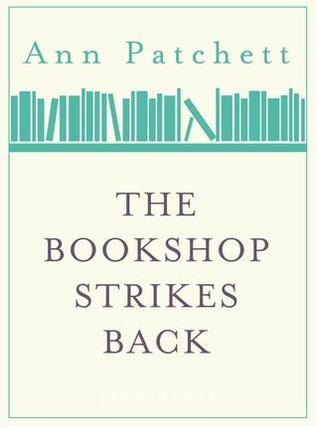
Now, I’ve mentioned Louise Erdrich on my blog in another capacity besides for this book, and that was as an author who also owns a bookshop. Hers is Birchbark Books and Native Arts, in Minneapolis. Another American author who owns a book shop is Ann Patchett who hit big time with her novel Bel canto (read before blogging.) I read, loved and reviewed her essay (published as a booklet) on bookselling and bookshops, The bookshop strikes back.

And this leads me naturally to another essay by a novelist (and more) who worked in a bookshop, George Orwell’s “Bookshop memories” (my very short review). The essay draws from his work in a secondhand bookshop in London.

I rather like that I’ve gone from a book that deals, at least in part I believe, with the internet and the infiltration of social media into our lives with one about selling secondhand books, in which the author discusses people’s reading tastes! (And, for the first time, ever, I think, the male writers outnumber the female in my six links!)

Now, the usual: Have you read No one is talking about this? And, regardless, what would you link to?

Six degrees of separation, FROM Rules of civility … TO …

I started last January’s Six Degrees with “Woo hoo! A New Year at last after what has really been a doozy for us all, in one way or another. So glad to see the back of it”. Little did we know – still, there was no harm in hoping for better. Regardless of what the year brought us, I hope you all had an excellent Christmas wherever you were and however you were able to spend it. And, given this year’s first Six Degrees of Separation meme actually happens on New Year’s Day, now’s the time to also wish you every good thing for 2022. Now, on with the show. If you don’t know this meme and how it works, please check meme host Kate’s blog – booksaremyfavouriteandbest.

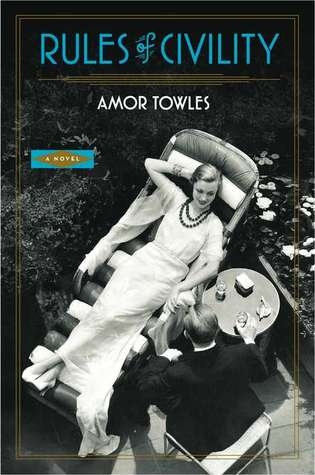
The first rule is that Kate sets our starting book. This month, she’s chosen a book that’s on my TBR (given to me by my wonderful Californian friend, in fact) and that I want to read, Amor Towles’ Rules of civility. One day!

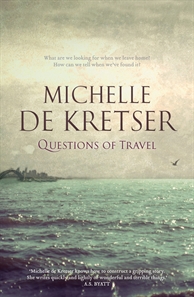
I’m going to start the year’s links by being a bit silly, and so my link is on a three-word title with “of” in the middle. I was surprised to find I had quite a bit of choice – including Book of colours and Field of poppies – but the title that felt closest in flavour to Towles’ is Michelle de Kretser’s Questions of travel (my review). This novel inspired and challenged me in so many ways.

Graham Greene, Travels with my aunt

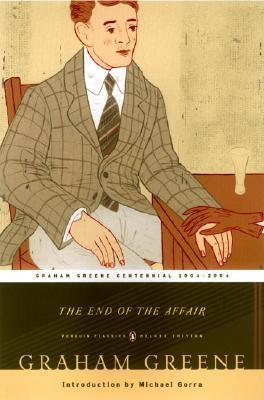
Staying with the idea of travel, I’m linking to a novel whose title starts with “travel”, Graham Greene’s Travels with my aunt (my review). I loved reading Greene again after a long hiatus. It was because my reading group selected it as our “classic” pick for 2017.

William Makepeace Thackeray, Barry Lyndon

So, my next link is my reading group’s 2016 “classic” pick … a book that I didn’t enjoy so much, though it had its moments, William Makepeace Thackeray’s The luck of Barry Lyndon (my review). (For those of you who think I LOVE every book I read – think again!)

Book cover

The luck of Barry Lyndon is a good example of a traditional – classic – picaresque novel. When I wrote my post on Eve Langley’s 20th century novel, The pea pickers (my review), I observed that it had elements of the picaresque, and so it is on that idea that I chose it for my next link.

Frank Moorhouse, Cold Light

The two sisters in The pea pickers take to the road, finding work as they can, while exploring the country. In order to find work in those times – the 1920s – when women rarely went on such adventures, and for safety reasons, they dressed in men’s clothes and adopted male names. Ambrose in Frank Moorhouse’s Cold light (my review), however, cross-dresses (in the mid 20th century) because he likes to do so, and fortunatelyfor him the wonderful Edith doesn’t mind.

Marilynne Robinson, Gilead

Aussie readers will know that Cold light is the third book in what is known as the “Edith trilogy”, so I decided to take the trilogy idea for my last link. I initially thought to choose the third in a trilogy – for a strong link (if some links can be stronger than others) – but, despite having a candidate or two, I decided for various reasons (including a change of continent) to go with Marilynne Robinson’s trilogy, which starts with Gilead (my review).

Coincidentally, we’ve ended up in the country where we started – the USA – but instead of 1930s New York, we’ve moved to 1950s Iowa (in the midwest). Between these books, we’ve travelled more than usual – after all, two of the links are books about travel – and we’ve gone back to 1844. We’ve also visited various 20th century decades, and dipped our toes in the current century. We’ve met ne’er-do-wells and ministers, earnest young woman and cross-dressing diplomats, as well as travellers and migrants. We’ve seen it all – or, at least, a lot.

I like, too, that I’ve started the year with half of my books by men and half by women. How very even of me!

Now, the usual: Have you read Rules of civility? And, regardless, what would you link to?
My year in books 2021

I did this meme last year but wasn’t really thinking of doing it this year. However, here I am on Christmas morning with, for the first time in decades, nothing much to do until we head out to lunch, so why not? The thing about these memes is that they remind us of some of the great reads we’ve had over the year, and that’s a good thing.

Lisa says she thinks it was Annabel at Annabookbel who led the way in 2020 with this annual Christmas meme… Karen at Booker Talk reminded her and would have reminded me too, except I saw Lisa’s first, and I like that she seems to have added in a “lockdown” question.

Here are the rules: Using only books you have read this year (2021), answer these questions. Try not to repeat a book title. Links in the titles will take you to my reviews.

In high school I was  This mournable body (Tsitsi Dangarembga) … because, you know, puberty and bodies aren’t a happy match.

People might be surprised by A mouthful of petals (Wendy and Allan Scarfe) … because, well, wouldn’t you?

I will never be The believer (Sarah Krasnostein) … at least, not of most of the kinds in this book.

My life in lockdown was like Dreams they forgot (Emma Ashmere) … self-explanatory!

My fantasy job is (in) West Block (Sara Dowse) … because it’s a gracious old building and I love working in gracious buildings.

At the end of a long day I need (a) Bluebird (Malcolm Knox) rather than (a) Black cockatoo (Carl Merrison and Hakea Hustler) … the happiness of the bluebird without the raucousness of the cockatoo.

I hate (being) The long prospect (Elizabeth Harrower) … because I’d rather be on the shortlist!

I wish I had A different kind of seeing (Marie Younan and Jill Sanguinetti) … because who couldn’t do with a new way of seeing in their lives?

My family reunions are Where the heart is (Irma Gold and Susannah Crispe) … because family just is.

At a party you’d find me with Girl, woman, other (Bernadine Evaristo) … because, sorry men, but woman do make safe company when there’s drink around.

I’ve never been to Bitter Wash Road (Garry Disher) … and am not sure I want to, either.

A happy day includesRural dreams (Margaret Hickey) … because, although I’m a small city-big town sort of girl, I do love to dream of the country.

Motto I live by None of us alone (Jonathan Shaw) … no man (or woman) is an island, and I like it that way.

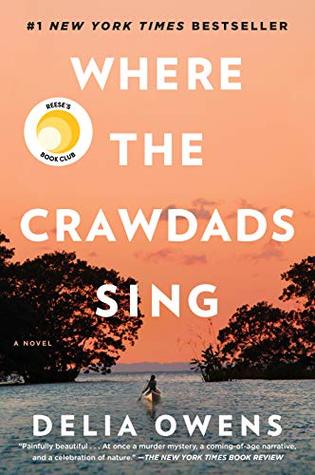
On my bucket list is (exploring) Where the crawdads sing (Delia Owens) … when we can travel again (and if that happens in my lifetime).

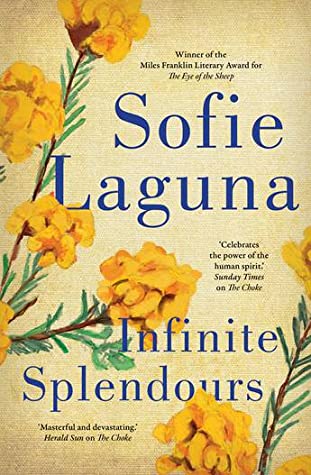
In my next life I want to have Infinite splendours (Sofie Laguna) … wouldn’t you?

Sorry, but you only get two images, after two attempts to get a slideshow in. Methinks there might be a limit to the number of images in a slideshow and I exceeded it. Whatever, it wasn’t happening.

Anyhow, it’s time to get ready for my Christmas day’s activities, so I hope you all enjoy this little response to the meme, and, even more, that you have a peaceful, healthy, and happy holiday season wherever you are.

Six degrees of separation, FROM Ethan Frome TO …

And suddenly it is the last Six Degrees of the year. Once again, I’ve had fun with this meme – with doing my own and seeing what others have done. Thanks muchly to Kate for running the meme and offering us such a varied selection of titles to start from. For those of you new to this meme, please check her blog – booksaremyfavouriteandbest – to see how it works.

We start with the book chosen by Kate, and this month it’s Edith Wharton’s Ethan Frome. I read this book in 1991, and loved it (gut-wrenching though it is.) It started me on a Wharton reading journey that I am still on because, not only did she write many novels, but she was also a prolific short story writer and journalist. I’ve reviewed a couple of her short pieces on my blog. Wharton also created one of my all-time favourite female character names, Undine Spragg (The custom of the country). How good is that!

Anyhow, as you will all be aware, we have hit the silly season, and time is short – for me to write posts and you to read them – so this month I’m doing a title-based “poem”, again. The links are to my reviews.

For Ethan Frome,
A very normal man,
Things fall apart
when Love and freindship collide,
and one In whom we trust
becomes A window in the dark.
Such is The love procession.

With thanks to our sponsor authors, in order: Vincenzo Cerami, Chinua Achebe, Jane Austen, John Clanchy, Dymphna Cusack, and Suzanne Edgar.

  • Vincenzo Cerami, A very normal man
  • Chinua Achebe, Things fall apart
  • jane Austen, Love and Freindship
  • Book cover
  • Dymphna Cusack, A window in the dark
  • Suzanne Edgar, The love procession

(Apologies for the variable image sizes, mostly due to the Gutenberg Gallery editor. I’m not keen to try reloading resized images into my media library with no surety of that fixing it! So, it’s either this or nothing folks!)

So, this month we have travelled the globe – at least to North America, Europe, Britain, Africa and Australia, and we’ve achieved gender quality with three male and three female authors. What better way to end the year.

Now, the usual: Have you read “Ethan Frome“? And, regardless, what would you link to it?

Six degrees of separation, FROM What are you going through TO …

Woo hoo! This last month, we in Canberra, New South Wales and Victoria came out of lockdown. Vaccination rates are high, and it is still spring (here down under) so things are looking good in our neck of the woods. I sure hope it is for all of you, too.

But now, with the weather and pandemic report out of the way, let’s get onto our Six Degrees of Separation meme, which, as most of you know, is run by Kate. Check her blog – booksaremyfavouriteandbest – to see how it works.

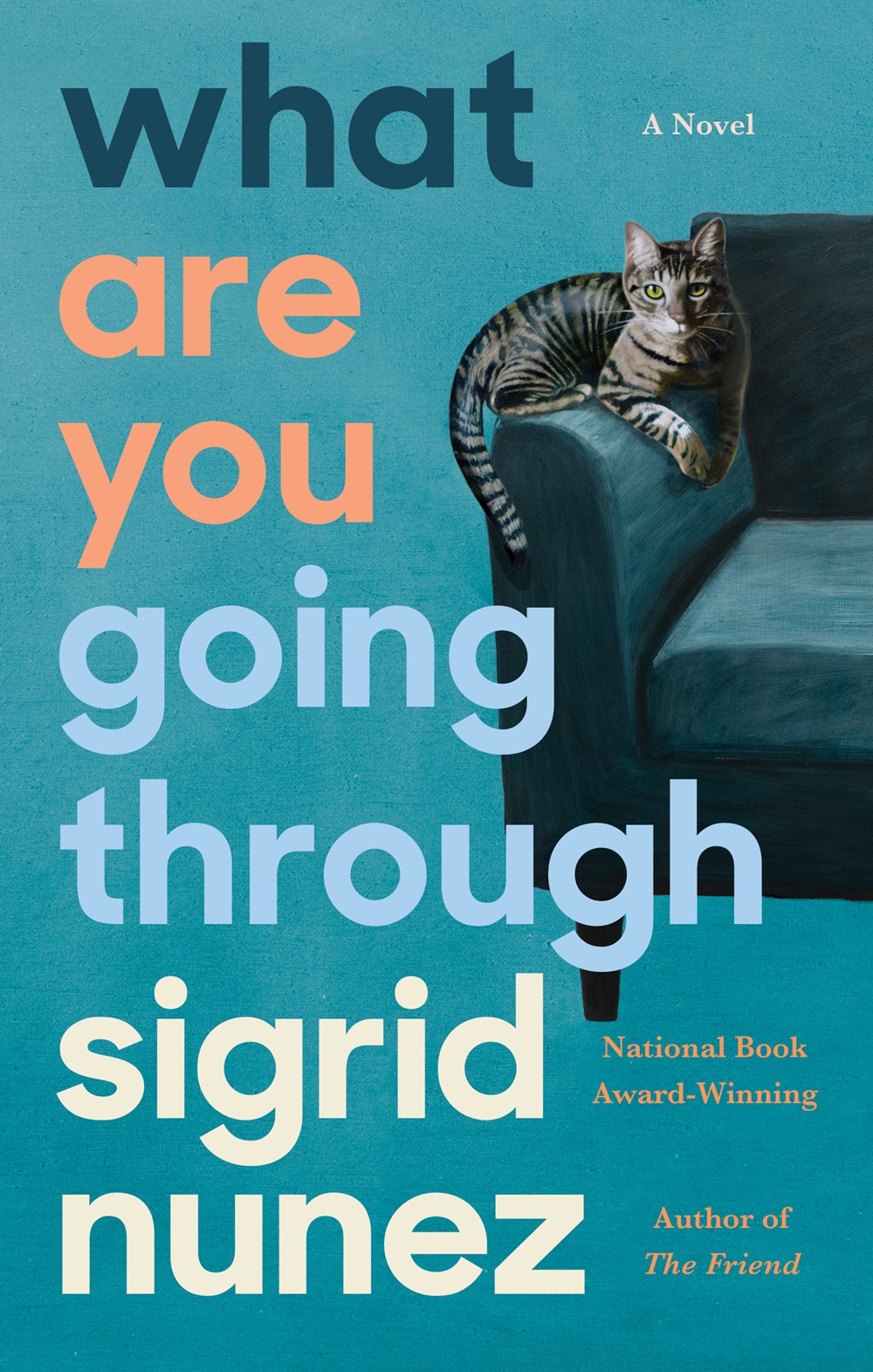
We start with the book chosen by Kate, and it is Sigrid Nunez’s What are you going through? As happens more often than not, I haven’t read it, but, among other things, it is about two friends and assisted dying.

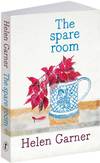
Spare Room

For my first link I’m breaking my personal “Six Degrees” rule which is to only link to books that I’ve read and reviewed on this blog. My link is Helen Garner’s The spare room. It’s about two friends, one terminally ill with cancer but so desperate to not die that she engages in expensive and ultimately useless alternative therapies – to the immense distress of the caring friend. Bill has reviewed it, so here’s his, because, like me, he likes the novel!

Margaret Rose Stringer, And then like my dreams

From here, I’m linking to a memoir, which is particularly appropriate given Garner’s work falls into the autofiction genre. The book is Margaret Rose Stringer’s (M-R to those of you who read comments on my blog) And then like my dreams (my review). M-R wrote this as a tribute to the love of her life, who died from cancer. Her journey with him through life, illness and death, is beautiful to read. This link is doubly apt because M-R is a keen Garner fan.

Book cover

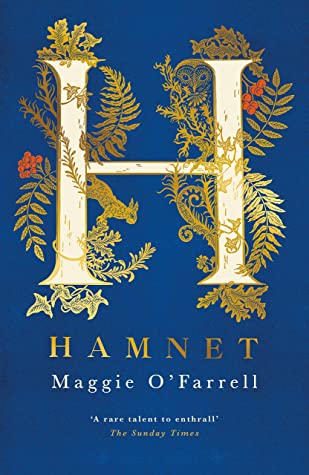
Next, we return to fiction, but stay with the idea of grief, in Maggie O’Farrell’s Hamnet (my review). The trigger for this book is Agnes’ grief over the loss of her son Hamnet. Most of you will know that Hamnet was Shakespeare’s only son, and Agnes is a name used by Shakespeare for his wife Anne Hathaway. The novel ends on Shakespeare’s play Hamlet.

From here we are going to another book which riffs on the backstory behind a piece of literature, though in this case rather more is known about the story. The work is Steven Carroll’s The lost life (my review). It is the first in Carroll’s “Eliot Quartet” which explores, obviously, TS Eliot’s Four Quartets. The first quartet is “Burnt Norton”, and Carroll’s novel is framed by the story of Eliot and Emily Hale, who visit Burnt Norton manor in 1934. Like Hamnet in O’Farrell’s novel, Eliot, himself, is a fairly shadowy figure in the story.

I loved TS Eliot as a student and, while his life and views have become problematic, I’m still moved by his work. I was therefore thrilled when an app appeared for another of his major works, The Wasteland (my post). This app is an impressive application of modern technology to the enjoyment and study of literature and I’m sorry that it seems not to have taken off. (I don’t have a pic of the app, so you get a print edition instead!)

Title page for Ch. 16, Sylvia Nakachi
Ch. 16, Sylvia Nakachi (Used under fair dealing provisions for purposes of review)

However, people are exploring the use of modern online and interactive technologies for literature, and one organisation doing this is/was If:Book. (It may now be defunct, or it has transformed into something else.) Produced under its auspices was Writing black (my review), edited by Ellen van Neerven. She saw a digital-only production being “moulded by possibility”, saying that the enhancements available in such an approach “lifts the imagination”. I haven’t seen a lot of work going down this path, perhaps because most readers still love books, but I love that creators experiment with the new. It keeps the arts fresh.

So, this month we have strayed far from the beginning. I can’t see any link, as we’ve gone from death and grief to exploring the new. I think that’s a good way to be!

Now, the usual: Have you read “What are you going through”? And, regardless, what would you link to it?

Six degrees of separation, FROM The lottery TO …

Another month has gone, and we in Canberra, New South Wales and Victoria are still in lockdown. However, with vaccinations proceeding apace, the end is in sight, we hope. On the plus side, it is spring, and the blossoms are out – and daylight savings starts this weekend which I love. I know that for some of you, though, it is autumn. I hope you are having a good one. Meanwhile, let’s get onto our Six Degrees of Separation meme, which, as most of you know, is run by Kate. Check her blog – booksaremyfavouriteandbest – to see how it works.

We start, of course, with the book chosen by Kate except that this month it is a short story, Shirley Jackson’s much studied, much anthologised “The lottery”. And, because it is a short story, I did manage to read it (my post).

My first link is an obvious one, another short story with a shocking ending, Kate Chopin’s “Désirèe’s baby” (my review). I’m a big Chopin fan, which started when I read her novel The awakening. Anyhow, our starting short story and this one make powerful statements about human cruelty, and both, coincidentally, start by describing lovely days!

Chopin’s story involves a baby and racism. Another book in which a baby is unwittingly related to brutal, racist behaviour is Nardi Simpson’s Song of the crocodile (my review). It’s a novel by a First Nations Australian, so its ambit extends beyond Chopin’s, but it is this baby who grows up and forces this novel’s shocking denouement.

Book cover

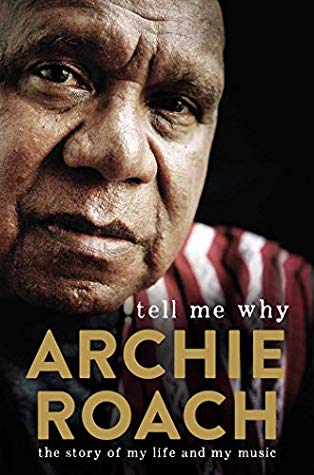
For my next link, I thought I’d move away from grimness, except I then realised that this next book also has racism at its core! However, my link is on the author’s career, because Nardi Simpson had an established singing career before she became a novelist. The author of the book I’m linking to is also a well-recognised First Nations singer, but his book is a memoir, Archie Roach’s Tell me why: The story of my life and my music (my review).

Emma Ayres, Cadence

I’m sticking with musical memoirs for my next link. It is a travel memoir by a musician who, bravely to my mind, cycled across Europe and Asia, from England to Hong Kong, with her violin. The book is Emma Ayres’ Cadence: Travels with music (my review).

Sarah Krasnostein, The trauma cleaner

Most Australians know Emma Ayres, as she was a much-loved presenter some years ago on ABC Classic FM. Most of us also know that, after she left that job, she went to Kabul and soon after that transitioned to Eddie Ayres. He wrote about this process in his book Danger music. However, I haven’t read that, but I have read Sarah Krasnostein’s The trauma cleaner (my review), an award-winning biography of a transgender woman, Sandra Pankhurst.

Now, what to end on? I think a short story might be apposite, and there is one that I read back in my first year of blogging that might fit the bill, though, back then, I gave less attention to my short story reviews than I do now. The story is Tessa Hadley’s “Friendly fire” (my post). I’m linking on the protagonists who are two middle-aged women cleaners in an industrial warehouse, Pam who owns the cleaning business and her friend Shelley who is helping her out for the day. The main focus is Shelley, and her thoughts about life and family, particularly about her son who is in the military in Afghanistan, which might give you a clue about the story’s title. I read it online, but it has been published in a collection called Married love, hence the cover I’ve used.

So, this month I have at least come full circle in terms of form. We have also travelled quite a bit, given one of the links is a a travel memoir, and we have, I’ve realised, met a few cleaners, as Nardi Simpson’s novel involves house cleaners and washerwomen. Perhaps, I’m giving myself a hint!

Now, the usual: Have you read “The lottery”? And, regardless, what would you link to it?

Six degrees of separation, FROM Second place TO …

Little did I know when I wrote my last Six Degrees, that I would have just completed three weeks of lockdown when writing my September edition, but that’s, indeed, where I am. I am aware that among most eastern state Australians, the ACT has been relatively lucky. However, we have been feeling for some time that we’ve been living on borrowed time and that time ran out. Australia did a great job last year of suppressing the virus but the Delta variant, combined with problems in vaccine supply and delivery, left us exposed. We can only hope that … oh well, what more can I say. Let’s get onto our Six Degrees of Separation meme, which, as most of you know, is run by Kate. Check her blog – booksaremyfavouriteandbest – to see how it works.

We start, of course, with the book chosen by Kate and this month it’s another book I’ve not read, Rachel Cusk’s Booker Prize longlisted Second place. I haven’t read Cusk yet but she’s been on my radar, and is even moreso now.

Jennings Finding Soutbek

I haven’t, in fact, read any of the longlisted books, but I’ve read previous works by some of them, so this is where I’m going first. The author I’ve chosen is South African author, Karen Jennings. I’ve read two of her books, but as I recently linked on one of them, I’m democratically selecting the other, Finding Soutbek (my review), which I remember enjoying for adding to my knowledge and understanding of her country.

Book cover

Another South African-born writer who has provided me with insights into his country, is JM Coetzee. He has also been longlisted for the Booker prize and, in fact, has won it twice. But they are not the books I’ve chosen here. That one is Diary of a bad year (my review), mainly because it’s the only one of his I’ve reviewed on my blog, although I have read a couple of others, including the unforgettable Disgrace.

Those of you who have read Diary of a bad year will know that it is quite challenging to read, not so much because of its language but its structure: it has three storylines, one running at the top, one in the middle, and the other at the bottom of each page. How do you read that? In fact, once you decide your way to read it, it’s perfectly readable. Another book that seemed confronting to read – this one because of its almost complete lack of punctuation – is Bernadine Evaristo’s Booker Prize-winning, Girl, woman, other (my review). It, too, turned out to be easy to read.

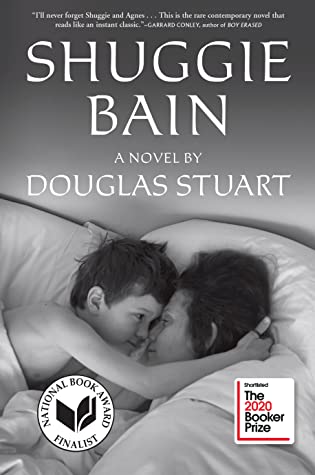
Sticking with potentially challenging books, I’m next linking to my latest read, Douglas Stuart’s Booker Prize winning Shuggie Bain (my review). It is set in Glasgow, and much of its dialogue is in Glaswegian vernacular. This was off-putting for many English readers, a commenter on my post said, but I found it much easier to read than I expected, and quite musical in fact.

Waverley book cover

For my next link, we are leaving this little subterranean linking of Booker-related books, and delving back into the past with Sir Walter Scott’s Waverley (my review of volume 1). I’m sure you’ve guessed my link – yes, Sir Walter Scott, like Douglas Stuart, was born in Scotland. There’s not much else to link these books on except, I suppose, that both are named for their male protagonists!

Book cover, The forgotten rebels of Eureka

And finally, for something completely different, we are going from Waverley the novel, to a work of history that in 2014 won the previously named Nib Waverley Award (but which since 2017 has been known as the Mark & Evette Moran Nib Literary Award.) Waverley is the name of the municipal council which manages this interesting award which focuses on research as well as writing. 2014’s winner was Clare Wright’s The forgotten rebels of Eureka (my review).

I haven’t read our starting book, so can’t comment on whether there’s much to link back to, but I think I could say that Clare Wright wrote her book because, for too long, women in history have taken second place! How does that sound?

Now, the usual: Have you read Second place? And, regardless, what would you link to it?

Six degrees of separation, FROM Postcards from the edge TO …

I love August. It’s still winter but we can see the light at the end of the tunnel, and when I say “light” I mean it literally as suddenly, it seems, we start to see the lengthening days. We also know that the first spring blossoms are about to give us joy. These are pluses because in fact August, September and October here can have some really cold days with winds coming off the snow … but summer! It’s not far off! Now though, I’ll get onto our Six Degrees of Separation meme, which, as most of you know is run by Kate, and explained on her blog – booksaremyfavouriteandbest.

The first rule, of course, is that Kate sets our starting book. This month it’s a book I’ve not read, though it’s been around for a long time, Carrie Fisher’s Postcards from the edge, which was published in 1987. For some reason, I’ve always thought it was a memoir, but it’s actually fiction, albeit semi-autobiographical. I’m sure I don’t need to tell you who Carrie Fisher is, so I’ll just move on to my next link.

Helen Garner, Postcards from Surfers

I can’t resist going for the obvious this time – and linking on the title – because it gives me an opportunity to share a short story collection from a favourite author, Helen Garner’s Postcards from Surfers (my review). I could cheekily suggest it’s a double link because, like much of Garner’s fiction, this collection has autobiographical elements.

When I review short story collections, I often comment on the title, because some are given an original title while others are titled for one of the stories in the collection. Garner’s collection is one of the latter, and it is on this that I am going to link, and go to Adam Thompson’s Born into this (my review). The titular story is perfect for the collection because the stories are all about the lives First Australians are born into.

Cate Kennedy, Australian Love Stories cover

It was at this point of my research for this Six Degrees that I decided to focus on short stories, so all my links will be short stories. For the next link, I’m delving into the collection. One of the bolder stories in Born into this is titled “Honey”. One of my favourite, and cheekiest stories in the Australian love stories anthology edited by Cate Kennedy (my review) is Carmel Bird’s “Where honey meets the air”.

Next I’m linking on form. By this I mean that Australian love stories is an anthology of stories by different writers versus one writer’s collection as we’ve had to this point. My next link then is to another anthology, Love on the road 2015: Twelve more tales of love and travel edited by Sam Tranum and Lois Kapila (my review). The eagle-eyed among you will have spotted another double link, this time on the theme – love.

Book cover

Love on the road was published in Dublin and contains stories from around the world, so we are going to stay overseas. However, just in one place, Mumbai, and one writer, Jayant Kaikini’s No presents please (my review) which was published in Australia by Scribe. It’s so good to see small Australian publishers bringing books like this to our shores.

Penguin collection, translated by Garnett, book cover

My last link is to a single short story, Anton Chekhov’s classic The lady with the dog (my review). Can you guess what the link is? I’ll give you some marks if you say because it’s set overseas, but I chose this particular overseas-set story because, like Jayant Kaikini’s collection, I read it in translation!

I know some of my readers here aren’t short story lovers so these links won’t thrill them much, but for the rest of you, I hope you see some collections or anthologies that you know or that appeal to you. I did my best to take us a bit around the world.

Now, the usual: Have you read Postcards from the edge? And, regardless, what would you link to?
Six degrees of separation, FROM Eats shoots and leaves TO …

Now we come to July, and we Aussies have one month of winter under our belt. Woo hoo! But, enough weather report, onto our Six Degrees of Separation meme. If you don’t know how it works, please check out meme host Kate’s blog – booksaremyfavouriteandbest.

The first rule, as most of you know, is that Kate sets our starting book – and this month it’s a book I’ve read, albeit long before blogging. It’s Lynne Truss’s Eats shoots and leaves, whose subtitle, “The zero tolerance approach to punctuation”, tells you its subject.

As always, I had many thoughts about where to go with this, but I couldn’t resist using Truss’s dedication, which is: “to the memory of the striking Bolshevik printers of St Petersburg who, in 1905, demanded to be paid the same rate for punctuation marks as for letters, and thereby directly precipitated the first Russian Revolution”. This gave me the opportunity to link to my latest review, Steven Conte’s The Tolstoy Estate (my review), sinceone of the main characters, Katerina, was a Bolshevik supporter of the Russian Revolutions.

Izzeldin Abuelaish, I shall not hate

I love humane people who rise above the enmities that surround them to do the right thing. Conte’s doctor, Paul Bauer, is a fictional one, but a real one is Dr Izzeldin Abulaish who, in his book, I shall not hate (my review) tells of the killing of three of his daughters by Israeli Defence Force shells in January 2009 during a 23-day attack on Gaza, and his decision to not hate but to work for harmony in Palestine and Israel.

Sara Dowse, As the lonely bly

A novel which explores the twentieth century history of Israel and Palestine, looking at the early idealism and the later failures, and arguing for empathy and humanity, is Sara Dowse’s As the lonely fly (my review).

Sara Dowse Schemetime

Now I’m going to do something I rarely do in this meme, which is to link to another book by the same author, to a book that will move us away from politics to the arts. The book is Sara Dowse’s Schemetime (my review). It’s about an Australian filmmaker who goes to LA wanting to make a career in the film industry.

Book cover

The natural link for this is Dominic Smith’s recent historical fiction, The electric hotel (my review). It is about the early decades of the film industry, when entrepreneurs were developing cinematograph technology and touting it around the world.

Cover for Amor Towles A gentleman in Moscow

The main character in Smith’s book is silent film pioneer Claude Ballard, and when the novel opens he is an old man who as been living in LA’s Knickerbocker Hotel for over thirty years. Remind you of anything? It reminded me of Amor Towles A gentleman in Moscow (my review), which is about “pre-revolutionary” Count Rostov who lives (is, technically imprisoned) for decades in Moscow’s grand hotel, Metropol.

This doesn’t link naturally back to Lynne Truss, but it does to my first link The Tolstoy Estate! Yasnaya Polyana is not a grand hotel, but it is a real place used as a setting for a novel, and Bolshevik Katerina was originally an aristocrat like our count.

So, besides that little bit of circularity, where have we been? All over the place – Russia, Israel and Palestine, America, all over the world, and back to Russia. And, reversing my usual pattern, four of my selections are by men, and two by women (the same woman, actually.)

Now, the usual: Have you read Eats shoots and leaves? And, regardless, what would you link to?
Six degrees of separation, FROM The bass rock TO …

It’s June downunder – well, I suppose it’s June everywhere! – but here, downunder, June also means winter, so, wah! Oh well, the sooner it starts, the sooner it’s over! And, while we are suffering it, we can aways enjoy fun blogging things like our Six Degrees of Separation meme. If you don’t know how it works, please check out meme host Kate’s blog – booksaremyfavouriteandbest.

The first rule, as most of you know, is that Kate sets our starting book – and I’m sorry to say that again it’s a book I haven’t read, but I love her choice because it’s this year’s Stella Prize winner, Evie Wyld’s The bass rock.

Catherine McKinnon, Storyland

I was spoilt for choices with this starting book, in that there are several obvious links to books I’ve read, like, a previous Stella Prize winner or another book by Evie Wyld. But, I wanted to challenge myself a bit more than that, so, hmm, you probably won’t like this, but Catherine McKinnon’s Storyland (my review) opens in the voice of a young man who is employed by the explorer George Bass! Yes, I know, going from title to minor character is cheeky but it’s my blog and I wanted to remind readers of Storyland, because it’s a good read.

Jane Rawson, A wrong turn at the office of unmade lists

Storyland covers time multiple periods in Australia, including two futuristic ones, the first being 2033 when climate change has caused significant destruction resulting in people struggling to survive. Jane Rawson’s A wrong turn at the Office of Unmade Lists (my review) is set in two time frames, one being 2030, when climate change has wrought destruction in Australia resulting in … well, you get the gist. It’s also a good read that deserves to be remembered.

Kim Mahood, Position doubtful

My next link is another cheeky one because we are taking a wrong turn and ending up in a doubtful position, or, should I say, in Kim Mahood’s wonderful memoir, Position doubtful (my review). It’s set in Australia’s Tanami Desert region and chronicles Mahood’s regular trips there to explore and understand her relationship to place, and how her relationship sits against that of the Indigenous owners.

Jane Fletcher Geniesse, Passionate nomad, book cover

We are staying in deserts for my next link but on the other side of the world. In other words we are going to the Middle East, with Jane Fletcher Geniesse’s biography, Passionate nomad: The life of Freya Stark (my review). Like Mahood, Stark spent a lot of time in the desert, and was, in fact, one of the first non-Arabians to travel through the southern Arabian deserts.

Charles Dickens, On travel

Freya Stark was a travel writer among other things, so my next link is to a writer who wrote about travel among other things, Charles Dickens. The book is a little collection of his essays on travel, titled On travel (my review)! In my review I wrote that “Reading these reminds me yet again why I love Dickens. I enjoy his acute observation of humankind and his sense of humour. He makes me laugh. Regularly. And then there is his versatile use of the English language. The man can write.”

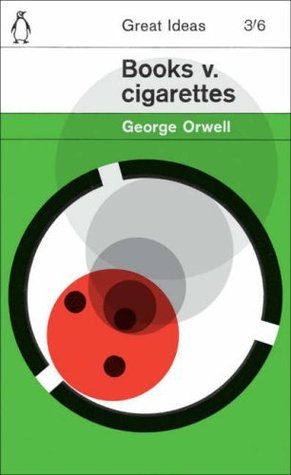
Can you guess where we go from “versatile use of the English language” and “the man can write”, particularly given we are also talking essays? I think it’s pretty obvious, George Orwell. My link is Penguin’s Great Ideas selection of his essays titled Books v. Cigarettes. I have not reviewed the book, but I have reviewed four of the seven essays in it: “Books v. Cigarettes“, “Bookshop memories“, “Confessions of a book reviewer” and, just yesterday, “The prevention of literature“. I do love a good essay.

Last month I linked only Australian authors which I thought was a bit ethnocentric of me, so this month I did my best to leave Australia, with an American author (Geniesse) and two English ones (Dickens and Orwell) as well as three Australians. As often happens in my six degrees, four of the writers are women and two men. However, I can’t help thinking this is one of my weirder chains, but I had fun doing it.

Now, the usual: Have you read The bass rock? And, regardless, what would you link to?