Six degrees of separation, FROM The French Lieutenant’s woman TO …

Another year, but Six Degrees just keeps on keeping on – or, at least, I’ve decided to keep on keeping on with it for the moment. The Six Degrees of Separation meme is currently hosted by Kate (booksaremyfavouriteandbest). Click on the link on her blog-name to see her explanation of how it works.

John Fowles, French Lieutenant's womanHmmm … we are starting off the year well. Kate has chosen an old favourite for the first book of the year, John Fowles’ The French lieutenant’s woman, but I have not read it. Like most people, though, I have seen it, so that’s better than nothing. You may wonder why I have chosen a Czech cover for my illustration, but all will become clear in the next para …

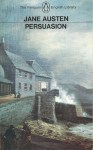
Jane Austen, PersuasionIf you know The French lieutenant’s woman and you know me, my first link will be obvious. I’d like to have been more creative, but couldn’t resist being obvious on this occasion. My link in other words is to Jane Austen’s Persuasion (my review) which has a major scene occurring on the Cobb at Lyme Regis. The Cobb is seen clearly on the Czech cover for Fowles’ book, which is set in Lyme Regis.

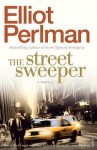
Elliot Perlman, The street sweeperNow, Austen’s main character in Persuasion is the lovely Anne Elliot. She’s a thoughtful but strong, moral person, and I reckon that if she were alive now, she’d rather enjoy the writing of a thoughtful but strong, moral Australian writer whose first name is her last, Elliot Perlman, so it’s to his The street sweeper (my review) that I’m linking next. Fundamentally, it’s about what makes a good person, something that matters to Anne Elliot too.

Rodney Hall, A stolen seasonAnyhow, Elliot Perlman has a new novel coming out in 2019, which is exciting because he’s not what you call prolific, but he always confronts challenging, timely issues. Another established and respected male author who excited me by having a new work come out last year was Rodney Hall. I reviewed that book, A stolen season, very recently.

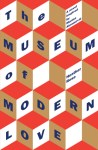
Heather Rose, The museum of modern loveA stolen season comprises three loosely connected stories, one of which concerns a man who builds an art gallery to exhibit some very special but confronting art. His values are then affected by that art. Heather Rose’s novel The Museum of Modern Love (my review) is about a rather confronting – or at least unusual – performance art piece by Marina Abramović. The art affects Rose’s characters too – in various ways. (Oh, and in a funny synchronicity, Rose has a new novel coming out this year.)

Raphael Jerusalmy, EvacuationStaying on the art theme, Raphaël Jersualmy’s Evacuation (my review) has three artists at its centre: a filmmaker, a writer, and a visual artist. While not specifically about art, the novel pits these artists, their art and the choices they make against the war around them.

Viet Thanh Nguyen, The sympathizerNot surprisingly, given its title, Evacuation commences with an evacuation, one which the three main characters eschew. Another novel which commences with an evacuation – one which most of the main characters are, by contrast very keen to be part of, so keen in fact there’s some skullduggery involved – is Viet Thanh Nguyen’s The sympathizer (my review).

So, this month we started in England (albeit with a French connection lurking in the background) and ended in Vietnam (which has its own French connection!) We spent quite a bit of time in America (as Perlman’s and Rose’s books are set there, and the central section of Nguyen’s book is based there too.) However, we also visited Australia, Israel and, briefly, Belize. Very cosmopolitan we’ve been! Four of my six books were by men, like last month.

Now, over to you: Have you read The French lieutenant’s woman? And, regardless, what would you link to? 
Six degrees of separation, FROM A Christmas carol TO …

And suddenly it’s the last Six Degrees of the year. Before we know it, everyone will be writing their top lists of the year, but I, as usual, will do mine in January, when the year is REALLY over. I like me “best books” of the year to be of the actual calendar year. I’m weird that way! But, that’s not what this post is about! Here we are talking the Six Degrees of Separation meme which is currently hosted by Kate (booksaremyfavouriteandbest). Click on the link on her blog-name to see her explanation of how it works.

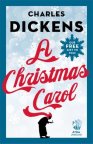
Charles Dickens, A Christmas carolKate has chosen an older but appropriate goodie for the last starting book of the year, Charles Dickens’ A Christmas carol, which I have read, but way, way, way before blogging. It is a true classic, isn’t it, by which I mean it keeps on keeping on – particularly at Christmas time. Funny, that!

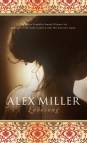
Alex Miller, LovesongNow, there are so many ways we could link from this book – on Christmas, on Dickens, on Scrooge-like characters – but I’m going with another book with a song word in the title. Indeed, the book I’m choosing has the actual word “song” in the title, Alex Miller’s Lovesong (my review). It’s the only Miller I’ve reviewed on this blog so I’m very happy to give this lovely writer a guernsey here.

Cate Kennedy, Australian Love Stories coverMiller’s book is, as you’ve probably guessed, more than a simple love story. It’s an exploration of love, and how it plays out over time, and in different age-groups. A delightful book that I fell in love with a couple of years ago and that also explores love – even more broadly – is an anthology of short stories devoted to the subject, Cate Kennedy’s Australian love stories (my review). I still feel the thrill I had reading that book.

Bruce Pasco, Dark emuThe first story in Kennedy’s anthology is by indigenous writer, Bruce Pascoe, and the story was about love in an older couple. However, it’s not that subject that I’m linking on this time, but simply on Bruce Pascoe and his non-fiction work Dark emu, dark seeds: Agriculture or accident? (my review). It was another memorable book for me – and it makes a contribution to the truth-telling going on in Australia at the moment.

Dymphna Cusack, A window in the darkI’m determined to mix this post up quite a bit – and not get stuck on specific themes and ideas – so my next link is, like my first one, on a word in the title, “dark”. The book is Dymphna Cusack’s A window in the dark (my review), which is her memoir of her years as a middle-class teacher who wanted – and achieved it too – to bring education and the associated opportunities to less privileged students.

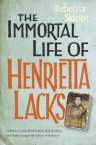
Rebecca Skloot, The immortal life of Henrietta LacksAnd now, guess what I’ve done? I’ve worked it so I can link to my most recent review – Rebecca Skloot’s The immortal life of Henrietta Lacks (my review). Can you work out the link? It’s that Skloot, too, was a middle class person whose work brought her in contact with poor and/or underprivileged people, the Lacks family. Indeed, at one stage during the book, Henrietta’s middle-aged daughter Deborah Lacks started planning to continue her education, because she didn’t finish high school …

Bianca Nogrady, The end book coverThen, just like that, we’ve reached the last book in the chain, and I’m sticking with writer and subject matter, but from a different angle. My last writer is Bianca Nogrady who, like Skloot, is a science writer. The book is The end: The human experience of death (my review) and, like Skloot’s book, it deals with both the science and the ethics of its subject showing that scientists too can (though whether they always will, is another question) think beyond the test-tube.

Quite a different sort of chain this month, with a wider variety of forms. Four of my books are non-fiction and one a collection of short stories, meaning that only one is actually a novel. Only two of my six authors are male but, since one book is an anthology, I could argue that this month’s chain includes more male authors than usual!

I do apologise, however, that for this Christmas edition of Six Degrees I ended up with a book about Death not Birth. That wasn’t very clever of me, really, but c’est la vie! You just have to go where the chain leads you!

And now I will end by thanking all you loyal Six Degrees readers for reading my meme posts this year. It’s been great fun doing this meme, and even more having you all along for the ride. I hope to see you all again next year … Meanwhile, if I don’t “see” you before then, I wish you a very happy Holiday season.

Now, over to you: Have you read A Christmas carol? And, regardless, what would you link to? 

Six degrees of separation, FROM Vanity fair TO …

Well, it’s a tricky night here in Canberra, with a nasty bushfire on my side of town. It’s probably far enough away to not put us at serious risk, but a serious fire just two-thirds into spring is a worry. For now, though, I shall put those thoughts aside and turn to Six Degrees. As most of you know, Six Degrees of Separation is a meme that is currently hosted by Kate (booksaremyfavouriteandbest). Click on the link on her blog-name to see her explanation of how it works.

William Makepeace Thackeray, Vanity FairNow, mea culpa – or something like that – I’m ashamed to admit that I haven’t, though I should have, read this month’s starting book, William Makepeace Thackeray’s Vanity fair. It was one of the books set during my study years, but I chose other books at the time and for some reason have never got back to it, though I have a copy on my TBR. I have though seen it. Does that count? Probably not … but it’s the best I can do.

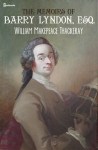
William Makepeace Thackeray, Barry Lyndon

What’s in a name?

However, I have read Thackeray, and in fact, since blogging, because his The luck of Barry Lyndon (my review) was scheduled as my reading group’s classic a couple of years ago. I must say that it wasn’t my favourite English classic, but I will get to Vanity fair one day.

Eve Langley, the pea-pickersThe reason I didn’t much like it was that it seemed to go on and on and on, which is not something that usually bothers me, but there was nothing special about the writing I think to overcome my lack of interest in all the adventures. It’s a picaresque novel, which is a style or form I can enjoy, such as Saul Bellow’s wonderful The adventures of Augie March. Here, however, I’m choosing an Australian novel with picaresque elements, Eve Langley’s The pea pickers (my review). Set primarily in 1920s Gippsland, it’s a book that has stayed with me long after reading it – because of its fresh, evocative writing and voice.

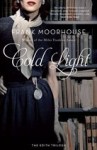
Frank Moorhouse, Cold LightNow, in The pea-pickers, the two protagonists, sisters, dress as men, partly to travel safely but mainly, as I recollect, to be considered for farm labouring jobs like, say, pea-picking. Cross-dressing was a common way for women to make their way in the patriarchal worlds of the past. Another book in which a character cross-dresses is Frank Moorhouse’s Cold light (my review), except that in this book the cross-dressing is for a very different reason. It’s practised by the main character Edith’s bisexual husband.

Amitav Ghosh, River of smokeI’m not a big reader of series, even of trilogies, but I have read two books in Moorhouse’s Edith trilogy, though only one since blogging. I’ve partly read another trilogy on this blog: Indian writer Amitav Ghosh’s River of smoke (my review), which is the second in his Ibis Trilogy. It’s set primarily in China around the 1830s. I read it in 2012 for the Shadow Man Asian Literary Prize team.

Jahnavi Barua, RebirthAnother book by an Indian writer that I read for the Shadow Man Asian Literary Prize team was Jahnavi Barua, Rebirth (my review). It’s about a woman in an arranged marriage and her journey to self. It takes the form of a first person monologue by a mother to her unborn child. The child is waiting to be born, but we sense that for the mother, Kaberi, a rebirth might be in the offing. It’s a quiet contemplative book with, as I recollect, slow dawnings rather than dramatic changes.Fyodor Dostoevsky, Crime and punishment

A more dramatic and much longer book in which the protagonist finally seems to be reaching for a rebirth – for redemption and a new start – is Fyodor Dostoevsky’s Crime and punishment (my review.)

A rather different chain for me this month. We started in 1840s Europe and ended in 1860s Russia. We spent most of our time in the nineteenth and early twentieth century in fact. We also spent time with four male writers, and just two female, a change from my usual ratio. And, this post contains more classics and more non-Australian books than usual, which may mean more of you have read books in my chain than usual.

And now, over to you: Have you read Vanity fair? And, regardless, what would you link to? 

Six degrees of separation, FROM The outsiders TO …

Woo hoo, tomorrow Daylight Savings starts here in eastern Australia and I can’t wait. I love the longer nights, and not being woken by the birds so early in the morning. But that’s tomorrow, today is Six Degrees of Separation day. Most of you know by now what that means, but for those who don’t, Six Degrees of Separation is a meme that is currently hosted by Kate (booksaremyfavouriteandbest). Click on the link on her blog-name to see her explanation of how it works.

SE Hinton, The outsidersI’m excited this month because it’s one of those rare occasions where I’ve read the starting book, which is SE Hinton’s The outsiders. It’s a YA novel, but I didn’t read it I didn’t read it when I was a young adult. I read it in fact for a course on children’s literature for my librarianship studies. I loved the course, and I really enjoyed this book. SE (Susan) Hinton wrote  this, her first book, while she was still at high school.

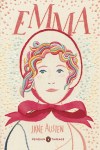
Jane Austen, Emma, PenguinI got that piece of information from Wikipedia, which also told me that she’s a private person who loves reading. The first author they list that she likes to read was – guess! Yep, Jane Austen! Now, which Jane Austen novel (or novels) have I not yet included in these Six Degrees posts? Emma (my review) … so I’ll make that my next link.

Michelle de Kretser, The life to comeNow, Austen fans will know Austen’s famous statement about Emma. She wrote in a letter than “I am going to take a heroine whom no one but myself will much like.” And it’s sort of true. There are people who don’t like Emma much. A recent novel I read which includes a character who, her author knows, some don’t like is Michelle de Kretser’s The life to come (my review). The character is Pippa, whom de Kretser herself doesn’t dislike!

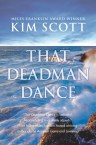
Kim Scott That Deadman DanceBut now, moving along. The life to come was de Kretser’s second Miles Franklin win. I have read and reviewed here another book that was its author’s second Miles Franklin win, Kim Scott’s That deadman dance (my review). In case you are interested, he won his first MF award with Benang: From the heart.

Claire G Coleman, Terra nulliusOne of the important things about Scott’s novel is the different perspective it offers on the colonisation of Australia – an indigenous perspective. Another book by an indigenous author exploring colonisation from a different point of view – this one dystopian – is Claire G Coleman’s Terra nullius (my review)

Mirandi Riwoe, The fish girlFrom here I thought I could link to another book with characters from another planet, but not being a big reader of speculative fiction I don’t think I have any (since blogging at least). So, I’m going to stay with the colonisation theme, and choose another book looking at it from a different perspective, this one feminist. The book is Mirandi Riwoe’s The fish girl (my review).

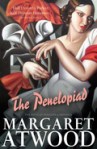
Margaret Atwood, The PenelopiadBesides looking at colonisation, Riwoe’s Fish girl is a riff on – or a response to – an earlier text, Somerset Maugham’s short story, “The four Dutchmen.” This suggests a good last link, Margaret Atwood’s The Penelopiad (my review) which many of you will know is her take – her feminist take – on the Odyssey.

And so we come to the end of another Six Degrees meme, one that has taken us from 1960s to early 19th century England, and then to Australia where we spanned more than two centuries. We then crossed the sea just to Australia’s north – Indonesia – before finally time-travelling way back to Ancient Greece where we landed a long way from Hinton’s Oklahoma!

And now, over to you: Have you read The outsiders? And, regardless, what would you link to? 
Six degrees of separation, FROM Where am I now TO …

Woo hoo, Spring has sprung (just) in the southern hemisphere, and I for one am glad to see the back of winter, albeit the real warmth is a way off yet. And this month, the first day of Spring is also Six Degrees of Separation day. You regular readers here will know what that means, but for any newbies, Six Degrees of Separation is a meme that is currently hosted by Kate (booksaremyfavouriteandbest). Clicking on the link on her blog-name will take you to her explanation of how it works.

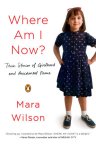
Mara Wilson, Where am I nowUnlike last month, I haven’t read the starting book. In fact, mea culpa, I hadn’t even heard of it. It’s Where am I now? by someone called Mara Wilson. Kate chose it because she would be seeing the author at the (now past) 2018 Melbourne Writers Festival. Where to start with a book I hadn’t even heard of? Aha, while searching for the cover, I discovered that she’s the actor who starred in Matilda! Silly me. She was great.

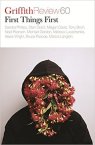
Griffith Review 60So, I could, of course, go for another memoir by an actor, but I’m not. Instead I’m going for a book that I read (well, started to read, anyhow) in preparation for my festival, the Canberra Writers Festival, which overlapped with Melbourne’s. The book is the 60th issue of the Griffith Review, and is titled First things first. You  have seen the Griffith Review mentioned here before. It’s a wonderful contemporary literary magazine that contains essays, fiction, memoirs, poems and reports on a specified subject. I have, in fact, already introduced this one, which was inspired by the Uluru Statement from the Heart.

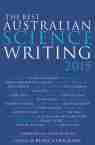
Bianca Nogrady, The best Australian science writing 2015Now, you might think that from here I’d go to something by or about indigenous Australians, but I feel like being contrary, so instead I’m going on form, and will choose a book of essays, science essays, in fact – The best Australian science writing 2015 (my review) edited by science journalist Bianca Nogrady. I was surprised by just how much I enjoyed it at the time. I still share snippets of information I read in that volume.

Jordan Fall GirlFor my next link, I’m sticking with science, but am turning to fiction – to Toni Jordan’s entertaining chick-lit novel Fall girl (my review). Her heroine is not your usual chick-lit heroine, but a con artist who presents herself as an evolutionary biologist and sets up a scientific expedition to attract money from a millionnaire-run foundation. It’s a bit of a hoot, as Toni Jordan can be.

Anita Heiss Paris DreamingAnd now, since we’ve moved from essays to chick-lit – a rather wild jump, n’est-ce pas? – let’s stay with chick-lit and go to Paris with Anita Heiss’s Paris dreaming (my review). This book has, in fact, multiple connections with this post – I read it after hearing Anita Heiss at a festival and she’s an indigenous Australian author.

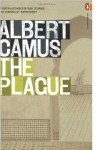
Albert Camus, The plagueSince we’ve gone to France, and since daughter Gums has just arrived in Paris, I figure we should linger there a while, so I’m going to choose one of my favourite French novels, Albert Camus’ La peste (aka The plague) (my review). This book is one of the few books I’ve read more than once – and I could very well read it again, because I love its lessons about life.

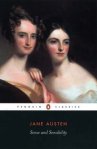
Jane Austen, Sense and sensibilityFor my final link, I’m hopping over the channel to England, and to a book by one of my favourite authors, Jane Austen’s Sense and sensibility (my review of vol. 1). I could link on the fact that, like Camus’ La peste, I’ve read it more than once, but I’m going a little more esoteric, and am linking it on the fact that, also like La peste, it contains, for me, a memorable quote – almost a personal mantra in fact. There aren’t many quotes that I remember from books, but this is one of them:

Marianne Dashwood was born to an extraordinary fate. She was born to discover the falsehood of her own opinions, and to counteract by her conduct her most favorite maxims.

When I first read this, I was brought up short, because I realised I was often like Marianne – pontificating on things I had not experienced, and then discovering how wrong I was. It was one of those lightbulb moments – though I probably still do it sometimes!

So there you have it. Another Six Degrees meme done and dusted. We’ve read serious essays and fun chick-lit, we’ve been to the US, Australia, France and England, and we’ve read a diverse set of authors.

And now, over to you: Have you read Where am I now? And, regardless, what would you link to? 
Six degrees of separation, FROM Atonement TO …

It’s August and the last official month of winter. I’m happy, happy, happy. I’m also happy that it’s time again for Six Degrees of Separation. How quickly it comes around. And, like last month, I’ve read the starting book. First though, the formalities. Six Degrees of Separation is a meme that is currently hosted by Kate (booksaremyfavouriteandbest). Clicking on the link on her blog-name will take you to her explanation of how it works.

Ian McEwan, AtonementSo now, the meme. The book Kate has chosen for August is Ian McEwan’s Atonement. I love this choice, not just because I’ve read it, but because I like Ian McEwan, and I liked this book. Also, it offers so many options for linking, including one that I considered, which was good film adaptations. I loved the clever soundtrack, for a start.

Markus Zusah, The book thiefHowever, I decided on a different tack, and I hope this isn’t a spoiler. I don’t think it is. My linking point is that it’s a metafictional work, that is, it self-consciously lets the reader know that it is a work of fiction. Another metafictional novel that contains stories within stories is Markus Zusak’s The book thief (my review). If you’ve read it, you’ll know that Death reminds us regularly that he is telling us a story.

Anthony Doerr, All the light we cannot seeBesides being metafictional, The book thief tells the story of young people, particularly Liesel the titular book thief, and their experience of World War 2. Another book set in World War 2 whose protagonists are young is Anthony Doerr’s All the light we cannot see (my review). A moving book, that won America’s Pulitzer Prize.

Jonathan Safran Foer, Everything is illuminatedSo far I’ve linked on technique and protagonists, but now I’m moving to title. Another novel about World War 2 (and that, coincidentally, also has metafictional elements) is Jonathan Safran Foer’s Everything is illuminated (my review). My linking point though is the reference to light in the title!

Rabih Alameddine, An unnecessary womanNow, one of the main characters in Foer’s novel is a translator. Another book with a translator as the protagonist is Rabih Alameddine’s An unnecessary woman (my review). She’s not a professional translator, but has done it in her spare time for much of her adult life. I loved reading, among other things, about her technique for translating.

Michelle de Kretser, The life to comeMichelle de Kretser’s The life to come (my review) is a book in five parts. The protagonist of Part 3 is Céleste. She is also a translator. She describes her technique for translating too – though unlike Alameddine’s translator, she does it for a living.

Catherine McKinnon, StorylandAnd now, all too soon, we’ve come to the end. The life to come is one of six books shortlisted for this year’s Miles Franklin Award. I’ve only read two, so far, from the shortlist, so I’ve decided to make my final link the other one, Catherine McKinnon’s Storyland (my review). I have, however, an ulterior motive for linking to this book, which is that I don’t think it’s getting enough notice so I’d like to give it another plug. It’s an intriguingly structured book, and tells a provocative story about Australia.

Well, this month we started our journey in England, and then moved to Germany, France and Ukraine, all of these trips involving, in some way or another, World War 2. We then hopped over to Lebanon in the Middle East, before arriving in Australia with de Kretser, though she did take us on brief forays to Paris and Sri Lanka. Finally, we landed back in Australia where we traversed a thousand years from the late 1700s to 2717. As for gender balance, four of my six books are by men. A major departure from the usual proportion in my Six Degrees posts, but that’s okay every now and then!

And now, my usual question: Have you read Atonement? And regardless, what would you link to? 

Six degrees of separation, FROM Tales of the city TO …

It’s July – a cold month in my city – but when this post is published I won’t be there. I’ll be in the far north, about to start a 12-day tour of Arnhem Land which is not only a fascinating place to visit, but a warm one! However, I didn’t want to miss this month’s Six Degrees of Separation meme, particularly since I’ve read the starting book. A rare occurrence. Some background first on the meme: it’s currently hosted by Kate (booksaremyfavouriteandbest). Clicking on the link on her blog-name will take you to her explanation of how it works.

Armistead Maupin, Tales of the citySo now, the meme. The book Kate chose for July is Armistead Maupin‘s Tales of the city. Not only have I read it but – unusually for me – I’ve read the whole series. I still remember the glorious weekend nearly three decades ago in which, for some reason, I had the opportunity to read and read – and this series is what I read. I had read novels by gay authors before, including EM Forster’s Maurice, which he would not let be published until after his death, but Maupin’s series spoke of lives contemporary to mine – albeit lived in San Francisco – and I loved the open, warm way he shared the lives and experiences of his characters.

Featherstone, I'm ready now, book cover

Because gay writers on gay subjects are still underrepresented in our literary milieu, I’m going to stick with this theme and shout out to local writer Nigel Featherstone and his novella, I’m ready now (my review). It revolves around Gordon, a gay man turning 30, who is coming to the end of his Year of Living Ridiculously, a year of rather self-destructive high living that he designed for his 30th year. It’s a lovely book about coming to terms with the past, and about, as Featherstone says, “living imaginatively.”

Jay Griffiths, A love letter from a stray moon coverNext, I’m going to change tack, and look at form. Nigel Featherstone will understand, because he, like me, likes novellas – so it is to another novella that I’m linking next. I’ve read and reviewed many novellas on this blog, so I’m choosing a beautiful one that I don’t think I’ve used before in Six Degrees, Jay Griffiths’ A Love letter from a stray moon (my review). It’s a gorgeous, moving story told in the voice of the Mexican artist Frida Kahlo, someone who could also tell us something about “living imaginatively!” (And just look at that cover.)

Banana Yoshimoto, The lakeYou might think that from here I’d move to another novel about an artist, but this month I’m in the mood to discombobulate … so, here’s the thing. I read Griffiths’ novel while I was travelling in Japan, which reminds me of all the Japanese authors I like (and how I haven’t read enough of them since starting this blog.) One I’ve read though is Banana Yoshimoto’s The lake (my review).

Alan Gould, The lakewomanThe lake is about a few things, but one of the main ones is about a daughter coming to terms with the loss of her mother. Another book involving a lake and a sort of loss – though not of a mother – is Alan Gould’s The lakewoman (my review). It’s a lyrical and clever book about love and connection, despite distance.

That’s lakes done. I could, in fact, link to another lake book, as I have a few in mind, but that’s a bit boring, so I’m going to switch gears again and link on authors who’ve attended my reading group meetings. Alan Gould was one, and Biff Ward was another. We were all moved by her clear-sighted memoir, In my mother’s hands (my review), and loved the additional insights she provided at our meeting. It is always a treat having authors present at meetings.

Georgia Blain, Births deaths marriagesFor my final book, I’m staying with form and content. Ward’s book is a memoir about living in a complicated family, and so is Georgia Blain’s Births deaths marriages: True tales (my review). In Blain’s case the difficulties came more through her father, but both authors document beautifully the challenge children can have navigating tricky relationships or situations.

Wow, I think I’ve excelled myself this month in terms of travels. We have been all over the place – from the USA (in the starting book) to Australia, and then winged our way to Mexico, Japan and France, before returning to Australia. As for gender balance, four of my six books are by women, which is about average for my Six Degrees posts.

And now, my usual question: Have you read Tales from the city? And regardless, what would you link to? 
My literary week (12), some art, a film, and an unseen play

Much as I’d like to, I don’t have time to write full posts on the three “events” I’m writing about today, but I do want to at least document them. I don’t, in fact, document every film, show or exhibition I attend but I have particular reasons, which will hopefully become obvious, for wanting to share these three.

MoMA at the NGV (National Gallery of Victoria)

For a very exciting reason – Mr Gums and my becoming grandparents for the first time – we made a flying trip to Melbourne last weekend, and, as we couldn’t spend all our time gazing at the adorable newborn, we took ourselves off to the current exhibition at the National Gallery of Victoria during our long weekend. Titled MoMA at NGV: 130 Years of Modern and Contemporary Art, it comprises a selection of MoMa’s world-famous collection. About 200 pieces the website says. The works are organised pretty traditionally – that is, in chronological order, but within this order there are themes, mostly relating to specific art movements, such as Cubism, Fauvism, Abstract Expressionism, Pop Art, and so on. The website says that “the exhibition traces the development of art and design from late-nineteenth-century urban and industrial transformation, through to the digital and global present.” It’s an inspiring exhibition, but like all such big, dense, exhibitions, we had tired by the end, despite breaking for lunch in the middle – so my concentration, not to mention my feet, did start to fail, affecting what I remember.

Anyhow, the exhibition opens with a wall comprising a work each by van Gogh, Gauguin, Cézanne and Seurat, who, the audioguide explained, are deemed to mark the beginning of modern art.

Salvador Dali, The persistence of memory, 1931

So, what did I enjoy? Of course, I liked seeing famous works by well-known artists, such as Dali’s “The persistence of memory” (the famous melting/dripping clocks painting). Who knew it was so small? Well, you do know it, if you read the small print in art books, but you don’t tend to remember that – at least I don’t always. It’s only seeing the work itself that makes this stick. This is partly what makes going to exhibitions so worthwhile. I also enjoyed seeing lesser known works by well-known artists, and works by artists I barely know or didn’t, until last weekend, know at all! And, I appreciated the inclusion of women artists, such as photographer Margaret Bourke-White (1904-1971) who was apparently looked at askance for photographing machines.
Marcel Duchamp, Bicycle wheel, 1951 (original was 1913)

There is so much more I could say, but, this being a litblog primarily, I’m going to end on one idea that particularly tickled me. Early in the exhibition is a work by Marcel Duchamp, the originator not only of Dada but of the art of “readymades“. The audioguide argued that one of Duchamp’s contributions to modern art was the idea that a work of art is not complete until it is joined with the viewer’s perception and questions (even if, the guide said, that question is, “is this art?”) This got me thinking once again about reading, and the fact that a book has as many meanings as it has readers, because each of us brings our own perspectives to it. An old hat idea, now, I guess, but I liked that Duchamp’s ideas resonated for me beyond the visual arts.

Gurrumul (Cinema Nova, Carlton)

Another exciting event in our lives – one still to come – is that in a few days we’ll be heading off to Australia’s Top End, to tour Arnhem Land and then spend a few additional days in Darwin. I can’t wait for the warmth – nor to experience Arnhem Land which has been on my must-visit list for some time now. Luckily for us, two friends have just returned from the same tour, and they advised us, in preparation, to see three films: Ten canoes (which we’ve seen before, but looked at again, via DVD last week), and two recent documentaries Gurrumul and West wind: Djalu’s legacy.

Gurrumul Yunupingu

Dr G Yunupingu @ Fremantle Park (17/4/2011), By Stuart Sevastos, using CC BY 2.0 (Wikimedia Commons)

Unfortunately we’ve missed West Wind on the cinema circuit, and it’s not available on DVD until later this year, but Gurrumul is still screening. So another time-filling activity for us in Melbourne was to see it at the Cinema Nova in Carlton. For those of you who don’t know, the film is about the recently deceased indigenous Australian musician, Dr G Yunipingu (the name used for him since his death in respect of indigenous Australian funerary practices. Permission was given, by Yunipingu himself the film says, for the film to be released, despite another indigenous practice of not showing images of deceased persons for some time after their deaths.)

Dr G Yunupingu was born on Elcho Island, in Arnhem Land, and was discovered early in his life to be blind. He taught himself to play music, and was clearly gifted – though it was his voice (“the voice of an angel” some said) that really captured attention. He wrote his own songs, which he sang mostly in language. The film chronicles, primarily, his musical life, but given his close connection to his culture, that couldn’t be done without reference to his family and culture.

It’s a traditional documentary, style-wise, but it’s the content, the subject himself, that makes this such a moving film. I was quite wrung out by the end – and not only because it had been an emotional couple of weeks leading up to it. One of the issues underpinning the film is an age-old story for indigenous people – the challenge of moving between two opposing cultures. It was a challenge that brought indigenous artist, Albert Namatjira, undone in the end. Dr G Yunupingu managed it better overall – partly because of his own sense of self and strong attachment to his country and culture, but partly also because his non-indigenous mentors had learnt from history and were respectful of Yunupingu’s wishes. This doesn’t mean that there weren’t tense times! The film will, I’m sure, enhance our Arnhem Land trip – but it’s worth seeing regardless.

Tourmaline (The Street Theatre)

Randolph Stow, TourmalineAnd, well, this last stop in today’s post is exciting too – but disappointing also, as I will be missing it. Yes, I am concluding this post by discussing something that not only have I not seen, but won’t be seeing either. I have a very good reason though for this strange behaviour, and it’s that the production, an adaptation of Randolph Stow’s novel Tourmaline, was written by Emma Gibson, one of the bloggers I mentored in last year’s Litbloggers of the Future program. Emma, in fact, wrote a guest post for this blog on Stow and the novel.

It is part of a double bill of adaptations of sci-fi-futuristic texts, the other being HG Wells’ War of the worlds. In her guest post, Emma said that the book has been described as an “ecological allegory”. This would slot nicely into Emma’s main interest, at present anyhow, which is writing about place. According to the promotions, the adaptations are made for radio – which is great to see in itself – but are being performed on stage at the Street Theatre. I am so sorry that I will be missing it – but I wish playwright Emma, and The Street, the best success with it.

Do you have any cultural outings to share?

My literary week (11), in the theatre

I thought I’d join the world of fake news – why not? – and make my post title a lie, a double lie in fact. It’s not really “literary” (though it has its moments) and it’s not about a week (spanning, in fact, May 24 to June 13). However, the lies end here, as this post is number 11 in my “literary week” series, and it is all about theatre – of all sorts, the concert hall, the movie theatre, the dance theatre, and the drama theatre. Here goes …

Tafelmusik (Llewellyn Hall)

JS Bach, Leipzig

In May, we saw our third concert by the exciting Canadian baroque or early music ensemble, Tafelmusik. They are exciting, because their performances tend to be multimedia – comprising images and/or props, and, often, narration – because, uncommon for ensembles, they play from memory. That’s impressive on its own. The also play on period instruments.

This latest concert was titled Bach and his world and so, not surprisingly, was devoted to the music of JS Bach. But – and here comes a literary bit – it was tied together with a narration, presented by Blair Williams, telling the story of Leipzig and Bach’s time there. The narration started by introducing us to the patron gods of Leipzig, Apollo (the god of music) and Achilles (the god of trade and invention). From here we learnt about the invention of early musical instruments – and about those who made them – and about the making of the paper and pens needed to write the music. And so on … Given Bach was a church musician, we were intrigued by the focus on Greek Gods – but the reason was valid, and it was certainly illuminating.

It was a delightful and engaging concert – perhaps particularly so for us because we visited Leipzig and Bach’s St Thomas Church in 2013, but the buzz throughout the audience suggested we were not the only ones who enjoyed the concert.

The Merry Widow (Canberra Theatre)

A few days later and we were out again, this time to see the Australian Ballet’s latest performance, The Merry Widow, which was created for them in 1975. It’s a delightfully light ballet – a nice change from the dramas of Giselle (one of my favourites) and Swan Lake – and it was performed with a lovely sense of fun. The widow was danced by Dimity Azoury, who hails from neighbouring Queanbeyan.

One of the highlights for us, was seeing, in character roles, two older dancers we loved seeing in our earlier ballet-going days, David McAllister (now the Ballet’s artistic director) and Steven Heathcote. A delight.

We stayed for the post-show Q&A – good for avoiding the post-show car-park jam, as well as for learning something about the ballet. Four company members turned up – David McAllister, Dimity Azoury, another dancer, and the orchestra’s conductor. I got to ask my question about adapting to different stages, and we learnt about how much dancers eat, despite their slim appearance. It’s all that dancing you see!

Sense and sensibility (The Playhouse)

Then, two days after the ballet, it was back to the theatre to see a theatrical adaptation of Jane Austen’s Sense and sensibility. What a surprise that was. Adapted by New York playwright, Kate Hamill, and performed by the State Theatre Company of South Australia, it started off with a bang, and never let up until the end. (Check out this promo for the play’s Canberra season.) We lost a few audience members at interval, but most of us got into the style quickly and enjoyed Hamill’s take, which was …

… subversive in terms of the traditional Regency look, with its use of kazoos, roller skates, tricycles, and the like, and highly comic in tone. The unusual props effectively managed time and space, but also captured Austen’s cheeky humour. Best thing though was that all the fun and silliness didn’t detract from the core of the original. I loved how close the production stayed to Austen’s main themes – the havoc that can be wrought on people’s lives (both men and women) by lack of economic independence, the need to balance sense with sensibility, and the challenge of staying moral and true to self in a world where money is used to wield power over others. It was a hoot from beginning to end – but a throughtful, provocative hoot, for all that.

Tea with the Dames (Hoyts, Woden)

And then, phew, I had a break of nearly a week, until this week when I went to see the documentary, Tea with the Dames, not once, but twice – first with a friend, and then with Ma Gums. It was just as good second time around.

The Dames are four doyens of the British theatre – Dame Joan Plowright (b. 1929), Dame Maggie Smith (b. 1934), Dame Judi Dench (b. 1934), and Dame Eileen Atkins (b. 1934). They are filmed at Joan Plowright’s country home, talking to each other, and answering questions from the crew (off camera). There’s a lot of joyful, knowing laughter indicating long professional and personal friendship between the women; much sharing of stories and experiences; and, occasionally, wariness or even reluctance to talk about certain subjects (like ageing!) The documentary feels natural (even where they admit to feeling unnatural), but that’s not to say there’s no art here. It takes work to make something look natural.

In addition to providing insight into the acting life, the film is particularly delightful for the way it exposes the women’s individual personalities: the calm, philosophical Joan (you can tell why she appealed to Laurence Olivier after the dramas of his life with poor manic-depressive Vivien Leigh); the forthright, sometimes acerbic, but also occasionally vulnerable Maggie; the cheeky, light-hearted but also reflective Judi; and the quietly observant, precise Eileen.

Their conversations are interspersed with some wonderful, albeit often poor quality, archival footage, including of early film and stage performances, and more personal images such the women with their children.

The end result is a picture of four women who have lived long, who have survived a tough business, and who continue to engage actively with the world and each other – and who plan to do so until they shuffle off their mortal coils!

The beginning of nature (Premiere @ Canberra Theatre)

Finally, we attended the premiere of the Adelaide-based Australian Dance Theatre’s work, The beginning of nature. What a powerful, enthralling experience. We love modern dance, and this was mesmerising. We’d happily see it again – partly to draw more meaning out of it, though perhaps “meaning” is not the right word. It’s about, the program says, the “rhythms of nature”, rhythms that “permeate all aspects of the material universe.”

And so the 80-minute performance involved the nine dancers creating beautiful forms – sometimes using props like stones, sticks, plants, a conch shell – waving, flowing, leaping, crawling, forming one shape and then breaking apart to form another, and so on. Some of the movements/forms were so beautiful that I didn’t want them to end. The value in seeing the work again would be to rise above the spectacle to better “see” the nature, if that makes sense.

Garry Stewart, Australian Dance TheatreThe dancers wore gorgeous, dark teal-green androgynous costumes; the strong but not intrusive music, composed by Brendan Woithe, was played at the back of the stage by the Zephyr Quartet; and vocalists Karen Cummings and Heru Pinkasova, also at the back, sang in Kaurna (pronounced “garna”), the language of the people of the Adelaide Plains. Apparently, Kaurna was extinct until the local people started reconstructing it from the 2000 words documented in diaries by two German missionaries. (Another wonderful example of a project to recover indigenous language.) We were addressed by the company’s artistic director, Garry Stewart, at the end, and he paid tribute to their indigenous consultant, Jack Buckskin.

Stewart writes in the program that from the beginning he wanted to include human voices, and that “it made much more sense to work with the Kaurna language in a dance work that explores the patterns of nature, than English” because “indigenous languages have been spoken on the Australian continent for some 60,000 years, whereas English for only 230 years.” Fair point, and clearly the local indigenous people were on board with the collaboration. I should say here there’s no sense that the work aims to replicate or represent indigenous dance, but I would also say that in representing nature’s rhythms, it incorporates a sort of universal dance language that we can also see in indigenous dance.

And that, folks, is it for now.

Do you have any cultural outings to share?

Six degrees of separation, FROM The tipping point TO …

June! Wah! It’s winter here downunder and I’m miserable. Give me summer anytime. Just as well there are books to distract my mind … and one great distraction is playing with the Six Degrees of Separation meme. It’s currently hosted by Kate (booksaremyfavouriteandbest). Please click the link on her blog-name for her explanation of how it works. The book she’s chosen for this month is a non-fiction work, Malcolm Gladwell’s The tipping point: How little things can make a big difference. I haven’t read it, but I have read all the linked books.

Malcolm Gladwell, The tipping pointI know Malcolm Gladwell has made a big splash with several of his books, including Blink, The tipping point, and Outliers but I’ve read none of them. You all probably know who Gladwell is, but just in case you don’t, he’s a British-born Canadian journalist …

Margaret Atwood, The PenelopiadAnd so it is his Canadian-ness that I’m going to use for my first link – to Margaret Atwood’s The Penelopiad (my review). This book is Atwood’s retelling of The Odyssey – or of part of it anyhow – from Penelope’s point of view, thereby giving the story a female or feminist perspective.

Danielle Wood, Mothers Grimm, book coverA very different approach to retelling – but also from the female perspective – is Danielle Wood’s collection of stories, Mothers Grimm (my review). In these stories, Wood doesn’t so much as retell stories – in this case fairytales by the Brothers Grimm – as springboard from them to explore aspects of modern motherhood. Like Atwood’s book, there’s humour in its bite, and I love bringing it to people’s attention.

Anna Krien, Into the woods

My next link is a bit cheeky. Danielle Wood is a Tasmanian author, while Anna Krien is not – but, her non-fiction book Into the woods (my review), is about forestry and the logging industry in Tasmania – and it has “wood” in the title. How could I resist that link?

Bill McKibben, Oil and Honey

Now, like a good blogger I carefully categorise and tag my posts, and one of the tags I’ve given Krien’s book is “environmental literature”. Another book I’ve so tagged is Bill McKibben’s Oil and honey (my review) about, as the subtitle tells, his education as an activist – in the climate change area. It’s a fascinating book about a man who would much rather be writing in his office than out on the hustings.

Barack Obama, Dreams from my fatherBill McKibben’s book reminded me – at least somewhat – of another American book about its writer’s development of (or growth into) his political identity, as conveyed by its subtitle, “a story of race and inheritance”. The book is, of course, Barack Obama’s Dreams from my father (my review).

Izzeldin Abuelaish, I shall not hateI read Dreams from my father with my reading group. Another politically motivated book that my group read, also by an admirable man, was Izzeldin Abuelaish’s I shall not hate (my review). This book is by a Palestinian doctor who lost three daughters and a niece in an Israeli bombing of Gaza. His response was not revenge, not “the path of darkness” but the “path of light”. I would love the think I would choose the same in a similar position (but I hope I never get tested!)

We have – again – spent most of our time in Australia and North America, but we did manage to make a brief foray to the Middle East. The gender balance, though, this time is 50:50 (excluding the starting book which I didn’t choose!) Also, unusually for me, the majority of the books this month are non-fiction. This is probably not surprising given the starting book, except that my first two links from it were fiction!

And now, my usual question: Have you read The tipping point? And regardless, what would you link to?