Monday musings on Australian literature: Queensland Writers Centre

Today’s Monday Musings is the fourth in my little series on our writers centres, and it’s to Queensland I’m turning this time, partly because next month GenreCon will be held at the State Library of Queensland. But, more on that later in the post. First, I’ll introduce the Centre.

The Queensland Writers Centre was founded in 1990, as a membership organisation, with “the aim of nurturing Queensland literature and building a community of writers”. On its About page, they say:

… we love stories. We love the writers who tell the stories and the readers who give them life. We love the way they help us to understand and connect with those around us and gain a greater understanding of ourselves.

QWC … supports, celebrates and showcases Queensland writers and writing in all its forms. We work with our members and partners to promote a vibrant and diverse writing community across Queensland.

Like all writers centres they offer a wide range of programs, including workshops, seminars and online courses, magazine and newsletter, mentorship and manuscript assessment program (aka The Writer’s Surgery), and fellowships and prizes. Here though, as in previous posts, I’ll highlight a few programs that particularly caught my attention.

(I was going to start with their Regional Events, which seemed worth promoting, but when I clicked on the Regional Events link, I was taken to an Events page for July to December 2017, which seems to have only one event outside Brisbane, “Thriller Writing with James Phelan” in Townsville. That was a little disappointing, but I know these Centres run on minimal funding, and servicing a physically large state would be a challenge.)

Events

In fact, following from the paragraph above, the About page lists a number of activities under What we do which all link to the Events page. These activities are:

  • Regional Events
  • In Conversation Events
  • Salons and Reading Events

Over the second half of 2017, their events include, in addition to the above mentioned James Phelan on Thriller Writing:

  • a panel (“in conversation”) with Jane Harper (whose book The dry has been one of this year’s big publishing successes) and Matthew Condon;
  • a seminar on writing about music and musicians;
  • a four-part course for beginners on developing narratives;
  • workshops for intermediate and established writers, such as one on public speaking and another on editing (given by Melina Marchetta); and
  • workshops on other topics such as speechwriting, writing romance fiction, writing media releases.

A diverse program don’t you think?

if:book Australia (The Future of the Book)

This is a QWC initiative which:

explores new forms of digital literature and investigates the changing relationship between writer and reader.

It’s not, as you might think, about eBooks. The medium is not the point. Instead it’s about the interaction or relationships forged between writing and reading, and looks at such topics as “the purpose of the book”, “new forms” that can expand how stories “are discovered and shared”, interactions between old and new technologies, and “what changes when we change the book”. The program extends beyond Queensland, and links internationally with programs in the USA and UK.

If this sounds a bit mystifying, the following examples of their projects should help:
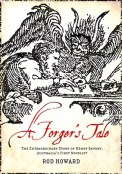
Rod Howard, A forger's tale

Rod Howard’s book on Henry Savery

  • the tweets of Henry Savery (probably Australia’s first novelist, about whom I wrote a couple of years ago) in the Rumours of Death project: a live Twitter feed by Christopher Currie, undertaken during the 2105 Brisbane Writers Festival. You can read the tweets at the link above. (Such as, “I will be most interested to see how the Australian literary landscape has changed since I founded it some 184 years ago. “)
  • lost in track changes: the title provides a hint. Five writers (Cate Kennedy, Ryan O’Neill, Krissy Kneen, Robert Hoge and Fiona Capp) were asked “to create a short piece of memoir, a vignette” each of which was then “passed onto another author within the group” who then had to transform the piece into something else, with if:book tracking the changes! You can download the ebook version from the link above.
  • Writing Black: new Indigenous writing from Australia: an interactive book using the iBooks platform, edited by Ellen van Neerven, and including writing, photography, audiovisual, and twitter fiction, from such creators as Bruce Pascoe, Tony Birch, Tara June Winch, Kerry Reed-Gilbert, Sylvia Nakachi, Siv Parker and Marie Munkara (several of whom I’ve reviewed here, in traditional formats!) You can download Writing Black from iBooks.
  • Memory makes us: ever thought of writing as performance? Well, this is it, but it’s “distinct from other performative aspects of literature: this isn’t a reading of a prepared work, nor is it freestyle poetry. It’s improvisation not with speech but with text and the tools of contemporary writing: keyboard and cut-and-paste.” This “event” has involved several North American and Australian writers, including Paddy O’Reilly, Marie Munkara, Angela Meyer and Maxine Beneba Clarke (all of whom you’ll find on my blog). if:books says that “For most readers, Memory Makes Us is a web site. For festival visitors, it’s a live event. We have also taken it to print. But none of these individual ‘formats’ capture the whole project.”

I love all this – I mean, I love the exploration. I can’t imagine these forms will replace traditional reading but, like most new media, some might stick around as an alternative form. In the meantime, the process must surely help both creators and readers/consumers break “normal” patterns, and that can only be good for literature.

GenreCon

I wrote about GenreCon in 2013. It’s actually called AWM GenreCon, AWM being the Australian Writer’s Marketplace which I understand is managed by the Queensland Writers Centre. GenreCon is a three-day biennial conference comprising panels, talks and workshops with Australian and international genre fiction writers, editors and agents – across all genres. It also offers one-on-one pitching sessions.

This year’s conference runs from 1oth to 12th November, at the State Library of Queensland. The “special guest” is Australian Garth Nix, and one of the international guests is Fiji-born New Zealand writer Nalini Singh. (I had to laugh because the brief bio names her books but not her genre, which apparently we should know. Unfortunately I don’t! Oh dear. Ah, Wikipedia tells me she writes paranormal romance.) Other Australian speakers include debut author and Noongar woman Claire Coleman, award-winning crime writer Emma Viskic, and award-winning fantasy author Angela Slatter, all of whose names I do know I’m happy to say.

… and that’s about it for another clearly active and inspiring Writers Centre.
Monday musings on Australian literature: Memorable Australian characters

Image on screen as we waited for Kim Scott

Image on screen as we waited for Kim Scott

The inspiration for today’s somewhat fun post, came from something more serious, Kim Scott’s Ray Mathew lecture that I attended last week. As I was waiting in the National Library’s gorgeous theatre waiting for the lecture to start, I found myself thinking about Bobby in Scott’s novel That deadman dance. What I realised was that Bobby is still vivid in my mind, years after I read the book – and I started to think about other similarly vivid characters…

Because, I don’t know about you, but I have read many books over the years. Some have been forgotten, some I remember generally, and some in more detail for one reason or another. Those reasons can vary – they can be the emotion that was engendered in me, or the ideas the book inspired me to think about, or the language delighted me, or, even, the plot surprised me, but there’s only a few for which that reason is very specifically a character. I thought it would be fun to share those – and for you to share back. Of course, as this is my Australian literature post, I’ll be focusing on Aussie books only. In other words, you won’t find Darcy or Elizabeth here! You, though, don’t have to be similarly constrained, so go for it. Bring out your Atticus Finches and Emma Bovarys. Let’s see what happens.

I have another proviso for this post, besides my characters having to be from Australian books, and that’s that I have to have read the books at least five years ago. Otherwise, I’m not sure I could say they’ve stood the test of time. My earliest favourite character comes from my pre-teen reading.

I noticed something interesting as I was compiling this list: not only do the characters vary in terms of age, gender, role/position, etc., they also fall into types like “my favourite pioneer character” or “child character” and so on. There’s very little duplication of these categories.

I am a bit nervous about this post, because I know I’ll omit some memorable characters that have slipped my mind (briefly!), exposing my shallowness, but I’ve decided to screw my courage to the you know what, and jump in. Oh, and one final point before I do: while these characters come from books I’ve loved, those books won’t necessarily be among my top books, particularly now, years later (though some will be).

So, here is my list, presented alphabetically by the character’s first name!

  • Bobby Wabalanginy, from Kim Scott’s That deadman dance (published 2010, read and reviewed 2011) is a luminous, unforgettable First Contact character whose generosity of spirit is knocked back again and again by the colonial settlers. He represents all that could have been good and positive in our first indigenous-settler relationships in this country.

We thought making friends was the best thing, and never knew that when we took your flour and sugar and tea and blankets that we’d lose everything of ours. We learned your words and songs and stories, and never knew you didn’t want to hear ours.

  • The drover’s wife, from Henry Lawson’s short story “The drover’s wife”. As far as I remember, she doesn’t have a name, but stands for the archetypal 19th century pioneer woman who had to face the terrors of the bush alone while her husband was, well, droving. She, like the rest of her ilk, had to become “used to the loneliness”.
  • Joe Harman and Jean Paget, from Nevil Shute’s A town like Alice, survived much, particularly being POWs during World War 2, before finally realising their love for each other. Yes, they are my favourite romantic couple from my adolescence, and I had to share them here.
  • Judy Woolcot, from Ethel Turner’s Seven little Australians, is, in a way, Australia’s version of America’s Beth (from Louisa May Alcott’s Little women). She’s the tragic character of our childhood. However, where Beth was a sweet town-living girl, Judy was a courageous, feisty tomboy from the bush.
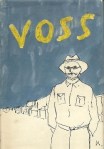
  • Patrick White, VossSybylla Melvyn, from Miles Franklin’s My brilliant career, has to be in the list of any Aussie female reader. How can she not be, with her independent spirit and her refusal to let a handsome, wealthy man distract her from her dream of a “brilliant career”.
  • Voss, from Patrick White’s Voss, was inspired by Prussian explorer Ludwig Leichhardt and his expedition into the Australian outback in the 1840s. He’s tragic, mythic, romantic, and I first fell for him, and thus also for Patrick White, in my teens.
  • Weekly, from Elizabeth Jolley’s The newspaper of Claremont St, is a working class woman, a cleaner in fact (hence her “name”). She works steadily towards a dream that she will not give up, not for any anything.

And I think I’ll leave it there. I could go into families – like Tim Winton’s Lambs and Pickles (Cloudstreet) and Ruth Park’s Darcys (The harp in the south) but that would be diluting the theme which I don’t want to do. I’m aware that this is not at all representative of my favourite authors, but that’s because I love them for other reasons.

And now, over to you. Who are your most memorable characters?

Stephen Orr, Datsunland (#BookReview)

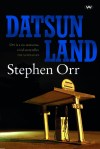
Stephen Orr, DatsunlandTwo things I loved about Stephen Orr’s novel The hands (my review) were its evocation of men, boys and their relationships, and its rural setting. And this is also why I liked Datsunland, his recent short story collection comprising thirteen short stories and a novellaIt’s a no-holds-barred exploration of the lives of boys and men. It is not a pretty book, but it feels real, even where it pushes extremes.

Lisa (ANZLitLovers) interviewed Orr in one of her early Meet an Australian Author Series of posts. Answering her question about who inspired him to write, he said

I became convinced the human psyche was the only thing really worth worrying about, so I’ve been working at it ever since.

This is true of these stories in which men confront their dreams and hopes, their strivings to achieve these, and their frequent failures. Take, for example, the first story, “Dr Singh’s despair”, which is about an Indian doctor from the Punjab who obtains a visa to work in rural Australia. We are desperate for doctors in rural/outback areas and he seeks a better life for his family. Unfortunately, his welcome – to Coober Pedy, which would be a challenge for anyone – is less than ideal. Indeed, we could call it non-existent. Not surprisingly, Dr Singh does not last and returns home, “disappointed … [but] at least happy”. This is the first story in the collection … worth considering, that ordering of the stories!

The stories in this collection are loosely linked. Most are set in rural or suburban South Australia; all focus on men (though women do appear); and many reference, sometimes so briefly you could miss it, a particular school, the Christian Brothers’ Lindisfarne College. The characters never cross into each other’s stories, however. It’s more that the school represents a certain conservative or inward-looking value or attitude – which makes this a good time to introduce the second story, though I promise to not describe every story in the collection! Titled “The shot-put”, it is set on a farm in 1919, just after World War 1, and concerns a couple whose son, a school shot-put champion, is being publicly listed on a Cowards’ List and has therefore been removed from his school’s – the aforementioned college – Honour Board. It’s another story of hopes (and in this case promise) unfulfilled – and more, of lack of compassion.

Lack of compassion is, in fact, one of the underlying themes of the collection. Had Dr Singh in the first story, for example, been shown some compassion, he may have stayed. In the fourth story, “A descriptive list of the birds native to Shearwater, Australia” a new wife begins to realise that what she’d hoped might be compassion in her husband was something entirely different, and in the fifth story there’s something creepy in Brother Vellacott’s caring for Miss Mary. It all, though, comes to a head halfway through the collection, in “Akdal Ghost”, the seventh story. It’s about a preacher, Pastor Fletcher, who should be compassionate, right? He hires a commercial video producer to make a video showing people what will happen if they don’t “find God”. It features the Akdal Ghost, which I had to look up in Wikipedia, and is absolutely shocking, though, as in several of the stories, Orr does not play it fully out. Much more effective to leave it to the reader’s imagination!

Religon is another motif that runs through the collection, and is behind some of the most violent stories. Besides “Akdal Ghost”, there’s “Confirmation” in which a massacre in 1976 Ireland is set against the hopefulness of a son’s confirmation, and “The Syphilis Museum” about a man preparing for the end of the world. One gets the impression that Orr is not a fan of religion.

And, so the stories continue. Some are more poignant, such as “The Barmera Drive-in” about a 45-year-old man who buys an old, long defunct, drive-in, thinking (hoping) he can reclaim his childhood and in so doing make the (or his) world a better place, and “The Shack” about an aging father who needs to decide what to do about his “retarded” son.

Most of the stories focus on adults, but a few feature children, including the 9-year-old boy lost in the hull of ship under construction (“The One-eyed Merchant”) and the 6-year-old boy trapped with a neglectful mother and an abusive step-father (“The Adult World Opera”). The final, titular story, “Datsunland’, which appeared in last year’s Griffith Review IV novella edition, also features a child, though in this case a teenager.

At 100 pages, “Datsunland” concludes the collection beautifully, continuing the melancholic tone but containing just that little bit of hope to leave us not completely discouraged as we turn the last page. It concerns teen-aged Charlie Price, his widowed father Damien, who sells second-hand cars at Datsunland, and his Lindisfarne College guitar teacher, William Dutton. The story opens with William Dutton, a struggling musician who finds teaching, particularly at that “poor cousin of elite schools” Lindisfarne, stultifying. He hates the narrow focus on assessment and performance, on trivialities, such as the proper wearing of socks, on rules that squash motivation and creativity.

Meanwhile, Damien knows his son is bright, has potential, but becomes increasingly concerned about the relationship developing between Charlie and William. The story leads us on, keeping us, along with Damien, unsettled, exploring the awful challenge faced by teachers in today’s fearful environment. What are the boundaries between teacher and student, and where are they crossed? How can a teacher nurture, safely?

Now, more often than not, reviewers describe short story collections as uneven, which is probably not totally unreasonable, because how can every story have equal punch for every reader. So, I’m not going to go there. I don’t think it particularly helps and, anyhow, I’ve seen reviews of collections where different reviewers identify very different stories as the best or the weakest. It’s so subjective, particularly given short stories can range from quiet slices of life to plot-driven-tales-with-twists. If you are a plot-twist lover, can you equally love the quieter story? I’ll simply conclude by saying that in Datsunland, we, like William Dutton, find ourselves “caught in the middle of multiple truths” – and what uncomfortable truths they mostly are. It’s a provocative read, but a good one.

Lisa (ANZLitLovers) reviewed the novella and the collection. The collection has also been reviewed by French blogger Emma (bookaroundthecorner) and Carmel Bird (The Newtown Review of Books) whose insightful analysis of the language and style is well worth reading.

Stephen Orr
Datsunland
Mile End: Wakefield Press, 2017
295pp.
ISBN: 9781743054758

(Review copy courtesy Wakefield Press)

A paradox of empowerment: Kim Scott’s Ray Mathew Lecture

Kim Scott and the whale's eye

Kim Scott and the whale’s eye

Why was Raimond Gaita’s Seymour Biography Lecture booked out, but not Kim Scott’s Ray Mathew Lecture*. Both lectures, held at the National Library of Australia, are endowed by generous benefactors and are free. Don’t get me wrong. I love that Gaita was booked out, but so should double Miles-Franklin-winner Noongar-author Kim Scott have been. His novel, That deadman dance (my review), is a pivotal book in terms of our understanding of first contact and therefore important to reconciliation. I had to see him in person.

Scott’s lecture, titled “A paradox of empowerment”, was described on the National Library page as being about “how reclaiming Aboriginal language and story may offer a narrative of shared history and contribute to social transformation.” And this is exactly what he spoke about, based on his Noongar project.

The evening started with a Welcome to Country by local Ngunnawal elder Tyrone Bell, who explained the tradition behind this practice. It led beautifully into Kim Scott’s talk, which he said was fundamentally about reclaiming Aboriginal language and story.

Looking through a whale's eye

Looking through a whale’s eye

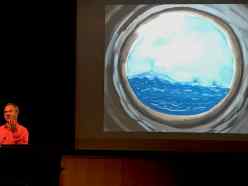
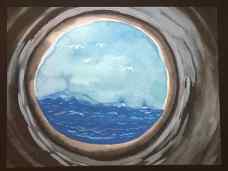
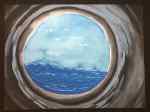
Scott started by explaining the picture on the screen beside him. It’s from a story about a Noongar man entering a whale. He chose it because it represents the idea of seeing things differently. (You could tell he’s a novelist by the way he framed his lecture around imagery to convey his ideas!) For example, is this a porthole? Or are we looking through an eye, or even with the eye, this latter suggesting that the Noongar man has become the whale, has been transformed. This possibility of transformation was the underlying theme of his lecture.

Before he continued though, Scott offered some provisos. He likes, he said, to be particular, to start with the local (which approach also appeals to me). However, he is often criticised, he confided, for being somewhat diffident, hesitant, by which I understood him to mean for not being out there on the political hustings. He’s hesitant, he said for a few reasons:

  • the project – a small community-based language revitalisation project – is insecure. Funding and resources are uncertain, people with the needed knowledge are passing away, and the project is not connected to any institutional infrastructure.
  • it is a regional, provincial activity that may not be relevant elsewhere, although he suspects it is, because the reality is that some of most substantial renaissance work has originated in regional projects.
  • the project produces books – which give status, provide focus, can be used by schools – but books can be accessed widely, which could result in non-Aboriginal people learning the language before its owners do. This would continue the disempowerment the project aims to overturn.

Outside the circle

And here, Scott the novelist turned to again to metaphor. He quoted Governor Phillip who, having been welcomed into Port Jackson by the local people, found their curiosity problematic. He wrote:

‘As their curiosity made them very troublesome when we were preparing our Dinner, I made a circle round us; there was little difficulty in making them understand that they were not to come within it, and they then sat down very quiet.’

Scott used this circle motif as a metaphor for the ongoing exclusion of indigenous people by the settlers. The circle marked a power relationship, an exclusion, that became a defining feature of Aboriginal people’s identity. And yet, he said, researchers like Bill Gammage (The biggest estate on earth) and Tony Swain (A place for strangers) are starting to identify what lay outside this circle – knowledge and skills, an active not passive relationship with the land – that the settlers could have learnt from. This knowledge is still outside the circle, he said.

Noongar language (Daisy Bates)

Noongar language (recorded by Daisy Bates)

He provided specific examples – many of which he used, in fact, in That deadman dance – of the Noongar’s documented sophisticated, positive response to the first settlers in Western Australia. But still, they were kept outside the circle. He shared, as an example of the Noongar’s open-minded, lively response, a Noongar story recorded by Daisy Bates, which incorporated the name of the new colony’s town, King George Town, into their language.

Changing this circle is, he said, vital to healing. He believes that through projects like his, together with the research of people like Gammage and Swain, things are beginning to change, that Aboriginal culture is starting to be recognised, appreciated, rather than denigrated.

Wirlomin Noongar Language and Stories Project

And so he got to the Wirlomin Noongar Language and Stories Project, a local language revitalisation project that is occurring outside the circle. His argument is that over time, since first contact, Governor Phillip’s original circle expanded, and the world outside it became increasingly impoverished. The Wirlomin language project believes that by recovering language, and the stories that go with it, the circle can be changed.

Proven benefits to social and personal wellbeing emanating from strong attachment to Indigenous cultural traditions. (Kral and Falk 2004, Anderson and Kowal 2012, and others).

He described the project – what it uses, what it produces, and how the knowledge is shared. I won’t detail that here, as you can learn much of it at the website. But I will share his teasing out decisions made, and their political implications. For example, when Kayang (Hazel) Brown took people to a special place in country, told its stories, and then re-covered the marks, her aim was not to practise the same attitude of exclusion, but to establish a protocol of respectful, negotiated relationships for sharing knowledge.

Another example concerned an event the group was organising to present books in language that they’d produced. He said that his view, “as the sophisticated man in the group” was to only invite Noongar, but Aunty Hazel (Kayang Brown) said they should invite some of the local non-Aboriginal people. Scott questioned why, given these people had controlled and spoiled their land, but Kayang responded, regarding one particular person, that “we grew up with him”. So he was invited, was given a copy of the stories, and responded positively, and emotionally. Scott learnt, through this experience, the paradox of empowerment through giving, and what can be achieved by moving into the circle.

All these, he concluded, open up possibilities of healing and transformation, with giving and sharing being the major denominations in the currency of identity and belonging.

This was a wonderful lecture, given by a man who emanated dignity, humility and grace. It was deceptively simple, but the thinking behind it was generous and sophisticated. You had to be there!

Ray Mathew Lecture
National Library of Australia
21 September 2017

* The Ray Mathew Lecture was established in 2009, through The Ray Mathew and Eva Kollsman Trust, created by Eva Kollsman to support and promote Australian writing. The lecture is named for the Australian poet and playwright, Ray Mathew (1929–2002), who left Australia in the late 1960s, and never returned. He spent most of the remainder of his life living in the New York apartment of his patrons, Eva and Paul Kollsman.

Monday musings on Australian literature: Bookswapping

Old books

Old books (Courtesy: OCAL @ clker.com)

Last week I wrote a Monday Musings about bookselling for/by charities. As I was writing it, I realised that there was another way of acquiring books that is worth writing about – book swap arrangements. Not surprisingly, it came up in comments on that post, so is clearly something of interest to many readers. It’s an area that I’m aware of – how could you not be – but not one I use with any regularity, so I’ve enjoyed researching it beyond my limited knowledge. I’m sure commenters will add even more information, for which I thank you in advance!

Book swapping as an informal activity is practised by most readers in some form or another. We share books – sometimes lending them to be returned, other times asking for the book to be passed on. It may not always be exactly one-to-one, but something more informal where we press loved books on each other as we read them. A little bit more formal is that practice in places like youth hostels where travellers leave a book behind that they’ve read, in a communal bookcase, and take one in its place. I still have a book that I picked up that way back in the 1970s. It’s Mordecai Richler’s Shovelling trouble. I love it – and the memories it carries.

In other words, book swapping as I’m describing it here is a pretty loose activity. It happens in multitudinous ways, ranging from the highly informal to the very controlled, from sharing books locally (in just a street, for example) to sharing across and between nations. Some swapping is simply about ensuring we always have something to read – what I’d call reader-to-reader sharing – while other schemes have bigger literary and social justice goals. These aims and styles aren’t always mutually exclusive, but the emphasis tends to fall more into one camp than another, if that makes sense. The activities I list here all fall into the somewhat organised end of the spectrum.

BookCrossing

BookCrossing is the first big “organised” system that I came across – and that was back in the early 2000s when I found a book in my workplace cafe. Wikipedia describes it as “the practice of leaving a book in a public place to be picked up and read by others, who then do likewise.” It started in the USA but has become a huge international community, supported by a website and social media platforms.

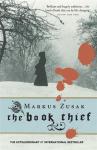
Markus Zusah, The book thiefAustralia is 7th on the list of the world’s top 10 bookcrossing country according to the BookCrossing website, which is not bad given our size (unless that was measured per capita).   (If you are interested, the top three countries are USA, Germany, United Kingdom.) I won’t say more about this, but if you’ve never heard of it do check out their website. It’s rather fun to see the list of recently released, recently caught, most travelled and most wished for books. I loved seeing, when I checked, that the top book in “the most wished for” list was Markus Zusak’s The book thief (my review).

The Great Book Swap

Coordinated by the Indigenous Literacy Foundation, the Great Book Swap is a very different kettle of fish. Its aim is to raise money for the Foundation. The idea is for organisations – workplaces, schools, any group at all – to host a book swap, which this year was on Wednesday 6 September. (But, really, you could do it any time. The ILF won’t reject your money). The principle is that people swap books for a gold coin donation. That is, participants bring a book (or books along) and for the right to take a book or book/s away, pay a gold coin donation. So, you get a book to read and the Foundation gets some money. In 2016, the ILF raised $160,000. The money is used to buy books to send to remote indigenous communities.

ILF Ambassador, children’s author Andy Griffiths, describes it thus:

The Great Book Swap is a win-win. Not only does it help raise money to improve literacy levels in remote communities, but the excitement and fun…helps improve literacy levels in your community or organisation…

The Little Big Book Swap

Another literacy focused event is the Little Big Book Swap run by The Little Big Book Club at Raising Literacy Australia. It runs along the same lines as the Great Book Swap, with money going “to support literacy programs and resources for SA families”. Raising Literacy Australia seems to be an Australia-wide organisation, with its vision being “Enriching Australian lives and building communities through literacy”, but this Little Big Book Swap, currently anyhow, says the money is for South Australian families. Hmm … maybe this is just a start of a program they plan to expand.

Street Libraries/Little Free Libraries

You’ve all heard, I’m sure, about street libraries. They are neighborhood book exchanges where passers-by can take a book to read or leave a book for others to find. The Little Free Library is one manifestation of these. It started in the USA in 2009. According to Wikipedia, there were 50,000 registered libraries world-wide. I bet there are many more that are not registered. In Australia, we have an organisation called streetlibrary.org.au . I love their description of what they do:

Street Libraries are a beautiful home for books, planted in your front yard. They are accessible from the street, and are an invitation to share the joys of reading with your neighbours.

Street Libraries are a window into the mind of a community; books come and go; no-one needs to check them in or out. People can simply reach in and take what interests them; when they are done, they can return them to the Street Library network, or pass them on to friends.

If anyone has a book or two that they think others would enjoy, they can just pop it into any Street Library they happen to be walking past.

They are a symbol of trust and hope – a tiny vestibule of literary happiness.

“A tiny vestibule of literary happiness”. I mean, what more could you want? You can register your library on the site, which enables others to find you. You can build your own little library, or you can buy a kit from the website. According to the website, there are 9 in my city. (I should have gone out and photographed one today, shouldn’t I?) The one closest to me is Books for the World (and it just so happens that one of my ACT-litblogger mentees is involved in it!) Another is the Mighty Fine Book Swap in Brisbane. Click on these links to see gorgeous pics, and read about them.

Other

These are some of the “big” initiatives, but I know there are all sorts of book swap arrangements around (including the hostel ones I mentioned in my introduction). Commenter Jeanne on last week’s Monday Musings wrote that

Recently Mildura Library has started a new venture: provide a book swap at Mildura Airport: http://milduraairport.com.au/books-on-the-fly/. Are there any other airports that have something similar?

Are there? Anyhow, what a lovely initiative. It’s called, delightfully, Books on the Fly. Being a small regional airport, Mildura Airport does not, I’m guessing, have a bookshop in the terminal, so this provides a lovely service for air-travellers.

Do you use – or contribute to – any book swap arrangements? I’d love to hear about them, whether or not I’ve mentioned them here already. 

Truth, Truthfulness, Self, Voice: Raimond Gaita’s Seymour Biography Lecture

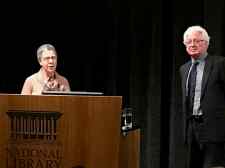
Raimond Gaita and Marie-Louise Ayres

Raimond Gaita and Marie-Louise Ayres, NLA, 2017

This week Mr Gums, Brother Gums and I went to one of the highlights of Canberra’s literary calendar, the Seymour Biography Lecture at the National Library of Australia.  It’s an annual lecture devoted to life-writing, and was endowed by the Seymours in 2005. This is the third one Mr Gums and I have attended, the first in 2015 being given by Robert Drewe, and last year’s by David Marr.

Raimond Gaita is best known to Australians as the author of the award-winning Romulus, my father, which, he informed us, is not-a-biography-nor-an-authobiography. He’s not, he said, a writer like those other Seymour speakers such as David Marr and Robert Dessaix. If we thought he would then go on to expound his theory of biography/autobiography/memoir, as might be expected for a “biography lecture”, we were mistaken, because philosopher Gaita had other plans.

And here is where I come a bit unstuck, because philosophy is not really my thing. I am therefore going to simplify – hopefully sensibly – what was a seriously philosophical argument that I tried to follow while also taking notes. I am going to limit my post to a few points that grabbed me – and that I believe I got right! I must say, though, that even if I didn’t catch all his arguments, I was thrilled to finally see this thoughtful, considered man in person.

“a tragic poem”

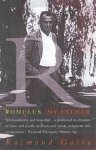
Raimond gaita, Romulus my fatherWhile Gaita didn’t engage, in the expected way anyhow, with the theory of his subject, he didn’t ignore it either. He explained that he doesn’t see Romulus, my father as biography or autobiography because it doesn’t contain “the critical psychological probing” you expect (or, perhaps, that he thinks we expect) in biography. He sees the book, rather, as “tragic poem”, as being about “broken lives” but not “diminished” ones. His described his book as tragedy, which he defined as reflecting “calm pity for the suffering it depicts”.

He wrote it “truthfully” as witness to the values by which his father lived, the father who, he said, gave him his “lifelong moral compass”. He discussed criticisms of his book, those arguments that had he been more ethically critical or more psychologically probing, he would have presented a more understanding picture of his mother. Don’t you love the way people are so ready to criticise what writers don’t do, rather than focus on what they do do? After all, the book is called Romulus, my father! I know, I’m being a bit ingenuous, since writing about his father does necessitate writing about his mother, but I stand by my point nonetheless.

Now, back to Gaita … to explain himself, he quoted Iris Murdoch’s statement that understanding another person is a work of “love, justice, and pity”. However, he said, he was 12 years old when his mother killed herself. He did not know her as an adult, had not conversed with her as an adult. He can, for example, speculate about what his father and his father’s friend Hora might have thought about things, but he didn’t know his mother: she doesn’t have an “individuated presence” for him. He sorrows for his mother (and admits that in writing about her he has put her under “intense scrutiny”) but he knew her only as a boy would.

At this point, he referred to Freud’s describing biography as being “vulnerable to psychological distortions”. Were Christine and Romulus really as he depicted them? Well, not, I understood him to say, in an absolute sense (but yes, he hoped, in his own sense). You ask seven people, he said, to describe a person and you’ll get seven different descriptions. You cannot match/judge these narratives against a single (simple? absolute?) notion that would guarantee “truthfulness” about that person’s life.

Truthfulness, et al

Gaita then went on to say that he is currently writing essays about people who have mattered to him. These essays have to be truthful but they can’t say everything. He hopes, however, that what is left unsaid will not compromise the truthfulness of what is said. He’d like to think that this is a justified hope. I think, in the right hands, it is!

One of his essay subjects is Martin Winkler who taught him German at school, and with whom he maintained contact long thereafter. Winkler is, he said, the wisest man he’s known. Around half of his lecture drew, in fact, from this essay on Winkler. I’m not going to repeat all he that said in detail here, but the essay, from what he shared with us about Winkler’s beliefs and ideas, would be well worth reading when it’s published.

So, just a couple of points. German-born Winkler loved German language and culture, but he was not blind to what Germany did during the war, which “lacerated his soul”. Winkler knew the dangers of following tradition which enables hiding behind respectability and which, in effect, enabled the Holocaust. However, he did not believe this had to diminish his love of Bach, or of German culture. Later in the lecture, Gaita commented that who would have thought that we would be now placing our faith in the Germany of Angela Merkel. (It just goes to show, doesn’t it, that people and/or nations can change. We live in hope!)

Another idea Gaita shared relates to love, ethics and values. For instance, he said, a feeling or emotion such as enthusiasm is ethically neutral, but love is “good”. It, in showing what people love, can be revelatory of value. He quoted Plato’s statement that love never proceeds by force or submits to force. Gaita also shared Winkler’s view that the core of responsibility is to be responsive to the needs of others in the lived context, which I assume means understanding people in terms of their lives rather than via some idea of absolute values.

Around here, if I remember correctly, Gaita returned to Romulus, his father, and in particular to Romulus’ compassion for his wife and her lover, which was evidenced, for example, by his providing financial support for them. Some of Romulus’ friends did not understand this (did not understand his father’s “goodness”). They felt his behaviour – his foolish heart – led him to dishonour himself. In other words, Gaita pointed out, another person would tell a different story about Romulus. So, the question is, was he a good man or a cuckold? There is no ethically neutral ground by which you can weigh the facts of his life to give one right answer or another. (Again, I think I’ve understood his point correctly. At least, what I’ve written makes sense to me, so that’s perhaps good enough!)

(Later, in the single-question Q&A, Gaita elaborated on his ideas of goodness and character. His father’s “goodness”, he said, was completely absent of condescension or superiority, something which many of his compatriots did not see or accept. Gaita, though, believes there should be more of such “goodness” in the world.)

For Gaita, growing up with such a man, seeing such compassion, was a gift. And it’s largely because of this that he did not grow up bitter. To be able to love, he said, is as important as being loved. You can, he said, be morally clear-sighted and at the same time love clear-sightedly. (I like this.)

Around here, we got into a discussion of facts and their meanings. You need, he said, to be truthful about the meaning of facts, which is more important, or relevant, than the facts themselves. (Regular readers here will know how much I liked this idea.) By example, he talked about the final sentences of Romulus, my father and of language choices that can convey different meanings. He could, for example, have written that his father was buried “not very far from” or “close to” or “near” his mother. He eventually chose “close” for its layered meaning – but he worried for a long time about whether the world also conveyed “sentimentality” (which emotion he sees as antithetical to truthful or authentic feeling). In the context, I think he made the right choice.

So, a very different biography lecture to the previous two we’ve attended. But, when you ask a moral philosopher to speak, that is, I suppose, to be expected. In other words, although we got a lecture which did address ideas regarding “truth” in writing about a life, it was also one that extended way beyond this to a discussion of values. My mind was certainly stretched – and is probably the better for it.

Seymour Biography Lecture
National Library of Australia
12 September 2017

Monday musings on Australian literature: Bookselling for charity

Old books

Old books (Courtesy: OCAL @ clker.com)

Last week I wrote a Monday Musings about the current, relatively positive, state of play for bookshops in Australia. Responding to that post on Facebook, one of my longstanding friends, and an original member of my bookgroup, reminded me of the Lifeline Bookfair which is held regularly in Canberra, and to which I have donated many books. I didn’t mention Lifeline because that post was about shops selling “new” books. However, she made me realise that while I have also written about secondhand book shops before, I have never specifically written about those organisations which sell books to raise money for charity (or good works). Now is that time …

First, though, a brief comment. A few years ago, knowing that bookselling is the prime fundraiser for some charities, such as Lifeline, I wondered what would happen to their fundraising goals in the new world of digital books. Well, I needn’t have worried. Books are still raising plenty of funds for charities. I’m not the only one, it appears, who still loves the printed book!

Lifeline Bookfair (Canberra)

The most visible seller of books for charity in my city is Lifeline. Lifeline is a national organisation providing 24-hour crisis support, particularly, but not exclusively, in the area of suicide prevention. It relies on volunteers to staff the support phones, and to raise money for the work of the organisation. A major fundraiser in my city – and I think in other parts of Australia – is the Lifeline Bookfair, which is held three times a year. It is hugely successful, and a big-ticket event on Canberra booklovers’ calendars. (Not mine, though. I donate to it, but I stay away! If I ever start to run out of books to read, however, I know where to go!) For Lifeline Canberra, these bookfairs are “the cornerstone” of their “financial strategy”, and currently bring in between $1 to $2 million for the organisation.

As well as the physical book fairs, Lifeline also runs an online service. I should add that besides books, they also sell records, DVDs, CDs, jigsaws and related products. For Mr Gums, Lifeline is a good source for the foreign language books (German, to be precise) that he likes to read.

There are Lifeline organisations throughout Australia and many, if not all, raise funds through booksales. We donated, for example, many books from my Aunt’s estate last year to her nearest Sydney operation.

Brotherhood Books

This is a social enterprise run by the Brotherhood of St Laurence which aims to tackle poverty in Australia. Its bookselling, mainly carried out online but also available through their physical stores in Victoria, is also volunteer run. They say that when you buy books from them

you also keep them out of landfill, reduce your carbon footprint, and support the many worthy charitable programs run by the Brotherhood of St Laurence.

Vinnies and Salvos

St Vincent de Paul (Vinnies) and the Salvation Army (Salvos) run secondhand shops throughout Australia, and sell books at these shops along with clothing and household goods. Both organisations aim to reduce social injustice, particularly poverty.

Vinnies, and probably Salvos, also give books to families in need.

Other

And of course, there’s an array of smaller charities which sell books to support their activities, starting with school, church and hospital fetes and stalls.

Also, the Australian online donations platform, GiveNow, lists a number of organisations which accept donated books, some of these to sell for fundraising (such as Brotherhood Books) and others to distribute to those in need (such as the Aboriginal Literacy Foundation, which is particularly interested in children’s books).

Do you buy from, or donate to, charity booksellers? Please give a shout out to your favourite/s – particularly if I haven’t mentioned them here.

Phil Day, A chink in a daisy-chain (#BookReview)

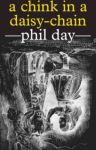
Phil Day, a chink in a daisy chain

You’ve “met” Phil Day, author of A chink in a daisy-chain, here before. He illustrated co-publisher Julian Davies’ Crow mellow (my review) and Hartmann Wallis’ Who said what, exactly, which I reviewed very recently. This time, though, Day is author as well as illustrator.

It’s a fun, mind-bending book – with the fun starting on the cover page in which the illustration, as befits a story inspired by Alice I suppose, is upside down. On the back cover is a simple statement: “If there is a perfect book, Alice is it”. This is the question – oops, statement, really – to which Day returns regularly throughout his short book. But, before I talk more about that, I’ll share publisher Julian Davies’ description of the book in his covering letter:

The book is a creative essay, cum personal reflection, on the relationship between Lewis Carroll’s Alice books, personal identity and argumentative opinion. It is the first in a three-book series Phil plans to write on the embattled nature of individual intellectual and creative autonomy.

So, now, are you any the wiser? Perhaps not? And I’m not sure that I can enlighten you, but I’ll try.

The essay could also – perhaps – be described as a memoir, except that I would be hard-pressed to say hand-on-heart which of what Day tells us really happened, if any of it did? Or perhaps all of it did, just not quite the way Day tells it!

The essay starts with Day and his wife sitting on the minimal furniture left in the lounge-room of the Shillams (look at that name upside down and see what you get!) who are moving to Grafton (as you do!) They had been invited for farewell dinner and drinks and, over a mocktail called Clancy of the Overflow and Gin-and-Tonics served in teacups from the piano-doubling-as-a-bar, Day makes his pronouncement concerning Alice. “Can’t see why, Mr S said” – and we’re off, following Day’s weird and wonderful mind just as Alice followed weird and wonderful creatures down the rabbit-hole.

What makes Alice so good, poses Day’s foil, Mr S? Well, besides the fact that Day didn’t say it was “good” but that it was “perfect”, he doesn’t want to get into discussions of “the meaning of good”. And then Mr S asks him to “look at the man”, but, quite rightly, Day isn’t interested in the man either:

I didn’t want to look at the man. I don’t care about the man. I wasn’t drawn to the man, it was the book itself that made me say–If there is a perfect book, Alice is it.

You are probably following this ok right now – the ideas and the language – and it does make sense. It continues to make sense as Day embarks on a critique of teaching, of

the state government syllabus–a deformed thing that devalued the one-off self-directed realisations that a student might naturally become conscious of through their own curiosity. But because the state government syllabus was created by teachers it had no chance of being anything more than an approved state government syllabus, and because of the approved state government syllabus, I instructed my students not to be curious …

And of course curiosity is why Alice is so special. Not that Day says this specifically, but we know this is what he means.

From here, though, the connections and word associations become increasingly bizarre or absurd, just like in Alice. They are not the sorts of associations that make sense in the telling. You have to read it yourself. You have to follow Hobbes the cat, and the peppered oysters, the trees and the warrens, not to mention red-painted bedrooms and nursery rhymes, to find your own meaning … Beyond that my lips are sealed.

I wonder what Phil Day will come up with next in his personal odyssey into curiosity and creativity. Whatever it is, it will be original, probably absurd, definitely cheeky, and very likely a cri-de-coeur for the freedom to think unbound by rules and approved state government syllabi.

Lisa at ANZLitLovers also enjoyed the book.

Phil Day (author and illustrator)
A chink in a daisy-chain
Braidwood: Finlay Lloyd, 2017
61pp.
ISBN: 9780994516527

(Review copy courtesy Finlay Lloyd)

Monday musings on Australian literature: Tasmanian Writers Centre

Continuing my little series on our writers centres, I’ve chosen the Tasmanian Writers Centre for my next post, largely because it is holding its Tasmania Writers and Readers Festival next month. Might as well give that a plug in case for my Tasmanian readers, though I’m sure they know!

The Tasmanian Writers Centre was established in 1998 and must have one of the loveliest locations in Australia, the Salamanca Arts Centre. It has a lovely bright webpage which announces that its aim is

Supporting writers to tell powerful stories, connecting with readers and building sustainable careers.

To do this, the Centre does the sorts of things that other writers centres do, and as before I’ll list their main programs …

A Writer’s Journey

Danielle Wood, Mothers Grimm, book coverThis seems to be an annual program comprising monthly workshops, with the overall topic changing each year. In 2017, the topic is “the challenges and rewards of a variety of non-fiction formats. Topics include memoir and life writing, environmental journalism, how to research for non-fiction and freelance feature writing.” The presenters include Danielle Wood (whose memorable Mothers Grimm I’ve reviewed here), Anna Krien (whom I’ve reviewed here a few times and whose topic was, appropriately, Environmental writing and journalism), and Maria Tumarkin.

Erica Bell Mentorship Program

This program, which started in 2016, provides “one-on-one mentorship with an established writer over a six month period.” Applicants submit a 10,000 wd excerpt from their manuscript and a letter explaining why they believe they would benefit from a professional mentor. Unfortunately, for nosey me, the site doesn’t say who the professional mentor/s might be.

Young Writers Program

The Centre seems to have an active program for supporting and encouraging young writers:

  • Twitch: This is the overall name the Centre gives to its youth program. It includes workshops, “Hot Desk residencies”, and the Young Writer in the City program.
  • Young Writer in the City: I came across the first year of this program on a visit to Hobart in 2015, and wrote about it then. The idea was that writers, under 30 years old, would set up “their chairs, laptops and notepads in the midst of shoppers and surrounds to compose essays between 1500 and 5000 words”. It was apparently successful, because after that first one in Hobart, the project has been offered in Launceston, Devonport and, most recently, Glenorchy. You can find links to some of the recent writing on the project’s page. One, for example, found her inspiration for writing about MONA in her childhood love of Charlie and the Chocolate Factory, in “Willy Wonka and his fascinating factory full of wonder and surprises”. Anyone who has been to MONA could understand that reference.

Emerging Tasmanian Aboriginal Writers Award

This award is being offered for the first time in 2017 – as part of the Festival. It is open to writers 16 years and older, and offers prize money of $1200. The lovely thing is that it accepts a wide variety of writing forms: poems or songs, short fiction, non-fiction (essay, autobiographical or biographical work), a play excerpt, or an illustrated story. There are different length limits depending on the form.

Tasmanian Writers and Readers Festival

Tasmania’s festival is a biennial one, and like most such festivals includes “masterclasses, discussion forums, spoken word events, children’s programs”. It’s nice, I think, that it’s framed as a “writers and readers” festival. This year’s festival runs from September 14 to 17. At this year’s festival, masterclasses are being run by writers like Bradley Trevor Greive, Ashley Hay, Arnold Zable, and Alec Patrić (on Advanced Short Fiction). There’s also a delightful sounding session titled “Miles and Stella in Conversation”. Of course, I had to read more about that one, and this is what it said: “What do two prize-winning authors talk about when they talk about writing? Alec Patrić (2016 Miles Franklin winner) and Heather Rose (2017 Stella Prize winner) quiz each other on words, prizes, literature and life. A unique opportunity to get an inside glimpse into the friendship of writers.” This is followed by, in parentheses, the note that “(Cosmopolitans and Bellinis on sale for this session.)” Is there something I don’t know? Did our Miles love these cocktails? And what if I’d prefer a simple glass of wine? What a hoot.

It is also at this Festival that the shortlist for the biennial Tasmanian Premier’s Literary Awards will be announced – so, we’ll be looking out for that. The winners will be announced in November.

Canberra Writers Festival, 2017, Day 2, Pt 3: A panel of millennials

Unfortunately – for me, anyhow – this will be my last post on the Festival, as that cold I hoped (unrealistically) to hold at bay would not be held. Consequently, for both my benefit and that of others, I decided to keep my snivelling self at home on Day 3. I’m very disappointed however, as I was very keen to attend a few events, including one titled Re-imagining Christina Stead. It was a rare session on a “classic” Australian writer and I’d love to have supported it (though hopefully, it didn’t need supporting!) And of course, I wanted to hear what the three panelists had to say.

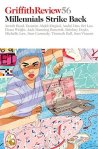
Griffith Review: the Millennials strike back: Yolande Norris, Cameron Muir, Anna Snoekstra, Frances Flanagan, and Michael Newton

Griffith Review 56

Griffith Review 56

Having last year attended a lively session on the plight of the millennials, I was interested to see another session this year on them – and decided, as a baby-boomer, that I could face another beating! Seriously, though, as a parent of millennials, I am interested in their view of the world, and this session, drawing as it did from the excellent Griffith Review, seemed worth attending.

Convenor Cameron Muir introduced the session by saying that the Griffith Review editor, Julianne Shultz, conceived Millennials strike back edition in lead-up to last year’s Federal election. She wanted not to engage in the generation blame game but simply to give millennials (those born from around 1981 to around 2000) a voice. The issue, like all Griffth Reviews, contains a mix of essays, fiction, poetry and memoir pieces. The panelists all had pieces in the issue:

  • Frances Flanagan (Essay) “A consensus for care”
  • Michael Newton (Essay) “Unpaid opportunities”
  • Yolande Norris (Memoir) “Navigating life in art” (in the online edition only)
  • Anna Snoekstra (Short story) “The view from up here”

Muir then noted that a major theme in the panelists’ pieces (and perhaps in the edition as a whole?) is work, and he asked them to comment. Norris, who contributed a memoir to the edition, talked about the challenge of managing her identity as a mother and as a worker, which is an issue, in fact, that many of us baby-boomers also grappled with. It wasn’t easy then, and it still isn’t now – unfortunately. She wondered what you do when you’ve achieved the “template for life”, house and child/ren.

Newton, whose piece was an essay, talked about the broader structural issues concerning how work is changing. Insecurity (precarity) in work, he said, results in pressure and can engender anxiety, which can breed depression. Millennials in this situation worry about whether to look for another job, whether they can earn a living wage. Why, he asked, are the real structural problems being hidden under arguments about smashed avo and kidadulthood? These arguments dismiss policy concerns of Millennials.

Snoekstra, whose piece is a short story, said that she calls herself a writer in social situations, but in fact she also works as a nanny. She talked about her generation’s concern with buying a house: do they buy a house meaning they can’t go on holidays, have to take a job they don’t like, or do they decide they won’t follow that path?

Flanagan, who like Newton contributed an essay, focused more on the longterm, but also looked back into history, drawing on Hannah Arendt’s division of human activity into three categories: labour, work and action. She suggested this might provide a model for how we view work. She wanted, she said, to meditate on how modern capitalism conceals the action of power. There has been insecure work in past, she said, but there were ways to resolve those, including the introduction of award wages. Today, though, she argues, work precarity is individualised and private. (There are no labour lines, today, for example, just people “waiting for a text message that will signal the prospect of work or its absence.”) Society is no longer offering careers but fragmented work. She then moved onto discussing the kind of work we value – and this is where the title of her essay “A consensus for care” makes sense.

She talked about the cyclical nature of work, writing in her essay:

While our current age is not alone in taking the maintenance of our physical and social spaces for granted, we have certainly given it a twenty-first-century neoliberal spin. Many early childhood educators earn so little that they cannot afford to buy a house or have children of their own, despite significant post-secondary qualifications. Aged carers are paid so poorly they risk poverty. People with jobs in the world of work and action who take time away to care for elderly parents or young children are punished for their ‘choice’, not just once through foregone income but twice as a result of a grotesque superannuation system that magnifies wage gaps in retirement. Through neoliberal goggles, labour is not recognised as the essential foundation for civilisation but rather a cost burden on the public purse that should rightly be turned into a profit-making opportunity. Treasurer Scott Morrison, speaking at the ACOSS National Conference in 2016, said, ‘What I am basically saying is that welfare must become a good deal for investors –for private investors. We have to make it a good deal, for the returns to be there.’

(What can you say to that!) Arendt, she said, would not apply the idea of “returns” to this sort of activity, but to “work” that produces – well – products. Flanagan suggests that we need to look at the kind of society and care we want. She pointed to Norway’s collectivist view of responsibility, and argued that we should put care and education at the heart of our society. We need to look at values, rather than costs, and look back for values to the mid-twentieth century and earlier rather than to the last 30 or 40 years. In other words, rather than to the time during which I spent my working life. Oh, how I remember the dispiriting slide into measuring and costing things which cannot and/or should not be costed. Things like, for example, the cultural collections in our museums, archives and libraries. We saw it happening but felt powerless to change it.

And so the discussion continued, teasing out issues regarding mental health (captured chillingly, said Flanagan, in Snoekstra’s story), the separation of public and private life (in that Millennials seem very public, sharing all, but their worries are private), the need to develop support networks for work, the prevalence of toxic attitudes online particularly from disgruntled men.

On this issue of disgruntled men, Newton commented in the past men assumed they would find a partner without too much effort, but that this is not the same for the current generation of young men which can build resentment. He also noted that the hollowing out of work in manufacturing, caused largely by automation, leaves men having to consider care work. However, they don’t value this “feminised work” so, he said, the whole idea of “work” needs to be rethought.

Muir concluded by asking them what they would say to the next generation:

  • Norris said this was tricky because projections are impossible, but developing and maintaining connections is important.
  • Flanagan said that she would argue that technology is just a tool, and that there are still questions about power. She suggested people should learn from mentors and mentor in turn.
  • Newton started, laughingly, by saying he recently had to explain the significance of Princess Di to his younger work colleagues. Seriously, though, he’d want to say that work is not an end in itself, but that they should look at values.
  • Snoekstra said that she was thinking of writing YA books, and was advised to write short books, with action at beginning, due to shortened attention spans, but then discovered that 12-14 year old girls are reading Nancy Drew!

Q&A

Could unions help? For baby-boomers they facilitated collective bargaining, and gave a sense of empowerment. Flanagan said that Australia has the worst anti-trade union laws in the democratic world. She works for United Voice, a large trade union, and said they need to use social networks to deal with mass desegregation of workforce.

Is the Universal Base Income a workable solution? It was agreed that carers should be remunerated, and the small surveys done to date does not show that it reduces the desire to find other work.

What are the implications of the drive to project yourself, that if it’s not on Facebook, it didn’t happen, that “it’s not ok to be not ok”. Norris felt that there is some pushback to this now, that people are becoming willing to show cracks. Flanagan said that for us to mature we need to create a caring society.

The commentary about housing focuses on Sydney and Melbourne but what about growing regional areas where housing can be cheaper. Is a trend happening? Our panelists generally thought there was, although some of the “trendy” places are quickly becoming expensive or built out. And, Australia is probably likely to remain a largely urbanised, centralised nation.

And there ended, somewhat over time, an excellent session that did not generation blame but that attempted instead to identify the issues and find solutions.