Monday musings on Australian literature: Blaming the Americans

Rummaging through my little folder of papers and ideas for Monday Musings posts, I found a 2014 article from The Conversation titled “The Americans are destroying the English language – or are they?” If you are a non-American English-speaker you probably know exactly what this is about, because we non-American English-speakers love to get on our high horse about how Americans have corrupted the English language, except …

If you actually do the research, as I have on and off over the years, you find that the situation is nowhere near as simplistic as we like to think. And this is what The Conversation writer, Rob Pensalfini from the University of Queensland, explores in his article. He starts with some facts about English-speaking around the world, including the fact that the United Kingdom has only about 15% of the world’s native speakers of English, while the USA has almost 60%. Not that quantity is necessarily a signifying issue, but still, it gives one pause. He also points out that there are various forms of “standard” or “official” varieties of, say, British, American, and Australian English, as well as innumerable non-standard varieties and pidgins.

Erin Moore, That's not EnglishHe then discusses what “ruining” a language – if indeed we accept that’s possible – might mean. He suggests that since languages change, “ruining” or “destroying” one must mean changing it in “unacceptable” or “negative” ways. It must mean, he continues, that it “threatens the capacity of the language to express something – be that complex thought, heightened emotion, refined argument”. Good points, particularly that regarding the impact on our ability to express ourselves.

Anyhow, he lists the main “changes” for which Americans are criticised, and addresses each one. I’ll try to summarise them:

  • corrupt spelling (eg center, honor, neighbor): the American lexicographer, Noah Webster, as we know, introduced spelling reforms in the 1820s into American spelling, including the now commonly accepted “American” spellings of “honor, neighbor, center, and jail.” However, before we non-Americans become too smug, he notes that other reforms by Webster, the rest of us have also accepted such as “public and mask (in place of publick and masque).” Meanwhile, other of his reforms were not even accepted by Americans, such as “tung (tongue) and wimmen (women).” The weird thing – and this one I’ve researched before – is that the forms that raise the ire of us non-Americans (the “or” and “er” spellings) were actually older British spellings. Pensalfini says that “honour” occurs 393 times in the First Folio of Shakespeare’s plays (1623), while “honor” occurs 530 times; “Humour” 47 times while “humor” is used 90 times; “center” occurs nine times, but “centre” only once; and “sceptre” appears four times, but “scepter” 36. Pensalfini says that “Webster chose the ‘or’ and ‘er’ spellings because they looked less French” while the British chose the “our” and “re” spellings in the 19th century “because their French look lent them a certain dignity”.
  • discordant sounds (post-vocalic /r/, “flat” /a/): firstly, he says the post-vocalic /r/ is used in parts of England (the West Country and Scotland) and is not used in parts of America. Indeed, he suggests that “the loss of /r/ erodes comprehension, in pairs like father/farther, pawn/porn, caught/court and batted/battered merging”. As for the “flat” /a/, it is an earlier form – so there!
  • double negatives: let’s not even go here. As Pensalfini says, they have a role and, anyhow, they are “not accepted in Standard American English any more than they are in Standard British English.”
  • ending sentences with prepositions: this is just silly he says, and “is as common in British as in American English. Would you really say ‘From whence did you come?’ Seriously? ‘Where did you come from?’ is absolutely standard for all varieties of English.” (I agree, though I think his example is poor, as “from” is not needed before “whence” which means “from where”.)
  • singular they: again, he provides several examples of this, including from Shakespeare. Jane Austen, I know, used it too.
  • using nouns as verbs: this one, he says, really gets the “pedants’ collective goat … the use of words like impact and action as verbs”. Again, though, “it’s been with the English language since at least the early Middle English period.” In fact, “the modern-day Americans aren’t verbing nearly as much as Shakespeare (“Grace me no grace; nor uncle me no uncle” (Richard II)).”

Pensalfini concludes his article on a political point about the British, but I’m not going there. Instead, as I like to do, I checked Trove’s digitised newspapers for any discussion about American English in the early 20th century. There was – a lot in fact. Much of it was critical, and focused on pronunciation (including reports of the author Henry James complaining about Americans’ “slovenly” pronunciation!) But here, I’ll share two I found about spelling and usage.

The first is a letter to the editor, in Melbourne’s Herald in 1923:

Sir.— In answer to “Baffled’s” letter in tonight’s “Herald” re English spelling, it is my opinion the sooner English people all over the world wake up and copy the American system of spelling, the sooner will they become a more intelligent and efficient race. Let Australia be the first to start a campaign for the reforming of spelling, and do away with such spelling as “through” and “fright”. — Yours, etc

Efficiency
South Yarra, October 17.

Ms or Mr Efficiency was, from my short survey, swimming against the tide!

The other is an article from The Maitland Daily Herald in 1933. This writer goes to town. They (I’m using the “singular they” since the author isn’t identified) admit there are some good writers in the US, but just read any magazine they say and readers will see

the vile distortions of language, that there abound, the violations of fundamental rules of syntax, the apparent endeavour to write in a style as different as possible from that seen in an English or Australian journal of similar type. Slang is everywhere in evidence, often where it serves no good purpose, and where it ceases to be picturesque and becomes silly.

Some American slang is, they say, “decidedly clever and picturesque” but, “this cannot be said of the majority of what we see and hear. There seems to be a deliberate attempt to make American-English as much unlike English-English as possible.” Oh dear, such a crime! How conservative this sounds.

And so, this writer continues,

An effort should be made continuously by parents and teachers to impress on our young people the glory of good English, the priceless heritage left to them in the prose of Addison, the verse of Milton, the dramas of Shakespeare, and so forth. …

Now, that’s funny, given Pensalfini’s examples from Shakespeare (whom he used, he says, “because for many, Shakespeare represents a sort of pinnacle of English language usage”!)

I must say that over the years I’ve relaxed my attitude to all this. Language does change, and I know that many words we use now – such as “nice” – meant something completely different a few hundred years ago from the way we use them now. So, what to do? Like all readers, I love fine language. But I also know that fine language – that is, literary language – can be so, exactly because it breaks the rules, because it pushes boundaries. Ultimately, the point, as Pensalfini suggests, is to be able to express “complex thought, heightened emotion, refined argument” and, I’d add, for that expression to be understood.

And so, the important thing, I’d argue, is to continue the debate, because it is probably that more than anything which keeps the language fresh and true.

What do you think?

Monday musings on Australian literature: Aussie “up lit”

Hands up if you’ve heard of a new genre (or literary trend is perhaps more accurate) called “up lit”? I hadn’t, until I read a post recently on Kate’s (booksaremyfavouriteandbest) blog. She pointed to an article about it at The Guardian.

The writer, Danuta Kean, says:

In contrast with the “grip lit” thrillers that were the market leaders until recently, more and more bookbuyers are seeking out novels and nonfiction that is optimistic rather than feelgood. And an appetite for everyday heroism, human connection and love – rather than romance – is expected to be keeping booksellers and publishers uplifted, too.

See how behind I am? We’ve had “grip lit” but it’s on its way out before I’d even heard of it, and is being replaced by “up lit”.

My first thought when I saw the term “up lit” was “feelgood” but it appears that we are talking something more active than that, we are talking optimism – and empathy, and kindness. And, it’s not just fiction we’re talking about, but non-fiction too. Kean’s article, written in August 2017, argues that the trend was kickstarted by “a bruising year dominated by political and economic uncertainty, terrorism and tragedy.” This reminds me of American screwball comedy films which started during the Great Depression and lasted through to the early 1940s (that is, into World War 2). Times were tough and people needed some brief moments of escapism – which is also part “up lit”.

But, as I’ve already said, “up lit” seems to involve more than just “escape”. A March 2018 article in The Guardian by Hannah Beckerman quotes Rachel Joyce, the international bestselling author of The unlikely pilgrimage of Harold Fry:

But up lit isn’t simply a means of sugar-coating the world … “It’s about facing devastation, cruelty, hardship and loneliness and then saying: ‘But there is still this.’ Kindness isn’t just giving somebody something when you have everything. Kindness is having nothing and then holding out your hand.”

It’s about the idea that “it is possible to fix what’s broken”. The publisher HarperCollins describes it more simply as “meaningful, optimistic books that celebrate everyday heroes, human connection and love!” In other words, it’s a pretty broad church it seems.

Kean and Beckerman provide popular and literary fiction examples of “up lit” including, for example, Gail Honeyman’s Eleanor Oliphant is completely fine, and last year’s Booker Prize winner, George Saunders’ Lincoln in the Bardo. You can check out all their examples in the articles linked above, while I move on to see what I can find in Australia’s literary firmament. Are we seeking – and producing – such literature?

Do we have Australian “up lit”?

I struggled to come up with many recent Aussie “up lit” books. I was looking for the more “literary” end of the spectrum than at genres like Romance which, by definition, are happy or positive, regardless of current literary trends.

  • Brooke Davis’ Lost and found (my review): a rather quirky (hate that word, really) novel about the loss experienced by three people, and how community helps them cope.
  • Eliza Henry Jones’ In the quiet: “A moving, sweet and uplifting novel of love, grief and the heartache of letting go” (HarperCollins); “uplifting and tender” (The Canberra Times.)
  • Inga Simpson’s Mr Wigg: a gentle book about ageing and loss, apparently.
  • Graeme Simsion’s The Rosie project (my review): belongs to the Romance end of the spectrum, but has an edge because the male protagonist is not your usual romantic hero.

Some of you may remember that there was discussion last year in Australia about reading lists for senior school students being “too dark and depressing”. Of course, there were arguments pro and con. One student said that she thought a lot of the books “are quite depressing” and “don’t really give any motivation or happy feeling in the classroom” while another thought that “if they’re not depressing, they’re not going to be interesting to analyse.” She’d agree with Eva Gold, the executive officer of NSW’s English Teachers Association, who said that “A mark of great literature is conflict and tension. … Unfortunately, resolutions that provide uplift do not necessarily reflect the complexities of life.”

Three years before that, in 2014, there was an article in The Conversation about young adult fiction. The writer, Diana Hodge, argued that “dark themes give the hope to cope,” and that “discussing life’s tougher issues is not in itself pessimistic or disheartening.” In fact, she says:

Overcoming obstacles, developing strength through hardship, experiencing human kindness in the face of traumatic events are not depressing themes; they can be powerful and uplifting and inspire hope.

To some extent, what she’s saying doesn’t completely contradict some of the “up lit” proponents who talk about facing the tough things and then being “fixed” by, for example, kindness. Still, my sense is that “up lit” supporters don’t want the tough things to be dwelled upon for too long, don’t want that grim tone that can attend the so-called “depressing” reads. Take, for example – and here I’m moving briefly away from Australia – Rohinton Mistry’s novel A fine balance. It’s one of my all-time favourite novels. I’d argue that despite the gut-wrenching nature of the plot – if something could go wrong it does – the ending is positive. Many disagree with me, however!

I must admit that I do look for signs (or glimmers) of hope in the novels I read, but I don’t require it. That, I think, would be unrealistic, as Eva Gold above suggests. “Up lit” won’t, therefore, be my go-to.

What do you think? Do you find yourself seeking “up lit”? And if so, have you any recommendations?

Nick Earls, NoHo (#BookReview)

Nick Earls, NoHoNick Earls is a Queensland-based writer known mostly for humorous fiction about contemporary life. While I’d heard of him, I hadn’t read any of his work when I attended a session involving him at the 2016 Canberra Writers Festival. The session was titled “Modern Masculinity” (my report). Earls was there because of the recent publication of his Wisdom Tree series of five novellas, of which NoHo is the fifth. I chose to buy it because of my familiarity with its setting, Los Angeles.

The Wisdom Tree books are beautifully designed (by Sandy Cull), and just lovely to hold. For that reason alone, I’m glad I finally decided to pick NoHo off the TBR pile and introduce myself to this writer. The books are apparently “subtly linked”, but I don’t think that means you need to read them all, or read them in any order. I certainly haven’t, and I enjoyed NoHo regardless.

The five books in the series are titled by the name of a place: 1. Gotham, 2. Venice, 3. Vancouver, 4. Juneau, and this one, 5. NoHo. NoHo refers to North Hollywood where 11-year-old Charlie is temporarily living with his mother and 12-year-old sister Cassidy who is seeking her break into the movie business. It’s not this Australian family’s first stay in Los Angeles, so Charlie knows the routine. As Cassidy and her mother do the rounds of agents and auditions, Charlie is left to himself. He chases wifi at audition venues. He goes “dumpster diving” for bottles and cans he can cash in at a recycling centre. And, in the last part of the story, he’s left at an art gallery to work on a school assignment that has been posted on the Distance Ed Blackboard site. Dropped off at 1.15pm, he is still there at gallery closing at 6pm because his sister has a “call-back” – and her needs come first. That’s the basic set up. Oh, and there is a father, but he is back in Australia, due to join the family at Christmas.

The story is told in the first person voice of Charlie. At the Canberra Writers Festival session I attended, Earls said that he used an 11 to 12-year-old boy as a protagonist because this is the age of starting to push boundaries, of wanting to be successfully independent but also being a little fearful. He wanted, he said, NoHo’s narrator to be naive about what he was seeing. That’s pretty much what he’s achieved: Charlie is starting to push boundaries – willing to be independent to a degree – but is not so confident that he isn’t a little anxious when his mum leaves him too long at the gallery. He’s lucky that a down-to-earth warm-hearted security guard, Wanda – “a tough woman who has had difficult times, I can tell” – stays with him.

Charlie isn’t, however, completely naive. He’s an intelligent boy who has some insight into the treadmill his mother and sister are on. He comments on the sorts of dream-and goal-focused mantras that his sister follows:

I’ve seen sports clothes that say, “Never, never, never give up,” but is that right? Never? Triple never? What if your dream is to win a marathon and your body with triple-never do that? It’ll finish, if you work at it, but it’ll never cross the line first and could fall apart trying. What if your dream is to be a movie star before you’re old, and it’s a million other people’s dreams as well? More than a million, actually. And some of them, lots of them, have perfect teeth and better luck than you.

Good questions, Charlie.

The second part of the novella involves Charlie choosing an art work for his art assignment. He chooses an anthropomorphic sculpture titled Family #5, which features three creatures made primarily from found objects. There’s irony or, at least, poignancy, in Charlie’s descriptions of the work:

She could have put three creatures in a row, ignoring each other, but these ones aren’t. They’re relating to each other in a way that says family. We can’t help but see it that way. It’s an instinct. So, it makes you connect with them more … It’s a good family. How a family should be, looking out for each other.

[and]

The child creature has no idea how good life is in this moment before trouble comes, however long the moment might be. It’s the care the parent creatures are showing that keeps you looking.

There’s also a lovely humorous little scene in the art gallery between the guard, Charlie, and a couple of other gallery visitors, that provides a wry little comment on art, what it is and what it means.

Anyhow, NoHo is an engaging, lightly told but not light story about family relationships. Charlie is generous, tolerant even, about his lot. He doesn’t rail about the attention his sister garners (and expects) again and again. It’s not an abusive or consciously neglectful family. The mother and sister don’t exactly ignore Charlie, nor are they intentionally cruel to him. It’s just that Cassidy is the centre of the mother’s energy and Charlie is expected to understand this. And this is, perhaps, where the naive narrator comes in. We see the family dynamics and recognise the potential pitfalls. Life is seemingly good now but trouble is very likely around the corner. Will the family unit hold?

I thoroughly enjoyed NoHo, partly for Earls’ evocation of the place – it made me laugh at times – but mainly for its delightful narrator and his insights into what makes a family. I wish him well!

Lisa (ANZLitLovers) has reviewed 1. Gotham and 2. Venice.

Nick Earls
NoHo
(Wisdom Tree 5)
Carlton South: Inkerman & Blunt, 2015
142pp.
ISBN: 9780992498573

Sarah Krasnostein, The trauma cleaner (#BookReview)

Sarah Krasnostein, The trauma cleanerI’m ashamed to say that I hadn’t planned to read Sarah Krasnostein’s biography The trauma cleaner. I feared it might be one of those sensationalised, voyeuristic stories, but how wrong I was. I thank Brother Gums and partner for this great birthday gift.

I was wrong because … no, let me start with why I thought what I thought. The subject of this biography, Sandra Pankhurst, is a transgender woman, now in her early-sixties. She’s been a drag queen and a sex worker, and now has a trauma cleaning business, which means she cleans houses after murders and other difficult, messy deaths. It also means that she cleans the houses of hoarders, particularly those whose hoarding has resulted in squalid living conditions. And there’s more. Pankhurst was also an abused, neglected and rejected adopted child, and she experienced the violent death of her pregnant girlfriend. You can see why I feared what I did.

But, I couldn’t have been more wrong, for two main reasons – Sarah Pankhurst is a compelling human being, and Sarah Krasnostein a wonderful writer who knows her subject well. I’m not surprised that the book is doing well on the award circuit this year, including winning the 2018 Victorian Prize for Literature.

First Pankhurst

Born apparently a boy, and adopted when 6-weeks-old by a couple to replace their son who’d died during childbirth, Pankhurst’s life was fraught from the start. He was adopted because his parents had been told they couldn’t have more biological children, but his life was upended five years later when the inevitable happened. A son was born, followed by another two years later. His parents told him they’d made a mistake, because now they had two sons, and proceeded to increasingly exclude him from the family circle. He was physically and emotionally abused and neglected. Unbelievable – except that we all know, don’t we, that human beings are capable of unbelievable cruelty.

Eventually, Pankhurst left home, married, and had children, but his gender dysphoria began to affect his ability to live the life he’d forged. He left his family, and over the next couple of decades was a drag queen and sex worker, and underwent sex reassignment surgery in its early days in Australia, to become the person now known as Sandra. She lost a pregnant partner through a vicious assault by a club bouncer, and worked in the brothels of Kalgoorlie. All this at a time when gay and transgender people were ostracised and brutalised, particularly by those in authority. Then she married an older man, George. She ran a small hardware business with him, and became a respected leader in her community. It was after this business failed that Pankhurst moved into cleaning and thence to her current speciality of trauma cleaning.

Now, popular wisdom would say that a person so neglected and abused would end up abusing others, or, at the very least, be bitter, but not so Pankhurst, which makes her an amazing being, or, as Krasnostein says, “utterly peerless”. Here is just one example of her tender but firm care of a hoarder – Janice, whom she and her team struggle to keep from going through the bags of “rubbish” being thrown out.

And then, speaking to herself [Janice this is], sharp and low, ‘Why do you do this? You know what rubbish is.’

‘Because you see yourself as rubbish,’ Sandra says. ‘Time to start seeing the good in life. You deserve it.’ The angel statue suddenly slips off the couch and bounces on the carpet; a wing snaps off.

‘Is that a bad omen?’ Janice asks, looking up at Sandra frantically.

‘You know what it’s saying?’ Sandra answers with a smile. ‘I’m broken but I’m not dead.’

And this is what she does, time and time again, building up her damaged clients, gently guiding them to make better decisions, and, above all, treating them with absolute dignity, all the while surrounded by a squalor most of us would run a mile from.

And now Krasnostein

But what makes this book so captivating is Krasnostein’s skills in telling it to reveal Pankhurst’s extraordinariness. I’ll start with the mundane, the book’s structure. It begins with an untitled preface in which Krasnostein introduces Pankhurst, and then moves into the first and unnumbered chapter titled Kim, who turns out to be one of Krasnostein’s clients. From here we move to the numbered chapter 2 which begins the chronicle of Pankhurst’s biography with her childhood. The book then progresses in alternating named and numbered chapters – switching that is, between clients and biography – until the last two chapters which are both numbered. This structure does a number of things, one of which is to show, as we go, how Pankhurst’s own experiences have made her the empathetic, but no-nonsense, trauma cleaner (no, person) she is.

This brings me to the book’s genre – a biography of a living person. To write it, Krasnostein had to traverse several mine-fields, the first being the presence of the subject. It’s clear that Krasnostein is close to her subject, which could make us question her objectivity. Fortunately, I’m not a huge believer in objectivity, but I do believe in being thoughtfully analytical, and this is what Krasnostein achieves. She doesn’t hide her admiration of Pankhurst. Indeed she addresses Pankhurst in her “preface” calling the book “my love letter to you”.

Related to this minefield is the fact-gathering one. There are gaps in Pankhurst’s memory. She is not, Krasnostein says, “a flawlessly reliable narrator”:

She is in her early sixties and simply not old enough for that to be the reason why she is so bad with the basic sequence of her life, particularly her early life. Many facts of Sandra’s past are either entirely forgotten, endlessly interchangeable, neurotically ordered, conflicting or loosely tethered to reality.

Krasnostein suggests various reasons for this lack of reliability, including drugs, trauma, and the fact that she has not spent her life surrounded by people who have always known her and with whom she’s shared life’s stories again and again, building up a personal history. Makes sense – and suggests another fallout from the ostracism and neglect experienced by people like Pankhurst.

One of these Pankhurst-memory-gaps relates to her first marriage. Whenever Krasnostein questions her about this time in her life, about the way she left her wife and children, pretty much high-and-dry and with no ongoing interest or involvement, Pankhurst, who exhibits such empathy in so much of her life, seems unable to answer. Krasnostein writes – and this is also a good example of her gorgeous style and of her attempt to get at “the truth”:

When I ask these questions, Sandra genuinely seems to be considering them for the first time and uninterested in pursing them further. We have floated across the line and here we stay, becalmed, past her outer limits. The mediaeval horizon where you simply sailed off the edge of the earth or were swallowed by the monstrous beasts that swam there.

With a biography of a non-famous living person, there are few documentary sources against which the biographer can validate what the subject says, but there are other people. And Krasnostein speaks to them, including this first wife, Linda, who was treated so poorly but who seems to bear no animosity. She’s amazing too. That’s the thing about this book: there’s such a display of basic human compassion amongst people, many of whom have so little.

And finally, if you haven’t already noticed, there’s the language. It frequently took my breath away with its clarity and freshness. Here’s a description of Sandra after she’d experienced a brutal rape while working in a Kalgoorlie brothel:

It’s not the first time she’s had crippling pain that she pushes into a tight little marble and drops down through the grates of her mind, somewhere deep below.

It may be that I loved this book so much because I had no real expectations, but I think it’s more than that. The trauma cleaner is an elegantly conceived and warmly written book about a woman who could teach us all something, I’m sure, about tolerance, acceptance, and respect. With a red-face, I recommend it.

AWW Badge 2018Sarah Krasnostein
The trauma cleaner: One woman’s extraordinary life in death, decay & disaster
Melbourne: Text Publishing, 2017
261pp.
ISBN: 9781925498523

Monday musings on Australian literature: My reading group does Garner

You are never too old to try something new – and so it was that my 30-year-old reading group tried something new for our April meeting. The idea was that we would all read Garner, but our individual choice of Garner. We’ve discussed five Garners over the years, and many had read other Garners besides those, so we thought it might be fun for us to all read what we like – from her large oeuvre of novels, short stories, screenplays, essays and other short non-fiction, and longform non-fiction – and then see what conclusions we might draw.

It worked well – I think. At least, the discussion was lively and engaged.

So, what did we read?

(Listed in publication order, with links to my reviews where I’ve reviewed them here.)

  • Monkey grip (1977) (x2)
  • The children’s Bach (1984) (x2) (my review)
  • The last days of chez nous and Two friends (1992) (my review)
  • The feel of steel (2001)
  • Everywhere I look (2016) (x2) (my review)
  • True stories (2017)
  • A writing life: Helen Garner and her work, by Bernadette Brennan (2017) (my review)

A good spread in some senses but not in others. It includes two of her five novels, her two screenplays, three collections of her short non-fiction (essays and the like), and the not-a-biography-literary-portrait. It does not include any of her short fiction (like Postcards from Surfers) (my review) or her longform non-fiction (like This house of grief) (my review). It was pretty clear, I’d say, that most didn’t want to confront the unpleasantness of books like Joe Cinque’s consolation and This house of grief, though we did discuss Joe when it came out.

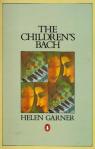
Helen Garner, The children BachThe reasons we chose our books were diverse. Some of us, including me who did the screenplays, chose books we already owned. Some chose books they’d read and wanted to reassess (like Monkey Grip), while another chose Monkey Grip because she hadn’t read it and felt it was now “part of our culture.” One music-lover chose The children’s Bach because it was short and referenced music, while another chose The feel of steel because there were only two options at her secondhand books source and she didn’t want to read the other (Joe Cinque’s consolation.) One chose the 2017 compilation True stories because it represents 50 years of Garner’s short non-fiction writing. And one chose the literary portrait because she’d read a lot of Garner, and wanted to find out more about her.

What common threads did we find?

It wasn’t hard to find common threads in Garner – which is not to suggest that we think reading her is boring!

The overriding thread was that she draws heavily from her life, even for works that aren’t autobiographical. We agreed that she’s present, one way or another, in most of her writing, including her longform non-fiction works, such as Joe Cinque’s consolation.

Another thread was that she is “searingly honest”, “will have a go at everything”, “is not afraid of looking an idiot”.  This honesty, we felt, applies both to the topics she chooses and to her way of exploring them. If you’ve been reading my blog for a while, you’ll know that I’ve regularly made this “honest” comment about Garner.

The third main thread that most of us commented on was her writing. We agreed that she’s a wonderful stylist, but beautifully spare too. Spare, though, doesn’t mean plain. One put it perfectly when she praised Garner’s “word pictures”.

Over the course of the evening, excerpts were read – to show her writing skill and/or her ability to capture life (not to mention her sense of humour).

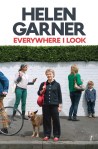
Helen Garner, Everywhere I lookHere are some that were shared:

The waiter had a face like an unchipped statue. (The children’s Bach)

He waltzed the car from lane to lane with big flourishes of the steering wheel. (The children’s Bach)

Everyone looks at her, surprised. She has quietly dropped her bundle. (The last days of chez nous)

I knew I couldn’t be the only person in the world who’s capable of forgetting the contents of a novel only minutes after having closed it. (from The feel of steel)

And long live the Lydias of this world, the slack molls who provide the grit in the engine of the marriage plot; for without them it would run so smoothly that the rest of us would fall into despair. (referencing Pride and prejudice, in “How to marry your daughters”, from Everywhere I look)

Our conclusion

Our discussion ranged rather widely, but we did try to draw it all together at the end, particularly regarding her relevance and longevity.
Questions we considered included: Is she too Melbourne-focused? Does she only appeal to people around our age? Will she still be relevant for future readers? One member reported that her daughter, who’s a keen reader, couldn’t get into Everywhere I look. The Melbournites loved her ability to describe Melbourne, but wondered if that limited her appeal.
We concluded that Garner has carved out a niche that’s unlike anyone else, and that despite her focused setting, her subject matter is universal. And, overlaying this is her writing. It’s worth reading for itself.
So, it wasn’t a contentious meeting, as sometimes discussions of Garner can be … instead it was full of delight and discovery. We’ll probably all read more Garner as we follow in her tracks, a decade or so behind her.

Helen Garner, The last days of chez nous, and Two friends (#BookReview)

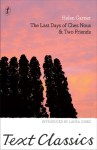
Helen Garner, Last days of chez house & Two friendsHelen Garner must have loved prize-winning book designer WH Chong’s cheeky cypress-dominated cover for the Text Classics edition of her two screenplays, The last days of chez nous and Two friends. You’d only realise this, though, after reading her Preface, in which she explains that she had incorporated cypresses into her screenplay for their “freight of meaning”, but that, because an appropriate location could not be found, they were replaced by a spire! For the published screenplay, however, Garner says she’d taken “the liberty of removing the spire and putting the cypress trees back in.” Love it.

I enjoyed reading this book much more than I expected. I’ve seen and enjoyed both films – a long time ago, as they were made in 1992 and 1986, respectively – but reading screenplays didn’t seem very appealing. How wrong I was. I’m glad, therefore, that Text decided to republish this volume in its Text Classics series. As always, they’ve value-added by commissioning an expert to write a commentary, which, in this case, given there was already an author’s Preface from the original 1992 edition, they appended an Afterword. It’s by well-regarded Australian scriptwriter, Laura Jones (who, coincidentally, is the daughter of the late Australian writer, Jessica Anderson.)

Both the Preface and the Afterword are informative and engaging, but I’ll start by discussing the plays. They are presented in the book in reverse chronological order of their writing, which means The last days of chez nous comes first. Both stories chronicle relationship breakdowns. This is common fare for Garner, but here as in all her work I’ve read, it’s not boring. Her skill lies in the intelligent, clear-sighted way she explores these situations, and in her ability to inject both humour and warmth. She’s never maudlin, and she never judges.

So, in The last days of chez nous, the breakdown is the marriage of Beth and her French husband JP, while in Two friends it’s the friendship between two 14-year-old girls, Louise and Kelly. Both, as is Garner’s wont, draw from her life. She was married to a Frenchman, the marriage did break up, and her husband did fall in love with and eventually marry her sister, most of which happens in the play. In Two friendsBernadette Brennan reports, she drew on a friendship her daughter had had, but, when she saw the film, she realised that it was “really, in a funny sort of way, about me.” And the “me” character was not the sensible daughter, based on her own daughter, but the friend from the troubled background.

In her Preface, Garner tells how the impetus to write her first play, Two friends, was money. She needed it at the time, so when the idea was put to her:

I rushed home and rummaged in my folder of unexamined ideas. Out of it stepped Kelly and Louise, the young girls who became Two friends.

She continues that, although money had been the initial driver, she found, as she got down to it, the writing was “powered by the same drives as fiction” – curiosity, technical fascination, and “the same old need to shape life’s mess into a seizable story.”

This latter point is important, not only because it confirms her lifelong subject matter, “life’s mess” aka relationships, but because it answers those criticisms that she “just” presents her journals. She doesn’t, she “shapes” what she’s experienced (and seen) into “a seizable story”. She also shares in the Preface some of the things she learnt from film writing, including the challenge of working collaboratively which is something writers don’t usually have to do, the “priceless art of the apparently dumb question”, and that she was “forced to learn and relearn the stern law of structure.” She explains, using Last days of chez nous, how her “perfectly smooth narrative curve” was turned into “a little Himalaya of mini-climaxes”.

This is a good place, though, to talk about the structure of Two friends which chronicles the girls’ relationship breakdown in reverse. That is, we start at the point where it appears to have broken down and move back through the months to the peak of their togetherness. Experienced scriptwriter Laura Jones discusses this in her Afterword:

The story … is daringly told in the present tense, backwards, although each of the five parts is told in the present tense, forwards. We hold these two storytelling modes in our minds at once, the forwards momentum and the backwards knowledge […] Such deft playing with time–elegant, formal and musical–offers great storytelling pleasure, as we move from dark to light, from the painful separation of two adolescent girls to the rapturous closeness of ten months earlier.

She’s right, it’s clever because the end is bittersweet – we love the close friendship but we know what’s coming.

Now I want to share some of the experience of reading these plays. Here is an example from early in Two friends when Matthew, Louise’s wannabe boyfriend, tells her he’s seen Kelly:

LOUISE: What did she look like?
MATTHEW: All right.

He shrugs; like many boys he is not good at the kind of detail Louise is after.

These instructions to the actor about his character also enliven the reading. It’s the sort of sentiment you’d find in a Garner novel, though perhaps expressed a little more creatively.

And here’s some scene-setting in the next part, where Louise, Matthew and Kelly are together:

Kelly plays up to Matthew–almost as if she can’t help it. (Kelly will become one of those women who, when there’s a man in the room, unconsciously channel all their attention towards him.)

Similarly, in Last days of chez nous. Here is a scene where Beth has eaten some French cheese that JP has been storing carefully until it reaches maturation. He’s very upset, and eventually Beth senses the importance to him:

Beth is silent. They stand looking at each other. She has not quite succumbed, but for once he has her full attention–and this is so rare that he does not know what to do with it …

All this is probably what always happens in scripts, but Garner’s way of describing the situations and characters certainly made the screenplays more than just readable. They were engrossing.

Of course, I read Shakespeare’s (and other) plays at school – but that was school and, although I enjoyed them, I haven’t really gravitated to reading plays/scripts since. I won’t be quite so cautious in future.

Do you read them?

AWW Badge 2018Helen Garner
The last days of chez nous and Two friends
Melbourne: Text Publishing, 2016
243pp.
ISBN: 9781925355635

(Review copy courtesy Text Publishing)

Monday musings on Australian literature: Aussie books I read in 1998

And now for something completely different for Monday Musings, a post about books I read a long time ago! It was inspired by the Canadian-based Debbie of ExUrbanis who has a series of posts on her blog on what she read in the past. I figured 1998 would be a good place to start – because it’s long enough ago to reflect reading of a different time, and I have reasonable, though not perfect, records of what I read back then. However, I’m just going to share my Aussie reads.

So, a few comments, before I tell you what I read. In 1998, I had two children in school, was job-sharing, was on the primary school board – and my bookgroup had been going for 10 years. Life was busy. These facts affected not only how many books I read, but also what I read:

  • Five of the eight Aussie books I read were read for my reading group. We have always aimed to include a good representation of Australian authors in our reading diet.
  • The gender split was 50:50, reflecting my ongoing interest in reading women’s writing. (The overall gender split in my reading for that year was just over 50% women writers, but in my reading group component of that, nearly two-thirds were by women, reflecting our ongoing interest in women writers.)
  • Two of the Aussie books I recorded as having read were Young Adult books, which I read as part of my involvement in my children’s reading. I say “recorded” because I would have read more Aussie young adult and children’s books, but didn’t record them in my diary.

So, what Aussie books did I read in 1998?

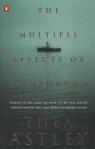
Thea Astley, The multiple effects of rainshadowMy records show that I read 8 books by Australian authors, though it’s possible I missed recording the odd book … I’ll list them in alphabetical order by author.

  • Thea Astley’s The multiple effects of rain shadow (1996, novel) (my review): Read with my reading group, this is the only book of the set that I’ve re-read – and that I’ve re-read since blogging, hence a review link for it. I love Astley as regular readers among you know, and this book’s study of the 1930 Palm Island tragedy, is a great example of her writing and of her concerns for outsiders and underdogs.
  • Gillian Bouras’ A stranger here (1996, novel): Also read with my reading group, this novel is an autobiographical story of Bouras’ experience as the wife of a Greek husband, living in Greece. As I recollect, we all enjoyed the exotic nature of her experience within another culture, but we could also relate to the more universal challenges of being mother and wife.
  • Peter Carey’s Jack Maggs (1997, novel): My reading group has read several books by Carey over the years, but this work of historical fiction which explored Charles Dickens’ character of Magwitch (from Great expectations) is among the more popular of his that we’ve done. It won the Miles Franklin Award.
  • Robert Dessaix’s A mother’s disgrace (1994, autobiography/memoir): And this, I read on my own! I’m not sure how well-known Dessaix is known outside of Australia, but this was his first book. He has gone on to write other memoirs, as well as novels and other works of non-fiction. A mother’s disgrace tells the story of his childhood as an adopted person, and, as Wikipedia describes it, “his journey to an alternative sexuality”. Many of us Aussies have enjoyed his contributions on such ABC radio programs as Books and writing and Lingua Franca.
  • Delia Falconer’s The service of clouds (1997, novel): Another reading group read, this was Falconer’s debut novel. It’s an historical novel set in the Blue Mountains. As I recollect, we had mixed reactions to it, but I do remember its gorgeous descriptions of a part of Australia I love. (I’m a mountains person!)
  • James Maloney’s A bridge to Wiseman’s Cove (1996, young adult novel): The first of the two Aussie young adult novels I recorded for this year, it’s about a 15-year-old boy, and his travails after his mother disappears. I remember enjoying its description of small beach-town life and the characters there, but can’t say much else about it. I also read, around this time, two books by Maloney in his Gracey trilogy (1993, 1994 and 1998). Set in southwest Queensland, the protagonists have indigenous Australian backgrounds. A non-indigenous Australian is unlikely to write such books now, but I remember finding these moving. We had little else to read on the topic then.
  • David Malouf’s An imaginary life (1978, novel): Now this is where I must admit something shameful! I’ve read six of Malouf’s nine novels to date, and have loved them all – well, all except this one. It was another reading group book, and I can still remember the meeting! It tells the story of the Roman poet Ovid, and it won the NSW Premier’s Literary Award for Fiction. Most of my reading group liked it. I can’t explain why I didn’t, given my love of Malouf’s work in general, but I think it was one of those timing things. I was just too tired to put the necessary energy into it.
  • Christobel Mattingley’s No gun for Asmir (1993, children’s-young adult biography): Publisher Penguin’s website says “War has come to Asmir’s home in Sarajevo. He is torn from his father, his home and everything he has known. He becomes a refugee. This is a story of courage you will never forget.” While I forget the details now, I haven’t forgotten its power, nor the fact that such a book was written for young people.

Do you keep records of your reading? Do you remember your highlights of 1998?

Glenda Guest, A week in the life of Cassandra Aberline (#BookReview)

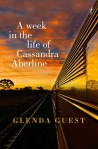
Glenda Guest, A week in the life of Cassandra AberlineWest Australian author Glenda Guest made quite a splash with her first novel, Siddon Rock, though unfortunately I didn’t read it. It won, for example, the Commonwealth Writers’ Prize for Best First Book in 2010. I was very keen, therefore, to read her second novel, A week in the life of Cassandra Aberline, when the opportunity came my way.

There is a mystery and a question at the heart of this novel, and protagonist Cassie’s Alzheimer’s diagnosis in the opening chapter provides the impetus for their resolution. The mystery is implied in the opening page when Cassie accepts a “brown-paper-wrapped-package” and promises someone something. We soon learn that the package contains a good deal of money, but what the promise is, and why, unfolds through the course of the novel. The question appears on page 8, and is, “What if I was wrong?” About what?

Before I discuss that, though, I want to mention the novel’s organising motif, which is a train trip, assigning this book to the “journey” genre (though perhaps “genre” isn’t quite the right word.) In this genre (or form?), the plot is framed by a journey, by the end of which the protagonist resolves something and/or achieves some sort of personal growth. These stories are as old as literature. The Odyssey and The pilgrim’s progress are obvious examples, but Cormac McCarthy’s The road is a more recent one. Sometimes, the journey is full of adventures, of a series of trials that must be overcome, but some are quieter, more internal. A week in the life of Cassandra Aberline is one of these. There is a physical journey, but most of the action is in Cassie’s mind.

So, why does she take this journey? Well, I’ve implied it already, but will expand a bit more. Cassie left Perth, somewhat suddenly, 45 years before the novel opens. It’s clear that whatever it was that prompted this departure has remained unresolved, but now, with her Alzheimer’s diagnosis, she wants to be sure she was right – and if she wasn’t, because she does admit this possibility, she wants to do whatever is “needed to make amends”. And why does she want to do this? Part way through the trip she reveals the underlying reason:

I should like to understand myself properly before it is too late.

In other words, this is a true journey story, so much so that while we might think she is going home to confront the people she left, this is not so, as she clarifies near the end:

She had imagined her search for the truth would have been done by the time the Indian Pacific reached its destination, and that she’d be on a plane back to Sydney today. That was her expectation, but inconstant memory has not cooperated – it has twisted and turned, throwing up irrelevant and forgotten things, and so she has to stay.

She had chosen the train then, not just because it was the way she’d left all those years ago, but because it would give her the time think through the situation.

On the surface, the novel has a simple chronological arc following the train journey, but as Cassie travels we flash back to her childhood and young adulthood in WA’s Wheatbelt, and gradually piece together her story. We learn that she’d lived with her parents and an older sister, that her mother had died just before she started high school, and that she was very close to a neighbouring farm family, the Blanchards, who comprise Mary, her husband Hec, and their identical twin sons, Dion and Coe. Indeed, she spent more time with them than with her own family, particularly after her mother died, as she felt superfluous at home and was warmly welcomed by Mary who didn’t have a daughter.

However, things go awry, as they are wont to do in situations like this – and it’s precipitated by the Vietnam War, further complicated by romance and the fact that identical twins are involved. And here is where I should say that the novel plays with another literary motif – the twins one. However, this and the journey motif never overwhelm the focus on Cassie, who captures our attention from the start, and retains it throughout. She’s an engaging, well-formed character, who’s both resilient and vulnerable, warm and reserved. She has suffered, but she is never self-pitying.

The novel’s success, in fact, rests on Cassie’s ability to engage us, because we meet few other characters directly, albeit we meet several indirectly through her flashbacks. The story is told third person, but is limited to Cassie’s point of view. The over-riding theme is memory – memory which is of course threatened by her Alzheimer’s but which she needs if she is to work through the problem she has set herself. As she struggles to remember what happened in the past – to see if she can make sense of it – she is confronted by memory’s slipperiness (which may not always be related to her diagnosis). Here she responds to Jack, whom she meets on the train and to whom she admits that “a single moment changed everything”:

But memory slips and slides around, she says, so you never really know if what you remember about that young person is true. You can never be sure of what happened at any given moment. I don’t want to end with a question mark still in my mind, but maybe I’ll never really know what was right or what was wrong.

There’s one more significant thing that I haven’t mentioned, and that’s Cassie’s career, as an actor and then university drama teacher. Her real specialty, her love, is Shakespeare, and this too frames the novel – alongside the journey and the twins. Late in the novel, she reflects on how she teaches her students:

Look at Shakespeare, she will say, at how he leaves room for interpretation, for each actor to take a character and make it their own. That’s what good actors do – work from the details to create a believable persona, to make the watcher believe the character on the stage is true.

She is trying to understand herself, the life she has created …

And so, in a very real way, this novel is all about the journey. There is a plot – and it’s a powerful almost-melodramatic-in-that-Shakespearean-way one – but the main interest is Cassie, herself, and her predicament, past, present and future. In the end, the question is not whether she was right or wrong, but something else entirely. An absorbing read.

Lisa (ANZLitLovers) enjoyed this novel too.

AWW Badge 2018 Glenda Guest
A week in the life of Cassandra Aberline
Melbourne: Text Publishing, 2018
206pp.
ISBN: 9781925603262

(Review copy courtesy Text Publishing)

Robyn Cadwallader in conversation with Catherine Milne

It’s some time since I last attended an author event, not because there haven’t been any but because they’ve clashed with other commitments. I mean, why do organisations choose the same day of the week for events, like, say, Thursdays? Why don’t they get together and agree to share them across all the week days? (Hmm, then they’d only clash with something else, so let’s just recognise that life is busy, that we have too many options, and move on …)

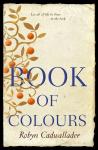
Robyn Cadwallader, The book of colours

Anyhoo … it so happened that our regular Thursday activity was off this week, as was our occasional one that bumps the regular one, so we were free to attend the In Conversation event with local author Robyn Cadwallader. You have met Cadwallader here before: I’ve reviewed her debut novel, The anchoress, and have reported on another event with her when she conversed with Irma Gold. Now, with her second novel, Book of colours, having been published, she’s doing the rounds again, as authors do.

Book of colours is also historical fiction set in mediaeval England, but in the 1320s, some 70 years after The anchoress. Introducing Cadwallader, HarperCollins publisher Catherine Milne commented that in contrast to The anchoress’ small, cramped setting, Book of colours encompasses the world, or, at least, London and Paternoster Row. Its subject is the creation of illuminated books, in particular those little books of hours owned by women; its characters include Mathilda who commissions such a book, and its creators, John Dancaster, his wife Gemma, and a man called Will. (I think that’s right; I haven’t read the book yet.)

The conversation focused on two broad (and obvious) issues – the research and the book itself. So let’s start with the research …

Exploring a gap, a fault-line

Milne began by asking Cadwallader to read from her book, something she did a few times throughout the hour. Milne and Cadwallader then discussed the period. It was a turbulent, often violent, time for London, for England in fact. There’d been famine, the inept King Edward II was on the throne, and tension was rising (though it would be another 60 years before the Peasants’ Revolt).

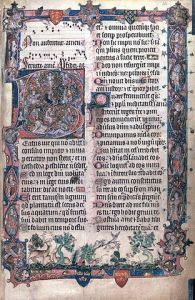
Howard Psalter and Hours (British Library, Arundel 83 I), 1310-20. Public Domain

Cadwallader explained that her inspiration for the novel was her interest in books of hours, and particularly in the strange marginalia that many have. This marginalia often depicts weird creatures, and scenes telling stories, some of them rather bawdy. Sometimes they support/illustrate the content, but sometimes they seem to do the opposite, representing, for example, the wages of sin. These stories told via the illuminations, she said, can operate at different levels. What was behind this practice? No-one knows apparently, so here was her gap, her fault-line to explore.

Cadwallader’s research included:

  • lots of reading, about London, about illumination and art, of court rolls and proceedings, about privies and prostitutes. You name it, she probably read it.
  • walking London with a 14th century map, trying to capture what the place was like.
  • talking to an art historian who told her about identifying the different artists working on a particular book of hours …
  • and spending time with that book of hours until the different artists became apparent to her.

Gradually, she said, she began to see the four different people working on this book and by the time she’d finished looking at it she had a sense of her characters.

Milne then told us that in Book of colours, Cadwallader had written a book-in-a-book. Called “The art of illumination”, it’s written, I think I’m right, by Gemma. Excerpts from this preface many chapters. Milne asked Cadwallader to read one of these, and I’ll share a bit here. It starts by stating that the words must be in an order, in lines, to facilitate reading,

But the requirements of decoration are not so simple. The page needs shape and order, but not so much order that life withers. Consider the beauty of the curve and curl. And, as with a breathing city, let all of life be there in the book, from high to low, animal to monster, story and joke, devotion and dance, for God the Artisan made it all. On some pages, simple vines and flowers may be enough. On others let decoration be lush and bountiful.

“Animal to monster” took us to gargoyles and another reading of a vivid scene in which Will, looking at gargoyles, senses one coming to life … he represents Will’s secret, his shame, said Cadwallader, who loves gargoyles. (Don’t we all?)

Challenging the centre …

Moving on to the core of the book, its meaning, Cadwallader said something interesting about marginalia. It’s on the edge she said, a bit like shadows. Because of this position, it challenges the centre, but in so doing it makes the centre more real. I liked this. She said that there’s something about pictures and stories. They refuse to be bound by convention. They – their meaning, their impact – change depending on the reader, or viewer.

Milne then asked about the main theme of the book. It’s a novel about power, she said, of which women have little. How do they wield what they have?

Cadwallader responded, as she also did about The anchoress if I remember correctly, that she’s interested in ordinary women. Gemma and Mathilda (despite the latter’s privilege) are ordinary women. How do they manage the second-class roles they are assigned by their society? Illuminators, for example, like Gemma, worked alongside their husbands but were never recognised by the guilds, while women like Mathilda have more privilege but are controlled by their husbands. In fact, she has less freedom than Gemma.

Cadwallader is interested in how these women dealt with what they were given, “in how they managed to find value in their lives within the constraints.” Laughingly, she said she’s impressed with the gains her characters managed to make!! She spoke briefly about ensuring these gains, their achievements, are real, that is, believable for the time. She feels, she said, knowledgeable enough about mediaeval times, in which she has a PhD, to be able to strike the right balance. During the Q&A, Cadwallader reiterated this point, and said that she was determined not to “damage the women of the era by presenting them differently from what they are”.

That the audience was enthused by the conversation was evident in the wide variety of questions which concluded the event. The topics included the ownership of books of hours, the education of women, the writing process, and the fact that, for all its historical research, the novel contains a “ripping yarn”! I’m always interested in the writing process, and enjoyed Cadwallader’s answer to a question about Will. She said she was able to “find” him by writing a scene with him, that she discovered more about him as the action developed. For Cadwallader, as for many authors I think, their characters are, in a sense, living, changing beings.

The final reading was another excerpt from “The art of illumination”, near the end of the novel. It concluded with:

All you can do is paint faithfully and well, let the book go.

And so Cadwallader has done. I look forward to reading it and sharing my thoughts with you in the near-ish future.

ANU/The Canberra Times Meet the Author
MC: Colin Steele
Australian National University
26 April 2018

Monday musings on Australian literature: Unfinished books

Regular readers here will recognise that this post was inspired by my recent posts on Jane Austen’s unfinished novels, The Watsons and Sanditon. They made me think more generally about unfinished novels, and who is interested in them. I thought it might be fun to write about this, referencing Australian literature. But first, lest this sound too esoteric, it’s worth noting that literature is peppered with such books, including Charles Dickens’ The mystery of Edwin Drood, Herman Melville’s Billy Budd, Edith Wharton’s The buccaneers and F Scott Fitzgerald’s The last tycoon. Wikipedia even has a category for unfinished novels.

Googling the topic revealed an article in The Spectator by critic-and-novelist Philip Hensher titled “Why we love unfinished art”. His focus is visual art, but some of his ideas can be applied more broadly. He lists the main reasons works are unfinished: the creator dies, the patron or commissioner doesn’t pay up (which is more applicable to art and music), or the creator loses interest. Whatever the reason, though, he says:

Since classical times, their appeal has been understood, and artists have had to accept that what they leave unfinished may be exposed to the public, and may even be more admired than their finished productions.

I’m not sure that the last point about being “more admired” applies much to literature – at least not in my experience – but the first point about artists accepting that “what they leave unfinished may be exposed to the public” does. I don’t believe Patrick White accepted it when he asked that his unfinished work not be posthumously published. Nor did English writer Terry Pratchett. Claire Squires, in her article “Should authors’ unfinished works be completed?” in The Conversation, writes that:

it was his wish that any unfinished works remained unpublished, and so he instructed that the hard drive containing his remaining works be crushed by a steamroller.

And so, that’s exactly what happened.

All this begs the question, though, of why we want to read such works? Squires says, referencing Austen, Dickens and F. Scott Fitzgerald, that

their unfinished texts add to our accumulated knowledge of their writing, their rich imagination, and the development of their thinking.

Patrick White, The hanging garden

That’s certainly so for me, and for my Jane Austen group. And it’s why, in the end, White’s literary executor Barbara Mobbs gave in to requests that White’s unfinished novel, The hanging garden, be published.

The trickier question, for me anyhow, relates to completions of these works by others. I’m far less interested in these, because it’s the original author’s writing that I want to see, not someone else’s attempt to emulate it and/or guess where the unfinished work was going. However, completion is quite an industry. For example, Tolkien’s son has worked on finishing his father’s works, and Stig Larsson’s executors have commissioned a ghostwriter to create new works using his characters. There’s clearly money in it … but it also serves fans who don’t want to let go.

Some Aussie authors and their unfinished works

  • George Johnston’s A cartload of clay: the third in Johnston’s Meredith trilogy, A cartload of clay was published posthumously, the year after Johnston’s death. Wikipedia quotes reviewer John Lleonart as saying the novel “is a mellow, often distinctly melancholy autobiographical essay. Johnston had intended it to be a novel but the fact that it is structurally incomplete does not detract from it. The absence of a contrived ending is, indeed, a factor in the book’s impact as a human document…” So, it was published as is, and there’s nothing to suggest that Johnston asked for it not to be published.
  • Eve Langley: Langley left behind ten unpublished novels that are housed at Sydney’s Mitchell Library. There have been many attempts to publish them, but permission has been refused by Langley’s daughter. However, in 1999, Lucy Frost published her book Wilde Eve, which is a “memoir” of Langley that she constructed from Langley’s unpublished writings. Bill (The Australian Legend) has written about this book.
  • Henry Handel Richardson’s Myself when young: this memoir, which the Australian Dictionary of Biography says is not reliable, was unfinished at Richardson’s death in 1946, and was published two years later. It apparently ends on her marriage to Professor Robertson, and was fleshed out with notes from her husband’s diaries and an essay on her art. I found no evidence that she did not want it published.
  • Arthur Upfield’s The Lake Frome monster: detective fiction writer Upfield is not the typical author to appear on my blog, but he was an Australian author and has an unfinished novel so is relevant here! It was published posthumously, using the manuscript and copious notes Upfield left “for this purpose”.
  • Patrick White’s The hanging garden: as mentioned above, this unfinished novel by Australia’s – to date – only Nobel Laureate for Literature was published despite White’s request that his unpublished work not be published posthumously. Literary executor Mobbs agreed to its publication to commemorate the centenary of White’s birth, and justified her decision by saying that White had burnt much of his writing before his death, but not this one, suggesting he may not have felt as strongly about it! Well, who knows, but of course the literary world is very pleased to have this work which, the front matter tells us, was “transcribed from Patrick White’s handwritten manuscript and, in the absence of a living author to consult, not edited.” So, it is his work, unadulterated, uncompleted-by-others. I must read my copy soon …

And now I’ll finish with novelist David Francis’ conclusion in his article on The hanging garden, in the Los Angeles Review of Books:

I, for one, am grateful that those 50,000 words have been laid out for us, unadorned, like an almost-ripe bowl of cherries. While it was likely tempting for editors to cover White’s pages with their own red ink, the Venus de Milo does just fine as it was found, without prosthetic arms, and Shubert’s [sic] Unfinished Symphony is pretty splendid as it is.

I know just what he means.

Are you interested in reading unfinished novels – either in their original form or as completed by others?