Michelle de Kretser, The life to come (#BookReview)

Michelle de Kretser, The life to comeMichelle de Kretser’s Miles Franklin shortlisted novel, The life to come, makes for great reading but difficult blogging because, like her Miles Franklin Award winner, Questions of travel (my review), it is big, and covers a lot of ground. Where to start is the problem. However, I’ll give it my best shot, starting with its form.

The novel comprises five distinct, almost standalone, parts, except that one character, the Australian novelist Pippa, appears in each one, providing a continuing narrative thread for the whole. She is introduced as a rather naive student in the Part 1 (“The Fictive Self”). We then move through Part 2 (“The Ashfield Tamil”) about Ash and Cassie, Part 3 (“The museum of romantic life”) about Céleste in Paris, and Part 4 (“Pippa Passes”) about Pippa and her in-laws, to end with Part 5 (“Olly Faithful”) about Christabel and Bunty. These characters are Australian, French, British and Sri Lankan.

But something intrigued me. The title of Part 4, “Pippa Passes”, rang a bell, of Robert Browning’s poem “Pippa Passes”. I don’t recollect much about the poem, but its form, interestingly, is similar to de Kretser’s novel. “Pippa Passes” is also the origin of the famous lines “God’s in his heaven/All’s right in the world”. However, while Pippa in the poem acts as a positive force, our Pippa does not. She thinks she’s a “good person”. As Céleste says, “Pippa would always need to demonstrate her solidarity with the oppressed – Indigenous people or battery hens, it scarcely mattered.” In fact, though, she regularly tramples on others, not necessarily intentionally, causing them pain. Presumably de Kretser intended this ironic allusion to Browning’s Pippa. I also wonder whether Christabel alludes to Coleridge’s poem Christabel, which explores the relationship between two women. Hmmm … I may be drawing long bows here as I don’t think Bunty is anything like Coleridge’s Geraldine. Still …

Anyhow, moving right along, I’m going to divide my remaining comments into two main strands – the personal and the, for want of a better word, sociocultural.

The personal

The novel’s title, The life to come, comes from Samuel Beckett’s Endgame, as quoted in the epigraph. It provides a clue to the novel’s main theme. It’s the theme that most touches our hearts, because it’s about the hope for or belief in “the life to come”. It’s about the search for meaning, for transformation, for a full life.

Cassie, for example, realises that her relationship with Ash is about trying to work out “How was she to live?”. She thinks, self-centredly, that “the two Sri Lankans”, Ash and the Spice Market man, “had entered her life to change its course”. Paris-based Céleste, who is fifty-something, single, and having an affair with thirty-something Sabine, is confronting ageing. “Is this all there is?” she wonders, as she sees her future shrinking “to a single point of solitary, penny-pinching old-age.” Pippa, our ongoing character, imagines a glorious future for herself as a writer: “her future was as vast as the light beating its wings in clifftop parks.” Céleste, though, sees something quite different in Pippa; she sees “Excess so far in excess of achievement.” Finally, single, Sri Lankan immigrant Christabel, looks, from the beginning, for that moment of transformation when her real life will begin. At 34, “she had believed, briefly, that her life could be joyful.” She keeps on hoping, however, and even when she accepts, “humbly, that it might never exist for her (“I am ordinary”) … she needed to know it was there“.

De Kretser provides her characters with life’s reality check, that gap between what you imagine and what you achieve. Best to learn it sooner rather than later!

The sociocultural

While that personal strand touches our hearts, the other one provides more of the laughs, albeit rueful ones, because many of them are turned on us. The life to come, in other words, contains a healthy dose of satire, skewering our assumptions and pretentious. When I say our, I’m particularly referring to us left-oriented middle-class earnest do-gooders. Like all good satire, it makes you think …

Eva, Pippa’s mother-in-law, is a good example. She “likes rescuing things”. For example, she employs refugees from a “not-for-profit catering group” to serve food at her parties, while wearing “garments stiffened with embroidery and beads. At throat and wrists she wore silver set with gems, some the colour of butter, others the colour of blood. These tribal ornaments lit Eva’s face, and proclaimed her solidarity with the wretched of the earth.”

In another example, her osteopath Rashida, who also happens to be a Muslim Indian immigrant, dines with Eva and her family. They quiz her about her background:

‘My parents thought that India wasn’t the best place for Muslims,’ said Rashida. ‘I love these potato pancakes, Eva. Could I have the recipe?’

‘Were you persecuted for your faith?’ Eva asked, hushed and hopeful.

‘Not really.’

Keith [Eva’s husband] said, ‘So you were privileged migrants.’

Rashida said nothing. She seemed to be turning the sentence over in her mind, trying to work out its shape.

De Kretser skewers Australians’ naiveté and blindness again and again, particularly regarding the horrors experienced by others, offsetting actual history against the idea of stories. Cassie, who is “postmodernly tutored”, thinks history is “just a set of competing stories” but Ash, born of a Scottish mother and Sir Lankan father, knows the difference between history and story, and understands exactly “the historical sequence that … brought a Tamil civil servant to the counter of a shop in the west of Sydney.” Cassie, Ash sees, “clung to an idea of Australia as a place where kindness prevailed over expediency”, her face denying “the existence of evil, the possibility of despair”. Ash, however, gobsmacked by her lack of awareness, wonders

What is wrong with you Australians? You eat curries without rice, a barbarism. You fear being attacked by people you’ve killed. You stole their land for animals that you slaughter in their millions, when you don’t leave them to die by the side of the road.

Pippa is no better than Cassie. She “saw Europe, momentous and world-historical, magnifying eventless Australia”, oblivious, clearly, to the barbarism enacted on our own shores. After all, as Ash is told when taken to his friend’s country home, “there’s no actual historical [my emphasis] record of a massacre.”

There are lighter, though no less satiric touches, such as Pippa’s telling Christabel about dining out with her literary agent:

We went to this amazing new Asian place at Darling Harbour. It’s been quite controversial because they do live sashimi. But Gloria and I talked about it, the cruelty aspect, and we decided it was Japanese cultural tradition so it was OK.

Where do we draw a line on cultural relativism?

The life to come is an uncomfortable book, particularly for Australians, because it suggests we are generally naive, and blundering, in our assumptions about and behaviour towards others, no matter how hard we try to be “good”. It’s also uncomfortable for us all as humans, because it exposes the gaps between our dreams and hopes for large lives and the reality that more often than not confronts us. The result is something that’s touching but also a bit pitiful.

Is this a Miles Franklin winner? I’m not sure. It may in fact try to do too much. But, is it a great read? Absolutely. I’d recommend it to anyone.

Lisa (ANZLitLovers) also enjoyed the book. And, for a non-Australian blogger, check out Guy’s post at His futile preoccupations.

PS I read this with my reading group.

AWW Badge 2018Michelle de Kretser
The life to come
North Sydney: Allen & Unwin, 2017
375pp.
ISBN: 9781760296568

Monday musings on Australian literature: Melbourne Centenary literary competitions, 1934

I came across a reference to the 1934/35 Melbourne Centenary literary competitions quite by accident, but they intrigued me so I decided to investigate further. Here’s what I found …

Melbourne Centenary

According to an article in the La Trobe Journal (no. 34, October 1984), there was much discussion about whether to celebrate the centenary in a major way or not, but it was eventually decided to go ahead because of its importance, and because visitors “would circulate money and create jobs”. A valid reason, given, as the article says, that “Australia was slowly recovering from the world-wide depression”.  Unemployment was falling, it says, but was “still at a serious level.”

So, a celebration was planned, to span last six months, starting with a Henty celebration at Portland in October 1934 and finishing with “the anniversary of the Batman and Fawkner settlements at Port Phillip in 1935.” The celebrations included, among other things, several competitions including the MacRobertson Centenary Air Race and the Melbourne Centenary Grand Prix.

The article also mentions that the Centenary Council sponsored The Centenary gift book. Edited by Frances Fraser and Nettie Palmer (who has appeared here before), it was, apparently, entirely written and illustrated by women. The things you learn.

Literary Competitions

There were four literary competitions – for a poem, short story, novel and war-novel. Before I discuss them, though, I’d like to share a comment about the competition which I found in the notes accompanying a 2007 exhibition mounted from the Monday University Library’s Rare Book Collection, Australian Women Writers 1900-1950. The comment comes from writer Marjorie Barnard (who has also appeared here before):

Marjorie Barnard pointed out to Leslie Rees with some irony that the 1934 Victorian Centenary literary competition was worth £200, while the golf championship attracted five times that amount.

Plus ça change, eh?

Poetry

The first prize awarded was for the Poem, announced in August 1934. It was worth £50, and there were 179 entries. The winner was Furnley Maurice, pseudonym of Frank Wilmot who apparently founded the Melbourne Literary Club in 1916. His winning poem was ”Melbourne and memory”.  Ninety-six lines long, it was described by the judges – W. F. Wannon, Nettie Palmer, and Enid Derham – as “a work of beauty and permanence.” The announcement in Adelaide’s The Advertiser (11 August) says it “consists of irregular but cadenced and rhymed verse”, and describes its theme as “the impact of Melbourne today upon a sensitive observer.” I like the “sensitive observer” bit!

Commentators describe it as “an early attempt to capture the everyday life of a city through references to familiar places.” It opens Maurice’s collection, Melbourne odes. The Oxford companion to Australian literature says that the odes overall “deal with places and events familiar in the life of the city: the Victoria Markets, the annual agricultural show and orchestral concerts in the Melbourne Town Hall”. One, “Upon a row of old boots and shoes in a pawn-broker’s window”, describes the plight of the unemployed, and is, the Companion says, “a powerful radical commentary on the economic misery and injustice of the time.”

Short story

The Short Story prize, also worth £50, was announced next, in September. For the short story and novel prizes, entries had to be submitted under a pen-name, to ensure blind judging. The announcement in the West Australian (29 September) said the winner was “‘Caspar Dean’ for the story entitled ‘Sea Hawk.'” ‘Caspar Dean’, they then divulge, was none other than novelist Vance Palmer (whom you’ve also met here). There were 119 entries.

Brisbane’s columnist, “The Bookman”, in The Courier Mail (6 October) is more expansive:

In the writing of a short story, many attempt but few succeed. It is an art that requires both study and practice, for a good short story is the concentrated essence of incident and character, dovetailed in a manner that carries conviction. Mr. Vance Palmer is the present-day master of the short story in Australia, so it is not surprising that he won the prize for the best story in the Melbourne Centenary Short Story Competition. It is said that Henry Lawson’s outstanding success as a writer of short stories was that he hung a lamp on every place that he wrote about. Vance Palmer has many of the characteristics of Lawson, but he is less dramatic; he has a far greater vocabulary, a more polished style, and a better knowledge of the world. Sincerity is his strong suit in novels, stories, plays, or poetry.

Fiction

In November, it was the Novel’s turn, and the result was more surprising. Firstly, there were joint winners, and secondly one of the winners was unknown. The prize, donated by “Mrs James Dyer”, the sister of Melbourne’s Lord Mayor, was worth £200. There were 153 entries, and the judges were, said Melbourne’s The Age (24 November), Enid Derham (senior lecturer in English at the University of Melbourne), H. W. Allen (Vice-master of Ormond College) and Frank Wilmot (Furnley Maurice who won the Poetry prize). The winners were ‘Redhead’ (Frederick Sydney Hibble) with his novel Karangi, and ‘Ivan Power’ (Vance Palmer) with The Swayne family. Sydney-based Hibble set his novel in country New South Wales, while Palmer’s was set in Melbourne.

The Age’s report says – somewhat politically incorrectly now – that:

… Mr. Hibble was overjoyed. He said he had written the book hurriedly, having spent only four weeks on it. Mr Hibble is a cripple, and in receipt of an invalid pension. Mr. Hibble has written a number of short stories, and had his book sub-edited by a Sydney woman journalist.

Hibble apparently became disabled in 1919 “after suffering an illness during the flu epidemic.”

Now, I’ve never heard of FS Hibble, but “Pegasus”, writing in the Book Talk column in Rockhampton’s Morning Bulletin (26 January 1935), is highly impressed:

The Swayne Family, by Vance Palmer, which I dealt with a few weeks ago, was an outstanding novel of its kind, and Karangi, by F. S. Hibble … which I have just read, is as fine a piece of well-balanced realism as has appeared in the history of the Australian novel … the beauty of both books, to a great extent, lies in the fact that the setting is not emphasised, as has been the tendency in many Australian books, but just taken for granted, as it should be, and treated as a strictly subordinate part in the creation of a work of art. Both take their vitality from the vividness of their characterisation, and the deft working out of relations between these characters; but, whereas The Swayne Family depends for its interest for the wide sweep which it takes over the various members of three generations, Karangi is a much more detailed study of the working out of one particular character upon the background provided by scarcely more than a dozen characters in all.

S/he goes on to say that while both are “outstanding” novels,

I think “Karangi” by far the finer achievement. If the writer’s hand appears to lack the mature experience of Vance Palmer, the depth of his insight into human nature might appear to be greater, his capacity to make the very ordinary people he has chosen for his characters appear unique, his handling of the development of the character through pressure of the emotions, and his sense of the dramatic in his presentation of the tale betoken an author who will yet go very far.

And yet, as happens surprisingly often, this was Hibble’s only book, though he had several short stories published.

War novel

Finally, the War Novel. This prize, also worth £200, was made by the Victorian branch of the Returned Sailors’ and Soldiers’ Imperial League as its contribution to the Centenary. The conditions, according to Hobart’s The Mercury (March 1934), were that:

Candidates must be persons who served abroad during the war as members of the Australian Imperial Force, the Royal Australian Navy, or the Australian Nursing Service. The novel must deal with the life of the Australian soldier in the war, and his reaction to the various conditions, environments, and the experiences through which he passed. The sequence of the story and the descriptive matter must be accurate historically and geographically, a condition which certainly will distinguish any war novel from any other one has read.

Hmm, so a Nurse could enter but the subject had to be a “he”, “the Australian soldier”?

JP McKinney, CrucibleThe winners were announced in Melbourne’s The Age on, appropriately, Anzac Day in 1935. I say winners because first (£150) and second (£50) prizes were awarded. The first went to Over the top by ‘Sar-Major’ (pen-name for JP McKinney, Surfers Paradise, Queensland), with the second going to Summer campaign, by ‘Roger Walters’ (C.W.W. Webster, Melbourne). There were over 50 entries, with the judges being Sir Keith Murdoch, Sir Harry Chauvel, and Mr. Phillips (a Melbourne barrister). A note in Miles Franklin’s papers at the State Library of NSW, states that her novel All that swagger “was entered in the Melbourne Centenary Prize Competition in 1934”.

Over the top was published by Angus and Robertson as Crucible.

But, JP McKinney of Surfers Paradise rang a bell. The newspaper reports didn’t help, though, because the reason I recognised his name came later. Yes, he’s the man who became the husband of one of Australia’s most famous poets, Judith Wright. The things you learn, as I said before!

Monday Musings on Australian literature: Three Top End explorers

Well, folks, I’m back on the grid, but still in the Top End holidaying, so I’m going to make this one as short and sweet as I can.

As we traveled through Arnhem Land we learnt about various early 19th century explorers in this region, particularly Phillip Parker King (who makes an appearance, if I remember correctly but can’t check here, in Michelle Scott Tucker’s Elizabeth Macarthur: A life at the edge the world) and Ludwig Leichhardt (who inspired Patrick White’s Voss). Journals of these two, plus of Matthew Flinders, are available at Project Gutenberg Australia, and this is what I’m sharing today (for my benefit as much as yours, as I plan to come back to them!)

Matthew Flinders (1774-1814)

A Voyage to Terra Australis undertaken for the purpose of completing the discovery of that vast country, and persecuted in the years 1801, 1802 and 1803, in His Majesty’s ship The Investigator, and subsequently in the armed vessel Porpoise and Cumberland schooner. With an account of the shipwreck of the Porpoise, arrival of the Cumberland at Mauritius, and imprisonment of the commander during six years and a half in that island. By Matthew Flinders Commander of The Investigator. In 2 volumes with an atlas. London: Printed by W. Bulmer and Co. Cleveland Row, and published by G. and W. Nicol, booksellers to His Majesty, Pall-Mall, 1814.

Whew. They wrote long title pages, some of these explorers.

Anyhow, it is in Vol. 2 Ch IX, that Flinders writes of this region, and it is 1803. He describes the landscape, the plants, sightings of indigenous people. This description which seems to refer to Melville Island (part of the Tiwi Islands) particularly appealed because of our own experiences:

No inhabitants were perceived, nor any fresh traces of them; but as dogs were seen twice, it is probable the natives were watching us at no great distance; they had visited all the places where I landed, and should therefore seem to possess canoes. Traces of the same strangers, of whom mention has been so often made, were found here; and amongst others were partitions of frame work and part of a large earthen jar. Kangaroos appeared to be rather numerous in the woods, brown doves and large white pigeons were tolerably plentiful, and a bird nearly black, of the size and appearance of a hen, was shot; there were also cockatoos, both black and white, and a beautiful species of paroquet not known at Port Jackson. The aquatic birds were blue and white cranes, sea-pies, and sand-larks. Besides fish, our seine usually brought on shore many of the grey slugs or sea cucumbers, but not so abundantly as in Caledon Bay.

Australian Green Ant Gin and Tonic

Australian Green Ant G&T

We were not here pestered so much with the black flies as before; but the musketoes and sand flies were numerous and fierce. Most of the bushes contained nests made by a small green ant; and if the bush were disturbed, these resentful little animals came out in squadrons, and never ceased to pursue till the disturber was out of sight. In forcing our way amongst the underwood, we sometimes got our hair and clothes filled with them; and as their bite is very sharp, and their vengeance never satisfied, there was no other resource than stripping as expeditiously as possible.

We, too, were pestered by mosquitoes in the Top End, but what Flinders didn’t know is that those Green Ants make good bush food and medicine. I tried a gin and tonic made with Australian Green Ant Gin, and ate a fresh green ant off the real rocks as well! Can’t believe I did that, actually, but when in Arnhem Land …

Phillip Parker King (1791-1856)

Narrative of a survey of the intertropical and western coasts of Australia. Performed between the years 1818 and 1822. By Captain Phillip P King, R.N., F.R.S., F.L.S., and Member of the Royal Asiatic Society of London. With an Appendix, containing various subjects relating to hydrography and natural history. In Two Volumes.

Phillip (two “ll”) Parker King was the son of the Australian colony’s second governor, Philip (one “l”) Gidley King.

Anyhow, in Vol. 1 Ch 2, for example, we are in April 1818, and King discusses Port Essington which he named for a “lamented” friend. This later became the short-lived settlement of Victoria, 1838 to 1849, partly on the basis of his recommendation:

During our examination of Port Essington, we found no fresh water, but our search for it did not extend beyond the precincts of the sea-beach, since we were not in want of that article, having so lately completed our stock at Goulburn Island; but from the number of natives seen by us, and the frequency of their traces, which were encountered at every step we took, there must be fresh water; and had we dug holes, we should doubtless have succeeded in finding some, particularly in the vicinity of the cliffs.

Wood is abundant and convenient for embarking, but the trees are generally small: the waters are well stocked with fish.

As a harbour, Port Essington is equal, if not superior, to any I ever saw; and from its proximity to the Moluccas and New Guinea, and its being in the direct line of communication between Port Jackson and India, as well as from its commanding situation with respect to the passage through Torres Strait, it must, at no very distant period, become a place of great trade, and of very considerable importance.

Victoria Settlement

Victoria Settlement

We toured the ruins of Victoria, and were shown the plants that indigenous Australians use to find fresh water!

In this chapter King refers to altercations with “natives” in which he and his men used muskets to scare them off. I need to read more regarding King’s experiences with “the natives”, but perhaps if he hadn’t been so fearful he may have found some water.

Ludwig Leichhardt (1813-1848)

Journal of an overland expedition in Australia: from Moreton Bay to Port Essington, a distance of upwards of 3000 miles, during the years 1844-1845 by Ludwig Leichhardt (1813-1848).

Leichhardt’s Ch 15 covers his arrival at Port Essington. I’ve only dipped into it, but it seems to confirm our tour guide’s comment that Leichhardt was known to speak well of indigenous Australians (and was not popular for it). Leichhardt was also keen to document local plants, which is also evident (though all the explorers did this to some degree I think.)

Anyhow, here is a description of a meeting with “natives” on 2 December 1845, 15 days before he reached Port Essington:

The natives were remarkably kind and attentive, and offered us the rind of the rose-coloured Eugenia apple, the cabbage of the Seaforthia palm, a fruit which I did not know, and the nut-like swelling of the rhizoma of either a grass or a sedge. The last had a sweet taste, was very mealy and nourishing, and the best article of the food of the natives we had yet tasted.

I’d love to share more of these journals – and of how they relate to the experiences we’ve had and the knowledge we’ve gained, but time is short. Who knows, I may explore them in a little more depth in the future.

Delicious descriptions: Elizabeth Jolley on the value of libraries

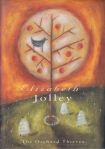
Elizabeth Jolley, The orchard thievesRegular readers will know that in June I joined in Lisa’s (ANZLitLovers) Elizabeth Jolley Week by posting two reviews, one of which was for the novella Orchard thieves. In that post I mentioned the sly humour, but I didn’t really share a quote to demonstrate it. However, I knew that I could always write a Delicious Descriptions post, so here it is.

It comes when the grandmother is walking home from the library. She had urged one of her extra library-book tickets to another library patron because “she knew how awful it was to get home only to discover that the books were familiar, having been read before.” As a librarian by profession, I loved it.

Anyhow, our grandmother is also a bit of a worrier, regularly thinking about various disasters that could befall her or her family:

On the way home the grandmother thought about the special kind of wealth there was in the possession of library-book tickets. They were reassuring and steady like the pension cheque. She never went anywhere without her purse. You could never know in advance what the day had in store. There might come a time when it would be necessary to offer all she had to appease an intruder. She knew of women who spread crumpled and torn newspapers all round their beds at night so that they would hear an intruder coming closer. Or, she might be held at knife point by someone in the street. She would offer all she had in her purse, small change, pension cheque and the library-book tickets. There would be absolutely no need for the villain to either strangle or stab her in order to snatch her purse. She would hold it out to him and tell him he could have it and be off. She would tell him this in plain words. The library-book tickets might even make a changed man of him, especially if he had never had a chance to use a public lending library during a life with all the deprivation brought about by being on the run.

I mean, really, don’t you love it?

Australian Women Writers 2018 Challenge completed

Mirandi Riwoe, The fish girlAs in previous years, I’m writing my completion post for the Australian Women Writer’s Challenge, around the middle of the year, even though I will continue to contribute until the year’s end. However, I like to get the formal completion post out of the way, so I can relax!

I signed up, again, for the top-level, Franklin, which involves reading 10 books and reviewing at least 6, and again I’ve exceeded this. In fact, by June 30, I had contributed 18 reviews to the challenge.

Here’s my list in alphabetical order (by woman author), with the links on the titles being to my reviews:

AWW Badge 2018There’s a significant difference between this year’s completion post and those of recent years – and that’s in the proportion of fiction to nonfiction. Last year, as you may remember from my 2017 Reading Highlights post, I read an unusually large proportion of nonfiction books (47%) and this was also reflected in my AWW Challenge reading. I said I wanted to recalibrate this in 2018 towards more fiction, and so far I’ve been achieving that (in my AWW Challenge reading and overall).

I don’t have specific goals for the rest of the year, except that I’d like to read more indigenous writers (besides Claire G. Coleman), at least one more classic (in addition to Tasma), and more from my TBR pile (besides Helen Garner and Elizabeth Jolley).

My 2018 AWW Challenge wrap-up post will tell the story!

Michelle Scott Tucker, Elizabeth Macarthur: A life at the edge of the world (#BookReview)

Michelle Scott Tucker, Elizabeth MacarthurThere’s something special about reading a good, engaging history – and this is how I’d describe debut author Michelle Scott Tucker’s biography Elizabeth Macarthur: A life at the edge of the world. There are, in fact, three prongs to my statement, namely, it is history, it is good history, and it is engaging history. I plan to tease out each of these in my post.

First though, a bit about Elizabeth Macarthur, particularly for non-Australians who may never have heard of her. She arrived in Australia on the Second Fleet in 1790, at the age of 23, with her husband John Macarthur who had an army commission with the New South Wales Corps. Their aim was for John to gain a promotion, and then return to England. However, they soon started making their mark in the new colony as farmers – including pioneering the Australian wool industry – and Elizabeth never did return to England, though John did twice. The first time (1801 to 1805) was to stand trial over a duel with Colonel Paterson, and the second (1809 to 1817) to stand trial again, this time for his role in the rebellion against Governor Bligh. Now, have you noticed those dates? Four years away and then eight years. So, who ran the famous pioneer farming enterprise? Yes, Elizabeth of course. It was partly to correct the longstanding image of Elizabeth as helpmeet to her husband that inspired Tucker to write this biography.

Now, my three prongs, starting with that it is history. This is easy to explain. In form this is a biography, but like most biographies of historical figures it also operates as history, because the reason it has been written, the reason we are interested, is the subject’s role in an historical period. This is somewhat different from literary biographies which don’t necessarily engage with wider historical issues relating to the subject, though you could argue, I suppose, that all biographies are history. I’m good, you’ve probably learnt by now, at this on-the-one-hand-but-then-again-on-the-other sort of argument! Still, the story of Elizabeth Macarthur is ingrained in the history of the early British settlement of Australia.

Next, that it is good history. Now, I readily admit that I’m not a trained historian. I did a little history at university – in fact just one subject on historiography – but I’m interested in history and like to read it when I can. So, what do I mean by “good history”? I mean that the history is, or at least appears to my lay eye, to be trustworthy. For it to appear this way, it needs to be well-researched, well-documented and well-presented. And this, Elizabeth Macarthur is. That it is well-researched is evidenced by the extensive bibliography containing significant primary and secondary sources, many of which I am aware and know to be authoritative. That it is well-documented is evidenced not only by this bibliography, but by the comprehensive, but unobtrusive end-noting. Very few facts that I wanted to check were not supported by a source. I read this book with a bookmark at the end-notes so I could easily check sources (or additional explanatory notes), which I did fairly frequently, not because I didn’t trust Tucker but because I was interested to know where she’d got her information. As for the presentation, this is also excellent with evocatively titled chapters, each headed with a quote, usually from Elizabeth or John’s own writings; the detailed index and the use of end-notes rather than foot-notes; and the sensibly selected and ordered pics.

These aren’t all that make it good history, though, because of course the “story” needs to be well-argued, and it is. Tucker marshalls the facts together clearly and logically to prove Elizabeth’s significant role in the family’s farming, but what I particularly liked was the way she handles her sources, and, in particular, the gaps, because of course there are gaps. There are, for example, letters not kept, information not documented in private journals, personal conversations not, of course, recorded. Tucker is careful to flag these, with words like “probably” and “maybe”, making it clear when she is presenting her own assessment of the situation. On one occasion when the frequently disputatious John Macarthur sends off a messenger with an inflammatory letter, that messenger is waylaid by his son Edward. Who sent the son, Tucker asks before exploring the possibilities, deciding in the end:

No. The most likely source is Elizabeth Macarthur, once more trying to mitigate her husband’s wilder misjudgements. But we have to imagine it: a hushed yet heated conversation with Edward to send him flying out after Oakes and then a vain attempt to placate and soothe John …

And finally, the last prong – that it is engaging history. It’s engaging partly because of the subject. Elizabeth Macarthur is an interesting woman, who lived long, achieved much, and left enough documentation for a story about her to be told. She was a woman of her times, as Tucker makes clear. She was aware of her social status, and wasn’t much into “good works” like some of the other leading women of the colony, but she and John were known to treat employees well. She was well-respected in the colony, and many times played conciliatory roles, but she and John were always driven, in the end, by money. And, of course, she was an excellent farm manager.

It’s also engaging history because of the writing. This story has a large cast. Elizabeth had seven children, for a start, but also, she lived in the colony for 60 years, so knew a large number of the often-revolving movers and shakers of colonial society. Tucker manages to keep the story moving despite all this, using some of the techniques more often found in fiction, including foreshadowing, clear character development, and succinct but evocative turns of phrase:

Yet for all their emphasis on the rewards of heaven, the gentlefolk of Georgian England maintained a steely gaze on the rewards of this earthly life.

AND

When the court sat at 10am the scene was more circus than circumspect.

Why, though, should we read this now? Well, there are several reasons, the main one being to re-balance the historical record to properly recognise women’s roles. There’s also the discussion about indigenous relationships in the colony, with Tucker chronicling the Macarthurs’ early good relations with local people followed by their changing attitudes as “their” land and livelihood began to be threatened. There’s John Macarthur’s mental health and the role it played in his behaviour (and thus history.) Did he suffer, for example, from bipolar disorder as Tucker and others suggest? And then, there’s the insight Tucker provides into the daily life of the early colony – the relationships in such a close community, the economic ups and downs, the communication challenges caused by distance from England, and so on. If you like social history, there’s much here for you.

I did laugh at Tucker’s concluding comments that Elizabeth Macarthur, born 9 years before Jane Austen, is “a real-life Elizabeth Bennet who married a Wickham, instead of a Darcy – albeit one who loved her as much as he was able.” I’m not sure I agree, but I applaud her for taking on the Austen fans of the world this way!

Meanwhile, for other bloggers’ reviews of this book, do check out Lisa’s (ANZLitLovers) and Bill’s (The Australian Legend).

AWW Badge 2018Michelle Scott Tucker
Elizabeth Macarthur: A life at the edge of the world
Melbourne: Text Publishing, 2018
xxxpp.
ISBN:

(Review copy courtesy Text Publishing)

Monday musings on Australian literature: New Territory 2018

New Territory LogoLast year, some of you will remember, I was a mentor for the ACT Writers’ Centre ACT Lit-bloggers of the future program. It was great fun, and I really enjoyed working with Angharad and Emma over the six-months the program lasted. I wrote a couple of posts about the program, but if you’d like to refresh yourself, this one soon after it started would be a good place to start.

Well, it’s on again this year, but newly branded as New Territory: Adventures in Arts Writing, and with the Street Theatre joining the ACT Writers Centre and the National Library of Australia as program partners. The program, as last year, provides for two emerging ACT-region writers to attend events at the National Library of Australia, the Street Theatre and, in fact, the Canberra Writers Festival, and post their responses on the Writers Centre’s Capital Letters blog.

The ACT Writers Centre’s advertising of the program described it as follows:

[It] is a program that is committed to developing a deeper conversation about the arts: why we make art, how do we engage in art, and to what end? We aim to develop the arts writers, thinkers and provocateurs of the future.

In other words, the writers are encouraged to explore the arts in Canberra – and particularly the events offered by the partner organisations, which they can attend at no charge.

The two writers were chosen in June, and the program is now officially under way, so I’d like to introduce this year’s bloggers to you:

  • Amy (armchaircriticoz): like last year’s Angharad, Amy has a full-time job, and is developing her blog and critical writing skills on the side. Currently her blog roams across film, television, exhibitions, books and other topics that grab her fancy. Do check it out.
  • Siv Parker (On Dusk): and like last year’s Emma, Siv has some writing credentials behind her. Indeed, she won the  David Unaipon Award in 2012, and, in fact, I mentioned her twitter fiction piece in my post on the Writing back anthology last year. She is keen to rekindle her writing career, particularly in this arts writing area, and wants to explore how social media can be harnessed to this purpose. Check out her blog too.

I have asked Siv and Amy whether they’d like to write a guest post here during the program, as Emma did last year, and both seemed keen so you will hopefully see them here sometime in the not too distant future.

I will report back mid-program and point you to some of the work Amy and Siv have been doing, but meanwhile please do check out their blogs and Capital Letters (links above).

Until then, thanks again to the ACT Writers Centre, the NLA and the Street Theatre for sponsoring this program – and a special thanks to author Nigel Featherstone for overseeing this program and gently, encouragingly, shepherding us all through it. I am thrilled to be involved again. I loved getting to know, and spending time with, Angharad and Emma, and look forward to developing a similar relationship with Amy and Siv. Writers – of all sorts – are such fun to be around.

We’d love to hear if you know of any similar programs in your neck of the woods.

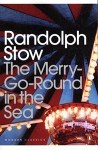
Randolph Stow, The merry-go-round in the sea (#BookReview)

Randolph Stow, The merry-go-round in the sea

Randolph Stow is a writer I’ve been meaning to read for the longest time – since, would you believe, the 1970s? Embarrassing, really, given his significance. My plan had always been to read his Miles Franklin award-winning novel To the islands first. However, the first I actually bought was The merry-go-round in the sea – back in 2009 when it was re-released as a $10 Penguin classic. It’s taken me until now to read it – and I read it with my reading group, which made it an extra special experience.

BEWARE SPOILERS, albeit this is a classic with minimal plot so, you know …

The merry-go-round in the sea was Stow’s fourth novel, published in 1965 when he was 30 years old. It has a strong autobiographical basis, but is, by definition, fiction. It is essentially a coming-of-age story about a young Western Australian boy, Rob, who, like Stow, was born in Geraldton in 1935. It covers eight years of his life from 1941, when his favourite cousin, the 21-year-old Rick, leaves to fight in World War 2, to 1949, when Rob is 14-years-old and the now-returned Rick is about to leave again, this time to live in London. The plot is not a particularly dramatic one, but rather a lot happens nonetheless.

It all starts in 1941 with Rob and his family moving (“evacuating” is the strange word his mother uses) to a family station in the country, due to fears of Japanese invasion. There Rob enjoys the life of a “bush kid” and is unhappy to find, upon his return to town, that he is really a “townie”. Meanwhile, Rick is at war, ending up a POW on the Thai-Burma railway. His experience is told in three or four brief but vivid digressions from the narrative’s main focus on Rob’s life. We are told enough to prepare us for a changed Rick on his return. In the second part of the novel, the focus is on Rob’s growing up, on his gradual loss of childish innocence, and on Rick’s struggles to come to terms with his life after his experience of war. Nothing is the same for Rick, and Rob worries about his idol.

Now, this is a 400-page novel (in my edition, anyhow) and can be discussed from multiple perspectives, so I’m going to hone in on a couple that most interested me.

One of these is heralded by the book’s structure, by the fact that, although the protagonist, the person through whom we “see” most of the book, is young Rob, the book’s two parts are named for Rick, “1 Rick Away 1941-1945”, and “2 Rick Home 1945-1949.” Superficially, this can be explained by the fact that Rick is a major focus of Rob’s interest. However, I’d argue there’s something more here, that these two characters represent conflicting forces – a duality – within Randolph Stow himself, one being his love of place, of the land and country he grew up in, and the other being his discomfort with that same place and his need to get away, which indeed he did. This duality was, as I recollect, discussed by Gabrielle Carey in her book Moving among strangers: Randolph Stow and my family (my review).

So … through Rob’s third person eyes, Stow writes gloriously, authentically, about Geraldton and the surrounding areas in which he grew up. The language is lyrical, poetic, conveying an emotional intensity in addition to pure description:

By rock pools and creeks the delicate-petalled wild hibiscus opened, and the gold-dust of the wattles floated on water. Wild duck were about, and in trees and in fox-holes by water he looked for the nests, staring in at the grey-white eggs but touching nothing. Climbing a York gum, he was startled when a grey broken-off stump suddenly opened golden eyes at him. He gazed into the angry day-dazzled eyes of the nesting frogmouth and felt he had witnessed a metamorphosis.

There’s repetition of colours, plants, and landforms, but rather than becoming tedious they convey a deep familiarity with and love of place – and make the novel sing.

However, through Rick’s eyes – albeit eyes damaged by his war experience – we see a more conflicted, and arguably more adult, understanding of this place. At the end, he explains his decision to leave to Rob:

‘Look, kid,’ Rick said, ‘I’ve outgrown you…

[…]

‘I can’t stand,’ Rick said, ‘this – ah, this arrogant, mediocrity. The shoddiness and wowserism and the smug wild-boyos in the bars. And the unspeakable bloody boredom of being in a country that keeps up a sort of chorus. Relax, mate, relax, don’t make the place too hot. Relax, you bastard, before you get clobbered.’

Stow wasn’t the only intellectual to leave Australia in the 1960s. Others include Germaine Greer, Clive Robertson, Barry Humphries and Robert Hughes.

My other issue is trickier to discuss: it concerns Stow’s references to Indigenous people in the novel. It’s complicated to tease out, and to do so properly would require a re-read, but I can’t leave the novel without saying something about it, given our heightened awareness these days. As I’ve already said, the book was written in 1965 about the 1940s. In 1957, Stow had spent three months as a storeman at the Forrest River Aboriginal mission in the Kimberleys. His biographer, Suzanne Falkiner, argued (on ABC RN Late Night Live) that this experience created some conflict for him:

‘[His family] had achieved a lot: they had been colonists in America, in the West Indies, the earliest settlers in that region of Australia,’ she says. ‘But as he grew older and as he got to know Aborigines, having worked in the Forrest River mission, I think the conflict became a real source of pain for him.’

I believe that Stow tried to convey some of this in The merry-go-round in the sea. Several times, Rob quotes his family’s racist attitudes, including here:

Rob did not mind the blackn*****s, some of the older ones he rather admired. But his mother was furious because Nan [Rob’s sister] was sitting next to a blackn****r in school. ‘They’re dirty,’ said his mother. ‘They all have bugs in their hair.’

It was funny about blackn*****s. They were Australian. They were more Australian than Rob was, and he was fifth generation. And yet somehow they were not Australian. His world was not one world.*

In other parts of the novel, he describes seeing Aboriginal art in caves, and ponders the people who made them. Not all are so sensitive or interested, however. When he’s taunted at school with having “n****r blood”, he reacts defensively, but when he’s a little older, and schoolfriends once again express racist attitudes, he responds:

‘I like them,’ the boy said, ‘There’s some nice boong kids at school.’

A poor choice of words, but at least Rob stands up for his beliefs. If we take Rob as Stow’s mouthpiece, then it’s pretty clear that Stow is conveying in this novel some disquiet about prevailing attitudes to Australia’s Indigenous people.

There is so much more to explore in this book – including the motif of the merry-go-round itself. As a young boy Rob had been shattered by the discovery of “time and change”, leading him to cling to the idea of a merry-go-round, which revolves and revolves around a solid centre, his family, never changing. By the end, however, with Rick about to leave, he realises that this too is illusion, that the world is not quite as he’d seen it. A bittersweet ending – one that must come to us all at some time!

Several bloggers have posted on this novel in the last few years, including Lisa (ANZ Litlovers) and Kim (Reading Matters), and offer additional perspectives to mine.

Randolph Stow
The merry-go-round in the sea
Camberwell: Penguin Books, 2009
400pp.
ISBN: 9780143202745

* I have blanked out this word to, hopefully, deflect the wrong sort of “hits” on this blog.

Monday musings on Australian literature: VerityLa

I’ve mentioned the literary blog-cum-journal, VerityLa, a few times before here, partly because one of its founders is local writer, Nigel Featherstone. For those of you who haven’t come across it, however, it is, in its own words, “an on-line, no-way-for-profit, creative arts journal, publishing short fiction and poetry, cultural comment, photomedia, reviews, and interviews.” I have subscribed to it for some years now – it was established in 2010 – and have loved receiving in my email inbox its intriguing mix of content, from contributors both known and unknown to me. (My only complaint was that I wanted it to be like a “traditional” blog that I could comment on, as there were many times that I wanted to respond to the content.)

However, I was thrilled to receive an email last week announcing VeritaLa mark II, a stylish new website for the “journal” that significantly expands (and better organises) its content, including, the email, says, two new publishing streams:

  • Slot Machine (spoken word and performative text) curated by David Stavanger; and
  • Rogue State (bold nonfiction) edited by Kathryn Hummell

Overall, there are 14 streams, covering such areas as emerging indigenous writers, deaf and other disabled writers, travel writing, LGBTQI writers, visual artists, plus interviews and reviews. The full list as well as instructions on how to submit to the journal are available on their Submission Guidelines page. The excitement doesn’t stop with this expanded content, though. In other news on the same page, they announce that, due to financial support from Australia Council for the Arts, they will be paying, this year, $100 for each piece published (except for previously published book extracts). This amount, they say, is a “grand (in literary circles) sum.”

It just goes to show what can be achieved by plugging quietly away, gradually proving that what you are doing has value. That it does indeed have value is evidenced by the site’s being archived by the National Library of Australia’s Pandora, by its being comprehensively listed on the AustLit database (paywalled, though some content can be accessed free-of-charge), and by the archiving of selected pieces at Deakin Research Online.

The hunger

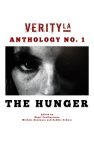
VerityLa Anthology 1, The HungerTo celebrate this new phase in its existence and “to recognise what’s been achieved” the VerityLa team has also produced its first anthology, chosen to reflect the journal’s diversity. Titled The hunger, it’s an eBook and costs only $10. A bargain, so I’ve bought it!

This anthology was edited by novelist and playwright Nigel Featherstone, poet and editor Michele Seminara, and poet and critic Robbie Coburn. It is described as follows:

Hunger is defined as an intense desire or craving. Artists published in Verity La crave a creative purity and truth, forging a place outside of what might be considered fashionable and publishable in the mainstream. The work appearing in this anthology is defined by the journal’s mantra, Be Brave: be hungry for your voice to be heard and to articulate your soul, no matter the cost.

It includes contributions from both well-known writers like Robyn Cadwallader, Leah Kaminsky, Wayne Macauley, Anna Spargo-Ryan, Prime Minister’s Literary Prize winner Melinda Smith. They also include indigenous contributors such as Graham Akhurst, Brenda Saunders and Teena McCarthy the Iranian poet and asylum-seeker Mohammad Ali Maleki, and many more. What the diverse group of contributors in this volume shows is the liveliness of the arts in Australia.

Now, I haven’t read it properly, yet, but dipping into it, I’ve been moved by, for example, Brenda Saunders’ poem, “Taxi!” about the ongoing racism experienced by people with black skins, and entertained by Kristen Roberts’ clever, cheeky piece “Urban alphabet”:

P is for toilets and sometimes behind trees, never for footpaths or front doors, and definitely never for faces. Not cool at all.

Q is for tickets, or the dunny at a good gig (see? Use the  toilets!). Not too sure about those people who sleep out the front of a shop the night before a new phone comes out though. I mean, it’s just a bit of technology that’s gonna be superseded by another one in a few months, yeah? My time is too valuable for that.

(from “Urban alphabet”)

“Be brave”, as the volume’s promotion says, is VerityLa’s mantra. And the pieces I’ve read so far certainly are – in content and/or in form.

So, if you haven’t checked out VerityLa before, now might be the time. You might even consider donating (as little as $5 is appreciated) to help them keep paying contributors, among other costs. Or you could buy The hunger (at the link above). At these prices, you can’t really lose!

Do you read on-line literary journals, and if so, which ones and why?

Monday musings on Australian literature: Grace Gibson

Today’s post was inspired by a tweet, yesterday, from the Australian Dictionary of Biography (ADB). Using the hashtag #OTD (On This Day), they promoted their entry on Grace Gibson who was born on 17 June (in 1905.) Not only was that tweet a blast from my working-life past, but it also introduced an aspect of Australian literature that I haven’t really talked about here before, radio serials.

I am using “literature” here, of course, in its widest, or most generic, sense which, according to Wikipedia, includes “any body of written works.” Radio serials, of course, start with written scripts.

A brief bio

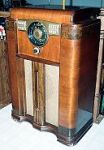
Zenith Console Radio, 1941

Zenith Console Radio, c. 1941, By Joe Haupt, USA [CC BY-SA 2.0, via Wikimedia Commons]

So, Grace Gibson, for those of you who haven’t heard of her, was a radio executive producer, who was born in El Paso, Texas. While still young, she became a successful salesperson for the Radio Transcription Co. of America, and was noticed, in the early 1930s, by Sydney radio-station 2GB’s general manager, Alfred Bennett, who was visiting the USA. He invited her to help him establish and manage the company that later became Artransa Pty Ltd. They sold American recorded radio programs throughout Australia. However, in 1941, Gibson, on a buying trip to the USA, became stranded there when the country World War II.

She returned to Australia about  1944, and established her own company, Grace Gibson productions. Lynne Murphy, writing for the ADB, says

The ban on the importation of non-essential goods during the war was a boon for Australian-made products including radio programs, which were now locally produced and increasingly locally written.

So what Gibson did was to make her own productions using American scripts “with local actors as compères or narrators.” She sold these programs to radio stations around Australia. Gradually, the productions became more and more Australian. Here’s Murphy again:

Gibson was astute in her choice of drama directors who, in turn, cast good actors, resulting in high-quality, successful productions. Talented writers adapted the American scripts to local conditions and created original material when the American scripts ran out. They were encouraged to write their own serials—with some outstanding results such as Lindsay Hardy’s spy thrillers Dossier on Dumetrius, Deadly Nightshade and Twenty Six Hours.

By the mid 1950s, says Murphy, the company was producing thirty-two programs per week, and they were broadcast not only in Australia, but in New Zealand, South Africa, Hong Kong and Canada. The programs included evening programs,, Night Beat, and her “two flagship productions”, the daytime soap operas, Dr Paul (which ran from 1949 to 1971) and Portia Faces Life, about lawyer Portia Manning (which ran from 1954 to 1970.) Television eventually saw the end of the radio serial heyday, though Gibson claimed to be the last survivor among of the commercial studios. She wasn’t described as the “human dynamo” for nothing.

Maryanne Doyle, writing on the NFSA’s website, says:

Though Gibson concentrated on the sales side of the business, she could recognise a good script and was noted for her skill at spotting talent.

So, why have I included her here? She wasn’t a writer. However, her programs – together with programs from other studios and production companies – were important providers of stories to people before the days of television, and not just to housewives during the day, but to families at night, to shift workers, and so on.

Stories for Australians?

The question is, though, what stories? To answer this, I went to the National Film and Sound Archive website and, of course, to Trove’s digitised newspapers – and found an interesting story, that took us from the importation of American serials on physical discs, to the production of American scripts here using Australian cast and crew, to the production of scripts written by Australians.

There were various reasons behind this trajectory:

  • legislation: importation of transcriptions from the USA was banned in 1939.
  • political action: an article in The Mail in 1951, for example, notes that although there was no evidence of the importation ban being lifted, such programs were starting to come in again, perhaps via England. Actors’ Equity, the article said, was hostile and passing resolutions against the practice. The article says, though, that opinion was divided. Grace Gibson, it says, seemed to sympathise with the actors, but warned that “if the imports don’t stop soon she’ll be forced to join in the game, too, to protect her business.” On the other hand, the article reports that C.G. Scrymgeour, rep for Towers of London*, argued that “the influx of shows by people like Gracie Fields, Clive Brook, and Donald Peers, made and sold by his organisation, have raised the standard of Australian radio programs.”  The article writer concluded that “the policy of nothing but the best, irrespective of country of origin, sounds good to radio listeners. And an occasional English or American shows adds a welcome variety to our programs.” However, s/he realises that “some form of a quota does seem indicated — that is, if we want our actors to eat.”
  • popularity: some American serials were so popular that when the American scripts ran out – meaning I think that the serial in question had done its dash in the US – the stories were continued by Australian scriptwriters!

Interestingly, in all I read on this issue, the main concern seemed to be supporting the Australian industry – the writers, technicians, producers, and musicians who made their livings out of radio – rather than telling Australian stories for Australians. It confirms that old “cultural cringe” attitude in Australia. Who wanted our stories when you could have overseas ones!

Oh, and it sounds like Grace Gibson may have felt “forced to join in the game” because a 1954 Sydney Morning Herald report says that Grace Gibson Radio Productions was fined £200 for importing prohibited goods, though the Department of Trade and Customs “refused to reveal what the goods were or what their value was.”

Anyhow, Grace Gibson did also produce original Australian scripts, some even telling Australian stories (unlike the afore-mentioned Dossier on Dumetrius, which was an MI5 spy story.) One example is Cattleman which comprises 208 x 12-minute episodes:

He [the character Ben] is a kind of ideal Australian in his generosity, and his contempt for authority and affectation. Even his cattle duffing seems to be more an endearing failing than a serious crime. His life history, covering pioneering, marriage and wartime service is also true to the prototype of the ideal Australian. (Grace Gibson Productions website)

See, real Australian!

Are any of you old enough – or prepared to admit you are – to remember listening to radio serials?

* An independent, British radio production company.