Monday musings on Australian literature: NSW Premier’s Translation Prize

Don’t worry. I know this is the second Monday Musings post in a row inspired by the NSW Premier’s Literary Awards, but when I wrote last week’s post, I felt that one on the Translation Prize in this suite of awards would be an appropriate follow-up. It’s not the start of a Monday Musings trend!

I know I don’t need to say this to readers who come here, but reading works by people from other cultures is so critical to our ability to understand our world and the people in it. However, funnily enough, not all of that literature is written in the language/s we read! Hence, the importance of translation. Unfortunately, translation doesn’t have high visibility in Australia, partly, I presume, because of our geographic isolation and our attendant monolingualism. Yet, there are many* in Australia who speak more than one language. It surely behoves us, for a start, to read more from the cultures living amongst us.

Jane Sullivan wrote an article in The Age back in 2005 about the state of translation in Australia, and made this comment:

In Australia, the market for translated work is very small and publishers are rarely willing to take the risk of commissioning a translation. While the Australia Council supports translation of Australian writers’ work into other languages, it does not usually support Australian translation of foreign literature into English.

I wonder how much has changed since then? (Do read the article, if you are interested. Sure, it’s a bit old now, but it has some interesting things to say nonetheless, including suggestions that things were changing.)

NSW Premier’s Translation Prize

Now, I have written about translation before, particularly in my review of Linda Jaivin’s Quarterly Essay and in a Monday Musings on Australian literary translators, but have never focused on the NSW Premier’s Translation Prize. I’m rectifying that now!

The Translation Prize is offered biennially, and is currently worth $30,000. It has been offered, I believe, since 2001. According to the State Library of NSW, it was proposed by the International PEN Sydney Centre and is funded by Arts NSW and the Community Relations Commission for a Multicultural NSW. Its aim is “to acknowledge the contribution made to literary culture by Australian translators” and it “recognises the vital role literary translators play in enabling writers and readers to communicate across cultures and ensuring that dissident voices are heard around the world”. (This latter is probably where PEN, particularly, comes in.)

The prize is awarded to translators (not to particular translations) who translate into English from other languages. Meaning, I suppose, that it is geared to broadening the reading of the English-speaking Australian public.

The winners to date, as listed in Wikipedia, are:

  • 2001: Mabel Lee: Chinese
  • 2003: Julie Rose: French
  • 2005: Chris Andrews: Spanish
  • 2007: John Nieuwenhuizen: Dutch and Flemish
  • 2009: David Colmer: mainly Dutch
  • 2011: Ian Johnston: Chinese and Classical Greek
  • 2013: Peter Boyle: French and Spanish
  • 2015: Brian Nelson: French
  • 2017: Royall Tyler: Japanese

Raphael Jerusalmy, EvacuationBy this schedule, the next prize will be awarded this year, and the shortlist has been announced: (Names are linked to the judges’ comments.)

  • Harry Aveling: translates South and South-east Asian literature, including Indonesian, Malay, Hindi and French. He has translated Pramoedya Ananta Toer (but my 1991 edition of a Toer novel was translated by Max Lane)
  • Steve Corcoran: translates French philosophical and literary works.
  • Alison Entrekin: described as one of the world’s leading translators of Portuguese
  • Penny Hueston: mostly translates contemporary French literature, and is a Senior Editor at Text Publishing. (She translated Jerusalmy’s Evacuation – my review.)
  • Stephanie Smee: translates mostly French, specialising in children’s literature, but does other work too.
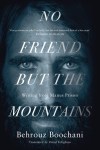
Behrouz Boochani, No friend but the mountainsThis year there’s also a “highly commended”, Omid Tofighian. He’s not on the shortlist because he doesn’t have “the substantial bodies of work” of the shortlisted translators, but is worth special mention, they say. Some Australians will recognise him as the translator of No friend but the mountains by Kurdish-Iranian poet and Manus Island detainee, Behrouz Boochani. He has also translated a number of articles by Boochani. The judges argue that Tofighian merits this special commendation because of that point about translation allowing “cultures to converse and voices to be heard that might otherwise remain silent”. (Quite coincidentally, I bought No friend but the mountains the other day. The enthusiastic bookseller said it was a great book and specifically told me to read the Translator’s Note! She didn’t need to tell me that because I always do, but I loved that she did. This book had special challenges for the translator because the book arrived via thousands of text messages from Boochani’s phone).

Anyhow, have you noticed something about all this? By far the majority of the translators listed above work with European languages. This is, to me, astonishing – but perhaps it shouldn’t be, given our still obviously Euro-centric attitudes. Are we still so myopic – is that too harsh a word – that we only want to read European literature when we leave our own?

So, hmm, I checked my own reading … and discovered that, since starting this blog, my reading of translated works has been 25% Asian, 15% Latin American, and the rest European (mostly, I admit, Western European), so, who am I to talk?

What about you? 

* According to the 2016 Census, just over one-quarter of Australians speak languages other than English at home.
Us Mob Writing, Too deadly (#BookReview)

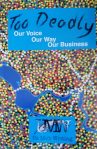
Us Mob Writing, Too DeadlyToo deadly is an anthology of writings by the Canberra-based writing group Us Mob Writing. Comprising Australian First Nations writers, this group was formed in the late 1990s and is, apparently, one of our capital’s longest running writers’ groups. I saw advertising for the book’s launch back in late 2017, but was unable to attend. I was consequently thrilled to be offered a copy to review some months later. Finally, it worked its way to the top of the pile and I have read it. Things happen slowly here at the Gums!

The book comprises works by 11 women writers. It is introduced by Jeanine Leane whose novel Purple threads I reviewed a few years ago. She describes the content as including “prose and narrative poetry; flash fiction, fiction and creative non-fiction; and life writing.

It was interesting to read this just after reading Anita Heiss’s anthology, Growing up Aboriginal in Australia (my review). Heiss’s book, obviously, is all life-writing, while this anthology is more varied in form and subject matter, but, as in Heiss’s book, many of the works are overtly political, not surprisingly, but all writers speak of connection to culture, in some way.

Now, how to do this? I don’t usually discuss every writer in an anthology because doing so, without writing a tome, risks being superficial, but I’m going to try here and see if I can find a fair balance. You be the judge.

Wulli Wulli writer Lisa Fuller: eight pieces, mostly poetry. They deal with her writing practice, her sources of inspiration, and her sense of self. My heart went out to her struggles to accept that she is “good enough” in poems like “Who me?” and “Never enough” (“I will kill myself through/ should-i-n-g and my 20/20 judging”), but I also loved her sense of humour and word plays. “Waking” made me laugh, with the “only clock in the place/ disguised as a phone” as did her wry references to her “Master pieces” in “Electronic inclusions”, which describes her preference for “paper and pen” over keyboard. She also writes of nature and the inspiration it provides, including:

the mist envelops
its cool embrace
blocking everything
making the everyday
more mysterious
(“Surrounds”)

Juru-Kija poet Michelle Bedford: six poems, most of which directly address culture – her connection with it, and/or loss of it. In “Kindred Spirit-so many stories untold”, the refrain at the end of each verse is “so many stories untold”, while “Straight up and back with a certain native pride” tells of a hunting party and how engaging in cultural practice brings contentment and pride. Coming from the beautiful Kimberleys, she has some poems evoking her love of that landscape: “Colour me fine” is a love-letter to the Kimberley that I could relate to. Other poems are more overtly political. “Standing alone with others” and “I promise you … she is worthy” reminded me somewhat of Oodgeroo Noonuccal’s work.

Wiradjuri poet Yullara Reed: one poem, “Catch me if you can”. Told in the voice of a bird, her allegorical poem confronts its reader with the realities of indigenous life, particularly regarding the stolen generations, as the bird watches out for catchers. There’s a cheeky freshness to this poem which makes its message so much starker.

Erubian writer Chella Goodwin, from the Torres Strait: two poems and one prose piece. “Morning dreaming” is a gorgeous poem about yearning for a simpler life. Her irregular use of rhyme here is particularly effective. Many of us can relate to these lines, “microsoft word/ part of the city herd”, and to

divorcing the city
with its traffic and hustle
for straight roads to the horizon
where the kookaburras hustle

Bundjalung writer Samia Goudie: six pieces, mostly poems. They mourn a loss of culture, but also express defiance (particularly “White lie”) and sorrow (“Dirt child”). Her prose piece, “Coming home”, is a short story about a stolen generation daughter meeting her mother for the first time. The insensitivity of the church official, where the meeting is effected, is breathtaking. He wants a photo for, he says:

“… the church newsletter, the story, our story; it is such a great story. The congregation will love it.”

Whose story?

Yuin writer Brenda Gifford: one memoir piece about her life on the road, for ten years, with the mixed indigenous and non-indegnous band, Mixed Relations. Much of the story would be familiar to any band, I guess, except that this one has the added issue of race to deal with. She talks of confronting racism in Moree, and of the opposite in Brewarrina, where the local mob showed them the fish traps (now made famous by Bruce Pascoe in Dark emu.) She also writes of touring North America, and sharing experiences with First Nations Americans (not to mention trying their wonderful fried cornbread!)

Wiradjuri author Kerry Reed-Gilbert (grandmother of Yullara above) has ten pieces, and is the best-known, most published of the group. Reed-Gilbert also appears in Growing up Aboriginal in Australia, with a strong small town story. Some of her poems talk of dark history, such as blood loss and massacres in “The place in the paddock”, while others ask for Australians to work together, as in “Reflections” and “I know you”. Many of her pieces, as do those of others, talk of the wisdom of older people (uncles, grandfathers, grandmothers) and, further back, of the Old or Ancient Ones from whom the laws come.

Ngemba/Barkindji writer Barrina South: four pieces. Her poem “Ghost Gum” describes the ageing and regeneration of a tree, but surely also works as a metaphor for indigenous history – the losses (“pooled blood appears on the surface caused by previous contusions”) and the hope for the future (“She reaches up and gently sways/ Dancing in time with the stars…”) “Baaka” is more overtly political, but also uses nature, the river in this case, to oppose long connection with culture (and the “old people”) against loss (and “they [who] fence rivers”).

Wiradjuri poet Marissa McDowell: three pieces. “By the campfire” is a lovely hymn to indigenous creation spirit Biamie, “the maker of all things”, while “Me” is a plea to be respected “before all is lost/at what human cost”.

Kamilaroi writer Joyce Graham: eight pieces, starting with three haiku which lead into more powerful, pull-no-punches poems. “Proud Uncle” references, I believe, the story of the two indigenous men Jimmy Clements and John Noble who walked miles to attend the opening of Canberra’s provisional parliament house in 1927. It confronts us with our lack of interest (“ignored by white/ present not caring/ not curious/ Dismissive/ ignorant of your importance”). It’s a story most Canberrans didn’t know until recently. Certainly I didn’t – “ignorant”! “Life’s landscape” uses strong language, too, to make its point, describing “the white dust storm” and its aftermath.

Torres Strait Islander writer Samantha Faulkner: twelve pieces, including five prose pieces. Faulkner’s pieces, like many others, explore the history of indigenous experience in Australia. “The Old Man” also reflects on the Jimmy Clements and John Noble story, describing the two men as “compelled to be there”. “Tribute to Mabo” is another straightforward narrative poem about an indigenous hero. “One Day at Walpa (Walpa Gorge, Kata Tjuta/the Olgas” made me laugh at its depiction of tourists visiting this beautiful peaceful, place. And “It’s a small town world” succinctly conveys opposing images of small towns – narrow on one hand, and big-hearted on the other. Faulkner’s is, generally, a lighter touch than some in the book, but no less effective for that.

There are, then, recurring themes in the anthology, as you’d expect – to do with loss and disconnection caused by colonisation and white laws – but while some are angry (and understandably so), many are generous and hopeful, looking to a better future. Motifs recur too. There’s the wisdom of older people and of the Old Ones, and, of course, nature, particularly trees and birds, appears in many pieces.

Too deadly is a challenging book to read with its varied styles and tones, but it is well worth the effort because this very variety provides a breadth of insight that is not easily come by. I’ll close with some lines from McDowell’s “Me”, because, in many ways, it conveys the heart of the book (but apologies for not getting the lines’ layout right):

Images are plastered all over our screens
Scaring the weaker
And empowering the meaner
Open your door and open your mind
move a bit closer
I could be your friend
not an enemy
Who’s portrayed as the end.

AWW Challenge 2019 BadgeUs Mob Writing
(Eds. Kerry Reed-Gilbert, Samantha Faulkner, Barrina South)
Too deadly: Our voice, our way, our business
Us Mob Writing, 2017
172pp.
ISBN: 9780992559823

(Review copy courtesy Sarah St Vincent Welch and Us Mob Writing)

Monday musings on Australian literature: Multicultural NSW Award

Synchronicity strikes again, this time concerning the idea of multiculturalism. In the last week or so, it has popped up several times – in Lisa’s post on the NSW Premier’s Literary Awards shortlist, in the conversation I attended last Thursday featuring historian Michelle Arrow on her book The Seventies, and then in the Festival Muse conversation this weekend featuring Asian-Australian writer Alice Pung. I’ve taken all this as a hint that I should talk a bit about multicultural writing in Australia and have decided that a good way to do it – this round anyhow – would be through the Multicultural NSW Award. It’s one of the many categories in the NSW Premier’s Literary Awards.

Before focusing on the award, though, I’ll reiterate my comment in my Alice Pung conversation post (linked above) that during the conversation she mentioned several writers, all of whom are writers of migrant experience – Christos Tsiolkas, Benjamin Law and Anh Do. It gave me the sense that there’s quite a sense of fellow-feeling, or, at least, respect, amongst these writers. I like that: we all need peers with whom to share our challenges and experiences don’t we?

So, the Multicultural NSW Award

As far as I can tell, this award has changed name several times. It seems to have been established in 1980 as the Ethnic Affairs Commission Award. At some time its name changed to the Community Relations Commission Award, and then again, around 2014 I think, to the Multicultural NSW Award. From the start though, its goal and content has been the same.

It’s an interesting award because it is not form specific. Works submitted can be:

  • fiction;
  • non-fiction;
  • drama (in various forms, including plays, musicals, theatrical monologues);
  • poetry, single or in collection; or
  • screenplays/scripts for film, television, radio

The main limitation is content: submitted works must deal with or further our understanding of migrant experience, cultural diversity or multiculturalism in Australia. The prize is decent – currently $20,000.

Maxine Beneba Clarke, The hate raceRecent past winners are:

  • 2018: Roanna Gonsalves’ The permanent resident: short story collection
  • 2017: Maxine Beneba Clarke’s The hate race: memoir (my review)
  • 2016: Osamah Sami’s Good Muslim boy: memoir
  • 2015: Matthew Klugman and Gary Osmond’s Black and proud: The story of an AFL photo: social history/sociology
  • 2014 Joint winner: Andrew Bovell’s The secret river: playscript adapted from Kate Grenville’s novel The secret river
  • 2014 Joint winner: Michelle de Kretser’s Questions of travel: novel (my review)
  • 2013: Tim Soutphommasane’s Don’t go back to where you came from: social and political history
  • 2012: Tim Bonyhady’s Good living street: The fortunes of my Viennese family: biography of a family
  • 2011: Ouyang Yu’s The English class: novel (Lisa’s – ANZLitlovers – review)
  • 2010: Abbas El-Zein’s Leave to remain: A memoir: memoir

To see all the winners back to 1980, check out Wikipedia.

There are a few points worth making here, the first being that, as per the award criteria, the focus is the content, not the author so, while most of the winning authors come from diverse backgrounds, not all do. Andrew Bovell (and the author he adapted for his winning play, Kate Grenville) are both white Australians. The second point is that the award is true to its word about diversity of form, with the winners ranging from novels to social history, from plays to short stories. The winners also include at least one book for young people, Ursula Dubosarsky’s The first book of Samuel, back in 1995. The shortlists add to this diversity, by including, for example, poetry and television scripts. Another point is that the winning works cross time, from way past to the present. Finally, although a few of the winners over the history of the prize discuss or are by indigenous Australians, it’s good to see that in 2016, a biennial Indigenous Writer’s Prize worth $30,000 was added to NSW’s suite of awards.

I don’t want to write a long post tonight as there’s a lot going on in my life at present, so I’ll just conclude with some words from a 2014 guest post on the Wheeler Centre blog. The post is about the need for “true diversity in our media”. The writer Fatima Measham says that lack of diversity in our media

is a problem because it leaves us with a patently false construction of our society.

[…]

greater diversity of perspectives and commentators leads to clarity, a sharper sense of the aspects of conflict and power that grip democratic life.

I can’t think of a better argument for why we need to read diverse literature and, therefore, for the role that awards like the Multicultural NSW Award can play in bringing diverse voices to the fore.

Michelle Arrow in conversation with Frank Bongiorno

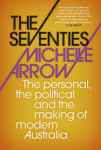
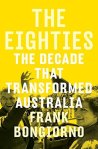
A few days ago, Mr Gums and I attended another ANU/The Canberra Times Meet the Author event, this one featuring Australian historian Michelle Arrow in conversation with Australian historian Frank Bongiorno. It was an especially interesting pairing because Arrow’s book, which she is currently touring, is titled The seventies: The personal, the political and the making of modern Australia, while Frank Bongiorno wrote, just 4 years ago, The eighties: The decade that transformed Australia. So, it was a case of the Seventies facing off against the Eighties! Fortunately no blood was shed…

The conversation was introduced, as usual, by MC Colin Steele, who does a marvellous job of organising and mc-ing these events. In his intro, he told us that one of the main threads in Arrow’s book is the now well-known idea that the personal is political. This theme also ran through the conversation.

The Seventies was a big decade for me. It’s the decade in which I graduated, established my professional career, and married. It’s also the decade in which I read Germaine Greer’s The female eunuch, and when the great reformer, Gough Whitlam, came to power – and showed what a government with vision and heart could do. I must say that it is rather disconcerting to think that an era in which we were fully adult is now the subject of serious history! Such is life!

Now, the conversation …

The conversation

Michelle Arrow, The SeventiesBongiorno commenced by asking Arrow how she defined her decade. Before I share her answer, I should explain that Arrow later told us that, while Bongiorno had taken a comprehensive look at the Eighties, she had narrowed her decade’s focus to gender and sexuality. This affected how she defined the decade. So, her answer was that she took the formation of the Homosexual Law Reform Society in the ACT in 1969 as her start, and the Women Against Rape in War protests (which also originated in Canberra) of the early 1980s as her end. She noted that soon after these protests, the ANZAC narrative began to dominate our national mythology.

Bongiorno asked Arrow to describe the discourse characterising the Seventies. Arrow talked about its being a time of rapid social and economic change and, consequently, of some disarray. Feminism and Gay Rights were big issues.

The conversation then turned to the theme mentioned by Colin Steele that the personal is the political. The main example of this, Arrow explained, is feminism. Women began to realise that their personal experiences and concerns (economic and social, for example) were structurally and politically based. Formal and informal consciousness-raising groups began exploring the underlying issues. This theme also played out in the gay and lesbian rights movement: being gay was also seen as having a political component. She mentioned here the work of the early-1970s-formed group, CAMP (Campaign Against Moral Persecution).

After this rather long introduction, we got to the core of Arrow’s book, the Royal Commission on Human Relationships. This Commission grew out of the Whitlam government’s failed attempt to reform abortion law. It was reading the fascinating personal submissions to this Commission that inspired Arrow’s book. While the Dismissal and Fraser’s election resulted in funding cuts to the Commission, bringing the Report forward and affecting the end result, the submissions themselves remain valuable.

Bongiorno noted that this Commission initiated a new role and purpose for these sorts of enquiries. Arrow agreed, explaining that it legitimated people’s stories and played a therapeutic role, both of which we still see today. (The recent Royal Commission into Institutional Responses to Child Sexual Abuse is a good example)

Another issue discussed was that of violence – and its appearance in the submissions. Violence also reflects “the personal is the political” theme. Corporal punishment for children, violence against women and girls, and gay bashing were all issues that played out politically. Bongiorno referred to Pierre Trudeau’s famous statement that “there’s no place for the state in the bedrooms of the nation”. Arrow explored the paradoxical nature of this argument: homosexual people sought freedom and privacy for the expression of their sexuality, while women were seeking protection for theirs!

There was of course a discussion about the Pill and its role. I was interested, given contemporary politics, in Arrow’s comment that the liberation of the 1960s, afforded by developments like the Pill, transformed in the 1970s to concerns with identity.

Bongiorno, though, pushed on to ask about the relationship between women’s liberation and the sexual revolution. Arrow talked about researching 1970s popular culture. She read magazines like Cleo and Forum, and suggested that Cleo had a more feminist aspect underpinning its exploration of sexuality and bodily knowledge, than did Forum. She commented that “letters to the editor” were particularly informative. She shared her shock on reading a response to a letter about father-daughter incest that said it was caused by wives not satisfying their husbands. How far we have (hopefully) come!

She also looked at movies – such as Alvin Purple and Petersen – for their evocation of sex, class and gender.

The conversation concluded by discussing Whitlam, the Seventies, and whether it matters. Arrow argued that there was a particular convergence in Australia of the height of the women’s liberation movement and the election of the Whitlam government. This resulted in things like Elizabeth Reid becoming the first women’s adviser to a leader anywhere in the world, to a big government commitment to International Women’s year, to attempts to reform abortion law (still an issue today), and the Royal Commission on Human Relationships. Fraser, coming into power at the end of 1975, had to face this new infrastructure. She traces in her book what happened to women’s issues as time passed – for example, to Women’s Refuge funding made by Whitlam in 1975.

Q & A

The Q&A, though brief, demonstrated the audience’s knowledge of the Seventies! Topics included:

  •  No-fault divorce laws (the Family Law Act of 1975): Arrow agreed this was crucial social change, and it is covered in the book
  • Multiculturalism: This is mentioned in the book, but given her focus, it’s mostly in relation to migrant and indigenous women in the women’s movement, and how the movement accommodated difference.
  • Indigenous issues (Tent Embassy, Land rights, etc): Again, because of her focus, her coverage mostly relates to women. She noted that because of Indigenous people’s specific concerns, Indigenous women did not particularly feel part of the women’s movement.
  • Education: Arrow agreed that Whitlam’s opening up access to tertiary education was transformative, and that it was particularly so for middle-class women (rather than for its main intention, working class people.) This led to the rise of women’s studies in universities, and to women (as teachers) then taking their learning out to schools – proving, again, that “the personal is political”.
  • Backlash against feminism: Arrow noted PM Malcolm Fraser’s (1975-1983) “more fractious” relationship with the women’s movement, and the rise of anti-feminist groups. However, the women’s movement, she said, “opened up spaces for protest”.

Another questioner cheekily asked which decade – the 70s or 80s – was most influential, to which the replies were mutually respectful!

The final question I’ll share concerned whether “the personal is political” theme played out in other parts of the world. Arrow responded “yes, mostly in women’s movements”, but that in Australia the convergence of Whitlam with women’s movement gave it a particular flavour. She noted the significance of the Royal Commission on Human Relationships being not just about work but private life as well, and that this influenced the flavour of action in Australia.

Vote of thanks

Frank Bongiorno, The eightiesSociologist/social commentator Hugh Mackay gave an inspired vote of thanks. With a cheeky glint, he compared the subtitle of Arrow’s 70s book – “the making of modern Australia” – with that of Bongiorno’s 80s book – “the decade that transformed Australia”.

He discussed the major “revolutions” Arrow explores – women’s and gay rights. He noted that histories like Arrow’s show how rocky these were, and how far we have come. It is because of these revolutions, he suggested, that we now better understand Gender and Equality. He then talked a bit about gender and its place today – and why young women seem to feel that it, as a concept, is less relevant to the inclusive, gender-blind, world we want. However, he said, those wanting to eschew the “feminist” tag might want to read Arrow’s book to see just how rocky and difficult it’s been to get where we are today.

It was a lively and engaged encounter, and one which I’ve got even more out of by writing up!

ANU/The Canberra Times Meet the Author
MC: Colin Steele
Australian National University
7 March 2019

Stella Prize 2019 Shortlist announced

As you probably know, the Stella Prize is the award I particularly like to follow, though I don’t always post on the Longlist and the Shortlist as I am this year. The Longlist was announced on 7 February (my post), and the shortlist was announced, today, International Women’s Day, as has, appropriately, become tradition.

Here is the shortlist:

What an interesting list – and one for which I’ve already read two, and am currently reading a third. This year there are two, not one, non-fiction works on the list, out of the five on the longlist.

Louise Swinn, the 2019 Judging Panel Chair, says that:

The six finalists on the 2019 Stella Prize shortlist explode the myth of the death of the book, and they are a hearty response to the under-representation of women’s work in awards. This is an incredibly diverse knot of books, with broad subjects showing that identity is shaped across many continents and informed by many cultures. Non-fiction and fiction works stray from their formal constraints as authors give authentic voices to those who are otherwise under-represented. The books on this shortlist inform and entertain, and while they speak absolutely to our moment, their insights are timeless

Anyhow, what do I think about the list? Well, it is an intriguing one – and from what I’ve heard and/or read myself the list encompasses quite a variety of concerns and styles, and is not, probably, what you’d call conventional! Whether you agree with the judges choices or not, I like this.

The winner receives $50,000, and each shortlisted author receives $3000, as well as a three-week writing retreat on the Victorian coast. It’s a lovely generous prize. The winner will be announced on 9 April.

Now, I’ll get back to my reading … but if you have any comments on the list, I’d love to hear them.

Monday musings on Australian literature: Eight writers to look out for (2017)

Back in December 2017 The Guardian Australia ran an article titled “Eight new Australian writers you should read (according to those who know)”. As the title implies, it lists eight emerging Australia writers to look out for. It’s a serendipitous list compiled by their asking “industry insiders – publishers, editors, festival directors – for their pick of the new cream of the literary crop”. It is therefore not comprehensive nor “scientific” in its creation … but it does provide an interesting guide. I should explain though that these are not all novelists as most lists of emerging writers tend to include.

Given over a year has passed since that list was published, I though it might be fun to see where these writers are now. I haven’t heard of some of them, so this involved a little research. For each writer, I’ll share something from the Guardian, and add some updating commentary.

Luke Carman (recommended by Geordie Williamson, Island)

At the time of this recommendation, Carman had published An elegant young man (Giramondo) and
Getting square in a jerking circle (Meanjin).

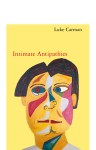
Luke Carman, Intimate antipathiesWilliamson writes of An elegant young man:

… has more smarts, more sincere eloquence, more comic savagery, more unrepentant auto-evaluation, than any other title published in this country. The prose may sprawl in gloriously untidy ways but the mind that animates it is succinct, and brutally so. This is not fiction for the reading classes.

Carman was named as a Sydney Morning Herald Best Young Novel in 2014. Since 2017, he has appeared in various of Australia’s literary journals, and, most excitingly, his next book Intimate Antipathies is due to be published in June this year. I say excitingly, even though I haven’t read him yet, because it’s a fascinating sounding collection of essays, and I do love a good essay.

Claire G Coleman (recommended by Zoe Pollock, Brisbane Writers’ Festival)

Claire G Coleman, Terra nulliusColeman’s first novel, Terra nullius (my review), was published in 2017.

Pollock says:

Coleman, like so many of our Indigenous writers, demonstrates how acutely our history – most specifically, dispossession and colonisation – is with us in our present day and is not beyond becoming our future. Coleman, a south coast Noongar woman from Western Australia, goes to the heart of Australia’s challenge as a nation – how to universalise the experience of Indigenous people, so that it is something all Australians can understand.

Terra nullius created quite a buzz through 2017 and 2018, and was shortlisted for the Stella Prize in 2018. Coleman’s second novel, The old lie, will be published later this year by Hachette.

Shastra Deo (recommended by Mindy Gill, Peril)

Deo’s publications at the time of The Guardian article were The agonist (UQP), and गुम; or, Lexical gaps (Cordite).

Gill writes that her debut collection, The agonist,

… confirms her place among Australia’s most exciting poetic voices. She writes in persona – a difficult thing to pull off – using the corporeal to explore the human animal in all its beauty and violence. I am in admiration of her work and look forward to watching her star continue to rise.

Gill was certainly on the money with her comments on The agonist, given it won the prestigious ALS Gold Medal in 2018 – quite a feat for a debut work.

Fury (recommend by Amy Middleton, Archer)

Fury’s writings include the following articles Extracting queerness from a narrative of suffering (Archer), Fury against the plebiscite (Overland), and Love and anger: How popular culture sells aggression as romance (Kill Your Darlings).

Middleton writes that

Accessibility is what sets Fury’s writing apart. They are a Melbourne-based writer, spoken word performer, poet and comic artist, with a passion for making complex topics such as oppression, queerness, gender identity, and even love, digestible, illuminating and fun to read (where appropriate!)

Now this one intrigued me, because I only came across Fury a couple of weeks ago – as the writer of an article on Australian comedian Hannah Gadsby in the current Metro magazine, “Australia’s oldest film and media periodical.” On their website, Fury announces that they started working on their first book in 2018, an “experimental graphic novel memoir called I Don’t understand how emotions work.”

Caitlin Maling (recommended by Catherine Noske, Westerly)

Maling’s poetry published by 2017 includes Conversations I’ve never had (Fremantle Press), Border crossing (Fremantle Press), Diego’s head (Cordite).

Noske says that Maling

has a huge list of awards and fellowships to her name, and she currently holds a Marten bequest. With these successes, she is gaining plenty of attention as a poet. But I also love her criticism. … she publishes in academic circles as well as regularly producing essays and reviews.

The awards keep coming. In mid-2018 she was awarded the Patricia Hackett Prize for a “creative non-fiction piece”.

Eddie Paterson (recommended by Marieke Hardy, Melbourne Writers’ Festival)

Paterson’s poetry collections published by 2017 include We will not pay (Overland), Sheep poems (Cordite) and led zeppelin (Red Room Poetry).

Hardy feels it’s unusual to nominate a poet, but that

when a writer such as Eddie Paterson falls across one’s radar the thrilling potential can’t be ignored. …

What’s interesting to me about Eddie’s writing is the visual aspect…

Paterson’s collection, redactor, was shortlisted for the 2018 Victorian Premier’s Literary Award for Poetry. The judges described it as “a hilarious, politically alive vivid experiment”. But Paterson is not only a poet, but a playwright/scriptwriter and is working on some commissions at the moment.

Peter Polites (recommended by Michaela McGuire, Sydney Writers’ Festival)

Peter Polites, The pillarsBy 2017 Polites had published two books: Down the Hume (Hachette) and Public spaces: Mind Street virus (The Lifted Brow).

McGuire says:

… Peter is a true original: he’s celebrated for writing dark realism in the tradition of the early works of Christos Tsiolkas and Luke Davies, but I think he’s funnier than either of them. … A first generation Greek Australian, Peter’s writing examines the borders of society, both geographical and imagined, and the intersections between queer and ethnic identity. He’s one of the most intelligent writers I’ve ever read…

Polites’ second novel, The pillars, is due for publication in the middle of this year, ie. 2019.

Ellen van Neerven (recommended by Sam Cooney, The Lifted Brow)

Ellen van Neerven, Heat and light, book coverLast but by no means least is the versatile Ellen van Neerven. By 2017, van Neerven had published Heat and light (UQP) (my review), Comfort food (UQP) and Expert (Overland).

Cooney praises both van Neerven’s writing and the positive role she plays among writers. He says that her debut Heat and light (which I also admired)

is an extraordinary work of linked fictions. For me, the central piece of the book, Water, did what the very best writing can do: after reading it, the world around me was different, never to be quite the same again.

Van Neerven has appeared several times here. On her website, she reports that her play swim featured at the Yellamundie First Peoples Playwriting Festival in January 2019, and that she is also working on a novel.

This is a nicely diverse list, including indigenous writers and queer writers, poets, novelists and essayists, women and men, writers with immigrant backgrounds, and so on.

Do you look out for emerging writers, and if so, are there any you’d love to introduce to us here?

Anita Heiss (ed.), Growing up Aboriginal in Australia (#BookReview)

Anita Heiss, Growing up Aboriginal in Australia

As many others have said, including my reading group, Anita Heiss’s anthology, Growing up Aboriginal in Australia, should be required reading for all Australians. At the very least, it should be in every Australian secondary and tertiary educational institution. Why? Because it contributes to the truth-telling that is critical to real reconciliation between Indigenous and non-Indigenous Australians. Truth-telling comes in many forms. There are formal processes, as through truth-telling commissions, but there are also the informal processes that we can all engage in while we wait for the government to fiddle-diddle around deciding whether it can front up and do the right thing.

Essentially, truth-telling means all Australians acknowledging and accepting “the shared and often difficult truths of our past, so that we can move forward together”. These truths include the original colonial invasion of the country, the massacres, the Stolen Generations, and the ongoing racism that results in continued inequities and significant gaps in almost every health, educational and occupational measure you can think of. Informal truth-telling encompasses all the things we do to inform ourselves and each other of these truths. Heiss’ anthology, Growing up Aboriginal in Australia, which contains 50 stories by indigenous Australians on their experience of growing up indigenous in this so-called lucky country of ours, contributes to this informal truth-telling. Taken as a whole, the book provides a salutary lesson, for all Australians who care to listen, on the experience of being indigenous in Australia. Taken individually, each story has the potential to break your heart. If you think I’m laying it on a bit thick, then you haven’t read the book!

“a stranger in my own land”

The above line from William Russell’s story, “A story from my life”, brought me up short because it replicates a line I read in Atkinson’s book The last wild west (my review). Atkinson describes his Indigenous friend and co-worker Sno as being “an alien in his own homeland”. There is strength in this replication between books, just as there is strength in the repetition of experiences within Heiss’s book, and the strength is this, that every repetition reinforces the truth of the historical (and continuing) injustice faced by Indigenous Australians. The stronger, the more inescapable the truth becomes, the harder it must surely be to ignore.

So, what are the repeated experiences in Growing up Aboriginal in Australia? Well, there are recurring references to the Stolen Generations, to being questioned about identity (“are you really Aboriginal?”, “you look too white to be Aboriginal”), to feeling disconnected from culture, to being called racist names, to being humiliated in myriad ways too numerous to list, and to being physically attacked. These are the experiences that we’ve all heard of, but Heiss’ contributors enable us to feel them. And that’s important. I’ll share just a few quotes from a few stories:

Thankyou for your acknowledging every 26 January with such grace and humility. Thankyou for your encouragement – and advice to me – to let the past be in the past, to simply ‘get over it’ on the day my people’s land was invaded and dispossessed. (Dom Bemrose’s biting “Dear Australia”)

My father cut to the chase. ‘Olly, you can’t go telling people we’re Aboriginal … It isn’t safe’. (Katie Bryan, “Easter, 1969”)

I would paint and draw and sculpt about being Aboriginal. I would see people twitch uncomfortably and sometimes even let their ignorant thoughts out: ‘But you don’t look it’, ‘From how far back’, ‘Do you get lots of handouts?’ (Shannon Foster, “White bread dreaming”)

In Year 2 I was lined up with Aboriginal classmates to be checked for nits and, as I stood there with fingers being raked through my hair, I felt angry and embarrassed as my non-Indigenous classmates watched. I realised that … for some reason it was only supposed to be us Aboriginal kids that had nits. (Jared Thomas, “Daredevil days”)

None of us kids are allowed to go anywhere outside after dark by ourselves. We can’t ever go to the toilet at night: we gotta go in twos, and Mummy stands at the door and watches. She has a big bundi* ready in case there’s trouble … Terror is outside the door, and we can’t do anything about it. (Kerry Reed-Gilbert, “The little town on the railway track”)

It was hard selecting these quotes – not because they were hard to find but because there were so many options that it was hard to decide which ones. That’s the shame of it. And these stories come from all ages – from teenagers to those in their 70s or 80s –  and from all parts of Australia, from, as Heiss writes in her Introduction, “coastal and desert regions, cities and remote communities.” They come from “Nukuna to Noongar, Wiradjuri to Western Arrernte, Ku Ku Kalinji to Kunibídji, Gunditjamara to Gumbayanggirr and many places in between.”

The contributors include many well-known people – writers like Tony Birch and Tara June Winch, sportspeople like Patrick Johnson and Adam Goodes, performers like Deborah Cheetham and Miranda Tapsell –  but there are also lesser-known but no less significant people, many of whom are actively working for their people and communities.

Despite the devastating picture being painted, the book is not all grim. There are also positive repetitions in the book. They include deep connection to country, the importance and support of family, and particularly, the strength of mums. There’s humour in some stories: you can’t help but laugh, while you are also grimacing, at Miranda Tapsell’s story of her friends expecting her to turn up to a party as Scary Spice, but opting for Baby Spice instead (Miranda Tapsell, “Nobody puts Baby Spice in a corner”).

“two divided worlds”

One of the early stories is particularly sad because its 29-year-old author, Alice Eather, took her life before the book was published. In her person, in her story, in her life, she represents the challenge Indigenous people face in Australia today. Her story “Yúya Karrabúrra” starts with a poem. At the end of the poem she writes:

This poem is about identity, and it was a really hard thing to write in the beginning because identity is such a big issue. It’s a large thing to cover. The poem is about the struggle of being in between black and white.

Now Alice, like many in the book, had an Indigenous parent and a non-Indigenous one, but the struggle she names here is faced by every person in the book, regardless of their family backgrounds, because every one of them must contend with white society and culture, and it’s clearly darned hard.

I’m going to close on this idea of identity, because identity is the well-spring from which everything else comes. The stories are organised alphabetically by author, which I’m sure was an active decision made to not direct the conversation. Coincidentally, though, the last story – Tamika Worrell’s “The Aboriginal equation” – provides the perfect conclusion. It constitutes a strong, unambiguous statement of identity. She says:

I will not sit quietly while my identity is questioned. It doesn’t matter how many times you say you didn’t mean to be offensive, that doesn’t dictate whether or not I’m offended.

Then concludes with a hope that she

will live to see a future that is less ignorant, less racist and at least somewhat decolonised. Until then, I’ll continue to be an angry Koori woman, educating those who don’t understand and those who choose not to.

She’s not asking for the moon here is she? The least we can do is choose to understand – and we can start by reading books like this.

Lisa (ANZLitLovers) has also posted on this book, and there are several reviews for the Australian Women Writers Challenge.

* “bundi” is a Wiradjuri hitting stick I believe.

AWW Challenge 2019 Badge

Anita Heiss (ed.)
Growing up Aboriginal in Australia
Carlton: Black Inc, 2018
311pp.
ISBN: 9781863959810

Monday musings on Australian literature: 1950s prose-poets criticised

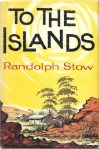
Randolph Stow, To the islandsSerendipitously, while trawling Trove for something else recently, I came across a fascinating article in the Tribune about the winners of the first two Miles Franklin Awards. The article was written by Jack Beasley in July 1959, and the two winners were Patrick White’s Voss (1957), and Randolph Stow’s To the islands (1958), two books which are now regarded as significant Australian classics. Jack Beasley wouldn’t have agreed!

So, who was Jack Beasley? Born in 1921, he was interested in the arts, was closely associated with the Australasian Book Society, and at one stage had his own publishing company. He wrote several books, including a memoir and a couple of books on Katharine Susannah Prichard. He was also a member, for many years, of the Communist Party of Australia. The Tribune, for those of you who don’t know, was the Party’s official newspaper. This background is relevant to his criticism of White and Stow’s wins.

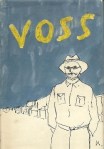
Patrick White, VossHe commences his article by stating that Randolph Stow’s winning the award has created quite a lot of discussion, particularly since it followed Patrick White’s winning for Voss the year before:

The two authors are the leading exponents of the so-called “prose-poetry” school, very fashionable today in literary circles attached to the big publishing houses.

He quotes Sidney J. Baker, whom he describes as a Sydney Morning Herald authority. Baker

regards their work as a “new type, of novel … distinguished by strength and sincerity and blowing away traditional debris like a cool wind after sizzling heat.” It should be added that among the “traditional debris” blown away are the traditions for which Miles Franklin herself so firmly stood.

Hmm, so the award should only be for writers who write in the same style as Miles Franklin?

Anyhow, Beasley writes that Franklin “believed that literature drew its ideas from life and attachment to native soil, and she wrote with a vigorous, entertaining prose”:

Her major work, ‘”All That Swagger” is notable for Danny Delacy and his “brave Joanna,” Irish immigrants who go through life undaunted by its buffetings and rejoicing in its happinesses.

In sorry contrast are the morbid heroes of Messrs. White and Stow, who flee from life and society in search of some individual haven.

To Beasley, prose-poetry “is a fad of style, a pretentious juggling of words and grammar”. He quotes from both White and Stow to prove his point, and then argues that while this “obscure” style is new in Australia, it “emerged many years ago in bourgeois culture”. He names “Joyce, Proust, Virginia Woolf and the extreme case, Gertrude Stein” as exponents of the style.

“Individual haven” and “Bourgeois culture” give away his leanings. He discusses To the islands:

According to some reviewers, “To the Islands” shows a warm sympathy for the Aborigines. This is partly true, but an even warmer sympathy is shown for the missionaries and whatever might be the personal motivation of individual missionaries, history has shown that the missions have played their part in the destruction of tribal life and the continuing ordeal of the Aboriginal people.

This is of course true, but what becomes increasingly clear is that Beasley’s main criticism is in fact less the style than the content of White and Stow’s work. The criticism focuses very much on the fact that their focus is the “individual” which is not part of Communist ethos. He describes White and Stow as being “closely bound to the capitalist class”, and writes that their protagonists, Voss and Heriot,

are nothing more than the bourgeois intellectuals, or more correctly a personification of the crisis of the intellectuals, desperately reaching for a sanctuary. They feel the sands shifting beneath them but are still unable because of their individualism to accept the new ideas that are emerging.

He believes intellectuals need to grasp new ways of thinking:

Only by coming to the working class and taking their part in the struggles led by this class for a better life, only by ceasing to believe in the omniscience of the lonely individual and learning in life of the inexhaustible strength of collective ideas, can the intellectuals have a future.

The socialist countries show again and again that there is no hostile contradiction there between the intellectuals and the proletariat and the Australian workers have always welcomed those who joined their cause.

Only at the end of his article does he return, somewhat off-handedly, to the style issue:

It is not suggested that Miles Franklin would have supported all of the views stated above [that is, his political views], but both the misanthropic themes and the literary quality of the two prizewinners are at variance with her view of life and literary standard.

It might have ended there but, intriguingly, a few weeks later, a letter in response appeared in the same paper – by author Alan Marshall. He thought the article was the “best analysis” he’d read of this new trend, but he takes issue with a couple of points. One is Beasley’s generalisation about “intellectuals”, his tarring them all with the same brush, but the other is his use of the term of “prose poets”.

Marshall writes:

What is wrong with prose poetry? The works of Katharine Prichard are full of it; Turgenev was a master at it; Gorky often delighted in it; Sholokhov’s works feature it. It can lift prose to its highest level and be an inspiration to mankind. In the hands of the writers I have mentioned it not only appeals to the highest emotions but to the reason as well.

Patrick White and Stow are not Prose Poets.

They are obscurantists juggling words to obscure sense in an effort, to create a sense of profundity. They believe readers have little faith in their judgement; that readers praise what they cannot understand for fear of being regarded as incapable of appreciating good writing.

Ouch … “obscurantists”, not “prose poets”.

I’m leaving it here. I’m sharing this because I like hearing the arguments and ideas of another time, and testing them against our own (with the benefit of time). Marshall’s criticism of authors writing obscurely to create profundity is often trotted out. But, clearly, his and Beasley’s assessments of White and Stow have not stood the test of time, thank goodness.

Neil H Atkinson, The last wild west (#BookReview)

In one of those strange synchronicities, I attended an event, a few hours after finishing Neil H Atkinson’s The last wild west, that gave me the perfect opening for my post. This event was the launch of the VR film, Carriberrie, at the National Film and Sound Archive. Speaking at the launch, indigenous woman and participant in the production, Delta Kay, referred to being approached by the non-indigenous filmmaker Dominic Allen about making the film. Most non-indigenous people, she said, come to their community and “want, want, want” but Allen was offering to “give”, in a spirit of true reconciliation. This spirit of “giving” to indigenous people was as far from Atkinson’s experience as you could get.

Neil H Atkinson, The last wild westAtkinson’s memoir –The last wild west: A saga of Northern Territory cattle stations, racial violence, wild horses and the supernatural: A true story – chronicles the time, 1977-1980, he spent working at a Northern Territory cattle station. He went there in a state of disillusionment and despair, having been refused shared custody of his children after his divorce. His aim was to transform himself, to become a man the judge would see as stable and reliable, to become, in other words, a person “like other people, who were trusted and respected”. He did transform himself, but not quite in the way he’d expected. He had felt that in the Northern Territory he could work hard and prove himself a man. In no way did he think that he would become involved in brutal racial conflict and that the “manhood” he sought would encompass a new understanding of humanity.

I’ve read novels about white brutality towards indigenous people in Australia – such as Thea Astley’s A kindness cup – and I’ve read histories and other nonfiction books, like Chloe Hooper’s The tall man, which tell this story. However, I haven’t read a memoir this charged on the subject. The physical and psychological brutality conveyed here is truly confronting – and what makes it worse is that, much as we’d prefer it be otherwise, it’s not surprising or unbelievable.

But, why write it now? Atkinson’s experience happened 40 years ago, and progress has surely been made (as suggested by projects like Carriberrie.) Atkinson answers this in his Introduction:

I wanted to hold up a mirror; otherwise it is too easy for people to say: “That was then, and  our society isn’t like that anymore.” I wanted to ask if things had changed as much as people thought they had.

This is a question for each reader to consider. I would certainly hope that the sort of brutality described in this book is no more, but I really can’t be sure. However, I do know – we all know – that we still have a long way to go before true equality is achieved. For that reason – because we all know about slippery slopes – Atkinson’s book is relevant, and worth reading.

“an alien in his own homeland”

And now, I’d better give you some sense of what Atkinson’s experience was. Self-described as timid and insecure, Atkinson, with no cattle station experience, decides that the Northern Territory is the place to remake himself. Serendipitously, while en route, he meets two truckies who give him the names of a pub, of a man who visits that pub and of the station he works for. They advise him not to admit his lack of experience but to “wing it”. They also tell him that “blacks are treated worse ‘n shit”, that they “should get more credit and be paid more”, and, most critically, that “there’s a hell’va lot of bad blood between whites and blacks right now.” This was post-Wave Hill, a landmark for indigenous land rights that heralded a time of change in the outback. White owners and bosses felt threatened, and, while the tide might have been changing, indigenous people were still deemed inferior and had little or no power.

Atkinson’s story is one of being caught between these two worlds. While he starts off having little regard for indigenous people and their rights, early describing himself as having “little sympathy for the blacks”, he is a sensitive person. He soon experiences the brutal machismo of the men in charge – to greenhorn men like himself, to the indigenous workers and their families, and to the cattle. Indeed, his descriptions of the treatment of the cattle by the station workers and managers conveys such barbarity that you are prepared for anything.

To write this memoir, Atkinson draws from the diaries he kept at the time, in which he recorded experiences “as they occurred, the same day or shortly after, and using as far as practical, people’s own words”. The result is that the dialogue and descriptions feel fresh and authentic. He is a good story-teller, telling his story chronologically, and building up slowly to the event which – well, I won’t spoil it. He shares this journey with an almost ego-less honesty, admitting that, even two-thirds of the way through his time in the Territory, even after seeing much brutality, he was still thinking “It was an Aboriginal problem, not mine.” His intellect, his historical understanding, in other words, lagged behind his humanity. Emotionally, he started aligning himself increasingly with the indigenous workers, but he continued to do his darndest to avoid becoming involved in the conflict, to avoid even recognising that the indigenous people’s struggles for voice, dignity, and land, was an “Australian” problem not just an “Aboriginal” one. This attitude is, to a degree, understandable, given the power and control wielded by the white station foreman and his henchmen.

Atkinson’s writing is highly evocative. Initially, I found it almost over-blown – too many adjectives I was thinking. But, as I got into the story, I became mesmerised by his voice, by his way of imbuing feeling into what he was seeing and experiencing. This is not the spare writing of modern writers – but it feels right for Atkinson. Certainly, it conveys an inner response to the situation he found himself in:

Dawn knocked with such blinding clarity, its beams should have scarred the door and windows with clutching fingers of blazing red and yellow, as if I should just hurry over and embrace the new day because of its arrogant promise of purity and renewal.

[and, on Sno, his indigenous co-worker]

I then watched him walk away, a black man with a black shadow cast over the baked red earth of a past filled with pain.

Now, I’ve discussed here many times that issue concerning white people telling black stories. This is not, ostensibly, a problem here, because this is Atkinson’s memoir of his experience. It involves sharing his understanding of indigenous people’s culture, particularly of their attitude to place (“country” is not used here – was not used, I think, so much back in the 1970s) and of their spirituality. Mostly, he quotes their words to him, or his interpretation of their words. It can be a fine line.

As I often say in my posts, there is so much more to this book, so many issues and ideas that I haven’t touched upon, but I’m going to close with two ideas Atkinson discusses in the book, ideas which get to the nub of why this book is worth reading. One concerns his understanding of the history wars:

Such wars are as much about morality as about facts, because we choose the way we frame the national drama: either to regard the dispossession of the people as an injustice that needs addressing, or not. There is no neutral body of facts to which to appeal to answer the basic question. We all have to answer for ourselves. Every Australian has to exercise historical judgement. (p. 149)

And the other, in a sense, frames this:

Most ignorance is ignorance you choose. We don’t know because we don’t want to know. Our will decides how and upon what subjects we use our intelligence, direct our interest. Those who don’t detect any meaning in the Aboriginal world generally do so because, for one reason or another, it suits their opinion that the black world should be meaningless, so it is. (p. 194)

I don’t usually like to use book review clichés, but The last wild west is, I must say, provocative in the best meaning of the word.

Neil H. Atkinson
The last wild west: A saga of Northern Territory cattle stations, racial violence, wild horses and the supernatural: A true story
Melbourne: Hybrid Publishers
288pp.
ISBN: 9781925272918

(Review copy courtesy Hybrid Publishers)

Jane Caro in conversation with Alex Sloan

It was to the ANU’s brand new Kambri Cultural Centre that we went for this week’s ANU/The Canberra Times Meet the Author event with Jane Caro, who is doing a book tour with her new book Accidental feminists. Kambri is not as cosy as the old venue but is bigger, more flexible, and offers a cash bar! What’s not to like? Oh, and to add to the enjoyment, there is, on the lecture theatre’s side wall, an impressive 20-metre-long Sidney Nolan mural, The Eureka Stockade, which was donated to the University by the Reserve Bank of Australia, for whom it was originally created in 1966.

Anyhow, as always MC Colin Steele started the evening off with some housekeeping and then introduced Jane Caro (who needed no introduction) and her interlocutor Alex Sloan (who needed no introduction – in Canberra, anyhow). And then we were  off …

With no beating about the bush, Sloan got stuck right in by sharing the Walkley Award judges’ comment that Caro was “an invaluable warrior for women’s rights”, and then referring to Caro’s comment on the morning’s TV show Sunrise regarding the renewed asylum-seeker/people smuggler debate. Caro said that “Australia needs to find its moral compass again” and that the scare campaigns being waged against “people who are in tragic circumstances” means we “have reached a new low in this country.” Sloan asked Caro to comment on this, particularly regarding the reactions to it.

Say what you think

It was the perfect question for Caro to explain her modus operandi. She’s not “going to play the stupid game” and hide from unpleasantness, she said. This is about morality, and she believes that “If you say what you think, and mean it genuinely, nothing bad happens.” I like this faith!

The problem, she says, is that we worry too much about what we say, and how we look. She learnt – with, she wasn’t afraid to admit, the help of therapy – that she can’t control how people respond to her, so she now just says what she wants. She’s not here, she said, to be liked or approved of. Confidence, she believes, comes from recognising this, and from realising that there is no magic formula, that risk is a reality.

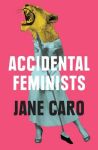
Jane Caro, Accidental feministsThe conversation then moved to the main reason we were there, her book Accidental feminists. It was inspired by her discovery that women aged over 50 comprise the fastest growing group of homeless people. She was shocked because this was her age-group, a group she’d believed revolutionary because they were the first cohort to earn their own money for most of their lives. Why were they ending up in this situation?

At this point the conversation turned historical, to how things were in the 1950s to 70s:

  • many girls were discouraged from continuing their education because they’d only be working for a while and then getting married.
  • many women were suspicious of/didn’t support Women’s Libbers (Feminists today), feeling that their lives were being criticised rather than that they were being “offered new horizons.”
  • women were brought up with a sense of inferiority, of feeling lesser, something which continues today. (For example, women are still less likely to speak up in public gatherings.)

Caro quoted Hugh Mackay’s definition of feminism from his book What makes us tick?:

Feminism is the fight by one half of the human race to be taken seriously by the other half.

Sloan asked Caro, how, then, had these “accidental feminists” come about. Caro identified a few causes, which were obvious to those of us who lived through this time:

  • the Pill which “unshackled women from their reproductive system” providing them with choices never available before
  • the Whitlam government’s provision of free tertiary education, which saw more young (and in fact middle-aged middle-class) women go to university.

What about the men?

Next Sloan moved onto the role of men, quoting ACT feminist Virginia Haussegger’s suggestion that men should be seen as crucial part of the solution, not the problem. Caro agreed, suggesting that feminism, in fact, offers men, too, the opportunity to live broader, freer lives. She also said that men are starting to defend women. Hmmm, my immediate reaction was why should women need to be defended by men, but Caro second-guessed that when she went on to explain that male champions are important because they put people on notice that it’s all about being human.

A brief reference was made to the #metoo movement whose main benefit Caro suggested is that it is shattering the silence, because silence puts the vulnerable at risk.

From here the conversation covered a variety of topics. One concerned “dutiful daughters” and the fact that women tend to take on the major caring roles – for children, for parents – which interrupts their working lives. She reported Betty Friedan’s criticism of the anti-feminist group, “Women Who Want to be Woman”. Friedan pointed out that such women “are one bread-winner away from the poverty line”. Caro discussed this in some detail in the Australian context – particularly regarding women’s inability to get jobs when they are older, the gap between when they are no longer employed and are able to access the pension. She somewhat jokingly suggested that the most important financial advice for women is to “work on your marriage!” Hmmm, perhaps that’s what the “women who want to be women” think they are doing, but my, they are taking a risk.

I have just given the bare bones here. The actual conversation included several anecdotes, not to mention facts and figures, to support Caro’s arguments, but you’ll just have to take these as read I’m afraid. That sort of detail is hard to capture while trying to enjoy yourself as well!

Q & A

There was a Q&A but the session was recorded so if you are interested, do Google the event in a couple of days. Meanwhile I’ll just share a couple of the points that were made:

  • Caro hates the term “work-life” balance because she doesn’t see them as separate things. Work is part of life. Now this could lead to a whole new conversation and what “work” is and how we “value” it, and it was clear than Caro has a raft of arguments to support her view.
  • Reference was made to Julia Baird’s recent article about politicians, merit and quotas. Worth reading if you haven’t seen it.
  • Caro argue that there’s nothing wrong with preaching to the converted. If you don’t keep them on-side someone else may convert them! Further, “the converted” have a sphere of influence which they can impact if they are kept informed and on-side.
  • Caro critiqued women taking their husband’s names. Women, she said, argue they’re assertive at work but then take on a “placatory” attitude at home. Yes! I truly cannot understand why contemporary young women are regressing in this regard. It’s a small thing in one sense, but in another it feels indicative.

Finally, when asked what advice she’d give young girls, Caro said:

Look to your Super. You are not here to make someone else’s life brilliant. You do not have to perform a role. Your job is to become as fully yourself as you can.

An interesting, inspiring and, yes, entertaining conversation, that was nicely managed by Sloan who, with the professionalism she’s known for, went with the flow while also ensuring the main issues were covered.

ANU/The Canberra Times Meet the Author
MC: Colin Steele
Australian National University
18 February 2019