Monday musings on Australian literature: Prizes for Humour Writing

There are not, apparently, many prizes for humour writing around the world, but we have two here in Australia, the Russell Prize and the John Clarke Prize. Those from other countries include the Bollinger Everyman Wodehouse Prize (UK), the Thurber Prize for American Humour, and the Leacock Memorial Medal for Canadian Humour. Do you know them? I’d be interested to know of your experience with them, but meanwhile, I’ll move on to the two Australian ones I’m featuring today.

Russel Prize for Humour Writing

According to the Prize website, this prize was established through a bequest from farmer and businessman Peter Wentworth Russell. Its aim is to “to celebrate, recognise and encourage humorous writing, and to promote public interest in this genre”. Established in 2014, it was the first award to recognise the art of humour writing in Australia and, argues the website, makes “a long overdue acknowledgment of the genre” here. They believe it will “promote public interest in humour writing just as its prestigious international counterparts have done”.

The prize is awarded biennially by the State Library of New South Wales, and the winner receives $10,000.

Associated with this award is a second prize, a Humour Writing for Young People Award for “a work promoting humour and championing laughter”. It is aimed at primary school level readers (5-12 years) and “recognises the role of humour in encouraging children to read”. The winner of this award receives $5,000. I love the spirit behind this.

Past winners

A full list of the winners and shortlists can be found at Wikipedia, but here are the winners to date:

  • 2015: Bernard Cohen, The antibiography of Robert F. Menzies (Fourth Estate)
  • 2017: Steve Toltz, Quicksand (Simon and Schuster) (my review)
  • 2019: David Cohen, The hunter and other stories of men (Transit Lounge)
  • 2021: Nakkiah Lui, Black is the new white (Allen and Unwin)
  • 2023: Martin McKenzie-Murray, The speechwriter (Scribe)
  • 2025: Madeleine Gray, The green dot (Henry Holt) (Theresa’s review) : “brings a new complexity to the genre sometimes called ‘rom-com’. It’s sweet but also sour. It’s terrifically funny as well as Anna Karenina sad … hilarious about the tedious realities of the modern workplace” (excerpted from the judges’ comments)

Writers shortlisted for this award over the years include some I have read and posted on, such as Trent Dalton for Boy swallows universe (my review), Chris Flynn’s Mammoth (my review) and Sun Jung, My name is Gucci (my review). They also include other writers I know or have reviewed or mentioned, just not their shortlisted books, like Annabel Crabb, Tracey Sorenson, Ryan O’Neill and Siang Lu. And, of course, there are new writers that I’m really pleased to hear about.

John Clarke Prize for Humour Writing

The second award is very new one. Titled the John Clarke Prize for Humour Writing, it is named for Australia’s much loved satirist and writer, John Clarke (1948–2017). It has been added to the suite of Victorian Premier’s Literary Awards, so will presumably be made annually. The award, which was established by the Victorian Government and the Clarke family, was open in its first year to books of comedic fiction, nonfiction and poetry published in 2023 and 2024. It offers a cash prize of $25,000.

The first award was made this year, 2025, and it went to Robert Skinner’s I’d rather not say. I gave this to Son Gums for his birthday this year, but I’m not sure he’s read it. I certainly haven’t, though I’d like to. However, kimbofo has (her review). She comments that Skinner “knows how to craft a compelling narrative using jeopardy, self-deprecating humour and a deft turn of phrase”. This just makes me more keen. She also says that it was shortlisted for the Small Publishers’ Adult Book of the Year (in the 2024 ABIAs) and that The Guardian named it one of the Best Australian Books of 2023.

This award, as both the Clarke family and the Wheeler Centre’s CEO have been quoted as saying, is “a fitting tribute” to one of our greatest satirists. They hope it will help the careers of future humour writers. It will certainly help Skinner, whom the ABC reports as saying:

“When you’re writing in Australia, in the back of your mind, the question is always, How long can I keep affording to do this?” he says.

“And now the answer is: slightly longer.”

Echoing, in other words, what many authors say about awards with a decent cash prize. It buys them time.

I enjoy humorous writing, particularly at the satirical end of the spectrum, so I love that there are some awards aimed at supporting this sort of writing. I fear there’s almost a natural tendency in readers to equate better with serious, but that is not necessarily the case.

So now, my question to you is: Do you know of any other awards for Humour Writing, and, regardless, do you like Humour Writing? I’d love to hear anything you’d like to share about this.

Andrea Goldsmith, The buried life (#BookReview)

Titles are intriguing things, and we don’t always pay them the attention they deserve, but the title of Australian writer Andrea Goldsmith’s ninth novel, The buried life, is worth thinking about. It is the third novel I’ve read by Goldsmith, and, like the others, is a contemporary story focusing on relationships and the stresses her characters confront, stresses that we will know ourselves or recognise in those around us, stresses that make her characters relatable. The title, however, hints at the direction this novel will take, which is to look at the way these stresses can often be hidden for years. But they will out, one way or another.

This is a confidently written novel, using techniques I love. First, Goldsmith calls on music, art and literature to illuminate her ideas. What reader doesn’t enjoy that? And then, she uses a formal structure, comprising four named parts, each of which contains named chapters that open with a revealing epigraph. Part 3, for example, is titled “The buried life” and its first chapter’s epigraph comes from Matthew Arnold’s same titled poem:

But often, in the world’s most crowded streets,
But often, in the din of strife,
There rises an unspeakable desire
After the knowledge of our buried life

If we hadn’t realised it by this time, the point is clear. This novel, which explores big themes encompassing friendship, love and death, is also about the thoughts and feelings we bury inside – hidden from others, and sometimes also from ourselves. We have three people – 43-year-old Adrian, an academic specialising in Death Studies, his 28-year-old neighbour Kezi, an artist who makes paper by hand, and 57-year-old Laura, a social scientist who works in town planning. At the beginning of the novel, Adrian and Kezi are friends, and do not know Laura. However, a chance meeting between Adrian and Laura in a Melbourne city cheese shop brings her into the fold, and our trio is complete.

the “carefully constructed life”

Each of these characters has things that are buried, just waiting to resurface. For the “temperate” Adrian, suffering the break-up of a 10-year relationship, it’s his parents. They had died when he was very young and he was brought up by loving grandparents – so lovingly, in fact, that he had denied for decades the impact on his life, including his chosen career, of his parents’ early deaths. For the outwardly confident lesbian, Kezi, it is also parent-related. Rejected in her late teens by her highly religious – read fundamentalist – parents for her sexuality, she craves their love and acceptance. And then there’s Laura, a successful career woman who seems to have the perfect marriage. “Seems”, however, is the operative word because very quickly the reader realises that her narcissistic husband is dismantling her, “piece by piece”. But Laura cannot see that her constant modifications to keep Tony happy is self-destructive. It’s worth it, she feels, for what she believes he gives her.

Goldsmith slowly unfolds her characters’ stories in such a way that we, like others in their circles, understand their buried lives long before they do. Adrian’s academic colleague, Mahindra, not to mention his ex-lover, Irene, sees what Adrian doesn’t about his choice of a career in Death Studies, but Adrian continues to insist that his childhood was simply his “normal” and had nothing to do with it. Laura’s sister Hannah and friend Jules constantly point out to her the way her husband undermines her, and the harm it is doing, but, despite knowing she tiptoes around him, she is convinced “she had become a better person with Tony”. He is her “normal”. The younger Kezi is more in touch with her inner self. Her pain and desires are not so much buried as kept at bay. She “wanted her parents’ love … she wanted them to love her as she was, and not as they wanted to her to be”. This want is threatening to sweep away “her carefully constructed life”.

So, three characters, all waiting – in our minds at least – for the trigger that will reveal their inner selves in a way that can no longer be ignored, that will force them to “shed their old skins”. In Part 3, Adrian, thinking that whatever relationship he’d been building with Laura was over, walks to the cemetery, listening to Mahler, whom he has recently discovered. As he sits on a fallen log, the “past rushes in”. Memories of his father and the loss he’d endured come to the fore, and he finds himself “crying for the little boy, crying for the grown-up man … mourning the buried life”. Back home, he picks up Arnold’s poem and recognises that for him

it was not desire, as in Arnold’s poem, that had pulled up the past from ‘the soul’s subterranean depth’, rather he had been ambushed by what insisted on at last being acknowledged.

As the novel progresses from here, Laura and Kezi are also forced to acknowledge the truths they had been resisting. It’s a powerful novel about how hard we work to deny the truths right in front of us, and it works well because it does this through characters that are so utterly believable. We will them to work it out.

However, the novel is also about death. It is never far away, given Adrian’s research and the deaths that surround our characters. Indeed, the final epigraph, which comes from Philip Roth, tells us that “Life’s most disturbing intensity is death”. Those of you who know Goldsmith will know that she lost her beloved partner, the poet Dorothy Porter, back in 2008. Porter’s last poetry collection, The bee hut (my review) ends with a poem written just a couple of weeks before her death from cancer. It concludes with “Something in me / despite everything / can’t believe my luck”. Death is sad, but some writers can write about it with such beauty, as Porter does in this poem. Penelope Lively also does it at the end of Moon tiger. And Goldsmith does it at the end of this novel, because you won’t be surprised to know that in a book with this title and subject matter, someone does die. It brought me to tears, not so much the death, terribly sad though it is, but the writing of it. It is inspired.

The buried life is a moving read, one made even more so if, as you read it, you play some of those Mahler pieces Adrian loves. I dare you to be disappointed.

Andrea Goldsmith
The buried life
Transit Lounge, 2025
321pp.
ISBN: 9781923023253

(Review copy courtesy Transit Lounge via Scott Eathorne, Quikmark Media)

Monday musings on Australian literature: Collaborative story-telling between First Nations Australian and white writers

National NAIDOC Logo (2025)

NAIDOC Week 2025 started yesterday, and as I have done for many years now, I am devoting my NAIDOC Week Monday Musings to celebrating First Nations writers in some way.

This year is a particularly special year because it marks NAIDOC Week’s 50th anniversary, 50 years it says, “of honoring and elevating Indigenous voices, culture, and resilience”. The 2025 theme is “The Next Generation: Strength, Vision & Legacy,” and is intended to celebrate not only past achievements achievements, “but the bright future ahead, empowered by the strength of our young leaders, the vision of our communities, and the legacy of our ancestors”. 

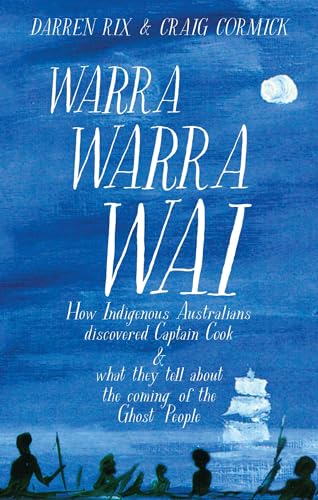
.Now, over the years, I have written posts on a wide range of First Nations writing and storytelling, was wondering what to write about this year, when a couple of weeks ago this idea of collaborative writing projects popped into my head because I’ve come across a few in the last few years. Then, at the ACT Literary Awards last Thursday night, another such collaboration was not only shortlisted but won the Nonfiction award. The book is Warra Warra Wai: How Indigenous Australians discovered Captain Cook & what they tell about the coming of the Ghost People, and is by Darren Rix and Craig Cormick. That sealed the deal!

In the introduction to this book, Darren and Craig, the names they use to sign off the Introduction, say that:

This book has been a blackfella-whitefella collaboration, because too much of our history has been written by one voice only, and we need to find more collaborative ways to tell our past, present and future.

I would love to discuss all the collaborations I’m going to share in this post – including researching how the collaborations worked, who did what, and how differences (if any) were resolved – but that would be a big project. I have, however, met some of the writers involved, and have followed some of the projects on social media, so I am aware of some of the processes the writers followed. For now, though, I will share what Darren and Craig say in their Introduction:

In this collaboration, we each worked to our strengths. Craig did most of the work in the archives, and Darren did most of the oral interviews – and the people we talked to got the final say on the text. The stories we gathered belong to the individuals and communities we visited. This is their book.

Selected list of collaborative books

This list is presented in alphabetical order by the name of the first author listed on the title. I did think about dividing it into two lists – one fiction, one nonfiction – but decided that all these books aim to share truths about our society and culture, whether told within a factual or imaginative framework, so one list it is. (Links on authors’ names are to my posts on that author.)

There has been a lot collaborative publishing in the children’s literature sphere, over a significant period of time, but I’ve been less aware, until relatively recently, of similar activity in the adult sphere.

Wayne Bergmann and Madelaine Dickie, Some people want to shoot me (memoir, Fremantle Press, 2024, on my TBR): shortlisted for Nonfiction Book of the Year in the Western Australian Premier’s Book Awards.

Craig Cormick and Harold Ludwick, On a barbarous coast (historical fiction, Allen & Unwin, 2020, my review): a re-imagining of what happened when Captain Cook’s Endeavour was wrecked off the coast of Far North Queensland.

Aaron Fa’Aoso with Michelle Scott Tucker, So far, so good: On connection, loss, laughter and the Torres Strait (memoir, Pantera Press, 2022, Bill’s review): apparently the first memoir by a Torres Strait Islander to be commercially published, which means it addresses “the under-representation of Torres Strait Islander perspectives in Australian life”. You can read more about it on Tucker’s website.

Aaron Fa’Aoso and Michelle Scott Tucker with Lyn White, Spirit of the crocodile (YA fiction, Allen & Unwin, 2025, on my TBR, Bill’s review): a coming-of-age novel set against the challenges to the Saibai island community of climate change.

Carl Merrison and Hakea Hustler, with Dub Leffler (illus.), Black cockatoo (YA fiction, Magabala Books, 2018, my review): pleasingly, this book was in my Top 10 visited posts last year, and is in the Top 20 this year to date.

Boori Monty Pryor and Meme McDonald, Maybe tomorrow (memoir, 1998, my review): one of the first books I reviewed on this blog. Pryor has focused much of his life’s work on helping young people feel strong in their culture.

Boori Monty Pryor and Jan Ormerod, Shake a leg (Children’s picture book, Allen & Unwin, 2010): one of several children’s book collaborations involving Boori Monty Pryor.

Darren Rix and Craig Cormick, Warra Warra Wai: How Indigenous Australians discovered Captain Cook & what they tell about the coming of the Ghost People (history, Scribner, 2024, on my TBR): follows Cook’s journey up “Australia’s” east coast, visiting the places he renamed and gathering the local people’s stories.

Nicolas Rothwell and Alison Nampitjinpa Anderson, Yilkari: A desert suite (“unclassifiable” but fiction, Text Publishing, July 2025, on my TBR)

As the word “selected” conveys, this is not intended to be a comprehensive list, but an introduction to the range of collaborative writing that’s been happening. However, I (and readers of this blog I’m sure) would love to hear of other First Nations-settler collaborations, including from other parts of the world.

Click here for my previous NAIDOC Week-related Monday Musings.

Have you read any First Nations-white writer collaborations? And if so, care to recommend any?

ACT Literary Awards 2025

Last night, I attended the presentation of the ACT Literary Awards (which I have attended for the last couple of years). These awards are made by Marion (previously, the ACT Writers Centre), and this year’s event was MC’d again by Katy Mutton and Board Chair, Emma Batchelor. These awards were also framed as kicking off Marion’s 30th birthday celebrations, which is perhaps why the dress code was marked as “Smart Casual – With Flair”! For a bit of flair, I wore my gold-coloured sneakers!

This year the awards were held, not in the Canberra Contemporary Art Space where it had been held for the last couple of years, but in one of Canberra’s iconic buildings, the Shine Dome (which houses the Australian Academy of Sciences). (The Academy was one of the sponsors. Others included the Anderson Pender Foundation, Harry Hartog Bookseller, She Shapes History, Pulp Book Cafe, and the much appreciated Big River Distilling which provided gin for the evening!)

As last year, the event had a lovely relaxed informality, but the main aim of celebrating local authors and the writing community was still front and centre.

Also, as last year, the evening opened with a “rite of passage” offered by local Ngunawal elder, Wally Bell. At the end of the rite, which involves asking for permission to be on another’s country and to use that country whilst there, he told us that the spirit of the land would look after us, but that we have the reciprocal responsibility to respect and care for the land and for other people.

Following this, Michael Petterrsson, MLA, who is, among other things, Minister for Business, Arts and Creative Industries, addressed the gathering on behalf of the ACT Government.

But now, the awards…

Marion offers and/or administers a number of awards, including their own in the four major areas of Poetry, Nonfiction, Children’s and Fiction. Winners in these four categories receive $500 each. As I noted last year, they accept both self-published and traditionally published works.

The judges were:

  • Poetry: Paul Hetherington, Maya Hodge
  • Nonfiction: Katrina Marson, Shannyn Palmer
  • Children’s literature: Jacqueline de Rose-Ahern, Will Kostakis
  • Fiction: Adrian Caesar, Ayesha Inoon

More information on the awards can be found on Marion’s website (linked above).

As I didn’t share the shortlists for these awards, I am listing them, highlighting the winners in bold.

Poetry

  • Barrina South, Makarra (Recent Work Press) (WINNER)
  • Lucy Alexander, Equations of Breath (Recent WorkPress)
  • Jen Webb, The Daily News (Recent Work Press)
  • Elfie Shiosaki, Refugia (Magabala Books) (HIGHLY COMMENDED)

Nonfiction

  • Melissa Bray, Australian Carillonists: HIGHLY COMMENDED (Self-published)
  • Hilary Caldwell, Slutdom (UQP)
  • Vesna Cvjetićanin, An unexpected life: WINNER (Self-published)
  • Theodore Ell, Lebanon Days (Allen & Unwin)
  • Helen Ennis, Max Dupain: A portrait (HarperCollins Australia)
  • Darren Rix and Craig Cormick, Warra Warra Wai (Scribner Australia): WINNER (Traditionally published)
  • Ben Wadham and James Connor, Warrior soldier brigand (MUP)

Children’s literature

Children’s literature is big in Canberra, with many excellent writers working in this sphere, so again we had two shortlists, one for Younger and one for Older readers.

Shortlist, Younger readers:

  • Lisa Fuller and Samantha Campbell (ill.), Big, big love (Magabala Books): WINNER
  • Tania McCartney, Flora, (NLA Publishing): HIGHLY COMMENDED
  • Maura Pierlot and Jorge Garcia Redondo (ill.), Alphabetter (Affirm Kids)
  • Stephanie Owen Reeder and Cher Hart (ill.), Sensational Australian animals (CSIROPublishing): HIGHLY COMMENDED
  • Sarah Watts and Aleksandra Szmidt (ill.), Marvellous Miles (Little Steps Publishing)
  • Rhiân Williams, Heather Potter, and Mark Jackson (ill.) One little dung beetle, (WildDog Books)

Shortlist, Older readers:

  • Sandra Bennett, Tracks in the Mist: the Adamson Adventures 4
  • David Conley, That book about life before dinosaurs
  • Jackie French, Tigg and the Bandicoot Bushranger (HarperCollins Australia): WINNER (Middle Grade)
  • James Knight, Spirit of the warriors
  • Gary Lonesborough, I’m not really here (Allen & Unwin)
  • Gabrielle Tozer, The unexpected mess of it all (HarperCollins Australia): WINNER (YA fiction)

Fiction

  • Jackie French, The sea captain’s wife (HarperCollins Australia): HIGHLY COMMENDED
  • Emma Grey, Pictures of you (Penguin Books Australia)
  • Julie Janson, Compassion (Magabala Books): WINNER
  • Inga Simpson, The thinning (Hachette Australia)

Other awards

Other awards were made during the evening, most of them in the first half of the evening, before the above-listed book awards. These other awards are mostly administered by Marion but are made in partnership with other trusts or organisations.

Anne Edgeworth Emerging Writers Award

Provided annually by the Anne Edgeworth Trust, this award is for emerging writers. This year’s was shared between three writers – Elisa Cristallo, Matthew Crowe, Deborah Huff-Horwood. It provides some funding to help recipients progress their work, through, for example, a mentorship, a writer’s retreat, or the services of an editor.

June Shenfield National Poetry Award

This is the only national award made by Marion. It was established in memory of the poet June Shenfield, and “aims to encourage the writing, publishing, and reading of poetry, specifically among emerging Australian poets”.

  • Michael Cunliffe , “Chrome [Ampeybegan Part II]” (QLD)
  • Krystle Herdy, “a metabolism of self” by (VIC): WINNER
  • Hugh Leitwell, “Synemon selene (Victorian form)”: (VIC)
  • Hannah McCann, “Funambulist” (VIC)
  • Josephine Shevchenko, “Building” (ACT): 3rd PLACE
  • Josephine Shevchenko, “Advice” (ACT)
  • Elizabeth Walton, “This is a recipe” (NSW): 2nd PLACE

Finding Beauty Poetry Prize

This new prize for emerging poets was established in memory of Roger Green. An environmental advocate, writer and editor, lover of poetry, and thinker, he believed that beauty had the power to alleviate fear and hardship, and to provide hope and inspiration. The theme this year was “Finding Beauty in Nature”. The winner received $5000, and the runner-up $2000.

  • Alisha Brown, “As a matter of great importance”: WINNER
  • Cate Furey, “Rosalie”: HIGHLY COMMENDED
  • Annie O’Connell, “;
  • Sara Pronger, “Still Green”

Canberra Airport Recognition Award for Literacy Inclusion

This new award (worth $2000) is sponsored by the Canberra Airport and “celebrates individuals, organisations, or initiatives that have made a significant contribution to advancing literacy and inclusion in the ACT region”. It is open to educators, writers, community leaders, publishers, librarians, or grassroots programs whose work demonstrates a deep commitment to inclusive literacy and social impact.

The inaugural winner – a popular one – was Danny Corvini who is behind the new-ish (it is now up to its 8th edition) queer magazine, Stun. You can read more about the magazine, its makers and their work at Stun‘s website.

The Marion Halligan Award

The Marion Halligan Award honours the life and work of the late Marion Halligan, and aims to recognise “works that demonstrate uniqueness, literary excellence, and/or surpass genre boundaries”.

This year’s award was announced by Marion’s young grandson, Edgar, and it went to Tania McCartney for her book Flora: Australia’s most unusual plants. She was clearly surprised and deeply moved by receiving this award in the name of Canberra’s beloved Marion! Tania has a large body of gorgeous work for children behind her and well-deserves this award.

Lifetime Membership Awards

These awards were made to our local heroes who have made longterm contributions to and support for writing and literary culture in the ACT. Recipients were the authors, Nigel Featherstone (my posts) and Irma Gold (my posts), and booksellers/book industry people (plus retiring Marion board members), Katarina Pearson and Deb Stevens (who is also in my reading group. Go Deb).

Canberra (the ACT) is a small jurisdiction, but, as I wrote last year, it has an active, engaged and warm literary community, encompassing writers across all forms and genres, of course, but also publishers, booksellers, sponsors, arts administrators, academics, journalists, and more. All were well in evidence despite the chilly july evening. We were also treated during the evening to a reading of the winning Finding Beauty poem by the poet Alisha Brown, a short performance by local slam poet Andrew Cox, and a video greeting complete with entertaining poem from the travelling-Craig Cormick (my posts) who was one of the originators of Marion 30 years ago.

Another joyful evening spent amongst people who love our literary culture.

Monday musings on Australian literature: on 1925: 1, Literary societies

As I’ve done in recent years, I decided to start a little Monday Musings sub-series drawing on researching Trove to get a picture of Australian literature a century ago, that is, in 1925. One of the things that popped up as I started this year’s Trove trawl was the existence of an active community of people enjoying literary activities in the company of others, including through various literary and arts societies. I’m going to focus on two such societies.

Australian Literature Society

The most serious was probably the Australian Literature Society. I wrote a little about this society in one of my 1922 posts, so won’t spend a lot of time on it here. Essentially, it was formed in Melbourne in 1899, aimed at encouraging the study of both Australian literature and Australian authors. It still exists today, as a result of its merging in 1982 into the Association for the Study of Australian Literature. It is a scholarly organisation.

In the 1920s, it held meetings that were open to the public and were reported publicly in the newspapers. They presented lectures, held “review” nights, dramatic nights, a “woman’s night” (which I have researched for the Australian Women Writers blog), and more. So, for example, in 1925, they held a review night in May at which papers were presented reviewing Australian works. One work reviewed was Myra Morris’ Us five, a children’s book published in 1922. The Age (May 12) reports that J. McKellar’s paper (read by someone else) “said Miss Morris had woven a garland perfumed with the delicate flowers of fancy and imagination” but her book had been neglected. The question was how “to galvanise the Australian reading public into a realisation of the good work Australians were doing”. Other writers reviewed included Dowell O’Reilly, Bancroft Boake, and Conrad Sayce, mostly little known now.

At their dramatic meeting in September, they presented four “playlets” by Australian writers, three of them women, including Mary Simpson (whom we have featured on the Australian Women Writers blog). In other words their events focused very much, as per their aims, on Australian writing.

Australian Institute of Arts and Literature

This society is referred to by variations of its names in the papers, including the Australian Institute of the Arts and Literature and the Australian Institution of Arts and Literature. Minor differences perhaps, but why is there such sloppiness about getting the names of organisations right? It still happens!

Anyhow, this Institute was quite different from the ALS – and a big distinction is there in its name. It’s not about “Australian” literature, but is an Australian organisation interested in “arts and literature”. Like the ALS, it has a Wikipedia article, but unlike the ALS, it was short-lived. It seems to have been founded in Melbourne in 1921 and it folded around 1930. According to Wikipedia, the club gained significantly in status and membership numbers when lawyer and respected public servant, Sir Robert Garran, became president. However, 1927, he was transferred to Canberra and, again according to Wikipedia, “the Institute felt his loss keenly, and never recovered”.

Louis Lavater, c 1917, Public Domain from the State Library of Victoria

However, during its heyday, it was highly active, meeting weekly during some of this time, and providing much entertainment and cultural nourishment for its members/attendees. Many of the meetings were reported in the papers. As Melbourne’s Table Talk (4 June) wrote, “music played an important part” in the pleasure of the meetings. And, while there was some music composed by Australians – specifically Louis Lavater whom Wikipedia describes as “a gifted leader of music in rural Victoria” – most of the music performed were the standards (Handel, Beethoven, and Mozart for example). However, there was one event devoted to Russian music, with songs by Gretchaninoff, Kveneman, Tchaikowsky; violin pieces by Wieniawski and Rimsky-Korsakov; and piano works by Rachmaninoff, Rebikoff and Liadow*. The report in Melbourne’s The Age (27 June) describes it “as altogether a programme out of the beaten track”. The music was followed by the clearly all-round Lavatar giving a lecture on “The Sonnet” which, the report said, dealt “sympathetically and appreciatively” with the work of “many of our sonnet writers during the past century”. I don’t know how long these meetings were, but it seems like they packed a lot in.

I’ll give one more example, this one reported by The Argus (31 August), which called it a varied program, “covering literature, music, and the drama”. So, ‘Louis Lavater, poet and composer, read a short paper supplementary to one previously given on “The Sonnet,” and dealing this time specially with some of the more important written in Australasia’. In addition, Vera Buck gave “an enjoyable piano and song recital” including two songs she’d composed (sung by Mary Killey); and Marie Tuck played piano pieces by Schumann (six delightful “Scenes from Childhood”), Beethoven, Chopin, and Schubert. Also, Frank Goddard, from the Melbourne Repertory Society, “gave two capital recitations”, and Don Mather and Pauline Abrahams acted the “Helen and Modus” scene from Sheridan Knowles’ drama, The Hunchback. Phew!

I think you get the gist. While it lasted, this was an active organisation and must have brought so much pleasure to Melbourne’s “culture vultures” (can I say that?).

Are you aware of any literary organisations from the past, where you abide?

* These are the spellings used in the report.

Miles Franklin Award 2025 shortlist

For some reason, I haven’t posted on the Miles Franklin Award shortlist for a few years, probably partly due to timing because I often travel in the southern hemisphere winter. However, I have time to post on this year’s shortlist that has just been announced, and, what’s more, I have read or will read more of this list than I have for some time. I find the list exciting, mainly because all have caught my attention – though I’ve not read them – before they were listed. That hasn’t always been the case recently.

The shortlist

  • Brian Castro, Chinese postman (Giramondo) (on my reading group’s 2025 schedule) (Lisa’s review): Castro has been shortlisted before
  • Michelle de Kretser, Theory & practice (Text Publishing) (my review): de Kretser has won twice before, and this book recently won the Stella
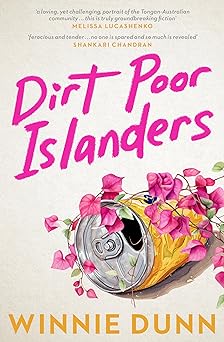
  • Winnie Dunn, Dirt poor islanders (Hachette Australia) (on my reading group’s 2025 schedule): debut novel by a Tongan Australian writer
  • Julie Janson, Compassion (Magabala Books): sequel to Benevolence (my review); this author’s first listing
  • Siang Lu, Ghost cities (UQP): Lu’s first shortlisting for the MF
  • Fiona McFarlane, Highway 13 (Allen and Unwin) (kimbofo’s review): McFarlane has been shortlisted before; but this book straddles the short story/novel divide. I’m keen to read it.

Some random observations:

  • Five of the six shortlisted writers are writers of colour, reflecting the increasing diversity in Australian publishing.
  • Two of the shortlisted writers – Castro and Lu – are male, but a male writer has not won since 2016 (AS Patrić’s, Black rock white city – my review).
  • “Each of the six books investigates race, class and gender in contemporary Australia but in different ways. It’s very hard to compare books like Ghost Cities and Dirt Poor Islanders because they’re written in such distinct ways, but they both encourage us to think about narrative and who owns stories” (from Sarah L’Estrange of the ABC).
  • One of the books, Highway 13, is more like a short story collection, and others are “quite formless”, says Declan Fry (of the ABC) who approves the trend.
  • There’s a wide spread of publishers, including a few independent Australian ones, which is always good to see as these small publishers do the hard yards with our literary writers

For more discussion by the ABC RN’s book people – on the shortlist and on each of the books – check out this page.

For posterity’s sake, here was the longlist

  • Brian Castro, Chinese postman
  • Melanie Cheng, The Burrow (my review)
  • Michelle de Kretser, Theory & practice
  • Winnie Dunn, Dirt Poor Islanders
  • Julie Janson, Compassion
  • Yumna Kassa, Politica (on my TBR)
  • Siang Lu, Ghost Cities
  • Fiona McFarlane, Highway 13
  • Raeden Richardson, The degenerates (Lisa’s review)
  • Tim Winton, Juice (kimbofo’s review

Each of the shortlisted writers will receive $5000 from the Copyright Agency’s Cultural Fund, with the winner receiving $60,000 prize.

This year’s judging panel comprises Richard Neville (Mitchell Librarian of the State Library of NSW and Chair), Associate Professor Jumana Bayeh (literary scholar), Dr Mridula Nath Chakraborty (literary scholar and translator), Professor Tony Hughes-d’Aeth (literary scholar and author) and Professor Hsu-Ming Teo (author and literary scholar).

ArtsHub, from which I drew the names on the judging panel, quotes the judges as saying:

“The shortlist for the 2025 Miles Franklin Literary Award celebrates writing that refuses to compromise. Each of these works vitalises the form of the novel and invents new languages for the Australian experience.”  

“Vitalises the form of the novel” and “invents new languages for the Australian experience” sound positive to me. Finding language for our experience is the issue, many of you will recognise, that I’ve found constantly in my Trove searches about Australian literature. It’s something that should never stop. As our society changes (its makeup for a start), so does our culture, and so also should the language we use to explore and reflect that.

The winner will be announced on 24 July

What do you think of the shortlist?

Monday musings on Australian literature: Forgotten writers 12, Catherine Gaskin

Of all my Forgotten Writers posts, this one is the most questionable because I’m not sure she is completely forgotten. For baby-boomer and I think some Gen X readers, Catherine Gaskin was a household name. Just ask Brona who reviewed her 1962 novel I know my love, and said in her post that she’d read her mother’s whole bookshelf of Gaskins. But, Gaskin has, I believe, now slipped from view and is worth a little post. Her big, breakout novel was her sixth, Sara Dane (see Wikipedia), which was published in 1954. It remained popular through the 1960s to 1980s, when it was adapted to a miniseries in 1982. So, who was this writer …

Catherine Gaskin

Catherine Gaskin (1929-2009) was, says Wikipedia, a romance novelist – but I seem to remember her books as being historical fiction so I’d say her genre was mostly historical romance. She also included mystery and crime in her stories, at times. The youngest of six children, she was born the same year as my mother, but in County Louth, Ireland. She was not there long, however, as when she was only three months old, her parents moved to Australia, settling in the Sydney beach suburb of Coogee. She wrote her first novel, This other Eden, when she was 15 and it was published by Collins two years later, while she was still a schoolgirl. It sold 50,000 copies, and she never returned to school.

After her second novel, With every year, was published, she moved to London with her mother and a sick sister, Moira (who also published two novels). Three best-sellers followed, Dust in sunlight (1950), All else is Folly (1951), and Daughter of the house (1952). Wikipedia lists 21 novels to her name. In his obituary, Stephens tells that as a child she had loved reading, and read such authors as Ernest Hemingway, Graham Greene and Scott Fitzgerald. 

According to Wikipedia, she completed her best-known work, Sara Dane, on her 25th birthday in 1954, and it was published in 1955. It sold more than 2 million copies, was translated into a number of other languages, and was made, as I’ve said above, into a television mini-series in 1982. It is loosely based on the life of the Australian convict businesswoman Mary Reibey. Stephens writes that ‘a Herald critic described the novel as “most readable”‘ although the critic also suggested “that Gaskin’s understanding of history was not deep”. He says that “after Sara Dane, many of her books were overlooked by critics, although welcomed by readers”.

At least three of her novels – Sara Dane, I know my love, and The Tilsit inheritance – were adapted for radio, by Australia’s Grace Gibson Radio Productions, and many others besides Sara Dane, were translated into other languages.

Gaskin met the man who became her husband in London, and they married in 1955. He was a TV executive and 19 years her senior. They lived in various places together, including the USA, the Virgin Islands, and Ireland. However, she returned to Sydney at the end of her life, and died there in September 2009.

I was inspired to write this post by some research I did for the #1970 Year Club last year. Journalist Rita Grosvenor visited her in Ireland around the time of the publication of her novel, Fiona. Grosvenor writes that:

She is among the elite of the world’s women novelists, with such a faithful following of readers she can be sure that every time she produces a new book it will sell 50,000 copies in hard-cover – and that’s more than most authors sell with a handful of books. With paperback sales she often passes a million.

Grosvenor’s article was for the Australian Women’s Weekly, so there’s much about her living arrangements and house, but towards the end, she shares Gaskin’s thoughts about her writing. Despite her success, Gaskin is depressed every time she starts a book, fearing that “this time it is not going to work out, but somehow it does”. However, she says:

“I know I can never be a Graham Greene, but I always want to improve within my limitations. I’m a perfectionist.”

As Stephens writes, “she knew her limitations but didn’t like being regarded as a romantic writer”. She saw herself as “an entertainer and good craftswoman who married romance with history and studies of such subjects as trades and places”. 

According to Stephens, Gaskin retired after her last novel, The charmed circle, was published in 1988. She wanted to travel with her husband, without publishers’ deadlines. So, they did travel, apparently, until his death in 1999. She then moved to Mosman, in Sydney, and spent the rest of her life there. Stephens quoted her as saying, ”I am not an Australian by birth but I think like one”.

Have any of you heard of or read Catherine Gaskin?

Sources

Monday musings on Australian literature: Names and naming

In yesterday’s post on Percival Everett’s James, I didn’t discuss the issue of naming. I should have, however, as it is a significant aspect of the novel, so much so that the novel ends on exactly that point. Throughout the novel, James, who is called “Jim” by the “massas” (aka masters) if they bother to call him anything, clarifies that he is James:

“I am James.”
“James what?”
“Just James.”
[end of novel]

Names, as we know, can be tools used for power and control, to dehumanise people. It happens in the most subtle ways, as well as in sanctioned ways. Throughout the colonial project, for example, naming has been used a tool of ownership and submission, but it has also been used to dehumanise and control in all sorts of other legitimated ways, such as in the practice of giving prisoners numbers and calling them by that number.

I was horrified to witness a misuse of a name during our recent trip to Far North Queensland with a company called Outback Spirit. This company makes a practice of using local guides wherever possible, and in remote regions those guides are often First Nations People. It is such a privilege to spend time with those who know the country so well and are prepared to share their knowledge with us. And so it was on our little expedition to stand on the top of mainland Australia.

Our guide was Tom, who identified himself as a Gudang man (with several other familial connections in the region). On our return from Pajinka (their preferred name for the top or point), he lead us across the rocks to the beach and thence our bus. I was in the group right behind him, when we met three middle-aged guys on the way up. The one in front saw Tom and gestured for him to stop. Then, without asking permission, he took a photo (as if Tom was some exotic!) Tom was impressively gracious and, when the guy finished, introduced himself as Tom and welcomed them to country. They seemed to appreciate this – but twice in the very brief conversation that followed, the photographer addressed Tom as “Tommy”. Really? I could be generous and assume that he was one of those people who automatically uses a diminutive form of a name when they are introduced to another person, and I will never know, but it felt so wrong. Whatever the man’s intentions were in using “Tommy” – and whether they were conscious or not – it was a shocking reminder to me of how far we have to go.

This issue of names and naming – of people and places – of course comes up in First Nations politics. I was interested that in Cape York there was far less use of local names for places (towns, rivers, and so on) than I expected. I asked Tom about it, and he simply said that it was coming. Interestingly, the week we were up there, Qantas had announced that it had renamed one of its Dash-8 aeroplanes, “Horn Island Ngurupai”. According to the National Indigenous Times this was done at the request of the Torres Shire Council. It seems rather little to me, but the Torres Shire Council chief executive Dalassia Yorkston is quoted in the article as saying that

“Even though our request was a simple one, it was a powerful one,” she continued. “Because it showed that beyond Horn Island we not only recognise that English name but we recognise the Kaurareg people, the Kaurareg nation, the traditional name.”

Back in 2012, I wrote a Monday Musings on the importance of place and researching local names in Noongar/Nyungar culture

Of course, naming frequently appears in First Nations writing. One example I’ve shared in this blog was in the opening paragraph of Ambelin Kwaymullina’s short story, “Fifteen days on Mars”, when our first person narrator says, pointedly,

It had been almost a year since we came to Mars. That was what I called this place although it had another name. It was Kensington Park or Windsor Estate or something like that but I couldn’t have said what because I could never remember it.

I love the way she turns this white-person excuse of “not remembering” unfamiliar names on its head.

Alexis Wright, Carpentaria

Many First Nations novelists have used names to make political points. The names for people and places in Alexis Wright’s Carpentaria is another good example of using satire to make a point, with the town of Desperance and characters like “Normal Phantom” and “Mozzie Fishman”.

One of the issues that confronts non-Indigenous people is how (and whether) to write about Indigenous Peoples. I found a useful guide by Macquarie University, published in 2021, on “writing and speaking about Indigenous People in Australia”. It’s written primarily for those writing academic papers, and it recognises that language changes, but looks to be still relevant now and is worth checking out for anyone who is interested in their own writing practice.

I know I’ve just touched several surfaces in this post, but I wanted to capture some ideas while I could. I can always build on them later.

Thoughts or examples, anyone?

Monday musings on Australian literature: Forgotten writers 11, Nancy Francis

Like my last forgotten writer, Ruby Mary Doyle, today’s writer, though also a prolific contributor to newspapers in her day, has slipped into the shadows. Neither Wikipedia nor the Australian dictionary of biography (ADB) contain articles for her, but the AustLit database does and Zora Cross, writing as Bernice May in The Australian Woman’s Mirror, also did a piece on her. As with many of my Forgotten Writers articles, I researched and posted a version of this on the Australian Women Writers’ site in April, but have saved posting here until June because I am in Far North Queensland where she lived most of her life. Seemed fitting.

Nancy Francis

Nancy Francis (1873-1954) was a poet, and writer of short stories, essays and serialised novels. She was born in Bakewell, Derbyshire, England, in 1873. According to the Obituary in The Cairns Post, her mother was the surviving descendant of the Beaton family, which was connected, through service, with Mary Stuart, Queen of Scotland. Her Yorkshire-born father was a well-known musician who had played a cornet solo in front of Queen Victoria. Nancy developed her musical talent, and apparently had “a beautiful and unusual soprano voice”. She also wrote verse as a hobby and contributed to various periodicals.

According to the Obituary, Nancy married Frederick James Francis in 1900. They lived in London and other country centres, before coming to Australia, just before the 1914-18 war. With three young daughters, they travelled to the remote Bloomfield River, in Far North Queensland, where her husband joined his brother in various mining ventures. During this period Francis “acquired her exhaustive knowledge of the North Australian bush and its aboriginal inhabitants, of whose character and folklore she made a sympathetic study”. She increased her output over this time, with her verses, articles and short stories appearing regularly in the Bulletin and other southern periodicals. Much of this writing appeared under the nom-de-plume of “Black Bonnet”, which Bernice May (Zora Cross) ascribes to her love of Henry Lawson (who wrote a poem titled Black bonnet”).

After some time – not specified in the Obituary – the family moved to the small mining township of Rossville outside Cooktown, where Frederick and two brothers continued working in mining and other development. The Obituary says that “among these jungle clad hills she produced some of her best literary work, including many of the poems later collected and published in book form”. In 1927, Bernice May wrote about Francis and her daughters – who all became published writers in their teens – and praised the quality of their verse. May clearly had some correspondence with Nancy and her daughters, and was impressed by what the girls had achieved under their mother’s home schooling. Francis wrote to her, “How I long at times for a creepy novel, a box of chocolates and no bright ideas that nag to be put on paper”, which May says reminded her of Mary Gilmore who “in her first passionate days of great poetry declared she could not take her hands out of the cooking-basin and washing-up dish fast enough to run away to her pen and write some fiery line that had flashed to her across her domestic work”. Bernice May understood the challenge faced by women artists.

In 1928, Nancy and her husband moved to Cairns, but not long after, in 1929-30, she travelled back to England. On her return she “joined her husband at Herberton where she lived until her death”, on 28 June 1954. Her husband, who had also worked as a freelance journalist, predeceased her in 1942.

According to the Obituary, she was actively involved in community activities, including being a member of the C.W.A. from its inception, and President of the local branch for eight years. She also worked for the Red Cross and Patriotic Associations during both world wars. She remained a journalist throughout her life and was keenly interested in politics and world affairs. She also left behind four children, the three daughters (Patricia, Kathleen, and Christobel) and a son. The Obituary describes her as follows: “Generous and warmhearted, and with a vast fund of kindness for the underprivileged, she retained the standards of her English upbringing in a new country and a changing world”.

AustLit focuses on her writing. She wrote under many variations of her name and initials – N. Francis, Nancy Christobel Francis, N. C. Francis, N. C. F, N. F., Nancy C. Francis – as well as her Black Bonnet pen-name. They list 426 works by her under her Nancy Francis name variants, and another 62 under Black Bonnet, so she was prolific. And yet, she does not appear in the plethora of reference books, histories and guides I have on Australian literature. Why? Perhaps it’s because she spent her life in such a remote part of Australia, away from the literary world, though she did have writing published down south. Or, maybe it’s simply that for all her writing, she had only one published book, her poetry collection, Feet in the night and other poems, which was published by The Cairns Post in 1947. All her other writing appeared in newspapers and magazines/periodicals.

Indeed, this book’s reviewer in Mackay’s Daily Mercury (28 August 1948) implies that the ephemeral nature of newspapers is behind obscurity when they write that “beautifully hewn lines of poetry, melodious verses which have stirred the infrequent verse-readers for a morning half-hour, lie … forever entombed in rows of bound newspapers in libraries”. Fortunately, however, Francis had managed to compile a volume from her output, and the reviewer liked the result:

“FEET IN THE NIGHT” is … taken from the first poem of the first section, which deals sympathetically with the vanishing natives of this continent, who move like shadows on the hill, or ghosts in the scrub, along dark green valleys and dim waterways out to where the jungle ends. The other sections celebrate the Galllpoli era, romance, soft and melancholy, the scenic glories of the North, and memories of England and the out-bound voyage

We do not hesitate to express the opinion that almost every poem in the collection was well worth rescuing from its dusty obscurity. These verses have been polished and polished again. All are graceful, delicate and restrained.

According to AustLit, her writing for Queensland newspapers included essays in series, such as her studies of North Queensland Aboriginal culture, titled ‘By Forest, Scrub and Shore’ (1939-1940), which include detailed discussions of customs and practices in the region; a series of historical essays on ‘The Anglican Church in North Queensland’ (1936-1938); and many essays on Captain Cook. AustLit also says that her travels Western Europe and Northern Africa around 1930 inspired several poems which expressed her identification with the North Queensland landscape and a longing for her North Queensland home. It seems she travelled overseas more than once, with The Courier-Mail (26 April 1938) reporting on a planned trip to “the Continent” in 1938.

Nancy Francis may not (yet) have come to the serious attention of those documenting Australia’s literary history, but back in 1927, Bernice May was impressed, writing that,

“One does not know whether her crisp articles on nature study, her accounts of the blacks and their ways, or her verses are the most remarkable”.

She also compared Nancy and her daughters to the Brontë sisters, no less, saying

It was not until the Bronte girls left Yorkshire for Belgium that their hearts turned back to the scenes of their youth and they began to write of them with the wonderful feeling which has never since been surpassed in fiction written by women. I sometimes wonder if when this little outpost moves, when perhaps the mother and daughters become separated from the scenes of their early days, something missing in our fiction will be supplied—the great story of the lonely, mighty North.

This is not all she said, but you can read the rest at the link below.

The piece I shared on the AWW site is “The black snake”, which, as the title suggests, references the “snake” motif frequently found in Australian bush stories (including Henry Lawson’s). It draws on familiar short story tropes to tell a good story, and shows a writer who knows her craft and how to entertain her audience.

Sources

  • Bernice May (aka Zora Cross), “Black Bonnet and her daughters“, The Australian Woman’s Mirror, 3 (26),  24 May 1927 [Accessed: 8 April 2025]
  • Black Bonnet“, Daily Mercury, 28 August 1948 [2 April 2025]
  • Black Bonnet, AustLit [5 April 2025]
  • Nancy FrancisAustLit [5 April 2025]
  • Nancy Francis, “The black snake“, The Cairns Post, 28 December 1935 [Accessed: 8 April 2025]
  • Obituary, The Cairns Post, 10 July 1954 [Accessed: 2 April 2025]

Monday musings on Australian literature: Trove treasures (13), American scholar on Australian culture (1952)

Help Books Clker.com
(Courtesy OCAL, via clker.com)

While researching Trove for April’s 1952 Year Club, I came across some articles about an American Fulbright scholar’s critique of Australian culture, and thought it a worthy topic for my occasional Trove Treasures series. The scholar was John Hough, who was Professor of Classics at Colorado State University, and he was finishing his year’s scholarship at University of Sydney.

Grafton’s Daily Examiner (22 November 1952) titled its article “Criticised aspects of Australian life“, while the Newcastle Morning Herald and Miners’ Advocate (also 22 November 1952) titled theirs “Australian ways slated by American“. It was also reported, along similar lines, in Sydney’s Sun and The Daily Mirror, and Melbourne’s The Argus. According to the Daily Examiner, Hough was speaking at an Australian-American luncheon at the Trocadero, and had said “he was appalled at the prejudice that had grown up against migrants”. He said that migrants to America “came of their own accord, and had to take their chance of making a living” but there was “no need for Australia to make the same mistakes”. And then he identified a number of other aspects of Australian culture that he felt were going wrong:

  • Mistakes in the treatment of aborigines.
  • The almost exclusive use of American and other imported songs, and records of oversea artists on the radio. 
  • He did not know why Australia did not make more use of its own songs and singers, instead of listening to people who “occasionally croon, sing, and cry.” 
  • The attitude of Australian “upper-level society” to Australian culture, which it belittled, and the denial that there was any such thing as Australian literature.

None of the articles expanded much on these, and when they did it was brief and focused on Hough’s critique about migrants. For example, the Daily Mirror (21 November) explained that

He said America had made terrible mistakes in migration, but that there was no reason why Australia, should make them. He said he regretted the tendency to stress that a man was a New Australian when he got into trouble.

The Sun (21 November) reported it a little differently:

“In America our migrants came of their own accord, and had to take their chances of making a living,” he said. 
“We also did not have the benefit of the study of sociology available today”. 

A couple reported that he’d been to the Greta migrant camp, and hadn’t liked what he’d seen. Most of the other issues were either ignored in the reports, or were listed as “other” aspects.

However, a few days later, on 8 December, the Daily Examiner, took on Hough’s comments – the only one to do so as far as I’ve found – and discussed them in an article simply titled, “Australian culture“. They argued, for example, that Hough had criticised Australia for not being “very hospitable towards migrants or new ideas” but had also said, contradictorily, that “we make exclusive use of American and imported songs and records of overseas artists on the radio”.

The article continues that Hough “emphasises” that while “we have our own rich array of local talent”, we “prefer to ignore Australian artists … and listen to those who croon sing and cry!” It doesn’t disagree with this preference. Its point, rather, is that this is “easy enterment [sic] but it isn’t culture”. This narrow idea of culture is not uncommon I think.

Anyhow, the article then takes on Hough’s statement that Australia’s upper-level society “belittled Australian culture and denied that there is any such thing as Australian literature”. It argues that this “belittles our land as much as it belittles our people”. Then, in its parochial way, says:

We in Grafton are rightfully proud of our Jacaranda Festival. Not only because it provides gay and whole-some entertainment, but because it sets a standard of culture that is lovely and fundamentally Australian.

But there’s more … it argues that Australian has “many scientists, inventors, physicians, writers, artists and musicians whose names and works shine like gems in any hall of culture” and calls these people “true Australians from the land they love”. Ignoring them, the paper says, “does them and their nation grave disservice”. Then, in another statement that comes straight from its times, it points out that:

Australia Day for example might have a more popular appeal if we used it to praise our famous men, the glory of their times. 

There’s more, including a them-versus-us statement which promotes the value of the “country Press”, and has a dig at the metropolitan Press which, it claims, “frequently says that writings about Australia have no publicity value”. The result is that

… our mighty land mainly goes unhonoured and unsung, and Australian literature and art is said not to exist. The great deeds of the pioneers, the fortitude, skill and’ patience of the modern countryman are overlooked. The essential loveliness of our land is side-tracked. Yet these things form the basis of our culture, and until they are recognised and publicised our mighty land will remain a Lilliput among the nations of the world.

It’s a beautiful bit of self-defence that turns Hough’s criticism into, at least in part, a pat on their own regional backs for writing about – for recognising, in other words – the true value of Australian culture.

I do enjoy Trove.