Melbourne Writers Festival 2020: Navigating our future

MWF logoI didn’t think I’d get to this session, but when my regular Thursday evening commitment was cancelled, I knew exactly what to do …

Navigating our future (Thursday 13 August 6-7pm)

This intriguingly titled session was described as follows:

Australian literature provides a means through which we might better understand ourselves, and our relationships with our region and the world. Larissa McLean Davies, Associate Professor in Language and Literacy at Melbourne Graduate School of Education, is joined by Professor Ken Gelder from the Faculty of Arts to explore the crucial role of literature and reading in this time of climate and social crisis, and the vital importance of teaching diverse Australian literature in schools. With an introduction from Alexis Wright, Boisbouvier Chair in Australian Literature. (Supported by University of Melbourne, Faculty of Arts)

Alexis Wright introduced it, explaining that it was the Boisbouvier Oration, but here’s the thing, it wasn’t an oration, but a conversation. Hmm … just as well I like conversations. Wright, herself, gave the Boisbouvier Oration in 2018, which was reported by The Sydney Morning Herald:

It was Alexis Wright who threw out the challenge. Australia must create great expectations of building a visionary literature for our times, she said. We should put some money into buying rocket fuel rather than just topping up the gas barbie bottle.

Richard Flanagan gave the inaugural “lecture” as The Monthly reported it in 2016. His and Wright’s focused in some way on the value or power or role of writing, and this is how the 2020 oration-cum-conversation was framed too, though it didn’t quite go where I expected it to. Instead, it focused more on the practice of teaching Australian literature in Australian schools today – in what’s being taught, in the challenges of teaching our literature, and in how things might be improved. It felt like the advertised topic – exploring “the crucial role of literature and reading in this time of climate and social crisis, and the vital importance of teaching diverse Australian literature in schools” – was a given rather than a topic to be discussed. And, that’s ok.

So, the session … it did work as a conversation, though Ken Gelder was primarily in the interviewer role, and Larissa McLean Davies in the interviewee one.

Role of Australian literature in Australian schools

Gelder commenced by saying that the things covered would include how literature can assist young people to navigate their futures, strategies for teachers, and the urgent need to prioritise the teaching of Australian literature in these challenging times. He noted that our current challenges include bushfires, COVID-19, and the Black Lives Matter movement which, in Australia, has focused on the failure of government to end institutionalised discrimination, including the ongoing Aboriginal deaths in custody issue. It is a time of climate and social crisis.
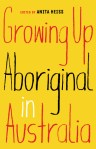
Anita Heiss, Growing up Aboriginal in AustraliaMcLean Davies exemplifed the importance of literature by saying that the recent Black Lives Matter protests brought attention to the need for indigenous stories to be heard. She said that it resulted in books by indiengous authors, like Anita Heiss’ Growing up Aboriginal in Australia (my review), and books about racism being sold out. Wow, that really says something, doesn’t it, about the value of awareness and consciousness-raising to book sales. People do want to know these stories!

These stories, she argued, help us negotiate the crises we face. The stories become part of our own subjectivity and help us negotiate our own place in the world. This was one of the most powerful things she said in the session.

Status of Australian literature in the schools

The conversation then turned to the current situation regarding the place of Australian literature in schools. McLean Davies explained that the creation of the national curriculum in 2007/8 made the teaching of Australian literature mandatory in the curriculum, requiring teachers to select and teach an Australian text (at least one) at every year level. It’s rare for such compulsion to be in school curriculums internationally, she said, which suggests the fragility of our national literature.

However, we don’t know how these texts are being taught, nor what texts are being taught (except for year 12 which has set texts). We don’t, she said, know how many Australian texts are taken up and how many are written on in the exam. In other words, there is no mechanism for assessing this mandatory teaching of Australian literature. This is the research she is doing. (How fascinating. I hope we get to see the results of her team’s research.)

The selection of texts

There are text setting panels, often setting them for 2 years, though for the obvious practical reasons – teacher familiarity, the development of resources, and the economics of availability – they will usually stay on the list for 3 to 4  years. We don’t know, however, whether these books are treated as marginal or main texts for study. The texts student will write on in exam will get the most attention – of course.

Diversity in Australian literature school texts

Gelder talked about the importance of setting suitable texts at times of crises, and diversity in literary studies. Do works by writers like Alexis Wright, Tony Birch, Tara June Winch, Lionel Fogarty, Charmaine Papertalk Green, and Ellen van Neerven have visibility, he asked?

McLean Davies said they did, because, for example, in Victoria, there are set texts for year 12, but in other years, teachers have choice, within guidelines. However, their choice depends on teachers’ personal reading diets, the professional learning they are undertaking, and the time they have to engage in new reading (given the increasing administrative work pressure teachers are under.) So, there’s opportunity but …

Claire G Coleman, Terra nulliusShe talked about the issue of “engagement” and that in trying to achieve this for diverse classes, teachers will often resort to more standard “white”, often neo-colonial texts. But young people are interested in indigenous issues, climate, etc, she said. Teachers would do well to turn to, for example, Claire G Coleman (Terra nullius) and Alexis Wright to bring these issues into the classroom. We need to think about what engagement means for Australian school students.

On being nimble in text selection

Gelder noted that quite often texts on school lists look like they’ve been there forever, but syllabi need to be nimble if they are to reflect the now. He’s found that some of his overseas students have read more Australian literature than local students have. We need to “sell our literature” he suggested.

McLean Davies said there is the issue that teachers often rely on their own reading experiences and learning. A multi-pronged approach is needed to support teachers, including looking at undergraduate degrees, and supporting teachers to develop new intertextual understandings of literature. Teachers need to learn how they can use literature to contest their own views. They need to develop new intertextual networks that enable new Australian writing to be accessed in the classroom. She quoted a colleague who said that “you don’t read a text, but a text reads you”. It is fundamental that teachers have the confidence to sell a text. They need packaged resources, and need knowledge about literature that they may not have in their own background.

Cultural cringe?

Gelder made the lovely statement that students need to be swept away by literature but teachers provide the broom, but is there cultural cringe? Australian literature tends to be characterised as white and inward-looking. Are we still resistant to, or defensive about, diversifying our understanding of our literature?

Jasper Jones, by Craig SilveyMcLean Davies concurred to a degree, but gave a nicely nuanced response, evoking a complex understanding of culture cringe:

  • There is resistance from teachers because Australian literature is seen as too white, as buying into the  Right’s rhetoric about nationalism. Teachers fear buying into the colonial monolith, into notions of nation. There’s some mismatch between what teachers want to do re diversity and the Right’s leaders wanting to focus on “nation”. That homage to Australian colonial origins is still there in the discourse, and this makes teachers anxious.
  • Cultural cringe is evident in text selection. A recent survey, 2017/8, her team did of texts being taught brought responses from 700 teachers. Only one Australian text, Craig Silvey’s Jasper Jones, appeared in the top 10 (at 8). The others included Macbeth, Romeo and Juliet, To kill a mockingbird, Animal farm, Hamlet, Outsiders (SE Hinton), 1984, and Othello. This gave us a “cause for pause” she suggested!

A place for colonial writing?

Gelder wondered if there was a place for colonial writing, particularly given it can contain its own critiques. He talked quite a bit about colonial writing, which has been his interest for ten years, but I want to move on … However, he did say, and has a point of course, that quite a lot of indigenous writing “works over” our colonial heritage, refiguring and remapping the colonial period. Is there goodwill towards colonial literature, he asked?

McLean Davies said there’s not a lot of colonial literature on syllabi in more senior years, but agreed there is potential for rethinking colonial ideas through colonial texts. She referenced the wonderful To be Continued database of short stories published in Australian newspapers, which provides access to colonial texts. Publicly available resources like this represent a wonderful potential for engaging students in literary enquiry. Teachers could use geospatial modelling to find stories set in places where students live, providing an opportunity to think about stories about those places and about the implication of those stories for their current lives. She commented that pedagogy – how we teach – is as important as what is taught. In this period of lockdown, teachers need access to digital content, but education hasn’t fully mobilised these tools in literature.

On the value of local, versus global?

Gelder talked about the conflict between the local (particularly obvious in these lockdown times) and the push for a more global/cosmopolitan outlook. (He cited Alexis Wright’s interview with expatriate Australian writer Peter Carey, and his novel Amnesia).

McLean Davies agreed, and suggested now is a good time to think about the place we are occupying and our relationship to it.  She talked about the value of speculative fiction, like Coleman’s Terra nullius and what happens if you don’t take notice of place. She also suggested that the problem is that we are continually reaching for the global, but the role of the local is very important. She mentioned Growing up Asian in Australia and Alice Pung’s wanting to read people who were like her, proving again that the local and the personal are important. It’s not one or the other. Teachers need to thing about the breadth of what they are selecting, need to look at global and local, because students need to read all those stories.

Supporting teachers

The session ended on the important issue of supporting teachers. Their challenge is to find time to develop new understandings of Australian literature. She’s involved in a project – partnership with the Stella Prize – which involves asking teachers to select a text from the longlist and then think about the text and their students, about that text re other books, and re other cultural artefacts. It’s a good opportunity to bring past and present texts together. But, the fundamental issue is that teachers need time and professional learning. They need more professional development that recognises them as intellectually interested and able to develop own new knowledge about text. Yes!

So, this is not quite the session I was expecting but, as I’m interested in both education and the teaching of literature, it ended up suiting me perfectly.

Lisa (ANZLitLovers) is also posting on the Festival, as is Theresa (Theresa Smith Writes).
Monday musings on Australian literature: Ten Year Anniversary, with a Giveaway

Today (well, yesterday actually, except yesterday wasn’t a Monday) marks the 10-year anniversary of my Monday Musings series. When I came up with the idea, and wrote the first post back on 9 August 2010, I couldn’t have imagined that I’d be here ten years later still blogging, let alone still posting weekly Monday Musings.

My aim, as I wrote in that first post, was very simple – to promote Australian literature.

Some highlights

I have published over 500 Monday Musings posts, across a wide variety of topics – all of course relating to Australian literature in some way.

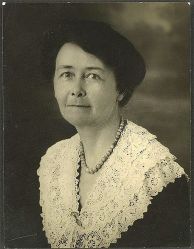
Miles Franklin

Miles Franklin, c. 1940s (Presumed Public Domain, via Wikipedia)

My first post was titled, simply, Making a start, and in it I shared five random facts about Australian literature. The first real post – 5 to get you started – came the next week, and here I shared five novels that I thought might attract newbies to Australian literature. Would I choose different ones now? Probably, but I still think my list from 2010 isn’t bad.

In terms of number of all-time hits, my top five Monday Musings posts are:

Interesting, eh. These, however, are not the posts that have engendered the most comments. Those top five are:

I have tried to mix up the sorts of topics I’ve covered in Monday Musings, but there have have some threads, such as:

I said, in my first post, that Monday Musings would “explore in more depth all sorts of writers, works and issues relating to literature in Australia. It will be rather serendipitous.” And this is how it has panned out. I have written on themes and motifs, forms and genres, individual writers, awards, issues, and, dear to my heart, on Australia’s literary history (inspired mostly by Trove. What a wonder – and help – that has proved to be.)

Keeping this series going has been challenging at times – coming up with the topics, and finding the time to research and write them, hasn’t always been easy. Many of the posts haven’t received the time and thought they deserve, but I’ve hoped that getting topics on the (web)page has some value.

Overall, Monday Musings posts have faired very well in my comment stats, which confirms that many of you are big supporters of this series. For this, I am hugely grateful. I love that so many people read the posts, and that so many of these posts stimulate discussion. That is the best fun for a blogger – and I learn so much from you all too. I feel very lucky. So …

To mark this anniversary

As I did for my tenth blogiversary, I’d like to do two book giveaways – one to an Australian-based reader and another to a non-Australian-based one. The book I send to each winner will be a surprise, making this a bit of a lucky dip.

The rules. Express your interest in the comments below, noting whether your postal address is Australian or not. Although this is not mandatory for the giveaway, I’d love to know whether you have a favourite Monday Musings post or whether there’s a topic you’d like to see covered in a future Monday Musings (though I don’t promise to do it!)

The winners. Late on August 17 (in my AEST-zone), I’ll draw from each list using a random number generator, and will announce the winners in that night’s Monday Musings (that is, next week’s MM post). If you win, you will need to provide me with your mailing address (privately) as specified in the announcement post. If you don’t, I’ll redraw, as I want someone to win.

Meanwhile, a huge thanks to you all for reading my blog – and particularly for supporting Monday Musings over all these years. You make it worthwhile. I look forward to sharing more with you – for another ten years? Watch this space …


Melbourne Writers Festival 2020: Let me be brief

MWF logoI won’t get to many Melbourne Writers Festival events, because those of most interest to me clash with other commitments and responsibilities. This is a shame given this year’s extensive digital program would enable me to attend my first ever MWF. Never mind, there will be other years. Nonetheless, I was thrilled to find a session on short stories at a time I could attend, so attend I did.

Let me be brief (Sunday 9 August 5-6pm)

The session was moderated by Wheeler Centre Programming Manager Veronica Sullivan who knew the books well. She managed the 45 minutes or so tightly but with intelligence and warmth. The panel comprised three writers of recently published short story collections: Yumna Kassab (The house of Youssef), Jo Lennan (In the time of foxes), and Elizabeth Tan (Smart ovens for lonely people). I’m sorry to say that despite liking short stories, I haven’t read any of their books.

Sullivan started by asking each writer about her collection, targeting her questions to what she saw as significant aspects of those collections.

Introducing the writers

Yumna Kassab

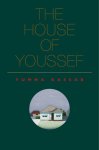
Book coverSullivan introduced The house of Youssef as comprising “spare and sharp” stories about a Lebanese community in Sydney, exploring “the way generations differences play out … the gaps … that make mutual understanding so challenging.” Kassab agreed her stories are about community and family. It’s unavoidable that there will be tensions between generations in any community, she said, but these are exacerbated in migrant communities because of the added layer of different cultural expectations. She’s become increasingly interested in this issue.

Sullivan wanted to know what drew her to these sorts of moments in the very short story form that she mostly uses. Kassab said it wasn’t her initial plan. She thought she’d need to be more dramatic, but found this form appropriate for exploring relationships. She’s always liked short stories. She said – provocatively perhaps – “the novel is a fleshier version of the short story”. She feels the form is well suited to delivering the message she wants to deliver – delivering a strong message is clearly important to her.

Jo Lennan

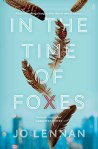
Book coverIntroducing Lennan’s collection, Sullivan described it as having an international outlook. It has a wide geographic spread, featuring characters taken out of their comfort zones. Lennan observed that mobility has become familiar over the last decades. It seems easy, but is in fact complicated, as she shows in her title story, “In the time of foxes”. It’s about a young filmmaker in London with a young toddler. Her mother is developing dementia back home, and, there’s a fox in the backyard to deal with. She has to face “giving up” her childhood home. Lennan’s point is that living abroad offers immense opportunities but can be accompanied by immense cost. The time has come for this character to pay that cost. (This cost, as many of my generation knows, is also paid by those left at home – particularly with COVID-19, for example, keeping grandparents away from their overseas grandchildren!)

Sullivan asked her to explain the fox motif which recurs through the collection – sometimes real, sometimes simply referenced. Lennan responded that foxes have spread throughout the world and have adapted to various environments, creating so many parallels with human mobility. They are also, she said, survivors and shapeshifters. However, she’s suspicious of themes in short story collections. Hmm, having just read Emily Paull’s Well-behaved women (my review), which does have a unifying idea, I don’t think overall themes are necessarily bad! Anyhow, she said that in her collection, the fox motif was “never a straight-jacket”.

Lennan also said that, despite this overall animal motif, the book is very much about human relationships, because they are the stuff of short fiction, of fiction in general. In her collection, relationships sometimes go disastrously, but in many stories there is a turn-up at the end. In one, for example, the protagonist doesn’t get what he wants but is changed, becoming a larger and better person at the end.

Elizabeth Tan

Book coverSullivan introduced Tan by noting that her stories, which include animal protagonists, unsettle readers expectations and assumptions. She asked how this approach allows her to explore perceptions. Tan spoke from personal experience when she observed that people can look at characters – like her cats and mermaids – and assume they don’t have interiority or inner life, that they are just a sidekick to another’s life. She likes exploring how these characters are unexpectedly resilient, and suggested they could mirror how she moves through life. As a young Asian woman, she often feels underestimated. But, she is not always sure if how she thinks the world is seeing her is how it actually is, but how do you know? She quoted Chimamanda Ngozi Adichie’s statement that “the problem with stereotypes is not that they are untrue, but that they are incomplete”.

Sullivan asked Tan about the surreal and humorous or satirical aspects of her stories, wondering what responses she was looking for. Tan said that she didn’t set out to be funny, but hoped people find her stories funny. Friendship, she said, can be defined by laughter, by empathy in sharing silly things and humour about them.

Choosing the short story form

Sullivan wanted – naturally, given the “theme” of the session – to discuss the short story form: what drew the writers to the form, how they attack its particularities, and how they consider aspects like structure and characterisation.

Many of Kassab’s stories are very short. Why, wondered Sullivan? Kassab said she didn’t really make a choice, that for her the voice of the character is the important thing. It’s this, and the idea, that dictates the structure, and word choices. She didn’t set out to write the collection. She likes shortness, believing that she can deliver a greater message that can get lost in larger work. She also said that it is easier to experiment – with technique, structure, voices – in shorter work. Such experimentation is harder to sustain in a novel.

Lennan’s stories are longer and more disparate. They have a depth of characterisation, with a sense, said Sullivan, that they start before the story and continue after it. Lennan agreed with Kassab that short stories provide scope for experimentation. She said she “inevitably” writes longer short stories, which facilitates the deep characterisation that people want in a novel. It’s having her cake and eating it too, she said! She’d been working on a novel but realised that her best writing was in her WhatsApp chats with friends! Short stories are more immediate, and felt the right way to bring immediacy and freshness to her writing.

Tan is different because her first book was a novel. However, she agreed with Lennan that brevity offers freshness, and with Kassab about the flexibility possible with short stories. You can be more playful, she said. Sometimes she gets reader feedback wishing a story was longer, but she likes that you can explore a particular moment without having to build an entire world. She said that reality is fragmented, without a lovely shape. Short stories can capture fleeting moments. Tan suggested that the desire for longer stories is a desire for conclusiveness that life can’t offer. Sullivan concurred, suggesting that short stories leave a space for readers wanting more, for anticipation. I agree. Short stories frequently leave you wondering whether you’ve “got it”, but I think this is often the author inviting us to explore.

Sullivan asked the three what advice they’d give writers regarding writing short stories. Lennan said do both, novels and short stories in tandem, arguing that few visual artists work on one piece at a time. Kassab agreed, saying writers are creative people. Ideas change, and interests change, so try different things and be prepared to throw preferences out the window. Tan also agreed, saying you don’t have to choose. Rubik (on my TBR) was going to be short stories, but the same characters kept popping up.

Sullivan suggested that the idea of conforming to set forms comes from the publishing industry. There was some discussion about this, with a general feeling that the narrow definitions are breaking down. Kassab didn’t set out to write a short story collection. It just happened. She suggested that you create the work first and let the marketers try to categorise it! There was also discussion about contemporary attention spans versus that of older generations, and that short stories might better suit the more fragmented way we consume media these days. I know this is often bandied about, but I’m not completely convinced. I’d have to see the research!

I liked Lennan’s response to this attention span argument. She proposed that in some ways they ask more of a reader. Readers have to keep reinvesting in characters, from story to story. The writer has a responsibility to make it a worthy transition for for the reader. The collection needs to work as a whole. She recognises that reading fiction right now – besides beach reads – is a big ask of people. You need to think about what you want for your reader – catharsis, to move them, to present a provocative twist, for example?

Naming favourites

The session ended with that favourite festival question about the writers’ current favourites.

Kassab: This is her year of South American writers. She’s loving Jorges (great thinker about literature and ideas) and Bolaño (great experimenter).

Lennan: Chekhov (his “clear-sighted and sympathetic portrayal of humanity”, which is timeless); Tatyana Tolstaya’s On the golden porch; and the Australians Tegan Bennett Daylight (Six bedrooms, my review) and Christos Tsiolkas (Merciless gods).

Tan: Tom Cho’s Look who’s morphing (TBR) and Julie Koh’s Portable curiosities. Both show you can write about anything you want, you can make stuff happen. Also Emily Paull’s Well-behaved women, and Wayne Marshall’s Shirl (which makes her laugh).

A great session, which offered, to me anyhow, some short story gold.

Lisa (ANZLitLovers) is also posting on the Festival, as is Theresa (Theresa Smith Writes).
Emily Paull, Well-behaved women (#BookReview)

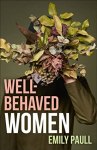
Book coverWell-behaved women is a debut collection of short stories by Western Australian writer Emily Paull. It is one of those collections that has a unique title, and what a perfect – and teasing – title it is for a collection of stories focused on women.
It has, you won’t be surprised to hear, the usual mothers, grandmothers, sisters and wives, but there are also teachers and students, writers, a step-father and step-daughter, and a vagrant woman. They span all ages. Most of the stories are told first person, with a few third person ones, and in nearly all the narrator or protagonist is, of course, female.

The collection starts with a bang, with a story described on the back page, so I’m not spoiling it, as “a world champion free-diver disappears during routine training” (“The sea also waits”). It’s the ideal opener because it’s about a woman who has chosen a dangerous sport because it’s – dangerous. She’s a woman whose “devil-may-care coastal ways” seem to disgust seemingly better behaved women with their painted nails and carefully tanned skin. It sets up the collection well as one likely to explore the nuances of women’s lives and the consequences of their decisions – oops, behaviour.

And so, from this first story on, Paull interrogates women’s lives from diverse angles. The stories read, mostly, like lovely little slices of life rather than as dramatic stories with twists. I like these sorts of stories, provided they ring true to life, because I’m curious about the choices people make. Paull has probably pored over these stories, honing them to the essential, but what we see is writing that looks easy. It flows well, and the stories show rather than tell, leaving readers to draw their conclusions. There’s nothing particularly inventive about the style or structure. Paull uses foreshadowing and flashbacks, traditionally, but judicially, to move her narratives along. The end result is a collection of accessible, well-crafted stories about relatable characters in, mostly, Western Australian settings.

The second story, “Miss Lovegrove”, has a young female drama student talking about her teacher. This teacher feels the need to tell her students the realities of life – “you will most likely never be on television at all during your careers, which will be short” – and she teaches our narrator a very cruel lesson. She is certainly not a well-behaved woman. Is she brutal? (Yes.) Is she bitter? (Probably.) Is she doing her young student a favour as she intimates? (We need to decide.) Fortunately, the next story, “Crying in public”, is gentler. It’s about the first real heart-break and a grandmother’s wisdom. Unlike “Miss Lovegrove”, Grandma wants to nurture her charge through the pain of the real world. This idea neatly links the two stories. There is, in fact, careful crafting in the order of the stories, with subtle links connecting one story to the next. I enjoyed identifying what I thought were the links!

Anyhow, other stories tell of friends found and lost, of coming out, of grief. In some, the stories could be any of us – an old high school flame returning to see if she can recover a past love (“Down south”), a sister grieving over her terminally ill sister (“Sister, madly, deeply”), a young woman discombobulated by her grandparents’ death (“Nana’s house”), a woman trying to fit the the image of the perfect wife (“The settlement”). But some are a little more dramatic, such as that about a woman whose backyard is found to hold a human skeleton (“From under the ground”), or the warm-hearted story about a vagrant woman caught in a bushfire (“The things we rescued”), or the tragic coming out story (“Picnic at Green’s Pool”).

What I most liked about the stories – even those that were more dramatic in flavour – is that the people are believable. Their emotions and reactions, in the main, are those of “normal”, flawed human beings. They make mistakes, like the young woman who leads on a colleague she’s not really interested in (“Nana’s house). They eat too much or too little, in a struggle to be themselves (“Dora”). And so on. You could see this as a feminist book. The title certainly suggests there’s an element of this in Paull’s thinking – but the book is not stridently so. The title is more wry, than barbed.

While most of the stories are average short story length, one, “Font de Gracia”, is a little longer. Its premise is a rather typical teacher-student affair, but it is well handled and resolved, without didacticism. It has some lovely writing, such as this description of mother-daughter tension:

Joana snatched up her bag without breaking eye contact with her mother. Their anger was like the pull between magnets.

It’s hard to pick favourites, but I did like the last two. “Versions of herself” is about a prickly 90-year-old in a retirement village – no, not in aged care or a nursing home, but independently living in a retirement village. It’s one of the broken-heart stories. Shirley Carruthers is not the most likeable woman around, but Paull, as she does with all her characters, encourages us to see and feel beneath the surface, to understand the whys. The point for me is that we don’t have to like everyone, but we can be kind.

The final story, “The woman at the Writers Festival”, concludes the collection beautifully, with a cheeky exploration of the writing life – particularly its challenges for women – and it does have a twist.

Well-behaved women, then, is a tight, engaging collection of stories about ordinary women, and the messiness of life. Rather than offer answers, it challenges readers to think about these messes, and consider what could be done to tidy them up a bit – next time around. Another good read from the people at Margaret River Press.

Challenge logoEmily Paull
Well-behaved women
Withcliffe: Margaret River Press, 2019
242pp.
ISBN: 9780648652113

(Review copy courtesy Margaret River Press)

Monday musings on Australian literature: Supermarket mini-collectables

Have you ever got caught up in those knicky-knacky promotional plastic toy campaigns that supermarkets often run to encourage you to buy at their store? You know, as in “spend $x and get a free y” with, usually, a new one every week for z weeks, encouraging you to get them all. I’m sure you know the deal …

Well, I was rather interested to read in various outlets recently, including Books & Publishing and news.com.au, that

Stikeez are gone and now Coles have announced their new range of mini collectables will be 24 pocket-sized books from the famous Treehouse series.

Now, that’s a much better idea.

Book coverIf you are not Australian, and not parents, grandparents or teachers of young children, you may not know about “the famous Treehouse series”. It started with the book, The 13-storey treehouse, written by Andy Griffiths and illustrated by Terry Denton. This book won the Australian Book Industry Association Awards (ABIA) Book of the Year for Older Children in 2012. Since then, this pair has produced 8 more books in the series, each book adding another 13 storeys to the treehouse, so The 26-storey treehouse (2012), The 39-story treehouse (2013), up to last year’s, or 2019’s, The 117-storey treehouse.

According to news.com.au, Griffiths and Denton “have collaborated with Coles” to produce a special set of 24 pocket-sized books for “the supermarket giant’s latest collectable campaign”. Griffiths says of this special “little” series that many of them

… will feature favourite characters from over the years and give them a chance to really shine.

There will be a couple of feature tours, one through the treehouse, some new episodes, including an elephant on a bicycle which is a sneak peek of a character you will see later in the year when the 130-Storey Treehouse comes out.

Given the huge success of the series – more than 10 million copies sold in Australia, 80 children’s choice awards and 10 ABIA Awards – this collectables campaign would, you’d have to think, be a bit of a winner for Coles. Described as a “world-first collectable campaign”, it aims, said Coles CEO Lisa Ronson, “to encourage a lifelong love of books”.

Of course it’s hard not to be cynical, when you read things like:

We all remember the excitement that Little Shop [a previous mini-collectables campaign] created for customers of all ages and we really wanted to create that same level of excitement for reading – because we know that enjoying books on a regular basis leads to improved literacy skills, better educational outcomes and happier children.

But, you know, it is about Australian books, reading and literacy, so perhaps it’s a case of “the ends justifying the means”?

Coinciding with the launch of this new campaign Coles is also running a competition inviting Australian residents (aged 3 to 18) to create their own picture book. There will be prizes and it will be judged by Griffiths. Coles “will donate a book to the Indigenous Literacy Foundation” for every entry. This is not to be sneezed at, and is, hopefully, a case where the combination of financial and social justice goals can generate a positive outcome. Let’s hope it does.

Do you know The tree-house series? What do you think about this sort of marketing-focused initiative – a cynical ploy, or a genuine attempt to do good while increasing business? And, what about the creators? Is it a good thing for them?

Chris Flynn, Mammoth (#BookReview)

Book cover

Mammoth, by Chris Flynn (UQP $32.99)

I am not a big fan of anthropomorphism and have read very few animal-narrated books. Animal farm is one, while Watership down, so enamoured by many of my generation, is not. However, I was intrigued by Chris Flynn’s Mammoth, which is narrated by a 13,000-year-old American Mastodon fossil, and was glad when my reading group decided to schedule it.

It is an ambitious book, encompassing the story of humanity’s destructive, often brutal march through time as seen through the eyes of those we supplanted, that is, the fossils of extinct creatures. Our narrator, Mammut, is accompanied by a number of other fossils – the skull of a Tyrannosaurus bataar, a pterodactyl, a prehistoric penguin, and the severed hand of an Egyptian mummy – who have found themselves together in 2007 Manhattan, waiting to be sold at a natural history auction. This auction did take place, and was, in fact, a major inspiration for the novel.

The story is framed by Mammut’s story of his life, death, disinterment as a fossil, and subsequent “life”. As he tells this long story, he is interrupted by the other “characters” who share their own stories, albeit far more briefly than Mammut’s. Each tends to use the voice of the time when he or she was first disinterred, meaning, for example, that Mammut’s voice is the more formal “arcane” one of the early 19th century, while T. bataar’s is the hip voice of the late 20th century.

As Mammut tells his story, he takes us to selected (representative) hot-spots of human brutality such as the Irish Rebellion of 1803, the oppression of Native Americans in the early 1800s, and Nazi Germany. He also covers theories of extinction, climate change, and the equation of big animals with power in the minds of men. The novel starts with a letter written in 1800 by Thomas Jefferson seeking mammoth bones (which he does eventually acquire for the White House), and ends with male celebrities vying for our fossils at the auction. Early on, Mammut tells T. bataar:

Let me tell you, and I say this as an original American, nothing compares to this nation’s willingness to promote patently false notions about itself in order to create a myth of American potency … Who do you imagine will buy us? You said it yourself, T.bataar. We represent power, for that’s what we were: Behemoths, Colossi, Titans. (p. 15/16)

Later, Pterodactylus tells the group about being used in training Hitler Youth:

We were presented to the eager teens as proof that Germany had once been the centre of might in Europe and the origin point for life on earth. Your mastodon friend in particular was elevated as a symbol of strength … I was referred to as the Reptilian Eagle, an apex predator who dominated the skies. It would have been a compliment, had it not come from the mouths of maniacs. (p. 159/160)

Mammoth is, then, a provocative book, confronting head on the ills of humanity. It could be deeply depressing – and in a way it is – but Flynn has taken his own advice (more on this anon) and told his story with humour, mainly through repartee between his fossil characters. I must say that I initially found this humour a bit silly, a bit obvious, and I wondered whether I was going to enjoy the book. However, the more I read, the more fascinated I became by what Flynn was trying to do. I didn’t find it as “hilarious” as some blurb writers did, but Mammoth offers such an idiosyncratic journey that I’m glad I decided to go with the flow.

One of the book’s main pleasures for me, besides its commentary on humanity’s destructiveness, is the writing master class contained within its over-riding story. This started with some digs about the writing life, such as Mammut’s “no-one gets into the writing game for money these days. No-one in their right mind, at any rate”. A sentiment that is reiterated later by French writer, Bernadin de Saint-Pierre.

However, more entertaining was the discussion of writing, or storytelling, itself. As Mammut’s tale progresses, his listeners begin to question him. Sometimes, it’s the issue of disbelief, to which Mammut responds by explaining his sources, by arguing that it’s perfectly valid for his molar to be observing action in one place while his head is elsewhere, or by allowing himself a little leeway:

I know you’re technically an elephant and all, but your recall of events is a little too precise. Not to mention the verbatim dialogue. Surely, you’re making some of this up? This is my problem with the memoir genre. There’s always more fiction in it than people let on.

I possess a remarkable memory, Palaeo, though I will admit to the occasional romanticism of the narrative. For the most part, what I am recounting is true. But, as you say, I am a storyteller who enjoys indulging in a yarn. (p. 143)

There’s also discussion of tone, regarding the degree of brutality and tragedy in Mammut’s tale:

… This entire tale has been a veritable famine of LOLs. Really, Mammut, next time you tell this story, you need to inject some humour, bro.

No too much, I think, T. bataar. No comedian ever won the Pulitzer … (p. 235)

Flynn, thus, cleverly engages with some current issues in criticism while simultaneously fending off potential criticism of his own work. He crowns this early on with the pronouncement that “No story’s gold from beginning to end” (p. 66). How can you argue with that!

There’s much more to this book. I haven’t touched on the fact that almost all its hominid characters are historical personages, many findable in Wikipedia. Mammoth offers an entertaining, accessible introduction to the history of palaeontology and 19th century natural science, and provides a springboard for further research, should you be so inspired.

For now, though, I’m going to end with a poignant statement made by Mammut early in the novel. “Our world was changing”, he says, “and there was nothing we could do about it” (p. 44). I fear this is exactly how our earth is feeling right now. Flynn, I think, would like us to take note and consider what we might do to prevent avoidable extinctions under our watch. An imaginative, engaging read.

Theresa (Theresa Smith Writes) enjoyed this book too.

Chris Flynn
Mammoth
St Lucia: UQP, 2020
254pp.
ISBN: 9780702262746

(Review copy courtesy UQP and literary agent Brendan Fredericks)

Monday musings on Australian literature: Allen & Unwin’s House of Books

I have written a few posts over the years on the publishing of Australian classics, including one in 2014 in which I mentioned Allen & Unwin’s Australian Classics series. That series seems to have disappeared, but the publisher does have another initiative, House of Books.

Here is what Allen & Unwin say about this series (or, imprint):

The House of Books aims to bring Australia’s cultural and literary heritage to a broad audience by creating affordable print and ebook editions of the nation’s most significant and enduring writers and their work. The fiction, non-fiction, plays and poetry of generations of Australian writers published before the advent of ebooks will now be available to new readers, alongside a selection of more recently published books.

The House of Books is an eloquent collection of Australia’s finest literary achievements, and the digital revolution is helping bring us all closer to the books and writers of Australia’s literary tradition.

The House of Books makes accessible a library of authors and their books at affordable prices to a whole new readership. Some books have long been out of print, some have recently slipped into oblivion but the House of Books should be the first stop for all readers of Australian fiction and non-fiction.

I can’t find out much about the history of all this, because the books listed on their House of Books page all seem to have been “published” over 2012, 2 years before I wrote my post referencing the now apparently defunct Australian Classics series in 2014. Does “House of Books” now include rebadged “Australian Classics”. Seems likely.

What makes this imprint interesting is that it uses a slightly different publishing model. All books, they say, “will be available simultaneously as ebooks and print editions (using POD  – print on demand technology)”. This means, of course, that bookshops don’t have to carry expensive stock of book titles likely to have low throughput.

So, I decided to test out whether these books – around 90 of them and all, as far as my random checks can tell, published eight years ago now – are still available. First, I went to Readings (online), because it is mentioned on the page as a source. I searched for a few of the titles and they all said “This item is not currently in-stock, but it’s available to order online.” So, I ordered a Thea Astley print version, and, well, so far, so good! I haven’t got it yet, but, fingers crossed it will arrive.

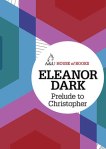
Book coverI then checked Booktopia, which is also listed on the page as a source. I searched for Eleanor Dark’s Prelude to Christopher. They provided this message: “This product is printed on demand when you place your order, and is not refundable if you change your mind or are unhappy with the contents. Please only order if you are certain this is the correct product, or contact our customer service team for more information”. Readings didn’t say this, but I’m presuming their copy will be POD too.
The prices seem to range mostly from $14.99 to $19.99, though some are more expensive.

House of Books books

But now, what you’ve been waiting for – if you haven’t clicked on the link above already – that is, something about the books available. They are listed in a strange order – alphabetical by title, with all book titles starting with “A” appearing under “A”, and “The” titles under “T”. Really? For me, the best order would be by author, so I could see, for example, all the Astleys they have, all the Cusacks, and so on. Also, very few of the book descriptions include original publication date which pedantic me would really like to know!

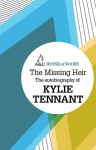
Book coverWhinge aside, the list is an exciting albeit serendipitous one, including many books barely remembered these days. There are, for example, Kylie Tennant’s memoir The man on the headland, and her autobiography, The missing heir. There are four by Thea Astley, eight by Dymphna Cusack (including the Newcastle-set Southern steel, which interests me), and four by Xavier Herbert.
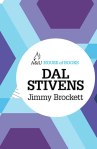
Book coverOther treasures, in terms of their place in Australian literary culture, include Dal Stivens’ 1951 political (and debut) novel, Jimmy Brockett. Stivens is little known now, but, as Wikipedia tells, he won the Miles Franklin Award in 1970 for A Horse of Air, was awarded the Patrick White Award in 1981 for his contribution to Australian literature, and in 1994, he was given a Special Achievement Award in the NSW Premier’s Literary Awards.
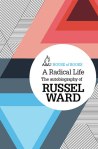
Book coverAs you’ll have realised from the Tennants above, the books include non-fiction, like Australian historian Russell Ward’s memoir, A radical life. There are also books of poetry, such as AD Hope’s Selected poems, and short story collections.
More contemporary writers in the list include Nick Earls and Mandy Sayer (both born, coincidentally, in 1963).

I’d love to know if any of my Australian readers know of this series? The cover style is a little familiar to me, but I am certainly not as aware of them in the shops as I am of the wonderful Text Australian Classics series. My guess is that this is due to the publishing model they are using. Any comments?

Archie Roach, Tell me why: The story of my life and my music (#BookReview)

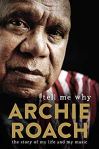
Book coverGood things come to those who wait! At least, I hope so, because Lisa has had to wait a long time for a review from me for this year’s Indigenous Literature Week. Finally, though, I finished the main book I chose for this year’s challenge, Archie Roach’s memoir, Tell me why: The story of my life and my music.

Most Australians will know who Archie Roach is, but international readers here may not. A member of the Stolen Generations, Archie Roach is an indigenous Australian singer, songwriter, guitarist, and political activist. The story he tells in his memoir, Tell me why, is not an unusual one in terms of people of his background and generation, but that doesn’t mean it isn’t worth reading, because not everyone can tell this story in the way that Roach can. Perhaps this is because he’s a songwriter, or perhaps, more correctly, he’s a songwriter because he can tell stories.

Roach starts his story with a Prologue set in 1970. He is 14 years old, and receives a letter from one of his birth sisters telling him that his birth mother had died. This is a surprise, because his adoptive parents had been told his parents had died in a fire. He then flashes back in Chapter 1 to tell us about his life, as he knew it, up to 1970. This life involved being stolen from his parents, and being placed in two foster homes, one abusive, before being placed, in 1961, with the Melbourne-based Coxes with whom he was still living in 1970. In Chapter 2 he picks up that point in 1970 when he received the letter, and tells his story chronologically from then on, with some flashbacks to fill in his family’s early life as he learns it himself.

Although Roach had had a good life with the Coxes, who had loved him and whom he loved, the discovery that members of his birth family were still alive brought with it a desire to learn who he was, and he left home. He managed to make contact with his family, but before that he was introduced to drinking (having “a charge”) and life on the streets. Not surprisingly, his story, like those of many young indigenous people who have lost contact with their culture and thus with their bearings, involves alcoholism and related illnesses, run-ins with the police, prison, unemployment, and all-round instability. Archie would obtain work, would be appreciated as a worker, but the demons would return and down he’d plummet again. It’s a common cycle.

However, Archie had a couple of big pluses in his corner. There was Ruby Hunter, whom he met while still a teen and who became the love of his life. It’s not that her appearance resulted in a miraculous turnaround. Real life is rarely like that. But she became the supportive base to whom he would return and who, eventually, did provide the stability that enabled him to turn his life around and become the success he now is. The other plus was music, to which he was first introduced by the Coxes, particularly Dad Cox who loved to sing and who gave him his first guitar. While the stories about his drinking life were distressing to read, the story about how music “saved” him, and how he gradually came to realise that he could tell stories through music, was moving and inspiring.

This brings me back to my opening comment that “not everyone can tell this story in the way that Roach can”. The memoir is beautifully constructed, from the Prologue that vividly takes us into the classroom where Roach receives the letter about his mother, to the use of song lyrics, most of them Roach’s own, to introduce each chapter. Roach uses foreshadowing at the end of several chapters to move the story on, such as this at the end of the chapter in which he arrives in Adelaide – “This would be the last hours before finding Ruby Hunter”. And this one at the end of the chapter where Jill Shelton is recommended to him as a manager – “Jill would end up saving my life at a time when I didn’t see there was any point in saving it.”

Roach also mixes up the narrative, commencing some chapters with the next part of the story, while others he introduces with something more reflective. I particularly liked the opening to the chapter in which Ruby dies:

Some people see time as a river with a steady current. Some people say we get in and move with that current, all of us ageing uniformly. I don’t believe that’s true, though. I’ve seen people age years overnight.

It happens to a lot of our people, and it happens to an awful lot of us drinkers. It doesn’t just happen while we’re drinking, either; we could’ve been years off the stuff and then something might change. We might lose a sister or a brother, and suddenly we have age in our face and in our step.

Sometimes it happens for no reason. Someone will be living their life and all of a sudden time will heap years on their shoulders.

Of course, Roach also talks about politics, about Indigenous opposition to the 1988 Bicentenary, about John Howard’s  opposition to a national apology and his criticism of the “black armband view” of Australian history, about Aboriginal deaths in custody, about the stolen generations, and more. It’s all told through the prism of his own personal experience or through his involvement in political action. Most readers will know these issues, but the personal stamp offered by books like this helps keep the issues real and in front of us. Roach, like so many Indigenous people, amazes me by walking that fine line between anger at what has happened to his people and generosity towards the rest of us.

In the end, Roach’s message is an inclusive one. His songs, he has found, speak to non-Indigenous people too, with many telling him that “that’s what happened to me”. Consequently, his songwriting, he says, now “feels more inclusive, more universal” because “it’s about all of us – you can’t write about yourself without including everyone.”

He writes:

For so long we have been divided by ‘isms’ – racism, sexism, fundamentalism, individualism – but when we come back to the place of fire, I believe we will discover there’s far more that connects us than separates us. I believe we will be one humanity again, that we will find release, healing and true freedom.

I love the hope in this but, let’s be clear, Roach is not letting us off the hook. That is, he doesn’t believe we are there yet. He is, though, choosing an aspirational path, and for that I thank him.

ANZ LitLovers logoArchie Roach
Tell me why: The story of my life and my music
London: Simon & Schuster, 2019
378pp.
ISBN: 9781760850166

Monday musings on Australian literature: Indigenous Australian writers and the Miles Franklin Award

This is not going to be a treatise on the Miles Franklin Award and diversity. We all know literary awards have not been as diverse as they could have been (and that they still have a way to go). We know, too, that this is not only due to judging, but also reflects the fact that the publishing industry has not been as diverse as it could be. It is probably also true that, in the past at least, we readers have not demanded more diversity in our reading. However, this story is too complex for this post, and, anyhow, has been explored many times. Today, I simply want to celebrate those Indigenous Australian writers who have been listed for and/or won Australia’s (arguably) most prestigious literary award, the Miles Franklin, in the spirit of bringing attention to their work as a body of literature.

Notwithstanding the above, I do need to make the point that it wasn’t until 2000 that we started seeing Indigenous Australian writers appear in the short and longlists for the award*.

  • 2000 Kim Scott’s Benang (won) (Lisa’s and Bill’s reviews)
  • 2007 Alexis Wright’s Carpentaria (won) (my review)
  • 2011 Kim Scott’s That Deadman Dance (won) (my review)
  • 2012 Tony Birch Blood (shortlisted) (Lisa’s review)
  • 2014 Melissa Lucashenko Mullumbimby (longlisted) (Lisa’s review)
  • 2014 Alexis Wright The Swan Book (shortlisted) (Lisa’s and Bill’s reviews)
  • 2016 Tony Birch Ghost River (longlisted) (my review)
  • 2018 Kim Scott’s Taboo (shortlisted) (Lisa’s and Bill’s reviews)
  • 2019 Melissa Lucashenko’s Too Much Lip (won) (my review)
  • 2020 Tony Birch’s The white girl (shortlisted) (my review)
  • 2020 Tara June Winch’s The yield (won) (my review)

This slideshow requires JavaScript.

You could probably call this a round-up of the usual suspects, in terms of contemporary Indigenous Australian novelists, with Kim Scott and Tony Birch appearing three times, Melissa Lucashenko and Alexis Wright twice each, and of course relative newbie, Tara June Winch, once. It’s notable that every book here deals with Indigenous issues. This is important for truth-telling, but it will be a measure of our maturity as a nation when Indigenous Australian writers can feel free of the need to carry these truths on their backs.

Anyhow, I wonder what Miles Franklin would say? When she said “without an indigenous literature, people can remain alien in their own soil”, I don’t believe she was thinking of the real Indigenous people of this soil. However, I imagine that, were she living now, she would love the richness that the growth of Indigenous Australian literature has brought to Australian life and culture.

It seems apposite, then, to leave this (very) little tribute with the words of this year’s winner, Tara June Winch, as quoted in the Sydney Morning Herald, “It doesn’t have to be POC writers against white voices – we have to work together to bring voices to the fore.” Absolutely. Let’s hope more and more diverse writers get to tell their stories to us. I – and I know many of my litblogging friends – love to read them. Meanwhile, if you haven’t read it yet, I recommend that you do read The yield, a complex but strong book which its author calls “a once-in-a-lifetime love letter to Australia.”

Have you read any of the listed books, and if so, would you like to share your favourite/s?

* I may have missed a writer or two, as I didn’t find complete lists of short and longlisted authors from the beginning of the award, but I think my point still stands.

Monday musings on Australian literature: Indigenous Australian literature, 1970s

Although Lisa’s (ANZLitLovers) annual Indigenous Literature Week is officially over for 2020, I thought I’d bookend it with a second Monday Musings, this one on how Indigenous Australian literature looked around 50 years ago. Who was writing then, and what were they writing?

My main sources were Trove, of course, and the Macquarie Pen anthology of Aboriginal literature, edited by Anita Heiss and Peter Minter. In their introduction, Heiss and Minter argue that:

Aboriginal literature as we know it today had its origins in the late 1960s, as the intensification of Aboriginal political activity posed an increasing range of aesthetic questions and possibilities for Aboriginal authors.

With the Constitutional Referendum of 1967, and, as they put it, “the election of the reformist Whitlam government in 1972 [that] saw a new radicalisation in Australian politics”, there was a growing interest in land rights and cultural self-determination. In this world, Aboriginal literature “began to play a leading role in in the expression of Aboriginal cultural and political life”.

Heiss and Minter nominate the period from 1967 to the mid-1970s as being “significant for the sudden growth in Aboriginal authorship across a broad range of genres.” Ha! It was in 1967 that I wrote a little piece for my school year book on “Aboriginal equality in Northern Australia”. (It’s a bit excruciating to read now, being the words of an idealistic young teen, but that was when my interest in Indigenous Australian rights really started – and when I started reading authors like Kath Walker, later Oodgeroo Noonuccal.)

Book coverThe writers they name from that time – Kath Walker, Jack Davis, Kevin Gilbert, Monica Clare (who is new to me), Gerry Bostock and Lionel Fogarty – pretty much mirror the writers who cropped up in my Trove search. Heiss and Minter describe them as

active in the political sphere while simultaneously catalysing a nascent publishing industry and writing their own vanguard pieces of creative literature.

There is another name that they don’t mention, but who comes up in Trove, and that’s the controversial Colin Johnson (who also published under the name Mudrooroo.)

The interesting thing about this group of people is that they are primarily poets and playwrights. Davis, Bostock and Gilbert are both, while Walker (Noonuccal) and Fogarty are best known as poets. The exception is Monica Clare. She was primarily an activist, but wrote an autobiographical novel that was published posthumously in 1978, Karobran: The story of an Aboriginal girl. Why were poetry and drama so dominant at that time? Is it because they were easier to publish (or get published) – or perform? Is it because these forms lend themselves more to the activism all these writers were engaged in? A poem, after all, is a powerful tool that can be performed, learnt and quoted again and again – as Noonuccal’s were, I know.

Now, what did the newspapers at the time have to say about Indigenous writing? First, there were several references to the paucity of Indigenous writing and Indigenous characters in contemporary literature, including in children’s literature. Presumably this awareness marked the beginning of the slow change that led us to the last decade or so in which we’ve seen significantly more Indigenous writing being published across all forms and genres.

There was, though, less awareness of the importance of Indigenous people telling their own stories. The sense I get is that it was perfectly alright for non-Indigenous people to tell Indigenous stories. Reviewer Lyndal Hadow, writing in the Tribune about a book of short stories by someone called D Stuart, praises:

his wide and deep knowledge and appreciation of the Aborigine. I believe there is no one who has written with such understanding in all the literature of the subject. His ear and his pen for the subtleties of altered English as used by his Aboriginal friends are not matched by any one I have read, and I have read them all. Again Stuart shows that those of whom he writes are known to him, not as subjects to be studied, but as old friends whose lifestyle he understands, and whose strengths he respects.

I love her confidence in her assessment because she has “read them all”!

The most comprehensive article I found about Indigenous writing in Australia came from the University of New South Wales’ student magazine Tharunka in 1976. The article, written by John Beston, commences:

Who are the Aboriginal writers? The first person to supply an answer to that question was Kath Walker, herself the best known of Aboriginal writers. In an article entitled “Aboriginal Literature,” in the January 1975 issue of Identity, Kath Walker mentions five writers other than herself — Jack Davis, Kevin Gilbert, Colin Johnson, Wilf Reeves and Dick Roughsey — and concludes that there is an exciting time ahead. I agree with her.

Beston comments on the three main poets of the time, Walker, Davis and Gilbert, and shares this:

Kath Walker has graciously acknowledged Jack Davis to be the better poet, but there is no clear superiority of one poet to the other: Davis is the more skilled craftsman, but Walker sometimes has greater emotional force.

This article is worth reading, because it surveys the gamut of Indigenous Australian writing at the time, across all forms and genres. He concludes, though, by returning to Walker and her significant role, saying (in the tone of his times):

The quality of her work and the success she met with — We Are Going went into seven editions — gave other Aboriginals a needed boost and encouraged them to express the creativity that they have always had. So Aboriginal literature is less than twelve years old. The young tree is certainly flourishing.

Another article I found noted Kevin Gilbert’s being awarded a literature grant to write a book. And, there was a 1979 review of the book Literature and the Aborigine in Australia by a non-Indigenous writer, which seemed to be more about “the history of the efforts of Australian writers to come to terms” with Indigenous culture than about Indigenous literary culture itself, though the review does say:

‘There is also, completing the record, the very new group of writers, Aboriginal or part-Aboriginal themselves, who are producing their own literature.’

In the 1970s, then, there wasn’t a lot of coverage of Indigenous Australian writing, but there was the beginning of an awareness that Indigenous Australians were writing – and that Indigenous Australians and their culture should no longer be overlooked. We have a long way to go yet in terms of all Australians reading and appreciating Indigenous Australian writing and culture, but it is useful to see where we’ve come from, don’t you think?

Past ILW/NAIDOC Week-related Monday Musings