Margaret Hickey, Rural dreams (#BookReview)

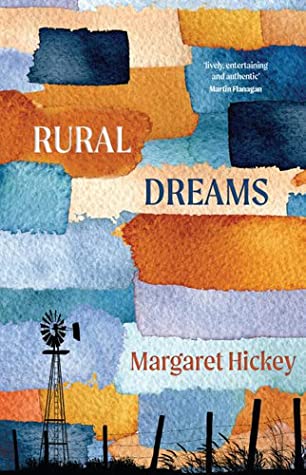
Rural dreams is another collection of short stories from small independent publisher MidnightSun, and it’s another good one. I hadn’t heard of Margaret Hickey before, but her website says that she’s won a number of awards and is a performed playwright. Relevant to this book is that Hickey grew up in small country towns in Victoria and currently lives in that state’s northeast. In other words, in this book about rural lives, she knows whereof she speaks.

Like most short story collections, Rural dreams comprises stories told in different voices and points-of-view. The narrators, male and female, range from teens to the middle-aged, and the stories are told in first person and third person voices, with one told second person. The tone varies from funny to sad, from reflective to scary, and the subject matter represents a wide gamut of rural lives, from those who have left to those who want to leave, from those who are farmers to those who are sea-changers. And, of course, it encompasses a range of rural issues, to do with farming, dying land and dying towns, for example, as well as those more universal human issues involving love and loss, joy and fear.

I greatly enjoyed most of the stories – there’s usually one or two in a collection that doesn’t quite connect. The opening story, “Saturday morning”, fired the perfect opening salvo. Told third person, it’s about a young engineering student named Simon who now lives in a share house in Melbourne but who gets up early every Saturday morning, through winter, to drive about three hours home to play football. Even he wonders why he does it, given the way it disrupts his weekend, but, as he hits “the shire boundaries”

… there it comes, that big ball of a sun, that big ball of orange rising up over the horizon. It jolts him every time. Rays light up the stone fences, hit the trees and illuminates the paddocks. The old gums shimmer green and grey in the early morning light and world appears golden quiet. It’s like it is every Saturday, a new era.

They might have a chance today.

He’s home.

“This place, it gets to you”, says the old coach, in “Coach”. And place, of course, underpins most of these stories, whether it’s the Wimmera or Mallee or Ninety Mile Beach in Gippsland.

Counterpointing our narrator in “Saturday morning” is the young Year 12 student in the next story, “Glory days”. Living in the dry Wimmera, he is sweating his ATAR score, dreaming of escape to the city where there’ll be “no more discussions about rain and cows, it will be all about novels and films and experience”.

And so the stories continue, wending across the state, and further afield. “A bit of scrapbooking” promotes the joys of living in the oft-maligned Surfers Paradise in southeast Queensland. Reminiscent a little of Kath and Kim, this story contrasts our narrator’s life in Surfers with her son’s and his partner’s in Melbourne. She just can’t understand his move there for, he told her, “a bit of culture”:

Well, I’ve never understood that. We’ve got culture all around us up here.

Take Jupiter’s Casino–it’s full of all sorts! You’ve got your Sheiks, your Maoris, your South Australians. And you can buy your sushi, your ravioli and your chicken schnitzel in every dining establishment. Every kweezeen you like.

A first person voice is the perfect choice for this story. It made me laugh. Its humour combined with a warm touch at the end makes it just the right antidote – can an antidote come first? – to the darker story, “Desolate”, which follows. This story, and the longest one in the collection “The Precipice”, are the darkest stories here. In “Desolate” our sea-changing narrator from St Kilda, whose “barely disguised air of yuppiedom did little to hide the threat of violence that lurked beneath”, finds that beautiful deserted beaches harbour their own issues. The opening to this story is deliberate:

It’s one of those days that almost kills you; it’s that beautiful.

In “The precipice” and “The Renovation” the titles are pointedly metaphorical, with the former being about domestic violence which is clearly not confined to cities. This story builds up slowly from a therapeutic bushwalk to one of horror for the three women involved. The end, though, is perfect. Hickey, who clearly loves rural living, is realistic rather than rosy about it. She references violence, drought, and issues like the potentially damaging health impact of chemicals, without being didactic or polemical. She know the characters too, like the middle-aged man still living at home who just “likes birds” of the feathered variety (“Twitcher”) or “town weirdo” Joe who cares about the land regardless of the locals (“Overcoat Joe”) or the single-mum who stands up for her scholarship-winning son at his hoity-toity private school (“Mind your language”).

As many contemporary Australian writers are increasingly doing, Hickey also incorporates references to Indigenous Australian lives and culture. She doesn’t attempt to speak for them, but these references suggest an awareness that’s important. Anna, in “The precipice”, remembers a place called “the Leap for the stories of Aboriginal families herded there by whites in the early days of settlement”; Ruby in “The renovation” is told about the middens in the community she’s moved to; Peter remembers the scar trees in “Binky”.

Finally, while the stories are stand-alone, a few are subtly linked. Kate Brunt, a netball player from the town mentioned by Simon (“Saturday morning”), is one of the young travellers in “The wanderer”. The coach (“Coach”) briefly mentions Simon. These links have no overall narrative significance, but they have a nice grounding effect.

Rural dreams is a love letter to rural Australia, one that recognises the tensions and challenges, as well as the warmth and community. Hickey gently mocks Australia’s ongoing romance with the bush, giving us instead an image that is real and human. A truly engaging read.
Challenge logo

Margaret Hickey
Rural dreams
Adelaide: MidnightSun, 2020
232pp.
ISBN: 9781925227680

(Review copy courtesy MidnightSun)

Monday musings on Australian literature: 1936 in fiction

As some of you will know Karen (Kaggsy’s Bookish Rambling) and Simon (Stuck in a Book) have been running for some time “reading weeks, which involves their choosing, somewhat randomly, a year from which “everyone reads, enjoys, posts and shares wonderful books and discoveries from the year in question”. The next one is 1936, and happens from 12-18 April.

Despite my best intentions, I’ve not yet managed to take part, though I know several of my blogging friends have. I might this time – we’ll see – but, regardless, I’ve decided to focus on that year in my Monday Musings, a week in advance, to provide some inspiration perhaps?

1936 was a pretty tumultuous time in Europe with, for example, the Spanish Civil War, the 1936 Summer Olympics and Hitler’s aggressive display, not to mention the Nazis amping up their power and control. Things were generally quieter in Australia, with Joseph Lyons our Prime Minister.

Dymphna Cusack, Jungfrau

However, it was a busy time in literature, with several writers we know publishing novels (and other works but my focus here is novels). Here is a selection – links on names go to my posts on that writer:

There weren’t so many literary prizes then, as now, but Miles Franklin’s All that swagger won the 1936 SH Prior Memorial Prize for Australian Literature, and Eleanor Dark’s Return to Coolami won the ALS Gold Medal.

Several authors were born this year, including Marian Eldridge (one of the Canberra Seven), Robin Klein, Kate Llewellyn and Alex Miller.

The state of the art

Of course, I checked Trove to see what newspapers of the time were saying about Australian literature, and it’s pretty much as I’ve written in my other Monday Musings posts on the era – the ongoing concern about lack of recognition of Australian writing, of Australian writers having to go overseas to make a living, of most publishing of Australian authors happening overseas.

Perth’s Western Mail, announcing the publication of the Australian writers annual, starts with:

Too long have the Australian public been kept in ignorance of the wealth of literary work that is and has been done by Australian writers, the ranks of whom are increasing every year. Perhaps the fault lies with the reader, perhaps the reason can be found in a lack of publicity. 

Rockhampton’s Morning Bulletin focuses on the the quality of what is being produced, arguing that Australian literature, while naturally looking to England, “is gradually tending towards a measure of independence”. Indeed, citing Henry Lawson and CJ Dennis (admitting “he may not touch greatness”), this writer says that “brief as is our history, it has developed its own romanticism”.

The Hebrew Standard of Australasia also argues that things are improving, but names women writers. It says:

It is not so many years ago since the prefix ‘Australian’ when applied to anything literary, artistic, or cultural, provoked the ire of editors and the sneers at would-be highbrows. Yet, even then, much, had been done by writers here in our midst to put Australia into a very appreciable place on the literary map. 

It then names Ethel Turner (whose writing for children avoided “the stilted and moral” stories common at the time). It continues to say that, what Turner did for children’s literature, others are “endeavouring to do for literature in general”. Unfortunately, though, confirming my opening paragraph, it says that “many of our best have had to go abroad to achieve fame, such as Henry Handel Richardson and Helen Simpson”. However, confirming Western Mail’s supposition, it suggests that “we still have many people with us whose work, given proper publicity [my stress], would make the term ‘Australian’ respected in any part of the world”. One of these is Eleanor Dark.

Apparently, someone was listening to all these woes, and it was a politician! Many newspapers around the country wrote about the Budget statement made in Parliament by then ex-PM, James Scullin. Melbourne’s The Herald starts its report with:

It is doubtful whether “the life austere that waits upon the man of letters here” can be given more than a suggestion of comfort by the helping hand of Government. Yet the generous speech for which Mr Scullin caught the Federal Speaker’s eye yesterday will be approved and possibly have influence. 

It describes Scullin as a “book-lover … who earnestly desires the advancement of his country in things of the mind and spirit.” Scullin identified the minimal support the government had given to literature, and then, as Melbourne’s The Age and Hobart’s Mercury outline, he named various ways in which the government could help, such as:

  • increased payments to struggling authors (rather than the minimal pension currently offered);
  • the establishment of a literary prize for the best Australian works;
  • supporting/undertaking/providing grants for the publication of nationally significant books now out of print, of works of national value, and of new works struggling to find a publisher.

Interestingly, the Mercury reports that he suggested that “wealthy people in Australia might follow if a lead were given by the national Parliament”, while The Age shared that Scullin believed that with more time for leisure available “in the machine age”,

Literature offered the best scope to utilise this added leisure with profit to Australian culture. 

The Sydney Morning Herald’s report is also worth reading.

I’m not sure that much happened immediately, but Wikipedia (linked on his name above) says that, with the Fellowship of Australian Writers, Scullin was responsible for a dramatic boost to the Commonwealth Literary Fund‘s budget in 1939. A start!

And, of course, it was another Labor politician, Kevin Rudd, who created the Prime Minister’s Literary Awards, in 2007.

Additional sources:

Meanwhile, do you plan to take part in the 1936 Club?

Monday musings on Australian literature: Expressing the zeitgeist

At the end of last week’s Monday Musings, I asked whether “saying something” was important to you, meaning, really, is it a top criterion when you choose what to read or when you talk about what you’ve read? For me, it is, as you can probably tell from the sorts of reviews I write. So, I’ve decided to explore it a little here, focussing on fiction (though “saying something” is, for me, important in literature, and the arts, more broadly.)

The question is, of course, what is this “something”? Now, what I write next is going to be pretty much off the top of my head, so apologies if it’s too obvious! Thinking about it, I feel I can break it down into three, sometimes overlapping, “somethings”.

There’s human nature, which, like Wikipedia, I’d define as the way humans think, feel and act. This is where Jane Austen, for example, comes in. She skewers our pretensions and failings – in all their forms – and shows our finer qualities, with such precision that she never goes out of date (even if some readers find her language hard-going).

Then there’s, for want of a better word, the human condition, which is hard to define, but Wikipedia helps by suggesting that it encompasses “all of the characteristics and key events that compose the essentials of human existence, including birth, growth, emotion, aspiration, conflict, and mortality”. This means the things that make up all our lives, no matter who we are or where we live – our lives, our nature, our society. Wikipedia goes on to say that ‘as a literary term, “the human condition” is typically used in the context of ambiguous subjects, such as the meaning of life or moral concerns’. It’s probably fair to say that any book that says something falls into this category!

These two “somethings” are the ones most likely to produce the classics because, by definition, their concerns are universal, transcending place and time. To become classics books need more, of course, including good or innovative writing, great characters, and, it must be said, luck.

Anyhow, finally, there’s the zeitgeist, which originally meant “the spirit of the age”, but which many of us use to mean the specific issues concerning the times we are currently living in (which can be a bit narrower that an “age”, however you define that).

These books, I’d say, are less likely to last, unless they also encompass those more universal concerns.

Today’s “zeitgeist”

Right now, the zeitgeist would include climate change, sexism (in its broadest meaning, and exemplified by movements like “me too”), racism (again in its broadest sense, and exemplified by the movement for reconciliation and truth-telling here in Australia, and more generally “black lives matter”), and minority (like refugee and migrant, LGBTQIA+, disability, aged) rights overall. Related to these, but broader, are globalisation, the failures of democracy and capitalism, and increasing inequality. Most of these issues aren’t new of course, but they have a certain flavour and power right now.

Are Australian novels covering these? And, if so, how? My feeling is that contemporary, historical and dystopian fiction would be the main areas to check, but, in the interests of not writing too long an essay, I’ve decided to look at the last five years of some of our major literary awards. Five years does not a “zeitgeist” make, really, but you know what I mean!

Book cover

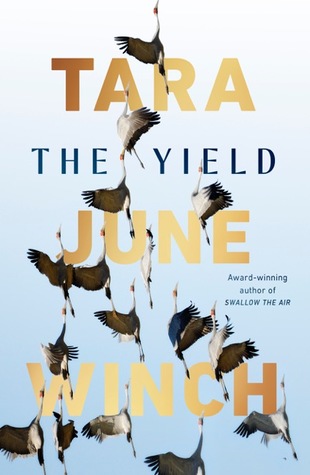
The Miles Franklin Award is a good place to start. The last two winners, Tara June Winch’s The yield (my review) and Melissa Lucashenko’s Too much lip (my review), both deal with dispossession and its all-encompassing impact on Indigenous Australians, and so are definitely “zeitgeist” novels. Michelle de Kretser’s The life to come (my review) also fits, with its broad-based satire of middle-class Australia’s pretensions and assumptions, particularly regarding multiculturalism and migrants. 2017’s winner, Josephine Wilson’s Extinctions (Lisa’s review), starts with ageing, but encompasses a wide range of “extinctions” including, I understand, the Stolen Generations and genocide, so it fits too, as does the previous year’s winner, Charlotte Wood’s The natural way of things (my review) which confronts, head on, the scapegoating of women for men’s sexual behaviour. These winners, then, pretty squarely reflect the “zeitgeist”.

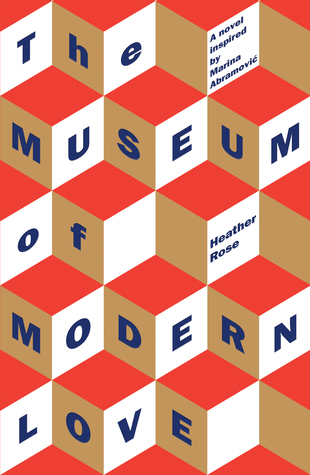
Heather Rose, The museum of modern love

Probably the best known of the state-sponsored awards are the NSW Premier’s Literary Awards, so I’m choosing the Christina Stead Prize for Fiction to represent them! 2020 and 2019 were won by the above-mentioned Tara June Winch’s The yield and Michelle de Kretser’s The life to come. Bram Presser’s The book of dirt (Lisa’s review) won in 2018. Essentially, it’s a Holocaust story, so where does it fit? Well, I think it fits into our “zeitgeist” group because not only does it deal with persecution of minorities, or, the “othering” of people, but it also reflects, I understand, our current understanding of intergenerational trauma and its longterm impact. 2017’s winner, Heather Rose’s The museum of modern love (my review) is different, its concerns being the exploration of art’s place in “the human condition”, and how they intersect. Finally, in 2016, the winner was Melinda Bobis’ Locust girl: A lovesong (Lisa’s review). It is an allegory, and Lisa writes:

Fearful containment of The Other distorts the lives of the rulers of the Five Kingdoms, even as it protects them from having to share what is left after the environment has been ruined.

Bobis is passionately committed to saying something in all her art. Fear of “Other” and a ruined environment ensure its inclusion in our “zeitgeist” group. Like the Miles Franklin, then, most of these books reflect the “zeitgeist”.

Charlotte Wood, The natural way of things

What about the Prime Minister’s Literary Award for Fiction? It can behave a little differently from the other mainstream awards. 2020 and 2016 were won by the aforementioned Winch and Wood novels (with the latter being shared, but I’ll come to that.) 2019’s winner, however, is, perhaps an outlier. I haven’t read Gail Jones’ The death of Noah Glass (Brona’s review) but as far as I can gather it seems to be more about art and the “human condition” (loss and family relationships) than about specific issues of today. Gerald Murnane is often hard to categorise, but Lisa’s review of his 2018 winning Border districts tells me that at least some of its subject matter, clerical sexual abuse is a “zeitgeist” concern. Another hard to categorise book – and another I’ve yet to but am keen to read – is 2017’s winner, Ryan O’Neill’s satirical Their brilliant careers. Its scope is broad, including satirising writing, publishing and Australian literary culture in general, but along the way it also, apparently, addresses issues like racism and sexism. Finally, there’s Lisa Gorton’s The life of houses, 2016’s co-winner (Jonathan’s review). It too defies categorisation, at least from the reviews I’ve read, and is perhaps more universal family-and-relationships based. The PM’s Literary Awards have, I’d say, lived up to my sense of their taking more risks, being more prepared to buck, with the Fiction anyhow, the “zeitgeist”!

Finally

This survey is too brief, too simple and definitely too limited to draw any significant conclusions, but I’ve had some fun thinking about it and documenting some ideas. My tastes are catholic. I ask just two things – for the arts I “consume” to say something and for it to be done well, respectfully, engagingly, and, perhaps, provocatively.

Those of you who like your reading “to say something”, what sort/s of “somethings” do you like or, would you like?

Stella Prize and Christina Stead Prize for Fiction 2021 Shortlists announced

With two shortlists being announced on the heels of each other, I thought I would combine them into one post, so here goes …

Stella Prize Shortlist

The Stella Prize shortlist was announced this morning and is, I suppose, a bit of a surprise for me – though I haven’t read the books so I have nothing to base that on. I was hoping Ellen Savage’s Blueberries, Nardi Simpson’s Song of the crocodile and Elizabeth Savage’s Smart ovens for lonely people would be in the list as they are on my TBR or I’m keen to read them. However, besides the Stella judges, I have it on good authority from other bloggers that many of the books below are excellent reads, so … on with the show … and I’ll see what I can read!

The shortlist

Book cover

Stella’s Executive Director, Jaclyn Booton makes a political point – which is very Stella!:

As recent events have shown, there’s significant cultural change needed in this country to ensure women’s voices are heard. Books can be a tool for positive social change – I encourage everyone to seek out these books and delve into the stories and perspectives within.

The judge’s chair, Zoya Patel, says:

“The 2021 Stella Prize shortlist truly demonstrates the immensity of talent in Australian women and non-binary authors. This shortlist is varied, diverse, and reflects on urgent themes across the gamut of human experience.

To read the judges on each of the shortlisted books, do check out the Stella website.

The winner will be announced on April 22.

NSW Premiers Literary Awards

Unlike the Stella, these awards comprise several categories, but I’m just going to share the two fiction ones.

Book cover

The Christina Stead Prize for Fiction

  • Kate Grenville’s A room made of leaves
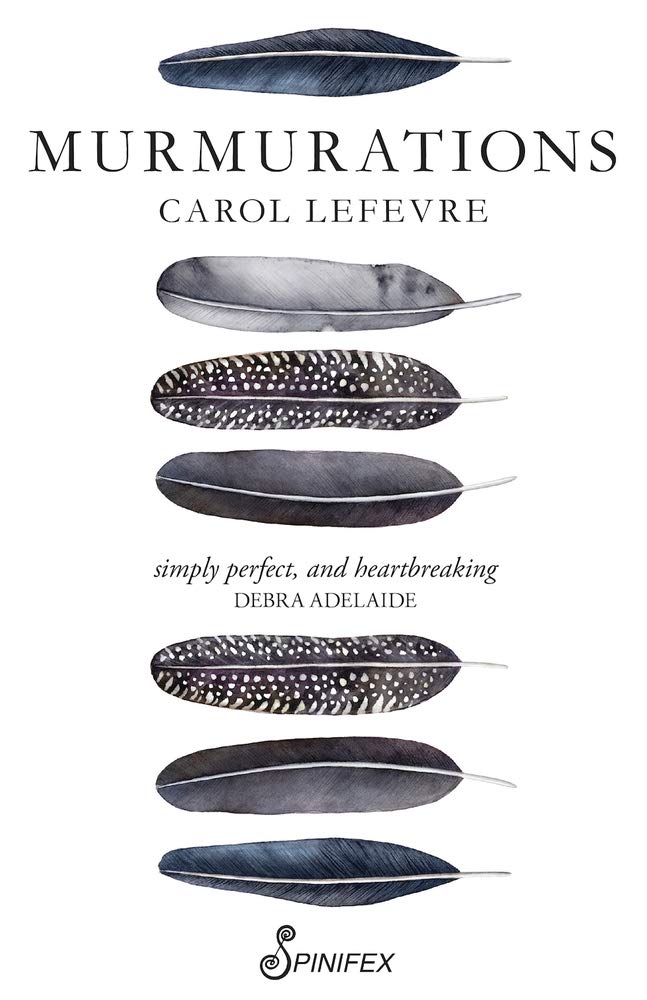
  • Carol LeFevre’s Murmurations (my review)
  • Laura McPhee-Browne’s Cherry Beach
  • Pip Williams’ The dictionary of lost words
  • Charlotte Wood’s The weekend (my review)
  • Evie Wyld’s The bass rock

UTS Glenda Adams Award for New Writing

  • Erin Hortle’s The octopus and I
  • Laura McPhee-Browne’s Cherry Beach
  • Sean O’Beirne’s A couple of things before the end
  • Nardi Simpson’s Song of the crocodile
  • Madeleine Watts’ The Inland Sea

For more categories in these awards, and links to her own and other bloggers’ reviews, please see Lisa’s post on them.

Any comments?

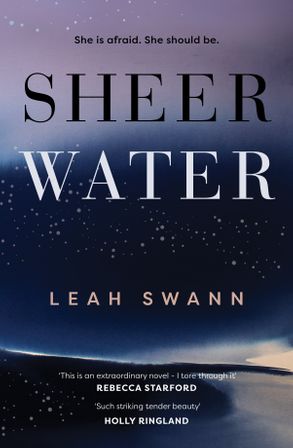
Leah Swann, Sheerwater (#BookReview)

Book cover

I’ve been wanting to read Leah Swann’s Sheerwater, having read and enjoyed, a few years ago, her short story collection, Bearings (my review). However, I didn’t get around to buying a copy, so was pleased to see it available as an audio book when I was looking for listening matter for our recent Melbourne trip. I thought we’d finish it on the trip but, in the end, the sightseeing was so interesting that we listened less than we thought we would. We’ve finished it now!

But, how to write about a crime book in which the main mystery – the disappearance of two boys – is resolved for us early on. At least, resolved in the sense that we discover what has happened to them and who was involved. As it turns out, though – and we learn this quickly – there’s another story to tell, and it’s a powerful, terrifying and unfortunately only too relevant one, a story of domestic violence, of power and control that isolates those who are vulnerable.

Interestingly, the novel’s opening reminded me strongly of the unforgettable opening to Ian McEwan’s Enduring love, which, as it happens, is also about dysfunctional love, albeit a different sort. There is also an ironic allusion to Australian literature’s “lost child” motif, when Ava thinks “this was a Continent where you could still get lost”, because these children aren’t “lost” – per se!

Anyhow, the story takes place over three days, and is told in alternating 3rd person voices, primarily those of the mother Ava, father Laurence, and 9-year-old Max who is the older of the two sons. Swann does an impressive job of getting into the heads of these disparate characters. Each one feels psychologically real, and their stories are compelling – well, most of their stories. Laurence is way too chilling to be compelling, but he is scarily real.

Now, I’m not going to write my usual sort of review, because listening to a novel (particularly while driving) doesn’t provide the same opportunity for reflection (and note-taking) that reading does, and certainly not for recording quotes, though I did jot down a few when I wasn’t the driver. The novel falls into the literary crime category, I’d say, for several reasons: it’s not a traditional crime novel; it’s told from multiple points of view; and the language is highly descriptive, if not poetic.

The title Sheerwater, for example, has multiple meanings. There’s the literal one, it being the name of the town that Ava is escaping to, and a literal and metaphorical one in that shearwaters (or, mutton birds), at the time the book is set, are doing their big migration south. They start the novel and each of the three days (if I remember correctly). There’s a sense that their impressive endurance mirrors that of women like Ava, and their arduous journey that of the boys. If we push it, there could also be a play on the words “sheer water” given the multiple meanings of “sheer” (pure, perfect, precipitous) and the role of water and the sea in the novel.

“We become evil when we hide the truth from ourselves” (Mother)

Swann creates a melancholic tone early on with phrases like “no pity under its wings”, and “sea of shipwrecks and stolen lives”. The no-nonsense but ultimately supportive policewoman Ballard is described by Ava as having a face like the “impermeable slap of seawashed stone”. It’s not all completely grim though. There is a lot of love, and Ava’s comment on one person’s kindness being enough to sustain a whole childhood is beautiful albeit, in a sense, prophetic.

So, was this book good to listen to? Yes, and no. Katherine Tonkin reads it well, including bursting into little verses of song when required. I didn’t find her voice intrusive, which can be a problem with audiobooks. However, for me, such highly descriptive books are better read than listened to. Somehow, when listening, there’s a greater sense of wanting to get on with the story. The descriptions and internal ruminations got in the way of that, whereas reading it would have allowed me to better absorb the language and descriptions, to feel and consider them, so I’m sorry about that.

Still, the narrative is strong, and it grabbed our attention, forcing us to think hard about each character, their truthfulness, their motivations, and the soundness of their actions. Who would you believe, and what would you do (if you were any of the characters involved), are the questions you confront as you read. The ending is also strong, emotional – and, dare I say it, appropriate.

In Sheerwater, Swann uses fiction to put flesh on the media stories we hear about domestic violence, encouraging us to see behind the stories to feel the confusion, roller-coaster emotions, helplessness and terror that those involved experience. Sheerwater is a book that says something.

Read for Reading Matters Southern Cross Crime Month

Challenge logo

Leah Swann
Sheerwater
(Read by Katherine Tonkin)
Bolinda/HarperCollins Audio, 2020
8hrs 44min (Unabridged)
ISBN: 9781460782354

Monday musings on Australian literature: Peril, and Asian Australian literature

A decade ago, I wrote a Monday Musings post on Asian-Australian literature, in which I named, as I often do in such posts, 5 Asian Australian writers. Given the increasing problems of discrimination faced by Asian communities in western countries alongside, perhaps paradoxically, the increased visibility of Asian Australian writing here, I thought an update might be in order.

Peril

I didn’t know when I wrote my last post about the online magazine Peril which had been in existence since 2006! If I had known, I’d have referenced it. Peril focuse, says its About page, on “issues of Asian Australian arts and culture”. It is free, and is supported by donations from its readers, plus the Australia Council for the Arts, Creative Victoria and other organisations.

Do read its About page for a full description of them, but, essentially, they want

to showcase new literature through diverse forms, including poetry, drama, translations, creative writing, memoir, essays, biographical profiles, interviews and other story structures. We are also interested in writing about the visual arts, theatre and film and other cultural arts practices. 

In the sidebar on its Home Page, you will find a list of its editions, from Edition 1 Nerds to Edition 44 Feminist Journeys.

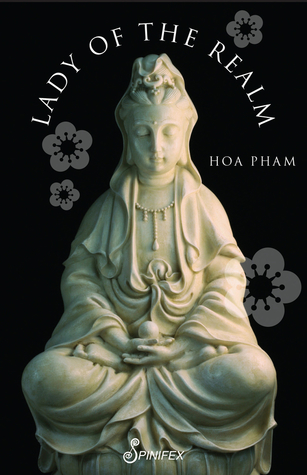
Hoa Pham, Lady of the realm

Nerds is introduced in an editorial by Peril‘s founding editor, Hoa Pham (whose Lady of the realm, I’ve reviewed). It is a small edition with pieces by Hoa Pham, S.K. Kelen and Tom Cho, among others. Hoa Pham explains the origin of the name, Peril, as coming from the “so called Yellow Peril that labelled the wave of Chinese immigration in the 19th century. We are perilious (sic) and take risks but not in the way that the Pauline Hansons of the world think!” Well said!

In its now 15 years, it has published 44 issues, which is a great achievement. Contributors have included – and here I’m naming some of the writers I know, so it’s highly selective and not, necessarily, the most prolific contributors: Ouyang Yu, Alice Pung, Benjamin Law, Jessica Tu, Merlinda Bobis, Roanna Gonslaves, Eileen Chong, Shastra Deo, Melanie Cheng.

Edition 22 particularly captured my attention. Titled Black on Rice, it’s

A collaborative co-edition with the State Library of Queensland, Indigenous publishing initiative, black&write!. Together with co-editor, Ellen van Neerven, we consider six Indigenous and six Asian Australian writers whose work we love, whose work we like to see side by side, writers whose take on the relationships (or otherwise) between migrant and Indigenous Australia we would like to hear.

The writers included several Indigenous Australian writers you’ve met on my blog, like Ellen van Neerven, Marie Munkara and Jeanine Leane, in addition to Asian Australian writers like Ouyang Yu, Eleanor Jackson and Michelle Law. Even though, historically of course, their situations are radically different, the “othering” that both groups face binds them. I am often moved on shows like The Drum by the empathy Indigenous and immigrant Australians (of colour) regularly show each other.

There is, naturally, a strong political underpinning to the writing, as edition titles make very clear, like Why are people so unkind (8), We’re queer here (28 & 29), You don’t sound Asian (32), History Repeats (36). Peril is a rich source of contemporary writing, on tap whenever you want it – but do consider donating, if you read it!

Asian Australian writers, update

Now, I’m going to add 5 more writers to the 5 I listed in my first post, but I’m not limiting this list, as I did then, to writers only born elsewhere. Most of these writers have written and published more than the books I mention below – short stories, poetry, etc – and are actively involved in promoting diverse writers and writing.

Merlinda Bobis

Merlinda Bobis Fish-hair woman

Born in the Philippines, Bobis has written four novels, including Fish-hair woman (my review). Her most recent novel, Locust girl: A lovesong, won the 2016 Christina Stead Prize for Fiction in the NSW Premier’s Literary Awards. She is also a visual and performance artist, and has won multiple awards across all her artistic endeavours. She is committed to Asian (indeed migrant) Australians being recognised for their “real” value and contribution rather than being exoticised as other.

Julie Koh

Born in Sydney to Chinese-Australian parents, Koh has had two short story collections published, Capital misfits and Portable curiosities, the latter of which was shortlisted for several awards and won her a Sydney Morning Herald Best Young Australian Novelist award in 2017. A review at The Guardian reports that ‘Koh says her stories are essentially about “the entrapment of the individual in social structures”’. 

Hoa Pham

Born in Hobart to Vietnamese parents, Hoa Pham’s first novel, Quicksilver, was published in 1998. She has since had four novels published. Her second novel, Vixen, won a 2001 Sydney Morning Herald’s Young Writer of the Year award. As mentioned above, she was the founding editor of Peril, and I have reviewed her latest novel. She is passionate about about achieving equality for the Asian Australian community, and the role of literature/culture in supporting this.

Mirandi Riwoe

Mirandi Riwoe, The fish girl

Born in Brisbane, with a Chinese-Indonesian father, Riwoe’s The fish girl (my review) won Seizure’s Viva la Novella V, and was shortlisted for the Stella Prize and the Queensland Literary Award’s UQ Fiction Prize. Her latest novel Stone Sky Gold Mountain won the 2020 Queensland Literary Award for Fiction, the inaugural ARA Historical Novel Prize, and has been longlisted for this year’s Stella. Both these works confront Asian people’s experience under colonialism.

Elizabeth Tan

Born in Perth to Singaporean parents, Tan’s debut novel, Rubik (on my TBR and reviewed by Bill) was well received. Her follow-up collection of short stories, the wonderfully named Smart ovens for lonely people (also on my TBR and reviewed by Bill) won the 2020 Readings Prize for New Australian Fiction and is longlisted for this year’s Stella. She writes about a range of contemporary ills, including climate change, capitalism’s failures, and racism.

Finally

In Peril Edition 41 AA17 (March 2020), Hoa Pham wrote “We’re a movement not a moment”. She looks how the Australian literary landscape had changed in the fourteen years since she founded Peril, and asks whether it was still needed. You will surely not be surprised to find that she concludes yes. (Do read her argument if you’re interested.)

And now, a word from Mirandi Riwoe:

I admire those authors who bring us stories and perspectives that reveal unfamiliar worlds. I’m talking of diverse writers, who favour a perspective that is not mainstream. I love books that are beautifully written but are also saying something.

Is saying something an important part of your reading choices?

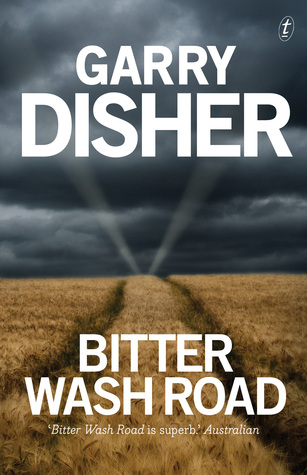
Garry Disher, Bitter Wash Road (#BookReview)

Garry Disher’s Bitter Wash Road has been sitting on my TBR pile for over seven years. It was sent to me on spec but, as crime is not my preferred reading, I didn’t feel obliged to read it – and yet, I hung onto it, just in case… So, when Kim (Reading Matters) decided to run an Aussie-New Zealand crime month, I knew what I was going to read.

Actually, though, this is not the first Disher to appear on my blog. Text had previously sent me an earlier one of his, Wyatt, which I managed to talk Son Gums into guest reviewing for me. You can read his review here. However, Wyatt is a thriller with an anti-hero as its protagonist, so is very different to Bitter Wash Road, a police procedural featuring the more sympathetic constable, Paul Hirschhausen (Hirsch).

More sympathetic he may be, but straightforward he is not, because Hirsch is a recently demoted detective who has been sent three hours north from Adelaide to a “single-officer police station” in Tiverton, a fictional “blink-and-you’d-miss-it-town” in struggling “wheat and wool” country. Having previously worked with a team of corrupt detectives, Hirsch, though not found guilty (which, he realises, is different to being found “not guilty”), has “a stink clinging to him”. For whatever reason, Internal Investigations is not convinced he’s clean. Consequently, Hirsch finds himself investigating crime in a fearful community where the police are hated, while also having to watch his own back. Who can he trust?

“an air of waiting”

To my surprise, I greatly enjoyed this novel. It’s well-plotted, so that while the ending isn’t a complete surprise – surely it’s not a good crime novel if it is? – there are enough possibilities thrown in your path along the way to keep you pondering which way it will go. However, it’s not the plot that grabbed me. It’s the characterisation, the writing, and the subtle way contemporary issues are referenced or implicated in the story.

Hirsch is introduced in the first paragraph as the “new cop in Tiverton” and then we immediately meet him through a phone conversation with his sergeant, Kropp, in nearby Redruth. Some shots have been heard out near Tin Hut and he is to investigate. We are then launched into the action as Hirsch drives off, but we are also introduced to his character. He’s observant and careful, but also, probably sensibly, a bit paranoid. When he comes across a gum tree blocking the road, he sees it as a potential ambush, but on closer inspection it’s simply a fallen branch:

All that sinewy health on the outside and quiet decay within.

A bit like the police, really.

With such language the tone is set. Hirsch is isolated, physically and psychologically, like many in the region, for different reasons. This is a tough place where Sergeant Kropp’s two brutal constables, Nicholson and Andrewartha, terrorise the locals, paying particular attention – if you know what I mean – to young girls and Indigenous youths. Hirsch needs all his resources to navigate this lot and the rest of the community’s officials. Fortunately, he’s a true policeman, sizing up every place and person he sees or comes across, alert to every nuance in behaviour. This is, after all, the key both to survival and getting at the truth.

Now, I’m not an expert on writing about crime, but even I realise that I haven’t actually mentioned the crime. It wasn’t the gunshots out near Tin Hut, in fact, but the body of a dead girl out that way, along Bitter Wash Road. Hit and run? Or something else? A little later, a woman is found dead, this time looking like suicide. What is going on in the area? Were these deaths murders? Are they connected?

Set in a dry, struggling outback community, Bitter Wash Road is an example of a sub-genre that is now loosely known as outback or drought or bush noir. It is typified by remote communities living in harsh, unforgiving landscapes, and, as Disher makes clear, by the sort of sexism and racism that is peculiar to such settings (which is not to say they aren’t found in other settings too.)

In this sub-genre you would, I expect, find descriptions like this:

A five-hour round trip. Lengthening shadows striped the crops, the highways, the hillsides. More birds on more wires. An air of waiting, of things drying, turning to dust.

So, with suggestive writing like this, a compelling and complex character like Hirsch, and a plot with as many dips and turns as its titular road, Bitter Wash Road makes splendid reading. I’m not surprised that Disher decided a few years later to return to Hirsch with Peace (2019) and Consolation (2020).

Read for Reading Matters Southern Cross Crime Month. Kim has also reviewed this novel.

Garry Disher
Bitter Wash Road
Melbourne: Text Publishing, 2013
325pp.
ISBN: 9781922079244

Review copy courtesy Text Publishing

Monday musings on Australian literature: A view from 1930

Today, another post in my occasional series of posts about Australian literature from the 1920s to the 1940s, this one featuring two critics of the time, HM Green (1881-1962) and Nettie Palmer (1885-1964).

To do this, I’m using, primarily, a 1930 review in The Adelaide Advertiser of HM Green’s book, An outline of Australian literature, and a 1930 article the The West Australian by Nettie Palmer on the sudden flowering of the Australian novel. Both articles offer a brief survey of the Australian novel to date, with Palmer’s providing an update on “now”.

Green

The Advertiser’s reviewer notes that Green’s work is “admirably done”, and “covers all noteworthy ‘creative literature’—verse, prose, fiction, plays, and essays—from the earliest date to two years ago”. S/he goes on to name the works Green admires (with, given the paper’s location, a special reference to South Australia). The reviewer identifies two South Australian-relevant writers. One is Mrs Aeneas Gun’s We of the Never Never, which, Green admits, is “void of plot as are the lives of most people” but which, our reviewer says, is “one of the most popular of Australian books, perhaps because the lives of most people have so much in common with those of its characters”. The other is new to me, William Hay. Green has criticisms, but he also allows The escape of Sir William Heans to be “one of the most notable novels Australia has produced”. Our reviewer believes the same praise could be applied to Hay’s “fine story of the convict days” Herridge of Reality Swamp

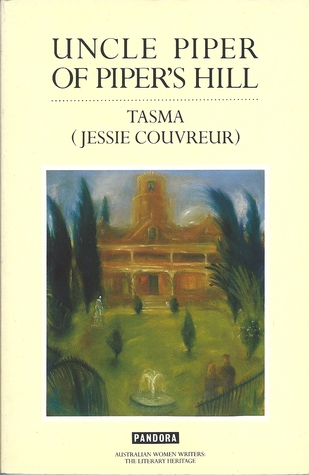
Tasma, Uncle Piper of Piper's Hill

After this, the only writers our reviewer mentions from Green’s book are women, starting with Rosa Praed, Tasma, and Ada Cambridge. S/he writes that “in spite of the pains [they] lavished on their work, they are probably to the present generation not much more than names”. Green apparently wrote that Cambridge was in “some respects, ahead of her time, and though many of her advanced opinions have now been accepted, we are not quite ready for all even yet.” Our reviewer continues that Cambridge’s ability to feel “so poignantly the wrongs of the world enabled her, as the author [Green] says, to pierce deeper into the heart of humanity than most Australian writers have done”.

Our reviewer concludes with a whole paragraph on Catherine Helen Spence who, s/he writes, “bears a name not so conspicuous as it ought to be in Australian literature”, primarily because of her political activity. However, s/he writes ‘so competent a literary judge as the late Chief Justice Way … paid her the compliment … of describing her writings on proportional representation as “real literature for their terseness, strength, and brilliancy”.’ Green also praises Spence’s work:

The first and best, Clara Morrison [sic], written in the fifties, has, like the rest, been out of print undeservedly, if its merits are as great as Mr. Green says. It does not always follow that an omnivorous reader is a master of the pen; but Miss Spence was one of the best read women of her day, and as a novelist learned her craft from the greatest writers of her own sex in the nineteenth century, and had intelligence enough to perceive their faults and steer clear of them.

Unfortunately, my understanding of Green’s view is rather limited, here, so please just treat this as a taster. I’ll return to him again one day, because his was an important voice at the time.

Palmer

Palmer argues in her article that until the early 1920s, “the novel in Australia was a matter for apology”, but that there had recently been unexpected advances – in “the right direction”. 

She then does a bit of a recap starting with the early novels, of which only a few were still in circulation, including:

obviously, Clarke’s Term of his natural life and Boldrewood’s Robbery under arms, less obviously, some novels by Mrs. Campbell Praed, ‘Tasma’ and Ada Cambridge.

She then makes the interesting comment that there were others “with considerable power and importance” but they “were hardly novels in form”, like Tom Collins’ “remarkable omnium gatherum of the Riverina in the ‘eighties, Such is life“, and “such of Lawson’s short stories as were lightly linked together by their theme”.

Then come more women, with, around 1900, Miles Franklin’s “vivid, sardonic yet girlish confession, My brilliant career“, Barbara Baynton’s “painful, remorseless Human toll“, and a bit later, Katharine Prichard’s Pioneers (my review), followed by her “much more serious and original book, Black opal in 1920″, which had, to the time of writing, “never been well distributed and recognised”. There was not much else “except for commercial novels that were without roots either in the soil of Australia or in that of art”. 

Palmer never pulled any punches! She continued, “looking round us we saw, on the whole, desert”. The causes were clear, a major one being authors depending on “English publishers who naturally preferred to please English readers by giving them no Australian books except those showing, Australia as another America, a wild-west in which an English hero (magazine type) would have monstrous, adventures showing the superior prowess of his race”. The results was that

authors who desired to write simply and truly, of life in Australia as they knew it were hampered, to the point of paralysis, by a sense of hostility. No one wanted their books in advance. No one wants any new art form, handling new subject matter, until it has come into existence — and often not then!

But, she argues, things were starting to change by 1924. The first volume of Henry Handel Richardson‘s “great trilogy” (Australia felix) had appeared in 1917, but the second, The way home, was published in 1925. However, it received little notice in Australia, as “the air was not kindly yet to a genuine work”. However, soon after, Katharine Prichard’s “Working Bullocks, radiant, with awareness of the timber country and its challenging beauty” came out. Its “artistic ‘seriousness'”, she said, “made it more possible for other serious books to be recognised in Australia; and this has actually come about”.

These new novels included Martin Mills’ The Montforts, Vance Palmer’s psychological study The Man Hamilton, and the third volume of Henry Handel Richardson’s trilogy, Ultima Thule, which she described as having “deep literary significance”. A “particularly responsible London critic” called it a masterpiece, and she praised it herself, as being “symphonic in form, with sustained, and developed themes”. The trilogy was received so well by “serious readers in England, the Continent and America”, she felt, that it raised the status of Australian literature.

Book cover

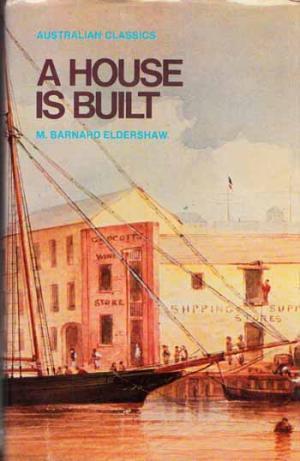
But there’s more! Richard Mahony typified “the misfit”, but types of characters were also appearing, such as “pioneers who could take what advantages there were in the new world about them”. M. Barnard. Eldershaw’s A house is built features such a character. She also praises Brent of Bin Bin’s Up the country and Ten Creeks Run, which contain complex, full lives. And she makes the point I quoted a couple of months ago, about the lack of exploration of “aboriginal life of Australia” and Prichard’s Coonardoo.

Conclusions

So, did Green and Palmer agree about Australian fiction to that point? To some degree – particularly regarding those turn of the century women writers – but I did only read a review of Green (not Green himself) as Bill (The Australian Legend has). Also, Green’s book is a more encyclopaedic one about Australian literature while Palmer’s article focuses specifically on the novel.

Touchstone in his review of Green’s Outline in Melbourne’s The Herald shares Green’s assessment of what’s characteristic of Australian versus overseas literature:

“an independence of spirit, a kind of humorous disillusion, a careless willingness to take a risk, a slightly sardonic good nature and a certain underlying hardness of texture,” but, “in all but the best of it there is a lack of intellectual content, as compared, with work of similar level overseas.” 

This last point is, I think, where Palmer was seeing change in the mid-1920s, which is about when Green’s work finishes. Palmer concluded, with some relief it seems, that “we begin to have books that we can send abroad as our contribution to the literary world in the important form of the novel, the development of character by narrative”.

Note: Bill, Lisa and others have reviewed many of the books listed here. Please check their blogs if you are interested.

Monday musings on Australian literature: Commonwealth Writers Prize (now defunct)

March 8 this year is a packed one. Of course, it is always International Women’s Day, but the second Monday in March is also Canberra Day here in the ACT, Labour Day in Victoria, and Commonwealth Day in, yes, the Commonwealth. It is not a public holiday in most places, but I decided it could inspire this week’s Monday Musings!

Some of you will have come across the Commonwealth Writers’ Prize before. It was established by the Commonwealth Foundation in 1987, as a successor to their Commonwealth Poetry Prize. This Foundation was itself established in 1966 by CHOGM (the Commonwealth Heads of Government). As its Wikipedia page, says

the Commonwealth Secretariat was established [1965] to support the political endeavours of the Commonwealth, the “Foundation was brought into being in the hope that it would give further substance to the old truism that the Commonwealth is as much an association of peoples as of governments”.

In other words, it focuses on the social, cultural, professional and other more locally-focused aspects of the Commonwealth. This includes, the Wikipedia pages also says, “to help to create national professional societies as part of a general process of “deanglicization”. This sounds a bit quaint now, but maybe that’s because much of this “deanglicisation” has been achieved. Has it? Anyhow, another of its formal goals was “to aid the broadening of experience through the printed word”. Hence, I assume, the various literary prizes.

The first was the Commonwealth Poetry Prize, which was succeeded in 1987 by today’s focus, the Commonwealth Writers Prize. This prize had two components – Best Book (1987–2011) and Best First Book (1989–2011). They were awarded for four regions: Africa, Caribbean and Canada, South Asia and Europe, and South East Asia and Pacific. There were winners in each category, Best Book and Best First Book, for each region, and from these, overall Best Book and Best First Book winners were chosen. In 2011, this award was discontinued. A new cultural programme was launched, with a new prize, the Commonwealth Short Story Prize, which is still going.

Anyhow, as most of us love lists, I thought I’d share the Australian winners of the Best Book and Best First Book awards over the duration of the award. Australia was in the Southeast Asia and South Pacific region, which comprised Australia, Brunei Darussalam, Fiji Islands, Kiribati, Malaysia, Nauru, New Zealand, Papua New Guinea, Samoa, Singapore, Solomon Islands, Tonga, Tuvalu, and Vanuatu.

So, the lists … bolded titles were overall winners for the year. Also, please note that I’m not being ethnocentric, just true to the Aussie Lit focus of Monday Musings! You can see all the prizes on the website.

Best Book

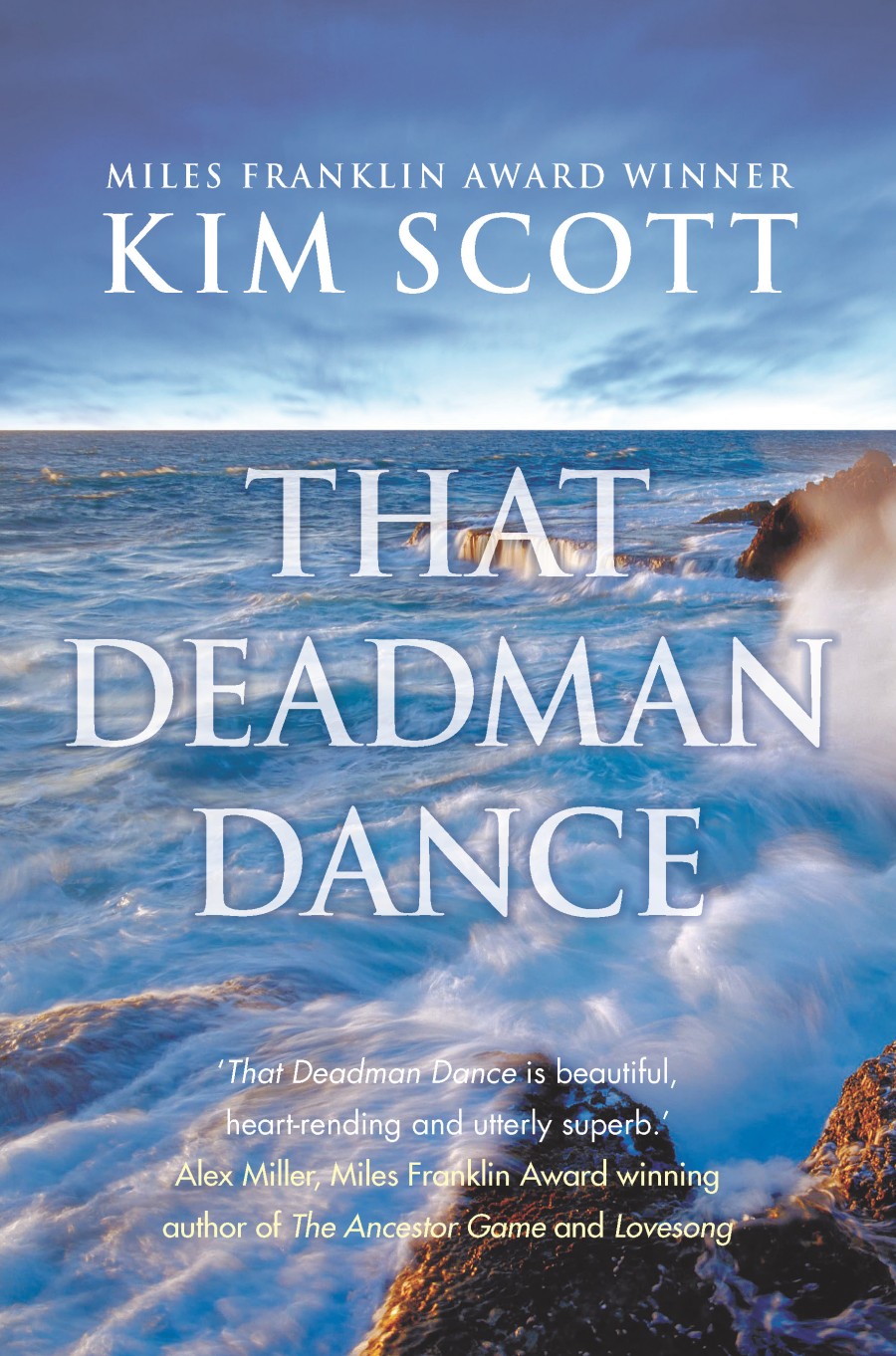
Kim Scott That Deadman Dance
  • 2011: Kim Scott’s The deadman dance (my review)
  • 2009: Christos Tsiolkas’ The slap (my review)
  • 2008: Steven Carroll’s The time we have taken
  • 2006: Kate Grenville’s The secret river
  • 2005: Andrew McGahan’s The white earth
  • 2004: Michelle de Kretser’s The Hamilton case
  • 2003: Sonya Hartnett’s Of a boy
  • 2002: Richard Flanagan’s Gould’s book of fish
  • 2001: Peter Carey’s True history of the Kelly Gang
  • 2000: Lily Brett’s Too many men
  • 1999: Murray Bail’s Eucalyptus
  • 1998: Peter Carey’s Jack Maggs
  • 1997: Sue Woolfe’s Leaning towards infinity
  • 1996: Gillian Mears’ The grass sister
  • 1995: Tim Winton’s The riders
  • 1994: David Malouf’s Remembering Babylon
  • 1993: Alex Miller’s The ancestor game
  • 1991: David Malouf’s The great world
  • 1990: Robert Drewe’s The bay of contented men
  • 1988: George Turner’s The sea and summer
  • 1987: Blanche d’Alpuget’s Winter in Jerusalem (shared with a NZ book)

You will see that Australia won the lion’s share of these prizes (21 of 25). The exceptions were 2010 won by a Samoan writer, 2007 and 1989 by a New Zealand writer, and 1992 by a Samoan-New Zealand writer. Things were a little different for the Best First Book award …

Best First Book

Book cover
  • 2010: Glenda Guest’s Siddon Rock
  • 2008: Karen Foxlee’s The anatomy of wings
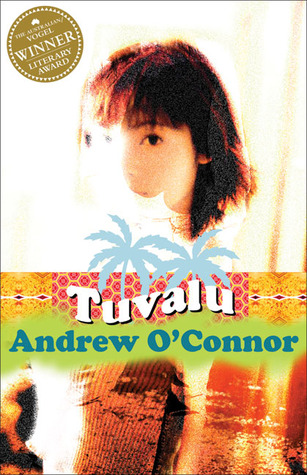
  • 2007: Andrew O’Connor’s Tuvalu
  • 2005: Larissa Behrendt’s Home
  • 2004: Nada Azar Jarrar’s Somewhere, home
  • 2002: Meaghan Delahunt’s In the blue house
  • 2001: Arabella Edge’s The company
  • 1998: Emma Tom’s Deadset
  • 1995: Adib Khan’s Seasonal adjustments
  • 1994: Fotini Epanomitis’ The mule’s foal
  • 1993: Andrew McGahan’s Praise
  • 1991: Thea Welsh’s The story of the year of 1912 in the village of Elza Darzins
  • 1989: Gillian Mears’ Ride a cock horse

So, fewer won by Australians here (13 of 23), and another country involved too: 2011, 2009, 2000, 1999, 1996, 1992, and 1990 by New Zealand writers; 2006 and 2003 by Malaysian writers; and 1997 by a Samoan writer.

There’s another interesting thing here. All of the winners of the Best Book award continued to be published and be well-known after their win. This is not the case with the Best First Book winners where a few have not become well-known on the literary scene (though many have continued to write and publish, some now overseas).

I have read many of the Best Books, and a few of the Best First Books, but mostly before blogging. Interestingly, the Best Books reflect the very “white” focus in Australian literary awards at the time (with a couple of exceptions), while the Best First Books reflect greater diversity. I wonder whether this fact is behind the Foundation’s change to focusing on short stories, because the aim seems to have also changed from “simply” recognising achievement to developing, promoting and encouraging writers. The prize, they say,

is open to writers who have had little or no work published and particularly aimed at those places with little or no publishing industry. The prize aims to bring writing from these countries to the attention of an international audience. The stories need to be in English, but can be translated from other languages.

What do you think about all this?

Stella Prize 2021 Longlist announced

Unfortunately, because I’m on the road, I wasn’t able to “attend” the announcement earlier this evening, but at least I have been able to get my post out on the night, as it were.

As I say every year, I think, I don’t do well at having read the Stella Prize longlist at the time of its announcement. In 2017 I’d read none; in 2018, one, and in 2019, two! Last year, I was back to one! By the end of 2020, I’d read 3.5 which is worse than previous years.

Again, as I’ve said before, I do better at reading the winners, having read Carrie Tiffany’s Mateship with birds (2013), Clare Wright’s The forgotten rebels of Eureka (2014), Emily Bitto’s The strays (2015), Charlotte Wood’s The natural way of things (2016), Heather Rose’s The museum of modern love (2017), and Vicki Laveau-Harvie’s The erratics (2019). So far, I’ve missed 2018’s winner, Alexis Wright’s Tracker, and I’m only halfway through reading last year’s winner, Jess Hill’s See what you made me do. I will finish though, as it’s a significant book I believe.

The judges are again different to last year’s with only Zoya Patel (this year’s chair), continuing on the panel: memoirist and editor Zoya Patel (Chair); playwright, author and Blak & Bright First Nations Literary Festival Director Jane Harrison; 3RRR radio producer, presenter and literary critic Elizabeth McCarthy;  production editor of The Saturday Paper Ian See; and Deputy Programme Director at Edinburgh Book Festival Tamara Zimet. As always, attention has been paid to diversity on the panel.

The longlist

Book cover
  • Rebecca Giggs’ Fathoms: The world in the whale (non-fiction)
  • SL Lim’s Revenge (fiction) (Lisa’s review)
  • Laura Jean McKay’s The animals in that country (fiction)
  • Louise Milligan’s Witness (non-fiction)
  • Cath Moore’s Metal fish, falling snow (fiction)
  • Intan Paramaditha’s The wandering (fiction)
  • Mirandi Riwoe’s Stone sky gold mountain (fiction) (on TBR; Kate’s mini-review)
  • Ellena Savage’s Blueberries (non-fiction/essays)
  • Nardi Simpson’s Song of the crocodile (fiction) (on TBR)
  • Elizabeth Tan’s Smart ovens for lonely people (short stories) (Bill’s review and on TBR)
  • Jessie Tu’s A lonely girl is a dangerous thing (fiction) (Kim’s review)
  • Evie Wyld’s The bass rock (fiction)

Well, I guessed five of these might be in the list – McKay, Riwoe, Simpson, Tan and Tu, but I also guessed some more non-fiction like Grace Karskens’ People of the river, and Jacqueline Kent’s Vida. However, as I haven’t read any of the longlist – and have not, in fact, heard of several of them – I’m not going to judge. I’ll just say, how interesting!

Oh, and for the record, I’ve read none – though I have a few on my pile!

The judges’ chair, Zoya Patel commented on the longlist:

The 2021 Stella Prize longlist demonstrates the breadth of expression present in Australian literature, and the importance of raising the profile of women and non-binary voices in celebrating this expansive talent. In reading these titles, we pondered what might be lost or overlooked should a prize such as the Stella not exist to specifically examine the output of Australian women and non-binary writers. […]

This year’s reading presented a diversity of talent and expression, with books exploring the people and animals through the lens of fiction and non-fiction, and with a common objective to reach into the heart of what it means to exist in the world today.

To read the judges on each of the longlisted books, do check out the Stella website.

Stella’s announcements are all later this year than in previous years – including this longlist which has usually been announced in February. So, the shortlist will be announced on March 25, and the winner on April 22.

Any comments?