Cindy Solonec, Debesa: The story of Frank and Katie Rodriguez (#BookReview)

Cindy Solonec’s Debesa is one of those curious hybrid biography-memoirs that are appearing on the scene. Its subtitle describes it as The story of Frank and Katie Rodriguez, implying biography, but in fact, Frank and Katie are Solonec’s parents and so the book also incorporates some of her own story as part of the family. I’ll return to this later, but will start with the main content, the biography.

Debesa spans four generations of the family, starting in the 1880s with Solonec’s maternal great-grandparents, but it centres, as the Media Release says, “on the unlikely partnership of Cindy’s parents: Frank Rodriguez, once a Benedictine novice monk from Spain, and Katie Fraser, who had been a novitiate in a very different sort of abbey – a convent for ‘black’ women at Beagle Bay Mission” north of Broome. The Release also explains that Debesa is a rewriting of Solonec’s 2016 PhD thesis which “explored a social history in the West Kimberley based on the way her parents and extended family lived during the mid-1900s”. What Solonec does in the book, then, is to turn her thesis into a readable history and a family memoir, a combination that is becoming an increasingly acceptable approach to historical writing.
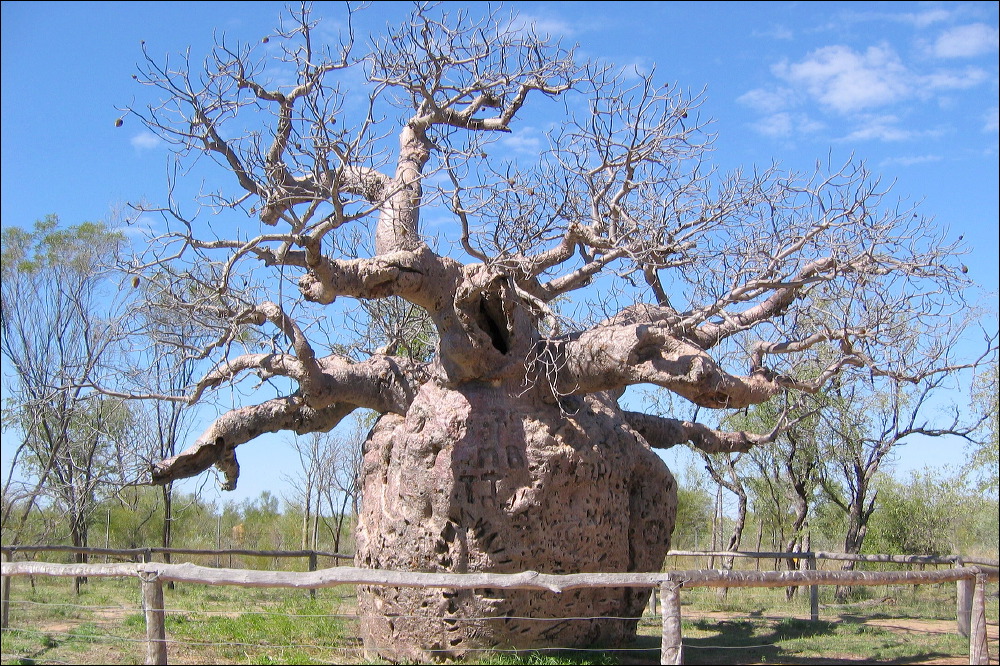
There is some contention about this tree’s prison use, but not about its cultural significance.

I was keen to read Debesa for a few reasons, not least being that I’ve been to the Kimberleys (east and west) and am intrigued by this beautiful region and its complicated history. I grew up being aware of its pastoral history, particularly regarding the Durack family and the Ord River Irrigation Scheme, and I came to understand some of its colonial past when I saw such “sights” as the Boab Prison tree in Derby during my visits there. As Solonec’s family story is contemporaneous with the mid-twentieth century Duracks and the Ord River scheme, it was enlightening to see this world from a smaller and more marginalised perspective. I say “smaller” because Frank and Katie’s property, the titular Debesa, was a small pastoral holding, and “marginalised” because Katie’s “mixed descent” Indigenous (Nigena) background meant the family was always on the outer.

Solonec sets the scene in her Introduction by providing a brief history of the Kimberley’s colonial history, one founded on “the ideology that everyone must live like white people. Speak their language. Adapt to the ways. And marry lighter skinned people …”. It’s the same story that we’ve read before – people dispossessed, country spoiled, and children stolen. In her early chapters, Solonec documents the family’s story from the time of her maternal great-grandparents, Indian immigrant Jimmy Casim/Nygumi and his Nigena wife, Muninga. Their daughter, Solonec’s grandmother Jira, was born in 1900 and stolen with her cousin in 1909. Designated as orphans and renamed Phillipena and Francesca, they were taken to Beagle Bay Mission, leaving their mothers distraught.

Alongside the stealing of children was the stealing of the land:

On stations along Mardoowarra [lower Fitzroy River], land was fundamental to Nigena existence. They knew every part of that country intimately. Their neighbours and the broader Australian post people’s concept of ‘country’, their religious attachment, their awareness of food sources, was inherent to their way of life. They knew the call, cry, track of every living creature. Everything that breathed, every hill, every creek, crevice and outcrop and night sky with its myriad of galaxies, they knew by name. The seasons dictated their movements and their care for country within pliable boundaries. No-one ever got lost.

But, the Nigena had to watch, Solonec writes, as their land was taken for pastoralism and their sacred sites destroyed and/or renamed. Her extended family, “like refugees in their own country, lived in bush camps near the homesteads” and the women were preyed upon by “lecherous, irresponsible guide menfolk”. There is nothing new here, but Solonec puts flesh on the bone by telling it through the prism of her own family.

In chapter 3, we meet Solonec’s parents, Frank, who migrated from Galicia, Spain, in 1937, and Katie, whose parents were the stolen Phillipena and Fulgentious, a Nigena man with a white stockman father. Together they forge a life, drawing on their deep and shared commitment to Catholicism. They take work where and when they can, Frank as a trusted builder and Katie a respected cook and station-worker. They raise and educate their four children, acquire their own land, and slowly build a home and establish a small pastoral business, Debesa. Theirs was a partnership in every sense of the word. Solonec makes the interesting observation that Aboriginal cultures and European peasant cultures, from which Frank had come, have much in common, including a “strong sense of kin”. And, of course, Frank as a non-English migrant, had his own experience of bigotry and prejudice.

Biography? Memoir?

There’s excellent historical research here about life in the Kimberley, with illuminating “short histories” of subjects like mustering and wage disparity, and discussion of issues like the divisive and destructive “exemptions” from the Native Administration Act. (Tony Birch addresses similar exemptions in his novel, The white girl.)

To write this book, academic Solonec drew, rightly, on a large body of secondary sources and other life-writing about the region – all of which is documented in the thorough bibliography at the end – but she also had her father’s diaries, which provided the book’s “chronological framework”, and the stories of her mother and extended family passed on through oral tradition. She writes that, fortunately:

Aboriginal peoples still uphold past events through oral histories … I was excited to find that their stories were not that hard to cross reference with the literature. Their memory vaults with stories that have been handed down served them well, confirming the reliability of Indigenous intelligence.

(I suspect she means “intelligence” in both meanings here.)

As I opened this post, though, the book is a curious mix. The first half reads like a traditional biography while the second half slips more into memoir. This is heralded in the Introduction where Solonec describes her aim as

wanting to leave a documented account for posterity about the way marginalised peoples lived in the Mardoowarra (Fitzroy River) region during the middle of the twentieth century. A social history as experienced by my families. I wanted to leave an account of ordinary people’s everyday lives that would not otherwise be recorded. An account based on my parents’ joint biography.

This is perfectly valid, and she achieves what she set out to do. Her approach does, however, raise some questions, particularly towards the end, where there’s a risk of the subjective blurring the objective, making the truth potentially hard to discern. Solonec is justly proud of her parents’ achievements, and certainly they had much to contend with, but there’s a sense that all the problems they had were external, which seems unrealistic. I don’t believe, however, that this invalidates the critical historical truths contained here. In fact, the warmth of the story makes Debesa an approachable history which, given the significance of its subject, is a good thing.

Lisa also reviewed this book, engendering some good discussion.

Cindy Solonec
Debesa: The story of Frank and Katie Rodriguez
Broome: Magabala Books, 2021
264pp.
ISBN: 9781925936001

(Review copy courtesy Magabala Books)
Monday musings on Australian literature: Some New Releases in 2022

For several years now, my first Monday Musings of the year has focused on “new releases”. As before, it is mostly drawn from the Sydney Morning Herald. Their writers do a wonderful job of surveying publishers large and small, but I have found a few more on my own! Also, remember, this is Monday musings on Australian literature post, so focuses on Australian authors. Do click on the SMH link to see the full list, which includes non-Aussies, Aussies I haven’t selected, and some additional book info.

Links on the authors’ names are to my posts on those authors.

Fiction

Last year, I listed over 30 fiction works, including short story collections, and read very few – though have some on my TBR. Here’s this year’s selection:

  • Robbie Arnott, Limberlost (October, Text)
  • Jessica Au, Cold enough for snow (February, Giramondo): Brona’s advanced review
  • Mandy Beaumont, The furies (February, Hachette)
  • Geraldine BrooksHorse (June, Hachette)
  • Michelle Cahill, Daisy and Woolf (April, Hachette)
  • Jay Carmichael, Marlo, 1953 (August, Scribe)
  • Steven Carroll, Goodnight, Vivienne, Goodnight (March, 4th Estate): final in the Eliot Quartet
  • Shankari Chandran, Chai time at Cinnamon Gardens (January, Ultimo Press)
  • Claire G. ColemanEnclave (July, Hachette) 
  • Gregory Day, The bell in the world (December, Transit Lounge)
  • Ceridwen Dovey and Eliza Bell, Mothertongues (April, PRH): “experimental book of bio-autofiction about early motherhood”, a genre-bender?
  • Robert Drewe, Nimblefoot (June, PRH)
  • Nigel Featherstone, My heart is a little wild thing (no date, Ultimo Press)
  • Victoria Hannan, Marshmallow (September, Hachette)
  • Hilde Hinton, The loudness of unsaid things (April, Hachette)
  • Gail Jones, no title yet (November, Text)
  • Yumna Kassab, Australiana (March, Ultimo)
  • Tom Keneally, Dancing the Liberty Dance (August, PRH)
  • Tom Lee, Object coach (November, Upswell)
  • Robert Lukins, Loveland (Allen & Unwin, March)  
  • Fiona McGregor, Iris (October, Picador)
  • Holly Ringland, The seven skins of Esther Wilding (June, 4th Estate) 
  • Philip Salom, Sweeney and the bicycles (November, Transit Lounge)
  • Wendy Scarfe, One bright morning (March, Wakefield)
  • Jock Serong, The settlement (September, Text)
  • Craig Sherborne, The Grass Hotel (February, Text)
  • Inga Simpson, Willowman (November, Hachette)
  • Steve Toltz, Here goes nothing (May, PRH)
  • Pip Williams, The bookbinder of Jericho (November, Affirm). 
  • Dominique Wilson, Orphan Rock (March, Transit Lounge)
  • Alexis WrightPraiseworthy (October, Giramondo)

SMH lists many books under Thrills and Chills, but this is not my area of expertise. So, I’m going to leave you to check SMH’s link if you are interested, and just bring a couple to your attention:

SMH also lists Debut Australian fiction. Most of these names are, by definition, unknown, so I’m sharing them by publisher:

  • Affirm: Omar Sakr, Son of Sin (February: poet moving into fiction)
  • Allen & Unwin (A&U): Isobel Beech, Sunbathing (May); Emily Brugman, The Islands (February)
  • Finlay Lloyd: Sandy Gordon, Leaving Owl Creek (February: on my TBR)
  • Fremantle Press: Brooke Dunnell, The glass house (November: Fogarty Literary Award winner)
  • Hachette: Megan Albany, The very last list of Vivian Walker (February: First Nations); Rhett Davis, Hovering (February: won the 2020 Victorian Premier’s Award for an Unpublished Manuscript)
  • Harper/Collins: Kimberley Allsopp, Love and other puzzles (February)
  • Picador: Jessica Stanley, A Great Hope (February)
  • Penguin Random House (PRH): Clare Fletcher, Five bush weddings (September); Ashley Goldberg, Abomination (May); Lizzie Pook, Moonlight and the Pearler’s Daughter (February); Justin Smith, Cooper not out (January)
  • S&S: James Weir, The Hemsworth effect (June)
  • Scribe: Sam Wallman, Our members be unlimited (May: graphic novel)
  • Transit Lounge: Brendan Colley, The signal line (May); Alan Fyfe (T, September); Adriane Howell, Hydra (August)
  • Ultimo: Pirooz Jafari, Forty nights (July)
  • UQP: Al Campbell, The keepers (February); George Haddad, Losing face (May)

Short stories

  • Ennis Cehic, Sadvertising (March, PRH)
  • lse Fitzgerald, Everything feels like the end of the world (April, A&U)
  • Chris Flynn, Here be Leviathans (second half, UQP)
  • Kat Gibson, Women I know (May, Scribner)
  • Mirandi Riwoe,The burnished sun (April, UQP)
  • Andrew Roff, The teeth of a slow machine (March, Wakefield Press) 
  • Maria Samuela, Beats of the Pa’u (March, Victoria University Press)

Non-fiction

SMH provides a long, long list of new non-fiction books covering a huge range of topics, so my lists here are highly selective.

Life-writing (loosely defined, and focused mainly on the arts and activism)

  • Carmel BirdTelltale: Reading, writing, remembering (July, Transit Lounge): need I say more?
  • Nick Cave, Faith, hope and carnage (October, Text): reflection on son Arthur’s death
  • Jessie Cole, Desire (August, Text): memoir
  • Jim Davidson, Emperors in Liliput: Clem Christesen of Meanjin and Stephen Murray-Smith of Overland (October, MUP): on these two literary journals and their editors
  • Aaron Fa’Aoso, So far, so good, (September, Pantera Press): memoir of Black Comedy star
  • Anna Funder, Wifedom (September, PRH): on George Orwell’s first wife; billed as a “blazing feminist masterpiece”
  • Hannah Gadsby, Ten steps to Nanette (April, A&U): memoir
  • Kate GrenvilleA room made of leaves: Elizabeth Macarthur’s letters (April, Text): non-fiction accompaniment to the novel 
  • Brittany Higgins, no title (October, PRH): memoir of activist
  • Nathan Hobby, The red witch (May, MUP): biography of Katharine Susannah Prichard (been waiting for this) 
  • Anita Jacoby, Secrets beyond the screen, May, Ventura): television producer’s memoir
  • Lee Kofman, The writer laid bare (March, Ventura)
  • Wendy McCarthy, Don’t be too polite, girls (March, A&U): activist/feminist’s memoir
  • Paddy Manning, Sly fox (November, Black Inc): unauthorised biography of Lachlan Murdoch
  • Patti Miller,True Friends (April, UQP): memoir
  • Brenda NiallMy accidental career (March, Text): biographer’s memoir 
  • Rick Morton (ed), Growing up in country Australia (April, Black Inc)
  • Ann-Marie Priest, My tongue is my own (May, La Trobe University Press): biography of poet Gwen Harwood
  • Magda Szubanski, no title (second half, Text): memoir
  • Simon Tedeschi, Fugitive (May, Upswell): pianist, “straddles the borders of poetry and prose, fiction and fact, trauma and testimony”
  • Tom Tilley, Speaking in tongues (September, ABC Books): broadcaster’s memoir

SMH also lists several biographies and memoirs on/by politicians, past and present, but, as last year, I’m taking a break from parliamentary politics. (Do check SMH’s link, if you are interested.)

Essay collections

  • Eda Gunaydin, Root and branch (May, NewSouth): race, genre and migration
  • Eliza Hull (ed), We’ve got this (March, Black Inc): by parents who identify as deaf, disabled or chronically ill
  • Kim Mahood, Wandering with Intent (October, Scribe)
  • Pantera Press anthology of Liminal and Pantera Press Nonfiction Prize longlist (August)

History and other non-fiction

  • Anna Clark, Making Australian history (February, PRH)
  • David Duffy, Nabbing Ned Kelly (March, A&U)
  • Meg Foster, Boundary crossers (November, NewSouth): Aboriginal, African-American, Chinese and female bushrangers
  • Duane Hamacher, The first astronomers (March, A&U): First Peoples’ knowledge of the stars; Hamacher is not First Nations, but did I believe work closely with Indigenous elders
  • Leah Lui-Chivizhe, Masked histories: Turtle shell masks and Torres Straight Islander People (July, MUP): First Nations author
  • David Marr, A family business (November, Black Inc): our colonial past
  • Elizabeth Tynan, The secret of Emu Field (May, NewSouth): the first British atomic test site, South Australia
  • Don Watson, The passion of Private White (October, Scribner): the 50-year-old relationship between anthropologist and veteran Neville White and Aboriginal clans of remote northern Australia

Some current-interest topics being written about, include:

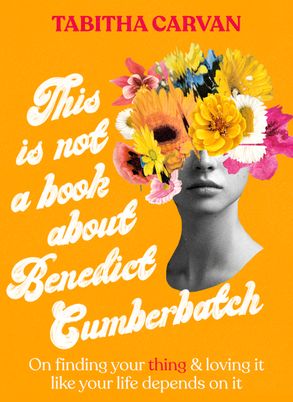
  • Women and the “home-front”: Tabitha Carvan, This is not a book about Benedict Cumberbatch (March, HarperCollins: joy in women’s lives); Eloise Grills, Big beautiful female theory (July, Affirm); Sonia Orchard, The female of the species (September, Affirm: the “science of womanhood”); Sian Prior, Childless (April, Text: living without children); Gina Rushton, The most important job in the world (April, Pan Macmillan: choosing motherhood).
  • Politics and current affairs: Allan Behm, No enemies, no friends (March, Upswell: on Australia’s diplomatic relationships); Ed Coper, Facts and other lies (February, A&U: on disinformation); Jo Dyer, Burning down the house (February, Monash University Press: rethinking our political system); Osman Faruqi, The racist country (August, PRH); Samantha Maiden, Open secrets (no date, HarperCollins: on the Canberra bubble); Andrew Quilty, Fall of Kabul (August, MUP); Matthew Ricketson and Patrick Mullins, Who needs the ABC? (April, Scribe).

Interestingly, I see little this year on COVID-19 and climate change, compared with last year. Nor much about our big women’s issue of 2021, except for Brittany Higgins’ memoir coming out. Why?

Poetry

Finally, if you love poetry, do check the link, but these might whet your appetite:

  • Lisa Gorton, Mirabilia (August, Giramondo)
  • Sarah Holland-Batt, The Jaguar (May, UQP)
  • John Kinsella and Charmaine Papertalk Green, Art (June, Magabala Books)
  • Les Murray, Continous creation (March, Black Inc): final posthumous collection
  • Tracy Ryan, Rose interior (April, Giramondo)

New publisher Upswell and the established Fremantle Press also have poetry collections coming …

Anything here grab your attention?

Monday musings on Australian literature: Australian Women Writers Challenge 2021

Challenge logo

For the last time, I am devoting my last Monday Musings of the year to the Australian Women Writers Challenge ( in its current form at least, see below). What a couple of years we’ve had. It’s hard to know whether it has affected the challenge or not but, anecdotally, our numbers did not increase over a period when more people were stuck at home. Were we too discombobulated to focus on reading or were many of our participants too tired from the challenges of working from home and home-schooling to read and review as well? I look forward in the future to seeing what sociologists and other researchers make of these years and how we behaved.

Anyhow, the challenge … it has continued to go very well. The full database now contains reviews for nearly 7,700 different books across all forms and genres, from all periods, of Australian women’s writing. This means that the number of books reviewed on our database increased in 2021 by nearly 700 books, less than the number added last year, but still a healthy 10% increase to the database.

My personal round-up for the year

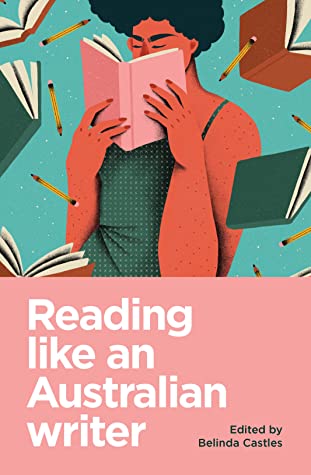
These last two years have not been stellar ones for me, so my posting to the challenge was down (mirroring the overall trajectory for the challenge!) I posted only 23 reviews to the Challenge over the year, a few less than last year, but I did also read three essays I didn’t post to the challenge. I will include them here as they were by women and appeared in a book edited by a woman, Belinda Castles’ Reading like an Australian writer. I’m disappointed in my reading achievements this year, but it is what it is! Here they are, with links to my reviews:

Fiction

Non-fiction

Anthologies/Essays

This year, fiction (including short stories) represented around 53% of my AWW challenge reading, which is a little less than last year’s 61%, and only two were classics by my loose definitions. One, Elizabeth Harrower’s, was read for Bill’s (The Australian Legend) Gen 4 week (Part 1). As always, I appreciate the impetus to read books from the past, because they do not deserve to be forgotten! In terms of that problematic word “diversity”, I read four books by First Nations Australia women.

My non-fiction reading was even more heavily slanted towards memoir/life-writing than usual, though the essays shift the balance a little, with a focus there on writing about writing.

Finally, as always, a big thanks to Theresa, Elizabeth and the rest of the team. I have loved being part of this challenge, partly of course because it equates with my reading goals so has never really been a challenge, but also because it’s been a generous and supportive team working on an important goal.

And so, 2022

Challenge logo

Most of you will know that this challenge was instigated by Elizabeth Lhuede in 2012 in response to concerns in Australian literary circles about the lack of recognition for women writers. I have been involved as a volunteer since 2013. In many ways, we feel that ten years on, the goal has been achieved, as women writers seem to be well-established on Australia’s literary scene, at least by observable measures.

Partly for this reason, the challenge will change tack in 2022 and focus on past and often under-recognised or overlooked women writers, from the 19th- and 20th-centuries. The new team overseeing this new phase comprises Elizabeth, Bill (The Australian Legend) and me. We plan to offer articles and reviews about earlier writers, and publish their actual writings – in full or excerpt form, as appropriate. We three feel that Australia’s rich heritage of Australian women’s writing hasn’t been fully explored and we’re keen to nudge it a bit more into the limelight.

This does not mean that the always popular contemporary aspect of the challenge will cease, but it will now be carried through our Facebook groups, Love Reading Books by Aussie Women and Australian Women Writers News and Events. Please join those groups if you are interested and haven’t already joined them.

Meanwhile, you will hear more about AWW 2022, when we get going in February.

Alison Croggon, Monsters (#BookReview)

Alison Croggon’s Monsters: A reckoning is a demanding but exhilarating read, demanding because it expresses some tough feelings, and exhilarating because of the mind behind it, the connections it makes and the questions it asks. Coincidentally, it has some synchronicities with my recent read, Sarah Krasnostein’s The believer. Both talk about “uncertainty”, and both conclude by talking about “love”, but beyond these two ideas are very different books.

Monsters is categorised on its back-cover as narrative nonfiction/memoir. However, it could also be described as an essay collection, albeit a linked-essay collection, because each individually-titled chapter seems to take up an issue – or return to an earlier issue – and riff on it, though riff is too frivolous a word for what Croggon does.

The book has an interesting trigger and an even more interesting trajectory. The trigger is the final breakdown in what had been a very difficult relationship with her sister. The trajectory is to explore this through the lens of colonialism, the “colonial project”. It’s audacious, really, and yet it makes a lot of sense. It certainly adopts the idea that the personal is the political with a vice-grip that doesn’t let go.

I’ll start with the memoir part. Threading through the essays are references to her white middle-class family. She starts, in the first two chapters – “The curse” and “Ancestors” – with a quick expose of the family tree. It goes back to the 1100s, but she focuses mostly on the 19th century’s Great Uncle Bee who was heavily implicated in “the colonial project”. Her thesis is that “colonisation is, necessarily, a process of traumatisation for everyone who is born in the system”. Croggon does not wish to diminish its greatest impact on the colonised but her point is that the “system” damages everyone. She argues, albeit using “a small, wonky, uncertain line”, that the attitudes and values inherent in the system can (even, perhaps, must) poison personal relationships. She writes, two-thirds through the book:

I was born as part of a monstrous structure – the grotesque, hideous, ugly, ghastly, gruesome, horrible – relations of power that constituted colonial Britain. A structure that shaped me, that shapes the very language that I speak and use and love. I am the daughter of an empire declared itself the natural order of the world.

The memoir part, the family part, particularly regarding her sister, is tough and hard – and I admit that I would not want to be her sister reading this book. However, although Croggon has the pen in her hand, so of course we feel her pain at “the fracture”, she does not absolve herself of her role. Indeed, at the end – and she means personally and politically, I believe – she talks of “attempting to understand my own complicities”.

“Are we irrevocably broken by our histories?”

Here is where the essay aspect of this intriguing work illuminates, because, in different but sometimes overlapping essays/chapters, she explores issues like patriarchy, whiteness, feminism, primarily as they play out through “the colonial project”. Take, for example, her analysis of patriarchy and its impact on the relationship between women: “how it distorts and destroys relationships between women: how it creates this deadly competition…” Competiton being, of course, fundamental to colonialism.

Now, I wanted to reject this because I do not feel in competition with women – I have always loved the sisterhood – but, I can’t ignore the overarching point she is making, one that’s bigger than my little world. She continues:

For centuries, our foundational cultural texts have said, over and over again, that women are without worth.

I could easily (but naively) dispute this by pointing to my life, but I have to admit to my privilege and, whether conscious or not, to the entitlement under which I live. I am therefore willing to accept Croggon’s thesis regarding colonialism – and its impact on the personal as well as the political:

We are both [she and her sister] the product of a machine that has spent centuries concealing its violence, that pours countless resources into disguising its greed for resources and power as an exercise in human progress.

This machine is fed, as Croggon sees it, by a faith in binaries: “good/bad, men/women, white/black, right/wrong, guilty/innocent”. These binaries “profoundly infected” her relationship with her sister but, as she explores through her essays, they also underpin the colonial view of the world that permeates so much of our thinking and behaviour still today. We have not, as we know, shaken off the bonds of our colonial past, and if there’s one thing Croggon rams home, with erudition and sophistication, it’s how deeply ingrained colonial thinking is in everything we do. To put it simply, colonialist cultures are racist, sexist, hierarchical, and rely on “conquest, erasure, entitlement” to survive.

One of my favourite, one of the most clarifying essays/chapters, is “The whiteness”. In one chapter she pulls apart denotation, connotation, implication, and more. She says that “whiteness isn’t really about skin colour. Like blackness, it’s a category”. She writes that “the savagery of whiteness, its pettiness, its hypocrisy, its dishonesty, its murderousness: these are hard things to understand about oneself.” She writes of the whiteness that is able to argue its own victimhood. And, she admits to discomfort with prodding the traumas of her white family in the face of Black anguish.

It is uncomfortable being white today, with all our privileges – and it is even more uncomfortable that such a weak word as “uncomfortable” probably adequately describes our feelings and uncertainties.

You can probably see by now that this is not a simple read. It’s certainly not one you can dip into and read an “essay” at random, because the argument is entwined through memoir. It’s fragmented, and draws on a seemingly random group of thinkers and writers against which she bounces her own ideas. It requires concentration to follow the links and connections, the slipping back-and-forth between the personal and the political, but, as I flip through the book to write this post, what I see are a lot of “Yes” marks in the margin.

Some of these “yeses” relate to sharing some experiences, such as a childhood love of reading, or to seeing the world similarly, but others relate to the questions she leaves us with, because there are no answers here.

Towards the end comes the admission that “I can’t see what I can’t see”. Of course! But this is also the cry of someone who wants to see more. Also near the end, she returns to her relationship with her sister, and the role of patriarchal norms and colonialism’s assumptions in its collapse. She says “I can’t see how it can be undone”. This is the biggest – and, to be honest, most confronting – question Croggon leaves us with. Can it be done? Can we unlearn colonialism’s cruel premises and heritage, so that we can undo what we have done?

Challenge logo

Alison Croggon
Monsters: A reckoning
Melbourne: Scribe, 2021
275pp.
ISBN: 9781925713398

(Review copy courtesy Scribe)

Monday musings on Australian literature: Favourite books 2021, Part 2: Nonfiction and Poetry

Last week, as most of you will know, I shared the favourite Aussie fiction books named by writers in the Sydney Morning Herald’s Books we loved in 2021 and ABR’s Books of the Year 2021. This week, as promised, I’m sharing the nonfiction and poetry favourites. Again, I’m only including Australian titles (as this is a Monday Musings post). It’s a much longer and more varied list than last week’s.

Nonfiction

Nonfiction picks tend to speak to the professional interests of their nominators – historians, for example, tend to choose histories, while literary critics might range across essays and literary biographies, and social commentators tend to like other analyses of contemporary life and behaviour. The result is a rich, and tempting, list.

Despite this variety, a few books were picked multiple times, like Bernadette Brennan’s biography of Gillian Mears, Leaping into waterfalls, and Delia Falconer’s essay collection, Signs and wonders. Political biographies/analyses are usually popular and so it is here with Gideon Haigh’s The brilliant boy: Doc Evatt and the great Australian dissent and Sean Kelly’s Sean Kelly’s The game: A portrait of Scott Morrison.

A few other titles appeared more than once, including a couple on my TBR, but one stood out because it was new to me and sounds different: Anwen Crawford’s No document.

As for the most popular form of nonfiction favourited this year, you could probably say that the memoirs have it.

  • Ruth Balint’s Destination elsewhere: Displaced persons and their quest to leave postwar Europe (history): (Sheila Fitzpatrick)
  • Clem Bastow’s Late bloomer: How an autism diagnosis changed my life (memoir): “frank and fearless” (Graeme Simsion); “astute and illuminating” (Giselle Au-Nhien Nguyen)
  • Lech Blaine’s Quarterly Essay: Top blokes (essay): “hilarious and incredibly illuminating explanation of how identity politics shapes actual politics” (Bri Lee)
  • Lech Blaine’s Car Crash (memoir): “deeply moving” (Bri Lee) 
  • Bernadette Brennan’s Leaping into waterfalls (biography): “verve and sensitivity … intimate and often unsettling” (Caroline Baum); “a skilful, unforgettable distillation of a writer’s creative imagination” (Mark McKenna); “scholarly, passionate, readable” (Don Anderson); “The book I never wanted to end” (Zora Simic); “an exceptional work” (Brenda Walker)
  • David Brophy’s China panic: Australia’s alternative to paranoia and pandering (nonfiction): “some uncommon common sense on Australia’s current hyped-up alarm” (Sheila Fitzpatrick)
  • Edmund Campion’s Then and now: Australian Catholic experiences (essays, theology): “humane, literate, hospitable, engaging essays” (Don Anderson)  
  • Anwen Crawford’s No document (book-length essay): “superb … resonant power, about grief, politics, ephemerality and art” (Lucy Treloar); “sophisticated, moving lament” (Bernadette Brennan); “a striking collage-like essay written in a spirit of lucid grief and righteous anger” (James Ley); “so beguiling I read it twice” (Zora Simic); (Declan Fry) (Lisa’s review)
  • Emma Do and Kim Lam’s Working from home (may ở nhà) (social commentary): “this book!” (Declan Fry)
  • Delia Falconer’s Signs and wonders (essays): “both solace and alarm as she renders the impact of living in the anthropocene” (Anna Funder); “exquisite writing that swerves with heartbreaking facts, into hidden realms of our broken world, luminous with humanity” (Robert Adamson); “illuminating book on the climate crisis ” (Brenda Walker); “captures the fragility and incredulity of living at a tipping point of earthly life” (Tom Griffiths) (Lisa’s review)
  • Fiona Foley’s Biting the clouds (history): (Anita Heiss)
  • Helen Garner’s How to end a story (diaries):”reads like a thriller, gripping us in the quotidian, real-time horror of her unravelling marriage” (Clare Wright); “the taut shape of a fine novel” (Brenda Walker); “the most formidable book of excerpts from the diaries so far” (Peter Craven) (on my TBR)
  • Caroline Graham and Kylie Stevenson’s Larrimah (nonfiction): “strange and extraordinary” (Craig Silvey)
  • Stan Grant’s With the falling of the dusk (memoir/politics): “an insightful analysis of a world unravelling since the 1990s” (Andrew West)
  • Bella Green’s Happy endings (memoir): “astute and illuminating” (Giselle Au-Nhien Nguyen)
  • Gideon Haigh’s The brilliant boy: Doc Evatt and the great Australian dissent (history): “concerns H.V. Evatt’s compassion as a High Court judge in a negligence case” (Judith Brett); “exemplary in its forensic analysis and sympathetic treatment of a brilliant man” (Jacqueline Kent); “a fascinating and moving story of callousness, compassion, and creativity” (Frank Bongiorno)
  • Amani Haydar’s The mother wound (memoir): “poetic rumination on the false binaries between “public” and “private” violence, and modern Australia” (Bri Lee); “narrated with unsentimental intelligence” (Bernadette Brennan); “powerful” (Zora Simic); “astute and illuminating” (Giselle Au-Nhien Nguyen)
  • Veronica Heritage-Gorrie’s Black and blue (memoir): “an eye-opening and heartbreaking examination of how messed-up policing is in Australia” (Bri Lee); “powerful” (Zora Simic)
  • Jennifer Higgie’s The mirror and the palette (feminism): “spellbinding update of Germaine Greer’s and Linda Nochlin’s seminal feminist research” (A. Frances Johnson)
  • Kate Holden’s The winter road: A story of legacy, land and a killing at Croppa Creek (true crime/terrorism): “powerful environmental parable … brilliant, sensitive” (Tom Griffiths)
  • Eleanor Hogan’s Into the loneliness (biography): “the delicately handled story of the friendship between writers Ernestine Hill and Daisy Bates … a complex and moving book” (Delia Falconer)
  • Sarah Holland-Batt’s  Fishing for lightning: The spark of poetry (essays): “luminous” (Mindy Gill)
  • Terri Janke’s True tracks (nonfiction): (Anita Heiss)
  • Evelyn Juers’ The dancer: A biography for Philippa Cullen (biography): “richly researched cultural history” (Georgie Williamson) (Lisa’s review)
  • Sean Kelly’s The game: A portrait of Scott Morrison (political profile): “outstanding for the subtlety of its psychological insights, weighing of evidence, and the breadth of reading” (Mark McKenna); “illuminating psychological exposé of Scott Morrison … grim but essential reading” (Peter Rose); “the best thing I have read on our current prime minister … full of insights and ideas” (Judith Brett); “deserves to become a political classic” (Frank Bongiorno)
  • Krissy Kneen’s The three burials of Lotty Kneen (memoir): “fascinating and powerful” (Favel Parrett); (Anita Heiss)
  • Sarah Krasnostein’s The believer (nonfiction): “the nutty given dignity by her sharp, empathetic eye” (Jock Serong) (my review)
  • Janet McCalman’s Vandemonians: The repressed history of colonial Victoria (history): “her trademark approach: take the local and specific and use them to illuminate a whole stratum of life” (Glyn Davis) (Lisa’s review)
  • Mark McKenna’s Return to Uluru (history): “profoundly moving” (Jock Serong); “a powerful microhistory and meditation on frontier violence and its legacies” (Frank Bongiorno); “metaphysical true crime story … may it change hearts and mind” (Geordie Williamson); “challenge[s] Australians with the responsibility of truth-telling” (Tom Griffiths) (on my TBR) (Janine’s review)
  • Sylvia Martin’s Sky swimming (memoir): “intimate, generous, written with modesty and great empathy … a gem of a book from the heart of a deeply intelligent writer” (Alex Miller)
  • Fiona Murphy’s The shape of sound (memoir): “deft explorations of disability and self-discovery” (Fiona Wright)
  • Cassandra Pybus’ Truganini (biography): “essential reading for understanding Tasmania” (Jock Serong) (Janine’s review)
  • Stephanie Radok’s Becoming a bird (essays): “an unassuming gem of a book” (Michelle de Kretser); “a marvellous book about the freedom of the mind to take wing” (Nicholas Jose) (Lisa’s review).
  • Yves Rees’ All about Yves: Notes on a transition (memoir): “a new and important critical voice” (Clare Wright)
  • Henry Reynolds’s Truth-telling: History, sovereignty and the Uluru Statement (history): “challenge[s] Australians with the responsibility of truth-telling” (Tom Griffiths) (Janine’s review)
  • Della Rowley and Lynn Buchanan’s (ed.) Life As Art: The biographical writing of Hazel Rowley (essays): “vibrant collection of essays” (Brenda Niall)
  • Chelsea Watego’s Another day in the colony (memoir): “you should read” (Declan Fry)
  • David Williamson’s Home truths: A memoir (memoir): “big book for a big life” (Don Anderson)
  • Michael Winkler’s Grimmish (experimental nonfiction): “a brilliant experimental stroll through pain, boxing and sweary goats” (Jock Serong): “a feral, unpinnable creature” (Beejay Wilcox)
  • Ghil’ad Zuckermann and Emmalene Richards’ Mangiri Yarda (Healthy Country): Barngarla wellbeing and nature (language/culture): “an inspirational examination of the …. benefits of language revival and the profound importance of reawakening languages” (Alice Nelson)

Poetry

  • Eunice Andrada’s Take care: “thank you for your care” (Declan Fry)
  • Evelyn Araluen’s Dropbear: “with subtlety and an occasional razor” (Tony Birch); “discourse-altering” (John Kinsella); “showed us where it’s at!” (Declan Fry) (Brona’s review)
  • Eileen Chong’s A thousand crimson blooms: “piercing reflections on memory and loss” (Lucy Treloar): “a nuanced, tender volume of deceptively complex and disarmingly emotive verse that is at once deeply personal and universal” (Maxine Beneba Clarke) (Jonathan’s review)
  • Jelena Dinic’s In the room with the she wolf: “an understated wonder, a journey from war to peace, and from one poetic tradition to another” (Peter Goldsworthy)
  • Toby Fitch’s Sydney spleen: “existential linguistic meltdown” (John Kinsella) (Jonathan’s review)
  • JS Harry’s New and selected poems (posthumous): “imaginative genius” (Robert Adamson)
  • John Hawke’s Whirlwind duststorm: “innovative, intelligently creative, almost fearless” (Jennifer Harrison)
  • A. Frances Johnson’s Save as: “some of the most moving confessional and elegiac poems you’ll read anywhere” (Gregory Day)
  • Bella Li’s Theory of colours (poetry/art): “gloriously disquieting combo of image and text” (Declan Fry)
  • Kate Llewellyn’s Harbour: “more meditative book overall, a safer haven, but she is still plenty naughty” (Peter Goldsworthy)
  • Mal McKimmie’s At the foot of the mountain: “innovative, intelligently creative, almost fearless” (Jennifer Harrison)
  • Caitlin Maling’s Fish work: “has the terseness of an Anthropocene novella” (Tony Hughes-d’Aeth)
  • Jazz Money’s How to make a basket: “tender and sharp, clear-eyed and lyrical” (Jennifer Down); “a powerful and accomplished debut” (Maxine Beneba Clarke)
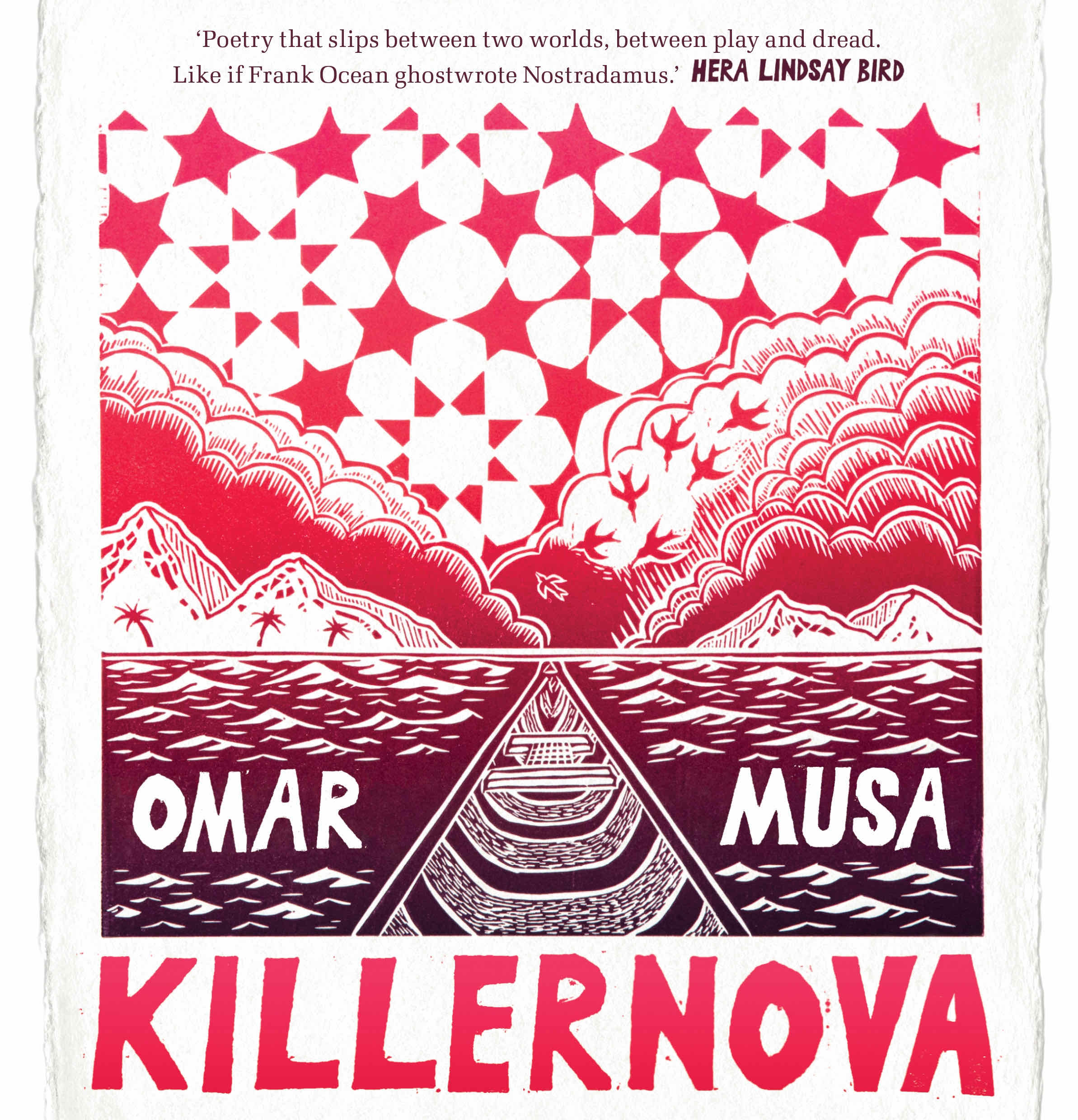
  • Omar Musa’s Killernova (woodcuts/poetry): “a unique hybrid creature – a beautifully designed, stunning combination of woodcuts and poetry” (Maxine Beneba Clarke) (my post on the launch)
  • Pi O’s Heide: “staggering in its audacity, and an intoxicating thrill to read. It is history as ode, and a bold vindication of art … also wickedly funny and heretical” (Christos Tsiolkas)
  • Elfie Shiosaki’s Homecoming: “exquisite hybrid work” (Tony Hughes-d’Aeth)
  • Emily Sun’s  Vociferate | 詠: “cultural-presumption-shredding” (John Kinsella); “bristling with spiky maternal reclamations and intercultural electricity” (Tony Hughes-d’Aeth)
  • Maria Takolander’s Trigger warning: “confronting and sculpted” (John Kinsella); “some of the most moving confessional and elegiac poems you’ll read anywhere” (Gregory Day)
  • Lucy Van’s The open: “read it with an increasing sense of excitement” (Declan Fry)

As I said last week, the lists will come thick and fast over the next month, but I’d be interested in any thoughts you have on these, particularly if you like nonfiction and poetry.

Novel-in-stories, Tara June Winch’s Swallow the air

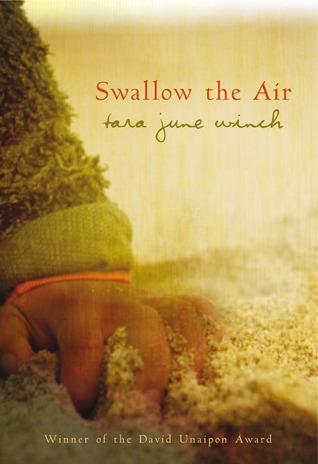
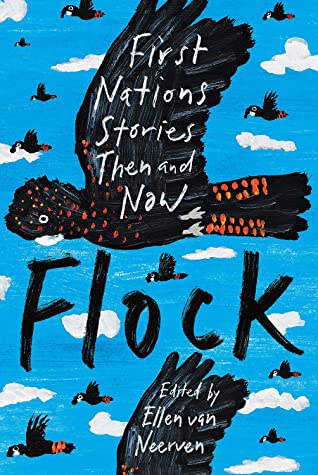
This is my third post inspired by Reading like an Australian writer, and it involves two First Nations writers, Ellen van Neerven on Tara June Winch’s award-winning debut novel Swallow the air. I chose van Neerven’s essay for my next post, because, coincidentally, I’d just read Winch’s story “Cloud busting” in Flock, an anthology, edited by van Neerven. Are you keeping up? “Cloud busting” is one of the stories in Swallow the air.

Form? What form?

Tara June Winch, Swallow the air

In my review of Swallow the air, I wrote:

The first thing to confront the reader is its form. It looks and even reads a little like a collection of short stories*, but it can be read as a novella. There is a narrative trajectory that takes us from the devastating death of narrator May Gibson’s mother, when May was around 9 years old, to when she’s around 15 years old and has made some sense of her self, her past, her people. May’s mother is Wiradjuri, her father English.

The asterisk pointed to a note at the end of my post, which stated that one story from the novel, the aforementioned “Cloud busting”, had been published separately in Best Australian stories 2006. And, in her essay, van Neerven says that she had used “Cloud busting” with students. Sounds like it could become one of Australia’s popular anthologised stories. This would be a good thing because, also in her essay, van Neerven comments on having had no introduction to “Indigenous-authored books” when she was at school (which, for 31-year-old van Neerven, was not that long ago.) Short stories are an excellent form for introducing school students to great stories and writing, and it would be a good thing to see more diverse stories added to current anthology favourites.

“Cloud busting” is a beautiful story, by the way, because it makes a point about deep loss but also conveys the warmth, trust and generosity that can exist between people.

Anyhow, back to form. Just as I wrote in my post on Swallow the air, van Neerven also comments on the book’s form, noting that “writing relational novels-in-stories” is a “very First Nations practice”. She cites Jeanine Leane’s Purple threads (my review) and Gayle Kennedy’s Me, Antman and Fleabag, as other examples. Marie Munkara’s Every secret thing (my review) fits in here somewhere too, I’d say. I hadn’t really thought about this as being particularly First Nations, as we all know novels from various writers that generate arguments about whether they are novels or short story collections. However, in my experience – and I am generalising a bit – First Nations people can be great story-tellers so it wouldn’t surprise me to find the form of “novel-in-stories” being more common among First Nations writers.

Further discussing this book, in which protagonist May goes on a journey back to Country to find her Wiradjuri origins, van Neerven makes another interesting observation, which is that May’s journey “plays into the reader’s romanticised expectations that a return to Country will bring the story a happy resolution”. But, of course, it’s not that simple. Country has often been too damaged by “past policies and institutionalisations”, as van Neerven puts it, for this to happen, but, she says, May does come to understand something important, which is that Country “lives within her” and her family “allowing her to feel strong in her identity without the shame of not living or growing up on Country”. Of course, it’s not up to me to pronounce on the validity of this way of seeing, but it makes good sense to me.

Anyhow, I’ll leave it, on these two interesting-to-me points, as I don’t want to steal the life from Castle’s book. These essays are all so different, as you’d expect, but this just makes them more worthwhile. You just never know what approach a writer is going to take when talking about another writer, but you do know that it will probably be insightful.

Ellen van Neerven
“Kinship in fiction and the genre blur of Swallow the air as novel in stories”
in Belinda Castles (ed), Reading like an Australian writer
Sydney: NewSouth, 2021
pp. 7-12
ISBN: 9781742236704

Tara June Winch
“Cloud busting”
in Ellen van Neerven (ed), Flock: First Nations stories then and now
St. Lucia: UQP, 2021
ISBN: 9780702264603 (Kindle)

Monday musings on Australian literature: Favourite books 2021, Part 1: Fiction

For a few years now, I’ve shared favourite Aussie reads of the year, from the ABC and, last year, other sources.

This year I’m doing it a bit differently. I’m focusing on the Sydney Morning Herald’s Books we loved in 2021 and ABR’s Books of the Year 2021. Both these contain favourites from a large number of Australian writers. Both also include fiction and nonfiction, Australian and non-Australian works – and there are a lot. So, I’m writing two posts, one on fiction (this week) and the other on nonfiction and poetry (next week). I am only including their Australian favourites – this is a Monday Musings after all.

Novels

Book cover
  • David Allan-Petale’s Locust summer: (Toni Jordan) (Lisa’s review)
  • Miles Allinson’s In moorland: “lays out his territory with authority and a quiet, complex beauty” (Helen Garner); “darkly funny novel of generational bonds, a dazzling ride that is full of heart” (Lucy Treloar); “insightful and ambitious” (Toni Jordan); (Emily Bitto); “engrossing portrayal of obsession, loyalty and destruction within a family” (Robbie Arnott); “very smart novel” (Robbie Arnott) (Lisa’s review)
  • Amal Awad’s The things we see in the light: (Toni Jordan)
  • Larissa Behrendt’s After story: “ambitious in conception and masterful in execution” (Clare Wright); (Anita Heiss) (on my TBR, Lisa’s review)
  • Hannah Bent’s When things are alive they hum: “heartfelt and sweet” (Trent Dalton)
  • Emily Bitto’s Wild abandon: “kicks over the traces and breaks hearts” (Helen Garner); “brilliant and inventive” (Craig Silvey); “wonderful novel, daring and surprising, and profoundly humane” (Christos Tsiolkas); “thrilling and audacious” (Michelle de Kretser); lushly baroque, ruinous, and fantastically inventive … style in spades: its lyricism is exhilarating” (Sarah Holland-Batt)
  • Katherine Brabon’s The shut ins: “a poignant conceit, reminiscent of the work of W.G. Sebald and Patrick Modiano” (Anders Villani)
  • Brendan Cowell’s Plum: “the brain-damaged-rugby-league-poet-book I was waiting all my life to find” (Trent Dalton)
  • Garry Disher, The way it is now: (Judith Brett)
  • Jennifer Down’s Bodies of light: “witness to the creation of a resilient self” (Bernadette Brennan); “mesmerising chronicle … of one of the most sharply drawn characters I’ve encountered in recent fiction … extraordinary” (Robbie Arnott); “an epic Bildungsroman that honours the dignity of crafting a life in the wake of childhood trauma” (Yves Rees); “equal parts devastating and hopeful” (Giselle Au-Nhien Nguyen)
  • Stephen Downes’ The hands of pianists: “an extraordinary book which appropriates the style and strategies of W.B. Sebald but then succeeds in equalling him” (Peter Craven)
  • Robert Gott’s The orchard murders: “perfectly executed Melbourne noir” (Jock Serong)
  • Anita Heiss’s Bila Yarrudhanggalangdhuray: “much-needed look at white settlement from an Indigenous maid’s point of view” (Jane Sullivan) (on my TBR, Lisa’s review)
  • Sally Hepworth’s The younger wife: “delivered wit, warmth and suspense” (Jane Harper) (Theresa’s review)
  • Kathryn Heyman’s Fury: (Fiona Wright); (Anita Heiss)
  • Antoni Jach’s Travelling companions: “funny, layered” (Toni Jordan) (Lisa’s review)
  • Mette Jakobsen’s The wingmaker: ‘dare I say “uplifiting”‘ (Graeme Simsion); “exquisite” (Favel Parrett)
  • Susan Johnson’s From where I fell: “inspired me as an author” (Anita Heiss) (Lisa’s review)
  • Michelle de Kretser’s Scary monsters: “about the thought crimes that divide us, but also stunning, profound and funny” (Anna Funder); (Fiona Wright); (Emily Bitto); “its riskiness, unashamed intellectualism, and rage against ageism, misogyny and racism” (Bernadette Brennan); “brilliant, chimeric” (Sarah Holland-Batt); “creatively repositions contemporary concerns around race, immigration, and national identity” (Paul Giles)
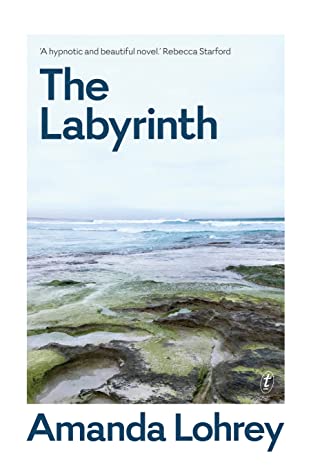
  • Amanda Lohrey’s The labyrinth: “luminous, meditative and richly layered fiction” (Cassandra Pybus): “moody and allegorical with overcast skies, distant waves, and silences” (Glyn Davis) (On my TBR, Lisa’s review)
  • Laura Jean McKay’s The animals in that country: (Emily Bitto) (kimbofo’s review)
  • Emily Maguire’s Love objects: (Fiona Wright); “a tender and aching story” (Tony Birch) (Lisa’s review)
  • Meg Mason’s Sorrow and bliss: “contemporary laughter and heartbreak” (Mick Herron)
  • Jennifer Mills’ The airways: (Fiona Wright); “subtle and fierce” (Geordie Williamson) (Lisa’s review)
  • Liane Moriarty’s Apples never fall: (Jane Harper)
  • Alice Pung’s One hundred days: ” the quiet, bold power of Pung’s writing, the commanding precision of her prose” (Christos Tsiolkas); “warm, funny, compelling read” (Judith Brett) (kimbofo’s review)
  • Diana Reid’s Love and virtue: “discomfiting ambiguities” (Hannah Kent); ‘restores what’s gone missing from contemporary sexual politics: the distinction between “being hurt and being wronged”’ (Helen Garner); “sharp” (Victoria Hannan) (Brona’s review)
  • Nicolas Rothwell’s Red heaven: “an engrossing novel of ideas” (Glyn Davis)
  • Claire Thomas’ The performance: (Emily Bitto) (on my TBR, Brona’s review
  • Evie Wyld’s The bass rock (Emily Bitto) (on my TBR)

Short stories

  • Tony Birch’s Dark as last night: “richly evocative and deeply empathetic … Birch is more at home with his material than any other modern writer I know” (Alex Miller)
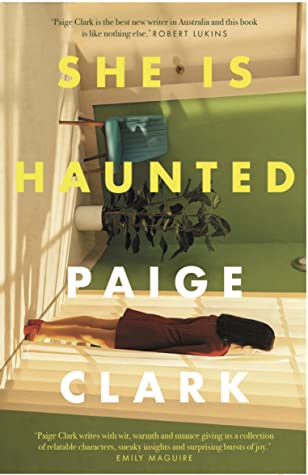
  • Paige Clark’s She is haunted: “deft and original” (Craig Silvey); “stayed with me long after the last word” (Victoria Hannan); “fresh and fantastic” (Bri Lee); (Jennifer Down)
  • Melissa Manning’s Smokehouse: “exquisite” (Jennifer Down) 
  • SJ Norman’s Permafrost: “ghost stories that queer and disrupt the Western gothic tradition” (Hannah Kent); “a beguiling collection of queer ghost stories” (Yves Rees)
  • Chloe Wilson’s Hold your fire: “enthralled and amazed” (Anna Funder)

Finally …

It’s always interesting to see what books feature more than once – which is not to say that popularity equals quality, but it does say what has most captured attention this year. And it seems that Miles Allinson’s In moorland, Emily Bitto’s Wild abandon, Jennifer Down’s Bodies of light, Michelle de Kretser’s Scary monsters, Diana Reid’s Love and virtue, and Paige Clark’s She is haunted are this year’s ones. Most by women writers. I wonder if they’ll all be longlisted (at least) for the Stella?

Another interesting thing about lists is discovering new books. Paige Clark and Chloe Wilson’s short story collections, for example, are new to me – and appeal. Dare I put them on the wishlist?

I know lists will appear constantly over the next month, but I’d be interested in any thoughts you have on these (or on your own list, if you’d prefer!)

Sarah Krasnostein, The believer (#BookReview)

One of the reasons I love reading fiction is to be introduced to lives and cultures I know nothing about. This is less so in nonfiction, but Sarah Krasnostein’s latest book, The believer, fits the brief. In it she explores questions concerning what people believe and why through six different people (or groups of people), all of which were foreign to me.

The six “beliefs” are eclectic, but can be divided into three categories : personal lives (a death doula and a woman who had been incarcerated for over 30 years for murdering her violent husband); religious lives (through a Creation Museum and some Mennonite families); and the unexplainable (paranormal seekers/ghostbusters and ufologists). These six “cases” all come from either the USA or Australia.

Different readers will be drawn to different ideas in the book, but in my reading group, the most popular were the two personal stories – death doula Annie, and ex-prisoner Lynn. Lynn’s story of abuse at her husband’s hands first and then the justice system’s was heart-rending. Yet Lynn had come to understand that she’d made choices, and had gone on to use her life to make things better for others. Inspiring.

The book has a disjointed three-part structure, with one of each of the three categories explored in “Below”, the remaining three in “Above”, and then some reappearing in the final “Coda: Here” section. Within these sections, the stories are told over several alternating chapters, so no one story is told in one go. One of the questions my reading group discussed was whether this structure helped or hindered our reading. We didn’t resolve this, though the overall consensus seemed to be that the alternating did keep us interested. There was probably method to the placement of the stories, but it wasn’t always clear to us, which might be more to do with the time of year and our concentration levels.

Lightbulb moments

What we did all agree on, however, was that the book had some great lightbulb moments – and for many of us, it’s the lightbulb moments that make a book special or memorable.

One refrain that ran through the book was that life isn’t easy or simple. Mennonite Becky says that “life isn’t just a bed of roses”, and ex-prisoner Lynn understands that “pain is a part of life”. Ufologist Jaimie has a more positive spin, seeing that life “is not just going to work and dying”. There are mysteries out there to explore.

However, for me, the most significant moment occurred in “Before”, in a Paranormal/Vlad chapter. It concerned the need for certainty. Krasnostein references German neurologist, Klaus Conrad, who coined the term apophenia, which essentially means that we look for meaning and coherence, and will go so far as to perceive them in unrelated events and ideas. We will, writes Krasnostein, “choose certainty over accuracy”. “We are compulsive converters of fact into meaning”.

I hope I’m not oversimplifying, but Krasnostein then cites a Science article which talks about the human desire to “combat uncertainty and maintain control” and the importance of this to psychological wellbeing and physical health. You can probably see the lightbulb here: it explained, to me, why some people have found the pandemic harder to handle than others, and why some people can become susceptible to conspiracies. People who feel out of control will look for patterns and answers. For me, living with questions is interesting – and in fact real, because I’m not sure there always are answers – but I feel I better understand now, those who do not feel this way, those who demand certainty, such as “promise there will be no more lockdowns”. I better understand why people might turn to conspiracies when authority doesn’t (indeed, sometimes can’t) provide consistent answers.

Other lightbulb moments were less applicable to my life, but were interesting nonetheless. An example was the Mennonites fear of higher education. It “contains an unacceptable risk of assimilation”, potentially causing tertiary educated members to leave the community (the Mennonite kingdom) and be assimilated into wider society. Higher education threatens their understanding of the world, their faith in the Bible as explaining the world. Krasnostein writes of one Mennonite man who had moved to New York in a mission “to make a difference in people’s lives”:

Anthony’s conflict comes from the fact that the certainties he received instead of education are poor tools for daily living.

There’s that idea of certainties again. Anthony tells Krasnostein that “Theology always scares me because it takes the things that seem simple and makes them complex”. This too returns us to the idea of certainties. Anthony sees life simply. In the Mennonites’ belief in a “loving presence”, they see (create?) “a perfect pattern embroidered into the fabric of reality”. Patterns, again.

What added to the book’s interest was that Sarah Krasnostein was, herself, searching to understand “belief”. She admits to occasionally envying Anthony and his co-believers’ “refusal to accept the absence of evidence as the evidence of absence”. She says at one point, “If I could only ask the right questions I could understand”.

This has not been one of my typical review posts, partly because this is a different sort of book, but mostly because I finished it nearly two weeks ago and am not in the brainspace for doing my usual thing. Forgive me. However, you should be grateful, because this book is jam-packed with stories – some tragic, some poignant, some inspiring and some, I have to admit, infuriating (I’m looking particularly at you Creation Museum) – and it would have been tempting to share too many of them. They weren’t, of course, all equally interesting. And occasionally, they got a bit bogged down in detail to the point that I risked losing the thread. That’s the challenge Krasnostein faced in meeting so many people and wanting to explore all their thoughts and ideas. Overall, it works. Her lyrical prose, and warm, open heart play a big role in that.

Talking about UFO sightings, ufologist Ben tells Krasnostein that “we need to find all these little stories. They build up into a big matrix of stories” which, for him, might locate the “truth” of the events. However, this is also exactly what Krasnostein did in this book and, in doing so, she found, as she writes at the end,

six different stories, six different notes in the human song of longing for the unattainable.

My reading group was a little disappointed that in the Coda, Krasnostein didn’t give us a clear summation of the sort you often find in nonfiction works. In fact, though, I think Krasnostein did find something very real, a belief that could help us accept each other’s wildly different shores a little more: it’s that we are “united in the emotions that drive us into the beliefs that divide us”. That is quite profound, and worth spending some time absorbing.

Challenge logo

Sarah Krasnostein
The believer: Encounters with love, death and faith
Melbourne: Text Publishing, 2021
351pp.
ISBN: 9781922330208

Monday musings on Australian literature: Greek-Australian literature

In a Sydney Writers Festival conversation with Michelle de Kretser, Andrew Pippos, winner of the 2021 Readings Prize for his debut novel, Lucky’s, said “the fact that we can talk about a Greek-Australian literary tradition is a sign that Australian literature is developing”. It made me think about Greek-Australian literature and what I know about it, which is not a lot, really.

First, though, what does he mean by his statement? I’m assuming he means that Australian literature is enriched by encompassing significant, identifiable bodies of work from Australia’s constituent cultures, that when there are such bodies of work they reflect on, feed into and, therefore, change and expand the majority culture?

When I think about my own reading of Greek-Australian literature, it is, of course, Christos Tsiolkas who comes to mind. Before him was Beverley Farmer. She is not Greek, but she married a Greek man and lived for some time in Greece, which experience fed into her early writing. I loved her insight into village life and relationships – but that was more about an Australian experiencing Greek culture in Greece.

Greek-Australian literature “proper” goes way back and, in my superficial Internet search I uncovered rather a lot about it, most, though, behind paywalls. Some of those had useful abstracts, and some I could access via my membership of the National Library. I skim-read a couple. But, I also found a blog, From the plastic pen, containing a post that had also been published in Meanjin in 2017. The post is titled “Living in a hyphe-nation: Exploring the Greek-Australian identity through literature”, and the author is Peter Papathanasiou. Papathanasiou is Greek-born and Australian-raised, and has just published a debut crime novel, The stoning, featuring a Greek-Australian detective.

Concerned about the next generation, the Greek-Australian-Australians, Papathanasiou posed the question:

How had Greek writers in Australia explored their hyphenated identity, and what could future generations—including other ethnic minorities—learn from their writings?

And then, he shares some literary history that I had found in those pay-walled academic articles. The earliest example of Greek-Australian literature, he says, was oral poetry at the start of the 1900s, which was shared “at events such as family celebrations, social gatherings, and entertainment in smoke-filled coffee houses (kafeneia)”. Poetry, Papathanasiou, says “has traditionally played a central role in Greek literature” and it continues here “although all types of Greek-Australian literature (poetry, prose, drama, theatre) have been represented, poetry collections have predominated”. Not reading a lot of poetry, I wasn’t aware of this, though I have read Komninos (1991), by Greek-Australian performance poet, Komninos Zervos.

Anyhow, Papathanasiou says that the first Greek-Australian literary work to be published was George Nicolaides’ short story “To gramma tis manas (Letter to mother)”, in 1913  Afstralia. From the beginning, he says, “family was a central theme, along with social issues, community activities, and migrant experiences”. He discusses the various waves of migration. In the 1920s, Orthodox Christians driven out of Asia Minor following the Turkish War of Independence brought well-educated immigrants who “introduced new subjects to the local literary scene because of the atrocities, poverty, and political upheavals they witnessed”. Then World War 2 and post-war migration brought stories of “the Greek army’s heroic fight against the Axis powers, and the united struggle of Greek and Australian soldiers against a common enemy”.

However, he said these waves did not result in much exploration of the Greek-Australian identity. These first-generation migrants wrote mainly in Greek and were “largely preoccupied with exile and dislocation, and haunted by trauma”. They wrote about “the fear of ageing and dying far from the homeland, patriotism (to Greece, not Australia), communication difficulties, and problems adapting and assimilating”. A change in theme came when second-generation migrants started writing in English, and their “connection to the fatherland” grew increasingly distant. They were were interested in “ethnicity and hybridity”, and their writing changed “from loss and yearning to identity and self” and

the rigid identity of the alienated migrant fell away, replaced by a new entity: the hyphenated Australian, whose conflict was more internal than external. These writers explored the dilemma of living between two worlds and with dual identities, the use and maintenance of Greek language and traditions, and surviving in a modern Australia while still bound by conservative parents. It was tense writing, fraught with internal conflict and doubt.

With third generation Greek-Australians now on the scene, Papathanasiou suggests that the subject-matter is changing again. There are still explorations of migration and identity, but these are no longer exclusive. Contemporary “Greek-Australian writers deal with a broad range of subjects including class, culture, gender, sexuality, faith, politics, economics, and sport, and blend various genres including memoir, autobiography, travelogue, and magic realism”.

Interestingly, alongside his discussion of subject matter, Papathanasiou also tracks changes in the publishing of Greek-Australian writing from self-publishing, at the start, through small independent publishers, like UQP and Fremantle Press, to the bigger publishers like Allen and Unwin, who have not only published some Greek Vogel award-winners but also publish Christos Tsiolkas. Pippos’ Lucky’s was published by Pan Macmillan.

Papathanasiou’s perspective, written in 2017, is similar to that written in 2014 by Penni Pappas on the Neo Kosmos website. She describes a similar trajectory in publishing and subject-matter, drawing in particular on the work of Helen Nickas who established Owl Publishing in 1992, to publish writing by Greek-Australian writers. George Kanarakis, writing in The Cud, provides another, and similar, but more detailed survey of Greek writing in Australia. All are worth reading if you are interested in the subject.

The cafes

Meanwhile, I thought I’d conclude on a quick reference to cafes, because most Australians of a certain age will remember at least one Greek cafe in their neighbourhood or on roadtrips. Pippos’ publisher, Pan Macmillan writes that, as a child, he regularly visited the family’s café in Brewarrina, NSW. These early experiences “laid the foundation of his work as a writer”:

The compelling role of the Greek-Australian café within modern Australian identity is increasingly documented in popular culture and history books alike. While sadly few exist now, for much of the second half of the twentieth century these cafés could be found on urban shopping streets and in rural country towns. They represented a new Australian zeitgeist and symbolised every-day multiculturalism. The Greek-Australian cafe milieu gave Andrew his earliest sense of community.

Lucky’s is set around a restaurant chain. You can read Lisa’s thoughts in her review.

A few years ago, I reviewed a little (literally) memoir – from the FL smalls collection – Growing up cafe (my review) by Greek-Australian, Phillip Stamatellis. I enjoyed his evocation of a cafe-based childhood.

The aforementioned Komninos also has cafe heritage. On his website we are told that “his maternal grandfather came to Australia in 1908 to work in a café”, and he, himself, born in Melbourne in 1950, grew up living above his family’s cafe-fish shop. There are poems about cafes in his collections.

It’s pretty clear that the Greeks enjoyed cafe culture long before we Anglo-origin Australians ever did (and in so doing they enriched our culture). But, for many second generation Greeks, as Stamatellis shares, the cafe which provided a living for the parents also brought challenges for the children

my nostalgia is burdened by an unseen weight, a sense of entrapment.

Anyhow, I enjoyed my brief foray into Greek-Australian literature, partly because its trajectory seems similar to those of other diaspora literatures here, albeit they may be on different points on the continuum. It brought to mind my recent post on Diversity and memoir and the idea that writers from culturally diverse backgrounds do not want to be tied to writing about that background. In the Greek-Australian case it seems like there’s been a progression from a close focus on their heritage to broader concerns. Is this is the trajectory that most immigrant literatures will naturally take – or is it forced upon them for lack of support and opportunity?

Thoughts?

Monday musings on Australian literature: Short Australian nonfiction

There’s been a little discussion going on during this Novella November month concerning nonfiction novellas. I contend – yes, I’m putting myself out there – that a “novella” is fiction, and that you can no more have a nonfiction novella than, well, fly. However, I am not going to get into this debate now, because, fundamentally, it doesn’t really matter, does it? What matters is that we read good writing, regardless of what it is, what we call it, or how we categorise it.

Instead, I’m going to do a quick post sharing some short Australian nonfiction. I have written Monday Musings posts about short books before – on little books and on small books. This post covers a bit of the same ground, but it also extends and so complements those two.

In some ways, nonfiction is ideal content for short or little books. Essays are a prime example. They can be commissioned and published in small form or can be extracted from previous publications (books, journals, websites) and published separately in short form. There are many examples of both, and some I have discussed before. Short Blacks, published by Black Inc, epitomises the latter, with some having originally been published in Black Inc’s journal, Quarterly Essays. And here I should say that the Quarterly Essays themselves are another example of short nonfiction, given each issue primarily comprises one essay of up to 25,000 words, plus correspondence relating to the previous essay.

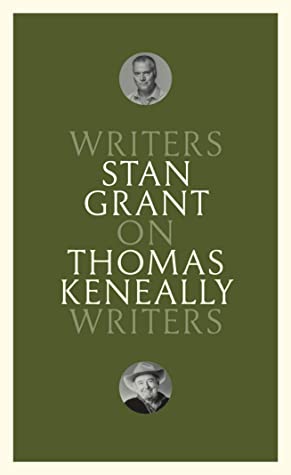
However, Black Inc has also got into commissioning short nonfiction to publish in book form, with its recent Writers on Writers series. I have read two, and have more on my TBR. They are great reads for those of us interested in hearing what one writer has to say about another writer’s work. The next one I have up is Nam Le on David Malouf.

Dorothy Porter, On passion

Then there’s the On seriesLittle Books on Big Ideas. You can find them most easily at Booktopia online bookseller, because the publisher, Hachette, does not seem to list them separately as a series on their website, which is a shame. I have reviewed Dorothy Porter’s On passion and Stan Grant’s On identity. They were published by Melbourne University Press, but it seems that the series has been taken over by Hachette Australia. These are commissioned (I believe) essays by some of Australia’s best-known fiction and nonfiction writers on issues they wanted (or were happy to?) to explore.

All these little books make great reading, if you enjoy essays like I do. Most are under 100 pages.

FL Smalls 7: Carmel Bird's Fair Game

But are there other examples of short nonfiction published in Australia? Any histories, or memoirs, for example? Finlay Lloyd‘s FL Smalls, which I’ve discussed before, is an example. as this series includes memoirs (like Philip Stamatellis’ Growing up café: A short memoir) and creative nonfiction (like Carmel Bird’s Fair game). Great reads, but they are still little books. What about books that are a bit bigger, but still short, books between 100 and 200 pages?

There are, apparently, some short memoirs, but I don’t know many. Vicki Laveau-Harvie’s Stella Prize winning The erratics (my review) is close, at 217 pages.

But, what I’m really wondering about are the books we are looking for that will increase our understanding of contemporary issues. Some of these could benefit by being short. Many of us want to read something a bit more longform about the issues important to us, but not that long! Tim Flannery’s The climate cure, which I mentioned in my Ask the expert post, is described as 224 pages, but the actual text ends at around page 190.

First Nations rights is another area where brevity might attract more readers. It’s hard to find, but My tidda, my sister, which was published in 2020, comes in under 200 pages. It shares the experiences of Indigenous women and girls, and was compiled by podcaster Marlee Silva. Readings Bookshop describes this book as “a celebration of the Indigenous female experience through truth-telling”.

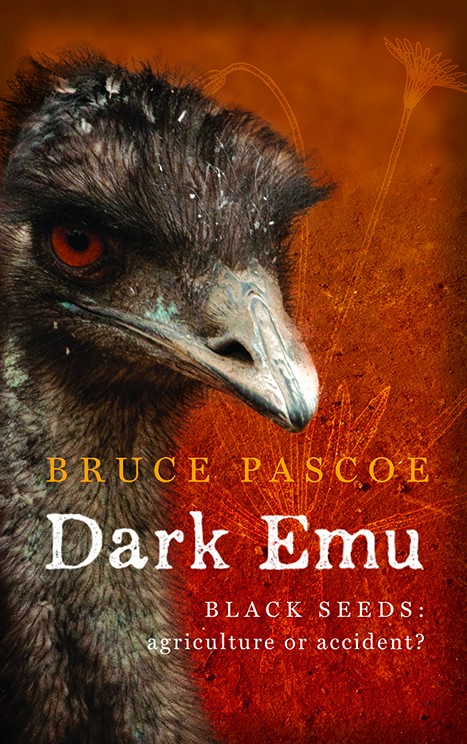
Bruce Pasco, Dark emu

A slightly older book raising awareness about First Nations cultures, but now surely a “classic”, is Bruce Pascoe’s 2014 book, Dark emu (my review). It’s around 175 pages.

On another subject, Annabel Crabb’s 2020 book, Men at work: Australia’s parenthood trap, is 160 pages. It apparently argues that true gender equity “cannot be achieved until men are as free to leave the workplace (when their lives demand it) as women are to enter it”. Hmmm … This is not the only thing needed, I’d say, but it is part of the picture.

Finally, I thought I’d share something pandemic-related. It comes from prolific, award-winning journalist-author, Gideon Haigh. He has tackled the impact of the pandemic on the workplace, in The momentous, uneventful day: A requiem for the office. Published in December 2020, it’s just 144 pages. Readings says “Enlivened by copious citations from literature, film, memoir, and corporate history, and interspersed with relevant images, The momentous, uneventful day is the ideal companion for a lively current debate about the post-pandemic office”. The pandemic is surely going spawn books for decades to come!

I have no idea whether this post will interest anyone, whether any of you care about the idea of short nonfiction, but I’ve enjoyed thinking about it. That said it’s been a challenge to research because, well, there is no equivalent word to fiction’s novella for short nonfiction!

Now, over to you. Do you like short nonfiction? Or is length irrelevant to you? Why or why not? And do you have any favourites?