Monday musings on Australian literature: on 1922: 1, Bookstall Co.

I haven’t done many Trove-inspired posts lately, but, I do enjoy pottering around Trove’s Newspapers and Gazettes database, so thought that for today’s Monday Musings I’d have a little look at what was happening in the Australian book world in 1922. My broad search retrieved around 8,000 articles! I can’t read them all, but I found several items of interest, to me at least, that I’d like to share, which I’ll do over the year.

For my first post, I’ve chosen a new publisher to me. In the Books Received column in the Kadina and Wallaroo Times of 8 March, the columnist refers to the N.S.W. Bookstall Company, writing “now that publishing difficulties have eased, the N.S.W. Bookstall Co. proposes to add rapidly to its popular Australian fiction series”.

Who was this company I wondered? Well, they were “notable” enough to have a Wikipedia page, and the man who turned it into a successful business, A. C. Rowlandson, has an entry in The Oxford companion to Australian literature. The Companion tells me that in 1991, the book, The New South Wales Bookstall Company as a publisher, by Carol Mills, was published. The Publishing History website also devotes a page to them.

So, the company … It was started by Henry Lloyd around 1880 as a newsagent, with its first foray into publishing possibly being racebooks for the Hawkesbury Race Club around 1886. The Wikipedia article stops with a discussion of World War Two, which suggests that the company folded soon after the war, but I haven’t confirmed this.

I have however found out a bit about Alfred Cecil Rowlandson. He started with the company in 1883 as a tram ticket seller, presumably from one on the company’s bookstalls. Wikipedia says that “the greatest part of the company’s business consisted of retailing local, interstate and overseas periodicals, postcards (Neville Cayley produced a series) and stationery from its eight city shops and fifty-odd railway stall outlets”. Rowlandson worked his way up, and in 1897, bought the company from Lloyd’s widow. He ran it from then until his death in, coincidentally, mid-1922.
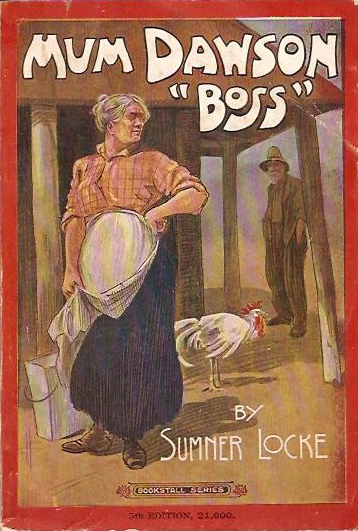
From the Bookstall series. Image: Publishing History website

He was clearly a visionary, because, as the Companion says, the company became “one of Australia’s most successful book-publishing and selling ventures, publishing in paperback about 200 titles by Australian authors and selling four to five million copies”. The above-linked Publishing History page lists some of its books in chronological order, while the Wikipedia page lists a selection by author’s name. The authors include names familiar to me like Louis Becke, Charles Chauvel, Norman Lindsay,  Sumner Locke, Vance Palmer, and Steele Rudd.

Rowlandson came up with the idea of selling Australian books at one shilling each, and created the Bookstall series in 1904. Wikipedia says that despite his belief in a market for cheap Australian books, the prospects were not encouraging, because Australians had not shown much faith in the the work of their own novelists.

However, Rowlandson put his money where his mouth was. He paid £500 for the publication rights for Steele Rudd’s Sandy’s Selection. It was the largest sum paid in advance for an Australian book at that time. Rowlandson also apparently spent “comparatively large sums in readers’ fees”. And, he believed, it seems, in bright catchy covers, employing artists and cartoonists as illustrators, like Norman Lindsay, Sydney Ure Smith, cartoonist Will Dyson, and war artist George W Lambert.

The Companion says that “the remarkable sales of of these Australian books confirmed Rowlandson’s intuition that the Australian reading public was keen for local reading matter, and the impact of his company on the development of Australian writing was considerable.”

Now, back to Trove. The columnist of the aforementioned Kandina and Wallaroo Times, writing, remember, in 1922, says “now that publishing difficulties have eased, the N.S.W. Bookstall Co., proposes to add rapidly to its popular Australian fiction series”. My guess is that these “publishing difficulties” stem from the war. The Companion says that during the war, due to the shortage and cost of paper, the “bob” (or “shilling”) price was increased by threepence, but Rowlandson – good for him – reverted to the “bob” after the war.

Anyhow, our columnist wrote that three new novels were in the presses, and that “the enterprising publishing house” had nearly 20 more under way. One of the books was S.W. Powell’s Hermit Island. It’s “of the Islands adventure class, but, like its predecessor, is off the beaten track”. Our columnist says that the predecessor, Powell’s first novel, The maker of pearls, was “one of the best of last year’s contributions to Australian fiction”. Still 1s 3d at this stage. 

Rowlandson died in June 1922 at the age of 57. Soon after, in July, Freeman’s Journal advised that the Company’s intention was to “continue the publication of Australian novels at popular prices, as during the life of the founder, Mr. A. C. Rowlandson, the late managing director”. Founder? Not correct. And so inaccuracies creep into the historical record, eh?

Freeman’s columnist goes on to say that

The late Mr. Rowlandson had profound faith in the literary resources of the Commonwealth, and during his life was wholly responsible for the publication of at least 150 Australian novels, the sales of which have totalled nearly four millions. During recent years the standard of the series has been steadily improved; and the manuscripts now in hand show still further improvement. 

And, s/he announces that the next book is Vance Palmer’s The boss of Killara, which is “an entertaining story, … most entertainingly written, and … true in every detail to Australian, bush-life”.

Trove provides information about more books published in 1922, including:

  • J.H.M. Abbott’s Ensign Calder, which contains stories which originally appeared in the Bulletin. These are historical fiction, being set in the nineteenth century during the governorship of Macquarie. The Western Mail‘s correspondent says that the stories “are very faithfully rendered, and … highly amusing”.
  • Hilda Bridges’ The squatter’s daughter, which interests me because it’s an adaptation of a 1907 play pf the same name by Bert Bailey and Edmund Duggan. The play was adapted into film twice, one silent and one talkie, as well as into this novel. The Midlands Advertiser says it’s “capably written, and gives a faithfully and permanent record of the play”
  • Jack McLaren’s Feathers of heaven from, says Freeman’s Journal correspondent, “one of the most popular Australian authors”. It’s set in “the wilds of New Guinea” and is “a novel of stirring adventure written round the illegal hunting of New Guinea’s beautiful birds-of-paradise”. A volume of “wholesome adventure”!

Of course, there were also reports of Rowlandson’s death, funeral and estate, but I’ll end with some comments on his legacy from the The Australian Worker:

Some of the writers taken up by A.C.R. have since capitalised their ‘bob’ start, and made overseas reputations. Rowlandson, by instinct and practice, was a tremendous live-wire hustler, and probably his business intensity contributed to his all too early death—a death which will grieve hundreds of thousands who enjoyed cheap local fiction of exceptional merit as a result of his enterprise, and by scores of young writers who never would have been heard of only for his faith in local literary products, his kindly and sympathetic disposition, and his never-resting determination to give Australian literature a show.
Monday musings on Australian literature: World Poetry Day, on anthologies

Last week, Brona (This Reading Life) wrote a post on Eve Langley’s poem, “Native-born”, in which she shared the statement from Wikipedia that it appears regularly in Australian anthologies. As I responded to Brona, I checked my three “modern” Australian poetry anthologies and only found it in the most obvious one, The Penguin book of Australian women poets. This got me thinking about Australian poetry anthologies. I’m not an expert – by any stretch – on these, but it’s World Poetry Day today, so I thought to explore them a little.

Cover, Four and twenty lamingtons

This will be the fifth post I’ve done on World Poetry Day. In my first, I mentioned that I bought many children’s poetry anthologies when my children were young. I loved reading poems to them, and loved that these anthologies would include poems not written specifically for children.

Anyhow, I’ll start by sharing my four (adult) anthologies, listing them in the order I acquired them:

  • Ian V. Hansen, The call of the gums: An anthology of Australian verse (1962): my first year of high school poetry text. I treasure/d this book (loved the title, of course). It’s organised by subjects/themes.
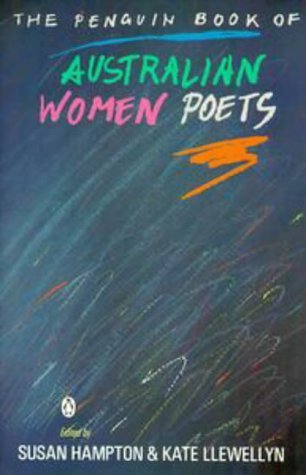
  • Susan Hampton and Kate Llewellyn, The Penguin book of Australian women poets (1986): produced partly in reaction to years of male-poet-heavy anthologies; organised chronologically.
  • Jamie Grant, 100 Australian poems you need to know (2008): organised by themes.
  • Bertram Stevens, Golden treasury of Australian verse (1912): my oldest, but most recently acquired, it was given to my grandmother in 1914.

And here, I lost three hours work, when WordPress suddenly told me I don’t have the right to save my work, and I hadn’t noticed that it wasn’t saving! I feel defeated as I just can’t sit down now at 8pm and rewrite the whole thing. I usually copy and paste my content elsewhere when something like this happens, but I didn’t tonight and lost it all. So, a summary instead, to which you may all say, phew!

Essentially, I was writing about the value of anthologies, starting from the point of view that national anthologies can play a role in defining a canon (putting aside whether defining a canon is a good thing or not). I had found an excellent article in JSTOR, written by poet Geoff Page in 1994. He discusses Australian anthologising through much of the 20th century, focusing particularly on the impediments to their canon potential. Impediments include the times in which they were compiled (such as the nationalistic/imperialistic tenor of one in 1922), and, in Australia’s case, differences of opinions between poets. This has been well documented over the years but he simply alludes to it here, making the point that different prejudices have played out in the anthologies produced. He says:

No editor, of course, can really escape his or her own subjectivity but it is remarkable how many ones seem to feel it was not worth the effort anyway.

Page’s survey and analysis of inclusions and exclusions in several anthologies is fascinating.

He suggests that anthologies compiled by academics have tended to be the “fairest”. He also talks about the gaps in representation – such as of women, First Nations, and non-English speaking background poets – and notes some slow improvements in these areas.

He also makes the obvious-when-you-think-about-it point that it’s not just who is included or excluded but what poems are chosen. Page recognises the impact (on canon formation) of

the universal anthologist’s desire to discover what has not been anthologised before–which often, when space for only two or three poems is available, means passing up a classic for something less central.

I can understand this desire from both the compiler’s and reader’s point of view. However, there can be a darker side to the choice of a, perhaps, “lesser” poem, or, say, fewer poems for one poet over another. With anthologists becoming, Page writes, “more cautious about omission […] it’s not so much about exclusion now but branding by short measure”!

Anyhow, the end result is that “there is no generally agreed canon; various traditions contend or, increasingly, coexist”. This is not necessarily a bad thing, particularly if, as Page suggests, “the quality of the best work bears comparison” with that of other countries, and if, as Page also suggests, poets who “represent, or identify with, minority groupings … are slowly [my emph] being more widely represented in major anthologies”. Page concludes

the situation is lively and in flux, and is likely to continue that way for some time. Some allegiances are changing, some borders are being crossed, but the presence of long-established loyalties and demarcations are not about to disappear.

And, it seems, he was right, because, nearly twenty years later, in 2012, academic and poet Ali Alizadeh wrote a negative review in Overland of a 2011 anthology, Australian poetry since 1788 by Geoffrey Lehmann and Robert Gray (whose earlier 1992 anthology Page had discussed). Alizadeh writes that the anthology

is not only a collection of some of the more timid and uninteresting poetry produced in this country since British invasion, it also propagates ideological notions that are comprehensively trite and reactionary …

He comments not only on who is included, but also what, noting, for example, that

the only poem by the radical avant-gardist Ania Walwicz included in the anthology is ‘travelling,’ a poem that is, according to the editors’ notes, largely bereft of the ‘socio-political intent’ present in ‘much of Walwicz’s [other] poetry’.

This is just one example of unrepresentative selection he provides to support his assertion that the editors’ “key objective … may have been much more ideological and tendentious: to present – or even shape – an image of Australian poetry as a cultural milieu devoid of ‘socio-political intent’.” Strong words. And they garnered strong, but mostly very interesting, if lively, responses. Do read them if you are interested.

Meanwhile, I will just share a response by critic Alison Croggon (whose Monsters I’ve reviewed). Picking up the point about “what” has been included, she argues that “the creation of context [is] another crucial aspect of anthologising”, and agrees with Alizadeh that what has been created here is the idea that “poetry is apolitical, a contextless aesthetic object”. This reminds me of Susan Hampton and Kate Llewellyn who, back in 1986, introduced their anthology by calling it “part of a history of women’s writing and of cultural politics which are creatively disturbing the conventional view of our literary heritage.”

Ah, poetry in Australia! It’s still a lively, contested place, and, really, that’s a good thing.

Now, do you enjoy – poetry anthologies? Care to talk about them?

Delicious descriptions: John Hughes on Newcastle

Recently, Bill (the Australian Legend) commented on a post of mine that reviewers rarely talk about place or “think geographically”. I’m not sure exactly what he means, but I think, partly, he wants us to discuss whether we think what we are reading accurately depicts place.

Now, I love descriptions of place, for all sorts of reasons, but particularly for the tone they convey, and for the way authors use place to describe character or to underpin their themes etc. Place in literature was the prime topic of a book I reviewed last year, Chrystopher J. Spicer’s Cyclone country: The language of place and disaster in Australian literature. It offers a fascinating approach to studying place in literature. In a recent Delicious Descriptions, I briefly looked at Sara Dowse’s use of place in her novel, West Block, and in another I commented on place in Gay Lynch’s novel, Unsettled. Pure accuracy, you’ll have seen, is not something I focus on.

I have heard writers talk about place many times. It’s a popular topic at writers festivals. At the inaugural Yarra Valley Writers Festival, Karen Viggers (The orchardist’s daughter) and Alice Robinson (Anchor Point) spoke about it. Viggers said she uses place to orient herself as a writer, and then to explore our connections and help us reengage with the natural world and each other. The challenge, she said, is to bring readers in and engage them with ideas they may find uncomfortable. Robinson said that Anchor Point was based on landscape she grew up in. She was interested in how we have engaged with the landscape, and have failed to care for it.

For some authors, getting place right can be critical, more to avoid reader criticism, than because absolute accuracy is that important to them. They don’t want their novels to be de-railed by pickiness about, for example, whether the church was on this corner or that (which I have heard readers do!)

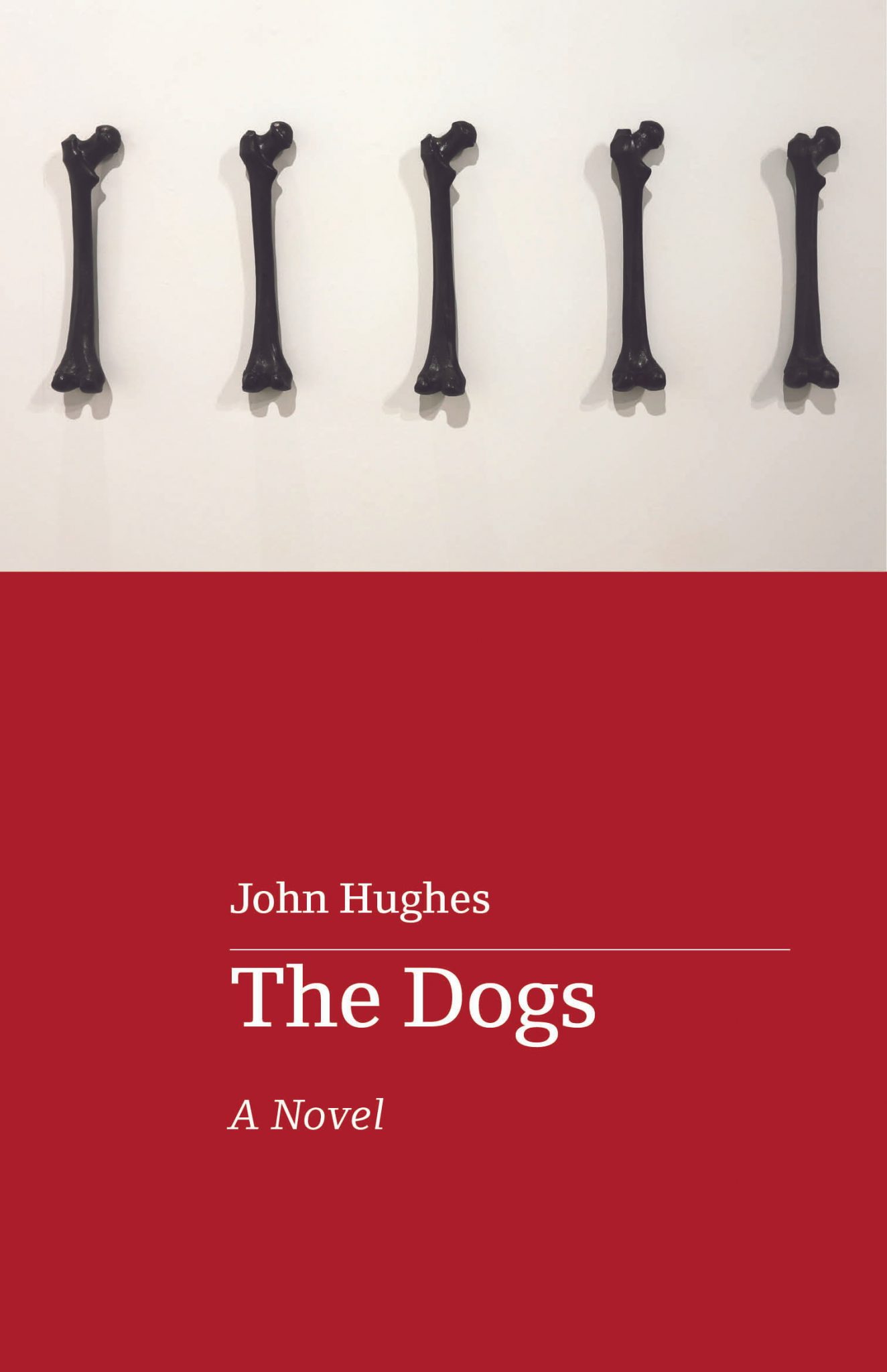
Anyhow, all this is to say that I think place can be very important in novels for a raft of reasons, and that I enjoy reading about place for the said same raft of reasons. John Hughes’ The dogs, while being about “big” human issues, is also very much set in place. Mostly this is Newcastle, and its environs, though there are vivid scenes in Europe, particularly Venice, and Surfers Paradise. Here, though, I’m focusing on Newcastle (which, I might add, has been written about by many authors, including Dymphna Cusack, Elizabeth Harrower, Marion Halligan, and Michael Sala).

Newcastle is probably best known to Australians as an industrial town, but, it is also a coastal city near beautiful beaches. Hughes draws on these beaches. At the end of Part 2 of the novel, protagonist Michael spends a day at a beach just north of Newcastle with his potential new love interest Catherine, and in Part 3, he and his son Leo spend a glorious day together, which takes in a Newcastle beach.

Here is an excerpt from the day with Catherine:

A cold sea breeze hit us when we got out of the car. There was no one on the beach. Catherine tied a scarf around her neck and pulled her shawl in tight around her shoulders. It was just like her to come so prepared. I, on the other hand, was wearing jeans and a T-shirt. It certainly cleared my head. We took our shoes and socks off and left them in the car, then walked down the small grassed slope. On the soft sand Catherine displayed for me the best way to walk without sinking. … But I’m a sinker by nature …

It’s all rather blissful, particularly when Catherine hikes up her skirt to paddle:

It was quite a sight, all that bare leg, and it made me lightheaded myself, my mind no longer on the surroundings, which were spectacular. When I looked up, the sky seemed higher somehow, like someone had lifted the roof.

There’s hope here for a new beginning for both these lonely people, but, soon after

At the top of the beach, in the soft dry sand she finds a small dune which offers some protection from the wind, which has picked up again while we’ve been walking. A few clouds have appeared in the sky and the sun moves in and out behind them, as if in the game of hide and seek.

Not long after this, their happy moment takes a downturn … This could be many beaches, I suppose, but the description of place seems accurate to me, and Hughes uses it to such great effect.

Then, in Part 3 comes our lovely father-son day in which this somewhat estranged pair plan to do something deadly serious – but first, there is the day together. It starts with Michael picking up Leo from Newcastle airport, and Leo taking the wheel:

I’m enjoying the world from the passenger seat and anticipating the view from the top of the bridge, which always takes my breath away even though I’ve seen it a million times. Above us, pens dipped in blue-black ink, Pacific swifts (on winter sabbatical from Siberia!) write their signatures on the sky and blink their wings. They leave no mark except in recollection, hurled into space with sudden changes of direction, hairpin turns, rapid wing-glides, accelerations, gear shifts. I’d like to point them out to Leo but I don’t want to distract him as he glides into the overtaking lane …

I don’t know this part of Newcastle, but what an evocative description. It made me stop my reading and think – the way nature and machine are seamlessly linked, and the bird metaphor for life with “sudden changes of direction, hairpin turns …”.

This book is full of delicious descriptions like these, descriptions which read so well on the surface, but which suggest so much more in terms of mood and meaning, whether we specifically notice it or not.

John Hughes, The dogs, Perth, Upswell, 2021

John Hughes, The dogs (#BookReview)

Dogs are mentioned frequently in John Hughes’ novel, The dogs, but the most dramatic reference occurs when the narrator’s mother, Anna, is hiding in a swamp with other partisans during World War 2. The barking of the Germans’ dogs tells them “it was only a matter of time” before they’d be found, causing Anna to do something that will irrevocably change who she is and result in her being the glacial, detached mother she was.

This story, that we don’t get until half way through the novel, is foreshadowed in the Preface, where the narrator briefly backgrounds the story he is about to tell, sharing with us a telling moment. The last time he had visited his normally remote but now also ageing mother in her home, she’d said to him “Don’t you see them? … The dogs, they’re getting closer”.

So, The dogs. It was, for me, a bit of slow burn. I was pulled in from the start by Hughes’ writing. His gorgeous descriptions and his perceptive insights into human behaviour were enough to keep me going on their own. Also, the two main characters, Michael and his mother Anna, despite being, initially, more unlikable than not, intrigued me. But, I was unsure where all of Michael’s introspection was going. Patience, however, is a virtue, and my patience was rewarded, because this story about dysfunctional family relationships and inherited trauma had so much to offer both my heart and mind.

Fifty-five year old Michael is our first person narrator, and the novel starts with him returning to Newcastle in 2015 to see his 99-year-old mother, whom he had placed in a nursing home two years previously, against her will. He’d not seen her since, partly out of guilt, but partly also because she had rejected him for this action. Although Michael is a successful screenwriter, he is a lonely, isolated individual. He is divorced, and has a difficult relationship with his wealthy, property developer son.

The novel follows Michael as, desperate to understand both himself and his mother, he tries to untangle her mysterious past while she still has some memory left. With her mind going and her lifelong reticence, it’s not easy to get the truth, though he senses, as he always had, “the traces of a story she wasn’t telling”.

Anna’s past is a complicated one, taking in, among other things, an Italian opera-singer mother and a Russian Prince father, not to mention world wars and the Russian Revolution. Anna had grown up fatherless, as Michael had from the age of 7 after his father’s suicide. But Anna had other traumas too, about which Michael only learns in this closing stage of her life. It’s a convoluted tale, mostly revealed in the second part of this three-part novel through recently discovered letters and an interview Michael records with his ailing mother.

Now Anna, as I’ve already intimated, is not a sweet old lady, and Michael, as you’ll have gathered, is not the doting self-sacrificial son, but as the story progresses, we come to understand some of the whys. In doing so, I came to like the characters more. Isn’t that why many of us read? To see into the human heart to better know it? “Whose heart … isn’t a Pandora’s box?” Michael proposes late in the novel.

“It’s never really the past we remember”

The dogs is one of those books that can be explored from all sorts of angles, but one particularly captured my attention from the beginning – the past, and its relationship to the future. The past is mentioned several times in the first chapter, including this on page 12:

… it’s never really the past we remember. The future clings to the past like a winding sheet. Every time we think back, we attach the future to it, if only unconsciously … thus the past always knows the future, not as something still to happen, but as something that already has.

Get your head around that! Seriously though, I love this idea because it seems true that what we remember as the past is just that, what we remember – and what we remember is coloured by what has happened since. And, to complicate it a bit more, I guess, the past we remember informs who we are, which then affects the past a bit more? Michael says a little further on about his mother’s story that “in Europe she would have told one story; after seventy years she adds her whole life to the memory”.

Anyhow, the problem for Michael is, always was, that his mother would not tell him about the past – her past or his father’s – so he grows up never understanding who his mother really is, and why she is the way she is. Gradually we come to realise that this is a story about intergenerational trauma, about “the way family travelled through the flesh”. As the truth becomes clear, Michael writes of the impact of not knowing:

I thought it was me. That I’d failed to please her in some way. Some way she would never say. So solemn, so cold.

Furthermore, not only had he felt guilty, but he had also thought, equally, that “the monster was her”.

Having grown up in this atmosphere of coldness and unknowing, it’s not surprising that Michael had not been a good husband or father. He is, and this helps endear him to us, excruciatingly honest about his failings, but we see that these failings are replicated before and after him in this challenged family.

By now, you may be thinking this is a bleak book, but in fact, while there’s a lot of sadness here, the overriding sense is one of humanity and, reality. This means that there’s lightness too. There are wonderful scenes of connection, and there’s even a reference to the good things you can inherit from family. As Michael’s son Leo thinks happily of something he’s inherited from grandma Anna, Michael thinks, “so much pleasure in inheritance”.

The novel has four epigraphs, but I’ll just share the first, which comes from the Bulgarian author, Elias Canetti: “The story of a life is as secret as life itself. A life that can be explained is no life at all”. This is interesting given the book is about uncovering secrets, and about how important that is for Michael. Perhaps, though, it’s there to remind us that no matter how many secrets we might expose, we can, and should, never know it all.

I started my post by referencing “the dogs”, so I’m going to end with them too, because, in addition to negative connotations, “dogs” can also be positive, representing love, loyalty, warmth, protection. John Hughes’ The dogs is a tough, honest book about human frailty, about the decisions we make, the things we do that we shouldn’t, and the things we don’t do that we should have. But, it’s also about family, and ultimately, Michael and his son do the most loving thing they can do in the circumstances. Consequently, this title, The dogs, which encompasses such horror for Anna and, through her, for Michael, can also embrace the idea of redemption.

Lisa also enjoyed this book.

John Hughes
The dogs
Perth: Upswell, 2021
312pp.
ISBN: 9780645076349

Monday musings on Australian Literature: Colonial Texts series

I came across the Colonial Texts series back in 1988 with the publication of its first book, Ada Cambridge’s A woman’s friendship. I bought it and read it, and was inspired to read another novel by Cambridge, Sisters. Somehow, though, I lost touch with this series, partly due to my young family busy-ness at the time but also, I’d say, due to poor general (ie outside academia) marketing.

The series is just one example of the flurry of activity that was happening around the late 1980s in terms of retrieving Australian literary history, particularly, but not exclusively, women’s writing. This was strongly related to the Australian Bicentenary which saw all sorts of renewed enthusiasm for things “Australian”, though there was at the time, and quite rightly, controversy about celebrating 200 years of settler society, given the long habitation of this land by First Nations Australians who had never been celebrated.

This is an important issue, but not related to this post, so, back to the series … The University of New South Wales’ Australian Scholarly Editions Centre (ASEC) devotes a page to it. The eight titles were published between 1988 and 2004, when it – just – stopped. ASEC describes the series’ aim as being “to provide reliable reading texts of little-known nineteenth-century Australian literary works”, in editions that include introductions and explanatory notes, which “outline relevant biographical, book-historical and critical contexts”.

ASEC also notes that the titles by Catherine Martin, Ernest Favenc and Tasma, as well as Ada Cambridge’s  A Black Sheep, are “full-scale critical editions, recording variant readings in other lifetime printings”. These are, then, scholarly editions but this doesn’t detract from their essential content, which is accessible to any interested reader.

Some of these works first appeared as serialisations in the newspapers of the day, and for some, this series was the first edition since their original publication. Others, however, had – and/or have since – appeared in other editions.

The list

Here is the list of the books published, in series no. order, and with some notes from ASEC’s site.

  1. Ada Cambridge, A woman’s friendship (1988, ed. Elizabeth Morrison): a “gentle satire of class and sexuality” which “opens a window on Melbourne society of the 1880s and illuminates some important issues of the day – reform of dress and diet, the ‘marriage question’, socialism, and women’s suffrage”. (1889)
  2. Mary Theresa Vidal, Bengala, or, Some time ago (1990, ed. Susan McKernan): “depicts the life of the colonial gentry in the years before the goldrush, but it offers a more domestic and less exaggerated version of their lifestyle”. (1860)
  3. N. Walter Swan, Luke Mivers’ harvest (1991, ed. Harry Heseltine): “a tale of adventure, love, and revenge”, which ranges from the sheep runs of Victoria to the Palmer goldfields in North Queensland. Intersperses scenes of high passion and excitement with “satirical commentary on many aspects of nineteenth century Australian life and manners”. (1879)
  4. Catherine Martin, The silent sea (1995, ed. Rosemary Foxton): “centres around the Colmar Mine which is modelled on the largest gold mine existing in South Australia at the end of the nineteenth century … intelligent and sophisticated novel [which] encompasses compelling psychological obsession, passionate romance and ironic questioning set in vivid historical detail against Adelaide society and the outback”. (1892)
  5. Ernest Favenc, Tales of the Austral tropics (1997, ed. Cheryl Taylor): collection of stories which “draw their vivid realism” from the author’s experience as an explorer and rover in north Queensland”. Includes romances and comedies, but most “return to the theme of death in the desert, mangroves and caves. Their obsessive horror and ugliness are suggestive of tensions in the national identity, as it emerged in an alien environment, to confront many kinds of racial and cultural differences”. (1890s) (Lisa’s review of SUP edition)
  6. Louisa Atkinson, Gertrude, the emigrant : a tale of colonial life (1998, ed. Elizabeth Lawson) (Bill’s review of Mulini Press edition on AWW site): “the first Australian novel written by a native-born woman and the first to be illustrated by its author … [the] story of a young immigrant heroine making a life in a colony which is itself in the making … draws on authorial and family memories to summon the harsh, more complex, convict worlds of Sutton Forest, the Shoalhaven and Sydney in the late 1830s and 1840s”. (1857)
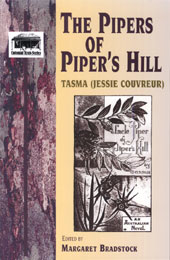
  7. Tasma (Jessie Couvreur), The Pipers of Piper’s Hill (serial version of Uncle Piper of Piper’s Hill ) (2002, ed. Margaret Bradstock) (my review of PGA edition): “the story of the Cavendish family who come to Australia from England to live with Mrs Cavendish’s parvenu brother, Tom Piper” focusing on “the clash of values between the impoverished old world of privilege and the new-world democracy of the self-made man … Tasma’s depiction of the conflicting currents of life in colonial society, and her delightful evocation of the characters involved, rapidly established her as an author of note”. (1888)
  8. Ada Cambridge, A black sheep: some episodes in his life (serial version of A marked man) (2004, ed. Elizabeth Morrison) (Narelle Ontivero’s review of Pandora’s edition of A marked man on Bill’s blog): follows the life and loves of Richard Delavel, from being “a rebellious Oxford undergraduate in 1850s England” to “a still restless middle-aged family man in 1880s Sydney … against a background of constraints and opportunities in Britain and Australia”. Described as “a powerful creation of an iconoclastic character in search of professional fulfillment” and “a complex reflection on marriage ties and social obligations and a lively evocation of late colonial Sydney”. (1888/1890)

It’s interesting, but not surprising, to see that the goldrush and goldmining feature in several of these, not to mention the clash between old and new worlds. It’s also interesting that a few are satirical.

Hmm…

In 1991, a report titled “Successful symbiosis of defence and books”, was published in The Canberra Times. Written by literary editor Robert Hefner, it describes the launch of NINE books published by the staff of the English Department at University College, the Australian Defence Force Academy, which, Hefner writes, “has for more than a decade, been building a reputation as one of the country’s leading centres for the study of Australian literature”. Australian polymath Barry Jones, who did the launch said:

It’s always very flattering to be asked to launch a book … but to have been asked to launch nine is something well beyond my experience … and to do it here in the environment of the Australian Defence Force Academy… makes the occasion all the more unusual and to be cherished.

The English Department here at the University College… an outpost — and I would hope a revolutionary and subversive outpost of the University of New South Wales — with its extraordinary symbiosis has been extraordinarily productive.

It was the idea that a Colonial Texts series would come out of a defence force academy that thrilled me so much when I bought my Cambridge. The nine impressive books are listed in the article. They include two Colonial Texts, Vidal’s Bengala and Swan’s Luke Mivers’ harvest. Bengala editor, Dr McKernan, said that something they’ve

all found in working on this series is that you can’t rely on public opinion for the good things to come to the surface… there’s a lot of pleasure in things that’ve been lost. 

Don’t we know it! She went on to say, writes Hefner, ‘that this reinforced the sense that critics working today had a big responsibility to read and argue about things, “because in a hundred years’ time they may all be forgotten”.’ This is why our reframed AWW program is so important.

Why, you might wonder, did I head this section, Hmm? It’s because Hefner concluded his report with a comment by one of the launched authors, Adrian Caesar:

All these books were, I think, largely conceived, written and produced before the Government and the University of NSW began expending so many efforts and energies on making us more efficient, productive and accountable.

Very possibly we’ll have to work even harder in the future to match this output, since so much of our time is now taken up with shuffling bits of paper around our desks in order to prove how efficient, productive and accountable we are. This of course inevitably makes us much less efficient since it detracts from our proper task of teaching and research. I feel hopeful, however, that this department at least will maintain its productivity, despite, not because of the valiant initiatives to improve us.

You can’t help thinking that in saying this, he was foretelling the future, because publication of the last five Colonial Texts took much longer than the first three (even allowing for a couple of years lead-time before the first was published). And then they stopped. I’m sure that’s not because there was nothing else worth publishing!

Monday musings on Australian literature: Australia’s favourite genres

A week or so ago I received an email from an organisation called Studying in Switzerland. Their main focus, as their name suggests, is helping students who want to study in Switzerland, but it seems that they also do some research of their own. A recent project was to identify the most popular book genres – in countries where data was available. 

Their methodology was to analyse Google search queries on genres from different countries, and the results are intriguing. I haven’t found much discussion of their analysis to know how others view the effectiveness of the methodology. Does it match up with borrowing or book-buying data? Or, is what we read different to what we research?

Study in Switzerland says that:

Books continue to be a significant part of our lives, with reading being a popular pastime for many people. Indeed, a typical person reads 12 to 13 novels each year, and how people choose what to read has long piqued the curiosity of researchers. As a result, book publishing has a huge market size worldwide, with revenue reaching $112.5 billion in 2022.

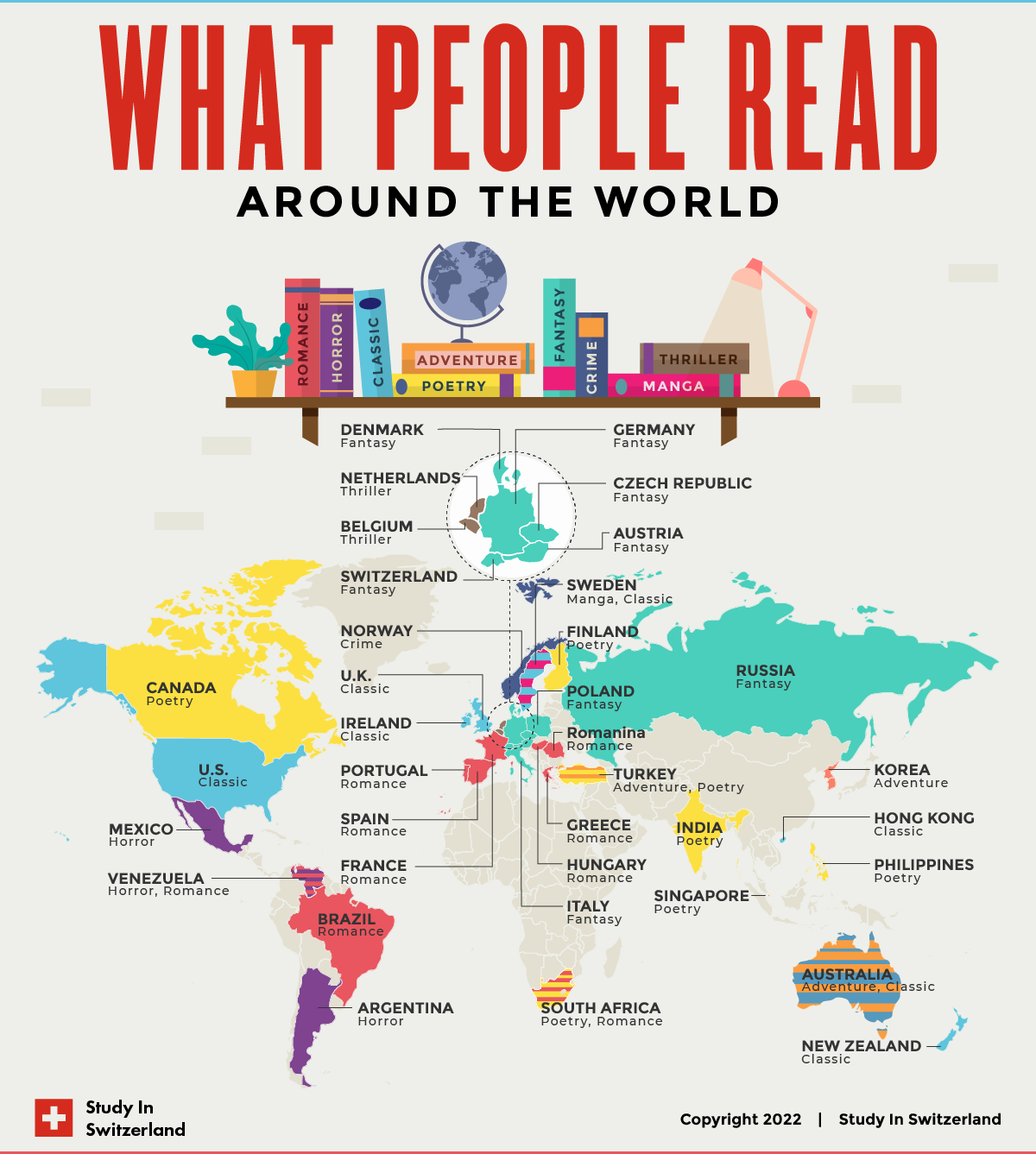
Anyhow, here is what came up for Australia – they identified that Australians search most for Adventure and Classics! Is this what you would have guessed? If I’d been asked, I would have thought Crime. Indeed, I probably would have said “Crime, hands down”. And, of course, as I questioned, what is searched may be different from what is actually read.

We are not the only country interested in Classics. This genre was also popular in Sweden, Hong Kong, USA, UK, Ireland and New Zealand.

Worldwide, they say, Romance, Classics and Poetry are the most searched for genres but, drilling down, there are some interesting preferences. Asians and Canadians, for example, had Poetry first, while overall Europeans (like the Russians, Poles and Finns) go for Fantasy, although some of them (like the French and Spanish) searched more or Romance! Not surprisingly, Belgians, the Dutch and the Norwegians seemed to prefer Crime and Thrillers.

Study in Switzerland makes some assumptions about the reasons for the various preferences they found. Those assumptions make some sense, but they are not based, I believe, on this research.

For their report, please check out this link.

Meanwhile …

There is other research to look at. Back in 2017, a survey conducted by the Australia Council and Macquarie University of Australians’ reading habits, found something closer to what I expected, which is that

The most popular fiction genre is crime/mystery/thriller, with 49% of Australians having read a book of that genre in the last 12 months … followed by historical fiction on 36%, contemporary/general fiction on 33%, science fiction/fantasy on 32%, and classics on 31%.

However, they also found that just over half (51%) of Australians were interested in “literary fiction”, which they described as fiction “eligible for prizes like the Man Booker and Miles Franklin”. They also found that it’s generally older readers who are most interested in this fiction. Interestingly, they found that these “older readers also tend to be more interested in work by Australian authors”.

I did report on this survey back in 2017, and posed some questions at the end. Some of these might have been answered by …

A report on bookselling published by ArtsHub in 2019 which confirmed Australians’ interest in “home-grown authors”. They found “a 30% jump in local authors featured in the top 25 fiction titles” over the previous two years. Further, bookseller and Book Club coordinator, Jennifer Stephens at Brisbane’s Avid Reader Bookshop, Brisbane, reported that “we are reading a lot of Australian women writers”. (Music to my ears, of course.)

Overall, this report, which drew on two years of Nielsen BookScan data, concluded:

Australian readers’ priorities and interests are evident: self-help and finance, a taste for home-grown writers, an eye for feminist writing, curiosity about sexuality and gender, a fascination with crime and mystery, and a deep need for First Nations perspectives.

I wonder if things have changed much since then, particularly given the pandemic? Either way, it’s interesting to ponder whether there is a significant difference between what we search for online and what we actually buy, or, whether, Study in Switzerland has identified a big swing in our interests over the pandemic?

Any thoughts?

Stella Prize 2022 Longlist announced

Apologies to those of you who look forward to my Monday Musings post, but I’ve gazumped this week’s edition, because the Stella Prize longlist was announced this evening, and I do like to report on that. I attended the online streamed announcement.

As I say every year, I don’t do well at having read the Stella Prize longlist at the time of its announcement. In recent years the most I’ve read has been two (in 2019). Last year it was none. I don’t expect much better this year.

I was, however, doing better at reading the winners, having read Carrie Tiffany’s Mateship with birds (2013), Clare Wright’s The forgotten rebels of Eureka (2014), Emily Bitto’s The strays (2015), Charlotte Wood’s The natural way of things (2016), Heather Rose’s The museum of modern love (2017), and Vicki Laveau-Harvie’s The erratics (2019). But, that’s slipping too. So far, I’ve missed 2018’s winner, Alexis Wright’s Tracker, am still reading 2020’s winner, Jess Hill’s See what you made me do, and still have last year’s winner, Evie Wyld’s The bass rock on my TBR.

The judges are a complete changeover from last year’s with the excellent, multi-award-winning Melissa Lucashenko taking the role of chair. Her co-judges are writer, poet, essayist Declan Fry; author-across-all-forms Cate Kennedy; memoirist and activist Sisonke Msimang; and essayist and screenwriter Oliver Reeson. As always, attention has been paid to diversity on the panel.

Oh, and I should note that a new form has been added to those eligible for the prize this year, single-author poetry collections. An excellent decision – as it turns out.

The longlist

  • Randa Abdel-Fattah, Coming of age in the War on Terror (nonfiction)
  • Eunice Andrada, Take care (poetry)
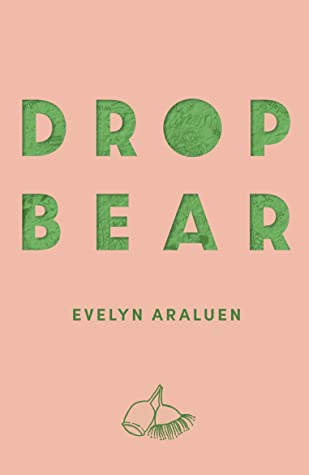
  • Evelyn Araluen, Dropbear (poetry) (TBR, Brona’s review)
  • Paige Clark, She is haunted (short stories)
  • Anwen Crawford, No document (memoir) (Lisa’s review)
  • Jennifer Down, Bodies of light (novel)
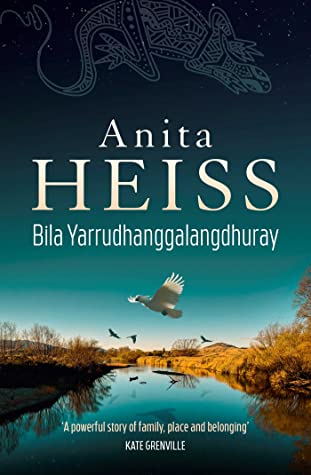
  • Anita Heiss, Bila Yarrudhanggalangdhuray (novel) (TBR, Lisa’s review)
  • Lee Lai, Stone fruit (graphic novel)
  • SJ Norman, Permafrost (short stories)
  • Elfie Shiosaki, Homecoming (memoir) (Lisa’s review)
  • Lucy Van, The Open (poetry) 
  • Chelsea Watego’s Another day in the colony (nonfiction) (Bill’s post)

I didn’t have a strong feel for what might be on the list, but did guess four that ended up there – Araluen, Crawford, Down and Watego. I should have thought of Heiss. On the other hand, although I haven’t read it yet, I was hoping to see Melinda Bobis’ The kindness of birds. However, as I haven’t read any of the longlist, I’m not going to judge. But I will say that the panel discussion that followed the announcement made powerful arguments for their choices. It might be a cliched thing to say, but it looks like a brave list that is likely to challenge readers.

In the lively and very enjoyable online discussion, the panel made some overall comments, as well as discussing individual books. They said that the flavour of the year was poetry. There are, in fact, three on the list. Interestingly, there are only two novels, but there is a graphic novel, and there are two short story collections, so fiction is still well represented. That leaves four works of nonfiction to round out the twelve.

The panel was “excited to have all genres in the list”, and made the strong point that it’s the message that matters more than the medium. It was very clear, as the evening progressed, that message was a critical issue for this panel, that works that interrogate and fiercely tackle the serious matters confronting us, are what most attracted them – whether from a political, or personal point of view, or both. As one who loves “message” in literature, I appreciate this. However, lest all this sound too bleakly serious, they also made the point that although the books are all “quite challenging”, in most there’s also wit, if not, in some, laugh-out-loud humour.

Finally, I’ll close with judging panel chair, Melissa Lucashenko’s opening comments:

In the aftermath of Black Lives Matter and #MeToo, Stella writers are not holding back… Australian women and non-binary writers are producing innovative, sophisticated literature in very difficult times. It has been a great privilege to read and assess their work for the 2022 Stella Prize.

To read more, do check out the Stella website.

The shortlist will be announced on 31 March, and the winner on 28 April.

Any comments?

Jane Sinclair, Shy love smiles and acid drops (#BookReview)

Jane Sinclair’s hybrid biography-memoir, Shy love smiles and acid drops: Letters from a difficult marriage, is an unusual book. Covering around two years in her parents’ life, this book comprises, mostly, letters sent between her parents between April 1960 and July 1962 when Sinclair and her mother were in England while her father remained in Australia. Between the letters (and some entries from her mother’s journal), Sinclair adds explanatory information, which ensures the narrative flow.

Sinclair was 5 to 7 years old when these letters were written. Being so young, her memory of that time is scattered, but she has clearly thought much about her parents in her adult life. Also, she remembers family stories of those times told to her later, and she did discuss her parents’ relationship with them, though, as is the way with such things, not as much as she wishes she had. The book was inspired by her finding the letters that underpin this book.

What makes this book particularly interesting is who her parents are, the artist Jean Langley and music critic John Sinclair. You may or may not have heard of them, but these two were part of mid-twentieth century Melbourne’s arts and music scene. In particular, they had close connections with the Heide artistic community, which inspired Emily Bitto’s award-winning novel, The strays (my review), and which was created by two art-lovers and philanthropists, John and Sunday Reed. This community was famous for two things, the art produced there and the complicated personal relationships amongst its members.

Some of Australia’s best-regarded modernist artists were associated with Heide, people like Albert Tucker, Sidney Nolan, and Joy Hester, all of whom appear in this book. Artist Arthur Boyd was also close to these people, though not part of the community. However, Heide was just as well-known, as Wikipedia puts it, for “the intertwined personal and professional lives of the people involved”. Sunday Reed herself had affairs with several in the community, with her husband’s knowledge. This art history is what primarily attracted me to the book, but it was the background rather than the focus that I’d hoped. Instead, Shy love smiles and acid drops is exactly what it says it is, the story of “a difficult marriage”. As we are told on the back cover

when Jane Sinclair was five her mother Jean Langley followed her lover, Arthur Boyd, to London and took Jane with her. This book covers the two years they live there before returning to Australia in 1962, by which time her mother is three months pregnant to an Englishman.

“Your letter makes me cross” (Jeannie)

The letters are difficult reading because of the emotional pain and distress they contain. There are some fascinating insights into London and England at a time when many Australians saw it as a mecca for arts and culture. Indeed, while Jean Langley was there, living near the Boyds, so were their friends, Barry Humphries and his wife.

In her introduction, Sinclair speaks of how the letters caused her to “seriously question” her mother’s “version of herself as the aggrieved, wronged wife that she had cultivated and genuinely believe to be true”. Sinclair was also sorry that she had never allowed her father, who died twenty-five years before her mother, to tell his side of the story. This is understandable given when he died, she had probably not reached that age of (hopefully) wise reflection many of us do later in our lives, that age when we start to really see our parents as human beings, rather than seeing them through the prism of their relationship with us. I think this is so, in even the best of parent-child relationships?

Anyhow, Sinclair tells us that her parents’ relationship was “intense and difficult” from the start. They separated many times, but “there remained an irresistible attraction that kept them returning to each other”. Eleven years of age separated her mother and father, but it seems that personality difference (“not compatible emotionally”) was the essential problem. John Sinclair apparently tended to melancholy and depression, while Jean Langley was a romantic. “She could create sparkle and shine” and “wanted the world to be a beautiful place of happy endings”. All this comes through the letters. John expresses his sadness, his missing his wife and daughter, while Jeannie expresses her frustration with him, and her increasing disappointment with life and human beings, as things become more and more complicated. The England she adored at the beginning of her trip is not so great when it becomes cold and grey, and as the reality of never having enough money sets in.

“a riddle, muddle, fiddle, diddle” (Jeannie)

But what comes through even more is miscommunication, and particularly what seems to be Jeannie’s wilful misreading of John’s letters. When he invites her to return home on her terms – meaning she can live separately from him if she wishes – Jeannie seems to misread that wilfully, insisting again and again that she can’t be his wife, she won’t sleep with him, and so on. Readers wonder where she reads this, because we don’t.

At times, I put my feminist hat on and wondered whether there was something about John that we don’t know. Should I be supporting my down-trodden sister, I started to wonder? But, while there are, naturally, gender issues to do with women’s place in the mid-twentieth century, I don’t read a woman wronged by her husband here. I read a woman who, due to her own personality, and upbringing perhaps, regularly let emotion cloud her ability to reason – to her own detriment as well as those around her. She falls in and out of love twice during this English sojourn – besides the apparently abiding love for Arthur Boyd – and admits in June 1962 that, “I seem to have made a mess of my emotions”.

As the narrative progresses, daughter Jean notes that her mother, who liked to see herself as truthful, strayed often from it:

My mother believed in her emotional truth, and unfortunately for my father, it was sometimes very far from reality.

Reading this, I think I would say more than “sometimes”. I have known people like Jeannie, people who have such a zest for life but who wear their emotions so close to the surface that they can’t reason through what is really happening. They can be both joyful and draining to be around, and this is how Jeannie comes across.

This is not my usual review, because, in a sense, it’s hard to review such a personal book. Indeed it’s so personal that it’s worth thinking about its target. There’s some interesting social history here – life in the 60s, the experience of Aussie artistic expats in London, the challenges of communication in those pre-electronic communications days. There’s also a little about the the art world, the odd reference to a Boyd or Nolan exhibition, to the Blackmans, and to Brett Whiteley whom Jeannie calls “a shocking little upstart”. But, overall, this is a nicely presented but intense story of a “difficult marriage”, and it will appeal mostly to those interested in human relationships.

Read for #ReadIndies month (kaggsysbookishramblings and Lizzy’s Literary Life). Hybrid is a Melbourne-based independent publisher, with a special but not exclusive interest in Judaica. I have reviewed many of their books over the years.

Jane Sinclair
Shy love smiles and acid drops: Letters from a difficult marriage
Melbourne: Hybrid Publishers, 2021
279pp.
Cover art: from oil painting by Jane Sinclair
ISBN: 9781925736588

(Review copy courtesy Hybrid Publishers)

Monday musings on Australian literature: Two new indies

This month – February* – has been designated #ReadIndies month by two British bloggers, Karen (kaggsysbookishramblings) and Lizzy (Lizzy’s Literary Life). The rules are simple: “read anything you like, in any language you like, as long as it was published by an independent publisher”. This is not a difficult reading month for me to take part in, as the majority of my reading comes from independent publishers.

However, the question is, what is an independent publisher? Karen and Lizzy admit that it’s not easy to define, but they mean smaller outfits that print and issue their own works, and aren’t part of a larger conglomerate. In Australia, the Small Press Network (about which I’ve written before) is a good place to start. In the end, Karen and Lizzy suggest “going with your gut”. They also say, quite rightly, that most independent publisher websites will proclaim their independence. I have written a few times about independent publishers. You can find most of these on my Small Publishers tag. In those posts, I’ve named many small and independent publishers. In this post I’m adding two very new publishers which launched during the pandemic: Ultimo Press and Upswell. What a funny coincidence that both start with U!

Ultimo Press

“to be distinctive, a little bit different, to disrupt and to have fun.”

Launched in 2020, Ultimo Press is an independent publisher with the simple ambition of becoming “home to Australia’s best storytellers”. They say they are part of Hardie Grant Publishing (which is now a reasonably large, diverse business with offices worldwide), making me wonder what they mean by “independent”. However, Hardie Grant describes itself as “independent” and “Australian-owned”, so I’m going with it.

Most Australians will assume, rightly, that Ultimo’s name comes from the Sydney suburb, but here is how they describe it:

Named for the Sydney suburb that houses Hardie Grant’s Sydney office, Ultimo references our home – an historic and colourful part of Sydney. The Italian translates roughly to ‘the latest’, and that will be our ambition: to provide a platform for the latest trends and newest voices.

The staff has some extensive industry cred, as the Who We Are page shows.

They “want to excite readers of general and literary fiction (especially the sweet spot in between), and discover non-fiction that inspires and ignites”. Their “hallmarks will be editorial excellence, arresting design, dynamic marketing and publicity, respect and loyalty to our authors, and publishing compelling new voices and original perspectives that reflect the full spectrum of Australian life”.

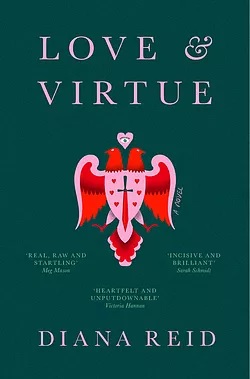
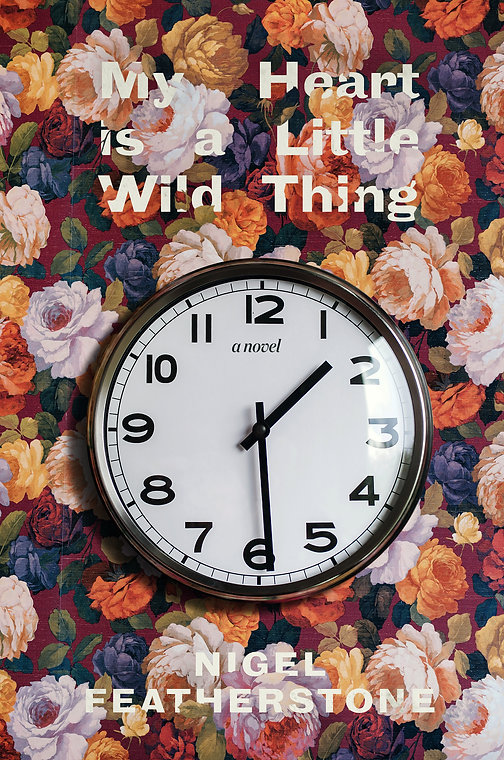
They have certainly started with a bang, with some of their books already making a splash, like Diana Reid’s Love and virtue (which I gave Daughter Gums for Christmas and she loved) and Shankari Chandran’s Chai time at Cinnamon Gardens. They’ve published Claire G. Coleman, and coming up is Yumna Kassab’s Australiana (March 2022), and local writer Nigel Featherstone’s latest novel, My heart is is a little wild thing (May 2022). Regular readers here will be familiar with Featherstone’s warm, expressive writing.

Ultimo certainly looks like a new indie to watch, as does …

Upswell

“where have all the adventurous readers gone?”**

Launched in 2021, Upswell is, you could probably say, a passion project, but it’s the passion project of someone with significant cred too. Director Terri-ann White ran UWA Publishing from 2006 until mid-2020. During that time she was responsible for significant publishing output across the genres, but, for litbloggers like me, especially for some great literary fiction and creative non-fiction. Josephine Wilson’s Miles Franklin Award winning Extinctions (Amanda’s review) and Jessica White’s hybrid biography-memoir, Hearing Maud (my review) are just two examples of too many to name.

Upswell is a not-for-profit company, with its directors being three impressive women, Carmen Lawrence, Linda Savage and White.

Like Ultimo Press, White wants to publish distinctive works, but puts it this way. She will publish

a small number of distinctive books each year in, broadly, the areas of narrative nonfiction, fiction and poetry. I am interested in books that elude easy categorising and work somewhat against the grain of current trends. They are books that may have trouble finding a home in the contemporary Australian publishing sector.

She’s shown, with her early list, not to be afraid of forms that often scare off the big publishers, like novellas, essays and poetry. And, like Ultimo, Upswell has started well with one of its first books, John Hughes’ The dogs (Lisa’s review) being shortlisted for last year’s Victorian Premier’s Literary Awards (not that awards are the only – or main – marker of excellence.)

Upswell is also distributing a bit differently. Of course, individual books can be bought from them directly or from booksellers, but they also have a subscription program, which Lisa and I took part in last year, receiving their first three books: John Hughes’ The dogs, Belinda Probert’s Imaginative possession and Vietnamese-American author Monique Truong’s The sweetest fruit. This year they are offering several subscription packages, which is a great option. You get to support an excellent publisher by providing them some certainty and you get little surprises during the year.

This isn’t the only different thing, however. Upswell also has DGR status, which means that (Australian) donations to them are tax-deductible. Donations will support their Regional Writing and Publishing Workshops, Mentorships with White, a strong poetry list, and their Noongar Voices program.

So, two new indies to add to the ever-growing list of wonderful indie publishers in Australia. Do support them when you can – and, the bookshops which stock (and feature) them. If you don’t see them at your local bookshop, talk to the bookseller. A personal touch is a powerful thing.

Finally, a little aside just in case you are interested, Marcie (Buried in Print) is running a Read Indies series on her blog, in which she is devoting posts to individual Canadian indies.

* The “month” has been extended to 15 March.
** From an article by Terri-ann White in SeeSaw magazine

Monday musings on Australian literature: The Guardian Australia’s Unmissables (2)

Two years ago, I wrote a post on The Guardian Australia’s Unmissables series, which was initiated in 2019 and aimed to highlight 12 new releases they deem “significant”. The series was supported by the Copyright Agency Cultural Fund.

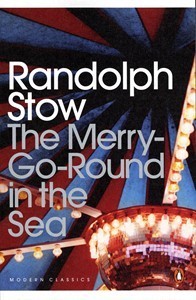
Randolph Stow, The merry-go-round in the sea

I wondered at the end of my previous post whether the project would continue after the initial twelve. It seems that it did, at least until August 2020. By that time, they’d added 15 more works, but there were some changes. The initial project was about “highlighting significant new release Australian books”, but, pleasingly to me, later selections include older books like Randolph Stow’s The merry-go-round in the sea, published in 1965. This is because, from the 15th selection on, they changed tack to offer books “you’ve finally got time for”. That is, Unmissables went from “new releases” to books recommended by writers “for your lockdown”. 

With this, they also changed how the books were presented. In the original series, there were two articles per book, one on the book and one offering some additional resource – an extract from the book, or an interview with or essay by the author. From the 15th selection, there’s just one article, written by the recommender.

I’m chuffed that I’ve read several of this more broadly focused selection. And now, before I list the books, I’ll share Christos Tsiolkas’ comments on making a selection:

Should I choose a novel that I think under-appreciated and undervalued? Should I use positive discrimination in my choice? Should I choose the contemporary and au courant? Or should I be deliberately anti-fashion?

My being disconcerted speaks to the obsession with the “curated self” that we all now have in the digital age: every choice must be scrutinised for its moral and political purport. But in the end, I decided to trust my instincts. I had returned home from overseas in mid-March of this year and, knowing I was to enter a fortnight’s quarantine and then a subsequent period of quietude, I picked a handful of books off the shelves that I just had to read again. The only Australian book I chose in that initial cluster was Randolph Stow’s The Merry-Go-Round in the Sea.

Now, the books …

(Listed alphabetically by author)

Book cover
  • Julia Baird’s Phosphorescence (nonfiction) (1/4/2020) (my review) plus essay by Bridie Jabour applying Baird’s book to living through coronavirus. Little did she know in April 2020, how far we had to go!
  • Peter Carey’s True history of the Kelly Gang (novel) (3/8/2020) (read before blogging) recommended by Caro Llewellyn. Clearly a Carey fan, she says she read it knowing she “was in the presence of a writer walking along a knife’s edge of daring and audacity, my stomach churning at Australia’s cruel past”.
  • Kenneth Cook’s Wake in fright (novel)(24/7/2020) recommended by Briohny Doyle who says the story is easy to explain but its “nightmarish tension not so much”. However, she gives it a red hot go!
  • Chris Flynn’s Mammoth (novel) (24/4/2020) (my review) plus essay by Paul Daley who explains how this book about which he was doubtful got him hooked good and proper.
  • Kate Grenville’s The secret river (novel) (20/7/2020) (read before blogging) recommended by Stephanie Wood who says that “we hold our breath as we read, hoping for the happy, harmonious ending we know cannot come”.
  • Clive James’ Sentenced to life (poetry collection) (28/5/2020) recommended by Vicki Laveau Harvie who calls this slim volume “the poetic equivalent of the tiny, concentrated energy rations marathon runners take to keep going, when the end is not yet in sight”.
  • George Johnston’s A cartload of clay (novel) (6/7/2020) recommended by Paul Daley whose comments are included in my recent Unfinished books post.
  • Elizabeth Jolley’s My father’s moon (novel) (10/7/2020) (my review) recommended by Carrie Tiffany, who opens her piece with “it is proof of a fine novel when its characters enter your spirit as you are reading and take up residence there”.
  • Melissa Lucashenko’s Too much lip (novel) (17/7/2020) (my review) recommended by Alice Pung, who supports this book with a passionate argument that ‘for those of us whose family survived genocide, slavery and stolen children (as mine did), this book is a triumph, brimming with love and wit”.
  • Frederic Manning’s The middle part of fortune (19/6/2020) (Lisa’s review) recommended by Jeff Sparrow who asks “Why hasn’t Anzackery’s ever-rising tide washed Frederic Manning and The Middle Parts of Fortune further up the Australian literary shore?”
  • Alice Pung’s Her father’s daughter (memoir) (27/7/2020) (my review) recommended by Melanie Cheng who discusses her choice, saying “escapism seemed facile”. She needed “a book that could speak to the existential emergency humanity was facing, but also offer a blueprint for how to get through it”.
  • Nevil Shute’s On the beach (novel) (21/5/2020) recommended by Chris Flynn who calls it “a dynamite isolation read”. A teen favourite of mine, it has dated I think, but is still a good apocalypse read.
  • Randolph Stow’s The merry-go-round in the sea (novel) (11/6/2020) (my review) recommended by Christos Tsiolkas. He appreciates that COVID-19 has provided “the opportunity for stillness”, and suggests Stow’s novel is perfect because “it unfolds at a composed, quiet pace”.
  • Alexis Wright’s Carpentaria (novel) (4/6/2020) (my post) recommended by Tara June Winch, who provides excellent insight into how to approach this wild novel. She says “it will change you, as long as you have the guts to read all the way through”.
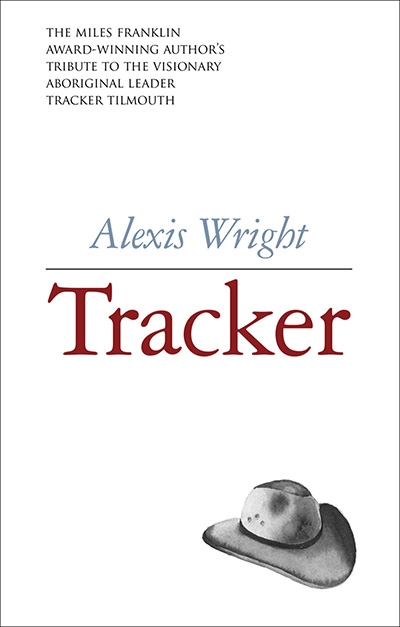
  • Alexis Wright’s Tracker (collective biography)(13/7/2020) recommended by Tegan Bennett Daylight who summarises this Stella-winner as “a chorus of voices about one of the country’s most prominent Indigenous activists is a glorious kaleidoscope of testimony”
Alexis Wright, Tracker

I wish The Guardian provided more about this project. How did the funding get extended and why did it stop? Regardless, there’s good reading here, both the books and the articles about them.

Finally …

This is a simple post, but interesting I hope. I am currently in Melbourne where our second grandchild, a little girl this time, has just been born. She is Neve Jessie, named for my lovely Mum. I’m just so thrilled, and not entirely focused on blogging.

What would you have recommended, if asked?