Stella Prize 2022 Winner announced

The 2022 Stella Prize winner was announced tonight and it’s not a surprise, as several of us in the blogosphere rather thought that

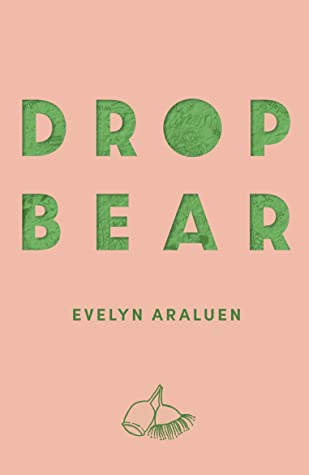
Evelyn Araluen’s Dropbear

would be the winner. Indeed, I was so confident I took it with me to Melbourne this month, fully intending to read it. But, there was not much reading time, and it took most of my time there to finally finish 2020’s winner, Jess Hill’s See what you made me do (my review). I only read a couple of pages of Dropbear before I realised that I’d better read my reading group book for this week’s meeting. (It’s the next review you’ll see!) So, Dropbear is still languishing on the TBR, but you may remember from my shortlist announcement that Brona has reviewed it. Jonathan Shaw at Me fail? I fly has also reviewed it.

The book is a combination of prose and poetry, and the judges described it as:

a breathtaking collection of poetry and short prose which arrests key icons of mainstream Australian culture and turns them inside out, with malice aforethought. Araluen’s brilliance sizzles when she goes on the attack against the kitsch and the cuddly: against Australia’s fantasy of its own racial and environmental innocence.

The panel chair, Melissa Lucashenko, said that it will take you “on a wild ride” that is “simultaneously comical and dangerous”. All this confirms my desire to read it, because I enjoy writers who play with traditions, conventions and myths to encourage us to look again at who we are and what we do.

The quotes above, plus one by Stella’s Executive Director, Jaclyn Booton, can be found on the Stella website (linked below). There is also a quote from Evelyn Araluen’s acceptance. She commented that she’d been following the Stella for the length of her writing aspirations, and had hoped one day to write a novel that would win it. She never dreamed Dropbear would be that winner. She also said:

I’m deeply interested in the lives, histories, and dreams of women and gender diverse writers in Australian publishing, and it’s an honour to be recognised by a prize designed to champion those stories. There aren’t words to explain how thrilled I am to win.

Just to remind you, the judges were author Melissa Lucashenko, as chair, with her co-judges being writer, poet, essayist Declan Fry; author-across-all-forms Cate Kennedy; memoirist and activist Sisonke Msimang; and essayist and screenwriter Oliver Reeson

There’s more on the anouncement on the Stella website.

Any comments?

Monday musings on Australian literature: Australian Pocket Library (1)

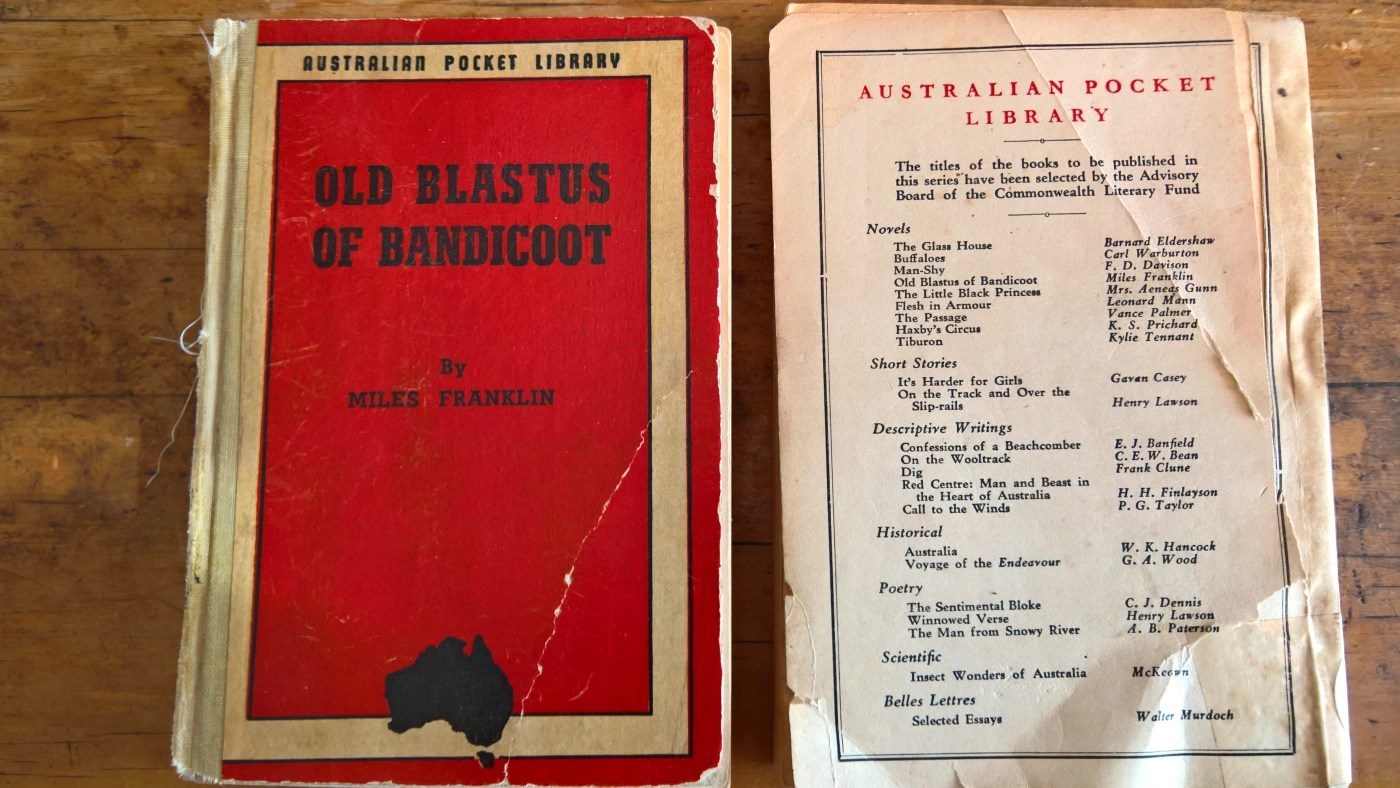
Bill and Lisa have already posted today in recognition of ANZAC Day, Bill’s titled ANZAC Day 2022, while Lisa’s is about Martha Gething who is featured in the book, Australian women pilots: Amazing true stories of women in the air. My post, in fact, comes to you courtesy of Lisa who, last week, emailed me with the subject line, “A Monday Musings Topic?” She wrote that while reading Nathan Hobby’s soon-to-be-published biography of Katharine Susannah Prichard, she’d “learned about the existence of the Commonwealth Pocket Library, cheap paperbacks for distribution to POWs during the war”. She closed her email with, “Of course I thought of you…”.

Now, I’m always happy to hear ideas, particularly ones like this which come with a link to a scholarly article. I was especially grateful, this time, because I had been pondering a topic relevant to ANZAC Day, given Monday was going to be THE day. She handed me my post on a platter, so, thanks Lisa!

Australian Pocket Library

I should start, though, by saying that it appears it was called the Australian Pocket Library, not Commonwealth Pocket Library, as Hobby describes it. Wilde, Hooton and Andrews’ The Oxford companion to Australian literature says:

The Australian Pocket Library was a series of austerity paperbacks published with the help of the then Commonwealth Literary Fund during the economic restrictions imposed by the Second World War.

(The Fund’s involvement is probably where the “Commonwealth” confusion came in.)

There is, of course, far more to this story than The Oxford companion had time to tell, and I’m going to share some of it with you. In addition to reading the article from the Australian Literary Studies journal sent to me by Lisa, I also did a Trove search – of course! The project, it seems, generated quite a bit of excitement in bookish circles – and why not!

Neil James, in the article Lisa sent me, provides a history of the series. It started with an idea in 1943 and ended with publication of the last books in the series in 1947. Its active life, in other words, was short – but James argues that its legacy, both positive and negative, was significant. I’ll return to this in part 2, because there is so much to explore.

Origins

James explains that in 1943, Prime Minister Curtin had been approached by the AIF Women’s Auxiliary for Prisoners of War which wanted cheap editions of Australian books for Australia’s POWs. The Auxiliary had been choosing books for parcels going overseas, but were finding that “practically every Australian book we would wish to include is now out of print”. Prisoners of war everywhere, they said, ask for books about their homeland. The request was referred to the Advisory Board of the Commonwealth Literary Fund (CLF), and it ended up with Vance Palmer, who was on the Fund’s Advisory Board. He “immediately latched onto the idea”, not just for “the POWs, but also for the cause of Australian literature”. Never let a chance go by, eh! Vance and his wife Nettie Palmer, as many of you will know, were significant supporters and promoters of Australian literature, as well as being writers themselves. 

Anyhow, Palmer advised that the task was beyond private publishers: the paper would not be available, and, anyhow, “most publishers do not know what to print and how to get the copyrights”. It was, in other words, a job for the CLF. Indeed, writes James, the Fund had apparently had ideas since 1939 for “a standard library of Australian works”. Here was their chance.

Cutting to the chase, funding was granted and the process commenced. You won’t be surprised to hear that choosing the actual books was fraught. Various publishers wanted their books included, but Palmer was, says James, “sceptical of Australian publishers” because they’d proven themselves to be “cautious” regarding publishing Australian literature. A committee was formed to choose the books. The plan was that “the CLF would have editorial control but the publishers would pay for production and distribution”. Publishers “which had the rights to a book chosen would have first option to publish it in the Library” but they had to agree to “conditions governing cover design, format, royalties, and price”. James explains why publishers supported a scheme in which they took all the financial risk but gave “creative control to a Canberra committee”. The reason was, in a word, paper!

The list, primarily chosen by Vance Palmer and Flora Eldershaw, was not universally approved. James reports that CLF’s Board chair “was consulted only when the list was virtually set”. He was apparently a little put out, commenting that it “is possible that other considerations than merit have determined the choice”.

The books

And here, I’ll turn for a while to Trove, and what the critics, reviewers and journalists thought. One of those was R.G. Howarth. He was founding editor of the literary journal, Southerly, and literary critic for the Sydney Morning Herald. According to Lee, in the Australian Dictionary of Biography,  he “influence[d] Australian writing through deciding who would or would not be published in the 1940s and 1950s”. His sole criterion was “literary quality”, not “political and ideological considerations”.

Howarth wrote about the new initiative in 1944 (April 29), starting with the basic plan: it involves twenty-five “standard” Australian books, “designed for members of the Australian forces (including prisoners of war) and members of the Allied forces in Australia, as well as for the general public”, and to be sold at prices ranging from 1/3 to 2/. The list includes 10 novels, plus collections of short stories, “descriptive books”, histories, verse, a scientific work, and essays.

He comments that the poets, Lawson, Paterson, and Dennis, “will undoubtedly solace and stimulate the fighting-man” as well as “renew their own popularity”. He describes the novels, which included currently out-of-print books, Robbery under arms, We of the Never Never, and Man Shy; the best of Australian novels of the last war, Leonard Mann’s Flesh in armour, which is “unhappily little known because unobtainable”; and Katharine Prichard’s Haxby’s Circus, Brian Penton’s Landtakers, Vance Palmer’s Passage, Kylie Tennant’s Tiburon, Barnard Eldershaw’s The Glass House, and Miles Franklin’s Old Blastus of Bandicoot.

However …

Of course there was going to be a “however”! Howarth questions the definition of the selected works as “standard”, notwithstanding the CLF confronted issues concerning “copyright and competition”. He recognises that the Commonwealth Literary Fund is “at once serving the reading public, helping the Australian author, and reviving books undeservedly neglected”, then asks how far the list meets these purposes.

He questions, to take Prichard as an example, why Haxby’s Circus “and not her Pioneers or Working bullocks – much more Australian in spirit and setting?” Re Bernard Eldershaw, he asks, why “The glass house – a study of shipboard life during a voyage from Europe to Australia – rather than their prize winning A house is built?” Well, I don’t know, but Eldershaw was on the selection committee so …

Of Penton’s Landtakers and Franklin’s Old Blastus of Bandicoot he says that “much as one admires the authors in other ways one is compelled by honesty to say that their inclusion is at least questionable”. Old Blastus, he feels, ‘appears as a failure that might well have been a success; in it a true “character” is imperfectly realised’.

And of course, as all commentators do on lists, he identifies works not included, such as For the term of his natural life. He recognises that ‘opinions are now divided about this …but surely it presents a stage in our history and in the development of the human conscience that must be retained in mind. It is “standard”, too in the same sense as Robbery under arms‘. He names other gaps, such as novels by Eleanor Dark, Ernestine Hill, Norman Lindsay and Christina Stead.

But, he concludes:

Whatever one’s opinions of its selection, the Commonwealth Literary Fund must be congratulated on the vision and courage of the enterprise. It has here decisively shown its importance to Australian authors, hitherto largely unprotected and uncertain of the future; and its wish and power to foster the growth, and distribute the products of Australian literature.

Then, on 4 May 1944, he writes a letter to the editor passing on a playwright’s surprise at the omission of “the Australian playwright” from the list. Two days later, on 6 May, playwright Leslie Rees, who signs as “Hon. Chairman, Playwrights’ Advisory Board” responds in his own letter, saying that Howarth was “surely unfair in implying that the Commonwealth Literary Fund has done nothing for the Australian dramatist”. He defends the work of the Fund and says that “When the time comes for a second list of Pocket Library books”, plays “might well be included”. You gotta laugh really. Howarth merely passed on someone else’s comment – albeit in passing it on he must have agreed somewhat – while Rees defends the Fund suggesting that they “might” include plays in a later list! Sounds like some undercurrent there that we don’t know about.

Meanwhile, on 17 May, P.I.O’L. also took up the issue of “standard”, but I’ll leave that for next week … and simply say, here, that little of the discussion I read focused much on the poor POWs!

Sources
Jess Hill, See what you made me do (#BookReview)

Jess Hill See What You Made Me Do

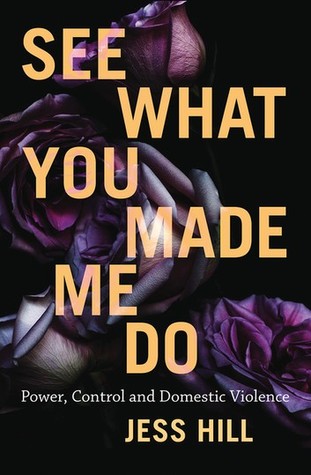
I took me a long time to read Jess Hill’s 2020 Stella award-winning See what you make me do, partly because I bought the e-book version which I read in fits and starts and partly because of its content. As the Aussies among you will know, Hill’s book is an intense, thorough discussion of domestic abuse. It’s not an easy topic but it is a critical one because if statistics tell us anything it’s that the situation in Australia is not improving.

There’s no way I can share the wealth of information or fully convey the impressive depth of research Hill has done. However, I’ll do my best to give a sense of what this book does, and how Hill does it. She starts on definition, explaining that wherever possible, she replaced the term “domestic violence” with “domestic abuse” because “in some of the worse abusive relationships, physical violence is rare, minor or barely present”. “Domestic abuse” is the term now used by UK police because it undercuts the assumption that abuse is only serious if it’s physical.

Those of you versed in trauma will appreciate a fundamental challenge Hill faced, which, as she describes it, is that “power imbalance built into the journalist–source relationship: the journalist usually has ultimate power over what gets published”. For survivors of abuse, who have suffered at the hands of power, this could effectively mean abusing them all over again. So, Hill “wanted to flip that and give the power back to them. If this process was not a positive experience for them, there was no point in doing it”. So, she gave “them the chance, wherever possible, to review their story, suggest revisions or ask for things to be deleted – especially if there were safety concerns”.

In her Introduction she lays out the road map:

In the chapters that follow, we will travel through an extraordinary landscape, from the confounding psychology of perpetrators and victims to the Kafkaesque absurdity of the family law system.

And so, in eleven chapters, Hill traverses domestic abuse from multiple angles, grounding it in case studies – usually with names changed – which force us to put a face on the accompanying theories and statistics.

Hill starts by establishing coercive control as a fundamental aspect of domestic abuse. Our understanding of its techniques, she writes, come from the Cold War and US Air Force social scientist Albert Biderman’s recognition of how the tools of coercive control had been used on American POWs in North Korean camps. From here she analyses how the same techniques are used by intimate partners – almost always male, though there is a chapter on women who abuse – to create a threatening atmosphere that will convince the victim of the perpetrator’s omnipotence, the futility of resistance, and the necessity of compliance. The aim is total dominion (which is exactly what Wemyss’ wanted over Lucy in the prescient Vera). Hill describes the techniques in detail, and it’s chilling.

The best word for this book is forensic, because Hill burrows deep. She confronts us with our uncertainties – why did she stay, for example – and makes us see just how deep the degradation goes. She explains how a concussed women can look drunk and so be missed by the police as the victim. She shows how a traumatised woman can come across as irrational and erratic in court versus her cool, calm, well-presented abuser. She interrogates the role of patriarchy, and how it damages men, as well as women. Feminists, as many of us know, were the first to recognise this.

She looks at disabled women. She looks at children and the way they are used and treated by abusers in power plays. Indeed, her chapter on children and the courts is horrifying. She details the gradual weakening of the Gough-Whitlam-established family court system through successive, mostly conservative, governments. She shows how some of this weakening has been underpinned by a particularly egregious theory called Parent Alienation Syndrome. She reveals the perfect storm created for children caught up in a family court softened by law and bolstered by such spurious theory.

And, she devotes a chapter to First Nations women, who are at significantly greater risk of abuse than their non-Indigenous peers. The stories just keep on piling up as you read, stories that you can barely countenance, except that anyone with any semblance of awareness will know they are true.

It’s tough going but it’s valuable reading, because for all I thought I knew, there were details I didn’t know or appreciate. Hill asks some pertinent questions, like:

In the years I’ve spent writing this book, I’ve found that it’s the questions we don’t ask that are the most confounding: Why does he stay? Why do these men, who seem to have so much hatred for their partners, not only stay, but do everything they can to stop their partner from leaving? Why do they even do it in the first place? It’s not enough to say that perpetrators abuse because they want power and control. Why do they want that?

Or, as “Survivor Queensland” put it, ‘I want people to stop asking “Why does she stay?” and start asking “Why does he do that?”‘

Some of the answers lie in “traditional notions of masculinity – particularly male entitlement” which are at “the core of men’s violence against women”. But Hill identifies more questions, such as “what are the different reasons men have for needing to dominate their partners?” and what is going on in their minds that makes them “sabotage the lives of their partners and children – to the point where they destroy even their own lives?” These are “critical parts of the puzzle” that are “missing from our public conversations about domestic abuse”. 

Hill titles her final chapter “Fixing it”. She notes Australia’s excellent record in tackling public health problems. “From thwarting the tobacco industry to criminalising drink-driving, Australian governments have shown they are willing to burn political capital to save lives”, she says, and have achieved results. She then shares some of the actions currently being taken – but, of course, this was just before the pandemic so I suspect some of them have fallen by the roadside.

In 2017, she writes, a KPMG report concluded that although “significant progress” had been made against the “National Outcomes”, not only was there no evidence of reduction in “domestic violence”, in fact, the evidence suggested that “the incidence and severity of domestic and family violence” was increasing. However, lest we close the book feeling completely hopeless, Hill concludes with examples of two recent programs that have worked. We just need government will and support to back more such targeted programs. It can be done.

Janine (Resident Judge) also reviewed it.

Jess Hill
See what you made me do: Power, control and domestic abuse
Carlton, Vic.: Black Inc, 2019
416pp.
ISBN: 9781743820865 (eBook)

Bernard Cronin, The last train (#Review, #1954Club )

Bernard Cronin (1884-1968) has featured in this blog a couple of times, but most significantly in a Monday Musings which specifically featured him. He was a British-born Australian writer who, in his heyday in the 1920s to 40s, was among Australia’s top 10 most popular novelists. And yet, along with many others of his ilk, he has slipped from view. However, I did find a short story of his published in 1954 so decided this was my opportunity to check him out.

The reason I wrote my Monday Musings on Cronin was because in 1920 he founded (with Gertrude Hart) the Old Derelicts’ Club, which later became the Society of Australian Authors, but I have mentioned him in other posts too. For example, in one post, I noted that in 1927, Tasmania’s Advocate newspaper had named Cronin as being “amongst the leaders of Australian fiction”. And, in my post on Capel Boake I shared that he had written collaboratively with Doris Boake Kerr (aka Capel Boake) under the pseudonym of Stephen Grey. In fact, he used a few pseudonyms, another being Eric North, which he used for his science fiction. Cronin wrote across multiple forms (publishing over twenty novels as well as short stories, plays, poems and children’s stories) and genres (including historical fiction, adventure stories, metropolitan crime fiction, romances, and science fiction and fantasy).

Wikipedia’s article on him includes a “partial” list of his works, with the earliest being The flame from 1916, and the latest novel being Nobody stops me from 1960. What the list tells us is that his most active period occurred between 1920 and 1950, so the story from 1954 that I read comes late in his career.

I had initially chosen a different story, “Carmody’s lark”, which was published in late 1954 in several newspapers, but belatedly discovered that one paper had printed it in 1951! Wah! Fortunately, I found another, “The last train”, that, as far as I can tell, was first published in newspapers in 1954. They are very different stories, the former being a character piece about a lonely suburban railway worker whose friends notice a change in behaviour and think he’s finally found a woman, while the latter is a more traditional suspense story set, coincidentally, on a surburban train. Both convey subtle wordplays in the their titles.

“The last train” picks up that conversation-with-a-stranger-on-a-train motif, a conversation that will change the life of the protagonist. It’s midnight, and a “nondescript little man in sports coat and baggy slacks” rushes onto the train at Ringwood in the outer suburbs of Melbourne heading for the Dandenongs. There’s a broken light in the carriage so it’s (appropriately) dim. He thinks he’s alone until he notices “a man in a rather comical misfit of hat and light raincoat”. He’s “slumped forward with his elbows on his knees, staring at him”.

Now, our “little man” has had a rather dramatic night. The story continues …

there was nothing in the least sinister in the indolent down-at-heel looks of his solitary companion. He seemed, indeed, exactly the type preyed on by the garrulous; and the newcomer, who was shuddering deliciously with a sense of rare importance, instinctively shifted over to the corner immediately opposite him.

You have probably worked out already that all is not as our “little man”, as he is repeatedly described, thinks. The story builds slowly, starting with a bit of general chat that, if you are looking for it, already contains little hints of menace. But, our “little man” blunders on, ostensibly uncertain at first but in fact keen to tell of his experience that night, while the “other man” listens, gently encouraging him on. Too late does our “little man” realise the truth of the matter, but the story ends there, leaving it to the reader to imagine the rest from the clues given.

Lest you be thinking, it is not the same story as Patricia Highsmith’s 1950 novel, Strangers on a train (adapted by Hitchcock into a film of the same name). And it is not like Christie’s earlier 1934 novel, Murder on the Orient Express. However, it is a well-told, if traditional, suspense story, that is typical, I’d say, of 1950s popular crime fiction and perfect for a newspaper readership. (Whatever happened to the inclusion of short stories in newspapers?)

And that, I think, is the best I can do for Karen and Simon’s #1954Club.

Bernard Cronin
“The last train”
in Maryborough Chronicle (Maryborough, Qld)
22 November 1954
Available online

Monday musings on Australian literature: 1954 in fiction

Some of you know that Karen (Kaggsy’s Bookish Rambling) and Simon (Stuck in a Book) run “reading weeks” in which they choose, somewhat randomly, a year from which “everyone reads, enjoys, posts and shares wonderful books and discoveries from the year in question”. The next one is 1954, and is happening this week, 18-24 April.

I’ve taken part a couple of times, the first time being the 1936 Club for which I also wrote a Monday Musings. I’ve decided to do this again for 1954.

By 1954, World War 2 was over, and the now infamous baby-boom was well underway. Australia was welcoming migrants from war-torn Europe and life was, generally, looking good. However, the war was still close, and the Cold War was being well felt. The war featured heavily in popular literature, but writers were also looking at who we were as Australians, and at our near neighbours.

My research located a variety of books published that year across all forms, but to keep this simple, I am going to focus on fiction. Here is a selection:

  • Jon Cleary, The climate of courage
  • Dale Collins, Storm over Samoa
  • L.H. Evers, Pattern of conquest
  • Miles Franklin (as “Brent of Bin Bin”), Cockatoos (Bill’s review)
  • Catherine Gaskin, Sara Dane
  • Nourma Handford, Coward’s kiss
  • T.A.G. Hungerford, Sowers of the wind: A novel of the occupation of Japan
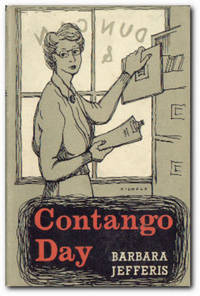
  • Barbara Jefferis, Contango Day
  • Eric Lambert, The veterans and The five bright stars
  • Henry George Lamond, The manx star
  • Eve Langley, White topee (Bill on The pea pickers and White topee)
  • Kenneth Mackenzie (as “Seaforth” Mackenzie), The refuge
  • Alan Moorehead, A summer night
  • Tom Ronan, Vision splendid
  • Arthur Upfield, Death of a lake
  • Judah Waten, The unbending
  • Don Whitington, Treasure upon the earth

Many of these authors have been forgotten, while others, like Alan Moorehead, are more remembered for their non-fiction work. Some, like Jon Cleary and Arthur Upfield, were successful writers of popular fiction, and are still remembered, albeit probably little read. Women are less evident here, than they were in 1936.

However, this list also includes some significant “literary” writers, like Miles Franklin, Eve Langley and Judah Waten, and others who are remembered today for awards established in their names, T.A.G. Hungerford and Barbara Jefferis. I like the sound of Jefferis’ debut novel. It was set during a single day in Sydney about Miss Doxy, a confidential filing and records clerk. The Barbara Jefferis Award was endowed by her husband in 2007 to commemorate her. 

There were very few literary awards at the time. One that did exist, the Australian Literature Society Gold Medal, was awarded in 1954 to poet Mary Gilmore for her collection Fourteen men.

Writers born this year included two poets, Kevin Hart and Dorothy Porter, and the novelist Kerry Greenwood. Deaths included, significantly, Miles Franklin.

Overland magazine, to which I often refer, was established in 1954 by Stephen Murray-Smith and Eric Lambert, who had also co-founded, with Frank Hardy, Melbourne’s Realist Writers’ Association.

The state of the art

Of course, I checked Trove to see what newspapers of the time were saying about Australian literature, and the fiction in particular.

Some specific issues

A recurring issue was the cost of books in Australia. A brief article in Adelaide’s Advertiser (January 25) reports on a visit to Australia by Desmond Flower of the large British publisher Cassell & Co. Flower said that English publishing costs had dropped slightly because of reductions in the price of cloth and paper, and the cost of printing was also likely to fall which should bring book prices down in England, “and consequently Australia”. (As an aside, he also noted that book business in Australia had trebled since 1939, which represented a greater increase than anywhere else in the Empire.)

Another discussion concerned the Little Golden Books, and Americanisation of Australian culture. (Nothing new, eh?) Jill Hellyer writing in the Tribune (July 21) argues not only that these cheap books had “pushed Australian authors even further from their precarious position”, when there are excellent Australian books available, but that the books were “full of loose phrases, bad grammar and cheap American slang”. She admits some in the series are good, but is particularly scathing about the Disney versions of classic children’s stories. There was a riposte, in the Tribune (August 11) from a “West Australian mother” who argued that “it is possible to select, from among these books, ones that can be good and useful for our children”. She didn’t mind ‘reading the words “sidewalk” or “cookies” because it provided her the “opportunity to explain this is how people talk in America”. From her point of view, these understandings help us get to know other people and cultures. However, while she disagreed with Hellyer’s specific cultural concerns, she agreed that “some [Golden Books] are very unpleasing, notably the ones based on Walt Disney’s films that were mentioned by the author of the article”.

Censorship was also discussed. The highly-respected Australian librarian John Metcalfe was quoted in Sydney’s The Daily Telegraph (August 10) as arguing against proposals (from both the right and the left) to extend censorship. The particular target was comic strips and books believed undesirable for children. Censorship, he said, is against the “liberal tradition” and was a “negative approach to the problem”. The Children’s Book Council, he said, “shows that a positive approach can be made in encouraging children to tackle a better type of literature.”

Similarly, a commentator in Wagga Waga’s Daily Advertiser (September 2) expressed concern about plans to extend censorship. Accepting that there there was a “a plethora of cheap and sexy trash on the market” and “an emphasis in some publications on crime and violence”, and agreeing that these can present “a danger to the younger generation and the lesser intellects [defined how?] among the adults”, this commentator believed that “a ban on ‘obscene’ literature is too dangerous to be countenanced”, and goes on to argue the case. There must be other ways, our commentator says, because

Once books are banned or burned, freedom is on the way out.

Some specific books

I could write screeds on reviews of particular books – even though I only read a tiny percentage of the articles I retrieved in Trove – but that’s not practicable, so, I’ll just share a few.

Brent of Bin Bin’s Cockatoos was much approved – and was also recognised by then as the work of Miles Franklin. IM (Ian Mair?) summarising the year’s books in Melbourne’s The Age (December 11) wrote “In the year’s fiction, first must come The Cockatoos … Like all her novels of country life, it has a wonderful feeling for place and period”. Earlier in the year, the writer of the Books Received column in Townsville’s Bulletin (April 18), wrote:

The theme is the universal one of the conflict between the artist and the practical majority who do not take the arts seriously, but the novel is also another Brent of Bin Bin’s memorable recreations of place and period in Australian country life. It is concerned particularly with the problem if the “exodists” — the restless young Australians who fifty years ago sought art of adventure, and in so doing suffered uprooting and exile. 

Oh dear – “the practical majority who do not take the arts seriously”!

There’s superlative praise for popular writers of the time like Jon Cleary and EV Timms. T.A.G. Hungerford‘s Sowers of the wind was also much liked. Interestingly, Wikipedia says that this novel won the 1949 Sydney Morning Herald prize for literature but was held back by publisher Angus & Robertson until 1954 “because it dealt with the economic and sexual exploitation of the Japanese after the War by Australian occupation forces”.

But I’ll save my last discussion for Eve Langley’s White topee. There were many reviews for this book, which continues the story of Steve from The pea pickers, but most seemed to be variations on a theme, which is to say, they praised its creativity but expressed some uncertainty too. Langley remains a challenging author for many, but her contemporary reviewers did value what she offered.

The Newcastle Sun’s (August 5) reviewer perhaps puts it best, opening with

It is impossible to judge White Topee by Eve Langley according to the established standards as the author has embarked upon the adventure of writing in a way that is completely original and individual.

The review uses headings like “poetic passages”, “heady style”, and “impressionistic”, but also gets Langley:

There are so many strands in this study of the country that the author’s impressions come tumbling with enough dazzling rapidity to suggest eccentricity, but the work on closer examination is revealed to be composite and, the result of shrewd observation and searching frankness.

M.P. in Queensland Country Life (August 5) is more measured, writing that it “could have been an outstanding book” but “is full of ego”. M.P. admires much in Langley’s passion and the writing:

Her love of Australia is deep and emotionally strong, and on the too rare occasions when Eve Langley forgets the poets and calls on her own descriptive powers she gives passages that, with their beauty and strength, are pure classics.

M.P. concludes that when Langley “extricates herself from the morass of sentimentality and confusion of mind she will write a book that is truly great”.

R.J.S., reviewing in Cairns Post (August 14) admired the book. S/he starts by saying “it has brilliant descriptive passages and much originality of thought but lacks a plot and is not a novel when judged by the usual standards”. S/he make a strong case for the work’s value:

To date no one has interpreted Australia and its people as Miss Langley has done in “White Topee.”

R.J.S. advises that the novel “cannot be skipped through” and suggests that “the careful reading it deserves will disclose that the writer has opened a new furrow in the field of Australian literature”.

I’ll leave White topee there, and will conclude my introduction to 1954 in Australian fiction with popular non-fiction author, Colin Simpson, who is quoted in Grafton’s Daily Examiner (December 23) as saying:

If one person in three would make one of his or her Christmas gifts a book by an Australian author, that could sufficiently enlarge the market to make authorship economic for more than just a few of us. The effect on our national literature could be very considerable.

Plus ça change?

Additional sources:

Meanwhile, do you plan to take part in the 1954 Club?

Monday musings on Australian literature: Bibliomemoirs

Book cover

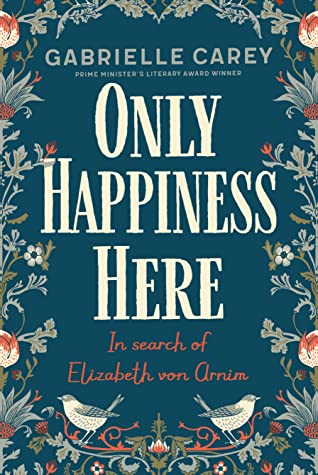
At the end of my post on Gabrielle Carey’s Only happiness here, I mentioned that Brona (This reading life) had described it as a bibliomemoir, which was a new term for me. As it turns out it is a reasonably new term, full stop. Readings Bookshop says that

defined by Joyce Carol Oates in the New York Times in 2014 as ‘a subspecies of literature combining criticism and biography with the intimate tone of an autobiography’, the bibliomemoir offers unique and personal insights into people’s relationships to their books.

This is not to say that the “genre” is new – because it certainly isn’t – but that it now has its own name.

Website/blog Book Riot also wrote about them recently, saying

Most readers love books about books. We also love snooping through other people’s bookshelves for the thrill of the possibility of discovering a whole person in a stack of books that they chose to read. Bibliomemoirs offer both. These books combine the confessional, intimate tone and personal approach of memoirs and autobiography with, well, books, and sometimes literary criticism.

And, apparently, says Kate Flaherty in The Conversation, Gabrielle Carey has, herself, described the genre:

Carey described bibliomemoir as a piece of writing that shows literary criticism is “best written as a personal tale of the encounter between a reader and a writer”.

It’s not surprising, then, that Only happiness here is a good example. In it Gabrielle Carey looks at Elizabeth von Arnim’s life through the prism of her works and draws conclusions about her own life through those same works. In doing so, she also offers literary criticism, through both her own views and those of others on von Arnim’s books.

The first example of this genre that I can remember reading – before it had its name – is non Australian, Azar Nafisi’s Reading Lolita in Tehran: A memoir in books (2003)*. Such an intelligent, moving – and political – book.

For keen readers, the bibliomemoir, when done well, and particularly when written by and/or about favourite writers, can be engaging (if sometimes disheartening!) reading. They can also be enlightening because they explore the way we use books to understand our own lives and/or to understand the lives of others. They are about the way we use books, for example, for solace, for self-education, for the safe exploration of other ideas and feelings.

Readings, in the page linked above, shares a few bibliomemoirs selected by their Hawthorn store bookseller, Mike Shuttleworth. Not all were Australian, but as most of you know by now, these Monday posts are devoted to Australian literature, so my list here includes his two Aussie selections and others selected by me:

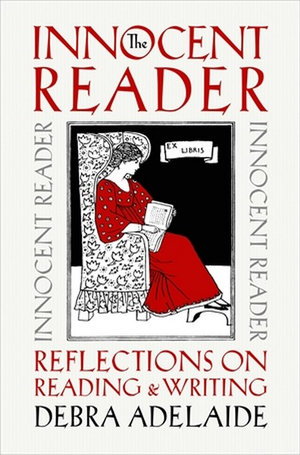
  • Debra Adelaide, The innocent reader: Reflections on reading and writing (2019) (on my TBR, Lisa’s review)
  • Carmel Bird, Telltale: Reading, writing, remembering (to be published July 2022)
  • Ramona Koval, By the book: A reader’s guide to life (2012) (Lisa’s review)
  • Michael McGirr, Books that saved my life: Reading for wisdom, solace and pleasure (2018) (Brona’s review)
  • Judith Ridge (ed.), The book that made me: A collection of 32 personal stories (2016)
  • Jane Sullivan, Storytime: Growing up with books (2019) (Lisa’s review)
  • Brenda Walker, Reading by moonlight: How books saved a life (2010)

Book Riot says, “A bibliomemoir is like an insightful, bookish dinner guest — and a recipe for an exploding TBR”. On the other hand, bibliomemoirist herself, Jane Sullivan, shared a different viewpoint in The Sydney Morning Herald back in 2014. She wrote that British journalist Rachel Cooke, while liking what bibliomemoirs were doing, was also worried. Cooke, wrote, she says:

These books, however endearing, funny and insightful, strike me as just another form of talking about books rather than actually reading them. Go to the text! I want to shout, bossily.

So, with all this in mind, do you like bibliomemoirs? And, if so, care to share any favourites, Aussie or otherwise?

* Coincidentally, while researching this I discover that Nafisi has a new book out this year, Read dangerously: The subversive power of literature in troubled times.

POSTSCRIPT : An interesting, brief discussion of bibliomemoir at Boston Bookfest. Argues that:

Much like microhistory, bibliomemoir upends a specific, traditional cultural structure—in this case the kind of authoritative perspective (rooted in entrenched power structures) that conventional criticism upholds. In this sense, it is an inherently political genre—a liberal or democratic genre.

A little note on dark literature

Book cover

I ended my post on Gabrielle Carey’s Only happiness here: In search of Elizabeth von Arnim with Carey’s point that, although at her death there was a belief that von Arnim’s work would live on, “her style of conventionally plotted novels, however rebellious, insightful or entertaining, soon went out of literary fashion”. This was because, claimed English novelist Frank Swinnerton, “her talent lay in fun, satirical portraiture, and farcical comedy” and these, he said, were ‘scorned by the “modern dilemma”‘. He was referring to Modernism, which, as Carey says, “didn’t believe in happiness” – and this, she added, is a value that has carried through to today.

Modernist writer, Albert Camus, for example, wrote

Man stands face to face with the irrational. He feels within him his longing for happiness and for reason. The absurd is born of this confrontation between the human need and the unreasonable silence of the world. (1 January 1942)

Anyhow, Carey writes just a little more about this issue of our focus on gloom. She quotes literary theorist Terry Eagleton from his 2015 book Hope without optimism. Eagleton comments that it can be “arresting” when contemporary novels “fail to be suitably downbeat”. He said that for a contemporary novel to end on a “joyfully transformative note” – as Jose Saramago’s Blindness does – “is almost as audacious as if Pride and Prejudice were to conclude with a massacre of the Bennet sisters”. Love his example of course.

Eagleton goes on to say that

In this era of modernity, gloom appears a more sophisticated stance than cheerfulness.

Carey picks up this idea, suggesting that this attitude is the key to von Arnim’s demise. She says:

It has become more respectable to be depressed, an attitude that signals virtue, and almost socially irresponsible to be happy – a state that is associated with vacuousness. After all, if you aren’t depressed by the mess the world is in – ravaged by fire, flood and plague – you are clearly insensitive or uninformed. Perhaps that is precisely why no one reads her novels anymore, because amid our infatuation with darkness, being cheerful has become not only unsophisticated but morally suspect.

This made me stop and think … because, while most times have been difficult in one way or another, it does seem to be particularly so now. The pandemic, climate change, the current war in Ukraine, not to mention, in Australia, our government’s refusal to meet our First Nation’s people half-way, their inflexible hard-hearted policy regarding refugees and asylum-seekers, and the continuing violence against women, are all a bit overwhelming. No wonder we feel gloomy.

But, here’s the thing. My personal life here and now is going OK. Of course I’m concerned about all the things I’ve just mentioned – I’d be “insensitive” and “uninformed” if I weren’t – but in my daily life they are (with perhaps the exception of the pandemic) “just” concerns. What I mean by this is that I have the luxury of choosing whether to worry about them or not, rather than that they are issues that spoil my generally comfortable life. It should therefore, theoretically speaking, be easy for me to be cheerful. This is something that, coincidentally, I’ve been pondering rather a lot lately, so Carey’s comment hit a nerve. I DO feel it would be “morally suspect” of me to be cheerful.

This is because – to use the word du jour, if it’s not already passé – we are now “woke”. We are acutely aware of our privilege in a way that past generations may not have been, and this is not only uncomfortable, but we feel uncomfortable about being uncomfortable because, well, we are not really uncomfortable. It’s too easy, in the situation, to become smug in our “wokeness” …

So, where does that leave us? Cheerfulness in itself is not a bad thing. We achieve nothing by being gloomy all the time, but can we truly be happy being cheerful? I’m not sure I can. The best, I think, I can aim for, is to have a laugh every now and then – and what better way than through the arts – before I get back to the difficult job of living in this challenging, uncertain world.

What do you think?

(Meanwhile, for a different take on happiness in modern literature, check out this 2013 article from The Guardian.)

Monday musings on Australian literature: Sources for early Australian Women Writers

As I think you know, Elizabeth Lhuede (founder of the Australian Women Writers Challenge), Bill Holloway (The Australian Legend), and I, are behind the re-framed Challenge. Our focus is early Australian Women Writers, by which we mean women writers from the nineteenth and early-to-mid twentieth centuries. We are particularly interested in those women writers who have never received due recognition, but we’ll cover the bigger names too. We publish twice weekly – articles and reviews on Wednesday mornings, and excerpts (mostly) of actual writings on Friday mornings (Australian time of course).

Currently, I post on the last Wednesday of the month, and my first two posts were on sources for researchers and anyone else interested in the topic. I have decided to document them here, for my own records – and, just in case some of you haven’t caught those posts, but would be interested in them:

  1. Early Australian women writers: 1, Primary sources: focuses on where actual writings by the authors can be found… Read on …
  2. Early Australian women writers: 2, Secondary sources: focuses on where information and writings about the authors and the period can be found… Read on …

Clicking on either of the Read on links will take you to the blog. Once there, please potter around to see what else we’ve posted to date. You might find something interesting. We’d love to hear from you if you did, and if you have an idea of something relevant you might like to contribute, please contact Bill who is our commissioning editor, theaustralianlegend[at]gmail.com.

This is a very short Monday Musings this week. Enjoy the respite!

Stella Prize 2022 Shortlist announced

The 2022 Stella Prize shortlist was announced, yesterday. But, as I had just posted my review of Gabrielle Carey’s Only happiness here, I decided to hold my announcement post over for a day. Those of you keenly interested will have seen it, but at least I will have it for my records.

Just to remind you, the judges are author Melissa Lucashenko, in the chair, with her co-judges being writer, poet, essayist Declan Fry; author-across-all-forms Cate Kennedy; memoirist and activist Sisonke Msimang; and essayist and screenwriter Oliver Reeson

And remember, this year poetry was added as a form eligible for the prize – and, it seems to have been a popular decision because, well, look at the …

The shortlist

  • Eunice Andrada, Take care (poetry)
  • Evelyn Araluen, Dropbear (poetry) (TBR, Brona’s review)
  • Anwen Crawford, No document (memoir) (Lisa’s review)
  • Jennifer Down, Bodies of light (novel)
  • Lee Lai, Stone fruit (graphic novel)
  • Elfie Shiosaki, Homecoming (memoir) (Lisa’s review)

So, two books of poetry, two memoirs and two novels (one being a graphic novel.) Three of the four I thought might have made it to the longlist – Araluen, Crawford, and Down – have now made it through to the shortlist. The announcement email I received from Stella said the list spanned “fiction, nonfiction, social history, a book-length essay, a graphic novel, and – eligible for the first time in 2022 – poetry”.  It also noted that “half of the shortlisted books written by debut authors.”

I will try to read at least the one I have on my TBR before the winner is announced, but I’d actually like to read all of these.

Melissa Lucashenko says that the shortlist:

is big on emerging voices writing in unconventional ways –  from regions, positions, and literary forms that transcend the mainstream. These authors are writing back, insisting that ‘other’ lives – First Nations lives, poor women’s lives, queer lives, and Filipina lives – matter on the page just as they do in everyday affairs. Although the shortlisted authors vary widely in location, gender, and culture, they all share two things. First, all six shortlistees undertake the essential work of any artist: paying attention to what is happening around them, and interrogating that experience. Second, the authors have produced powerfully beautiful literature, sacrificing no art in their unflinching focus on justice, inclusion, and truth-telling. It has been a great pleasure as well as an honour, to shine a light on these six brilliant talents.”

There’s more on the shortlist on the Stella website.

The winner on 28 April.

Any comments?

Gabrielle Carey, Only happiness here: In search of Elizabeth von Arnim (#BookReview)

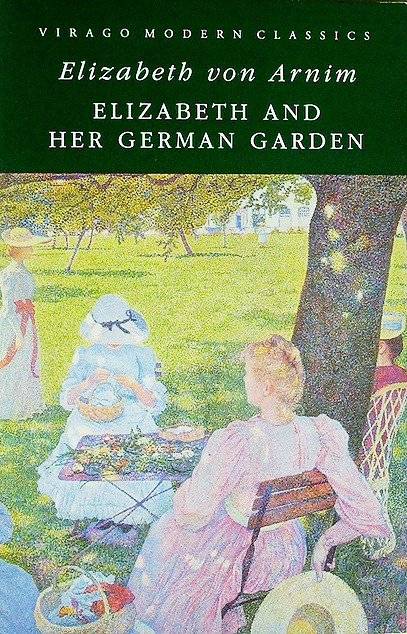
I discovered Elizabeth von Arnim (nee Mary Annette Beauchamp, 1866-1941) back in the 1990s when Virago republished her first novel, Elizabeth and her German garden. Published in 1898, this novel, writes Gabrielle Carey, was an immediate hit, turning her, almost overnight, into one of England’s favourite authors. It was certainly a revelation to me.

I went on to read several of her books, including her pseudo-autobiography All the dogs of my life, over the next decade. I was completely charmed by her wit and humour together with her insights into love and marriage, and their impact, in particular, on women’s lives. Anyone who’s a Jane Austen fan couldn’t fail, I’m sure, to see von Arnim’s ancestry. I wrote one of my early Monday musings posts on her.

Book cover

What, a Monday Musings on Australian literature on Elizabeth von Arnim? It was cheeky I know – and I admitted it at the time. Yes, she was born in Australia, but yes, she left here, never to return, when she was three. However, I just wanted to write about her. And so, it seems did Gabrielle Carey, who opens her hybrid memoir-biography with

When I first discovered Elizabeth von Arnim, I found, for the first time, a writer who wrote about being happy. So much of my reading life – which essentially means so much of my actual daily life – had been spent reading miserable literature because, let’s face it, most literature is miserable.

Carey isn’t clear about when she discovered von Arnim in relation to when she started working on this book, but says that once she discovered von Arnim, she became something of a “von Arnim evangelist”. She was “incensed” that von Arnim had been so completely forgotten. I could relate to this, because I felt the same. Unfortunately, my evangelising didn’t go far because no-one in my reading group had heard of her when I recommended that we do one of her novels as our “classic” this year. More on that, then.

If you are among those you don’t know this writer, you might be surprised to hear that several biographies have been written about her, including three in the last decade. I have two of them, Jennifer Walker’s more traditional literary biography, Elizabeth of the German garden: A literary journey, published in 2013, and Gabrielle Carey’s. The third is Joyce Morgan’s The countess from Kirribilli, published in 2021. Just this should tell you something about the fascination with which this woman is held, this woman who published 21 books, whose first cousin was Katherine Mansfield, and who knew EM Forster, had an affair with HG Wells and married (among others) Bertrand Russell’s brother. She had a life – and then some!

OK, so I’ve written quite a bit about Elizabeth von Arnim, but not much about Gabrielle Carey’s book. Only happiness here is the third sort-of literary biography that Carey has written, the other two being Moving among strangers (my review) about Randolph Stow and her family’s connection with him, and Falling out of love with Ivan Southall about her losing faith in this childhood writing idol. Carey, it seems, likes to explore her subject matter through the prism of her own life and experience (a bit like Von Arnim did with her fiction). This is not to everyone’s taste, but when done well, like, for example, Jessica White’s Hearing Maud (my review), it can be both engaging and effective.

I loved White’s book for the way she explored Maud Praed (daughter of novelist Rosa Praed) through their joint experiences of deafness, neatly marrying information with activism. Carey’s book has a very different driver, one I foreshadowed in the opening quote from her book. A few pages on, Carey makes her goal clear:

What did Elizabeth von Arnim understand about happiness that no other writer I’ve ever come across did? And is it something I too might be able to learn?

She wanted to know “the secret to her enviable ability to enjoy life” because it was clear from her novels and journals that she did, despite the many trials she faced. Indeed, the book’s title is the sign von Armin put over the door of her Swiss chalet. Carey argues that von Arnim “was, perhaps unknowingly, one of the earliest proponents of positive psychology”. Carey was so serious about her goal that amongst the end-matter in her book is a page titled “Elizabeth von Arnim’s Principles of Happiness”. There are nine, but if you want this bit of therapy you are going to have to read the book yourself! However, to whet your appetite, the first one is “Freedom”.

Carey tells her story – I mean, von Arnim’s story – chronologically, regularly interspersing her own reflections and experiences in relation to von Arnim’s. An early example occurs when she writes about von Arnim’s first marriage to the much older Count von Arnim, and her novel inspired by this, The pastor’s wife (albeit the Count was not a pastor!) In this novel, von Arnim writes that “Ingeborg in her bewilderment let these things happen to her”. Carey immediately follows this with:

How well I understand this experience of letting things happen. All my life I had let things happen to me, often without my consent.

And she then spends nearly two pages exemplifying this from her life. Mostly this approach of Carey’s was interesting, even illuminating, but there were times when it felt a little too self-absorbed. However, this didn’t overly detract from what is a thoughtful introduction to von Arnim and her work. In under 250 pages, Carey manages to tell us something about almost every one of Von Arnim’s books – how each one fit into her life, what aspects of her life it drew from, and how it was received at the time. In that same number of pages, she conveys the richness of von Arnim’s long and event-filled life. I’m impressed by how succinct and yet engaging the book is, and am not surprised that it was shortlisted for the 2021 Nib Literary Award. I should add here that while the book is not foot-noted – its not being a formal “literary biography” – there are two and a half pages of sources at the end.

So, what did I, as a reader of von Arnim, get from this book, besides a useful introduction to her complete oeuvre? Well, firstly, I got a deeper understanding of how much of her oeuvre drew from her own life, and from that I got to better understand her attitude to marriage and to the relationship between men and women, and to her exploration of, as Carey puts it, “the clash between the concept of the ideal and the real”. I also got to understand more about her times, its literary milieu, and her place within it – and to see how we can never really foretell which writers will survive and which won’t. When von Arnim died, obituary writers were sure she’d not be forgotten. They also believed she’d be far more remembered than her shorter-lived cousin, the above-named Katherine Mansfield. But …

… as Carey sums up, “her style of conventionally plotted novels, however, rebellious, insightful or entertaining, soon went out of literary fashion”, because, wrote English novelist Frank Swinnerton, “her talent lay in fun, satirical portraiture, and farcical comedy”. These, he said, were ‘scorned by the “modern dilemma”‘. We are talking, of course, of Modernism, which, as Carey puts baldly, “didn’t believe in happiness”, a value that has carried through to today.

I will leave this here, because I want to return to it in a separate post. Meanwhile, I’d argue that while von Arnim’s books might be witty, they are not simplistic. They come from an astute and observant mind that was able to comment both on the times and on universalities in human nature. They may not have Modernism’s bleakness, but they aren’t light fluff either. Carey’s simple-sounding quest has, I think, touched on something significant.

Brona (This Reading Life) enjoyed this book, which she ascribes to the bibliomemoir genre.

Gabrielle Carey
Only happiness here: In search of Elizabeth von Arnim
St Lucia: UQP, 2020
249pp.
ISBN: 9780712262975