Delicious descriptions from Down Under: Albert Camus on world peace

How’s this for a bit of communication across cultures: an Australian biographer reporting a French writer commenting on the death of an American president. It comes from the book I’ll be reviewing in the next couple of days, Hazel Rowley’s Franklin and Eleanor: An extraordinary marriage. In it Rowley quotes Albert Camus on the death of Franklin Delano Roosevelt in 1945:

‘His face was the very image of happiness,’ Albert Camus wrote in the French Resistance newspaper, Combat. ‘History’s powerful men are not generally men of such good humour … There is not a single free human being who does not regret his loss and who would not have wished his destiny to have continued a little longer. World peace, that boundless good, ought to be planned by men with happy faces rather than by sad-eyed politicians.’

Somehow I didn’t expect something quite so sunny-sounding from Albert Camus, but perhaps I don’t know him as well as I thought I did. We are, I think, more cynical these days about the concept of “world peace” but we can still hope, can’t we? Does anyone know of any happy-faced world leaders out there that we can call on to promote the cause (besides the current Dalai Lama that is)?

Monday musings on Australian literature: Writers from Victoria

Coat of Arms of Victoria (Australia)

Victoria's Coat of Arms (Presumed Public Domain, via Wikipedia)

Over the course of these Monday musings have been occasional posts on writers from specific geographic locations in Australia – but I have not done our two most populous regions, the states of Victoria and New South Wales. The time has come to confront there two – and so, today, I present you Victoria.

Now Victoria is a special state – not only does Mr Gums Jr live there, but its capital Melbourne was the second city to be designated as a UNESCO City of Literature! That’s a pretty impressive achievement. I have written some literary road posts on Victoria, which have mostly focused on writers and works from the past, so in this post I will, as I have done in other regional posts, list (in no particular order) five of my favourite current writers from Victoria – some were born there, some migrated there.

Helen Garner

Garner is one of our most controversial writers – and has been, really, since the publication of her first novel, Monkey Grip, which some critics argued was simply her writing her own life. They meant by this that it had no creative merit, no literary value. This didn’t deter our Helen though, and she has gone on to become one of our significant writers – of both fiction and non-fiction. She has also written some successful screenplays. She writes about relationships and the things that cause disconnects between people, no matter how much they wish it might not be so. As regular readers of this blog will know, I don’t always agree with Garner, but I am always happy to read her because the woman has style. I’ve read too many of hers to list here, but if you’d like a recommendation, please ask!

Elliot Perlman

You may not have heard of Perlman, particularly if you are not Australian, because he is not particularly prolific. The first novel of his that I read was the multiple point of view Seven types of ambiguity (which makes a sly reference to literary theorist William Empson‘s book of the same name). It’s a good, thoughtful book about love and obsession, and the ambiguities therein! I then read Three dollars which explores the question of what happens “when bad things happen to good people” and how consumerism challenges (compromises) our values. It was adapted for film, starring the gorgeous David Wenham (aka Diver Dan if you are a Sea Change fan). Both these novels are set in Melbourne. According to Wikipedia he has a third novel out this year.

Arnold Zable

If you have been reading this blog recently, Arnold Zable will need no introduction. His focus is human rights, with a particular interest in the migrant experience. I’ve read two of his novels – Cafe Scheherazade and The sea of many returns – and will happily read more. His prose is lovely, his attitude warm and generous. I’m looking forward to reading his new novel, Violin lessons.

Beverley Farmer

I’m going to throw in a somewhat forgotten, I think, writer here. Way back in 1988 when my reading group started, we focussed on Australian writers, particularly Australian women writers. One of those was Beverley Farmer. We read her collection of short stories Milk and not long after I also read her second collection of short stories, Home time. Both these were published in the 1980s. She has also written novels, and one of those writers’ notebooks, A body of water, in which she documented her ideas and thoughts over a year, the books she was reading, the people she met. I was drawn to her because of the evocative way she conveyed her experience of being a young Australian wife in a Greek village. Like Perlman, she’s not prolific, but in 2009 she was awarded the Patrick White Award (for writers who “have made a substantial contribution to Australian literature but … may not have received adequate recognition for their work”) which says something about the quality of her work.

Peter Carey

I’ll conclude on another controversial writer. People, it seems, either love him or hate him – and I fall more in the first camp. He is one of only two writers to have won the Booker Prize twice. I have by no means read all of his books but I like the fact that he takes risks in his writing. I think his Oscar and Lucinda is a worthy contender for the Great Australian Novel (should we take that notion seriously). His True history of the Kelly Gang makes a significant contribution to the Ned Kelly myth by attempting to tell the story in Kelly’s voice. It is not all “true” in the factual sense, but it contains a “truth” that Carey thought worth exploring. His most recent novel, Parrot and Olivier in Americatook more risks – in voice and subject matter. Carey, as many of you will know, now lives in New York, but he was born in Victoria – and that’s good enough for this post!

So there you are, five Victorian writers. Now’s your chance to tell me what Victorian writers you like – or simply whether the writers I’ve listed here interest you.

Delicious descriptions from Down Under: Arnold Zable on survival and stories

Arnold Zable is not, I believe, very well-known even in Australia, but I think he is a beautiful writer. He has a lovely way with words but, more importantly I think, his writing is warm and generous. I’ve read two of his novels – Cafe Scheherazade and Sea of many returns – and enjoyed them both. Zable was born in 1947 in New Zealand to Polish-Jewish refugees, a fact which clearly has driven his interest in human rights in general, and the migrant experience in particular. He has a new book out – Violin lessons – and so I thought now would be a good time to introduce him.

Cafe Scheherazade (2001), which is based on the stories told by Jewish refugees in the real Cafe Scheherazade in Melbourne, is, as much as anything, about survival – and, as is obvious from the title, about the importance of stories to this survival.

… but they persist with their opinions as if to argue is to know they are alive. They continue to tell their tales, as if to talk is to know they have survived.

and …

I feel the limits of my craft, the limits of what words can convey.

and …

panic … that … I would perish; and my tales would perish with me.

and, reflecting the practice of many survivors of the Holocaust (and other trauma) …

This is when the stories began to be suppressed … an urgent need to forget and to rebuild their aborted lives.

It’s a beautiful book … and well-worth reading if you ever get the chance.

PS If you Google Cafe Scheherazade Melbourne you’ll find some images (including those from a play that was adapted from the book) but I couldn’t find any that were free for me to use here.

Monday musings on Australian literature: Japanese poetry in Australia

Engraved writings by Suiin Emi, Onomichi

Haiku by Suiin Emi, along the Path of Literature in Onimichi, Japan

Papa Gums loves to give me clippings of obituaries that he knows will interest me. Last week, from his hospital bed, he gave me one for an Australian poet I’d never heard of, Janice Bostock. She was, according to the obituary in the Sydney Morning Herald, “one of Australia’s leading writers of Japanese poetic forms”, and won awards here and overseas. She particularly loved haiku.

Haiku, I must say, was the only form of Japanese poetry I had heard of until my first trip to Japan in 2006 when, on the railway station of our son’s tiny town of Tsugawa, we met an ex-teacher at his school who was heading off to her annual tanka conference. Tanka? Well, we discovered that tanka is an older Japanese verse form than haiku, and its basic structure is 5-7-5-7-7 “onji” (which we roughly translate to “syllables”). I guess most people reading this blog will know that haiku’s structure is 5-7-5. And here endeth the lesson on Japanese verse forms because the story is far more complicated than I’ve presented here, both in terms of these forms and other forms I haven’t mentioned. You can Google if you want to know more!

Bostock, who is briefly mentioned in the Wikipedia article on haiku in English, described haiku as “one-breath poems”, meaning that each poem “spans the length of one breath”. She also, and this was another new thing to me, practised a variation of haiku called “one line haiku”. Here is one quoted in her obituary:

no money for the busker I try not to listen

The obituary says that Bostock created the market for haiku in Australia by founding a journal called Tweed. She also wrote – and this of course appeals to me – The gum tree conversations. This was a series of articles aimed at showing “the relevance of haiku to the Australian landscape and experience”. Eventually her work led to the foundation of the Australian Haiku Society in 2000, of which she was patron at the time of her death. She was clearly a busy, engaged and passionate woman.

And so, haiku is alive and well in Australia … and it seems appropriately so. John Bird, who co-edited The first Australian Haiku Anthology with Bostock, has described haiku as follows: “a brief poem, built on sensory images from the environment. It evokes an insight into our world and its peoples.” As I understand it, haiku tends to involve the juxtaposition of two ideas or images in a way that a relationship is drawn between them. Australia, with its stark, dramatic environment, its odd vegetation and its strange creatures, must provide excellent subject matter for this sort of writing. Here is an Aussie haiku by E.A. Horne:

Brown paddock
Brown sheep
Blue bloody sky.

You can feel the pain of a farmer facing drought! It’s from an article first published in 2006 in the Australian poetry magazine, Five bells. Reeves, the author, says that “Contemporary haiku rarely consist of 17 syllables, may be written in one to four lines, and don’t have to be about the seasons. What they seek to retain is the brevity, clarity, immediacy and resonance of Japanese haiku and to record and share a moment of seeing”. I’m no expert in haiku, but it’s a form that appeals to me – because of this brevity that gives rise to a spareness, an attempt to pare to the essence of a thing. There’s no opportunity in haiku for effusive or loquacious explorations!

Tanka poems show a similar restraint and so, because it’s nicely appropriate, I’ll conclude with one of those:

our front yard gum
grown from a sapling
to a giant –
all those black cockatoos
fair exchange for a lawn

(Michael Thorley, Eucalypt Issue 1, 2006)

Are you familiar with – and do you like – these tiny poetic forms?

Monday musings on Australian literature: Late bloomers

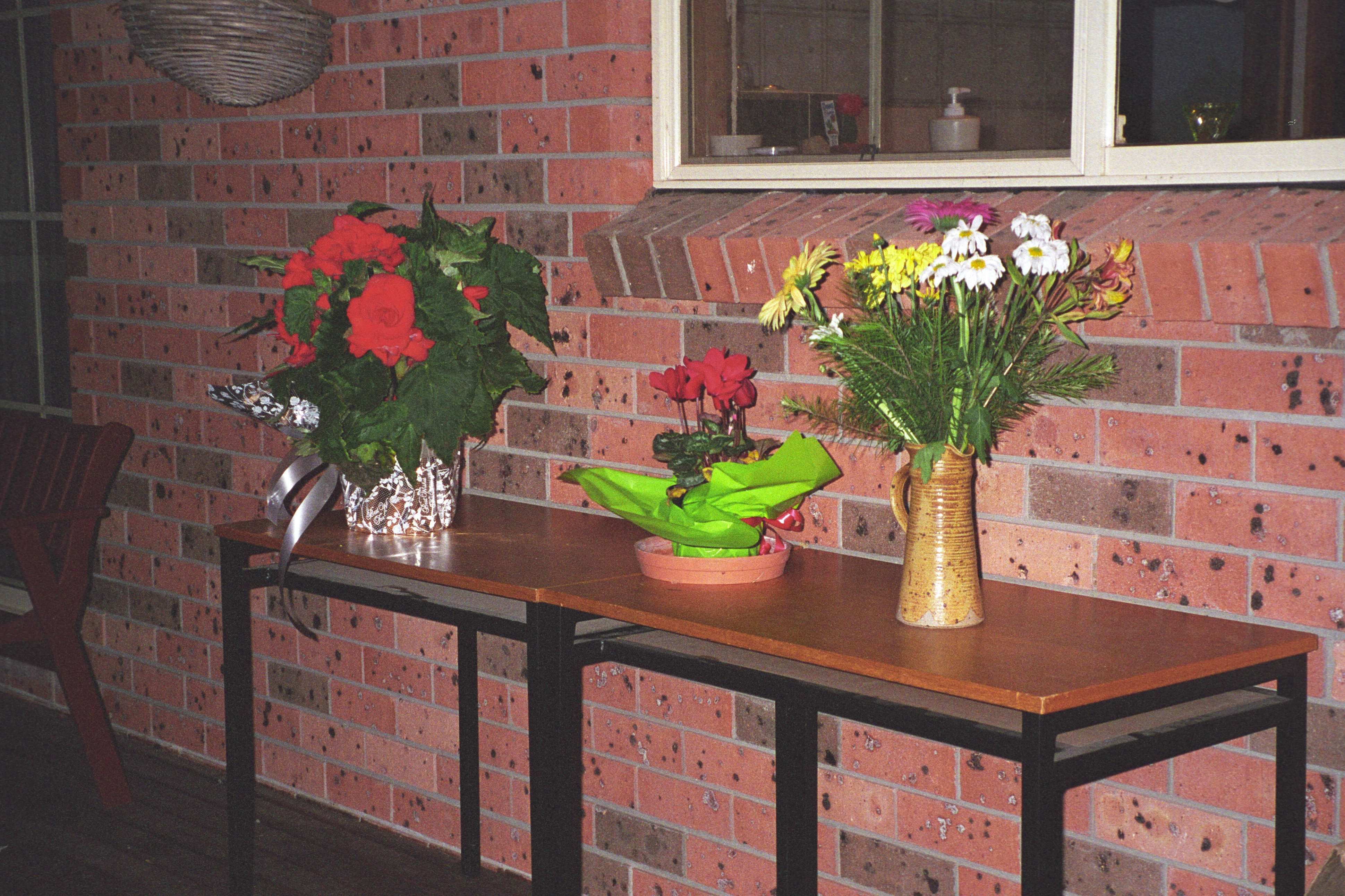
Bloomers (Flowers in vases and pots)

Bloomin' bloomers

I guess every country has them, the writers who aren’t recognised until their middle age. Australia certainly does, and many of them seem to be women. I’m not sure whether this apparent gender imbalance is a fact or simply reflects my biased interest in the lives of women writers. I wouldn’t be surprised if it were a fact, though, given that women often need to balance motherhood and wifehood with the rest of their lives. Anyhow, I thought I’d share five of my favourite late Australian bloomers. They are mostly my usual suspects and, like many people who seem to appear overnight, they  worked for a long time at their craft before they gained their much deserved recognition. I’m listing them in the order of their age when their first major writing was published.

Jessica Anderson (47, An ordinary lunacy in 1963)

Jessica Anderson wrote stories and plays, and adapted other works for radio before hitting big time with her novel An ordinary lunacy. I’ve only read two of hers – Tirra lirra by the river and her one piece of historical fiction, The commandant, which I reviewed last year. I have her last novel, One of the wattle birds, in my burgeoning TBR pile. Like many women writers, I suppose, her subject matter tends to be families. Even The commandant, which is ostensibly about the male head of the Norfolk Island penal colony, is really about the family relationships, and the reaction of the women (his wife and sister-in-law) to their circumstances in particular. According to Wikipedia, Tirra Lirra by the river, was reviewed well in the USA.

Marion Halligan (47, Self possession in 1987)

Marion Halligan was a member of the now legendary Canberra Seven or Seven Writers, a group of Canberra-based women writers who met regularly to read and discuss each other’s work. The group comprised: Dorothy Johnston, Margaret Barbalet, Sara Dowse, Suzanne Edgar, Marian Eldridge, Dorothy Horsfield and Marion Halligan . In 1988, Australia’s Bicentennial Year, they published an anthology titled Canberra Tales. It made quite a splash on the literary scene at the time. Halligan had just published her first novel then, but the first of hers that I read was Lovers’ knots which won several awards. I have gone on to read several of her novels, including the gorgeous Valley of Grace which I reviewed last year. Halligan wrote one of my favourite quotes about reading: “Read a wise book and lay its balm on your soul”. Really, how beautiful is that!

Elizabeth Jolley (53, Five acre virgin and other stories in 1976)

Jolley was the subject of my second favourite writers post. She began writing in her twenties, and did have individual short stories published in the 1960s, but she also suffered rejection after rejection after rejection. However, she kept on and became a much lauded novelist, and a successful creative writing teacher. After all, Tim Winton was one of her students! She is recorded as saying that her eventual success was partly due to “the 1980s awareness of ‘women’s writing'”, an awareness that I fear we have lost again! Anyhow, she made up for lost time, and published 15 novels in about 20 years, as well as short story collections. I’ve read half of the novels and love the way she gets into the dark parts of our souls, into those areas where we feel alone or alienated, while being funny (albeit in a black way) at the same time.

Amy Witting (59, The visit in 1977)

Amy Witting is probably the least well-known of the five I’ve listed here. Her real name was Joan Austral Fraser. According to Wikipedia she met Thea Astley when they both taught at the same school and Astley encouraged her to submit a story for publication. It was published in The New Yorker in 1965, but it would be 12 more years before her first novel was published. I’ve read two of her novels, I for Isobel and A change in the lighting, and would happily read more. Again she deals with families, and often with the challenges middle-aged and older women face in navigating a society which is not necessarily friendly to them. She also published several collections of short stories.

Olga Masters (63, Home girls short stories in 1982)

Olga Masters was a journalist for a long time before she finally had a novel published. She was also mother to seven children, many of whom are well-known in their various fields (but you can read about all that at Wikipedia). She died in 1986, just four years after her book was published, and so her output was small, just a few novels and a couple of short story collections. Her first novel Loving daughters is still vivid in my mind, though I read it over twenty years ago. It’s set in a small coastal town in New South Wales in the 1920s and is about two sisters of marriageable age, Enid the pragmatic home-maker, and Una, the romantic, restless one. Which one will catch the eligible clergyman who comes into town, and does he make the right choice? It’s a wonderful book about character and choice. As you’ve probably assumed, she too focused primarily on the domestic. I can’t help thinking that this focus is another reason why women writers found (find, in fact) it hard to be published.

There is of course something reassuring about late bloomers. They remind us it is never too late. It may be too late at 50 years old to represent your country in the sprint at the Olympics or win Wimbledon, but it’s not too late to write a novel if that’s your passion. I’d love to hear of late bloomers you love (yourself maybe?), Australian or otherwise.

Delicious descriptions from Down Under: Thea Astley on aging

Regular readers of this blog will now that I’m a big fan of Thea Astley. One of her last novels (novella, actually) was Coda, a biting story about elderly widow Kathleen who is losing her memory but struggling, with little help from her self-centred children, to maintain some independence and, more, dignity. The book is full of wonderful acerbic insights that make you smile while hitting you in the guts at the same time. The novel opens with ‘”I’m losing my nouns”, she admitted.’

Here are some other excerpts:

… her oddities were increasing with age, her indifference to convention running counter to the refinements and pretentiousness of her children’s lifestyles.

And

… Public Service pension that drizzled brief fortnightly puddles of support into her bank account like a rusty tap.

And

She was scrabbling and rooting about for words in that old handbag of her years.

Astley’s early novels were exuberant, expansive in their imagery – though they too had satirical bite – but her last novels, particularly Coda and Drylands, were tighter, more spare. I wonder if that has something to do with her own aging, with no long having the gift of time?

Alice Joyce in her Booklist review, on Amazon, says “Astley’s high regard in her native Australia is understandable after reading this taut, compelling new novel about a strong-minded widow not yet ready to concede defeat and bow to the realities of her failing memory and the physical limitations of an aging body”. It is truly unfortunate that Thea Astley is not well-known outside Australia.

Leslie Cannold, The book of Rachael

Bookcover Leslie Cannold The book of Rachael

The book of Rachael (Cover image: Courtesy Text Publishing)

For someone who doesn’t seek out historical fiction, I seem to have read a lot of it lately. Leslie Cannold’s The book of Rachael is the third historical novel I’ve read in succession – and it’s the third with an author’s afterword/postscript, which suggests to me some uncertainty in the writers about historical fiction. Tansley quoted Doris Lessing’s statement that fiction is “better at” the truth than the factual record. Brooks addressed concerns that the imagined record might be interpreted as fact. Cannold takes a different tack. Her book, like Brooks’, involves an imagined heroine telling a story about some “real” historical people, in her case Joshua (Jesus) and Judah (Judas). Cannold writes:

I wonder now whether it really makes sense to call this sort of writing historical fiction. Can setting entirely fictional characters to roam in the landscape of a multi-authored, oft-redacted religious tale really be described as historical? Not if the criteria include scholarly examination of verifiable, chronologically ordered events. So, I don’t think of “The book of Rachael” as historical fiction. I think of it as the bringing to life of a fictional character by evoking the time and place in which the character’s story is set. In “The book of Rachael” I have set the fictional sisters to roam across the historicised terrain of the gospels.

Hmm … I’m not going to get into definition discussions here. It is what it is, regardless of what we call it, and in this case it’s a first person story of Rachael, the invented sister of Jesus and wife of Judas. The rest as they say is (more or less) history … at least as far as the Jesus and Judas story goes. But, of course, there’s more to it than this. Cannold creates a whole life for Rachael from her childhood in Nazareth, as the second daughter of Yosef and Miriame, to her life post-Crucifixion. She’s a girl out of her time – something even her rather hard mother recognises (“Oh Rachael … how hard the world is for you”). She chafes under the strictures of being female (learning “in no uncertain terms what it meant to be a girl”). Like Brooks’ Bethia she wants to learn and so she listens in to her brothers’ lessons when she can. Also like Brooks’ Bethia, she channels some of her intelligence and curiosity into studying to be a healer, as an apprentice of the old crone Bindy. Then she meets Judah, angry young rebel to the gentler, more humble Joshua, and the book seems to shift a little on its axis.

Leslie Cannold was named one of Australia’s top twenty public intellectuals in 2005, and this year she was named Australian Humanist of the Year. She’s an academic, activist and ethicist with particular interest in women’s rights. She wrote The book of Rachael because, she said, “what kind of world painstakingly records the names and stories of important people’s brothers but not their sisters”. She wanted, in other words, to place women in the history, much like Anita Diamant wanted to do in The red tent, but fiction is not her usual métier and I think it shows.

Don’t get me wrong: it’s an entertaining read, and her evocation of the times, her well-researched imaginings of how women’s lives went are engaging and engrossing, particularly in the first half of the novel. But, the writing is often forced. I’m never quite comfortable with first person narrators who describe their own behaviour in terms that are usually used by a third person, such as “sobbing as if my heart would break” and “hissing like a cat, I …”. The romance with Judah is also laid on a bit thick. Almost every time they meet – he is often away fighting – sex is explicitly described. I don’t think I’m prudish, but it did start to read more like a boddice-ripping romance than serious historical fiction. Here’s an example:

Judah blocked my mouth with a kiss. The sort of kiss that involved him sucking my lower lip until my breasts heaved and my skin seemed to sparkle like stars. The sort of kiss where I might forgive him almost everything.

This is just one of many episodes. “Enough already”, I wanted to cry. Yes, feminists are women too, but passion can be conveyed so much better through a little restraint. Just look at Jane Austen, whom Cannold must love, given her sneaky tribute: “It is a truth widely known that the desire of the amorously infatuated to hear their lover’s name, to speak it and hear it spoken aloud, make them tiresome company”.

There are, however, some beautiful descriptions, such as this:

Of these years, little is left to me by way of coherent memory. Instead, what I recall is like a mosaic, vividly coloured tiles affixed at different points on a large white wall: discrete scenes of colour and movement floating in a sea of empty whitewashed space.

Cannold handles the complex stories surrounding Jesus (Joshua) with a lovely subtle restraint, neither labouring their miracle aspects nor discounting them. I don’t want to give away the end – beyond what everyone knows of the biblical history. I found the conclusion for Rachael moving and redemptive but it didn’t have the feminist punch I expected from the way the novel started. Does that matter? Perhaps not. I’d love to hear what others say.

The book of Rachael
Melbourne: Text Publishing, 2011
328pp.
ISBN: 9781921758089

Review copy supplied by Text Publishing

Monday musings on Australian literature: Bookseller turns publisher

Book Stack

Books anyone? (Courtesy: OCAL, from clker.com)

Bookseller-as-publisher (and vice versa) is not an original idea but, in our digital environment with its plethora of production and distribution technologies, this combination clearly offers new possibilities – one that the Australian bookchain, Dymocks, has announced it is going to try. Its aim? To “support Australians with stories to tell” … and, of course, “grow the book industry”.

Dymocks is calling its new publishing arm D Publishing. (Original eh?) Chief executive Don Grover said they do not see it

as building an operation to compete with standard publishers, and he said the systems and service it offered would separate it from other self-publishing companies.

These services include “editing, design, production and printing of finished books”. It’s not, in other words, big-end-of-town publishing, nor is it exactly self-publishing, but something in between …

The service is expected to start in October. According to the news report in Bookseller and Publisher, it is web-based and will work like this. Writers will:

  • upload their manuscript online
  • choose features for their book, including cover design, editing and typesetting
  • decide how to publish: print version using a print-on-demand option and/or e-book

It’s not clear how much input there’ll be from experts in, for example, this editing and design aspect. And there is a bit of a catch. Distribution. Grover does not guarantee that books published through this arm will be sold by Dymocks, and sees it all still as a bit of a work in progress:

It’s something that will evolve over time [and] will start as a tool for people who have a story to tell. As far as distribution is concerned we will wait to see what the market brings forward.

So, what say you? It all depends on the economics, of course, but I can see possibilities for local authors publishing local histories for their communities, family historians producing family histories, schools and local writers’ groups producing collections of writing … as well as of course the novelist or poet (or other writer) trying to break into the market. It sounds exciting but history tells us that it’s not that easy. To what extent will this new model with its more immediate technology make the whole business of getting your story out there easier? Time will, I suppose, tell.

For more on this, read blogger Megan Burke who got to talk to Grover and ask him some questions.

Marion Halligan on fact, fiction and character

More on playing with that line between fact and fiction… One of my favourite writers – though I have nowhere near read all her works – is Marion Halligan, who also happens to be local to my town. Halligan has been shortlisted for and/or won several signifcant Australian literary awards but I’d be surprised if many readers overseas had ever heard of her. A particularly beautiful novel of hers is The fog garden (2002) which she wrote after her  husband’s death. It’s about love and grief (reminding me of Joan Didion‘s non-fiction work, The year of magical thinking which was published in 2005), but it also explores the nature of fiction, and the relationship between life and art.

And so, here she is introducing the heroine:

She isn’t me. She is a character in fiction. And like such characters she makes her way through the real world which her author invents for her. She tells the truth as she sees it, but may not always be right.

And here she is, the next page, on keeping your character honest:

A reader could think that, since Clare is my character, I can make all sorts of things happen to her that I can’t make happen to myself. This is slightly true, but not entirely … only if it is not betraying the truths of her life as I have imagined them.

Some readers may not like this sort of self-conscious writing but I often enjoy it … I like the recognition that we are, writer and reader, meeting in a very particular space, that of art (or is it artifice!). I like it that Halligan is here writing fiction inspired by a very personal experience and tackling head on the questions her readers will raise … playing with us, teasing us even, but also teaching us about the nature of fiction.

Geraldine Brooks, Caleb’s crossing

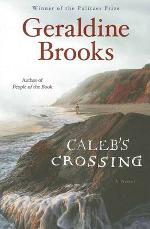
Geraldine Brooks, Caleb's Crossing

Caleb’s crossing book cover (Courtesy: HarperCollins Australia)

In the Afterword to her latest novel, Caleb’s crossing, which was inspired by the first Native American to graduate from Harvard College, Geraldine Brooks describes the reactions of members of the Wampanoag Tribe:

Individual tribal members have been encouraging and generous in sharing information and insights and in reading early drafts. Others have been frank in sharing reservations about an undertaking that fictionalises the life of a beloved figure and sets down an imagined version of that life that may be interpreted as factual. This afterword attempts to address those reservations somewhat by distinguishing scant fact from rampant invention.

This concern – “an imagined version … that may be interpreted as factual” – should by now be familiar to readers of Whispering Gums. In fact, this book has several synchronicities with my recent and current reads. There must be something in the water! Firstly, the issue of fictionalising the life of a historical figure is something I have raised a few times, but most recently in my review of Tansley’s A break in the chain. And then there’s Scott’s That deadman dance which explores early contact in Australia between white settlers and indigenous people. Very different stories and yet several similar concerns and issues, such as those regarding land, education, and cultural attitudes to material possession and to hunting. And there’s more! My next review will probably be Leslie Cannold‘s The book of Rachael which is set in biblical times and features a fictional woman who loves learning and rebels against the strictures of her gender.

I love it when my reading interacts closely like this, when books enable me to explore and play off ideas against each other – so I thought, given this and the fact that there are already many reviews out there, that I’d tease these out a little instead of my more usual review. But first a brief outline of the plot, which provides a mostly imagined backstory to the real Caleb Cheeshahteaumauk through the eyes (journals) of the fictional white girl/woman Bethia Mayfield. The book starts in 1660 when Bethia is 15 years old, but it quickly flashes back a few years to when she met Caleb while out clamming and it describes the friendship which developed between them, forged by a mutual interest in learning about each other’s culture. Idyllic really, but of course it doesn’t last. Caleb is noticed as a young man with the potential to achieve in the white world and comes to live with Bethia’s family, so he can be taught by her father. Eventually, Caleb and another indigenous student, Joel Iacoomis, go to school and then Harvard along with Bethia’s not particularly clever brother, Makepeace. By a cruel twist of fate, Bethia goes with them as an indentured servant. She’s not too disappointed about this because she hopes to surreptitiously acquire a bit of learning too. That’s the gist of the story … and if you know the history, you’ll also know roughly how it all ends, but I won’t spoil that here.

And so to the first issue, fictionalising a historical figure. Brooks is upfront in saying hers is “rampant invention” inspired by “scant fact”. Like Grenville in The secret river, Brooks uses a real figure to explore how and why it might have been, though, unlike Grenville, she retains the name of her inspiration. This muddies the water for the unwary reader but it is common to historical fiction. How many novels have been written about, for example, Anne Boleyn? I have no problem with this. She and Grenville, unlike Tansley, are very clear about their fiction and are not afraid to imagine where there are gaps. Her Caleb may not be the Caleb of history but he is a Caleb whose motivations makes sense:

You will pour across the land, and we will be smothered … We must find favor with your God, or die.

And this brings me to the second synchronicity, that concerning early contact between white settlers and indigenous inhabitants. Brooks (a white Australian author based in the USA) and Kim Scott (a Noongar author from Western Australia) explore similar territory but from different points of view: hers is told in the voice of a white woman, and Scott’s has a more complex narrative voice but from an indigenous perspective. Both explore the complexity in motivations. In white society, we see the whole gamut from altruism through attempts to “get along”/cooperate to arrogance, cruelty and greed. And we see an equally complex response from the indigenous people, from Caleb’s “if you can’t beat ’em join ’em” to Tequamuck’s anger and aggression. The end result, as history shows us, is the same … and neither book (nor Grenville’s) is anything other than realistic about it.

Finally, there’s the gender issue. This – like Grenville’s writing about colonial attitudes to indigenous people – is where writers are often criticised for being anachronistic, for putting modern attitudes into the mouths of historical people. It’s a criticism I tend not to share (providing the character is coherent within the text). “New” ideas do not pop out of nowhere. They grow and develop over time, and they grow from exceptional people – not necessarily well-known people, but people who thought ahead of their times – and novelists, almost by definition, tend to explore the “exceptional”. I have no problem believing that a “Bethia” or a “Rachael” lived in their times … just as I have no problem with what some critics have called Thornhill’s “anachronistic sensitivites” in The secret river.

Enough rambling, back to the book! Did I enjoy it? Yes. Did I think it worked? Partly. Geraldine Brooks is a good storyteller and I read this book in quicksmart time. I was interested in the characters and I wanted to know what happened to them. Brooks evokes the era well, using enough vocabulary and phrasing of the period to immerse you in the time and place. Her physical descriptions are beautiful. You know exactly why Bethia would prefer her island home to the streets of Cambridge. The themes – colonial cross-cultural conflict, gender roles, coping with loss – are valid and clear. And her wide cast of characters realistically cover the gamut of attitudes you’d expect.

And yet, I’m not sure she quite pulls it off. My concern is not so much with her vision, with the ideas she puts in the mouths of her characters, but with her mode of telling. She is rather heavy-handed with the foreshadowing. It’s a valid technique given the story is told in retrospect but it feels overused, which somewhat devalues its dramatic impact. I also wonder whether telling Caleb’s story through Bethia’s eyes means we don’t get to know Caleb well enough, resulting in our not being as emotionally engaged with him as we could be. There are hints of sexual tension between Bethia and Caleb but they are never played out. Perhaps doing so would have turned it to melodrama and yet, once hinted, it needed some resolution. I tend to like first person stories and the immediacy they provide, but maybe a different narrative voice (even multiple points of view) would have been better here.

All that said, it’s an enjoyable read. Reasonably early in the book, Bethia writes:

this truth my mother had voiced … that it could not go on, this crossing out of one world and into another.

Near the end she wonders:

If I had turned away from that boy … and ridden back to my own world and left him in peace with his gods and his spirits, would it have been better?

Would it? Now there’s the million dollar question!

Geraldine Brooks
Caleb’s crossing
London: Fourth Estate, 2011
306pp.
ISBN: 9780007367474