Monday musings on Australian literature: On nurturing Australian literary classics

Over the weekend an article appeared in The Age describing the parlous situation regarding recognition of classic Australian literature. Written by Michael Heyward of Text Publishing, it’s titled “Classics going to waste” and argues that those who have the power

to choose and influence what people might read – publishers, professors, teachers, journalists, commentators, editors – have done a lamentable job of curating the primary materials of our literary history.

Heyward provides some embarrassing arguments to support his case. Here are three of them. In 2011, he says:

  • Melbourne University did not offer one course in Australian literature;
  • not a single (university, I presume) course taught Henry Handel Richardson‘s The fortunes of Richard Mahony, which he equated with not one Russian University teaching Anna Karenina; and
  • David Ireland‘s The glass canoe, which won the Miles Franklin in 1976, was not in print, while new copies can be bought of that year’s Pulitzer Prize winner, Saul Bellow‘s Humboldt’s gift.

The good old cultural cringe is with us still. I was very disappointed when in the late 1990s/early 2000s my children were taught little or no Australian literature at high school but were taught, instead, books (albeit worthy) like Steinbeck’s Of mice and men. They read, while growing up, a lot of excellent Australian children’s literature but as soon as they moved into adult literature the situation changed, particularly in terms of their formal studies. Heyward quotes a Melbourne University academic, GH Cowling, saying, admittedly back in 1935, that

The rewards of Australian literature are not good enough to make it attract the best minds … Good Australian novels which are entirely Australian are bound to be few … Australian life is too lacking in tradition, and too confused, to make many first class novels.

Really! Really? This rather reminds me of VS Naipul’s recent statement that no women writers are his literary match because of their “sentimentality, the narrow view of the world”. Both views are pretty prescriptive, and seem to define good literature more by the importance of its subject matter rather than by the quality of its expression of ideas and experience. It’s why many people still – men more often – discount Jane Austen. But I digress!

Heyward then announces that Text plans to help rectify the accessibility issue by publishing a series of cheap versions of Australian classics – which seems, in publisher jargon, to include books only 20-30 years old, but who’s going to quibble? Good for them, I say. However, there are other publishers working in this arena. Here (excluding libraries and secondhand booksellers) are some current sources of Australian Classics:

For these initiatives to succeed, we need to buy the books. But to buy them we need to know they exist. How do we do that? Well, through reviews (hail litbloggers, for a start), through film and movie adaptations (of which there aren’t enough, says Heyward), through their being taught in schools and universities, and through online initiatives such as those I wrote about earlier this month.

Do you have any other ideas? And what, if any, is your favourite Aussie classic?

Monday musings on Australian literature: Australia’s first Children’s Laureates

Australian Children's Laureate logo

Logo Courtesy: Australian Children's Laureate

It has been so busy here at Monday Musings that I am late with this announcement … but that doesn’t mean it’s not worth making! On December 6th, 2011, the idea of an Australian Children’s Laureate was inaugurated with the appointment of not one, but two, children’s authors to the role. They are

Alison Lester and Boori Monty Pryor

and they will be our laureates for two years, 2012-2013. I understand that the idea of a Children’s Laureate was instigated in the United Kingdom in 1999. In 2008, the Library of Congress inaugurated a similar role, but called theirs National Ambassador for Young People’s Literature. What’s in a name, eh? The main point is that these initiatives promote reading among children. The Australian program is organised by the Australian Children’s Literature Alliance and on their Laureate website they describe the laureate’s role as follows:

The Children’s Laureate will be an Australian author and/or illustrator of children’s and/or youth literature who is making a significant contribution to the children’s literature canon of this country. The Laureate will be appointed on a biennial basis and will promote the transformational power of reading, creativity and story in the lives of young Australians, while acting as a national and international ambassador for Australian children’s literature.

So, a little about Australia’s inaugural laureates …

Alison Lester (b. 1952)

I became aware of writer-illustrator Lester through my own children when, like most parents who are readers, I sought out good books to read aloud to them. Lester is an author/illustrator best known for her picture books, though she has also written a couple of young adult novels. My favourites were two of her picture books, Imagine (1988) and Rosie sips spiders (1989), and the “chapter” book (as new readers like to call them) Thingnapped, written by Robin Klein and illustrated by Lester. She has a lovely sense of fun while also conveying important values to children (such as respecting difference, a critical value at a time when rejecting other seems to be on the rise again.)

Boori Monty Pryor (b. 1950)

I did not know of Boori Monty Pryor – writer, artist, performer, storyteller – when my children were growing up. In fact, I only heard of him a couple of years ago when a friend lent me his memoir Maybe tomorrow which I reviewed in the early days of this blog. I came across him again last year when he was on the Prime Minister’s Literary Awards panel I attended. He impressed me – in both “meetings” – with his strength, his humour, and his ability and willingness to overcome his anger at the way his people have been treated. He’s an indigenous Australian, and he’s committed to forging good relationships among all Australians while at the same time shoring up traditional culture and values among indigenous people. No easy task, but his appointment to the laureate role is testament to his achievements.

To conclude, I must note that our inaugural laureates are a woman and an indigenous Australian. I’m sure there are many worthy white male contenders out there, but I believe that Lester and Pryor were not token appointments. They are worthy recipients who have proven track records in the quality and significance of their contributions to encouraging reading, story-telling and self-expression among Australian children.

Francesca Rendle-Short, Bite your tongue (Review)

Francesa Rendle-Short book cover Bite your tongue

Bite your tongue Bookcover (Courtesy: Spinifex Press)

How much do you think about the first sentence of your review? Like me, you probably try to find some anchor or point of interest to lead off from, but my problem with novelist-journalist Francesca Rendle-Short‘s fiction-cum-memoir, Bite your tongue, is that I have too many angles to choose from. Which one do I use? Do I go with the unusual form of this fiction-cum-memoir? Do I talk about my old friend synchronicity and how one of my first reviews in 2011 was a (semi)autobiographical novel about an Australian childhood, Barbara Hanrahan‘s The scent of eucalyptus? Or, do I talk about how I’m sure Spinifex Press had no idea how close to my heart this book would be when they offered it for review – how I (more or less) share a late 1950s/early 60s Brisbane childhood with Rendle-Short and how the very word “spinifex” is nostalgic for me due to my mid-1960s years in the mining town of Mount Isa? There, I’ve covered them all … so now I can get on with the review!

This is a mother-daughter story. How many of those have you read? I’ve certainly read a few in the last decade or so, including straight memoirs (such as Jill Ker Conway‘s The road from Coorain) and thinly veiled fictional pieces (such as Kate JenningsSnake). These books can be challenging for daughters to write, particularly when there is significant pain involved. Rendle-Short’s solution is to (mostly) tell from a “fictional” standpoint. She creates names for the family, including MotherJoy for the mother, Glory for herself, Gracie for her nearest and youngest sister, and Onward for her father. The last-name she devises for this family is Solider, which is an anagram of “soldier”. With the father being Onward, and the family being devoutly Christian, the hymn “Onward Christian Soldiers” must surely have inspired her naming. Rendle-Short writes, in the introduction, about how she chose to tell the story:

Some stories are hard to tell, they bite back. To write this one, I’ve had to come at it obliquely, give myself over to the writing with my face half-turned; give my story to someone else to tell. My chosen hero is a girl named Glory …

Australian Literature Month Platypus logo

Reading Matters’ Australian Literature Month

Why is this story so hard to tell? Well, Glory’s (Rendle-Short’s) mother was “a morals crusader, an ‘anti-smut’ campaigner. An activist. She was on a mission from God to save the children of Queensland” (from the Prologue). This mission involved banning “lewd” and “pornographic” books (of which 100 are listed at the back of the book in “Dr Joy’s Death List: Burn a Book a Day”). Clearly Rendle-Short (aka Glory), the fifth of six children (all girls in the book, five girls and a boy in reality), had a painful childhood. It’s not that she and her siblings weren’t loved – they clearly were – but it was a hard love, a love based too much on a narrow Christian ideology and too little, it seems, on the needs of children. One of the most painful scenes in the book is when Glory visits her mother in hospital after heart surgery and wants to kiss her but can’t bring herself to do so! Can’t kiss her old mother! That shows more than words ever could the pain in this relationship.

The book pretty well covers the story from Glory’s birth to MotherJoy’s death in her 80s, though it focuses primarily on Glory’s school years. There are 100 chapters in less than 250 pages. Most of these chapters are told third person, from Glory’s point of view. What makes this book particularly interesting form-wise, though, is that 14 chapters are written in first person, memoir-style. That is, Francesca speaks of herself and her mother, Angel, using their real names. In these scattered first person chapters, Francesca writes on her research, on how she pieced together her mother’s story through, for example, research at the National Library of Australia and the National Archives of Australia. She also occasionally comments on where the “fact” diverges from the “fiction” such as:

Unlike Glory, I wasn’t in Brisbane when my mother died, I was at home in Canberra where I was living at the time – because there was a scene. There was always a scene with Angel, especially where her children were concerned, the ‘jewels in her crown’, and on her deathbed it was no different. All six children had been at her bedside while she was dying …

And then, without describing exactly what happened, she tells us that, despite all of them having made the effort to get there, including from overseas, “seven days before she took her last breath, all six of us walked out on her. We had to do it …”.

Australian Women Writers Challenge 2012 Badge

Australian Women Writers Challenge (Design: Book’dout – Shelleyrae)

Now, if you are a reader who likes closure, who wants to know exactly what happened, you are not going to get it in this book, not specifically anyhow, but you will, if you read the clues, know what life was like in that family, at least what it was like for Glory/Francesca. You will know that she loved her mother, and wanted her mother’s approval, but that she had other attitudes and other feelings that were clearly not in accord with her mother’s. We are given enough “scenes” involving her mother (directly or indirectly) to tell us all we need to know. A particularly excruciating example is when Glory is cruelly bullied by her school “peers” (one can’t say  “mates” in the context) because of her mother’s views. (Where her father, an academic in pediatrics and a creationist, stood in all this is unclear. He’s there in the book, but we see little active parenting from him.)

Oh dear, I have so much to say on this book that I could easily turn this post into an essay, so I will finish here. I thoroughly enjoyed this book … on multiple levels. The writing is good, comprising many of the things that appeal to me – wordplay, lovely rhythm, effective imagery (such as the “tongue” motif). The story is easy to follow, despite changes in voice and chronology (as we flip backwards and forwards from childhood to MotherJoy/Angel’s old age). There are universals about love and forgiveness (real and wished for) between parents and children. And, there is love for books (in all their glory!):

Books show us how to love, really love body to body between the pages. Love perhaps where we’ve never loved before. That’s what Glory hopes.

Reading changes things …

… as, I suspect for Rendle-Short, does writing!

Francesa Rendle-Short
Bite your tongue
North Melbourne: Spinifex Press, 2011
246pp.
ISBN: 9781876756963

(Review copy supplied by Spinifex Press.)

Review to count towards the Australian Women Writers 2012 Reading and Reviewing Challenge.

Monday musings on Australian literature: Guest post from Kim of Reading Matters

This week’s Monday musings brings you my fourth guest post, this time from Kim of Reading Matters. Like Guy, Kim started commenting on my blog in its infancy and I soon discovered that this blogger from England was actually an Australian. Naturally we developed a rapport. I have appreciated Kim’s support of my blog – through regular commenting  (particularly in my fledgling days) and through inviting me to be a Triple Choice Tuesday guest. She is one of England’s top litbloggers and this month is hosting an Australian literature month as I advised in last week’s Monday Musings.

I’m thrilled that Kim decided to write on children’s literature. Her guest post on children’s classics beautifully complements Louise’s recent post on current writers/illustrators.

Australian classic books from an Australian childhood

When you are an Australian expat who’s lived overseas for as long as I have (13 years and counting…) it’s easy to think you’ve never lived anywhere else. Then you have little “cultural blips” that rudely remind you that you grew up on the other side of the world.

For me, these “blips” usually occur when friends and colleagues start reminiscing about sweets (or should that be lollies?) from their childhood that are no longer available, or British TV shows they watched when they were growing up which were never screened in Australia. Once I had to sit in on a lengthy discussion about children’s literature where many of the references went completely over my head.

This got me thinking about my favourite books from childhood, all by Australian authors, which do not appear to have ever attracted an international audience. Here are three classics, none of which have been out of print in Australia, that mean a lot to me:

Blinky Bill by Dorothy Wall

Dorothy Wall (1894-1942), a New Zealand-born Australian, originally illustrated books for other writers before creating her own series about a mischievous male koala called Blinky Bill. The first book — Blinky Bill: The Quaint Little Australian— was published in 1933 and two others followed — Blinky Bill Grows Up (1934) and Blinky Bill and Nutsy (1937).

My aunt had three books in one beautifully bound volume. I still remember the distinctive red cover and the cheeky little picture of Blinky Bill, wearing bright orange trousers, toting a swag and billy can on a stick slung over his shoulder. It was always a real treat when I was allowed to take the book down from the shelf and look at the colour-plates inside. I remember turning the pages with awe and being very careful not to mark the book in any way.

Funnily enough I can’t really remember what the stories were about, but I remember the pictures with almost perfect clarity, they were so vivid and funny.

I’m delighted to say that you can read the text online at Project Gutenberg Australia

The Muddle-Headed Wombat by Ruth Park

The muddle-headed wombat by Ruth Park, book cover

Ruth Park (1917-2010), yet another New Zealand born author who called Australia home, also turned to Australian wildlife for inspiration.

Her main character was a wombat — a creature with which many non-Australians may not be familiar, think of a very cute furry pig with a cheeky face and short stumpy legs — whom was very muddle-headed.  He spoke in spoonerisms and misused similar sounding words — for instance “sensibubble” instead of “sensible” — which meant he often said very funny things without realizing it.

Wombat, as he was officially known, had two friends — a skinny grey cat called Tabby and a practical female mouse called Mouse — whom accompanied him on all kinds of adventures.

I can only recall vague details of particular stories — there were more than 16 in the series, all written between 1962 and 1971 to accompany an ABC radio show, which was cancelled by the time I was born. For instance, in one story Wombat bought a bicycle with shiny red wheels and in another he ate some chalk that made him sick.

But it was the quite hilarious illustrations that I remember most — along with the cute red jacket and floppy purple hat Wombat used to wear!

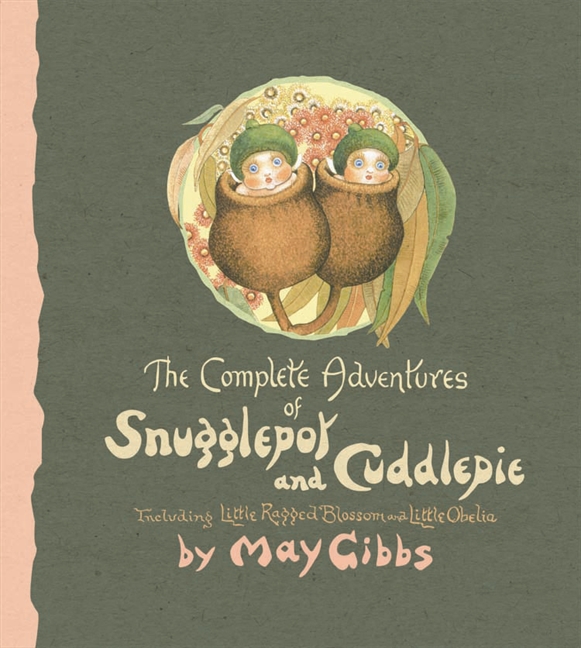
The Adventures of Snugglepot and Cuddlepie by May Gibbs

May Gibbs' Snugglepot and Cuddlepie

May Gibbs (1877-1969) was an English-born Australian writer and illustrator whose stories were inspired by Australian native flora.

She’s probably best known for her gumnut babies, Snugglepot and Cuddlepie, who are cute little foster brothers that resemble eucalyptus nuts.

The pair go on an adventure in the Australian bush, but they have to take care not to run into the big bad Banksia men — horrible creatures modeled on banksia cones, which are a bit like hairy pinecones.

As a child I remember being physically scared of the Banksia men, but as ever in the world of children’s literature, good overcomes evil and they sink to the bottom of the sea!

The best part about Snugglepot and Cuddlepie, which was first published in 1918, are the truly beautiful illustrations by the author. To this day these illustrations are used on all kinds of merchandise, but what I hadn’t realized until I started writing this piece is that all profits go to UNICEF, the Spastic Centre of NSW and the NSW Society for Crippled Children (now the Northcott Society), according to the wishes of May Gibbs’ bequest.

May Gibbs home Nutcote, on the shores of Sydney Harbour, is also open to the public.

I suspect that all three books, with their emphasis on Australia’s unique plants and animals, may be responsible, not only for my love of Australian literature, but my love and respect of the Australian bush, too.

Monday musings on Australian literature: Some Australian Literature online events for 2012

What better way to kick off Monday Musings in 2012 than by heralding some exciting Australian Literature initiatives from around the ‘net. Here they are, in no particular order:

Australian Women Writers Challenge 2012 Badge

Badge (Design: Book'dout - Shelleyrae)

Australian Women Writers Challenge 2012 by Elizabeth Lhuede. Her aim is to promote women writers across all fields and genres of writing. The challenge involves signing up to read books – in any genre – by Australian women writers. You can focus on one genre or many, you can choose a level that suits you. I don’t usually do challenges, but this one is a no-brainer for me since I always try to read a goodly quantity of Australian literature each year and I love to read books by women. Last year I reviewed at least 14 Australian women writers and, in addition, wrote several posts on specific women writers and women’s literature issues. My aim will be to achieve a Franklin-fantastic Dabbler, that is, I’ll read (and review) at least 10 books by Australian women writers in more than one genre.

Australian Literature badge, by Reading Matters

One of the Australian Literature Month badges (by Reading Matters)

Australian Literature Month by Kim of Reading Matters. She plans to read lots of Australian books during her cold northern January (she would leave Australia!) and encourages readers of her blog, to do the same. As an incentive she has created several gorgeous badges for bloggers to attach to their posts reviewing Aussie books. Since seeing a platypus in the wild is on my bucket list, I have chosen her platypus badge for this post.

Australian National Year of Reading 2012 by WeLove2Read. This project is “a collaborative project joining public libraries, government, community groups, media and commercial partners, and of course the public. As well as creating specific new campaigns for the National Year of Reading, we’ll be using our joint efforts to bring together and showcase the wonderful projects and organisations across Australia which already exist to promote reading and literacy”.  (From the website) Keep an eye on the website for activities and events as they occur during the year.

2012 Aussie Author Challenge by Booklover Book Reviews. The challenge is to “read and review books written by Australian Authors – physical books, ebooks and audiobooks, fiction and non-fiction” (from the blog). There are two challenge levels and, like most challenges, a badge to add to your site. (I added this challenge after the post was published, as the result of Tony‘s recommendation. Thanks Tony.)

And so …

As you start your 2012 reading, do consider including some Aussie Lit into the mix and please let the people above know when you do. They will appreciate knowing that their work has hit some paydirt.

If there are other initiatives that I haven’t listed here, please let me know in the comments below and I will update this list.

Monday musings on Australian literature: My AusLit wrap up for 2011

Here we are at the end of another year and I’ve decided that, rather than list my top Aussie reads for 2011, I’d list my AusLit highlights of the year. I apologise in advance that it’s going to be all about me – that is, the links will be to posts on this blog. After all, we are talking about my AusLit highlights. Here they are in no particular order:

Meanjin‘s Tournament of Books

This year Meanjin decided to emulate the Morning News’ Tournament of Books with the express aim of raising consciousness about Australian women writers. I don’t know how well they achieved this aim but next week’s Monday Musings will be about other AusLit-related initiatives so perhaps it’s all part of momentum building. Meanwhile, if you missed the discussion here, click on my Tournament of Books tag and you will find the 6 posts I devoted to the topic.

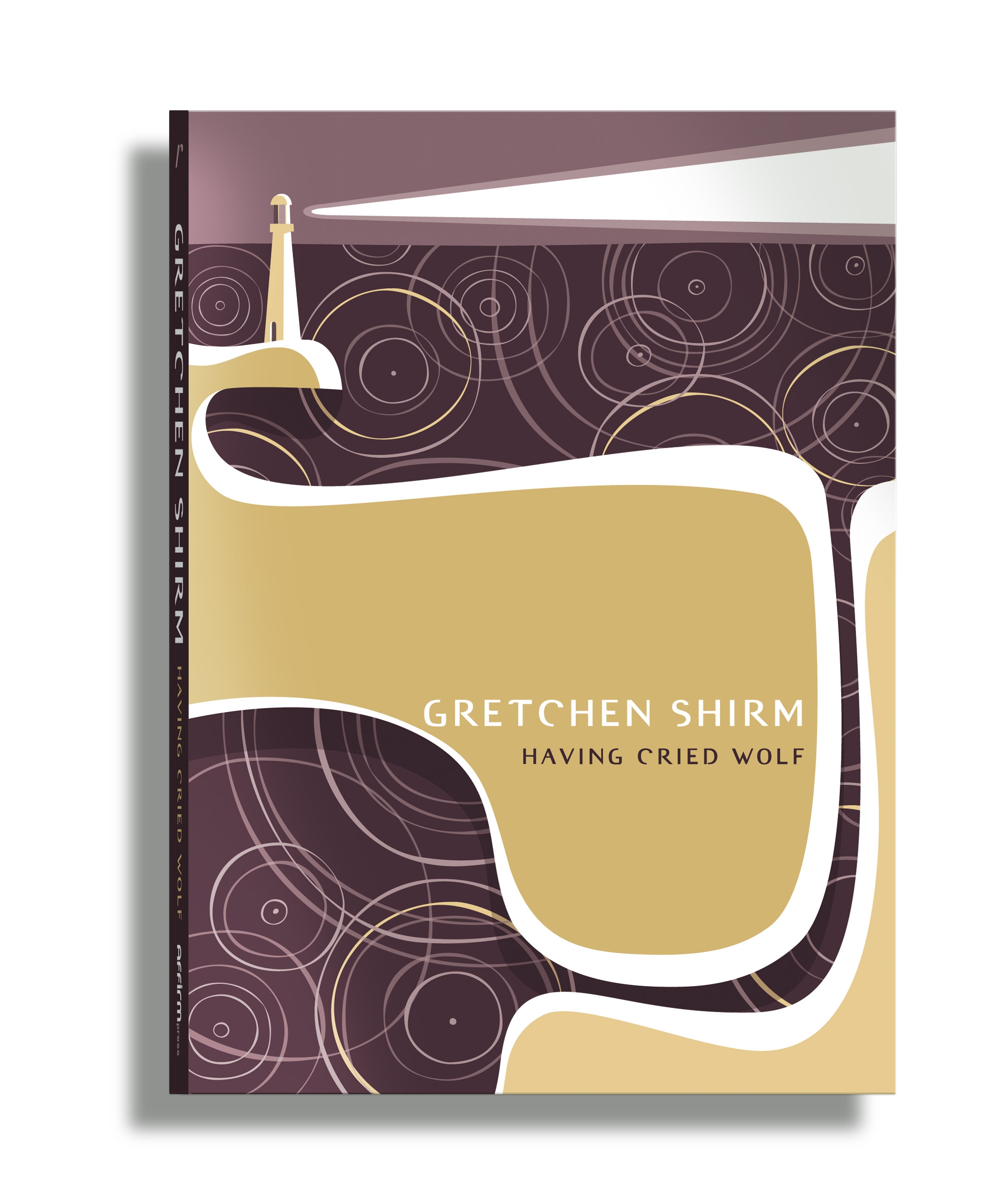
Having cried wolf, book cover

Having cried wolf, book cover (Courtesy: Affirm Press)

Affirm Press’s Long Story Shorts

Affirm Press is one of Australia’s wonderful small independent publishers. In 2010 they published the first of the six books in their Long Story Shorts project which involved commissioning emerging writers to produce short story collections. This year I reviewed the final three books and was impressed by the writing, the gorgeous production and the publisher’s commitment. May there be many more such collections and even more opportunities for emerging writers in 2012 and beyond. Hats off to Affirm Press!

Prime Minister’s Literary Awards panel

The Prime Minister’s Literary Awards are relatively new on the Australian literary awards scene but they’ve made a splash, partly because the prizes are comparatively lucrative. There are plans next year to add a Poetry prize and roll the Prime Minister’s Australian History Prize under the banner. This year, I attended, on the day of the announcement, a panel discussion with some of the winners and shortlisted authors. It was a real treat to hear (and see) the authors firsthand … but I have yet to read this year’s fiction winner, Stephen Daisley’s Traitor. Last year’s winner, Eva Hornung’s Dog boy, though, well demonstrates the calibre of the awards.

Miles Franklin Award

This year’s winner was That deadman dance by Kim Scott. Not only is it a beautifully written and thoughtful book but it’s a rare win for an indigenous author – and that has to make it a 2011 highlight.

Poetry

Readers of this blog know that I like to review poetry occasionally, though I am by no means an expert. I reviewed two special books of poetry this year, special because of the women who produced them and for the quality of their poetry. Ginny Jackson’s book The still deceived was published posthumously after she’d worked hard to complete it while terminally ill with cancer. Her poem, “Getting off the bus”, contains some of the most poignant lines I’ve read about dying. Nora Krouk’s Warming the core of things was published the year she turned 90. I used two lines from one of her poems in our family Christmas card this year. I should read and review more poetry!

Sydney University Press’s Charles Dickens set

Sydney University Press has been doing great work in recent years re-publishing Australian literary classics, several of which I’ve reviewed on this blog. However, this year they published another “treasure”, Charles Dickens’ Australia: Selected essays from Household Words 1850-1859, edited by Margaret Mendelawitz. It’s a five-volume set of articles relating to Australia from Charles’ Dickens periodical, Household Words. The periodical is available on-line, another example of the pluses of electronic communication, but to have someone else do the work of sifting out those articles of relevance to Australia and then sort them into thematic volumes is a perfect example of value adding.

Monday Musings guest posts

When I commenced my Monday Musings series nearly two years ago I planned to include the occasional guest post but for various reasons I haven’t organised many to date. However, there were two this year and they were highlights for me – and not just because I didn’t have to write them! They were informative posts: Louise wrote on some Aussie Children’s Lit creators, and Guy Savage wrote on Max Barry. Both were passionate posts on topics dear to the heart of their writers – and both taught me some things I didn’t know. There’ll be more guest posts next year.

Meeting Alan Gould

Alan Gould is a local (to me) poet, short story writer and novelist, and he was shortlisted last year for the Prime Minister’s Literary Awards for his beautiful, mesmerising novel, The lakewoman. My reading group was lucky to have him attend our discussion of his book earlier this year. It was a treat to be able to ask questions about the genesis of what is an intriguing book and to discuss our reactions to it. Gould was gracious in sharing his ideas with us, and we hope he got something out of the discussion too. He should be better known.

Top Aussie post of the year – Red Dog

WordPress provides some excellent blog stats, including your top posts (by number of hits). You can ask for your top posts to be listed by specific time frames – 7 days, 30 days, year, and alltime. I decided to check for my top post over the past year and was surprised to find that it was my review of The Red Dog (Movie and Book). I posted it in August and it is so far ahead of the next top ranked post that it will be my top post for the calendar year. The movie was based on a book written by Louis de Bernières about a legendary dog of the Pilbara. It’s a slim book and is not great literature but the film has done astonishingly well at the box office. I say “astonishingly” because Australian films often do not attract good audience numbers, which worries our film industry. Red Dog, though, bucked that trend and showed filmmakers that Australian audiences will go to Australian films (sometimes, anyhow!). I would hate this movie to start a spate of similar movies in the hope of cashing in on audience interest, but it was good to see a film that appealed to Aussies. I hope we see more – and varied ones – in 2012.

And finally …

Thanks to everyone who has read, commented on and/or “liked” my blog over the last year. I may not know you all but I sure appreciate your visiting me here. I wish you all happy reading in 2012 … and, meanwhile, would love to hear of your blog or literary or reading highlights of the year.

Monday musings on Australian literature: Guest Post from Guy of His Futile Preoccupations

Monday Musings’ Guest Post no. 3 comes from Guy Savage of His Futile Preoccupations. Guy started commenting on my blog very early on and endeared himself to me by giving me the nickname of Gummie. That is a very Aussie thing to do – or is it English? Guy, you see, is an expat Brit living in the USA. (At least I think I’ve got that right.) I quickly discovered that Guy had an interest in and knowledge of things culturally Australian and we have shared some interesting conversations about Australian authors and films over many posts here and there. He is also interested in the classics, including authors like, oh, Jane Austen for example. His other interest – he’s a man of many talents – is crime fiction and film noir, and he writes with great flair on things criminal! Do check out his blog. You won’t be disappointed.

But, on with the post. Guy stunned me when, commenting on my very first Monday Musings, he named Max Barry as his favourite Aussie writer. Max Barry, who is he? Well, today Guy is going to tell (me) us … read on …

Max Barry 2006

Max Barry 2006 (Courtesy: dejahthoris, via Wikipedia, using CC-BY-SA 3.0 Unported)

Max Barry: One of Australia’s National Treasures

Ok, I’ll admit it. I’m not rational about Max Barry. I’d like to say that I’m his number one fan, but that makes me sound as though I’m ready for psycho-therapy, and anyway, if you make a trip to Max’s website and sign up as a member of Max’s Posse (currently at 5785 and climbing), you’ll see that he’s his own number one fan. So instead I’ll land on the safer statement that I’ve been a fan of this Australian author for 10 years. Born in 1973, Max Barry is a young writer, and there’s going to be a lot of great books coming from his home in Melbourne. I suspect that he’s better known outside of Australia, but I’m basing that on the fact that Gummie hadn’t heard of Max Barry before I mentioned him, and she’s my barometer for all-things-to-do-with-Australian-culture.

Yes it’s been ten years since I first came across Max Barry in 2001 via an out-of-print copy of his first book, Syrup, a brilliantly funny novel which satirizes marketing and consumerism. Actually I’d better back up a bit here–the book, published in 1999, was attributed to Maxx Barry in a continuation of the marketing idea. Max says he added the extra X:

because it seemed like a funny joke about marketing, and I failed to realize everyone would assume I was a pretentious asshole.

Syrup is the story of an unlikely hero, Scat, a marketing graduate from Iowa who moves to L.A. He devises a marketing plan for a new drink called Fukk and plans to sell his idea to Coca-Cola, but before he can seal the $3 million dollar deal, Scat’s roommate, Sneaky Pete, in a wickedly funny backstabbing move of corporate theft, claims the copyright.

Syrup is one of the funniest books I’ve ever read, and when I concluded the novel, I was troubled that I’d found it purely by accident. I took the book’s out-of-print status rather personally, and buying about a dozen copies, I sent them out to anyone who was still speaking to me and urged them to read the book. Without exception, everyone who got one of those copies of Syrup loved the book.

Barry’s second novel appeared in 2003. Jennifer Government is an alternate-reality vision of globalization in which most countries are nakedly dominated by corporations rather than by governments. Corporate employees take the name of the corporation they work for as surnames, and schools are sponsored and controlled by corporations intent on raising the next generation of avid consumers. This is a novel in which corporate competition has become so fierce that consumers become stiffs in a guerilla marketing campaign guaranteed to hype sales of crappy new tennis shoes. Jennifer Government is a remarkably intelligent and prescient novel, for some of the fictional dire social conditions Barry created no longer seem quite so futuristic in the post-boom gloom.

Barry’s 2006 novel Company again placed the individual in the middle of corporate nastiness. This novel, set in Seattle, explores the shady dealings of the Zephyr Holdings Company, and when Stephen Jones from the Training Sales Dept. begins to ask a few awkward questions, he finds himself catapulted into management. In this novel, Barry blends the nonsense rules of corporatism with the naturally absurd results, and consequently, this is a perfect depiction of the insanity of life within the corporate machine.

This year Barry published his fourth novel, Machine Man–the story of corporate scientist Charles Neuman, employee of Better Future, who accidentally loses a leg in an industrial accident. Charles’ discovery that the replacement leg is better than the original sets off a chain of events in which Charles decides to improve himself limb by limb in a grimly hilarious skewering of corporate culture.

Over the years, Barry’s novels have been optioned for film and disappointingly several projects have not gone beyond the blue sky phase; I was rather excited at the news that Steven Soderbergh and George Clooney’s Section 8 films optioned Jennifer Government, but so far nothing on that score. But someone out there has noticed the Vast Talent that is Max Barry and 2012 will see the release of Syrup from director Aram Rappaport. Max Barry flew to America and watched the filming and even got a small cameo role.

Ok so Max Barry has written four novels–two of which are the funniest books I’ve ever read, and now it looks as though he’s about to get some long delayed-global recognition, but there’s a lot more to this author that makes him exceptional. Max has also taken control of his own marketing–albeit that no-one was interested in Max back when his first novel was out-of-print, but any new author out there could learn a thing or two from Max. Max has maintained an active website since 1999 and keeps in touch with his fans (and I’d like to think we’re a little nuttier and stranger than the average readers) via an e-newsletter. In 2004, Max converted his website to a weblog where he shares his news. On the site, you can check out NationStates, a game designed by Max to help market Jennifer Government:

NationStates is a state stimulation game. Create a nation according to your political ideals and care for its people. Or deliberately oppress them. It’s up to you.

Max even has a few videos up on youtube. But if you want to get a taste of Max’s wonderful sense of humour, check out his weblog where you will see comments about nasty critics in a piece called Things Critics Do That Piss Me Off . Here’s Number 3:

#3: Spots Plot Holes That Are There

Max Responds: Shut the fuck up! Go write your own novel, you hack!

And on the Q& A subject of whether or not Syrup is based on Max’s sordid period of employment with Hewlett-Packard:

That’s a filthy lie. Why, if HP was like Syrup, it would be a seedy den of politics and corporate back-stabbing, brimming with sexual tension. That is absolutely not true. There was very little sexual tension.

Actually, HP was a great place to work and taught me a lot about how companies function. I worked with some tremendously talented salespeople, most of whom used their powers for good instead of evil.

As a reader of crime fiction, I’ve noticed that many crime writers tend to take a different type of approach from other so-called literary authors that leaves no room for ivory tower elitism. Not only do many crime writers maintain extremely active blogs (thinking Max Allan Collins, James Sallis, Duane Swierczynski here), but there’s also a high level of reader involvement. Duane Swierczynski (Severance Package, The Wheelman), for example, is even organizing a Philadelphia bus trip January 2012 to the grave site of author David Goodis (Dark Passage). Crime writers don’t seem to feel the need to distance themselves from fans; perhaps they’ve even learned that maintaining a place for readers to check to see what they’re reading and writing is actually a good thing, or there again perhaps they’re tougher than their average readers, and they’re not scared to get within punching distance. Whatever the reason behind this internet-author-reader-relationship, this is the sort of proximity I see in Max Barry–there’s an innate humility in this writer that makes me, as a reader, cheer for his success. He’s an Everyman who’s worked in mind-numbingly boring, demeaning jobs, and he just happens to have the talent to write about his experiences which become, in turn, our experiences. He’s not just a writer who produces a book once in a while; if you’re a fan, you’re involved. We’ve been with Max through his disappointments and his successes, through the birth of two children (to clarify, Max’s wife, Jen  gave birth–not Max), and when Max wrote a serial called Machine Man, newsletter subscribers got to read chapters and give feedback. When Max landed a book contract for Machine Man, we even voted on the choice of cover.  It makes me feel all warm and fuzzy just thinking about it…. Sniff…

… and you’ve made us all warm and fuzzy with your passionate post Guy. I recently bought Company – I just have to find time to read it! Meanwhile, readers here might like to check out Book Around the Corner’s reviews of Syrup and Company and Guy’s own reviews of Jennifer Government, Companyand Machine man.

Monday musings on Australian literature: Australian Gothic (19th century)

A few months ago I wrote a post on Horace Walpole‘s The castle of Otranto which is regarded as a pioneer in the Gothic novel tradition. I thought then that it would be good to explore how the Gothic translated to Australia where we have no castles in which the supernatural can rattle and clang. Australia though had (and has) plenty to inspire a Gothic imagination: strange unforgiving nightmarish landscapes, weird vegetation and imaginary creatures. Moreover, Australia was colonised by the British in the late 18th-early 19th centuries, the time when Gothic novels were at the height of their popularity in Britain.

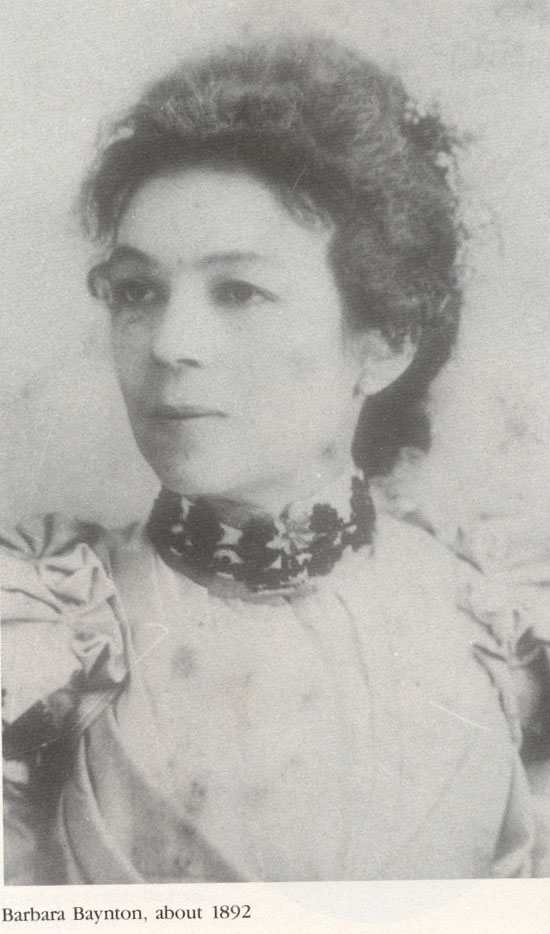
Barbara Baynton 1892

Baynton 1892 (Presumed Public Domain, via Wikipedia)

Consequently, many of Australia’s 19th century writers did incorporate the Gothic into their writing, and today I’ll list just few (but it will be little more than a list as I’ve been away the last two weekends and am playing catchup in pretty much every aspect of my life.)

The following are just some of the authors whose writings are regularly included in Gothic anthologies or in discussions of an Australian Gothic tradition:

  • Barbara Baynton
  • Marcus Clarke
  • Henry Lawson
  • Rosa Praed (who, like Ada Cambridge, is not as well known as she should be, which is something I have been planning to – and will –  rectify)
  • Price Warung.  I reviewed his Tales of the early days, a couple of years ago. One of the tales, “The Pegging-Out of Overseer Franke”, is commonly included in Australian Gothic anthologies. It tells the story of revenge against a cruel overseer of convicts … and explores the fine line between definitions of man and beast when cruelty and revenge become the modus operandi.

19th century Australian writers didn’t always need the supernatural to convey horror, evoke fear and portray disjunction between desire/hope and harsh reality. They had the forbidding Australian landscape, the threat of becoming lost in or being destroyed by that landscape, and the harsh unyielding authority of colonial male power. Who needed castle ghosts in this situation? This is not to say that the supernatural never appeared in Australian writing, but that this writing could, and often did, convey a Gothic sense of horror and dread through the concrete realities of 19th century Australian life. It’s fascinating to see what happened to the Gothic tradition in the second half of the 20th century (in, say, the work of Elizabeth Jolley) but that is a topic for another day.

Meanjin’s Tournament of Books 2011, Finale

… and now we have a winner! Those of you who have been following the tournament will know that the two books facing off in the Finale were Helen Garner‘s The children’s Bach and Joan London‘s Gilgamesh. I would not have guessed this at the beginning (and neither, they say, did the organisers). Not because these aren’t great books – I’ve read them both – but because they are not the ones on the top of people’s tongues (like, say, My brilliant career) or the ones with critical weight behind them (like, say, The man who loved children or The fortunes of Richard Mahony). That said, I’m surprised but not sorry, because it’s no bad thing to expose other works to wider attention. The question is, will they get it?

Anyhow, onto the finale. It was judged a little differently: there was a panel of 5, with each giving a brief reason for his/her vote. You can read their reasons on the Meanjin site, because here I’m simply going to announce that the winner.  And it is, drum roll please, with 3 votes to 2,  Zombie Round returnee, Helen Garner’s The children’s Bach.  I’m happy – after all it’s one of the few from the original list that I’ve reviewed on this this blog. It was a reread too, which tells you something: Garner is a great writer.

The real question, though, is what happens next? Has the Tournament achieved anything for Australian literature, and Australian women’s writing in particular? Is it worth doing again next year? Well, I’m not sure. Leaving off the question concerning the merits of judging books, and looking at it from a consciousness-raising point of view, which were, I believe, its main goals, did Meanjin‘s Tournament achieve what it set out to. I fear it didn’t … and that I suspect is due less to the tournament itself than to lack of promotion of it. I didn’t see or hear much buzz about it around the traps – in neither the formal print and electronic media nor in less formal places like blogs.

Appropriately, the following quote from The children’s Bach has some application here:

Like many women of her age whose opinions, when they were freshly thought and expressed, had never received the attention they deserved, Mrs Fox had slid away into a habit of monologue, a stream of mild words which concealed the bulk of thought and knowledge as babbling water hides submerged boulders.

I fear that, like Mrs Fox’s wisdom, the submerged boulders of good Australian literature have stayed submerged … what must (can) we do to expose them?

Monday musings on Australian literature: Women of letters

Women of Letters, edited by Marieke Hardy and Michaela McGuire

Women of letters (Courtesy: Penguin Books Australia)

Letter-writing has a long literary tradition – both fictional and non-fictional. Epistolary novels, according to Wikipedia, go back to the 1400s, and I’m sure if you’re a reader you’ve read at least a few. My favourite Australian example is a gut-wrenching young adult novel Letters from the inside by John Marsden. But these are not my topic today. The other sort of letters are the “real” letters written to “real” people. If the letters are good enough and/or the people significant enough these also have a long publishing tradition. I’ve reviewed some here – by Jane Austen (of course)! Collections of published letters can be found for some of Australia’s famous women writers, including Christina Stead, Henry Handel Richardson and Miles Franklin. But these aren’t today’s subject either.

My subject is a specific book of letters compiled by two Australian women, Marieke Hardy and Michaela McGuire, from an initiative of theirs in which they asked Australian women (initially) to “‘pen’ letters to a theme and read them aloud”. Their aim was to raise funds for Edgar’s Mission, “a not-for-profit sanctuary for neglected, discarded and abused farmed animals” in Victoria. Their project commenced in March 2010, and has involved live “shows” in several Australian cities – and now, this book.

The letters have been organised under 16 “recipients”, such as “To the night I’d rather forget”, “To my first boss”, and “To the photo I wish had never been taken”, which gives you a sense of where this collection is going. They are written by 69 well-known (though not quite all so to me) Australian women (mostly!) writers, performers, politicians and so on. I will admit that I have not read the whole 400+ pages book yet, but with Christmas around the corner and a good cause, now seemed to be a good time to write about it. (No, I am not under a retainer for Penguin!). Three of the contributors are writers I’ve reviewed in my blog, so I reckon they’d be a good place to start:

  • Anna Krien “to my first pin-up”. Trouble was Anna Krien was a tomboy and not like other little girls. When they wanted “love”, she wanted friends, so she turned to her cat, Tiger. It’s a light-hearted letter with a serious core about the damage that little girls can do to little girls (“the twisted best-friend bully dichotomy”), something Margaret Atwood explored to great effect in Cat’s eye.
  • Alice Pung “to the moment it all fell apart”. It contains anecdotes from her latest book, Her father’s daughter, presented as a letter to her father. She leads us on about an online relationship only to … but I won’t tell what, except to say it’s to something typically reflective of her and her father’s experiences.
  • Helen Garner “to the letter I wish I’d written”. That sounds like an apposite recipient for a writer who has never shied from controversy – but in fact, being Garner, her contribution isn’t the expected. Rather, it’s a series of letters to her “gazombies”, to people who’ve died, friends who’ve suddenly disappeared from her life, and people who crossed her path but became missed connections. They’re “fragments” that add up to a disjointed but very Garner-ish whole. She thanks the science teacher who taught her that “hot air rises”, she’s sorry that she lost contact with her “nanna” because “my adolescence extended right into my thirties”, she tells a man she regrets not accepting his offer to dance because blokes who can dance “are very thin on the ground”, and she writes to her three ex-husbands thanking them for what they gave her and telling them “there is nothing to forgive”.

There are a few contributions from men, mostly “To the woman who changed my life”. There are light-hearted letters such as actor Jane Clifton’s to her “1991 Nissan Pintara with only 20 000km on the clock” that she calls “the Nissan Piñata, because no matter how many times you get hit, you are the gift that keeps on giving”, and singer Georgia Fields’ to Mariah Carey telling her that “next time I’m at a party and your name comes up, I’m not going to sit quietly and pretend I don’t know you …”. But, I’ll conclude with actor Claudia Karvan’s letter to love, itself, in the “A love letter” section. It’s a cheeky little number telling love she is “eternally grateful for your landing on my shores” but suggesting:

You have a strange habit of departing, and departing quite swiftly. So quick your footsteps aren’t heard. No doorbell sounding the arrival of your cab, just bang, you’re gone […] You really are quite the magician.

This is, as you’ve probably worked out, a book for dipping into. The letters might be artificially created but there’s a lot of art in them – of letter writing, of life. Just the thing, really, for a post-Christmas read.

Do letters play a role in your life? Do you like to read them? Do you write them?

Marieke Hardy and Michaela McGuire (curated)
Women of letters: Reviving the lost art of correspondence
Camberwell: Viking, 2011
413pp
ISBN: 9780670076093

(Review copy supplied by Penguin Books Australia)