Monday musings on Australian literature: literary outback Queensland

I started writing this in late August, before we headed off on our outback Queensland trip, revisiting many places from my childhood, as well as seeing some new places. It was while living in Mt Isa, in northwest Queensland that I developed my love of Australian literature and of the Australian landscape. I was 11 when we moved there, and 14 when we left.

Queensland is, area-wise, Australia’s second largest state (though third largest in terms of population). Wikipedia has articles on the different regions of Queensland, but the areas and specific places we are moving through are:

  • Far North Queensland: encompassing part of the Great Barrier Reef, Cape York Peninsula, the Atherton Tablelands, the Daintree Forest and Queensland’s part of the Gulf of Carpentaria. This is the only part of Australia that is the country of both Aboriginal Australians and Torres Strait Islanders.
  • North Queensland: includes Mt Isa
  • Central West Queensland: includes Longreach, Winton, and Barcaldine.

These are my focus in this post, though from the Central West we will continue southeast to Brisbane, passing through some other notable areas. We visited nearly all the places I mention below on our recent trip, or we were in their vicinity, waving at their road signs as we whizzed by!

To describe the landscape would take a post in itself, but I’ll just say that this area includes tropical regions that are frequently visited by cyclones, and dry western regions that are frequently visited by drought. Tourism, agriculture (including sugarcane), pastoral (featuring huge cattle stations), and mining are the main industries of the area. First Nations people live throughout the state, but not all communities have survived well. Much has been lost. It was while living in Mount Isa in the 1960s that I first learnt that there were different Aboriginal nations (though we didn’t use the word “nation” then.) The Kalkadoons (more properly now, Kalkatungu) were my introduction to Australian Aboriginal culture and history, not that we learnt much. But it did frame my early understandings of what Australia was.

While the big coastal cities – Cairns and Townsville – are well populated, this more western area is far more sparse, but it is nonetheless home to more Australian literature than you might think. A few years ago, I reviewed a book that focused on literature of cyclone country, Chrystopher J. Spicer’s Cyclone country: The language of place and disaster in Australian literature. In this book, he discusses five writers, whom I will include in my list below.

Moving now to literature, specifically, Spicer argues that weather is inseparable from the physical and experiential aspects of the landscape. One of his points concerns how writers capture the idea that people who live in cyclone areas “integrate” the experience in some way into their identity – and into their understanding of how to live in that place. This is probably true in all areas which have “big” weather, not just cyclones but also events like droughts. Regardless, many writers have drawn on the weather as much as the landscape to enhance their stories and ideas. Teresa Smith, reviewing Mirandi Riwoe‘s historical novel Stone sky, gold mountain (2020), which is set during the gold rush in the Palmer River area near Far North Queensland’s Cooktown, writes that “There is no mistaking the location within this novel … anyone who has lived in central and north Queensland will relate to the sense of cloying and oppressive heat that lifts from the pages of this story …”

Over the years, I have read many novels set wholly or partly in outback and remote Queensland. Two authors, though, who stand out are Alexis Wright and Thea Astley. Both have written powerfully and evocatively about the region, pulling no punches about its social, economic and psychic challenges. I’m not, however, going explore this in detail. Instead, I’m sharing a selective list of works, roughly following the trip we took, to give you a flavour! (This means some authors you might expect, won’t appear here!)

A literary trip through Outback Queensland

Our trip started in Cairns, where we did a day trip north before we went west through the Atherton Tablelands, and its sugarcane, gold and timber towns, to the Gulf of Carpentaria. Then we wended south through Mount Isa, Winton, Longreach, Barcaldine and on to Roma and Toowoomba, before heading east to Brisbane.

Carins, Kuranda, the Daintree, Port Douglas, and environs:

  • Thea Astley, Girl with monkey (1958), A boatload of home folk (1968), Hunting the wild pineapple (1979, my post on the titular story), The multiple effects of rainshadow (1996, my review) are some of the books Brisbane-born Astley, who lived for many years in north Queensland, set in the region. Her focus was outcasts, misfits and injustice.
  • Xavier Herbert wrote many of his books while living in Redlynch, on the edge of Cairns, but in fact his subject matter tended to be the Northern Territory.
  • Susan Hawthorne, Earth’s breath (2009) is a verse novel inspired by the 2006 landfall of Cyclone Larry, which affected many coastal towns around Cairns and across the Atherton Tablelands.

Tinaroo: Myfanwy Jones, Cool water (2023, my review) is set on the Atherton Tablelands, with an historical narrative based around the building of the Tinaroo Dam in the mid-1950s and a modern timeline set in the same place. Its theme, however, is not so much environmental, as you might expect, as toxic masculinity.

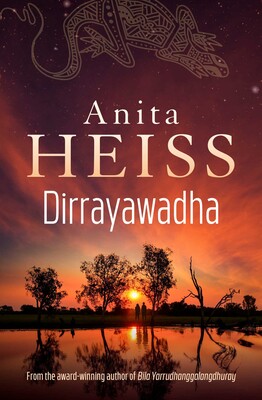
Karumba and the Gulf of Carpentaria: Alexis Wright, Carpentaria (2006, my post), and Praiseworthy (2023): Wright is an activist and writer from the Waanyi nation in the highlands of the southern Gulf of Carpentaria. Her novels capture the region’s political and cultural tensions and challenges, the long tail of invasion and dispossession, with a vibrancy and humour that never forgets the dark side.

Normanton: Nevil Shute’s A town like Alice (1950) is partly set in a fictional outback Australian town which is based on Normanton (and nearby Burketown). It features an entrepreneurial young English woman determined to lift the economy, and make it a “town like Alice”.

Mount Isa and the Barkly Tablelands

  • Vance Palmer’s Golconda trilogy (Golconda, 1948; Seedtime, 1957, and The big fellow, 1959) is set in Mount Isa, and explores industrial conflict between miners and management.
  • Debra Dank’s memoir We come with this place (2022, my review) is set in the Northern Territory-northern Queensland region, including the Barkly Tablelands on which Mount Isa sits. Dank truth-tells about her people’s life and culture.
Sign on wall in the Blue Heeler Hotel, Kynuna

Dagworth (sheep station), Kynuna and Winton: AB “Banjo” Paterson’s poem and song “Waltzing Matilda” was written and first performed in this region around 1894 to 1895, though details seem to vary a little about which verses were written where, where it was first performed, its inspiration in characters of the region, and Banjo’s role in the 1894/95 Shearer’s Strike.

Barcoo River: Janette Turner Hospital, Forecast: Turbulence (2011) (partially read) is a bit of a stretch, because its stories are as much set in the USA as in Australia, as far as I can tell, but one of the stories, the “Republic of Outer Barcoo”, refers to the Barcoo River which joins Longreach’s Thomson River to flow into Coopers Creek. Newtown Review of Books says that “Throughout this collection characters’ emotional states are reflected in the weather, or described in terms of floods, hurricanes, tornadoes or the isobars on a weather map” which Chrystopher Spicer would have loved. The Barcoo also features in some Paterson poems. However, I really wanted to include it here because the Barcoo, in the ANU’s words, “has been used since the 1870s as a shorthand reference for the hardships, privations, and living conditions of the outback”. This is a meaning I’ve grown up with. But, the ANU adds that “Barcoo can also denote more positive aspects of outback life: a makeshift resourcefulness” and “a laconic bush wit”.

Barcaldine: William Lane’s A workingman’s paradise is set in Sydney, but includes a character from the Barcaldine-based 1891 Shearers’ strike. He is in Sydney rustling up support for the cause. The striking shearers in Barcaldine, apparently, flew the Eureka flag during and sang Henry Lawson’s “Freedom on the Wallaby”.

Injune: Frank Dalby Davison’s Man-shy (1931, read at high school) about men and cattle, and Dusty (1946) about a drover and his part-dingo dog, were set in this district where Davison had worked on cattle properties.

Patrick White, Voss

Roma: Patrick White’s Voss (1957) was inspired by Ludwig Leichhardt’s second fated expedition. It was west of Roma that his party disappeared leaving no trace.

Toowoomba and the Darling Downs: Patrick White’s aforementioned Voss passed through this area.

These books span a century, but Peter Pierce’s The Oxford literary guide to Australia, includes novelists, poets and other writers from the 19th century who lived and wrote the region. The works that I have mentioned vary in their subject matter, but many deal with the challenges of coping with the isolation and the elements (one way or another), and their characters often survive because of their ingenuity and sense of humour. Many of the novels are political, like William Lane’s inclusion of the shearer’s strike in his and Vance Palmer’s dealing industrial unrest in a mining community. First Nations people do not feature strongly in novels by non Indigenous writers, but their own writers are now starting to correct that absence. The landscape – which ranges from bare and brown in the outback to almost too lush and oppressive in the tropics – can be richly metaphorical as well as literal. And, the weather is omnipresent in much of the writing. All these features, I think, mark these books out as essentially different from their urban counterparts.

So, I’ve not included Brisbane, nor the majority of the east coast. Another time perhaps? Meanwhile, now’s your opportunity to tell me what you think and share some of your favourite novels set in remote regions of your country.

Barbara Jefferis Award 2024 Shortlist Announced

I didn’t report on this biennial award in 2022, but with the 2024 shortlist just having been announced, and my having read half of them, I am reminding us all again of this interesting award. Worth $50,000, this award, for those of you who don’t remember it, has very specific criteria:

“the best novel written by an Australian author that depicts women and girls in a positive way or otherwise empowers the status of women and girls in society”.

What this means is that it is not the sex of the writer that’s relevant here (nor, in fact, the genre). This award is for books about women and girls – and so can be written by anyone of any sex – but they must present women and girls in a positive or empowering way. I wrote a Monday Musings post about this “positive or empowering” requirement a few years ago.

This year’s shortlist of six books are all by women, but you’ll see that a male writer, Tony Birch, is among the highly commendeds.

  • Gail Jones, Salonika Burning (Text Publishing) (my review)
  • Melissa Lucashenko, Edenglassie (University of Queensland Press) (my review)
  • Miranda Riwoe, Sunbirds (University of Queensland Press)
  • Sara M Saleh, Songs for the dead and living  (Affirm Press)
  • Lucy Treloar, Days of innocence and wonder (Pan Macmillan Australia)
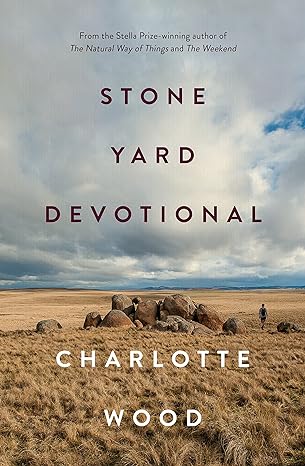
  • Charlotte Wood, Stone Yard devotional  (Allen & Unwin) (my review)

This year, the judges also named three Highly Commended titles:

  • Tony, Birch, Women & children (University of Queensland Press)
  • Shankari Chandran, Chai time at Cinnamon Gardens (Ultimo Press) (my review)
  • Katerina Gibson, Women I know  (Scribner)

The judging panel for the 2024 Barbara Jefferis Award comprises Hannah Kent (Chair), Jennifer Mills, and Melanie Saward. You can read the full judges’ comments on their decision and the individual books on the Australian Society of Authors website, but overall they said that:

“The many entries to this year’s prize reflected a healthy diversity of genre, form, settings and narratives. Common to many were themes of migration and exile, resilience and recovery from trauma, social isolation and renewed connection, thwarted ambition, and violence against bodies and minds. The representations of women and girls were varied and often original. We would welcome more expansive representations of gender diversity. […]

We found all six books deeply affecting, and many highly memorable for their unswerving demands for social justice and reclamations of power. We would like to extend our congratulations to their authors.”

They did make an interesting observation that “few writers focused on the future” and “wondered whether this revealed a wider desire for, and interest in, historical reckoning for this country”. Could be so. Having just spent two weeks in outback Australia, I sense some movement in understanding of what our dispossession of land has meant for our First Nations people. But so much has been lost and needs to be recovered, and progress in reconciliation seems very slow. Easy for a city-slicker to say, I do appreciate, but my heart tells me it has to be said.

The winner will be announced on 13 November 2024.

Apologies for the quick post, but I do like this award, and wanted to share it. However, I am on holidays still, and time is short.

Any thoughts?

Monday musings on Australian literature: A little Longreach interlude

I am still tripping through Queensland, and had planned a more in-depth post for today – in fact, I’d started working on it before I left Canberra on 31 August – but my energy levels have been sapped by having had COVID for the last week, not to mention by our busy touring schedule. Rather than publish that post half-baked, I am saving it. Maybe next week!

Instead, I’m sharing a little sign on a library board at the Longreach School of Distance Education. This school was formerly called School of the Air, of which there were several around Australia (five in Queensland). These schools, which started operating in 1951, originally delivered education to children on remote properties via radio. Over the years, the delivery technologies changed, but it has only been since 2016 that the school turned to presenting online classes. A big change from their more paper-with-teacher-support based programs. I’m not sure when the name changed, but in Longreach, and presumably elsewhere, it is now called a School of Distance Education.

We did a little tour of the School, and in the library we came across a decorated quote on the library wall. It’s about reading, so this is my little post for today.

This quote is not Australian, and has been around for a century, so it is probably known to many of you. However, if you don’t know its origins, this is apparently it (from Quote Investigator, a site I hadn’t come across before):

“The earliest evidence appeared in 1926 in an intriguing report published in a journal called “The Library” from the Newark Public Library in New Jersey. The head of the library had received a collection of 43 slogans constructed by students, and that set included the statement under investigation. The creator of the slogan was a student named W. Fusselman.”

It’s worth reading the full Quote Investigator article, because it provides verification for its information, and a few other quotes. It also discusses an incorrect attribution to someone called Margaret Fuller. (Of course the School had done the job for me. They have credited Fusselman as the author.)

I do like that this quote came from a student.

Anyhow, this is your lot for this week’s Monday Musings. I hope to resume more usual posts next week.

Monday musings on Australian literature: A little note on the Kalkadoon (or Kalkatungu)

Tonight I am in Kalkadoon (Kalkatunga) country. The Kalkadoons were the first Indigenous Australian people I became aware of as a young pre-pubescent girl living in Mount Isa in the 1960s. What I remember being told is that they were “fierce warriors”, but nothing much else, because we didn’t learn this history of Australia back then did we? This description, however, never sat easily with me. What did it mean?

During my current tour through outback Queensland, we’ve heard a little more, mainly about how many Kalkadoons were killed at Battle Hill (or Battle Mountain), in retribution for some action of theirs. The word massacre has not been used in the stories we’ve heard, though there has been recognition that spears had little chance against guns.

Of course, the truth is far more complicated, and was part of a long ongoing conflict between the Kalkadoons and settlers. The Kalkadoons certainly see it as a “massacre”. And they have a good website. I am too tired to write a full post tonight, but I wanted to share this site as an example of sites created by First Nations people, in which they tell their story their way, in which they communicate their stories to a wider world while also providing community for their people.

The Kalkadoon site also proudly shares that

On 12th December 2011, Honourable Justice John Alfred Dowsett of the Federal Court said the price the Kalkadoon People had paid for the prosperity of the region would not be forgotten. Native Title was granted to the Kalkadoon People.

We were told about this Native Title on our drive into Mount Isa, but just think about the meaning behind those words, “the price the Kalkadoon People had paid for the prosperity of the region would not be forgotten”. What a significant acknowledgement!

I am leaving it here, because if I write more, it would need to be a lot more, so I’ve decided to go for succinctness.

If you are Australian, do your local First Nation people have a website?

Monday musings on Australian literature: Nettie Palmer on Australian novels

Nettie Palmer has appeared a few times before on this blog, and is likely to appear again, because she was such an active member of Australia’s early to mid-twentieth century literary community, and she was a keen supporter and promoter of Australian writing and writers. Three years ago, I wrote about an article she’d written in 1930 in which she discussed pleasing “advances” in the Australian novel. This post draws on an article she wrote for the Illustrated Tasmanian Mail, a couple of years earlier, on 15 August 1928.

The article seems to have been inspired by the novel competition the Bulletin ran that year. There were, according to Palmer, some 536 entries, which she suggests is “a matter for national astonishment”, given the effort it takes to write a novel.

While only few can win, she says, “the lift in the status of the Australian novel will be considerable”. She goes on to talk about the challenge the judges face, and suggests that, with all that reading to do, their minds are likely to be ‘attracted by what was “striking” rather than what was merely solid’. She says that Australia’s chief literary prize-winner to date had been “that rather esoteric writer, Katharine Susannah Prichard”, and identifies some of the prizes she had won – for The pioneers (1915, my review), a short story, and a play. Will she win again, Palmer wonders. She wouldn’t be surprised if she did, Palmer continues, because Prichard “has always added something fresh and original to our literary store”. As it turns out, Prichard did win this prize, for Coonardoo, but jointly with The house is built by the collaborative novelists known as M. Barnard Eldershaw.

However, I have digressed a little, as my point here is to share Palmer’s thoughts on the Australian novel. Her life’s work seems to have been, at least partly, to define the Australian novel. Anyhow, she comments that she had been “examining a great many Australian stories in magazines, journals, books and manuscripts” and one of the things that has struck her was “the immense variety of geographical angles from which Australia can be regarded”. She takes, as an example, the idea of “the north-west”. For a Victorian, this means “the Mallee country, with its acres cleared for wheat, running up to the irrigated country with Mildura and its fruits and close settlement of semi-urban, rather ‘American’ homes”, while in South Australia it means “the interior, near the transcontinental line, given up to sheep”. In Western Australia, on the other hand, it’s “the country used by H. E. Riemann in his book of short stories, Nor’-West o’ West, set in Broome and its hinterland”. And so on … This, she says, “is just to name one half-point of the compass”. She discusses this a little more, but then says the thing that I really wanted to share:

The point is … that the life and problems of various parts of Australia show immense contrasts, from pearling at Broome to legislating at Canberra. Our writers have the task of gradually revealing it all to us.

This is it, it seems to me, in a nutshell. At some fundamental level, an Australian novel – or any nationality’s novel for that matter – is one which reveals who we are, in all our richness and diversity. It is what, I think, Miles Franklin intended by endowing an award for a novel that conveys “Australian life in any of its phases”. For Palmer, and I suspect Franklin, there was an awareness of the role the arts can play in nation-building, which is understandable given their times. The thing is, we are still nation-building – maybe always will be – and so today, we have First Nations writers and migrant-background writers trying hard to reveal to us their view of Australia. For as long as society keeps changing, there is a role for writers to “reveal it all to us” – even while they also explore the universal – don’t you think?

PS: On Wednesday, Mr Gums and I start a 14-day outback Queensland tour. I may not manage to write Monday Musings on the next two Mondays, but we’ll see. Apologies in advance for this potential hiatus! Monday Musings will not be lost forever.

Monday musings on Australian literature: Best Australian books, 21st century (to date)

I do think it’s jumping the gun, rather, to be listing best books of a century when that century is barely a quarter through! However, it seems that critics and reviewers around the world are giving it a go, including the esteemed New York Times, so who am I to quibble? Certainly Readings Bookshop and The Conversation, motivated by the non-inclusion of even one Australian book in NYT’s list, decided they wouldn’t. And, after all, what reader doesn’t love a list?

That said, listmakers rarely agree with each other, neither in their actual lists, nor in their approach to making their list. Some take it deadly seriously, and do their best to produce something authoritative (however you define that) whilst others see, perhaps, that authoritative lists in artistic/creative endeavours are not possible so take a looser approach. So it seems to be here. Readings, for example, asked members of the Australian literary community to nominate their best Australian books of the 21st century, and created a ranked top 30. The Conversation, on the other hand, asked 50 Australian literary experts for their top pick, and they listed all 50, starting with the books that had the most “top pick” nominations. Their experts were allowed to identify two honourable mentions. These “mentions” are not included in the list, but they are in the pickers’ comments. (Check out the lists, including NYT’s, at the end of the post.)

In The Conversation’s list, five of the 50 books were nominated by more than one expert, and they are listed first, but this is not a ranking they say – and perhaps that’s a fair point given their survey was very small. So, their list is indicative rather than thorough in any way, but indicative is still interesting:

  • Alexis Wright’s Praiseworthy (3, Bill’s second post)
  • Alexis Wright’s Carpentaria (3, my review)
  • Helen Garner’s How to end a story (2) (on my TBR)
  • Michelle de Kretser’s Questions of travel (2, my review)
  • Kim Scott’s That deadman dance (2, my review)

Three books by First Nations authors, and four by women writers. Interesting. Some authors appear more than once in the list, including, obviously Alexis Wright, whose The swan book is also in the list, but also Kim Scott and Fiona McFarlane. Theirs is a diverse list reflecting the diverse experts, and that makes it a “good” list to me, because it will speak to different readers.

For me, the most significant book published anywhere this century is Carpentaria (2006). Wright’s larger-than-life, all-too-human characters enact their dreams across a vast tract of earth, water, sky and the “alltimes”. The writing crackles. In this story of Country, ancestral voices offer wisdom and hope. (Nicholas Jose)

Readings’ list on the other hand was drawn from 600 “votes” from members of the Australian literary community – writers, publishers, and Readings’ own booksellers. They were asked “to nominate their favourite Australian books, published since 2000”. I don’t know whether 600 people nominated one book each or whether some nominated one and others more. Whatever method Readings used, they came up with a ranking, presumably based on the number of times each book was nominated. Their top 5 is:

Christos Tsiolkas, The slap

A more popular list, dare I say, than The Conversations’, which is not surprising given its genesis in a bookseller. I have read all of these. Indeed, it’s not until no. 15 on their list – the Garner that also appears in The Conversation’s list – that I hit a book I’ve not read.

Conclusion

Jason Steger wrote about these three lists in his most recent weekly email. He explained that NYT’s aim was to “take a first swing at determining the most important, influential books of the era”. Which of those will still be there in 75 years time? Care to take a guess? You may as well go out on a limb as I’m assuming most people reading this post will not be here on 1 January 2100 to say “I told you so”, or not, as the case may be!

Links to the Lists

Donna M. Cameron, The rewilding (#BookReview)

Quite coincidentally, earlier this month, I read and posted on Willa Cather’s short story “The bookkeeper’s wife” which commences with a young man, Percy Bixby, sitting in his office deciding to do something in order to keep his flashy fiancée Stella. That was published in 1916. I have now just finished Donna M. Cameron’s novel, The rewilding, which was published in 2024. It commences with another young man, Jagger Eckerman, is sitting in his office deciding to do something that will lose him his flashy fiancée Lola. Both young men are caught up in fraud, Percy of his own making, Jagger unwittingly, though that doesn’t make him entirely blameless. From here the stories part company, so we will leave Percy, whose story I’ve already told, and look at 27-year-old Jagger.

Jagger has been living the high life. Caught up in his own privileged lifestyle, he’s been carelessly signing documents he shouldn’t, until finally the penny drops and he wakes “up to the fact that every aspect of his life is a farce”. So, he clicks Send on his whistle-blowing email and scarpers. The problem is that the only place he can think to scarper to is a cave in a national park south of Sydney, and when he gets there he finds someone else already holed up in the same spot, the 24-year-old “feral” eco-warrior, Nia Moretti. As the accompanying publicity sheet says, it is hatred at first sight, but they soon realise they need each other, whether they like it or not.

The rewilding starts with a bang and barely lets up for the length of its 300 pages. It’s a genre-bending work of eco-literature that combines thriller, road story and romance. The central thriller-driven plot is not my favourite type of story – I’m not much interested in watching or reading about chases, violence and suspense – but Cameron handles her material confidently, creating a book that I enjoyed reading despite myself. I just hurried through the bits that were less interesting to me. Why I was happy to read it is what I want to focus on here.

First, there’s the genre-bending aspect. Cameron balances the thriller components with more reflective and tender sections, with moments of interpersonal tension, with touches of humour, gorgeous natural descriptions, and serious themes. Second, the story is well-paced, and the writing fresh but accessible. It is primarily told third person through Jagger’s perspective, but this is occasionally interspersed with short chapters in Nia’s voice, in which she speaks to a mysterious “you”. These provide additional insights into Nia that Jagger can’t know, while also increasing the mystery. Who is this “you”? What has happened to Nia? Third, the two main characters are nicely developed. Jagger is on the run, scared and uncertain about what his future holds. Still grieving his mother’s death and the mistakes he’s made, he is fundamentally decent and an optimist. Nia, on the other hand, is an uncompromising idealist, and pessimistic, but reveals a softer side. Gradually, as is typical of the romance genre, the antagonism between them is relaxed, although not, of course, without setbacks.

“a capitalist suit” versus “the feral”

And finally, there are the themes. For me, a good story isn’t enough. I need some meat, some ideas that make the time I put into reading worthwhile, and this book has meat – personal and political. In the personal realm, Jagger is a young man who had lost his way but, when some truths become clear to him – when he realises his relationship had been built on a lie and his workplace was engaging in a waste removal scam – his better self, the one his recently dead mother had so carefully tried to engender in him, comes to the fore. In his suit and fancy shoes, he surprises Nia with his deep knowledge of and love for nature. Likewise, Nia is struggling with a personal loss. She is resentful of the “capitalist suit” who comes into her cave, and finds ways of using him – and his money – to her own ends but, despite her toughness, she has a heart. So, on the personal level, The rewilding is a novel about values, about the lines you draw, about the life you choose to live and what that means personally and …

politically, because this is also a novel about climate activism. Nia and her radical Earth Rebellion mates, the Lorax, are determined to save the planet. Their focus is a mining operation in northern Queensland which is about to proceed without permission. First, though, she has something to do in disaster-struck, flooded Brisbane, something that puts her and Jagger’s lives at risk. On the run, and being followed by hit men, he has no option but to go along with the only person who can help him. It is at this point, before the final dramatic confrontation at the mine, that Nia starts to unbend a little towards Jagger and his perspective.

“Why be scared of change?”

The rewilding is a wild, dramatic novel. It does push the boundaries of credibility at times, but probably no more than you expect in a thriller. Ultimately, through her characters and their fierce, lively conversations, and through her fast-paced plot which offers a few scenarios, Cameron explores the critical issues confronting us and asks the big questions we are asking, without resorting to overt didacticism.

Climate change novels can be bleak, but many authors, even those writing the bleakest of stories, talk at writers festivals about wanting to leave their readers with some hope. That this was Cameron’s intention is foreshadowed in the epigraph from Tolkien’s The lord of the rings, “Where there’s life, there’s hope”. So, at the end, certain rapprochements are achieved, but the conclusion is real rather than simplistic. It recognises that life is messy and change is hard but that it’s worth keeping on trying. The rewilding is a worthy addition to Australia’s eco-literature field.

Donna M. Cameron
The rewilding
Melbourne: Transit Lounge, 2024
309pp.
ISBN: 9781923023062

(Review copy courtesy Transit Lounge, via publicist Scott Eathorne of Quikmark Media)

Monday musings on Australian literature: Short stories, revisited

I love short stories but, as Jason Steger, Literary Editor of The Age and The Sydney Morning Herald, wrote in one of his recent weekly emails, not everyone does. Indeed, he writes:

I know quite a lot of people – people I would consider good readers of fiction – who find them unsatisfactory. Not enough meat to them. Not as satisfying as a novel. Always leaving you wanting more.

And he admits to shifting between the like-don’t like positions himself, before going to say that, “more often than not [with good short stories] you come away knowing precisely enough; you don’t need any more after the author has ended the story with perhaps a surprise, perhaps a neat tying together, or perhaps with ambiguity”. He offers other writers’ thoughts, including English novelist Elizabeth Bowen who wrote in her introduction to The Faber book of modern stories (1937) that “Poetic tautness and clarity are so essential to it [the short story] that it may be said to stand on the edge of prose.”

Bowen, he said, is particularly relevant to what he wanted to share, which was that Tasmanian poet and novelist Kathryn Lomer had won this year’s Furphy Literary Award. Worth $15,000 to the winner, the prize is named after Joseph Furphy, the author (using the pseudonym, Tom Collins), of the Australian classic, Such is life. Lomer’s winning story, “Nothing about kissing” (read it here), is set in Hobart’s MONA, and opens with the protagonist starting her cleaning shift. Steger quotes one of the judges, Stephanie Holt, who said the winning story “unfolds as layers of assured, erudite but often plainspoken reflection. Into these, the writer drops several crucial moments with such startling aplomb you want to stand and applaud.”

Selected recent short story collections

After this introduction, Steger notes that “despite publishers frequently saying that stories are tricky to sell, they still appear”, and then he lists some, noting that collections are more often published by smaller publishers, like Spineless Wonders and Puncher and Wattman. There are others of course, including the somewhat larger, but still independent publisher, UQP.

He gives a few recent examples, which I am including here, in alphabetical order, along with a few of my own. I have limited the list to those published since 2022 to convey a sense of current activity.

  • Tony Birch, Dark as last night (UQP)
  • Carmel Bird, Love letter to Lola (Spineless Wonders, my review)
  • Georgia Blain, We all lived in Bondi then (Scribe, Brona’s review): posthumous publication of new stories written during 2012-2015
  • Larry Buttrose, Everyone on Mars (Puncher and Wattman)
  • Ceridwen Dovey, Only the astronauts (Penguin Books Australia, Brona’s review)
  • Fiona McFarlane, Highway 13 (Brona’s review): “a suite of interlinked stories, received a rave review in this masthead” (Steger)
  • Laura Jean McKay, Gunflower (Scribe)
  • Catherine McNamara, The carnal fugues (Puncher and Wattman, on my TBR): recently shortlisted for the Prime Minister’s Literary Awards
  • John Morrissey, Firelight stories (Text Publishing): First Nations speculative fiction
  • John Richards, The Gorgon flower (UQP): Gothic-infused short stories
  • Mykaela Saunders, Always will be (UQP): First Nations speculative fiction
  • Su-May Tan, Lake Malibu (Spineless Wonders)

Anthologies are a specific type of collection, of course, in that they contain writings by different authors, but are worth including here too:

  • Suzy Garcia (ed.), New Australian fiction 2023 (Kill Your Darlings)
  • Lynette Washington (ed), Futures: Stories of futures near and far: includes a story from Carmel Bird’s Love letter to Lola (Glimmer Press)

There are two broad types of anthologies, those selected from previously published stories, and those that result from a call for submissions and contain all new stories. The two above belong to the latter.

Not always, but often, short story collections and anthologies are themed or genre-linked. So, for example, Saunders’ collection comprises First Nations speculative fiction. Speculative fiction, in fact, seems to be a popular genre for short story writers, and currently they are grappling with some of the big issues like climate change and, for First Nations writers in particular, the experience of colonialism.

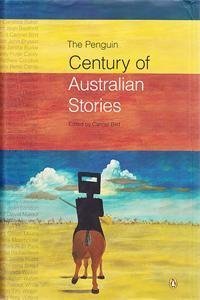
Ten years ago, ABR (the Australian Book Review) asked ten Australian short story writers to name some favourite short story collections and short stories. One of the ten was Carmel Bird. She introduced her selection with the comment that “I delight in the fact that the ‘short story’ is forever elastic”. She should know, as her own stories epitomise this elasticity, but she’s right because she’s not the only one. Recent stories that I’ve read have been exciting in the degree to which they push and stretch the form, from experiments with micro fiction to trying out different voices, including inanimate. If there’s one way to keep something interesting, it’s to mix it up a bit, and our short story writers are doing that. It’s exciting and encouraging.

Do you read short story collections or anthologies? If so we’d love to hear your favourites.

Monday musings on Australian literature: Forgotten writers 7, Grace Ethel Martyr

The forgotten writers I have been writing about vary greatly, and most will stay forgotten because, to be honest, their time has past and not all writing remains relevant. This is not to say, however, that they are not worth revisiting. They are, after all, part of our literary culture, and they paved ways, whether we are aware of it or not. Grace Ethel Martyr is an example. She is notable enough to have entries in AustLit and Wikipedia, and was interesting enough in her time to catch the attention of Zora Cross (who wrote about her for a series she did for The Australian Women’s Mirror.)

Martyr is another writer I have posted about on the Australian Women Writers (AWW) blog, but again, I am not including here the piece written by her that I published there. Titled “The blue jar”, its subject is domestic violence, though that term would not have been used then. It’s not typical of her best-known work. However, in the light of our own times, it is worth reading. It is told from the 1920s perspective that women just need to put up with brutal husbands and manage as best they can. They didn’t have much choice. But, in this story, a bit of luck comes the wife’s way … check it out at AWW.

Grace Ethel Martyr

Grace Ethel Martyr (1888-1934) was a Victorian-born poet, short story writer and journalist. She wrote under various permutations of her name – G. E. Martyr; E. Martyr; Ethel Martyr; Grace E. Martyr; and G. Ethel Martyr.

Born in Ballarat, she was the only daughter of James Kent and Grace Flora Martyr. She grew up in Maldon in central Victoria, but spent much of her working life in Bendigo. She apparently passed the University of Melbourne matriculation examination in 1906, but I haven’t found evidence that she went on to university. AustLit and Wikipedia both say she was employed by the Bank of New South Wales, for whom her father had worked, for four and a half years, but left due to ill-health. While working at the bank, she published a collection of patriotic war poems, Afterwards and other verses (1918), but she didn’t begin to write seriously until she had left the bank. Zora Cross (writing as Bernice May in The Australian Women’s Mirror) tells how this book was given to her to by Martyr’s cousin who wanted her assessment of it, and says it was she, Cross, who encouraged Martyr to leave the bank (though the ill-health part is also true, I believe).

The Sydney Morning Herald, 18 May 1918, commented on Afterwards and other verses, describing it as “unequal” (meaning “uneven”?) but also as

characterised by sincerity, depth of feeling, and a burning patriotism which redeems many shortcomings. Her technique, though not faultless, is usually correct, and at her best Miss Martyr can reach a high level of dignified expression.

Perth’s Western Mail, 31 May 1918, offers similarly qualified praise:

War has given inspiration to Miss Martyr’s muse, and if her verse does not reach the loftiest peaks, the level of its quality is rather beyond that common to such collections.

Writing about Martyr ten years later, Cross says that

So far, Miss Martyr’s best work has been done in verse. But her true vein is the child story and child-verse. I know of no Australian writer who has so beautifully caught the spirit of the child in verse as she has. And she is that rare writer, the one who never forgets that child-verse should also be poetry.

Martyr, then, wrote children’s poetry and fiction, including several stories serialised in The Australasian, but AusLit says that her principal literary output is the poetry she published in The Bulletin and The Australian Woman’s Mirror. In addition to this writing, Martyr also worked for The Bendigo Advertiser, where she edited the women’s columns and the children’s page, and she was Bendigo’s social correspondent for several Melbourne publications.

Cross praises much about her work, saying

She shows inner melody in her verse which is often of a very high standard. Her love of music and nature comes out in her poetry. Like all Australian writers her best work has appeared in the Bulletin.

Martyr won prizes at Ballarat’s South Street Literary Awards – in 1918 for best patriotic poem and in 1919 for best original poem. In 1920 she came second to David McKee Wright, from a field of 125 entries, in the Rupert Brooke Award, which was established by the Old Collegians’ Association of Melbourne’s Presbyterian Ladies’ College.

Martyr was also a pianist, and worked with musicians Margaret Sutherland and William James on various projects. In particular, she wrote stories and verses for the 3LO children’s hour, with James setting her verse to music. (William James is best known, to me anyhow, for the 15 Australian Christmas Carols he composed with lyricist John Wheeler. I wrote about them early in my blog.)

Martyr seems to be another example of a woman who managed to make a career for herself as a writer, by turning her hand to a wide variety of forms and audiences, but she also died relatively young. She was not completely forgotten, however, because five of her poems were included in Michael Sharkey’s 2018 anthology, Many such as she: Victorian women poets of World War One. An exhibition was held at Bendigo’s Soldiers Memorial Institute Military Museum in association with this book. Curator Kirsten McCay specifically mentioned Martyr, saying “Poet Grace Martyr lived locally and was a journalist for the Bendigo Advertiser. She also gave illustrated talks on famous composers at St Paul’s Cathedral, where a cross commemorates her life.”

Cross concluded her 1927 article with:

Grace Ethel Martyr’s work is always getting better, which is surely the best sign in any writer. Time, I think, will prove her to be one of the most sincere writers among us.

Six years later, at the age of 46, Martyr was dead. The report of her death, which was repeated in several Victorian newspapers, is brief but says that:

Miss Martyr’s literary gifts were apparent at an early age, and during the years that followed she established something of value to Australian literature.

I rest my case!

Sources

Melissa Lucashenko, Edenglassie (#BookReview)

Broadly speaking, Melissa Lucashenko’s latest novel, Edenglassie, does for southeast Queensland what Kim Scott’s That deadman dance does for Noongar country in southwest Western Australia. Both tell of the early days of their respective colonies from a First Nations perspective; both are written in a generous spirit but with absolute clarity about the dispossession that took place; and both suggest things could have been different.

Unlike That deadman dance, however, Edenglassie, is a dual narrative story. The main storyline, featuring two young people, Mulanyin and Nita, is set around the Magandjin or Meanjin (Brisbane) region during the mid-1850s, making it just a little later than Scott’s first contact narrative. Dispossession, massacres and other brutalities from the colonisers were met with armed resistance, but there were also attempts to work together. Paralleling this historical story is a modern one, featuring Granny Eddie, Winona, and Dr Johnny, set in the same area at the time of its 2024 bicentenary. These stories, one using historical realism and the other modern humour, riff off each other to provide a complex picture of the colonial project – then and now.

Melissa Lucashenko said much that interested me in the conversation I attended for this book, but here I’ll focus on two points she made. One is that the book’s central question is “what was going through these people’s [the colonisers’] minds?” Things could have been different then, she said, and could still be now. The other point is that she wanted to counteract the trope of the dying race. This idea has been slowly changing since Mabo, she said, but is still evident. The modern storyline, with its confident and politically involved Goorie characters, ensures that we see a vibrant, living culture in action.

Realising these two ideas is a big ask, and in my reading group there were some equivocations, but I think Lucashenko pulls it off, through creating engaging characters who come alive on the page and narratives that ring true to their times. Mulanyin, the kippa (young initiated man) from the historical period, and Winona, the fiery young woman in modern times, represent the passion of youth. They are impatient and want things to happen – or change – now. Both, however, also have elders guiding them – in the Goorie way, which is to encourage people to work it out for themselves and to remedy their mistakes.

“needing to endure the unendurable” (Mulanyin)

So, what is it that these young characters must contend with? The novel starts with two pointed events. In the modern storyline, Granny Eddie trips over a jutting tree root and is ignored by passersby until two young brown faces – Malaysian students as it turns out – help her up and get her to hospital. The modern scene is set, and all is not well.

We then flash back to 1840 where members of the Goorie Federation are looking forward to the imminent departure of the dagai, only to be told that this is now unlikely. A Goorie mother wonders what

If life never returned to normal. If the rule of law was never restored. What would her son see as a man? … Would her daughters be subject to the terrors the dagai brought?

What indeed?

Having asked the question, Lucashenko then moves her historical story to 1854-1855. Mulanyin is living with his law-brother Murree north of his own saltwater Nerang/Yugambeh home. Here, he is in close contact with the colonisers, and particularly with the Petries. At this time, the Petries, particularly the young Tom Petrie, were sympathetic to, and tried in their own way to work with, the Goories on whose land they resided. Lucashenko seems to be saying that, given colonisation was happening and wasn’t going to be undone, there were ways in which it might have been made to work (or, at least, work better). Conversations between Tom, Mulanyin, and other characters, explore their differences, particularly regarding attitudes to country. Mulanyin wants to know

what goes on in the brain of an Englishman? When he arrives in another man’s country to steal his land, and water, and game, and then with a straight face, calls those he steals from thieves? Is this how it is in Scotland? Is this why your people have fled that terrible place?’

The ensuing discussion has Tom struggling to explain the English, but admitting that “in their ignorance, they don’t understand that the land here has its own Law. They think that only their British law exists”. However, he says, they “respect some boundaries still … Those that are well defended”.

What did ‘well defended’ look like, Mulanyin wondered, if not like a thousand Goories assembled at the Woolloongabba pullen pullen? If not like Dundalli, leading the warriors who had willingly assembled under him, from Dugulumba to K’gari?

Fair point, Mulanyin.

Meanwhile, the modern-day characters are living with the fall-out from the failure of the colonisers to make it work and of the colonised to succeed in their resistance. Goories are still here, yes, but life is a struggle, and Winona wants to fight back, wants “to bite em hard onetime, while we got the chance”. She can’t understand why Granny Eddie, who grew up “with a dirt floor and empty belly” doesn’t think she deserves more. Granny, though, is two things. A pragmatist who sees that “Dagai not going away! We gotta get on with them”. And she’s an elder well-versed in her culture, so when Winona takes a hardline with Dr Johnny, who claims Aboriginal heritage, Granny says

“You’re thinking like a whitefella when ya close him out. That’s not our way. We bring people in, we bring our Mob home, and we care about them. We teach them how to behave proper way…”

Further, she argues,

“We can’t be sunk in bitterness … Or stuck in the past. We need to focus on the good dagais, like Cathy and Zainab, and them Petries, and –.”

Winona, Granny Eddie and Mulanyin all make sense, but they speak from different angles. What makes Edenglassie so interesting is the way Lucashenko gives space and respect to these angles. She certainly shows what was lost – and the utter unfairness of it. But, with the generosity of spirit we keep seeing, she also shares through her characters what living with deep connection to country means. And, she encourages everyone to think about alternative ways we can do this.

Towards the end of the novel, Gaja (Aunty) Iris shares an important story with our modern protagonists, introducing it with

we all know how important our stories are … People all over the world keep their stories close. Middle Eastern people believe … that by telling a story you can change the world, and nothing is as powerful as the right story at the right time.

With ideas about truth-telling and decolonisation becoming part of modern Australian culture, now feels like the right time for stories like Edenglassie. It might be an uncomfortable time to be a settler Australian, but that’s nothing compared with what First Nations people have endured and continue to endure. The least we can do is try to understand. Books like Lucashenko’s not only help us along this path but give us a lively read at the same time.

Melissa Lucashenko
Edenglassie
St Lucia: UQP, 2023
306pp.
ISBN: 9780702266126