Graeme Simsion, The Rosie project (Review)

Simsion, The Rosie Project

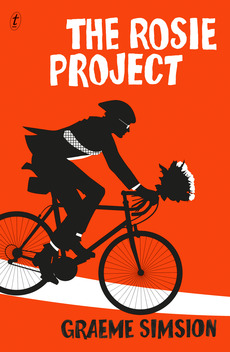
Bookcover (Courtesy: Text Publishing)

While I go to films fairly regularly, I rarely think of adapting books to film when I am reading. However, I was only a few pages into Graeme Simsion’s The Rosie project when it occurred to me that it was perfect film material. The feeling got stronger – and then around a third of the way through the novel I decided to look at the publicity sheet Text Publishing sent with the book. I usually read these sheets after reading the book. Guess what? The Rosie project started as a screenplay and has won a Writers’ Guild Award for Best Romantic Comedy.

This brings me to the other thing that crossed my mind as I read it:  how to categorise it. I’ve now read two books in a row that are a little outside my usual fare. Like the previous one, Anita Heiss’s Paris dreaming, The Rosie project is a romance, but it’s not chicklit and I’m not sure it fits the romance genre as a whole either. You see, the protagonist – as the cover may have told you – is a man, one Professor Don Tillman. As I understand it, romance novels tends to involve a female protagonist and the trials and tribulations she meets en route to true love. Movies have a genre called “romcom” but I’m not sure that term is used for novels. It is, however, the most appropriate description for this novel – because it’s a romance and it’s funny.

Now, I’d better give you a brief outline of the plot. It opens with Don Tillman, a genetics professor, about to give a public lecture on Asperger Syndrome as a favour for his friend Gene (ha!), a psychology professor. In the second paragraph, you start to suspect that Don himself has Asperger’s:

The timing was extremely annoying. The preparation could be time-shared with lunch consumption, but on the designated evening I had scheduled ninety-four minutes to clean my bathroom.

Ninety-FOUR minutes!? The novel continues in this vein with Don admitting to being socially inept, to being routine-driven and focused on efficiency over all else, and so on. He knows all this about himself, but never in the novel is he named as having Asperger Syndrome so I won’t either. However, this description of him provides a good introduction to the novel’s basic premise. Don, nearing 40, wants a wife but, not surprisingly given the way he approaches the world, he hasn’t had much success. He starts the Wife Project and creates a 16-page questionnaire designed to help him eliminate unlikely candidates before he wastes time on getting to know them. In comes 30-year-old Rosie, whom he thinks Gene has sent to him as a candidate. But Rosie, he quickly realises, would fail his questionnaire on the first page. She smokes, works in a bar (and so, he presumes, would fall below the required IQ), is not punctual, dresses unconventionally – you get the picture. Yet, there’s something about Rosie … so, pretty soon, Don offers to help her find who her father is, and thus begins the Father Project, which rather puts on hold the Wife Project.

From here, the novel runs pretty much to a romcom formula. The light tone tells you that it is likely to turn out the way you expect but despite this, the novel engages. This is because, although the plot is formulaic, the characters aren’t. Don is an unlikely hero. He’s aware of his difference and, as the novel progresses, starts to think about whether he can change himself to become more acceptable to people. It’s, dare I say it, poignant – but it’s not saccharine. Don and Rosie are too themselves for that. The novel also has some truly laugh-out-loud scenes. Comedy which involves ridiculing difference can be uncomfortable but again the tone saves it – it’s light and it’s warm. We like Don and our laughter is not so much at his behaviour as at the absurdity of the situations he sometimes finds himself in. I loved, for example, his description of his special treatment by airlines:

As we drank champagne in the lounge, I explained that I had earned special privileges by being particularly vigilant and observant of rules and procedures on previous flights, and by making  a substantial number of helpful suggestions regarding check-in procedures, flight scheduling, pilot training and ways in which security systems might be subverted. I was no longer expected to offer advice, having contributed ‘enough for a lifetime of flying’.

I enjoyed the book. It is a warm, but not stuffily earnest, book about accepting and celebrating difference, about negotiating relationships that accommodate different ways of being. It would make a great film.

Lisa at ANZLitLovers also found it fun.

Graeme Simsion
The Rosie project
Melbourne: Text Publishing, 2013
329pp.
ISBN: 9781922079770

(Review copy supplied by Text Publishing)
Monday musings on Australian literature: University presses

I was inspired to write this post last year when commenter Wendy Borchers mentioned Catchfire Press and described it as being associated with the University of Newcastle. I’d never heard of it. It is a community-based press primarily run by volunteers, but their covers, they say, are chosen by competition between senior design students at the University of Newcastle. The link is perhaps a little tenuous though there may be other connections not mentioned on their website. Whatever, they look like a delightful press with a wonderful heart doing something good for a local community, and they reminded me to look at the role university presses play in Australian publishing.

So, let’s look at some of the university presses which are out there promoting and publishing Australian literature – and I’m going to focus mainly on fiction. There’s probably a lot going on that I’m not aware of, but there are a few publishers who for me really stand out, and the grandma of them all is …

UQP, or the University of Queensland Press

Way back in the 1980s when I rediscovered Australian writers, and particularly Australian women writers, it was UQP that brought some of the best to me, like the wonderful Olga Masters who died way too early. Their imprint is recognisable and when I see it I know to expect quality. But then, they’re Queenslanders and so am I! UQP has apparently been going since 1948. They started as a traditional academic press but moved into more general publishing of fiction, poetry, indigenous writing and children’s literature. They published the early works of writers like David Malouf, Peter Carey and Kate Grenville and are now moving into digital publishing. Check out the authors page of their website and you can’t help but be impressed at their contribution to the Australian literary landscape.

Now, jump three decades and we come to the next university press to make an impression on me, and that is …

Sydney University Press

This was the first publisher to send me books to review. It was a new thing for me, and Lisa of ANZ Litlovers, and it was new for them. That was in late 2009 and what they sent us was their first lot of books in their Australian Classics Library, some of which they had already captured and published via their SETIS digital program. They introduced me to writers like Price Warung, encouraged me to read CJ Dennis, and gave me another Jessica Anderson to read. Their focus is still, I think, more traditionally academic, but I love and appreciate their commitment to some lesser known Australian classics.

And then, in just the last week or so I heard, via Twitter from bloggers Marilyn and Yvonne, of

Australian National University

And its ANU E Press which is publishing, electronically and free of charge, books in its ANU Lives Series in Biography. You have to buy the print versions but the online versions are free. These aren’t fiction – being biography – but are of interest to me with titles like Maori and Aboriginal women in the public eye and Transnational ties. I need to keep an eye on them.

That’s three but I’m sure other Aussies can point to more … and I hope they do because universities are well placed to offer different spins on publishing as these three examples do. It looks to me as through each is operating under different economic imperatives but achieving something important in our local publishing scene.

And here I will close, well aware that it is now nearly Wednesday … My excuse is that I am currently on the other side of Australia and my personal time clock is out of whack! Or something like that ….

Oh, and I will add more links when I am back in my more comfy computing domain …

Anita Heiss, Paris dreaming (Review)

Anita Heiss Paris Dreaming

Paris Dreaming (used by permission of The Random House Group Ltd)

Late last year I wrote a post about the inaugural Canberra Readers’ Festival. One of the speakers was indigenous Australian author, academic and activist, Anita Heiss. I wrote then that I bought one of her books. It was her fourth (I think) chick lit novel, Paris dreaming. This might surprise regular readers here, as chick lit is not really my sort of thing, however …

There are reasons why I was happy to read this book. First was that my reading group chose it as part of our focus on books featuring Canberra for our city’s centenary year. Yes, I know, it’s called Paris dreaming, but the heroine starts in Canberra and Canberra is mentioned (not always positively I must say) throughout the book. The other reason is the more significant one, though, and that is Heiss’s reason for writing the book. I said in the first paragraph that she is an activist and her chick lit books, surprising though it may sound, are part of her activism. In fact, I think pretty much everything Heiss does has an activist element. In her address at the Canberra Readers’ Festival she described herself, an educated indigenous Australian, as in the top 1% of the bottom 2.5% of Australia. She feels, she said, a responsibility to put her people on the “Australian identity radar”.

Does this book do it, and if so how? Well, one of her points is that 30% or more of indigenous Australians are urban and this book, as its genre suggests, is about young urban indigenous women. Anita Heiss manages I think (though I’m not the target demographic so can’t be sure) to present characters that both young indigenous and non-indigenous women can relate to. Our heroine Libby and her friends are upwardly mobile young professionals. They care about their work; they love fashion, drink and food (this is chick lit remember!); and they wonder how to marry (ha!) their career goals and romance.

Indigenous design vase, on hall table, Governm...

Indigenous art vase, Government House, Canberra

So what’s the plot (besides the obvious chick lit formula which this book certainly follows)? At the start of the novel  30-year-old Libby, manager of the education program at the National Aboriginal Gallery, is on a man-fast. She’s been bitten one too many times and has sworn off men, much to the dismay of her tiddas (her “sisters”). She is, though, keen to develop her career and wants a new challenge – all part of the chick lit formula – and so pitches a proposal to her boss that she mount an exhibition of indigenous Australian art at the Musee du Quai Branly in Paris. Of course, her boss approves and off she goes to Paris where, following the formula, she falls for hunky, sexy Mr Wrong while Mr Right watches on, spurned (and spurned and spurned). But, of course, I don’t need to tell you how it comes out in the end do I? This is not subversive chick lit because that would not serve Heiss’s purpose …

Did I enjoy it? Yes, but not so much as a piece of literature because my reading interests lie elsewhere, but as a work written by a savvy writer with a political purpose. This purpose is not simply to show that young, urban, professional indigenous Australians exist but, as she also said in her address, to create the sort of world she’d like to live in, a world where indigenous Australians are an accepted and respected part of Australian society, not problems and not invisible. She is therefore unashamed about promoting indigenous Australian creators. She names many of them – artists, writers, filmmakers – and discusses some of their work, educating her readers as she goes. Most of the people, works and places she mentions are real but there’s an aspirational element too. The National Aboriginal Gallery does not exist but she presents it as a significant player in the Canberra cultural institution scene. Good for her!

I’ll probably not read another of Heiss’s choc lit (as she, tongue in cheek, calls it) books, but I’m glad to have read this one – and I’ll certainly look out for works by her in other genres (including her memoir Am I black enough for you?). Heiss is a woman to watch.

Anita Heiss
Paris dreaming
Sydney: Bantam, 2011
313pp.
ISBN: 9781741668933

Monday musings on Australian literature: The Stella Prize longlist

Miles Franklin
Miles Franklin, c. 1940s (Presumed Public Domain, via Wikipedia)

I have mentioned the new Stella Prize before but, for those of you who may not be across this new award on the Australian literary scene, here is a brief recap. It is named for Miles Franklin – her full name was  Stella Maria Sarah Miles Franklin – and is “for the best work of literature (fiction and non-fiction) published in 2012 (for this inaugural one) by an Australian woman”. The prize of $50,000 will go to one author.

The award was created by a group of 11 women, including the writer Sophie Cunningham, in response to what many of us felt was an abysmal under-representation of women writers in Australia’s major literary awards and other literary activity (such as reviewing and being reviewed). The Stella Prize people want to turn this around and, as they say on their website, to:

  • raise the profile of women’s writing
  • encourage a future generation of women writers
  • bring readers to the work of Australian women.

The judging panel is a varied lot and should, I think, do an interesting job:

  • Kerryn Goldsworthy (Chair): author, writer, academic and critic
  • Kate Grenville: best-selling and award-winning Australian novelist. (Surely she doesn’t need any further introduction?)
  • Claudia Karvan: actor, producer and television scriptwriter
  • Rafael Epstein: television and radio journalist who has won the prestigious Walkley Award twice
  • Fiona Stager: bookshop owner and past president of the Australian Booksellers Association.

And, in fact, I think they have if the longlist – quite different to most literary prize longlists I’ve seen before – is any guide:

  • Romy Ash, Floundering: a debut novel on contemporary themes
  • Dylan Coleman, Mazin Grace: an historical novel about mission life, by a Kokatha-Greek writer
  • Courtney Collins, The burial: a debut historical crime novel which has apparently already been optioned for film. It reimagines the life of  Australia’s ‘lady bushranger’, Jessie Hickman
  • Robin de Crespigny, The people smuggler: described as “a non-fiction thriller and a moral maze” and I think I’ll leave it at that!
  • Michelle de Kretser, Questions of travel: the fourth novel by an award-winning Sri Lankan born writer. I’ve read two of her previous novels and am keen to read this one.
  • Amy Espeseth, Sufficient grace: novel by a Wisconsin born writer. It won an unpublished manuscript award back in 2009.
  • Lisa Jacobson, The sunlit zone: a verse novel which writer and reviewer Adrian Hyland describes as combining “the narrative drive of the novel with the perfect pitch of true poetry”
  • Cate Kennedy, Like a house on fire: a collection of short stories by one of Australia’s best short story writers. I’ve only read a couple of hers but need to find time to read more.
  • Margo Lanagan, Sea hearts: a fantasy or speculative-fiction novel about selkies and the like that also appeals to non-genre readers (I believe). Her prose is said to be beautiful.
  • Patti Miller, The mind of a thief: a memoir exploring issues around native title.
  • Stephanie Radok, An opening: subtitled “twelve love stories about art” this one sounds hard to classify but fascinating to read. I think the judges called it “mixed genre”.
  • Carrie Tiffany, Mateship with birds: the second novel by the author of the truly splendiferous Everyman’s rules for scientific living. This is waiting patiently in my TBR.

What a fascinating list eh? It contains few of the usual suspects – even among our somewhat maligned women writing fraternity, we do have some “usual suspects” – but some great sounding works. By longlisting such a diverse collection the judges are surely sending out a message about the depth and breadth of women’s writing in contemporary Australia. Some of the books have been reviewed by participants in the Australian Women Writers challenge. Paula Grunseit has provided a brief survey of these reviews at the challenge site. If you go there you can enter a book giveaway at the same time!

The shortlist for the 2013 Stella Prize will be announced on Wednesday 20 March. and the inaugural Stella Prize will be awarded in Melbourne on the evening of Tuesday 16 April. I’ll keep you informed.

Monday musings on Australian literature: Western Australian Premier’s Book Awards Hall of Fame

How many Halls of Fame are there specifically for writers? I’m not sure I’ve come across many, but last year I became aware of the Western Australian Premier’s Book Awards Hall of Fame when Tim Winton was inducted into it. The hall of fame is hosted on the State Library of Western Australia website. I’m not sure what the criteria are – I haven’t been able to find out anything about it, not even when each writer was inducted, besides a page for the actual “hall” and some press announcements of inductees. These announcements variously describe it as a hall of “acclaimed Western Australian writers” or “of notable and prolifc WA writers”.

Some of the inductees have been dead for some time suggesting that writers don’t (or didn’t) have to be alive to be inducted into it. There are currently 16 writers in the hall. Is that what you say, “in the hall”? They include:

Mary Durack …

who’s best known for her novels Kings in grass castles about her pioneering family and their role in the Kimberley region of northern Western Australia. I have reviewed a biography of her, True north, by Brenda Niall, and her poem “Lament for the drowned country”. The hall of fame describes her as “one of our great literary figures”. Most of her novels were not, I think, great literature but her contribution to Western Australian and Australian literary life through her writing (novels, non-fiction, short stories, poetry and journal/newspaper articles) and her support of other writers makes her a worthy recipient of the accolade.

Nene Gare …

who is best known for her novel, The fringe dwellers, which I read many years before I started this blog. The novel was made into a film of the same name by Bruce Beresford. She probably doesn’t have the national standing or recognition that the other writers I’ve listed here did and do but The fringe dwellers, like Thomas Keneally’s The chant of Jimmie Blacksmith, is an example of a novel confronting indigenous issues by a non-indigenous Australian writer. An obituary for her husband, who was the last commissioner for Native Welfare, says that “In 1965, Gare rewrote the manual for Native Welfare officers. His premise for his section on children was: ‘Under all normal circumstances children are best reared by their parents’.” This is a view that was still not well accepted at the time, as the Stolen Generations report made clear.

Elizabeth Jolley …

who, those of you who read this blog regularly, know is one of my favourite writers. I have written about her many times, including reviewing the first of her set of three autobiographical novels, My father’s moon, and her slim memoir-like work, Diary of a weekend farmer. The hall writes that she is (was, now) “acclaimed as one of Australia’s leading writers. She has received an Order of Australia , honorary doctorates from Western Australia Institute of Technology (now Curtin University) and Macquarie University, and the ASAL Gold Medal for her contribution to Australian Literature.” I will be writing more about her in years to come!

Katharine Susannah Prichard …

who is one of our political women writers. Prichard was a member of the Communist Party of Australia. I have reviewed her novel The pioneers, which reflects many of her social concerns. The hall describes her as “communist, feminist, social reformer and pacifist”. She wrote novels, plays, short stories and poetry.

Randolph Stow …

who is the other writer I’ve listed whom I haven’t reviewed on this blog. I have had his novel, The merry-go-round in the sea, on my TBR for a long time. One day! Lisa, at ANZ LitLovers has reviewed (and loved) it. He wrote several novels which have become Australian classics including To the islands and the children’s novel Midnite.

Shaun Tan …

would be the youngest of the list. I have only reviewed a small work of his, Eric, which comes from his collection, Tales from outer suburbia. He is an author and illustrator of books for children and adults. He is happy to collaborate with creators from all fields and is not precious about his works being adapted, supporting for example the Australian Chamber Orchestra’s presentation of his The red tree. His short film The lost thing won an Academy Award in 2011 for Best Animated Short Film. The experience of being “other” is one of his major themes.

Tim Winton …

who is one of only two writers to have won the Miles Franklin Award four times. (The other was, in case you’ve forgotten, Thea Astley!) I have read most of Winton’s oeuvre, but have only reviewed one here, Breath. Even if you’re not Australian, chances are you’ve heard of Winton. His most popular book, Cloudstreet, regularly wins polls as Australia’s best or most loved book. He writes for adults and children, and like many of the writers here, writes in multiple forms. He is passionate about the environment and works actively for it – as well as writing, fishing and surfing.

Are you aware of other specifically designated literary Halls of Fame?

Monday musings on Australian literature: Capital male poets

Today’s Monday Musings is the second in a series of posts I plan to write this year about Canberra writers to commemorate our centenary. The first post covered Canberra’s women poets. Like that post, all the poets mentioned below appear in The invisible thread, Canberra’s centenary anthology that I’ve mentioned before.

AD Hope (1907-2000)

The American poet Ezra Pound apparently once said “I haven’t known anyone worth a damn who wasn’t irascible”. Well, we have, I believe, a few Aussie poets who would live up to that description, and AD Hope, one of Australia’s most significant poets, would be one of them. He is famous, for example, for describing Patrick White’s novel The tree of man as “illiterate verbal sludge”, which, not surprisingly, offended Patrick White who was, I must admit, also known for being irascible. All this, of course, has little to do with Hope’s poetry except that, like White, he was highly critical of Australia. Reviewers have variously described his poetry as “sardonic”, satiric” and “sharp-edged”. One of my favourite poems of his, “Country Places“, makes fun of Australian place names and was included in Jamie Grant’s 100 Australian poems you need to know. Being of a certain age, I also like the following lines from “Spaetlese” in his collection A late picking:

Old men should be adventurous. On the whole
I think that’s what old age is really for:
Tolstoy at Astapavo finds his soul;
Ulysses hefts his oar.

But, the poem in The invisible thread, “Meditation on a bone“, is a different thing altogether. Inspired by an inscribed bone from about AD1050, it is about passion, rage and age, ending with:

… When I am dung
What bone shall speak for me?

David Campbell (1915-1979)

Canberra is a small city, and was even more so a few decades ago. Consequently, poets like AD Hope, David Campbell and Rosemary Dobson knew each other pretty well. In fact, I mentioned David Campbell in my Capital Women Poets post because he and Dobson were good friends and, among other things, translated Russian poetry together. Like Hope, who was born in a country town about 100kms south of Canberra, Campbell was born in an even smaller country town a similar distance by road due east of here. But, unlike the highly academic Hope, Campbell was a war hero, a skilled sportsman, and a keen fisherman, among other things. His humorous poem, “The Australian Dream”, which gently mocks Australia’s fascination with royalty around the time of the 1954 Royal Tour, is included in Grant’s abovementioned anthology.

The poem included in The invisible thread, “Mothers and daughters“, is short and sharp but complex too. Its subject is mothers and daughters, but its themes are youth and age, competition between women, anxiety about sexuality, and there’s a little revenge sting in the tail because the first line of this taut 8-line poem introduces the male gaze as well:

The cruel girls we loved

The poem makes me both smile and grimace at once!

Geoff Page (b. 1940)

Geoff Page is particularly special to me – not that he would know it – because he taught my son English at Narrabundah College and he was also the first author to attend my reading group’s discussion of his work. We did two of his verse novels, The scarring (my review) and Freehold, and Geoff was wonderfully generous in sharing his thoughts with us. The scarring is one of the most shattering works I’ve read in a long time. Geoff is, in fact, well-known in Canberra, in certain circles at least, because he has, for many many years, supported Australian poetry and jazz through his monthly Poetry at the Gods and Jazz at the Gods events, of which I have attended a few over the years. He also holds a popular Dead Poet’s dinner every winter and is a regular reviewer of poetry for ABC Radio National.

Page is also represented in the Jamie Grant anthology by one of his best-known poems, “Smalltown Memorials“, about the plethora of World War 1 war memorials in country towns. His poem in The invisible thread is “My Mother’s God“, a rather wry but affectionate look at the beliefs of his protestant mother’s generation:


His second book, my mother says,
is often now too well received;

the first is where the centre is,
tooth for claw and eye for tooth
whoever tried the other cheek

Well, Christ maybe,
but that’s another story

Oh, and he too was born in a country town, Grafton, some long distance north of Canberra.

Alan Gould (b.1949)

Alan Gould is another poet I’ve reviewed here – but for him it was his novel, The lakewoman – and he also agreed to attend my reading group’s discussion of that book. I haven’t, I must say, read much of his poetry – and, unlike the first three poets, he was born in a city. London, to be exact! His poem in Jamie Grant’s book – yes, he’s there too – is called “Pliers“.

The roof tilers“, Gould’s poem in The invisible thread, immediately brought to mind a delightful short film that I fell in love with, oh over 30 years ago now, called The Log Driver’s Waltz. Made by the National Film Board of Canada in 1979, and sung by the gorgeous Kate and Anna McGarrigle, it delighted me with its whimsy but also because it’s an ode to the grace (and courage) that can be found in the working man. Of course, I had to check You Tube and there it was. Have a look …

Thanks Alan Gould for a beautiful poem and for letting me wander down memory lane!

Both are slender; one is already high.
You watch as he steps on his wire legs,
from batten to batten, pauses, steps,

like a grazing antelope…

Omar Musa (b. 1984)

My last poet – unlike the previous four – is younger than I and, while he hasn’t attended my reading group, I have seen him perform live. He is a poet and rapper from Queanbeyan – sometimes unkindly called “struggle town” – which is the New South Wales town that borders Canberra. Our cities are, as a result, bound closely together, even if sometimes those binds fray a little. Musa is, for an oldie like me, exciting and refreshing. He performs at poetry slams (and can be found on You Tube) and his subject matter often deals with social justice issues to do with multiculturalism, youth opportunity, and similar. His poem in The invisible thread is, of the poems I’ve quoted here, the most grounded in our region. It’s called simply, “Queanbeyan”, and describes his love-hate relationship with a city that contains some of the worst of urban life – “alcos”, “used syringes”, bullies, and people playing pokies – but that’s also “a place where you can still see the stars”. I plan to keep an eye on Omar Musa in coming years.

Who are your favourite male poets?

Note: if a poem is hyperlinked, it is to a copy of that poem on the web.

Monday musings on Australian literature: Indigenous Australian literacy

I feel a little uncomfortable being a white person writing on indigenous issues. It’s difficult in situations of such immense power imbalance as currently exists between indigenous and non-indigenous Australians not to come across as patronising or a self-congratulatory do-gooder. However, I’m also aware that consciousness needs to be raised and good programs promoted, so here I am. I just hope I don’t offend those who really know what they are talking about.

I’ve been aware of a number of initiatives for some time now – such as the Indigenous Literacy Foundation – but this post was inspired by a small article I saw in my city’s newspaper about an initiative called the Indigenous Reading Project. So, I thought it might be time to talk about some of the things that have been happening in recent times. Indigenous literacy rates in Australia are at scandalous levels, which I find incredibly embarrassing for a so-called first-world nation. The situation is particularly bad in remote areas. According to a National Indigenous Literacy Day press release, “only one in five children living in a remote Indigenous community can read or write to the accepted minimum level”. One in five and only to the minimum level! This really isn’t acceptable.

Here are some activities/organisations that I’m aware of, but there are more, many at local community levels:

  • Indigenous Literacy Foundation: A not-for-profit charity established, I believe, with the support of the Australian Book Industry and other private sponsors. It doesn’t receive government funding. Its aim is “to make a positive difference in the lives of Australian Indigenous children by focusing on ways to improve their literacy levels”. It is a broad ranging organisation that sponsors or supports a wide variety of events and activities. According to its website, it raised $600,000 in 2012, and over the course of its existence has supplied some 85,000 books to over 230 remote communities.
  • Indigenous Reading Project: The project that finally inspired me to write about this issue. The article I read – here – describes a project developed by a Canberra-based public servant. It aims to “improve indigenous reading standards by giving students a Kindle in an effort to boost their interest in reading”. The project, very new still, has had significant success, in terms of the measures they’ve devised. It is geared to 10-15 year olds who are independent readers but “at or below national benchmarks in literacy”.
  • Australian Literacy and Numeracy Foundation: Describes itself as “the first independent charity in Australia dedicated to raising national language, literacy and numeracy standards, especially in remote and marginalised communities.” Its tagline is, simply, “being able to read and write is a basic human right”. It targets literacy and numeracy throughout the Australian population, but indigenous people clearly form a major part of its constituency. It supports a variety of literacy projects at the individual, family and community level.
  • National Indigenous Literacy Day: Organised by the Indigenous Literacy Foundation, and now 6 years old, the Day has two main aims: to encourage Aboriginal and Torres Strait Islander children to read; and to raise money to buy books for children living in remote Australia. A wide range of organisations are gradually getting behind this initiative including literary organisations like the Wheeler Centre, public libraries, schools, broadcasters like the ABC. I hope it becomes a universally recognised event on the Australian literary calendar.

There are also indigenous writers who are working hard to support literacy programs. Two whom I’ve heard speak (live) are Anita Heiss and Boori Monty Pryor. They are (of course!) both passionate about their cause, and are effective (and entertaining) public speakers.

Anita Heiss is an Indigenous Literary Foundation ambassador. She is actively involved in all sorts of literacy initiatives, from grass roots activities like writing books collaboratively with school children to lobbying and working at organisational levels. Boori Monty Pryor is one of Australia’s first two inaugural Children’s Laureates. He has made sharing and promoting indigenous culture his life’s work, with his main focus being, as I understand him, to encourage cultural pride and literacy skills in indigenous Australians and awareness of and respect for indigenous culture in non-indigenous Australians.

I’ll close with a statement by Heiss, taken from the ILF website:

Literacy is essential to Aboriginal people’s self-determination. If we cannot read we cannot make the decisions that inevitably impact on our lives …

Reading, as we all know, is that important!

If you believe in the cause of indigenous literacy, and have some money to spare, please click on the organisational links above and consider donating.

Oh, and if you know of successful literacy organisations, programs and/or campaigns, I’d love to hear about them.

Meanjin’s Tournament of Books 2012 (2013), Semi-finals

And so Meanjin’s Tournament of Books rolls on – during a hot Australian summer that has been characterised by terrible fires and floods. “I love a sunburnt country” but this is ridiculous.

Anyhow, the tournament’s semi-finals have been played and the best short stories (sorta) have won. Here they are:

Semi-final 1: Thea Astley’s ‘Hunting the wild pineapple’ defeated Nam Le’s ‘Love and honour and pity and pride and compassion and sacrifice’

This match was judged by one Ronnie Scott, who is apparently a reviewer, writer, and PhD graduate among other literary-artsy things. His discussion of the two pieces is pretty thorough. He makes a few references to Nam Le’s creative writing school background – which is in fact the setting/background of this short story. He suggests, for example, that the story “invokes the fearsomely competent, ‘polished’ writing current writing schools produce”. He seems to admire Nam Le’s writing, arguing that while Nam Le uses “the (valuable) Creative Writing class trope that smell is the only unmediated route to memory”, he “does the impossible and makes the result break your heart”. However, Astley’s writing he says “feels dangerous, unruly, charged”. I think that’s it – that’s Astley in a nutshell, and you either like her or you don’t. This match was a hard call and I’d have been happy either way but, Astley has to be my sentimental favourite because of who she is, and because of the way she skewers the heart of people’s superficiality, self-centredness and intolerance.

Oh, and why did Scott give the award to Astley? Because, he argues quite logically really, that “the weirder work is the one deserving of the imaginary prize”! Can’t argue with that …

Semi-final 2: Tom Cho’s ‘Today on Dr Phil’ defeated Jennifer Rowe’s ‘In the mornings we would sometimes hear him singing’

Now this match is between two stories I hadn’t read, so after the Round 2 I decided to track them down. I did manage to obtain Josephine Rowe’s, which is in her collection Tarcutta Wake, but not Tom Cho’s. Oh dear! I really will have to find it now. Anyhow, this match was judged by book critic and Monash University academic, Melinda Harvey. I enjoyed her adjudication which she framed through tennis match metaphors, asking at one point “Will it drive you wild if I keep these tennis metaphors going a bit longer?” Not me, Melinda! “Like a Federer-Nadal match”, she writes, “this semi-final is a study in contrasts. Rowe’s story is nostalgic, lyrical, earnest, an evocation of a particular time and place […] Cho’s story is contemporary, colloquial, playful, a flight of fantasy about identity”. The metaphors continue in her comparing Rowe’s writing to “groundstrokes” and Cho’s to “the drop shot and the lob”. I’ve read the Rowe now – a lovely, somewhat nostalgic but not sentimental piece about the way art (in this case music) can help us transcend the daily grind – and from Harvey’s description can guess a little about the style of Cho’s story. The match could almost be a replay of Nam Le versus Thea Astley, methinks, from the sound of it. But, Harvey is less definitive than Scott and lets Hawk-eye decide … it’s close, but it’s Cho. Not having read the Cho*, as I’ve already said, I have no comment.

Recap

And so it’s down to the final round and it’s between an older story and a recent one, a long story and a short one, a female writer and a male one, but also, it seems, between two writers who are a little more “out there” in style and thinking than many of their opponents have been. It’s gonna be interesting!

Who will the winner be? Ideas anyone?

  • Thea Astley’s “Hunting the wild pineapple” (1979) OR
  • Tom Cho’s “Today on Dr Phil” (c. 2006)

* It’s in his collection Look who’s morphing which is available for the Kindle. I used my 1-click purchase option and lo and behold, I have it! I’m ready …

Frank Moorhouse, Cold light (Review)

As I reached around the two-thirds point in Frank Moorhouse‘s Cold light, the third tome in his Edith trilogy, I wanted to cry out “Enough already”! It’s not that I wasn’t enjoying (most of) it, and it’s not that it’s a bad book, but it does go on – and on. It’s a book, I think, that could do with a severe prune. But perhaps that’s just li’l ol’ novella loving me talking!

For those not familiar with Frank Moorhouse’s Edith Trilogy, a little summation. The first book, Grand days (1993) sees Edith Campbell Berry join the League of Nations as an enthusiastic, idealistic ingénue. She’s “plucky”, as most reviewers point out, which she needs to be because she wants to change the world. It was, as I recollect, a thoroughly engrossing  a thoughtful insight into Europe at that time. The second book, Dark palace (2000), I haven’t read, though it is in the TBR. Embarrassing eh? It won the Miles Franklin Award after Grand days had been controversially rejected for not being, according to the judges’ interpretation of the award conditions, “Australian enough”. Dark palace chronicles the failure of the League and, with it, of the ideal of internationalism. This ideal, or at least her desire to make the world better, is something that Edith still hankers for at the start of Cold light. Unlike the first two novels, which are set in Europe, Cold light is, until the last few chapters, set in Canberra. That of course gave it added interest for me.

The three novels cover the middle half of the twentieth century – from the early 1920s to the early 1970s – with Cold light “doing” 1950 to 1973. Edith must be in her 40s when the novel opens and is well into her 60s by its close. This can be a challenging time of life for a woman and Frank Moorhouse’s exploration of the issues women face – biologically, socially, and intellectually – is sensitively and authentically done. Edith’s challenges are compounded by the fact that she wants to work – in the public sphere – but in 1950s Australia married women, as she was, were not entitled to work for the government. Edith does manage to get around this in various ways, mostly by being employed under honorariums and the like. Not very satisfactory, but better than nothing.

What I most enjoyed about the novel was its coverage of some of the big issues of its time, particularly in relation to Australia: the planning of Canberra which was still in its infancy, the Cold War and the attempts to ban the Communist Party of Australia, and nuclear energy. One way or another, Edith becomes involved in each of these issues and serves as our guide. I particularly liked the discussions about Canberra and what sort of city it should be. Early in the novel it is described as a “toy city”, a “make-believe city”, an “unfinished city”, “a city that is not a city”. Some of those criticisms still hang over it now, though less so I hope. Certainly, Edith begins to warm to it and enthusiastically works for a few years with the Town Planning section. She initially envisions it as a place of “communal memory”, as “the living memory of the nation”. Fifteen years on, as the will-we-won’t-we-will-we-won’t-we artificial lake is finally “opened”, her thinking has moved on. She would like to see Canberra as a “social laboratory”, which would “try out all sorts of ideas for good living”, and as a “place for citizens to ask questions”. Moorhouse’s thorough research into Canberra’s planning shows through here, as it does in the other topics he covers in the book.

I also enjoyed much of his characterisation. The novel has a large cast of characters, so his list of “Who is who in the book” at the end, with the “real” people asterisked, is very useful. But, beware, because if you read Edith’s entry, you’ll find a potential spoiler. The best drawn characters are the fictional ones: Edith, her cross-dressing “lavender husband” Ambrose, and to a less extent her brother and Communist Party official Frederick, and his girl-friend-partner, Janice, for whom Edith has some confused feelings.

Edith is, of course, the focal character. The novel’s voice is third person subjective, that is, it is told through Edith’s eyes, her perspective. And Moorhouse does it well. Edith’s a living, breathing, believable human being – but there’s just too much of her. We spend too long with her questioning and ruminating on just about everything she confronts. She ponders, and wonders, she asks herself multiple questions – and it is all just too much. And yet, and I know I’m being contradictory, she’s an engaging character. But not “plucky”. Surely that’s a bit twee for a professional woman? I’d use the words resourceful and confident. Even when she doesn’t feel confident, she knows how to put on a show. Despite this, by the book’s end, she wonders if she’s “bungled” her life. She wonders, in fact, for many pages, and asks many questions (have I said that before?) in the process. She tries to recast her life as “a journey” rather than as a failure to achieve goals, which seems fair enough to me. She’s most concerned, at this point, with her personal rather than her professional life, and the fact that she’s had three husbands. Alluding to Othello, she concludes:

She had loved not too wisely, nor too well. But she had tried with all her might.

She sure had.

I also enjoyed the themes of the novel. There are many of them, in fact, but the two that interested me most are the failure of idealism and the challenges of aging. As the book draws to a close she wonders:

Perhaps she was wrong to assume that evolution was moving towards some humanistic paradise.

But she still believes that

Safety lay in candour – the open personality in an open society.

And I love her for it.

Finally, I liked the fact that this novel of uncertainties has a very certain end. Moorhouse was clearly determined to end with a bang, not a whimper. Overall though, I would have like some zing, some wit, or alternatively, something to wrench my guts. Instead, it was just a little too laboured for me to feel the “wow” that I’d hoped for. A good read? Yes. An interesting read? Definitely. But a great read? Not quite.

For a thorough and totally positive review, check out Lisa’s at ANZLitLovers.

Frank Moorhouse
Cold light
North Sydney: Vintage Books, 2011
719pp.
ISBN: 9781741661262

Suzanne Edgar, The love procession (Review)

Amongst the madness of last year’s silly season was a little oasis, namely the launch of local poet Suzanne Edgar‘s latest collection, The love procession. It was an oasis not only because the launch was for a book of poetry, but also because it took place in the peace of a garden. Poetry and gardens – a match made in heaven don’t you think?

And in fact, there are gardens in this collection of poems, but before I write about the poems, I’d like to mention the title and cover. As Edgar explained at the launch, the title comes from a painting she loved in the Renaissance Exhibition held at the National Gallery of Australia a year ago. The painting, “Love procession”, is attributed to Marco del Buono and Giovanni di Apollonio, from the 1440s. Apparently it took many months for Edgar and the publishers to negotiate the rights to use the painting, but it was worth it because the end result is a simple, yet rich and stylish cover.

It’s a good title because the collection is about love – romantic and other – and about procession. About the procession of our lives – about love, life and death, about work and the things that keep us going, about friends and family, about nature that travels with us. The subject matter reflects the poet’s stage of life, someone who’s lived more than a few decades, who’s travelled, worked, lost friends and family, managed homes, experienced passion and peace. Well, you know what I mean. I could mention for example a poem about clutter, which conveys the melancholy of time passing:

Wilting hats from our salad days
match skirts too small at the waist.
(from “Silt”)

Or one about the real ravages of age:

A patch of muddy clay could well betray
unwary folk who have a metal hip
and hope to play again another day.
(from “Winter Sports”)

The collection’s first poem is – as you might expect – titled “‘Corteo d’amore’ (Love procession)” and is Edgar’s response to the painting. She imagines the groom waiting at the other end of the procession, reflecting. It’s a cheeky poem that contains both a sense of excitement and uncertainty, setting just the right tone for the rest of the collection:

To bed the girl had always been his goal
but laughing in the square, she’d seemed less grand.

I particularly like the way Edgar varies her tone throughout the collection. There are wry poems, and downright funny ones, and there are the passionate, the sorrowing, and the resigned ones. The style varies too. There are poems that rhyme and poems that don’t. There are three-line poems, a four-page poem, and even a bunch of sonnets. There are story poems and there are ones I’d describe as reflections. The imagery is generally accessible – at least it is to those of us who have lived (are living) similar lives in similar places. She invests the places and objects of our lives with meaning. There’s the woman, for example, who upsizes –

She tries a sea change, a tree change,
an elevated view change
(from “The Leavings”)

– losing, in the process, “her ghosts/ghosts of her children’s cries”. The doggerel-like rhyme and rhythm here are perfect for what Edgar clearly sees as the woman’s silly decision. Other poems speak of chairs that know our lives (“The Life of Chairs”), roll-top desks that trace a family’s history (“A Family Servant”), and of course the gardens that provide “refuge from summer’s sultry hours” (“Two Gardens”).

The poems are unmistakeably Australian with their references to the bush and of course gums, to wattlebirds and magpies, to drought and the pleasures of rain that only dry places know.

My favourite poems, though, are those scattered throughout that chronicle her relationship, at least they feel autobiographical, with her husband/lover/partner/significant other. They are often addressed to “you”. These poems speak of a long and deep love, but one also peppered, as real love is, with differences and squabbles. These poems made me smile, even where they spoke of loss, because they are honest.

Nearly halfway through the collection is a poem that starts:

I wonder where the poems went,
I used to think them heaven-sent.
Life is cluttered with noise and news
(from “Turn Off the Noise”)

Well, the poems are still here and I’d happily recommend Edgar’s collection as the perfect one to dip into whenever you want a respite from “noise and news”. These aren’t difficult poems, but that doesn’t mean they are trivial. Try them, if you can, and you’ll see what I mean.

Suzanne Edgar
The love procession
Port Adelaide: Ginninderra Press, 2012
107pp.
ISBN: 9781740277754