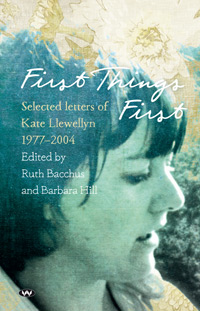
Bacchus, Ruth & Hill, Barbara, First things first: Selected letters of Kate Llewellyn 1977-2004 (Review)

Ruth Bacchus and Barbara Hill, First things firstIt might look like I’ve suddenly hired myself as author Jessica White’s PR Consultant as this is the second post in a row that I’ve opened with her, but the coincidence was too great for me not to. You see, this week, White posted on her Facebook Author Page that she’d received funding for a novel from the Australia Council for the Arts, and exulted that “I’m so happy that I can a) afford to eat for the next 6 months …”. One of the several threads running through Kate Llewellyn’s letters in First things first is her struggle to survive financially as a writer. More on that anon …

First, how do you review a book of letters? Yes, I know I’ve done it before for Jane Austen’s letters, but that’s different. Jane Austen is long gone, and was long gone when her letters were first published. Kate Llewellyn is still, fortunately I might add, with us, so, as well as reviewing a book about a living author, which of course bloggers/reviewers do frequently, I’m reviewing something very personal, a book of her letters. She didn’t put this selection together – Charles Sturt University academics Ruth Bacchus and Barbara Hill did – but she allowed her letters to be published, “trusting us”, the editors say in their preface, “with the contents of her life”. And that, I think, is a brave thing to do. But then again, you have to be brave to be a writer, don’t you?

Some of you, particularly if you’re not Australian, may not know Kate Llewellyn, but she’s an Australian poet and prose writer. Her prose includes travel writing, autobiography, and what the editors describe as “a hybrid blend she has made her own and perhaps pioneered in Australian women’s writing – a sensuous journal, studded with poetry, laced with recipes and concerned with ‘the weather, domesticity, love, art, gardening, the names of plants, a woman’s simple daily tasks and her heart’s thoughts’*”. She also co-edited The Penguin book of Australian women poets, which I own and often refer to.

Now, back to my question of reviewing a book of letters. Late-ish in the book, Llewellyn writes in a letter to Ianesco (artist Ian North) about reading John Cheever’s journals:

I did not know at times if I should be reading them, it seemed even prurient. But I had to keep on reading … and to think he wasn’t even trying … just did it for himself … […] … sizzling honesty.

“Prurience” isn’t the word you’d use for reading Llewellyn’s letters, and these are letters so written for someone besides herself, but they were, initially anyhow, private and they contain a rawness and honesty, together with a poetic beauty, that struck me much the way it seems that Cheever struck her. This rawness and honesty is most apparent when she writes about her relationships with others (romantic and otherwise) and her struggle to survive as a writer. It’s this latter of course that Jessica White’s Facebook post struck a chord with.

“I wouldn’t want not to be vulnerable”

As a reader, I’m interested in how writers do it. How do they manage to write and live? Some, of course, produce bestsellers but they are few. Some have significant others who support them. But most, it seems, scrabble around putting together projects, applying for grants, undertaking speaking and teaching engagements to keep going. It is this, among other things, that Llewellyn conveys with fearless clarity through her letters. She details the challenges of co-editing the poetry anthology with Susan Hampton, and of the difficulty of finding a publisher when the first one fell through. She describes unsatisfying, if not downright unpleasant, experiences of some (though not all) writers’ retreats. She tells of sending pieces off to numerous magazines and editors and of writing applications for grants or positions as writer-in-residence, and shares the emotional and financial pain of rejection, alongside the occasional joy of success. She describes cobbling together projects, such as one which didn’t come to fruition with friend Marion Halligan. She loses confidence in writing poetry, and wants to change her prose style. She writes of “the spite and derangement of the literary world” and of the mismanagement of distribution. She wonders why certain poets don’t like her, questions why some reviewers feel the need to be cruel, and is aware that there are people on boards who “do not wish me well”. It’s an uncertain life, and yet, with her get-up-and-go spirit she writes:

I think there’s a lot to be said for perplexity and bewilderment. Certainty is not all it’s cracked up to be. (to Ianesco, 13 January, 1995)

So, I learnt quite a lot about the life of a working writer. I realise that, like Tolstoy’s unhappy families, every writer’s life is different, and that each is likely to respond differently to the challenges, but experience tells me there’s a significant core in Llewellyn’s experience that’s true for many writers. What, though, did I learn about Llewellyn, herself?

Well, here is the challenge of course, because not only is a volume of letters, like this, one-sided, but these letters are a selection (and a selection, at that, of a period of her life). What letters weren’t included and how might they have affected our view of Llewellyn? Not much I think, because Llewellyn is so honest with her friends – and these letters are all to friends, many of whom are artists, writers and musicians – that you get a clear picture of her. She’s funny, vulnerable, emotional, warm-hearted, generous of spirit, depressed and lonely at times, subversive and yet a little conservative too. She can also, she’s aware, be rather full-on (high-maintenance, perhaps): “when I meet people I’m attracted to and with whom I feel great sympathy … I leap in”. She’s intelligent and, of course, creative.

One of the delights of the book, besides its various insights, is her writing. Funny that! It’s almost impossible to find one good example, but I’ll try. How about this description of a couple met at a dinner:

The former was a thin 50 year-old woman with husband to match … it was like talking to an oyster … a khaki woollen frock, grey hair, no colour anywhere, no lipstick … cold, grey, elegant, been everywhere, smoking, khaki skin, eyes like cold stones … I felt so defeated in my scarlet outfit I decided to try to get some reaction … (to Jerry Rogers, 19 June 1992)

Llewellyn, you have probably gathered, likes colour and life, and she likes “ardour … perhaps more than anything else in life”. Anyhow, I can’t leave it at one example, so will share a few more:

In fact, I think this town [Sofala] where not one building stands erect, but leans like a person into the wind, has only goats and tourists for income. (to Marion Halligan, 11 April 1994).

And

I swam in and out of it [Adelaide Writers’ Week] like a fish and took what came my way, be it seaweed or krill, but no bait, I hope. (to Marion Halligan, 11 April 1994).

And

… she [friend Jerry Rogers’ teen granddaughter] has been a real joy here … laughing like a gutter full of fresh rain after a drought, it is the loveliest laugh I ever heard. (to Ianesco and Mirna, 8 July 1996).

I will write another post or maybe two on this book – to share some of her thoughts on Australian writers, and a little of her humour. But, I don’t want to give the whole book away … which brings me to the question of whether I’d recommend it. Well, yes I would, but with, I suppose, a little qualification. This is a book of letters, and letters aren’t for everyone. With the best editing in the world, they can’t help but be disjointed. However, for me, Llewellyn’s voice is so compelling, her persona so open, and her writing so frequently funny, that I thoroughly enjoyed the time I spent in her head.

awwchallenge2015Bacchus, Ruth & Hill, Barbara
First things first: Selected letters of Kate Llewellyn, 1977-2004
Mile End SA, Wakefield Press, 2015
299pp.
ISBN: 9781743053645

(Review copy supplied by Wakefield Press)

* Llewellyn’s own description of her best-selling book in this genre, The Waterlily, in a letter to Bob Boynes and Mandy Martin, 20 July 1987.
Monday musings on Australian literature: On what women write about

I had planned another topic for today, but a tweet from Australian novelist Jessica White this morning sharing a link from The Conversation changed my mind. The link was to an article by Natalie Kon-yu, a lecturer in Creative Writing and Gender Studies at Victoria University. This article explores Nicola Griffith’s statement that “when women win literary awards for fiction it’s usually for writing from a male perspective and/or about men”. Griffith, a British-American novelist based in Seattle, surveyed the winners of multiple awards, including the Pulitzer Prize and the Man Booker Prize, from 2000 to 2015. Kon-yu says that Griffith’s findings accord with her own. She writes:

It is, sadly, unsurprising that male writers win more prestigious literary awards than female writers, but what is interesting is that when women do win these awards, it is typically because they write about male characters, or “masculine” topics.

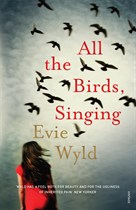
Evie Wyld, All the birds, singing

Courtesy: Random House Australia

The “because” is a bit of an assumption, I suppose, but is an assumption based on a strong correlation noticed by these researchers. Kon-yu then gives examples, which you can read in the article I’ve linked to above.

Now, before you say “but, but…”, it’s true that women have won literary awards here in Australia over the last decade, and in fact have done comparatively well in the last couple of years, but Kon-yu asks us to look at what they’ve written about. Many of our women winners of the Miles Franklin award in the last 20 years, she suggests – Anna Funder, Alexis Wright, Shirley Hazzard and Helen Demidenko – “focus almost exclusively on capital-H ‘History'”. Other wins, like those by Evie Wyld and Thea Astley, were for books set in “the rugged landscape of the Australian bush”. The situation is particularly stark when you look at the Man Booker and the subject matter of recent women winners, Hilary Mantel and Eleanor Catton. Kon-Yu’s conclusion? Well,

It seems that, as a culture, we are still predominantly concerned with the lives of men or in themes that we view as “masculine” or “wordly”. We still relegate women’s work to the domestic, the interior, the personal.

You’ve probably heard VS Naipaul’s statement a couple of years ago that he couldn’t see any woman writer, even Jane Austen (what!?), being his literary equal. He “couldn’t possibly share her [Austen’s] sentimental ambitions, her sentimental sense of the world”. You may also have heard commentary* about schools, co-educational ones anyhow, tending to choose “set” books on the basis of what boys will read, because girls will read widely while boys will only read within a narrow range.

Kon-yu looks into the recent past, the 1970s to 1980s, and finds that a greater percentage of the books by women which won awards then (Man Booker, Miles Franklin, in particular) did focus on female characters. Two Miles Franklin winners in this period, for example, were by Jessica Anderson, Tirra Lirra by the River (1978) and The impersonators (1980). Both are set domestically and deal with family relationships. Around this time, too, writers like Elizabeth Jolley (here) and Anita Brookner (in the UK) were focusing closely on women’s experience and were receiving significant recognition. Kon-Yu reminds us that this was the period when feminist criticism was gaining ground, and publishers like Virago and The Woman’s Press were being established. A coincidence? Not likely.

Anyhow, back in the present, Kon-Yu’s conclusion is that:

It’s not enough to publish books by women, we need to focus more on telling women’s stories.

Kon-Yu, perhaps for reasons of space, doesn’t explore in detail what she means by telling “women’s stories”, but she does quote male American writer, Pankaj Mishra, as saying that:

Novels about suburban families are more likely to be greeted as microcosmic explorations of the human condition if they are by male writers; their female counterparts are rarely allowed to transcend the category of domestic fiction.

The overall point, of course, is not that women can’t, or shouldn’t, write about anything. They sure can – and clearly do. No, it’s more complex. It’s that writing on the domestic, and on the “interior” of women, particularly if it’s by women, does not receive adequate literary recognition; it’s the too-frequent assumption that this is the only sort of writing women can do; and/or it’s the belief that this sort of writing is only of interest, and value, to women. Such tosh! A healthy, vibrant culture needs to hear, and respect, diverse views on diverse subjects. We are, I believe, making gains across the whole diversity spectrum, but we have a way to go yet.

* Sorry that I can’t find a source for this now, so argue with me if you will.

Australian Women Writers 2015 Challenge completed

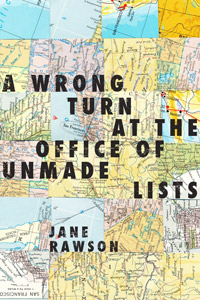
As most of you have heard now ad infinitum, I only do one challenge – the Australian Women Writer’s Challenge. As in previous years, I signed up for the top level, Franklin-fantastic, which required me to read 10 books and review at least 6. I have now exceeded this. Although I plan to continue to add to the challenge, as I’ve done in previous years, I do need to write a completion post so I’m doing it now. I have, so far, contributed 12 reviews to the challenge. RawsonWrongTurnTransitHere’s my list in alphabetical order, with the links on the titles being to my reviews:

Only one of these – Cusack’s – is for a classic and only one – Van Neerven’s – is by an indigenous author. I hope to broaden my reading for the challenge in the second half of the year but given the way the year is shaping up, it may not work out quite the way I’d like. My final post for this year’s challenge will tell the tale.

Do any of you do challenges? And if so, what do they add to your reading? I often see challenges that appeal to me, such as those ones to do with working through your TBR, or reading in an area I’d like to explore more, like Japanese literature, but I feel the completion stress would counteract the value so I resist.

Monday musings on Australian literature: Aussie Rules football in Australian literature

If you live in Melbourne I’ve heard, you must have an AFL (Australian Football League or Aussie Rules) football team. There are those who tell me they survive without it, but if you are new to Melbourne it probably helps your integration to take an interest. Consequently, when Son Gums chose Melbourne for his home in 2009, he decided he’d better choose a team. He did. I, though, had managed to remain an AFL-virgin until this weekend when Mr Gums and I agreed to accompany him to a game. (After all, I dragged him along to lots of “experiences” when he was young. It’s only fair, I thought, that I should give him the same respect I demanded of him!) I’m glad I did, not just because it is part of local culture but because I found it more interesting (for several reasons) than I expected … And, anyhow, now I can tick it off my list.

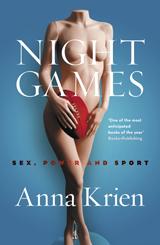
Anna Krien, Night Games

Courtesy: Black Inc

It also got me thinking about representations of the game in Aussie literature. There are a lot of references to AFL in Aussie popular culture, as Wikipedia tells us, but I thought I’d just list a few that I’ve experienced. Here goes:

  • Barry Oakley’s A salute to the great Macarthy (1970). I was young when I read this novel so I remember little, but it did also become a movie, in 1975, during the 1970s Australian film renaissance. It’s about the “kidnapping” of a young local footballer, Macarthy, by the South Melbourne Football Club.
  • David Williamson’s The club (1977) is more memorable. A play by one of Australia’s best-known and most popular playwrights, it deals with politics in the administration of a club. Collingwood was apparently its inspiration, though it is not named in the play. It too was made into a movie – in 1980. The plot commences with a coach contracting a young player who does not, initially anyhow, perform well. Cracks and jealousies start to show …
  • Mike Brady’s “Up there Cazaly” (1979) is a popular song. Perhaps a stretch for inclusion here but I think there’s an argument for allowing song, as a form of verse or poetry, to be discussed in this forum. Whether you like football or not, whether you are into popular song or not, chances are you’ve heard this song if you’re Australia. According to Wikipedia, it’s named for an Australian rules football catchphrase that was used by St Kilda teammates when they wanted early 20th century St Kilda and South Melbourne great Roy Cazaly to hit the ball clear. Long before it became a song it was used by Aussie soldiers during World War II. I didn’t know that before!
  • Paul D. Carter’s Eleven Seasons (2012) won The Australian/Vogel Literary Award for an unpublished manuscript by an author under 35 years old. It’s a coming-of-age story about a teenager and the role football and family play in his development in 1980s-90s Melbourne. Tensions develop when the teenager’s mother doesn’t share his obsession with the game! (I’ve lied somewhat in including this one. I haven’t read it, but I remember its winning the award. It intrigued me.)
  • Anna Krien’s Night games (2013) is the only work I’ve reviewed here. Best described as narrative-non-fiction it explores football culture in relation to sex, power and women via the actual trial of a young footballer accused of rape. A powerful book, it resonates wider than football in terms of its analysis of celebrity, sex and the meaning of consent, but AFL football and the way it deals with gender is its core.

What is interesting about these works is the light they shine on Australian masculinity. Except for the rah-rah nature of “Up there Cazaly”, which was intended as a promotional song, the works I’ve named pose questions about masculinity as depicted in the world of football. There is a lot that is good about team sport, and football (all codes, I suspect) can provide a supportive network for (sometimes vulnerable) young men. Michael Sollis and the Griffyns showed this for Rugby League in their Dirty Red Digger performance, and the American TV series Friday Night Lights showed something similar for American football. But what bothers me is that, handled poorly, football can also bring out the worst in men. It can over-emphasise competitiveness to the point that winning overrides being fair and just, and it can value, and consequently promote, machismo over sensitivity and empathy. As a topic for literature, then, it has plenty of meat. I’m not surprised that writers have chosen to write about it. Do you read literature with sport as its theme? If so, do you have favourites?

Monday musings on Australian literature: AustLit Anthology of Criticism

I’ve written about AustLit several times before, including their BlackWords and World War 1 in Australian Literary Culture projects. Today, I thought I’d highlight their AustLit Anthology of Criticism which was published online in 2010. AustLit, as I’ve mentioned before, is primarily a subscription service, but not all of the content is behind their paywall. Of course, I only discuss freely available content. What would be the point otherwise!

The AustLit Anthology of Criticism was funded by AustLit and the University of Queensland to be “a resource for students and their teachers at secondary and lower tertiary levels”. It contains 18 writers who, on first look, seem an eclectic bunch, with well-known people like Peter Carey, Les Murray, Patrick White, Tim Winton and Judith Wright represented alongside the less widely known like, say, Jack Davis, Michael Gow or Hannie Rayson. The choice of writers, editors Leigh Dale and Linda Hale say, “took into account [those] whose work was currently being studied in the senior secondary school English curriculum in all Australian States and Territories”.

The anthology contains a link to a brief biography for each author on the AustLit Database, followed by a small list of selected articles with links to the online content itself. The chosen articles are “criticism”, which the editors describe as “interpretation” and to be differentiated from “reviews” which they define as focusing more on “evaluation”. These “critical” articles they link to in their anthology can, they say, represent opposing points of view, and mostly come from academic or literary journals like Australian Literary Culture, Australasian Drama Studies, Southerly, and Westerly, or collections of critical essays. For novelists and playwrights, they have mostly chosen one work, but for poets, the articles can deal with a wider body of their work. 

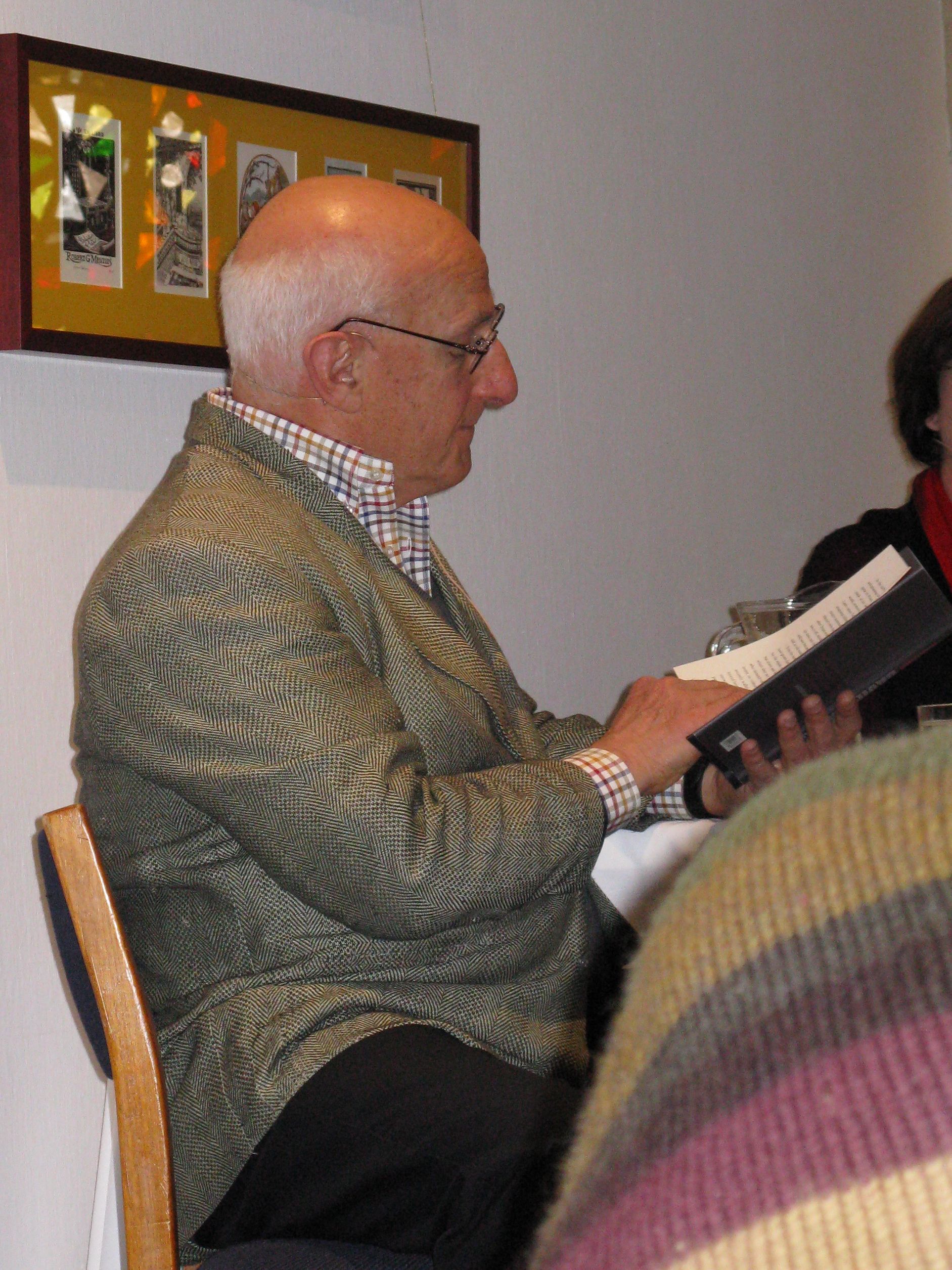
David Malouf reading Ransom

Malouf reading Ransom, National Library of Australia, August 2009

So, for Peter Carey, the book chosen is True history of the Kelly Gang, for Patrick White it’s Fringe of leaves, and for Tim Winton it’s Cloudstreet. Interestingly, for David Malouf several of his works are covered including Fly away Peter, Child’s play and Remembering Babylon. I’ve read four of these six novels, but all before I started blogging. They would all have something to offer students studying them.

I’m interested, though, in what the selection says about what is (or was around 2010) being studied in schools and early tertiary courses around Australia. Only 5 (Dorothy Hewett, Sally Morgan, Hannie Rayson, Henry Handel Richardson and Judith Wright) of the 18 writers are women, and only two (Jack Davis and Sally Morgan) have indigenous background. All, except for the indigenous writers, are Anglo-Australian. These 18 aren’t the only writers being studied, of course, but from the editors’ point of view they are 18 of the most universally studied ones. Hmmm, I say, this probably means they are representative of the whole.

And that’s all I’m going to say now. Regardless of this bias, it looks to be a useful resource and one I’ll return to if I read any of the works they cover. I do like to read good criticism. Do you have favourite sources you go to for criticism versus review?


Delicious descriptions – and other thoughts: Peter Carey’s Amnesia

CareyAmnesiaHamishOne of the pleasures in reading Peter Carey’s Amnesia comes from his language, so I do want to share examples of that, but first I want to say something about the style and structure because I didn’t get to discuss it in my review. One of the criticisms I’ve heard about the book is that it’s disjointed. Some really like the beginning but then find they lose interest. I didn’t find this, but it’s interesting because there is something about the structure of the book that might create this response.

Amnesia is divided into two very distinct parts. Part 1 is told first person in Felix’s voice. It’s here that the story is set up. We learn about the Angel Worm, we learn a little about the four main characters, and Felix starts to realise the import of the challenge he’s been set. Part 2, the longest part, is told third person as Felix, first in a primitive shack on the Hawkesbury River and then in a motel in Katoomba, listens to tapes in which Celine and Gaby tell their stories while he tries to fashion it all into a book. Carey switches between telling us what Felix is thinking, experiencing or up to, and letting us hear Celine and Gaby on their lives and how Gaby turned into the “hacktivist” she is. There is no set pattern to the switching between these three lives, so the reader does need to pay attention, but overall I found the transitions clear.

Why did Carey change to third person voice in Part 2? I’m not sure. Perhaps it’s to reflect that Felix is not master of his own fate, that he is the pawn, or client, of those who are moving him around, just as Australia is a “client state” of the USA. Is this too fanciful? Or, is it to do with the fact that the novel is not just about politics, but also about storytelling, about whose version is most real, most relevant, to be trusted? Who is editing whom, we wonder? Felix editing Celine and Gaby’s stories, or the mysterious publisher editing Felix’s version of the story? As we are told in the last few pages:

As always, the omniscient narrator had a very wobbly grasp of what was happening.

As much as I enjoyed the book, I must say that without a re-read, I will admit to also having a wobbly grasp of some of the novel’s finer points, but I believe I got the gist.

Anyhow, I wanted to share some of Carey’s writing with you, but what? As I look through the book, I find so many parts that I loved. Some work best if you know Melbourne, others if you know the political situation, and still others if you know the plot. This one though might work. It’s a description of Coburg, the working class suburb in which Gaby’s father buys a house, to her mother’s dismay:

The street had a snotty name but the trees were weedy, starved of love, survivors with hessian bandages. Gaby was shocked by the cracks in the concrete, the lonely quiet, the little houses shrunk inside their borders, alone, disconnected. They saw a malevolent cluster of boys like rats with mullets, operating on a Datsun 240Z, roaring, revving, sending oily smoke across the intersection. One lay on the mudguard, deep into the engine, his plumber’s crack shining at the sky.

This is a little – and comparatively straight – example, but I like it.

Peter Carey, Amnesia (Review)

CareyAmnesiaHamishSomewhere sometime ago I read that serious reviewers should read the book they are reviewing at least twice. I think this is good advice, but I admit that with so many books I want to read I rarely follow it. Peter Carey’s latest novel Amnesia is one that well warrants rereading. It assaults you with ideas and action that aren’t easily assimilated on the first read. However, time marches on, so to write this review I am going (or, to be honest, I’m choosing) to rely on the notes I took, supported by a quick flick through. Please read my review in this light!

Amnesia is a satire, and satires can be pretty tricky to read. They’re slippery. They can be funny, but not necessarily. They tend to be about ideas or issues, so their characters are created to serve that end and may not be fully developed or particularly sympathetic. This can make satires tricky to engage with, particularly if you’re the sort of reader who loves to engage with characters. Amnesia presents the reader with some of these challenges. It’s a romp, a thriller, a drama – but in the end it’s all about activism, cyber security and journalism, about politics and the relationship between Australia and the United States of America. I enjoyed it, though the pace was so cracking at times I found it hard to keep up.

The novel starts with a worm, the Angel Worm, which infects the computer control systems of Australian prisons, releasing their locks. Because Australian prison security was designed by American corporations, the worm also infected nearly 5,000 American prisons. Prisoners of all sorts, including asylum seekers, were freed. The U.S. is not amused. As the story breaks, our protagonist, Australia’s self-described “sole remaining left-wing journalist” Felix Moore, is being tried in court for defamation. He’s “grateful for a story big enough to push me off the front pages”. Unfortunately, in the sort of irony typical of satire, he soon finds himself out of the frying pan and into the fire, because, of course, the parents of one of the Worm’s creators are old university friends, Sando Quinn and his wife Celine.

So here’s the set up. Felix is destitute. His book is to be pulped, and his wife has kicked him out. To his rescue comes another old university friend, Woody Townes, who pays him a lot of money to write a book about worm-creator Gaby. Felix soon learns though that this book is not going to be his book expressing the truth as he discovers it, but a book that says … well, let’s just say that here the adventure, romp, thriller, drama, whatever you want to call it, begins.

What then is being satirised? Let’s start with the four main characters, Felix, Sando, Celine and Woody. They met as students at Monash University and became friends. They were radicals and activists who believed they could change the world. They organised marches and protests, they voted in Whitlam and the Labour Government, and they were affronted and angry by Whitlam’s dismissal in 1975. But, who are they now? One of Carey’s targets is this: what happens when radicals grow up? Woody turns capitalist property developer with hints of something worse; Sando is a politician who tries to keep the faith but discovers the compromises he has (or wants) to make; actor Celine sees herself as Bohemian but becomes seduced by the “finer” things in life and doesn’t want to mix with the working class; and journalist Felix sees himself as the tell-it-all saviour but recognises that in the process he has “become an awful creature”.  It’s not a pretty picture.

Underlying this is a thread exploring Australia’s relationship with the USA. There’s the Battle of Brisbane (a two-day fight and riot between American soldiers and locals during World War 2), discussion of US involvement in Whitlam’s dismissal, and, fictionally, fears of what might happen if the US extradited Gaby. (Julian Assange anyone?) Early in the novel, Felix agrees that Woody has a point regarding the extradition risk:

Everything we knew from life suggested that America would do what it liked and Australia would behave like the client state it always was.

Carey also satirises journalism, particularly the sort that prides itself on exposés in search of the truth. Felix becomes the pawn in a game to produce a story that suits the person who gains control of him – by whatever method they can, by money, say, or by abduction. Woody suggests at one stage that Felix make things up to put Gaby in a positive light, but Felix, who believes there’s “no such thing as objective journalism” argues that this doesn’t equate with making things up! Through the course of the book Felix moves (or, more correctly, is moved through mysterious mechanisms) from a classy high-rise in Melbourne, to a remote primitive shack on the Hawkesbury River, and thence to a motel room in the Blue Mountains. All the while he doggedly listens to tapes of mother, Celine, and daughter, Gaby, talking, talking, talking.

Their story of life in Melbourne, from when Gaby was born, significantly on 11 November 1975, is great reading. Melbourne-born Carey knows the city and captures its life, rhythms, and diversity beautifully. The writing is gorgeously descriptive at times, and often funny, but can also be biting.

I think, too, that there’s an element of Carey sending himself up. I’m not suggesting, despite some obvious similarities between character Felix and creator Carey, that Amnesia is intended in any way to be autobiographical. But, in several of the references to writers and writing, I detect digs at some of the criticisms that have been levelled against him. How about, for example, Felix’s comment at the end that:

For the crime of expressing pleasure that my book would be available to future generations, I was judged not only immoral but vain and preening …

Oh Peter, I thought!

To conclude, though, what is all this satire for? Well, the title says it. There’s a reason Gaby was born on the day of the dismissal, and that she becomes the next generation of activists (or hacktivists) – and the reason is that Carey does not want us to forget. He wants us to “maintain the rage”*, to remain aware and vigilant of what is happening, and of whose fingers are in which pie. It’s not subtle, but then what satire is, and it perhaps tries to pack too much in, but it is both an entertaining and a provocative read. I’d be more than happy to read it again.

Peter Carey
Amnesia
Hamish Hamilton, 2014
367pp.
ISBN: 9781926428604

* I drafted my review and then trawled the net, and what did I find but an interview with Carey in The Australian that says just this. I didn’t steal it, promise!

Monday musings on Australian literature: Writers’ letters and diaries

I am currently reading a book of selected letters, First things first, by Australian poet Kate Llewellyn. I’m loving it, so I thought that as a precursor to my review (which is a way off yet as I’ve only read a third), I’d do a Monday Musings on the published letters and diaries of Australian writers. Hmm, not “the” so much as “some”, I should say. And, I should also say that I haven’t read many.

But, I do enjoy reading letters and diaries. It comes, I think, of being a reader who reads more for character than plot. I have written several posts on Jane Austen’s letters which my local group read in sections over a few years. (My posts are listed under Jane Austen on my Author Index page). They were published after Austen’s death. Reading Lewellyn’s letters, I’m aware that she’s alive, and that many of her recipients still are too. It’s a brave thing, I think, to let these “private” communications be shared. Nettie Palmer prepared the extracts from her journal for publication, and recognised the challenges of publishing something that was initially intended only for herself. She says:

Many of the people mentioned in these pages are no longer alive, and as I could not ask all for consent to use their words or letters, I have not asked any. If my friends should think I have taken liberty with them … well, I should be sorry. They will believe nothing here was set down in malice, much in love and gratitude.

Most of the books I’ve listed, though, were published after the author’s death.

As I researched today’s post, I came across the Australian Government’s website on Australian literature. They mention the published letters of Gwen Harwood, which I will include in my little select list below. They include this description of her letters:

Spirited and witty, warm, reflective, at times enraged, often overcome by laughter, the letters are so varied that this large volume can be read as one might read a novel or an autobiography. It would be a pity just to dip in at random: this is the story of the making of a poet.

I’m not sure all collections of letters or diaries provide the story of the making of the writer involved, but they must give some insight into the person, their personality, interests, likes, loves and frustrations. So, here is a selection of published letters and diaries by Australian writers, ordered alphabetically by the name of the writer.

  • Franklin, Miles: The diaries of Miles Franklin, edited by Paul Brunton (2004). These diaries cover the period 1932 to 1954, and is enlightening about Australia’s literary life at the times. I’ve only dipped into it (oops) while doing other research, and look forward to reading more. Here, to give a taste, is an honest Franklin on Dame Mary Gilmore in 1947: “I called on Mary Gilmore. She is increasingly apocryphal in her assertions. Very against the British — an old snake really, seeing the way she touted for a British title …”
  • Harwood, GwenA Steady Storm of Correspondence: Selected Letters of Gwen Harwood 1943-1995, edited by Gregory Kratzmann (2001). See the quote above!
  • Llewellyn, Kate: First things first: Selected letters of Kate Llewellyn, 1977-2004, edited by Ruth Bacchus and Barbara Hill (2015). This is a lively, personal account of Llewellyn’s life, from what I’ve read so far. And it shows me the resilience you need to be a writer, given the very uncertain financial situation writers often find themselves in.
  • Palmer, Nettie: Nettie Palmer: her private journal ‘Fourteen years’, poems, reviews and literary essays (1988), edited by Vivian Smith. This is, really, an anthology, of various of Nettie Palmer’s writings, but it starts with Fourteen years which comprises extracts from Palmer’s journal from 1925 to 1936 and which was first published in Meanjin in 1948. Palmer prepared it for publication, and Smith writes in the introduction that, in arranging it, “notions of symmetry and design were of more importance to Nettie Palmer than an exact pocket diary account of those days”. So, perhaps, a diary that isn’t quite a diary?
  • Palmer, Vance and NettieLetters of Vance and Nettie Palmer 1915-1963, edited by Vivian Smith (1977). This is a selection of the “copious” letters the Palmers wrote to many people, including aspiring and established writers. The inside cover says that the “selection reveals the breadth of the Palmers’ interests and the generosity of their concern for young writers’ struggles, for the plight of Spain in the 1930s, for the problems of bringing up children, earning a living, and facing two world wars. The span of their letters provides an informed and lively perspective on this century. Through these day-to-day responses runs a constant theme: the need for Australians to assume a responsible national stance in politics, in public affairs and in the Palmers’ own profession, literature. They lament, in an entirely modern voice, the inconsecutive nature of Australian culture, the derivative admirations of academics and the public, and the philistinism evident in so much of our national life”.
  • Wright, JudithWith love and fury: Selected letters of Judith Wright, edited by Patricia Clarke and Meredith McKinney (2006). This collection includes her 1945-46 correspondence with Jack McKinney, who became her husband, and with Queensland poet, Jack Blight. Co-editor and coincidentally Wright’s daughter, Meredith McKinney, says that the letters with Blight “constitute a running commentary on the Australian literary scene as well as what she was reading and thinking about poetry and writing in general”. Wright was an activist for the environment and indigenous rights, among other social issues, so her letters are sure to be enlightening.

I’ll leave it here, but have you noticed something? With the exception of Vance Palmer, these all belong to women. It’s easy to suggest that letter writing and journal-keeping have traditionally been the realm of women, but there have been men too, like Samuel Pepys, of course. I did look for diaries and letters by men but with little success. I’m hoping they do exist and that some readers here will tell me about them. Regardless, I’d love to know if you, too, enjoy reading writers’ letters and journals.

Monday musings on Australian literature: Australian flash fiction initiatives

It seemed sensible to follow up my review last week of Angela Meyer’s collection of flash fiction, Captives, with a selective survey of some Australian initiatives for this sort of fiction.

While flash fiction is not new, the internet does seem to be giving it renewed life. An online search will reveal many sites and blogs – individual and communal – on which writers can post their pieces. Here, though, I will focus on more “organisational” support for the form in Australia.

  • 52-Week Flash Fiction Challenge, on Facebook: Created, as far as I can gather, by Australian children’s author Sheryl Gwyther, this is an open flash fiction challenge, which means anyone from anywhere can post a story. Her definition is 20-500 words, and she has set a topic word for each week of the challenge. By way of example, the first three for this year, which started in March, were “silk”, “basic”, “sermon”.
  • Antipodean SF‘s Speculative Flash Fiction: AntiSF is a site “devoted to the online publication of short-short science/speculative fiction stories”, which they define as having an upper limit of 1000 words. You can read their flash fiction online. Everything they’ve published – flash fiction, reviews, and other short works – can be found at their Pandora archive.
  • Australian Horror Writers Association’s Flash and Short Story Competition: Entries are about to close for this year’s competition, but if you’re quick there’s still a chance. For the AHWA, flash fiction can be up to 1000 words. The winner of their competition will receive paid publication in the Assocation’s magazine, Midnight Echo, and an engraved plaque.
  • Fellowship of Australian Writers (Qld) Flash Fiction Competition: For FAWQ’s competition, flash fiction needs to be under 250 words, and “must have a beginning, middle and an end. It must also have conflict and resolution”. The theme for 2015 is “Harvest”. Hmm … that might get some creative juices going! There are two prizes of $100 and $50.
  • Flashers: An initiative of Seizure, Flashers promotes itself as the “online home of Australian flash fiction”. They publish new pieces, of 50 to 500 words, every week. They describe flash fiction as work that “could be written in an hour and read in a minute”, but they also recognise that it has “peculiar challenges – and authors have to make every word count”. This means to me that it often isn’t written in an hour, that it takes time to hone those words! But, here is the good news – at least it sounds good to me – Seizure actually pays for the pieces it publishes. Just $50, but a start eh? This payment is due to the support of the Australia Council.
  • Spineless Wonders, run by UTS alumni, states that they publish “the only annual anthology of microliterature (including Flash Fiction) in Australia”. Spineless Wonders cover the gamut of what they call “brief” fiction, that is, “short story, novella, sudden fiction and prose poetry”. Since 2011, they have sponsored The joanne burns Micro-Lit Award. For the 2015 award, won by Nick Couldwell, pieces had to be no more than 200 words, and meet the theme “out of place”. The winner and finalists will be published in an anthology titled, yes, Out of place. The prize also included $300.

This brief list represents only a slice of the action out there, but I’ve enjoyed sussing out what I think is a variety of ways in which the form is supported and promoted. I’d love to hear of sites you know and love.

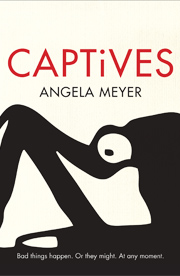
Angela Meyer, Captives (Review)

Angela Meyer, CaptivesHave you read any flash fiction? Some of the pieces in Pulse would qualify but, besides this, I hadn’t read much until I picked up Angela Meyer’s collection Captives, which I bought for my Kindle last year. I bought it for a few reasons: I enjoyed and reviewed the short story collection she edited, The great unknown; I follow her blog Literary Minded; and of course I like short fiction. So I read Meyer’s book and was – dare I say it – captivated!

Meyer has divided her collection into 7 sections, the first 6 of which are titled using polarities – On/Off, Up/Down, In/Out, With/Without, Here/There, Then/Now – with the last being, simply, Until. The titles are as terse as the little works they contain. And a couple are very little, being just a couple of paragraphs, while the longest are, I’m guessing, around 500 words. This brings me to the matter of definition. How do we define flash fiction? Well, as with all definitions, there’s not complete agreement. Most agree that it can be as short as a sentence, but there’s no such agreement on the upper limit. Some say 300 words, some 500 words, and others 1000 words. The term itself was first used in the early 1990s, but there are other terms, including micro fiction and sudden fiction. I won’t discuss this further. I’m happy to be fluid about the definition, and I like the term flash fiction.

Writing a very short story sounds challenging to me. As Becky Tuch writes in The Review Review “Distilling experience into a few pages or, in some cases a few paragraphs, forces writers to pay close attention to every loaded conversation, every cruel action, every tender gesture, and every last syllable in every single word.” Meyer clearly understands this imperative, and demonstrates a sure grasp of the form. Indeed, several of the works included in Captives have been published elsewhere, which suggests her writing in this form has gained recognition.

Captives contains 37 pieces, and they vary greatly in topic, theme and setting. Some are set in the past, some the future, some in exotic places like Norway or Scotland, and others in Australia. Some are realistic, while others toy with the unexplained. Their protagonists range from a man who has accidentally locked himself in the toilet (“Thirteen tiles”) to a sister with a secret (“We were always close”). Some pieces have been inspired by news stories like those about men who lock up women for years (“Green-eyed snake”) or about the man who walked a tightrope across the Grand Canyon (“Tightrope walker’s daughter”). Other pieces reveal writers she admires, such as George Orwell (“Booklover’s corner”) and Italo Calvino (“One of the strings and their supports remain”). In all, though, the protagonists confront a challenge, a change, a decision, or they create worlds that suit themselves. As you’d probably expect given the form, we don’t always know the outcome. Meyer leaves clues, of course, and sometimes we can be confident we know what will happen, but other times those clues simply tease us with possibilities.

The collection starts with a bang, almost literally. In “The day before the wedding” the bride discovers something new about “her love”. He is out duck-shooting, and

Still her love had the gun trained on her, and she stood, and even when he lowered it and his expression revealed play, a joke, she knew she’d seen his true face.

I don’t think this spoils the story, because the conclusion which follows is one of those teasers I mentioned – unsettling, but for whom? Meyer’s language here is tight and spare, and uncompromising. I loved it, and knew I’d made the right decision to buy this book.

Subtitled “Bad things happen. Or they might. At any moment”, the collection is dark, overall.  But, there are (somewhat) lighter pieces. In “Glitch”, Daniella finds a solution to her problem of hearing the devil, “the hiss of Beelzebub”, in the machines around her, and in “Brand new” the narrator finds comfort in the company of a brain-damaged elderly man. This story reminded me of my reading group’s joke that when we are old and have lost our memories we will just read the same book every month. Much cheaper, and just as much fun – if we choose the right book!

I can’t possibly cover all the pieces, so will look at one section, In/Out, which comprises six pieces. In “Meds” the narrator needs to decide whether he will join his partner and friends in their calm, medicated (or, as he sees it, capitulated) lives, while in “One of the crew” a woman fakes being a writers’ festival official. There’s an interesting paradox here: in the first story our protagonist is invited “in” but doesn’t want to accept, while in the second the woman wants to be “in” so pretends to be so. In two of the other pieces, the in/out dichotomy is more literal. There’s the aforementioned toilet prisoner in “Thirteen tiles”, and there’s “Foreign bodies”, in which Kate, a prisoner in gaol, starts to swallow increasingly bigger objects. The conclusion to this story, though, pushes literalism to the limit. Indeed, in many of the stories, Meyer plays with the tension between literalism or realism and the absurd or fanciful. There’s often a fine line …

I haven’t talked much about the writing, because the stories themselves are so powerful. However, part of the power of the stories comes from the writing, of course. It’s perhaps intrinsic to the form, but the writing is direct, spare. It can also be elliptical at times. Meyer expects her readers to work, but that too is the nature of short fiction. And there is tight pointed use of imagery, as in the opening paragraph of “We’ve always been close”:

My sister and I stretched a tarp over the mud to make a slide into the dam, just like when we were kids. It was full from the recent storm. Magpies called. From the dam, I splashed gritty brown water up onto the slide to give my sister something to slip on. She squealed and laughed and the sound dirtied my chest with guilt. She gripped my shoulders after landing, as she was afraid of the bottom. We’ve always been close.

On the surface a happy scene, but we know from the language that something is not quite right …

Captives is an appropriate title for the collection because, whether they know it or not, most if not all the protagonists are captives in one way or another – some physically, some psychologically or intellectually, some both. Some escape, while others remain trapped (at least to the best of our knowledge). Deborah, a psychologist in “Spark”, is trying to escape:

She had wanted to agitate the structure, to act out, in ways a psychologist should not.

Fortunately for us, though, Meyer is a writer of fiction and it is perfectly acceptable for her “to agitate the structure”. This she has done with confidence and flair. Not every story grabbed me equally, but I think that’s more to do with me and my experience. I wouldn’t be surprised if different readers found different stories worked best for them. So, my recommendation is that if you haven’t read flash fiction, this would be an excellent place to start.

awwchallenge2015Angela Meyer
Captives
Design: Sandy Cull
Carlton South: Inkerman and Blunt, 2014
ISBN: 9780987540126