Monday Musings on Australian Literature: Writers’ retreats

Eleanor Dark, c. 1945

Eleanor Dark, c1945, by Max Dupain (Presumed Public Domain, from State Library of New South Wales, via Wikipedia)

The last Monday Musings in June was on Christina Stead‘s house and the current owners’ plans to modify it in a way that would spoil some of its heritage significance. The commentary on the post included discussion of how writers’ homes can be used. One rather apposite way is as writers’ retreats.

We have a few in Australia:

  • Eleanor Dark‘s Varuna in the Blue Mountains west of Sydney. Varuna was the home of Australian novelist Eleanor Dark and her husband Eric, and was given to the Eleanor Dark Foundation in 1989 by their son. Varuna’s website describes the retreat as “an environment totally dedicated to writing and offers writers ideal conditions in which to concentrate on their work. The success of Varuna absolutely depends on writers respecting the needs of their fellow guests – hence a few routines & conditions of stay.” This is clearly a serious place! The site also tells us that the retreat’s library has been catalogued onto LibraryThing. It might be an old house but it certainly seems up to date in using modern technology to support its services. Writers like Kate Holden, Toni Jordan and Cate Kennedy have all used the retreat – and recommend it.
  • Katharine Susannah Prichard Writers’ Centre in the hills around Perth, Western Australia. Established in 1985, it is located in Prichard’s home and is explicit about its twofold purpose: “Encouraging writing related activities in the Perth Hills whilst preserving the heritage value of the former home of leading Australian writer”.  The KSP website advertises that “the ambience of the Centre is excellent for creativity and inspiration. 20-60,000 words are frequently achieved by our Writers in Residence in a four week stay, in between enjoying the interaction with local writers”. I love the promise of productivity there!
  • Olvar Wood Writers Retreat, at Eudlo in the hinterland of Queensland’s Sunshine Coast. Having been established in 2008, it is the newest of the of the writers’ retreats and “sort of” meets the topic of this post. The Retreat was established by two Queensland writers, Nike Bourke and Inga Simpson, who bought a property with the purpose creating “an ethical, environmentally sustainable writers’ retreat”. It is their current home and a retreat: “Run by writers, for writers” is their catchphrase. For those who haven’t heard of them (like me, for example), Nike Bourke has a few books under her belt including The bone flute, her debut novel which won a Queensland Premier’s Literary Award in 2000, and Inga Simpson won a Scarlet Stiletto award for her short story, “Operation Bluewater”.

All three retreats offer more than retreat opportunities for writers and would-be writers. They run all sorts of seminars and workshops (such as writing in specific genres/styles such as memoir, crime, short stories, screenwriting); they offer prizes; they run events such as literary dinners and author talks; they offer fellowships; and they provide practical services such as critiquing and manuscript development. I wonder if they run courses for litbloggers? I’d be there in a flash.

I suppose writers’ retreats aren’t for everyone, but if you were of mind to go, how much more inspiring would it be to be in the home of a writer. I’d love to hear about other writers’ retreats you’ve come across, particularly if they are run from writers’ homes.
Monday musings on Australian literature: Some novels about the second world war

As I am still immersed in things paternal – and as my father served in the second world war – I thought that this week I’d take the easy way out again and list some of my favourite Australian novels about that war. Although I call myself a pacifist, I don’t shy away from war novels. The main reason is because in war we see humanity under duress and, through that, we see the best and worst of human behaviour. I love how the best war novels throw up the “truths” that I love to find in literature.

I’m going to list just 5 – though I’ve read more than that – in the order that I’ve read them. I’ve chosen these 5 not necessarily because I think they are the best (though I have enjoyed them all) but for the different perspectives they offer on the experience of war. (Note: the dates after the titles are not the dates I read them but when they were first published! Just so you know!)

Nevil Shute‘s A town like Alice (1950)

Nevil Shute was one of my favourite authors when I was a teen though when I read him now I see that he’s not as good a writer as my other teen passion, Jane Austen! Nonetheless, he was a good storyteller and many of his novels were adapted for film, including A town like Alice. It’s primarily a post-war romance, but the two characters, English rose Jean and rough diamond Aussie Joe meet when they are prisoners of war in Malaya, a story which is told in flashback. It’s a pretty stereotypical romance but the war, the English-Australian cross cultural story, and the Australian outback setting captured my teen heart.

Arnold Zable‘s Cafe Scheherezade (2001)

Café Scheherazade is set in, and based on, the real cafe of the same name. It was, from its establishment in 1958 to its demise in 2008, a significant meeting place for Jewish refugees who came to Melbourne post war. The novel tells the stories of the Cafe’s patrons – their lives in Europe, and how and why they came to Australia. It taught me something I hadn’t known before – that many Jewish refugees came to Australia via Shanghai. Zable’s prose is beautiful, and though the stories, as you can imagine, contain much tragedy, the final message comprises those universals of courage, endurance, love and even laughter.

Markus Zusak’s The book thief (2005)

Zusak’s The book thief is one of those rare books that pulls off telling a terrible story with humour. Its subject is an ordinary German family which fosters a young girl, and then hides, to their great risk, a young Jewish man. It’s a deadly serious book about bravery and cowardice, about kindness and cruelty – and yet it has, much of the time anyhow, a rather whimsical tone.

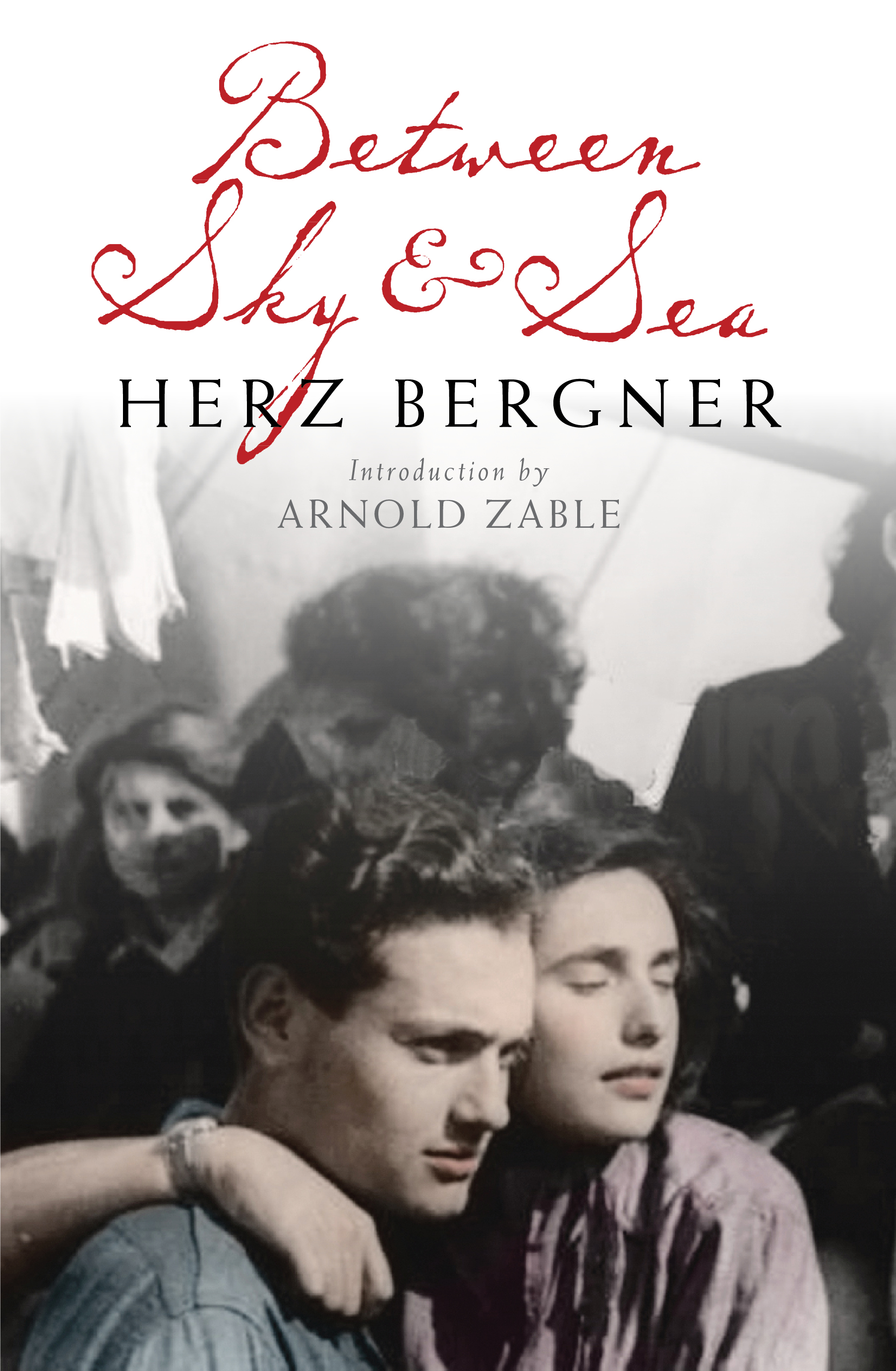
Hans Bergner’s Between sky and sea (1946)

Hans Bergner, Between sea and sky

Bergner tells the opposite story to that told by Zusak. His characters are Jewish refugees fleeing Nazi occupied Poland on a boat – but no-one will let them land, no-one will take them in, the way the Hubermanns took in Leisl and Max in The book thief. It explores the impact of this, as the reality becomes clear to the boat’s occupants. It’s a pretty devastating story.

Alan Gould‘s The lakewoman (2010)

I started with a romance and I’m ending with a romance, but that’s where the similarity between the two books ends. Shute’s book has a pretty traditional trajectory – boy meets girl, boy loses girl, boy gets girl, more or less – against the backdrop of the war and early post war period. Gould’s story is far more complex – more realistic about life and character, with a touch of the mystical thrown in. Gould argues that his is not really a war novel because it’s not about the war. To a large degree that’s true, but in a sense it’s true of many books set in war. War is the setting, but the themes are often something bigger (universals about human behaviour) and smaller (about how particular people behave under stress). One of the issues Gould explores is how the promise of a person’s life can be thrown, not only by the things that happen to them but by the decisions they make as a result. And in war, a lot of things can happen to a person!

I’ve limited myself to 5 so am sure to have missed some favourites of yours. I’d love to hear whether you read war novels, Australian or otherwise and, if so, what your favourites are. If you don’t read them, you can tell us that too!

Monday musings on Australian literature: Five fascinating fictional fathers

This week’s Monday musings has a personal, sentimental, genesis. Last Friday, my 91-year-old father underwent his third major abdominal surgery in 6 years. It’s a big ask for an older body but he’s hanging in there. My parents, not surprisingly I suppose, were instrumental in my becoming a reader. My mother introduced me to Jane Austen. My father would let me bring my “28 books” (why I thought there were 28 is lost in my childhood haze) to him in bed in the morning so he could read them aloud to me. It was also he who introduced me, through reading aloud again, to Banjo Paterson‘s ballads. I have a lot to thank my parents for – and my being a reader is one of them.

All this got me to thinking of fathers in literature, and particularly Australian literature. There are a lot of men – yes, really! – in Australian fiction, but how often, I wondered, is their role as fathers a feature of the writing? As it turns out, it’s more common than I thought, but I’ll just share five here.

Elizabeth Jolley‘s My father’s moon (1989)

My father’s moon is the first book in Jolley’s semi-autobiographical trilogy and, while it is really about Vera and her challenge to find a place in the adult world, the support provided by her father is critical in her life … and Jolley writes of it beautifully:

He always told me when I had to leave for school, every term when I wept because I did not want to leave, he told me that if I looked at the moon, wherever I was, I was seeing the same moon that he was looking at, ‘And because of this’, he said, ‘you must know that I am not very far away. You must never feel lonely,’ he said. He said the moon would never be extinguished. Sometimes, he said, it was not possible to see the moon, but it was always there. He said he liked to think of it as his.

Murray Bail‘s Eucalyptus (1998)

Eucalyptus is one of my favourite books. The writing is gorgeous and it explores fatherhood from a surprising angle – for a modern novel. It is in fact a rather traditional fairy story, with a modern twist. The father in Eucalyptus sets a task for his daughter’s wooers – they must be able to identify every eucalypt tree on the property in order to win her hand, but this modern father finds that managing his daughter’s future is not quite as easy as he thought. She might in fact want a say in it.

Joan London‘s The good parents (2008)

Joan London targets, among other things, the whole issue of parenthood by exploring three generations or so of parents and children. The central family is Jacob and Toni, with their two children, and Jacob is given reasonable “airplay” in his own right as he contemplates his missing daughter and his role as her parent, and along the way his relationship with his mother, Arlene. He wonders, as many parents do at some stage, whether the choices he made for his and his family’s life were the best ones for his children.

Steve Toltz‘s A fraction of the whole (2008)

The father-son relationship is the central idea of Steve Toltz’s big, loose, baggy monster of a novel as it explores Jasper’s rather typical desire to not be his father, the free-thinking-out-there Martin. After a rather wild ride in which Jasper learns many important things, he realises that he will never be his father, that he is the sum of more than one part.

David Malouf‘s Ransom (2010)

And then there’s Ransom, Malouf’s reimagining of Priam’s approach to Achilles to retrieve the body of his son Hector in order to give him a proper burial. The book has larger themes – about daring to dream, about humility, about the power of compassion, to name a couple – but at the heart of it is the love of a father for his son. Without that, there would be no book and we would have missed another beautiful read from Malouf.

This is a pretty quick introduction to some views on fathers in recent Australian literature, because my time right now is otherwise engaged – but I’d love to hear if you have favourite literary fathers. Who are they, and why do you like them?

Monday musings on Australian literature: Writers from South Australia

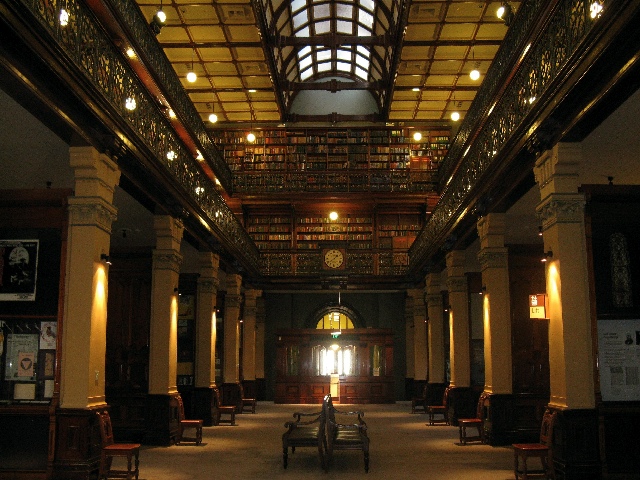
Mortlock Wing, State Library of South Australia

Mortlock Wing (1884), State Library of South Australia

In the decade from the late 1960s to the late 1970s, South Australia, under premier Don Dunstan, was Australia’s most progressive state. I won’t list all the achievements – you can read them in the Wikipedia article linked on his name – but there were big social justice ones including the recognition of Aboriginal land rights, decriminalisation of homosexuality, and abolition of the death penalty. Dunstan was also known for supporting the arts … and South Australia became a mecca for anyone interested in the arts. Things have changed now, as they always do, but the Dunstan legacy remains in the Adelaide Festival Centre, probably Australia’s first real multi-purpose arts centre.

The state also hosts an internationally recognised arts festival, the Adelaide Festival of the Arts, and Australia’s oldest writers’ festival, the Adelaide Writers Week, which has run for over 40 years. And yet, most Australians would probably be hard-pressed to name writers from the state. In fact, probably the best known writer now living in the state is J. M. Coetzee! A great writer, but in my state-focused posts I like to look at writers’ formative years …

And so who? Well, I’ll name a few but I must admit I couldn’t think of many myself:

  • Barbara Hanrahan (1939-1991) whose The scent of eucalyptus I reviewed some months ago. That book – autobiographical fiction – is an idiosyncratic (but universal too) evocation of an early-mid twentieth century Adelaide childhood. She was also an artist of note. But, she is no longer alive.
  • Peter Goldsworthy (b. 1951) whose Three dog night I read, and enjoyed,  before I started blogging. He is also a poet, librettist and screenwriter. His daughter, Anna Goldsworthy, has written a well-reviewed memoir, Piano lessons (which is on my virtual TBR).
  • Colin Thiele (1920-2006) who wrote primarily for children – for the late primary-early secondary years. He is most famous for his novel Storm Boy which was made into a highly successful movie by another of Don Dunstan’s initiatives, the South Australian Film Corporation. I don’t usually include children’s writers in my lists but his writing is so evocative of South Australian landscapes that it seemed wrong to omit him.

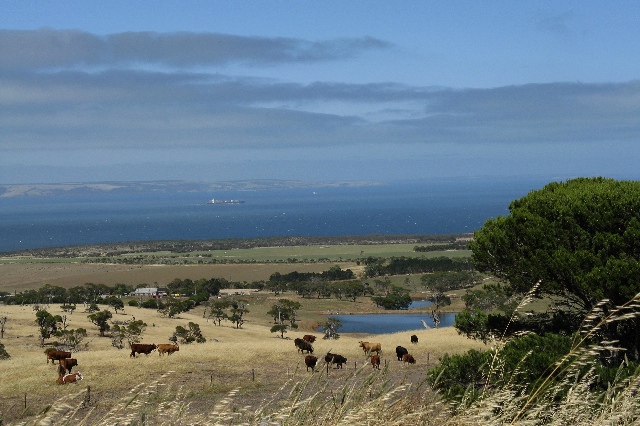
Fleurieu Peninsula, South Australia

Fleurieu Peninsula, South Australia

South Australia, like each state, has a distinctive geography, which ranges from its golden Mediterranean-like south to its arid north, with lakes, mountains and pockets of lush green in between. I’ll end with an excerpt from a Peter Goldsworthy poem titled “Yorke Peninsula, Easter”:

Returning to childhood.
To fields of sweat and dust,
scraps of eucalypt,
wheezing crows.

To the backyard of summer,
the brown brown grass of home.
(excerpted from The Australian Poetry Library)

Several well-known Australian authors currently live in South Australia – including Brian Castro and children’s writers, Mem Fox and Gillian Rubinstein – but I’d love to hear of any other (reasonably) contemporary South Australian writers.

Monday musings on Australian literature: eBook publishing in Australia

Sense and sensibility book covers

Printed and eBooks for Jane Austen's Sense and sensibility

First off, the disclaimer: I don’t know a lot about what is happening with eBook publishing in Australia, so my goal here is as much to find out more from readers of this post as it is to impart knowledge.

I thought a good place to start would be the Australian Publishers Association (APA) but didn’t find a lot to excite me. The Association has 11 committees, but a search on “electronic” on the page listing these committees brought up only two which include electronic publishing in the description of their goals/activities – the Tertiary and Professional Publishers, and the Scholarly and Journals Publishers! Oh dear that’s not looking very proactive. Maybe they just haven’t updated their info on the APA website?

Because trade publishers are producing electronic versions of their books. Text Publishing, for example, told us in their February newsletter about the eBooks service being offered by independent Melbourne bookseller, Readings. Text wrote that:

In collaboration with local software developer Inventive Labs and SPUNC (the Small Press Network about whom I’ve written previously), Readings is now able to offer Australian ebooks that are readable on any device, from phone to PC to dedicated ereader.

Readings was, apparently, the first independent bookshop in Australia to offer locally published eBooks to its readers. This means, for example, that works by such Text authors as Peter Temple, Kate Grenville, Kate HoldenToni Jordan, and Madeleine St John can now be bought from Readings in electronic format (using, as I understand it, the book.ish service. This is a bit of a problem for Kindle users who, I understand, can only access book.ish eBooks online).

Back to publishing though. A year ago, in July 2010, a report by Jenny Lee titled Digital Technologies in Australia’s Book Industry was published. It was prepared for the Book Industry Strategy Group and is 72 pages long. I have only skimmed it. It looks at the whole supply chain – Authors, Agents, Publishers, Printers, Distributors, Retailers, Libraries, and Readers – but my focus here is on publishers because, arguably, they are the critical point in the chain. What Lee found regarding publishers – a year ago so things may have changed – was that electronic publishing (and delivery) is strongest in the scholarly and higher education area. Well, that’s not surprising given what I found at the APA website is it? Regarding trade publishing she wrote:

Publishers of consumer/trade books have generally been hesitant about producing ebooks because of concerns about piracy and price, but many are now producing a selection of books in electronic form and in some cases making them available through their websites.

And so, it is starting, albeit slowly and moving from publisher websites to sellers like Readings.When the Kindle first appeared, we Australian readers complained about the lack of suitable content, particularly Australian content. More Aussie content is available now, but I’d love to know what readers here think. Is enough available? How do you know what is available? Is it available on the format you want and at a price you are happy to pay? I expect to return to this issue, but would love to know what people are finding now (here and in other countries).

Monday musings on Australian literature: Australian Poetry Library (online)

Henry Lawson

Henry Lawson, circa 1902. (Presumed Public from the Sydney University library, via Wikipedia)

It seems appropriate now, when I’ve been exploring the iPad app for TS Eliot‘s The waste land, to introduce the Australian Poetry Library website that was launched in late May. Essentially a digital library, it contains over 42,000 poems from over 170 poets. That’s a pretty good start, particularly when the poets range from pioneers like Henry Lawson to current poets like Les Murray, Tracy Ryan and Alan Gould (whose novel, The lakewoman, I reviewed recently).

The home page is clean and bright, if a little busy. Here is the main content (of which some is dynamic ensuring new content for each return visit):

  • Talking poetry: a selection of poems. Click on a poem and you are taken to a page for that poem where you can hear it read, and follow further navigational links. When I looked at it today, two of the six poems were by Gould, and one was by Rosemary Dobson whose late husband used to work in the office next door to mine (way back when). These readings must surely engage more people in poetry.
  • Featured glossary term: a definition of a poetic term – sestina when I looked – plus the opportunity, a click away, to explore the glossary further. I can see myself checking this out in future.
  • Features: a selection of poets. Click on a poet and you are taken to his/her page containing an image; a biography, bibliography and a further reading list; and a list of poems that you can click on to read. I would love it if the further readings – particularly journal articles – were hyperlinked to the full content, but I didn’t find any that were. I expect copyright is an issue.
  • Review: a review of a poem
  • Poems: a couple of poems from the site
  • Themes and occasions: a list of categories to help find poems on likely topics such as Animal poems, Anniversary poems, Love poems and so on. A nice idea.
  • Poetic forms: a list of forms and styles, such as Iambic Foot, Haiku, that can be clicked on for a definition. (Strangely, the clicked-to page contains some empty clickable headings for titles, surname, and first name, as well as the definition.)
  • Search

There are also useful menu bars/tabs. The main one for the site contains the following self-explanatory options regarding the content: Home, Poets, Poems, Guest collections. The other is geared to the users of the site: For teachers, Glossary, Poetry resources, FAQ and My selections. Overall, the site is easy to navigate, and should appeal to (and be useful for) the general public, educators and students, and the poets themselves.

So that’s the rundown. It’s a lovely site. I checked for several poets and most of them were there – with access to extensive lists of their poems. For Geoff Page, whose verse novel The scarring I reviewed here, there are 857 poems. That alone would keep me well occupied for the next little while! But, not all poets are there. Bruce Dawe and Kevin Hart, for example, are not. Chances are, as the FAQs tell us, this is because permission was not given (by the poet, or the publisher, or whoever owns those rights) to reproduce the poems. This is a POETRY not simply a POET site, so providing the poems is integral – and must have been a challenge to negotiate. The site does, however, allow for some monies to be paid to the poets, when visitors to the site choose to download their “My selections”.

There is an issue though regarding updating. According to the FAQs, no more poems are being added at present. They say: “It is intended that subject to funding, the editorial team will open the site for inclusion of more poetry”. This runs a little counter to the media release on the site’s launch. It says: “The site will continue adding new poets as well as critical and contextual material including interviews, photographs and audio/visual recordings which will be a boon for students, teachers and other researchers.” Hmm … according to this release, the project received the highest ever ARC Linkage Grant for a humanities project and yet, ongoing funding is clearly an issue. I do hope that this great start is not all it is!

And now, just because I do like a bit of nonsense, and because this poem is about poetry and is out of copyright, I’m going to end with “Who wrote the Shakespere plays”, by W.T. Goodge (1862-1909):

No lover of poetry, I,
For the qualification is lacking,
And indeed it were vain to deny
That I couldn’t tell Browning from Blacking.

But Shakespere’s the author, I’ll vow,
And nothing my faith can be shakin’,
For it would be ridiculous, now,
If we talked about “Lamb’s Tales of Bacon”.

With thanks to Lisa of ANZLitLovers for drawing my attention to this site.

Monday musings on Australian literature: the National Centre of Biography

What is life? Life itself, as you will realise if you consult a dictionary, is hard enough to define. But what is a life? And why does it matter? For itself (a question of honour)? Or for what one can make of it as a biographer (which may mean trespass)? I am old-fashioned enough to believe that it matters for and in itself. But what precisely is it that I am trying to honour and how do I do that? (Veronica Brady, on writing about Australian poet Judith Wright)

Do you like to read biographies? I do, though I don’t read as many as I would like to because fiction tends to have the edge in my reading priorities. Nonetheless, it is a form (genre?) that fascinates me. How do you structure the story of a person’s life? What do you do about the gaps in knowledge? (Even in a well-documented life you are not going to “know” all of your subject’s feelings and motivations.) How do you handle the ethics (not to mention legalities) of revealing perhaps “uncomfortable” truths? How do you make it readable? And so on …

Biographies of course take many forms – from the brief overview documenting the key points in a person’s life to a narrative telling the story of someone’s life. In Australia, one of the best examples of the former is the Australian Dictionary of Biography (ADB) from the Australian National University (ANU). First published in 1966, the ADB now contains “concise, informative and fascinating descriptions of the lives of over 12,000 significant and representative persons in Australian history” (from the website), and is also available online. The online version largely parallels the printed version. In other words there is a long lead time (we are talking years, here) between when the articles are written and their appearance in print and online. (Surely this has to change?) Currently, ADB is working on entries for people who died between 1991 and 2000, with the edition covering those who died between 1981 and 1990 due for publication in 2012! It is, however, despite this lag time, a useful starting point for research into Australians.

In 2008, the ANU established the National Centre of Biography (NCB). It is now responsible for the production of the ADB, but it has a wider mandate, relating to fostering and encouraging expert and innovative biographical writing in Australia through such activities as teaching, conducting public lectures and symposia, and inviting international scholars to the Centre. Exciting stuff, eh?

This year, the NCB also launched Obituaries Australia. Their stated aim is to “collect every obituary that has been published and to index them so they can be searched by researchers”. Currently though the site contains only around 2000 entries, which is why almost every search I tried came up blank. You have to start somewhere though …

All this suggests that biography is, in fact, alive, well and taken seriously in Australia. In addition to the work being fostered at the ANU, there are a number of literary prizes here for biographical or life writing. They include:

There are also several non-fiction awards, such as The Age Non-fiction Award and the non-fiction and history categories in the Queensland Premier’s Literary Awards, for which biographies are eligible and have in fact won.

I will come back to biography again in a future Monday musings, but, in the meantime, would love to know whether you read biographies and how well you think the form is supported by the literary or cultural establishment in your country.

Monday musings on Australian literature: What value writers’ homes?

DKS, in a recent comment on this blog, and Lisa of ANZLitlovers, in a post last week, have brought to my attention the threat to Christina Stead‘s home, Boongarre, in Watsons Bay, Sydney. As a lover of the “literary road”, I’m concerned and so decided to explore it a little more.

The facts, as I understand them, are there is a draft heritage listing on the house, but there is also a development application currently before the Woollahra Council to add “modern extensions and excavate the historic garden” (Street Corner Staff, 6 June 2011). The house was a major inspiration for Stead’s novel, The man who loved children. The Watsons Bay Association has set up a petition to save the home. Their arguments are that the house:

  • will (do they know this?) be a heritage item “within months”;
  • represents 70 years of history of Christina, and her conservationist father and step-mother, David and Thistle Stead; and
  • is one of a “dwindling number of important historic houses in Watsons Bay”.

The Association provides strong supporting evidence for these arguments (which you can read via the link I privoded). They also say that the cause is being supported by such contemporary writers as Jonathan Franzen (who wrote an introduction for a recent edition of The man who loved children), Alex Miller and Nikki Gemmell.

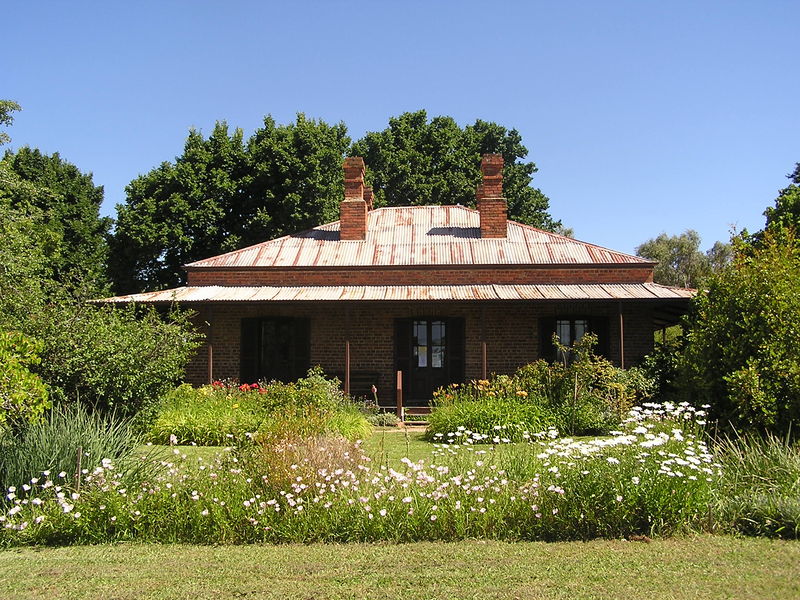
Lake View House, Chiltern

Lake View House, Chiltern, in which Henry Handel Richardson lived (Courtesy Golden Wattle, via Wikipedia, using CC-BY-SA 2.5)

There are those, however, who aren’t so quick to leap to the defence of the house. Over at The Australian newspaper’s A pair of ragged claws litblog, the issue was discussed earlier this month by Stephen Romei and his commenters. Stephen posed this:

I’m leaning towards saying it doesn’t bother me, that Schwarzer spent $10 million to buy the place, which is a house not a museum, so he should be able to do some renovations if he wants, that swimming pools are great when you have kids, and that he’s not, as far as I know, also proposing to burn the last copy of The Man Who Loved Children.

But I’d like to hear other opinions on the matter. The fact that Alex Miller, for one, does care, is more than enough to give me pause. So, apparently, does Jonathan Franzen, who is Stead’s literary champion in the United States.

Romei goes on to suggest that seeing a writer’s house, say Hemingway’s, is interesting in a “touristy” way but that he wouldn’t care if it weren’t there the way he would if Hemingway’s books no longer existed. Several commenters agreed with him: it’s the books that matter, they said; and there must be other ways to remember and promote interest in Christina Stead. But, argued others, there is value in keeping and celebrating writers’ houses. My favourite arguments are:

  • When a home and/or museum is done well, it can provide wonderful insights into the writer’s life and serve as a repository for archives and artefacts, as well as a focus for dissemination of the writer’s work and a resource for scholarship. (Nathanael O’Reilly); and
  • Maintaining a house for prosperity is more than a gesture. It is an important anchor point for a culture which says “this is us, this is valuable.. see why”.  It speaks volumes to those coming on, even if they don’t visit.  A writer’s home may seem inconsequential, say compared with Monticello (tell me if that experience doesn’t impact, and last!*), and upkeep payments may seem misplaced or prohibitive, but little by little these things infuse society and enrich us here, and by overseas acknowledgement through visitation, in ways immeasurable.  We really do need to understand these values and to move away from the transigent [sic] “she’ll be right” approach to our “culture” and begin taking a more hands-on approach. (Lobster)

Wow! I didn’t need convincing, but Lobster has nailed it on the head as far as I’m concerned. What about you?

(* It sure does!)

Monday musings on Australian literature: Contemporary poetry and music

telegrams tremble like leaves from a wintering tree
and the spider grief swings in his bitter geometry
– they’re bringing them home, now, too late, too early.
(from “Homecoming” by Bruce Dawe)

Last night I was lucky enough to attend a private function at which a small, local, male a capella group, the Pocket Score Company, performed. Their repertoire is primarily early music (medieval and Renaissance) but last night they also sang one modern composition set to a poem by Australian poet Bruce Dawe. The poem, bitterly titled “Homecoming” (1968), is about the bodies of soldiers being brought home from Vietnam. The composer is, I believe, Philip Griffin. As far as I can work out, he was born in England, grew up in Western Australia and now lives in New Zealand but info about him is pretty minimal.

My main point here, though, is not Philip Griffin but the close relationship between poetry and music. I often hear people who love to read say they’d like to read poetry, particularly contemporary poetry, but find it difficult … and it sure can be, but, set to music, poetry can suddenly become way more comprehensible. There is a lot of synergy between poetry and music – just think ballads, for a start – and I have touched on the poetry-music relationship in past posts on musical ensembles. Today, though, I decided to do a quick Internet search to see what else I could find. One exciting idea I discovered was the Pure Poetry Project  which was established by Bronwyn Blaiklock and the Ballarat Writers Inc.

The first Pure Poetry event occurred in 2004 and focused on the performance of new poetry and new music rather than expressly requiring a crossover between the two. However, this year, it was decided to specifically encourage integration between the two art forms:

selected poets and composers have been asked to write specific new works in a two-part process. In the first part composers have been asked to musically respond to recently written poems, whilst poets have been asked to respond to recently composed works. The second part of the process is more of a direct collaboration where poet and composer work together to create a new work. (Anthony Lyons, composer)

The recital took place in May this year, in Ballarat. It sounds like an exciting event and I would love to have been there.

Australian poet Les Murray, photographed at hi...

Les Murray, 2004 (Courtesy: Brian Jenkins, using CC-BY 3.0, via Wikipedia)

Another exciting project combining contemporary poetry and music is that between The Song Company (whom I’ve reviewed here before) and Australian poet Les Murray, in which composers from around the world have set selected Murray poems to music. One of the composers, Andrew Ford, asked Murray many years ago about an early collaboration with the Song Company and his view on the relationship between poetry and music. Murray said:

… My wife’s very musical, and some of the family are, and I think all of the Murrays believe that music was the art that mattered. I’ve always had rather a poor ear I think and tried to make music out of words. But I have this instinct to stretch words out to the edge, where they start crumbling away in music. […] I’d love to write a good song, and particularly a good hymn before I check out of this profession. But yes, we’re all hovering on the edge of music, we’re always hovering on the edge of all the other arts I guess. Dance, for one; a lot of dance underlies poetry.

Finally, another musical ensemble I have reviewed here before, the Griffyn Ensemble, also regularly performs modern poetry set to music, and sometimes poetry recited alongside music, at their concerts.

None of these ideas are new of course. Poetry has been set to music for centuries and it clearly still is – but it can be hard to find, party because it may not be promoted as such. I’d love to hear of other collaborations and events, in Australia or elsewhere.

Monday musings on Australian literature: Indigenous Australian autobiographies

When I was a child my father told me to be proud I was of “aboriginal descent”. Perhaps it was the silence surrounding his words that made them resonate as they did; I’d certainly heard no such thing anywhere else in my life, certainly not in my reading or schooling. There didn’t seem much in the way of empirical evidence to support my father’s words. A child, and unable to either calibrate injustice and racism or identify its cause, I sensed the legacy of oppression. (Kim Scott in Kayang and me)

Indigenous autobiographies are finally, I think, starting to make their mark in mainstream Australian publishing. The first so-called indigenous autobiography I read was Douglas Lockwood‘s I, the aboriginal. It sounds like an autobiography but in fact it was written about an indigenous man, Phillip Roberts (Wailpuldanya of Alawa tribe), by a white writer. It was published in 1962 – though I read it later in the 1960s – and it introduced me to a world I knew little of but recognised as important to my life as an Australian.

Through the 1970s I read various books about indigenous Australians, but it was the poetry of Oodgeroo Noonuccal, which most conveyed to me the experience of being an Aboriginal Australian. And then, in 1988, came the hugely successful Sally Morgan’s My place which was, I think, the first “real” indigenous Australian autobiography I read. Unlike Kim Scott, Sally was not told to be proud of her “Aboriginal descent”. Rather, it was hidden from her – or, at least, she was oblivious of it though, as I recollect, her sister had cottoned on to something of their derivation. Her family did not promote their background – for obvious reasons in a society where, as Scott says, there was (is) a “legacy of oppression” – but Sally worked her way through it to find her own place as an indigenous woman, writer and artist in Australia.

One of the first posts on this blog was on Boori (Monty) Pryor’s autobiography Maybe tomorrow. It’s a short autobiography by a man who has geared his life towards educating young people – white and indigenous – about what being indigenous means. His aim is twofold – to encourage pride in indigenous people and understanding and respect in white people. In a later post, I referred to Leah Purcell‘s Black chicks talking which tells the lives of a number of indigenous women in Australia. They are written by Purcell but are based on interviews she conducted with the women. Her goal is similar to Pryor’s: she sees her women subjects as role models for young indigenous Australians but also wants white Australians to recognise and understand the lives and achievements of indigenous women. Both books are good reads.

Rabbit-proof fence

Rabbit-proof fence, including the route taken by the three young girls (Courtesy Wikipedia, using CC-BY-SA 3.0)

The Stolen Generation – that is, the generation/s of Aboriginal people in Australia affected by the government practice of taking mixed-race children away from their families – has resulted in pretty much a whole new genre of indigenous autobiography. The Stolen Generation report itself contained many stories (or case studies) to prove its case. For white Australians, though, the best known Stolen Generation story is Doris Pilkington‘s Following the Rabbit Proof Fence (which was also made into a film). It tells the story of three young girls who, in 1931, escaped the settlement they were taken to, well over 1500kms from their home, and followed the rabbit-proof fence to return to their families. Doris is the daughter of one of the girls – and she, too, like her mother was stolen.

I have only recently come across Hazel Brown and Kim Scott’s 2005 book Kayang and me. Kim Scott is an award-winning Western Australian indigenous novelist and Hazel is his aunty. Together they have written this story of the Wilomin Noongar people in southwest Western Australia. I have only started it, but it is the book that inspired me to write this post. It describes a region of Australia I know little about, so I look forward to making its acquaintance!

I am aware that I have barely scraped the surface of a genre of writing that I would like to delve more into. This will not, I hope, be the last I write on this topic – but, in the meantime, I’d love to hear comments and recommendations from you on the topic.