Monday musings on Australian literature: Let’s get physical – Adelaide

This will be the fifth in my occasional “Let’s get physical” series, and I’ve chosen Adelaide because this week I’m spending a few days in this city, the state capital of South Australia, bookending a trip to Kati Thanda-Lake Eyre.

Adelaide, which was proclaimed as a British colony in 1836, is located in the country of the Kaurna Aboriginal nation. Unlike Sydney, Melbourne, Brisbane and Hobart, it was established as a place of free settlers. That didn’t mean, unfortunately, that indigenous people fared any better. Their culture and language was, apparently, destroyed within years of white settlement there, but it’s a particular story that I don’t know enough about to go into here.

St Peters Anglican Church, 1880s

St Peters Anglican Church, 1880s

Adelaide has many reputations, including being the city of churches, the home of one of Australia’s best-loved arts festivals, one of the world’s most liveable cities and, oh dear, the city of corpses. Stephen Orr, whose rural novel The hands I reviewed recently, has written a non-fiction book called The cruel city. He apparently reports that author Salman Rushdie once suggested Adelaide was “the perfect setting for a Stephen King novel or horror film”. Poor Adelaide. This is not based on the number of murders, but on the fact that for two or three decades in the mid to late twentieth century it had more than its share of “gruesome or distressing murders”, starting with the still unsolved disappearance of the Beaumont children in 1966. They have never been found and their story was used as a cautionary tale for all Australian children growing up in the 1960s and 1970s. Stephen Orr’s Time’s Long Ruin, which was longlisted for the Miles Franklin Award in 2011, was inspired by the case.
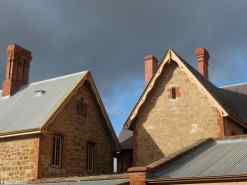
South Australian Museum roofs

Roofs, 1850s, in the old Police Barracks and Armoury courtyard

But, my main point of this series of posts is meant to be “the physical” – and I’ll start by saying that I like Adelaide, and the reasons are partly physical. It’s a small city, and I like small cities, and it has my favourite style of climate, a Mediterranean style featuring warm to hot dry summers and mild damp winters. It can get hot there, very hot occasionally, but that would be a small price to pay to my mind.

Jane Jose writes about Adelaide in her book, Places women make, which I recently reviewed. She describes the city as follows:

Adelaide, in settled south Australia, has its circle of green hills around the city, its expansive pale-blue desert skies and an inheritance of parklands and colonial architecture.

That was then

But now, let’s flash back to those early colonial days, to 1859, and the first novel by a woman to be published in South Australia, Marian by Maud Jeanne Franc (pen-name of Matilda Jane Evans). Early in the book, Marian’s future employer comes to Adelaide to interview her. Here he is arriving at the house:

He reached it, and a moment after was shown into a little parlour, half-dark it appeared to him, for the blinds were let down to exclude the sun, and everything appeared bleak as he entered.

It was typical of those days that people would draw curtains or blinds against the sun. Wise of course in high heat, but my understanding is that it was done against most sun. And the result? Bleakness!

Jumping to the mid-late twentieth century, we have Adelaide-born authors Barbara Hanrahan (b. 1939) and Murray Bail (b. 1941). Hanrahan, who wrote the gorgeous autobiographical novel The scent of eucalyptus (1973) (my review)worked hard to find her Australia. As a child, she writes in her novel, she struggled to find “the sunburned land” of her reading and history in the town where she lived, and only really found her “place” after she left:

l feel it’s of value to divide my life between England and Australia . . . Two places, so different that one illuminates the other. London so large that I may lose myself, which means find myself because I can be anonymous. Adelaide – smaller, strange, this place where I began from, the place of childhood, of legend. (personal papers, n.d. 1978?)

Murray Bail found it a provincial place – “overwhelmingly reactionary, Protestant, and fiercely defensive of time-honoured standards” – and he, too, escaped, first to India in 1968, and then to London in 1970. This, presumably primarily inspired by Adelaide, comes from his Notebooks 1970-2003:

When I think of ‘Australia’ I first see its shape. It is quickly followed by scenes of slow-moving dryness, muted colours, and some of the great white trees. Of people in general, it is often the young, flushed mothers in sleeveless cotton dresses yanking or carrying children on the hot city asphalt.

Homesickness: habits of a landscape acquired over time. (London June 1970 – November 1974)

His first novel, Homesickness, was published in 1980. It is on my TBR.

This is now

Born ten years after Bail, and in the tiny South Australian town of Minlaton, novelist-poet-librettist Peter Goldsworthy set his  2003 novel Three dog night partly in Adelaide and partly in central Australia. In it, Martin brings his English wife back to Adelaide. Here they are driving into the Adelaide hills:

The day has taken its name to heart: a Sunday from the glory box of Sundays, a luminous morning saturated with sun-light and parrots. Happiness rises in my throat, thick as cud; the world outside the car, wholly blue and gold seems almost too much for my senses, too tight a squeeze.

‘Paradise’, Lucy murmurs, smitten.

At last, the “real” Adelaide – blue sky, gold sun and birds! Of course, this is a novel, and “paradise” is not that easily attained. Indeed, the novel (which I read long before blogging) is really rather dark.

I will end here, but I must first defend Adelaide against those charges of provincialism, because in 1970, after Hanrahan and Bail had left, reformist politician Don Dunstan became Premier of South Australia, and things changed. Pretty soon Adelaide (and the state) became one of Australia’s most socially progressive places. Just goes to show what a visionary leader can do!

PS I haven’t read it, but JM Coetzee’s Slow man is set in Adelaide.
Monday musings on Australian literature: Ideal books for newcomers, 1965-style

Another treasure from Trove! Just over 50 years ago, on 1 January, 1965, an article appeared in a journal titled The Good Neighbour, which was published from 1950 to 1969 by the then Department of Immigration.

The article is called “Ideal books for newcomers” and opens with:

Following Mary Durack’s articles on “The Old Australia” which appeared in the October and November issues of The Good Neighbour, the author has compiled a list for some suggested reading.

I assume “the author” is Mary Durack? If so, I must say that I’d have written it as ‘Following her articles on “The Old Australia” which appeared in the October and November issues of The Good Neighbour, Mary Durack has …’. Anyhow, the article continues that:

The books named are not necessarily the best or most profound, the author states, but would seem to provide the readiest introduction to Australian literature and history. Many of these books would make useful presents for newcomers to Australia.

So, what does this “author”, let’s presume Mary Durack, recommend? I’m not sure about copyright* on this, so I won’t reproduce it all but the full list is available at the link I’ve provided above. Durack produces her list under headings, such as Australian History, Australian Aborigines, Early Colonial Novels (before 1900), and so on. As you will see, there’s no playing to the lowest common denominator here. The list assumes a good facility with English, and decent concentration levels.

History and culture

Two books are recommended on “Australian Aborigines”. One is AP Elkin’s The Australian Aborigines: how to understand them (Angus and Robertson). An unfortunate subtitle by today’s standards, but this was first published in 1938. A much later edition was a set text for me when I studied Anthropology, Elkin having been Professor of Anthropology at Sydney University. I might be wrong, but I’d be surprised if many Australian citizens had read this book in 1965. Still, in the first edition’s preface, Elkin does suggest that the book has three audiences: the general public, administrative officials and missionaries, and university students and scientists. He suggests that those with a more general interest could skip the chapters detailing relationship systems.

Another category is “Documentary, Travel and Biography”. There’s a strong focus here on the rural, with books about Cobb and Co, the Overland Telegraph, and the Outback (including her own, now classic, Kings in grass castles) being recommended.

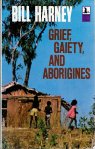
Bill Harney, Grief, gaiety and aboriginesWith her outback experience, Mary Durack was familiar with Aboriginal people, and so in this, and other categories, she makes sure to include books about (though not by, given the time we are talking about) indigenous people. I was intrigued by one, unknown to me, Bill Harney’s Grief, gaiety, and the Aborigines. My link here is his Australian Dictionary of Biography (ADB) entry. He had close connections with indigenous people, and is described by ADB as “gregarious and generous person who regarded everyone as equal”. This ABC News item supports this assessment. It would be interesting to know how he managed the difficult role of government patrol officer and protector of Aborigines, which he did from 1940 to 1947.

The last category I’ll mention in this group is “Critical and Interpretive Studies”. Among the three books listed here is Russell Ward’s classic, ground-breaking history of Australia, The Australian legend. Last year I reviewed his daughter Biff Ward’s memoir, In my mother’s hands. (And, blogger “wadholloway” who regularly comments here has named his blog for this book.)

Novels

The lists of novels are divided into three categories: early colonial (before 1900), early colonial and pioneering days (post 1900), and later Australian life.

Only two are recommended in the first group, Henry Kingsley’s The recollections of Geoffrey Hamlyn (on my TBR) and Rolf Boldrewood’s Robbery under arms. Not, I notice Marcus Clarke’s classic For the term of his natural life which would perhaps be the first of the early novels that people would think of today. Was she wanting to avoid the convict stain?

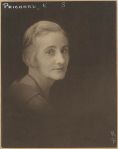
Katharine Susannah Prichard

Katharine Susannah Prichard, by May Moore (Presumed Public Domain, State Library of NSW)

Her next group – her post-1900 date referring, it seems, to the date of publication not of the content of the novels – contains the usual suspects: Joseph Furphy’s Such is life, Miles Franklin’s All that swagger, (not My brilliant career), Henry Handel Richardson’s famous Richard Mahoney trilogy, Eleanor Dark’s The timeless land, Katharine Susannah Prichard’s The Roaring Nineties, Ernestine Hill’s My love must wait, and Patrick White’s Voss. These seem fair enough, though every Australian literature lover would probably tinker with this. She also includes a book unknown to me, Brian Penton’s Landtakers. According to Wikipedia he was a novelist and journalist, and this novel featured pioneering life in Queensland from 1824–64. Given the Durack family’s story (see my review of Brenda Niall’s biography of the Durack sisters, True north) it’s not surprising that she’d recommend a book on this subject. Interestingly, women writers feature well in her list!

The final group focuses on “later Australian life” – in other words, they’re mostly about life in the 1930s to 1960s. It contains many books I know, some authors I know but not the particular book, and some I’ve never heard of:

  • Katharine Susannah Prichard: Coonardoo
  • Louis Stone: Jonah
  • Xavier Herbert: Capricornia
  • Kylie Tennant: The battlers
  • Patrick White: Riders in the chariot
  • A. G. Hungerford: Riverslake
  • Donald Stuart: The driven
  • Tom Ronan: Moleskin Midas
  • Frank Dalby Davison: Man Shy
  • B. Vickers: First place to the stranger
  • Judah Waten: Alien son
  • Gavin Casey: Snowball
  • Randolph Stowe: To the islands
  • Elizabeth Harrower: The long prospect
  • Nene Gare: The fringe dwellers
  • Eve Langley: The pea pickers (my review)

An interesting and probably reasonable list, given the 1965 date. I’m impressed to see Elizabeth Harrower’s second novel, The long prospect, here. It suggests the regard in which she was held at the time she was being published. An obvious omission is George Johnston’s now classic My brother Jack. However, it was only published in 1964, and perhaps Durack didn’t know it.

Again, there are a few authors I don’t know at all: Donald Stuart, Tom Ronan (who appears in other categories too), B. Vickers, and Gavin Casey (who also appears in other categories). That’s 25% of the list! Stuart, Wikipedia says, “attempts to view the world from the aboriginal point of view, making him one of the few Australian writers, along with anthropologists … to even attempt to come close to a personal knowledge of the aborigines”. It would be interesting to read him now – such as his first novel, Yandy – given current thinking on this..

Overall, these books, as in the non-fiction categories, tend to be country rather than urban based. This probably partly reflects what novelists at that time were writing about, but could also reflect Durack’s background and interests. Would this focus have addressed the likely interests of newcomers?

Durack also recommends some verse and short stories, but you can read them at the link.

Meanwhile, I’d love to know what you think about this list (from any point of view you choose!)

* If the government holds copyright on the article, then it is now, just, out of copyright I believe.

Monday musings on Australian literature: Miles Franklin Award, the second decade (1968-1977)

Miles Franklin

Miles Franklin, c. 1940s (Presumed Public Domain, via Wikipedia)

Three weeks ago, I published a post on the first decade of the Miles Franklin Award. That seemed to interest some of my readers, so I’m back again with the next decade. I hope it’s equally interesting.

Again, I won’t be describing all the decade’s winners. You can check the Award’s official site to see a complete list of winners. Rather, I’ll be sharing some interesting snippets, inspired by my roving around Trove.

Money, money, money

Money, how authors support themselves, comes up in a few articles from this decade. Colin Simpson, Vice-President of the Australian Society of Authors, wrote a letter to the editor of the Canberra Times in December 1971, asking readers to buy Australian books as Christmas gifts. He probably wrote to other newspapers too. He comments that many people read Australian books, but via free libraries. Libraries are “great”, he says, but reading this way is “at the expense of authors, publishers and book sellers”. He continues:

The novelist’s position has become particularly sub-economic. As an example, the novel that won this year’s Miles Franklin Award has sold in Australia, in 12 months, less than 1,000 copies. This would earn its author, in royalties, under $400. Such books are read by tens of thousands of people who never go into a bookshop to buy books, but get them from the local library.

He looks to the future implementation of Public Lending Right (which happened in Australia in 1975) but in the meantime

If all those families of avid borrowers would make just one of their Christmas gifts a book, it would help keep booksellers in business. If the book they bought was an Australian one it would help to keep our authors writing books …

Some six months later in May 1972, The Canberra Times literary contributor, Maurice Dunlevy, wrote an article headed “No millions for our novelists”. His aim was to correct ideas that novelists are well-remunerated. Not everyone, he writes, is an Arthur Hailey or Harold Robbins. He calculates the likely royalty for the average Australian author, and says that, for a reasonably successful book, he (always a “he”) might earn $1,500. This means that such a novelist

would have to write at least five successful novels a year to make as much as a middle-ranking public servant — a prospect which might daunt even the most dedicated novelist.

Not surprisingly most authors, he says, write in their spare time. He then refers to the 1972 Miles Franklin Award Winner, David Ireland (for The unknown industrial prisoner). Ireland had a cultural grant from the New South Wales government (their first such grant) and the publisher, Angus and Robertson, received assistance from the Commonwealth Literary Fund (CLF) for publication. Ireland’s prize was $1,250. Dunlevy continues:

Now $1,250 doesn’t buy much time for anyone these days and even though it might seem a big sum to a novelist who has been earning his living tending a golf course, Ireland probably welcomed his 1972 CLF fellowship even more than the prize.

After discussing the huge differential in payments for authors in the US (appearances, articles) compared with Australia, he suggests that readers

think about the ordinary Australian writer who more than likely is knocking out his novel at night on the kitchen table, knowing that he will make no more than a few hundred dollars from it and that he will be lucky to get it published anyway, as fewer than three dozen are published in Australia in any one year.

Fewer than three dozen Australian books published a year? I think the rate of publishing, per capita, is higher now. But, I’m not sure that remuneration for the “ordinary Australian writer” (that is, not bestselling ones like the late Bryce Courtenay or Di Morrissey) has improved much?

A couple of characters

For this decade, I found a couple of articles in The Australian Women’s Weekly. They are very different in style to those in the major newspapers – chattier and focusing more on the personality and lives of the authors.

Dal Stivens

One of the Miles Franklin Award winning writers featured by the Weekly was Dal Stivens, who won the 1970 award with A horse for air (see Lisa of ANZLitLovers’ review).

The Weekly tells us little about Stivens’ literary life, focusing instead on his “obsessions” – his love of azaleas and natural history, for example, and his taking up painting at the age of 59, around the time he won his award, in fact. The Weekly’s Lorraine Hickman writes that

Mrs. Stivens will get a nice surprise when she arrives back home from London and discovers Dal’s abstracts throughout the house. Her home does not wear an art image. It is a cosy old timber place, minding its own business in a silent street of shrub-shrouded houses doing the same.

“Her” home, eh?

Hickman does tell us that he was the foundation President of the Australian Society of Authors, but not that he was one of the authors involved in the creation of the above-mentioned Public Lending Right.

StivensHorseStivens’ award-winning book sounds interesting. He says it is about who the hero, Harry Craddock, is and what he is “really after when he takes this expedition off to Central Australia in quest of the rare night parrot”. His next book is different again, he says. He’s interested in “the story that makes the reader do a good deal of the work.”

The article returns to one more of his interests, boomerang-throwing. He took it up to please himself:

It’s the same with writing – a compulsion. You should never write for the market or the publisher.

Thea Astley

Four-time Miles Franklin Award winning writer, Thea Astley, was also featured by the Weekly, though the article I read, “The top writer who won’t go popular” by Jacqueline Smith, was not about any of these wins. It was inspired by the publication of her collection of short stories, A boat load of home folk, and starts by reporting that Astley didn’t want the Weekly’s photographer to come, because she’d already provided a publicity shot. Responding to a request for a photograph of her at work, she says:

What do you mean at work? My typewriter isn’t here, and, anyway, I always write in a blue-ruled exercise book sitting up in bed. In a negligee!

It’s pure, quirky Astley – the Astley so beautifully conveyed by Karen Lamb in the biography I reviewed last year. If you are interested in Astley do read the article at the link I’ve provided, because it presents the same paradoxical, funny, self-deprecating but sometimes also self-pitying writer Lamb presents.

For example, she says that her books don’t sell:

I write mainly for myself . . . selfish to the end … Only when one writes consciously for a public — like Morris West — will the books sell … All my books are about misfits and generally unhappy people.

And here is the perfect place to segue to a 1973 article in The Canberra Times that is about her winning the award, her third, for The acolyte (which Lisa has reviewed!). The writer, Maurice Dunlevy again, doesn’t much like Astley, titling the article, “Award winner is a cynical novelist”. Oh dear, one of those who would have upset Astley, no doubt.

He gives a brief biography and then, for some reason, describes her first novel, A girl with a monkey. He praises it:

It contained the essential Astley: a fast-paced narrative, highly concentrated scenes, sharply observed details, a telescoped time span and a professional touch with flash-backs. She told her story by assembling a mosaic of recollections and telescoping them into a very short space and time – a technique she was to use more effectively in later books. Perhaps the most distinctive thing in the book was her sensitivity to landscape.

That’s one paragraph. He then spends several paragraphs describing her faults. There’s “overstraining for effect in the prose” and her “cynical detachment”, but the real kicker is that “all of her books lack a substantial theme, or unifying vision of the world.”

Perhaps Dunlevy should have read The Women’s Weekly, where she explains that misfits are her subject. Her overall theme is society’s treatment of outsiders – the poor, the indigenous, the women, the sick. Anyhow, Dunlevy continues, quoting Astley’s statement that:

I’ve always been staggered when critics charge my novels with cruelty … I swear it must come out wrong, for in books like The slow natives and A boatload of home folk I was trying to wring those trachyte-reviewing hearts with my sympathy for misfits.

Dunlevy is unrepentant, stating that his heart “was one of the many that remained unwrung”. He describes The acolyte as “a tough detached book”. He admits that

it is a very readable book, full of technical brilliance, but again you look in vain for the broad view, the wide perspective and the old question crops up: So what?

Hmmm … I think Dunlevy is not the reader for Astley! His prerogative, of course, but I wonder whether he let his reaction to her self-defensive “cynical self-disparagement” affect his assessment of her work.

No award

And my last point is that in March 1974, The Canberra Times reported in a brief article that no award was to be made for 1973 “because the judges said none of the six entries was good enough”. Novels published in 1973 included Patrick White’s The eye of the storm and Barbara Harrahan’s The scent of eucalyptus (My review). Not good enough?

Monday musings on Australian literature: JAFA, an indulgence

OK folks, today I’m begging your indulgence to let me stray from the “proper” theme of my Monday Musings series. In other words, I’m not going to talk – except for a minor digression – about Australian literature. But, I am going to talk about Australians talking about literature. Bemused? I’ll explain.

Quiet foyer at the Hyatt, outside seminar room.

Quiet foyer at the Hyatt, outside seminar room.

This last weekend in Canberra was the 9th Jane Austen Festival Australia. It’s a festival designed “to explore all aspects of Jane Austen’s world”, so many of the sessions relate to dance, costume, military re-enactments, and learning about the culture of Regency times. However, it also includes a thread focusing on Jane Austen’s novels, and in the last three years this thread has been concentrated into a day-long Symposium, on a theme. The theme for 2016 was the Chawton Years. For those of you unfamiliar with Jane Austen’s biography, the Chawton Years cover the period of her life from 1809, when she, her mother and sister were offered Chawton Cottage as a home after their father and husband’s death in 1805, to 1817, when Austen herself died. All her novels were published after the move to Chawton, but three were specifically written during that time – Mansfield Park, Emma and Persuasion. (We could also add the unfinished novel, Sanditon, if we liked!).

The Symposium comprised 6 papers, and I’m going to reflect very briefly on each, knowing that some of you who come here like things Jane.

Edward Austen Knight and his Legacy at Chawton (Judy Stove)

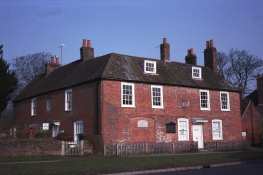
Chawton Cottage (1985)

Chawton Cottage (1985)

Judy Stove was an early member of my local Jane Austen group, until she left town. She’s now an Adjunct Lecturer at the University of NSW in the Faculty of Science, but is also interested in, and has written on, eighteenth century literature. Her paper provided the perfect start to the day, as it was Edward Austen Knight, Jane’s brother, who provided his mother and sisters with Chawton Cottage. Judy took us through a well-constructed argument concerning Edward’s legacy, moving from his and Jane’s immediate family to his descendants, and their role in the beginning of we would now describe as the cult of Jane Austen. From this point Judy developed a case concerning cultural nationalism and the controls now being exerted in many countries on exports of cultural property. Her example was Kelly Clarkson’s purchase of Jane Austen’s turquoise ring. I won’t elaborate here, but Judy proposed that emotion may play a bigger role than rational thought in some of these “material culture” export decisions. A thoughtful, and well structured paper.

“My Fanny” and “A heroine no one but myself will much like”: Jane Austen and her heroines in the Chawton novels (Gillian Dooley)

Gillian Dooley is an Honorary Senior Research Fellow at Flinders University in South Australia, with particular expertise in the music of Jane Austen and her times. This paper, however, was dear to my heart because it got into some literary nitty-gritty regarding point-of-view. Her aim was to explore the degree to which Austen’s heroines might speak for her, thereby giving us insight into Austen’s own beliefs and opinions. To do this, Dooley teased out, to the depth available in her 30-40 minutes time-slot, where Austen’s “authorial persona” does and doesn’t collide with the perspectives of her heroines. She compared excerpts from some of Austen’s letters with statements by heroines, like Mary Crawford (Mansfield Park) and Emma, and she teased out points-of-view in the novels, suggesting where we are in a character’s head, and where it is authorial comment speaking. I found this particularly interesting given my recent reading of Elizabeth Harrower during which I was conscious of a similar slipping between characters and author. As for Dooley’s thesis? Well, we’ll never know exactly who Jane really was, but we certainly have clues to consider!

Marriage in Mansfield Park (Julia Ermert)

Julia Ermert is a retired teacher, historical dancer and Jane Austen aficionado. She is particularly expert in the social history that informs the novels, in those things that readers at the time knew and which can add significantly to (even change) how we understand the novels. For example, a knowledge of the different carriages helps us understand status, and assumptions. And knowing courtship “rules” and practices can be critical to our understanding why, and how, certain events happen. For this talk, Ermert focused on that most controversial heroine, Mansfield Park’s Fanny, and the issue of marriage, that “coldly cruel social obligation”. She took us through laws and practices relating to dowries and marriage settlements, elopements, adultery, breaches of promise, cousin marriage, and the fragility of women’s reputations. Even those of us who know Austen and the era pretty well learnt a thing or two.

“Suppose we all have a little gruel”: the importance of food in Emma (Katrina Clifford)

Clifford is the Dean of Residents at Robert Menzies College, Macquarie University (my original alma mater). She did her PhD on sibling relationships in 18th century domestic fiction, and has written and taught widely on things Austen. Her talk started from the point that there’s nothing superfluous in Austen, that is, if Austen talks about food, or carriages, or jewellery, you can be sure it’s there to make a comment. Food features heavily in Emma: it explains the relationships between characters and the structure of Highbury life. Who is generous to whom and how, who accepts generosity from whom and who doesn’t, provide subtle (or not so) commentary on the characters. For example, Mr Knightley giving the last apples of the season to the impoverished Bateses demonstrates his generosity of spirit, whilst Emma giving a whole loin of pork to them tells us her heart is kind even if she doesn’t always behave well. These also demonstrate that both have a similar attitude to their social responsibility and are a good match. And what about Mr Woodhouse’s gruel, and Mrs Elton and the strawberry party? They provide the book’s comedy but also inform about character and relationships. Another insightful talk, in other words.

The ever absolute Miss Austen (Marcus Adamson)

Adamson is a psychotherapist and ethics consultant interested in the history of ideas and the application of philosophy to psychology. This was the most demanding of the day’s presentations, because of its dense erudition. Referencing philosophers and thinkers from the ancient Greeks on, he argued that Austen’s novels have a serious moral vision, that they present moral truths and certainties that are innately “known” to us. In other words, she asks the big Socratic question, “How should I live my life?” This runs counter to the common assumption that “small ‘r” romance” is the chief attraction of her novels. He then turned to modern times. Our current individual-focused world has, he said, resulted in the individual becoming “unshackled from society”, and thus losing, if I understood him correctly, a moral mooring. Nothing in our post-modern world is certain anymore, everything is open to doubt, and the consequences, he believes, are “catastrophic”. Austen’s novels, with their serious moral vision, can work as a “corrective” to this dilemma. I’ve compressed something very complex into something very simple, but I think that was the gist of it. As an Austen-lover I agree that, for all their wit and humour, Austen’s novels do contain serious commentary about human behaviour, but the bigger picture of his paper? It’s appealing but I need to digest it more.

Napoleonic era British Naval Uniforms demonstrated

Napoleonic era British Naval Uniforms demonstrated

Royal Navy in the Regency Period (John Potter)

After that talk we all needed to decompress a little, and John Potter was just the man to do it. An amateur expert in military and naval history, and in the Napoleonic period in particular, he turned up in full naval uniform, accompanied by some armed officers and sailors, also in historical dress. He talked about the Napoleonic Wars (1793-1815) and regaled us with much information about the British Royal Navy – its ships, its organisation, naval hierarchy and jobs. We learnt about weapons, and his “men” showed a few, including the dirk and cutlass. The Navy tended to be drawn from the middle class, and boys joined very young – around 10-12 years old – as there was a lot to learn about running a ship. The army was a different matter. He also explained how prize money was shared (which is relevant to Persuasion and Captain Wentworth’s returning a wealthy man) and the impress service (i.e. press gangs). A relaxing and enjoyable end to the day.

And that, as they say, was that. Back to Aussie lit proper next week.

Monday musings on Australian literature: Miles Franklin Award, the first decade (1958-1967)

Miles Franklin

Miles Franklin, c. 1940s (Presumed Public Domain, via Wikipedia)

This month we expect to see the announcement of the Miles Franklin Award longlist. While it’s no longer Australia’s richest literary prize, it is still the best-known and, if you can measure such things, our most prestigious. It is managed by a Trustee using the estate left for that purpose by author Miles Franklin. It was first awarded in 1958 for a novel published in 1957. Until the late 1980s, the award was dated for the year of publication, not the year of granting the award as now.

Given that we are now in April and interest in the award will be hotting up again, I decided to potter around Trove and see what commentators and/or authors thought about it in its first decade. (See the Award’s official site if you’d like to see a complete list of winners.) My intention is not to give a potted history or a thorough analysis of the award’s early days but to share some interesting snippets which provide some insights into the life and times … Ready? Here goes …

Politics and the award

Where there’s kudos to be had, you’ll usually find a politician. It’s not surprising, therefore, that the first prize, worth £500, was given by the Prime Minister of the day, R.G. Menzies. That first winner was – fittingly, really – Patrick White’s Voss. I say fitting because White is also our first (and only to date) Nobel Prize Winner for Literature. Anyhow, The Canberra Times of 3 April reported on the ceremony:

Mr. Menzies said the novel in Australia was reaching maturity in a “turbulent activity of blossoming world literature.”

He said with the small encouragement being given by the Commonwealth literary board, “a career of art and literature” was an increasing possibility.

What do you think “turbulent activity of blossoming world literature” means? And, did careers in “art and literature” become more possible? I think the “Commonwealth literary board” refers to the Commonwealth Literary Fund, which underwent some changes in Menzies’ time.

In 1959, the award was won by Randolph Stow’s To the islands. Once again, there was a political response, albeit an indirect one. The Canberra Times of 24 April reported on Mr. Haylen (Labor MP for Parkes) speaking in the House of Representatives during the debate on the Universities Commission Bill:

He said it was a sorry state of affairs that of the 17 books that had been considered for the Miles Franklin award for 1958, only five had been printed in Australia.

The winning novel had been printed in England.

He said further assistance should go towards the establishment of a subsidised university printing press, similar to the Oxford and Cambridge University presses in England.

Fascinating. I have written before on the wonderful work done by our university presses. He also said the Commonwealth Government should support the establishment of a chair of Australian literature in every Australian university.

A posthumous award

The third book to receive the award was Vance Palmer’s The big fellow. Lisa (ANZLitLovers) has read it as part of her Miles Franklin reading project. She feels it’s not up to the standard of the first two winners, and wonders whether it was one of those lifetime achievement awards. Certainly, the Palmers were significant supporters of and contributors to Australia’s life of letters in the 1930s to 1950s.

The award was accepted by Palmer’s wife Nettie at the Adelaide Festival of the Arts, quite a contrast to the first award ceremony being “a literary gathering in the Rural Bank building” in Sydney.

Multiple wins

Patrick White Terrace

Patrick White Terrace, National Library of Australia

Several writers have won the award more than once, with two writers – Thea Astley and Tim Winton – winning four times. By the end of the award’s first decade, two writers had won it twice – Patrick White and yes, Thea Astley. In addition to his Voss win, White won the 1961 award with Riders in the chariot, and Astley won the 1962 and 1965 awards with The well dressed explorer and Slow natives.

The Canberra Times of 21 April quotes the judges on White’s Riders in the chariot:

 After reading, and re-reading this book, we have no hesitation in saying that it is a great novel, a novel that moves us to admiration for the creative impulse that has produced it. Its philosophy may not be original, but its people, their environment, and their actions are indisputably so.

They also describe what they believe to be its message, asking “is it not legitimate to expect a message from a work of this poetic and philosophical cast?” Yes, I think it is!

On Thea Astley’s second win, The slow natives, The Canberra Times of 22 April quoted the judges as saying that she was “A brilliant novelist with an inimitable style of her own”. But it was this in newspaper’s report that I found particularly interesting:

Most of the novels were well worth reading, and it was noted with interest that more writers than usual dealt with urban or country town themes, fewer with the outback and the aboriginal problem. There was more satire, more wit, and a considerable flavour of sophistication.

Noted by the judges I presume. Fewer dealt with “the outback and the aboriginal problem”. What to say to that except that it’s probably good to see writers moving onto more town and city themes than the outback, given where most people live, and, presuming that most of the writers were white, it’s also probably a positive thing that there were fewer books about “the aboriginal problem”! The thing about reading these older newspaper reports is the insight they provide into past attitudes.

The lesser-knowns

As always with awards, there are wins, like Vance Palmer’s, that haven’t remained in the public eye. I’ll share two others from the first decade. First is George Turner who shared the 1963 award with the better known Sumner Locke Elliot. Turner’s novel was The cupboard under the stairs. Once again Lisa comes to our aid with a review (and she liked this one better!). The Canberra Times wrote an article on 13 July a couple of months after the announcement. There is a reason for this belatedness. Apparently at the time of winning the award “it was impossible to obtain a copy in Australia”. Indeed, they say, “the first printing sold out so quickly that no copies ever reached Canberra”. This makes me think of MP Mr Haylen, and his desire for university presses, because Trove shows that Turner’s novel was first published in England. At least we don’t have that problem now!

The Canberra Times liked the book, which is about a farmer’s nervous breakdown. It has some faults they say, but overall “it is a compelling story, and as a study of madness it explores ground rarely covered in Australian literature.” Madness. That’s language we wouldn’t use now, isn’t it?

The other is Peter Mathers Trap, which, yes, Lisa has also reviewed. She found it hard going, but how wonderful that we have a review available online. Bloggers provide such an important service when they review older books! Thanks Lisa. Anyhow, according to The Canberra Times of 21 April, Mathers was living in London when his win was announced, and expressed surprise that he had won. Its story is pessimistic, Lisa says, pitting Melbourne’s slums and pubs against “glittering” society, and its main character, Jack Trap, is of mixed background, including indigenous Australian. Most reviewers, it seems, saw it as satire. However, Mathers, The Canberra Times says, “preferred not to call the novel a ‘satire’, but a ‘comic novel’ in the tradition of Irish writers from the 18th century down to Flan O’Brien, who died recently.” Hmm, an Australian Flan O’Brien. That has piqued my interest – in addition to the fact that I hadn’t heard of Mathers before (besides seeing him in Miles Franklin lists, that is).

… and finally

I did not specifically look for articles in The Canberra Times! It just so happens the most interesting articles that popped up in response to my search terms came from it. A comment on the quality of The Canberra Times or something to do with what papers have been digitised?

Monday musings on Australian literature: Some ad hoc awards

Okay, folks, so it’s Easter Monday here in Australia, and a public holiday. We have had family – from Melbourne and Hobart – up our way for the long weekend and so I’ve not had a lot of time to think about my Monday Musings post. However, a couple of recent literary awards have come to my attention, and are worth sharing – for different reasons.

An overseas award

We Aussies are always excited – yes, I know, cultural cringe – when one of ours wins a foreign award. It was big news when Patrick White won the Nobel Prize in 1973, and we’ve had a few Booker wins. Thomas Keneally won with Schindler’s Ark in 1982, and Peter Carey is one of the few authors to win it twice (Oscar and Lucinda in 1988, and True history of the Kelly Gang in 2001). DBC Pierre and Richard Flanagan have also won the Booker. It was big news too when Kate Grenville won the Orange (now Baileys) Prize with The idea of perfection in 2001.

And now, a couple of weeks ago, I read that Helen Garner had won an award I hadn’t heard of, the 2016 Windham Campbell Prize for Nonfiction. This prize is one of a suite of prizes established in the USA by writer and book collector Donald Windham, named for himself and his partner Sandy Campbell, who shared his passion for books. The Windham Campbell Prizes website describes the aims as being “to call attention to literary achievement and provide writers with the opportunity to focus on their work independent of financial concerns”. From what I can see on the website, the first prizes were awarded in 2013.

Helen Garner, This house of grief book cover

Courtesy: Text Publishing

As far as I can gather, each year three prizes are awarded in each of three categories: fiction, nonfiction and drama. Garner won one of the 2016 non-fiction prizes. The website describes her as one of Australia’s preeminent writers who “brings acute observations and narrative skill to bear on the conflicts and tragedies of contemporary Australian life”. The site continues that “ultimately, Garner finds truth in questions rather than in answers, in complexity rather than in simplicity, and in her own fervent belief that ‘there is something wild in humans’.” It also quotes Garner’s response to winning the award:

To be awarded a Windham-Campbell Prize for nonfiction validates in the most marvellously generous way the formal struggles that I’ve been engaged in over the past twenty years. It gives me the heart to keep going.

Not only the heart, but the money too I’m sure, as the prize is worth USD150,000. So often writers say that the money value of prizes enables them to continue writing. This should certainly do that for a year or so!

Supporting the independents

And then last week, Charlotte Wood won the overall 2016 Indie Book Awards with her latest novel The natural way of things. The debut fiction winner was Lucy Treloar’s Salt Creek, another book I need to read. These awards (there are other categories too) were created in 2008, and the winners are chosen, through voting, by independent booksellers.

My main aim in mentioning these awards, though, is to share some of Wood’s acceptance speech, which was published on publisher Allen & Unwin’s blog. It’s a thoughtful, generous speech, but its conclusion is inspired, comparing independent booksellers to global seed vaults*. She said:

In thinking about tonight, and Australia’s independent booksellers, it struck me that you are like that seed vault [the Svalbard Global Seed Vault]. You are storehouses for the kernels not only of our literary culture but our history, our music, our food culture, our health and legal and technological culture, our visual arts, our politics. You are the safety vault for the seeds of our country’s cultural and intellectual life, and your customers are the spreaders of those seeds out in the world.

A few years ago, the outlook for our independent bookselling scene looked gloomy. But like those seeds packed into the cold mountain in Norway, you have survived, you are thriving, and because of your noticing and care, your love of words and your determination to flourish, you have kept Australian literature and our culture alive and thriving too.

On behalf of us all, I thank you so very much.

What more can I say except support your independent booksellers. They are treasures.

* Reminding me, also, of Annabel Smith’s The ark (my review)

Please feel free to give a plug to your favourite independent bookseller in the comments below!

Monday musings on Australian literature: World Poetry Day

Well, folks, Trove has let me down, which is a very rare occurrence when I’m doing historical research. I looked for the phrase “world poetry day” and I looked for all the words “world”, “poetry” and “day”, but nothing apparently relevant appeared. Hmmm, because …

Interestingly, a Google search did retrieve a photograph on flickr of a World Poetry Day function held in 1963 Australia. The photograph says “all rights reserved” so I can’t reproduce it here, but you can see it online. Clearly World Poetry Day has been known about here for some time, but, oh dear, it’s only poetry so why write about it in the newspapers, eh?

I did find a few more recent references to the day via Google (using “world poetry day Australia”, without the double quotes), such as:

  • an Australia Council for the Arts news item on World Poetry Day in 2013. The item says, among other the things, that the day is for us “to acknowledge the role of poets around the world who are unable to speak openly and freely and who strive to build a better world.” Amen to that.
  • a news item from the United Nations Information Centre in Canberra on World Poetry Day in 2014 stating that “One of the main objectives of the Day is to support linguistic diversity through poetic expression and to offer endangered languages the opportunity to be heard within their communities” but it doesn’t list any activities planned to achieve this in 2014 Australia.
  • an article in the Sydney Morning Herald titled “World Poetry Day 2015: a chance for children to embrace the power of words” but it doesn’t mention any events encouraging children to do just that.
  • a World Poetry Day program (Eureka!) for the 2015 World Poetry Day, fun by the Queensland Poetry Festival. The web page starts with a William Hazlitt quote: “Poetry is the universal language which the heart holds with nature and itself. He who has a contempt for poetry, cannot have much respect for himself, or for anything else.” I don’t see anything for the 2016 day.

That’s pretty much it for the first page of results on my Google search. I guess these results tell me that Trove let me down for a reason. There really doesn’t seem to be much interest in the day here. Most of those links about seem more lip service than commitment, don’t they?

Before I continue, a brief explanation of World Poetry Day. According to Wikipedia (and some of the links above), it was designated as 21 March by UNESCO in 1999. The day, though, has been celebrated for much much longer, often in October to align with the birthday of the birth of the Roman poet Virgil. The UK, says Wikipedia, still celebrates it in October. There is a Facebook Page for World Poetry Day, but I can see nothing on it for Australia in 2016.

And yet, Australia – like many countries – has a rich poetic tradition. We have, to name a very very few, the bush balladists of the 19th century, early twentieth century poets like CJ Dennis and Dame Mary Gilmore, indigenous poets like Oodgeroo Noonuccal, later poets such as Judith Wright, Dorothy Porter and our grand old man Les Murray, and new poets-cum-rappers like Omar Musa*. We have poetry events and slams, poetry prizes, poetry websites, poetry magazines and poetry in literary magazines, and publishers specialising in poetry. I’ve written about many of these over the life of this blog. (See my poetry tag which tags all my poetry-related posts, not just Australian.)

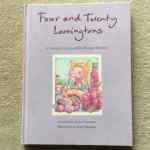
Cover, Four and twenty lamingtonsAmong the first works I read to my children when they were babies were poetry books – AA Milne (of course), Dr Seuss, TS Eliot’s Old Possum’s Book of Practical Cats, and poetry anthologies, of which I bought many. A favourite Australian one was Four and twenty lamingtons. And picture books too, many of which are told in verse. Poetry is such an easy way to introduce children to the fun of language and words and to reading together. Poetry like music is something you can introduce to babies from the beginning.

I’m going to keep this post short – give you an early mark this Monday! And, anyhow, I’m sure you’ve got my meaning.

But, just for a straw poll, no matter where you live, can you tell me whether you’ve heard of any World Poetry Day events in your neck of the woods?

* I hate naming names here, really, because there are so many wonderful Aussie poets I’d love to mention.

POSTSCRIPT: After I drafted this post, the UK-based International Business Time published, for this year’s World Poetry Day, a list of “Famous non-English poets you should read”. Not Australian, but of interest to us all. Check it out.

Monday musings on Australian literature: Save Trove

I don’t make a practice of discussing politics in my blog, though regular readers are sure to have picked up my pro-social-justice values (which is why I love writers like, say, Thea Astley). My reason for being politics-lite here is that politics is a divisive game, and my aim here is to be inclusive. However, I do want to write briefly today about a very specific political issue likely to affect Australian, and in fact international, researchers. I’m talking about the significant cuts being made to Australia’s major national cultural institutions like the National Library of Australia, the National Museum of Australia and the National Film and Sound Archive.

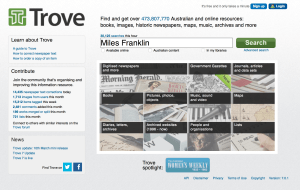
Trove Search PageThose of you who read my Monday Musings series will know that one of the resources I use regularly – particularly for the more historical posts – is the National Library of Australia’s Trove service. Trove provides access to a wide variety of collections from libraries, museums, archives and other research institutions around Australia. It combines traditional book catalogue information with digital content, including digitised Australian newspapers dating back to the early 1800s.

Search on a name or topic – like say, Miles Franklin – and if you don’t filter the search in advance, it will return resources in any form for which material is held, including books, photos, newspapers, diaries, music, maps, websites, government gazette announcements. And it’s free – well, the search is, and around a third of the content is freely available. According to Mike Jones and Deb Verhoeven in The Conversation, Trove contained, at the end of February,

information on over 374,419,217* books, articles, images, historic newspapers, maps, music, archives, datasets and more, expressing the extraordinarily rich history of Australian culture.

Trove can be used by anyone, anywhere – academics, authors, local and family historians, and so on. A recent Sydney Morning Herald article looked at the Twitter hashtag #fundtrove, and quoted some of the tweets, such as this from author Kaz Cooke

Without Trove I couldn’t be writing this novel about the imagined lives of real 19th Century Australian vaudevillians#fundtrove.

Academics similarly tweeted the importance of Trove to their research projects. One, Evan Smith, wrote he couldn’t have done his research project on “public order policing in the ACT” without it, and historian Alicia Cerreto posted that “@TroveAustralia changed the ways that we historians can tell the stories of Australia. It is a critical resource”. At a time when interest in history appears to be booming – just look at all the history-focused TV shows and non-fiction books proliferating at present – reducing this service seems like madness.

In 2011, Trove was awarded the Excellence in eGovernment and the Service Delivery Category awards at the Australian Government’s ICT Awards. It has also been recognised internationally as a leader “in facilitating public access to documentary heritage”.  The Canberra Times recently reported that

Australian Research Council laureate fellow and professor of history at Griffith University, Mark Finnane, said Trove brought Australia “great credit” internationally and no other service compared.

“It’s really a world-leading innovation, in the way it ties collections together,” he said. “[We] can’t afford to be without this tool.”

As a free-discovery-cum-content-aggregation service, Trove, says The Conversation (cited above), simplifies the work of researchers by reducing the time they need to spend tracking down relevant information. It improves their efficiency in other words. It’s all the more ironic, then, that it’s the current Federal government’s decision to apply their so-called “efficiency dividend” to cultural institutions which threatens Trove’s continuation. How silly is that!

PS: For more on the #fundtrove campaign, check out discontents.com.au. Blogger Tim Sherratt lists what we can do, and is updating his post as more information appears.

* Trove itself claimed on 14 March to have over 474,674,488 resources. On this link, you can also see a list of all the organisations whose resources are included in the service.

Monday musings on Australian literature: Spotlight on David Malouf

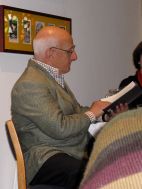
Courtesy: Annette Marfording

Courtesy: Annette Marfording

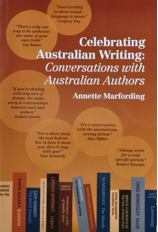
A couple of weeks ago I published the first of a number of posts which I’m planning to write using Annette Marfording’s Celebrating Australian Writing: Conversations with Australian Authors as starting point. That post was on the first interview in the book, Robert Dessaix. I decided that my second post would be on one of my favourite Aussie writers – you could call him one of our grand men of letters – David Malouf. And then last week I heard that Malouf had won the 2016 Australia Council Award for Lifetime Achievement in Literature – for his 55 years (55 years!) in literature. A most apposite coincidence!

The impressive thing about Malouf is that he has written in multiple forms – novels, short stories, poetry, essays, memoir and even libretti – and he has been critically acclaimed in all. Most of his work that I’ve read, I read before I started blogging, though I did review his latest novel, Ransom, here. It was published in 2009. Since then he has primarily published poetry, essays and short stories.

I haven’t read all of Malouf’s novels, but I’ve read a good number, starting with his first autobiographical novel, Johnno. It’s set in Brisbane where he grew up (and where my Mum spent her youth after moving there when she was 5, and where I spent 6 years of my childhood!), though his youth – incorporating World War II – is well before mine. To say that I enjoyed the book would be an understatement.

However, my favourite two of his are Fly away Peter (which I often buy for or recommend to people asking about Australian literature) and The conversations at Curlow Creek. This latter, for some reason, gets less press than most of his other novels. I’ve also read An imaginary lifeRemembering Babylon and, of course, Ransom. In other words, I’ve read his first three novels and his last three (to date), but not the three in the middle!

Now Marfording’s interview. She starts by asking him about awards, of which he has won many. I liked his response that

it’s more important to be on the shortlist in some ways because who then comes out of the shortlist as the winner is a bit of a lottery.

Of course, the money attached to prizes is very useful – it often means the ability to keep on writing – but in terms of what awards mean, Malouf makes an important point.

She then talks about translation, because Malouf’s books have been well-received overseas and many have been translated into multiple languages. Malouf’s response gets to the heart, really, of my concern about reading books in translation:

And really, what the translator is doing is not just carrying the book over from one language to another, but recreating that book in another language.

Re-creating, yes. Still, it’s better than his books not being available to others at all.

She asks him about Patrick White. I found his answers again spot on in terms of my understanding of White’s place in our literary culture. He says that White achieved two things that have paved the way for writers after him. One is that White showed that “an Australian life could be of significance” and not just in Australia but more generally. The other is that

he made it possible for you to write a novel in which the major interest was the interior, not really on action, but on what was going on in people’s heads.

David Malouf reading Ransom

Malouf reading Ransom, National Library of Australia, August 2009

And this is exactly how much of Malouf’s fiction reads. The conversations … for example is about the conversations that occur between a military officer and an arrested bushranger who is to be executed in the morning. It’s about the connections made between the captor’s reflections on his own life and the condemned man’s concerns about death, God and forgiveness. It is such a quiet, mesmerising and deeply humane book.

Marfording and Malouf talk about Ransom, his latest book at the time of the interview, and his writing style and practice. They also talk about his main themes. Marfording suggests that “being an outsider – a foreigner or someone in exile” is one, and that family is another. Malouf says that

family is the first little society, a little mirror of society … but family is also reflective of the larger society we live in, and then families are – as far as I have observed – the greatest repository of secrets, and secrets are always what writers are interested in.

Secrets. Yes, I can see what he means.

A theme that I see in his work relates to travel and transition – again, like outsiders and secrets, not unusual for a writer! He starts his essay “The traveller’s tale” (originally published in 1992) with “One of the first stories we tell is the story about leaving home”, and argues that:

The story moves us so deeply because it touches our lives at the two extremes of our experience, the moment when we leave our mother’s body and the moment when we must leave our own, but it speaks as well for the daily business of going out into the world – to hunt or on a war party or simply to see what is there – and then the return to the homeland or hearth.

Our two men – the policeman and the bushranger – in The conversations … travelled to Australia from Ireland, then find themselves, in the 1820s, at a critical point in both their lives. Priam travels with Somax to Achilles’ camp in Ransom on an inspired errand. The characters in Fly away Peter go overseas to take part in World War 1, and one doesn’t return. In Remembering Babylon, a young British cabin boy lands in the far north of Australia and is taken in by Aboriginal people, and doesn’t return to the European world until 16 years later. In Malouf’s very first novel Johnno, the narrator returns home to bury his father, and in the process remembers, and reconsiders, his youth and his childhood friend Johnno. And so on … Malouf himself has lived overseas for large “chunks” of his life. He is clearly very familiar with what it means to move to-and-fro between “home” and new places – physically, spiritually and psychologically.

Whenever I think of Malouf, I feel a sense of well-being, because I know I can trust that whatever he says or writes will be considered, humane, and well-worth giving time to.

Annette Marfording
Celebrating Australian Writing: Conversations with Australian Authors
Self published, 2015
273pp.
ISBN: 9781329142473

Note: All profits from the sale go to the Indigenous Literacy Foundation. You can purchase the book from its distributor, lulu.com.


Monday musings on Australian literature: Some Australian screenwriters

Funny things sure do happen sometimes. I decided on the weekend that, with my comment about screenwriters in my post on Hail, Caesar and with the Oscars being screened today, Monday (downunder time), that I would devote this post to screenwriters. Then, I turned on the TV to look at the Oscars, and guess what? They changed the usual order of announcements and put the screenwriters first! A tribute to Trumbo perhaps? Whatever, the coincidence made me smile.

Now, I have written about screenwriters before in a post on Australia’s AWGIE awards, but in that post I focused on a few authors who had also written for screen or theatre. This time I’m going to focus on those for whom screenwriting is a major part of what they do. There are a lot of them, so all I can do is choose a few to represent the many. I’m not going to analyse their work – that would take too much time – but just introduce them, and identify some of their works because they are often just not known as the person behind these works. Here goes:

  • Stuart Beattie would be the least known to me of the writers I’m listing, even though he’s the most prolific. He writes, it seems, in genres I tend not to watch, like thrillers and adventure. However, he was a co-writer on Baz Luhrmann’s controversial film Australia, and he adapted John Marsden’s bestselling young adult novel Tomorrow, When the War Began to a film of the same name.
  • Andrew Bovell writes for theatre, movies and television, sometimes adapting his own work from one form to another, such as the films Lantana and Blessed which he adapted from his plays, Speaking in Tongues and Who’s afraid of the Working Class, respectively. Non-Australian moviegoers might know him for his adaptation of John Le Carré’s A Most Wanted Man.
  • Laura Jones is the daughter of Australian writer Jessica Anderson (whose The commandant and One of the wattle birds I’ve reviewed here.) Jones started her career with television teleplays for Australia’s public broadcaster, the ABC. Her first screenplay, an original, was Hightide made by Gillian Armstrong, and her next was Angel at my table, made by Jane Campion and adapted from Janet Frame’s memoir. She has gone on to write many adapted screenplays, including Portrait of a Lady, Angela’s Ashes and Possession. Some great films there …
  • Jan Sardi has been nominated for an Oscar so, given today is Oscars day, I had to include him! The film was Shine. Sardi also adapted Nicholas Spark’s The Notebook and Li Cunxin’s Mao’s Last Dancer. He is apparently currently working on adaptations of Kate Grenville’s The Secret River and Tracy Chevalier’s Remarkable Creatures (my review). He is also the current President of the Australian Writers Guild (AWG).
  • Eleanor Witcombe is the oldest of my group and is not, as far as I can see, still working. She was born in 1923, and is had to be in my list because she adapted two significant Australian women writers, Henry Handel Richardson’s The Getting of Wisdom and Miles Franklin’s My Brilliant Career. Witcombe wrote for theatre and television, including the television miniseries adaptations of two more classic Australian women’s books, Ethel Turner’s Seven Little Australians and Ruth Park’s The Harp in the South.

Many of Australia’s successful directors have also written for some of their films, such as Gillian Armstrong, Jane Campion, Baz Luhrmann, George Miller, Rachel Perkins, and Peter Weir. Such creativity. I’m in awe.

Now, just in case you are interested in writing for film yourself, I came across in my research a document by ScreenAustralia, published just last year, titled I’ve got a great idea for a film. You can read it online. It mainly lists resources, both Australian and overseas, for all aspects of script development.

Do you tend to be aware of screenwriters, and do you have any favourites?