Monday musings on Australian literature: ABDA 2017 Shortlist

Five years ago, I wrote a Monday Musings on book design, in which I featured three book designers. I’ve mentioned book design occasionally since then but, having just seen the shortlist for this year’s ABDA (Australian Book Design Awards) which are sponsored by the ABDA (the Australian Book Designers Association), I’ve decided to write another post on this aspect of the thing we love – books!

ABDA describes the awards as celebrating “the bravest and brightest, the most original and beautiful books published in Australia each year”. This year’s awards are the 65th! 65 years of celebrating book design! That’s wonderful, really. They make awards in sixteen categories, including four awards in Children’s and YA categories, and awards for specialist areas like Cookbooks, Fully-illustrated books, and Educational books.

I couldn’t possibly list all these, but if you are interested you can find them at the link I gave in the first paragraph. I will just focus on two categories, Literary Fiction and Non-fiction:
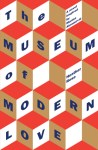
Heather Rose, The museum of modern loveLiterary Fiction

  • George Orwell’s 1984 (Text): WH Chong
  • Ellen van Neerven’s Comfort food (University of Queensland Press): Josh Durham (Design by Committee)
  • Melissa Ashley’s The birdman’s wife (Affirm Press): Christa Moffit
  • Heather Rose’s The museum of modern love (Allen & Unwin): Sandy Cull (GoGo Gingko)
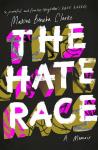
Maxine Beneba Clarke, The hate raceNon-fiction

  • Ashleigh Wilson’s Brett Whiteley: Art, life and the other thing (Text): WH Chong
  • Damon Young’s The art of reading (Melbourne University Press): Mary Callahan
  • Maxine Beneba Clarke’s The hate race (Hachette Australia) (my review): Allison Colpoys
  • Andrew Hankinson’s You could do something amazing with your life (Scribe): Jenny Grigg

I’m impressed by the number of smaller publishers here. Seems they support good design too, and carefully “curate” the whole work. Certainly Melissa Ashley seems to think so …
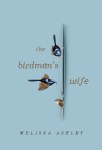
Melissa Ashley,The birdman's lifeMelissa Ashley, author of the shortlisted The birdman’s wife, has posted on her blog about the shortlisting of her book’s cover. The novel, historical fiction, is about Elizabeth Gould the wife and accomplice of the famous ornithologist and artist, John Gould. Ashley writes:

It was my secret hope that Elizabeth Gould’s iconic, hand-coloured lithograph of the superb fairy wren featured in the cover design for The Birdman’s Wife. You can imagine how chuffed I felt when my editor, publisher, and book-designer felt the same way.

Authors don’t always have a say in their covers, but clearly Ashley did, and she was thrilled with the result. She praises “the visionary generosity of Affirm Press”. She loves not just the cover but the book’s whole design because, of course, book design is not just about the cover.

Back in 2012, I named three book designers – Dean Gorissen (who was one of the designers used by Affirm Press), WH Chong (who worked for Text Publishing – and still does, as their Design Director) and Sandy Cull (who has her own company, GoGoGingko). You’ve probably noticed in the lists above that Affirm Press is still employing great designers, and that Chong and Cull are still producing quality, award-attracting designs.

As well as sponsoring these design awards, ABDA also maintains a hall of fame, whose eight members include:

  • Alec Bolton (an independent publisher whom I’ve mentioned here before)
  • W.H. Chong (link above)
  • Patrick Coyle (the first nominee to the Hall of Fame, in 1994)
  • Sandy Cull (link above)
  • Arthur Stokes (a book designer and previous judge of the awards. A report on the 1978/9 awards, commented on the “lively” two days of judging, and that “Arthur Stokes kept remarkably calm but did complain that the other judges ‘kept sitting down and reading the books'”.)

Interestingly, while I was researching the hall-of-famers, I found a report on the 1972/73 design awards. Apparently the judges that year were disappointed in the quality, and they named some of the issues. For example, they said that “there was little awareness of contemporary design” and a lack of imagination. “Typography,” they said, “lacked detailed decisions” particularly regarding “sans serif and serif type faces – sans serif was often used inappropriately”. I was once told to use serif type for text, and sans serif for headings. I wonder if that’s what they were referring to, and whether this is still recommended practice?

They talked about the jackets, and the type used being either “out of character with the book” or comprising “a multitude of different faces”. Yes! I remember, years ago, reading an article titled “Font shock”. It was when word processing first became a tool used by all of us and the temptation was to throw every font available in the one document, but it reminded me once again that “less is more” or to “kiss“.

They also commented on poor cropping and sizing of photographs. Hmm, I hope they never look at my blog!

I found all this fascinating.

I briefly mentioned (or inferred) what I like in a book design in my 2012 Monday Musings post so won’t repeat it here. Instead, I’ll say what I don’t like! I don’t like:

  • small print (because my eyes aren’t as good as they used to be)
  • low contrast between paper and print so that the print is not easy to read
  • cheap paper that feels nasty
  • binding that stops the book falling open easily
  • tiny margins (which prevent easy marginalia writing)
  • no index (in non-fiction books)
  • covers that stereotype
  • covers that mislead regarding their content

I’d love to know what you like or don’t like in book design, and if you want to name a recent favourite or two, do go ahead and share it with us.
Monday musings on Australian literature: Aussie novels titled with foreign place names

I’ve done two Monday Musings posts inspired by Tony (from Tony’s Book World) – one on novels with real place names in their titles and one with fictional. To complete the trifecta, I thought why not look at Australian novels with foreign place names in their titles.

This turned out to be rather fun to do. Many Australian writers have set books overseas – more perhaps than I had superficially expected. They include, to name just a few that sprang to mind, Sara Dowse’s Schemetime (Los Angeles), Kate Grenville’s Dreamhouse (Tuscany and Milan, with the film adaptation set in Vietnam), Eva Hornung’s Dog boy (Moscow), Hannah Kent’s Burial rites (Iceland), Henry Handel Richardson’s Maurice Guest (Leipzig), Christina Stead’s For love alone (Sydney and London), Tim Winton’s The riders (Ireland, mostly), and Marcus Zusak’s The book thief (Germany). The list goes on and on in fact. It’s probably not surprising, therefore, that I found it relatively easy to find books titled with foreign place names, but I’ve limited myself to six.

I’ve read four of the books I list here – and, as with the first post in this series, I’m listing them alphabetically by the name of the place.

America

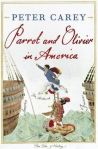
Peter Carey, Parrot and Olivier in AmericaWhen talking place names, it would be hard to get bigger than a country, so here I am starting the list with a very well-known country in the title of a book by a well-known Australian author, Peter Carey’s Parrot and Olivier in America (my review). Not only is America in the title, but America is very definitely the book’s subject because what Carey explores here is that country’s grand experiment with democracy. The epigraph is: “Can it be believed that the democracy which had overthrown the feudal system and vanquished kings will retreat before tradesmen and capitalists? (Alexis de Tocqueville)”.

Barbados

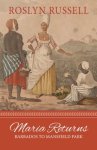
Roslyn Russell, Maria Returns Barbados to Mansfield ParkMy second place-name is another country, Barbados in the West Indies. It’s probably not the first place that would spring to mind as one an Australian author would write about, but Roslyn Russell’s Maria returns: Barbados to Mansfield Park (my review) does, in fact, make perfect sense. Russell is a museum professional who has spent a goodly amount of time working in Barbados. She is also a Jane Austen fan, and if you know your Jane Austen well, you’ll know that there are references to slavery in Mansfield Park. It was, as they say, a match made in heaven and Russell found herself irresistibly drawn to writing a piece of historical fiction drawing on these two enthusiasms of hers.

Berlin

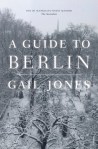
Gail Jones. A guide to BerlinFrom countries we move to cities, and a good example is Gail Jones’ recent, well-reviewed A guide to Berlin. Its title is that of a short story by Vladimir Nabokov. It is, as you’d expect – though you know I’m sure that this expectation of titles can’t always be relied on – set in Berlin. It’s about six international travellers, from various countries and all Nabokov lovers, who meet in empty apartments in Berlin where they share stories. It’s still on my to-read list.

Paris

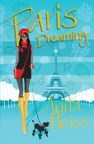
Anita Heiss Paris DreamingOf all the places authors might choose to write about, that most romantic of cities, Paris, would surely have to be up there, and sure enough I found one quickly, one, in fact, that I’ve read, Anita Heiss’ Paris dreaming (my review). It’s a delightful piece of chick-lit (or, as Heiss calls it, choc-lit) and is about a young museum professional who goes to Paris to mount an exhibition of indigenous Australian art. It’s an aspirational book as well as a fun read. Heiss fans will also be aware that she has written another book titled with a foreign place-name, Manhattan dreaming.

Shanghai

Brian Castro, Shanghai dancingShanghai is one of the most exotic places on this list, depending of course on what each of us means by exotic! Hong Kong-born Australian writer Brian Castro’s Shanghai dancing is, I believe, set mostly there. Castro, in an Author Note, describes it as follows: ”Shanghai Dancing is a fictional autobiography. Told from an Australian perspective and loosely based on my family’s life in Shanghai, Hong Kong, and Macau from the 1930s to the 1960s.”

Tuvalu

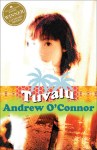
Andrew O'Connor, TuvaluRemember what I said under Berlin regarding expectations of titles? Well, Andrew O’Connor’s Vogel Prize-winning Tuvalu, which I read a couple of years before blogging, is a perfect example. It is, in fact, set primarily in Japan, not in Tuvalu which is a Polynesian island nation in the Pacific. Indeed, as I recollect, the characters, never go to Tuvalu. It is, instead, the dream-place or goal, the place where you imagine your life will be best and which therefore acts as a motivator to keep you going. I can’t think of a better place or concept on which to end this list of novels titled with places other than one’s own!

So now, once again, over to you. Can you add to my list of Aussie books with foreign places in their titles, or tell us about books from your country’s writers titled with places from elsewhere?

Monday musings on Australian literature: Aussie novels titled with fictional place names

Last week, inspired by Tony (from Tony’s Book World)’s post, I posted on novels with places in their titles. I limited my titles then to “real” places, but in my research I came across many books with fictional places in their titles, so, well, you know what I decided to do with that!

There are good reasons for making up a place. For a start, readers can’t complain about inaccuracies – about a street being in the wrong place, for example. Moreover, it gives writers the opportunity to create place names that mean something thereby contributing to the work’s overall meaning.

Last week, I listed my small selection of books by the name of the place, but here I’ll list under the author’s name. I’ve read four of my five chosen books, but have only blogged two, unfortunately.

Thea Astley

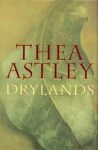
Thea Astley, DrylandsDrylands (1999, my review) is set in

a God-forgotten tree-stump of a town halfway to nowhere whose population (two hundred and seventy-four) was tucked for leisure either in the bar of the Legless Lizard or in front of television screens, videos, Internet adult movies or PlayStation games for the kiddies.

Such an evocative fictional town name suits Astley’s purposes for her dystopian novel about desiccating lives. It’s one of those books I haven’t forgotten, and would willingly read again.

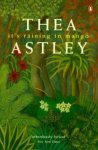
Thea Ashley, It's raining in MangoIt’s raining in Mango (1987) is set in a completely different environment to Drylands – as the title itself makes clear – but all that rain doesn’t make it much cheerier! It’s set in the fictional town of Mango, in the tropical rainforest area of northern Queensland where Astley set several novels, including her first, Girl with a monkey. The novel follows the Laffey family through four generations, from the 1860s to the 1980s. It also tells the story of an indigenous family whose path crosses the Laffeys. Astley chronicles lawlessness, violence and dispossession, and yet, as I recollect from my long-ago reading, it has its warm, comic moments too. One I should read again.

David Malouf

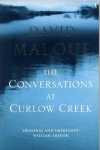
David Malouf, The conversations at Curlow CreekThe conversations at Curlow Creek (1996) is not, I think, one of Malouf’s best known or most popular books, but I really liked it. It’s set in 1827, and concerns the conversations between two Irishmen, a prisoner, who is to hang in the morning, and the man guarding him. It has that mesmeric, reflective quality that I love in many of Malouf’s novels. As I was researching the book to see if I could find why Malouf chose this place name, I came across an interview with Malouf in which he says, “I’m aware of the number of times I really want to use the novel to stop time, to slow things up. You can slow up the narrative so that a second is something that can be explored maybe over pages. I like that play between movement and stillness in the novel.” I still haven’t found the origin of the name – perhaps it’s just intended to be an Irish-sounding name that was fairly typical in colonial Australia – but this statement tells me a lot about what drives his writing.

Kylie Tennant

Kylie Tennant, TiburonTiburon (1935), which won the S.H Prior Memorial Prize, was Tennant’s first novel. It is set in the fictional Australian country town of Tiburon during the Depression, and centres on the poor and unemployed. I’ve read a couple of Tennant’s novels, but not this one. She’s a great teller of stories about the lives of “ordinary” people, often in extraordinary times, like the Depression (here) and the War (Tell morning this, which I have read.) According to the Australian Dictionary of Biography, the man she ended up marrying obtained a job in the country, so Tennant walked hundreds of kilometres from Sydney to see him. “On the journey,” ADB says, “she witnessed the hardship and suffering of the rural unemployed. It was the first of the many arduous, punishing walking tours Tennant undertook in the early 1930s that would form the background to her rural Depression novel Tiburon.” Apparently, she based Tiburon on Canowindra, and the residents were none too happy!

Tennant, commenting on rumours of unhappiness in the town, suggested they could raise money for the following headstone for her:

KYLIE TENNANT. Once a student of Brighton College.
Unwisely wrote Tiburon and was speared by the natives of a town that does not exist.

Clearly, if you are going to make up a place, you should make it up good and proper!

Patrick White

Patrick White, Happy ValleyHappy Valley (1939, my review) is set in a fictional town called, yes, Happy Valley, in the Snowy Mountains-Monaro region of New South Wales where Patrick White had worked as a jackeroo for a year. The town’s name, as you’ve probably guessed, is ironic, because White’s people are rarely happy. Life, as I wrote in my review, tends to be, for his people, disappointing at best, sterile, depressing and/or meaningless at worst. In other words, like Thea Astley’s Drylands, White’s titling is pointed.

So now, over to you … do you have any favourite (or, even, not so favourite) novels titled with fictional places?

Monday musings on Australian literature: Aussie novels titled with place names

I was searching around for a light, fun idea for this week’s Monday Musings, as life is a bit busy at present, when up popped in my inbox Tony (from Tony’s Book World)’s post on novels with city or town names in their titles. That seemed like just the thing: it demanded a little thinking but not a huge amount of research, and you can all join in with your favourite books (from anywhere in the world).

Tony explained his post by saying that “fiction allows you to travel throughout the world without leaving your own house.” A cliché, he admits, but I’d respond that it’s a cliché because it contains a truth, n’est-ce pas? Tony’s list included fictional towns, but I’m going to stick to real Aussie places – and I’m using “place” here rather than city or town to allow more flexibility. Because I like to have some order, I’m listing my books alphabetically by the name of the place.

Alice Springs

Nevil Shute, A town like AliceNevil Shute, as some of you know by now, was one of my favourite writers in my youth. I particularly loved his World War 2 stories, of which A town like Alice (1950) is his most famous. Alice Springs is the second largest town in Australia’s Northern Territory, and the closest to one of our most famous tourist attractions, Uluru. However, what it is not is the main setting of Shute’s novel. The story concerns young English POW Jean who migrates to Australia to find Aussie soldier and POW Joe whom she’d met during the war. She visits Alice Springs, which impresses her, but ends up in a fictional town which she’d like to make – yes, wait for it – “like Alice”.

Carpentaria

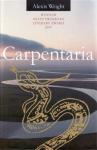
Alexis Wright, CarpentariaCarpentaria, in northwest Queensland, is a shire named for the Gulf of Carpentaria on which it is located. It also provides the one-word title for Alexis Wright’s Miles Franklin award-winning novel, Carpentaria (2005) (my review). However, although the novel is set in a real shire called Carpentaria, it largely takes place in a fictional town called Desperance. You can probably guess, from that, why she made up the town name. The novel explores black-white relations in the town – relations between the indigenous inhabitants and white settlers, and between the town’s different indigenous groups. It’s about dispossession and its ongoing, destructive impact on people, generation after generation.

Castlemaine

Kerry Greenwood, The Castlemaine murdersCastlemaine is a small city a little north of Melbourne in Victoria. Like many places in Victoria it made its name as a city during the 1850s gold rush and now sports many historic buildings, as well as an active cultural life. The book which features it is in a genre that I don’t read much – but if I did, it would provide, I think, more titles for this post than any other genre. I’m talking crime, and the book is Kerry Greenwood’s The Castlemaine murders (2003). It’s in her popular Phryne Fisher series, which has been made even more popular by a gorgeous (delicious-to-watch) television series.

Mullumbimby

Melissa Lucashenko, MullumbimbyI haven’t read Melissa Lucashenko’s Mulllumbimby (2015), but I have read (and reviewed) the short story which preceded (and I think is incorporated in) the novel, “The silent majority”. Mullumbimby – I love the sound of it – is a small town in the northeastern rivers region of New South Wales. According to Wikipedia, its name is of indigneous origin and means “small round hill”. Lucashenko, in her story, exposes some of the town’s struggles, particularly for poorer people and indigenous people. Her character Jo considers the town’s early white settlers who “had tried to slash and burn their way to freedom here”, and wonders what the place was like before these settlers came.

Surfers Paradise

Helen Garner, Postcards from SurfersAs its name suggests, Surfers Paradise is a seaside resort. Technically it’s a suburb in a city called the Gold Coast, which is the closest thing Australia has to the retirement areas of Miami, Florida. Helen Garner, who primarily focuses on Australia’s southern states, published a collection of short stories titled Postcards from Surfers (1985) (my review). The titular story is about an adult woman coming to visit her retired parents and aunt at Surfers Paradise, having left a broken relationship and a not fully successful life behind her. She, beautifully, as I recollect anyhow, evokes the retired life of her parents and aunt.

Sydney

Christina Stead, Seven Poor Men of SydneySydney is not, as many think, Australia’s capital but the capital of New South Wales. It is, though, where white settlement in Australia commenced. There are several books with Sydney in their titles, but the first that came to my mind was Christina Stead’s Seven poor men of Sydney (1934), her first novel and one I would like to read some time. Luckily, Lisa (ANZLitLovers) has read it. Stead wrote vividly about Sydney in For love alone, which I’ve reviewed here, but that novel moved overseas, whereas this first novel is fully set in Sydney, and particularly explores its poorer side. I gather it focuses on the tenuous lives of workers, much like Mena Calthorpe did in her Sydney-based (but not titled!) novel, The dyehouse (my review).

Next week, I might look at novels with fictional places in their titles. For one thing, they seem more numerous. I’m not sure that this (if my little hypothesis is right) means that more books are set in fictional places, but it feels like fictional places are more comfortable title material.

So now, over to you? What novels with place names in their titles do you like?

Monday musings on Australian literature: 5 Australian novels to theatre

Having recently posted on Alana Valentine’s adaptation of Frank Moorehouse’s Cold light, I thought I’d explore other theatrical adaptations of Australian novels, because we tend, when thinking of adaptations, to focus mostly on movies – at least, I think we do.

Now, I haven’t seen many theatrical adaptations of Aussie novels. We get some theatre in my city, but my live performance outings tend to be more dance and music focused, so I’ll be talking here about productions I mostly haven’t seen. There, disclosure done!

Interestingly, I did read an article that bemoaned theatrical directors’ recent focus on adaptations – though the main issue was more about the adaptation of overseas plays (including classics, like Chekhov’s works, et al). The article quotes Andrew Bovell, whom you’ll see mentioned below, on “the rise of adapted plays”:

WRITE your own plays and stop effing around with everybody else’s. It’s lazy. It’s easy. It’s conservative. And it ignores the vibrancy of the contemporary voices that surround you.

Apparently, some of these adapted classics are being called, in some quarters anyhow, “new Australian works”. I’m not going to go there in this post, but do read the article cited above if you’re interested.

Meanwhile, here’s my little set of five original Australian stories adapted to theatre, in chronological order of adaptation…

Cloudstreet

Tim Winton’s 1991 award-winning novel, Cloudstreet, has seen many adaptations – to radio play (1996), theatre (1998), television miniseries (2010, which I’ve seen), and opera (2016). That gives you a sense of the importance (and reputation) of this novel, even if all the other accolades don’t! The stage adaptation was done by Nick Enright and Justin Monjo, who won an AWGIE Award for their adaptation, and the play was directed by one of Australia’s best-known and most successful theatre directors, Neil Armfield. It has not only been staged in Australia but also in London, Dublin, New York and Washington DC. It received the Helpmann Award for Best Play and for Best Direction of a Play in 2002.

The Guardian’s reviewer, writing of the 2001 London production, had some quibbles with the adaptation, but loved Armfield’s production and likened one particular scene to a John Ford film. He continued:

Ford, of course, directed The Grapes of Wrath, and there is more than a hint of Steinbeck’s earthy realism and epic vision in this unfolding saga. But in the end the show is pure Australian, and one hopes it might do something to erode our patronising ignorance of that country’s drama.

I wonder if it has!

The secret river

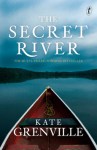
The secret River cover

Adapted by one of Australia’s current best-known dramatists, Andrew Bovell, and premiered in 2013, the theatrical version of Kate Grenville’s award-winning novel The secret river was hugely successful, and I’m embarrassed that I didn’t organise myself to see it. I did see the later miniseries adaptation, but that doesn’t count in the context of this post. The production was nominated for – and won – several awards in Australia’s main theatre awards, the Helpmann Awards.

Bovell commented on the process of adaptation:

Sometimes the best approach to adapting a novel is simply to get out of the way. This proved to be the case with The Secret River. The novel is much loved, widely read and studied. It has become a classic of Australian literature. My task was simply to allow the story to unfold in a different form. It took me sometime to realise this.

He talks about the contributions to the adaptation made by the play’s director (the aforementioned) Neil Armfield, Bangarra Dance Treatre director Stephen Page, and the Artistic Directors of the Sydney Theatre Company which staged the play, Andrew Upton and Cate Blanchett. These people are the royalty of Australian theatre so it’s not surprising the play was successful, both critically and at the Box Office!

Storm boy

The oldest novel in my selection this post is Colin Thiele’s 1964 children’s novel Storm boy, which was made into a very successful film in 1976. The play adaptation, however, is far more recent, being premiered in 2013. It was adapted by a writer I don’t know – but I’m no theatre expert – Tom Holloway, whom the play’s director John Sheedy called “one of my favourite Australian playwrights.” Sheedy said Holloway was faithful to Thiele’s story and his style.

For those of you who don’t know, the story is about a boy, whose mother had died, and the pelican he befriends (or, who befriends him). The Canberra Times article (linked above) on the play says this about the pelicans:

The pelicans were crucial to the story and Sheedy said, “For three seconds we thought of bringing real ones in.” But then the decision was made to use puppets, carefully crafted to be the size of real pelicans and operated by two Indigenous performers, Tony Mayor and Phil Dean-Walford.

The play was performed in Canberra, Sydney and other eastern state cities in 2015 and 2016.

Jasper Jones

Jasper Jones, by Craig SilveyCraig Silvey’s 2009 novel (my review) has, like Winton’s Cloudstreet and Grenville’s The secret river, became one of Australia’s most popular contemporary novels. It was adapted for theatre in 2014 and for film in 2017. The play adaptation was done by versatile actor and writer, Kate Mulvany. Being a Western Australian-based story, the play was first performed in Perth, with productions following in Sydney and Melbourne in 2016.

The Sydney Morning Herald’s reviewer, Jason Blake, said the following of the Sydney production:

I finished the book off this morning, just before writing this review. I think Mulvany has done a fine job in creating a play that stands on its own feet, though I do feel slightly cheated of the fiery, cleansing climax Silvey has provided his readers.

But whether you know the book or not, this piercing adaptation is very much worth seeing for the way it depicts – and shows ways across – some of the deep and enduring divides in our society.

The women in black/Ladies in black

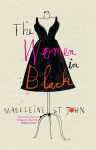
The women in black, Madeleine St John, book coverMusician Tim Finn and writer Carolyn Burns’ 2015 adaptation of Madeleine St John’s 1993 novel, The women in black (my review) is an exception in this list for three reasons: it’s the only one whose title differs from the book’s, it’s a musical comedy rather than a drama, and I’ve seen it! It won Best New Australian Work for Finn and Burns at the 2016 Helpmann Awards.

I’ve been pondering the name change, and my guess is that Finn and Burns felt, probably validly, that the word “Ladies” better conjures the 1950s fashion-section-of-a-department-store setting of the story. Anyhow, I enjoyed the adaptation, and loved that Finn took words from the book for the songs, as in “He’s a bastard, a bastard, a standard issue bastard” (“The Bastard Song”).

The Wikipedia article on the musical quotes the ArtsHub reviewer:

a comedy of mid-20th century manners, Ladies in Black is a paean to an optimistic future – the future of an uncomplicated gender equality and seamless multiculturalism. But Finn’s canny lyricism transports the play from its late 50s context to a subtle but salient comment on social issues of today.

While we have certainly moved on since the setting of this novel, this reviewer has a point – but I’m not sure that message will be the show’s lasting impression. It’s probably a bit too light and fun for that.

An aside: Australian film director Bruce Beresford, and friend of Madeleine St John, has been wanting to adapt the novel to film for a couple of decades now. I’d love to see what he did with it.

Is there any Aussie (if you’re an Aussie) or other (if you’re not) novel that you’d love to see adapted (jn any form)?

Monday musings on Australian literature: Boosting women’s entries on Wikipedia

Have you heard or read about the large discrepancy in Wikipedia between biographical entries (or “individual profiles”) for women and for men? The actual figure is a bit fluid because, of course, Wikipedia is a dynamic site, but most researchers on the topic come up with a figure of around 15-20% as the percentage of biographical articles on women (versus men) in Wikipedia. Why is this? Well, the point Austen so succinctly made in the early nineteenth century seems as true today, 200 years later:

Men have had every advantage of us in telling their own story. Education has been theirs in so much higher a degree; the pen has been in their hands.

In other words, men are also the main contributors to Wikipedia (about which I’ve written before). In fact, the percentage of women editors is less than or similar to the percentage of women’s biographical articles. The Sydney Morning Herald (SMH) reports that Wikipedia had “failed to meet its goal of increasing women’s participation on the website to 25 per cent by 2015”.

Now, it is probably true that men feature more heavily in the public sphere – more politicians, more world leaders, etc etc, are men. Consequently, we might expect some gender imbalance in biographical articles. But, we also know that many women of achievement are under-recognised and under-reported. Feminists have been highlighting this since Feminism’s Second Wave in the 1970s – and yet here, in 2017, we can identify large numbers of women in every field of endeavour who are not in Wikipedia.

Gender symbols

Courtesy: CKSinfo.com

Consequenlty, in recent years women have been taking action, by holding, for example, “edit-a-thons” to support and encourage the creation and upgrading of women’s entries in Wikipedia. On December 8 last year, as reported by SMH (linked above), some 400 new entries were created for women in an international edit-a-thon. Specific events were held, SMH says, in “Istanbul, Cairo, Dhaka, Jerusalem, Delhi, Abuja, London, Cardiff and Washington DC” and individuals also worked “from their own computers across the world”.

But, what about Australia?

Australia has not been missing from this action. In fact, in 2014, as reported by another SMH article, Sydney’s Museum of Contemporary Art hosted an edit-a-thon during which “volunteers gathered to edit and expand the paucity of Wiki pages on Australian female artists”. As well as creating new entries they worked on “improving their academic rigour by providing citations and references”. This is important work, because it enables Wiki’s users to be confident about what they read.

In August 2016, the ABC reports, a group of Australian female scientists took “part in a Wikibomb in an effort to be recognised for their contribution to Antarctic research”. The event took place “at the Scientific Committee on Antarctic Research conference in Malaysia, 93 Wikipedia profiles were created and 20 were improved upon.” There was apparently also a Wikibomb-edit-a-thon event held in Melbourne in November last year.

Significant indigenous Australian women (Enlighten 2017)

Some significant indigenous Australian women (Enlighten 2017)

And now, tomorrow, 28 March, Sydney University Press (SUP) and the university’s Fisher Library are holding an edit-a-thon “to improve the representation of Australian women in the world’s favourite reference work.” They’ve chosen March because it’s Women’s History Month. They have a Facebook page and a Twitter account, and they are building an accessible document listing “notable” women in a wide variety of fields who need Wikipedia entries or whose entries need upgrading. It’s a wonderful list, including scientists, artists, activists, historians, botanists and even the odd writer! SUP urges people to come, even if they have no experience or training in Wikipedia editing, as they

will have roving helpers and a cheatsheet with everything you need to know to become a Wiki champion in just a few minutes. It’s going to be a collaborative and fun exercise that will involve EVERYONE.

I’d be there in a flash if I lived in Sydney. You do need to RSVP, so if you are in Sydney and are interested, do check the Facebook Page link I’ve given to see whether it is still possible to join. But, if you can’t, there’s nothing to stop you having a go at home. They give advice on how to do that too on their Facebook page, with links to various useful tutorials.

So, I wish them a very successful day and look forward to hearing the results.

Meanwhile, I would love to know if any of you contribute to Wikipedia – and, if so, what your experience has been? (I have written on this blog about one of my early experiences.)

PS: SUP shares on its Facebook page an Inside Story article reporting that the Australian Dictionary of Biography (ADB) is looking for nominations for women to include in its online database, but that’s a topic, perhaps, for another day because the articles raises some interesting issues about “who” to include.

Monday musings on Australian literature: Whither magazines?

Meanjin Canberra Issue 2013

Courtesy: Meanjin

Are you a magazine reader? I was once a big magazine reader and subscriber – Ms Magazine, the Smithsonian, Choice and Australian Gourmet were my favourites in the 1980s and 1990s. In more recent times, I’ve gravitated to local literary journals like Griffith Review, Meanjin and Kill Your Darlings, but I tend not to subscribe to them. I pick and choose issues, when I feel I have time to read them. Some I buy in print form and some digital.

Australians have long had a reputation for being big magazine readers – but, things are changing, according to The Conversation (“From pig hunting to quilting: why magazines still matter”, by  and and the ABC (“Australian indie magazines thriving as big publications struggle”, by Emily Stewart). We are still big readers of magazines – though, hmmm, apparently the magazines with the biggest readerships are those produced by our two big supermarket chains, Coles and Woolworths. They’re free, which probably helps. But, they don’t represent the main change that’s happening …

Well, actually, it seems that two significant changes are happening. One is the increase in specialised titles, in “niche-interest publications that range from trail bikes to organic gardening”. These magazines still come and go, says The Conversation, but they can survive because of the advertisers:

advertising to a niche rather than a mass audience still makes financial sense and allows these specialised magazines to survive.

Stewart, of the ABC, also reports that “niche titles [with their lower overheads, for a start] have room to thrive”. It’s not easy though. They have, she says, to “think outside the square with their distribution channels to reach their audience, and instead of only using newsagents, Lunch Lady is also available in boutique home wares stores and art galleries”. This seeking out of “niche” distribution outlets is probably something that is easier for a small, and therefore more flexible, publisher to do?

The other change relates to print versus digital. Many magazines, as you probably know, offer print and digital versions, while others offer one or the other, depending on their knowledge of their clientele. Those that offer both versions use them in different ways. Sometimes the print and digital versions replicate each other, sometimes they contain different content. Sometimes, placing some digital content online is used as a teaser to draw readers in. Sometimes you have to subscribe to the whole magazine, while other times you can purchase individual articles. The digital domain offers publishers so many options for reaching their readers.

Griffith Review, for example, offers some of the content of their current issue online – but other articles are only available by subscription or can be purchased individually. The Conversation writes that

It’s tempting to say that we’re in a time of transition from old (print) to new (digital) technology, and that paper will eventually disappear.

The reality is the opposite. Newer magazines like Frankie, an Australian title popular among young women, and Collective, which tackles anything from business to lifestyle and culture, are thriving and selling in print in numbers that rival mainstream women’s magazines.

I love this, I love it because it tells us once again that all those doomsayers who, when a new technology arrives, proclaim the death of the previous technology – remember those claims that television would be the death of cinema? – whereas in fact, new technologies tend to offer more choices, more ways of doing things that suit different needs. It takes time for us all to work out how we want to use new technologies versus old ones, but work it out we usually do. (Of course, some technologies never do come back but in general, I’d argue, doomsaying is not a useful approach to handling change.)

Anyhow, The Conversation goes on to say that

New titles like contemporary women’s magazine Womankind, literary journal The Lifted Brow and Archer, which explores sexuality, gender and identity, are emerging every month – not just in Australia but globally. It is a response to digital overload and distraction – a way to slow down and focus on a beautifully designed, collectible object.

They conclude that the magazine industry “continues to evolve” and that this “evolution is tied to technological change, as it always has been”. But they suggest there’s more to it, proposing that the industry is “also tied to the desire for what political scientist Benedict Anderson famously called the imagined community.” (Nice!) In other words, while social media supports our need to feel part of a group, “magazines offer … an immersion in a carefully curated space made by experts who share your interests … even if that might be babes and boars!”

So, do you read magazines – and if so, what sorts of magazines do you read, and in what form do you read them?

Monday musings on Australian literature: Books that matter

In the comments on her post about Alan Paton’s Cry, the beloved country, Lisa (ANZLitLovers) commented that we need “politically aware authors to keep writing books that matter”. Hmm, I thought, most books I read matter, I think, but then a few posts later, when reviewing Jared Thomas’ Songs that sound like blood, she made clear that she meant by this “a yearning for books that tackle the issues of our time”. Ah, I thought, I can work with that idea – and so, here I am, working with it. Thanks Lisa for another Monday Musings inspiration.

The first question is, what are the issues of our time?

Off the top of my head, they would include indigenous rights, climate change and the associated issue of clean energy, asylum-seekers and refugees, women’s rights (including domestic violence), and sexual identity. There are many more, but let’s just work with these.

The second question, of course, is whether contemporary Australian literature – and here I’m meaning fiction, short and long form – is dealing with these?

Before I discuss this, a disclaimer, which is that, for me, books that matter don’t have to deal overtly with issues of the day. Jane Austen has often been criticised for not writing about the big issues of her day, which included the Napoleonic Wars and the impact of the industrial revolution. And yet, I’d argue that she did write about important personal and social issues – particularly concerning the condition of women. She just showed them – rather than explicitly told them.

So, let’s turn now to today’s issues – and I’ll confine myself to books written this century:

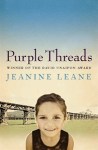
  • Jeanine Leane's Purple threadsIndigenous rights: slowly, very slowly, we are seeing more books written by indigenous people which expose the impact on them of two hundred years of dispossession. There’s historical fiction like Kim Scott’s That deadman dance (my review) and Ali Cobby Eckermann’s Ruby Moonlight (my review), and more contemporary books like Jeanine Leane’s Purple threads (my review). These are just a few, but writers like Tony Birch, Melissa Lucashenko, Ellen van Neerven, Tara June Winch and Alexis Wright are getting their stories out. It’s up to us to seek them and read them so we can inform ourselves better. Lisa’s annual Indigenous Literature Week provides a good opportunity for us to do that.
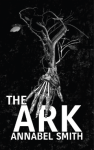
  • Climate and energy: some of the strongest books here are the cli-fi books like Jane Rawson’s A wrong turn at the Office of Unmade Lists (my review), Alice Robinson’s Anchor point (my review) and Annabel Smith’s The ark (my review), but other books like Stephen Orr’s The hands (my review) show the longterm impact on farms of climate change. It’s a topic which lends itself to speculative fiction, but it’s good to see more realistic fiction also exploring the subject.
  • Asylum seekers and refugees: the plight of asylum seekers and refugees has been reasonably well covered in recent years, from all sorts of angles, by non-fiction writers, but what about fiction? Nam Le’s The boat included short stories about refugees – albeit Vietnamese boat people of the late 20th century – and A S Patric’s Miles Franklin award-winning Black rock white city deals with Bosnian refugees in Australian suburbs. Maxine Beneba Clarke’s short story collection Foreign soil explores the lives of migrants, and includes a story set in a detention centre. Irma Gold’s Two step forward (my review) also includes a (memorable to me) detention centre story – from an employee’s point of view. There are also children’s and YA books in this area but I’m not sure the specific issues we are facing right now are being actively covered by our fiction writers. If we believe that fiction can have a positive impact, then …
  • Danielle Wood, Mothers Grimm, book coverWomen’s rights: the most obvious recent book exposing women’s lack of “real” equality, is Charlotte Wood’s dystopian novel, The natural way of things (my review). Interestingly, the Copyright Council, in its Reading Australia program, listed last March (that is, 2016), “8 books to read on International Women’s Day”. It’s a good list, but none of the fictional works were written after 2000. Hmmm … I might have added a book like Danielle Wood’s Mothers Grimm (my review) which exposes at a more domestic, personal level the challenges confronted by contemporary mothers, and the way societal values and attitudes contribute, or even sometimes, create these challenges.
  • Sexual identity: my sense is that this area is being increasingly covered by YA authors, exemplified by the book Lisa praised when she made the statement I’m exploring here. Australia has a growing number of LGBTQI writers. The Australian Women Writers’ (AWW) Challenge maintains a list of Lesbian and Queer Woman Writers, which is useful for anyone wishing to read more diversely. This is not to say, though, that all of their works are political or issues-based – and why should they be? Many write books in which diverse (aka non-heteronormative) sexual identities are a given. That in itself can be read as a political act because we all know the value of seeing ourselves reflected in the arts – in movies, television, books, and so on. Ellen van Neerven’s Heat and light (my review), for example, includes queer characters but their “queerness” is not the issue being explored. This is the point we are aiming for in the real world, but we are not completely there yet. As Yvette Walker wrote in a post for the AWW Challenge, “We appear. We disappear. We are in. We are out.” It’s a slow process.
Annabel Smith. The ark

So, where have we got to in this weird, idiosyncratic (read, minimally researched) ramble I’ve produced? I’d say “the issues” of our day are being covered by our fiction writers, but not always explicitly or politically. The thing is, political novels – or novels of ideas – are problematic. Sometimes the story and the characters become subservient to the politics, which can result in very dull reading. The challenge for fiction writers who do want to explore “issues that matter” is to find “palatable” ways of doing so. Some of those can be (appropriately) in-your-face, like Charlotte Wood’s The natural way of things or Annabel Smith’s The ark or, even, Jeanine Leane’s more realistic Purple threads, while others are more subtle, preferring to let the reader identify the “issues” on the fly. My other conclusion is that short story writers, only a few of whom I included here, are worth checking out when looking for writing about “issues”.

I’d love to know whether you yearn for books that tackle the issues of our time and, if so, whether you’ve found much that meets your needs? 

(And of course I’d love Lisa to add her perspective, because I’ve made assumptions from her comments that may very well have departed from her intention or meaning – and I’d like this to be a conversation.)

Monday musings on Australian literature: Ali Cobby Eckermann’s big prize

Last week’s news that Ali Cobby Eckermann had won a very special prize scuttled my plans for today’s Monday Musings post, which is fine because it can wait, whereas this one can’t. Last year, I wrote about Helen Garner winning the lucrative 2016 Windham-Campbell Prize for Non-Fiction. It was a new prize to me, and is American-based, so imagine my surprise when it popped up again this year through the announcement that indigenous Australian poet, Ali Cobby Eckermann, had won the 2017 Windham-Campbell Prize for Poetry. How wonderful for her, and, by association, for Australian literature, for Australian indigenous writers, and, with Garner and now Eckermann winning, for Australian women writers too.

Eight Wyndham-Campbell Prizes were awarded this year, two each for Fiction, Non-Fiction, Drama and Poetry. This is the first year the awards have included poetry. These prizes, which are open to English-language writers around the world, were “established in 2013 with a gift from the late Donald Windham in memory of his partner of forty years, Sandy M. Campbell”. They’re impressive for a couple of reasons. Firstly, the nominations are made confidentially and judged anonymously, so the recipients have no idea they are in the running until they receive a call from the prize manager. Secondly, the prize is worth USD165,000. That is, each winner receives that amount of money. Now that’s a prize!

Before I get to our winner, just one more thing on the prize. It is awarded at a ceremony during the Windham-Campbell Festival, which happens this year from September 13-15, 2017 at Yale University. The awards ceremony apparently traditionally begins with an invited speaker who gives a talk on “Why I Write.” This year’s speaker will be Karl Ove Knausgård. All the events are apparently free and open to the public. Really, this is philanthropy isn’t it! Now, to …

Ali Cobby Eckermann

The prize announcement page describes her as “Yankunytjatjara Aboriginal Australian”, and the page on her explains her work in these terms:

Through song and story, Ali Cobby Eckermann confronts the violent history of Australia’s Stolen Generations and gives language to unspoken lineages of trauma and loss.

It also says that she founded Australia’s first Aboriginal writers retreat. I didn’t know that.

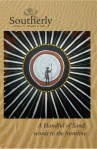
Southerly 71-2 CoverEckermann has published poetry collections, two verse novels, and a prose memoir. She also edited a special issue of Southerly devoted to indigenous writing. Southerly, congratulating her on win, describes it as their best-selling issue.

On being told of her prize, Eckermann (born 1963) is reported as saying that it will change her life completely. She is currently living in a caravan and looking after her elderly adoptive mother. This money will help her bring her family – including her son and grandsons – together. She is, as you’ll have gathered, a product (I don’t want to say “victim”) of the Stolen Generations. Linda Morris, reporting the win in the Sydney Morning Herald, writes:

In her memoir Too Afraid to Cry, published in 2013, Eckermann related how she had been tricked away from her mother as a baby, repeating the trauma her mother had suffered when she was taken from her grandmother many years before. Eckermann, in turn, had to give her own child up for adoption.

It’s a tough story, and one that reflects, we now know, the lives of many indigenous people. It’s this story, and the wider dispossession of indigenous people, that Eckermann explores in her work. She told Morris that

”I like to think the prize recognises an honest truth around Stolen Generations, for writing around an emotional truth, not academic. I’ve learnt to embrace my emotional baggage and turn it into poetry.”

She sees herself as representing a ”generational voice, not a singular voice”.

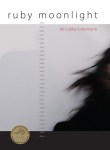
Ali Cobby Eckermann, Ruby MoonlightIt might be useful here to list her work:

  • Little bit long time (2009, poetry collection)
  • Kami (2010, poetry collection)
  • His father’s eyes (2011, verse novel)
  • Love dreaming and other poems (2012, poetry collection)
  • Ruby Moonlight (2012, verse novel, my review, winner of the NSW Premier’s Literary Awards Book of the Year and Kenneth Slessor Prize for Poetry)
  • Too afraid to cry (2013, memoir, and winner of the Tangkanungku Pintyanthi Fellowship)
  • Inside my mother (2015, poetry collection, Lisa’s combined reviews post, shortlisted for the NSW and Premier’s Literary Awards, and described by Eckermann as an “emotional timeline” of the Stolen Generations.)

In addition to these she has appeared in many anthologies, including a few editions of Best Australian poems.

The judges praised her ”substantial and formally innovative body of work”. I’ve only read a little of her work – Ruby Moonlight, which I’ve reviewed as you’ll have seen above, some of Inside my mother which I’ve just bought, and an individual poem or two. While I have to admit that my knowledge of poetry is not particularly deep, I can see from even this small sample what they mean by her work being “formally innovative”. As for “substantial”, I’m assuming they don’t just mean quantity but the quality and depth of her work and ideas.

Anyhow, while I didn’t use those words in my review of Ruby Moonlight, I tried to convey a sense of its formal and intellectual cleverness alongside the emotional engagement it generates. I can see these qualities in Inside my mother too. It opens with a gorgeous shape poem, “Birdsong”, and has at least one other, “Severance”. It has longer narrative poems alongside more abstract poems, of various forms, that convey feelings and ideas. There’s a discordant poem, “I tell you true”, that has an almost cheery singsong rhythm while telling a bitter story about alcohol abuse, violence, suicide, loss. And so on …

Interestingly, in his introduction to The best Australian poems 2009, poet Robert Adamson writes:

I attended the APC Regional Poetry Festival at Castlemaine in April 2008. Ali Cobby Eckermann, a poet from Alice Springs was on the program and she read a poem I have included here, “Intervention Pay Back”. Ali recited this poem and the audience was clearly moved. I was certainly moved by both the subject matter and the language of the poem. Somewhere between a ballad and written spoken word, it makes a new shift into what a poem might say and be.

“A new shift into what a poem might say and be” is clearly what the Wyndham-Campbell judges also saw nine years later.

So, big congratulations to Ali Cobby Eckermann on a much-deserved award … and kudos to the person or persons who nominated her.

Monday musings on Australian literature: Three Australian scriptwriters

In a tiny nod to Oscars week, I thought I’d introduce three Australian scriptwriters. I have written one Monday Musings on scriptwriters before in a post on the AWGIEs. There I named a few scriptwriters who also write novels, Luke Davies (who was, in fact, nominated for this year’s Oscars for his script of Lion), Helen Garner and Christos Tsiolkas. In this post, I’m going share three more, none of whom have written novels, but all of whom have written films* that I’ve seen and admired.

Rolf de Heer

Rolf de Heer, 2006 (By Whit (originally posted to Flickr as Rolf de Heer), CC BY-SA 2.0, via Wikimedia Commons)

Rolf de Heer, 2006 (By Whit (originally posted to Flickr as Rolf de Heer), CC BY-SA 2.0, via Wikimedia Commons)

Dutch-born de Heer came to Australia when he was eight years old. He is a significant fixture on the Australian movie scene, with his screen-writing credits including Bad boy Bubby, Dance me to my song (co-written with others including 2017 Stella Prize longlister, Heather Rose), The tracker, Ten canoes, Charlie’s country. Four of these films have been nominated for and/or won national and international awards, and the other, Dance me to my song, about a woman with cerebral palsy, was a critical success.

The tracker, which deals with that complex situation in which indigenous people were used by police to track indigenous people, won an AWGIE award for Best Original Screenplay. It also introduced de Heer to indigenous actor David Gulpilil with whom he went on to make two feature films about indigenous life in Arnhem Land, Ten canoes and Charlie’s country. Ten canoes was the first movie to be filmed entirely in Australian Aboriginal languages. De Heer, as you have probably gathered, doesn’t shy from difficult or challenging subjects.

Andrew Knight

A longstanding, and versatile, player in Australia’s film and television industry, Knight is probably best known for the several highly popular (and well-regarded) TV series which he has created and/or written, such as the comedy-sketch shows, Fast-Forward and Full Frontal, and the dramas, SeaChange (the three series of which Daughter Gums and I have watched several times) and Rake (starring the inimitable Richard Roxburgh).

Knight has adapted several crime novels by Peter Temple for television, including the telemovie of The broken shore (which I read and enjoyed just before blogging). His films include Siam sunset and the more recent films, The water diviner and Hacksaw Ridge. He is clearly an example of someone who has made a living out of screenwriting. Two years ago he received the Longford Lyell Award for Outstanding Lifetime Achievement, at our movie awards, the AACTAs.

Ivan Sen

Born to an indigenous Australian mother and a Croatian father, Sen belongs to that group of filmmakers who writes and directs his own films. He has made five feature films – most of which have been nominated and or won various film awards – starting with Beneath clouds which won the First Movie Award at the Berlin International Film Festival. Made in 2002, it explores some of the challenges facing young indigenous people, through the story of two young people who hit the road, seeking, well, themselves, really. It’s a beautiful, albeit often confronting, film.

“It’s becoming more important for me to make films for Indigenous communities to see themselves on screen” (Sen)

The challenge of indigenous identity, features in many of his films, including in his most recent one, the 2016 Goldstone. It’s a crime thriller set in outback Australia, and features an indigenous detective. It deals with contemporary issues including industrial fraud, political corruption, indigenous land-rights, abuse of women immigrants. It was screened at last year’s Toronto International Film Festival, competing in the Platform section for “artistically stimulating and thought-provoking” films. One of the things I love about Sen’s films is his use of landscape to underpin his themes – and Goldstone is a perfect example.

I could choose more writers, but I’m going to give you all an easy post this week and keep it short. There will be other opportunities to share more writers because, while Aussies always worry about the viability of our film industry, we do seem to have a great pool of exciting writers able to tell meaningful and powerful stories.

How much notice do you take of screenwriters when you watch films? Do you have any favourites?

* Note: I haven’t seen every film I’ve mentioned here, but I’ve seen most of them.