Monday musings on Australian literature: 1950s prose-poets criticised

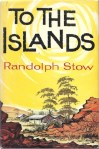
Randolph Stow, To the islandsSerendipitously, while trawling Trove for something else recently, I came across a fascinating article in the Tribune about the winners of the first two Miles Franklin Awards. The article was written by Jack Beasley in July 1959, and the two winners were Patrick White’s Voss (1957), and Randolph Stow’s To the islands (1958), two books which are now regarded as significant Australian classics. Jack Beasley wouldn’t have agreed!

So, who was Jack Beasley? Born in 1921, he was interested in the arts, was closely associated with the Australasian Book Society, and at one stage had his own publishing company. He wrote several books, including a memoir and a couple of books on Katharine Susannah Prichard. He was also a member, for many years, of the Communist Party of Australia. The Tribune, for those of you who don’t know, was the Party’s official newspaper. This background is relevant to his criticism of White and Stow’s wins.
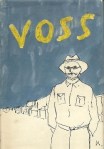
Patrick White, VossHe commences his article by stating that Randolph Stow’s winning the award has created quite a lot of discussion, particularly since it followed Patrick White’s winning for Voss the year before:

The two authors are the leading exponents of the so-called “prose-poetry” school, very fashionable today in literary circles attached to the big publishing houses.

He quotes Sidney J. Baker, whom he describes as a Sydney Morning Herald authority. Baker

regards their work as a “new type, of novel … distinguished by strength and sincerity and blowing away traditional debris like a cool wind after sizzling heat.” It should be added that among the “traditional debris” blown away are the traditions for which Miles Franklin herself so firmly stood.

Hmm, so the award should only be for writers who write in the same style as Miles Franklin?

Anyhow, Beasley writes that Franklin “believed that literature drew its ideas from life and attachment to native soil, and she wrote with a vigorous, entertaining prose”:

Her major work, ‘”All That Swagger” is notable for Danny Delacy and his “brave Joanna,” Irish immigrants who go through life undaunted by its buffetings and rejoicing in its happinesses.

In sorry contrast are the morbid heroes of Messrs. White and Stow, who flee from life and society in search of some individual haven.

To Beasley, prose-poetry “is a fad of style, a pretentious juggling of words and grammar”. He quotes from both White and Stow to prove his point, and then argues that while this “obscure” style is new in Australia, it “emerged many years ago in bourgeois culture”. He names “Joyce, Proust, Virginia Woolf and the extreme case, Gertrude Stein” as exponents of the style.

“Individual haven” and “Bourgeois culture” give away his leanings. He discusses To the islands:

According to some reviewers, “To the Islands” shows a warm sympathy for the Aborigines. This is partly true, but an even warmer sympathy is shown for the missionaries and whatever might be the personal motivation of individual missionaries, history has shown that the missions have played their part in the destruction of tribal life and the continuing ordeal of the Aboriginal people.

This is of course true, but what becomes increasingly clear is that Beasley’s main criticism is in fact less the style than the content of White and Stow’s work. The criticism focuses very much on the fact that their focus is the “individual” which is not part of Communist ethos. He describes White and Stow as being “closely bound to the capitalist class”, and writes that their protagonists, Voss and Heriot,

are nothing more than the bourgeois intellectuals, or more correctly a personification of the crisis of the intellectuals, desperately reaching for a sanctuary. They feel the sands shifting beneath them but are still unable because of their individualism to accept the new ideas that are emerging.

He believes intellectuals need to grasp new ways of thinking:

Only by coming to the working class and taking their part in the struggles led by this class for a better life, only by ceasing to believe in the omniscience of the lonely individual and learning in life of the inexhaustible strength of collective ideas, can the intellectuals have a future.

The socialist countries show again and again that there is no hostile contradiction there between the intellectuals and the proletariat and the Australian workers have always welcomed those who joined their cause.

Only at the end of his article does he return, somewhat off-handedly, to the style issue:

It is not suggested that Miles Franklin would have supported all of the views stated above [that is, his political views], but both the misanthropic themes and the literary quality of the two prizewinners are at variance with her view of life and literary standard.

It might have ended there but, intriguingly, a few weeks later, a letter in response appeared in the same paper – by author Alan Marshall. He thought the article was the “best analysis” he’d read of this new trend, but he takes issue with a couple of points. One is Beasley’s generalisation about “intellectuals”, his tarring them all with the same brush, but the other is his use of the term of “prose poets”.

Marshall writes:

What is wrong with prose poetry? The works of Katharine Prichard are full of it; Turgenev was a master at it; Gorky often delighted in it; Sholokhov’s works feature it. It can lift prose to its highest level and be an inspiration to mankind. In the hands of the writers I have mentioned it not only appeals to the highest emotions but to the reason as well.

Patrick White and Stow are not Prose Poets.

They are obscurantists juggling words to obscure sense in an effort, to create a sense of profundity. They believe readers have little faith in their judgement; that readers praise what they cannot understand for fear of being regarded as incapable of appreciating good writing.

Ouch … “obscurantists”, not “prose poets”.

I’m leaving it here. I’m sharing this because I like hearing the arguments and ideas of another time, and testing them against our own (with the benefit of time). Marshall’s criticism of authors writing obscurely to create profundity is often trotted out. But, clearly, his and Beasley’s assessments of White and Stow have not stood the test of time, thank goodness.
Monday musings on Australian literature: some Australian feminist “classics”

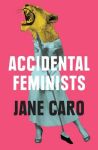
Jane Caro, Accidental feminists

Tonight I went to an ANU/The Canberra Times Meet the Author event featuring author and journalist, Jane Caro, in conversation with local radio personality and booklover, Alex Sloan. It was of course inspired by Caro’s new book, Accidental feminists. So, I thought it might be fun this Monday Musings to just list some of Australia’s best-loved feminist books – in chronological order of publication.

While I call myself a feminist, I wouldn’t call myself an expert on the history of feminist writing in Australia – and most of what I’ve read I read before blogging so I have minimal reviews here. Consequently, I don’t want to pretend to be offering anything like a complete or thorough list. Instead, this list is just a taster, a sample, an introduction to some of the best-known books and writers. (Oh and I admit up-front that I’m using the term “classic” loosely as I will be including some rather recent books which might, in time, become classics.)

Here goes:

Louisa Lawson’s The Dawn: a feminist magazine published between 1888 and 1905, The Dawn was established by feminist Louisa Lawson (under the name, Dora Falconer). It became, according to Wikipedia, the official publication of the Australian Federation of Woman voters. The journal has been digitised on Trove, and this comes from its first issue, May 15, 1888.

Every eccentricity of belief, and every variety of bias in mankind allies itself with a printing machine, and gets its singularities bruited about in type, but where is the printing-ink champion of mankind’s better half? There has hitherto been no trumpet through which the concentrated voice of womankind could publish their grievances and their opinions … Here then is Dawn, the Australian Woman’s Journal and mouthpiece – phonograph to wind out audibly the whispers, pleadings and demands of the sisterhood.

Here we will give publicity to women’s wrongs, will fight their battles, assist to repair what evils we can, and give advice to the best of our ability.

Germaine Greer’s The female eunuch: first published in 1970. Reading this while still a teen was my founding feminist moment. I had been brought up believing I was equal, that I could go to university and get a job just like my brother and the boys around me, that I didn’t have to marry to live a good and enjoyable life, but Greer’s book gave me an understanding of the structural, personal, psychological issues behind the struggle women faced (and still face) to gain true equality.

Anne Summers, Damned whores and God's police

Anne Summers’ Damned whores and God’s police: first published in 1975, this book examines the two main stereotypes that are used to define women – “bad girls” who refuse to conform to society’s expectations of “the good girl”, or “good women” whose role it is to civilise society, to keep everyone else moral. Forty years on, Summers believed that, despite some progress, the stereotypes persist, and a revised edition of her best-selling book was published in 2016. Lisa (ANZlitLovers) posted on this book, focusing on the introduction to the new edition.

Jocelynne Scutt’s Different lives (ed): published in 1987, this is less a feminist treatise, than an anthology of writing by women who were active in the second wave of feminism (either formally through organisations or informally through individual action.) This is just one of feminist lawyer Scutt’s several books on feminist issues.

Dale Spender: I’ve included Spender here because of the volume of her writing on women’s issues, in the 1980s and 1990s in particular, rather than for one particular book. Her focus has largely been women writers, and their neglect. Her first book, Man-made language, analyses how the English language is constructed from a masculine point of view, and the ramifications of this. Other books include Writing a new world: Two centuries of Australian women writers and the provocatively titled The writing or the sex?, or, Why you don’t have to read women’s writing to know it’s no good. I have her Mothers of the novel: 100 good women writers before Jane Austen, in which, among other things, she discusses how and why the work of these early women writers has been lost while that of their male peers has entered the canon.

Tara Moss’ The fictional woman (my review): published in 2014, this explores her thesis that women’s lives and roles are subject to an inordinate number of fictions that contradict reality, and that this helps perpetuate ongoing inequalities for women in representation, status, value. I’m not sure of Moss’s longterm standing in feminist literature, but I found this an engaging read.

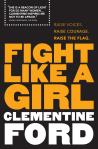
Clementine Ford, Fight like a girl

Clementine Ford’s Fight like a girl: published in 2016, this book belongs to the new generation of Australian feminists of whom Ford is clearly one of the frontrunners. The book’s starting point is that things have not changed for women – at least they haven’t changed enough. The book is therefore, writes Readings bookshop, “a call to arms for all women to rediscover the fury that has been suppressed by a society that still considers feminism a threat.”

There are many other Australian writers who explore aspects of women’s experience from a sociopolitical, and feminist, perspective, including Drusilla Modjeska’s Exiles at home, on Australia’s lively, fierce and often activist women writers of the 1930s; Diane Bell’s Generations on the way women pass on traditions; and Larissa Behrendt’s Finding Eliza (on my TBR) which takes on colonialism – and how the attendant stereotypes and myths have played out in the treatment of indigenous people, particularly women, since 1788. But, I had to stop somewhere…

Now, over to you: do you have any favourite feminist texts, Australian or otherwise, you’d care to share with us?

Monday musings on Australian literature: Stella judges on the zeitgeist in Australian fiction

Last week I reported on the longlist for this year’s Stella Prize, and shared an excerpt from the judge’s comments. For today’s Monday Musings, I’m reiterating most of that – for us to think about and discuss:

Reading for the Stella Prize … [is] a sample of the zeitgeist, a look at what is informing our thinking right now …

It feels like a big year for fiction, and our longlist reflects this. … Family relations and the persistence of the past in the present continue to inspire writers, and several books were concerned with the aftermath of trauma, especially sexual violence. Realism continues to dominate Australian fiction, with a few standout departures into other modes.

We wished for more representations of otherness and diversity from publishers: narratives from outside Australia, from and featuring women of colour, LGBTQIA stories, Indigenous stories, more subversion, more difference.

I’m not aiming here to get into a beat-up about their choices – because we all know that judging in the arts is such a subjective thing – but they did raise the issue, so I thought we could have a little think …

Starting with what they say is dominating contemporary fiction:

  • family relations
  • impact (“persistence”) of the past in the present
  • aftermath of trauma (particularly sexual violence)
  • realism

And then, looking at what they felt they didn’t see much of, which was “otherness and diversity”. They defined this as narratives that:

  • are not based in Australia
  • come from and feature women of colour, LGBTQIA people, Indigenous people (and, presumably, other “differences”, such as people with “disabilities”)
  • are subversive
  • are different

There are a several ways we can look at this. Firstly, do we agree with their assessment of Australian fiction, specifically, of course, that written by women – recognising that they are talking about trends, not exceptions as there will always be those. My sense is that they are right. Certainly, several books in their longlist are about family relationships – particularly fathers and daughters/parents and children – and about how the past continues to impact present behaviours and lives.

Secondly, if we agree with the judges’ assessment, does it matter? I’d say it does, because it suggests that we are not being introduced to the breadth and depth of Australian experience but to a subset of it.

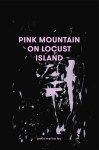
Jamie Marina Lau, Pink Mountain on Lotus IslandThirdly, if we agree it does matter, why is it so? Is it because this is what publishers think readers want to read? It’s interesting, for example, that the most subversive books in the longlist are probably the two from the small independent publisher, Brow Books (Lau’s Purple mountain on Locust Island, and Tumarkin’s Axiomatic), and that the indigenous work in the list (Lucashenkos’ Too much lip) is published by UQP, a university press which has a history of supporting indigenous writing.

Anyhow, what I’m going to do is share here some books written by women and published last year that I think offer “otherness and diversity”, not, as I said, to say that I think these should have been shortlisted – because I haven’t read all the books the judges did, and I don’t know which ones were submitted anyhow – but just to offer some ideas and to have you offer some back!

  • Glenda Guest’s A week in the life of Cassandra Aberline (Text) (my review), which could be seen to largely fit the zeitgeist/trends the judges identified – family relations, the impact of the past on the present – but it is also about “otherness”, in that the main character is an older woman who has been diagnosed with dementia.
  • Krissy Kneen’s Wintering (Text), which I haven’t read but Kneen does tend to be subversive. Is this book so – or is it simply a variation on Tasmanian Gothic?
  • Margaret Merrilees’ story about lesbians, Big rough stones (Wakefield Press) (my review)
  • Angela Meyer’s dystopian-tending-realism-departing story, A superior spectre (Ventura Press) (my review).

This isn’t what you’d call a lot! I did find a few more by men, but. We see stories all the time about “other” experiences, about the many challenges we are facing as a society – on the news, for a start. Where are they in our fiction?

Now, over to you – and if you’re not Australian, I would of course love to hear what you have to say about “otherness and diversity” in your neck of the woods.

(PS This may not publish, as scheduled, on Monday night AEDST as we are out in the wilds of NE Victoria where internet connection is flakey.)

Monday musings on Australian literature: Reading Victoria

The inspiration for these Monday Musings posts comes from all sorts of places, but mostly from online sources and print media. Today’s, however, comes from a catch-up I had last week with my group of litblogger mentees (at which Angharad and Emma from 2017 met Amy from 2018.) It was delightful. You won’t be surprised to hear that a main topic of conversation was reading and writing – during which Emma mentioned Reading Victoria and the stories that have been lobbing weekly into her email inbox. How did I not know about this? Ah well, I do now – better late than never!

Reading Victoria is a Melbourne City of Literature initiative, created in 2018 to celebrate the tenth anniversary of Melbourne’s designation as a UNESCO City of Literature. The aim was to publish “a new piece of writing each week, free and online, themed around a suburb or town in Victoria. From fiction to nonfiction, poetry to prose, the only constant was the titles.” By “constant”, I think they mean that the titles comprise, simply, the name of the place being written about – nothing fancy, just, say, Mallacoota or Ramsay Street. The place, as you say from these examples, could be pretty much any physical place. The About page, linked above, says that by the end of the 2018 they will have published 60 pieces. (Hmmm, lucky Victoria. They seem to have found 8 more weeks in their year. Wish I could!!)

Anyhow, the main page on their simple, clear, website is their Suburbs & Pieces page, which so far lists 57 pieces. It’s now well into 2019 so will there be 60, or have they stopped? I’ve subscribed so will soon find out. It would be lovely if the project continued. The site implies it was just for 2018. It doesn’t say how it is funded and whether the writers (and the editors, Sophie Cunningham, Andre Dao, Elizabeth Flux, Omar Sakr and Veronica Sullivan) are paid? It would be good to know these things?

Meanwhile, back to Suburbs & Pieces. Have you clicked on it already? I probably would have. However, on the assumption that you haven’t, or that you’re not Australian and would like a little more context, I’ll describe the pieces a little more to give you a flavour.

The content is wonderfully varied. I picked some at random to look at – based either on places or authors I know. The first one to catch my eye was Wangaratta (Week 6 by Andy Connor). Wangaratta is an attractive little country town on the Hume Highway between where I live and Melbourne. Connor’s piece is non-fiction, a little memoir, reflecting on all the reasons he had for wanting to escape it and wondering why, upon a return visit, he found you can ” feel nostalgia for a place you never felt you belonged”. Fair question.

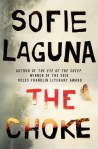
Sofie Laguna, The chokeAnother non-fiction piece is Sofie Laguna’s Echuca (Week 14), which is on the Murray River near when she set her novel The choke (my review). Her piece is moving, but I particularly like this which gives you a sense of the novelist’s ear and eye:

I read about the Barmah Choke – a place in the Murray where the banks come closer, flooding at certain points in the year, contributing to the wetlands environment. I liked those words – Barmah and Choke and the way they sat together – the first so round, lifting at the final vowel, and the second so tight, hemmed in by biting consonants. The words seemed to contradict each other.

These two pieces are non-fiction but there are also fiction pieces, poems, small plays, interviews. Many well-known published authors are here including Tony Birch, Helen Garner, Alex Miller and Jane Rawson, but there are new-to-me writers too, writers who have been published in journals like Lifted Brow, or are performers, or, even, comic book artists (see Corio, Week 41, Eloise Grills).

Some of the stories have been published elsewhere. At least, I recognised Bruce Pascoe’s fiction piece Mallacoota which appeared, with a few changes and under a different title, in Writing Black. But that doesn’t matter. In fact, one of the great things about short form writing is that it can be “curated” in different places and collections, and that writers can continue to “fiddle” with their pieces for each iteration. Not being a writer, I don’t know, but I’m guessing that sometimes this “fiddling” is to fix up something they don’t like, and sometimes to tailor the piece to its new “home”?

There is of course a very brief bio for each writer at the end of their piece providing their writing background or credentials. That’s particularly useful for writers you don’t know.

For anyone interested in writing about place, this project has a lot to offer. Many of the pieces are gritty, pulling no punches about the places they write about (Sydney Road, Week 38, by Fury is particularly strong), while others are affectionate, or even satirical. There are pieces by indigenous writers (like Tony Birch, Yarra River, Week 46), and by those from migrant backgrounds (like Alice Pung, Footscray, Week 30). When this is published, I will be staying somewhere along the one of Australia’s iconic roads, the Hume Highway, and it is here too: Hume Hwy (Week 48, by Sophie Cunningham).

In some ways this project reminds me of the Library of America Story of the Week program, except that it’s about sharing America’s literary heritage. Reading Victoria, on the other hand, is focused very specifically on contemporary responses to place.

Do you know of any similar initiatives to this – and do they interest you?

Monday musings on Australian literature: Australian Media Hall of Fame

When I was a young twenty-something library student, I learnt a new word – serendipity. It, means, essentially, finding things by accident, and was apparently coined by Horace Walpole back in 1754. It’s one of the best things about research I think – unless, of course, you are so focused you have no time for accidental discoveries.

Louise Mack, 1890s

Louise Mack, by Kerry & Co, 1890s (Photo:
National Library of Australia, nla.pic-an23474744)

However, this is not a post on serendipity, per se, but on a serendipitous find I made while doing some research for one of my posts for Bill’s AWW Gen 2 week. The post was on Louise Mack’s book Girls together, and in my searching I found an entry for her on a website that was new to me, the Australian Media Hall of Fame. So, I checked it out, and found it an interesting and rich site.

The Hall of Fame was created in 2011 by the Melbourne Press Club. Its About Us page says it

comprises reporters, editors, broadcasters, photographers, cartoonists and commentators that have made a significant contribution to the development of Australian media.

This is beautifully broad I think.

My rough count shows that it currently has around 240 inductees, of whom, I estimate, less than 15% are women. Not good, but probably reflective of the period it covers?

Anyhow, its aim is (and I’m paraphrasing) to

  • highlight the work of these media legends,
  • show the historical importance of strong and independent journalism, and
  • ensure that such journalism continues.

I’m not sure how well publicised it’s been outside of the profession, but given it’s on the ‘net, I guess more and more people will discover it. Meanwhile, I’ll do my best to raise some awareness. It’s a nicely presented site – at least in terms of what I look for …

About us

I like sites that tell you clearly who they are and what they are about. The About us page doesn’t really tell you who the Melbourne Press Club is, but it tells you what you need to know about this work it’s doing. It also tells us who the judging panel is, and who they want to honour:

people who have made an impact. Inductees must have helped shape the history of a significant news organisation, the craft of journalism, a  town, city, State, nation or the world. Sustained excellence helps, but is not enough. The Hall of Fame identifies game-changers. The Hall is open to journalists, editors, publishers, broadcasters, producers, artists, photographers or others who have had a significant impact by working in the media. Individuals have been inducted for a truly memorable single piece of work or for six decades of outstanding journalism; at each extreme they have made a big impact.

Finding inductees

Of course the main reason for coming to this page is to check out the Inductees, and I like this section of the site. The main Inductees page has an introduction, followed by an alphabetical portrait display of the inductees. If you are looking for a name you can find it easily.

However, it also has an excellent search (filter) function – by genre, era, and region – which enables you to refine your search to an area that specifically interests you and which also facilitates serendipitous finds!

The Genre filter is particularly interesting. It really means, in my words, the professional area the inductees have been honoured for, which are:

  • Broadcasters
  • Business journalists
  • Cartoonists/illustrators
  • Commentators
  • Editors/publishers
  • Photographers/cinematographers
  • Reporters
  • Sports journalists
  • War correspondents

The Eras are: pre 1900; 1900-1918; 1918-1948; 1945-1980; post 1980. The era seems to draw from the date of birth of the inductee, not their era of main activity. Given some have very long careers, this makes some sense … but it has its limits.

The Regions reveal that this is, not surprisingly given its origin, primarily an eastern-states activity: NSW, Victoria, ACT, Other.

So, a pre-1900 search produces some names of interest to me, including suffragists Louisa Lawson and Catherine Spence – but, I didn’t stop there and had fun with all sorts of searches

Information

However, while a decent searching capability is important, it’s only worth doing if the information provided is useful – and I’d say it is. The information can vary a little depending on the person but it usually includes a brief outline of the inductee’s career, a longer biography, still images, and recommended further reading, including links, such as to their Australian dictionary of biography entry if there is one. For some there is also a video of their induction (regardless of whether they were present, as some have long gone).

Take, for example, Catherine Spence. She is described as “a leading suffragist, a social and political reformer, novelist and journalist” and can be found under the Genre of “reporter”. Her page includes a biography by Women’s Studies academic, Susan Magarey, four lovely images, and a list of Further Reading.

Besides the actual information provided about the inductees, the value of sites like these also lies in who is included – in terms of quantity and quality. My sense is that the site – and people are added each year – includes many of the names I would expect to find there – and then some. I loved, for example, finding combat cameraman and cinematographer, Damien Parer, who filmed Australia’s first Oscar-winning film, Kokoda Frontline, listed. It really is a fun site – for Aussies anyhow – to potter around.

But look, my aim here is not to list all the treasures there are to find here (nor share all my trips down memory lane much as I’d like to), but to just tell you that the site exists. Do check it out if you are interested.

Monday musings on Australian literature: Older women protagonists

This post was inspired by Book Word’s “older women in fiction” project, which involves her reading and posting reviews for books with older women protagonists as well as encouraging others to read these books and sharing them with her. She has quite a list on the page I’ve linked above, and is adding to it all the time. As I write, the list was updated in December 2018.

Now, her list does include a few Australian books, which I was thrilled to see, but I thought I would share my own list. It’s not a complete one – that would be impossible – but it’s intended to be indicative of what’s out there.

Of course, the big question is how do we define “older” women? Book Word uses 60+ as her definition. I think that’s a fair enough definition, so will use it too. However, I’ve had to guess at times, because in most cases, even if the age has been given I haven’t necessarily specifically noted it. Forgive me if a couple of the women below are not quite 60 yet!

My list is in alphabetical order by author (with links being to my posts). I have all of the books I list, except for Maria’s war, but some before blogging.

Older women protagonists

  • Jessica Anderson, Tirra Lirra by the river: Seventy-year-old Nora Porteous returns to her childhood home reconnects with the community she left, while also reflecting on the decisions she’d made.
  • Thea Astley, Coda: Kathleen, who’s “losing her nouns” describes herself as a “feral grandmother” and she’s not about to be pushed around by her selfish children.
  • Carmel Bird, Family skeleton: I’m not sure that Margaret O’Day’s age is given, but she’s a grandmother so let’s assume she’s in our ballpark. This book satirises middle-class family life, as Margaret works desperately to “save” the family’s image.
  • John Clanchy, Sisters: Three late middle-aged sisters get together at the request of the eldest who has more than one secret to share.
  • Brooke Davis, Lost and found: Seven-year-old Millie is joined by 82-year-old Agatha Pantha and 87-year-old Karl the Touch Typist on a wacky journey in which they all discover what it means to be human, no matter what your age.
  • Glenda Guest, A week in the life of Cassandra Aberline: Sixty-something Cassie has been diagnosed with early-onset dementia, and before she loses her mind altogether she wants to revisit her past, and make amends if amends are indeed needed.
  • Marion Halligan, The fog garden: Writer Claire’s age is not given, and she might still be in her 50s, but her husband of 30 or so years has died and she’s confronting her grief, life as an older woman without a partner, and the opinions of others.
  • Elizabeth Jolley, Orchard thieves: An unnamed seventy-something grandmother watches over her somewhat fractious family, remembering her youthful passions and quietly hoping to impart some of the wisdom of her age.
  • Eleanor Limprecht, The passengers: Eighty-something war bride Sarah journeys to the USA, with her grand-daughter, to reconnect with her past as well as putting right some lies.
  • Margaret Merrilees, Big rough stones: Sixty-something Ro is dying of cancer, and we look back at the decisions she made, the causes that drove her and, most of all, the community of friends she has built.
  • Fiona McFarlane, Night guest: Ruth, in her mid-seventies, lives alone, having been recently widowed – until her sons arrange for a carer.
  • Amy Witting, Maria’s war: Living in a retirement home, Lithuanian migrant Maria remembers the past, and the traumas of her war experiences.

This slideshow requires JavaScript.

A few observations. The themes and subject matter are generally what you’d expect – illness (dementia and cancer being the main ones) and resolving/atoning for/amending the past. That pull is interesting, isn’t it, to reflect on and put right (with yourself and/or with others) the things you did, the hurts you inflicted, the decisions you made. Several of the stories use the journey motif to convey their characters’ mental or psychological journeys to self-discovery. And … only one of the authors (in my list anyhow) is male.

Finally, I struggled to find Australian books written before the 1980s that feature older women protagonists. There must be some, but, on the evidence I have here, I can only think that the second wave of feminism has resulted in a recognition of the importance of all stories.

And now, you know what I’m going to ask! Can you add some books to the list – Aussie if you’re Aussie, or your own nationality if you’re not?

Monday musings on Australian literature: Capel Boake

This week Bill (The Australian Legend) is following up last January’s Australian Women Writers Gen 1 Week with a Gen 2 Week, this one highlighting Australian women writers from 1890 to 1918. He takes his inspiration from HM Green’s A history of Australian literature, which characterises 1890-1923 as a period of “Self-conscious Nationalism”, the time of “bush realism”.

Anyhow, I will, of course, be contributing a review for this, but later in the week. In the meantime, as I did last year, I’m devoting a Monday Musings to a writer of the period, though unlike last year, not for the writer I’m reviewing. That’s because she, Louise Mack, already has a Monday Musings to her name. Today’s featured writer, then, is the unusually named Capel Boake.

Who was Capel Boake?

Capel Boake, no date, presumed public domainLike last year’s Tasma, Capel Boake is a pseudonym. Her real name was Doris Boake Kerr. She was born in Sydney in 1889, to Australian-born parents, and died in Victoria in 1944. She wrote under two pseudonyms, Capel Boake and Stephen Grey (the latter for collaborative works with poet, Bernard Cronin).

Although born in Sydney, she apparently spent most of her life – including most of her childhood – in Melbourne. She left school early, and worked as a shop assistant, secretary, librarian and book-keeper. Arnold in the Australian dictionary of biography, quotes Boake as saying that she was “self-educated at the Prahran Public Library”.

Her uncle was the respected poet, Barcroft Boake, who committed suicide in 1892 at the age of 26. His father, and Boake’s grandfather, was Barcroft Capel Boake, the Capel apparently reflecting their Welsh heritage.

Boake never married, and lived in the family home in Caulfield. The Australasian article, cited under Sources below, says that she liked swimming, fires and grilled chops on the beach, billy tea, and gardening.

Most relevant to us though is that, as another article says, she was “well-known in literary circles.” This included being active in P.E.N. International, the Fellowship of Australian Writers, and a foundation member of the Society of Australian Authors. She worked at one stage as a secretary to J. K. Moir about whom I’ve written before: he founded Melbourne’s Bread and Cheese Club, and was an impressive book-collector who created “one of the finest private libraries of Australian literature ever assembled”.

What did she write?

There is far less written about Boake, than there was about last year’s Tasma, but I did find some info in Trove, particularly in The Australasian’s Australian Writers Series (cited below). It reports that

Writing has always been in her blood, and from her earliest years she has felt the urge to express herself through the written word. But she remembers her first published story, which appeared in “The Australasian” in 1917. From then on she wrote a number of stories and poems for “The Australasian.”

So, she wrote short stories, poetry, and articles, but her favourite medium was apparently the novel. Her first, Painted clay, brought her “definite recognition as a serious writer”. Yet, she only wrote four novels, one of which was published posthumously:

  • Painted clay (1917, reprinted by Virago, 1986)
  • The Romany mark (1923)
  • The dark thread (1936)
  • The twig is bent (Sydney, 1946, posthumous)

Wikipedia says that her “subject matter included the options available to women in the early twentieth century, circus life, and early Melbourne history.” What Wikipedia doesn’t say, but The Australasian does, is that The dark thread 

tells of the growth of Jewish national feeling in a boy, the son of a Jewish father and Christian mother, who, living in Australia but going to the war and later learning of the establishment of the Jews in Palestine, felt the urge to go there as a unit of the Jewish nation. The idea of the theme came to Capel Boake when staying in the country, in hearing from a Jewish hawker some of his hopes and aspirations.

Interesting, huh?

Painted clay

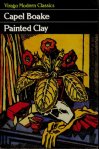
Capel Boake, Painted clayGiven Painted clay is the only novel that officially falls within Bill’s Gen 2 period, I’ll conclude with two contemporary comments on it. The Western Mail describes it thus:

It is a sex story created on conventional lines. If there be still a demand for this type of fiction, this new nation under the Southern Cross may as well make its contribution. This is a story of city life, every word of which might well be true. It is original only in the sense that every individual life is original, and a bringing together of a number of lives in a novel may be done without either much originality or imagination. Neither of these qualities are conspicuous, yet the story is well written and suggests talent for better things. Helen is a really fine character, and capable of better things than the author gave her to do.

Positive, but not completely so. Interestingly, the article seems to pretty much tell the whole story. No worries about spoilers then?

The Australasian’s reviewer was a little more expansive, albeit also noting faults. S/he starts, however, by mentioning that the novel is wholly a product of Australia and says that its typography and format are “a credit to its publishers”. S/he then continues:

As might be expected in a first effort of the kind, the story is not free from certain crudities of thought and occasional lapses in craftsmanship, but it has, on the other hand, decided merits which raise it far above the average of Australian novels, and justify one in expecting much from Miss Boake in the days to come. It is a real attempt to present a faithful picture of life in a Melbourne setting. The authoress has not made the mistake, very common with our writers, of painting in the “local colour” so heavily that the human element in the picture is lost in what we may call a superficial provincialism of incident and characterisation. [my emphasis] In other words, while rightly choosing for her story a setting with which she is familiar, she uses the setting merely as a medium for explaining general truths of the interaction of human nature and life experiences as she understands them. It follows, therefore, that the interest of her story does not lie in sensational happenings or in the surface peculiarities of habits or manners on this continent or any particular part of it, but in the quality of her characters and the manner in which they react to their environment. The defects in her work are obviously the result of her own as yet somewhat restricted experience of life, and not of wrong method of attack, or misguided imagination, or a striving after meretricious effects. Their cause is consequently one that time should cure.

Such a lovely detailed analysis.

Anyhow, it sounds like Boake is worth checking out. How great that Virago reissued her, choosing this novel, I presume, because, as ADB’s John Arnold writes, it’s about “a shop assistant’s fight for independence in a period when menial work or marriage were the only choices for a majority of young women.” Not all Gen 2 writers were about “bush realism” it seems.

Sources

Arnold, John. ‘Kerr, Doris Boake (1889–1944)’, Australian Dictionary of Biography, National Centre of Biography, Australian National University, 2000.

‘Australian Writers Series: Doris Kerr, as “Capel Boake,” adds lustre to a name already known in literature’, The Australasian, 27 May 1939.

Monday musings on Australian literature: Some New Releases in 2019

I’ve been doing this “new releases” post for three or four years now. As the post title says, it’s about books that will be published this year, but I’ll be selective, focusing on those most interesting to me. This doesn’t mean that I expect to read them all, just that they interest me!! Last year I listed 14 works of fiction, and read four of them, with another likely to be read this month, so, you know, I do get to some!

My list, as in previous years, is mostly drawn from the Sydney Morning Herald, but, because this is a Monday musings on Australian literature post, it will be limited to Australian authors (listed alphabetically.) Do click on the link to see coming releases from non-Aussies, and from those Aussies I’ve omitted.

Links on the authors’ names are to my posts on them.

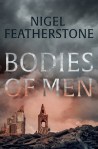
Nigel Featherstone, Bodies of menFiction

  • Tony Birch’s The white girl (UQP, July 2019)
  • Carmel Bird’s Field of poppies (Transit Lounge, November 2019)
  • Stephen Carroll’s The year of the beast (Fourth Estate, February 2019): the last of his Glenroy novels
  • Melanie Cheng’s Room for a stranger (Text, May 2019)
  • Simon Cleary’s The War Artist (UQP, March 2019)
  • Madelaine Dickie’s Red can origami (Fremantls Press, December 2019)
  • Nigel Featherstone’s Bodies of men (Hachette Australia, April 2019)
  • Peggy Frew’s Islands (Allen & Unwin, March 2019)
  • Andrea Goldsmith’s Invented lives (Scribe, April 2019)
  • Anna Goldsworthy’s Melting moments (Black Inc, July 2019)
  • Peter Goldsworthy’s Minotaur (Viking, July 2019). Haha, father and daughter being published in the same month.
  • Wayne Macauley’s Simpson returns: A novella (Text, April 2019)
  • Andrew McGahan’s The rich man’s house (Allen & Unwin, late 2019.)
  • Gerald Murnane’s A season on earth (Text, February 2019)
  • Elliot Perlman’s Maybe the horse will talk (Vintage, October 2019)
  • Kate Richards’ Fusion (Hamish Hamilton, February 2019)
  • Heather Rose’s new apparently unnamed novel (Allen & Unwin, second half of 2019)
  • Philip Salom’s The returns (Transit Lounge, August 2019)
  • Angela Savage’s Mother of Pearl (Transit Lounge, July 2019)
  • Graeme Simsion’s The Rosie result (Text, February 2019)
  • Dominic Smith’s The Electric Hotel (Allen & Unwin, June 2019)
  • Carrie Tiffany’s Exploded view (Text, March 2019)
  • Lucy Treloar’s Wolfe Island (Picador, September 2019)
  • Christos Tsiolkas’ Damascus (Allen & Unwin, second half of 2019)
  • Karen Viggers’ The orchardist’s daughter (Allen & Unwin, early 2019)
  • Tara June Winch’s The yield (Hamish Hamilton, July 2019)
  • Sue Woolfe’s new apparently unnamed novel (Scribner, November 2019)

There is an oddity. SMH and The Australian say that Anna Krien’s first novel, Act of grace, will be published by Black inc in October 2019. However, internet searches show it as having been published in May 2018, and Readings bookshop listed it last year as coming in September 2018? Was it scheduled for 2018 and it didn’t happen? Anyhoo…

The SMH also lists what it calls “new voices”. These include:

  • Sienna Brown’s Master of my fate (Vintage, May2019)
  • Melissa Ferguson’s The shining wall (Transit Lounge, April 2019)
  • Kathryn Hind’s Hitch (Vintage, June 2019): which won the Penguin Random House Prize
  • Alex Landragin’s Crossings (Picador, June 2019): which “can be read in two directions and covers hundreds of years and multiple lifetimes”
  • S.L Lim’s Real differences (Transit Lounge, June 2019)
  • Felicity McLean’s The Van Apfel girls are gone (Fourth Estate, April 2019)
  • Ruby Porter’s Attraction (Text, May 2019): which won Text’s Michael Gifkins Prize for an Unpublished Novel
  • Tim Slee’s Taking Tom Murray home (HarperCollins, August 2019): who won the Banjo Prize for Australian fiction with Burn. Is this the same book with a new title?

Short stories

Yes, I know these are fiction too, but they deserve a special section!

  • Debra Adelaide’s Zebra (Picador, February 2019)
  • Josephine Rowe’s Here until August, (Black Inc., September 2019)
  • Chris Womersley’s A lovely and terrible thing (PicadorMay 2019)

Non-fiction

SMH provides a rather long list of new non-fiction books covering a huge range of topics, so, like last year, I’m going to be very selective, focusing on writers I know or topics that particularly interest me:

  • Julia Baird’s Phosphorescence: On awe, wonder and things that sustain you when the world goes dark (HarperCollins, September 2019): a meditation on maintaining joy (by the author of the recently acclaimed biography, Victoria)
  • Phil Barker’s The revolution of man (Allen & Unwin, February 2019): on Australian masculinity
  • Luke Carman’s Intimate antipathies (Giramondo, first half of 2019): on “the writing life”
  • Jane Caro’s Accidental feminists (MUP, February): On Caro’s generation’s gender politics
  • Sophie Cunningham’s City of trees: Essays on life, death and the need for a forest (Text, April 2019)
  • Ben Eltham’s The culture paradox: Why the arts are the best thing Australia has going for it but no one really cares (NewSouth, August 2019): “a much needed examination of Australian arts and culture” – and a VERY long title!
  • Hannah Gadsby’s Ten steps to Nanette (Allen & UnwinJune 2019)
  • Stan Grant’s Australia Day (HarperCollins, May 2019): follow-up to Talking to my country (my review), apparently
  • Stan Grant’s On identity (MUP, May 2019)
  • Jacqueline Kent’s Beyond words: A year with Kenneth Cook (UQP, February 2019): autobiography
  • Fiona McGregor’s A Novel Idea (Giramondo: April): a photo essay
  • Emily Maguire‘s This is what a feminist looks like (NLA, October 2019): on the Australian feminist movement .
  • Jocelyn Moorhouse’s Unconditional love: A memoir of filmmaking and motherhood (Text, April 2019)
  • Mandy Ord’s When one person dies the whole world is over (Brow Books, February 2019): described as a diary comic
  • Jane Sullivan’s Storytime (Ventura, August 2019): on her favourite childhood books (which sounds just right for me as a new grandma)

Biography

  • Mary Hoban’s An unconventional wife (Scribe, April 2019): on “Julia Sorrell, a Tasmanian ‘colonial belle’ who refused to follow gender expectations”
  • Matthew Lamb’s Frank Moorhouse: A discontinuous life (Vintage, December, Vintage): a great title, given Moorhouse often describes himself as writing “discontinuous narratives”
  • Derek Reilly’s Gulpilil (Pan Macmillan, second half of 2019)
  • Margaret Simons’ biography of Penny Wong (Black Inc., October 2019): not sure of the title
  • Anne-Louise Willoughby’s Nora Heysen: A portrait (Fremantle Press, April 2019): on “the first Australian woman to become an official war artist and to win the Archibald Prize”.
  • Jessica White’s Hearing Maud: A Journey for a Voice (UWA Press, July 2019): memoir/biography about Australian writer Rosa Praed’s deaf daughter Maud

There are some great sounding books here. Do any interest you?

Monday musings on Australian literature: Australian Women Writers Challenge 2018

AWW Badge 2018As has become tradition, I’m devoting my last Monday Musings of the year to the Australian Women Writers Challenge* – but, this year it coincides with New Year’s Eve. When this post goes live, who knows what revelry I’ll be up to! Hmm … I can but hope! Seriously, though, I wish all you wonderful Whispering Gums followers an excellent 2019 in whatever form you would like that to take. I also want to thank you for supporting my blog with your visits and comments. You make this blog such an enjoyable experience for me.

Now, the challenge … it has continued to go very well. In my area of Literary and Classics, we consolidated 2017’s impressive increase in the number of reviews posted, with roughly the same number posted again this year. Theresa Smith (of Theresa Smith writes), continued to oversee the day-to-day management of the blog, enabling Challenge founder Elizabeth Lhuede to be less hands-on. Elizabeth is, however, still an active presence, particularly when it comes to resolving technical issues, reviewing our policies (such as “do we need to update our definition of historical fiction”?), and so on. The database now contains reviews for nearly 5,200 books across all forms and genres, from all periods, of Australian women’s writing. This means that the number of books reviewed on our database increased by 800 books – a 17% increase. Most of these were new releases but older books were also added, making the database particularly rich for readers interested in the long tail!

Most years, I’ve shared some highlights from the Challenge, but this year was more one of consolidation than of many new happenings, so, in the interests of keeping this post short and to the point, I’ll move straight on to reporting on the reviews I contributed for the year.

My personal round-up for the year

Let’s start with the facts, followed by some commentary. I posted 34 reviews for the challenge, four more than I did in 2016 and 2017, but one, admittedly, was a guest post. Here they are, with links to my reviews:

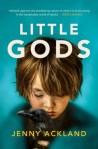
Jenny Ackland, Little godsFICTION

CHILDREN’S PICTURE BOOKS

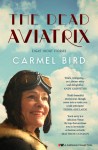
Carmel Bird, Dead aviatrixSHORT STORIES

SCRIPTS

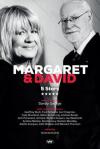
Amanda Duthie, Margaret and DavidNON-FICTION

This year I reversed the trend of previous years which saw me reading fewer and fewer novels for the Challenge – 48% in 2015, 40% in 2016, and only 34% in 2017 – compared with other forms of writing. This year, however, novels comprised over 55% of my AWW challenge reading, which proportion more closely reflects my reading preferences.

I read no poetry or verse novels this year, but I did read two plays by Garner. I also read fewer short story collections or anthologies, but I did read more Classics, including individual short stories. I’d love to read more of those. My non-fiction reading was more diverse – that is, significantly fewer memoirs than last year.

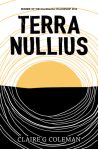
Claire G Coleman, Terra nulliusI’m disappointed that I only read two books this year by Indigenous Australian women – Claire G. Coleman’s novel and Marie Munkara’s memoir. I’d like to improve this next year – and have two right now on the “definitely-will-be-read pile”, so that’s a start.

Anyhow, if you’d like to know more about the Challenge, check it out here. We are also on Facebook, Twitter (@auswomenwriters), GoodReads and Google+. Do consider joining us. All readers are welcome.

Finally, a big thanks again to Theresa, Elizabeth and the rest of the team. I love being part of this challenge, partly because I believe in its goals but also because the people involved are so willing and cooperative. They are a pleasure to work with. See you in 2019.

And so, on to 2019

AWW Challenge 2019 BadgeThe 2019 sign up form is ready, so this is also my Sign Up post for next year. As always, I’m nominating myself for the Franklin level, which is to read 10 books by Australian women and post reviews for at least 6 of those. I expect, of course, to exceed this.

* This challenge was instigated by Elizabeth Lhuede in 2012 in response to concerns in Australian literary circles about the lack of recognition for women writers. I have been one of the challenge’s volunteers since 2013, being responsible for the Literary and Classics areas.

Monday musings on Australian literature: ABC RN presenters name their 2018 summer picks

Last Monday, I posted the best picks for 2018 by ABC RN’s Book Show presenters and some of their guests. I considered not posting at all this Monday. After all, it’s Christmas Eve and most of us are busy, but then, yesterday, I saw that the ABC had posted “2018’s best summer reads” recommended by their Hub on Books and Bookshelf program presenters. Of course, I couldn’t resist.

Unlike last week’s post, though, where I justified giving equal weight to all the picks, this week I’m going to prioritise their Aussie selections, and then mention the rest at the end. Seems fair enough for this Monday Musings series!

So, just four of the eleven picks were by Aussies, and they are:

  • Michael Mohammed Ahmed’s The lebs (Hachette): Sarah L’Estrange , producer of The Hub on Books, says that “There’s a lot of violence, homophobia and sexism in the novel — the author doesn’t recoil from an honest portrayal of life through the eyes of his protagonist” but that it is also “a lyrical, at times comical and often challenging read”.
  • Melissa Lucashenko’s Too much lip (UQP) which is on my TBR and I’ll be getting to it soon, maybe in summer!: Kate Evans of The Bookshelf, calls it “a cracking tale of family dynamics” that has “a touch of magic that’s light enough to feel entirely real, and keep readers reaching for words like ‘tough’ and ‘uncompromising’.” (Lisa has reviewed.)
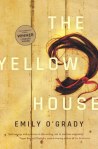
  • Emily O'Grady, The yellow houseEmily O’Grady’s The yellow house (Allen & Unwin) (my review): The Hub on Books’ Claire Nicholls describes it as “a chilling book that explores the different ways that trauma resonates through a family.”
  • Tracy Sorensen’s The lucky galah (Picador Australia): Sarah L’Estrange said that “While it might sound kooky, the novel is written in a warm, vivid and charming manner. Who knew that galahs could provide insight into 1960s Australian family dynamics?” (Lisa has reviewed and while it’s not her top pick, she thinks debut author Sorensen has promise.)

Interestingly, of last year’s six Aussie picks, I had read none at the time, and have picked up only one since, Sarah Krasnostein’s The trauma cleaner (my review). However, this year, I have already read one, as I’ve mentioned, and will be reading at least one other very soon.

Anyhow, the other picks were:

  • English writer Pat Barker’s The silence of the girls
  • American writer Amy Bloom’s White houses
  • Northern Irish writer Anna Burns Booker prize winner The milkman
  • American writer Andrew Sean Greer’s Pulitzer prize-winner Less
  • Chinese-born American writer Ling Ma’s Severance (which was published here by Text)
  • Indian writer Anuradha Roy’s All the lives we never lived
  • Canadian debut novelist Katherena Vermette’s The break (published here by Allen & Unwin).

While there was a preponderance of non-Aussie books in their picks, the selection as a whole feels more diverse than last year’s, with Arab-Australian writer Ahmed and indigenous Australian Lucashenko making up two of the four Aussie selections, and the rest not being your mainstream English and American writers (not to cast aspersions on the quality of the writing from those writers!) How great, for example to see a Canadian debut author here. The versatile Vermette is from Winnipeg and is of Métis descent, a group I hadn’t heard of before.

I should make a point here about my reference to diversity. My raising the issue is somewhat equivalent to discussion about quotas or not for increasing diversity in workplaces, in parliament, etc. I believe in merit, but I also believe that merit is often not judged in a fair playing field. This means that equally meritorious writing (however we define that) from non-dominant culture writers does not necessarily get equal exposure, because, for example, publishers, agents, and even, if they do get published, readers, do not take a “risk” on them. The more we talk about the issue, the more, I hope, the opportunities will be equalled.

Anyhow, if you are wondering about my picks, I’ll be joining the fray next week when 2019 arrives … I know you can hardly wait!

Meanwhile, have you read any of these books, and would you support the presenters’ recommendations for them?