Monday musings on Australian literature: Literary visitors in 1965

Last week’s Monday musings surveyed Australian literature in 1965. As I researched that post in Trove, I came across some fascinating newspaper articles from the year, which I thought worth sharing in separate posts. I’ve divided them into two groups – one on overseas visitors (today’s post) and the other local writers (next week’s, probably!)

An American academic

Bruce Sutherland, Professor of English Literature at Pennsylvania State University, visited Australia to research Miles Franklin’s time in America. He is, apparently, credited with establishing and teaching the first exclusively Australian literature course in the USA – in 1942. (He’s interesting, so I might return to him another day.)

Anyhow, speaking on an ABC program, he said (according to The Canberra Times), that Australian literature was more widely read now than at any time since the 1890s, and that, compared with his visit in the early 1950s, now “every Australian university is encouraging Australian studies to some degree”.  Publishers too, he said, were rising to the challenge:

Not only are many of the older books kept in print, but more and more, the works of promising young authors are being published.

He noted the importance of reprints, to students and the general public, saying that “a literature that is not read can hardly be said to exist”. Good point, and one that publishers like Text have taken on board in their Classics series. Prof. Sutherland was particularly interested in the fact that the biggest change since 1951 had been in drama.

However, Australians shouldn’t rest on their laurels, because

Quite frankly, Australian literature has a long way to go before it attains the pedestal reserved for the English and American in the English-speaking world. … But it has made great strides, and is now well beyond the toddling stage.

Hmm … no wonder we suffered from cultural cringe! Still, he was a great proponent of our literature, and as a result, in 1993 at least, Pennsylvania State University had one of the best research collections outside Australia.

A Soviet novelist

Soviet novelist, Daniil Granin (1919-2017) was visiting Australia as guest of the Fellowship of Australian Writers (FAW), reciprocating author Alan Marshall’s visit to the USSR the previous year. His focus was a bit different, as he was interested in what Australian literature was offering Soviet readers. “Australian literature,” he said at a FAW reception, “is the only window Soviet people have on Australian life.” DK, the Tribune article’s writer, tells us that the attendees included novelist Mena Calthorpe (whose realist novel The dyehouse I’ve reviewed), short story writer Dal Stivens, and poet Kath Walker (later, Oodgeroo Noonuccal).
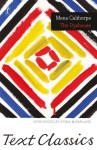
Mena Calthorpe, The dyehouseGranin told the group that interest in Australia had grown “enormously” in the last decade. In 1964, for example, one and a half million copies of Australian authors were printed and sold in the Soviet Union. Amazing. Did you know? Apparently, writes DK in another Tribune article, this interest is because these Aussie writers’ characters are “flesh and blood” people with an “active attitude to reality”.

Anyhow, he also spoke with various Australian literati including Colin Simpson (who wrote Take me to Russia), Roland Robinson (a poet), Leonie Kramer (the first female professor of English in Australia), Clem Christesen (editor of Meanjin), Alan Marshall (whose memoir I can jump puddles is a classic), and Nancy Cato (author of All the rivers run). That’s interesting, but even more interesting are his comments on some significant, and still remembered, Australian writers at the time:

Of Patrick White: “He is a man who feels a great responsibility for his own literary work, and has a genuine interest in contemporary literature. He has achieved for himself a very high standard of literary craftsmanship.”

Of Katharine Susannah Prichard: “She is a human being who uplifts you from your first meeting. She has an indomitable spirit, throws aside all trifles, and gets down to the main issues.”

Of Kath Walker: “I admire her just because she is the first successful Aboriginal poetess writing in English. She has a keen interest in all new Aboriginal writers and a vital concern with problems facing them.”

Note: For copyright reasons, most of the articles available for the 1960s come only from The Canberra Times and the Tribune, because they made an agreement with the NLA to allow digitisation. For other newspapers, the library must wait until they come into the public domain – and then, I guess, wait their time in the digitisation queue!
Monday musings on Australian literature: 1965 in fiction

1965 as a topic? What the?! Those familiar with the lit-blogosphere will probably guess what inspired this post, but for everyone else, I’ll explain. Over the last week of April, bloggers Kaggsy (Kaggsy’s Book Ramblings) and Simon (Stuck in a Book) ran a 1965 Reading Week, the latest in their series of reading weeks focusing on books published in a particular year. Needless to say, I didn’t manage to take part – if I had, you would have known about it before now! (For a list of the books read and who read them, check Simon’s 1965 Club Page.)

However, I thought I could play along, in my own way, by writing a – yes, I admit – belated post on 1965 in Australian literature. If it works, I might try it again for their next “year”, whatever and whenever that may be.

My main sources for this post were:

Australian literature and 1965

Kaggsy and Simon’s focus is books published in the year, but I’m going to do a sort of literary snapshot.

Writers born in 1965

An interesting group containing, not surprisingly, many writers in their prime now:

  • Michael Farrell: poet, who has had several books published, mainly by independent publisher Giramondo
  • Gideon Haigh: journalist and author, best known for sports and business writing
  • Fiona McGregor: novelist, whose third novel, Indelible ink, won The Age Book of the Year award
  • Melina Marchetta: novelist, primarily of Young Adult literature, whose award-winning YA novel, Looking for Alibrandi (1992), is an Australian classic
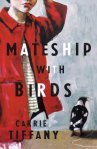
  • Mateship with Birds (Courtesy: Pan MacMillan)
    Carrie Tiffany
    : novelist, whose first two novels, Everyman’s rules for scientific living and Mateship with birds (my review), both won awards, and whose third book, Exploded view, was published this year. Mateship with birds won the inaugural Stella Prize.
  • Christos Tsiolkas: novelist who has written eight novels, including The slap (my review) and Barracuda (my review), as well as plays and screenplays.
  • Charlotte Wood: novelist who has written both novels and non-fiction, and whose dystopian The natural way of things (my review) also won a Stella Prize

Writers died in 1965

Hooton and Heseltine list a small number of deaths for the year (and I’ve added them to Wikipedia), but none are particularly significant in terms of my blog’s interests. However, one of those who died was a significant Australian personage, HV (aka Doc) Evatt. Among other roles, he was President of the UN General Assembly, and helped draft the UN’s Universal Declaration of Human Rights.

Novels published in 1965

By 1965, a goodly number of books were being published in Australia, so I can’t list them all. Hence, I’m focusing on those that interest me! You can check my sources for more.

  • Thea Astley, The slow natives: if I’d taken part in the 1965 Club, this is the book I would have chosen. I love Astley and have written about, or reviewed, her here a few times.
  • Clive Barry, Crumb borne: included because Barry was the inaugural winner of the Guardian Fiction Prize, and was described by the Oxford Companion to Australian Literature as a “vivid stylist with a capacity for dry humour”; his experiences as a POW in Italy in WW2 inform this novel.
  • Nancy Cato, North west by south: well-known for her historical fiction (of which I reviewed All the rivers run) but also wrote biographies and poetry, and was an environmentalist and conservationist; this book is about Lady Jane Franklin.
  • Don Charlwood, All the green year: this would have been my second choice for the club, because I have the Text Classics copy that I gave my late aunt.
  • Catherine Gaskin, The file on Devlinbest-selling romance novelist, whose book Sara Dane, based on the convict Mary Reibey, sold more than 2 million copies.
  • Donald Horne, The permit: one of Australia’s best known public intellectuals in his time, famous for coining the phrase “the lucky country”. Novels were not his main form of writing.
  • George Johnston, The far face of the moon: best-known for his My brother Jack, which won the Miles Franklin in 1964.
  • Thomas Keneally, The fear: prolific novelist who has won both the Booker Prize and the Miles Franklin Award (twice).
  • Christopher Koch, Across the sea wall: best-known for The year of living dangerously, and twice-winner of the Miles Franklin Award.
  • Eric Lambert, The long white night: one of the many left-wing/communist writers who were published in the 1950s and 1960s.
  • D’Arcy Niland, The apprentices: husband of Ruth Park (haha, just had to describe him in relationship to his wife!), and best known for his novel The shiralee.
  • Lesley Rowlands, A bird in the hand: also published two humorous travel books, and short stories.
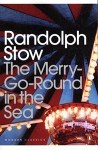
  • Randolph Stow, The merry-go-round in the sea
    Randolph Stow, The merry-go-round in the sea (my review): woo hoo, one I’ve read!
  • George Turner, A waste of shame: best-known for the SF novels he wrote later in his career, but in 1962, he won a Miles Franklin Award with his novel The cupboard under the stairs (reviewed by Lisa)
  • Morris West, The ambassador: a best-selling author in my youth, West is on my list of topics for Monday Musings one day

Selected other publications from 1965

So many well-known writers well-known published poetry, plays, short stories and other works in 1965, but I can only share a few (links on their names are to posts on my blog which feature them, though most have been mentioned in some way, in fact):

  • Rosemary Dobson, Cock crow (Poetry)
  • Frank Hardy, The yarns of Billy Borker (Short stories)
  • AD Hope, The cave and the spring (Criticism)
  • Geoffrey Lehmann & Les Murray, The Ilex Tree (Poetry)
  • Hal Porter, The cats of Venice (Short stories)
  • Kenneth Slessor, Life at the cross (Poetry)
  • Ivan Southall, Ash Road (Children’s novel)
  • Kylie Tennant, Trailblazers of the air (Children’s novel)
  • Colin Thiele, February dragon (Children’s novel)
  • Russel Ward, Australia (History)
  • Patrick White, Four plays (Drama)
  • Judith Wright, Preoccupations in Australian poetry (Criticism)

Literary Awards in 1965

Most literary awards we now know, started in the 1970s or later:

  • ALS Gold Medal: Patrick White’s The burnt ones (this book of short stories was my second Patrick White, the first being Voss)
  • Encyclopaedia Britannica Awards for Literature: Shared between two poets, AD Hope and Robert D Fitzgerald. The chair of the awards committee said: “As a critic [Hope] he is lively and controversial and he has earned the respect of his fellow teachers and intelligent readers, for his determined efforts to reevaluate accepted literary convention.”
  • Miles Franklin Award: Thea Astley’s The slow natives 

In conclusion

The interesting thing, not necessarily obvious from these lists, is the number of left, if not Communist, writers who were active at this time, beautifully reflecting the political activism and idealism of the 1960s.

Oh, and I found some fascinating articles in Trove about Australian literature in 1965. They deserve their own post – watch this space.

Monday musings on Australian literature: Narratives from outside Australia?

In my post on this year’s Stella longest announcement, I quoted this from the judges’ comments:

We wished for more representations of otherness and diversity from publishers: narratives from outside Australia …

They followed this with other wishes like stories by and about “women of colour, LGBTQIA stories, Indigenous stories”. These are obvious desires, but I am intrigued about the specific request for “narratives from outside Australia”, given the writers themselves have to be “either Australian citizens or permanent residents of Australia”. Superficially, at least, this is the reverse of the Miles Franklin Award which stipulates Australianness in the content (“Australian life in any of its phases”) of the works to be considered. (Some might remember the questions about Shirley Hazzard’s The great fire winning the Miles Franklin in 2004. Its link to Australia was pretty tenuous.)

Now, I’m not arguing against reading books not set in Australia – far from it. It’s just that, as a reader, when I look for narratives from outside Australia, I tend to look to writers from those places outside Australia.

So … what specifically do they mean?

Book cover for Madelaine Dickie's TroppoDo they mean they’d like more narratives by Australians about Australian experiences abroad?

We have always had those. Henry Handel Richardson’s Maurice Guest, Christina Stead’s For love alone (my review) and Shirley Hazzard’s The transit of Venus are good examples from the past. Contemporary examples include Madelaine Dickie’s Troppo (my review) and Angela Savage’s The dying beach (my review). Both authors have spent significant time in the Asian countries they write about. Dickie says this about Troppo:

Some of the anecdotes are almost true, certainly stemming from my own experiences as a traveller and surfer … The texture of Troppo is also very true, the intoxicating smell of kretek cigarettes, the nights bleary on Bintang beer, and the way the call to prayer from the mosques drift down through mountain valleys.

Both these novelists use plot-driven novels to explore not only personal growth, but socio-political and environmental issues affecting the southeast Asian region, issues important for Australians to understand.

Other contemporary novels by Australians about Australians abroad include Murray Bail’s The voyage (my review), Diana Blackwood’s Chaconne (my review), Angela Meyer’s superior spectre (my review), and Tim Winton’s The riders.

Writer Irma Gold recently wrote a blog post titled “Literary adventures abroad”, and featured Angela Meyer, Angela Savage and Leah Kaminsky, whose book The hollow bones I haven’t read. Meyer references that issue concerning writers from the country itself:

I questioned my desire to do so, when there are so many great Scottish writers writing about Scotland. But the desire would not go away, and I knew that the lens I was applying would be Australian — my character, Jeff.

Savage says of her decision to write novels set in Thailand:

Writing fiction set in Thailand provided both a means to process my experiences and an outlet for the travel stories nobody would listen to.

Interestingly, but perhaps not surprisingly, several of the novels I’ve read that include Australians abroad are historical fiction works set during, or post, various wars, such as Alan Gould’s The lakewoman (my review), Joan London’s Gilgamesh, Richard Flanagan’s The narrow road to the deep north (my review). All of theses enhance our understanding of the personal, social and/or political impact of war on Australian life and culture.

Merlinda Bobis Fish-hair womanDo they mean they’d like to see members of our diverse population writing about where they came from?

There are many memoirs on this topic, but, while the Stella Prize encompasses all forms and genres, my focus here is fiction. A memorable example for me is Merlinda Bobis’ Fish-hair woman (my review), which is set in the Philippines during the civil unrest of the 1980s. It’s a strong, evocative piece about humanity and the stories we tell (or manipulate) in the name of it.

Other Australian writers who have written about the places they came from include Michelle de Kretser in The Hamilton case, Sara Dowse in Schemetime (my review), Kavita Nandan in Home after dark (my review), and, coming up this year I believe, debut author Elizabeth Kuiper with her debut novel about coming of age in Zimbabwe.

One of the things these writers can do is provide a unique insight into their home cultures, because they revisit them through their migrant (expat) eyes. That insight can be uncomfortable, though, for the home culture, as we Aussies have felt when our own leave and then write about us from elsewhere. Peter Carey is a good example. I like Sydney Review of Books reviewer Natalie Quinlivan’s analysis of the situation when she says that his “fiction often tries to rewrite and reframe Australia. The success of such a pursuit depends on whether thinking about Australia, rather than living in the country, provides Carey with objective clarity or rhetorical detachment.”

Marion Halligan Valley of graceOr, do they just mean they’d like Australian writers to set books elsewhere.

Markus Zusak’s The book thief is an obvious example (my review). But others are Eva Hornung’s Dog boy (my review) and Marion Halligan Valley of grace (my review). These are all great novels, in which their authors have used their imagination and experience to explore universal truths in places other than their own. Each has a reason for making that decision – Hornung, for example, being inspired by a news article – and each has created a book that I have loved for its heart.

Why seek Australian narratives set outside Australia?

Well, I think Angela Savage says it all on Irma’s blog:

I also wonder if there’s a market for books set in Asia written by non-Asian Australians, or if readers prefer Own Voices writing — in this case, stories set in Asia by writers with an Asian background. For my own part, I enjoy perspectives that both ‘insiders’ and ‘outsiders’ bring to fiction.

I don’t know what the Stella judges specifically meant, but I think Savage has nailed it. In the end, what we want to read is as many different perspectives as we can because diverse reading opens our eyes and minds to other ways of being and seeing. However, my point is one of degree. I welcome these books (as those of you who read my reviews will know), but I’m not sure that Australians writing “narratives from outside Australia” is a glaring gap that needs filling.

I do hope all this has made some sense!

What do you think? 

Monday musings on Australian literature: Ashurst Business Literature Prize

Book coverMy, how dry does today’s topic sound? But read on, and see what you think. This prize was brought to my attention a couple of days ago by a tweet from author Michelle Scott Tucker announcing that her book, Elizabeth Macarthur: A life at the edge of the world (my review), had been shortlisted for the Ashhurst Business Literature Prize. Her tweet was followed up by Lisa (ANZLitLovers) posting the shortlist on her blog. I decided to save my post for Monday, as it seemed a perfect topic for musing on …

What exactly is this Ashurst prize?

Firstly, it has been going for FIFTEEN years, having been established in 2004 by Blake Dawson as the Blake Dawson Business Literature Prize, “for business and financial affairs writing”. The prize’s name was changed to the Ashurst Business Literature Prize in 2012. Ashurst Australia was previously called Blake Dawson, and is the Australian arm of an international commercial law firm. The prize has been administered by the State Library of New South Wales from the start.

The prize is currently worth $30,000, marking it as an award that means serious business! (Sorry, couldn’t resist that.)

Its aims, from the Prize’s site, are to:

  • Encourage business and finance writing and commentary of the highest quality; writing that brings with it the richness that can come from detailed research
  • Stimulate those writers with a knowledge of Australia’s business life and to encourage their continued production of insightful, well researched books that can be easily digested by the general reader
  • Enable all Australians and the general reader to be better informed about Australia’s commercial life and its participants
  • Add another dimension to Australia’s intellectual and cultural life

So the subject matter is clearly defined, as is the intended audience. The subject matter, though, has changed a little over time. Initially, it was restricted to Australian business and finance, but in 2013, this was expanded to encompass “international and global commercial life and its participants”. That explains why a book about the Lanes who started the Penguin publishing company was eligible. (See 2015’s winner.)

There’s also a wider aspiration about adding to our “intellectual and cultural life.” I like that – we need more good writing on some of the more practical topics affecting our lives.

The conditions of entry include the subject matter and the intended audience. Also:

  • the works must be in English, and can be in printed book or ebook form
  • the author/s must be Australian citizen/s or hold permanent resident status, and at least one of the authors must be alive at the time of nomination.

It doesn’t specifically say anywhere, but it seems that the works are expected to be non-fiction, so, for example, a book like Kate Jennings’ Moral hazard, which, as I wrote in my review,  “looks not just at our contemporary globalised financial world, but more widely at work, our relationship to it, and the moral choices we make in work and in life”, would not be eligible. A shame, I think, for such work not to be recognised. However, a wide variety of non-fiction genres are clearly accepted, including histories and biographies.

Past winners

The past winners, as listed on the State Library of NSW’s website:

  • 2004: Fred Benchley’s Allan Fels: A portrait of power (John Wiley & Sons Australia)
  • 2005: Darrin Grimsey and Mervyn K. Lewis’s Public private partnerships: The worldwide revolution in infrastructure provision and project finance (Edward Elgar)
  • 2006: Gideon Haigh’s Asbestos house (Scribe)
  • 2007: Caroline Overington‘s Kickback: Inside the Australian Wheat Board scandal (Allen & Unwin)
  • 2008: Leonie Wood‘s Funny business: The rise and fall of Steve Vizard (Allen & Unwin)
  • 2009: Peter Thompson and Robert Macklin‘s The big fella (Random House)
  • 2010: Paul Barry’s Who wants to be a billionaire? The James Packer story (Allen & Unwin)
  • 2011: Trevor Sykes‘ Six months of panic: How the Global Financial Crisis hit Australia (Allen & Unwin)
  • 2012: Peter Hartcher’s The sweet spot: How Australia made its own luck – and could now throw it all away (Black Inc)
  • 2013: Malcolm Knox‘s Boom: The underground history of Australia, from Gold Rush to GFC (Penguin Random House Australia)
  • 2014: Andrew Burrell‘s Twiggy: The high stakes life of Andrew Forrest (Black Inc)
  • 2015: Stuart Kells’ Penguin and the Lane Brothers: The untold story of a publishing revolution (Penguin Books Australia) (Lisa’s ANZLitLovers review)
  • 2016: Catherine Bishop’s Minding Her own business: Colonial businesswomen in Sydney
  • 2017: Michael Traill’s Jumping Ship: From the world of corporate Australia to the heart of social investment (Hardie Grant Publishing)

Has anyone read any of these? Several of the authors are known to me – including journalists Paul Barry, Gideon Haigh, and Caroline Overington – and I have heard of a couple of the books, but no, I’ve not read a one!

Shortlist for the 2018 prize

  • Ian D. Gow and Stuart Kells’s The big four: The curious and perilous future of the global accounting monopoly (La Trobe University Press)
  • Damon Kitney’s The price of fortune (HarperCollins)
  • Eleanor Robin’s Swanston: Merchant Statesman (Australian Scholarly Publishing)
  • Michelle Scott Tucker’s Elizabeth Macarthur: A life at the edge of the world (Text Publishing)
  • Brian Sherman and AM Jonson’s The lives of Brian (Melbourne University Publishing)

The judging panel is quite different to the usual composition: Richard Fisher AM (General Counsel and Adjunct Professor of Law at the University of Sydney); Narelle Hooper (business journalist, editor and author); Margie Seale (Non‐Executive Director of Telstra Corporation, Westpac Banking Corporation, Scentre Group and Australia Pacific Holdings).

The panel’s chair, Richard Fisher, described the 2018 shortlist:

… Four are biographies; two are concerned with pioneering business people, Elizabeth Macarthur and Charles Swanston whilst the others focus on James Packer and Brian Sherman. The fifth traces the evolution of accounting practice, and particularly The Big Four, from Medici to the modern day.

The winner will be announced on 15 May.

Any thoughts? Would you be inspired to read these sorts of books?

Monday musings on Australian literature: Spotlight on Robert Drewe

Courtesy: Annette Marfording

Courtesy: Annette Marfording

In 2016, I wrote five Spotlight posts inspired by Annette Marfording’s Celebrating Australian writing: Conversations with Australian authors, and decided that was probably enough mining of her work for my blog. However, with over two years having passed since then, I wondered if it might be okay to do another. I emailed Annette, and she kindly agreed. But, who to choose from the 21 authors in her book? Well, of course, you know from the post title who I chose, so the next question is, why him?

The answer lies in an email correspondence I’ve had with Carmel Bird over the last week in response to my last Monday Musings posts on pianos. Carmel emailed me privately to mention an anthology she edited, Red hot notes, which includes many pieces about the piano. How embarrassing! I actually have that book. Anyhow, that got us talking about short stories and short story writers, including Robert Drewe whose The bodysurfers I have. Carmel exhorted me to read (or, to be precise, finish reading) it. I will, because what I’ve read so far I’ve loved. (Meanwhile, I plan a future post on short stories more generally, inspired by our discussion.)

Robert Drewe, The bodysurfersBut now, after that rather long introduction, on to Robert Drewe. Marfording’s interview took place in August 2009, at which time Drewe had published six novels, three short story collections, two non-fiction books and two plays. Since then he has written another novel and short story collection, both of which I have given as gifts in recent years, plus four more works of non-fiction. He has won two Walkley Awards, a Commonwealth Writer’s Prize, and several other awards. Wikipedia says that his novel The drowner made Australian literary history by becoming the first novel to win the Premier’s Literary Prize in every state”.  And yet, I have not reviewed him for my blog, though I did post on his Seymour Biography Lecture in 2015.

Given the multiple forms he has written in, Marfording started by asking him his preferred form. He said that he likes them all “at different times – sort of equally” but that at the time of the interview he was particularly enjoying short stories, a form he came to after writing a couple of novels. Now, that’s interesting because many people suggest short stories are a training ground for novels, an idea I don’t much like as I see short stories as a form in their own right. Anyhow, Drewe commented that he was “finding the short story more interesting and more contemporary and of the moment.”

Marfording then turned to his origins as a fiction writer, after his early work as a journalist. He talked about always wanting to be a writer, and what his career as a journalist gave him:

It taught me how to write simple declarative sentences, it took me out of a normal Australian middle-class background and showed me how the other half live, it showed me how courts work and crime and how people at the struggling end of the spectrum live. It was really a fascinating background for a writer.

The discussion then moved on to Drewe’s novels and short stories, and how they reflect or comment on contemporary Australian society, including, specifically, such issues as refugees, the environment, and Indigenous Australians. Drewe makes an interesting comment about using the novel versus short story form:

I’m interested in ideas which I try to get across in a novel, but I’m interested in more succinct, shorter forms like relationships and so forth, and conflicts between people are easier to deal with in a short story …

Not surprisingly, this led to a discussion about his treatment of relationships, before returning to the short story, and what he sees as the essence of a short story. For Drewe,

… a good short story makes you look at something about your own life or experience through the prism of what you’re reading. So a sense of identification or recognition is what matters, really.

I’d have to think about whether all “good” short stories need to do this, but certainly I’d agree that many or most do.

Marfording then discussed his writing process, which is something that interests most readers (or, at least, those who read or listen to interviews with authors), and also a little about film adaptations, given his Ned Kelly novel, Our Sunshine, was adapted for a film which starred Heath Ledger. But, I’m leaving those to move on to their discussion about his work as an editor of short story anthologies.

How, Marfording asked, does he choose short stories for his anthologies. Drewe said that he advertises in all the literary columns in “newspapers and so forth”, and, he said, “the stories arrive in their thousands.” He also reads published stories in literary magazines. He said that half the content will be pre-published stories like these, but the rest will be new – “that’s where the fun is for the editor, discovering new people.” I reckon that’s where the fun is for the people he has discovered as well. Imagine being selected by Robert Drewe!

He commented that some anthologies include “slabs of novels … which goes against the whole point of short story collections.” I have certainly seen that. It’s seems fine if it’s a story that the author later develops into a novel, but to excerpt a novel feels a bit suss to me. However, I don’t want to be absolutist about this because there are always exceptions, n’est-ce pas?

Then, of course, there’s that other question we readers all love, his favourite writers. Drewe’s include Gabriel Garcia Marquez, Raymond Carver, Alice Munro, Helen Garner, and Peter Temple. You can see a few short form writers in there can’t you?

Another behind-the-scenes question concerned judging literary awards. It’s not so hard, he said, to choose shortlists, but choosing the winner is something else:

I generally tend to go for the imaginative ones, the ones that strike me as being less like another story than I’ve read before. The more original, the better, really.

A good rule-of-thumb, methinks, though a risky one. It can result in the selection of books that many readers won’t like, and the work may not stand the test of time. But, if award-winners don’t push boundaries, where are we? We need brave judges.

I did say I’d pass by discussing his writing process, but I’ll conclude with a selection of first lines from The bodysurfers which exemplify his comment that “you owe it to the reader to engross them”:

“My father wasn’t in his element in party hats”. (“The manageress and the mirage”)

“It was possibly lucky my mother didn’t marry her first fiancé because he ended up in Fremantle prison”. (“The silver medallist”)

“The murders took the gloss off it.” (“The bodysurfers”)

Would these lines make you want to read on?

Previous Spotlight posts:

Annette Marfording
Celebrating Australian writing: Conversations with Australian authors
Self published, 2015
273pp.
ISBN: 9781329142473

Note: All profits from the sale go to the Indigenous Literacy Foundation. To find out where you can purchase this book, please check Marfording’s website.

Monday musings on Australian literature: Pianos in Australian literature

A rather left-of-field topic for Monday Musings, but did you know that last Friday, March 29th, was World Piano Day? The Piano Day site asks how we are going to celebrate it. Well, three days late, I’m celebrating it by talking about Australian literature that features pianos. Why not?

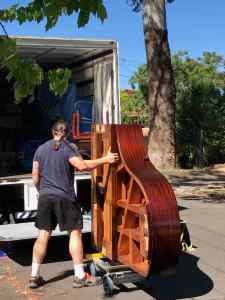
Farewelling my late aunt’s precious Bechstein

World Piano Day is new – the first being 2015 – and it is a slightly shifting feast in that its date is related to the number of keys on a piano, 88. That is, it occurs on the 88th day of the year which is, except for leap years, the 29th of March.

Why do we need a World Piano Day? Its creator, the German musician Nils Frahm, says:

For many reasons. But mostly, because it doesn’t hurt to celebrate the piano and everything around it: performers, composers, piano builders, tuners, movers and most important, the listener.

Any keen reader of Australian fiction will know that pianos abound in Australian literature – hmm, “abound” might be pushing it a bit, but they do occur more frequently than you might think. In John Lang’s mid-19th century novel The forger’s wife (1853) (my review), the wife Emily tries to support herself by giving piano lessons. Elizabeth Jolley features piano teachers and piano playing in many of her novels. And so on…

Consequently my list is an eclectic selection, presented chronologically.

Fiction

Miles Franklin’s My brilliant career (1901) (Karen’s BookerTalk review): Protagonist Sybylla loves music and the piano. For her music represents the life/world she desires. When she is exiled to work at the M’Swats’ farm she finds their piano produces only “jarring, clanging, discordant clatter” and their neighbours “lived the same slow life, and their soul’s existence fed on the same small ideas. I was keenly disappointed that none of them had a piano, as my hunger for music could be understood only by one with a passion for that art.” Harry Beecham, however, is a “fine pianist”, but unfortunately for him, Sybylla’s desire for independence outweighs even that!

Henry Handel Richardson’s Maurice Guest (1908)(Lisa’s ANZLitLovers review) and The young Cosima (1939) (Bill’s TheAustralianLegend review): Both feature pianists, which is not surprising given Richardson was a keen musician who studied music at the Leipzig Conservatorium. Although it barely references the music, I can’t resist this contemporary review of Maurice Guest (from The Sydney Morning Herald, 24 October, 1908):

Maurice Guest (Heinemann) is an elaborate study of the soul progress of a young student of music in Leipzig. It is very long for a modern novel, but it shows a finished style and considerable powers of analysis. The picture of life in Leipzig is very minute, and though the detail is rather overwhelming, it all fits in Its place. Mr. [sic] Richardson is to be congratulated on a fine and careful piece of work of more than ephemeral Interest.

Helen Garner, The children BachHelen Garner’s The children’s Bach (1984) (my review): Protagonist Athena has a piano in her kitchen:

There was a piano in the kitchen and during the day Athena would shut herself in there under the portrait of Dexter’s father and pick away at Bartok’s Mikrokosmos or the easiest of Bach’s Small Preludes. Preludes to what? Even under her ignorant fingers those simple chords rang out like a shout of triumph, and she would run to stick her hot face out of the window.

Peter Goldsworthy’s Maestro (1989): Goldsworthy is a writer, doctor and music lover, who has also written libretti. His daughter Anna, see below, is a concert pianist. Maestro, his debut novel, is a coming-of-age novel about a young boy who is taught the piano by the titular maestro (for whom the piano provides sustenance and escape.)

Sonia Orchard’s The virtuoso (2009) (Lisa’s ANZLitLovers review): While Richardson’s The young Cosima draws on the life of Richard Wagner, and the pianist Cosima von Bülow whom he married, Sonia Orchard’s debut novel draws on the life of the much lesser known Australian pianist Noel Mewton-Wood, who committed suicide when he was 31 years old, and was found next to his Steinway.

Murray Bail’s The voyage (2012) (my review): Most of the books here are about pianists, but Bail’s is about an Australian piano inventor who goes to Vienna to try to sell his piano. It’s a clever motif – an inventor from the New World taking his new piano to sell to the Old World. It goes to the heart of some of Bail’s thoughts about the challenges we face as Australians, not to mention the challenges artists face.

Zoe Morrison’s Music and freedom (2016) (Lisa’s ANZlitLovers review): Morrison is a professional musician, who learnt the violin and piano, but she is also a feminist interested in social justice. Music and freedom, which tells the story of concert pianist Alice from childhood through marriage to old age, combines these two interests.

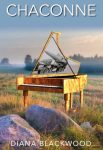
Diana Blackwood, ChaconneDiana Blackwood’s Chaconne (2018) (my review): Blackwood’s debut novel features a harpsichord on the front cover – next to a Pershing missile – the harpsichord referencing protagonist Eleanor’s piano-playing childhood and love of Baroque music, and the missile, the novel’s Cold War setting. This novel is about a young “lost” woman whose reconnection to music helps her get her life together.

Justine Ettler’s Bohemia Beach (2018) (Bill’s TheAustralianLegend review): Another novel about a concert pianist, written by a writer who is also an accomplished musician. Protagonist Catherine Bell’s life has run off the rails and she is self-medicating with alcohol.

Non-fiction

My main interest here, really, is fiction, but I’ll list a few non-fiction books which feature pianos or pianists:

  • Anna Goldsworthy, Piano lessons (memoir) (2009) (Lisa’s ANZLitLovers review): Goldsworthy’s life in music from childhood piano lessons to becoming an internationally successful concert pianist.
  • Michael Atherton, A coveted possession: The rise and fall of the piano in Australia (2018) (history) (Lisa’s ANZLitLovers review): a cultural history of the piano in Australia, from their arrival with the first boats in the late 18th century.
  • Virginia Lloyd’s Girls at the piano (2018) (memoir): Lloyd muses on learning the piano as a child, and the role the piano and music played in her subsequent life.

And, I have to mention Diane Bell’s Generations, in which she discusses, in the chapter “Familiar things”, the way pianos are passed down through generations of women. The piano was seen, she writes, as a symbol of “civilisation, status and sociality”. It provided an opportunity to learn to play music, a way of socialising with people, and of “keeping alive the folk music” of the countries from which people had emigrated. Bell writes that at the turn of the 20th century Australia’s population was under 4 million, but “there was about one piano for every six people.” No wonder, she says, there are many stories about buying and moving them, playing them, and socialising around them.

All these books are very different, but all have one thing in common, the capacity for music to incite some passion or vision for life. Irresistible.

Do you like reading about music? If so, please share your favourites.

Monday musings on Australian literature: Reading marathons

Public reading No Friend but the Mountains

Today’s post was inspired by two comments on yesterday’s post which featured a public reading event I’d taken part in. Lisa (ANZLitLovers) commented that she is taking part in a reading of James Joyce’s Ulysses in a Queenscliff bookshop next Bloomsday, while Karen (Booker Talk) said she wasn’t sure she’d heard of such a grand scale reading event. I had heard of them before, but decided that it was time I got the real gen!

So, I checked Wikipedia (where I found an article on Marathon Reading); I googled; and of course I researched Trove. I discovered a whole world of reading events, which I’ll share here, focussing on Australia, but including some other places too, for context. Wikipedia’s article (accessed 25/3/19) is minimal, basically referencing a few examples of what it calls “marathon reading” but what is more commonly called a “reading marathon”. The first marathon reading Wikipedia describes is a yearly event run by UCLA “where a group of students, faculty, community members, alumni, and often even celebrities read a novel (or two) out loud non-stop for a 24-hour period.”

That description essentially defines what I’m discussing in this post, with a couple of provisos. The time frame for a reading marathon can vary, from several hours to several days; and the readers of course can vary too, from professionals to lay people of all sorts, depending on the event.

Google was useful – to a degree. What I discovered was that Bible reading marathons are BIG. They are big in Australia, and big in the USA, too. Some churches and religious organisations hold them regularly. A bit more on this anon. However, Google also brought up all sorts of reading marathons for various books:

  • the Bible
  • Herman Melville’s Moby Dick
  • James Joyce’s Ulysses
  • George Orwell’s 1984
  • Charlotte Bronte’s Jane Eyre and Jean Rhys’ The wide Sargasso Sea
  • Walt Whitman’s Leaves of grass
  • Harry Potter
  • Jack Kerouac’s On the road
  • Madelaine L’Engle’s A wrinkle in time

The first three popped up frequently, with some organisations running them as regular events. 1984 also popped up more than once.

Most reading marathons seem to have a goal, mostly spiritual (the Bible), or political (eg 1984) or cultural (eg Ulysses). Literacy also pops up frequently as a reason.

The Australian scene

The first references I found to reading marathons in Trove came from the 1920s and 1930s and were all about Bible reading marathons in the USA. It appears that the practice became competitive, with churches vying to do it faster than other churches! An article in World News (30 January 1926) said that “the idea originated in a small western centre some time ago, and had as its object the establishment of a counter-attraction to the then prevalent non-stop dancing Marathons”. The first Bible marathons took 72 hours, but, the article said, a Boston church had done it in 52 hours 18 minutes and 27 seconds. Clergymen were apparently denouncing the contests because “they detract from the reverence in which the Bible should be held, and that the readers gain no instruction or inspiration from their efforts”. There were several articles on the topic, with titles like “Excesses of American churches”.

The first report I found of an Australian reading was of – yes – Ulysses! It was held at the National Library of Australia on June 16, 1993. (I was living in the USA at the time!!) The article starts:

Literary fans walked into the fourth-floor reading room at the National Library yesterday, leaving the cold of a Canberra winter to emerge in Dublin, June 16, 1904, and celebrate Bloomsday slightly late at a marathon eight hour-plus reading of the James Joyce epic, Ulysses.

James Joyce Ulysses

Did they read all of Ulysses in 8 hours? I’d be surprised. Anyhow the report says that the readers, of whom there were over 30, included local politicians, writers and other community figures, and that

there were about half a dozen real Irish accents and an equal number of reasonable facsimiles. Others struggled to overcome Irish names and colloquialisms of varying degrees of technical difficulty and with differing levels of success.

Love it. The article also said that Canberra’s Irish community had held Bloomsday readings before but this was the first at the National Library.

My googling for Australian examples turned up mostly Bible marathons and some Ulysses marathons, both of which continue today (despite those early Bible marathon criticisms!)

George Orwell, 1984

However, there were others. In Melbourne in September 2015, the Wheeler Centre and the Melbourne Festival, organised a “marathon relay reading” of 1984, “Orwell’s prescient novel of power and politics …in a very apt setting—the Legislative Assembly Chamber in Victoria’s Parliament House.” The event was to take over 9 hours, and would involve up to 30 people reading from the Speaker’s chair! Wow! That must have taken some negotiation. The readers included politician Adam Bandt, human rights lawyer Julian Burnside, feminist writer Clementine Ford, ex-Human Rights Commissioner Gillian Triggs, political speech writer Don Watson, and Rosie author Graeme Simsion.

And, just last year, again in Melbourne, the bookshop Readings supported a marathon reading of Emily Watson’s translation of the Odyssey. This was a professional reading organised by The Stork Theatre. A free event, it was to use over 30 performers, and take 12 hours. The promotion said “Come along for your favourite chapter, bring a picnic, stay for the whole 12-hour marathon or come and go as as you please.”

Variations on a theme

My research revealed other events or activities that were tagged reading marathons, but were different from the more common use of the term. These activities comprised two main types:

  • Reading as many books as you can in a given period (a bit like the well-known Ms Readathon): There were a lot of these, one example being the William Stimson Public School, in Wetherill Park NSW, which described its 2017 Book Week as being the “culmination of their reading marathon where the school community read more than 9000 books”. I found these sorts all around the world, from Kenya to the United Arab Emirates, from Latvia to Argentina, as well as in Australia!
  • Nick Bland, The very cranky bearSimultaneous storytime: This is an event where the same story is read at the same time in multiple places. An example occurred in Australia in 2012 when Nick Bland’s The Very Cranky Bear was read aloud “in about 2200 libraries, kindies, schools and homes across Australia” to over 300,000 children in the 12th National Simultaneous Storytime. This event’s aim is partly, at least, to promote literacy.

So, have you attended (or taken part in) a reading marathon? If you have, how did you find it?

Monday musings on Australian literature: NSW Premier’s Translation Prize

Don’t worry. I know this is the second Monday Musings post in a row inspired by the NSW Premier’s Literary Awards, but when I wrote last week’s post, I felt that one on the Translation Prize in this suite of awards would be an appropriate follow-up. It’s not the start of a Monday Musings trend!

I know I don’t need to say this to readers who come here, but reading works by people from other cultures is so critical to our ability to understand our world and the people in it. However, funnily enough, not all of that literature is written in the language/s we read! Hence, the importance of translation. Unfortunately, translation doesn’t have high visibility in Australia, partly, I presume, because of our geographic isolation and our attendant monolingualism. Yet, there are many* in Australia who speak more than one language. It surely behoves us, for a start, to read more from the cultures living amongst us.

Jane Sullivan wrote an article in The Age back in 2005 about the state of translation in Australia, and made this comment:

In Australia, the market for translated work is very small and publishers are rarely willing to take the risk of commissioning a translation. While the Australia Council supports translation of Australian writers’ work into other languages, it does not usually support Australian translation of foreign literature into English.

I wonder how much has changed since then? (Do read the article, if you are interested. Sure, it’s a bit old now, but it has some interesting things to say nonetheless, including suggestions that things were changing.)

NSW Premier’s Translation Prize

Now, I have written about translation before, particularly in my review of Linda Jaivin’s Quarterly Essay and in a Monday Musings on Australian literary translators, but have never focused on the NSW Premier’s Translation Prize. I’m rectifying that now!

The Translation Prize is offered biennially, and is currently worth $30,000. It has been offered, I believe, since 2001. According to the State Library of NSW, it was proposed by the International PEN Sydney Centre and is funded by Arts NSW and the Community Relations Commission for a Multicultural NSW. Its aim is “to acknowledge the contribution made to literary culture by Australian translators” and it “recognises the vital role literary translators play in enabling writers and readers to communicate across cultures and ensuring that dissident voices are heard around the world”. (This latter is probably where PEN, particularly, comes in.)

The prize is awarded to translators (not to particular translations) who translate into English from other languages. Meaning, I suppose, that it is geared to broadening the reading of the English-speaking Australian public.

The winners to date, as listed in Wikipedia, are:

  • 2001: Mabel Lee: Chinese
  • 2003: Julie Rose: French
  • 2005: Chris Andrews: Spanish
  • 2007: John Nieuwenhuizen: Dutch and Flemish
  • 2009: David Colmer: mainly Dutch
  • 2011: Ian Johnston: Chinese and Classical Greek
  • 2013: Peter Boyle: French and Spanish
  • 2015: Brian Nelson: French
  • 2017: Royall Tyler: Japanese

Raphael Jerusalmy, EvacuationBy this schedule, the next prize will be awarded this year, and the shortlist has been announced: (Names are linked to the judges’ comments.)

  • Harry Aveling: translates South and South-east Asian literature, including Indonesian, Malay, Hindi and French. He has translated Pramoedya Ananta Toer (but my 1991 edition of a Toer novel was translated by Max Lane)
  • Steve Corcoran: translates French philosophical and literary works.
  • Alison Entrekin: described as one of the world’s leading translators of Portuguese
  • Penny Hueston: mostly translates contemporary French literature, and is a Senior Editor at Text Publishing. (She translated Jerusalmy’s Evacuation – my review.)
  • Stephanie Smee: translates mostly French, specialising in children’s literature, but does other work too.

Behrouz Boochani, No friend but the mountainsThis year there’s also a “highly commended”, Omid Tofighian. He’s not on the shortlist because he doesn’t have “the substantial bodies of work” of the shortlisted translators, but is worth special mention, they say. Some Australians will recognise him as the translator of No friend but the mountains by Kurdish-Iranian poet and Manus Island detainee, Behrouz Boochani. He has also translated a number of articles by Boochani. The judges argue that Tofighian merits this special commendation because of that point about translation allowing “cultures to converse and voices to be heard that might otherwise remain silent”. (Quite coincidentally, I bought No friend but the mountains the other day. The enthusiastic bookseller said it was a great book and specifically told me to read the Translator’s Note! She didn’t need to tell me that because I always do, but I loved that she did. This book had special challenges for the translator because the book arrived via thousands of text messages from Boochani’s phone).

Anyhow, have you noticed something about all this? By far the majority of the translators listed above work with European languages. This is, to me, astonishing – but perhaps it shouldn’t be, given our still obviously Euro-centric attitudes. Are we still so myopic – is that too harsh a word – that we only want to read European literature when we leave our own?

So, hmm, I checked my own reading … and discovered that, since starting this blog, my reading of translated works has been 25% Asian, 15% Latin American, and the rest European (mostly, I admit, Western European), so, who am I to talk?

What about you? 

* According to the 2016 Census, just over one-quarter of Australians speak languages other than English at home.

Monday musings on Australian literature: Multicultural NSW Award

Synchronicity strikes again, this time concerning the idea of multiculturalism. In the last week or so, it has popped up several times – in Lisa’s post on the NSW Premier’s Literary Awards shortlist, in the conversation I attended last Thursday featuring historian Michelle Arrow on her book The Seventies, and then in the Festival Muse conversation this weekend featuring Asian-Australian writer Alice Pung. I’ve taken all this as a hint that I should talk a bit about multicultural writing in Australia and have decided that a good way to do it – this round anyhow – would be through the Multicultural NSW Award. It’s one of the many categories in the NSW Premier’s Literary Awards.

Before focusing on the award, though, I’ll reiterate my comment in my Alice Pung conversation post (linked above) that during the conversation she mentioned several writers, all of whom are writers of migrant experience – Christos Tsiolkas, Benjamin Law and Anh Do. It gave me the sense that there’s quite a sense of fellow-feeling, or, at least, respect, amongst these writers. I like that: we all need peers with whom to share our challenges and experiences don’t we?

So, the Multicultural NSW Award

As far as I can tell, this award has changed name several times. It seems to have been established in 1980 as the Ethnic Affairs Commission Award. At some time its name changed to the Community Relations Commission Award, and then again, around 2014 I think, to the Multicultural NSW Award. From the start though, its goal and content has been the same.

It’s an interesting award because it is not form specific. Works submitted can be:

  • fiction;
  • non-fiction;
  • drama (in various forms, including plays, musicals, theatrical monologues);
  • poetry, single or in collection; or
  • screenplays/scripts for film, television, radio

The main limitation is content: submitted works must deal with or further our understanding of migrant experience, cultural diversity or multiculturalism in Australia. The prize is decent – currently $20,000.

Maxine Beneba Clarke, The hate raceRecent past winners are:

  • 2018: Roanna Gonsalves’ The permanent resident: short story collection
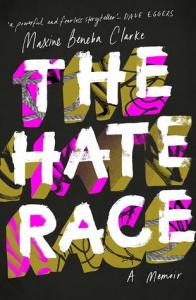
  • 2017: Maxine Beneba Clarke’s The hate race: memoir (my review)
  • 2016: Osamah Sami’s Good Muslim boy: memoir
  • 2015: Matthew Klugman and Gary Osmond’s Black and proud: The story of an AFL photo: social history/sociology
  • 2014 Joint winner: Andrew Bovell’s The secret river: playscript adapted from Kate Grenville’s novel The secret river
  • 2014 Joint winner: Michelle de Kretser’s Questions of travel: novel (my review)
  • 2013: Tim Soutphommasane’s Don’t go back to where you came from: social and political history
  • 2012: Tim Bonyhady’s Good living street: The fortunes of my Viennese family: biography of a family
  • 2011: Ouyang Yu’s The English class: novel (Lisa’s – ANZLitlovers – review)
  • 2010: Abbas El-Zein’s Leave to remain: A memoir: memoir

To see all the winners back to 1980, check out Wikipedia.

There are a few points worth making here, the first being that, as per the award criteria, the focus is the content, not the author so, while most of the winning authors come from diverse backgrounds, not all do. Andrew Bovell (and the author he adapted for his winning play, Kate Grenville) are both white Australians. The second point is that the award is true to its word about diversity of form, with the winners ranging from novels to social history, from plays to short stories. The winners also include at least one book for young people, Ursula Dubosarsky’s The first book of Samuel, back in 1995. The shortlists add to this diversity, by including, for example, poetry and television scripts. Another point is that the winning works cross time, from way past to the present. Finally, although a few of the winners over the history of the prize discuss or are by indigenous Australians, it’s good to see that in 2016, a biennial Indigenous Writer’s Prize worth $30,000 was added to NSW’s suite of awards.

I don’t want to write a long post tonight as there’s a lot going on in my life at present, so I’ll just conclude with some words from a 2014 guest post on the Wheeler Centre blog. The post is about the need for “true diversity in our media”. The writer Fatima Measham says that lack of diversity in our media

is a problem because it leaves us with a patently false construction of our society.

[…]

greater diversity of perspectives and commentators leads to clarity, a sharper sense of the aspects of conflict and power that grip democratic life.

I can’t think of a better argument for why we need to read diverse literature and, therefore, for the role that awards like the Multicultural NSW Award can play in bringing diverse voices to the fore.

Monday musings on Australian literature: Eight writers to look out for (2017)

Back in December 2017 The Guardian Australia ran an article titled “Eight new Australian writers you should read (according to those who know)”. As the title implies, it lists eight emerging Australia writers to look out for. It’s a serendipitous list compiled by their asking “industry insiders – publishers, editors, festival directors – for their pick of the new cream of the literary crop”. It is therefore not comprehensive nor “scientific” in its creation … but it does provide an interesting guide. I should explain though that these are not all novelists as most lists of emerging writers tend to include.

Given over a year has passed since that list was published, I though it might be fun to see where these writers are now. I haven’t heard of some of them, so this involved a little research. For each writer, I’ll share something from the Guardian, and add some updating commentary.

Luke Carman (recommended by Geordie Williamson, Island)

At the time of this recommendation, Carman had published An elegant young man (Giramondo) and
Getting square in a jerking circle (Meanjin).

Luke Carman, Intimate antipathiesWilliamson writes of An elegant young man:

… has more smarts, more sincere eloquence, more comic savagery, more unrepentant auto-evaluation, than any other title published in this country. The prose may sprawl in gloriously untidy ways but the mind that animates it is succinct, and brutally so. This is not fiction for the reading classes.

Carman was named as a Sydney Morning Herald Best Young Novel in 2014. Since 2017, he has appeared in various of Australia’s literary journals, and, most excitingly, his next book Intimate Antipathies is due to be published in June this year. I say excitingly, even though I haven’t read him yet, because it’s a fascinating sounding collection of essays, and I do love a good essay.

Claire G Coleman (recommended by Zoe Pollock, Brisbane Writers’ Festival)

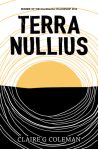
Claire G Coleman, Terra nulliusColeman’s first novel, Terra nullius (my review), was published in 2017.

Pollock says:

Coleman, like so many of our Indigenous writers, demonstrates how acutely our history – most specifically, dispossession and colonisation – is with us in our present day and is not beyond becoming our future. Coleman, a south coast Noongar woman from Western Australia, goes to the heart of Australia’s challenge as a nation – how to universalise the experience of Indigenous people, so that it is something all Australians can understand.

Terra nullius created quite a buzz through 2017 and 2018, and was shortlisted for the Stella Prize in 2018. Coleman’s second novel, The old lie, will be published later this year by Hachette.

Shastra Deo (recommended by Mindy Gill, Peril)

Deo’s publications at the time of The Guardian article were The agonist (UQP), and गुम; or, Lexical gaps (Cordite).

Gill writes that her debut collection, The agonist,

… confirms her place among Australia’s most exciting poetic voices. She writes in persona – a difficult thing to pull off – using the corporeal to explore the human animal in all its beauty and violence. I am in admiration of her work and look forward to watching her star continue to rise.

Gill was certainly on the money with her comments on The agonist, given it won the prestigious ALS Gold Medal in 2018 – quite a feat for a debut work.

Fury (recommend by Amy Middleton, Archer)

Fury’s writings include the following articles Extracting queerness from a narrative of suffering (Archer), Fury against the plebiscite (Overland), and Love and anger: How popular culture sells aggression as romance (Kill Your Darlings).

Middleton writes that

Accessibility is what sets Fury’s writing apart. They are a Melbourne-based writer, spoken word performer, poet and comic artist, with a passion for making complex topics such as oppression, queerness, gender identity, and even love, digestible, illuminating and fun to read (where appropriate!)

Now this one intrigued me, because I only came across Fury a couple of weeks ago – as the writer of an article on Australian comedian Hannah Gadsby in the current Metro magazine, “Australia’s oldest film and media periodical.” On their website, Fury announces that they started working on their first book in 2018, an “experimental graphic novel memoir called I Don’t understand how emotions work.”

Caitlin Maling (recommended by Catherine Noske, Westerly)

Maling’s poetry published by 2017 includes Conversations I’ve never had (Fremantle Press), Border crossing (Fremantle Press), Diego’s head (Cordite).

Noske says that Maling

has a huge list of awards and fellowships to her name, and she currently holds a Marten bequest. With these successes, she is gaining plenty of attention as a poet. But I also love her criticism. … she publishes in academic circles as well as regularly producing essays and reviews.

The awards keep coming. In mid-2018 she was awarded the Patricia Hackett Prize for a “creative non-fiction piece”.

Eddie Paterson (recommended by Marieke Hardy, Melbourne Writers’ Festival)

Paterson’s poetry collections published by 2017 include We will not pay (Overland), Sheep poems (Cordite) and led zeppelin (Red Room Poetry).

Hardy feels it’s unusual to nominate a poet, but that

when a writer such as Eddie Paterson falls across one’s radar the thrilling potential can’t be ignored. …

What’s interesting to me about Eddie’s writing is the visual aspect…

Paterson’s collection, redactor, was shortlisted for the 2018 Victorian Premier’s Literary Award for Poetry. The judges described it as “a hilarious, politically alive vivid experiment”. But Paterson is not only a poet, but a playwright/scriptwriter and is working on some commissions at the moment.

Peter Polites (recommended by Michaela McGuire, Sydney Writers’ Festival)

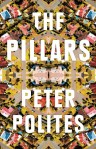
Peter Polites, The pillarsBy 2017 Polites had published two books: Down the Hume (Hachette) and Public spaces: Mind Street virus (The Lifted Brow).

McGuire says:

… Peter is a true original: he’s celebrated for writing dark realism in the tradition of the early works of Christos Tsiolkas and Luke Davies, but I think he’s funnier than either of them. … A first generation Greek Australian, Peter’s writing examines the borders of society, both geographical and imagined, and the intersections between queer and ethnic identity. He’s one of the most intelligent writers I’ve ever read…

Polites’ second novel, The pillars, is due for publication in the middle of this year, ie. 2019.

Ellen van Neerven (recommended by Sam Cooney, The Lifted Brow)

Ellen van Neerven, Heat and light, book coverLast but by no means least is the versatile Ellen van Neerven. By 2017, van Neerven had published Heat and light (UQP) (my review), Comfort food (UQP) and Expert (Overland).

Cooney praises both van Neerven’s writing and the positive role she plays among writers. He says that her debut Heat and light (which I also admired)

is an extraordinary work of linked fictions. For me, the central piece of the book, Water, did what the very best writing can do: after reading it, the world around me was different, never to be quite the same again.

Van Neerven has appeared several times here. On her website, she reports that her play swim featured at the Yellamundie First Peoples Playwriting Festival in January 2019, and that she is also working on a novel.

This is a nicely diverse list, including indigenous writers and queer writers, poets, novelists and essayists, women and men, writers with immigrant backgrounds, and so on.

Do you look out for emerging writers, and if so, are there any you’d love to introduce to us here?