Monday musings on Australian literature: The Guardian Australia’s Unmissables

Although I’d seen it before, it was BookJotter Paula’s latest Winding Up the Week (#110) post that reminded me of The Guardian Australia’s Unmissables series. Initiated last March, Unmissables aims to highlight 12 new releases they deem “significant”.

Before I share the books highlighted to date, though, I’d like to talk about the project’s funding because, as most of you know, how quality journalism is paid for is, currently, a critical issue. The Guardian, unlike some other newspapers online, is not paywalled. Instead, it asks readers to support them financially, by either subscribing, which I do, or, “contributing”, which, in effect, means donating without tax deductibility. Clearly, though, that’s not enough to produce the breadth and depth of content that we readers like. Consequently, they also turn to “outside” sources. They have at least three models: “supported by”, “paid content/paid for by”, and ‘”advertiser content/from our advertisers funding”. Unmissables comes under the first one, and is “supported by” the Copyright Agency Cultural Fund. This method is, unlike the other two, “editorially independent”. They say:

Before funding is agreed with a client, relevant senior editors are consulted about its suitability and the editor-in-chief has the final say on whether a funding deal is accepted. A client whose branding appears on editorial content may have a role in suggesting what kind of topics are covered, but the commissioning editor is not obliged to accept ideas from the funder. The content is written and edited by Guardian and Observer journalists, or those approved by GNM [Guardian News and Media], to the same standards expected in all of our journalism. GNM will not show copy to funders for approval.

I’ve written about the Copyright Agency’s Cultural Fund a few times before, including in a dedicated Monday Musings post. From my observer’s point of view, it seems like this fund is doing some good things to support and promote our literary culture.

Now, though, the books …

Monday musings on Australian literature: Recovering Australia’s Indigenous languages

In my recent Delicious Descriptions post on Madelaine Dickie’s Red can origami, I referred to last year’s UN International Year of Indigenous Languages. It occurred to me that while I’ve referred to Indigenous Australian languages several times in this blog, I’ve never specifically posted about them. Now seemed a good time, particularly given interest the year generated. As local Canberra newsreader Dan Bourchier wrote last year, ‘to the UN, language is more than a method of communication, it’s a “repository for each person’s unique identity, cultural history, traditions, and memory”.’

Late last year, The Conversation published an article on “the state of Australia’s indigenous languages”. They started with some facts: in 1788 there were between 300 and 700 Indigenous languages spoken across Australia as shown by anthropologist Norman Tindale’s 1974 map, but by the 2016 Census, only around 160 of these languages were reported as being spoken at home, and of these, only 13 traditional Indigenous languages were still spoken by children. The article then lists the languages and the number of speakers recorded in the Census. Do read the article, if you are interested, as it also discusses the challenges involved in obtaining a true picture of the situation. Here, though, I want to move onto the recovery of language – assuming, of course, that readers here agree that recovering language is important, critical, to people and their culture.

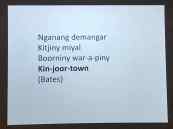
Noongar language (Daisy Bates)

Noongar language (recorded by Daisy Bates)

Certainly, it’s clear that Indigenous people want to revive heritage or original languages, and many are doing so “from old recordings and documents, and sometimes from elderly speakers”. In 2017, I wrote a post on Indigenous Australian author, Kim Scott’s Ray Mathew Lecture “A paradox of empowerment” which was about  “how reclaiming Aboriginal language and story may offer a narrative of shared history and contribute to social transformation.” Scott talked about a project he’s involved in to regain and claim Noongar language, and he described how they were doing that. One way is through archival sources, and – Bill (The Australian Legend) will like this – he used a story recorded by Daisy Bates as an example. It shows something that Dickie alludes to in her novel, which is that Indigenous languages, like English, change – so Bates recorded the Noongar people incorporating the the name of the settlement, King George Town, into their language, Kin-joor-town. Book cover

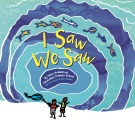
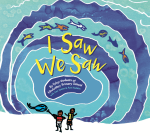
So, there is a quite a lot going on in specific Indigenous communities to revive languages that have died or nearly died (as the Noongar are doing) and to maintain languages that have survived (as the Yolngu are doing). There are indigenous publishers, like Magabala Books and the Indigenous Literacy Foundation (ILF), who are publishing books in language. (I reviewed the English edition of the ILF’s picture book, I saw we saw, which was first published in language.) There are Indigenous singers, like the late Gurrumul*, who sing in language. Red Room Poetry has a Poetry in First Languages project. And, slowly, Indigenous languages are being taught in schools and universities. Saying all this, though, is not say the job is done. It simply says that things are happening – and, seemingly, increasingly so.

But I also wanted to say something about the relevance of all this to non-Indigenous people. Right now, many Indigenous people are not keen for non-Indigenous people to learn their languages – not while their own people are not proficient, as this could easily become a new form of dispossession. However, reconciliation and respect are helped, as many like Scott and Stan Grant believe, by non-indigenous Australians becoming more familiar with Indigenous languages. For some time now, significant Australian sites have returned to their local Indigenous names – Uluru (Ayres Rock), Kata Tjuta (The Olgas), Watarrka (King’s Canyon), Nitmiluk (Katherine Gorge), Kati Thanda (Lake Eyre) and Purnululu (The Bungle Bungles) are some examples. This recognises that these places have a history long preceding that contained in the names given them by settlers.

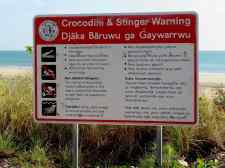
Sign in Arnhem Land

Signage around Australia is increasingly recognising local Indigenous culture. Welcome signs to many towns now include the name of the local Indigenous nation. I have also come across some bi-lingual signs in larger Indigenous communities, though this is rare. You can now buy clothing displaying Indigenous language, such as the t-shirt we bought our grandson. It featured an echidna with the Indigenous label biggi billa. And, excitingly, our Canberra newsreader now starts the evening news bulletin with “Yuma, Good-evening” and closes with “Yarra, Good-night”. We all know greetings like Caio and Au-revoir. Why not Yuma and Yarra? Or, whatever it is, where you live? Indigenous author Tara June Winch said in a conversion I attended last year that it’s a sign of respect to use local words when we travel overseas, so why not the same here? Fluency, she said, isn’t necessary to show such respect.

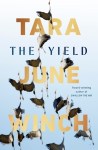
Book coverFinally, on the subject of authors, Indigenous words are increasingly appearing in contemporary fiction – in, for example, Melissa Lucashenko’s Too much lip (my review), Tara June Winch’s The yield (a novel about language, in fact), and, yes, Madelaine Dickie’s Red can origami. Just a few words here and there – and being done in a way that doesn’t exoticise language but, rather, assumes it is part of the culture.

Dan Bourchier, in the article linked in the opening paragraph, quotes Stan Grant:

Indigenous languages also present a tantalising opportunity for all the people of Australia to find a deeper sense of belonging. The empty space of terra nullius could be filled with the voices of people of all backgrounds speaking the first languages of this land. It is a space to truly build a nation.

I’m loving all these initiatives. What about you? And do you have any examples to share?

Monday musings on Australian literature: Musician’s memoirs

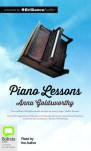
Book coverI had been toying with a different topic for today’s post, but Brian’s (Babbling Books) comment on my post on Anna Goldsworthy’s memoir, Piano lessons, sent me off in a different direction. Brian said that he was “interested in the lives of artists”, that “there is something about the subject that is inherently fascinating”. He also said that he’s attracted to “both fictional and non fictional accounts”.

I related to all of that, and I suspect that many readers here do too. One of the reasons I read is to learn about – and experience vicariously – the lives of others, and the lives of artists are among those that most fascinate me. I am fascinated and impressed by the combination of passion, dedication and talent that enable them to do what they do. For this reason, I love reading about writers, but in this post I’m talking about another group I love to read about, musicians. And although, like Brian, I’m happy to read both fiction and non-fiction, I’m focusing here on memoirs.

However, there are many, many musician’s memoirs out there. They cover the whole gamut of music – rock, folk, classical, and so on – and different types of musicians, from performers, and composers, to composer-performers like singer-songwriters. During my research, I came across an article in beat.com.au discussing two memoirs by two members of the band The Smiths. The article starts:

The musician’s memoir is a salacious sanctity in which readers are afforded a rare, fly-on-the-wall type glimpse at debaucheries, creative methods and inner-workings to which they wouldn’t be otherwise privy, and no matter the author’s prowess for prose, there is usually much to be learnt between the pages.

Here is my problem. I’m not particularly interested in salaciousness (even if in a sanctity!) or debaucheries. Indeed, these are among the reasons I tend to be hesitant about memoirs in general, but I am interested in those memoirs which explore being an artist, or which tackle the musical and/or other challenges an artist has faced. The books I’m sharing below do, I believe, offer these learnings and insights. They are just a selection – a diverse one in form, approach and content – of those that have been published in the last decade or so.

Emma Ayres, CadenceEmma Ayres, Cadence: Travels with music – A memoir (2014) (my review): Classical music string player and broadcaster Ayres wrote this travel memoir about her year-long bicycle journey from England to Hong Kong, accompanied by her violin. Like all good travel memoirs it is about more than travel, meaning in her case that it includes her childhood, her reflections on her life as a musician, her analyses of classical music, and gender identity and how it played out during her travels. She also talks about playing music along the way, and how it brings people together.

Jimmy Barnes, Working class boy: A memoir of running away (2016): You won’t be surprised to hear that I don’t gravitate to rock musician memoirs, so I haven’t read Australian rocker Jimmy Barnes’ memoir. However, I’m including it here because it isn’t apparently your traditional celebrity memoir, and, in fact, finishes before Barnes makes it big with Cold Chisel. It is about his difficult childhood and the neglect, violence and abuse suffered by him and his siblings. It could be a misery memoir, but I believe it is more than that.

Andrew Ford, The memory of music (2017): Ford is well-known to many Australians as the presenter, since 1995, of Radio National’s weekly program, The Music Show, but he is also a classical music composer. Publisher Black Inc says that Ford “takes us from his childhood obsession with the Beatles to his passion for Beethoven, Brahms, Vaughan Williams, Stockhausen and Birtwistle, and to his work as a composer, choral conductor, concert promoter, critic, university teacher and radio presenter”. They also say, and here’s what interests me, that it is “more than a wonderful memoir – it also explores the nature and purpose of music.” The smh’s review of the book provides a good overview.

Anna Goldsworthy, Piano lessons (2009): The book that inspired this post, this takes the form of a musician’s coming-of-age memoir, telling of the author’s years of learning music, from the age of 9 to becoming a concert pianist and professional musician by her early to mid 20s. There is much to learn here about hard work and talent, about the role of exams and competitions, about dedicating one’s life to a passion, and, also, about what the arts mean.

Maureen and Leora O’Carroll, Maureen O’Carroll: Musical memoir of an Irish immigrant childhood (2019): This is the left-field addition to my list for a couple of reasons: it was self-published, and was written by Maureen’s daughter who posthumously credited her mother as co-author. I haven’t heard of Carroll, but, according to a review, she was “an acclaimed cellist, who played in the Sydney, New Orleans and Seattle Symphony Orchestras, the New Zealand National Orchestra and others”. She also played for Tony Martin and Frank Sinatra, not to mention singer Dame Joan Sutherland and composer Aaron Copeland. However, this memoir covers much more, including her Catholic Depression-era childhood in Sydney.

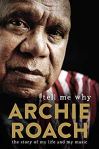
Book coverArchie Roach, Tell me why: The story of my life and my music (2019): Now, this book by Indigenous Australian singer-songwriter, guitarist, and activist, Roach, is one I should read in July for Lisa (ANZLitLovers) 2020 Indigenous Reading Week. Roach’s significance in the Australian music scene can be exemplified by the fact that one of his most famous songs, “Took the children away”, was written long before the term “stolen generations” was common parlance for Australians. It has become one of the anthems of that part of our history. Roach’s memoir, is, I gather, as much about his life – and thus works as a consciousness-raising book for Australians about indigenous people’s lives – as it is about his music, though music is and has always been, an integral part of his life.

So, there are musicians here who had comfortable childhoods, and those who didn’t; there are immigrant musicians and a First Australian; there are classical musicians, rock musicians, and alternative rock/folk/protest musicians; and there’s a travel memoir, a self-published one, and some that verge on the “misery memoir”. All, though, are by musicians passionate about what they do. I’ve stopped at six, but others  include Clare Bowditch Your own kind of girl; Peter Garrett’s Blue sky; Chrissie Hynd’s Reckless; Paul Kelly’s How to make gravy; Linda Neil’s All is given: A memoir in songs (my review); Tim Rogers’ Detours; and John Paul Young’s JPY: The autobiography.

Have you read any of these, or, do you have any favourite musician memoirs to share with us?

Monday musings on Australian literature: Hidden Women of History

Every now and then I share some content from The Conversation, and so I am again today. This time, it’s an occasional series they have featuring the “hidden women of history”, in which they “look at under-acknowledged women through the ages”. Not all of these are Australian but around half, so far, are.

The most recent article in the series (see link below) is about Catherine Hay Thomson. It starts:

In 1886, a year before American journalist Nellie Bly feigned insanity to enter an asylum in New York and became a household name, Catherine Hay Thomson arrived at the entrance of Kew Asylum in Melbourne on “a hot grey morning with a lowering sky”.

Hay Thomson’s two-part article, The Female Side of Kew Asylum for The Argus newspaper revealed the conditions women endured in Melbourne’s public institutions.

Her articles were controversial, engaging, empathetic, and most likely the first known by an Australian female undercover journalist.

Before this, the intrepid Thomson had written about Melbourne Hospital, having obtained work there as an assistant nurse. She was quite a social justice mover-and-shaker, and worth reading about.

Here, though, I want to share with you some of the other women in this series which, at the point of writing, numbers 31 articles. The first was published on 31 December 2018, and featured  Elsie Masson, a journalist who became an advocate for Aboriginal people. Lydon writes in her article (see link below) that:

As one of the “first white women” to travel in the Northern Territory, Masson’s newspaper articles and book An Untamed Territory – a profusely-illustrated narrative of life in the wild north – show how she popularized the “expert” views of her circle: an elite global network of colonial administrators, including the famous anthropologist Walter Baldwin Spencer.

Lydon writes of Masson’s “transition from dislike to respect” not only of Indigenous Australians but of “others” as well, such as Chinese people. Attending the trial of nine Indigenous men arrested for the murder of trepanger James Campbell also changed her views. Lydon writes that her

account of this trial ultimately argued for the need to acknowledge the coherence of Indigenous tradition, and what today is termed customary law.

These articles cover a wide range of women – Indigenous, immigrant and Australian-born – from the early nineteenth century to well into the twentieth. They cover a wide range of professions and achievements, from the arts and sport to social justice and activism.

Listed below are the articles featuring Australian women (alphabetical by last name):

I haven’t read all of these articles yet, but once again, I thank The Conversation for bringing these women – few of whom appear, for example, in the Australian Dictionary of Biography (ADB) – to our attention.

Monday musings on Australian literature: Screen adaptations, update

Back in 2012, I wrote three posts (here, here and here) sharing some of my favourite film and television adaptations of Australian novels and plays. With recent(ish) announcements about more adaptations in the offing, I thought it worth writing an updating post.

To get us going, here are some of the adaptations that have been announced over the last few years, which is not to say that they will actually make it to the screen:

  • Emily Bitto’s The strays (my review)
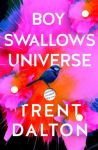
  • Trent Dalton’s Boy swallows universe (my review)
  • Peter Goldsworthy’s Wish
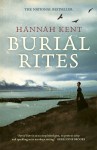
  • Hannah Kent’s Burial rites (my review)
  • Hannah Kent’s The good people 
  • Alice Pung’s Laurinda

When these announcements are made it can be very early in the process. It may simply be that developmental funding has been allocated – and, as the saying goes, there can be many a slip betwixt cup and lip.

Meanwhile, I was intrigued while researching this update, to come across an announcement for a symposium on Adaptation and the Australian Novel being run by the Centre for Critical and Creative Writing at the University of Queensland in June this year. The announcement starts with this:

Landmark Australian novels are being adapted for the stage and screen at a rate we’ve not seen for many decades. In the 2015 to 2020 period alone, what was previously a steady trickle has become a flood as the nation’s various mediums of cultural transmission have offered reimagined versions of much-loved novels …

They name many titles we have seen on our screens over the last few years including, on TV, The slap (my review) and Barracuda (my review), and on the big screen, Jasper Jones (my review) and The ladies in black (my review).

The symposium will include keynote speeches by “international critical adaptation theorist Frances Babbage” and “internationally-acclaimed stage and screen writer, and adaptor of the landmark The Secret River text, Andrew Bovell”. There will also be an in-conversation session between Christos Tsiolkas and Andrew Bovell, discussing Bovell’s adaptation of Tsiolkas’s novel Loaded for the screen. The announcement also calls for proposals for 20-minute papers. They list the sorts of topics they’re looking for, such as Adaptations and gender, and Indigeneity, race and ethnicity, and landscape, and so on. You can see the complete list at the link above.

These topics draw from what I thought was the most interesting paragraph in the announcement, the paragraph that poses the questions they think need to be considered:

Questions that arise here include: Why the rush on Australian adaptation now? What’s fuelling the appetite for this locally themed work, and why is it being distributed internationally via digital platforms such as Amazon and Netflix? Is there a ‘house style’ emerging either at particular theatre companies or television production houses who are leading this push? Whose stories are being canonised in this tranche of largely Anglo-Celtic authored works, and whose voices are doing the adapting? What version of Australian national identity becomes enshrined in this process, and whose perspectives are elided or omitted?

While all these are valid questions, I have highlighted those that I think are of most interest to Whispering Gums readers. In my brief research of the internet, I found nothing much else discussing this issue of perspective and representation, so I hope these papers are podcast and/or published.

Unrelated to this issue, but interesting too, is that of why so few adaptations, comparatively speaking, in the Australian screen industry. This was raised in The Guardian back in 2014. Apparently, in Hollywood, more than half of its movies are adaptations, while in Australia it’s less than 20%. MIFF (Melbourne International Film Festival) apparently hosted an event which brought together Australian book publishers and film producers. The thinking was that “if a successful film can be crafted from a book, more sales will result, benefitting publishers and authors as well as the filmmakers.” Makes sense to me. Various reasons for the low rate of adaptations are put forward in the article, including cost and the fact that book culture is very different to film culture. Overall, the reasons seemed to me to be applicable to the adaptation industry in general, rather than explaining why the Australia-Hollywood discrepancy, although one panelist believed that in the USA “distributors and agents are constantly on the lookout for book properties that are capable of being turned into films”.

Finally, though this goes back even further to 2010, there’s an Occasional Paper published by Screen Australia, titled Mitigating Risk: The case for more adaptations in the Australian film industry. It was written by Matthew Hancock, as part of the Master of Arts program at the Australian Film, Television and Radio School. He notes the declining proportion of adaptations in Australia to under 20% since 1999, which, he says, “is significant because adaptations, both in Australia and in foreign markets like the US, tend to perform well, attracting a higher proportion of box office than their proportion in release”.

So, my question is: Do you prefer adaptations over original screen stories? And, leading question, thinking particularly of that issue of perspective and representation, is there a literary work that you would love to see adapted? 

Monday musings on Australian literature: Literary series

Series and literary fiction are not, I’d say, common bedfellows, not the way, for example, that series and crime, or series and fantasy, or, even, series and children’s/YA books are. However, there are significant literary fiction series, of which I’ve reviewed some of here – Willa Cather’s Great Plains trilogy, Marilynne Robinson’s Gilead trilogy, and Hilary Mantel’s Cromwell series. The first two Cromwell books – Wolf Hall (my review) and Bring up the bodies (my review) – won Booker Prizes, and the final one is scheduled (at last) for publication this year.

This week, I expect to post a review of a book in an Australian literary fiction series, and it’s this which inspired me to write today’s post. As I do with these sorts of posts, I’m just going to present my selection (as this by no means comprehensive) in list-form – in chronological order of the publication date for the first book in the series.

  • Miles Franklin’s My brilliant career series: Unlike the rest of the series below, there are just two books in Franklin’s series, My brilliant career (1901) and My career goes bung (1946). This latter she wrote soon after the first but it wasn’t published until much later. However, like others below, the first has become a much-loved and studied classic.
  • Eleanor Dark’s The timeless land trilogy: This is an historical fiction series dealing with the early history of European settlement in Australia. The first book, The timeless land (1941), is an Australian classic and has been taught in schools. It is significant, particularly given its time, for telling the story from both European and Aboriginal Australian points of view. The subsequent books are Storm of time (1948) and No barrier (1953). 
    Book cover
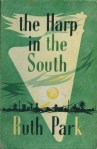
  • Ruth Park’s The harp in the south trilogy: The first book in this series, The harp in the south, was published in 1948, and is now an Australian classic which is regularly taught in schools. I wrote a little about it in my recent review of Park and husband Niland’s memoir, The drums go bang. The other two books in the series are Poor man’s orange (1948), and the prequel in terms of story chronology but the last written, Missus (1985) (my review). The series, an example of Australian social realism, tells the story of the Darcy family of Surry Hills, Sydney. The harp in the south won The Sydney Morning Herald’s competition for an unpublished novel, in 1946.
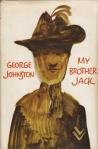
  • Book coverGeorge Johnston’s My brother Jack series: George Johnston’s My brother Jack (1964) is also now an Australian classic. Both it and its sequel, Clean straw for nothing (1969), won the Miles Franklin Award, and both are regularly taught in schools and/or universities. The third book is A cartload of clay (1971). The series is semi-autobiographical, about Johnston’s own life, starting in the between-the-war years.
  • Rodney Hall’s The Yandilli Trilogy (also known as A Dream More Luminous Than Love): This series comprises Captivity captive (1988), The second bridgeroom (1991), and The grisly wife (1993). All three have been shortlisted and/or won significant literary awards, including, for The grisly wife, the Miles Franklin.
  • Steven Carroll’s Glenroy series: This six book series comprises The art of the engine driver (2001), The gift of speed (2004), The time we have taken (2007), Spirit of progress (2011), Forever young (2015), and The year of the beast (2019). Like Johnston’s series above, it is based on his own family and their life in the Melbourne suburb of Glenroy. As in Park’s series, the final novel is a prequel, so the first, chronologically, and is set in the country rather than the city/suburb where the rest are set. Four of the titles have been shortlisted for significant literary awards, with The time we have taken winning the Miles Franklin Award.
  • Kate Grenville’s The secret river series which started with a controversial bang with The secret river (2005), when Grenville locked horns with historian Inga Clendinnen over novelists writing history. Anyhow, this series is a little different from some because The lieutenant (2008) (my review) deals with early settlement but is based on an historical figure, not Grenville’s fictional Thornhills, while the third book, Sarah Thornhill (2011), is a more traditional  sequel to The secret river. The secret river was shortlisted for several awards and won the NSW Premier’s Literary Award for fiction.
  • Audiobook coverSteven Carroll’s Eliot Quartet: Carroll must love writing series, because he also has a series inspired by TS Eliot’s Four Quartets. Three of the four have been written, to date: The lost life (2009), A world of other people (2013), and A New England affair (2017). A world of other people was a joint winner of the Prime Minister’s Literary Award (Fiction).

While I don’t naturally gravitate to series, I have read and enjoyed some. It’s interesting that so many of the above have won awards and/or have been (or still are) standard literature texts. It suggests that authors can and do sustain both literary quality and readers’ interest in a continuing subject. Many of the above have also been adapted to other art forms, including plays and television miniseries.

Lisa (ANZLitLovers) has reviewed many of these, which you can find by searching her blog.

Do you have favourite literary fiction series (and yes, you can include The lord of the rings if you must!)?

Monday musings on Australian literature: Christina Stead’s 1930s, Beauties and Bankers

Today’s Monday Musings post is the second of two on Christina Stead that I promised for Bill’s (The Australian Legend) AWW Gen 3 Week. These two posts – last week’s and this – focus on contemporary Australian responses to her four 1930s-published books, based primarily on my research of Trove.

Last week’s post looked at The Salzburg tales (1934) and Seven poor men of Sydney (1934), so this week The beauties and the furies (1936) and House of all nations (1938) get their turn. Although I’ve only read For love alone, plus some short stories of hers, I know many of her books, including last week’s two. However, this week’s books are less familiar to me.

Book cover

The beauties and the furies was not one of Stead’s most successful books, it has to be said, and I had to dig a bit deeper in Trove to find reviews. It’s the story of a woman who, married to a boring man, runs off to Paris to be with her student lover. The reviews were not kind, mostly for the writing than the content.

The Sydney Morning Herald’s reviewer (22 May 1936) writes that her “definite tendency to develop an artificial style” appeared in her second book, but suggests that

That “visionary imagination,” for which she has been commended, runs away with reality altogether in “The Beauties and Furies” at times.

S/he then quotes from the book, and, I must say that out of context at least it is a little over-the-top, but the review isn’t all bad, saying that despite these passages and “a leaning towards redundancy”, Stead has “a definite flair for delineation of character and a good sense of dialogue and situation”. The book is, however, “too long”, presumable because of the redundancy.
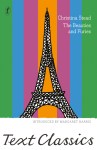
Book coverThe Mail’s review (30 May 1936) is similarly critical, and is titled, in fact, “Not recommended”. This reviewer attacks both the writing and the content, describing the story as

merely a sordid one, not of a beautiful comradeship, but of an illicit love affair between two people, whose ideals are about as spiritual as those of a pair of monkeys.

S/he ends the review with the parenthetical comment “(Censors please note)”. However, even so, this reviewer does see skill, saying “she can write vigorously, yet with simplicity and charm”.

The Australian Women’s Weekly (20 June 1936) joined the chorus:

A good story spoilt by a maddening cascade of words to water the purple patches of the plot. Of course, some of them have their uses. “Endoped dome of misery” might be applied to the reader’s head after ploughing through some of these passages. It seems a pity, for the book might have been a good one had the author stuck to her undoubted gift for descriptive phrases only as the means of telling her story.

The best “review” comes from Melbourne’s The Herald (18 June 1946) which quotes America’s New Yorker critic, Clifton Fadiman, who sees more to admire than criticise:

again declares that Christina Stead, the Sydney woman who wrote “The Salzburg Tales,” “Seven Poor Men of Sydney,” and “The Beauties and Furies,” is “a simon-pure genius, showing not a trace of workaday talent.” “I say this,” he temperately adds, “knowing that ‘The Salzburg Tales’ had its excesses and that ‘Seven Poor Men of Sydney’ was no less flawed … ‘The Beauties and Furies’ though her finest book to date, is also imperfect. Yet it discloses such streaming imagination, such tireless wit, such intellectual virtuosity, that I cannot see how anyone who reads it carefully— and there is no other way to read it — can deny Miss Stead’s position as the most extraordinary woman novelist produced by the English-speaking race since Virginia Woolf. . . . The style is indescribable, the wit hardly suggestible.”
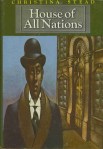
Book coverHouse of all nations (1938), which satirises bankers and financiers, garnered far more positive reviews overall. Edgar Holt in The Herald (9 July 1938) starts with

That I was not very familiar with her work before is an appropriate commentary upon the indifference of most of us to our Australian novelists. “House of All Nations” is a brilliant and exhilarating book, a superb performance of sustained wit, a crushing satire on the world of international finance.

Holt shares many quotes to show the quality of her writing, saying Stead “revels in words. They spurt from her pen, fountain-like”. He does have some criticism but, like Fadiman, is impressed, concluding that

The scope of this book is almost too ambitious; but instead of failing in an exceptionally difficult undertaking, she has written a novel which will command universal admiration.

We should be very proud to include her in the forefront of Australian novelists.

Like Holt, who described the book as a “mosaic”, Adam McCay, in Sydney’s The Sun (10 July 1938) also discusses the novel’s construction:

According to current literary jargon, “House of All Nations” might be called a cavalcade, or a pageant: but its plan is too well-made, not accidental enough, to let it be named a kaleidoscope. Looking for a word, we might say that it is a symphony, with privateering international finance as leitmotiv, and it is written wholly in scherzo movements.

McCay is fulsome in his praise, saying, among other things, that:

In her perception of financial intrigue, as well as in her naked studies of fraud, gluttony, perversion, avarice, and adultery, Miss Stead has eyes as ruthless as a studio light. It is a rare woman who can furnish scepticism and satire as unabashed as Voltaire’s.

I will just note here, in passing, the sexism in some of the commentary. It was the 1930s.

The writer in Brisbane’s The Telegraph (14 July 1938) starts by sharing the qualified assessment made by that American supporter of Australian literature, C Hartley Grattan, then goes on to quote English critic Ricard Church who said that:

Such variety of character, presented with so original and vivid a style, makes this book quite outstanding. And as for the author’s mastery of the details of the international money-market; well, that is worthy of Zola.

So far, then, Stead has been compared favourably with Virginia Woolf, Voltaire and Zola. The aforementioned Adam McCay writes in another article that while one English reviewer sees her as “the most important woman novelist in English since Virginia Woolf”, he’d “go back past Mrs. Woolf to George Eliot”.

One-time Stead friend and supporter, the Australian journalist Florence James, wrote various articles about Stead’s career during the 1930s. In The Sydney Morning Herald (22 September 1938) she noted that

at last Australia is waking up to realise that in London and New York this young Australian is considered by many famous critics to be the most important woman writing in the English language to-day.

There were, of course, naysayers who did not like Stead’s exuberant, untamed style, but we can put that down, in part at least, to the fact that her modernist style was new and innovative. Not everyone likes innovation.

Note: You can find bloggers’ reviews of various Stead works at Lisa’s ANZLitLovers Christina Stead page.
Monday musings on Australian literature: Christina Stead’s 1930s, Salzburg and Sydney

My first Monday musings on Christina Stead (my posts on Stead) was barely introductory, so I’m planning two more to coincide with Bill’s (The Australian Legend) AWW Gen 3 Week. These two posts – this week’s and next – focus contemporary Australian responses to the four books she published in the 1930s. I’m keeping this focus tight because Stead is such a complex figure in Australian literary history, and so much has been written about her already, including Hazel Rowley’s well-regarded biography. (See Lisa’s review at ANZLitLovers). However, I enjoyed reading, in Trove of course, what some contemporary Aussies had to say about her, and wanted to share them.

To start though, a very brief bio relevant to this period. Stead, born in Sydney in 1902, went overseas, to England initially, in 1928. She then lived, and worked in a bank, in Paris from 1930 to 1935, before spending time in the USA, Spain and England with her husband-to-be William Blake (Wilhelm Blech). In 1937, they moved to the USA. She didn’t return to Australia to live until 1968. Her first four books were published in the 1930s: The Salzburg tales (1934), Seven poor men of Sydney (1934), The beauties and the furies (1936), and House of all nations (1938).

Although over the years Stead experienced a mixed reaction from Australia, some critics denouncing her as “expatriate”, it’s clear that in the 1930s, at least, she was well-admired by Australian newspaper reviewers. It’s also clear that she was seen as both a modernist and a realist, with no nods to our bush and pioneer traditions.

Book coverThe Salzburg tales was her first published book and it immediately received positive attention from Australian newspaper reviewers. I was tickled by the writer in Melbourne’s Argus who wrote that “Many times it has been said that there is no particular demand for writers’ collections of short stories but there are authors and publishers who continue to issue books of the kind and apparently the stories find readers.” Plus ça change, it seems.

Reviews of this book noted its inventiveness and original style. For example, S.E.N., wrote in the Daily Mail on 4 April 1934, that

her book is remarkable not only for its inventiveness, but for its original style. It commingles modernism and mysticism, realism and romanticism, the dramatic and the uneventful, love, law, life, laughter, and letters in an olla podrida which is both attractive and unusual. Some of the stories are, like that of the Wanton, a little too highly spiced here and there for the less sophisticated reader; but on the whole Miss Stead has given us a collection of tales which are admirably told and admirably contrasted.

There we have it – “modernism” and “realism” – two styles/approaches that were significant the 1930s literature, and of which Stead was a major exponent. The unnamed reviewer in the Sydney Morning Herald (3 May 1934) remarked that “Miss Stead … really seems to belong in a class by herself”. This reviewer praises the variety, and concludes that “there seems no end to Miss Stead’s inventiveness and no limit to her powers of expression”. Jean Williamson, writing in the Australian Women’s Weekly (7 July 1934), is no less admiring, calling it “extraordinary in its concept, its vocabulary, its technique and its imagery.”

The reviewer in the Townsville Daily Bulletin (7 August 1934) states:

This author is, I understand, an Australian, who now lives in Paris. How long she has been there I do not know but she has accumulated experience, impressions, fed her imagination in a way that would not be possible for an author writing from this side of the world. It is not only that Miss Stead has set her scenes in such a town as Salzburg, and peopled her many pages with remarkable people. Most authors could have done that, but her story is saturated with her personality, lit up humor, knowledge, penetration, and is decidedly original.

This is an interesting comment in the context of Drusilla Modjeska’s book Exiles at home (posted on by Bill). Modjeska’s book is about “the ones who stayed” in Australia … tackling … how to live and work in this country as women and as writers and how to build a culture that has its roots in Australian histories and conditions, rather than in a foreign past” (from Introduction to Reprinted Editions.) Of course, the thing about Stead is that she too forged a contemporary literature, some of it set in or drawn from her Australian experience … which brings me to …

Christina Stead, Seven Poor Men of SydneyStead’s second book, Seven poor men of Sydney, which garnered similarly positive reviews. However, the reviewer in The Newcastle Sun (22 November 1934) makes no bones about its grittiness. It has no “Australian local color of the wattle blossom and stockwhip kind”. S/he describes it as high art, and says “it gives evidence of intuition, of skill in handling of character and of words and of high achievement in the depicting of realities.” For this writer, though, there is such a thing as being too modern, too real:
And while no one can reasonably suggest that a writer should ignore the gutter, it is not necessary to bring in the language of the gutter. It is, indeed, a great pity that a writer who shows abundantly that she is capable of far better things, should think it necessary to be “modern” in this particular way.

I know some readers who still feel this today … Anyhow, interestingly, Bookman writing in the Courier Mail (30 November 1934) has an opposing criticism, saying that “perhaps” the novel’s “weakest point” is that “the characters all talk too learnedly”! However, he too recognises the novel’s “stark realism”. He calls it “a remarkable book; the kind of book to which the word ‘powerful’ is sometimes applied”, but he also clearly fears its politics:

She has revealed the mentality out of which revolutions are made. That lesson is especially important in these days when thousands of lads, with more education than judgment, are being thrown into desperation and into the arms of extreme propagandists because all they can see ahead is blind-alley employment or no employment at all. In such conditions communism flourishes, and Miss Stead doubtless saw it thriving in Central Europe.

The aforementioned Jean Williamson, writing again in the Australian Women’s Weekly (9 March 1935) reports Stead’s own comments on the book.

The Seven Poor Men of Sydney is not so much a novel, I suppose, as a cast of characters battling through daily life, as much passion being expended or the small accidents of daily life as on any one of the great tragic themes; in fact the great tragic themes are all melted down and infused there. That was my feeling in writing the Seven Poor Men.”

Stead, a deeply committed socialist, also says that the novel shows she hasn’t forgotten Australia, nor “the importance of the Labor Movement in everyone’s daily life”.

So, two very different books, both written in a modernist style, both hailed for their inventiveness and her “phrasemaking” – and, put together, neatly reflecting her seemingly dichotomous existence.

Note: You can find bloggers’ reviews of various Stead works at Lisa’s ANZLitLovers Christina Stead page.

Monday musings on Australian literature: Some New Releases in 2020

It seems from my stats that people like my “new releases” post, so here is the 2020 version. As in previous years, my list is mostly drawn from the Sydney Morning Herald, and as it is a Monday musings on Australian literature post, it will be limited to Australian authors (listed alphabetically.) Do click on the link to their see coming releases from non-Aussies, or from those Aussies I’ve omitted because I’ve only listed those most relevant to me, or for some basic information about the books.

Last year, I listed 27 fiction works, and read only four of them – but I will be reading a few more of them in the next 2-3 months.

Links on the authors’ names are to my posts on them.

Fiction

  • Patrick Allington’s Rise and shine (Scribe, June)
  • Richard Anderson’s Small Mercies (Scribe)
  • Robbie Arnott’s The rain heron (TextJune)
  • Margaret Bearman’s We were never friends (Brio, March)
  • James Bradley’s Ghost species (Hamish Hamilton, April)
  • Steven Conte’s The Tolstoy estate (Fourth Estate, August)
  • Trent Dalton‘s Shimmering skies (Vintage, June)
  • Meaghan Delahunt’s The night-side of the country (UWAP, March)
  • Jon Doust’s Return Ticket (Fremantle Press, March)
  • Ceridwen Dovey’s Life after truth (Hamish Hamilton)
  • Chris Flynn’s Mammoth (UQP, May, UQP).
  • Dennis Glover’s Factory 19 (Black Inc., July)
  • Kate Grenville‘s A room made of leaves (Text, July) (Coincidentally, Michelle Scott Tucker recently blogged about this Elizabeth Macarthur inspired novel. Do check it out!)
  • Sophie Hardcastle’s Below deck (Allen & Unwin, March)
  • Tom Keneally’s The Dickens boy (Vintage, April)
  • Book coverKirsten Krauth‘s Almost a mirror (TransitMarch)
  • Sofie Laguna‘s Big sky (working title) (Allen & Unwin, second half)
  • Bem Le Hunte’s Elephants with headlights (Transit, March)
  • S.L. Lim’s Revenge (Lounge, June)
  • Jamie Marina Lau‘s Gunk Baby (Brow BooksMay)
  • Donna Mazza’s Fauna (Allen & Unwin, February)
  • Kate Mildenhall’s The mother fault (Simon and Schuster, September)
  • Liam Pieper’s Sweetness and light (Hamish Hamilton, March)
  • Mirandi Riwoe‘s Stone sky gold mountain (UQP, April)
  • Craig Silvey‘s Honeybee (working title) (Allen & Unwin, second half)

I have been wondering what Grenville was working on, so am pleased to see another novel coming our from her. And, I’m very pleased to see Krauth and Riwoe producing new novels after their powerful debuts.

SMH also lists “new voices” (including new forms for old voices!):

  • Paul Dalgarno’s Poly (Ventura, August)
  • Anna Goldsworthy’s Melting moments (Black Inc, March) (old voice)
  • Erin Hortle’s The octopus and I (Allen & Unwin, April)
  • Tobias McCorkell’s Everything in its right place (Transit Lounge, July)
  • Laura Jean McKay’s The animals in that country (Scribe, April)
  • Andrew Pippos’ Lucky’s (Picador, second half)
  • Alice Pung‘s One hundred days (Black Inc., October) (old voice)
  • Ronnie Scott’s The adversary (Hamish Hamilton, April)
  • Pip Williams’ The dictionary of lost words (Affirm, April).

Short stories

Yes, I know these are fiction too, but they deserve a special section!

  • Emma Ashmere‘s Dreams they forgot (Wakefield Press, April)
  • Laura Elvery’s Ordinary matter (UQP, second half)
  • Mark O’Flynn’s Dental tourism (Puncher & Wattmann, February, );
  • Elizabeth Tan’s Smart ovens for lonely people (Brio, June, Brio)

Book coverAnd some “new” short story voices:

  • Melissa Manning’s Smokehouse (UQP, second half the year)
  • Wayne Marshall’s Shirl (February, Affirm)
  • Sean O’Beirne’s A couple of things before the end (Black Inc., February)
  • Stephen Pham’s Vietnamatta (Brow Books, October)
  • Barry Lee Thompson’s Broken rules and other stories (Transit Lounge, August)

Non-fiction

SMH provides a long list of new non-fiction books covering a huge range of topics, so my list is selective – but still, there’s a lot:

  • Randa Abdel-Fattah’s Growing up in the Age of Terror (NewSouth, July)
  • Elizabeth Becker’s Journaliste (Black Inc., September): on female journalists during the Vietnam War
  • Elise Bohan’s Future superhuman (NewSouth, October): on embracing the “transhuman”
  • Rutger Bregman’s Human kind (Oneworld, second half): on how altruism offers a new way to think
  • Bernard Collaery’s Oil under troubled water, March, MUP): the story of his being charged after exposing an Australian bugging operation in East Timor
  • Peter Cronau’s War on Terror (The Base, June): Australia’s role in the War on Terror
  • Robert Dessaix’s Time of our lives (Briosecond half): on ageing
  • Lindy Edwards’ Corporate power in Australia (Monash, February): on big business
  • Carly Findlay’s (ed) Growing up disabled in Australia (Black Inc, June): see my post on the Growing up series.
  • Fiona Foley’s Biting the clouds (UQP, September): 19th century Aboriginal “protection” and Indigenous opium addiction.
  • Rebecca Giggs’ Fathoms: the world in the whale: “the stories we tell about whales, what those stories signal about how we imagine our own species, and what whales reveal about the health of the planet” (from Scribe)
  • Julia Gillard and Ngozi Okonjo-Iweala’s Women and leadership (Vintage, July): gender bias
  • Book coverSubhash Jaireth’s Spinoza’s overcoat: Travels with writers and poets (February, Transit): on writers and writing
  • Ketan Joshi’s Road to resolution (NewSouth, August): climate change
  • Royce Kurmelovs’ Just Money (UQP, second half): on our debt
  • Garry Linnell’s Badlands (Michael Joseph, September): the fall of the Australian bushranger
  • Sophie McNeill’s We can’t say we didn’t know (HarperCollins, March): stories from war-ravaged areas by a former ABC Middle-East Correspondent
  • Paddy Manning’s Body count (S&S, May): climate change
  • Rory Medcalf’s Contest for the Indo-Pacifc (March, La Trobe): on “regional tensions”
  • Patrick Mullins’ The trials of Portnoy: how Penguin broke through Australia’s censorship system: “the first account of the audacious publishing decision that — with the help of booksellers and readers around the country — forced the end of literary censorship in Australia” (quoted from Scribe)
  • Jonica Newby’s Climate grief (NewSouth, September): climate change
  • Aaron Smith’s The rock (Transit, November): Australia as perceived from its northerly outpost, Thursday Island
  • Victor Steffensen’s Fire country (Hardie Grant, March): looks at how Indigenous fire practices might help our country (from an Indigenous fire practitioner)
  • Gabbie Stroud’s Dear Parents (Allen & Unwin, February, A&U): by the author of the well-regarded Teacher
  • Malcolm Turnbull’s A Bigger Picture (Hardie GrantApril): from our latest ex-Prime Minister
  • Marian Wilkinson’s Carbon Club (Allen & Unwin, June): climate change

I note that a book that was flagged for coming out last year – and which I noticed didn’t appear – is now flagged for this year: journalist Julia Baird’s Phosphorescence (Fourth Estate, April).

It’s interesting, encouraging and not surprising to see quite a few books on climate change in the above list.

Biography and memoir (loosely defined)

  • Darleen Bungey’s Daddy Cool (Allen & Unwin, May): “memoir” of crooner Laurie Brooks, father of biographer Bungey and writer Geraldine Brooks. Can you write a memoir of someone not yourself? Or, is this a hybrid memoir-biography?
  • Gabrielle Carey‘s Only happiness here (UQP, second half): on Australian-born novelist Elizabeth von Arnim (whose work I love and for whom I have another biography already on my TBR)
  • Melissa Davey’s A fair trial (Scribe, second half of the year): on George Pell
  • David Duffy (Radio Girl, May, A&U): on the first Australian woman electrical engineer, Florence Violet McKenzie
  • Clementine Ford’s How we love (Allen & Unwin, second half): on her experience of love
  • Evelyn Juers’ The dancer (Giramondo, September): on Philippa Cullen
  • Mary Li’s Ballet, Li, Sophie and me (Viking, September): memoir by Australian ballerina, and wife of Li Cunxin
  • Alex Miller: a memoir untitled? (Allen & Unwin, second half): on his friend and mentor, Max Blatt
  • Cassandra Pybus’ Truganini (Allen & Unwin, March): on the titular Indigenous Tasmanian woman
  • Miranda Tapsell’s Top End girl (Hachette, May): memoir
  • Robert Wainwright: untitled (July, Allen & Unwin): on the great granddaughter of the Lindeman wines founder, Enid Lindeman
  • Donna Ward’s She I dare not name (Allen & Unwin, March): on being a spinster

Does anything here interest you?

Monday musings on Australian literature: Australian Women Writers Challenge 2019

AWW Challenge 2019 BadgeFor some years now, I have devoted my last Monday Musings of the year to the Australian Women Writers Challenge* – and this year I am continuing that tradition! Sorry, if you hoped for something else. With the New Year – I love the sound of 2020 – just two days away, I wish all you wonderful Whispering Gums followers a wonderful year to come in whatever form you would like that to take.Thank you, too, for supporting my blog with your visits and comments.

Now, the challenge … it has continued to go very well. The full database now contains reviews for nearly 6,100 books across all forms and genres, from all periods, of Australian women’s writing. This means that the number of books reviewed on our database increased in 2019 by 900 books, or 17%, which is about the same increase as last year. In my area of Literary and Classics, we had roughly the same number of reviews posted as last year.

My personal round-up for the year

It was not, I have to say, my best Challenge year, as I posted only 25 reviews over the year, about 25% less than last year. I’m not sure how that happened, but c’est la vie. It was clearly a different sort of reading year. Anyhow, here they are, with links to my reviews:

Book coverFICTION

Book coverSHORT STORIES

ANTHOLOGIES

Book coverCHILDREN’S PICTURE BOOKS

  • Nhulunbuy Primary School, with Ann James and Ann Haddon, I saw, we saw (picture book)

NON-FICTION

Book coverThis year, fiction (including short stories) represented around 57% of my AWW challenge reading, which is similar to last year. I read no poetry or verse novels again this year, and I read fewer Classics than last. However, I did read three classic short stories by Capel Boake for Bill’s (The Australian Legend) Gen 2 week as well as Louise Mack’s novel. On the plus side, I read more indigenous writing this year – two anthologies, a picture book, and Melissa Lucashenko’s Miles Franklin award-winning Too much lip (as well as some male authors who shall not be mentioned here!)
If you’d like to know more about the Challenge, check it out here. We are also on Facebook, Twitter (@auswomenwriters), and GoodReads. Do consider joining us. All readers are welcome.

Finally, a big thanks again to Theresa, Elizabeth and the rest of the team. I love being part of this challenge, not only because it equates with my reading goals but also because the people involved are such a pleasure to work with. See you in 2020.

And so, 2020

Challenge logoThe 2020 sign up form is ready, so this is also my Sign Up post for next year. As always, I’m nominating myself for the Franklin level, which is to read 10 books by Australian women and post reviews for at least 6 of those. I expect, of course, to exceed this.

Do you plan to sign up?

* This challenge was instigated by Elizabeth Lhuede in 2012 in response to concerns in Australian literary circles about the lack of recognition for women writers. I have been one of the challenge’s volunteers since 2013. Theresa Smith (of Theresa Smith writes) now oversees the day-to-day management of the blog, but Elizabeth is still an active presence.