Monday musings on Australian literature: Supermarket mini-collectables

Have you ever got caught up in those knicky-knacky promotional plastic toy campaigns that supermarkets often run to encourage you to buy at their store? You know, as in “spend $x and get a free y” with, usually, a new one every week for z weeks, encouraging you to get them all. I’m sure you know the deal …

Well, I was rather interested to read in various outlets recently, including Books & Publishing and news.com.au, that

Stikeez are gone and now Coles have announced their new range of mini collectables will be 24 pocket-sized books from the famous Treehouse series.

Now, that’s a much better idea.

Book coverIf you are not Australian, and not parents, grandparents or teachers of young children, you may not know about “the famous Treehouse series”. It started with the book, The 13-storey treehouse, written by Andy Griffiths and illustrated by Terry Denton. This book won the Australian Book Industry Association Awards (ABIA) Book of the Year for Older Children in 2012. Since then, this pair has produced 8 more books in the series, each book adding another 13 storeys to the treehouse, so The 26-storey treehouse (2012), The 39-story treehouse (2013), up to last year’s, or 2019’s, The 117-storey treehouse.

According to news.com.au, Griffiths and Denton “have collaborated with Coles” to produce a special set of 24 pocket-sized books for “the supermarket giant’s latest collectable campaign”. Griffiths says of this special “little” series that many of them

… will feature favourite characters from over the years and give them a chance to really shine.

There will be a couple of feature tours, one through the treehouse, some new episodes, including an elephant on a bicycle which is a sneak peek of a character you will see later in the year when the 130-Storey Treehouse comes out.

Given the huge success of the series – more than 10 million copies sold in Australia, 80 children’s choice awards and 10 ABIA Awards – this collectables campaign would, you’d have to think, be a bit of a winner for Coles. Described as a “world-first collectable campaign”, it aims, said Coles CEO Lisa Ronson, “to encourage a lifelong love of books”.

Of course it’s hard not to be cynical, when you read things like:

We all remember the excitement that Little Shop [a previous mini-collectables campaign] created for customers of all ages and we really wanted to create that same level of excitement for reading – because we know that enjoying books on a regular basis leads to improved literacy skills, better educational outcomes and happier children.

But, you know, it is about Australian books, reading and literacy, so perhaps it’s a case of “the ends justifying the means”?

Coinciding with the launch of this new campaign Coles is also running a competition inviting Australian residents (aged 3 to 18) to create their own picture book. There will be prizes and it will be judged by Griffiths. Coles “will donate a book to the Indigenous Literacy Foundation” for every entry. This is not to be sneezed at, and is, hopefully, a case where the combination of financial and social justice goals can generate a positive outcome. Let’s hope it does.

Do you know The tree-house series? What do you think about this sort of marketing-focused initiative – a cynical ploy, or a genuine attempt to do good while increasing business? And, what about the creators? Is it a good thing for them?

Monday musings on Australian literature: Allen & Unwin’s House of Books

I have written a few posts over the years on the publishing of Australian classics, including one in 2014 in which I mentioned Allen & Unwin’s Australian Classics series. That series seems to have disappeared, but the publisher does have another initiative, House of Books.

Here is what Allen & Unwin say about this series (or, imprint):

The House of Books aims to bring Australia’s cultural and literary heritage to a broad audience by creating affordable print and ebook editions of the nation’s most significant and enduring writers and their work. The fiction, non-fiction, plays and poetry of generations of Australian writers published before the advent of ebooks will now be available to new readers, alongside a selection of more recently published books.

The House of Books is an eloquent collection of Australia’s finest literary achievements, and the digital revolution is helping bring us all closer to the books and writers of Australia’s literary tradition.

The House of Books makes accessible a library of authors and their books at affordable prices to a whole new readership. Some books have long been out of print, some have recently slipped into oblivion but the House of Books should be the first stop for all readers of Australian fiction and non-fiction.

I can’t find out much about the history of all this, because the books listed on their House of Books page all seem to have been “published” over 2012, 2 years before I wrote my post referencing the now apparently defunct Australian Classics series in 2014. Does “House of Books” now include rebadged “Australian Classics”. Seems likely.

What makes this imprint interesting is that it uses a slightly different publishing model. All books, they say, “will be available simultaneously as ebooks and print editions (using POD  – print on demand technology)”. This means, of course, that bookshops don’t have to carry expensive stock of book titles likely to have low throughput.

So, I decided to test out whether these books – around 90 of them and all, as far as my random checks can tell, published eight years ago now – are still available. First, I went to Readings (online), because it is mentioned on the page as a source. I searched for a few of the titles and they all said “This item is not currently in-stock, but it’s available to order online.” So, I ordered a Thea Astley print version, and, well, so far, so good! I haven’t got it yet, but, fingers crossed it will arrive.

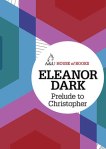
Book coverI then checked Booktopia, which is also listed on the page as a source. I searched for Eleanor Dark’s Prelude to Christopher. They provided this message: “This product is printed on demand when you place your order, and is not refundable if you change your mind or are unhappy with the contents. Please only order if you are certain this is the correct product, or contact our customer service team for more information”. Readings didn’t say this, but I’m presuming their copy will be POD too.

The prices seem to range mostly from $14.99 to $19.99, though some are more expensive.

House of Books books

But now, what you’ve been waiting for – if you haven’t clicked on the link above already – that is, something about the books available. They are listed in a strange order – alphabetical by title, with all book titles starting with “A” appearing under “A”, and “The” titles under “T”. Really? For me, the best order would be by author, so I could see, for example, all the Astleys they have, all the Cusacks, and so on. Also, very few of the book descriptions include original publication date which pedantic me would really like to know!

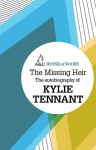
Book coverWhinge aside, the list is an exciting albeit serendipitous one, including many books barely remembered these days. There are, for example, Kylie Tennant’s memoir The man on the headland, and her autobiography, The missing heir. There are four by Thea Astley, eight by Dymphna Cusack (including the Newcastle-set Southern steel, which interests me), and four by Xavier Herbert.

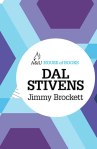
Book coverOther treasures, in terms of their place in Australian literary culture, include Dal Stivens’ 1951 political (and debut) novel, Jimmy Brockett. Stivens is little known now, but, as Wikipedia tells, he won the Miles Franklin Award in 1970 for A Horse of Air, was awarded the Patrick White Award in 1981 for his contribution to Australian literature, and in 1994, he was given a Special Achievement Award in the NSW Premier’s Literary Awards.

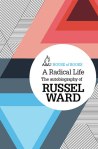
Book coverAs you’ll have realised from the Tennants above, the books include non-fiction, like Australian historian Russell Ward’s memoir, A radical life. There are also books of poetry, such as AD Hope’s Selected poems, and short story collections.

More contemporary writers in the list include Nick Earls and Mandy Sayer (both born, coincidentally, in 1963).

I’d love to know if any of my Australian readers know of this series? The cover style is a little familiar to me, but I am certainly not as aware of them in the shops as I am of the wonderful Text Australian Classics series. My guess is that this is due to the publishing model they are using. Any comments?

Monday musings on Australian literature: Indigenous Australian writers and the Miles Franklin Award

This is not going to be a treatise on the Miles Franklin Award and diversity. We all know literary awards have not been as diverse as they could have been (and that they still have a way to go). We know, too, that this is not only due to judging, but also reflects the fact that the publishing industry has not been as diverse as it could be. It is probably also true that, in the past at least, we readers have not demanded more diversity in our reading. However, this story is too complex for this post, and, anyhow, has been explored many times. Today, I simply want to celebrate those Indigenous Australian writers who have been listed for and/or won Australia’s (arguably) most prestigious literary award, the Miles Franklin, in the spirit of bringing attention to their work as a body of literature.

Notwithstanding the above, I do need to make the point that it wasn’t until 2000 that we started seeing Indigenous Australian writers appear in the short and longlists for the award*.

  • 2000 Kim Scott’s Benang (won) (Lisa’s and Bill’s reviews)
  • 2007 Alexis Wright’s Carpentaria (won) (my review)
  • 2011 Kim Scott’s That Deadman Dance (won) (my review)
  • 2012 Tony Birch Blood (shortlisted) (Lisa’s review)
  • 2014 Melissa Lucashenko Mullumbimby (longlisted) (Lisa’s review)
  • 2014 Alexis Wright The Swan Book (shortlisted) (Lisa’s and Bill’s reviews)
  • 2016 Tony Birch Ghost River (longlisted) (my review)
  • 2018 Kim Scott’s Taboo (shortlisted) (Lisa’s and Bill’s reviews)
  • 2019 Melissa Lucashenko’s Too Much Lip (won) (my review)
  • 2020 Tony Birch’s The white girl (shortlisted) (my review)
  • 2020 Tara June Winch’s The yield (won) (my review)

This slideshow requires JavaScript.

You could probably call this a round-up of the usual suspects, in terms of contemporary Indigenous Australian novelists, with Kim Scott and Tony Birch appearing three times, Melissa Lucashenko and Alexis Wright twice each, and of course relative newbie, Tara June Winch, once. It’s notable that every book here deals with Indigenous issues. This is important for truth-telling, but it will be a measure of our maturity as a nation when Indigenous Australian writers can feel free of the need to carry these truths on their backs.

Anyhow, I wonder what Miles Franklin would say? When she said “without an indigenous literature, people can remain alien in their own soil”, I don’t believe she was thinking of the real Indigenous people of this soil. However, I imagine that, were she living now, she would love the richness that the growth of Indigenous Australian literature has brought to Australian life and culture.

It seems apposite, then, to leave this (very) little tribute with the words of this year’s winner, Tara June Winch, as quoted in the Sydney Morning Herald, “It doesn’t have to be POC writers against white voices – we have to work together to bring voices to the fore.” Absolutely. Let’s hope more and more diverse writers get to tell their stories to us. I – and I know many of my litblogging friends – love to read them. Meanwhile, if you haven’t read it yet, I recommend that you do read The yield, a complex but strong book which its author calls “a once-in-a-lifetime love letter to Australia.”

Have you read any of the listed books, and if so, would you like to share your favourite/s?

* I may have missed a writer or two, as I didn’t find complete lists of short and longlisted authors from the beginning of the award, but I think my point still stands.

Monday musings on Australian literature: Indigenous Australian literature, 1970s

Although Lisa’s (ANZLitLovers) annual Indigenous Literature Week is officially over for 2020, I thought I’d bookend it with a second Monday Musings, this one on how Indigenous Australian literature looked around 50 years ago. Who was writing then, and what were they writing?

My main sources were Trove, of course, and the Macquarie Pen anthology of Aboriginal literature, edited by Anita Heiss and Peter Minter. In their introduction, Heiss and Minter argue that:

Aboriginal literature as we know it today had its origins in the late 1960s, as the intensification of Aboriginal political activity posed an increasing range of aesthetic questions and possibilities for Aboriginal authors.

With the Constitutional Referendum of 1967, and, as they put it, “the election of the reformist Whitlam government in 1972 [that] saw a new radicalisation in Australian politics”, there was a growing interest in land rights and cultural self-determination. In this world, Aboriginal literature “began to play a leading role in in the expression of Aboriginal cultural and political life”.

Heiss and Minter nominate the period from 1967 to the mid-1970s as being “significant for the sudden growth in Aboriginal authorship across a broad range of genres.” Ha! It was in 1967 that I wrote a little piece for my school year book on “Aboriginal equality in Northern Australia”. (It’s a bit excruciating to read now, being the words of an idealistic young teen, but that was when my interest in Indigenous Australian rights really started – and when I started reading authors like Kath Walker, later Oodgeroo Noonuccal.)

Book coverThe writers they name from that time – Kath Walker, Jack Davis, Kevin Gilbert, Monica Clare (who is new to me), Gerry Bostock and Lionel Fogarty – pretty much mirror the writers who cropped up in my Trove search. Heiss and Minter describe them as

active in the political sphere while simultaneously catalysing a nascent publishing industry and writing their own vanguard pieces of creative literature.

There is another name that they don’t mention, but who comes up in Trove, and that’s the controversial Colin Johnson (who also published under the name Mudrooroo.)

The interesting thing about this group of people is that they are primarily poets and playwrights. Davis, Bostock and Gilbert are both, while Walker (Noonuccal) and Fogarty are best known as poets. The exception is Monica Clare. She was primarily an activist, but wrote an autobiographical novel that was published posthumously in 1978, Karobran: The story of an Aboriginal girl. Why were poetry and drama so dominant at that time? Is it because they were easier to publish (or get published) – or perform? Is it because these forms lend themselves more to the activism all these writers were engaged in? A poem, after all, is a powerful tool that can be performed, learnt and quoted again and again – as Noonuccal’s were, I know.

Now, what did the newspapers at the time have to say about Indigenous writing? First, there were several references to the paucity of Indigenous writing and Indigenous characters in contemporary literature, including in children’s literature. Presumably this awareness marked the beginning of the slow change that led us to the last decade or so in which we’ve seen significantly more Indigenous writing being published across all forms and genres.

There was, though, less awareness of the importance of Indigenous people telling their own stories. The sense I get is that it was perfectly alright for non-Indigenous people to tell Indigenous stories. Reviewer Lyndal Hadow, writing in the Tribune about a book of short stories by someone called D Stuart, praises:

his wide and deep knowledge and appreciation of the Aborigine. I believe there is no one who has written with such understanding in all the literature of the subject. His ear and his pen for the subtleties of altered English as used by his Aboriginal friends are not matched by any one I have read, and I have read them all. Again Stuart shows that those of whom he writes are known to him, not as subjects to be studied, but as old friends whose lifestyle he understands, and whose strengths he respects.

I love her confidence in her assessment because she has “read them all”!

The most comprehensive article I found about Indigenous writing in Australia came from the University of New South Wales’ student magazine Tharunka in 1976. The article, written by John Beston, commences:

Who are the Aboriginal writers? The first person to supply an answer to that question was Kath Walker, herself the best known of Aboriginal writers. In an article entitled “Aboriginal Literature,” in the January 1975 issue of Identity, Kath Walker mentions five writers other than herself — Jack Davis, Kevin Gilbert, Colin Johnson, Wilf Reeves and Dick Roughsey — and concludes that there is an exciting time ahead. I agree with her.

Beston comments on the three main poets of the time, Walker, Davis and Gilbert, and shares this:

Kath Walker has graciously acknowledged Jack Davis to be the better poet, but there is no clear superiority of one poet to the other: Davis is the more skilled craftsman, but Walker sometimes has greater emotional force.

This article is worth reading, because it surveys the gamut of Indigenous Australian writing at the time, across all forms and genres. He concludes, though, by returning to Walker and her significant role, saying (in the tone of his times):

The quality of her work and the success she met with — We Are Going went into seven editions — gave other Aboriginals a needed boost and encouraged them to express the creativity that they have always had. So Aboriginal literature is less than twelve years old. The young tree is certainly flourishing.

Another article I found noted Kevin Gilbert’s being awarded a literature grant to write a book. And, there was a 1979 review of the book Literature and the Aborigine in Australia by a non-Indigenous writer, which seemed to be more about “the history of the efforts of Australian writers to come to terms” with Indigenous culture than about Indigenous literary culture itself, though the review does say:

‘There is also, completing the record, the very new group of writers, Aboriginal or part-Aboriginal themselves, who are producing their own literature.’

In the 1970s, then, there wasn’t a lot of coverage of Indigenous Australian writing, but there was the beginning of an awareness that Indigenous Australians were writing – and that Indigenous Australians and their culture should no longer be overlooked. We have a long way to go yet in terms of all Australians reading and appreciating Indigenous Australian writing and culture, but it is useful to see where we’ve come from, don’t you think?

Past ILW/NAIDOC Week-related Monday Musings

Monday musings on Australian literature: Indigenous Australian biographies

Yesterday was the start of Lisa’s (ANZLitLovers) 2020 Indigenous Literature Week, and, as I have done for a few years now, I’ve decided to devote my Monday Musings to an Indigenous Australian literature topic. This year’s topic is Indigenous Australian biography.

I have previously written Monday Musings on Indigenous Australian autobiographies and memoirs. These have flourished in the last decade or so, particularly, it seems, memoirs from Indigenous Australian women. I’ve reviewed several on this blog. However, biographies are a different form altogether, and in researching for this post, I’ve struggled to find many. Readings bookshop, for example, provides a list of Australian First Nations Memoir and Biography but I struggled to find many biographies in their list. It is a positive thing that publishers and readers have embraced memoirs, but I can’t help feeling that the paucity of biography tells us something about the place of Indigenous Australians in Australian culture.

The Australian Dictionary of Biography (ADB), self-described as “Australia’s pre-eminent dictionary of national biography”, aims to provide “informative and fascinating descriptions of the lives of significant and representative persons in Australian history.” This suggests that biography has a formal role in telling the story of a nation. Consequently, the dearth of Indigenous Australian biographies – if my research is right – is surely a measure of the continuing marginalisation or exclusion of Indigenous Australian culture and lives from our national story.

Not surprisingly, I’m not the only one to have noticed this problem. In 2017, the National Centre of Biography launched a new project “to develop an Indigenous Australian Dictionary of Biography“. It’s being led by Shino Konishi who is of Indiengous descent from Broome. She is on the ADB’s Indigenous Working Party which was established in 2015, and which includes “leading Aboriginal and Torres Strait Islander scholars from each state and the territory”. The main aim of the project is to add 190 new Aboriginal and Torres Strait Islander biographies to the ADB which, they say, has published nearly 13,000 biographies since 1966, but “has tended to under-recognise the contribution of Indigenous people to the Australian story”. The end-result of the project will be a dedicated Indigenous ADB.

Alongside this, the National Centre of Biography, which publishes the Australian Dictionary of Biography, also hosts a site called Indigenous Australia which “brings together all entries on Indigenous Australians found in the NCB’s biographical websites–Australian Dictionary of Biography, Obituaries Australia, Labour Australia and Women Australia.” It also supports the Australian Indigenous Autobiography Archive, which is an initiative of the University of Western Sydney. (However, it moves us away from my focus here on biography.)

Of course, the above is all very important, but the ADB is about biographical essays in a dictionary of biography. I’m also interested in full-length biographies. I didn’t find many, but, as always, I’m hoping you will tell me (or remind me of) others?

Alexis Wright, TrackerIndigenous Australian biography – a small selection

  • Max Bonnell’s How many more are coming?: the short life of Jack Marsh (2003): on athlete and first class cricketer, Jack Marsh, who died in 1916.
  • Kathie Cochrane’s Oodgeroo (1994): on poet and activist Oodgeroo Noonuccal.
  • Ruby Langford Ginibi’s Haunted by the past (1999): on Ginibi’s son, Nobby, who spent significant time in prison, and the systemic failures in handling Indigenous young.
  • Kevin Keeffe’s Paddy’s road: Life stories of Patrick Dodson (2003): on activist Patrick Dodson, and his family, and their commitment to reconciliation.
  • Marlene J. Norst’s Burnum Burnum: A warrior for peace (1999): on Burnum, Stolen Generations survivor, sportsperson and activist.
  • John Ramsland’s The rainbow beach man (2009): on Les Ridgeway, Worimi elder, who was a farm labourer, station manager and was eventually recruited by Charles Perkins to work in the Commonwealth Department of Aboriginal Affairs.
  • Peter Read’s Charles Perkins: A biography (2001): on activist, Freedom Ride participant and administrator, Charlie Perkins.
  • Banjo Woorunmurra and Howard Pedersen’s Janadamarra and the Bunuba Resistance (1995): on Aboriginal resistance fighter, Jandamarra, and his resistance against invasion in the Kimberleys.
  • Alexis Wright’s Tracker (2017): on the charismatic ‘Tracker’ Tilmouth, activist, a book which is described by some as a “collective memoir” but which I’ve included here as an example of new forms of “biography”, particularly for Indigenous life-writing.

So, now, please add to this list …

Past ILW/NAIDOC Week-related Monday Musings

Monday musings on Australian literature: Older men protagonists

Early last year, I wrote a Monday Musings on Older women protagonists. With my father having turned 100 last month, I figured it was time I explored older men protagonists in Australian literature. It proved a bit harder than I expected, but gradually books started to make themselves known to me.

As in my older women post, I’m using 60+ as my definition. (Please note that I am saying “older” here, not “old”, as I don’t see 60s as old, though perhaps it’s all a matter of perspective!) Of course, not all authors specifically state the age of their characters, so, as in my “older women” post, I’ve had to guess sometimes. Do correct me if you know I am way out!

My select little list is alphabetical by author (with links being to my posts). I have read most of the books below, but some before blogging.

Older men protagonists

  • Peter Carey, Amnesia (2014): An old left journalist, and his university friends, consider their activist pasts against the current world and the ongoing need for activism.
  • John Clanchy, In whom we trust (2019): Set in early 20th century Victoria, Father Pearse is a priest nearing 70, who wishes to retire and return to his Irish home, but there is trouble from his past that he is forced to confront and consider righting.
  • JM Coetzee, Slow man (2006): A 60-year-old man suffers a cycling accident resulting in the amputation of a leg, and has to refigure how he is going to live.
  • Elizabeth Jolley, Mr Scobie’s riddle (1983): Set in a nursing home, three 85-year-old men consider their lives, the past and the idea of home.
  • David Malouf, Ransom (2009): A reworking of a section of the Iliad in which the aging Priam risks all to ask Achilles for the body of his son, Hector, asking, that is, for some humanity from Achilles.
  • Alex Miller, Lovesong (2009): A retired novelist, living with his 38-year-old daughter, is told a love story which he shares with us through his own lens.
  • Christos Tsiolkas, Damascus (2019): Covers the apostle Paul’s adult life, but focuses in particular on the lessons and understandings of three old men, Saul, Thomas and Timothy, in relation to the foundations of Christianity.
  • Arnold Zable, Cafe Scheherazade (2001): Journalist Martin visits Cafe Scheherazade to hear stories about displacement from its Jewish owners and patrons, particularly three friends who are also old men, Yossel, Laizer and Zalman.
  • Arnold Zable, Sea of many returns (2008): A dual point-of-view novel, with one of the POVs being a Greek-born grandfather who, in yearning for home, ponders the meaning of home and place in our lives.

This slideshow requires JavaScript.

Ross King, writing in The Guardian in 2016 about older men protagonists, says this:

I was struck by the painter’s [Claude Monet] vigour, fortitude, ambition and (if I can declare some personal interest) sheer narrative traction. Monet in those years, his 70s and 80s, was very much an old man in a hurry, emerging from self-imposed retirement on the eve of the first world war to create some of the most daringly experimental pigmentary effects he had ever attempted. He offers proof that an eightysomething can propel a narrative without an author having to resort to wistful recollections of a vanished prime.

Interesting point. Certainly few of the characters in my little selection focus on their vanished primes. Several think about the past, but not in terms of their so-called prime. For some, like those older women books, there’s a need to resolve/atone for/amend the past, while for others there’s a more philosophical pondering about the meaning of the past, of home, of life. Unlike my older women books list, few if any of these older men books explore illness (like dementia and cancer).

Like that previous list too, but in reverse, most of the authors writing about old men are men – which is not surprising. I’m wondering whether any of our current male literary fiction authors who are now 60 plus, are writing about the topic? Like David Malouf (who has already done Ransom), Rodney Hall, Peter Goldsworthy, to name just a few.

And now, of course my question! Can you add some books to the list – Aussie if you’re Aussie, or your own nationality if you’re not?

Monday musings on Australian literature: Guest post from Michelle on our Brave New (online) World

Book coverToday, I present another Monday Musings guest post coordinated for me by Bill (The Australian Legend), this one from Michelle Scott Tucker, author of the wonderful Elizabeth Macarthur: A life at the edge of the world (my review).
Thanks so much again to Bill and to Michelle for helping me out with my Monday Musings. Read on … and of course we’d love your comments  … Do you think your online activity will change significantly post-COVID-19?

Michelle’s post

Hands up if you’re quite the expert at videoconferencing now. Got your lighting all sorted? Your headphone hair? De rigueur Indigenous artwork behind you?

With the onset of the COVID-19 shutdowns, the Australian literary community has moved its events online with commendable alacrity. A few organisations, like the Wheeler Centre, were ahead of the curve. They’ve regularly livestreamed some of their events for a while now. But for the rest of us, the haste with which the move to online ‘events’ had to happen resulted in a few bumps along the way, but overall, the experiment has been a success, I think.

I’ve no insider data for you, no formal evaluation, but in the last three months I’ve been involved in quite a few literary events via Zoom, or similar – so let’s take a closer look at how the experiment is going.

The Stella Prize usually hosts a glamorous, invitation-only gala event at which the annual winner is announced. Egalitarianism be damned! The NSW Premier’s Literary Awards have an equally glamorous event which, in the past, was at least ticketed. This year, though, the events were cancelled, and the announcements were livestreamed. Well, I say livestreamed but what they really meant was pre-recorded clips of the relevant hosts and authors were livestreamed to the web at an agreed announcement time. That was a little disappointing, to be honest, although understandable logistically. It wasn’t that the winners weren’t fabulous, or the speeches less interesting but what was missing was the buzz. The excitement. The little jokes and patter that are part of a live event. Frankly, though, even big-budget events like the Logies (Australia’s version of the Emmy Awards) or the Academy Awards are pretty tedious. It’s only the fashion that gets them over line and let’s face it, fashion isn’t going to rescue a literary award – everyone wears black, or Gorman. Apparently that’s the law.

The organisers of the Yarra Valley Writers Festival managed to pivot from face-to-face to a live-streamed extravaganza with swan-like grace. I can only imagine how hard the organisers had to paddle beneath the surface. The livestreamed festival was a very professionally run event, and it showed. And it was actually ‘live’, which was nice. The organisers clearly had access to excellent video and tech support. Whispering Gums blog-host Sue wrote about the sessions she watched here, here, here and here. I “attended” the festival too, largely because I found their pricing to be irresistible. For $15 I could watch a whole day of sessions live, and for an additional $20 I could continue to have access to the recordings for the next two months. Bargain. To compare, attendance in-person would have cost me $75 for the day, plus food and petrol.

In the pre-COVID world there’s little chance I’d have attended the Yarra Valley Writers Festival. It was at least two hours’ drive from my place, and family commitments usually fill my weekends. So in terms of accessibility, the revised format was a winner. But I found it difficult to stay watching and engaged for more than a couple of sessions, and eventually spent the afternoon doing something else. I kept meaning to go back and watch those later sessions but somehow never got around to it. I would rather, I belatedly realised, have listened to them in podcast format while I was doing that ‘something else’. And my insider sources tell me I was not alone – the online version of the Yarra Valley Writers Festival could best be described as a qualified success.

Other writers festivals were not so confident about executing the pivot from face-to-face to live-stream and so sensibly aimed for a much less ambitious offering. The volunteer organisers of the excellent Bellingen Readers and Writers Festival, for example, ended up cancelling the festival although they managed to salvage the Poetry Slam, which they ran live via Facebook, as well as some other book launches and workshops. I genuinely feel for the organisers, and for the would-be audiences, the local businesses and the speakers (of which I was going to be one. I was lined up for a couple of sessions at Bellingen, but the one I was looking forward to the most was facilitating a discussion between three Stella Prize winners: Heather Rose, Vicki Laveau-Harvie and Carrie Tiffany. How good would that have been?). On this last point, I should flag that I accept speaking gigs because I enjoy them. The fact that I occasionally also get paid for them is a happy bonus. But many writers rely on their speaking gigs as an important source of income. Some earn more from speaking than they ever will from sales of the book itself, especially those who speak at schools. This is yet another example of the impact of the COVID-19 shutdown on artists’ incomes.

During the shutdown period, I also “attended” an online book launch and, separately, a bookshop event where a panel of three writers were interviewed about their work. Both these events were held via Zoom on weekday evenings. The book launch was a free event, and the bookshop panel discussion was sensibly priced at $5. I thoroughly enjoyed both of them, and would have been unlikely to physically attend either in a pre-COVID world (not least because the bookshop in question was quite literally a thousand miles from my place). But, again, I had some reservations.

These days I usually attend bookish events because I know the author and want to support them. For authors I don’t know personally, but whose work I admire, I simply seek out their interviews in podcast format. ABC Radio is a great source of interviews with Australian writers, via The Book Shelf, The Book Show and Conversations, as are the excellent podcasts The Garret and The First Time. So all this Zooming has made me think about WHY I attend literary events.

I think that it’s less because of the formal proceedings, and more because of the interesting conversations that follow – with the author when I buy their book, and with the other book-loving attendees. At the last book launch I attended in person I ended up having a good chat with Helen Garner! At writer’s festivals, the same applies. I enjoy listening to the sessions, but I REALLY enjoy meeting new people or bumping into acquaintances in the crush of the coffee queue. To continue my blatant name-dropping, at Bellingen Writers Festival last year I had an impromptu pub dinner with Dr Marcia Langton AO and Dr Jane McCredie, CEO of Writers NSW. Halfway through we were joined by actor and director Rachel Ward AM. Yes, I managed to play it cool – sort of!  And, to be clear, while I know that Jane remembers this dinner very fondly, I very much doubt that Marcia or Rachel do!

So the online book launch I attended, and the online literary event were interesting, but they lacked buzz. I missed the face-to-face interactions of real life, and in this I’m not alone. A friend started up a Zoom book club as we moved into the COVID-19 shutdown. She reports that they were very popular early on, but enthusiasm was waning by the three-month-mark. Many reported that after spending much of the day using Zoom for the day job, the thought of logging-in again in the evening was less than appealing. I can vouch for that, too.

But what of the core purpose of literary launches and events – to sell more books? It appears that Zoom and its ilk have only been a qualified success. Writer and bookseller Krissy Kneen had some super interesting things to say on the topic recently, during a podcast interview. She was pleasantly surprised by the number of sales that livestream events generated but didn’t pretend that those sales were as high as they would have been for a face-to-face event.

So, in essence, livestreamed literary events have been a useful stop-gap but may play a decreasing role as physical distancing restrictions are eased. There is, however and of course, an exception to that rule.

Writers Victoria, in a usual year, hosts large numbers of face-to-face workshops, seminars and events. They adroitly managed to move most of these online and my sources tell me that the number of participants has been pretty much the same as usual. This is impressive, given that fees for a full-day online workshop remain at $155 for members (concessions are available, and non-members pay more) but the sweetener is that most online courses include, afterwards, personalised feedback by the presenter on a piece of writing up to 500 words. It’s also worth reminding ourselves that delivering online sessions often costs much the same as delivering face-to-face sessions. Fee-paying participants can also subsequently access a recording of the session, so they can go back and review what they learned.

The delightful part, though, is that the online workshops have provided access to people who otherwise could not have participated. Attendees have included people from overseas, from interstate, or who for various reasons would have been housebound even without the COVID-19 threat. Apparently there’s a mum with a newborn who has happily attended several! I delivered one of these full-day online workshops and was pleasantly surprised by how interactive it was, and how much we were able to engage with one another. The word is that Writers Victoria will return to face-to-face workshops when they can, but – beyond the shutdown – will continue to provide online workshops too.

And there, for me, lies the answer. As we move beyond a strict shutdown, I hope that we’ll be able to enjoy a blended approach to accessing literary events. By all means hold a live, face-to-face event but livestream or podcast it too. Include separate webinars as an integral part of your festival offerings, alongside face-to-face activities. By doing so, the literary community might become a little more open to the wider community and might become a little more accessible to readers – whoever, or wherever they are.

What do you think?

Michelle Scott Tucker is the author of Elizabeth Macarthur: A Life at the Edge of the World (Text Publishing, 2018) – a compelling biography of the woman who established the Australian wool industry, even though her husband received all the credit.

Elizabeth Macarthur was shortlisted for both the 2019 State Library of NSW’s Ashurst Prize for Business Literature, and the 2019 CHASS Australia Prize (from the Council for the Humanities, Arts and Social Sciences).

Michelle is a freelance writer and consultant, with a successful career in government, business and the arts – including a recent stint as Executive Director of the Stella Prize, Australia’s top prize for women writers. She has served as Vice Chair of the Writers Victoria board and is currently one of the organisers behind the inaugural ‘Mountain Writers Festival’. The festival’s focus on the environment, story and place not just as a theme, but as the festival’s entire purpose now and into the future, is unique in Australia. Passionate about Australian literature, history and storytelling, Michelle lives in regional Victoria with her family.

Monday musings on Australian literature: Guest post from Kate on anxiety, COVID and Aussie lit

Today, I present another Monday Musings guest post coordinated for me by Bill (The Australian Legend), this one from Kate (booksaremyfavouriteand best), she of Six Degrees of Separation fame. Bill suggested a topic to Kate – one applicable to her professional interests and to what we are currently experiencing – and it seems she ran with it!
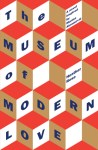
Thanks so much again to Bill and also to Kate for helping me out and for offering some fresh content for Monday Musings. Read on … and of course we’d love your comments  … How are you coping with COVID-19?

Kate’s post

Had you told me last year that 2020 would bring months of ‘stay at home and bunker down’ time, I would have thought that it sounded like heaven. No more taxiing children around? No more daily commute and peak-hour traffic? Oodles of ‘free’ time to read? Great, sign me up. And true, at the beginning of lockdown, I thought that I would get so much reading done, and therefore so much blogging done…. But that hasn’t happened. Like many bloggers (and people in general), COVID-19 brought with it a level of anxiety that I have not previously experienced.

At the same time as this feeling of anxiety was creeping in, posts on social media popped up about how ‘industrious’ people were being – “I cleaned out my wardrobe!” and “I painted the fence!” and “I’ve finally knitted that jumper I bought wool for three years ago!” and “I’ve learnt Spanish!” and “I’m making my own sourdough #delicious #nomnom!” Huh.

Then came round two of the ‘maximising time’ posts – “My kids are really getting ahead in maths” and “Look at these macarons Master 6 whipped up for afternoon snack”.

Through the noise of painting, craft, calculus and baking, one thing became very clear to me – I can’t possibly write blog posts and worry about a pandemic at the same time. Great for those that can, although I think that’s a very small percentage of people. For most, the industriousness that they’re putting on social media is their anxiety talking. Specifically, when overwhelmed by uncertainty, some people focus on what they can control (such as their sourdough starter, or memorising conjunctions for Spanish verbs), and others (like me), do nothing. Both are defence responses – our reptilian brain relies on fight/ flight/ freeze for survival.

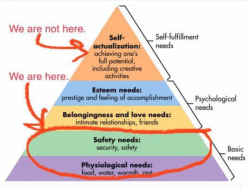
To understand what was happening with blogging, social media, and my lack of reading, I turned to Maslow’s hierarchy. Essentially, we can’t do the ‘self-fulfilment’ stuff when the ‘basics’ are in doubt (and blogging sits in the self-fulfilment category) – with our ‘foundation’ threatened, no wonder we feel anxious.

This is a Monday Musings post, and therefore needs an Australian literature reference. There are plenty of memoirs by Australian authors dealing with anxiety – this year alone I’ve read such books by Clare Bowditch, Georgie Dent and Nicola Redhouse. Equally, there are plenty of memoirs and novels that deal with anxiety in relation to a particular trauma. But what of stories that speak to those bottom rungs on Maslow’s hierarchy? Certainly stories about ‘pioneering’ fit (I’ll defer to other bloggers, such as Bill of The Australian Legend, who have a thorough knowledge of these books). But my mind turned to a book I read thirty years ago (so my memory is sketchy, but significantly, small details have stayed with me) – Amy’s Children by Olga Masters.

Book coverIt’s the story of a young woman living in Sydney during WWII. The War is merely a backdrop – instead, the focus is on Amy and her decision to leave her children in the care of her parents in regional New South Wales, while she goes to Sydney to make a life for herself. Amy puts considerable effort into setting up a home. There’s a slow accrual of ‘things’ – a bed, a wardrobe, a kitchen table – and the coveting of the unobtainable (Amy’s fantasies include “…a little glass fronted cabinet containing a bottle of sherry and fine stemmed glasses and a barrel of wafer biscuits. She would put a match to the gas fire ‘to take the chill off the room’, without having to consider the cost…”). She digs a vegetable garden and meets the neighbours. She gets a job, and begins a relationship.
From memory, much was made of Amy’s ‘selfishness’ and lack of maternal feeling, but does the story read differently through a Maslow lens? Are Amy’s attempts to ‘set up house’ representative of her need to feel secure, both personally and in the context of a world at war? I’ll do a re-read and report back.

In my professional life, I spend a lot of time working with people suffering anxiety. Anxiety tends to be a very specific beast – different things trigger different people – however, the starting point for managing it doesn’t change (I call it ‘mental first-aid’). Basically, get some exercise (preferably with fresh air involved); eat well (I don’t mean lavish, I mean nutritious,  so redirect Master 6 from macarons to paella); sort out your sleep; maintain social connections; and talk with someone if you’re not feeling great. Hopefully, with those things in order, the space for becoming engrossed in a book will return.

Monday musings on Australian literature: Guest post from Lisa on national library book culls

As I noted in last week’s Monday Musings, Bill (The Australian Legend) has organised a few Monday Musings guests posts for me. Of course, given we comment closely on each other’s posts, he turned to Lisa (ANZLitLovers) for the second one. Bill did suggest an idea to Lisa, in case she needed it, but she found another topic to inspire her. It is a highly relevant one to me as a retired national institution librarian/archivist, so I was more than happy with her suggestion.
Thanks so much again to Bill and Lisa for helping me out and for offering some wonderful new content for Monday Musings.  Read on … and do let us know what you think …

Lisa’s post

Last year, when in New Zealand for the Auckland Writers’ Festival, I visited the Auckland Art Gallery, and was disappointed to find its ’Historic European’ Gallery closed.  From the postcards on sale in the shop we could see that they had some very interesting pieces, so we were a bit disappointed. But at the time we just thought this meant they had stopped collecting European art.  However, from a recent visit to their website, it’s clear that European art has been sidelined.  If you want to see New Zealand and Pacific art, this gallery is the place to go.  But if on the other hand you are a Kiwi student of art history, or merely curious about New Zealand’s international collection as we were…

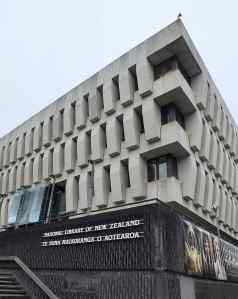
I thought of this when I came across a more radical policy underway in the New Zealand National Library. In October last year the library announced that they are going to ‘rehome’ 600,000 books to make room for New Zealand and Pacific material, in line with their 2015 Collections Policy.

Yes, that’s right, 600,000 books!

Behind the scenes, libraries have all kinds of policies that affect their acquisitions and deaccessions procedures.  These rarely attract much interest from the public, except for the issue of censorship, or ‘self-censorship’ of certain types of books. (As, for example, when a school library unofficially responds to complaints from religious minorities by not lending books featuring magic such as the Harry Potter series).

Acquisitions and deaccession policies reflect a variety of complex issues which change over time.  No collection is static, and space for underutilised materials is always a problem.

The New Zealand library’s Rachel Esson (Director of Content Services) explains their decision like this:

The overseas published collection is not one single collection but is made up of an assortment of books acquired from a range of sources, some were purchased and some donated to us having been weeded from other libraries. These books were collected to support the library system, to provide access to information that other libraries might not hold. However, around 80% of them have not been issued for 20-30 years which means most of these books are not being used and that means that the library system is telling us that it doesn’t need these books anymore.

To be clear, they are keeping some overseas published books and will continue to purchase more for their collections in focussed areas, which include: library and information science; music; reference works; children’s literature; family history, and print disabilities.

But the removal of 600,000 books is needed to make room for New Zealand and Pacific Materials:

The National Library acquires between 80,000 – 90,000 electronic and print publications a year that consist of New Zealand, Pacific and overseas material.

That makes sense to me, because New Zealand is a wealthy nation and is in a position to be a centre of excellence for the literature of Pacific Island nations which may not have the resources to do it themselves.

But as I know from my own experience as a teacher-librarian, undertaking a cull of underutilised books can be a fraught exercise, because there is always someone who, for sentimental or research reasons, needs that battered copy of a text that seems past its use-by date.  At the same time there will always be people who want to cut a swathe through the entire collection to rid it of books that offend them for one reason or another.  In the feminist Seventies, for instance, there was alarm about the preponderance of male central characters in library collections of children’s literature, and that’s still a problem today.  So is the paucity of characters reflecting Australia’s multiculturalism, its Indigenous past and present, and its LGBTIQ and disabled communities…

The philosophy of inclusion is comparatively new and it keeps changing.  Difficult decisions have to be made around those innocuous words ‘as well as’, ‘instead of’ and ‘proportion’ because these decisions have implication for space, storage, display and especially funding.

For most libraries, the decision to acquire or get rid of a book to make space for others is a decision for the local community and the users.  However, in the case of a national or state library, the rules are different.  They have a statutory obligation, i.e. enshrined in law as ‘deposit legislation’, to acquire and retain the books they have for the benefit of the nation.  According to New Zealand writer and reviewer David Larson, in a lively critique for The Spinoff the relevant Minister has to sign off on the disposal of these 600,000 books.  Amongst other concerns he is alarmed about the process for retention and selection.  There’s more to it than whether the books have been issued within a certain time frame…

The consultation process, Larson says, appears not to have adequate expertise to identify which books are needed for research purposes, and offering them to other New Zealand libraries which have no obligation to keep them is a concern.  Then there are books that are published overseas, but written by New Zealanders:

New Zealanders are, famously, a nation of part-time expats: any number of Kiwis have contributed to this field or that by publishing books while living overseas. So if the goal is to keep “anything that is New Zealand and Pacific related”, that will require identifying a huge corpus of often obscure books published offshore.

Likewise, there are many overseas-published books by non-New Zealanders which touch on New Zealand or Pacific interests, often in ways obvious only to specialists.

Larsen stresses that many of these books are destined not for rehoming, but for destruction, but his article met with a droll riposte from librarian Rebecca Hastie, in a piece also for The Spinoff, ‘Weed in the Dead of Night, a Librarian shares the secrets of book culling’.

To see why it might matter that New Zealand could lose its only copy of a text that’s being offered for ‘rehoming’, I took a look just in the ‘A’ section of the Fiction List (downloaded from here).  For a start, the library is also offloading everything that Jessica Anderson and Thea Astley wrote, so Australian Literature isn’t a priority area for retention.  Too bad if a Kiwi wants to do a PhD in the comparative literature of our two countries.  There were titles I’d love to read by Kingsley Amis, Joan Aiken, Louisa May Alcott, Isaac Asimov, and Margaret Atwood.  Even Jane Austen has to go.  Top of the Bs was a stack of titles by Isaac Babel, which, along with three by Leonid Andreyev, mean that someone in a previous era understood the important of dissident Soviet literature (which is surely still a subject for scholarly attention.)

Lest you think that this is only an issue for this particular library in New Zealand, this week Inside Story is carrying an article called ‘Asia Illiteracy’ about a new collection development policy at the National Library of Australia, which is about to sideline its collections of Southeast and Northeast Asian material:

For almost seven decades, the National Library of Australia has been building one of the world’s most extensive collections of Southeast and Northeast Asian material. The legacy of accumulated investment and collecting by specialist curators, its store of Asian newspapers and periodicals, books, government documents and other rare materials is among the great treasure troves of Asian studies, and the most extensive Asia collection in the Southern Hemisphere. Researchers visit from around the world, and the collection is a foundation stone of decades of effort to build sustained and deep knowledge of Asia at Australian universities.

Now, much of this is to be abandoned. In a new “collection development policy” — the document which lays out what and how the library will collect — the library has dramatically downgraded its emphasis on overseas collecting. It has removed key Asian countries from its list of priorities; it has closed its Asian Collections Room; it has cancelled subscriptions to hundreds of Asian periodicals.

[…]

The new collection development policy makes it clear that the library is turning inward, sharpening the focus on Australian materials. Thankfully, the Asia-Pacific will remain the priority in overseas collecting, but the scope of the reduction leaves only part of the previous Asia strategy intact. Countries that have been a major focus for decades — notably Japan and Korea, and also all the countries of mainland Southeast Asia — have been dropped altogether from the list of priority countries for collecting. 

The catalyst for the New Zealand decision seems to have been the need to deal with a collection in a flood-prone storage facility which is too expensive to replace, while the NLA’s decision, according to Inside Story is forced on them by relentless funding cuts.

It’s always a matter of money…

Monday musings on Australian literature: Guest post from Bill on Melbourne and Sydney, 1880-1939

Over the years, I’ve invited people to write guest posts on my blog, including Bill a couple of years ago. However, when Bill (The Australian Legend) became aware of my current family care situation and its impact on my reading and posting, he offered to organise some guest Monday Musings posts for me. It lifted my heart immensely to know that Bill, Lisa and others – as you will see – are willing to help keep this little series of mine going. Thanks so much Bill for taking this in hand. I love that Bill’s post is on a topic dear to my heart (and his). Read on … and do let us know what you think …

Bill’s post

Book coverIn the 1870s and 1880s Melbourne was both Australia’s largest and wealthiest city and its literary centre – around figures like Marcus Clarke, George McCrae (son of Georgianna), Adam Lindsay Gordon, Henry Kendall, Ada Cambridge, Tasma.

What I want to discuss here is the movement of the literary centre to Sydney and how that worked out, during the first half of the twentieth century. This is an opinion piece rather than the result of any great research so feel free to add to what I say and to correct my mistakes.

Sue has always been interested in the women of this period of Australian writing, and over the past few years we, the Australian Lit.Blogging community, have done a lot to establish in our own minds at least, who the women writers were and to review their work. On my blog, I broke Australian writing into ‘Generations’ more or less in line with HM Green’s ‘Periods’ in his History of Australian Literature, so: Gen 1 1788-1890, Gen 2 1890-1918, Gen 3 1919-1960.

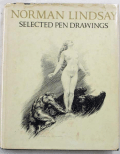
Gen 2 and the first years of Gen 3 were characterized by being both Sydney-centred and seriously misogynist. Gen 2 covered the years of the Sydney Bulletin magazine’s greatest influence, Federation, rising nationalism, WWI.  The Bulletin‘s stable of writers: Henry Lawson, Banjo Patterson, Steele Rudd, Joseph Furphy and a host of bush poets, and the drawings of Lindsay Norman (who moved up from Melbourne after leaving art school) followed by the War reporting of Keith Murdoch and CEW Bean left us with an indelible image of ourselves as resourceful bushmen, and larrikin fighting men. An image which both excluded women and around which they had to work.

The Bulletin openly scorned home life and dismissed the popular women writers of the previous generation as ‘Melbourne-based romance writers’.

“The Sydney Bulletin liked to believe that in ‘virile cultures’ where ‘home-life [had] not become so all absorbing: ‘men live and struggle and fight out in the open most of the time. When they go to their homes they go to beat their wives…’{3 Nov. 1888} According to the Bulletin, home life trammelled a man’s spirit and sapped his masculinity. And it robbed him of his independence.” (Marilyn Lake, 1986

This bled into Gen 3 and the Lindsay-led Sydney Push of the 1920s, an antipodean Bohemia where women were only of use as models and for sex.

For those of us over, say, 50 our history, including such literary history as got past the anglophile gatekeepers, was written and taught by returned servicemen, and they very much bought into the myths of the lone bushman, mateship etc. So it is important to realise that there is another history, that of strong, independent women, which is not taught. In the 1890s both Melbourne and Sydney had vibrant women’s movements focussed on (white) female suffrage, yes, but also on domestic violence, temperance, and women’s welfare. The Melbourne movement coalesced around Annette Bear and Vida Goldstein, and Sydney around Rosa Scott and Louisa Lawson, and Lawson’s newspaper, Dawn.

Miles Franklin is the prime example of a woman writer who was influenced by the nationalism of the Bulletin but wrote with a definite pro-woman and anti-marriage slant. After the publication and instant success of My Brilliant Career in 1901, Franklin was taken up by Rosa Scott, and then subsequently fell in with Goldstein’s lot when she moved to Melbourne and became life-long friends with Melbourne suffragists Mary Fullerton and Mabel Singleton. Her fictionalised biographies My Career Goes Bung and Cockatoos describe her year in the Sydney literary set, living with Scott, flirting with AB Paterson, and meeting Lindsay and (Bulletin editor) Archibald.

Franklin lived overseas for many years, from 1906 to the 1930s and when she came back for good, to her mother’s house in Sydney, it was to a changed literary scene, one dominated by women. During the 20s women had been excluded from the Sydney Push’s literary magazine, Vision, and maybe only Zora Cross with her erotic poems fitted in with the times. Anne Brennan, daughter of drunken poet Christopher Brennan, who hung around the Lindsay push for grog and sex, and tried to write, tried to fit in and failed. Christina Stead was tempted to join the Push, but her compulsion to earn enough to flee overseas saved her.

The Melbourne scene gathered around Nettie and Vance Palmer. Vance, originally a Queenslander, tried hard to be a writer in the Bulletin tradition but hasn’t stood the test of time. They were friends with Louis and Hilda Esson and with the poet Maurice Furnley. But more importantly Nettie and Hilda had been at school together at Melbourne’s Presbyterian Ladies College, and subsequently at university. Hilda had been neighbours with Katherine Susannah Prichard’s family and introduced KSP to Nettie. Earlier alumni of PLC included Vida Goldstein and Henry Handel Richardson who, of course, wrote about the school in The Getting of Wisdom.

Nettie, a poet and scholar, maintained an enormous correspondence with a great many Australian writers and was important in maintaining links with expatriates like Richardson.

Sydney women wrote from their homes, isolated from each other until the formation of the Fellowship of Australian Writers in 1928 by Mary Gilmore, Steele Rudd and John le Gay Brereton. Later in the 30s the FAW’s most prominent members were Miles Franklin, Marjorie Barnard and Frank Dalby Davidson.

So what can I say about that fixture of Australian life: Melbourne-Sydney rivalry. Melbourne ‘had’ Katherine Susannah Prichard, but she was living in Perth; Henry Handel Richardson, acknowledged for years as Australia’s best writer, but long since based in England; (the late) Joseph Furphy, writer of the Great Australian Novel, Such is Life; and Nettie Palmer.

Sydney, by the outbreak of WWII, had a blossoming of writers: Kylie Tennant, Marjorie Barnard, Flora Eldershaw, Dymphna Cusack, Eleanor Dark, Ernestine Hill, and Patrick White just setting out. You be the judge.

For a compilation of posts on Australian (mostly) women’s writing up to 1960 see:

  • theaustralianlegend, AWW Gen 1, 1788-1890 (here)
  • theaustralianlegend, AWW Gen 2, 1890-1918 (here)
  • theaustralianlegend, AWW Gen 3, 1919-1960 (here)

Bill Holloway, 25 May 2020