Monday musings on Australian literature: Eco-literature

Book cover

Over the weekend, I reviewed local Canberra author Irma Gold’s debut novel, The breaking, and described it as belonging to the eco-literature “genre”. I thought it might be interesting to explore this field a little more.

Definitions

I’ll start with definitions, because, does it really exist? Wikipedia doesn’t have an article for eco-literature, but it does for ecofiction, which it describes as

the branch of literature that encompasses nature-oriented (non-human) or environment-oriented (human impacts on nature) works of fiction. While this super genre’s roots are seen in classic, pastoral, magical realism, animal metamorphoses, science fiction, and other genres, the term ecofiction did not become popular until the 1970s when various movements created the platform for an explosion of environmental and nature literature …

This definition is broad, and encompasses what I call “nature writing”. However, eco-literature, as I’m using it, accords more with definitions/discussions I found at a wide range of sites. They all say it differently, but the essence is that eco-literature, today, is largely used for works which the Carnegie Library describes as offering “a literary lens through which to explore the natural world and the many threats it faces in our modern world”. In other words, these books focus on “environmental issues” (my emph.), as The Conversation‘s Ti-han Chang says in “Five must read novels on the environment and climate crisis”.

The other point I’d like to make is that some, though not all, see this “genre” as encompassing all forms of literature. EcoLit Books keeps to fiction, calling it

a super-genre of writing that straddles all genres (mysteries, thrillers, literary, children’s). We often refer to it as “fiction with a conscience.” (their emph.)

However, The Wire’s Rajesh Subramanian, who wrote “Could Eco-Literature Be the Next Major Literary Wave?” in 2017, sees it as encompassing

the whole gamut of literary works, including fiction, poetry and criticism, which lay stress on ecological issues. Cli-fi (climate fiction), which deals with climate change and global warming, is logically a sub-set of eco-literature. 

I like this, but now, having made this point, I’m focusing on fiction.

Eco-literature in Australia

While The Conversation is an Australian site, Ti-han Chang is based in England, and her five books are non-Australian. However, in 2016 Overland published an article by Rachel Fetherston on Australian eco-fiction. She starts from the point of view that the Australian population is indifferent to nature. Is this true? Anyhow, she asks:

can fiction play a role in enhancing our connection to local species and habitats? The expansion and appreciation of less anthropocentric and more ecocentric literary works may well be a silver bullet.

She argues that while Australia has a good tradition of ecocentric writing and ecophilosophical thought, it “pales” compared to that of the US where there’s been a dramatic rise in the humanities’ engagement in the issues. Australia, she says,

needs to provoke a more public and accessible discussion of the modern environmental crisis, and eco-fiction presents a powerful means of doing so. It is not too late for Australians to embrace ecophilosophy, especially in regard to our own specific environmental concerns. But how can such concerns be translated into fiction?

Charlotte Wood, The natural way of things

Fetherston just names a few books, including two dystopian novels, James Bradley’s Clade and Charlotte Wood’s The natural way of things (my review). Clade, she says, is “a world-shaking, cross-generational work of climate fiction that” presents “a truly Australian approach to climate change”, while Wood’s novel “is based strongly in ecophilosophical thought. Her characters become increasingly less human, more animalistic, and more connected to the landscape”.

Fetherston goes on to say that “depiction of the human as animal is … a theme that appears to be emerging more and more within our nation’s literary circles”. Ceridwen Dovey’s Only the Animals, she says, explores similar themes, though it’s “not focused specifically on Australian landscapes and animals”. Different, but related, I’d say, is Laura Jean Mackay’s The animals in that country, which won this year’s Victorian Prize for Literature and which looks at animals and their language from, say the critics, a new and non-anthropomorphic way.

Fetherston is clearly interested in this field because a year ago, she wrote an article for The Guardian. She quotes “renowned nature writer Robert Macfarlane” who “lamented” the deficient “creative response” to the climate crisis and who argued for the arts to be involved in debating, sensing and communicating the crisis. She names more books in this article, including two which look at the bushfire issue, Mireille Juchau’s The world without us and Alice Bishop’s collection of short stories, A constant hum (Kim’s review). Further, she writes, Alexis Wright’s The Swan Book (Lisa’s review) “addresses the strong ties between colonisation and climate catastrophe”.
Cassie Flanagan Willanski, Here where we live

I named a few books in my introduction to my review of The breaking, but I’d like to add a couple more here. Cassie Flanagan Willanski’s collection of short stories Here where we live (my review) draws strongly on the environment, with stories looking at it from various angles, including climate change, the impact of tourism on the environment, and caring for the environment. Ellen van Neerven’s Heat and light (my review), comprises three sections, of which the middle one, “Water”, is a long dystopian short-story which posits a future world populated with mutant plantpeople alongside humans.

Eco-literature might be more politically-focused than some environment literature, but it is still a rather broad church, and is, I believe, increasingly preoccupying our writers, for good and obvious reasons.

Fetherston ends the first article I quote, with

It is time for our writing and art to focus on the non-human: the increasingly vulnerable, apparently insignificant lives and habitats that make Australia’s natural heritage so special and sublime. 

And, not just that, but critical to our physical and mental survival and well-being. I’m glad to see more and more writers embracing it, from multiple perspectives.

Now, over to you. Do you read “eco-literature”? And it so, tell us your favourites?

Monday musings on Australian literature: Nancy Cato

Book cover

Last year I posted on a book called Trailblazers: 100 inspiring South Australian women. I decided then that it could inspire some Monday Musings posts, because it includes writers among its inspiring women. The first writer to appear in this alphabetically-arranged book is Nancy Cato. She is described as “Writer and activist”, which enhances her interest.

Nancy Cato (1917-2000), who saw most of the 20th century, is best known to Australians for All the rivers run (which I have posted on) but there is much more to her than that.

Brief bio

Cato was born and raised in Glen Osmond, Adelaide. She started writing when she was 8 years old, but got her first writing job at 18, when she won a competition run by the Adelaide newspaper, News. The prize included a cadetship. However, says Trailblazers, she “bristled at sexism in the workplace”. She’d been told that when she became a journalist, she’d be treated and paid as a man, so was horrified when they assigned her to the social pages! She threatened to resign if they didn’t give her a “proper reporter” job.

The job they gave her was “the North Terrace round” which covered the art gallery, public library, museum, university and hospital. She learnt a love of art from gallery director, Louis Frederick McCubbin (son of artist Frederick McCubbin), while the public librarian introduced her to Australian writers writing about Australia. This, says Trailblazers, was “a revelation after being told by her ‘pomified’ university professor that there was no such thing as Australian literature”.

She became involved in the Jindyworobak Movement (1938-1953) which aimed to “express the Australian outback environment in terms that respected the Aboriginal resonances of the land”, though, unsurprising for the time, it was a white movement. Cato edited the 1950 Jindyworobak anthology.

Book cover

Cato married racing-car driver and inventor, Eldred Norman. Early in her marriage, before they established a home on a vineyard on Adelaide’s northern fringes, she spent time grape-picking on the Murray River, thus gaining her river knowledge. Her first book was a poetry collection published in 1950, with her first novel, All the rivers run, appearing in 1958. She went on to publish another book of poetry, many novels, and a few works of non-fiction.

Cato and her husband moved to Noosa, Queensland, for health reasons, in the 1960s. That was where she died in 2000.

Writing and activism

Her activist nature is hinted in the biography above, in her willingness to resign over the paper’s treatment of her as a woman journalist. She was clearly no pushover from a young age. Trailblazers mentions her later activism in Noosa, where she became the bane of “the white shoe brigade” by opposing high-rise coastal development. The authors say that:

In her groundbreaking 1979 environmental study on the region, she described the seaside resort town as ‘a place of ancient unspoilt beauty and instant, man-made ugliness’.

According to Wikipedia, it went into two more editions (in 1982 and 1989).

Of course, I also went to Trove to see what I could find about Cato. I wasn’t surprised to find more than I could possibly read, both writing by, as well as about, her. I’ll share just some of what I found. I didn’t find a lot more about her activist activity. However, The Canberra Times, for whom, Trailblazers tell us, Cato wrote while living in Noosa, did have some articles by her about Indigenous Australians.

She commences one article from 1971 with

QUEENSLAND’S Aboriginal and Island Affairs Department has been dragged screaming into the 20th century by the Commonwealth Government’s threat to force changes in the existing Aboriginal and Island Affairs Act, if the State Government fails to amend its “discriminatory” clauses.

She goes on to describe how the Government responded, but that “the Queensland Council for the Advancement of Aborigines and Torres Strait Islanders’ [ATSI] monthly bulletin” was “hostile and critical” with the bill’s provisions. You can read the article yourself, but my sense is that the way the article is written suggests that Cato was sympathetic to the ATSI cause. Her description of her attempt to research first-hand conditions at Palm Island is telling. Her sympathy is borne out by another article (this one from 1972) in which she talks about Indigenous Australian poet, Kath Walker’s (later Oodgeroo Noonuccal) “new Aboriginal Cultural Centre and Museum on Stradbroke Island”. Cato went across on one occasion “to give a hand”. She writes:

Far from having difficulty in attracting artists, writers and others to stay at her Aboriginal cultural “retreat”, Kath Walker will probably have a waiting list as long as your arm, and the tourist industry will be gnashing its collective teeth at having overlooked the potential of the bay side of the island.

Interestingly, one of Cato’s few non-fiction books tells the story of a missionary, Mister Maloga: Daniel Matthews and his mission, Murray River, 1864–1902, published in 1976. The mission failed, for various reasons, and I’m not sure exactly what Cato’s take was, but reviewer Leonard Ward praises the detail it contains, and says that “As an historical document Mister Maloga earns a place on the bookshelves of those who have at heart the welfare of the Aboriginal people”.

In her novels, her passion for ideas she believed in was more subtle, but definitely there. There is a brief review of her 1960 novel Green grows the vine in the Communist Party’s newspaper, Tribune. The review calls it “a slight piece about the love life of three girls who go grape picking”. However, it continues, the novel “is lifted from the mundane by the author’s … careful descriptions of the labor process. The humor, the pain, the comradeship and the joy of labor, garnished with a democratic contempt for chauvinism, snobbery and such like”.  

John Graham, writing in The Canberra Times about her 1965 novel Northwest by south is more explicit, calling Cato “a curious phenomenon in Australian literature, a feminist without a formed social outlook”.

Her major contemporaries — Eleanor Dark, Kylie Tennant, Eve Langley and Dorothy Hewett — have all expressed definite views on society through their novels. Mostly, they are militant socialist rather than purely feminist ideas, a tradition of political awareness handed down to them by Mary Gilmore and Katherine Susannah Pritchard.Nancy Cato has never been drawn into this dynasty.

She is closer to the individuality of Judith Wright and Rosemary Dobson in her poetry, much more aggressively feminist in her novels.

He argues that Delie, the Murray River trilogy’s heroine, has “all the pioneering qualities that come from one side of the feminist tradition” but is not given “a social viewpoint that might have turned her into a memorable figure”. In Northwest by south,

Lady Franklin’s feminism is of the same activist variety, but much more capable of development through her position as a Governor’s wife. She also has the virtue of reality, a considerable advantage for a writer with limited powers of character development.

(Limited character development is a common criticism of Cato’s work). The review is thoughtful, and makes good reading. Graham argues that Cato shows improvement in her “technical development”, but “has still not controlled her tendency to rush from one event to another without pausing for significance”. He notes positives about her portrayal of Jane Franklin, particularly in exploding some myths about her, but feels that Cato became “so enmeshed in the historical details that the book is not satisfactory either as a character study of an unusual woman or as an examination of Franklin’s governorship”. However, “it is an interesting and at times fascinating study of the dilemma of the intelligent woman in early Victorian, and particularly colonial, society”. 

Cato, in her time, was one of Australia’s most popular writers of historical fiction. She was also, I’ve learnt, a woman of strong social values. A worthy trailblazer, I’d say.

Have you read any Nancy Cato? If so, I’d love to hear your thoughts.

Monday musings on Australian literature: Best Young Australian Novelists (3)

I’ve posted twice on The Sydney Morning Herald’s Best Young Australian Novelists, last year, and back in 2013. Bill, in fact, chose that 2013 post in his Bill Curates series on this blog.

The award was established in 1997 by the newspaper’s then literary editor, Susan Wyndham, making this year its 25th year. An emerging writing award, it is open to “writers aged 35 and younger” at the time their book is published. It is called a “novelists” award, but is made on the basis of a specific book, which can now include short stories. It seems that the newspaper’s Fairfax Melbourne stablemate, The Age, is involved which is why the name now seems to be, simply, Best Young Australian Novelists. I don’t know when that change occurred.

This year’s winners, as announced by Jason Steger, the current Literary Editor for The Age and The Sydney Morning Herald, are:

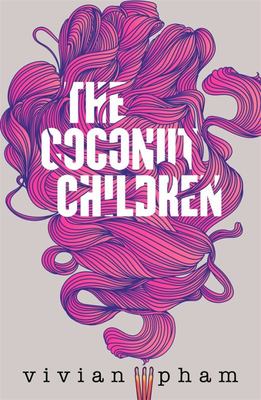
  • Vivian Pham’s The coconut children (winner, $8,000)
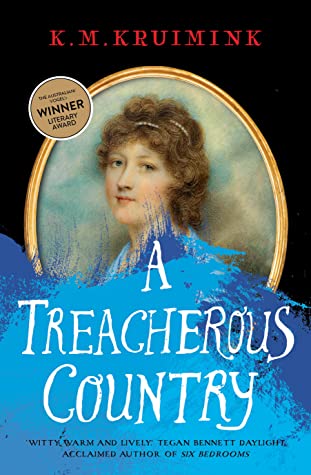
  • K.M. (Kate) Kruimink’s A treacherous country (runner-up, $1,000) (see Lisa’s review)
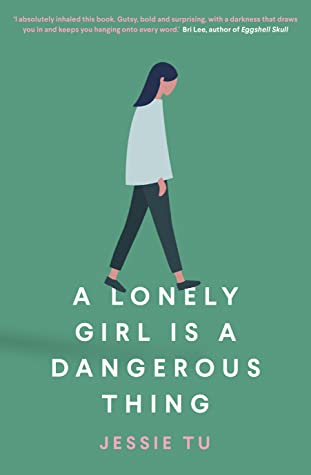
  • Jessie Tu’s A lonely girl in a dangerous thing (runner-up, $1,000) (see Kim’s review)

The judging panel always includes the papers’ literary editor, so Jason Steger, plus a previous winner, Pip Smith, and another novelist, Peggy Frew. The number of awards made varies, but this year, as last, there were three.

The winners, briefly

Vivian Pham

According to Steger, Pham was a whopping 19 years old when her novel was published last year. Not what you’d call a “late bloomer” then! Her novel is set in the Vietnamese Australian community in Sydney’s Cabramatta. Steger says that while redrafting the novel, Pham came across the idea of “second-generation trauma inherited via the stories and behaviour of the previous generation”. This idea apparently runs through the novel.

Pham says that “You want to know the people that are closest to you. You know something epic has happened to them, to make them the people that they are, and you want to know why that happened.” She agrees with Steger that that novel is “a love letter to Cabramatta”, because “she felt more connection to Vietnam there than in Vietnam, when she spends all her time at her grandmother’s home”.

One of her significant influences is James Baldwin, who apparently “got her into reading seriously and realising that it could change your world”. Her second favourite writer is P.G. Wodehouse!

The judges said that “Pham’s non-judgmental portraits of parents living with trauma, and children struggling to comprehend their parents’ choices, was nuanced and wise”.

K.M. Kruimink

Lisa, as noted above, has reviewed A treacherous country, and described it as having “a playful narrative”. She tells us, as does Steger, that this novel also won the Vogel (unpublished manuscript) Award. It has also been longlisted for the Walter Scott Prize for historical fiction.

Unlike Pham’s more contemporary work, this novel is historical fiction set in colonial Tasmania. It’s about a young man coming to Tasmania to bring a message to a young convict woman. Originally, Kruimink was writing about the woman. However, she was a new mother at the time that she decided to pick up the work again, and

Because I was in a vulnerable place, it was too emotional for me. It was a sad story and I felt like I couldn’t write about this sad young woman and I decided to write about a silly young man instead.

She thinks she will go back to the young woman’s story, though her next novel is about something very different.

She named Hilary Mantel and Kazuo Ishiguro as writers she likes to read.

The judges loved the voice, saying that she delivered “a stand-out voice – eccentric, funny and deceptively endearing. While the research behind the writing is evident, it is handled with a lightness of touch, and the language itself is truly impressive, ornate, yet controlled and deft”. 

Jessie Tu

Tu’s A lonely girl is a dangerous thing has been making a bit of a splash, having been shortlisted for Readings’ New Australian Fiction Prize and the NSW Premier’s Literary Awards Multicultural Award, as well as longlisted for the Stella Prize. 

Kim, whose review I linked above, was mightily impressed. She thought it would be another book about a millennial, but found it was much more. “Its real strength,” she writes, “lies in its perspective of an Asian-Australian trying to succeed in a closeted world dominated by the white and the privileged”.

Taiwanese-born Tu was apparently clear from the start what she was writing about, and also believes, says Steger, that “what drives a good novel … is the kind of questions it considers”. For her, loneliness is a big issue – as the title suggests. She says that:

I’ve been trying to think constantly where to seek solace for my feeling that I don’t belong in this world and what I found really comforting was reading stories about women in the past, especially female artists or female writers, and realising that they have also gone through sad, lonely lives. For me to know that helps me understand that this feeling that I have is not at all special.

The judges said that “Tu, with unswerving clarity, draws out many unsettling and compelling questions regarding race, talent, performance, perfectionism, agency and worth”. They called it “provocative” and “uncompromising”, reflecting Kim’s assessment, in fact!

Have you read any of these books?

Monday musings on Australian literature: Kate Jennings (1948-2021)

Kate Jennings, Moral Hazard

Strangely, Australian writer and intellectual, Kate Jennings, has been in the air lately, even though she has lived in New York since 1979. She’s been in blogosphere because blogger Kim Forrester reviewed her novella, Moral hazard, just last month, but she’s been more broadly visible too because she features in the documentary Brazen hussies which screened in cinemas last year, and was broadcast on ABC-TV in a shortened version, this year. I saw both versions, and was inspired by Jennings’ bravery and passion in speaking for women at a 1970 Vietnam Moratorium march. This speech marks, many believe, the beginning of the second wave of feminism in Australia.

Kate Jennings, then, was quite a woman, and it’s incredibly sad that she died this weekend at the too-young age of 72. Yes, Virginia, 72 is too young.

“one of our essential writers” (David Malouf)

I’m impressed but not surprised that Australian novelist, David Malouf, described her as “one of our essential writers” in The Sydney Morning Herald’s announcement of her death. What does “essential” mean? I don’t know what Malouf means by this, but I agree with him in terms of my own meaning of the word. For me, essential, in this context, encompasses two things. First, it’s that the writer writes about important (though I don’t like this word) or significant or, perhaps even better, critical subjects. An essential writer will address the issues that are central to our being – personal, political and/or societal. But, I sense that Malouf means a little more. Certainly I do, and it’s that an essential writer doesn’t just write about, let us say, the “essential” things, but they confront us with them. They go where others don’t go – in subject matter, or form, or tone, or language, or … I’m sure you know what I mean.

Malouf thinks Jennings filled this bill, and so too, I think, does Maria Tumarkin who appeared in the first Sydney Writers Festival session I attended this weekend. A quick Google search retrieved the 2016 University of Melbourne Handbook (archived version). It includes the description of a course on The Art and Practice of the Personal Essay taught by Maria Tumarkin and Kevin Brophy. The description says “Some essayists we might read: Montaigne, Swift, A.D. Hope, Annie Dillard, Kate Jennings, Joan Didion, David Foster Wallace”. This is quite a list, and it tells us something about Jennings’ stature, and how Tumarkin and Brophy view her.

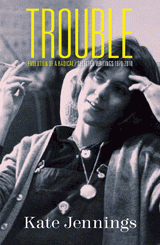
Kate Jennings, Trouble, bookcover

So, in what way was Jennings essential? I’ll start with the above-mentioned speech that brought her to the fore when she was just 22. The women in the Vietnam Moratorium movement had fought (hard) to have one of their number included among the many male speakers scheduled to speak at the march. Here is how Jennings, herself, introduces it in her “fragmented autobiography”, Trouble: Evolution of a radical: Selected writings (1970-2010) (my review).

We persisted, and eventually the organisers gave in. As the most experienced writer in our group, I was given the task of composing the speech, which we decided would be deliberately incendiary. But what I wrote was so incendiary everyone balked at giving it, me included. In the end, with a big shove and no experience of speaking in public, much less in front of a thousand or more, I walked the plank.

The reaction to her speech, she says, was immediate – much of it negative, particularly from the men in the movement – but, she writes

the confrontational language of the speech worked: we could no longer be ignored. Right tactic, right time.

It was essential, in other words. (You can read it here.)

And Jennings continued in that vein, being true and uncompromising to what she believed in. Take, for example, her introduction to the poetry anthology she edited, Mother I’m rooted. She was unapologetic about what drove her choices. She states the problem, then says what she did:

I don’t know any longer what is ‘good’ and what is ‘bad’. I have been trained to know, in a patriarchal university, on a diet of male writers. We have to go back to bedrock, and explore thoroughly that which is female and that which is male, and then perhaps we can approach androgyny, and humanity.

I have chosen the poems mainly on the grounds of women writing directly, and honestly.

(Included in Trouble)

Jane Bullen, reviewing the book in the ANU’s student newspaper Woroni (23 July 1975), picked up this point:

Perhaps it is this that is most striking about the book; the form of the poem is subordinated to the intense desire to say something, to mean something. Sometimes what is said contorts the poem, and the words are clumsy in their attempt to say it. The honesty, the urgent saying of what is meant is expressed (in the flawed structure, the not quite balanced nature of many of these poems. The effect of this is a refusal to compromise, an insistence on meaning in the face of form and a book well worth the time it takes to read it. 

My point is that Jennings saw that this poetry was different, that it may not have met the “received” style, but that it had something to say and she was darned well going to let them say it.

Her own writing broke boundaries. Her novel Snake (1996) takes the autobiographical novel to a different place with its spare style, episodic form, and mixed voice, and her Miles Franklin Award-winning novel Moral hazard (2002) is a work of that rare genre, business fiction. She wrote an essay, “Gutless fiction”, for the Australian Financial Review (26 August 2005), on the necessity for

unflinching works of fiction that engage our public and private selves, our intellect and emotions. More able to inhabit the skins of its characters, fiction can capture the ambiguity and caprice inherent in human behaviour and then give it context and causality in ways that nonfiction rarely can.

(Included in Trouble)

Erik Jensen’s book, On Kate Jennings, in the Writers on writers series, provides tender but honest insight into Jennings. Her life had many troubles. It’s worth reading, but I’m going to conclude by sharing something he tells us Jennings wrote for the back cover of her first poetry collection:

‘Kate Jennings is a feminist. She believes in what Jane Austen recommended at fifteen: “Run mad as often as you chuse; but do not faint.”’

(Jane Austen, Love and freindship)

An essential writer recognising another! Vale Kate Jennings. You gave us much to think about. A true legacy.

Lisa wrote a Vale Kate Jennings post on the weekend, and I have reviewed three of her books.

Monday musings on Australian literature: Writing about the war between the wars (2)

Last week’s post focused on attitudes to writing about the war during the interwar period, particularly in relation to the realism of books like Erich Maria Remarque’s All quiet on the western front. This post continues the discussion, but will share some specific war writing from the article that inspired this series.

But first, a reminder of the main concern expressed about the war novels coming out in the late 1920s to early 1930s. L.S. Avery, former Secretary of State for the Dominions, explains it in his statement that the

fashion of “stench warfare” writing would pass, and the war would take its place as the marvellous effort and an amazing romance in which no part was more amazing that that played by the Australians.

He was proposing the toast of “The Commonwealth of Australia” at a dinner at the Royal Society of St. George, London, in May 1930. I can’t resist digressing to a description of the dinner, which:

was reminiscent of old times. The roast beef of Old England was borne around the room, preceded by the crimson cross of St George, and heralded by the roll of drums and the playing of fifes. Only Empire food, including Australian apples, was served.

No wonder they looked to war being presented as a “marvellous effort” and “an amazing romance”, eh?

Recommended war writing

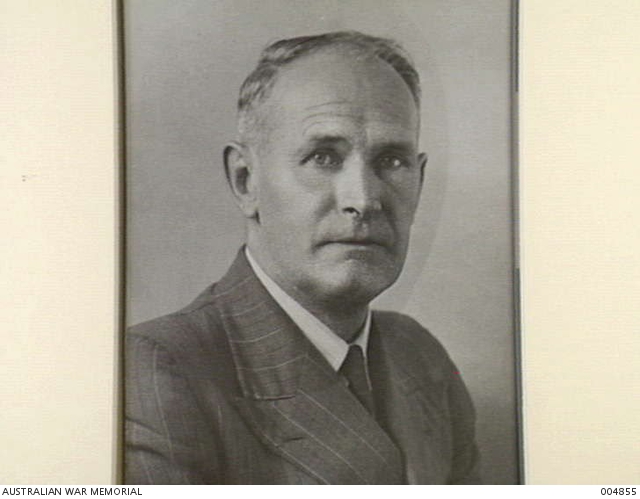
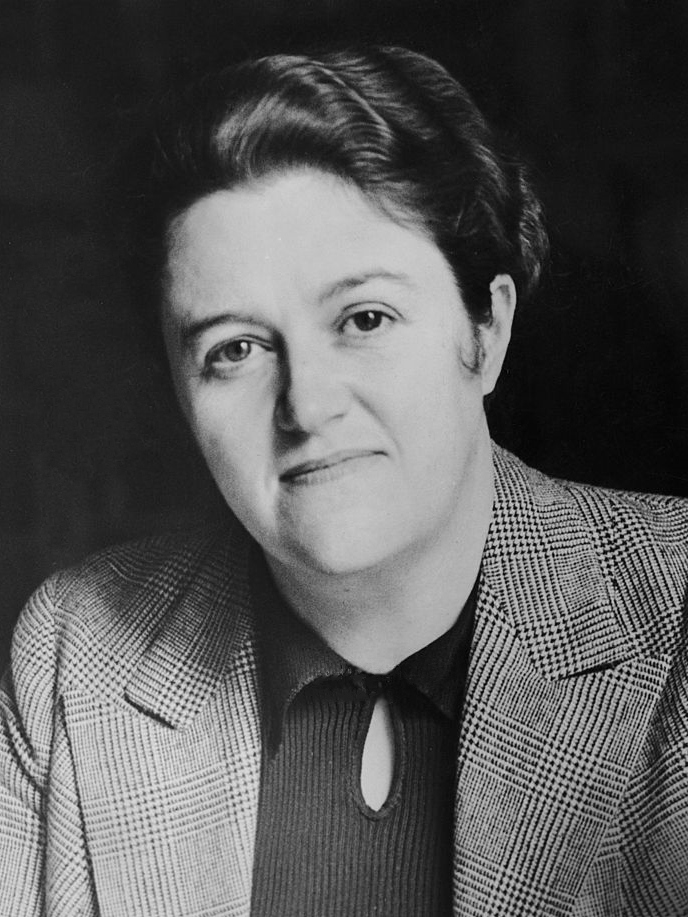
Cyril Longmore, c. 1941. Public Domain; Courtesy Australian War Memorial

Now to Non-com’s article on the “AIF in Literature” in Perth’s The Western Mail (30 April 1936).

Who is this Non-com, I wondered? Some googling took me to the State Library of Western Australia photographic database where I discovered that he was Cyril Longmore (1897-1964), of The Western Mail, which, the photo notes said, preferred to use pseudonyms. Of course, I wanted to find out a bit about Cyril Longmore. More googling found the portrait I’ve used here on the Australian War Memorial (AWM) photographic database. Its notes said he’d been “appointed Military Commentator of the Department of Information” in 1941. At this point, I returned to Trove and found an article in Launceston’s Examiner (21 January 1941) about this appointment. He was to replace one Major Jackson who was returning to military service. The Examiner says that Longmore was recommended by C. E. W. Bean (the respected war historian), and that he had served in “the last war with the 44th Battalion and attained the rank of captain”. Post-war, it says, he “has been actively connected with Australian journalism and has written extensively on military subjects, of which he is a close student”. 

So, not only did I find out who Non-com was, but I also ascertained his credentials for writing the article he did. (Oh, and the AWM also told me that he was The Western Mail‘s editor!)

His article is based on a talk he did for an “Australian Authors” session on the “National station” (by which I presume he means the ABC). Despite his credentials, he commenced by saying that

I speak on the A.I.F. in literature with diffidence, being no authority on the subject, although I have read most of the Australian war books, and my work has led me to make some study of them during the last few years. In this talk I am not touching Dr. Bean’s great historical work on the A.I.F., nor am I mentioning several Australian war novels. I have taken those books produced during the last five years which purport to be the experiences of those who wrote them—men (and a woman) who served in Australian units.

In other words, his focus is not novels but memoirs and the like, but I think they are relevant to our discussion. I’m glad he includes women (albeit “a woman”, parenthetically!) It’s now 1936, but he too references All quiet on the western front, negatively, saying it “seemed to stimulate the imaginations of authors all over the world, for each seemed to try to outwrite the others in his trail of ghastliness”.

Anyhow, here’s his list, in his order:

  • Red dust (1931), by JL Gray, writing as Donald Black: Subtitled “A classic account of Australian Light Horsemen in Palestine during the First World War”, this was apparently written during the war as a diary, and, says Longmore, “is a remarkable description and analysis of the life and deeds of the Australian trooper”.
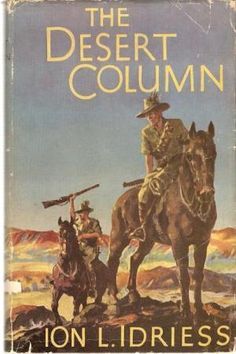
  • The desert column (1932), by Ion L. Idriess: Also a story in diary form of the Lighthorsemen, but at Gallipoli, Sinai and Palestine. Longmore says that “some of his pen-pictures are epics of war realism”. (As realistic as Remarque’s, I wonder?)
  • Hell’s bells and mademoiselles (1932), by Joe Maxwell, VC, who served with the 18th Battalion. Longmore says it is “an enjoyable volume, but there is some fiction woven into its truth, especially about the mademoiselles. The best feature in it is its faithful reproduction of types” that diggers would recognise.
  • Jacka’s mob (1933), by E. J. Rule: Longmore describes it as “a true and vivid picture of experiences with the 14th Battalion, A.I.F., by a man who was intimately associated with everyone and everything of which he wrote. It is no glowing picture of faultless knighthood.” He continues that “Knighthood and chivalry were in every unit in the A.I.F., in all the fighting armies, but even knighthood experienced the chill pangs of “wind-up” at times, and it is in the correct proportions in which the author has presented these and many other of the minor personal details that somehow escape the novelist [my emph!] that makes Jacka’s mob so valuable.”
  • The gallant company (1933), by H.R. Williams: Subtitled “An Australian soldier’s story of 1915-18”, it is praised by Longmore as the “best of all the Australian war books … It is not highbrow literature and there is no forced striving for effect. But it is a faithful, vivid narrative of an Australian unit and of its individuals, with just sufficient historical background to give them their proper atmosphere. A readable book that does justice to the great achievements of the digger and puts “war, wine and women” in proper perspective”.
  • Iron in the fire (1934), by Edgar Morrow: About the author’s experience of the 28th Battalion, Longmore praises it for being “the truest and most comprehensive war book of the lot” in terms of capturing the “inner feelings — sinking in the pit of the stomach before zero; sorrow at the death of a comrade; joy on receipt of a letter, or a parcel, or leave, which we all tried to hide under a mask of unconcern.” It’s “critical”, he says, and “all may not agree with the criticisms of authority, but it is a fine book”.
  • The grey battalion (1933), by Sister May Tilton: The one book by a woman, “the only one of its kind”, this “gives its readers an idea of the great courage and endurance that were needed by these women in their unenviable task of nursing the sick and maimed victims of war back to health and strength”. Interestingly, he notes that “what they suffered themselves no one will ever know”!
  • The fighting cameliers (1934), by Frank Reid. By a member of the A.I.F’s Camel Corps, but Longmore sees it as “the one disappointing Australian war book” because “colour and realism are lacking”.
  • Crosses of sacrifice (1932), by J. C. Waters. Differs from the others because the author is a journalist who was too young to go to war but had “toured the battlefields and war cemeteries of the world”. Longmore says he “brings a reverent and understanding mind to … his subject”. He writes more on this book than on any of the others!

Do you read war histories, diaries or memoirs?

Monday musings on Australian literature: Writing about the war between the wars

By accident, really, I came across an article from the 1930s in Trove about war novels. However, with Anzac Day coming up here in Australia next weekend, it seemed apposite to follow up. So, I did – and was somewhat surprised by what I found.

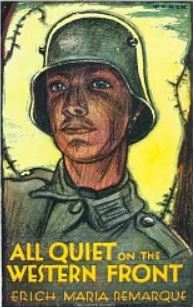
Not surprisingly, World War 1 was still fresh in people’s minds in the 1930s, and there were many opinions on how war should be written about. Erich Maria Remarque’s now classic All quiet on the Western Front was particularly controversial at the time and discussions about it provide some insight into those opinions. First published in 1928, it appeared in English in 1929 (translated, in fact, by an Australian, Arthur Wesley Wheen, himself a World War 1 soldier.)

“the most graphic picture I have had of the war” (Woman reader)

All quiet on the Western Front was a big hit, particularly with women readers. An article in the Port Adelaide News (14 March 1930) reports that “the popularity of the war novel is still maintained in England, where every girl typist seems to have read All quiet“. Apparently one Council Library system had bought a record number of 126 copies of the book, but they had 553 people on their waiting list. Unfortunately, the article said, “borrowers, strong in that possession which is nine ‘points of the law are lending All quiet to relatives and friends before returning it”. (Love it!)

Here in Australia All quiet was also popular with women, as The Herald (14 February 1930) reported in its article, “VC attacks war novels”. Captain W.D. Joynt V.C., speaking at a Legacy Club luncheon, denounced “recent war books” including All quiet. At the luncheon, Captain Peters, of booksellers, Robertson and Mullen’s, said that women “had been the largest buyers and readers of the book”. It had “achieved such success that it was affecting the sale of wholesome [my emph] English novels”. He continued that the boom of interest in war novels “had brought out some good war books, but not many, and unless the protest was made the women and young people would get a wrong impression of the soldiers”. A motion had been put “to deplore” such books, but it failed, not because attendees disagreed but because they feared the motion would increase interest in the book!

So, what was the problem? Wikipedia summarises the controversies in its article, but I’ll share some of what I found in Australian newspapers. The main concern seemed to be that its presentation of war denigrated the heroism of the soldiers. It had too much “muck”. One speaker at the luncheon said that “the book showed contempt for the men who served at the war, and brought grief to dependents of men who fell at the war” while another said that the phrase “give ’em muck” was applicable to the book. He said he had “read one or two chapters and refused to go further. It is full of Continental grossness. The coarse language is superfluous. This type of book should be banned.”

Interesting that women were reading this “muck”.

The writer in Freeman’s Journal (10 April 1930) comments on the new fashion for war novels, saying that for some time people had had their fill of war news but

Now it has come into its own again, and, perhaps under the influence of the peace movement, it concentrates on the most repulsive aspect of war, sometimes deliberately trucking to the appetite of so many readers for word-pictures of the evil aspects’ of human life. Many of these novels are as wide of the truth and as repulsive as Zola’s La Debacle, which professed to give a realist picture of the war of 1870, but was a horrible libel on the people of France, representing her young soldiers as mostly imbecile fools or blackguards. 

He goes on to describe another novel – not Remarque’s – that has, as its central figure, an utterly incapable Anglican chaplain. He says:

It was by self-sacrifice and earnest efforts to be helpful that they [Anglican and Non-conformist chaplains] won the respect of the men. It is an insult to their memory to write of them as this novelist does, as if they were either hopeless failures or self-seeking idlers.

Similarly, the Singleton Argus (28 April 1930) reports on one Rev. C. J. Macaulay, who was the principal speaker at the West Maitland Anzac Day service. Macauley made “a scathing attack … on salacious war novels”. He doesn’t name any, but said they “paint vile pictures, not so much of war, as of the men themselves”.

Interesting that women were apparently reading these “vile pictures”.

Were women seeing something different? Were women, like Lady Kitty’s woman reader, appreciative of “the grim reality” that its opponents wanted to hide? Lady Kitty writes that “it is remarkable what a vogue war novels are having now, especially among women. The type of immediate postwar sentimental romance has given way to simple narratives which reveal the common soldier’s point of view.”

Writing about war

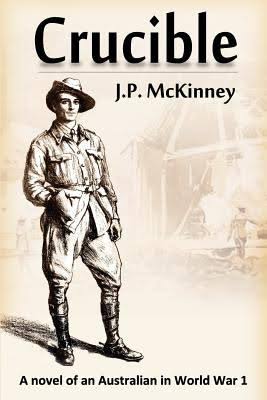
JP McKinney, Crucible

Meanwhile, in 1934, Australia’s RSL instituted a war novel competition. It was “open to all men and women who served abroad during the war as members of the Australian army, navy or nursing services”. The novel had to “depict the life of an Australian soldier during the war, and his reactions to the various conditions and environment through which he passed. The sequence of the story and descriptive matter must be historically and geographically correct”. It was won by JP McKinney (who, alert readers among you may know, was Judith Wright’s husband, though much later.) His novel was published as The crucible, in 1935.

During my research, I came across a letter to the editor written by McKinney concerning his novel, and writing about war. He was responding to reviewers who seemed to criticise his novel for being “largely recollections cast in the form of fiction” or “more or less autobiographical”. (Helen Garner knows the feeling!) McKinney wanted to correct these misconceptions. He writes:

A writer of fiction is permitted, by the canons of his art, to draw for his material upon both his own and other peoples’ experience and upon his imagination, the only demand made of him being, if his work is to be judged as literature, that he keep within the bounds of probability. His accepted function is to illuminate life— or at least that aspect of it which he treats —from all angles. The greater the fidelity to life and actuality the greater his achievement. 

But, he says, people seem to see war fiction differently:

In the case of the war novelist, however, it appears to have become unconsciously assumed that he shall write only of what he knows from his own actual, personal experience; and he is either denied, or assumed not to have availed himself of, the privilege of his fellow craftsmen of ranging into the realm of what may be called created fact. 

So, he writes, “I granted myself the fiction writer’s full privilege, the only restriction I placed upon myself being that I make no sacrifice of truth to dramatic effect”. The characters are all created he said; they’re “types” not “persons”.

J.P. McKinney did go to war, but, some readers here may be interested to hear the words of T.C. Squire, editor of London Mercury (reported in Tasmania’s Advocate, 10 January 1930). He was critical of the current crop of war novels, like Remarque’s, suggesting that they came out of “hysteria” rather than from thinking, compassionate, “religious” men. He concluded his comments with

And it may be that the novel of this war (there is precedent for it) may come from some Tolstoi or Hardy of the future, who never saw a bullet fired and never looked in the face of the unnecessary dead.

And here, I’ll conclude with Henry Savage from The Port Adelaide Gazette (10 January 1930). He was, I think, a local businessman and religious official. He wrote about war novels:

There is a great difference between the horrors of war and reading of its horrors; between reality, that is to say, and the interpretation of reality in terms of art. Will the story of Eden ever stop simple Adam from being lured to his hurt by curious Eve? Will Hamlet make a man of action out of a dreamer and give him faith and resoluteness? Can it be done?

Ignoring Adam-and-Eve, I pass his question on to you!

Monday musings on Australian literature: Forgotten writers 1, Helen Simpson

Do you often wonder how many of the writers we love now will still be read a few decades on? How good are we at identifying those who will continue to be read? So-so, I think you’ll agree if you’ve noticed the many unfamiliar, but well-regarded-at-the time, names amongst the authors mentioned in my various historical posts. It is this that has inspired me to start a new, occasional, Monday Musings sub-series on forgotten Australian writers.

Helen de Guerry Simpson, ca 1935, photographer unknown. (Public Domain, via Wikipedia)

First up, I’ve chosen an interesting one because of her complex relationship with Australia. She’s Helen Simpson, or, more fully, Helen de Guerry Simpson, who was born in Sydney, Australia, in 1897 and died in Worcestershire, England, in 1940.

I’ll start with a brief bio. Simpson was born in Australia and lived here until 1914, when, at 16 years old, she went to England to join her mother who had separated from Simpson’s father several years previously. After that, Simpson spent very little time in Australia, as far as I can tell from the Australian Dictionary of Biography. She returned in 1921 for her brother’s wedding, but was back in England by February 1924. She was in Australia again briefly in 1927, but was back in England that year, as she married there in 1927. Her husband was Australian-born Denis Browne, interesting to us because his uncle was Thomas Alexander Browne (aka Rolf Boldrewood). However, he was significant in his own right as the Father of Pediatric Surgery. Simpson came back to Australia in 1937, to give a series of lectures for the ABC, but was gone again by 1938. Sadly, she died of cancer in 1940.

So, she was Australian, even though Arnold Haskell wrote in 1944 that Katharine Susannah Prichard, Helen Simpson and Henry Handel Richardson “are so well known in England that they are accepted as English writers”! Colin Roderick included her in his 1947 book Twenty Australian novelists, and Zora Cross includes Simpson in her list of writers who started here but then moved abroad.

Starting here is a bit of a moot point. The ADB says that she published several short plays and founded the Oxford Women’s Dramatic Society before her 1921 Australian visit. However, in 1921, Angus and Robertson did publish her Philosophies in little, “a collection of her own verse with her translations from French, Italian and Spanish”. In 1922, ADB also says, she entered a play about Benvenuto Cellini, A man of his time, in the Daily Telegraph literary competition. It was staged the next year by Australian theatrical producer Gregan McMahon. ADB says he only produced four Australian plays between 1920 and 1927, so that’s surely a feather in her cap.

Novels

Simpson wrote 13 novels between 1925 (Acquittal) and 1940 (Maid no more). A few were collaborative works, including a couple of detective novels written with Clémence Dane. She also wrote verse, plays, short stories and non-fiction works.

The Oxford companion to Australian literature (2nd ed.) devotes almost a full column to her. It says that two of her novels had Australian content – Boomerang (1932) and Under Capricorn (1937) – and that her “trio of fantastic novellas”, The woman on the beast (1933), includes one set in Australia in 1999! (Links are to Project Gutenberg Australia.) Two of her novels, one being Under Capricorn, were filmed by Alfred Hitchcock.

So, how good was her writing? Let’s start with Miles Franklin who mentions her in her diaries. She writes in August 1936:

Helen Simpson: one of the giants. Perhaps she would have wiped Brent [of Bin Bin, or Miles herself] out of his field had she not relinquished it. The lively vitality and inherent understanding of the Australian scene in Boomerang show what we lost, what England has gained. Again, in the third division of The woman on the beast in a sketchy, impressionistic effort, she indicates what she could have done to take Australia by the back of the collar and shake her to a sense of her asininity, her pathetic enslavement to an old sectarian controversy–a worse importation than the foxes and other noxious weeds. But H.S. left her country for her own great literary success.

Australian writer Coralie Clarke Rees, in an extensive article in The Sydney Morning Herald (1 June 1937), agrees, calling this “third division”

an imaginative “tour de force,” showing Australia, as the last stronghold of the old order of religion and politics, being invaded by a woman evangelist of the new totalitarian order, whose character seems an ingenious compound of that of Aimee Semple MacPherson and Mary Baker Eddy.

However, Miles Franklin later (around March 1940) modified her view of Boomerang, noting its “melodrama and disjointedness”, and Katharine Susannah Prichard, writing to Miles Franklin on 1 July 1932, says that

HM Green [see my recent Monday Musings post], of Sydney, writing to me the other day, said he liked it [Back to Bool-Bool] much better than Boomerang

Now, here I’m going to share the opening of Boomerang, which won the 1932 James Tait Black Memorial Prize:

Life can afford extravagance, books cannot; for this reason nobody will dream of believing in my two grandfathers. They are too true to be good–good fiction, at any rate; if I try to give some kind of picture of them, it is because they frame between them a vision of a golden age, which could only have existed in brand-new countries, among brand-new circumstances and laws. It was not a golden age for everybody, wives or servants for instance, but for these two it was; they were, to use a word which is almost dead, characters.

I am sorry to think what would happen to these two old gentlemen if they had the misfortune to live now; it would be something legal, that is certain, falling heavily to crush their magnificent egotism and eccentricity. Their wives, who in the ‘seventies put up with them with the uncomprehending patience accorded by Insurance Companies to Acts of God, would nowadays divorce them. Servants would bring, and win, actions against them for assault. As for their families, these would scatter immediately after the first row or two, and go forth to earn their livings with all the horrid freedom that the post-war period accords …

I love this cheeky tone, and her reference here (and in the Foreword) to the fact that fiction cannot be as “extravagant” as life! The Oxford companion says that Boomerang and Under Capricorn “have involved, highly coloured plots, lightly sketched but credible characters, and a lively, humorous and sophisticated narrative style”. This, in fact, summarises what I found in Trove.

So, for example, The Sydney Morning Herald reviewing (16 February 1932) Boomerang describes its rather wild episodic plot and thinks its characters are not particularly well-drawn, but argues that:

It can safely be said that no Australian novelist for many years has provided such an exciting tale, or handled separate scenes and episodes with such liveliness and wit.

I particularly enjoyed respected academic of the time T. Inglis Moore who wrote that:

it is in the romances, Boomerang and The woman on the beast in particular, that Helen Simpson has found her metier. In them she stands out amongst Australian writers as a witty romantic, a teller of vivid tales spiced with satire, tinged with wit.

His article (linked on his name above) in the Sydney Morning Herald (7 August 1937) offers a thoughtful, even-handed analysis of her, and is well worth reading. He recognises that she can be “romantically theatrical, artificial, escapist”, but, assessing her place in Australian literature, he says:

Amongst the contemporary novel-writers one stands supreme. No other Australian comes within cooee of Henry Handel Richardson. Then comes, well, Katharine Prichard, shall we say, along with Brent of Bin Bin? And here, somewhere, must come Helen Simpson.

He concludes with:

Taking her all in all, she is perhaps the most “intelligent” of contemporary Australian novelists in the sophisticated sense, and, along with Christina Stead, the wittiest.

This is strong praise. So what happened? Where did she go? Was her style not strong enough overall to overcome her plots and characters? Or, is it just a matter of fashion? Whatever, I have greatly enjoyed reading about this woman, and may very well share a bit more about her in the future because she was quite a character.

Printed sources

Brunton, Paul (ed.) The diaries of Miles Franklin (2004)

Ferrier, Carole (ed.) As good as a yarn with you (1992)

The Oxford companion to Australian literature, 2nd ed. (1994)

Monday musings on Australian literature: 1936 in fiction

As some of you will know Karen (Kaggsy’s Bookish Rambling) and Simon (Stuck in a Book) have been running for some time “reading weeks, which involves their choosing, somewhat randomly, a year from which “everyone reads, enjoys, posts and shares wonderful books and discoveries from the year in question”. The next one is 1936, and happens from 12-18 April.

Despite my best intentions, I’ve not yet managed to take part, though I know several of my blogging friends have. I might this time – we’ll see – but, regardless, I’ve decided to focus on that year in my Monday Musings, a week in advance, to provide some inspiration perhaps?

1936 was a pretty tumultuous time in Europe with, for example, the Spanish Civil War, the 1936 Summer Olympics and Hitler’s aggressive display, not to mention the Nazis amping up their power and control. Things were generally quieter in Australia, with Joseph Lyons our Prime Minister.

Dymphna Cusack, Jungfrau

However, it was a busy time in literature, with several writers we know publishing novels (and other works but my focus here is novels). Here is a selection – links on names go to my posts on that writer:

There weren’t so many literary prizes then, as now, but Miles Franklin’s All that swagger won the 1936 SH Prior Memorial Prize for Australian Literature, and Eleanor Dark’s Return to Coolami won the ALS Gold Medal.

Several authors were born this year, including Marian Eldridge (one of the Canberra Seven), Robin Klein, Kate Llewellyn and Alex Miller.

The state of the art

Of course, I checked Trove to see what newspapers of the time were saying about Australian literature, and it’s pretty much as I’ve written in my other Monday Musings posts on the era – the ongoing concern about lack of recognition of Australian writing, of Australian writers having to go overseas to make a living, of most publishing of Australian authors happening overseas.

Perth’s Western Mail, announcing the publication of the Australian writers annual, starts with:

Too long have the Australian public been kept in ignorance of the wealth of literary work that is and has been done by Australian writers, the ranks of whom are increasing every year. Perhaps the fault lies with the reader, perhaps the reason can be found in a lack of publicity. 

Rockhampton’s Morning Bulletin focuses on the the quality of what is being produced, arguing that Australian literature, while naturally looking to England, “is gradually tending towards a measure of independence”. Indeed, citing Henry Lawson and CJ Dennis (admitting “he may not touch greatness”), this writer says that “brief as is our history, it has developed its own romanticism”.

The Hebrew Standard of Australasia also argues that things are improving, but names women writers. It says:

It is not so many years ago since the prefix ‘Australian’ when applied to anything literary, artistic, or cultural, provoked the ire of editors and the sneers at would-be highbrows. Yet, even then, much, had been done by writers here in our midst to put Australia into a very appreciable place on the literary map. 

It then names Ethel Turner (whose writing for children avoided “the stilted and moral” stories common at the time). It continues to say that, what Turner did for children’s literature, others are “endeavouring to do for literature in general”. Unfortunately, though, confirming my opening paragraph, it says that “many of our best have had to go abroad to achieve fame, such as Henry Handel Richardson and Helen Simpson”. However, confirming Western Mail’s supposition, it suggests that “we still have many people with us whose work, given proper publicity [my stress], would make the term ‘Australian’ respected in any part of the world”. One of these is Eleanor Dark.

Apparently, someone was listening to all these woes, and it was a politician! Many newspapers around the country wrote about the Budget statement made in Parliament by then ex-PM, James Scullin. Melbourne’s The Herald starts its report with:

It is doubtful whether “the life austere that waits upon the man of letters here” can be given more than a suggestion of comfort by the helping hand of Government. Yet the generous speech for which Mr Scullin caught the Federal Speaker’s eye yesterday will be approved and possibly have influence. 

It describes Scullin as a “book-lover … who earnestly desires the advancement of his country in things of the mind and spirit.” Scullin identified the minimal support the government had given to literature, and then, as Melbourne’s The Age and Hobart’s Mercury outline, he named various ways in which the government could help, such as:

  • increased payments to struggling authors (rather than the minimal pension currently offered);
  • the establishment of a literary prize for the best Australian works;
  • supporting/undertaking/providing grants for the publication of nationally significant books now out of print, of works of national value, and of new works struggling to find a publisher.

Interestingly, the Mercury reports that he suggested that “wealthy people in Australia might follow if a lead were given by the national Parliament”, while The Age shared that Scullin believed that with more time for leisure available “in the machine age”,

Literature offered the best scope to utilise this added leisure with profit to Australian culture. 

The Sydney Morning Herald’s report is also worth reading.

I’m not sure that much happened immediately, but Wikipedia (linked on his name above) says that, with the Fellowship of Australian Writers, Scullin was responsible for a dramatic boost to the Commonwealth Literary Fund‘s budget in 1939. A start!

And, of course, it was another Labor politician, Kevin Rudd, who created the Prime Minister’s Literary Awards, in 2007.

Additional sources:

Meanwhile, do you plan to take part in the 1936 Club?

Monday musings on Australian literature: Expressing the zeitgeist

At the end of last week’s Monday Musings, I asked whether “saying something” was important to you, meaning, really, is it a top criterion when you choose what to read or when you talk about what you’ve read? For me, it is, as you can probably tell from the sorts of reviews I write. So, I’ve decided to explore it a little here, focussing on fiction (though “saying something” is, for me, important in literature, and the arts, more broadly.)

The question is, of course, what is this “something”? Now, what I write next is going to be pretty much off the top of my head, so apologies if it’s too obvious! Thinking about it, I feel I can break it down into three, sometimes overlapping, “somethings”.

There’s human nature, which, like Wikipedia, I’d define as the way humans think, feel and act. This is where Jane Austen, for example, comes in. She skewers our pretensions and failings – in all their forms – and shows our finer qualities, with such precision that she never goes out of date (even if some readers find her language hard-going).

Then there’s, for want of a better word, the human condition, which is hard to define, but Wikipedia helps by suggesting that it encompasses “all of the characteristics and key events that compose the essentials of human existence, including birth, growth, emotion, aspiration, conflict, and mortality”. This means the things that make up all our lives, no matter who we are or where we live – our lives, our nature, our society. Wikipedia goes on to say that ‘as a literary term, “the human condition” is typically used in the context of ambiguous subjects, such as the meaning of life or moral concerns’. It’s probably fair to say that any book that says something falls into this category!

These two “somethings” are the ones most likely to produce the classics because, by definition, their concerns are universal, transcending place and time. To become classics books need more, of course, including good or innovative writing, great characters, and, it must be said, luck.

Anyhow, finally, there’s the zeitgeist, which originally meant “the spirit of the age”, but which many of us use to mean the specific issues concerning the times we are currently living in (which can be a bit narrower that an “age”, however you define that).

These books, I’d say, are less likely to last, unless they also encompass those more universal concerns.

Today’s “zeitgeist”

Right now, the zeitgeist would include climate change, sexism (in its broadest meaning, and exemplified by movements like “me too”), racism (again in its broadest sense, and exemplified by the movement for reconciliation and truth-telling here in Australia, and more generally “black lives matter”), and minority (like refugee and migrant, LGBTQIA+, disability, aged) rights overall. Related to these, but broader, are globalisation, the failures of democracy and capitalism, and increasing inequality. Most of these issues aren’t new of course, but they have a certain flavour and power right now.

Are Australian novels covering these? And, if so, how? My feeling is that contemporary, historical and dystopian fiction would be the main areas to check, but, in the interests of not writing too long an essay, I’ve decided to look at the last five years of some of our major literary awards. Five years does not a “zeitgeist” make, really, but you know what I mean!

Book cover

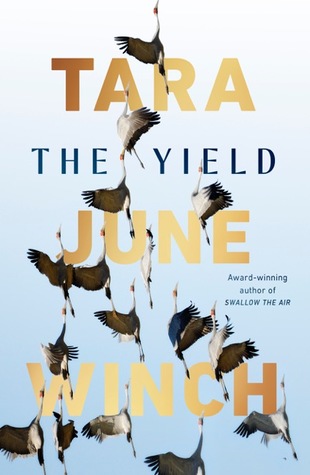
The Miles Franklin Award is a good place to start. The last two winners, Tara June Winch’s The yield (my review) and Melissa Lucashenko’s Too much lip (my review), both deal with dispossession and its all-encompassing impact on Indigenous Australians, and so are definitely “zeitgeist” novels. Michelle de Kretser’s The life to come (my review) also fits, with its broad-based satire of middle-class Australia’s pretensions and assumptions, particularly regarding multiculturalism and migrants. 2017’s winner, Josephine Wilson’s Extinctions (Lisa’s review), starts with ageing, but encompasses a wide range of “extinctions” including, I understand, the Stolen Generations and genocide, so it fits too, as does the previous year’s winner, Charlotte Wood’s The natural way of things (my review) which confronts, head on, the scapegoating of women for men’s sexual behaviour. These winners, then, pretty squarely reflect the “zeitgeist”.

Heather Rose, The museum of modern love

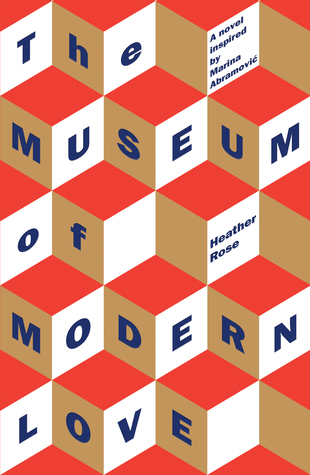
Probably the best known of the state-sponsored awards are the NSW Premier’s Literary Awards, so I’m choosing the Christina Stead Prize for Fiction to represent them! 2020 and 2019 were won by the above-mentioned Tara June Winch’s The yield and Michelle de Kretser’s The life to come. Bram Presser’s The book of dirt (Lisa’s review) won in 2018. Essentially, it’s a Holocaust story, so where does it fit? Well, I think it fits into our “zeitgeist” group because not only does it deal with persecution of minorities, or, the “othering” of people, but it also reflects, I understand, our current understanding of intergenerational trauma and its longterm impact. 2017’s winner, Heather Rose’s The museum of modern love (my review) is different, its concerns being the exploration of art’s place in “the human condition”, and how they intersect. Finally, in 2016, the winner was Melinda Bobis’ Locust girl: A lovesong (Lisa’s review). It is an allegory, and Lisa writes:

Fearful containment of The Other distorts the lives of the rulers of the Five Kingdoms, even as it protects them from having to share what is left after the environment has been ruined.

Bobis is passionately committed to saying something in all her art. Fear of “Other” and a ruined environment ensure its inclusion in our “zeitgeist” group. Like the Miles Franklin, then, most of these books reflect the “zeitgeist”.

Charlotte Wood, The natural way of things

What about the Prime Minister’s Literary Award for Fiction? It can behave a little differently from the other mainstream awards. 2020 and 2016 were won by the aforementioned Winch and Wood novels (with the latter being shared, but I’ll come to that.) 2019’s winner, however, is, perhaps an outlier. I haven’t read Gail Jones’ The death of Noah Glass (Brona’s review) but as far as I can gather it seems to be more about art and the “human condition” (loss and family relationships) than about specific issues of today. Gerald Murnane is often hard to categorise, but Lisa’s review of his 2018 winning Border districts tells me that at least some of its subject matter, clerical sexual abuse is a “zeitgeist” concern. Another hard to categorise book – and another I’ve yet to but am keen to read – is 2017’s winner, Ryan O’Neill’s satirical Their brilliant careers. Its scope is broad, including satirising writing, publishing and Australian literary culture in general, but along the way it also, apparently, addresses issues like racism and sexism. Finally, there’s Lisa Gorton’s The life of houses, 2016’s co-winner (Jonathan’s review). It too defies categorisation, at least from the reviews I’ve read, and is perhaps more universal family-and-relationships based. The PM’s Literary Awards have, I’d say, lived up to my sense of their taking more risks, being more prepared to buck, with the Fiction anyhow, the “zeitgeist”!

Finally

This survey is too brief, too simple and definitely too limited to draw any significant conclusions, but I’ve had some fun thinking about it and documenting some ideas. My tastes are catholic. I ask just two things – for the arts I “consume” to say something and for it to be done well, respectfully, engagingly, and, perhaps, provocatively.

Those of you who like your reading “to say something”, what sort/s of “somethings” do you like or, would you like?

Monday musings on Australian literature: Peril, and Asian Australian literature

A decade ago, I wrote a Monday Musings post on Asian-Australian literature, in which I named, as I often do in such posts, 5 Asian Australian writers. Given the increasing problems of discrimination faced by Asian communities in western countries alongside, perhaps paradoxically, the increased visibility of Asian Australian writing here, I thought an update might be in order.

Peril

I didn’t know when I wrote my last post about the online magazine Peril which had been in existence since 2006! If I had known, I’d have referenced it. Peril focuse, says its About page, on “issues of Asian Australian arts and culture”. It is free, and is supported by donations from its readers, plus the Australia Council for the Arts, Creative Victoria and other organisations.

Do read its About page for a full description of them, but, essentially, they want

to showcase new literature through diverse forms, including poetry, drama, translations, creative writing, memoir, essays, biographical profiles, interviews and other story structures. We are also interested in writing about the visual arts, theatre and film and other cultural arts practices. 

In the sidebar on its Home Page, you will find a list of its editions, from Edition 1 Nerds to Edition 44 Feminist Journeys.

Hoa Pham, Lady of the realm

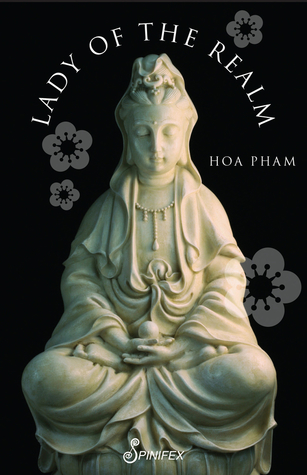
Nerds is introduced in an editorial by Peril‘s founding editor, Hoa Pham (whose Lady of the realm, I’ve reviewed). It is a small edition with pieces by Hoa Pham, S.K. Kelen and Tom Cho, among others. Hoa Pham explains the origin of the name, Peril, as coming from the “so called Yellow Peril that labelled the wave of Chinese immigration in the 19th century. We are perilious (sic) and take risks but not in the way that the Pauline Hansons of the world think!” Well said!

In its now 15 years, it has published 44 issues, which is a great achievement. Contributors have included – and here I’m naming some of the writers I know, so it’s highly selective and not, necessarily, the most prolific contributors: Ouyang Yu, Alice Pung, Benjamin Law, Jessica Tu, Merlinda Bobis, Roanna Gonslaves, Eileen Chong, Shastra Deo, Melanie Cheng.

Edition 22 particularly captured my attention. Titled Black on Rice, it’s

A collaborative co-edition with the State Library of Queensland, Indigenous publishing initiative, black&write!. Together with co-editor, Ellen van Neerven, we consider six Indigenous and six Asian Australian writers whose work we love, whose work we like to see side by side, writers whose take on the relationships (or otherwise) between migrant and Indigenous Australia we would like to hear.

The writers included several Indigenous Australian writers you’ve met on my blog, like Ellen van Neerven, Marie Munkara and Jeanine Leane, in addition to Asian Australian writers like Ouyang Yu, Eleanor Jackson and Michelle Law. Even though, historically of course, their situations are radically different, the “othering” that both groups face binds them. I am often moved on shows like The Drum by the empathy Indigenous and immigrant Australians (of colour) regularly show each other.

There is, naturally, a strong political underpinning to the writing, as edition titles make very clear, like Why are people so unkind (8), We’re queer here (28 & 29), You don’t sound Asian (32), History Repeats (36). Peril is a rich source of contemporary writing, on tap whenever you want it – but do consider donating, if you read it!

Asian Australian writers, update

Now, I’m going to add 5 more writers to the 5 I listed in my first post, but I’m not limiting this list, as I did then, to writers only born elsewhere. Most of these writers have written and published more than the books I mention below – short stories, poetry, etc – and are actively involved in promoting diverse writers and writing.

Merlinda Bobis

Merlinda Bobis Fish-hair woman

Born in the Philippines, Bobis has written four novels, including Fish-hair woman (my review). Her most recent novel, Locust girl: A lovesong, won the 2016 Christina Stead Prize for Fiction in the NSW Premier’s Literary Awards. She is also a visual and performance artist, and has won multiple awards across all her artistic endeavours. She is committed to Asian (indeed migrant) Australians being recognised for their “real” value and contribution rather than being exoticised as other.

Julie Koh

Born in Sydney to Chinese-Australian parents, Koh has had two short story collections published, Capital misfits and Portable curiosities, the latter of which was shortlisted for several awards and won her a Sydney Morning Herald Best Young Australian Novelist award in 2017. A review at The Guardian reports that ‘Koh says her stories are essentially about “the entrapment of the individual in social structures”’. 

Hoa Pham

Born in Hobart to Vietnamese parents, Hoa Pham’s first novel, Quicksilver, was published in 1998. She has since had four novels published. Her second novel, Vixen, won a 2001 Sydney Morning Herald’s Young Writer of the Year award. As mentioned above, she was the founding editor of Peril, and I have reviewed her latest novel. She is passionate about about achieving equality for the Asian Australian community, and the role of literature/culture in supporting this.

Mirandi Riwoe

Mirandi Riwoe, The fish girl

Born in Brisbane, with a Chinese-Indonesian father, Riwoe’s The fish girl (my review) won Seizure’s Viva la Novella V, and was shortlisted for the Stella Prize and the Queensland Literary Award’s UQ Fiction Prize. Her latest novel Stone Sky Gold Mountain won the 2020 Queensland Literary Award for Fiction, the inaugural ARA Historical Novel Prize, and has been longlisted for this year’s Stella. Both these works confront Asian people’s experience under colonialism.

Elizabeth Tan

Born in Perth to Singaporean parents, Tan’s debut novel, Rubik (on my TBR and reviewed by Bill) was well received. Her follow-up collection of short stories, the wonderfully named Smart ovens for lonely people (also on my TBR and reviewed by Bill) won the 2020 Readings Prize for New Australian Fiction and is longlisted for this year’s Stella. She writes about a range of contemporary ills, including climate change, capitalism’s failures, and racism.

Finally

In Peril Edition 41 AA17 (March 2020), Hoa Pham wrote “We’re a movement not a moment”. She looks how the Australian literary landscape had changed in the fourteen years since she founded Peril, and asks whether it was still needed. You will surely not be surprised to find that she concludes yes. (Do read her argument if you’re interested.)

And now, a word from Mirandi Riwoe:

I admire those authors who bring us stories and perspectives that reveal unfamiliar worlds. I’m talking of diverse writers, who favour a perspective that is not mainstream. I love books that are beautifully written but are also saying something.

Is saying something an important part of your reading choices?