Monday musings on Australian literature: Favourite books 2021, Part 2: Nonfiction and Poetry

Last week, as most of you will know, I shared the favourite Aussie fiction books named by writers in the Sydney Morning Herald’s Books we loved in 2021 and ABR’s Books of the Year 2021. This week, as promised, I’m sharing the nonfiction and poetry favourites. Again, I’m only including Australian titles (as this is a Monday Musings post). It’s a much longer and more varied list than last week’s.

Nonfiction

Nonfiction picks tend to speak to the professional interests of their nominators – historians, for example, tend to choose histories, while literary critics might range across essays and literary biographies, and social commentators tend to like other analyses of contemporary life and behaviour. The result is a rich, and tempting, list.

Despite this variety, a few books were picked multiple times, like Bernadette Brennan’s biography of Gillian Mears, Leaping into waterfalls, and Delia Falconer’s essay collection, Signs and wonders. Political biographies/analyses are usually popular and so it is here with Gideon Haigh’s The brilliant boy: Doc Evatt and the great Australian dissent and Sean Kelly’s Sean Kelly’s The game: A portrait of Scott Morrison.

A few other titles appeared more than once, including a couple on my TBR, but one stood out because it was new to me and sounds different: Anwen Crawford’s No document.

As for the most popular form of nonfiction favourited this year, you could probably say that the memoirs have it.

  • Ruth Balint’s Destination elsewhere: Displaced persons and their quest to leave postwar Europe (history): (Sheila Fitzpatrick)
  • Clem Bastow’s Late bloomer: How an autism diagnosis changed my life (memoir): “frank and fearless” (Graeme Simsion); “astute and illuminating” (Giselle Au-Nhien Nguyen)
  • Lech Blaine’s Quarterly Essay: Top blokes (essay): “hilarious and incredibly illuminating explanation of how identity politics shapes actual politics” (Bri Lee)
  • Lech Blaine’s Car Crash (memoir): “deeply moving” (Bri Lee) 
  • Bernadette Brennan’s Leaping into waterfalls (biography): “verve and sensitivity … intimate and often unsettling” (Caroline Baum); “a skilful, unforgettable distillation of a writer’s creative imagination” (Mark McKenna); “scholarly, passionate, readable” (Don Anderson); “The book I never wanted to end” (Zora Simic); “an exceptional work” (Brenda Walker)
  • David Brophy’s China panic: Australia’s alternative to paranoia and pandering (nonfiction): “some uncommon common sense on Australia’s current hyped-up alarm” (Sheila Fitzpatrick)
  • Edmund Campion’s Then and now: Australian Catholic experiences (essays, theology): “humane, literate, hospitable, engaging essays” (Don Anderson)  
  • Anwen Crawford’s No document (book-length essay): “superb … resonant power, about grief, politics, ephemerality and art” (Lucy Treloar); “sophisticated, moving lament” (Bernadette Brennan); “a striking collage-like essay written in a spirit of lucid grief and righteous anger” (James Ley); “so beguiling I read it twice” (Zora Simic); (Declan Fry) (Lisa’s review)
  • Emma Do and Kim Lam’s Working from home (may ở nhà) (social commentary): “this book!” (Declan Fry)
  • Delia Falconer’s Signs and wonders (essays): “both solace and alarm as she renders the impact of living in the anthropocene” (Anna Funder); “exquisite writing that swerves with heartbreaking facts, into hidden realms of our broken world, luminous with humanity” (Robert Adamson); “illuminating book on the climate crisis ” (Brenda Walker); “captures the fragility and incredulity of living at a tipping point of earthly life” (Tom Griffiths) (Lisa’s review)
  • Fiona Foley’s Biting the clouds (history): (Anita Heiss)
  • Helen Garner’s How to end a story (diaries):”reads like a thriller, gripping us in the quotidian, real-time horror of her unravelling marriage” (Clare Wright); “the taut shape of a fine novel” (Brenda Walker); “the most formidable book of excerpts from the diaries so far” (Peter Craven) (on my TBR)
  • Caroline Graham and Kylie Stevenson’s Larrimah (nonfiction): “strange and extraordinary” (Craig Silvey)
  • Stan Grant’s With the falling of the dusk (memoir/politics): “an insightful analysis of a world unravelling since the 1990s” (Andrew West)
  • Bella Green’s Happy endings (memoir): “astute and illuminating” (Giselle Au-Nhien Nguyen)
  • Gideon Haigh’s The brilliant boy: Doc Evatt and the great Australian dissent (history): “concerns H.V. Evatt’s compassion as a High Court judge in a negligence case” (Judith Brett); “exemplary in its forensic analysis and sympathetic treatment of a brilliant man” (Jacqueline Kent); “a fascinating and moving story of callousness, compassion, and creativity” (Frank Bongiorno)
  • Amani Haydar’s The mother wound (memoir): “poetic rumination on the false binaries between “public” and “private” violence, and modern Australia” (Bri Lee); “narrated with unsentimental intelligence” (Bernadette Brennan); “powerful” (Zora Simic); “astute and illuminating” (Giselle Au-Nhien Nguyen)
  • Veronica Heritage-Gorrie’s Black and blue (memoir): “an eye-opening and heartbreaking examination of how messed-up policing is in Australia” (Bri Lee); “powerful” (Zora Simic)
  • Jennifer Higgie’s The mirror and the palette (feminism): “spellbinding update of Germaine Greer’s and Linda Nochlin’s seminal feminist research” (A. Frances Johnson)
  • Kate Holden’s The winter road: A story of legacy, land and a killing at Croppa Creek (true crime/terrorism): “powerful environmental parable … brilliant, sensitive” (Tom Griffiths)
  • Eleanor Hogan’s Into the loneliness (biography): “the delicately handled story of the friendship between writers Ernestine Hill and Daisy Bates … a complex and moving book” (Delia Falconer)
  • Sarah Holland-Batt’s  Fishing for lightning: The spark of poetry (essays): “luminous” (Mindy Gill)
  • Terri Janke’s True tracks (nonfiction): (Anita Heiss)
  • Evelyn Juers’ The dancer: A biography for Philippa Cullen (biography): “richly researched cultural history” (Georgie Williamson) (Lisa’s review)
  • Sean Kelly’s The game: A portrait of Scott Morrison (political profile): “outstanding for the subtlety of its psychological insights, weighing of evidence, and the breadth of reading” (Mark McKenna); “illuminating psychological exposé of Scott Morrison … grim but essential reading” (Peter Rose); “the best thing I have read on our current prime minister … full of insights and ideas” (Judith Brett); “deserves to become a political classic” (Frank Bongiorno)
  • Krissy Kneen’s The three burials of Lotty Kneen (memoir): “fascinating and powerful” (Favel Parrett); (Anita Heiss)
  • Sarah Krasnostein’s The believer (nonfiction): “the nutty given dignity by her sharp, empathetic eye” (Jock Serong) (my review)
  • Janet McCalman’s Vandemonians: The repressed history of colonial Victoria (history): “her trademark approach: take the local and specific and use them to illuminate a whole stratum of life” (Glyn Davis) (Lisa’s review)
  • Mark McKenna’s Return to Uluru (history): “profoundly moving” (Jock Serong); “a powerful microhistory and meditation on frontier violence and its legacies” (Frank Bongiorno); “metaphysical true crime story … may it change hearts and mind” (Geordie Williamson); “challenge[s] Australians with the responsibility of truth-telling” (Tom Griffiths) (on my TBR) (Janine’s review)
  • Sylvia Martin’s Sky swimming (memoir): “intimate, generous, written with modesty and great empathy … a gem of a book from the heart of a deeply intelligent writer” (Alex Miller)
  • Fiona Murphy’s The shape of sound (memoir): “deft explorations of disability and self-discovery” (Fiona Wright)
  • Cassandra Pybus’ Truganini (biography): “essential reading for understanding Tasmania” (Jock Serong) (Janine’s review)
  • Stephanie Radok’s Becoming a bird (essays): “an unassuming gem of a book” (Michelle de Kretser); “a marvellous book about the freedom of the mind to take wing” (Nicholas Jose) (Lisa’s review).
  • Yves Rees’ All about Yves: Notes on a transition (memoir): “a new and important critical voice” (Clare Wright)
  • Henry Reynolds’s Truth-telling: History, sovereignty and the Uluru Statement (history): “challenge[s] Australians with the responsibility of truth-telling” (Tom Griffiths) (Janine’s review)
  • Della Rowley and Lynn Buchanan’s (ed.) Life As Art: The biographical writing of Hazel Rowley (essays): “vibrant collection of essays” (Brenda Niall)
  • Chelsea Watego’s Another day in the colony (memoir): “you should read” (Declan Fry)
  • David Williamson’s Home truths: A memoir (memoir): “big book for a big life” (Don Anderson)
  • Michael Winkler’s Grimmish (experimental nonfiction): “a brilliant experimental stroll through pain, boxing and sweary goats” (Jock Serong): “a feral, unpinnable creature” (Beejay Wilcox)
  • Ghil’ad Zuckermann and Emmalene Richards’ Mangiri Yarda (Healthy Country): Barngarla wellbeing and nature (language/culture): “an inspirational examination of the …. benefits of language revival and the profound importance of reawakening languages” (Alice Nelson)

Poetry
  • Eunice Andrada’s Take care: “thank you for your care” (Declan Fry)
  • Evelyn Araluen’s Dropbear: “with subtlety and an occasional razor” (Tony Birch); “discourse-altering” (John Kinsella); “showed us where it’s at!” (Declan Fry) (Brona’s review)
  • Eileen Chong’s A thousand crimson blooms: “piercing reflections on memory and loss” (Lucy Treloar): “a nuanced, tender volume of deceptively complex and disarmingly emotive verse that is at once deeply personal and universal” (Maxine Beneba Clarke) (Jonathan’s review)
  • Jelena Dinic’s In the room with the she wolf: “an understated wonder, a journey from war to peace, and from one poetic tradition to another” (Peter Goldsworthy)
  • Toby Fitch’s Sydney spleen: “existential linguistic meltdown” (John Kinsella) (Jonathan’s review)
  • JS Harry’s New and selected poems (posthumous): “imaginative genius” (Robert Adamson)
  • John Hawke’s Whirlwind duststorm: “innovative, intelligently creative, almost fearless” (Jennifer Harrison)
  • A. Frances Johnson’s Save as: “some of the most moving confessional and elegiac poems you’ll read anywhere” (Gregory Day)
  • Bella Li’s Theory of colours (poetry/art): “gloriously disquieting combo of image and text” (Declan Fry)
  • Kate Llewellyn’s Harbour: “more meditative book overall, a safer haven, but she is still plenty naughty” (Peter Goldsworthy)
  • Mal McKimmie’s At the foot of the mountain: “innovative, intelligently creative, almost fearless” (Jennifer Harrison)
  • Caitlin Maling’s Fish work: “has the terseness of an Anthropocene novella” (Tony Hughes-d’Aeth)
  • Jazz Money’s How to make a basket: “tender and sharp, clear-eyed and lyrical” (Jennifer Down); “a powerful and accomplished debut” (Maxine Beneba Clarke)
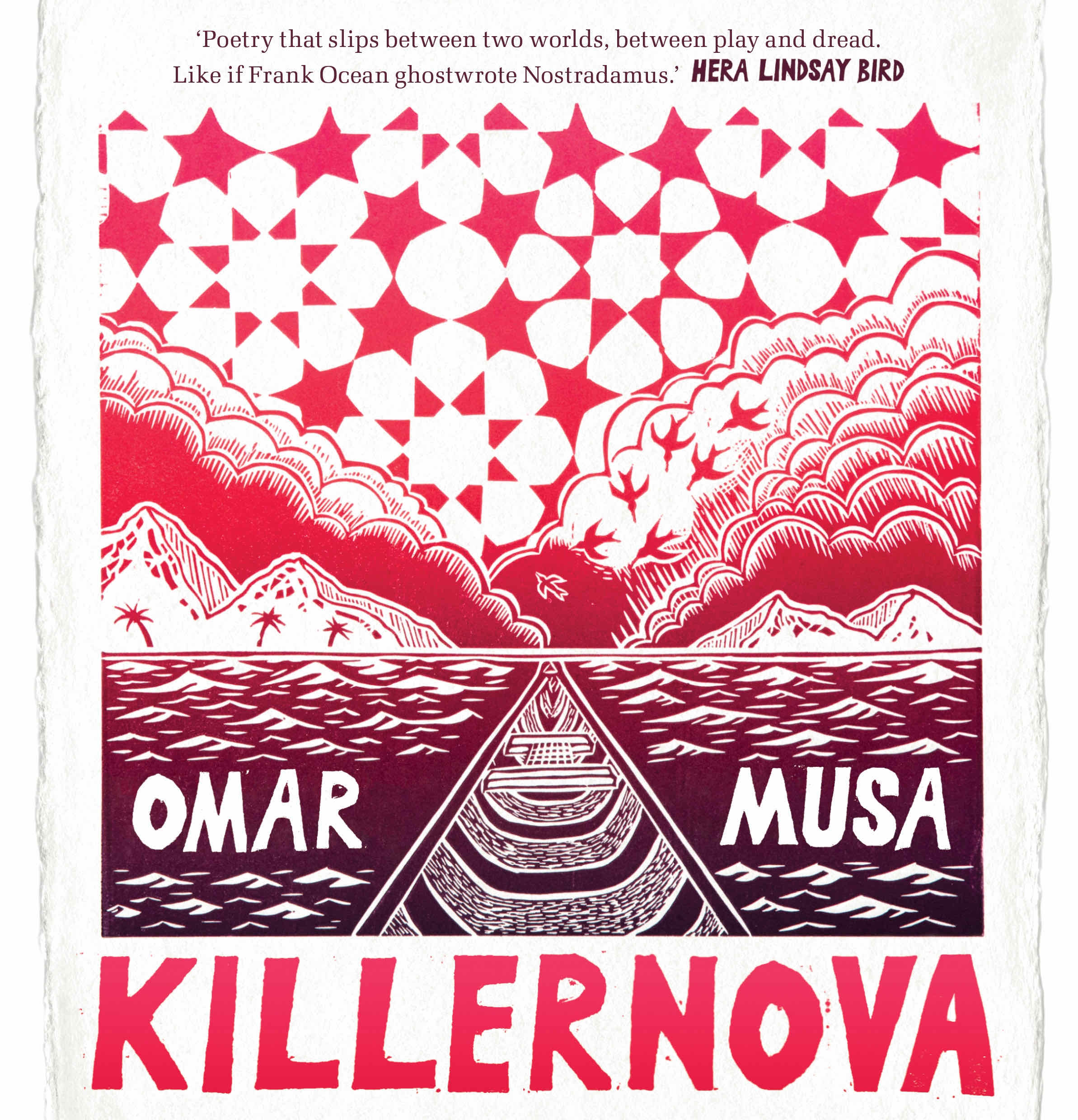
  • Omar Musa’s Killernova (woodcuts/poetry): “a unique hybrid creature – a beautifully designed, stunning combination of woodcuts and poetry” (Maxine Beneba Clarke) (my post on the launch)
  • Pi O’s Heide: “staggering in its audacity, and an intoxicating thrill to read. It is history as ode, and a bold vindication of art … also wickedly funny and heretical” (Christos Tsiolkas)
  • Elfie Shiosaki’s Homecoming: “exquisite hybrid work” (Tony Hughes-d’Aeth)
  • Emily Sun’s  Vociferate | 詠: “cultural-presumption-shredding” (John Kinsella); “bristling with spiky maternal reclamations and intercultural electricity” (Tony Hughes-d’Aeth)
  • Maria Takolander’s Trigger warning: “confronting and sculpted” (John Kinsella); “some of the most moving confessional and elegiac poems you’ll read anywhere” (Gregory Day)
  • Lucy Van’s The open: “read it with an increasing sense of excitement” (Declan Fry)

As I said last week, the lists will come thick and fast over the next month, but I’d be interested in any thoughts you have on these, particularly if you like nonfiction and poetry.
Monday musings on Australian literature: Favourite books 2021, Part 1: Fiction

For a few years now, I’ve shared favourite Aussie reads of the year, from the ABC and, last year, other sources.

This year I’m doing it a bit differently. I’m focusing on the Sydney Morning Herald’s Books we loved in 2021 and ABR’s Books of the Year 2021. Both these contain favourites from a large number of Australian writers. Both also include fiction and nonfiction, Australian and non-Australian works – and there are a lot. So, I’m writing two posts, one on fiction (this week) and the other on nonfiction and poetry (next week). I am only including their Australian favourites – this is a Monday Musings after all.

Novels

Book cover
  • David Allan-Petale’s Locust summer: (Toni Jordan) (Lisa’s review)
  • Miles Allinson’s In moorland: “lays out his territory with authority and a quiet, complex beauty” (Helen Garner); “darkly funny novel of generational bonds, a dazzling ride that is full of heart” (Lucy Treloar); “insightful and ambitious” (Toni Jordan); (Emily Bitto); “engrossing portrayal of obsession, loyalty and destruction within a family” (Robbie Arnott); “very smart novel” (Robbie Arnott) (Lisa’s review)
  • Amal Awad’s The things we see in the light: (Toni Jordan)
  • Larissa Behrendt’s After story: “ambitious in conception and masterful in execution” (Clare Wright); (Anita Heiss) (on my TBR, Lisa’s review)
  • Hannah Bent’s When things are alive they hum: “heartfelt and sweet” (Trent Dalton)
  • Emily Bitto’s Wild abandon: “kicks over the traces and breaks hearts” (Helen Garner); “brilliant and inventive” (Craig Silvey); “wonderful novel, daring and surprising, and profoundly humane” (Christos Tsiolkas); “thrilling and audacious” (Michelle de Kretser); lushly baroque, ruinous, and fantastically inventive … style in spades: its lyricism is exhilarating” (Sarah Holland-Batt)
  • Katherine Brabon’s The shut ins: “a poignant conceit, reminiscent of the work of W.G. Sebald and Patrick Modiano” (Anders Villani)
  • Brendan Cowell’s Plum: “the brain-damaged-rugby-league-poet-book I was waiting all my life to find” (Trent Dalton)
  • Garry Disher, The way it is now: (Judith Brett)
  • Jennifer Down’s Bodies of light: “witness to the creation of a resilient self” (Bernadette Brennan); “mesmerising chronicle … of one of the most sharply drawn characters I’ve encountered in recent fiction … extraordinary” (Robbie Arnott); “an epic Bildungsroman that honours the dignity of crafting a life in the wake of childhood trauma” (Yves Rees); “equal parts devastating and hopeful” (Giselle Au-Nhien Nguyen)
  • Stephen Downes’ The hands of pianists: “an extraordinary book which appropriates the style and strategies of W.B. Sebald but then succeeds in equalling him” (Peter Craven)
  • Robert Gott’s The orchard murders: “perfectly executed Melbourne noir” (Jock Serong)
  • Anita Heiss’s Bila Yarrudhanggalangdhuray: “much-needed look at white settlement from an Indigenous maid’s point of view” (Jane Sullivan) (on my TBR, Lisa’s review)
  • Sally Hepworth’s The younger wife: “delivered wit, warmth and suspense” (Jane Harper) (Theresa’s review)
  • Kathryn Heyman’s Fury: (Fiona Wright); (Anita Heiss)
  • Antoni Jach’s Travelling companions: “funny, layered” (Toni Jordan) (Lisa’s review)
  • Mette Jakobsen’s The wingmaker: ‘dare I say “uplifiting”‘ (Graeme Simsion); “exquisite” (Favel Parrett)
  • Susan Johnson’s From where I fell: “inspired me as an author” (Anita Heiss) (Lisa’s review)
  • Michelle de Kretser’s Scary monsters: “about the thought crimes that divide us, but also stunning, profound and funny” (Anna Funder); (Fiona Wright); (Emily Bitto); “its riskiness, unashamed intellectualism, and rage against ageism, misogyny and racism” (Bernadette Brennan); “brilliant, chimeric” (Sarah Holland-Batt); “creatively repositions contemporary concerns around race, immigration, and national identity” (Paul Giles)
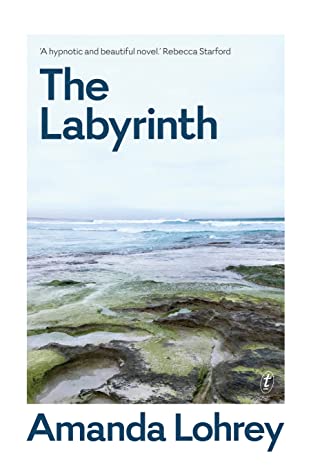
  • Amanda Lohrey’s The labyrinth: “luminous, meditative and richly layered fiction” (Cassandra Pybus): “moody and allegorical with overcast skies, distant waves, and silences” (Glyn Davis) (On my TBR, Lisa’s review)
  • Laura Jean McKay’s The animals in that country: (Emily Bitto) (kimbofo’s review)
  • Emily Maguire’s Love objects: (Fiona Wright); “a tender and aching story” (Tony Birch) (Lisa’s review)
  • Meg Mason’s Sorrow and bliss: “contemporary laughter and heartbreak” (Mick Herron)
  • Jennifer Mills’ The airways: (Fiona Wright); “subtle and fierce” (Geordie Williamson) (Lisa’s review)
  • Liane Moriarty’s Apples never fall: (Jane Harper)
  • Alice Pung’s One hundred days: ” the quiet, bold power of Pung’s writing, the commanding precision of her prose” (Christos Tsiolkas); “warm, funny, compelling read” (Judith Brett) (kimbofo’s review)
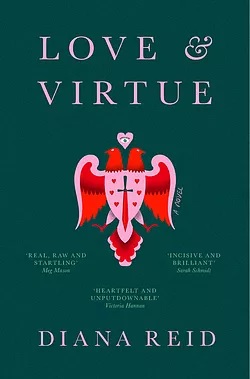
  • Diana Reid’s Love and virtue: “discomfiting ambiguities” (Hannah Kent); ‘restores what’s gone missing from contemporary sexual politics: the distinction between “being hurt and being wronged”’ (Helen Garner); “sharp” (Victoria Hannan) (Brona’s review)
  • Nicolas Rothwell’s Red heaven: “an engrossing novel of ideas” (Glyn Davis)
  • Claire Thomas’ The performance: (Emily Bitto) (on my TBR, Brona’s review
  • Evie Wyld’s The bass rock (Emily Bitto) (on my TBR)

Short stories

  • Tony Birch’s Dark as last night: “richly evocative and deeply empathetic … Birch is more at home with his material than any other modern writer I know” (Alex Miller)
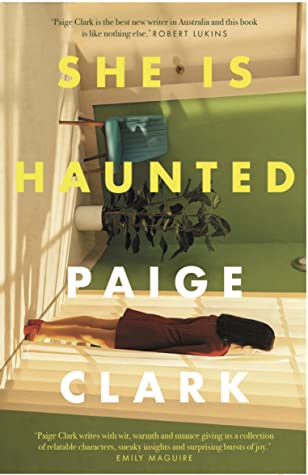
  • Paige Clark’s She is haunted: “deft and original” (Craig Silvey); “stayed with me long after the last word” (Victoria Hannan); “fresh and fantastic” (Bri Lee); (Jennifer Down)
  • Melissa Manning’s Smokehouse: “exquisite” (Jennifer Down) 
  • SJ Norman’s Permafrost: “ghost stories that queer and disrupt the Western gothic tradition” (Hannah Kent); “a beguiling collection of queer ghost stories” (Yves Rees)
  • Chloe Wilson’s Hold your fire: “enthralled and amazed” (Anna Funder)

Finally …

It’s always interesting to see what books feature more than once – which is not to say that popularity equals quality, but it does say what has most captured attention this year. And it seems that Miles Allinson’s In moorland, Emily Bitto’s Wild abandon, Jennifer Down’s Bodies of light, Michelle de Kretser’s Scary monsters, Diana Reid’s Love and virtue, and Paige Clark’s She is haunted are this year’s ones. Most by women writers. I wonder if they’ll all be longlisted (at least) for the Stella?

Another interesting thing about lists is discovering new books. Paige Clark and Chloe Wilson’s short story collections, for example, are new to me – and appeal. Dare I put them on the wishlist?

I know lists will appear constantly over the next month, but I’d be interested in any thoughts you have on these (or on your own list, if you’d prefer!)

Monday musings on Australian literature: Greek-Australian literature

In a Sydney Writers Festival conversation with Michelle de Kretser, Andrew Pippos, winner of the 2021 Readings Prize for his debut novel, Lucky’s, said “the fact that we can talk about a Greek-Australian literary tradition is a sign that Australian literature is developing”. It made me think about Greek-Australian literature and what I know about it, which is not a lot, really.

First, though, what does he mean by his statement? I’m assuming he means that Australian literature is enriched by encompassing significant, identifiable bodies of work from Australia’s constituent cultures, that when there are such bodies of work they reflect on, feed into and, therefore, change and expand the majority culture?

When I think about my own reading of Greek-Australian literature, it is, of course, Christos Tsiolkas who comes to mind. Before him was Beverley Farmer. She is not Greek, but she married a Greek man and lived for some time in Greece, which experience fed into her early writing. I loved her insight into village life and relationships – but that was more about an Australian experiencing Greek culture in Greece.

Greek-Australian literature “proper” goes way back and, in my superficial Internet search I uncovered rather a lot about it, most, though, behind paywalls. Some of those had useful abstracts, and some I could access via my membership of the National Library. I skim-read a couple. But, I also found a blog, From the plastic pen, containing a post that had also been published in Meanjin in 2017. The post is titled “Living in a hyphe-nation: Exploring the Greek-Australian identity through literature”, and the author is Peter Papathanasiou. Papathanasiou is Greek-born and Australian-raised, and has just published a debut crime novel, The stoning, featuring a Greek-Australian detective.

Concerned about the next generation, the Greek-Australian-Australians, Papathanasiou posed the question:

How had Greek writers in Australia explored their hyphenated identity, and what could future generations—including other ethnic minorities—learn from their writings?

And then, he shares some literary history that I had found in those pay-walled academic articles. The earliest example of Greek-Australian literature, he says, was oral poetry at the start of the 1900s, which was shared “at events such as family celebrations, social gatherings, and entertainment in smoke-filled coffee houses (kafeneia)”. Poetry, Papathanasiou, says “has traditionally played a central role in Greek literature” and it continues here “although all types of Greek-Australian literature (poetry, prose, drama, theatre) have been represented, poetry collections have predominated”. Not reading a lot of poetry, I wasn’t aware of this, though I have read Komninos (1991), by Greek-Australian performance poet, Komninos Zervos.

Anyhow, Papathanasiou says that the first Greek-Australian literary work to be published was George Nicolaides’ short story “To gramma tis manas (Letter to mother)”, in 1913  Afstralia. From the beginning, he says, “family was a central theme, along with social issues, community activities, and migrant experiences”. He discusses the various waves of migration. In the 1920s, Orthodox Christians driven out of Asia Minor following the Turkish War of Independence brought well-educated immigrants who “introduced new subjects to the local literary scene because of the atrocities, poverty, and political upheavals they witnessed”. Then World War 2 and post-war migration brought stories of “the Greek army’s heroic fight against the Axis powers, and the united struggle of Greek and Australian soldiers against a common enemy”.

However, he said these waves did not result in much exploration of the Greek-Australian identity. These first-generation migrants wrote mainly in Greek and were “largely preoccupied with exile and dislocation, and haunted by trauma”. They wrote about “the fear of ageing and dying far from the homeland, patriotism (to Greece, not Australia), communication difficulties, and problems adapting and assimilating”. A change in theme came when second-generation migrants started writing in English, and their “connection to the fatherland” grew increasingly distant. They were were interested in “ethnicity and hybridity”, and their writing changed “from loss and yearning to identity and self” and

the rigid identity of the alienated migrant fell away, replaced by a new entity: the hyphenated Australian, whose conflict was more internal than external. These writers explored the dilemma of living between two worlds and with dual identities, the use and maintenance of Greek language and traditions, and surviving in a modern Australia while still bound by conservative parents. It was tense writing, fraught with internal conflict and doubt.

With third generation Greek-Australians now on the scene, Papathanasiou suggests that the subject-matter is changing again. There are still explorations of migration and identity, but these are no longer exclusive. Contemporary “Greek-Australian writers deal with a broad range of subjects including class, culture, gender, sexuality, faith, politics, economics, and sport, and blend various genres including memoir, autobiography, travelogue, and magic realism”.

Interestingly, alongside his discussion of subject matter, Papathanasiou also tracks changes in the publishing of Greek-Australian writing from self-publishing, at the start, through small independent publishers, like UQP and Fremantle Press, to the bigger publishers like Allen and Unwin, who have not only published some Greek Vogel award-winners but also publish Christos Tsiolkas. Pippos’ Lucky’s was published by Pan Macmillan.

Papathanasiou’s perspective, written in 2017, is similar to that written in 2014 by Penni Pappas on the Neo Kosmos website. She describes a similar trajectory in publishing and subject-matter, drawing in particular on the work of Helen Nickas who established Owl Publishing in 1992, to publish writing by Greek-Australian writers. George Kanarakis, writing in The Cud, provides another, and similar, but more detailed survey of Greek writing in Australia. All are worth reading if you are interested in the subject.

The cafes

Meanwhile, I thought I’d conclude on a quick reference to cafes, because most Australians of a certain age will remember at least one Greek cafe in their neighbourhood or on roadtrips. Pippos’ publisher, Pan Macmillan writes that, as a child, he regularly visited the family’s café in Brewarrina, NSW. These early experiences “laid the foundation of his work as a writer”:

The compelling role of the Greek-Australian café within modern Australian identity is increasingly documented in popular culture and history books alike. While sadly few exist now, for much of the second half of the twentieth century these cafés could be found on urban shopping streets and in rural country towns. They represented a new Australian zeitgeist and symbolised every-day multiculturalism. The Greek-Australian cafe milieu gave Andrew his earliest sense of community.

Lucky’s is set around a restaurant chain. You can read Lisa’s thoughts in her review.

A few years ago, I reviewed a little (literally) memoir – from the FL smalls collection – Growing up cafe (my review) by Greek-Australian, Phillip Stamatellis. I enjoyed his evocation of a cafe-based childhood.

The aforementioned Komninos also has cafe heritage. On his website we are told that “his maternal grandfather came to Australia in 1908 to work in a café”, and he, himself, born in Melbourne in 1950, grew up living above his family’s cafe-fish shop. There are poems about cafes in his collections.

It’s pretty clear that the Greeks enjoyed cafe culture long before we Anglo-origin Australians ever did (and in so doing they enriched our culture). But, for many second generation Greeks, as Stamatellis shares, the cafe which provided a living for the parents also brought challenges for the children

my nostalgia is burdened by an unseen weight, a sense of entrapment.

Anyhow, I enjoyed my brief foray into Greek-Australian literature, partly because its trajectory seems similar to those of other diaspora literatures here, albeit they may be on different points on the continuum. It brought to mind my recent post on Diversity and memoir and the idea that writers from culturally diverse backgrounds do not want to be tied to writing about that background. In the Greek-Australian case it seems like there’s been a progression from a close focus on their heritage to broader concerns. Is this is the trajectory that most immigrant literatures will naturally take – or is it forced upon them for lack of support and opportunity?

Thoughts?

Monday musings on Australian literature: Short Australian nonfiction

There’s been a little discussion going on during this Novella November month concerning nonfiction novellas. I contend – yes, I’m putting myself out there – that a “novella” is fiction, and that you can no more have a nonfiction novella than, well, fly. However, I am not going to get into this debate now, because, fundamentally, it doesn’t really matter, does it? What matters is that we read good writing, regardless of what it is, what we call it, or how we categorise it.

Instead, I’m going to do a quick post sharing some short Australian nonfiction. I have written Monday Musings posts about short books before – on little books and on small books. This post covers a bit of the same ground, but it also extends and so complements those two.

In some ways, nonfiction is ideal content for short or little books. Essays are a prime example. They can be commissioned and published in small form or can be extracted from previous publications (books, journals, websites) and published separately in short form. There are many examples of both, and some I have discussed before. Short Blacks, published by Black Inc, epitomises the latter, with some having originally been published in Black Inc’s journal, Quarterly Essays. And here I should say that the Quarterly Essays themselves are another example of short nonfiction, given each issue primarily comprises one essay of up to 25,000 words, plus correspondence relating to the previous essay.

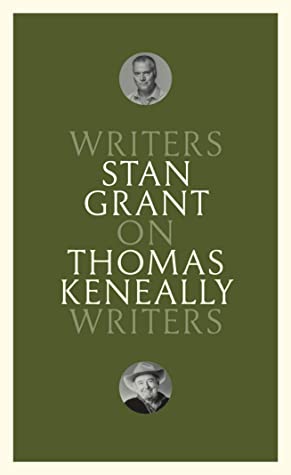
However, Black Inc has also got into commissioning short nonfiction to publish in book form, with its recent Writers on Writers series. I have read two, and have more on my TBR. They are great reads for those of us interested in hearing what one writer has to say about another writer’s work. The next one I have up is Nam Le on David Malouf.

Dorothy Porter, On passion

Then there’s the On seriesLittle Books on Big Ideas. You can find them most easily at Booktopia online bookseller, because the publisher, Hachette, does not seem to list them separately as a series on their website, which is a shame. I have reviewed Dorothy Porter’s On passion and Stan Grant’s On identity. They were published by Melbourne University Press, but it seems that the series has been taken over by Hachette Australia. These are commissioned (I believe) essays by some of Australia’s best-known fiction and nonfiction writers on issues they wanted (or were happy to?) to explore.

All these little books make great reading, if you enjoy essays like I do. Most are under 100 pages.

FL Smalls 7: Carmel Bird's Fair Game

But are there other examples of short nonfiction published in Australia? Any histories, or memoirs, for example? Finlay Lloyd‘s FL Smalls, which I’ve discussed before, is an example. as this series includes memoirs (like Philip Stamatellis’ Growing up café: A short memoir) and creative nonfiction (like Carmel Bird’s Fair game). Great reads, but they are still little books. What about books that are a bit bigger, but still short, books between 100 and 200 pages?

There are, apparently, some short memoirs, but I don’t know many. Vicki Laveau-Harvie’s Stella Prize winning The erratics (my review) is close, at 217 pages.

But, what I’m really wondering about are the books we are looking for that will increase our understanding of contemporary issues. Some of these could benefit by being short. Many of us want to read something a bit more longform about the issues important to us, but not that long! Tim Flannery’s The climate cure, which I mentioned in my Ask the expert post, is described as 224 pages, but the actual text ends at around page 190.

First Nations rights is another area where brevity might attract more readers. It’s hard to find, but My tidda, my sister, which was published in 2020, comes in under 200 pages. It shares the experiences of Indigenous women and girls, and was compiled by podcaster Marlee Silva. Readings Bookshop describes this book as “a celebration of the Indigenous female experience through truth-telling”.

Bruce Pasco, Dark emu

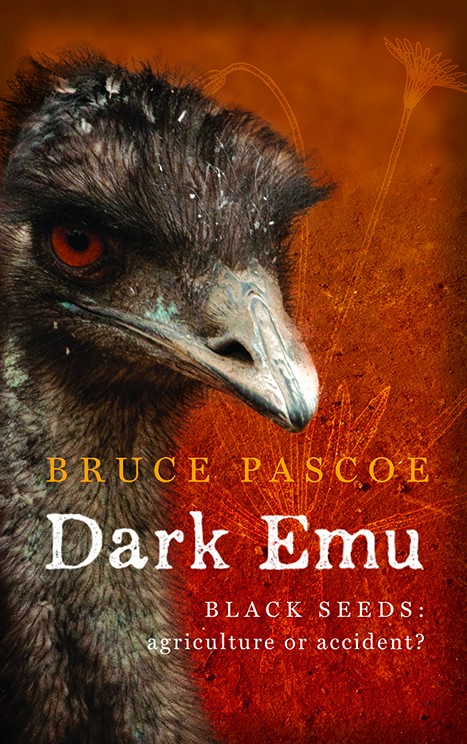
A slightly older book raising awareness about First Nations cultures, but now surely a “classic”, is Bruce Pascoe’s 2014 book, Dark emu (my review). It’s around 175 pages.

On another subject, Annabel Crabb’s 2020 book, Men at work: Australia’s parenthood trap, is 160 pages. It apparently argues that true gender equity “cannot be achieved until men are as free to leave the workplace (when their lives demand it) as women are to enter it”. Hmmm … This is not the only thing needed, I’d say, but it is part of the picture.

Finally, I thought I’d share something pandemic-related. It comes from prolific, award-winning journalist-author, Gideon Haigh. He has tackled the impact of the pandemic on the workplace, in The momentous, uneventful day: A requiem for the office. Published in December 2020, it’s just 144 pages. Readings says “Enlivened by copious citations from literature, film, memoir, and corporate history, and interspersed with relevant images, The momentous, uneventful day is the ideal companion for a lively current debate about the post-pandemic office”. The pandemic is surely going spawn books for decades to come!

I have no idea whether this post will interest anyone, whether any of you care about the idea of short nonfiction, but I’ve enjoyed thinking about it. That said it’s been a challenge to research because, well, there is no equivalent word to fiction’s novella for short nonfiction!

Now, over to you. Do you like short nonfiction? Or is length irrelevant to you? Why or why not? And do you have any favourites?

Monday musings on Australian literature: Supporting genres, 6: Novellas

Yes, I know, novellas aren’t really a genre, but when I started this sub-series I couldn’t find one word to cover all the types of literary works I thought I might end up covering, so we are all going to have to live with “genres”. OK? Many of you will know why I’ve chosen novellas as my next in the series: it’s because one of the several blogger memes running this month is Novellas in November.

Regular readers here will know that I love a novella – and it’s not because they are short, per se, but what the shortness implies. You know that I love short stories, so you will probably know what it is that I love about novellas – it is the ability to condense a story to its essence, while still engaging my heart and mind. In an interview post on my blog, author Nigel Featherstone who has a few novellas under his belt said this:

If short stories are about brevity, novels are about complexity. So that’s what I might love about working with the novella: they offer the best of both worlds: succinctness and sophistication. Thomas Mann’s Death in Venice and George Orwell’s Animal Farm are cases in point.

Featherstone, Fall on me

Of course, as he goes on to say, definitions like this “are ultimately meaningless: some short stories are about complexity, while some novels use up 200,000 words by saying not much about anything. A story must find its natural length, that’s the beginning and end of it”. True, but I do like the idea that novellas offer “succinctness and sophistication”. Kate Jennings’ Snake, on which I posted last week, is a perfect example.

I should, I suppose, discuss definition. The problem is that novella definitions tend to be based on word count, but we readers have no idea of the number of words in the books we buy. Consequently, we tend to go by number of pages, which has to be rough because the number of words per page can vary significantly from book to book. However, my rule of thumb is the same as that offered by the Novellas in November crew, which is “150 pages or under, with a firm upper limit of 200 pages”.

However, I do want to make the point that for me – and for all serious definitions I’ve read – a novella must be fiction (despite Griffith Review’s including creative nonfiction in its criteria!)

Publishers

There is a sense that publishers are loath to publish novellas because they believe readers equate length with value and feel cheated paying a book price for something that’s 150 pages versus, say, 300 pages. However, some publishers do actively support novellas. They are often the smaller independent publishers. Most of the Australian-published novellas that I’ve reviewed on this blog have come from, in no particular order, Spinifex, Wakefield, Hybrid, Xoum, Scribe, Text, UQP, Blemish (no longer in existence), and Inkerman and Blunt (which published Nick Earls’ acclaimed Wisdom Tree series). Classic novellas, and novellas by “big” names are, of course, published by the big publishers like Penguin.

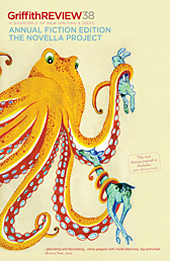
One publisher which has been actively promoting and supporting novellas is Griffith Review. Primarily a literary journal, Griffith Review has, since issue 38 in 2012, devoted one issue a year to novellas, which they call The Novella Project. Introducing the project, then editor Julianne Schultz discussed the changes that were happening in publishing, and said,

In this context we believe that the time is right for the revival of the novella – of those stories that are longer and more complex than a short story, shorter than a novel, with fewer plot twists, but strong characters. Condensed tales that are intense, detailed, often grounded in the times, and perfectly designed for busy people to read in one sitting.

They have a page on their website titled Notes on the novella. It comprises a collection of “notes” from contemporary Australian novella writers, including those published in the Novella Project editions. If you are interested in what writers think about the form, here is a good place to start. Holden Sheppard, for example, sees it as a “very pure form of storytelling”:

Novellas promise readers a direct flight to their destination – no layovers in Singapore or Dubai. 

Love it …

Competitions

Who would have thought there’d be a prize for novellas but, it seems, where there’s a form or genre, there’s likely to be a prize. Here are three for novellas:

Julie Proudfoot, The neighbour
  • Griffith Review Novella Project is a competition that commenced in 2012, and sees winning entries being published in an edition of the journal. Entries can be fiction or creative non-fiction, ranging between 15,000–25,000 words. Winners have included established writers like Nick Earls, Cate Kennedy, John Kinsella and Stephen Orr. Catherine McKinnon worked her Novella Project III winner, “Will Martin”, into a novel, Storyland (my review).
  • Viva La Novella Prize was also established in 2012 – by Seizure – with the first winner announced in 2013. It’s an annual prize awarded for works of 20,000-50,000 words. Seizure is “a social endeavour which runs under the auspices of Xoum Publishing“. Since the award’s inception, Brio/Xoum has published 20 short novels, meaning there’s been more than one winner per year. I’ve read two, and have a couple more on my TBR. It’s another wonderful initiative.
  • Storyfest National Novella Writing Competition is an annual competition for high school students, that seems to have been running since 2018. The entries have to be between 8,000 and 20,000 words. You can see and read the overall and state winners on the Somerset Storyfest website. Lovely to see such encouragement for student writers.

Lists

Just search “novellas” in your browser and you will find a multitude of lists, but for a useful list of Australian novellas, check out Brona’s blog.

Are you a novella fan? If so, would you care to share some favourites?

Previous supporting genre posts: 1. Historical fiction; 2. Short stories; 3. Biography; 4. Literary nonfiction; 5. Crime.

Monday musings on Australian literature: Supporting genres, 5: Crime

When I decided to write this sub-series, the genre that nearly stopped me before I started was crime, because I knew I’d have to do it! CRIME is so-o-o big that it’s hard to know where to start … so, I’m just going to dive in, share a select number of ideas, and let the rest of you, as you always do, fill in the gaps.

Crime, as you know, is not a key genre for me, but over the years, for one reason or another, I’ve read a number of crime books, ranging from cosy crime to police procedurals, from classic crime to true crime, from rural noir to literary crime, from – well, you get the picture. In other words, for someone not drawn to crime, I’ve read and, I admit, enjoyed more than I would have thought when I started this blog. I have also written separate posts about Sisters in Crime Australia and their Stiletto awards.

Festivals

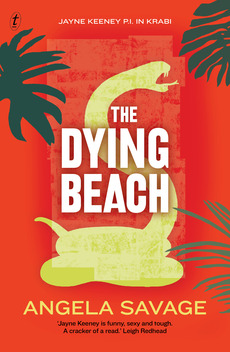
Angela Savage, The dying beach

Crime, being the popular genre it is, features regularly at writers festivals around Australia. It would be rare, methinks, to attend a festival and not find at least one panel devoted to crime. I’ve written on a couple myself – a crime panel convened by Angela Savage at the 2020 Yarra Valley Writers Festival, and a true crime one at the 2019 Canberra Writers Festival.

But, there are also festivals devoted specifically to crime, including these three held or to be held in 2021:

BAD Sydney Crime Writers Festival

To be held from 2-5 December, 2021. As far as I can tell, this is an annual festival that started around 2017. It “explores what crime can tell us about human beings today and in the past”, or, what BAD describes as “”the dark side that is part of being human”. They suggest that Sydney is particularly appropriate “because it was founded by convicts and their guards” and “has been significantly affected by crime and corruption for much of its history”. On the 2017 festival page, they argue that “you cannot understand this city completely without its vital criminal subculture”. The 2021 festival will feature “some of the biggest names in crime fiction, true crime and social justice advocacy”, including Jane Harper, Michael Robotham, Garry Disher, Chris Hammer, Xanthé Mallett, as well as Melissa Lucashenko, Robert Drewe, Richard Glover, Tony Birch, Larissa Behrendt and Stan Grant. This is a face-to-face festival, but all sessions will also be Zoom-ed.

Rural Crime Writing Festival

Held as an online festival on 12 June 2021, by the New England Writers Centre. Calling it the “very first of its kind”, they hope to repeat it. Participants included Emma Viskic and Yumna Kassab. Carmel Shute of Sisters in Crime convened a panel which discussed “the rewards of literary awards”. Would love to have heard that.

Terror Australis Readers and Writers Festival: CSI: Tasmania Digital Festival

To be held as an online festival on 27 & 28 November, 2021. Described as Tasmania’s International Crime and Mystery Literary Festival. Like BAD, TARWF, which is located in the Huon Valley, offers a range of live, live-streamed and virtual events throughout the year. CSI Tasmania is their second festival, following their successful Murder She Wrote festival in 2019. It features Australian writers like Gary Disher, Sulari Gentil, Candice Fox and Anita Heiss, and international writers like Val McDiarmid and Ann Cleeves. TARWF’s founder and current director is crime writer L.J.M. Owen, and the organisation is volunteer-run.

Prizes

Crime is also a genre that seems well served by awards and prizes.

  • Danger Award, offered by BAD. An annual award, established about 2018, I think, for “the best book, TV series, podcast or film about Sydney crime” (so not “just” books).
  • Davitt Awards, offered by Sisters in Crime Australia, since 2001. Prizes are offered in several categories for writing by women.
  • Ned Kelly Awards, run by the Australian Crime Writers Association and established in 1996. They offer prizes in several categories, including true crime, debut crime and YA crime.
  • Scarlet Stiletto Awards, also run by Sisters in Crime Australia, since 1994. This award is limited (devoted) to crime and mystery short stories “written by Australian women and featuring a strong female protagonist”. Clan Destine Press has now published eleven collections of winning stories.

AWW Challenge

Many of you know that I’ve been involved in the Australian Women Writers Challenge pretty much from its inception. It collects on-line reviews, mostly by bloggers and GoodReads readers, of books in all forms and genres written by Australian women. And crime, of course, is a big genre. An important aspect of the challenge is our Book Review database, which you can search via the Books Reviewed search page. Clicking this link, however, will take you immediately to a list of the reviews posted for over 950 crime books by Australian women writers. It’s quite a database now.

Finally …

If you’ve been paying attention, and I’m sure you have, you will have realised that there are many organisations in Australia devoted to supporting crime, including the Australian Crime Writers Association, Sisters in Crime Australia, BAD, and publishers like Clan Destine Press.

And, just to round it all off, this article in The Conversation provides a neat history of Australian crime – in case you are interested.

Do you read Crime? If so, would you care to share some favourites?

Previous supporting genre posts: 1. Historical fiction; 2. Short stories; 3. Biography; 4. Literary nonfiction.

Monday musings on Australian literature: Diversity and memoir

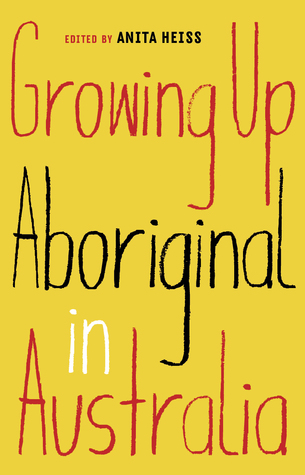
Anita Heiss, Growing up Aboriginal in Australia

Hands up if you’ve read memoirs by First Nations writers, Immigrant writers, Gay writers, Transgender writers, Writers with a disability, and so on? I sure have, and have reviewed several on this blog – including ones by Archie Roach, Marie Munkara, Ali Cobby Eckermann, Alice Pung, Maxine Beneba Clarke, and Jessica White. Black Inc has a whole series – the Growing Up anthologies – devoted to life stories from people of diverse backgrounds. These are excellent for explaining “otherness” to the rest of us.

However, while reading for my recent Monday Musings on the stories we need/want, I came across this comment in the article I used by Lin Li Ng:

BIPOC [Black, Indigenous or People Of Colour] writers are also so often confined to the realms of memoir where they must write about identity, experiences as the ‘other’. And while such texts are necessary and so often relatable for the BIPOC reader, it made me wonder: How much longer BIPOC writers can keep writing about otherness? How much longer must they explain otherness?

It made me stop and think … and decide it was worth highlighting in a separate post.

Lin Li Ng is not a lone voice in this. Last year, SBS ran a competition for writers aged 18 plus ‘to submit a memoir piece of 1000-2000 words on the topic of “Growing up in diverse Australia”‘. It was so successful, they are running it again this year, with the theme, “Between Two Worlds: stories from a diverse Australia”. Again, the request is for a “first-person memoir piece, between 1,000-2,000 words”.

Responding to the 2020 competition, Kelly Bartholomeusz wrote in Overland, “Stop asking ‘diverse writers’ to tell you about their lives”:

It is frustrating to see opportunities for ‘diverse writers’ linked to their willingness to write narrowly about their diversity. This approach disqualifies the many talented writers who have already processed or written about these experiences, and who have bigger visions or better imaginations than to endlessly revisit the same questions.

Bartholomeusz says there’s “nothing inherently wrong with memoir”, and she doesn’t want to “disrespect … writers of colour and First Nations writers who work predominantly in this space”, because this “work has value”. However, writing about one’s life “should not be a condition of entry to the industry, and if it is, it should not be disguised as ‘opportunity’”. Indeed, she says,

Diversity of background doesn’t automatically result in diversity of thought, and a system that requires these voices to answer the same questions ad nauseum is dangling a carrot just out of reach, effectively limiting that which it claims to encourage. 

She also fears that encouraging – if not requiring – writers of diverse background to focus on otherness

will condition aspiring writers to believe that their only value is in their marginalisation and otherness, to be consumed as palatable morsels by predominantly upper-middle-class white audiences who will talk about these stories in bars and over brunch, and who will form a subconscious belief that they understand these experiences because they have read about them.

This final point is one that bothers me when I write posts like these, and when I review works by “diverse” writers. Is it offensive or smug to think that privileged I can “help” by writing these? It niggles at me.

Bartholomeusz also talks about being asked, on a writing scheme application, to detail “ways in which the publishing industry was previously inaccessible” to her. She sees an inherent irony in the question, “as if these factors are easy to categorise and quantify. As if they can be cleanly extracted from the murky swirl of complexity that characterises most non-white Australians’ lives”.

Her arguments are cogent, but First Nations author, Ambelin Kwaymullina, has also talked about the publishing issue, back in 2015. She says:

I’ve had publishers express the sentiment to me that they’d love to publish more diverse voices if only they received more manuscripts. However, given that this approach hasn’t yet resulted in any great increase in diversity, I think it’s perhaps time to conclude that ‘business as usual’ won’t achieve the desired outcome. The existing inequity of opportunity being what it is (especially for Indigenous writers who are most disadvantaged) means that more is required.

She says there is a lack of “Indigenous editorial expertise” resulting in Indigenous writers not having people sensitive to their culture involved in the editing and publishing process. She praised the State Library of Queensland’s black&write! program because it offers “both Indigenous writing fellowships and Indigenous editorial internships”.

Five years later, Lin Li Ng makes a similar point when she says that “diverse” writers don’t have champions in the industry. In other words, people like them, who understand them, who can “advocate for and support” them “with sensitivity”, are not “the gatekeepers with great decision-making power”. There are exceptions, of course – some good publishers supporting more marginalised writers – but they are just that, exceptions.

To end, though, I’ll return to the content issue. Lin Li Ng says that

texts by diverse writers, as a result of systemic practices, are made to sit on the peripheries of the literary landscape – they are treated as niche, so very unattainable, un-relatable and of little commercial value.

Book cover

So, she is saying, when diverse writers are published they tend to be sidelined as “niche”. This can be partly because their subject matter is deemed to be of narrow or specific interest. It can also be because their style may not be that of the majority culture. Think Shokoofeh Azar’s The enlightenment of the greengage tree (my review), for one – though it did break through, a little. There are works coming from young First Nations and Asian writers, for example, that challenge the norms, but they are not reaching the big markets, and only rarely appear on award long and shortlists. Even the Stella Prize, which aims to support marginalised women writers, will have some books from the more “diverse” end of the spectrum on longlists, but amongst the winners? Not so much.

Things are changing. We are seeing more diverse voices on the screen and stage, not to mention colour-blind casting and storytelling. However, my sense is, particularly when I look at awards lists, which are not the be-all I know, that we have a long way to go yet. And, I admit, I could lift my game – a lot!

Thoughts, anyone?

Monday musings on Australian literature: Australian campus novels

Two recent articles in The Conversation inspired today’s post, Lucas Thompson’s “Liked Netflix’s The Chair? Here are 4 moving, funny novels set in English departments” (published 26 October) and Catharine Coleborne’s “Beyond Oxbridge and Yale: popular stories bring universities to life — we need more of them in Australia” (published 5 October).

Defining the term

Wikipedia describes campus or academic novels as those “whose main action is set in and around the campus of a university”, which sounds pretty obvious! They say that the genre in its current form dates back to the early 1950s, with Mary McCarthy’s The groves of academe (1952) being an early example. I’ve not read it, but I have read a much earlier novel, Willa Cather’s The professor’s house (1925), which some argue fits the genre. I’ve also read JM Coetzee’s Disgrace, Wallace Stegner’s Crossing to safety (my review), and one of the Kate Fansler mysteries from the “campus murder mystery” sub-genre. Evelyn Waugh’s Brideshead revisited, which I’ve also read, is regarded bu some as a separate genre, “varsity novels”, because its focus is students. Who knew?

Wikipedia continues that many well-known campus novels, like those by David Lodge, are “comic or satirical, often counterpointing intellectual pretensions and human weaknesses” but there are serious ones, like the aforementioned Disgrace, and Philip Roth’s The human stain. Sally Rooney’s Normal people, which I’ve still not read, is a recent example of the genre.

Thompson’s above-linked article in The Conversation suggests, a bit tongue-in-cheek, another sub-genre, The English Department Novel. He recommends four titles to get readers started, but as none are Australian, my focus here, I’ll move on.

The Australian campus novel

When pondering Australian versions of the genre, I was hard-pressed. The first that came to mind was Dymphna Cusack’s 1936 novel Jungfrau (my review), but only a couple of the main characters are students or lecturers. I was consequently relieved then to read Coleborne who reassured me that I wasn’t alone. She says that, compared to North America and Britain, “Australian readers and audiences have had meagre opportunities to examine the world of the university in novels, television or film” and she goes on to name some of their examples, including the recent TV series The Chair, which inspired Thompson’s article. She does, however, offer some Australian examples, none known to me: Laurie Clancy’s The wildlife reserve (1994), Mary-Rose MacColl’s No safe place (1997) and Michael Wilding’s Academia nuts (2002). She doesn’t mention David Williamson’s play (adapted also to film), The Department.

Wilding wrote about his campus novel in Griffith Review’s edition 11, Getting smart (2007). It’s worth reading because I can’t do it justice here. He says he’s not sure there are any clear conventions for the campus novel, and discusses some examples. There’s such variety that he felt “it was more a case of having to define your own different vision. Most of these writers were too uniquely themselves to serve as a model”. In the end, he felt the two main options were farce or a murder story. And what did he decide?

Despite all the provocations and irritations of academic life, I felt uneasy about murder. So farce it had to be. For a while, anyway.

Then it was a case of finding a model, and he turned for this to Yes, Minister and Yes, Prime Minister :

Here the comedy was classically designed to instruct with delight, radically demystifying the manipulations of the political establishment. This was didactic comedy, comedy that told the truth about revered institutions. It was an extraordinarily subversive and educative show, and I acknowledge its influence gratefully. Who after watching it could ever again believe that a commission of inquiry was designed to do other than provide a whitewash? Who could ever expect ministers and prime ministers to do other than lie? Who could ever again believe principles and policies took anything but second place to political survival? When I came to write Academia Nuts, I consciously attempted to inform the humour with a similar didactic purpose.

He says more, including how he came to write a second revised edition. It’s eye-opening, particularly about the intersection between reality and fiction – do read it. Meanwhile, Coleborne is surprised that the genre here is so thin, given universities have a “rich history as a catalyst for social change”. She argues that with the opening up of universities to a wider range of students in the 1970s, “hopefulness about the value and purpose of tertiary education was palpable. Campuses were lively, and students sought debate, difference, dialogue”. She identifies a number of non-fiction works which confront university life, including some I’ve read, like Jill Ker Conway’s The road from Coorain and Helen Garner’s The first stone.

BUT, she believes that “the overwhelming lack of a collective memory of university education and the student experience in Australia now presents a serious problem in our social, cultural and political life”. She believe that US and British campus novels “highlight questions of personal journeys into education and beyond, and rites of passage. They touch, too, on issues of inclusion and exclusion and campus culture”. It’s time, she believes, for us to both celebrate and critique “these spaces in public debate”, to think about “the value, purpose and role of universities in public life”.

Diana Reid, Love and virtue book cover

Into this space has come a brand new Australian novel just published in September, Diana Reid’s Love and virtue. Neha Kale, reviewing it in The Sydney Morning Herald, says that “Reid is a long-time fan of the campus novel, books, such as Donna Tartt’s The Secret History and Sally Rooney’s Normal People“. And she quotes Reid, recently graduated from university herself, on the campus novel:

As a form, when you have a cast of characters who are all young and vulnerable, trying on new ideas and identities and you put them in a confined space, it is inherently dramatically interesting. 

Good point. Typical of its genre, this campus novel addresses contemporary issues. Here, they include consent, class and privilege (which are not new issues, actually, in campus novels!) Coleborne quotes Reid, who said she wanted to grapple with

“how hard it is to make moral judgments … So often the way we judge other people is by asking ‘is what you did moral?’. I think the question we need to be asking [should be]: ‘is the course of action you took the most moral one given all the courses of action available to you?’… I accept that you can be paralysed by nuance and never do anything. We need people who think in black and white.” She smiles. “I just don’t think those people lean towards becoming novelists”.

Literature is, in fact, where ambivalence can be explored, she believes. Absolutely!

Theresa Smith reviewed and enjoyed this novel.

Do you like campus novels, and, if so, care to name any favourites?

Monday musings on Australian literature: The stories we want or, is it, need?

Back in 2019, I wrote a Monday Musings on the Stella judges’ call for more “narratives from outside Australia”. I teased out a little what that might mean, but, a couple of years down the track, I think it worth further exploring the questions it opens up.

Commenting on that post, Lisa (ANZLitLovers) wrote:

What I’d like more of (and I get it sometimes) is Australian literature with an *awareness* of the rest of the world and of the cultures that make up our society. You can see it in the fiction of Michelle de Kretser, Andrea Goldsmith, S K Karakaltsis, and Amanda Curtin, plus the writers you’ve mentioned in your post. It’s also there in the novels of Simon Cleary, A S Patric and Rodney Hall, among others.

You don’t see it in domestic novels with a monotone cast of characters.

We talk a lot in the blogosphere about some of the contemporary issues surrounding literature. In Australia, this particularly revolves around diversity and “own voices”. Enabling more people from our community to tell their stories makes for a richer community, but don’t take it from me … here is an interesting article by Julianne Schultz in The Guardian in 2017 (which is an edited version of Griffith Review 58 piece). Schultz quotes Irish commentator Fintan O’Toole on the importance of stories to nations:

Nations tells themselves stories … They are not fully true, they are often bitterly contested and they change over time. But they are powerful: they underlie the necessary fiction that is ‘us’. And at the moment, it is not quite clear what the Irish story is.”

She goes on to say that O’Toole’s description could apply equally well to Australia where

the old stories have also become threadbare, and increasingly fail to capture the contemporary reality or the complexity of the past.

She backs this up with facts which demonstrate that contemporary Australia is more diverse and complex, less isolated, more accessible, than before, and yet we struggle, she says, to define exactly who we are and what the values of this new Australia are. We pride ourselves on our “multiculturalism”, supported by old values like “egalitarianism”, but, in fact, we are not particularly unique in these regards. She says:

So when political leaders praise multiculturalism but make citizenship more difficult to attain, or when they talk about preventing desperate refugees from dying at sea but leave them to languish in offshore refugee camps, or when they promise to recognise Indigenous rights but call a measured discussion about first settlement “Stalinist”, the message is clear and hypocritical.

For cultures to flourish, rather than simply survive, she argues, “they need to be tended and nurtured”. Telling stories is one way of doing this, “stories about people and place, about belonging and being out of place, of changing and staying the same, of interrogating history and locating those who were once left out”. Do read the article; her thoughts are cogent, and she makes an important political point about the role our leaders should play. Meanwhile, let’s move on to what those stories could be …

Stories we need

Lisa has a point about “an *awareness* of the rest of the world and of the cultures that make up our society”, and we could add to this the big concerns of our time, including human rights (across the spectrum of gender, race/ethnicity, sexual orientation, age), climate change, and increasing social and economic inequity. These aren’t mutually exclusive, and in fact they make most sense, tell a richer story, when they jostle against each other in the works we read.

Things are changing. We are seeing more fiction and poetry by First Nations Australians, Australians from culturally and linguistically diverse backgrounds, women and non-binary Australians, and so on. However, we are not there yet. During the 2020 pandemic, writer Lin Li Ng decided that she wanted “to only read books written by Black, Indigenous or People of Colour (BIPOC) writers or non-BIPOC female writers”, but when she looked at her TBR bookshelves, she was dismayed to find that only around 10% were by BIPOC writers and 25% by non-BIPOC female writers.

And yet, in her Master of Writing and Publishing studies, Lin Li had written “a thesis on the experiences of Asian-Australian women – writers and publishing professionals – in the Australian trade publishing industry” so she knew the issues. What surprised her, then, was her own choices, that although she “had recognised the systemic barriers and failings of the industry”, she hadn’t realised how much she had absorbed the message that English and Western literature and art are ‘quality’, and had been convinced that works by BIPOC authors weren’t as good as those by non-BIPOC authors. But, she wants to see herself, her experiences and her values in the literature and art she engages with, and concludes that as a POC female reader, she is “part of an audience that deserves diverse stories that appeal to it”.

Yes! So, I’ve highlighted “herself, her experiences and her values” because this is the crux, isn’t it. The question is what does she, and what do we, mean by these?

When I say “myself” and my “experiences”, do I just mean, in my case, a middle-class, older white woman? Or, do I mean an Australian moving around in a diverse, multicultural society? I probably mean both. I want to read about people just like me, who are grappling with the specific challenges people like me are confronting, but I also want to read about how we, as Australians, are living in our modern society. What are its challenges and how can we make it work better?

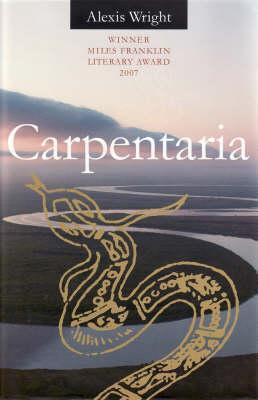
Alexis Wright, Carpentaria

When I say “values”, it gets more complex, and, I think, more interesting, but how to talk about them without getting bogged down. I’m going to be simplistic and suggest there are two types of values – the personal, which is the moral, ethical code by which we live, and the social, which encompasses the values that we believe in as a society or culture. By this latter meaning, liberal western democracies have a certain set of values to do with individualism, progress and freedom, accompanied by an uneasy nod to the common good. By contrast, First Nations people have very different values grounded in community and sharing, and, for want of a better word, an interdependent connection to country. I’m not going to elaborate all the cultures in Australia, but Muslim cultures have their own values, and so on.

This is all a bit simplistic, I realise, but it’s hopefully enough to make my main point, which is that some of these values work well together while others are in direct conflict, and yet, here we are all living together. Platitudes about our being egalitarian and a “successful multicultural society” don’t really cut it – any more, anyhow. This, I think, is where many of us are looking to Australian literature, if not for answers, at least for questions and reflections.

There is literature doing this, writing that tackles head on the challenge of clashing values, like Alexis Wright’s Carpentaria (my post), AS Patrić’s Black rock white city (my review) and Claire G Coleman’s Terra nullius (my review). These books are very different in style and form, but each forces us to look at who we are and to think about who we want to be.

There is so much more to say about this, so many angles to explore literature and storytelling from, so many broader and narrower questions to consider, but I’ll stop here for now, and just ask,

What do you think?

Monday musings on Australian literature: Birds in Australian fiction

This week in Australia, 18 to 24 October, is National Bird Week. According to BirdLife Australia, this week originated in the early 1900s when 28 October was designated by the Royal Australasian Ornithologists Union as the first Bird Day. Now Bird Week, it is organised and promoted by BirdLife Australia, which is the Union’s successor. Its goal is to inspire Australians to take action and get involved in bird conservation efforts.

My post may not count as taking action, but I thought it might be fun to talk about birds in Australian fiction. It’s a huge topic, so I will only touch the tip of a bird’s feather, but that just means there’s plenty of opportunity for you all to join in, with your Aussie and non-Aussie examples.

Birds, birds, birds

Birds can offer powerful imagery for writers, though like all imagery they need to be used carefully. Marion Halligan’s warning in The fog garden, “That is the trouble with metaphor, it may take you to places you don’t want to go”, is worth heeding. Birds are popular in poetry and fiction. They are used to convey positive or negative ideas or emotions; they convey freedom; they herald messages and omens (good or bad). Just for a start.

And then there are individual birds, which can enrich or complicate the issue further. Doves suggest peace, and crows (or ravens) death. Eagles can mean power and owls wisdom, while lovebirds need no explanation. Flocks of birds can mean many things. Writers can use birds to convey the obvious ideas, or they can use them ironically to convey the opposite.

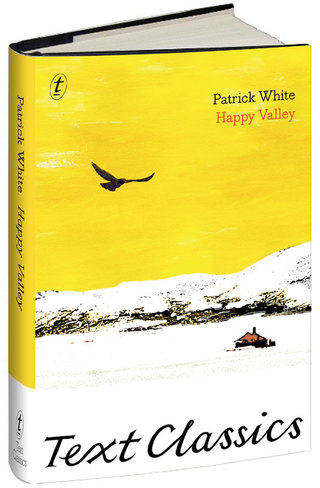
Patrick White, Happy Valley

Indigenous cultures, like Australia’s First Nations people, can have a specific relationship with birds. They figure frequently in Indigenous spirituality, often providing a connection with ancestors. If your totem is a bird, the meaning can be even more potent.

All this is very general, I know, but the point is that when a writer mentions a bird, particularly if the references recur in a work, chances are there’s a reason. It can be fun – and worthwhile – to think about what that might be. In my posts on many of the novels I’ve selected for this post, I have tried to explain the birds, but who knows whether that has matched the authors’ intentions? For some reason, though, I never even mentioned the bird that opens Patrick White’s Happy Valley (1939) (my review)!

Selected Aussie novels featuring birds

My selection here is ad hoc and mostly drawn from books I’ve reviewed on this blog. My discussion will be brief because my aim is to suggest some ideas rather than write a treatise on the topic. Apologies if you hoped for more!

Some novelists focus on specific birds. Jessica Anderson’s One of the wattlebirds (1994) (my review) features various birds, but particularly the titular wattlebird. It’s not a bird commonly found in literature, I must say, and it’s not one of our most beautiful songbirds, either. However, Anderson uses it very specifically in the novel, for her insecure protagonist, Cec who calls it the DOIK, for its sound, or “no-comment bird”, because it seems to be drowned out by other birds. This reflected, I felt, Cec’s feeling of inconsequence.

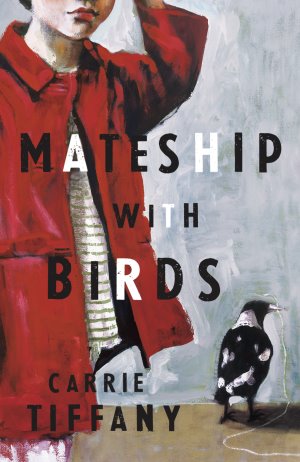
Mateship with Birds (Courtesy: Pan MacMillan)

Carrie Tiffany mentions various Australian birds in her Mateship with birds (2012) (my review). The novel takes place over a year that is paced by the life-cycle of a kookaburra family, but it actually opens with descriptions of magpie attacks on humans, and then of cockatoos damaging crops. In the recent Stella 10 years panel, Tiffany reiterated that her novel is about desire, and certainly that’s there, but I also felt her birds convey broader themes about the nature of our relationships with animals, and how we accommodate the animal versus the human within ourselves.

Birds are also significant in Evie Wyld’s All the birds, singing (2013) (my review). Their use is complex. They can reflect protagonist Jake’s mood (“the birds sing and everything feels brand new”), break tension, and suggest death (such as the crows hovering over the dead ewe in the opening paragraph). There are specific birds – butcher birds, night jars, galahs, merlins, currawongs and crows – and there are birds in general.

Tiffany’s and Wyld’s novels are rural, so nature is part of their literal setting, but in both, birds also carry significant metaphorical weight.

Leah Swann’s Sheerwater (2020) (my review) makes frequent reference to the migration of shearwaters (or, mutton birds). They start the novel and introduce the days around which the novel is structured. Among other things, I sensed that their impressive endurance mirrors that of women, like protagonist Ava, and their arduous journey that of her sons.

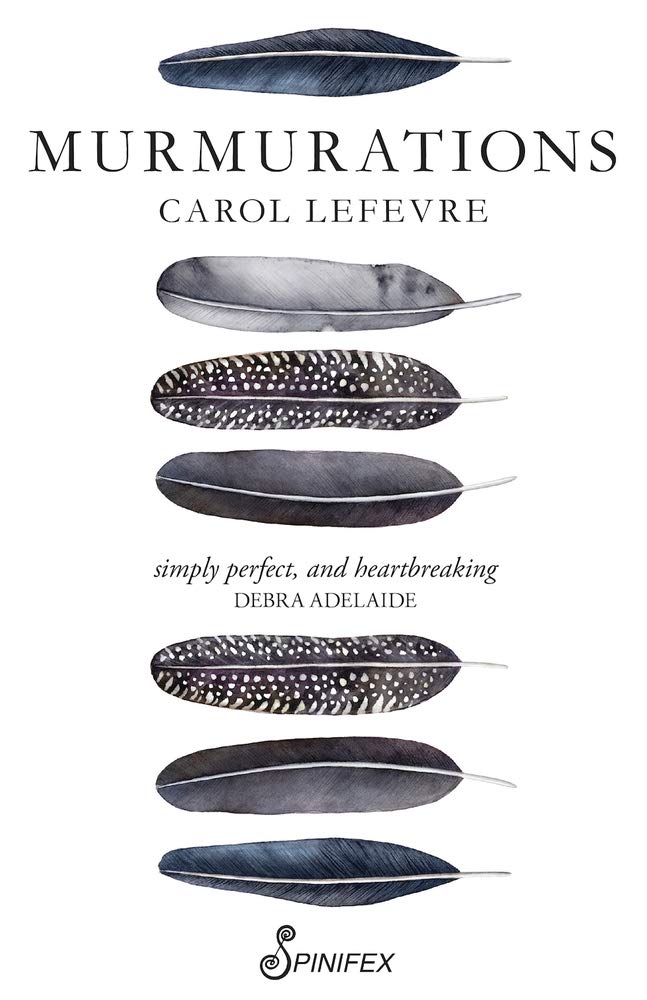
Book cover

Less obvious, perhaps, are birds in Carol Leferre’s Murmurations (2020) (my review) but murmuration does refer to the flocking behaviour of starlings to deter predators and keep warm. Lefevre’s epigraph, from a paper about starlings, provides a strong sense of her intention: “The change in the behavioural state of one animal affects and is affected by that of all other animals in the group, no matter how large the group is“.

I have books on my TBR that reference birds in their title, but I have no idea what role birds will play. Carmel Bird’s The Bluebird cafe includes an epigraph from Nabokov’s Pale fire: “I was the shadow of the waxwing slain/By the false azure in the windowpane”. Waxwings are beautiful, silky birds, but I’m prepared for something tricksy, or that’s not as it seems. Then bluebird? Bluebirds of happiness? Another is Melinda Bobis’ most recent book, The kindness of birds (Lisa’s review). The back cover blurb starts with:

An oriole sings to a dying father. A bleeding-heart dove saves the day. A crow wakes a woman’s resolve. Owls help a boy endure isolation. Cockatoos attend the laying of the dead. Always there are birds in these linked stories that pay homage to kindness…

Will these birds mean what we might expect? Watch this space.

Birds feature frequently in First Nations Australia novels. Often they are message carriers. For Tony Birch’s protagonist Odette in The white girl (2019) (my review) “a morning doesn’t pass without one of them speaking to me”. However, as in other literature, their use is also more complex. Crows feature heavily in Melissa Lucashenko’s Too much lip (2018) (my review), from the beginning when one says to protagonist Kerry:

Yugam baugal jang! Buiyala galli! Yugam yan moogle Goorie Brisbanyu? You could help, instead of sitting up there like a mug lair from the city.

Lucashenko’s crows are cheeky, complicated beings which know and often convey the wrongness of things. Kerry’s first conversation in her hometown Durrongo is with three crows, one of whom has managed to get its beak caught in the fangs of a dead snake. It could starve to death. “The eaters and the eaten of Durrongo, having it out at the crossroads” thinks Kerry – and so the novel really starts!

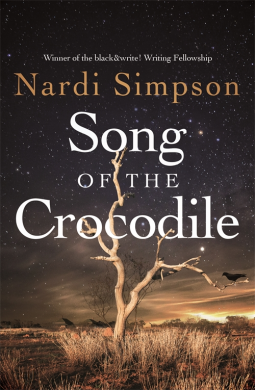
Finally, various birds appear in Nardi Simpson’s Song of crocodile (2020) (my review), but most significantly in spirit songman Jakybird, who wants to reconnect the “threads of broken lore”. Towards the end of the novel he prepares his spirit “choir” for one last, powerful song. 

Birds, birds, birds … what can you add to this discussion?