I came across a reference to the Bush Book Club during my research for those 1922 posts I’ve been doing this year. I flagged it for a post in the series – but then discovered that the Club was founded in 1910. It’s a fascinating project, and I haven’t reached the end of it yet, so am just starting here with an introduction to it.
What was it?
The Bush Book Club was not a book club in our contemporary, reading-group meaning of the word, but an organisation that was founded at the end of 1909 to send books to remote areas of New South Wales, specifically to those areas lacking a School of Arts (or Mechanics Institute). It was inspired by similar work being done by the England-based Victoria League in places like Canada.
The Club was formed by Mrs. Aubrey Withers during an “informal meeting” at Admiralty House, under the auspices of Lady Poore who became its first President. Several newspapers reported on it, including the Sydney Morning Herald (22 December), which explained that members of the first committee included women from the Women’s Branch of the Empire League (our version, apparently, of the Victoria League). The SMH added that the Girls’ Realm Guild had “been engaged in bush library work” for over a year, but “decided to join in the bigger movement” resulting in “no overlapping”.
The SMH also reported that some very clear principles were laid, which would make for success. These included that it would be “non-sectarian and non-political”, and for both men and women. There would also be
a censorship committee to see that only suitable literature is distributed. By “suitable” is not meant only standard works or books of a “goody goody” nature, but care will be taken that vulgar, trashy, novels, and morbid, unwholesome works are not amongst those sent out.
This sort of sensibility would be typical of 1909, but I do love the language used. In terms of practicalities, the SMH notes that railway authorities had “promised” to send the books without charge, and that the committee hoped that school-houses would become distribution points for the books. As far as I’ve read to date, distribution was handled by different groups depending on the location – from schools and libraries to community organisations. In Kyogle, for example, it was the North Kyogle Progress Association, while in the Mudgee area it was Erda Vale Subsidised School. The service was not to be free, with the rural readers to be charged pay 3d. a month (or 2s. per annum) to access the books.
The project was very much a grass-roots activity, founded on volunteering and good-will. The expectation from the start was that it would be based primarily on second-hand books. As the SMH writes, “There is hardly a household in Sydney which does not have periodical clearings out of old books and magazines, and it is mainly on these that the club will depend.” The new Club, then, immediately started promoting the project, asking Sydney-siders to donate used (and new) books and magazines to the cause. The SMH put it this way:
So, if any of you wish to send a parcel of books to the bush people, do not reject this because it’s too deep, or that because it’s too fanciful. Remember that there are intellects in the back blocks just us keen as yours, and minds far more hungry than yours can be for mental meat. And please, please remember that there are little children whose minds are opening every day, and to whom the fairy tales, which are so old in your nursery, will carry a world of delight, and open up the fairyland of romance and imagination.
The condescension is palpable … meanwhile, the seemingly indefatigable Lady Poore did organise fundraisers, for “incidental expenses”.
Lady Poore – and a little controversy
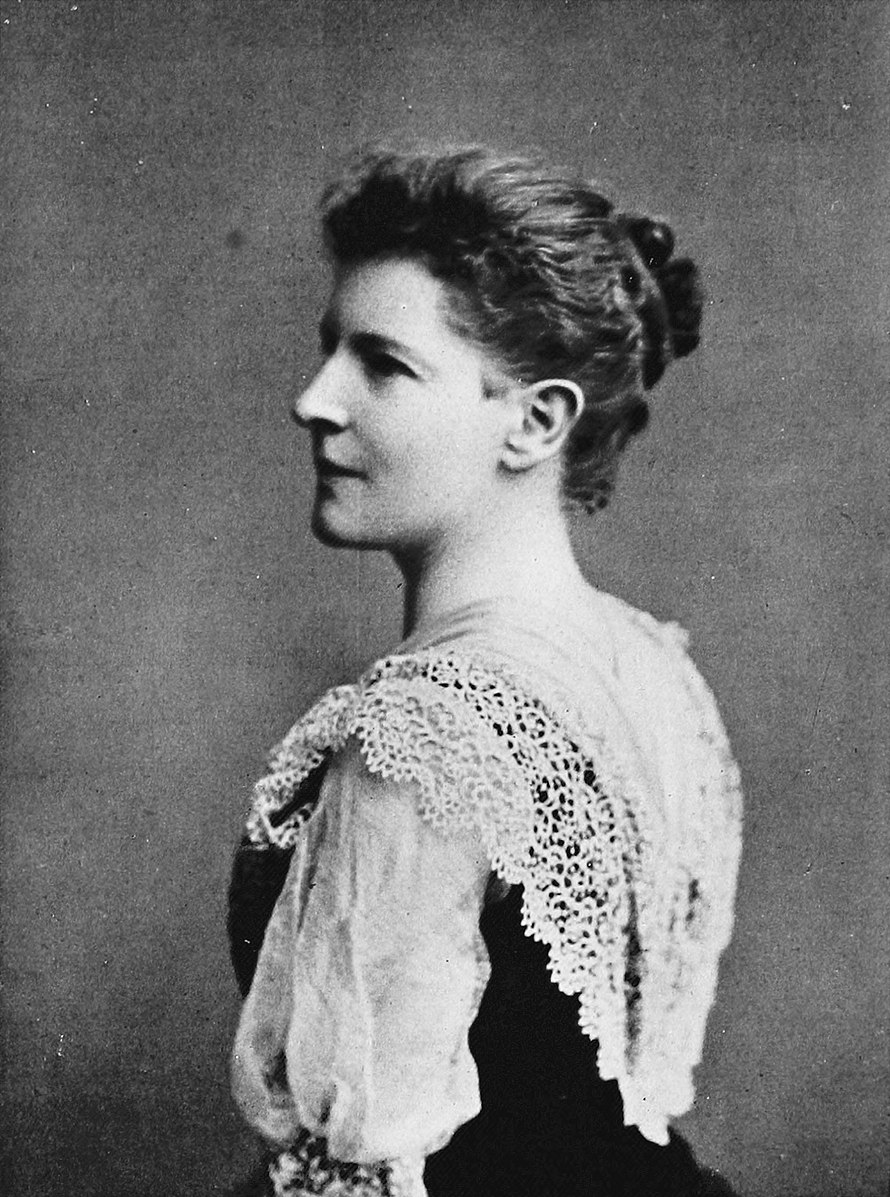
Which brings me to Lady Poore. Ida Margaret Graves Poore (1859-1941) was, according to Wikipedia, “an Anglo-Irish autobiographer and poet”. Her husband was the baronet, Sir Richard Poore, who became an Admiral in the Royal Navy, and was posted to Sydney from 1908 to 1911.
As you can see from those dates, Lady Poore was only formally involved for a year or so, though later reports occasionally mention that she continued to ask about the Club long after she’d left. She was, though, involved in a little controversy, which many papers reported on – and which she herself managed to treat with self-deprecating humour. (She really sounds like something.) Here’s what happened …
In April 2010, Lady Poore presided over the first annual meeting of the Bush Book Club, at Sydney’s Town Hall. The Sydney Morning Herald (6 April) reported on the meeting, and noted that Lady Poore was keen to “impress … the actual need of books”. She talked about the paucity of reading matter in many remote areas, and argued against the opinion held in some quarters that people who had little leisure for reading needed nothing more than the weekly newspaper. The Sydney Morning Herald‘s report of her speech continues:
If she as a temporary, and she honestly thought, sympathetic dweller, in their midst, might be allowed to offer a criticism, she should say that what the Australian national character lacked was imagination. Commonsense was really “common” here, and she knew no quality of greater practical value but fancy, vision imagination, call it what they would, was not common, and without books she did not see how it was to be awakened, fostered, and rendered articulate. There might be in New South Wales bush-poets in embryo as powerful as Lindsay Gordon, as humorous and pathetic as A B Patterson* (who she was glad to say, was one of their vice-presidents) – bush-novelists too and bush naturalists; but without the help and stimulus provided by reading they would … die full of unexpressed, because un-expressible, ideas. Apart from those who might succeed in literature, there were many whose hard, workaday lives would be made brighter and more beautiful by the reading of books.
I’m going to put aside her examples of writers to emulate, and cut to the controversy chase. As you can imagine, there was quite a reaction to the idea that Australians lacked imagination, though there was some misreporting. One columnist, for example, thought she was only referring to children, and another to women. Then there was “Roseda” writing in the Wellington Times (14 April 1910) in central western NSW. She (I assume) says that Lady Poore might be right about reading stimulating imagination but, she writes,
To me it seems the Great Silent Bush has more imaginative influences than any book. It is all inspiration and should beget the fancy monger. If it lacks this the fault is in the individual and yet not his fault either. Bush dwellers are too much occupied to have leisure for imagination. Patience say I ’twill come. Are we not producing some of the best songsters in the world? Soon there will be a need of songs for them and then poets will emerge from their slumbers. Bush bards evolve yourselves please.
I love the light tone … indeed, the interesting thing is that while the reports I saw didn’t agree with her, neither did they take severe umbrage, suggesting to me that she and/or her endeavour were much appreciated.
Later in April, Lady Poore attended the birthday of The Optimists’ Club (which she was encouraging to support the B.B.C.). The Daily Telegraph (27 April) reports her referencing her little faux pas. She apparently told the gathering that the press certainly didn’t lack imagination, and that
If she could conveniently take off her hat she would take it off to the press in recognition of the extraordinary kindness, not to say leniency, with which they had treated her— a stranger. A weekly publication of great literary merit likened her to a seagull. Could imagination go further? That was before she was a month in Australia, and it earned her undying gratitude, by the pretty, if unmerited, compliment. A daily paper of high standing credited her with a handsome heliotrope satin gown and a riviere of diamonds — neither of which she possessed — and she had never forgotten the inventive kindness of the writer. Indeed, the press of Australia had invariably used her with a generosity far beyond her deserts, and their recent criticisms had only whetted her appetite for information concerning a country and a people she had a good reason to love.
Ah Lady Poore, what a charmer.
I was going to write more in this post, including about the actual books and the early achievements, but I don’t want to try your patience so I’m going to hold that over until next week. You will be hearing more about the B.B.C.
* In my reading of newspapers in Trove I come across many misspellings, particularly of Banjo Paterson (as Patterson) and Katharine Susannah Prichard (as Katherine and/or Pritchard), suggesting that sub-editing was not necessarily better in the olden days!






 Whispering Gums