Monday musings on Australian literature: Melbourne Prize for Literature

Having posted on a literary prize last week – the ACT Book of the Year Award – I decided that I may as well do another one, and give us a break from my recent run of historically-focused Monday Musings posts. This week’s award is another geographically limited one, the Melbourne Prize for Literature.

This award is comparatively new, having been first offered in 2006, and it is, unusually, a triennial award. This is because it is one part of the Melbourne Prize which is awarded, as Wikipedia puts it, “on a rolling three-year basis for Urban Sculpture, Literature and Music, in that order”. It is managed by the Melbourne Prize Trust, which was founded by someone called Simon Warrender in 2005. I did not know who Simon Warrender was, and Wikipedia did not provide a link on his name. However, he is, in fact, in Wikipedia (so there is now a link to him on the Prize’s page!) The English-born Simon Warrender was “a Royal Navy officer and businessman” who migrated to Australia after the war and married into the well-to-do and philanthropic Myer Family.

The Prizes are funded by a range of donors from government, cultural and philanthropic organisations – like the City of Melbourne, The Robert Salzer Foundation, Hardie Grant Books and Readings Bookshop – to the general public.

As Wikipedia’s description of the prize’s order implies, the first prize was for Urban Sculpture. That was in 2005, so the first Melbourne Prize for Literature was awarded in 2006. The Literature Prize is made to “a Victorian published author whose body of published work has made an outstanding contribution to Australian literature and to cultural and intellectual life”. In other words, it is one of those “body of work”/contribution to literature types of award. It can, says the Prize website, “include all genres, for example, fiction, non-fiction, essays, plays, screenplays and poetry”, and they take this seriously as you will see from the winners below. It is a valuable prize, currently netting the winner AUD60,000.
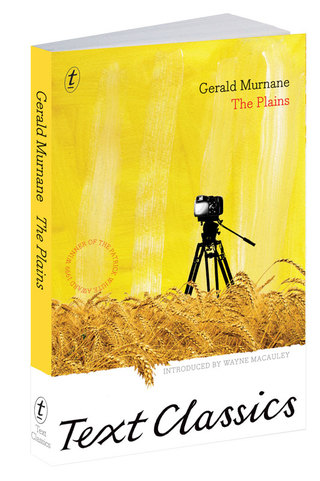
Gerald Murnane, The Plains, bookcover

The winners to date are:

  • 2006 Helen Garner: novelist, short-story writer, screen-writer, non-fiction writer, essayist
  • 2009 Gerald Murnane: novelist, memoirist, short story writer, poet
  • 2012 Alex Miller: novelist, short story writer, essayist, playwright
  • 2015 Chris Wallace-Crabbe: poet
  • 2018 Alison Lester: author and illustrator of, mostly, children’s book
  • 2021 Christos Tsiolkas: novelist, playwright, screenwriter

Links are to my posts on the writer. As you can see I have written about all of them, at least once, except for the poet (though he has had several mentions in passing! I guess that’s better than nothing.)

But wait, there’s more, because other awards are made alongside the main Prize for Literature. One is the Best Writing Award which is for (or was initially) “a piece of published or produced work in any genre by a Victorian writer 40 years and under, which is an outstanding example of clarity, originality and creativity”. By 2018, they seem to have dropped the age criterion. The winners to date are:
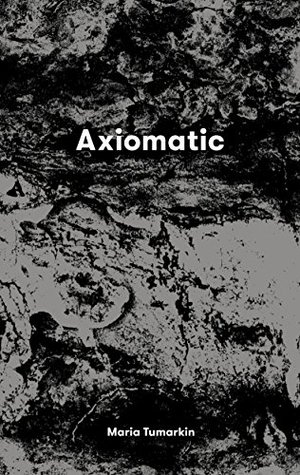
Maria Tumarkin, Axiomatic

In 2021, this prize was not offered, but they presented The Writers Prize. It went to Eloise Victoria Grills. According to the website the prize was for “an essay (10,000 words maximum) of outstanding originality, literary merit and creative freshness”. (I should add that this Prize had also been presented in 2015, in addition to The Best Writing Award, and was won by Kate Ryan.) What will happen in 2024?

The other main prize in the suite is the Civic Choice Award. It is voted for by the public from the finalists for the main award/s. Most recently this has been done via an online form available on the Prize website. The winners to date are:

  • 2006 Henry von Doussa for The park bench
  • 2009 Amra Pajalic for The good daughter
  • 2012 Tony Birch for Blood (Lisa’s review)
  • 2015 Robyn Annear for her essay “Places without mercy”
  • 2018 Louise Milligan for Cardinal
  • 2021 Maxine Beneba Clarke

Over the years there have been other awards, or combinations, or slight changes, like a Residency Award. But, you can see it all at the Prize website which I linked to above.

The Melbourne Prize for Literature – indeed the Melbourne Prize as a whole – is an impressive suite of awards that supports the arts by offering decent prize money and recognises the state’s serious practitioners of their art.
Monday musings on Australian literature: the ACT Book of the Year Award

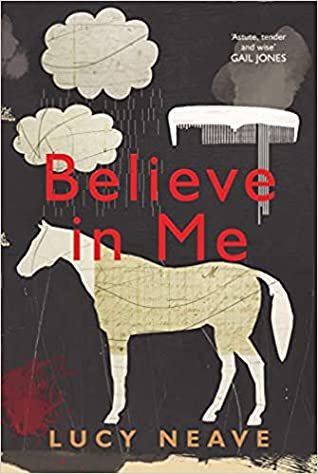
I think it’s time I dedicated a post to the Book of the Year Award made in my own jurisdiction. I briefly introduced it back in 2018, and then wrote recently about its 2022 shortlist. But today, I want to document it a bit more thoroughly. (For the record, the 2022 winner has now been announced, Lucy Neave’s second novel, Believe in me.)

The ACT Book of the Year Award is presented by the ACT Government for contemporary literary works, and is currently worth $10,000. Unlike most of the state government awards (but like the Northern Territory Literary Awards), it is limited to local writers. Only one award is made, and like the Stella Prize, the winner can be fiction, non-fiction or poetry. The award was first made in 1993 – and was shared by poet AD Hope and novelist Marion Halligan – so the 2022 Award is its 30th.

Winners to 2022

  • 1993: Marion HalliganLovers’ Knot (novel, read before blogging); A.D. Hope, Chance encounters (poetry)
  • 1994: John Foulcher, New and selected poems (poetry)
  • 1995: Sara Dowse, Sapphires (novel)
  • 1996: Paul Hetherington, Shadow swimmer (poetry)
  • 1997: Francesca Rendle-ShortImago (novel, Lisa’s review)
  • 1998: Lee Chittick, Travelling with Percy : A South Coast journey (biography)
  • 1999: Craig Cormick, Unwritten histories (non-fiction/satire)
  • 2000: Adrian Caesar, The white: Last days in the Antarctic journeys of Scott and Mawson 1911-1913 (non-fiction)
  • 2001: Alan GouldThe Schoonermaster’s Dance (novel, Lisa’s review); Dorothy Johnston, The Trojan dog (novel)
  • 2002: Jackie French, In the blood (YA novel)
  • 2003: John Clanchy, The hard word (novel)
  • 2004: Marion Halligan, The Point (novel, read before blogging)
  • 2005: Tony Kevin, A certain maritime incident: the sinking of SIEV X (non-fiction)
  • 2006: John Clanchy, Vincenzo’s garden (short stories)
  • 2007: Quynh Du Thon That, Sunday menu : selected short stories of Pham Thi Hoai (short stories)
  • 2008: Tony Kevin, Walking the Camino: A modern pilgrimage to Santiago (memoir/travel, Lisa’s review)
  • 2009: Nicholas Drayson, A guide to the birds of East Africa: A novel (novel)
  • 2010: Marion Halligan, Valley of Grace (novel, my review, and additional post)
  • 2011: Chris Hammer, The river: A journey through the Murray-Darling Basin (non-fiction)
  • 2012: Bill Gammage, The biggest estate on earth: How Aborigines made Australia (non-fiction, on my TBR)
  • 2013: Frank Bongiorno, The sex lives of Australians: A history (history)
  • 2014: Gordon Peake, Beloved land: Stories, struggles and secrets from Timor-Leste (non-fiction)
  • 2015: Mark HenshawThe snow kimono (novel, my review)
  • 2016: Frank Bongiorno, The eighties: The decade that transformed Australia (history)
  • 2017: Tom Griffiths, The art of time travel: Historians and their craft (history, on my TBR, Lisa’s review)
  • 2018: Paul Collis, Dancing home (novel, on my TBR, Lisa’s review)
  • 2019: Robyn CadwalladerBook of colours (novel, my review)
  • 2020: Lisa Fuller, Ghost bird (YA novel)
  • 2021: Subhash Jaireth, Spinoza’s overcoat: Travels with writers and poets (essays, Lisa’s review)
  • 2022: Lucy Neave, Believe in me (novel, my review)

(Links on author’s names take you to my posts on that author, which may not necessarily include the work listed.)

The winners tell you something about Canberra. For example, you might have gleaned from the early winners that Canberra has been particularly strong in poetry, and you’d be right. Well-regarded twentieth century poets like A.D. Hope (1907-2000), David Campbell (1915-1979), and Rosemary Dobson (1920-2012) made this region home for significant stretches of their lives. Canberra’s strength in this form is reflected in poetry winning three of the first four awards. Poetry continues to be strong here, though has featured less in the awards as they’ve progressed through the years.

THEY used to say in my neck of the North Carolina woods that if you shook a tree a banjo player would fall out. I’m beginning to think that if you shake a tree in Canberra, you’re more likely to dislodge a poet. (Bob Hefner, Canberra Times, 25 July 1993)

Couldn’t resist sharing that … but now, moving along … Canberra is also the national capital of Australia, so is the home of our national parliament. History and politics are, consequently, a significant interest of its residents, and this too is reflected in the sort of non-fiction that has won the award – the controversial sinking of SIEV X, the fraught Murray-Darling basin, and revisiting the role of First Nations Australians in our history, to name a few.

In terms of fiction, Canberra’s successful Seven Writers group is well represented here with Marion Halligan, Sara Dowse and Dorothy Johnston all being winners. The year Sara Dowse won she made history, apparently, by also winning the ACT Book Reviewer of the Year award. What, a reviewer award?

Yes! It seems that the ACT Book Review of the Year (as it was initially called) was instigated in 1993, alongside the Book of the Year. It was won by Amirah Inglis for her review of two books – As good as a yarn with you, edited by Caroline Ferrier, and A fence around the cuckoo by Ruth Park – in the November 1992 issue of Monash University’s Editions. In 1994, there were joint winners, Robert Boden’s review of Stanley Breeden’s Visions of a rainforest in The Canberra Times, and Amirah Inglis’ review of Hazel Rowley’s Christina Stead: A biography in the National Library’s Voices. Then in 1995 came Sara Dowse, named as ACT Book Reviewer of the Year. After that a review award seems to disappear from view. What a shame.

Have you heard of professional review or reviewer awards? If so, I’d love to hear about it.

Meanwhile, I hope you have found this little history of my local award interesting!

Monday musings on Australian literature: Trove treasures (6), Why waste time reading novels?

My next Trove Treasure is not, strictly speaking, Australian, because it features the English humorist Jerome K. Jerome. But, I found it reported in multiple Australian newspapers, which means that many Australians probably read it, and that makes it at least a bit relevant here. The first one I found was in The Inverell Times on June 25, 1904, so it is the one I edited. However, I then found the same piece in the West Gippsland Gazette; the Camperdown Chronicle; the Canowindra Star and Eugowra News; the The Walcha Witness and Vernon County Record; The Gundagai Times and Tumut, Adelong and Murrumbidgee District Advertiser; the Clarence and Richmond Examiner; the Narromine News and Trangie Advocate; The Cobar Herald; The Colac Herald – and, at this point, I stopped noting them. Enough already, as they say. All of these, except for the Canowindra paper, were published between late June and early July 1904. Canowindra’s was, for some reason, printed in 1907!

Jerome K. Jerome (1859-1927), as I’m sure many of you know, was best known for his comedy novel, Three men in a boat, published in 1889. This book was one of those I remember from my mum’s bookshelves when I was quite a little girl – along with M. Barnard Eldershaw’s A house is built, Eve Langley’s The pea pickers (my post), Henry Handel Richardson’s The fortunes of Richard Mahony, and her beloved “little Collins classics”.

According to Wikipedia (linked on his name), the financial security provided by his hit novel enabled Jerome to become a full-time writer. He wrote plays, essays, and novels, but, says Wikipedia, was never able to recapture the success of that first novel. Wikipedia mentions in passing his writing of satirical pieces for journals, and the piece I’m sharing here is clearly one of those, although I have not been able to identify the journal, referred to as M.A.P, from which the piece apparently comes.

Wasting time on reading!

The piece starts like this:

Our old and delightful friend, Jerome K. Jerome, in a most amusing contribution to “M.A.P.” thus discourses: —

“On a newspaper placard, the other day, I saw announced a new novel by a celebrated author. I bought a copy of the paper, and turned eagerly to the last page. I was disappointed to find that I had missed the first six chapters. The story had commenced the previous Saturday; this was Friday. I say I was disappointed, and so I was at first: but my disappointment did not last long. The bright and intelligent sub-editor, according to the custom now in vogue, had provided me with a short synopsis of those first six chapters, so that without the trouble of reading them, I knew what they were all about. ‘The first instalment,’ I learned, ‘introduces the reader to a brilliant and distinguished company assembled in the drawing room of Lady Mary’s maisonette in Park street, and much smart talk is indulged in.’ I know that ‘smart talk’ so well. Had I not been lucky in missing that first chapter I should have had to hear it all again.”

Woman reading with cushion

Haha, I thought, and read on. Of course, Jerome was being tongue-in-cheek, and goes on to argue why we should in fact read it all, not just a summary. He expresses concern that writers will be expected to write “novels in chapters not exceeding twenty words” and that ‘short stories will be reduced to the formula: “Little boy. Pair of skates. Broken ice. Heaven’s gates”.’

“Formerly”, he explains, “an author … would have spun it out into five thousand words”. Then, proposing that this “little boy” story would have been a Christmas story, he shares how he would have written it. He would have started it in the previous spring or summer to let us get to know the little boy:

He would have been a good boy; the sort of boy that makes a bee-line for the thinnest ice. He would have lived in a cottage. I could have spread that cottage over two pages; the things that grew in the garden; the view from the front door. You would have known that boy before I had done with him — felt you had known him all your life. His quaint sayings, his childish thoughts, his great longings would have been impressed upon you…

He continues in this vein, describing how he’d also develop the father and mother, the ice, and so on. “So much”, he says, “might have been done”:

When I think of that plot wasted in nine words, it makes me positively angry. And what is to become of us writers if this is to be the new fashion in literature? We are paid by the length of our manuscript, at rates from half-a-crown a thousand words, and upwards.

How, he asks, are writers to live on the income from the payment for 9-words? All very worrying, he says.

Aren’t we glad that what he feared didn’t eventuate!

Monday musings on Australian literature: Trove treasures (5), Church and novel reading

You’ll be getting sick of my time-is-short posts, but rest assured that this too shall pass – eventually! Meanwhile, here is another Trove Treasure post. It shares two different responses to reading from churches, in the first couple of decades of the 20th century.

What the churches thought

Reading novels IN church

Woman reading with cushion
Courtesy: Clker.com

On 27 August 1902, a brief story was carried in Sydney’s Evening News and the Bathurst Free Press and Mining Journal. Here is how it went:

A telegram from Nowra states that in the local Church of England on Sunday, some young men were discovered reading novels during the sermon. The preacher drew attention to the circumstances, and made some pungent criticism about the practice.

Neither of the articles gave any more information. What was the “pungent criticism”? Well, interestingly, two days later, on 29 August, the Evening News ran a sort of correction:

With reference to the telegram that the practice of novel-reading in a local church was commented upon by the incumbent, the latter explains that his remarks had no reference to any supposed practice in his church, of which he had no personal knowledge. He points out that he was simply saying, in the course of a sermon on evil speaking, that the modern novel would hardly be read if it did not deal largely with the evil in human nature.

This seems to me to be a limited understanding of “the modern novel”, but I’ll leave that for you to think about. My point here is that the story did not end here …

The following day, 30 August, The Shoalhaven News and South Coast Districts Advertiser, ran a letter to the editor from “The Correspondent” who had provided the correction that ran on 29 August. This “Correspondent” quotes the previous two news items and then goes on to say that, although the reverend Mr Newby-Fraser was speaking generally about novel-reading,

during the course of the sermon on Sunday last, novel-reading was being practised in the Nowra Church of England by certain young members of the congregation.

In fact, we are told, the names of those readers and “the titles of the novels they had spread before them” could be furnished “if necessary”. Further, those novel readers apparently felt the sermon was being directed at them because they “immediately put away the books”.

The letter then says that as the minister “had no idea that novel reading was indulged in at all by any members of his congregation, young or old … he had good reason for being indignant at having been accused of making a charge of the truth of which he had no knowledge whatsoever”. However, concludes our letter-writer:

‘Truth,’ they sometimes say, ‘is stranger than fiction.’ At all events there is an indissoluble relationship existing between ‘truth’ and ‘fiction’ in this matter of novel reading on Sunday.

You could be forgiven for thinking all this had been written on 1 April – but it seems to be true!

How to spend your Sunday

Melbourne’s The Age ran a brief article on 20 October 1922 headed “Sunday Games: Preferable to reading ‘sloppy’ novels”. It was reporting on the annual meeting of the Congregational Union in Adelaide at which the issue of Sunday games was discussed, the concern being the secularisation of Sunday. Indeed, reports the paper, “a motion of protest against the secularisation of Sunday and urging members to unite with the object of preventing the desecration of the Sabbath was carried.” However, during the discussion, the chairman, Rev. G.H. Wright said

that although he preferred to see a man playing cricket or tennis on a Sunday to staying at home reading sloppy novels and the Sunday paper, it was not the highest ideal. 

And who said Australia was a sporting nation!

Comments anyone?

Monday musings on Australian literature: 1940 in fiction

As many of you know by now, Karen (Kaggsy’s Bookish Rambling) and Simon (Stuck in a Book) run “reading weeks” in which they nominate a year from which “everyone reads, enjoys, posts and shares wonderful books and discoveries from the year in question”. The current year is 1940, and it runs from today, 10-16 April. As has become my practice, I am devoting a Monday Musings to the week.

1940 is a bit of a landmark year in Australian literature because it was the year that our significant literary journal, Meanjin, was first published – in Brisbane, by Clem Christesen. Its name comes from the Turrbal word for the spike of land where the city of Brisbane is located.

My research located books published across all forms, but my focus is fiction, so here is a selection of 1940-published novels:

  • E.C. Allen, Old Eugowra
  • Martin Boyd, Nuns in jeopardy
  • Roy Connolly, Southern saga
  • Frank Dalby Davison, The woman at the mill (short stories)
  • Dulcie Deamer, Holiday
  • Arthur Gask, The house on the fens and The tragedy of the silver moon
  • Beatrice Grimshaw, South Sea Sarah; Murder in paradise: Two complete novels
  • Michael Innes, The secret vanguard; There came both mist and snow; and The comedy of errors
  • Bertha A. Johnstone, Stream of years
  • Josephine Knowles, Leaves in the wind
  • Will Lawson, Red Morgan rides
  • Eric Lowe, Framed in hardwood
  • Nevil Shute, Landfall: A channel story and An old captivity (both of which I read in my teens)
  • Helen Simpson, Maid no more (see my post on Helen Simpson)
  • Christina Stead, The man who loved children (Lisa’s review)
  • F.J. Thwaites, Whispers in Tahiti
  • Arthur W. Upfield, Bushranger of the skies
  • Franks Walford, The indiscretions of Iole
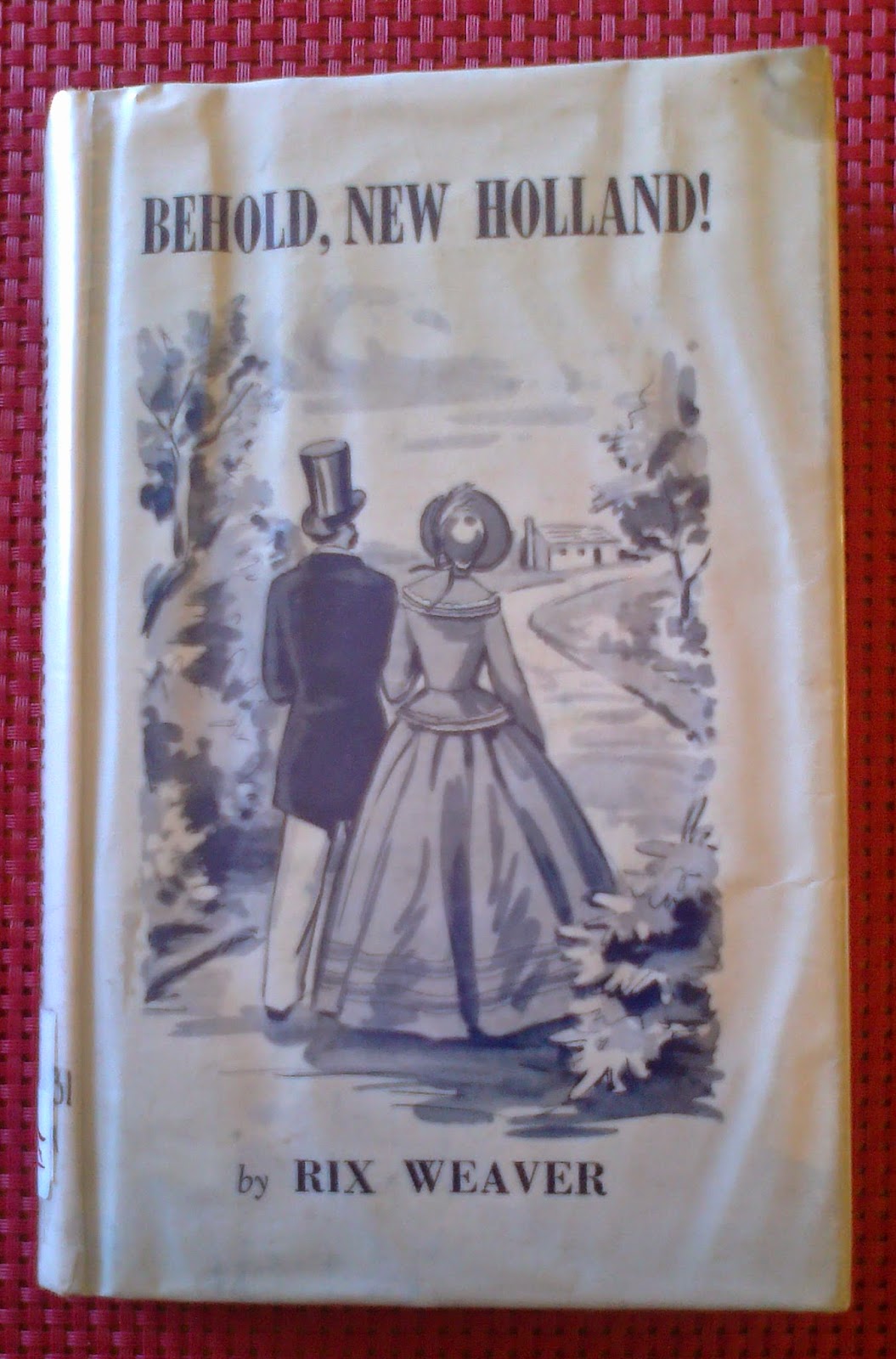
  • Rix Weaver, Behold, New Holland (A Darned Good Read’s review)

Children’s literature was going strongly at the time, with books published by four authors still remembered as writers of our children’s classics, Mary Grant Bruce, May Gibbs, P.L. Travers, and Dorothy Wall.

I wasn’t going to focus on poetry and drama, but Bill, who checked my list against the Annals for me (as my copy is in Canberra, thanks Bill) added that Katharine Susannah Prichard’s play Brumby Innes also appeared in 1940.

There were very few literary awards at the time. The ALS Gold Medal went to William Baylebridge’s poetry collection, This vital flesh, though it was announced in 1941. The award actually announced in 1940 was for the 1939 winner, Xavier Herbert’s Capricornia, so I think I can also mention it here.

Writers born this year include some favourites, whom I’ve reviewed here, Carmel Bird, Marion Halligan and Geoff Page. J.M. Coetzee who migrated to Australia partway through his literary career was also born in 1940.

The state of the art

Of course, I checked Trove to see what newspapers were saying about Australian literature, and fiction in particular. In the last “year” I did, 1929, I found great enthusiasm to support and promote Australian literature, and this was still evident to some degree in 1940. It was war-time, but interestingly that didn’t feature heavily in the book-related articles I found.

“Fictional magazines” banned

One news item that did reference the war was reported by many papers in April. It concerned the Federal government’s decision to ban the importation of “fiction magazines from non-sterling countries”. The stated aim was “to conserve our overseas’ credit” (Queanbeyan Age, 23/4/1940), with The Forbes Advocate (16/4/1940) reporting that “it is estimated that this will save £100,000 a year in dollar exchange”. Exceptions to this ban were, as Adelaide’s The Advertiser (2/4/1940) reported, “magazines dealing with current news topics or technical and instructional publications”. Many newspapers added brief commentary to their reporting. The Advertiser, for example, commented that these banned recreational magazines had “little or no literary value” and that some had already been banned “because of their false accentuation of sex, horror and crime”. But, the point made by many, and I’ll quote The Advertiser again, was the benefit to Australian writers and illustrators:

Besides its wartime value in conserving dollar exchange, the restriction of imported fiction will, it is hoped, create a wider home market for Australian writers and illustrators.

And thus Australian stories for Australians! The Forbes Advocate took the argument further, arguing that ‘”Made in Australia” on nearly everything required in the Commonwealth would bring abounding prosperity’ – and make this continent, “mighty”.

Australianness

Some reviewers commented on the “Australianness” of Australian novels they reviewed. Tasmanian Bertha A. Johnstone’s immigrant story, Stream of years, was described by her home state’s Mercury (6/4/1940) as “truly Australian and truly good” while Adelaide’s The Advertiser (28/5/1940) says of one of its denizen’s debuts, Josephine Knowles’ Leaves in the wind:

A FIRST novel by an Australian writer, apart from its intrinsic value, is of importance because of the proof that it furnishes that literary talent in this country is not stagnant.

The Argus (28/10/1940), on the other hand, reviewing Rix Weaver’s pioneer fiction, Behold New Holland, concludes that “Miss Weaver has wisely avoided any aggressive Australianism. She makes it a romance of pioneering adventure, vividly told, that would appeal to an English or an American reader”.

Many of these 1940-published novels were set in the bush, or in exotic locations further afield. Indeed, Echuca’s The Riverine Herald (24/6/1940), writes that one of Australia’s “most prolific” writers, Will Lawson, had ‘”gone bush” at Tahmoor (N.S.W.)’ in order to “complete his newest novel without any city distractions”. The novel was Red Morgan rides, a bushranging story.

What about the city?

I did find, however, one reference to the city-versus-bush issue. The article, in Sydney’s The Daily Telegraph (7/4/1940), written by one Sam Walpole, was pointedly headed “Let’s buy a yearbook for our authors”, and commences:

IT is remarkable how little impression seems to have been made on Australian authors by a curious fact recorded in the Commonwealth Year Book —that nearly two-thirds of the population of Australia live in towns. A foreigner would hardly suspect this fact from some stories, a collection short stories by ten Australian writers, mostly of the elder school.

The collection was “Some stories, by ten Australian writers”, and includes some writers we’ve come across before like J. H. M. Abbott and G. B. Lancaster. Walpole continues:

There are some lively pieces in the book — and some, less lively — but only one story (by Ethel Turner, about a hot day in Sydney) makes any serious attempt to describe the urban life which millions of Australians lead. It is odd that so many of our writers either escape into fantasy, or cling in spirit to the days when a steer ripped up Macpherson at the Cooraminta Yard. These days it is more likely that a taxi ripped up Macpherson in Pitt Street. It is time we had an O. Henry to chronicle the pangs and pleasures of Marrickvllle or Balmain, a W. Burnett to write about the Sydney underworld, a Sinclair Lewis to show our more smugly prosperous citizens how ludicrous they really are.

So, we go from those supporting the banning of “fictional magazines” (which primarily came from America) to a yearning for more relevant writing like that being produced in America! A good place to end, I think, this little survey of 1940.

Additional sources:

  • 1940 in Australian Literature (Wikipedia)
  • Joy Hooton and Harry Heseltine, Annals of Australian literature, 2nd ed. OUP, 1992 (with Bill’s help)

Previous Monday Musings for the “years”: 1929, 1936 and 1954.

Meanwhile, do you plan to take part in the 1940 Club – and if so how?

Monday musings on Australian literature: on 1923: 5, Novels and their subjects

On the basis that what novelists write about provides some sort of insight into their times, I’ve done a little survey of the books published by Australian writers in 1923 to see what their subject matter might tell us about Australian life and literature 100 years ago.

First, here are the books I found, mostly via Trove:

  • J. H. M. Abbott, Sydney Cove
  • Vera Baker, The mystery outlaw
  • Marie Bjelke-Petersen, Jewelled nights
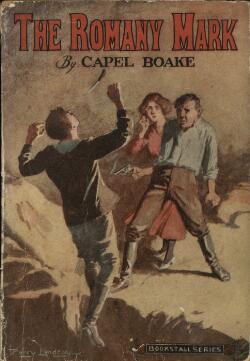
  • Capel Boake, The Romany mark
  • Roy Bridges, Green butterflies
  • Dale Collins, Stolen or strayed
  • Arthur Crocker, The great Turon mystery
  • Bernard Cronin, Salvage
  • A.R. Falk, The red star 
  • J.D. Fitzgerald, Children of the sunlight
  • Frank Fox, Beneath an ardent sun
  • Mary Gaunt, As the whirlwind passeth
  • Jack McLaren, Fagaloa’s daughter
  • Mary Marlowe, Gypsy Royal, adventuress
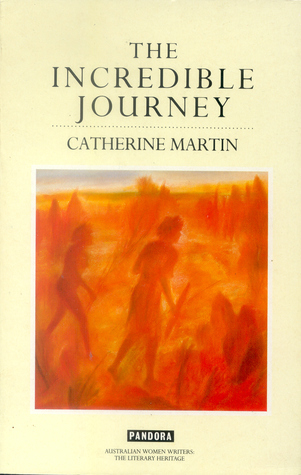
  • Catherine Martin, The incredible journey
  • Jack North, Son of the bush
  • Ernest Osborne, The plantation manager
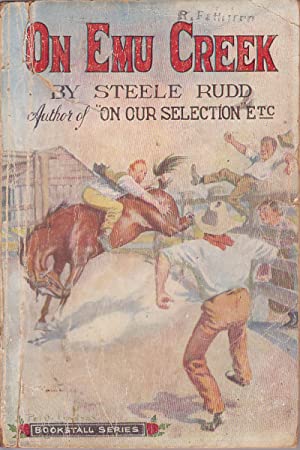
  • Steele Rudd, On Emu Creek
  • Charles L. Sayer, The jumping double
  • H.F. Wickham, The Great Western Road

Twenty books in total, six of them by women. Unfortunately, I am not at home so can’t check these against 1923 in the Annals of Australian literature (but I’m sure Bill will when he sees this post!) Wikipedia’s page 1923 in Australian literature includes a few others: D.H. Lawrence’s Kangaroo, but he’s not Australian though the book was set here; Arthur Gask’s The red paste murders, but Project Gutenberg Australia says it was published in 1924; and Nat Gould’s Beating the favourite, but he died in 1919, and I can’t find much on this book. Further, from his biography, he is as much English as he is Australian. However, it is worth sharing that Andrews in the ADB says that Gould “inaugurated the Australian sporting novel”. Charles L. Sayer’s 1923-published The jumping double represents this new genre.

For this post, I’m sticking with my neat 20! Of these, around a third seem to be historical novels. J.H.M. Abbott’s and Mary Gaunt’s were set in the early days of the colony, while those by Vera Baker, Capel Boake, Arthur Crocker and H.F. Wickham encompass bushrangers in some way. Roy Bridge’s Green butterflies is an interesting member of this “historical” group. J.Penn (writing in Adelaide’s Observer, 5 May 1923) explains:

There is something decidedly unusual in a story which starts in Tasmania in 1830, and ends in Victoria at the present time. The title is the weakest thing about “Green Butterflies” … In this book, Mr. Roy Bridges fulfils much early promise, and shows himself definitely one of the novelists who count.

Bridges spans this almost 100-year period by telling the story across two or three generations of a family, taking its readers from the horrors of colonial Tasmania, with its “savage blacks and even more savage bushrangers … being put down by Governor Arthur”, to the “dirty settlement” of Melbourne, and then on to the present day, when, says a character, “the war has changed everything; we’re not narrow as we used to be”. So, a recognition here of the impact of World War 1 on Australian society, although war novels didn’t become popular for another few years.

Bushrangers were prevalent in the historically-set novels. The worst of the bushranger era had ended by the 1880s, but they were clearly still foremost in the public imagination, particularly in terms of escapist adventure. Further, with bushrangers being a particularly Australian form of outlaw, their presence would have appealed to those wanting Australian stories.

The rest of the novels were, as far as I can tell, set in more contemporary times, though some of the synopses were not completely clear about their period. The majority were adventure and/or mystery novels. (We know Australians love mystery and adventure!) A couple were set in New Guinea (including New Britain). One is Jack McLaren’s Fagaloa’s daughter, which Hobart’s World (8/11/1923) described as “a tale of stirring venture among the savages of Papua and adjacent islands, with white men doing deeds of unusual daring afloat and ashore”. The titular daughter ‘is given a European education, and is clever and beautiful, and “white all through,” despite the fact (or perhaps because of it) that she is the offspring of colored parents’. She apparently proves her worth when her white trader husband is attacked by a “cannibal hill-tribe”. Meanwhile, Ernest Osborne’s The plantation manager was described in The Armidale Chronicle (11/4/1923) as “adventure on a North-Western Pacific plantation” that “gives a striking account of the difficulties a manager encounters in developing tropical estates. A bright love story is interwoven throughout the adventures with the head-hunters”. You get the picture! White colonialism, fear of other…

Of the mystery novels, Stolen or strayed by Dale Collins received more attention than most, partly because he was already a journalist, but also because this novel, like several in this post, were part of the Bookstall series. I plan to feature him specifically in a later post. Stolen or strayed moves between underworld Melbourne and the Murray River, and received mixed reviews. Another Bookstall mystery, The red star by A.R. Falk, is set in Sydney’s underworld. The Brisbane Courier (23/6/1923) wrote that Australian writers hadn’t “developed the field of detective fiction to any extent”, but that Falk had

written a far better detective story than the majority of those that are imported. The scene is laid in Sydney, and the fight between detectives and a clever gang of thieves and murderers is told in a very convincing manner. The ending, perhaps, is forced, but otherwise the story takes a high place among current detective fiction.

Bushrangers in the country and the underworld in the cities, plus the occasional offshore exotic location, were popular settings and subjects at the time, suggesting that the focus on “the bush” was at least lessening as the Australian nation developed. That said, Steele Rudd’s On Emu Creek was about a city man turned farmer, and followed his pattern of using humour rather than mystery or adventure to tell its tale.

But, I’m going to conclude on something quite different, Catherine Martin’s The incredible journey. Bill has reviewed her second novel, An Australian girl, published in 1890. The incredible journey was her last. Margaret Allen writes in the ADB:

Catherine published, under her own name, The Incredible Journey (London, 1923) which, written very effectively from an Aboriginal woman’s point of view, was about a desert journey to recover her son, taken by a white man. H. M. Green found it a most interesting and realistic novel.

Interestingly, but perhaps not surprisingly, I struggled to find a review of this novel in the newspapers in Trove. Far better to write about mystery and adventure novels, it seems, than one attempting to represent a First Nations’ experience. While I don’t imagine it was First Nations assessment that the novel was written “very effectively from an Aboriginal woman’s point of view”, it is at least encouraging to see someone recognising the cause. (I have now ordered the book.)

So, there you have it. I could write more on my 20 books, but I think this gives you a flavour.

Thoughts anyone?

Other posts in the series: 1. Bookstall Co (update); 2. Platypus Series; 3 & 4. Austra-Zealand’s best books and Canada (1) and (2)

Monday musings on Australian literature: Trove treasures (4), Impatient readers

Time is short tonight as my downsizing move has hit a little roadblock. In a nutshell, our furniture and some of our goods are sitting on a truck awaiting transfer to our new apartment where the lift went out of service the same time that the truck was being loaded. That was last Thursday. We spent Friday waiting for news about when the repair could be done, and then all day today waiting for the repair to be done. By the end of the day, the new part was installed but the lift was still not working …

All this is to say that for tonight’s post I’m just sharing one little piece that I found during my recent Trove research, because that’s all the time I have.

The reading of novels and curiosity

Such is the title given to the column I found in Perth’s The Daily News of 30 August 1912. It starts with

Woman reading with cushion

This is an age of curiosity, of impatience. We no sooner take up a book than we look at the end to satisfy ourselves as to whether “they shall live happily ever afterward,” or whether the heroine shall marry some other man.

It suggests that “we are so sure of ourselves, so sure of our ability to forecast the termination of a tale that we perchance miss a couple of important chapter [sic], only to find that we had jumped at a wrong conclusion”. And then it gives what seemed to me to be a strange “concrete example of this spirit”:

we may cite the cases of dozens of people who, the instant they begin to read an interesting short article in the paper, immediately look to see whether The Commercial Tailoring Company, 794 Hay-street (upstairs), have had anything to do with it. Very often they are right, but sometimes they are quite wrong. Even when they are right, they have deprived themselves of a vast amount of pleasure and profit. For the article was designed, even as the clothes of the Company are designed, for their pleasure and well-being. It pays to read right through to the end.

What the? So, of course, I did some research, and it seems that The Commercial Tailoring Company advertised itself through little circa 250-word “stories” in the paper, stories which they twist at some point to refer to their clothing. Stories which, our columnist tells us, are designed for the reader’s “pleasure and well-being”. Stories of which, indeed, this very article is one. Here are some others: The stranger’s mistake (2 August), The North Pole (16 August), The art of the funny man (17 August), and The gentle rain (31 August). Do read a couple, but I dare you to not peek at the end!

I wonder how effective their stories were. Anyhow, you probably know what I am going to ask:

Do you ever peek at the end of a story you are reading? Why or why not?

Monday musings on Australian literature: Trove treasures (3), Novel reading and health

My second post in this Trove Treasures subseries shared some arguments against novel reading. I do have a pro-novel-reading post, but today I thought I’d go a bit lighter – I think it’s lighter! – and some of the ideas I came across discussing the impact of novel reading on health.

Novel-reading disease

Woman reading with cushion

I found two articles that discussed addiction to novel reading, going so far as to liken those in its thrall to drunkards. One goes back to 1855, and is in fact a Letter to the Editor (31 March 1855) of The People’s Advocate and New South Wales Vindicator. What a title for a paper! According to Wikipedia it was published in New South Wales from 1848 to 1856, and advocated on issues of importance for the working classes. In fact, Wikipedia says that it was “the first colonial paper to demand that the workers, as producers of all wealth, receive a fairer share of labour’s produce”. Great stuff, but this is not the subject of the Letter to the Editor.

Written by F.R. Surveyor (of Shoalhaven River) it expresses concern, not with occasional novel reading which simply represents a “criminal waste of time”, but with habitual novel reading which Surveyor describes as “detrimental to the health and vigour of the body”:

Novel reading tends to inflame the passions, pollute the imagination, and corrupt the heart. Moral sense is weakened by the false sentiment which novel writers inculcate. Novel reading is objectionable, because it creates an unnatural and morbid taste. It frequently becomes an inveterate habit, strong, fatal, as that of the drunkard. 

In this state of intoxication, great waywardness of conduct is almost sure to follow.

It also “destroys all taste for solid reading”.

Sixteen years later, on 2 November 1871, The Sydney Morning Herald published an article from The Examiner, titled “The Novel-Reading Disease”, and does it go to town. It commences by stating that “physicians are familiar with a complaint which, although sufficiently specific, has yet no name of its own” but it is caused by “over-indulgence in three-volume novels”. The article then chronicles the progression of this disease, explaining that at first the reader is simply found reading “at unnatural hours”, like “the early morning, or in the middle of a beautiful summer’s afternoon”. In this stage, readers exercise some discrimination in their reading choices, preferring Trollope, for example, over lesser authors. But soon, “the taste becomes deadened and blunted, and all power of distinction and appreciation is lost. In this stage the unhappy patient can no more go without her novel than can a confirmed dipsomaniac without his drain”. (There’s the equating with drunkenness again.) Quality goes out the window, quantity is everything. Indeed, “in the worst stages” of the disease, “novels are got through at the rate of three or four, or even five, a week, or at an average, in a severe and chronic case, of some two hundred and fifty or three hundred a year”.

And what does this disease do to its sufferers? Well, “the conversation of the patient becomes flabby and limp” leading eventually to “the last stage – that of absolute imbecility” unless “very powerful remedies” are applied. By this point in the article, all reference to sufferers are in the female gender. Indeed, the writer then says:

It is curious and interesting to observe that as this comparatively new female disease has grown more virulent and intense the old disease of scandal talking has become comparatively rare. It is, of course, physically difficult to talk scandal and to read a novel at one and the same time. 

True! Finally, the writer suggests that the cause of all this is the same as that for why “some young men smoke and drink bitter beer”. It’s the “sheer want of something to do”. The solution?

What a woman needs is an education which shall enable her to read and follow the Parliamentary debates instead of the police and divorce reports; and, when women are thus educated, then feeble novels and feeble novelists will vex our souls no longer to the horrible extent to which they irritate us at present.

I wanted to believe this article was tongue in cheek, it’s so extreme, but I don’t think it is. At least the writer recognises that women ought to receive an education!

Novel reading and wrinkles

Now for something lighter. I was astonished – and, I admit, delighted – to find an article titled “Novels and wrinkles”. I found it in multiple regional newspapers from South Australia and Victoria, but I’m using the Euroa Advertiser (12 February 1909). The article opens:

Excessive novel-reading (says a well-known beauty doctor) is responsible for the bad complexions, wrinkled foreheads, and sunken eyes of many young women.

Why specifically novel reading, do I hear you asking? Well, here’s the answer:

Many young women cause premature wrinkles to form on their fore heads by reading exciting novels. They sit for hours, often in an imperfect light, their brows furrowed, and if the book is a thrilling one, expressing on their faces unconsciously the emotions it excites. 

Our unnamed “beauty doctor” continues:

In a tram or railway journey one can notice the different expressions of a man reading a newspaper, and a woman – or a man, for that matter – reading a novel. The newspaper reader’s face is quite normal; but the expression on the novel-reader’s face is quite different. 

Priceless, really. Anyhow, fortunately, our “doctor” does not try to stop people reading novels, but “strongly” advises against reading novels “for hours at a stretch”. Have a break, he (it’s probably a “he”) says, and “above all, do not allow yourself to get too much excited by the book you are reading”. You heard it here, folks!

Reading in bed

Here is one relevant to many of us. It appeared in the Richmond Guardian (22 May 1926) and is “by a Medical Officer of Health”. Essentially, our MO believes this is a bad habit:

Beds were made to sleep in. The healthy man or woman who has never formed the bad habit of reading in bed, but, on the contrary, the good one of going to bed to sleep, finds little difficulty in wooing repose within a few minutes of his or her head touching the pillow.

So, if you “woo sleep easily” you “should studiously refrain from cultivating the habit of reading in bed”. However, there are those (besides invalids) for whom the practice might be useful. These include the “large number of apparently healthy people who find great difficulty in allowing sleep to overcome them”. There are many reasons for this, and you should try to remedy them first, but if the cause is not so easily removed, like “business and domestic worries”, then reading in bed may be a good not bad habit! These brains need something to switch them “into a different train of thought”.

But, our MO does have recommendations – about lighting (it must not strain the eyes), about position (do not lie on your side which “imposes considerable strain on the eyes”), and about reading matter. On this he is not prescriptive, saying “the choice may be safely left to individual tastes” except it should not relate to what is keeping you awake.

Finally, no reading in bed for children:

Children should not be encouraged to read in bed. The healthy child should be a little animal, and the healthy animal soon sleeps.

Reading and death

And now, the biggie! Does reading cause death? I came across two articles addressing this issue. The first, sadly, concerned a suicide, and was reported in The Bowral Free Press (19 July 1884). Titled “Effect of reading trashy novels” it reports that a young 20-year-old man had committed suicide by “shooting and hanging”. It briefly describes the manner, before concluding:

The cause of his suicide was reading sensational and trashy novels, which unsettled his brain.

On what authority this was decided, we are not told. Meanwhile, we do hear from a coroner in Perth’s The Daily News (27 November 1909) which contained a similarly brief report of a death. Titled “Coroner on novels”, it concerned the death of an 18-year-old nurse “who died from poisoning by spirits of salts”. The par concludes with:

the Coroner, commenting on the statement that the girl was given to the reading of novels, said he did not know whether novel-reading was evidence of weakness of mind. The practice, however, was generally confined to people who had little to do and had not much mind.

Over to you!

Monday musings on Australian literature: Trove treasures (2), Anti novel reading

Recently, I started a new Monday Musings sub-series, Trove Treasures. That first post concluded on a rear-admiral reading novels while waiting for a court martial, and I said that my next post “might be one on novel reading and men”. I still plan to do that, but I’ve decided to first share some of the wider arguments about reading novels that were raging in the late nineteenth to early twentieth centuries.

Woman reading with cushion

Novel reading, as I’m sure you know, was regarded with much suspicion from its first appearance. Indeed, negative attitudes led Jane Austen to defend the novel in her own first (albeit last published) one, Northanger Abbey (1817). Novels, she wrote, are works “in which the greatest powers of the mind are displayed, in which the most thorough knowledge of human nature, the happiest delineation of its varieties, the liveliest effusions of wit and humour, are conveyed to the world in the best–chosen language”. This did not, however, put the argument to rest, and we find the issue being discussed with enthusiasm and passion in Australian newspapers over the following century.

Why am I interested in this old chestnut, given we now accept the value of reading fiction? There are two main reasons. One is that I’m interested in reading culture and how it has developed. The other is that debates about literature provide insight into the thinking and values of the times. (Just think about what our current discussions about issues like diversity, own-stories, and so on, tell about the culture of our times.)

So, much can be learnt about colonial and early post-colonial Australia from discussions about reading. There’s deference to the thinking of (mostly male) British commentators, for a start. There’s the high moral tone taken about reading “serious” literature and not wasting time on light or sensationalist fiction. There’s concern about the impact of light – undirected reading – on the young, and on the uneducated (particularly, it goes without saying, on women). Articles abound in the papers so, as usual, I can only share a smattering from the many that my searches retrieved. Those I’m using were published over 55 years, between 1869 and 1924.

For some commentators no novel reading was good, while for others it depended on the novel. The Gundagai Times and Tumut, Adelong and Murrumbidgee District Advertiser argued that “constant, uninterrupted perusal of works of fiction” could be “injurious and demoralising”, but recognised that some fiction, like “good historical novels”, could have value. These sorts of novels “assisted the reader to realise the conditions of society, &c, at certain periods”. Therefore, they concluded, “the works of our great masters of fiction might be perused (occasionally, of course, not always) with pleasure and with profit by the intelligent reader”. So, very qualified – “great masters of fiction” could be read “occasionally” by “the intelligent reader”. Not a resounding endorsement.

For some, then, the enumerated ills came from all novel reading, while for others these were due to too much novel reading, or reading the wrong sorts of novels. Some ills concerned the impact on health and well-being, such as loss of memory, weakening the brain, unfitting men for the stern realities of life by giving either exaggerated or false views of life. Many commentators, like this one, worried about the impact of a diet of stories of love and murder:

“What sort of wives and mothers may we expect these young women to make?” We may cease to wonder at the frivolous demeanor and flaunting airs of the girls we meet everyday in our towns, when we remember the strange garbage that serves them for mental food, and the “gallery of portraits” that is fixed in their imaginations. They are positively unfitted for the noble work of home life, and we may expect that many of them will develop into sluts and slatterns, and others will speedily figure in the divorce courts …

“Sluts and slatterns”! This writer admits there are novels that may be read “profitably”, like those by Walter Scott and some of Dickens, but believed these didn’t attract the “girls of the period”. Scott, Dickens, and Thackerary, in fact, are regularly touted as acceptable novelists – by those writers who don’t condemn all novel reading.

Other identified ills concerned the time spent reading. For example, novel reading “causes people to remain away from church and chapel duties”. Or, as another wrote, “necessary and serious work” was “thrown aside for the charming story, that helps to rob the mind of its proper strength, and real life of its importance”.

An earnest letter-writer (“Another Reader”) to Hobart’s The Mercury argued that “for a man to confine his reading to novels is, especially in such times as ours, when social questions demand the attention and earnest study of all thoughtful men, to waste a considerable amount of time that would be far more profitably spent”. This writer concedes that it’s “very nice” to recline in a hammock in a quiet, secluded spot, and “devour a long account, generally slanderous, of human nature from a cleverly concocted novel” but asks whether this meets “the duty of mankind?” Hmm, novels being “generally slanderous”? And, must all life be about “duty”? He doesn’t insist on “total abstinence from novel reading”, but he does argue that spending all one’s time reading “is nothing more nor less than an intemperate love of pleasure, which is destructive in all forms”. Indeed, he suggests that reading biographies is more worthy than reading fiction, and returns to his point re the times, recommending “the study of the many problems that trouble the world at this time – Socialism, Theosophy, Religion (above all), etc.”

Concern frequently focused on novel reading by young men and women in particular, with some commentators exhorting parents to “exert a little wise control and careful supervision”. The Riverine Herald went a little further. Arguing that without a public censor, “it is the duty of the parents to wisely choose” their children’s novels, it suggests it would be even better “if the writers, publishers and book sellers” would write, publish and sell books of “higher standard”. A bit of self-regulation, in other words.

A certain Mrs Glover, however, speaking in 1924 at a conference of club, social and welfare workers arranged by the National Organisation of Girls’ Clubs, had a refreshingly liberal view, arguing, the report said, that

a girl had to go through a lot of “trash” before she found herself. The spirit of adventure in the girl must have an outlet. “I think girls ought to be thrilled. I think it is very nice to see girls in the tubes and trams who never look up from their books even when they pass the station. I think that is so much better than gossiping, or making eyes, that sort of thing. I went through a lot of awful trash myself and I really did thoroughly enjoy it. I think the girl has got to go through this before she finds herself. We want to let the girls read the very lightest form of sensational literature.

Okay, so only the “lightest form of sensational literature”, but this sounds like progress. The article concludes by damning not sensational writing but “novels of sentiment, novels of a pervading sickliness”:

From time to time perturbed moralists rush forth into the marketplace to denounce some book or other in which inconvenient or improper scenes occur. For my part I doubt whether all the books which contain passages such as a censor, a magistrate, a policeman can identify is undesirable, have done half as much harm as some volumes of sentimentality in which no one could fine a line to prosecute. The gush of facile emotion, the hectic talk confusing black with white, of which your novel of sentiment is composed, are very bad for heads which are not old enough to be hard, and hearts which are even softer. Such books seem to me the most dangerous trash, and they are to be found not only among the bestsellers but among the great works approved by the intellectuals.

Interesting … but s/he doesn’t give examples.

I’ll close here, because this post is long. However, it’s clear that engagement with the topic was keen, and that there were opinions on both sides. I’ll share some of the pro novel-reading arguments in another post.

Sources (in chronological order)

Your thoughts?

Monday musings on Australian literature: A letter from Mary Gilmore

Gilmore, by May Moore, 1916 State Library of New South Wales (Public Domain)

Mary Gilmore (1865-1962) is, I suspect, not well-known outside of Australia, but she was (is) a significant Australian poet – so significant that she earned herself a dame-hood! Wikipedia describes her as “an Australian writer and journalist known for her prolific contributions to Australian literature and the broader national discourse. She wrote both prose and poetry.” If you are interested in her, check out W.H. Wilde’s excellent entry in the Australian Dictionary of Biography.

Given my recent posts featuring AG Stephens, I will share though that Wilde tells us “she had a long-sustained correspondence with Alfred George Stephens of the Bulletin and was delighted to have her life and work featured in the ‘Red Page’ on 3 October 1903″. I have often thought about writing more about her because she was a mover and shaker in the literary world, as well as being politically radical. In fact, she was a member of the Australian Utopian colony that was established in Paraguay in 1893, about which I’ve written a Monday Musings post. I will write more about her – but today’s post is more personal.

As some of you know, I am in the throes of serious downsizing from a large family home to a three-bedroom apartment. With all of our nearest family now in Melbourne, we are making more trips there, so need to simplify our lives here. It’s a painful process, but there are delights along the way – and today I’m sharing one of them.

Way back in the 1990s, when my lovely mother-in-law downsized to a retirement village, we became the custodians of some family papers which included some from her father-in-law, Mr Gums’ grandfather. He was William Farmer Whyte, a journalist and author of some standing in his time. He wrote a biography of the controversial Australian prime minister, William Morris (Billy) Hughes. He was active in the literary scene of the day – and knew Mary Gilmore. Mary Gilmore was, apparently, a prodigious correspondent, and we have a letter from her to him. I read this letter when those papers were passed to us, but it came to light again during my current sorting. I thought I’d share it with you.

Hotel Wellington
Canberra, F.C.T.
5.12.1929

Dear Mr Farmer Whyte,

How kind of you! And what’s more the article is a good one. I hate the sloppy or the feeble, and there is so much of that. Consequently, yours is doubly appreciated.

While I think of it I would like you to see Mr Watt’s letter on Hugh McCrae in the “S.M.H”. If you wanted a good subject Hugh is one indeed. We are pushing him forward into lectures of remembrances of other writers. So it might serve you something if you were to cut out Watt’s or any other letter on him just now. I have just posted one to the “S.M.H” which shd appear in a few days – unless they sit down on it. I had suggested to the Literature Society here that Hugh be asked up as their guest speaker, as they asked Brereton and me. They ought to ask you to give a pressman’s talk! I will suggest it if you will let me – or whether or no, as you can only refuse if you do not want to talk.

Am just awaiting Mrs Scullin and must hurry to end or be unpunctual.

Again thanking you

Yours gratefully

Mary Gilmore

A poem was also included with the letter, but I’ll save that for another time. I have tried to find the (non-sloppy, non-feeble) “article” Farmer Whyte wrote but so far no luck, even though the date is presumably late 1929.

Notes on names in the letter:

  • S.M.H.: The Sydney Morning Herald newspaper.
  • Hugh McCrae: Australian poet, 1876-1958.
  • Literature Society: possibly refers to the Fellowship of Australian Writers of which she was a co-founder in 1928 (see my Monday Musings on that).
  • (John Le Gay) Brereton: Australian poet, critic and Professor of English (1871-1933).
  • Mrs Scullin: wife (1880-1962) of Australian Labor Prime Minister, James Scullin.

The reference to Mrs Scullin is interesting but not surprising. Less than two months before Mary Gilmore wrote this letter, James Scullin had led the Labor Party into power, and Gilmore was a Labor Party stalwart. Regarding her dame-hood, Wikipedia says that “in spite of her somewhat controversial politics, Gilmore accepted appointment as a Dame Commander of the Order of the British Empire in 1937, becoming Dame Mary Gilmore. She was the first person to be granted the award for services to literature.”

A significant person and one I will return to.

Meanwhile, do any of you have any knowledge or experience of Mary Gilmore? Or, any letter treasures you’d like to share?